Rock and Roll Outfits 80’s: Stage Cues You Can Wear
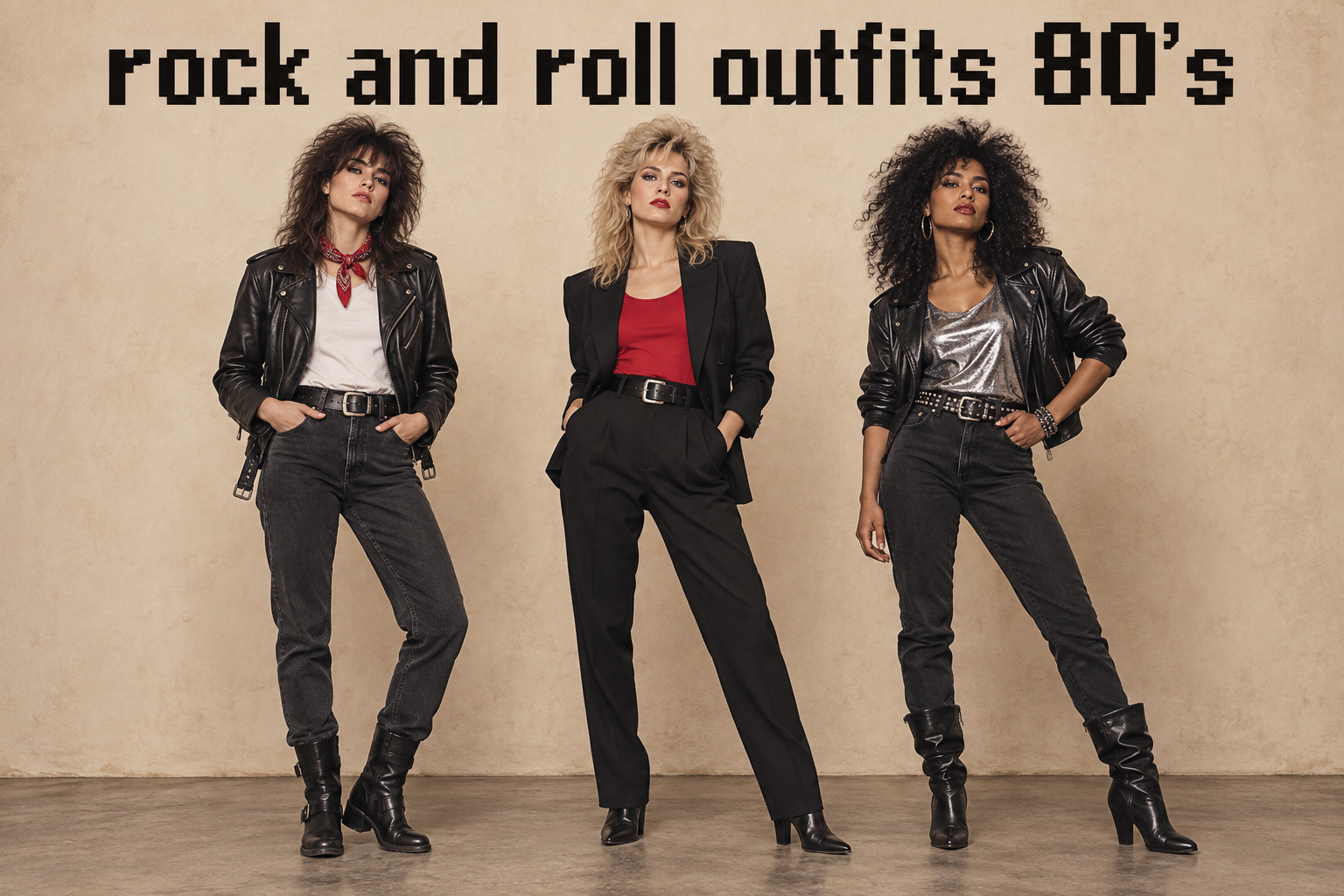
The best rock and roll outfits 80’s references give you a recognizable shape before you notice any individual accessory. A strong shoulder over narrow jeans, a black jacket around a plain tee, or a bright stage top held in place by a serious belt can carry the entire idea. You do not need every symbol of the decade in the same outfit. You need to decide which visual cue matters, then make the rest of the clothes support it.
This guide starts with images of actual rock performers and works backward into clothes you can wear to a show, an 80s party, or an ordinary evening. The goal is a specific reference rather than a generic costume. Think of the source image as a set of styling decisions: silhouette, contrast, texture, and one detail that catches the light. Once you can name those decisions, you can change the exact garments without losing the rock-and-roll feeling.
Read the Stage Image Before You Copy It
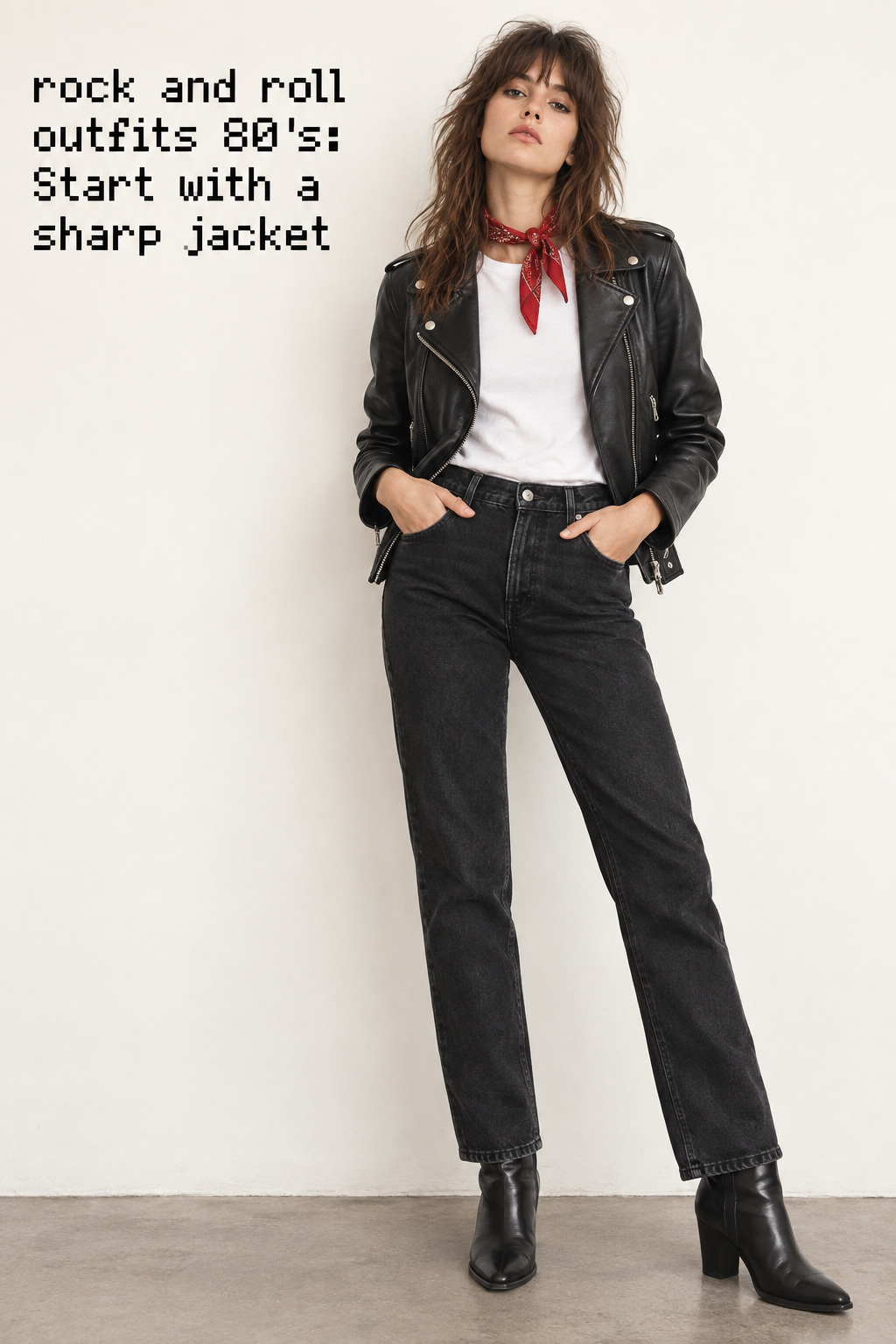
An 80s rock photograph often contains more information than a shopping list. A guitarist onstage may be dressed for visibility from the back of a venue, while a portrait or street photograph can be much quieter. Ask what the image is doing rather than treating every item as essential. Does the jacket create a pointed shoulder? Is the belt defining the waist? Are dark clothes making one red or metallic piece stand out? That is the part you can carry into your own outfit.
The Fashion-Note Edit
Five effortless pieces to refresh your everyday wardrobe
A polished, practical edit for workdays, weekends, and everything in between.

The Drop
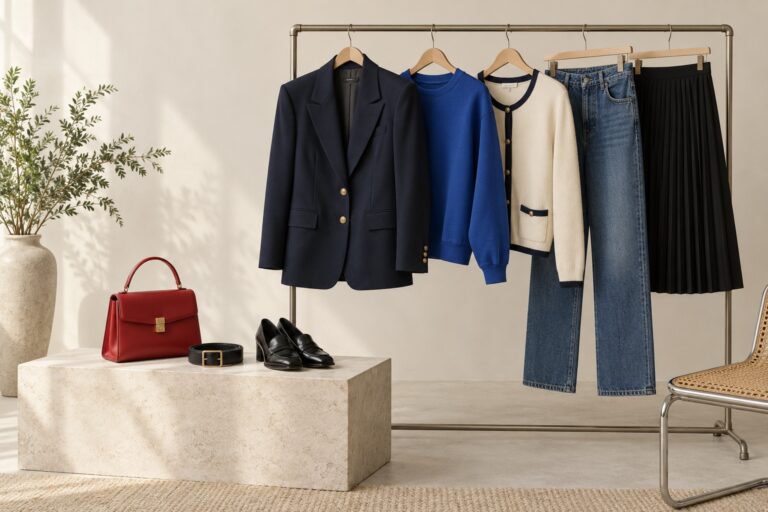
Women’s Blake Long Blazer
A longline, tailored blazer with a notched collar and a single-button closure—an easy layer for denim, dresses, or office-ready looks.
Shop the blazer
Amazon Essentials
Women’s Lightweight Crewneck
A soft, lightweight sweater with a clean crew neckline—the kind of reliable layer that works from cool mornings to air-conditioned spaces.
Shop the sweater
Amazon Essentials
Women’s Loafer Flat
A classic flat loafer that gives casual outfits a more polished finish and pairs naturally with tailored pants, skirts, and straight-leg jeans.
Shop the loafers
Levi’s
Women’s 501 90s Jeans
A relaxed, vintage-inspired take on the iconic 501 silhouette—made for an easy, lived-in look without the thrift-store search.
Shop the jeans
Colorfulkoala
High-Waisted 7/8 Leggings with Pockets
Soft, four-way-stretch leggings with side pockets and a high-rise waistband—designed for movement, errands, and off-duty comfort.
Shop the leggings
Affiliate disclosure: This section contains affiliate links. If you make a purchase through these links, I may earn a commission at no additional cost to you. Product selection, pricing, availability, and delivery terms may change—please review the current details on Amazon before purchasing.
As an Amazon Associate I earn from qualifying purchases.
The distinction matters because stage clothes have a job that everyday clothes do not. They have to read under lights, from a distance, and in motion. An exact copy can become heavy, fussy, or impractical when you are walking across town or standing in a crowd. A useful translation preserves the silhouette or the contrast and lets you choose simpler pieces. It still looks intentional in a photograph, but it also works when nobody is looking at it.
Your wedding style is personal.
Your plan should feel that way, too.
Zarellea keeps your guest list, budget, vendors, and every next step beautifully organized — so you can focus on the moments that feel like you.
Joan Jett: the dark uniform with one sharp interruption
In British Vogue’s Joan Jett image retrospective, leather, black, high-waisted jeans, scarf accents, stripes, and occasional dramatic shoulders appear as separate visual moves. The lesson is not to wear them all at once. Start with the spare uniform: dark denim, a fitted or gently relaxed tee, and a jacket that has a clear edge. Then interrupt it with one detail, perhaps a red scarf at the neck, a striped top, or a belt with visible hardware. The interruption gives the look a point of view.
Notice how this differs from simply buying a distressed band tee. A tee can be part of the outfit, but the silhouette carries more weight. If your jacket is boxy, let the jeans sit cleanly at the waist. If the jacket is close-fitting, a straighter jean can give the look room. If you have a plain black tee rather than band merchandise, it can still read as rock when the jacket, denim, and one metal accent work together.
Pat Benatar: waist definition under a strong outer line
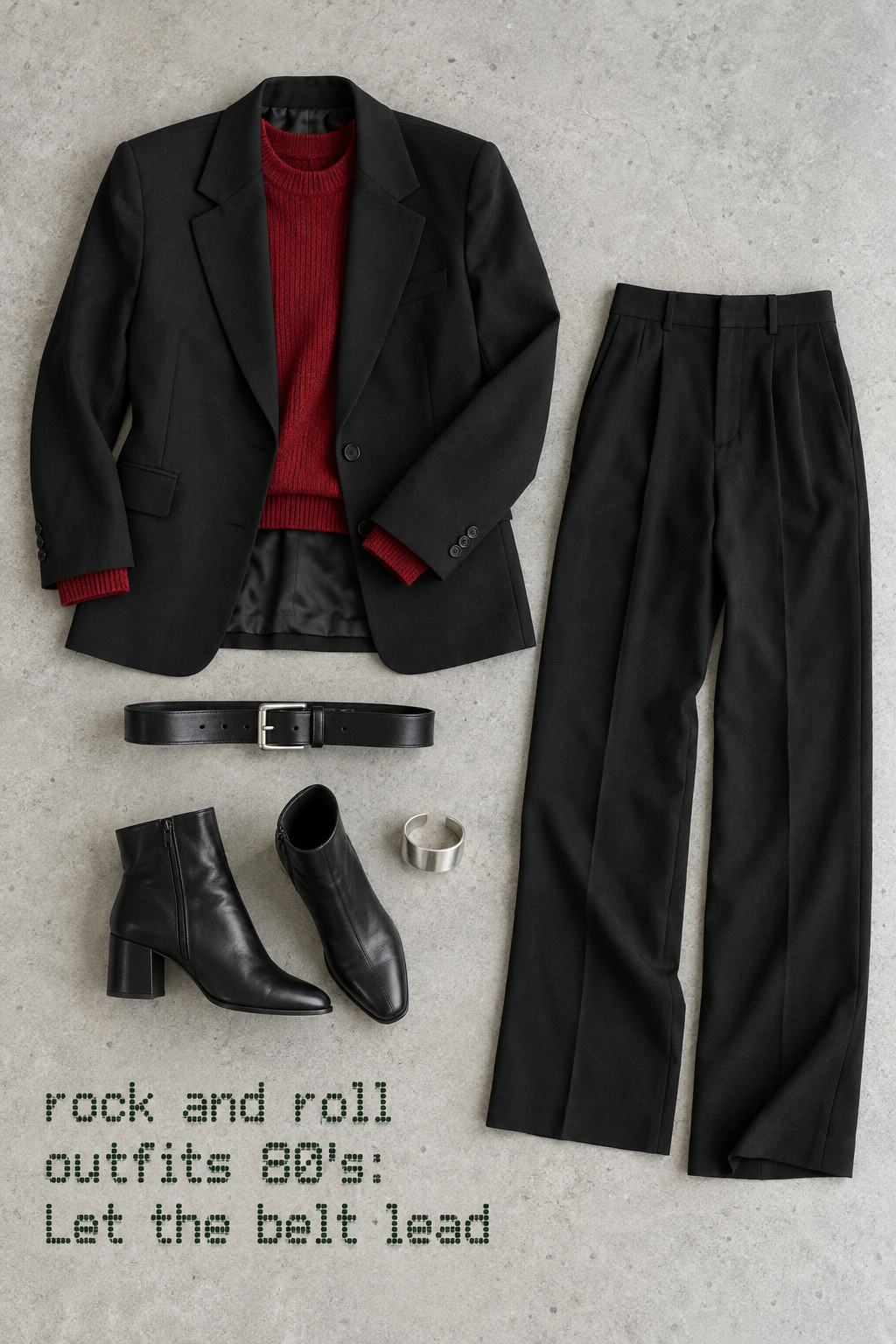
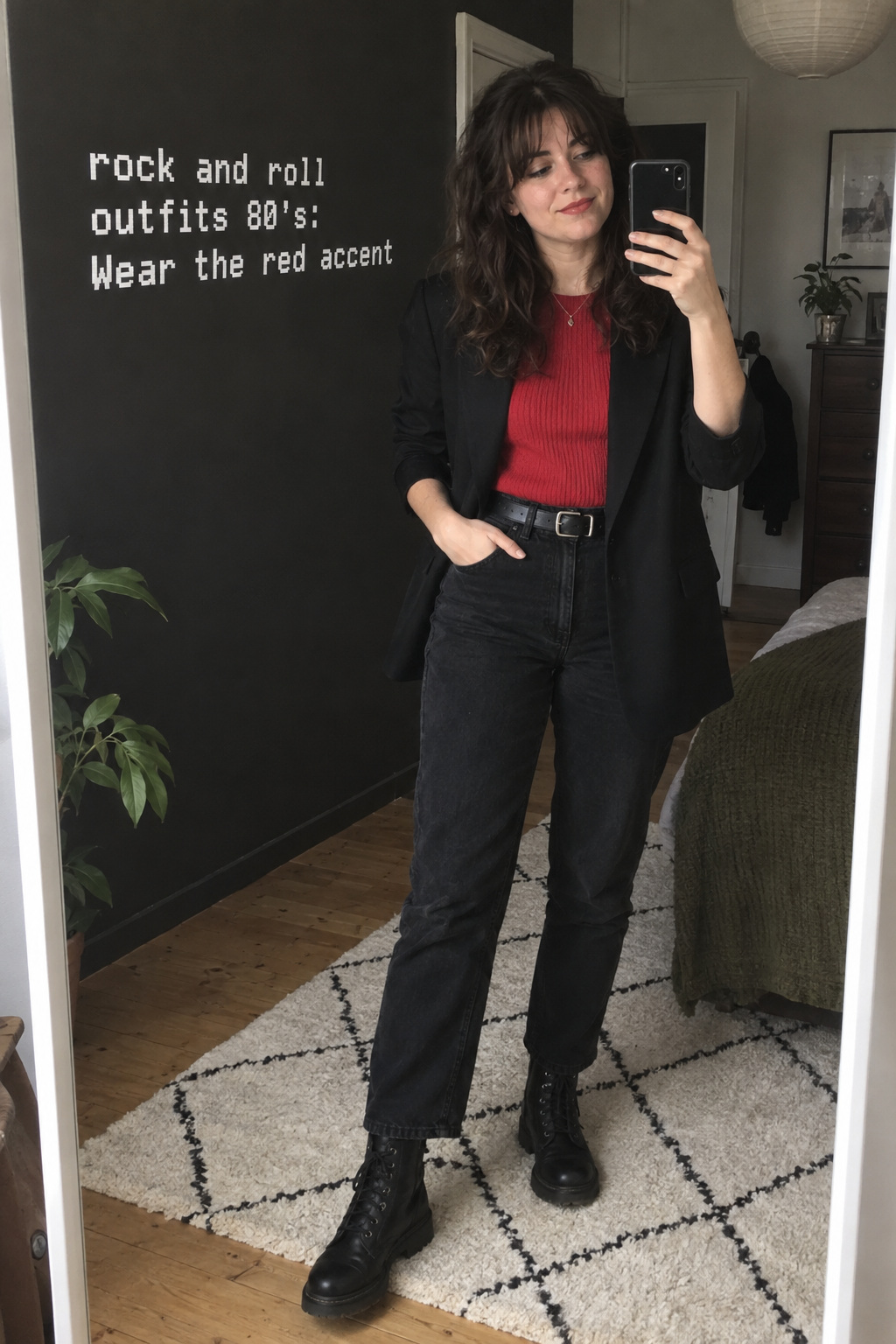
A photo-based overview of Pat Benatar’s 80s looks shows recurring contrasts: a structured blazer over a bold base, a visible belt, high-waisted trousers, and stage pieces that draw the eye to the center of the body. You can translate that without a bodysuit or an exact performance outfit. Try a black blazer with a defined shoulder over a red knit top and high-waisted black trousers. A medium-width belt becomes the visual hinge between the two shapes.
For an evening version, exchange the knit for a subtle shimmer or satin finish. Keep the belt and trousers calm so the shine has space. For daytime, make the top matte and let the blazer’s outline be the main reference. Both versions trace the same image logic. The degree of shine changes, while the shoulder-to-waist relationship stays intact.
Separate rock style from the whole decade
The 1980s included plenty of athletic, preppy, and office dressing. A neon windbreaker or a pastel suit can say 80s without saying rock and roll. When your brief is specifically rock, choose an anchor with a music connection: a lived-in tee, black denim, leather or leather-look texture, a concert-ready boot, a confident belt, or a sharply cut jacket. Color can enter the outfit, but it should strengthen the focal point. One red top against black has a different effect from several unrelated brights competing for attention.
Choose the Silhouette That Carries the Rock Reference
Before you plan accessories, decide what the outfit looks like in outline. Place your jacket, top, bottom, and shoes together and step back. The 80s reference should remain legible even if you remove the jewelry. If it disappears without a pile of chains or bracelets, the clothes may need a clearer shape. Try a defined shoulder, a higher waist, a close top against relaxed outerwear, or a boot with enough visual weight to balance the jacket.
Strong shoulder, quiet base
A blazer or jacket with structure is a useful anchor when you want a stage reference without a literal costume. You can use a vintage-looking denim jacket, a leather jacket, or a black blazer that holds its line. Underneath, keep the top straightforward. A white tee shows the jacket shape clearly; a dark tank creates a longer, sleeker column. High-waisted straight jeans or simple trousers then stop the top half from becoming too busy.
Check the hem where jacket and top meet. If both are long and loose, the shape may look accidental. A partial tuck, a shorter jacket, or a visible belt can restore the waist. This is a styling adjustment, not a rule about body type. The question is whether the viewer can understand where one shape ends and the next begins. That clarity makes a borrowed 80s proportion feel deliberate.
Defined waist, less hardware
If the belt is your reference, give it room. A tucked dark tee, high-rise jeans, and a simple jacket can make one substantial buckle feel expressive. Add a second chain only if it serves a purpose; several loud metal pieces can turn the waist into visual noise. A black belt against faded denim is easy to read. A silver buckle against black trousers is quieter, which may be exactly right for a dinner or a seated show.
Do a movement check before you decide the look is finished. Sit, bend, and reach. If the belt shifts or the jacket pulls, change the fit or remove a layer. Rock-and-roll style has energy; an outfit you cannot move in rarely conveys it. Comfortable footwear also matters if you will stand through a concert. A grounded ankle boot can preserve the look without requiring a high heel.
Texture contrast instead of a costume pile
Leather or leather-look material, denim, cotton, lace, satin, and metal all reflect light differently. That contrast can make a simple outfit more convincing than five obvious 80s props. Try one tough surface and one soft surface: a leather jacket over a cotton tee, lace under a dark blazer, or washed denim beside a smooth black top. Keep one texture dominant. The other should give the eye a reason to look twice.
If you add print, use it with the same discipline. A stripe can replace a graphic tee. A small animal-print scarf can lift an all-black base. A large print on the top, patterned tights, studs, and a bright bag may each be appealing, but together they compete with the original idea. Put every piece on, then remove the one that does the least work. The remaining outfit will usually be easier to wear and easier to recognize.
Five Rock-and-Roll Outfit Translations
These are visual translations, not claims that a performer wore the exact combinations below. Each begins with one specific stage cue, then changes the garments to suit a contemporary closet. You can substitute what you own if you preserve the shape, contrast, or focal detail. Try the outfit as a complete look before shopping for any missing accent.
1. The black jacket and high-waist denim look
Start with straight, high-waisted jeans in black or dark blue. Add a plain tee or a graphic tee you genuinely like, then a black leather or leather-look jacket. Choose ankle boots that visually continue the dark line of the jacket. The outfit is already complete. If it feels too flat, add one red scarf at the neck or a slim metal belt. The scarf makes a small area of color visible without replacing the dark uniform that anchors the look.
For a casual outing, wear the jacket open and keep the tee loose with a small front tuck. For a concert, make sure the jacket is comfortable to carry or tie around your waist if the venue gets warm. A crossbody bag is more useful than a clutch when your hands will be busy. Skip fake distressing if the jeans you own are clean; the jacket’s texture and the dark column can carry the reference.
2. The red top and structured blazer look
Put a red, burgundy, or deep pink close-fitting top beneath a black blazer with a noticeable shoulder. Add high-waisted black pants, then a belt that sits securely at the waist. This references the strong outer shape and center emphasis seen in Benatar stage images without turning a bodysuit into a dress requirement. A pointed ankle boot makes the line crisp; a low block heel can do the same if you prefer it.
Keep the jewelry quiet at first. A single cuff or hoop earrings may be enough because the red center is already the focal point. If the blazer is very oversized, choose a narrower or tucked top so the waist does not vanish. If the blazer is tailored close to the body, a slightly wider trouser leg can make the outfit feel less rigid. Check the outfit from the side as well as the front; the shoulder should look shaped, not padded for its own sake.
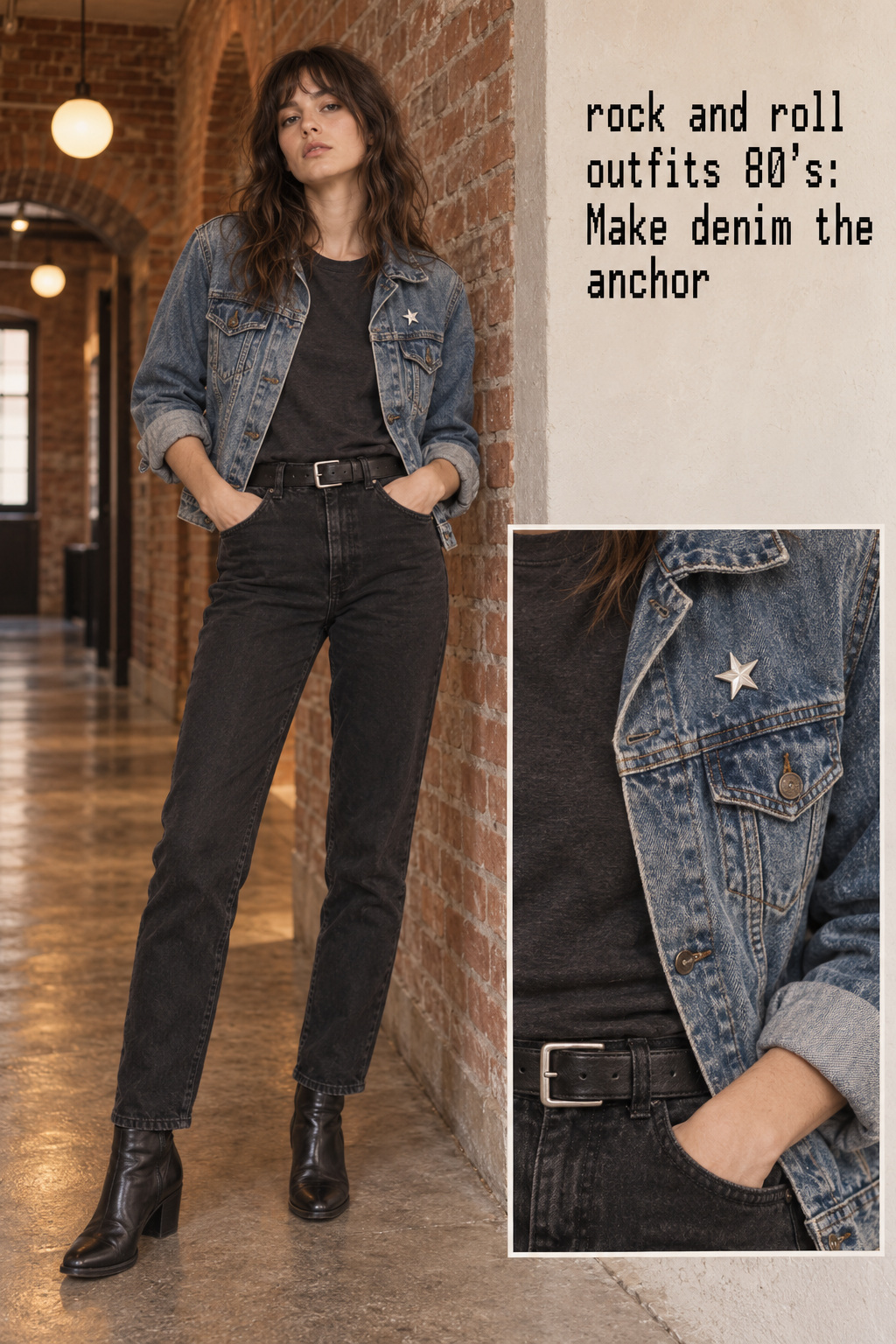
3. The denim jacket with a personal graphic
Use a faded denim jacket as the anchor and pair it with a simple white or charcoal tee. Black jeans keep the two denim tones from competing; a denim skirt with opaque tights gives another direction. Add boots, then choose one personal graphic, pin, or patch if you already own one. The point is to suggest a jacket collected over time, not to manufacture an entire history in one afternoon.
If you do not wear band merchandise, a plain tee works. The outfit will read through the jacket’s shape, the darker bottom, and the sturdy shoe. If you do wear a band tee, let its graphic be the only major print. Choose a bag that sits close to the body and will not catch on jacket hardware. This is one of the easiest translations for a real show because the pieces are familiar and the jacket can be removed.
4. The soft top against a hard jacket
A lace-trim camisole, softly draped blouse, or fine knit adds contrast under a black jacket. Wear it with straight dark jeans or tailored trousers and solid boots. The soft top should be visible at the neckline or cuffs, rather than hidden entirely. That small reveal creates a deliberate tension between romantic and tough textures. If the top is sheer, use a comfortable base layer so you can move through the evening without adjusting it constantly.
For a party, deepen the effect with one metallic earring or a glossy lip. For daytime, choose a less ornate top and leave off the extra shine. You can use a leather-look jacket, a worn-in denim jacket, or even a severe blazer. The exact material matters less than the contrast between a structured outer line and a soft inner surface. Avoid adding lace gloves, patterned tights, and studs by reflex; give the neckline detail its own space.
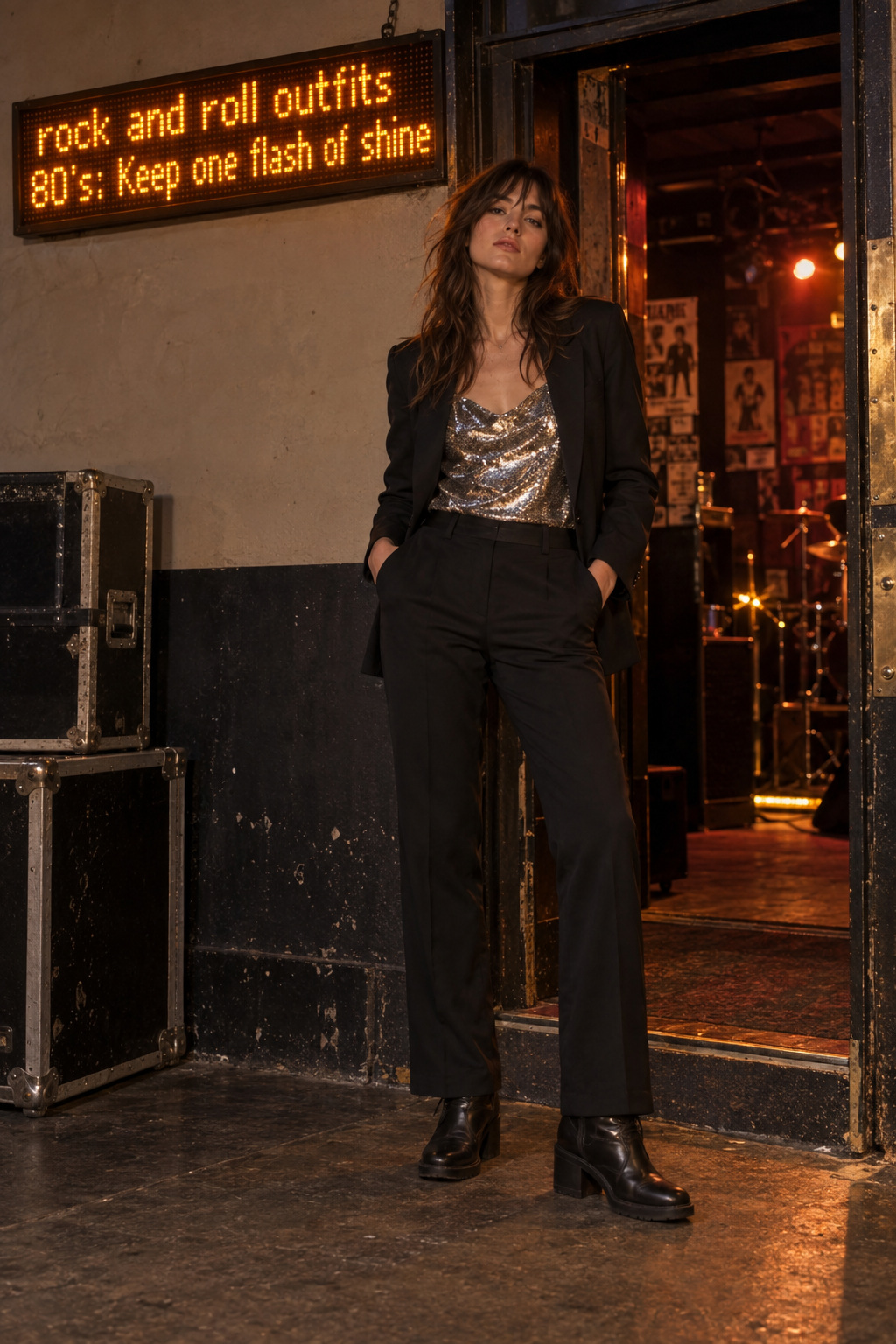
5. The single flash of stage shine
Begin with a dark, simple outfit: black trousers or jeans, a dark jacket, and a low-key top. Replace just one piece with shine. It might be a metallic camisole, a satin blouse, or a small sequined bag. A stage image uses shine to catch light; your version needs only enough to give the eye a destination. Keep the shoe grounded and the jewelry restrained so the shiny piece remains a choice rather than another item in a pile.
Look at the outfit in ordinary light and in a phone photograph. A fabric that looks subtle on a hanger can become very bright under flash. If it overwhelms the jacket shape, try a smaller reflective surface. If it barely registers, move the shine closer to the face or use a slightly stronger texture. This quick test is more useful than following a fixed number of accessories because lighting changes the result.
Turn the Volume Up or Down for Your Plans
The same rock reference can support several real settings. Keep the anchor and adjust one variable at a time: the amount of shine, the weight of the shoe, the strength of the makeup, or the number of accessories. Changing all four makes it difficult to tell what improved the outfit. Changing one helps you see the visual result. If you want an 80s nod for a normal day, the jacket and waistline might be enough. For a themed party, you can turn up one more signal.
For a concert, prioritize movement
Try the outfit with the shoes and bag you will actually carry. Walk for a few minutes, sit, and raise your arms. If a chain snags the bag strap or a sleeve restricts your movement, simplify. A tee, high-waisted jeans, boots, and one strong jacket can look more convincing than a complicated outfit you keep fixing. Bring a layer you can manage once the room warms up. The final look should still feel like yours after two hours on your feet.
For an 80s party, make the reference readable
A party gives you room for a stronger shoulder, a visible belt, or a flash of shimmer. Choose one of the five translations and increase its main cue. The black jacket look might get a red scarf and more defined eyeliner. The blazer look might gain a glossy top. You still need a recognizable outfit beneath the styling. If the clothes depend on novelty props to explain them, return to the silhouette first.
For an ordinary evening, edit the reference
Use the same jeans and jacket but leave one theatrical item at home. A plain tee can replace a large graphic. A neat boot can replace a heavy platform. A slim belt can take the place of layered chains. None of these edits erases the 80s connection if the proportion and texture remain strong. An outfit that works for dinner, a movie, or a small show can carry the mood without asking everyone around you to recognize the reference.
Before leaving, take one final full-length look. Can you name the anchor in a sentence? Does your eye go to the intended focal point? Can you move comfortably? If the answer to one is no, change one garment or accessory, then check again. The useful takeaway from 1980s rock imagery is expressive editing: a clear silhouette, a deliberate contrast, and the confidence to stop adding pieces when the idea is already there.
FAQ
What makes rock and roll outfits 80’s inspired?
A recognizable 1980s rock reference usually comes from shape and contrast: a strong jacket, a clear waist, dark denim or trousers, a concert-ready shoe, and one expressive detail. You do not need all of these at once. Start with a photographed cue you like, then keep one or two of its decisions visible in your own clothes.
Do I need a leather jacket for an 80s rocker outfit?
No. A structured black blazer or an older denim jacket can create a strong outer line. Pair it with high-waisted dark jeans, a simple top, and boots. If leather is not in your wardrobe, do not buy it just to satisfy an outfit formula. The shape and contrast matter more than one exact material.
Can I build the look without a band tee?
Yes. A plain white or black tee lets the jacket, belt, and denim carry the reference. A striped top can add graphic energy without a logo. If you choose a band tee, wear one that means something to you. The shirt should add a personal note, not act as proof that the outfit is rock enough.
How do I keep an 80s rock outfit from looking like a costume?
Translate one stage cue instead of copying every visible detail. Keep the silhouette, then reduce the competing accessories and prints. A strong shoulder with clean trousers or a dark jacket with one red accent reads more clearly than leather, studs, fishnets, neon, and teased hair together. Wear the outfit once at home and remove the least useful extra.
What shoes work best with this style at a concert?
An ankle boot with a stable sole is an easy match for dark denim, a blazer, or a leather-look jacket. A clean dark sneaker can work if the event involves a lot of standing. Check the venue and your own comfort before choosing a heel or platform. The shoe should support the outfit’s visual weight without making the night harder.
Should the outfit be punk, glam, or classic rock?
You can choose a reference image without committing to a full subgenre label. A dark tee-and-jacket look, a sharply belted blazer, and a single piece of shine can each suggest a different performance mood. Decide what appeals to you in the image and translate that feature. If you want a detailed subgenre comparison, that is a separate styling decision.
Finish the look
The little extras that make a summer outfit feel complete
From beach days to city weekends, these easy pieces bring comfort, texture, and a polished finishing touch.

FENBEN
Straw Hobo Crossbody Bag
A handwoven straw bag with both short and crossbody straps—an effortless finishing touch for vacation looks and warm-weather outfits.
Shop the bag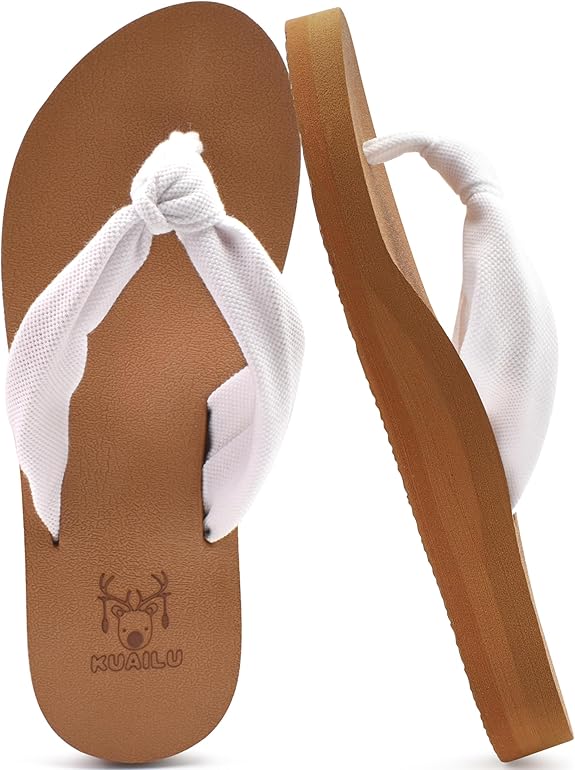
KuaiLu
Flip Flops with Arch Support
Cushioned, lightweight sandals with supportive arch design—a practical choice for beach trips, errands, and long summer walks.
Shop the sandals
baleaf
Athletic One-Piece Swimsuit
A functional one-piece with adjustable straps and moderate coverage, designed for swimming, training, surfing, and active beach days.
Shop the swimsuit
Astylish
Linen-Cotton Button-Down Shirt
A relaxed cotton-linen shirt with a collared V-neck and roll-up sleeves—easy to style over swimwear or with denim and shorts.
Shop the shirt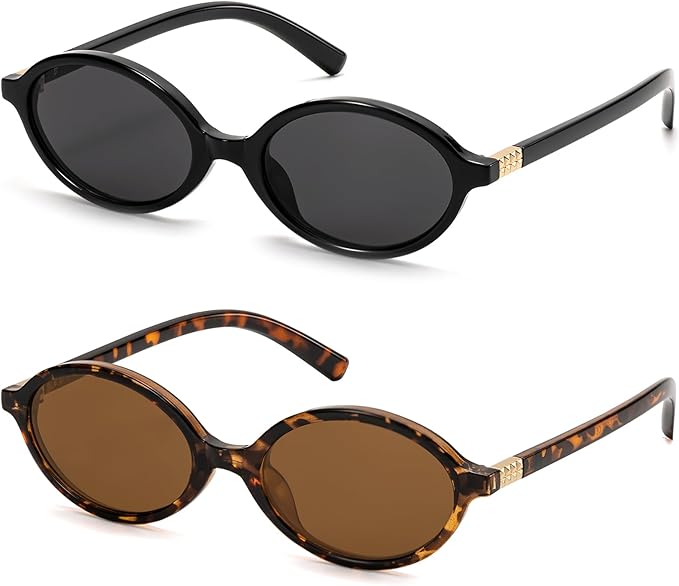
ViewJoy
Retro Oval Sunglasses
Small oval sunglasses with a 90s-inspired silhouette and UV400 lens protection—a quick way to add a vintage edge to everyday looks.
Shop the sunglasses
Affiliate disclosure: This section contains affiliate links. If you make a purchase through these links, I may earn a commission at no additional cost to you. Product selection, pricing, availability, and delivery terms may change—please review the current details on Amazon before purchasing.
As an Amazon Associate I earn from qualifying purchases.