80 90 Fashion Outfits Party: Six Looks by Setting
The invitation says “80s and 90s,” but the party itself might be a relaxed evening at a friend’s apartment, a crowded dance floor, or a dinner with a dressier code. Those are three different clothing problems. A look that is perfect for a casual house party can feel underdressed at a restaurant, while an elaborate outfit can become a nuisance once everyone starts dancing. This guide approaches 80 90 fashion outfits party dressing by holding the setting steady and comparing an 80s option with a 90s option for that same event.
You do not need to represent every trend from a decade. Choose one era, one party setting, and a complete outfit you can actually wear for the evening. The six looks below cover casual, dance, and dressy invitations with shoes and finishing details included. If the host has specified a particular character or subculture, follow that direction first. Otherwise, use the comparison to choose the look that fits both the room and your comfort level.
Match the Outfit to the Party First
The decade is only half of the dress code. Look at the location, the activity, and the language of the invitation before opening your closet. “Come as you are, but retro” at someone’s home suggests an outfit you can sit in, move in, and perhaps help carry food in. “Dance all night” calls for secure shoes and pieces that will stay in place. A dinner reservation or cocktail event calls for a more finished silhouette, even if the decade reference remains playful. These are practical cues, not historical rules about what people always wore.
The Fashion-Note Edit
Five effortless pieces to refresh your everyday wardrobe
A polished, practical edit for workdays, weekends, and everything in between.

The Drop
Women’s Blake Long Blazer
A longline, tailored blazer with a notched collar and a single-button closure—an easy layer for denim, dresses, or office-ready looks.
Shop the blazer
Amazon Essentials
Women’s Lightweight Crewneck
A soft, lightweight sweater with a clean crew neckline—the kind of reliable layer that works from cool mornings to air-conditioned spaces.
Shop the sweater
Amazon Essentials
Women’s Loafer Flat
A classic flat loafer that gives casual outfits a more polished finish and pairs naturally with tailored pants, skirts, and straight-leg jeans.
Shop the loafers
Levi’s
Women’s 501 90s Jeans
A relaxed, vintage-inspired take on the iconic 501 silhouette—made for an easy, lived-in look without the thrift-store search.
Shop the jeans
Colorfulkoala
High-Waisted 7/8 Leggings with Pockets
Soft, four-way-stretch leggings with side pockets and a high-rise waistband—designed for movement, errands, and off-duty comfort.
Shop the leggings
Affiliate disclosure: This section contains affiliate links. If you make a purchase through these links, I may earn a commission at no additional cost to you. Product selection, pricing, availability, and delivery terms may change—please review the current details on Amazon before purchasing.
As an Amazon Associate I earn from qualifying purchases.
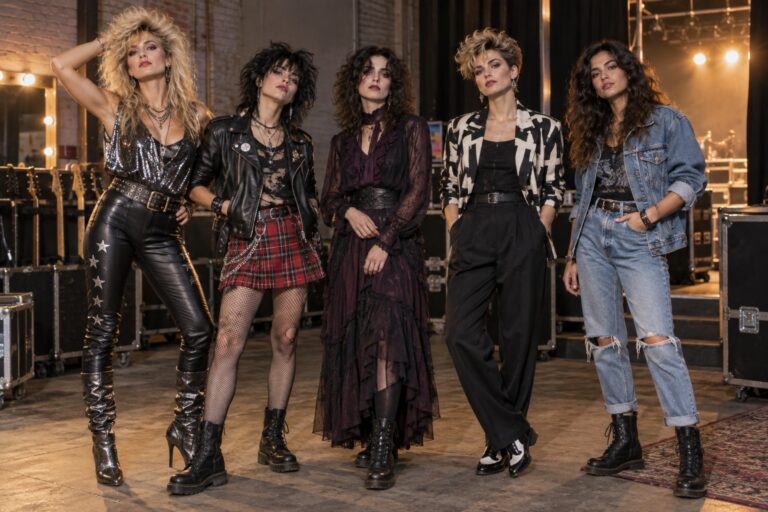
Next, decide how clearly the host wants the theme to read. At a light-touch theme party, a period-shaped garment and one supporting detail are enough. At a costume-forward event, you can increase the volume of color, hair, or accessories, but the clothes should still belong to the same visual idea. If the invitation includes a mood board, use its actual examples. A host who pictures music-video glamour may have a different expectation from one who pictures an ordinary 1990s house party.
Your wedding style is personal.
Your plan should feel that way, too.
Zarellea keeps your guest list, budget, vendors, and every next step beautifully organized — so you can focus on the moments that feel like you.
Historic fashion was more varied than party shorthand suggests. The Fashion History Timeline’s 1980s overview documents soft romantic dressing, sportswear, body-conscious pieces, preppy looks, and strong-shouldered tailoring within the same decade. A recognizable 80s look can therefore come from silhouette and proportion without fluorescent color. The same archive’s 1990s overview describes both relaxed casual styles and a move toward more streamlined dressing. A 90s party outfit can be understated without becoming generic.
Use three questions to set the dress code
- Where will you spend most of the night? Home, club, and restaurant settings ask different things of the outfit.
- What will you actually do? Plan for sitting, standing, dancing, walking, or moving between spaces.
- How literal is the theme? Decide whether the host expects a subtle reference or a conspicuous party look.
These questions prevent a common mismatch: choosing the most eye-catching decade image online before considering the party. A tightly fitted dress may look strong in a photograph yet feel restrictive when you sit. Heavy accessories might complete the theme but be awkward on a busy dance floor. Likewise, a basic tee and jeans can be comfortable, but without a deliberate silhouette or styling detail they may not communicate any decade at all. Solve the setting first, then make the era legible.
80s and 90s Party Dressing, Side by Side
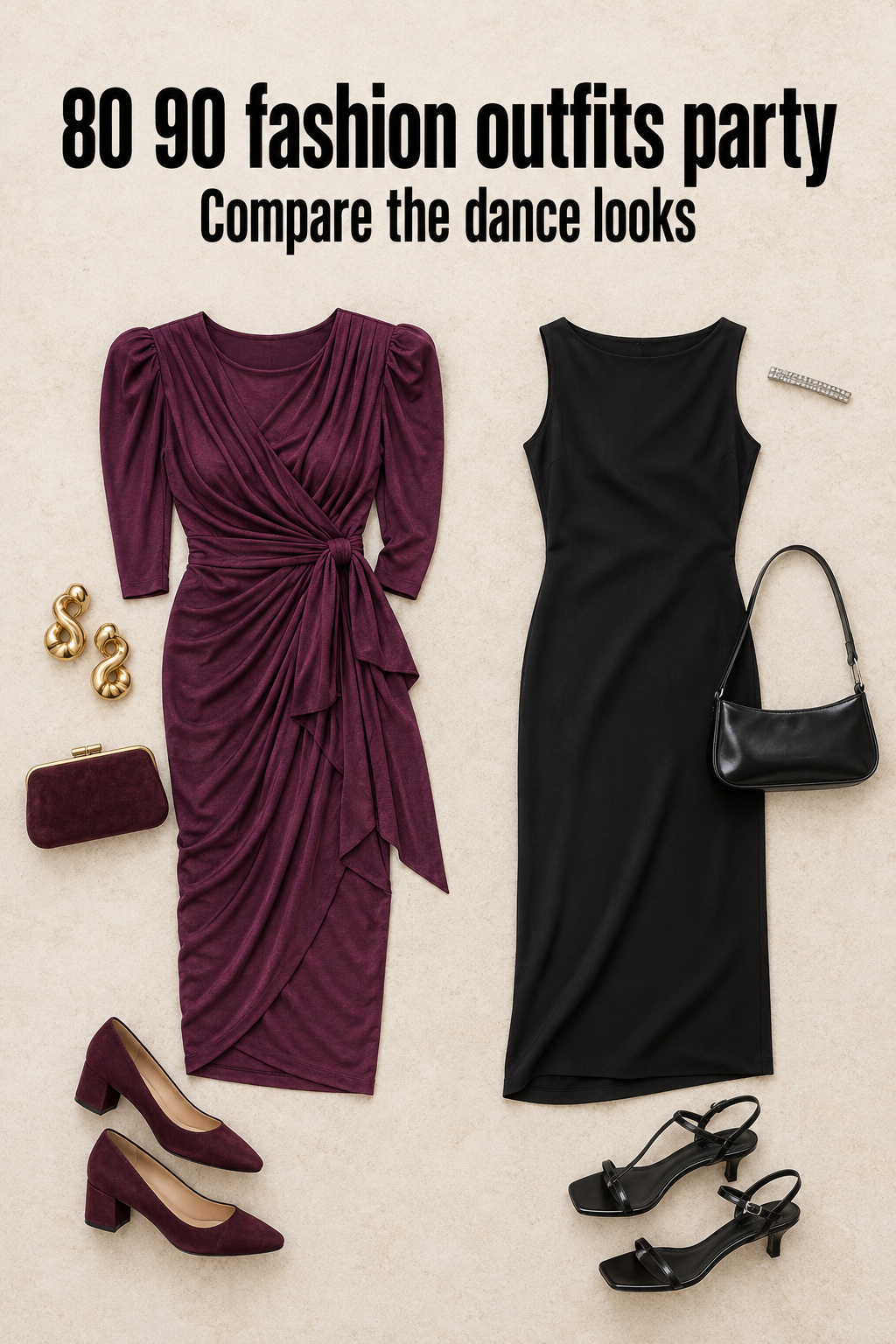
For this comparison, think of the 80s route as an outfit with a more visible shape or focal point, and the 90s route as an outfit with a calmer line or a looser everyday attitude. These are useful styling directions, not descriptions of everyone in either decade. Both eras included quiet and dramatic clothing. The point is to make a quick, consistent choice when a mixed-decade invitation gives you too many possible references.
For a casual house party
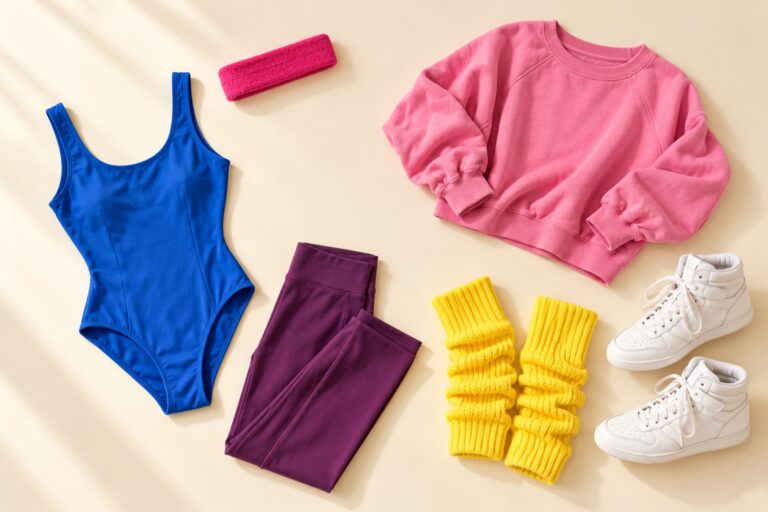
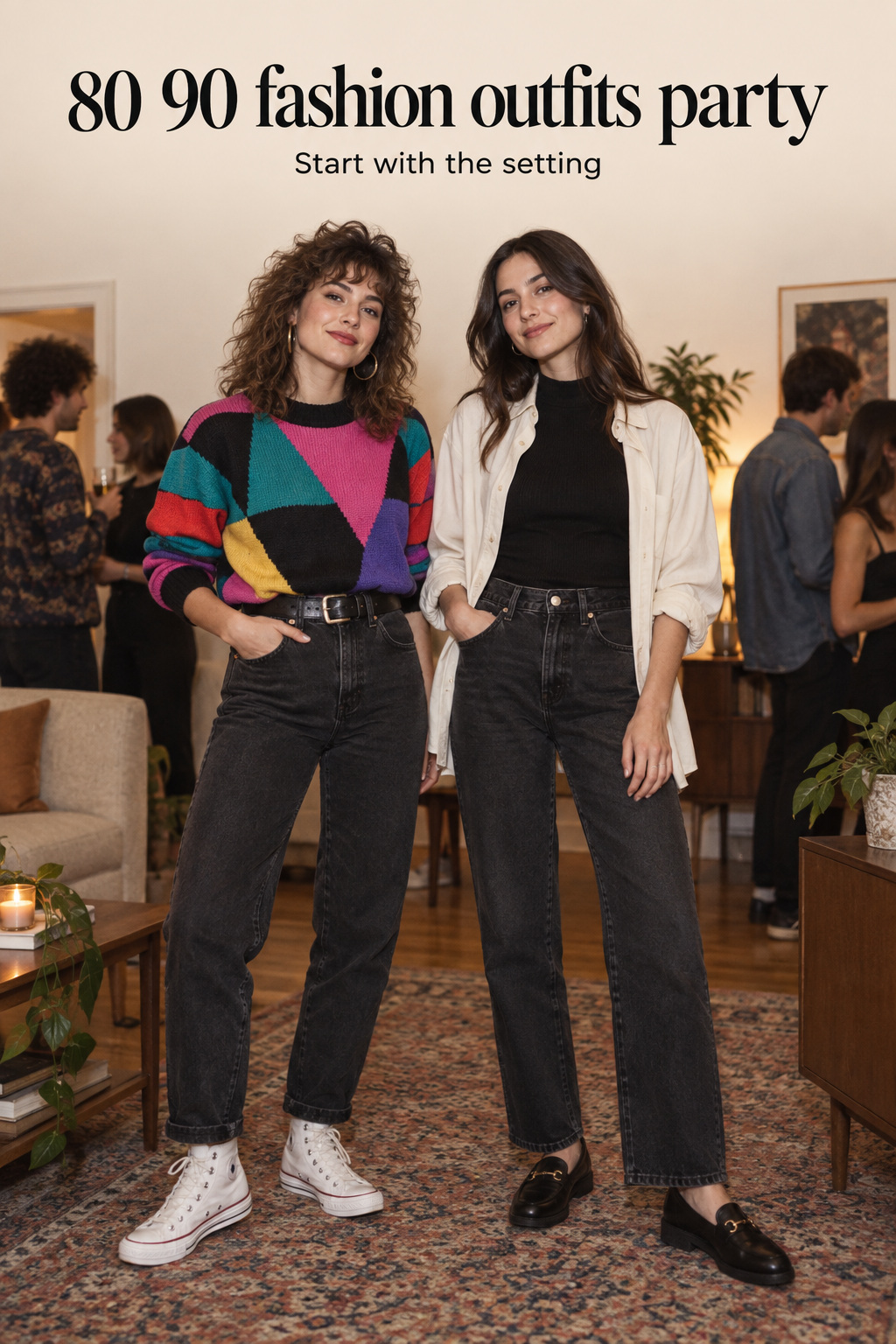
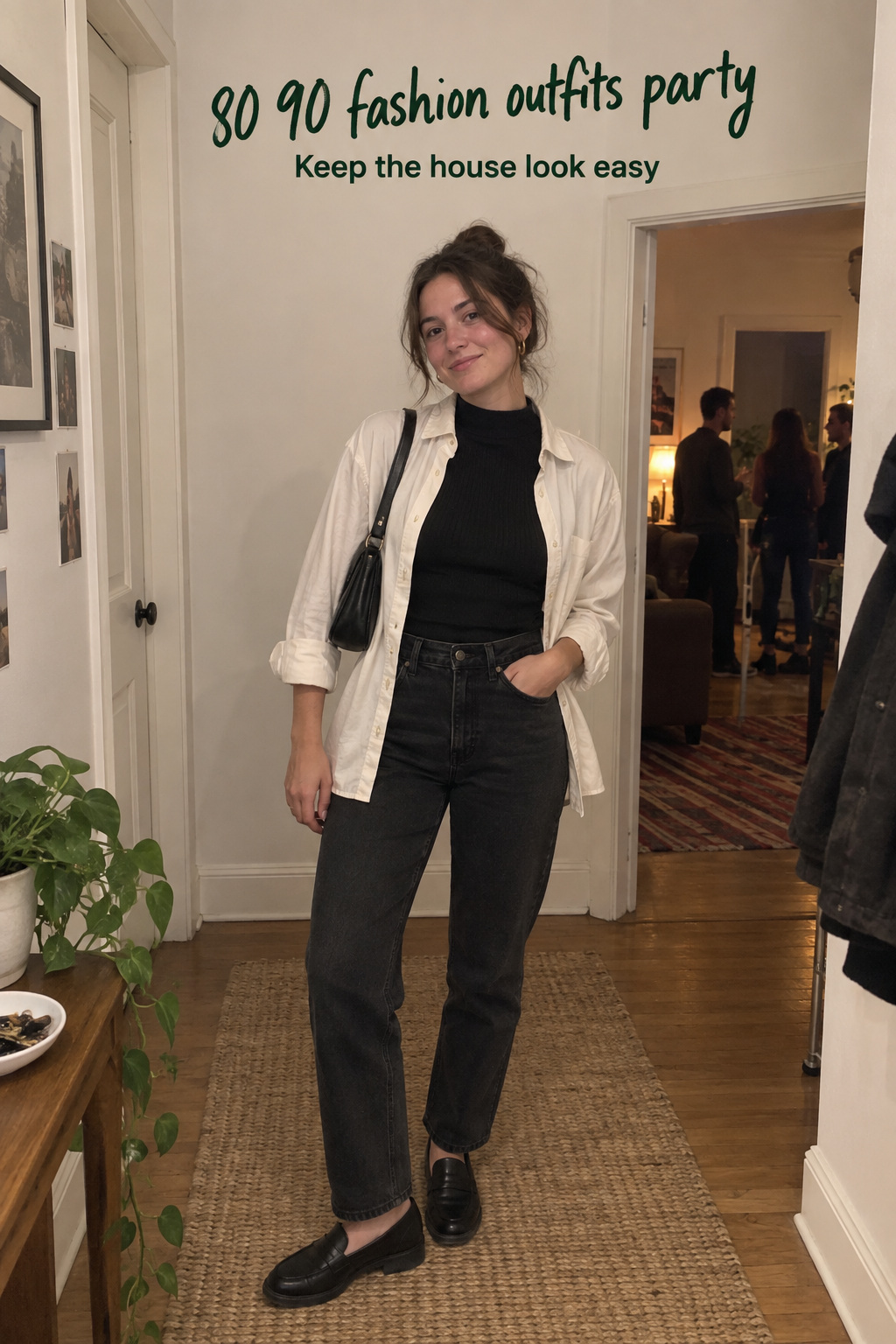
The 80s option can begin with a patterned or color-blocked crewneck knit, a defined high waist, and tapered jeans or chinos. The shape reads clearly while every piece remains easy to wear. The 90s option can be a close-fitting ribbed mock-neck top, straight dark jeans, and a simple overshirt left open. Its signal is quieter: a straight line, fewer accessories, and casual layering. Neither look needs a novelty prop. The choice depends on whether you want the theme to read at first glance or unfold through smaller details.
For a party built around dancing
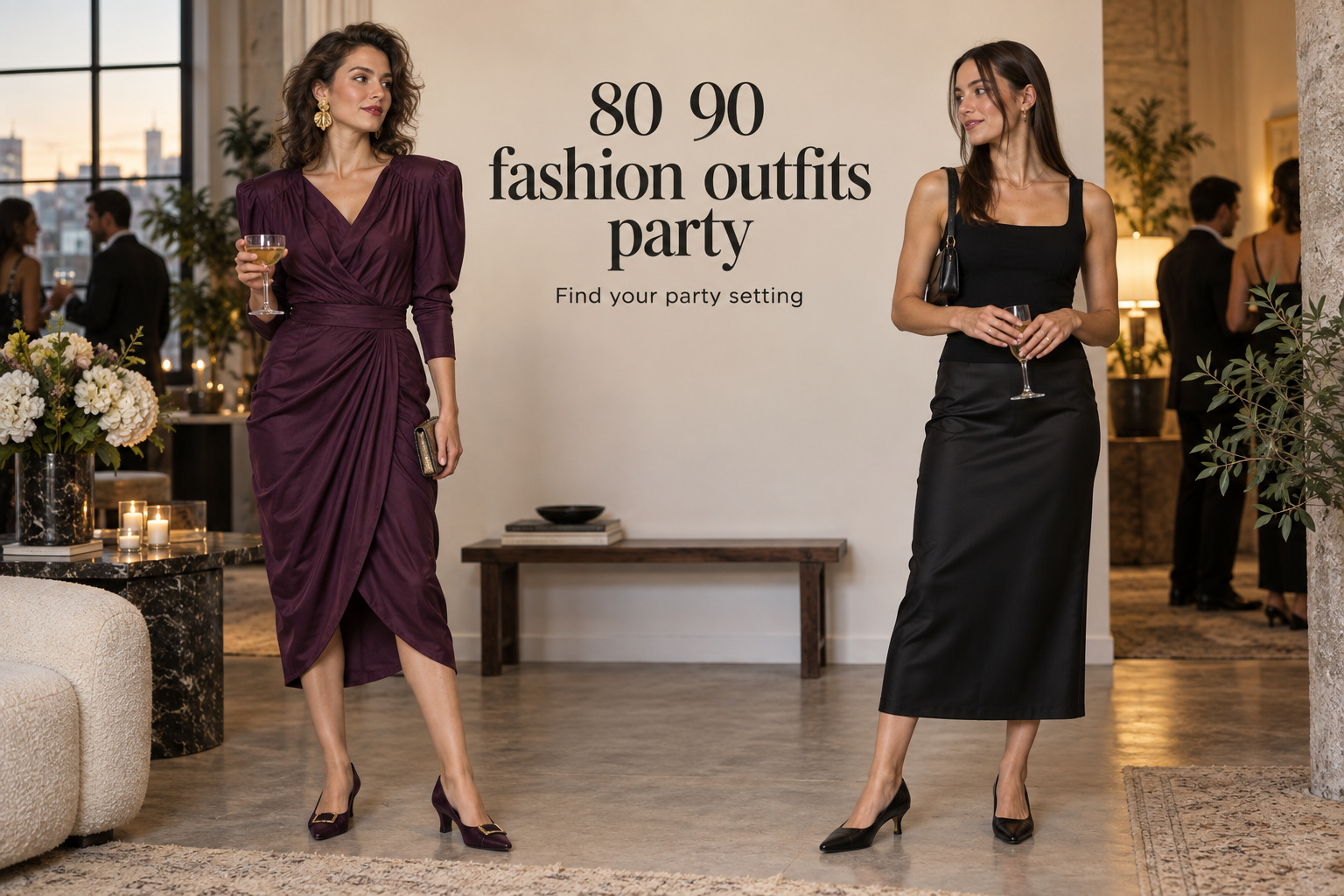
An 80s-inspired draped jersey dress with a visible waist and one sculptural accessory offers movement and a defined party silhouette. A 90s-inspired sleeveless column dress, or a close-fitting top with a straight skirt, gives a simpler outline. Keep the shoes secure for both. This is where a full-length mirror test matters more than an isolated product image: raise your arms, take a few steps, sit down, and notice what shifts. The best dance outfit is the one you do not need to repair every ten minutes.
For a dressier invitation
The 80s route can use a jewel-tone dress with a shaped waist and one expressive piece of jewelry. The 90s route can use a long straight skirt and a fitted square-neck top in a restrained palette. Both can look intentional at a dinner or cocktail party, but they make different first impressions. The 80s outfit emphasizes shape and ornament; the 90s outfit emphasizes line and restraint. Dress shoes, a compact bag, and grooming finish either option without needing an exact vintage reproduction.
If you are choosing between two outfits you already own, compare them under the same conditions. Lay out the garment, shoes, bag, and one accessory for each. Then ask which complete outfit matches the venue and which has a clearer decade cue. This keeps the comparison fair. A dramatic dress shown with every accessory will always beat a plain top shown alone in a flat lay, even when the plain outfit would be better for the actual event.
Six Complete Looks for Three Party Settings
Each pair below solves the same party setting in a different decade vocabulary. Treat the garments as a formula rather than a shopping list. Keep what you own, substitute pieces with a similar shape, and preserve the relationship between the base, the defining detail, and the shoes. That relationship makes the outfit coherent. It also helps you avoid repeating a head-to-toe reference that is uncomfortable or out of place at the host’s event.
Casual 80s: A patterned knit and tapered waist
Start with a crewneck knit that has a clear graphic stripe, a contained color block, or a lively geometric motif. Pair it with high-waisted tapered jeans or chinos. Tuck a little of the front hem so the waist is visible; if the knit is thick, do not force a full tuck that bunches around the belt. Add clean high-top sneakers or low lace-up shoes. A single watch or small hoop pair is enough. The outfit has a recognizable period mood through proportion, while remaining suited to a living room and a long evening of conversation.
The key is the relationship between the wider knit and the narrower lower half. If both top and pants hang loosely without a visible waist, the outfit may look like ordinary loungewear. If the knit is already bright, keep the pants and shoes quiet. If your knit is neutral, a patterned sock or one colored accessory can carry the visual interest. Test the outfit seated as well as standing: a party look should not demand constant tugging at the waistband when you are on a sofa.
Casual 90s: A ribbed top, straight jeans, and an open layer
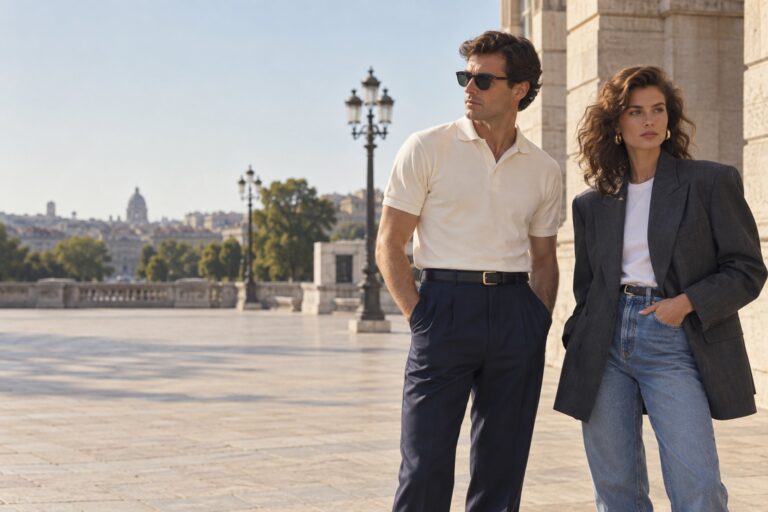
Choose a ribbed mock-neck or simple close-fitting tee in black, cream, or another solid color. Add straight-leg dark jeans, then leave an unstructured cotton shirt open over the top. Finish with loafers or plain sneakers and a compact shoulder bag. The outfit reads as a relaxed 90s direction because its lines are straightforward and the layer feels incidental rather than sculpted. Keep the shirt long enough to move comfortably, but not so large that it hides every part of the base outfit.
This is the subtler casual option, so detail matters. A precise hem length, a simple belt, and shoes that belong with the jeans make it feel chosen. Avoid adding a fluorescent accessory just to make the theme more obvious; it would send the outfit back toward a different decade idea. If the host wants a more theatrical look, this formula may be too quiet. It works best when the invitation allows a lightly styled reference and the party itself is informal.
Dance-floor 80s: A draped dress with a shaped waist
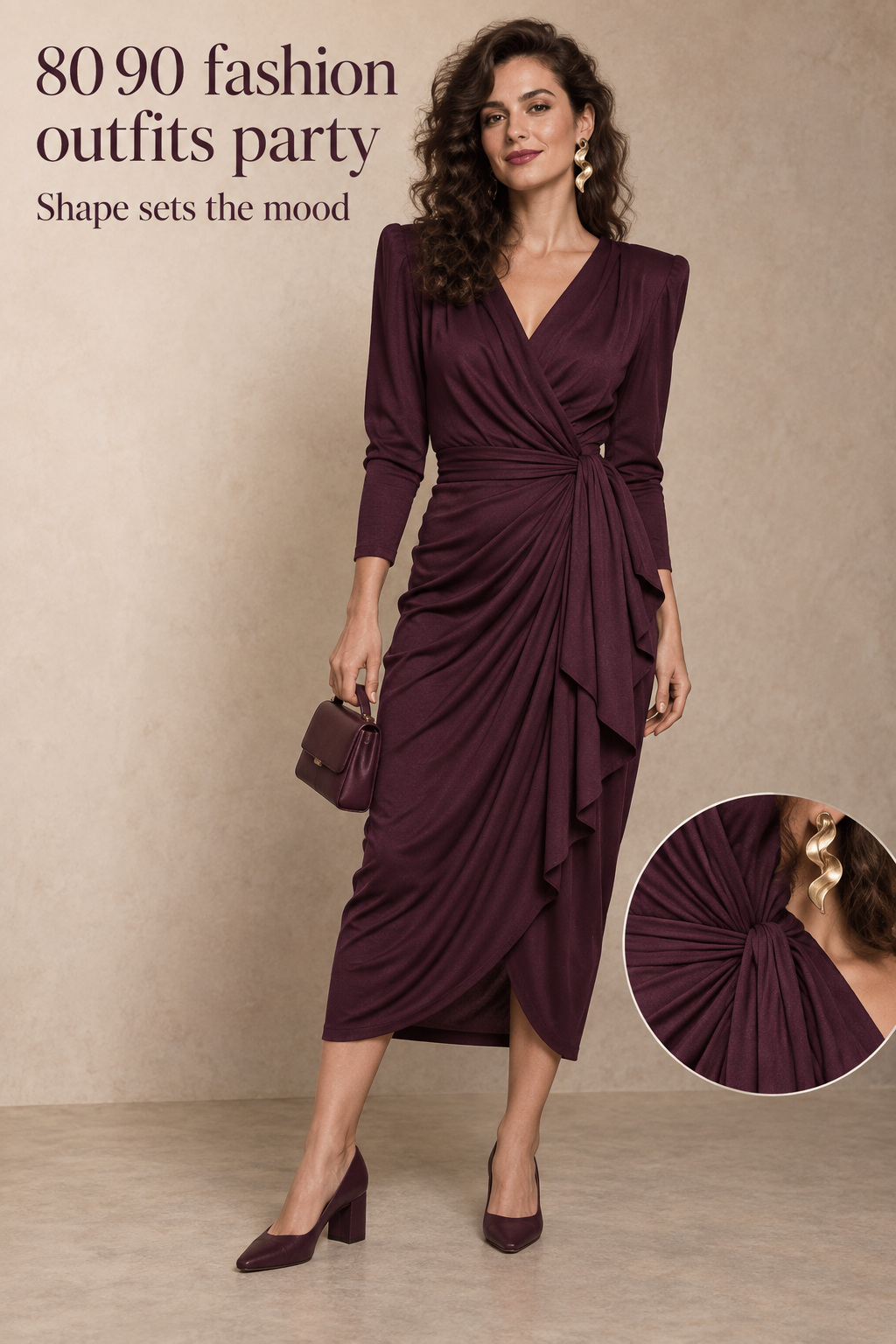
Use a soft jersey dress with a draped neckline, batwing or relaxed sleeve, and a clear waist seam or sash. Choose a rich solid color such as plum or teal if you want the silhouette, rather than a print, to do the work. Add a single sculptural earring pair and low block heels or secure dress flats. A small bag that stays close to your body keeps both hands free. The look is festive, but its stretch and drape make it easier to move than a rigid party costume.
Check the drape from the side and back. Fabric that looks elegant while you stand still can twist as you dance, and a sash may need a firmer knot than you expect. If the neckline moves when you raise your arms, try a different underlayer or a different dress rather than spending the evening adjusting it. Let the dress be the main decade cue. Oversized jewelry, a bold belt, and a statement bag together would compete with the already expressive shape.
Dance-floor 90s: A clean column and secure shoes
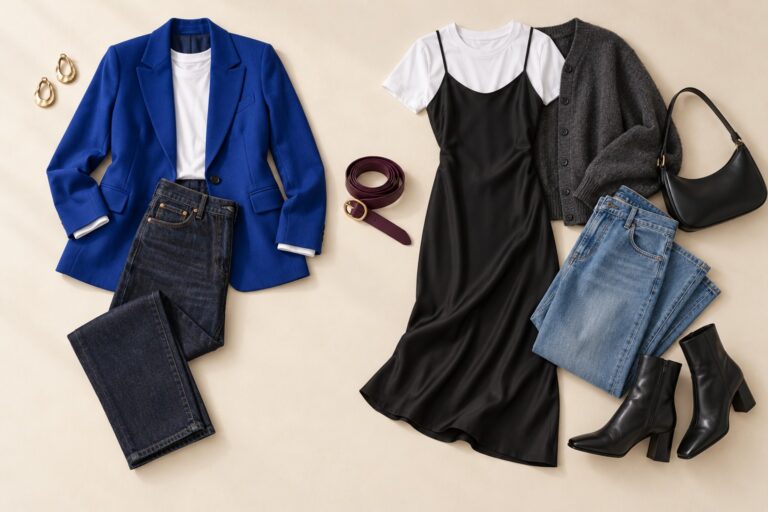
Try a sleeveless black midi dress with a straight or gently body-skimming line. It does not have to be a slip dress. The useful feature is a clean outline that lets one small detail, such as a narrow metallic barrette or simple pendant, register clearly. Wear low-heeled sandals with a secure strap or closed-toe flats if you expect to dance for hours. Choose a small bag that can be worn on the shoulder instead of held all night. The result is a 90s-inspired party look with very little visual noise.
A column can feel too plain in a photograph if the fit is unresolved. Check that the hem lands where you like it and that the fabric does not cling or twist when you walk. You can add a sheer, lightweight overshirt on arrival if the room feels more dressed up, then remove it for dancing. Keep the extra layer quiet. The strength of this route is that it asks one clear line to carry the outfit, so a second dramatic focal point will undermine it.
Dressy 80s: Jewel-tone shape with one bold finish
For a dinner or cocktail invitation, a plum or deep green dress with a shaped waist, soft shoulder emphasis, and a below-knee hem can carry an 80s reference without relying on neon or a novelty costume. Add one geometric gold cuff or substantial earring pair, then simple pumps or elegant flats. Choose a small structured clutch only if it suits the event; a compact shoulder bag may be easier when you are greeting people or holding a drink. Keep the hair and makeup in the same polished mood rather than treating them as a separate costume exercise.
The potential trade-off is ornament. A vivid dress, wide belt, bold earrings, and shiny bag may each look appealing alone, but together they can make the whole outfit feel crowded. Stand several feet back from the mirror. If the dress has a visible waist and shoulder line, it already communicates the direction. Choose the one accessory that adds the most; remove the rest. This is a more formal 80s route than the casual knit or jersey dance dress, so it belongs where the invitation calls for a finished appearance.
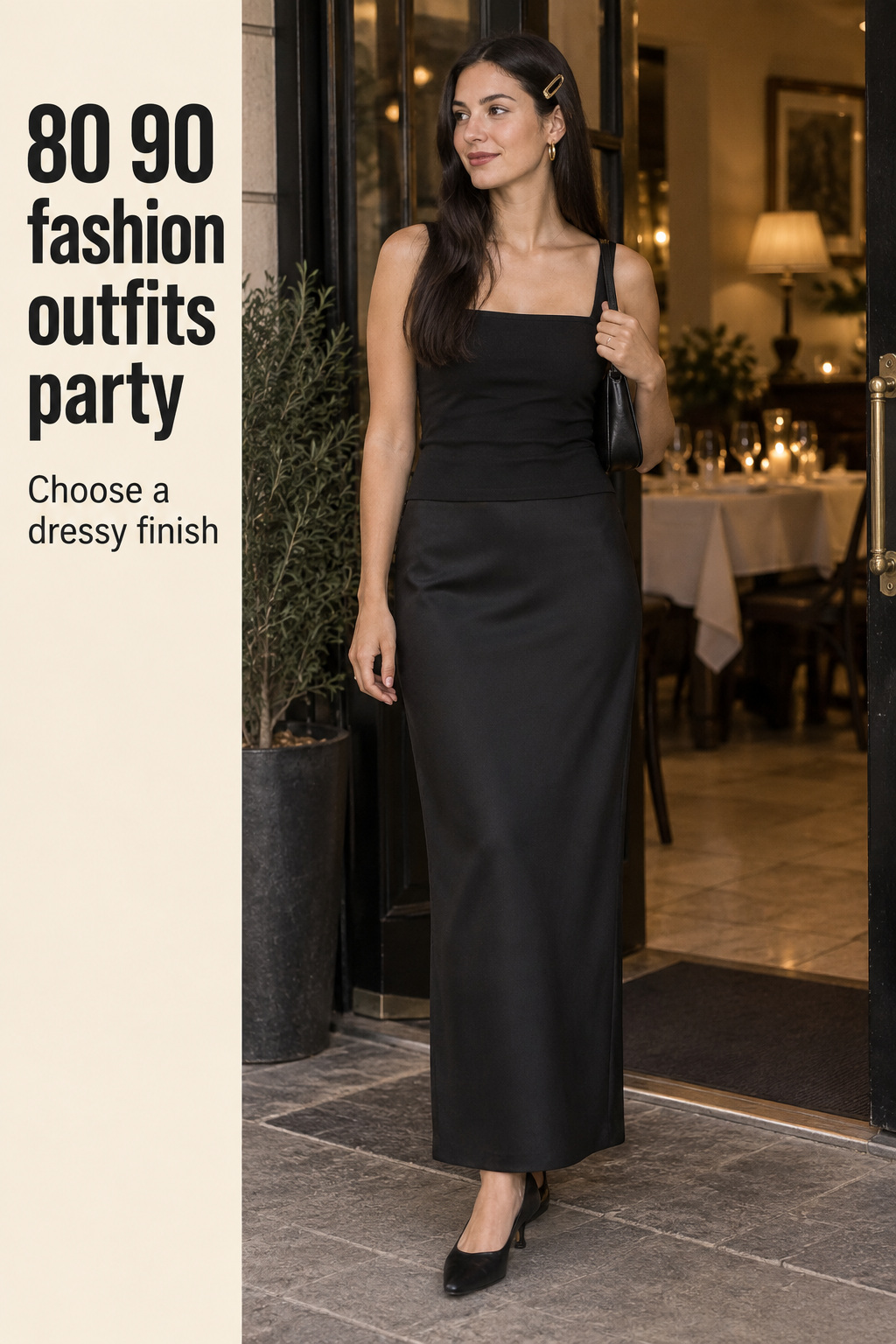
Dressy 90s: A straight skirt and fitted neckline
Pair a long, straight black skirt with a fitted square-neck top in the same color or a closely related neutral. The near-column effect gives the outfit its 90s-inspired restraint without repeating the dance-floor dress. Add a narrow belt only if the skirt needs it, a small shoulder bag, and closed-toe low heels. A slim hair clip or delicate earrings can finish the look. This combination suits a restaurant or a more formal party where an everyday tee and jeans would feel too relaxed.
Because the pieces are simple, fit and fabric carry more weight. A top that rides up or a skirt that restricts your stride will make the outfit less convincing and less comfortable. Walk a short distance, sit, and stand before you commit. You can swap the square-neck top for a fitted fine-gauge knit if you prefer more coverage, preserving the straight line. Resist the urge to add a huge jacket or heavily decorated shoe for “more theme.” The point of this route is its quiet, deliberate finish.
Trade-offs That Matter Once the Party Starts
Once you have picked a formula, judge it as a complete evening outfit rather than a still photograph. Start with the shoes. If the party includes dancing or a long walk to the venue, choose a secure pair you have already worn comfortably. If it is mainly seated, you may have more freedom, but the shoes still need to work with the hem and shape of your clothes. A decade cue in the dress will survive a practical shoe choice; the outfit does not collapse because you passed on an unstable heel.
Then check how many cues you are asking the outfit to carry. An 80s look can be clear through a shaped shoulder, waist, or expressive knit. A 90s look can be clear through a relaxed layer or clean column. Two related cues usually read more coherently than five unrelated ones. If you are unsure, photograph the complete outfit at normal room distance. Does the line of the clothes match the decade idea you chose? If a prop is the only thing identifying the era, strengthen the clothing formula instead of adding another prop.
Think about layers at the venue. A large coat or extra shirt may be necessary to arrive comfortably, but it should be easy to remove without dismantling the outfit. A dance look should still make sense once the outer layer is off. A house-party look should still look intentional after you take off your coat and put your bag down. For a dressy venue, plan where the bag goes while you sit. These small tests are more useful than buying a garment solely because a product photo looks period accurate.
Finally, check the invitation one more time. If the host names a decade, choose that one. If the host says “80s or 90s,” there is no need to split the difference or build a hybrid. Your goal is an outfit that belongs at this particular party and has one clear visual story. Choose the side-by-side option that works for the room, adjust the details to your own clothes, and leave yourself free to enjoy the event.
Sources and Methodology
The historical distinctions in this guide draw on the Fashion History Timeline and The Museum at FIT’s garment and exhibition material. The six outfits are modern, practical interpretations for three hypothetical party settings. They are styling proposals, not claims that every person in either decade dressed alike or that the garments were tested at an event.
FAQ
What should I wear to an 80s and 90s party at someone’s house?
Choose a casual formula with one clear decade cue. For an 80s direction, try a patterned crewneck knit with high-waisted tapered jeans and high-top sneakers. For a 90s direction, try a ribbed top, straight jeans, an open overshirt, and simple shoes. Both are comfortable for sitting and talking. Choose the one whose shape feels more natural to wear for several hours.
What is an easy outfit for an 80s or 90s dance party?
An 80s-inspired draped jersey dress with a shaped waist and one sculptural accessory is expressive and easy to move in. A 90s-inspired sleeveless black column dress with a small accessory is calmer. In either case, prioritize secure shoes and make sure the dress stays in place when you raise your arms, walk, and sit. The practical movement test matters more than a dramatic photo pose.
Can I wear sneakers to a mixed-decade theme party?
Yes, if the venue and host’s dress code are casual. Simple high-tops can support a casual 80s-inspired knit and tapered-jeans outfit; plain low sneakers can work with a relaxed 90s-inspired layer. For a restaurant or cocktail event, check whether sneakers suit the stated code before choosing them. The decade theme does not override the formality of the occasion.
How do I dress for a dressy 80s and 90s party without a costume?
Choose a complete silhouette rather than several novelty accessories. A jewel-tone dress with a shaped waist and one bold piece of jewelry gives a dressy 80s direction. A long straight skirt with a fitted square-neck top and restrained accessories gives a dressy 90s direction. Keep the shoes and bag aligned with the venue. The outfit can communicate the decade while still looking appropriate for dinner.
What if the invitation does not say whether the party is casual or formal?
Look for clues in the venue, start time, and any photographs the host shared. If those do not settle it, ask the host for the expected level of dress. You can also prepare a flexible outfit: a clean base with a removable outer layer and one accessory that makes the decade clearer. This is a more reliable approach than assuming every retro-themed party expects the same level of effort.
How many decade details should I add?
Begin with one strong clothing cue, then add one supporting detail. For example, a patterned knit and a visible tapered waist can carry an 80s casual outfit. A straight dark silhouette and a simple layer can carry a 90s one. Step back and see whether the complete look already reads clearly. If it does, extra props may make it harder to understand rather than more convincing.
Finish the look
The little extras that make a summer outfit feel complete
From beach days to city weekends, these easy pieces bring comfort, texture, and a polished finishing touch.

FENBEN
Straw Hobo Crossbody Bag
A handwoven straw bag with both short and crossbody straps—an effortless finishing touch for vacation looks and warm-weather outfits.
Shop the bag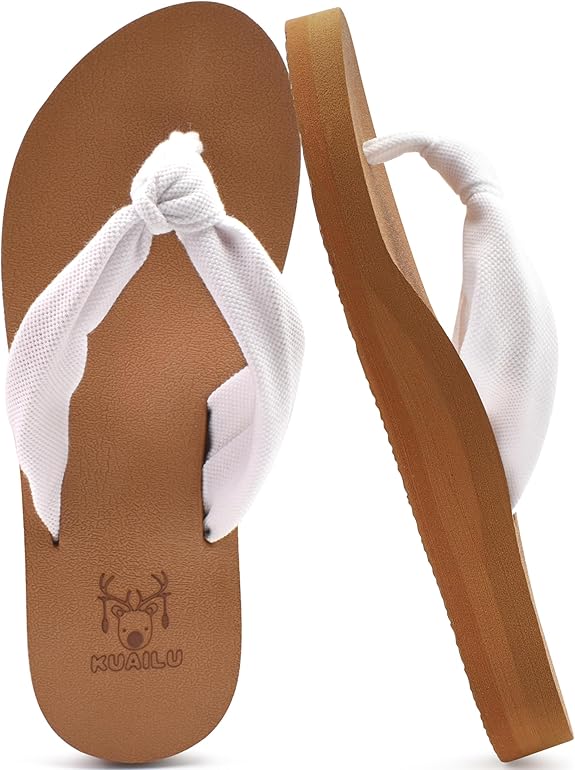
KuaiLu
Flip Flops with Arch Support
Cushioned, lightweight sandals with supportive arch design—a practical choice for beach trips, errands, and long summer walks.
Shop the sandals
baleaf
Athletic One-Piece Swimsuit
A functional one-piece with adjustable straps and moderate coverage, designed for swimming, training, surfing, and active beach days.
Shop the swimsuit
Astylish
Linen-Cotton Button-Down Shirt
A relaxed cotton-linen shirt with a collared V-neck and roll-up sleeves—easy to style over swimwear or with denim and shorts.
Shop the shirt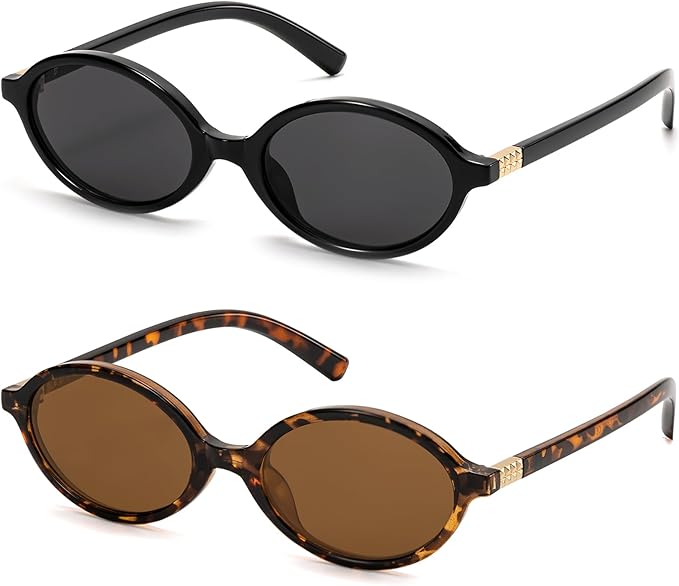
ViewJoy
Retro Oval Sunglasses
Small oval sunglasses with a 90s-inspired silhouette and UV400 lens protection—a quick way to add a vintage edge to everyday looks.
Shop the sunglasses
Affiliate disclosure: This section contains affiliate links. If you make a purchase through these links, I may earn a commission at no additional cost to you. Product selection, pricing, availability, and delivery terms may change—please review the current details on Amazon before purchasing.
As an Amazon Associate I earn from qualifying purchases.