80’s Shoes: The Pair That Changes the Whole Look
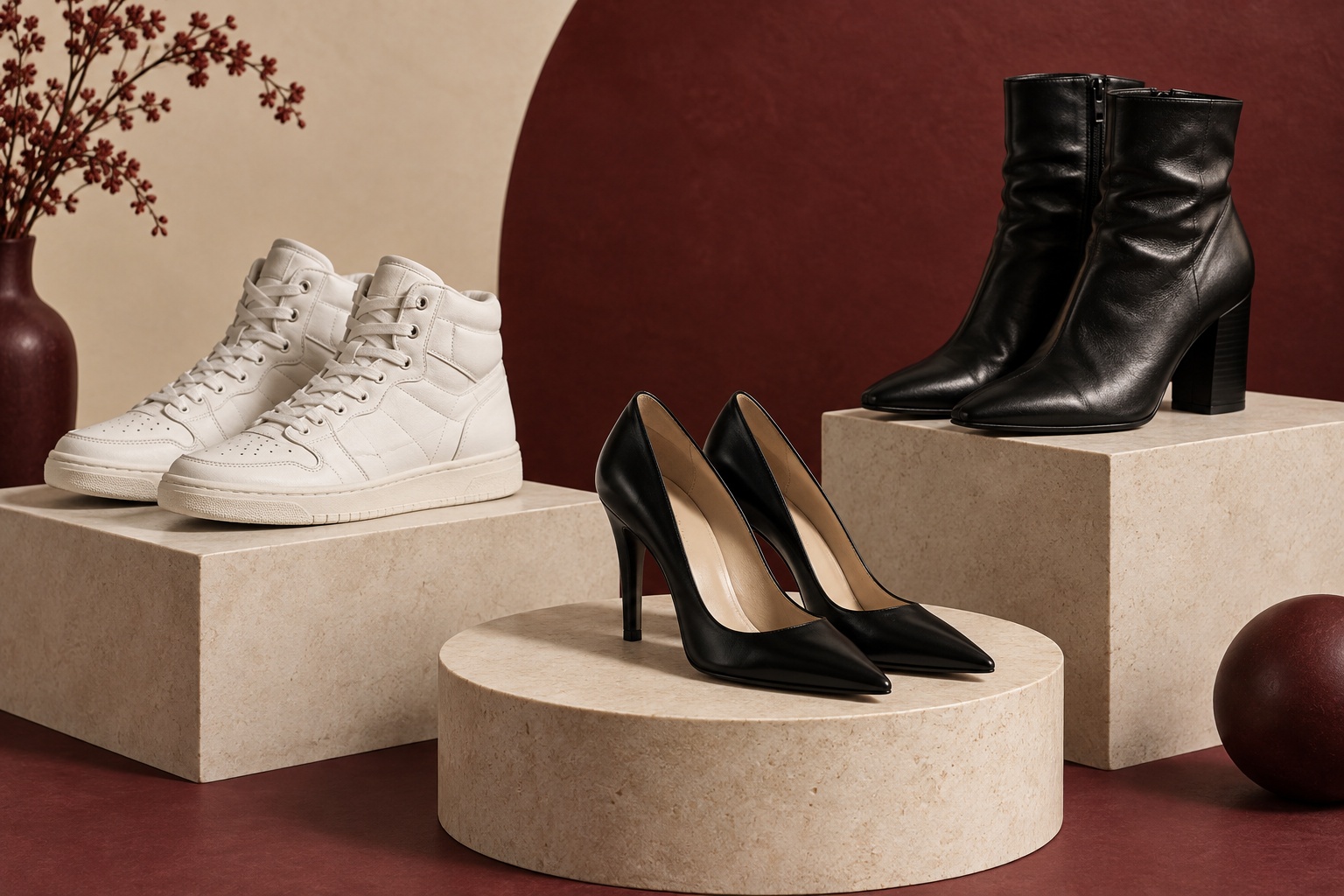
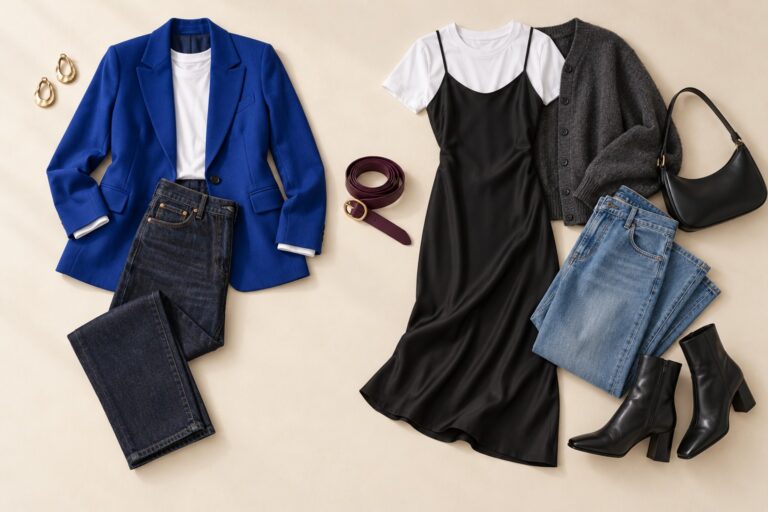
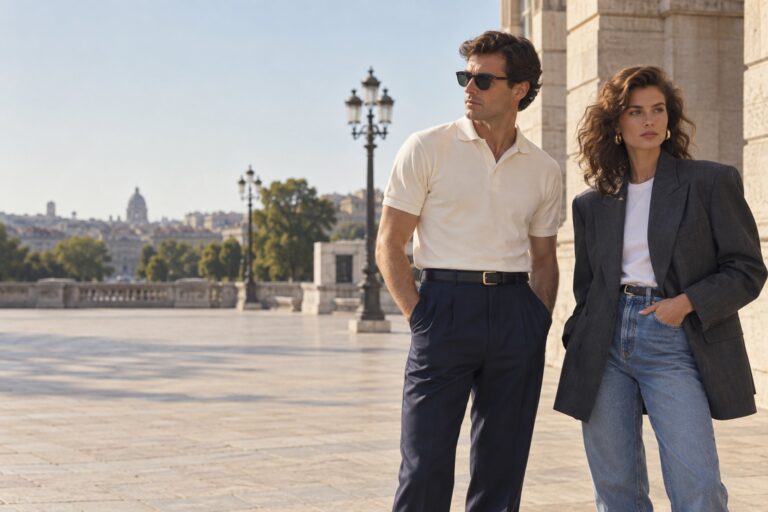
You can wear the same dark jeans and simple top two days in a row and make them feel like entirely different outfits. On one day, a clean white high-top sneaker gives the combination an easy, sporty lift. On the next, a pointed pump or a sleek ankle boot changes its posture. The clothes barely move. The message does.
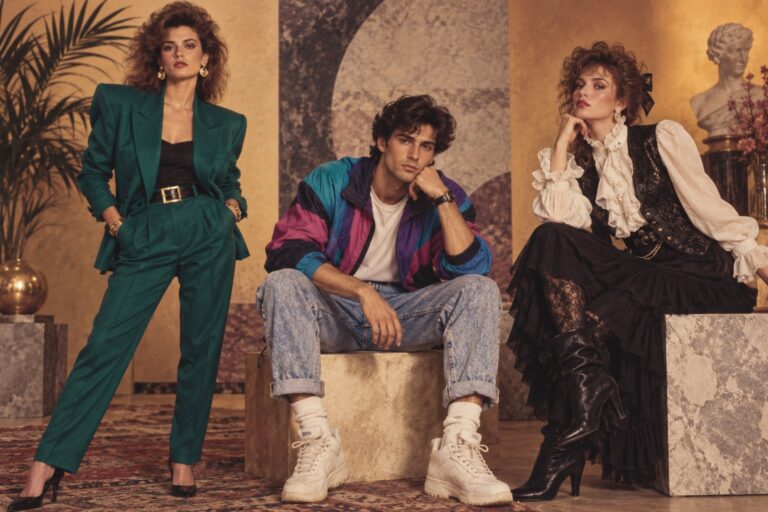
That is why shoes are such a good place to begin if you want a reference to the 1980s without building a full head-to-toe throwback. The decade offered everything from purpose-built aerobics sneakers and preppy loafers to pointed pumps, strappy heels, and expressive boots. There is no single pair that represents every part of it. The useful question is which shoe mood feels like you, and what the rest of your outfit needs to do around it.
The Shoes Made the Outfit Before the Rest of It
Think of the shoe as the last line in an outfit’s introduction. It can make a blazer and jeans feel relaxed, make a simple dress feel ready for a dinner, or give a soft skirt a little edge. When the shoe has a clear shape, people notice that shape first. You can use that attention instead of competing with it.
The Fashion-Note Edit
Five effortless pieces to refresh your everyday wardrobe
A polished, practical edit for workdays, weekends, and everything in between.

The Drop
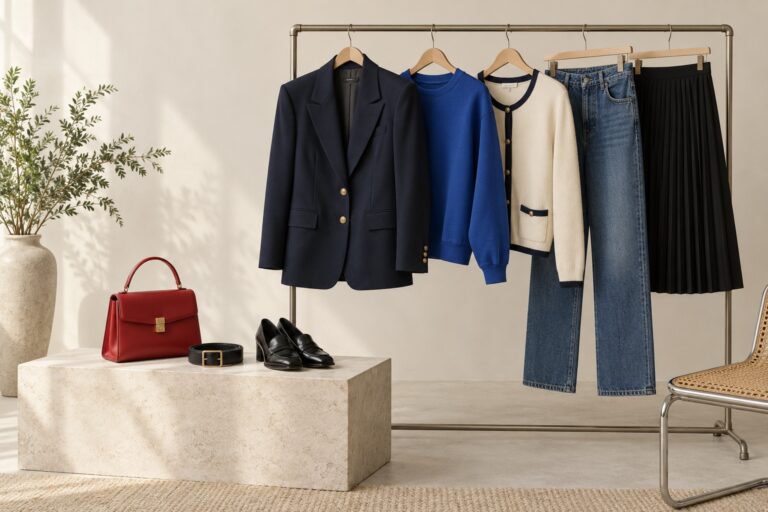
Women’s Blake Long Blazer
A longline, tailored blazer with a notched collar and a single-button closure—an easy layer for denim, dresses, or office-ready looks.
Shop the blazer
Amazon Essentials
Women’s Lightweight Crewneck
A soft, lightweight sweater with a clean crew neckline—the kind of reliable layer that works from cool mornings to air-conditioned spaces.
Shop the sweater
Amazon Essentials
Women’s Loafer Flat
A classic flat loafer that gives casual outfits a more polished finish and pairs naturally with tailored pants, skirts, and straight-leg jeans.
Shop the loafers
Levi’s
Women’s 501 90s Jeans
A relaxed, vintage-inspired take on the iconic 501 silhouette—made for an easy, lived-in look without the thrift-store search.
Shop the jeans
Colorfulkoala
High-Waisted 7/8 Leggings with Pockets
Soft, four-way-stretch leggings with side pockets and a high-rise waistband—designed for movement, errands, and off-duty comfort.
Shop the leggings
Affiliate disclosure: This section contains affiliate links. If you make a purchase through these links, I may earn a commission at no additional cost to you. Product selection, pricing, availability, and delivery terms may change—please review the current details on Amazon before purchasing.
As an Amazon Associate I earn from qualifying purchases.
It helps to start with a plan, not a shopping list. Look at a familiar outfit you already like and ask what you want to change. Would you like it to feel more grounded, more polished, more playful, or more dramatic? A low sneaker may bring casual energy. A moderate pump can sharpen tailoring. A boot with a visible shaft or unusual finish can make a plain dress feel more expressive. Naming the feeling makes it easier to choose a shoe that has a reason to be there.
Your wedding style is personal.
Your plan should feel that way, too.
Zarellea keeps your guest list, budget, vendors, and every next step beautifully organized — so you can focus on the moments that feel like you.
Then notice the shoe’s outline. Is the toe rounded, pointed, or broad? Does the sole sit close to the ground, or does it add visual weight? Does the ankle disappear under a trouser hem, or does the shoe create a visible break? These small design details affect how the whole outfit reads. The shoe does not have to be historically exact. A single shape, color, or material can be enough to signal your reference.
The 1980s are especially useful for this approach because women’s footwear was not one uniform trend. Everyday athletic shoes, classic pumps, comfortable flats, and subculture boots appeared in different wardrobes and settings. A history of women’s footwear from SATRA describes several of those parallel directions, including Reebok Freestyles with everyday clothes, strappy sandals, brogues, boat shoes, and boots associated with music scenes. That range gives you permission to choose a lane rather than reproduce a decade as a costume.
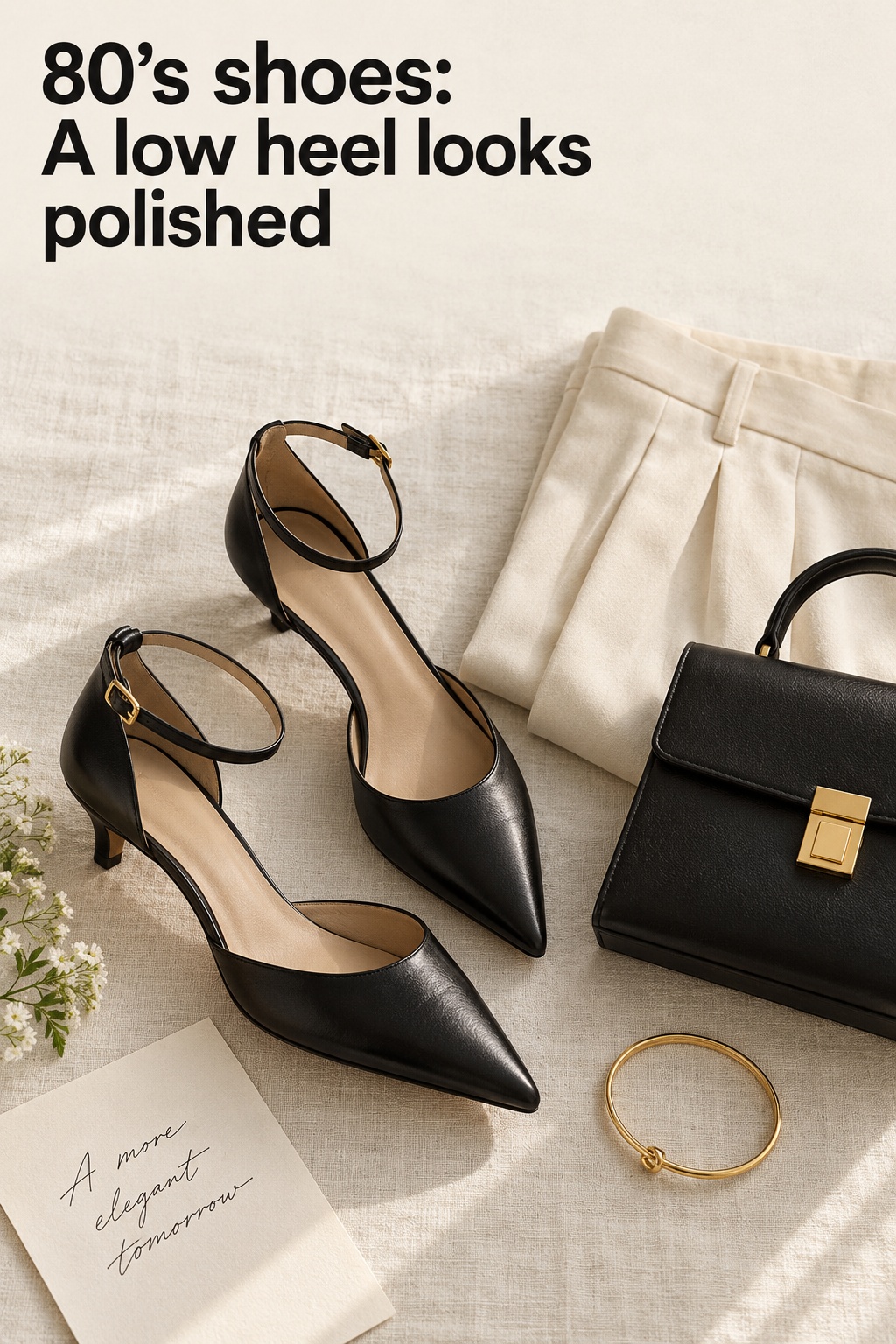
Three 1980s Shoe Moods to Recognize
Use these moods as a short visual guide. They are not strict historical categories. Real wardrobes mixed references, and the same shoe can feel different depending on its color, material, and what you wear with it. The point is to understand what a pair contributes before you build around it.
Sporty: court shoes, high-tops, and everyday sneakers
The sporty direction starts with a shoe that looks ready to move. A clean leather court sneaker reads differently from a running shoe with more visible panels, and a high-top creates a stronger line around the ankle than a low profile pair. In the early 1980s, the Reebok Freestyle was developed for aerobics, with a soft leather upper and a high-top version marked by ankle supports and straps. TIME’s history of the shoe explains how the new aerobics class format helped inspire a distinct women’s fitness sneaker. That origin is useful context if you want your outfit to nod to movement rather than simply look athletic.
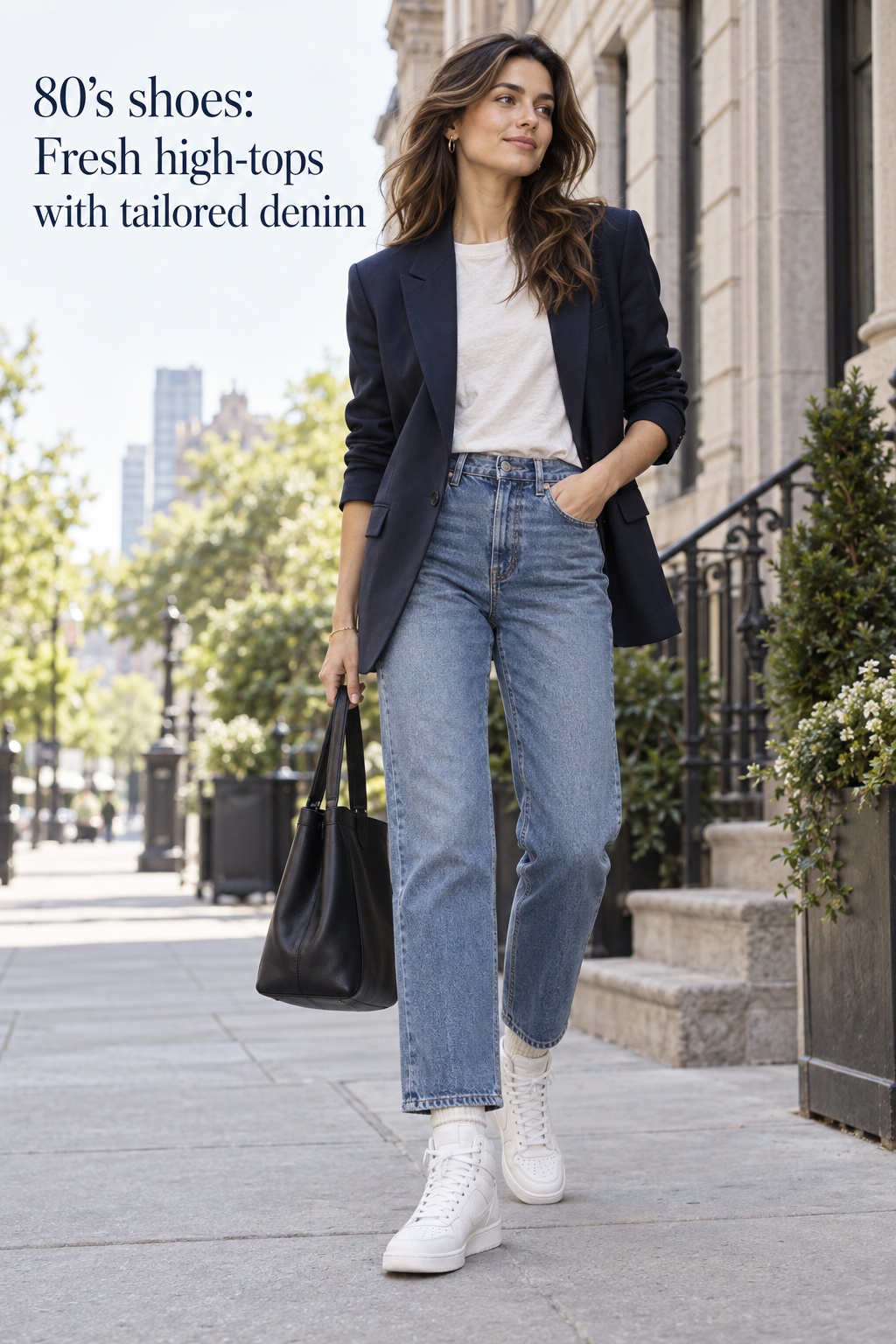
For a present-day outfit, wear a white or softly colored high-top with straight jeans, a plain crewneck, and a jacket that has a little structure. Let a small part of the shoe show below the hem so its shape remains visible. If the shoe has several colors, pick one and repeat it in a small accessory, such as a cap, sock, or bag. You do not need to match every stripe.
Another option is a simple sneaker with a skirt or an easy dress. The contrast makes the outfit feel informal and practical, while the shoe still has a recognizable outline. A crew sock can add a deliberate finishing line, but it should feel comfortable inside the shoe and not bunch in a way that changes how you walk. If visible socks are not your preference, a clean ankle line works just as well.
Try the sporty mood when you want the outfit to feel casual, active, or a little nostalgic. Keep the clothing line clean if your sneakers are colorful or chunky. If the shoes are white and simple, you can let a sweatshirt, jacket, or patterned sock add the stronger detail instead.
Polished: pumps, slingbacks, and flats with a clear shape
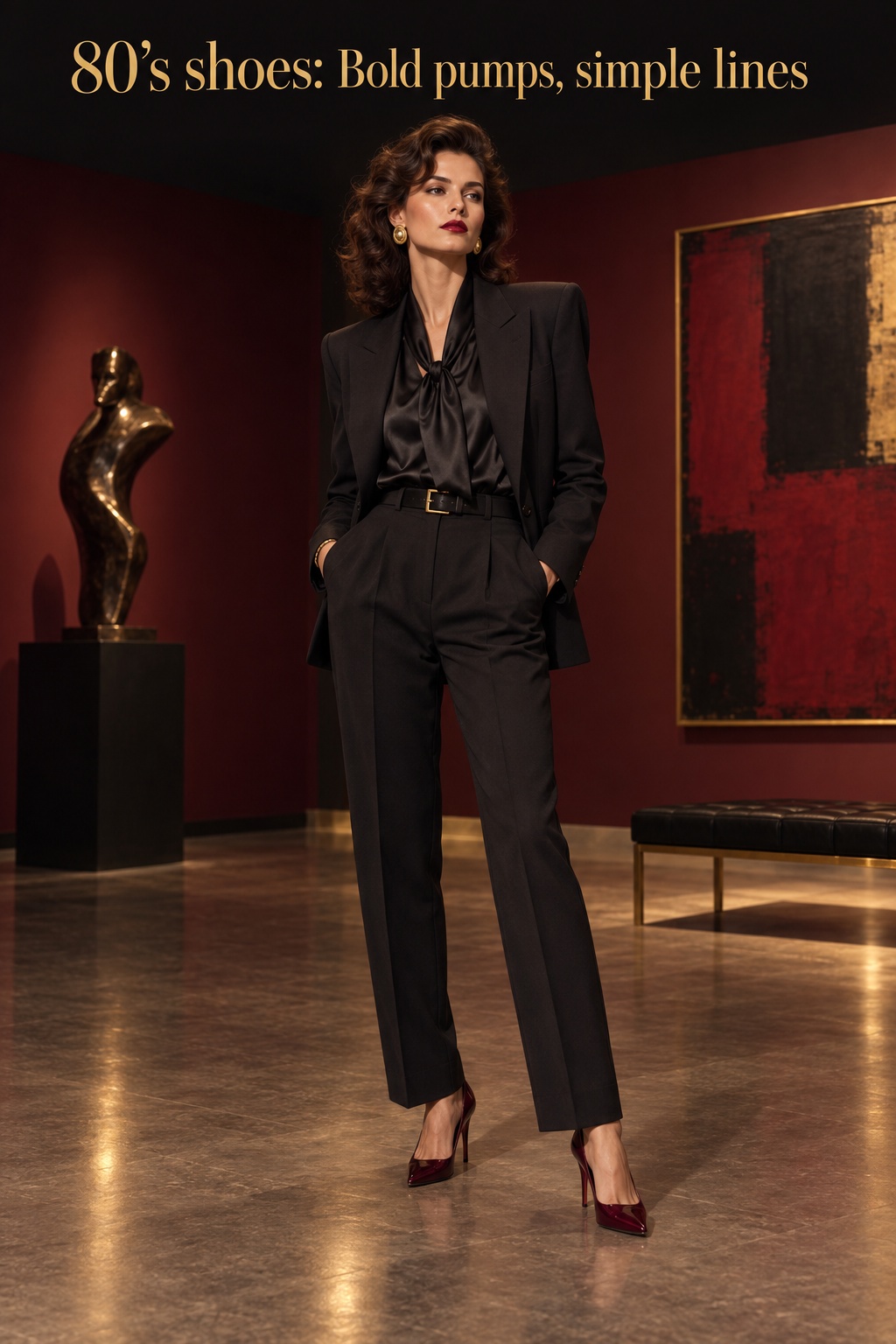
The polished lane includes pumps, slingbacks, ballet flats, loafers, and other shoes that create a sharper finish. A pointed toe can make a trouser look more directional. A round-toe flat can soften a blazer. A slingback exposes the heel and brings a lighter line to a tailored outfit. These differences matter more than the heel height alone.
In 1980s fashion imagery, shoes often supported confident tailoring, but polished does not have to mean formal. Try a low or moderate pump with relaxed jeans, a soft blouse, and a jacket. Or wear a flat with a straight skirt and a knit top. A narrow strap or small bow can add a period note without turning the entire outfit into a reference exercise. Patent leather, a geometric buckle, or a saturated color can take the role of the focal detail.
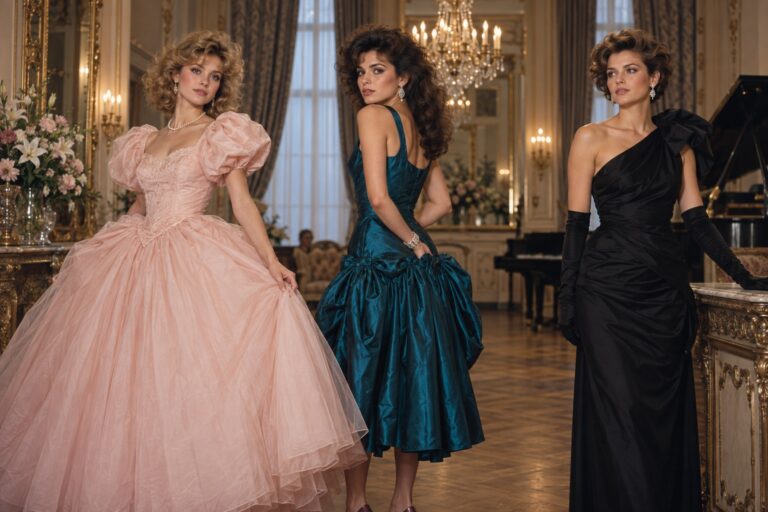
For a dressier combination, start with one clean silhouette: a column skirt, a simple dress, or tailored trousers. Add a shoe with a little shine or a noticeable toe shape, then keep the bag and jewelry quieter. If you enjoy statement shoes, you may prefer letting them carry the visual interest rather than stacking on equally bold accessories. That keeps the outfit composed while still giving it personality.
Flats can be especially useful if you want polish without a heel. Think about how the shoe sits against the ankle and where the hem stops. A slim flat with a cropped trouser creates a different effect from a rounder flat beneath a full-length jean. Both can work. Try them with your actual hem before deciding, because a small length change may make the shape feel more balanced.
Expressive: boots, straps, patent finishes, and unexpected details
Expressive shoes have a little more visual character. That could be a pointed patent toe, a ribbon lace, a Western shape, a gathered shaft, or a boot with a distinct heel. A pair of pointed patent shoes with ribbon laces in the London Museum collection dates from the 1980s and reflects a decorative New Romantic mood. The example is a reminder that shoes can tell a story through material and trim as well as silhouette.
For a modern look, use an expressive boot with an uncomplicated base: straight jeans and a long coat, a knit dress, or a simple skirt and top. If the boot is detailed, repeat only one of its cues elsewhere. A dark boot with silver hardware might pair with a small silver earring. A patterned boot could stand alone against solid clothing. The shoe gets enough room to be noticed without asking every other piece to perform.
A dress shoe can be expressive without being difficult to wear. A low kitten heel, ankle strap, bow, or color contrast may be easier to style than an extremely high heel or an elaborate design. The Museum at FIT’s record of a brown suede woman’s boot from Vivienne Westwood and Malcolm McLaren’s 1982 Buffalo collection shows how footwear could sit within a subcultural fashion story. You can borrow that sense of character through one boot shape while keeping the rest of your outfit entirely current.
When considering 80’s shoes, remember that expressive does not mean uncomfortable, impractical, or rare. You can find the visual cue in the toe, strap, finish, color, or shaft. Use the detail that you enjoy looking at, then decide whether the pair fits the kind of day you actually have.
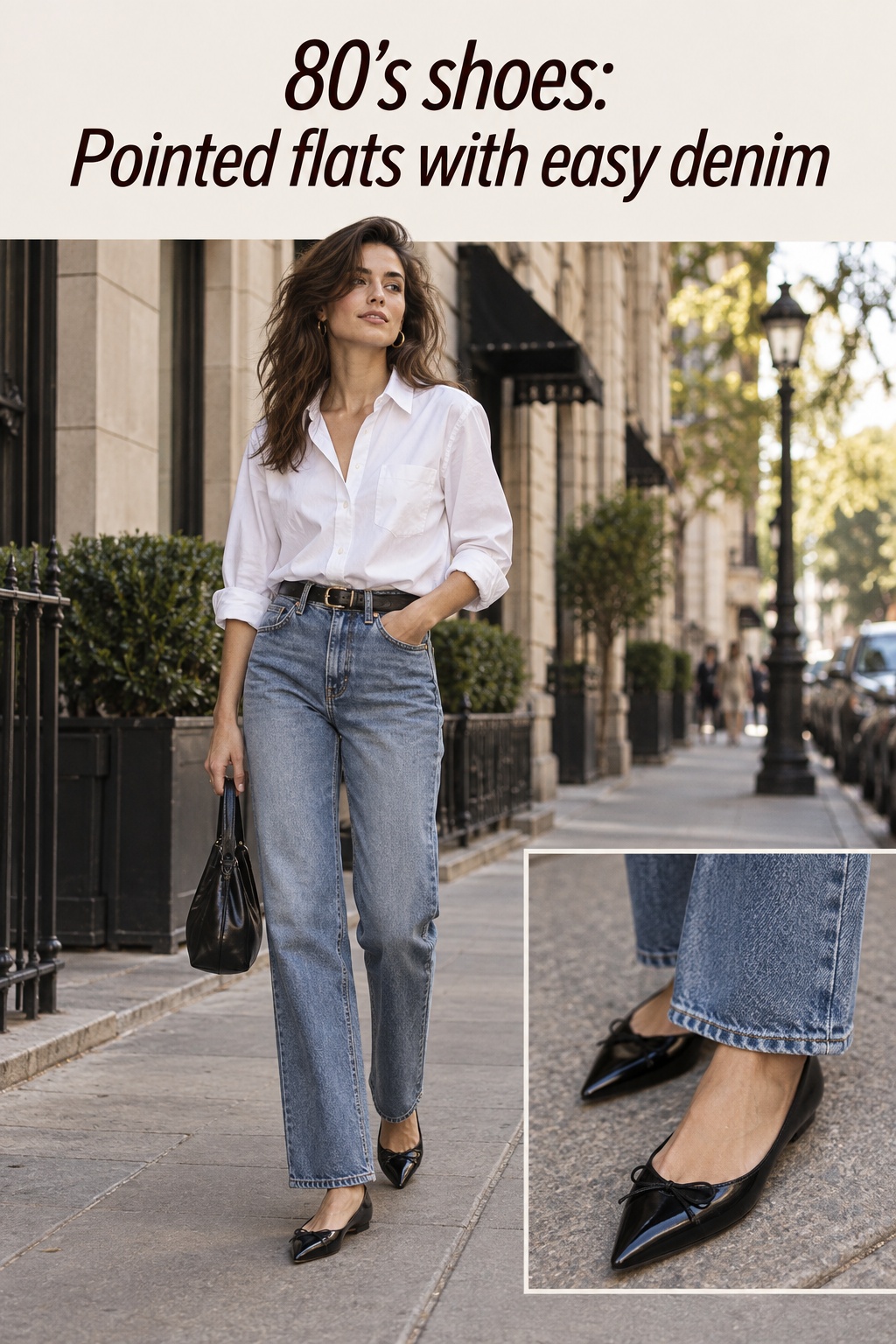
How to Wear 80’s Shoes With Modern Clothes
Once you have chosen a shoe mood, build the rest of the look in response to its shape. Start with the hem, then decide how much volume the outfit needs, and finish with color. This order keeps you from choosing clothes first and discovering that the shoes disappear or feel disconnected at the end.
Let the hem show the shoe’s strongest feature
If the shoe has a visible ankle strap, high-top collar, or decorative top line, check whether your trouser or skirt hides it. A straight jean can stop just above the shoe, break lightly across it, or cover it, depending on the look you want. None is automatically right. The goal is to choose deliberately. For a high-top, a shorter or gently rolled hem can reveal the collar. With a slim pump, a longer straight trouser can create a continuous line. With a boot, the hem can either skim the shaft or meet it cleanly.
Skirts and dresses create their own proportions. A flat can give a midi skirt an easy, daytime feeling. A low heel can sharpen the same skirt without changing its length. If a skirt and boot meet at an awkward-looking point, try a different hem or a sock or tight that visually connects the pieces. The point is not to chase a leg-length rule. It is to decide where the outfit’s visual line should pause.
Balance the shoe’s visual weight
A substantial sneaker often looks intentional with a wider trouser, a relaxed jacket, or a simple skirt that has enough shape to meet it. A very delicate shoe can look lovely with a clean ankle and a lighter hem. If you prefer a stronger contrast, try it and look at the full outfit from a few steps away. Some of the most interesting combinations place a fine shoe beneath a roomy outfit or a sporty shoe with a polished piece. Contrast is useful when it appears chosen.
Use one counterweight when an outfit feels off. A chunky sneaker may need a more structured jacket or a bag with some shape. A sharp pump may feel more relaxed with denim or a soft knit. A decorative boot may need a plain skirt or trouser to keep the eye from jumping between details. You are looking for a relationship between pieces, not an exact match.
Use color and material to connect the pair to your wardrobe
Begin with the shoes already in your closet. A cream sneaker can work with denim, navy, or soft colors. A black pump can support prints and brighter shades. A brown boot can feel natural with blue denim, cream knits, or a plaid skirt. If your 1980s reference is a bright shoe, repeat a small amount of that color somewhere else or let it stand alone against neutrals. Repeating a color can connect pieces, but it does not need to be an exact match.
Material gives another clue. Patent leather reflects light, suede feels softer, canvas looks casual, and metallic finishes are more noticeable. Use those qualities to tune the mood. Patent shoes with dark tailored pants can look crisp. Suede boots with a knit dress may feel relaxed. A metallic pump with a plain outfit can be the single evening detail. If two materials are both glossy or heavily textured, make sure you want the outfit to feel that rich. If not, leave one surface quiet.
Try four simple outfit pairings
- For a casual day: Wear clean high-tops with straight jeans, a plain tee, and an easy blazer or denim jacket. Keep the hem short enough to show the shoe if its collar is the feature you like.
- For a polished daytime plan: Pair a low pump or slingback with tailored pants, a fine knit, and a simple belt. Use a soft bag or relaxed top to keep the finish from feeling too formal.
- For a skirt outfit: Try a flat or low heel with a midi skirt and a fitted or tucked top. Let one accessory echo the shoe’s color or decorative detail.
- For a stronger statement: Wear a distinctive boot with a simple dress or dark straight jeans. Let the boot supply the edge and keep the rest of the outfit calm.
These are starting points, not a required uniform. Swap a blazer for a cardigan, change the skirt length, or use a sneaker you already know you can wear for the day. The important part is that the shoe has a clear role. When the role is clear, the rest of the outfit usually becomes easier to edit.
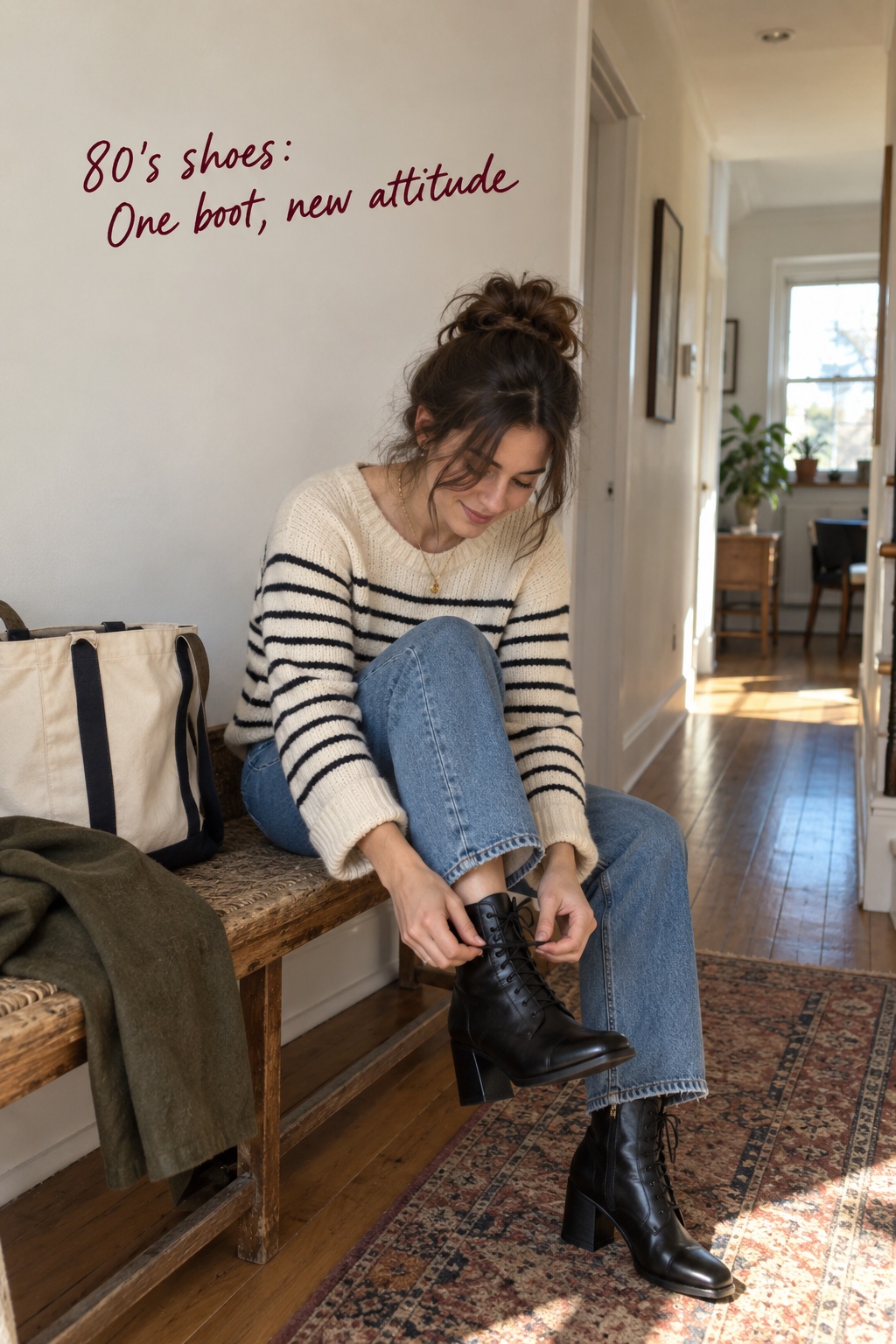
A Quick Fit and Finish Check Before You Commit
A great-looking pair needs to work for your plans. Before choosing a vintage shoe or a current pair with a similar shape, take a moment to consider fit, condition, and use. This is not about buying a perfect collectible. It is about deciding whether this particular pair is worth wearing today.
Check the fit in the socks you plan to wear
Try the shoes with the sock, tight, or no-show layer you expect to use. A shoe that feels comfortable over a thin sock may feel crowded with a thicker one. Walk on a clean indoor floor and notice whether your heel lifts, your toes feel compressed, or a strap sits where you can adjust it. If the pair feels distracting after a few minutes, it may not be the one for a long day. You do not need to force a shoe because it looks authentic.
Look over the pair and match it to the day
For a secondhand or vintage pair, inspect the lining, closures, seams, outsole, and any visible damage before wearing it outside. If you are uncertain about its condition, ask a qualified shoe repair professional to look at it. For any pair, think about how much walking, standing, weather, and sitting the plan involves. A decorative pump may suit a short dinner, while a sneaker or a stable flat may suit a day with more walking. Your outfit can be adapted around the shoe that fits the plan.
Finally, look at the outfit as a whole. Can you name the shoe’s role? Does the hem let it appear as intended? Is there one other detail that connects it to the clothes, or does it work well as a deliberate contrast? If the outfit feels busy, remove an accessory before replacing the shoes. If it feels disconnected, try a quieter clothing piece or repeat one color. A few small edits are often all that is needed.
The best 80’s shoes are not necessarily the most recognizable or the most dramatic. They are the pair whose shape gives your outfit the quality you wanted, and that you can wear with confidence and ease. Start with one shoe mood, let it guide the hem and proportion, then stop adding details when the look feels complete.
Sources and Methodology
This article combines footwear history, museum collection records, and fashion editorials to distinguish sporty, polished, and expressive shoe directions from the 1980s. TIME’s history of the Reebok Freestyle provides context for aerobics footwear, while the SATRA footwear overview discusses several simultaneous shoe styles and subcultures. Styling formulas are original suggestions and do not imply product testing or personal experience.
Sources: TIME, 1980s Fitness Craze Inspired Reebok Freestyle Sneaker and SATRA, The Evolution of Women’s Footwear, 1980 to 1989.
FAQ
What shoes were popular for women in the 1980s?
Women wore many types of shoes, including athletic sneakers, high-tops, pumps, flats, loafers, strappy sandals, boots, and jelly shoes. The right reference depends on the style direction you want, not one shoe that stands for the entire decade.
How can I wear 80’s shoes without looking like I am wearing a costume?
Use one recognizable shoe detail and pair it with clothes you already wear. A high-top sneaker with straight jeans, a pump with relaxed tailoring, or a decorative boot with a simple dress can suggest the era without copying every vintage cue at once.
Which 1980s shoes are easiest to style today?
Simple court sneakers, low-profile high-tops, classic flats, loafers, and moderate pumps are versatile starting points. Choose a shape that fits your wardrobe and plans, then let its color or outline provide the retro note.
Can I wear 1980s sneakers with a skirt or dress?
Yes. A clean sneaker can make a skirt or dress feel more relaxed. Try a length and sock combination that feels intentional, and keep another part of the outfit simple so the contrast between sporty and polished looks chosen.
What should I check before buying vintage shoes?
Check the fit, lining, closures, seams, outsole, and visible condition. Try them with the socks or tights you expect to wear and walk indoors briefly. If you have concerns about the structure or repair needs, ask a qualified shoe repair professional.
How do I choose the right hem for a statement shoe?
Decide which part of the shoe you want to show. A shorter hem can reveal a high-top collar or ankle strap, while a longer trouser can create a continuous line over a slim pump. Try the outfit in motion and choose the hem that makes the shoe’s role clear.
Finish the look
The little extras that make a summer outfit feel complete
From beach days to city weekends, these easy pieces bring comfort, texture, and a polished finishing touch.

FENBEN
Straw Hobo Crossbody Bag
A handwoven straw bag with both short and crossbody straps—an effortless finishing touch for vacation looks and warm-weather outfits.
Shop the bag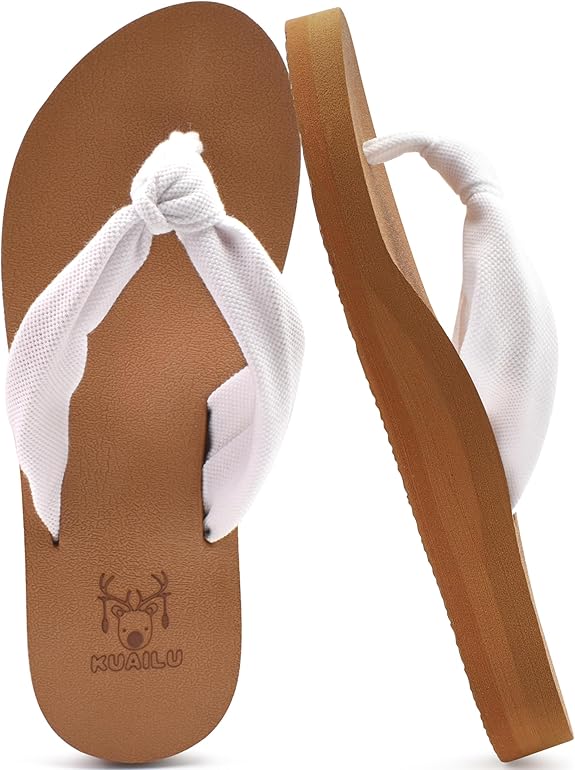
KuaiLu
Flip Flops with Arch Support
Cushioned, lightweight sandals with supportive arch design—a practical choice for beach trips, errands, and long summer walks.
Shop the sandals
baleaf
Athletic One-Piece Swimsuit
A functional one-piece with adjustable straps and moderate coverage, designed for swimming, training, surfing, and active beach days.
Shop the swimsuit
Astylish
Linen-Cotton Button-Down Shirt
A relaxed cotton-linen shirt with a collared V-neck and roll-up sleeves—easy to style over swimwear or with denim and shorts.
Shop the shirt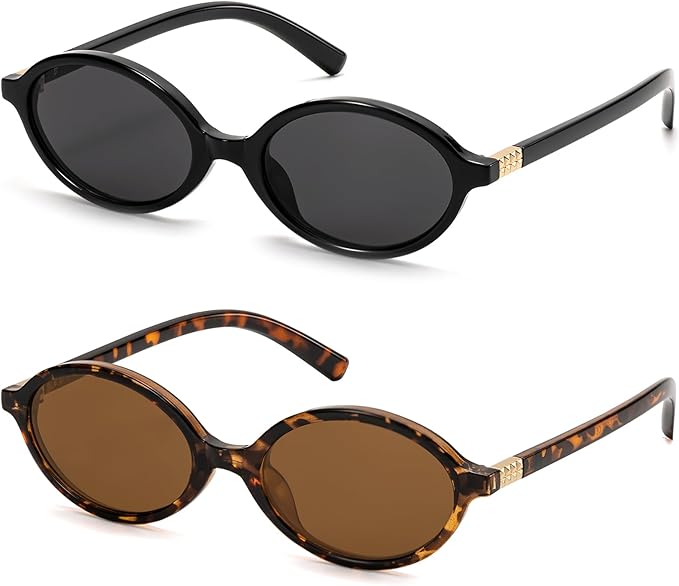
ViewJoy
Retro Oval Sunglasses
Small oval sunglasses with a 90s-inspired silhouette and UV400 lens protection—a quick way to add a vintage edge to everyday looks.
Shop the sunglasses
Affiliate disclosure: This section contains affiliate links. If you make a purchase through these links, I may earn a commission at no additional cost to you. Product selection, pricing, availability, and delivery terms may change—please review the current details on Amazon before purchasing.
As an Amazon Associate I earn from qualifying purchases.