80’s Party Outfits: Choose Your 80s Era
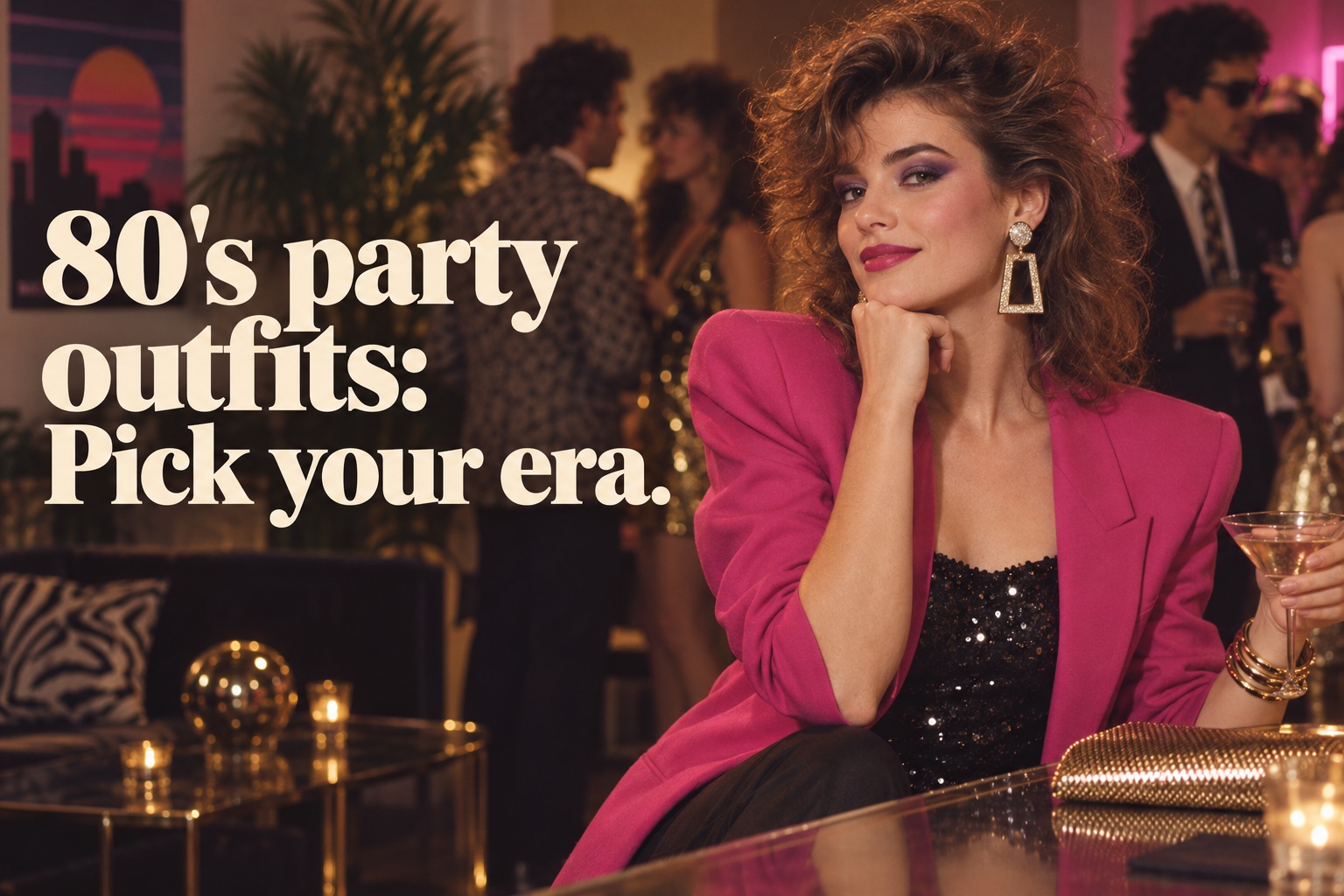
The invitation says “80s,” and suddenly every decade cliché seems to be asking for a place in the same outfit. A ruffled blouse, a dance sweatshirt, a sharp blazer, acid-wash denim, and a neon accessory can all point toward the 1980s, but they do not necessarily point toward the same moment. That is why the most useful first question is not what 80s item to add. It is which part of the decade you want your reference to come from.
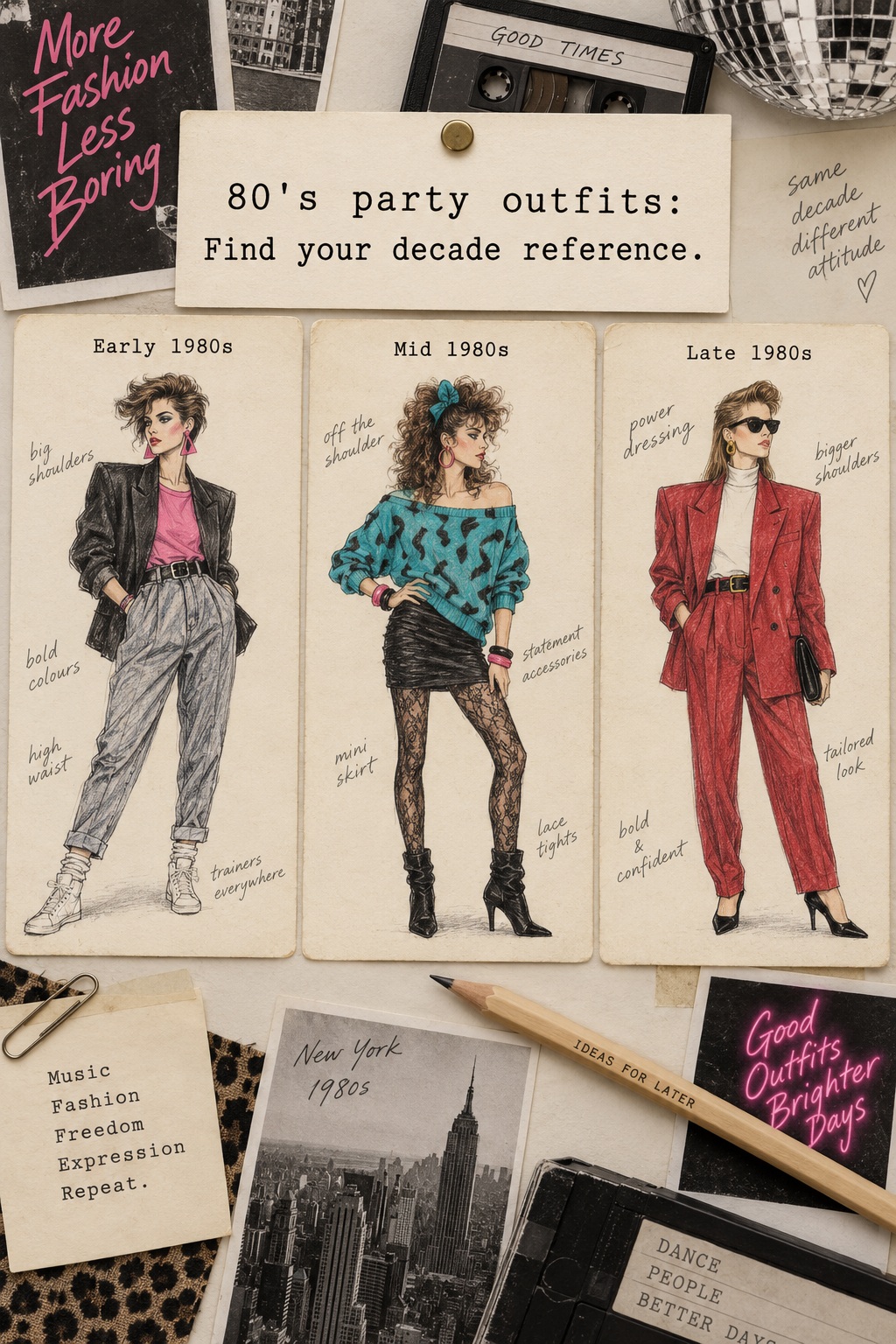
For 80’s party outfits with a clearer point of view, think like an editor looking at a dated photograph. Decide whether the image feels early, mid, or late decade, then notice what gives it that impression: its shape, styling mood, or relationship between fitted and voluminous pieces. These are working categories rather than strict historical borders. Trends crossed years, communities, and regions, so the aim is a coherent reference, not a claim that everyone dressed alike.
Why an 80s Reference Needs a Date
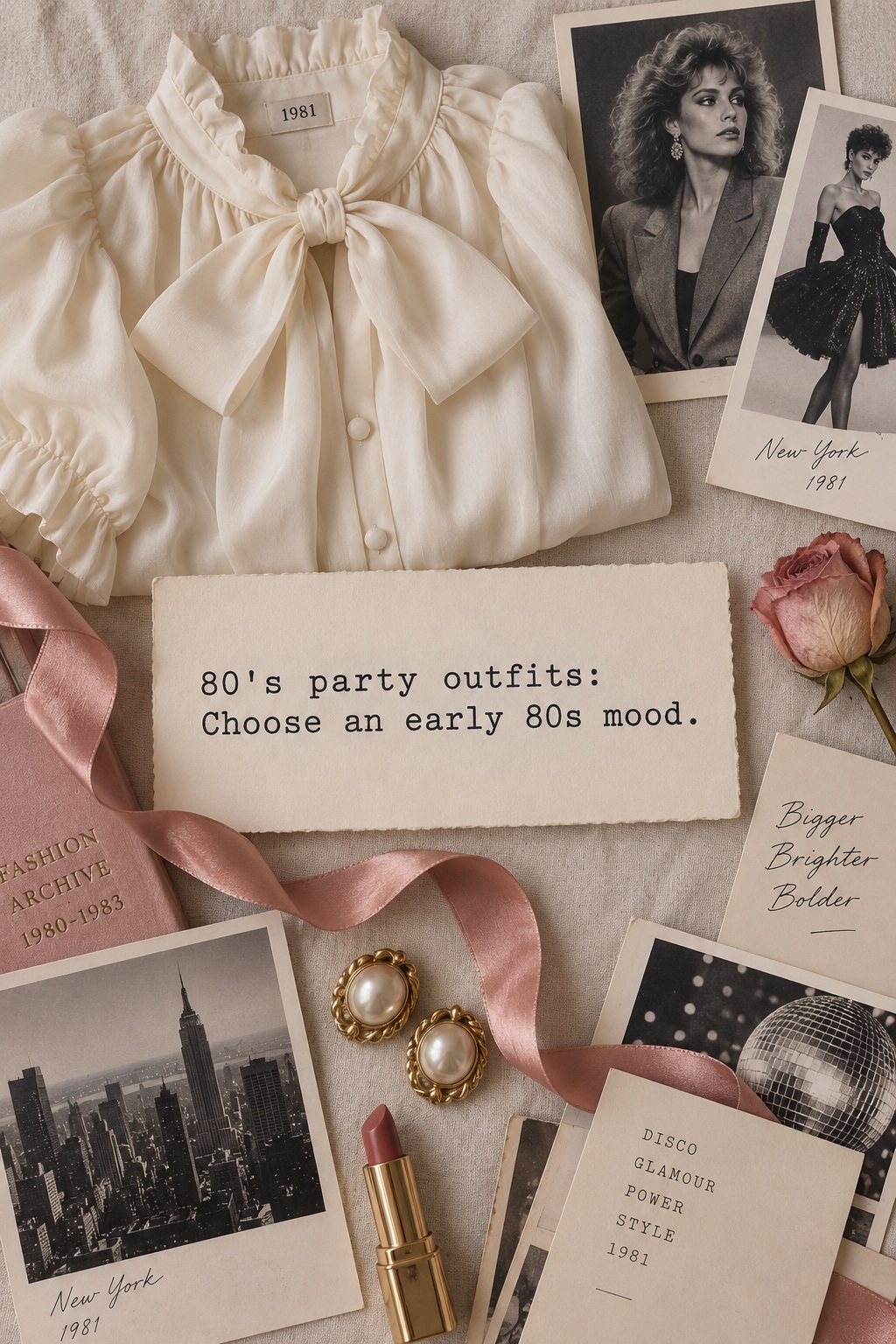
“The eighties” is a ten-year container, not a single outfit recipe. A decade overview can place early-1980s romantic styling and New Romantic looks alongside dancewear, then trace the growing visibility of power dressing as the decade progressed. Dated garments make that variety easier to see. A blouse from 1981, a film image from 1983, and a tailored suit from 1986 belong to the same decade, but they do different visual work. The Fashion History Timeline at FIT describes those shifts and includes objects dated across the period.
The Fashion-Note Edit
Five effortless pieces to refresh your everyday wardrobe
A polished, practical edit for workdays, weekends, and everything in between.

The Drop
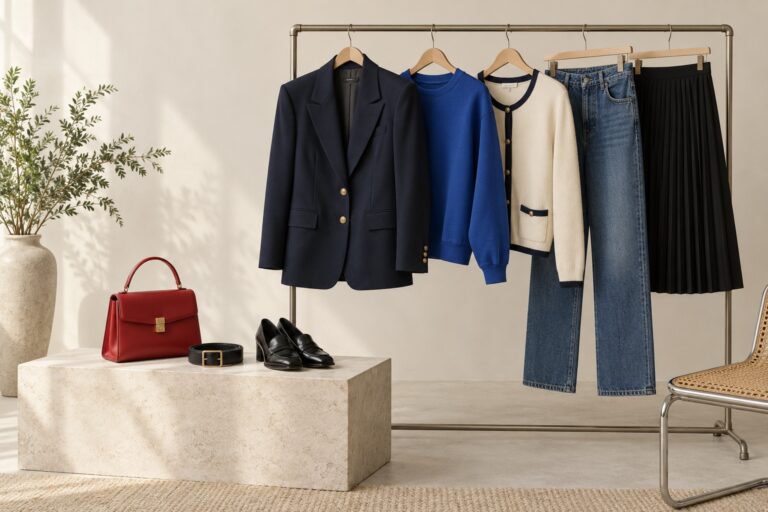
Women’s Blake Long Blazer
A longline, tailored blazer with a notched collar and a single-button closure—an easy layer for denim, dresses, or office-ready looks.
Shop the blazer
Amazon Essentials
Women’s Lightweight Crewneck
A soft, lightweight sweater with a clean crew neckline—the kind of reliable layer that works from cool mornings to air-conditioned spaces.
Shop the sweater
Amazon Essentials
Women’s Loafer Flat
A classic flat loafer that gives casual outfits a more polished finish and pairs naturally with tailored pants, skirts, and straight-leg jeans.
Shop the loafers
Levi’s
Women’s 501 90s Jeans
A relaxed, vintage-inspired take on the iconic 501 silhouette—made for an easy, lived-in look without the thrift-store search.
Shop the jeans
Colorfulkoala
High-Waisted 7/8 Leggings with Pockets
Soft, four-way-stretch leggings with side pockets and a high-rise waistband—designed for movement, errands, and off-duty comfort.
Shop the leggings
Affiliate disclosure: This section contains affiliate links. If you make a purchase through these links, I may earn a commission at no additional cost to you. Product selection, pricing, availability, and delivery terms may change—please review the current details on Amazon before purchasing.
As an Amazon Associate I earn from qualifying purchases.
This difference matters at a theme party because references are read as combinations. A strong shoulder beside a narrow waist can suggest one kind of structure. A soft blouse with a full sleeve can suggest another. A dance-inspired sweatshirt may carry a different mood from a sharply tailored jacket, even if both are entirely plausible 1980s choices. When unrelated cues pile together, a look can become a general costume shorthand. Choosing a time window gives the details a shared context.
Your wedding style is personal.
Your plan should feel that way, too.
Zarellea keeps your guest list, budget, vendors, and every next step beautifully organized — so you can focus on the moments that feel like you.
Use “early,” “middle,” and “late” as a sorting tool, not a test of historical purity. The categories below gather useful reference points, but no year switched fashion off and on. Designers, music scenes, everyday wardrobes, and individual taste moved at different speeds. If your chosen photograph blends influences, that is not an error. Simply describe what you are borrowing from it and let that be the center of your interpretation.
Early 80s: Romantic Volume, Club References, and Dancewear
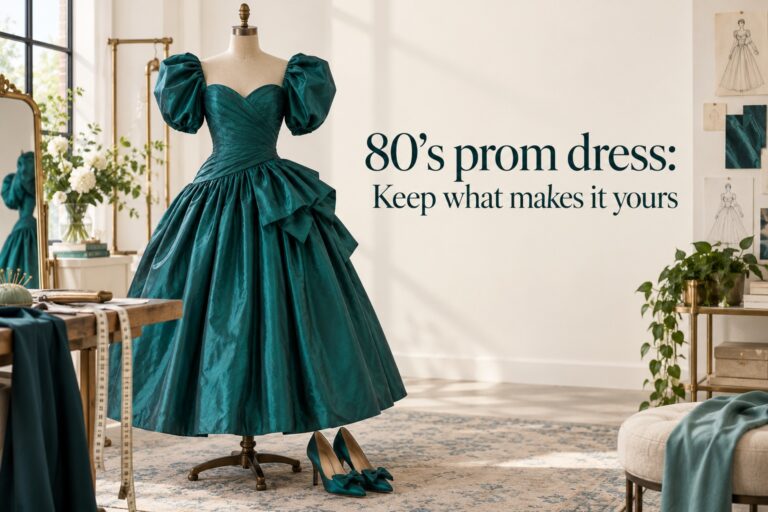
Early-decade references are especially varied because the 1980s opened with styles continuing from the late 1970s as well as new directions. FIT notes the persistence of romantic dress, including puffed sleeves, bows, oversized belts, and historical references. Vivienne Westwood’s 1981 Pirate Collection was one dated example, and its look informed what became known as New Romantic styling among London bands and club-goers. That is a specific thread in the decade, not a template for all early-eighties clothing.
For a party reference drawn from this romantic or New Romantic side, read the image for shape before color. Is the sleeve full? Does the garment have a soft, layered, or historically suggestive quality? Are accessories part of a deliberately theatrical composition? These observations help distinguish a reference from the generic idea of “more is more.” The point is not to assemble every romantic detail. It is to notice which one or two features make the source image recognizable, then preserve their scale and mood.
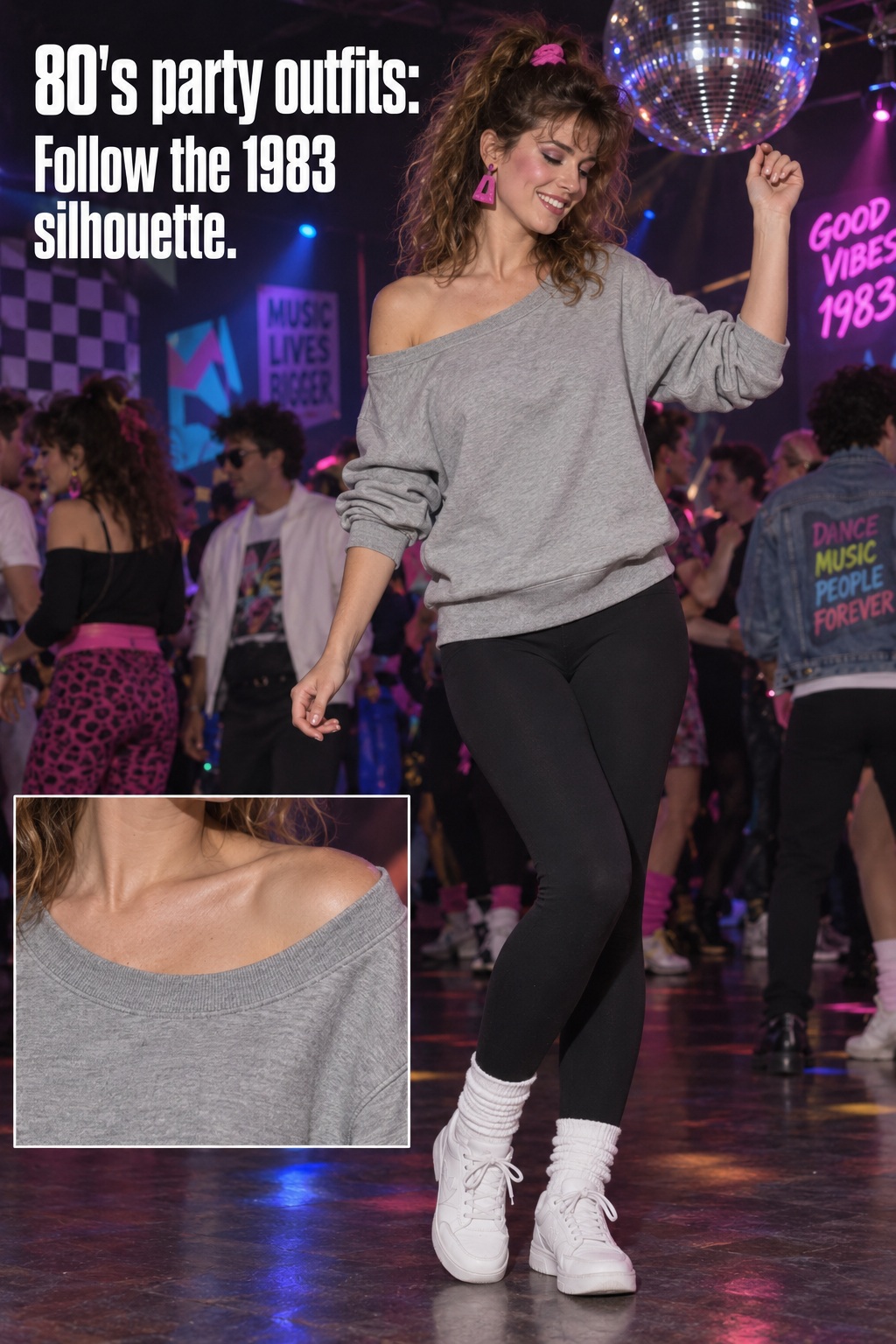
Another early-eighties route comes from sportswear and fitness culture. Dancewear moved beyond the studio into fashion, with off-the-shoulder sweatshirts and leggings among the cited visual signals. Jennifer Beals’ 1983 appearance in Flashdance became a particularly recognizable reference. Here, the useful clue is the relationship between relaxed movement and a close-fitting base, not simply the presence of a sweatshirt. A contemporary sweatshirt with a printed slogan may feel like a costume prop; a reference image lets you study the neckline, proportion, and styling instead.
These early directions are not interchangeable. A romantic, historically inflected image tells a different story from an athletic one. If you want a dancewear reference, keep the visual emphasis on movement and the garment shapes that support it. If you prefer the romantic direction, let sleeve volume or a soft decorative detail carry the reference. Either can read as early-decade inspiration, but combining their loudest signals without a source may blur the point you meant to make.
Mid-80s: A Reference Can Shift from Movement to Authority
A middle-decade reference can be useful precisely because it resists a single definition. Dancewear and body-conscious sportswear remained visible, while power dressing became an increasingly prominent fashion story. FIT’s overview discusses designers using stretch fabrics and records the influence of dancewear, while also describing padded shoulders and bold accessories in the rise of power dressing. These strands existed within the same broad period. A mid-1980s inspiration image might therefore feel kinetic and close to the body, or structured and commanding.
Instead of asking whether an outfit is “mid-eighties enough,” ask what its silhouette is doing. Does the image use a strong shoulder to widen the upper body? Does a flexible fabric follow the body? Does tailoring make the garment appear formal or assertive? The shape often tells you more than a single bright color. FIT dates particular examples, including a Thierry Mugler suit from 1986 and a Donna Karan dress from 1987. Those objects help anchor the timeline, but they do not stand in for every person’s wardrobe.
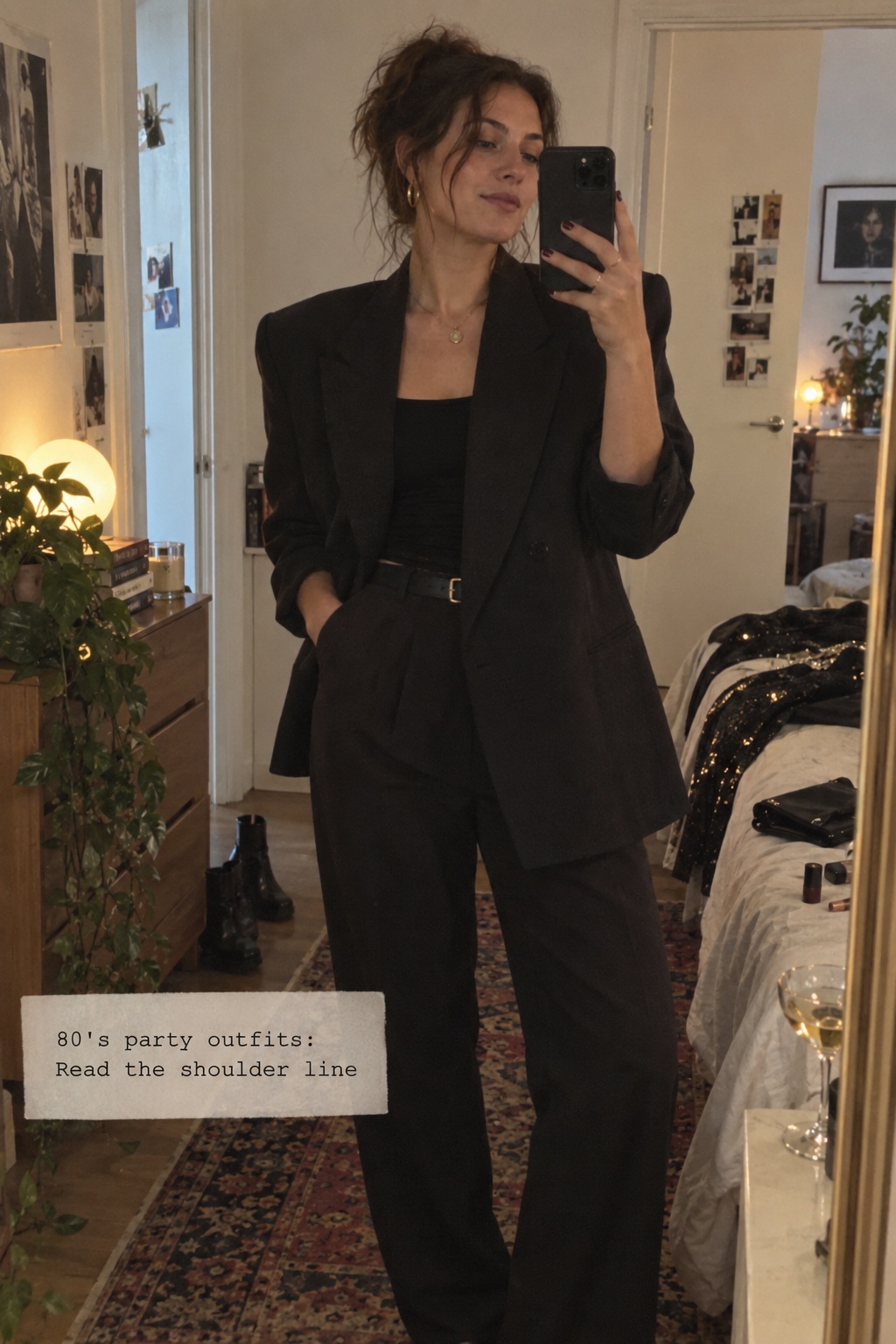
Mid-decade power dressing also illustrates why context matters. A structured jacket in an archival fashion image is not automatically a party costume or a universal symbol of professional women. It is one fashion response to a particular cultural moment. If that is the reference you want, look at shoulder line, lapel width, and how the jacket relates to the rest of the silhouette. If the image instead centers on a close-fitting dress or dance-inspired separates, let that provide the direction. Naming the source of the silhouette helps keep the interpretation thoughtful.
Color can support a reference, but it cannot date one by itself. Bold color appears in many 1980s looks and across the entire decade. Likewise, shoulder pads are not a precise calendar. Use color and construction as clues that work together with the source date and the overall outline. When two details compete, keep the one that best explains why you chose the reference in the first place.
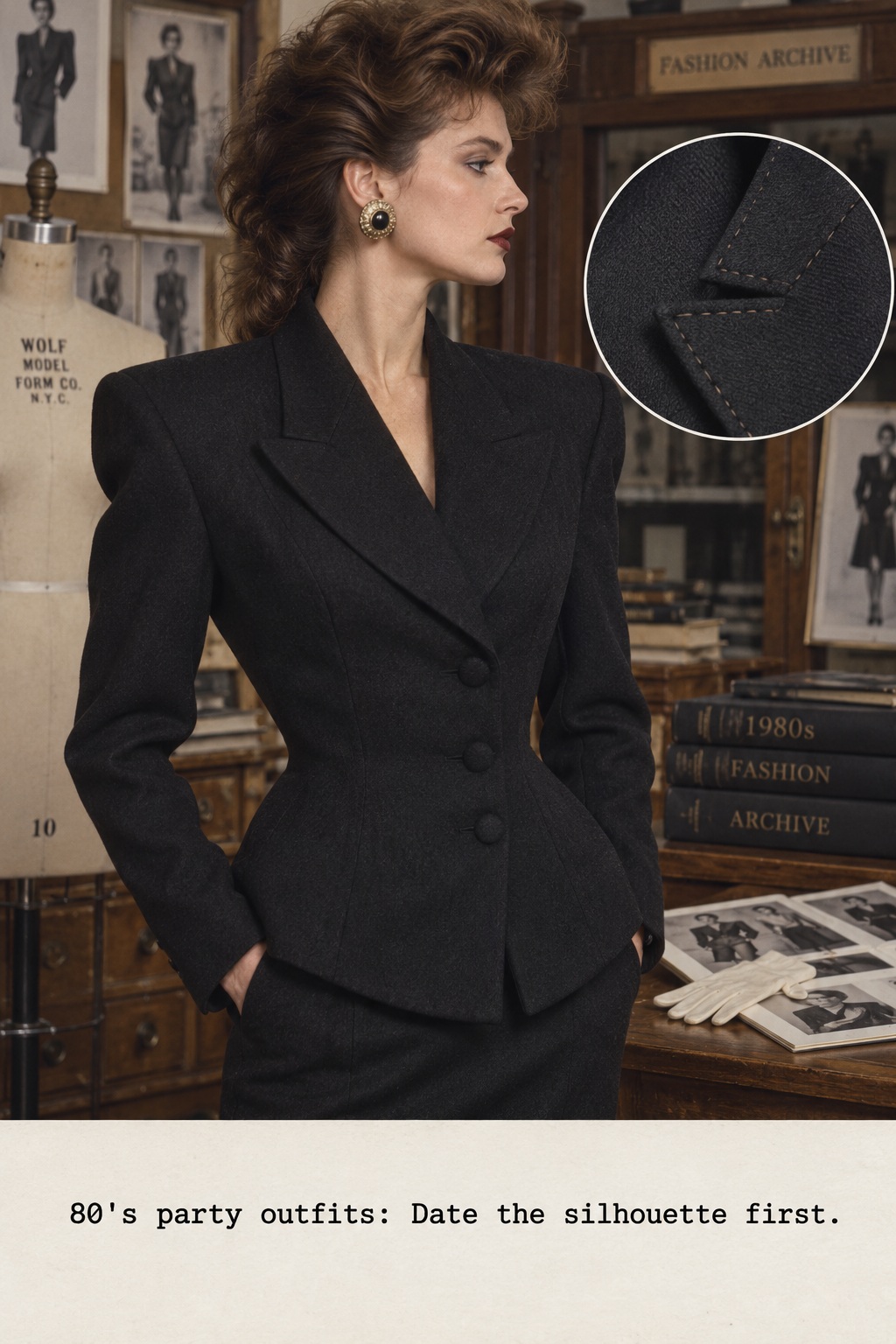
Late 80s: Read the Image Before You Borrow Its Silhouette
Late-decade references are often summarized as bigger, brighter, or more exaggerated. Those words can be a starting impression, but they are not enough to identify an actual image. A dated object or photograph gives you something more specific to inspect: the balance of the silhouette, the fabric, the shape of a jacket, or the scale of its decoration. FIT’s overview includes garments dated into the later 1980s and describes multiple design directions, including power dressing, classic American sportswear, and approaches that challenged dominant Western silhouettes.
That range is important. A late-eighties reference does not need to be loud to be recognizable, and a dramatic outfit is not automatically late-eighties. A tailored look can be just as useful a reference as an expressive one. Look closely at where the garment creates volume and where it stays narrow. Notice whether the visual effect comes from a broad shoulder, a full skirt, a clean line, or an unexpected proportion. Your party interpretation will feel more intentional when it follows the image’s actual visual logic.
Late-decade does not mean “more authentic” than an early-decade look, either. It is simply a different point on the timeline. Some references are easy to identify because a dated source or recognizable cultural moment accompanies them. Others are ambiguous. When you cannot confidently date the image, describe it as an 1980s reference rather than forcing a year. A careful broad label is more useful than false precision.
There is also no need to reproduce a runway or museum garment exactly. A fashion archive is a source for reading proportion and design choices, not a shopping list. You can translate an image into a party-ready interpretation by keeping its central shape or mood visible and letting the rest of the look stay legible. That approach respects the source and avoids turning every historical detail into a mandatory costume element.
How to Date an Inspiration Image in Three Passes
Pass one: find the date or context. A museum collection entry, a fashion timeline, a dated magazine image, or a film release can establish a useful starting point. Prefer sources that identify the garment or image rather than reposting an unattributed mood board. If all you have is a modern pin without a date, treat the period as a hypothesis. Search for the visible garment, designer, film, or event before treating the pin caption as evidence.
Pass two: describe the silhouette in plain language. Write down what is wide, close, long, cropped, soft, or structured. Avoid mood words at first. “A broad shoulder over a narrow torso” is easier to test against another source than “powerful.” “A loose top with a fitted lower half” is more precise than “80s energy.” This short description becomes a practical visual anchor when you are adapting the image for a party.
Pass three: choose the detail that supports the date. That might be a sleeve shape, a fabric, the construction of a jacket, or the styling of a neckline. It should reinforce the source’s overall proportions rather than compete with them. Ask whether the detail would still make sense if the color were removed. If the answer is yes, it is probably doing more than supplying a quick decade label.
These passes also help with mixed references. You may discover that a picture is from 1986 but borrows an older romantic shape, or that a modern editorial is inspired by several moments at once. That does not make it unusable. Decide whether you want to follow its date, its historic quotation, or its contemporary remix. The clearer you are about that choice, the easier it is to explain the resulting look and keep its pieces in conversation.
Three Reference Reads for a Themed Party
A romantic early-decade image: Imagine a photograph from the opening years of the decade showing a soft blouse, a full sleeve, and a decorative bow. The date and construction point toward an early-eighties romantic reference. The visual story is not “add more bows.” It is the contrast between softness and deliberate volume. When translating the image, preserve that relationship. A single sleeve or neckline detail may carry the idea more clearly than several unrelated accessories.
A dancewear image dated around 1983: A relaxed sweatshirt neckline, leggings, and a pose built around movement suggest a different early-decade source. The important clue is how the clothes respond to the body and gesture. That reading can lead to an interpretation centered on a relaxed upper shape and a close-fitting line below, without needing to imitate a movie still. The date gives context, while the silhouette provides the useful fashion information.
A structured image from later in the decade: Suppose the source shows strong tailoring, an assertive shoulder, and a precise waist. The first question is not whether the image contains enough neon. It is whether the outline and jacket construction tell a coherent story. Compare the image with dated museum examples or a fashion timeline. If the source supports a later-decade reading, retain the structure as the central reference and avoid adding details that belong to a different visual mood.
These examples are exercises in looking, not three mandatory costumes. A party invitation may be playful, and a recognizable reference can be fun without being archival. The timeline simply gives you more ways to make a choice. Instead of defaulting to the same combination of neon, big hair, and leg warmers, you can choose an image and explain the particular 1980s idea it represents.
Sources and Methodology
This guide treats early, mid, and late decade as practical reading categories, not rigid historical boundaries. Its dated examples and descriptions draw on the Fashion History Timeline at the Fashion Institute of Technology and the Fashion History Museum’s curated Back to the 80s overview. The FIT timeline supplies dated examples and discusses overlapping fashion directions. The museum overview offers a further curated view of 1980s dress. Neither source implies that one silhouette defined every year, city, or community.
For more detailed examples, consult the FIT Fashion History Timeline for 1980–1989. We use museum and educational sources to support chronology, then translate those observations into a simple way to read a party inspiration image. The outfit interpretations are editorial guidance. They are not claims that any one look was universal, nor a substitute for the specific date and description attached to an archival object.
FAQ
How do I make 80’s party outfits feel specific to one part of the decade?
Start with a dated image or a well-described source, then identify its silhouette and one supporting detail. Treat early, mid, and late as helpful reference windows, not strict rules. Keeping the source’s main proportions visible makes the look more specific than adding several unrelated decade cues.
What is an early 80s party outfit reference?
Possible references include romantic styling with full sleeves and decorative details, New Romantic looks influenced by historical dress, or dancewear-inspired fashion associated with early-decade fitness culture. Choose one image or direction and follow its shape rather than treating these examples as a single formula.
What visual cues can help identify a mid-80s fashion reference?
Look at the dated source and the silhouette together. Sources from the middle of the decade can show both body-conscious sportswear and increasingly visible power dressing. Strong shoulders, flexible fabrics, and the garment’s overall structure can help describe a particular image, but no single cue proves a precise year by itself.
Are shoulder pads enough to make an outfit late 80s?
No. Shoulder pads appear across multiple 1980s references and cannot date an outfit on their own. Check the source date, the rest of the silhouette, and how the garment is styled. Use shoulder structure as one clue among several rather than a standalone timestamp.
Can I mix early and late 80s details for a party?
You can, especially if your goal is a playful, broadly 1980s look. If you want a more specific historical reference, choose one moment as the center and let other details support it. Trends overlapped, but combining details without a source can make the visual story harder to read.
How can I tell if an online 80s outfit image is actually from the decade?
Look for a date, original publication, film or event context, or a museum collection record. A modern image may be inspired by the 1980s without being from the decade. When you cannot verify its date, describe it as an 80s-inspired reference instead of presenting it as archival evidence.
Finish the look
The little extras that make a summer outfit feel complete
From beach days to city weekends, these easy pieces bring comfort, texture, and a polished finishing touch.

FENBEN
Straw Hobo Crossbody Bag
A handwoven straw bag with both short and crossbody straps—an effortless finishing touch for vacation looks and warm-weather outfits.
Shop the bag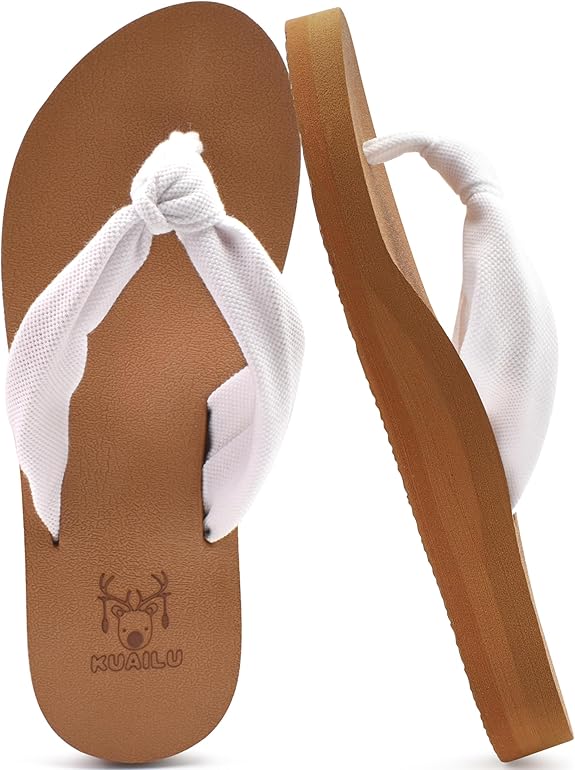
KuaiLu
Flip Flops with Arch Support
Cushioned, lightweight sandals with supportive arch design—a practical choice for beach trips, errands, and long summer walks.
Shop the sandals
baleaf
Athletic One-Piece Swimsuit
A functional one-piece with adjustable straps and moderate coverage, designed for swimming, training, surfing, and active beach days.
Shop the swimsuit
Astylish
Linen-Cotton Button-Down Shirt
A relaxed cotton-linen shirt with a collared V-neck and roll-up sleeves—easy to style over swimwear or with denim and shorts.
Shop the shirt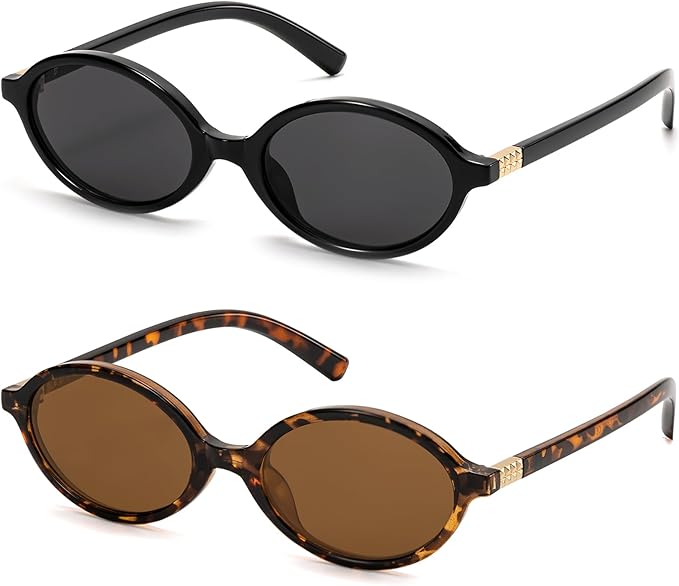
ViewJoy
Retro Oval Sunglasses
Small oval sunglasses with a 90s-inspired silhouette and UV400 lens protection—a quick way to add a vintage edge to everyday looks.
Shop the sunglasses
Affiliate disclosure: This section contains affiliate links. If you make a purchase through these links, I may earn a commission at no additional cost to you. Product selection, pricing, availability, and delivery terms may change—please review the current details on Amazon before purchasing.
As an Amazon Associate I earn from qualifying purchases.