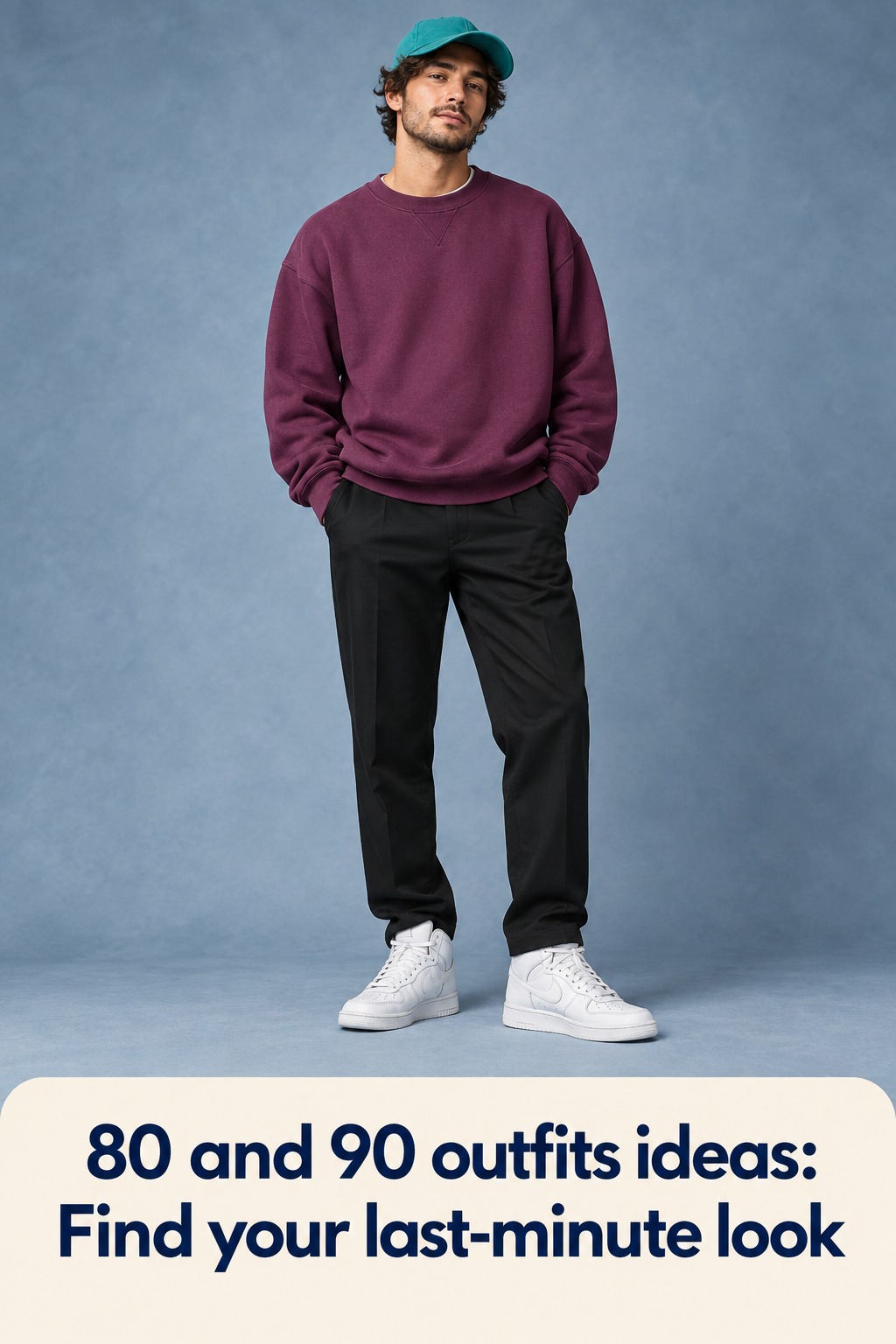
80 and 90 Outfits Ideas: Choose an Era for the Party
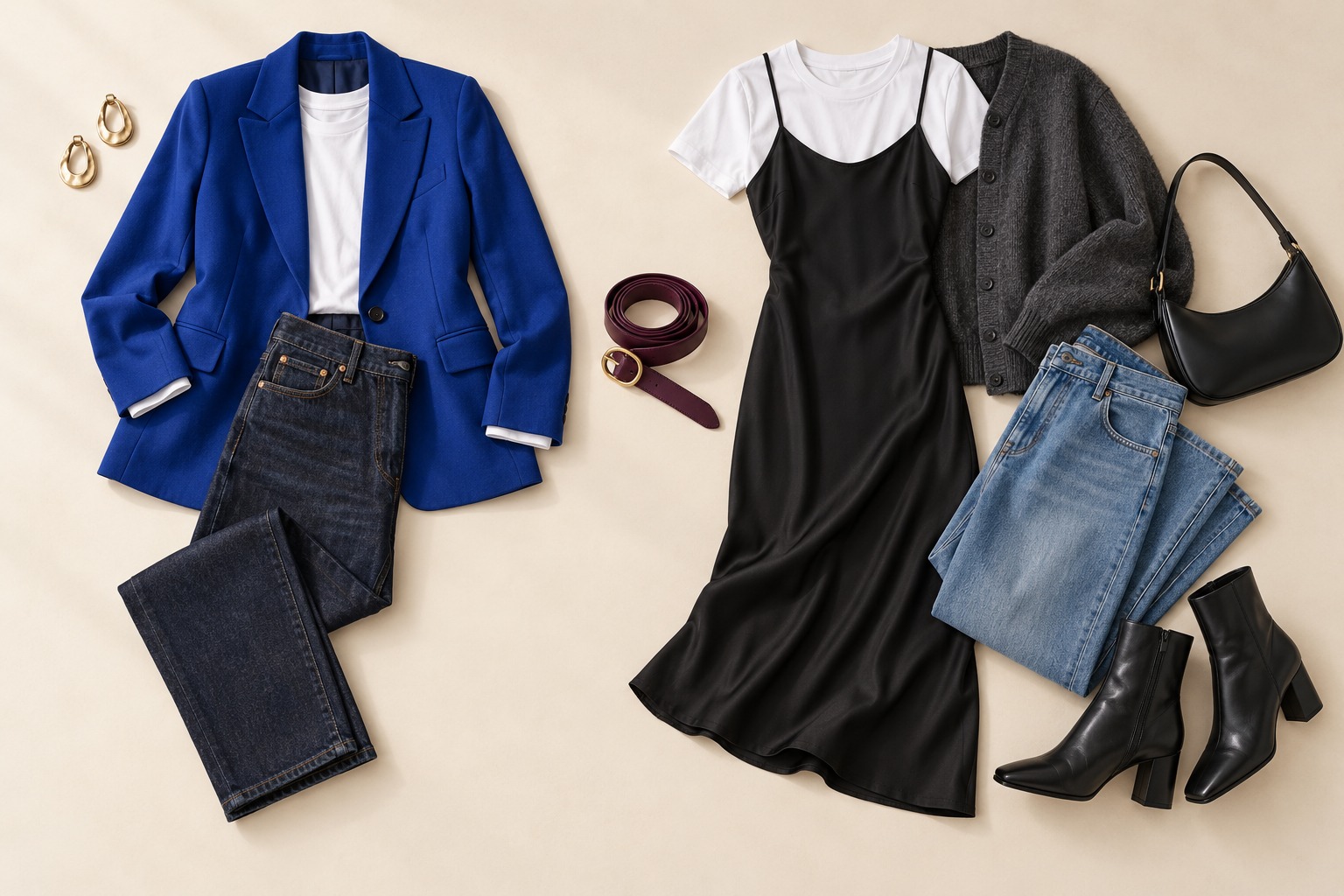
The invitation says “80s and 90s,” and now your closet looks like two completely different parties are happening at once. A big blazer, a slip dress, a sweatshirt, and combat boots may all feel plausible, but piling them together can make the outfit hard to read. The quickest fix is to decide what the host likely means: choose one decade as your main look, then add a second-decade detail only if the theme clearly asks for a mix. These 80 and 90 outfits ideas help you get dressed without buying a complete costume.
Start by thinking about the event, not the decade label. Is this a costume party where a bold reference will be fun, a casual get-together where you want a lighter nod, or a photo-heavy event where the outfit needs to read quickly? The solutions below give you an 80s route, a 90s route, and a controlled combination. Pick the one that matches the invitation and your comfort level, then stop before the outfit becomes a checklist.
First, decode what the invitation means
A phrase like “80s and 90s” can mean several things. The host may be happy with either decade, may expect guests to choose one, or may be asking for a blend. If the invitation includes a reference photo, a movie, or a color theme, use that as your guide. If it does not, choose whichever decade is easier to make from your closet and use one recognizable cue to make the choice clear.
The Fashion-Note Edit
Five effortless pieces to refresh your everyday wardrobe
A polished, practical edit for workdays, weekends, and everything in between.

The Drop
Women’s Blake Long Blazer
A longline, tailored blazer with a notched collar and a single-button closure—an easy layer for denim, dresses, or office-ready looks.
Shop the blazer
Amazon Essentials
Women’s Lightweight Crewneck
A soft, lightweight sweater with a clean crew neckline—the kind of reliable layer that works from cool mornings to air-conditioned spaces.
Shop the sweater
Amazon Essentials
Women’s Loafer Flat
A classic flat loafer that gives casual outfits a more polished finish and pairs naturally with tailored pants, skirts, and straight-leg jeans.
Shop the loafers
Levi’s
Women’s 501 90s Jeans
A relaxed, vintage-inspired take on the iconic 501 silhouette—made for an easy, lived-in look without the thrift-store search.
Shop the jeans
Colorfulkoala
High-Waisted 7/8 Leggings with Pockets
Soft, four-way-stretch leggings with side pockets and a high-rise waistband—designed for movement, errands, and off-duty comfort.
Shop the leggings
Affiliate disclosure: This section contains affiliate links. If you make a purchase through these links, I may earn a commission at no additional cost to you. Product selection, pricing, availability, and delivery terms may change—please review the current details on Amazon before purchasing.
As an Amazon Associate I earn from qualifying purchases.
A practical decision takes less than a minute:
Your wedding style is personal.
Your plan should feel that way, too.
Zarellea keeps your guest list, budget, vendors, and every next step beautifully organized — so you can focus on the moments that feel like you.
- If the event says 80s or 90s: choose one complete decade direction. Do not force a mix.
- If the event says 80s and 90s: pick a lead decade, then use one small detail from the other if you want a bridge.
- If it is a casual nostalgic gathering: wear a familiar outfit and add one clear reference, such as a strong blazer shape or a relaxed flannel layer.
- If you are unsure: use a simple base, one era-specific silhouette, and one accessory. That gives people a recognizable idea without requiring a head-to-toe costume.
The decades overlap. The Fashion History Timeline at the Fashion Institute of Technology describes varied 1980s directions, from power dressing and preppy daywear to dancewear and music-linked styles. Its 1990s timeline notes both a move toward casual looks and the continuation of some 1980s sportswear into the early part of the next decade. So the aim is not to prove a garment belongs to one year only. It is to make your outfit’s main idea easy to understand. The FIT timeline for the 1980s offers dated examples if you want historical context.
When two people at the same event choose differently, that is fine. A clear 80s outfit beside a clear 90s outfit often makes more sense than a look trying to combine every possible cue. A mixed outfit can work too, as long as it is an intentional answer to the theme rather than a result of getting dressed in a rush.
The clues that make each decade read clearly
Use three things to diagnose a look: silhouette, styling density, and the finish of the pieces. Silhouette means the overall outline from shoulder to shoe. Styling density is how many details compete for attention. Finish is whether the outfit feels polished, sporty, relaxed, or deliberately undone. You do not need all three to point to the same decade, but choose at least one strong clue so the look has direction.
An 80s route often starts with shape or statement
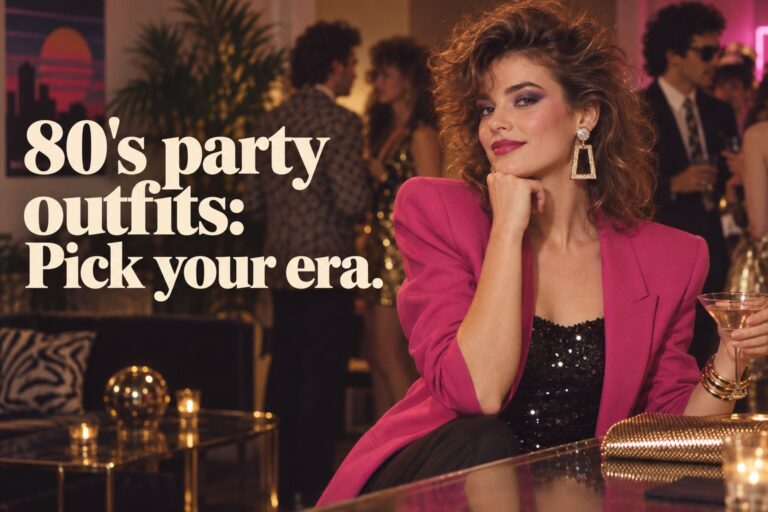
A structured shoulder, a strong jacket, a vivid color, or a more deliberate accessory can give an outfit an 80s mood. That does not mean every 80s look had shoulder pads or neon. The decade included sportswear, preppy looks, romantic volume, music-related styles, and experimental silhouettes. For a quick event outfit, you only need one of those lanes. A strong blazer with jeans can suggest a polished direction; a bright sweatshirt with leggings can suggest sportswear; a dramatic earring can make a simple dress feel more expressive.
Ask what your focal point is. If it is a jacket, keep the shirt and trousers simple. If it is a bright top, choose a quieter bottom. If the outfit’s color is restrained, let one accessory add the drama. This keeps a statement look readable rather than crowded.
A 90s route often starts with ease or contrast
A relaxed shirt over a tee, straight or loose denim, a simple slip-style dress, or a pared-back combination can suggest a 90s direction. The decade cannot be reduced to grunge or minimalism. The Museum at FIT’s exhibition on 1990s fashion discusses grunge, minimalism, deconstruction, avant-garde design, and the revival of luxury as coexisting themes. Those strands can look very different from one another, so choose the one that matches the mood you want instead of copying a generic 90s costume. The museum’s Nineties exhibition overview explains why a decade label is only a starting point.
A relaxed 90s outfit may have a softer shoulder and fewer accessories than a bold 80s party look, but that is a styling option, not a rule. You can also choose a dressier or more playful interpretation. Start with one easy shape, then decide whether you want it to feel casual, minimal, grungy, or glamorous.
Let one detail do the work
If you are worried about the outfit reading as a costume, use a single anchor piece. A blazer with pronounced shape, an oversized sweatshirt, a slip-style dress, a relaxed denim jacket, or a flannel shirt can set the direction. Then build with ordinary basics. This approach is especially useful when you are borrowing clothes, dressing on a budget, or going somewhere where you want the theme to be visible but not overwhelming.
One anchor also makes it easier to correct the outfit. If it feels too generic, add a second cue related to the same decade. If it feels too theatrical, remove an accessory or replace a novelty item with a piece you already wear. You do not need to start over.
Solution one: Build a recognizable 80s outfit
Choose an 80s lane before you start assembling pieces. A polished, sporty, romantic, or music-inspired route will give you a more coherent result than combining every recognizable item. Use the following formulas as a quick starting point, then adjust the color, coverage, and shoes to suit the event.
Polished and structured
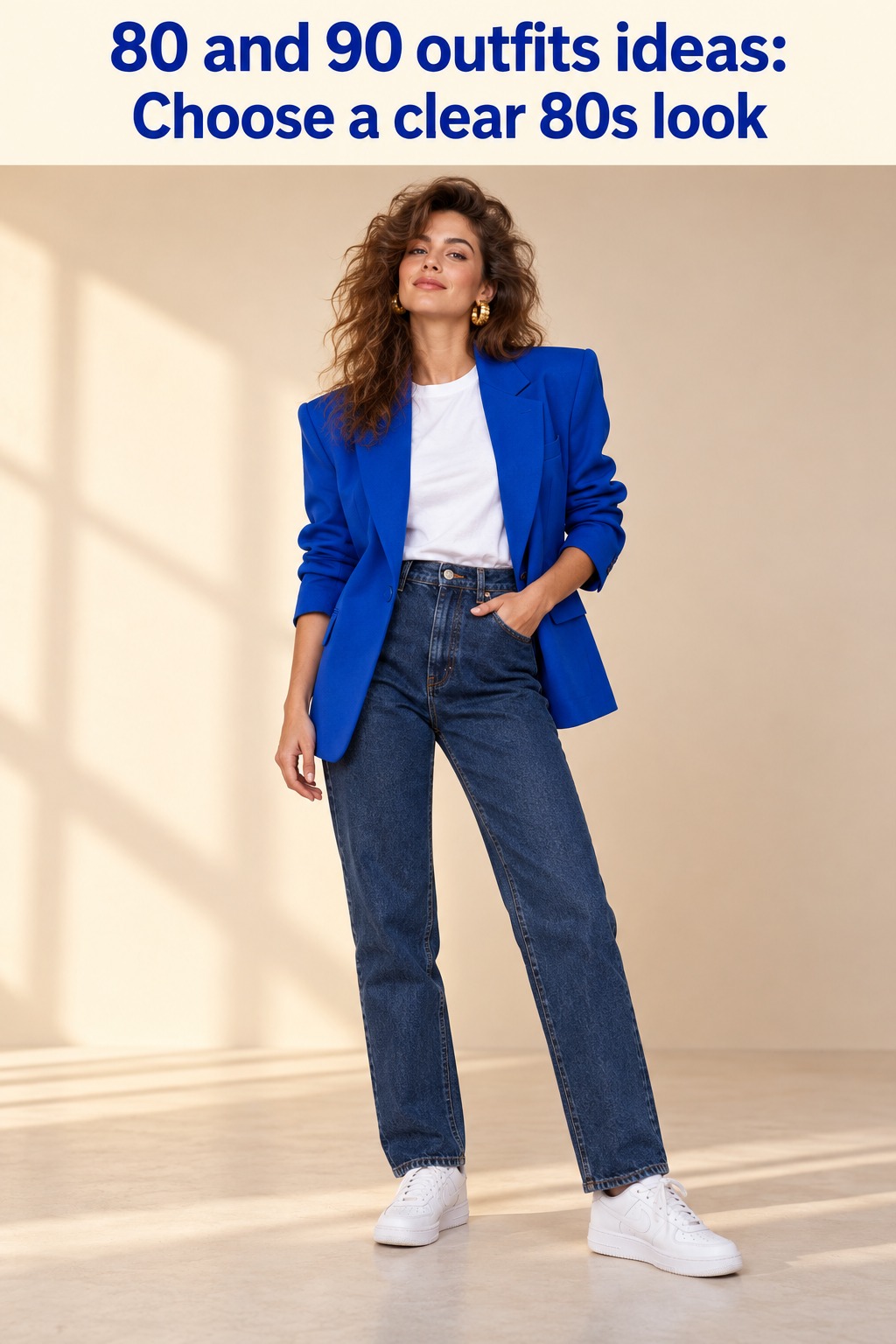
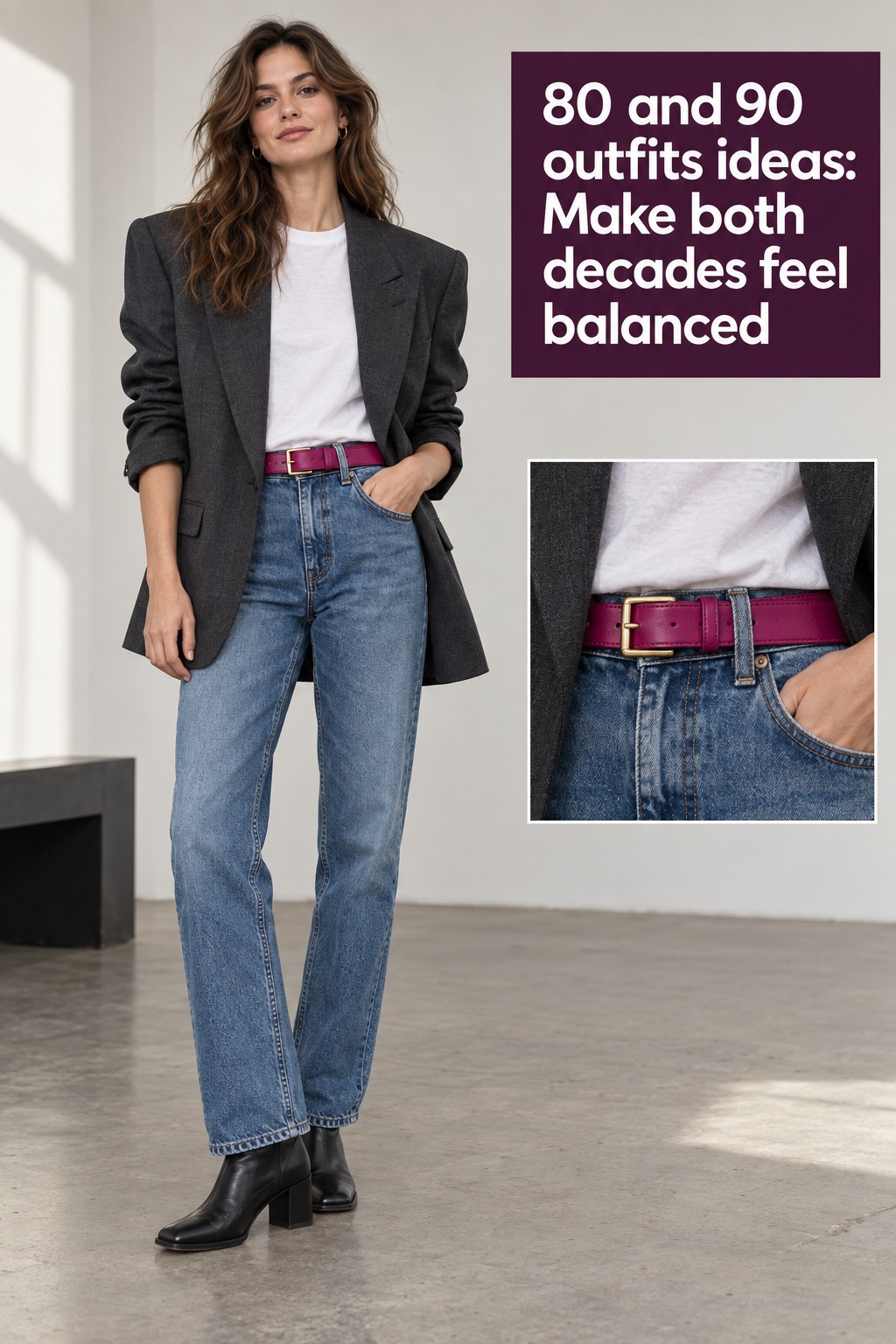
Pair a structured blazer with a plain tee or blouse, straight jeans or trousers, and a simple shoe. If the jacket already has a strong shoulder or color, let it carry the decade reference. Add a belt or one piece of statement jewelry only if the outfit still feels too quiet. This option is useful when you want to look dressed up without wearing a full costume.
Closet substitutions are easy: use a modern blazer with a pronounced shape, trousers that feel a little sharper than your everyday pair, or a jacket with a bold color. If shoulder pads or a fitted waist are not your preference, keep the overall silhouette structured through a neat collar, a strong lapel, or a defined jacket length.
Sporty and bright
Wear leggings or fitted shorts with a bright sweatshirt, a track jacket, or a vivid tee. Add sneakers and one accessory, such as a fabric headband or tall socks. This direction is comfortable for a house party and easy to adapt from clothes you already own. If you have a windbreaker, let its color blocking lead and keep everything underneath simple.
For more nostalgia, use a contrasting sock or a leg warmer. For a quieter version, choose a neutral base and one saturated layer. If the outfit feels too much like gym clothing, change the shoe or add a small structured bag. That one adjustment shifts the context without losing the sporty reference.
Romantic volume or music-inspired edge
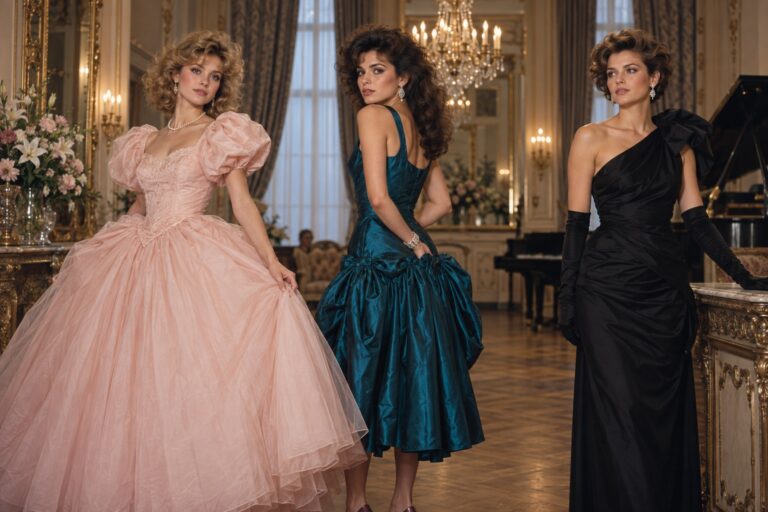
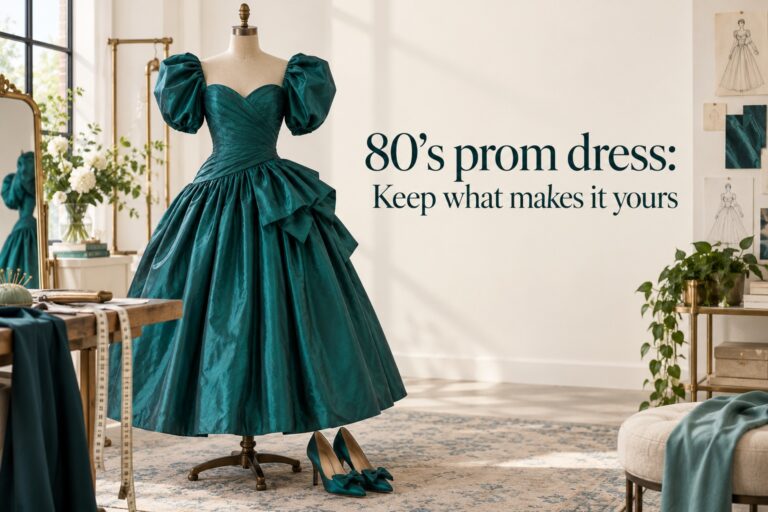
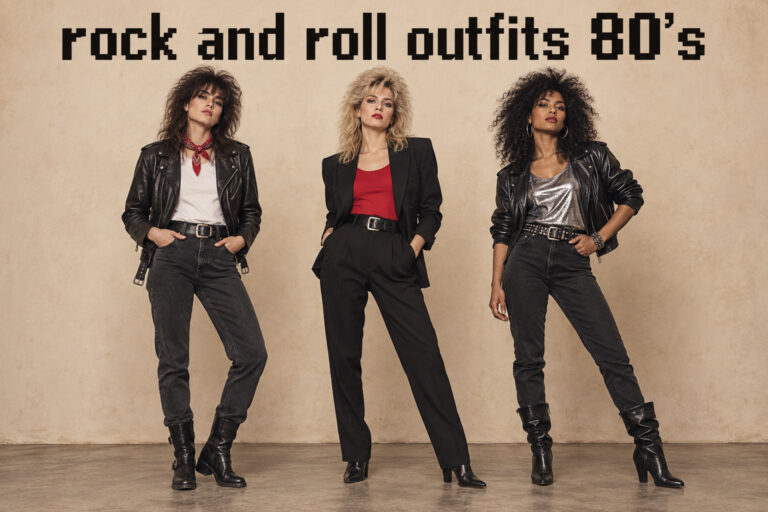
If your closet has a puff-sleeve blouse, a full skirt, or a dress with a little volume, use it as the main piece. Keep shoes and accessories simple so the silhouette stays in focus. For a music-inspired outfit, use a leather or denim jacket over a tee, then choose one detail such as a belt, a bold earring, or a textured shoe. These are different ways into the decade, so choose one rather than combining both directions without a reason.
When you have only modern basics, one dramatic shape can still create the right mood. Push up a jacket sleeve, add a substantial belt, or choose a colorful top with a clear shoulder line. The idea is to create a visual point of view, not to convince someone that every item came from the era.
Solution two: Build a recognizable 90s outfit
For the 90s, decide whether you want relaxed, grunge-inspired, or polished minimalism. Those options share a decade label, but they do not share one uniform. Your outfit will feel more convincing if you pick one lane and repeat its mood through the top, bottom, and shoe.
Relaxed denim and a simple layer
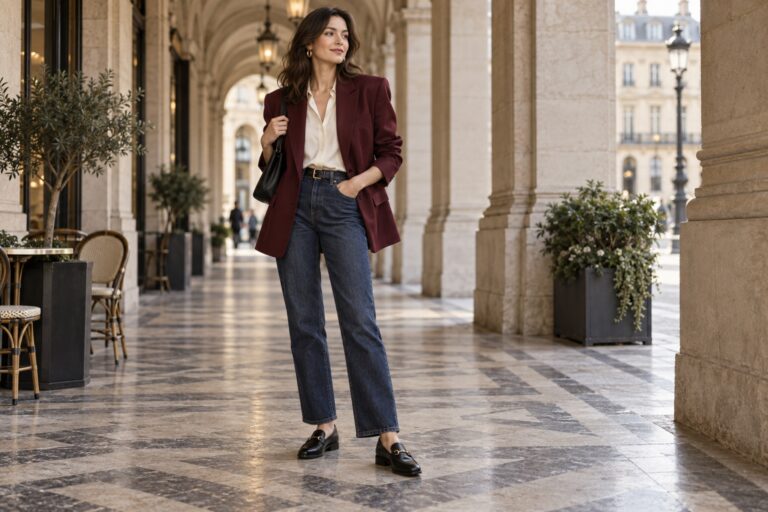
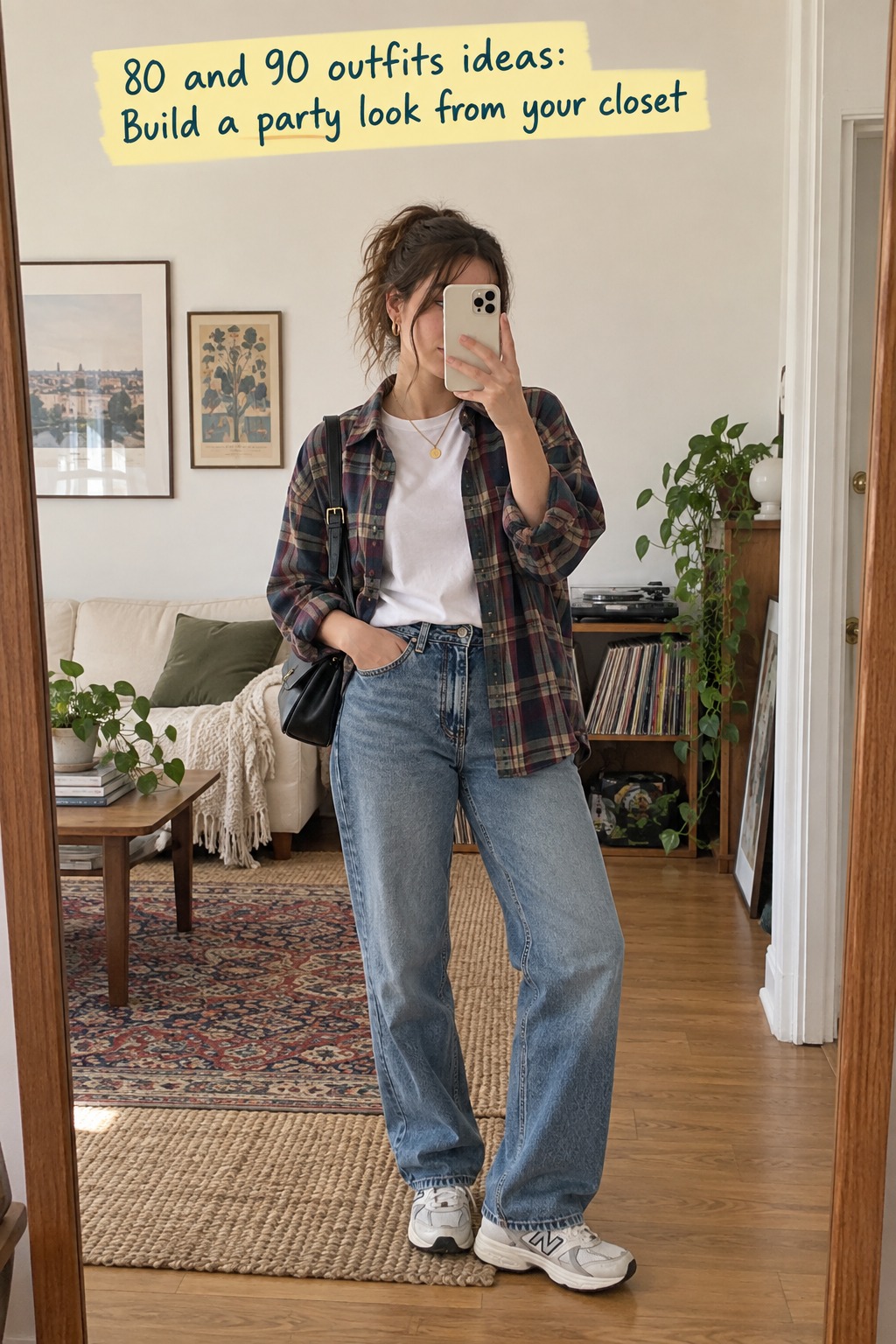
Start with straight or relaxed jeans, a plain tee or tank, and a denim jacket, cardigan, or open shirt. Add a sneaker or simple boot. A low-key accessory such as a small shoulder bag, cap, or narrow belt can finish the outfit without making it feel overstyled. This is a good option when you want a recognizable reference that still looks like regular clothes.
If you do not own vintage denim, use the pair that has the most relaxed line in your closet. A modern straight jean works better than forcing a fit that is uncomfortable. A plain T-shirt also gives you room to add one accessory or layer without competing prints.
Grunge-inspired layers
Layer a flannel or overshirt over a band tee or plain top, then wear it with relaxed jeans and boots or sturdy sneakers. You can leave the shirt open, tie it at the waist, or wear it normally depending on the room and weather. The key is the relaxed layering, not distressing every piece or adding every grunge stereotype at once.
If the outfit looks too much like a costume, swap the ripped jeans for a clean pair or choose a simple tee instead of a novelty graphic. If it looks too polished, loosen the shirt, roll a sleeve, or replace a formal shoe with something more casual. A small edit will keep the outfit comfortable and specific.
Minimal or dressy 90s
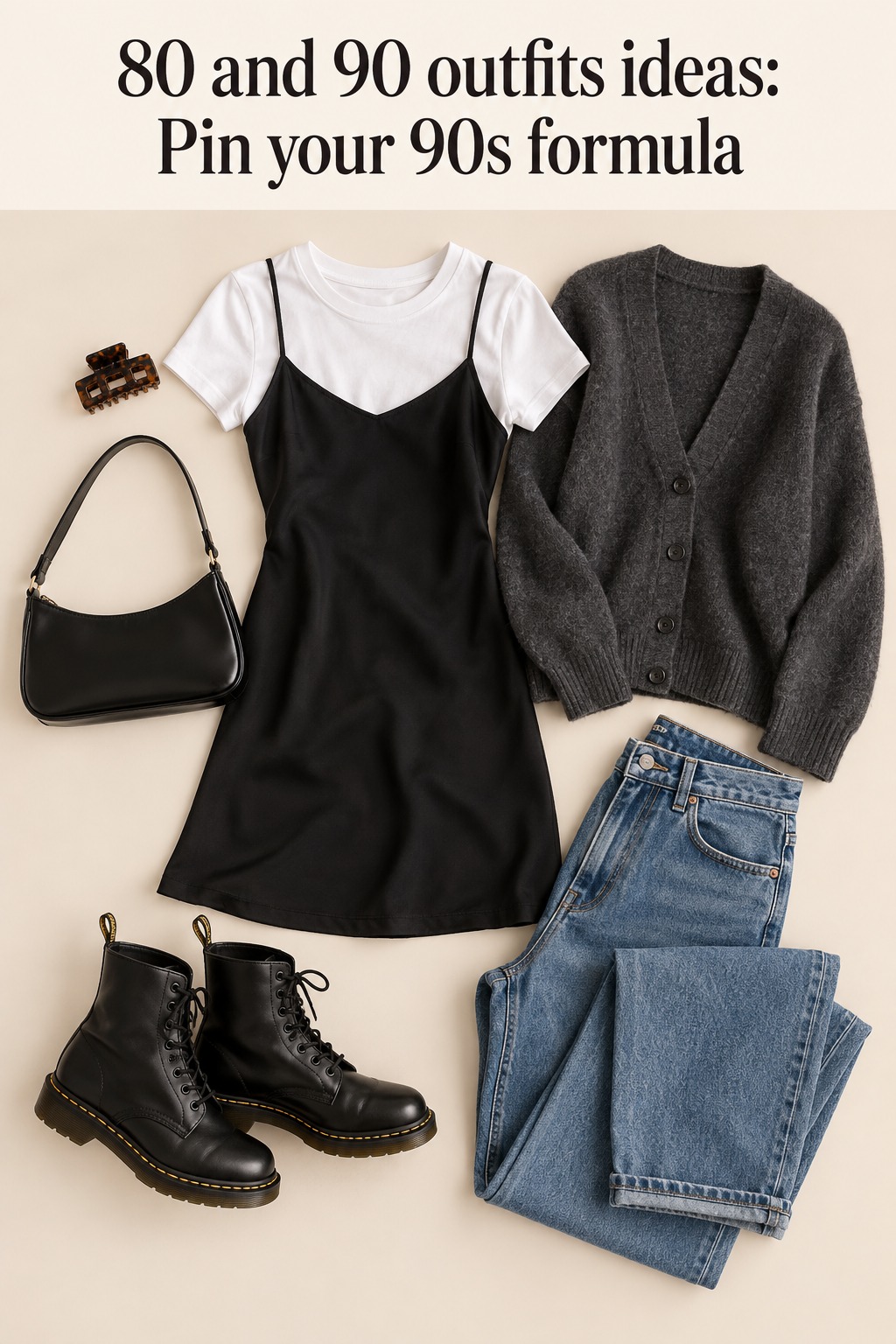
A slip-style dress or skirt with a simple top creates a clean foundation. Add a cardigan, blazer, or understated jacket, then choose a flat shoe, a simple boot, or a low heel. If you want more evening polish, use a satin-like texture or a small bag. If you want the outfit to feel casual, layer a tee under the dress or add a relaxed jacket.
Minimal does not mean plain or body-hugging. It means the outfit uses fewer competing details. Choose a shape and a texture you like, then keep the accessories calm. A soft knit over a long skirt can be just as effective as a slip dress when it gives you the same simple line.
Solution three: Make one outfit work for both decades
If the host clearly expects a blended look, combine pieces in a way that has a lead and a supporting detail. For example, use an oversized 80s-style blazer with relaxed 90s denim, or wear a simple slip-style dress with a bright windbreaker. The point is not that one garment belongs exclusively to one decade. The point is that the contrast is chosen and visible.
Try the lead, echo, and anchor method:
- Lead: choose the piece that makes the outfit read most clearly, such as the blazer, slip dress, windbreaker, or relaxed jean.
- Echo: add one cue from the other decade, such as a bright accessory, a slouchy layer, or a simpler shoe.
- Anchor: use a neutral basic to connect the pieces, such as a plain tee, dark denim, or a simple bag.
A structured jacket, white tee, and straight jeans can bridge the decades without a dramatic contrast. To make the 80s influence clearer, choose a more defined jacket or a bolder color. To make the 90s influence clearer, relax the fit of the denim or simplify the accessories. This is a practical alternative to wearing a different costume piece on every part of your body.
If your first attempt looks confused, decide which piece should lead and edit the rest around it. A busy windbreaker may not need a statement necklace. A dramatic blazer may not need distressed denim and combat boots. A slip dress may look clearer with a plain cardigan than with multiple bright layers. Remove the detail that argues with the focal point.
For a group photo, you can coordinate with friends without wearing matching costumes. Agree on a loose palette, such as jewel tones with denim or black with one bright accent, and let each person choose an 80s or 90s lane. Different silhouettes often make the group look more natural than everyone wearing the same headband or graphic tee.
The final fix when the outfit still feels unclear
Step back from the mirror and name the outfit in five words or fewer. “Bright sporty 80s,” “relaxed 90s denim,” or “structured blazer with casual denim” are clear. If you cannot describe it, remove one competing piece and look again. The shorter description gives you a useful edit, not a rule about what you are allowed to wear.
If it looks too costume-like
Remove one novelty accessory or replace one themed item with a piece you already wear. Keep the strongest decade clue. A bright jacket with jeans can stand on its own; so can a slip-style dress with boots. You do not need a wig, slogan, novelty glasses, and several accessories to make the idea recognizable.
If it looks too generic
Add one clue with the greatest visual effect. That could be a structured jacket, a vivid layer, a relaxed overshirt, a skirt with a simple line, or a more specific shoe. Avoid adding three details at once. Change one thing, then check whether the outfit now has a direction.
If it feels uncomfortable
Keep the decade idea and change the garment. Wear a loose blouse instead of a tight top, a soft shoe instead of a heel, or your usual jeans instead of a pair that restricts your movement. A nostalgic outfit works best when you can sit, walk, and enjoy the event without monitoring every piece.
For cold weather, add a practical outer layer over the look rather than trying to make thin costume pieces do the work of a coat. For a warm indoor event, choose a removable layer so you can adjust after arriving. If photos are important, check the outfit under the kind of light where you will be photographed. A bright accent can disappear against a similar background, while a clear difference between top and bottom makes the overall silhouette easier to see.
Finally, decide whether you need a new item at all. If the closet has a useful jacket, denim, simple dress, tee, sweatshirt, or overshirt, start there. Borrow or thrift the one item that makes the outfit specific. Rewearing most of the look after the event is a good sign that you chose a useful anchor instead of buying a single-use costume.
Sources and Methodology
This guide uses current US outfit searches to understand reader intent, then checks historical framing against the Fashion History Timeline at the Fashion Institute of Technology and the Museum at FIT’s exhibition on 1990s fashion. Those museum sources show that decade labels compress varied and overlapping styles. Outfit formulas in this article are editorial suggestions for themed events, not a claim that everyone dressed alike or that one garment belongs only to one decade.
FAQ
What should I wear to an 80s and 90s themed party?
Choose one decade as your main direction, then use one detail from the other only if the invitation asks for a mix. A structured blazer, bright sweatshirt, relaxed denim, slip-style dress, or flannel layer can serve as an anchor. Keep the remaining pieces simple so the outfit reads clearly.
How do I tell an 80s outfit from a 90s outfit?
Look at silhouette and styling mood rather than relying on one item. A structured shape or strong statement can suggest an 80s direction, while relaxed layers or a simpler line can suggest a 90s direction. Both decades had many styles, so treat these as helpful cues, not strict rules.
Can I mix 80s and 90s clothes in one outfit?
Yes. Let one decade lead and use a single cue from the other as support. A defined blazer with relaxed denim or a slip-style dress under a bright windbreaker creates a deliberate contrast. Use a plain tee, simple shoe, or neutral bag to connect the pieces.
How can I dress 80s or 90s without buying a costume?
Start with clothes you already own, such as jeans, a tee, a sweatshirt, a blazer, or a simple dress. Add one recognizable layer or accessory, then stop. If you need a more specific item, borrow or thrift just that piece instead of buying a complete set.
What is an easy 80s outfit for a party?
Wear a bright sweatshirt or structured jacket with simple jeans or leggings and sneakers. Add one accessory, such as a fabric headband, belt, or bold earring. The focal piece gives the outfit an 80s feeling while the basics keep it easy to wear.
What is an easy 90s outfit for a party?
Try relaxed jeans with a plain tee and an open flannel or denim layer, or wear a simple slip-style dress with a cardigan and boots. Keep accessories restrained if you want a minimal look, or add a more expressive layer for a grunge-inspired direction.
How do I make a decade outfit look less like a costume?
Keep one strong period-inspired piece and pair it with current basics. Remove novelty accessories that do not add anything to the outfit. A clear silhouette and one good color or texture cue usually communicate the idea without making every item a costume piece.
Finish the look
The little extras that make a summer outfit feel complete
From beach days to city weekends, these easy pieces bring comfort, texture, and a polished finishing touch.

FENBEN
Straw Hobo Crossbody Bag
A handwoven straw bag with both short and crossbody straps—an effortless finishing touch for vacation looks and warm-weather outfits.
Shop the bag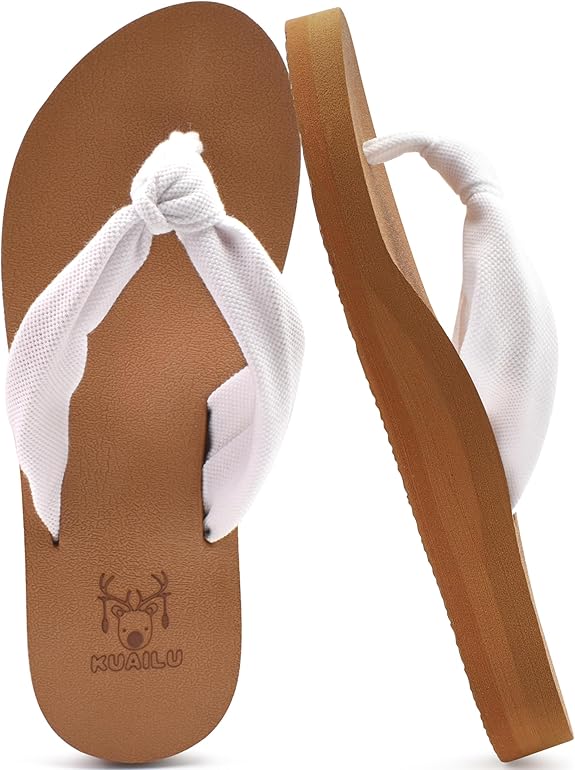
KuaiLu
Flip Flops with Arch Support
Cushioned, lightweight sandals with supportive arch design—a practical choice for beach trips, errands, and long summer walks.
Shop the sandals
baleaf
Athletic One-Piece Swimsuit
A functional one-piece with adjustable straps and moderate coverage, designed for swimming, training, surfing, and active beach days.
Shop the swimsuit
Astylish
Linen-Cotton Button-Down Shirt
A relaxed cotton-linen shirt with a collared V-neck and roll-up sleeves—easy to style over swimwear or with denim and shorts.
Shop the shirt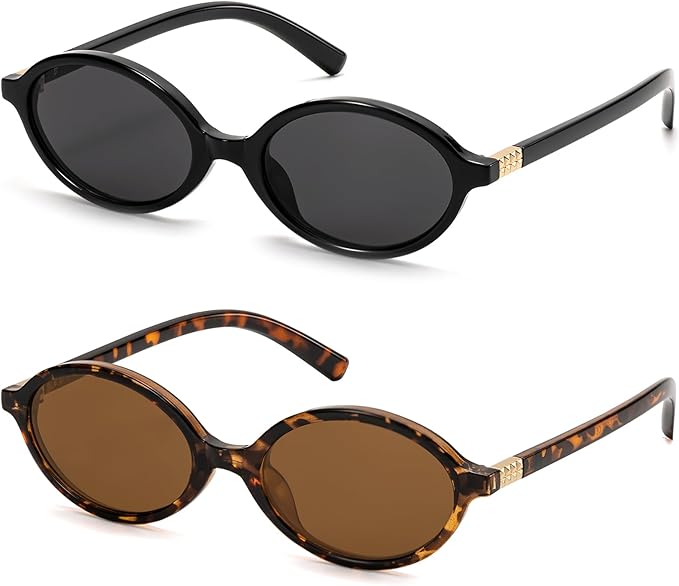
ViewJoy
Retro Oval Sunglasses
Small oval sunglasses with a 90s-inspired silhouette and UV400 lens protection—a quick way to add a vintage edge to everyday looks.
Shop the sunglasses
Affiliate disclosure: This section contains affiliate links. If you make a purchase through these links, I may earn a commission at no additional cost to you. Product selection, pricing, availability, and delivery terms may change—please review the current details on Amazon before purchasing.
As an Amazon Associate I earn from qualifying purchases.