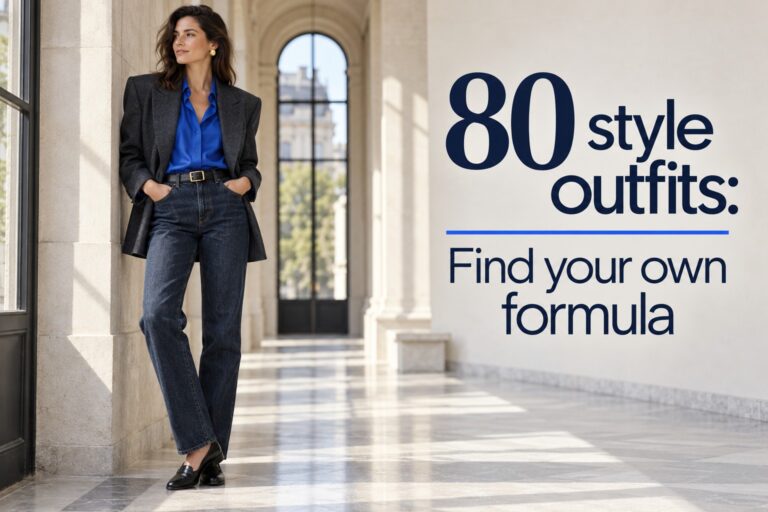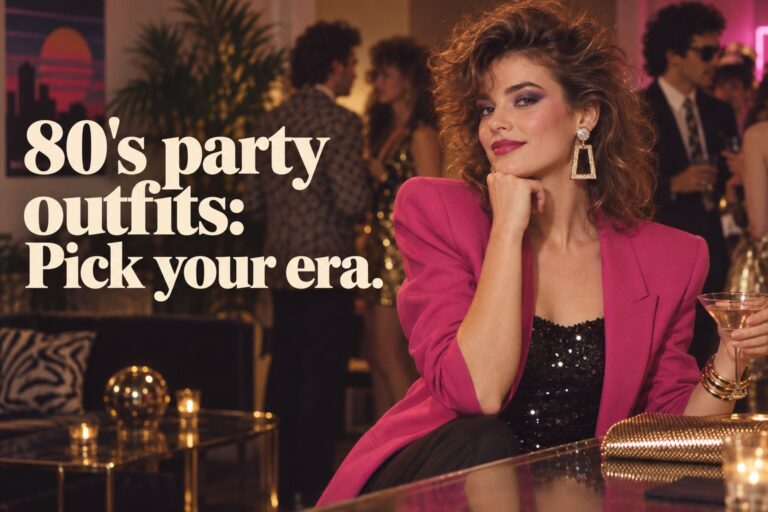
80’s Style: The Many Moods Behind the Decade
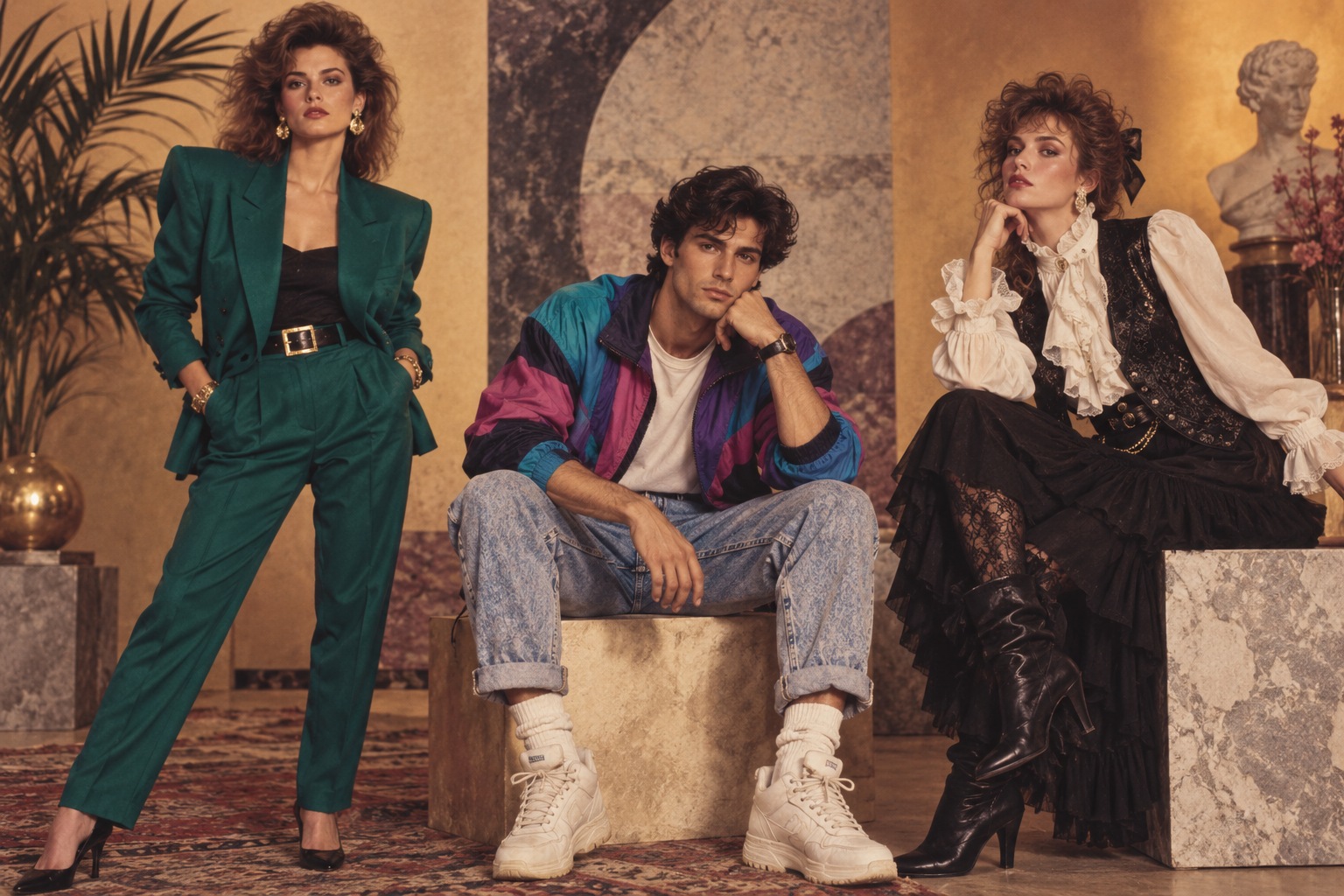
80’s style is often reduced to shoulder pads, neon and an excess of accessories. Those images are memorable, but they describe only a fraction of a decade in which office dressing, dancewear, club looks, hip-hop fashion and experimental designer clothes developed side by side. The most useful way to understand the period is to ask what each look was communicating. A sharp suit could signal authority in a changing workplace; a sweatshirt slipping off one shoulder could carry the ease of dance culture; a dramatic club outfit could turn getting dressed into a performance.
That variety still matters today. When a trend returns, it is easy to collect familiar details without knowing why they belong together. Looking at the cultural setting behind 80’s style makes the references clearer and helps explain why a power blazer, a track jacket and a theatrical ruffled shirt do not create the same mood. The decade was not one uniform aesthetic. It was a lively argument about visibility, movement, identity and who had the freedom to dress on their own terms.
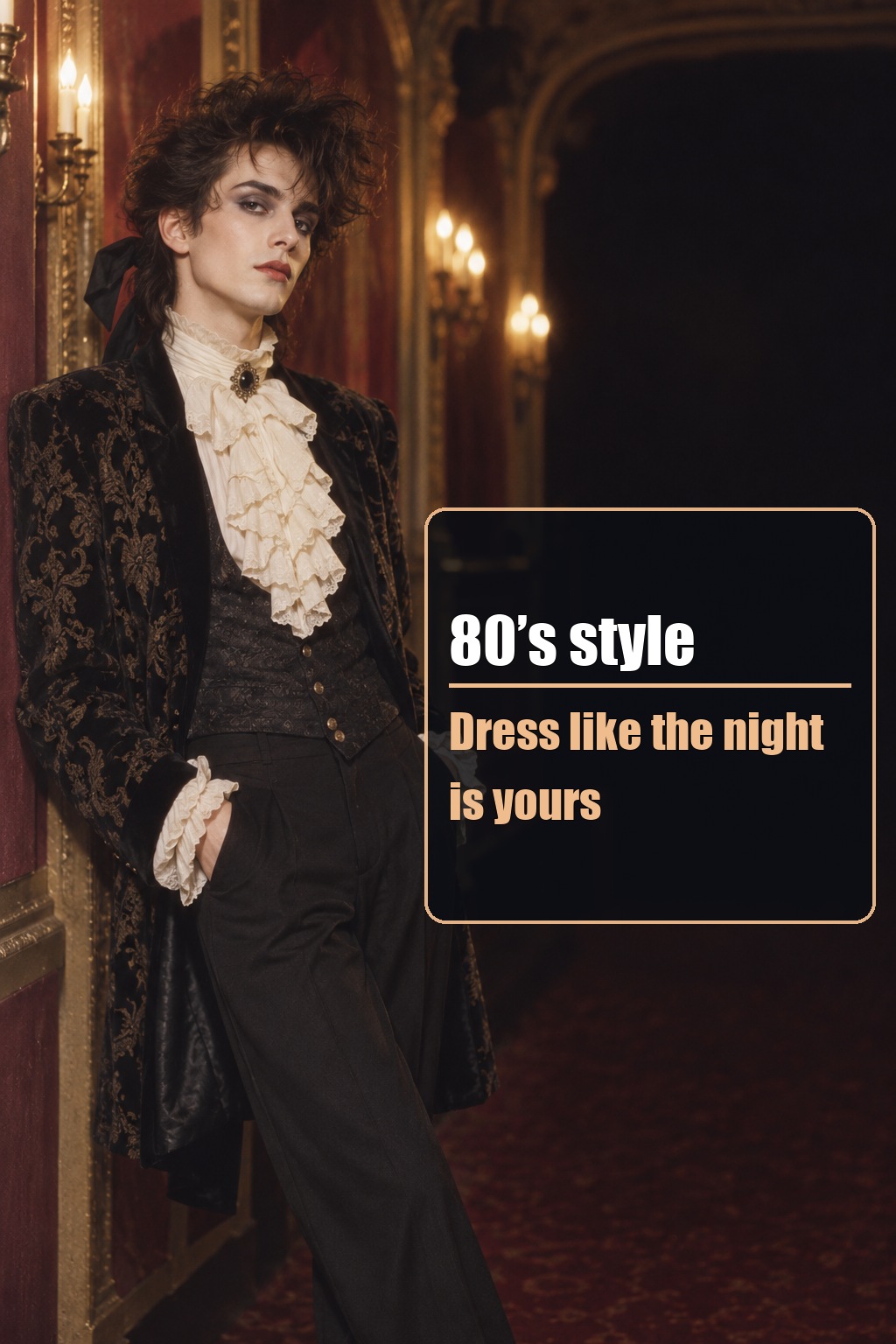
This guide traces four major currents and the visual choices that made each recognizable. It also looks at the everyday clothes that crossed between them, the later shifts of the decade, and practical ways to recognize an authentic reference without mistaking every oversized shape for an eighties look.
The Fashion-Note Edit
Five effortless pieces to refresh your everyday wardrobe
A polished, practical edit for workdays, weekends, and everything in between.

The Drop
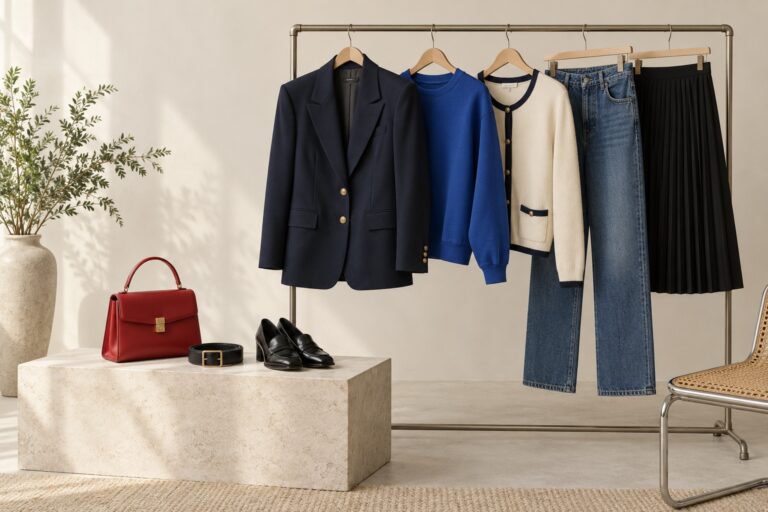
Women’s Blake Long Blazer
A longline, tailored blazer with a notched collar and a single-button closure—an easy layer for denim, dresses, or office-ready looks.
Shop the blazer
Amazon Essentials
Women’s Lightweight Crewneck
A soft, lightweight sweater with a clean crew neckline—the kind of reliable layer that works from cool mornings to air-conditioned spaces.
Shop the sweater
Amazon Essentials
Women’s Loafer Flat
A classic flat loafer that gives casual outfits a more polished finish and pairs naturally with tailored pants, skirts, and straight-leg jeans.
Shop the loafers
Levi’s
Women’s 501 90s Jeans
A relaxed, vintage-inspired take on the iconic 501 silhouette—made for an easy, lived-in look without the thrift-store search.
Shop the jeans
Colorfulkoala
High-Waisted 7/8 Leggings with Pockets
Soft, four-way-stretch leggings with side pockets and a high-rise waistband—designed for movement, errands, and off-duty comfort.
Shop the leggings
Affiliate disclosure: This section contains affiliate links. If you make a purchase through these links, I may earn a commission at no additional cost to you. Product selection, pricing, availability, and delivery terms may change—please review the current details on Amazon before purchasing.
As an Amazon Associate I earn from qualifying purchases.
What changed in the way people dressed?
One reason the decade looks so visually loud in retrospect is that clothing became a highly visible way to express professional ambition, leisure, music taste and personal identity. Fashion images circulated quickly through television, music videos, magazines and film. A viewer could encounter a tailored suit in a workplace drama, dancewear on a pop star, and a radically different club look in a style magazine during the same week. The spread of imagery helped individual looks travel beyond the places where they began.
Your wedding style is personal.
Your plan should feel that way, too.
Zarellea keeps your guest list, budget, vendors, and every next step beautifully organized — so you can focus on the moments that feel like you.
Materials helped change the silhouette. Stretch fabrics such as Lycra followed the body more closely, while jersey and sweatshirt fleece brought softness and ease to clothing that could look polished or sporty. At the opposite end, padding, structured tailoring and generous volume made the body appear broader or more dramatic. Designers and wearers were exploring what clothes could do: support movement, project authority, reshape a line or announce that the wearer belonged to a particular scene.
Economic and social circumstances also mattered. More women were pursuing professional careers, and many wanted clothes that worked for long days without simply copying traditional menswear. At the same time, music and nightlife created spaces where young people could experiment outside the expectations of school, family or work. A single decade therefore contained both the composed logic of a coordinated work wardrobe and the deliberately excessive look of a club outfit. Calling both “the eighties” is accurate, but it is not enough to explain either one.
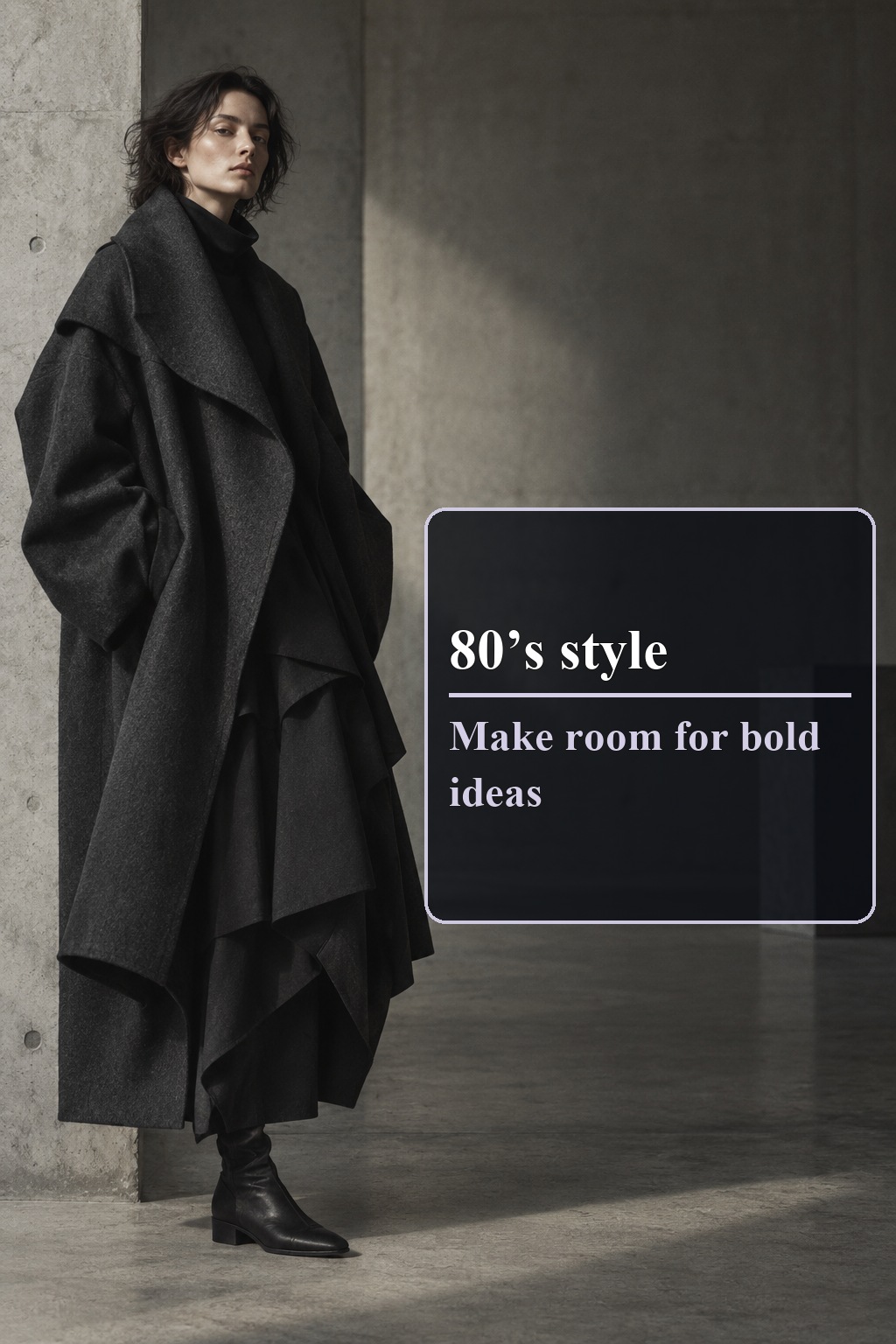
Power dressing made authority visible
Power dressing is perhaps the decade’s most familiar visual shorthand. Broad shoulders, shaped jackets, defined waists, pencil skirts and deliberate accessories gave business clothes a stronger outline. The silhouette could make the wearer appear decisive in rooms where leadership had long been coded as masculine. This did not mean every woman dressed in a padded suit, or that clothing alone changed workplace inequality. It did mean that fashion offered a visible tool for negotiating how professional women wanted to be seen.
Television helped turn that silhouette into a shared reference. Dramatic jackets and polished accessories appeared on characters whose clothes communicated status before they spoke. The proportions were often heightened for the screen, so popular memory tends to exaggerate them further. In real wardrobes, power dressing had many registers: a dark skirt suit could feel restrained, a jewel-toned jacket more expressive, and a clean blazer with a softly draped blouse less formal than either. The common thread was intention, not a single color or shoulder width.
Donna Karan’s early work offers another perspective on the professional wardrobe. Her Essentials line used a small group of components that could be layered and coordinated, drawing on sportswear traditions rather than relying only on tailored suits. A jersey jumpsuit from the period shows how one garment could combine a practical shape with a sleek, body-conscious line. The approach suggests that a strong work look did not have to be stiff. It could be modular, comfortable and refined at once.
When broad shoulders are paired with clean tailoring and a purposeful waist, the reference is probably power dressing. When a jacket is paired with a ruffled blouse, bright jewelry or dramatic color, the look may borrow from other currents as well. That distinction helps explain why an eighties suit can feel commanding in one image and theatrical in another. Both may have a strong shoulder, but styling gives that shape a different job.
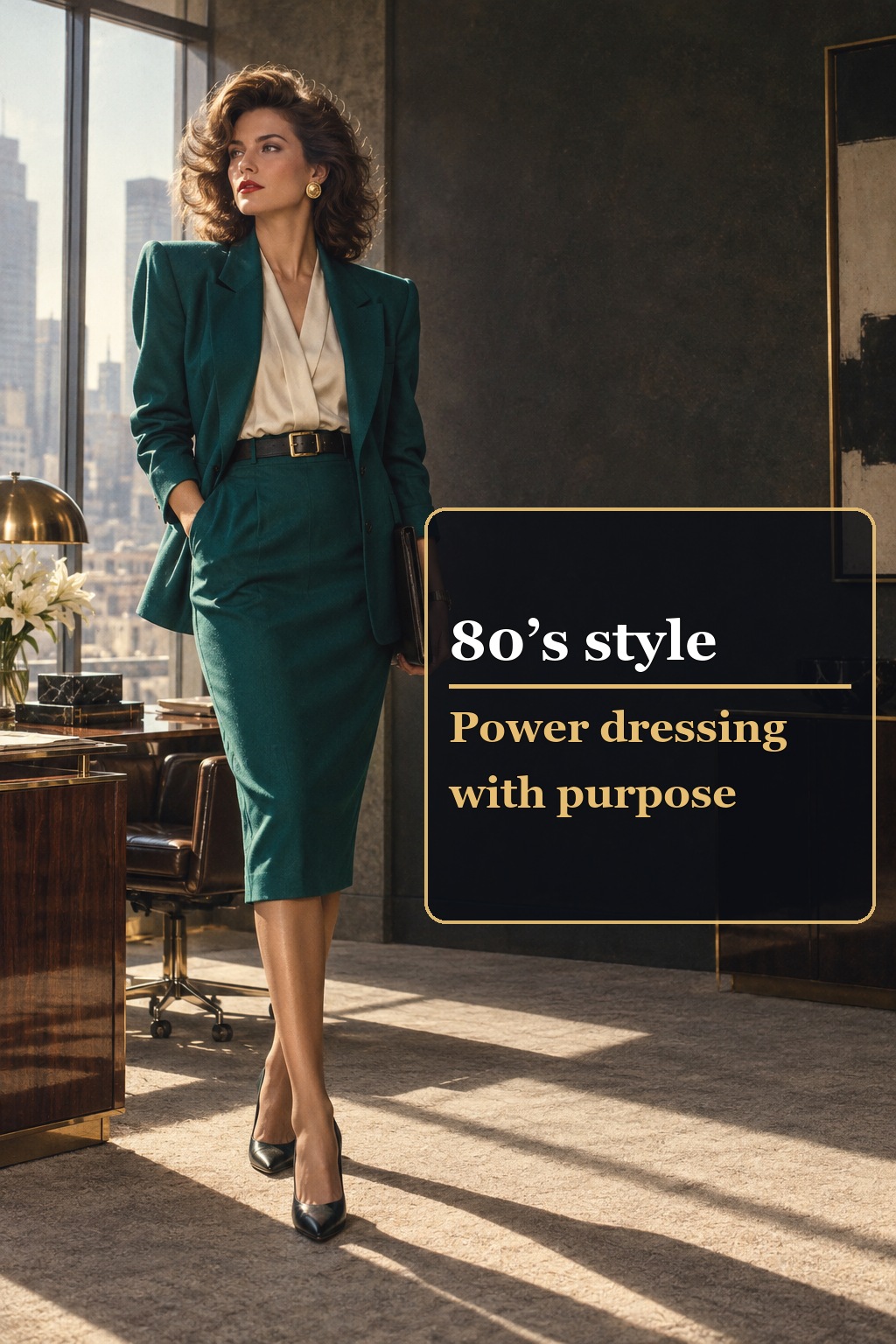
Sportswear brought movement into everyday clothes
In the early eighties, fashionable sportswear was already moving beyond the gym. Fitness culture, exercise videos and dance films made leggings, sweatshirts, leotards, warm-up layers and headbands familiar parts of popular imagery. A slouched sweatshirt or close-fitting bodysuit could look active even when the wearer was not exercising. The clothes promised energy and freedom of movement, and they gave casual dressing a more deliberate visual identity.
The important shift was not simply the arrival of bright workout clothes. Sports materials and shapes entered daily fashion, then appeared in more elevated settings. Jersey could be comfortable and sleek; a bodysuit could serve as a base layer beneath a skirt; a tracksuit could travel from athletic practice into streetwear. This traffic between uses blurred the old distinction between functional clothing and fashionable clothing. The result was practical, but it was also a new way to make the body and movement part of the look.
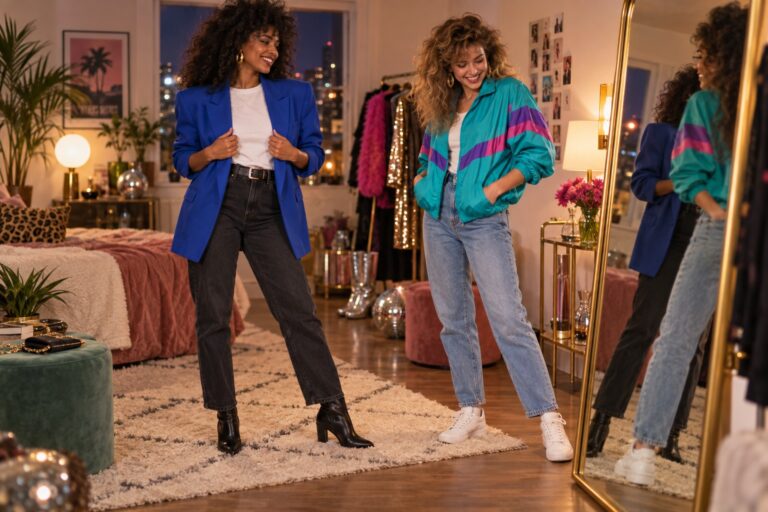
Dancewear-inspired styling often relied on an easy contrast. A soft sweatshirt might be pushed off one shoulder, while leggings kept the lower half simple. A warm-up jacket could sit over a bodysuit, and leg warmers made the athletic reference unmistakable. The outfit did not need every accessory at once. One or two pieces were enough to evoke the movement culture behind the look, especially when the fabric and fit remained central.
Sportswear also helps explain why 80’s style can look body-conscious and relaxed at the same time. Stretch clothing followed the body, while sweatshirts and warm-up layers moved loosely around it. Those different proportions could meet in a single outfit. The combination was about flexibility rather than a strict dress code, and it foreshadowed the way contemporary wardrobes mix athletic pieces with everyday clothing. If the reference involves leggings, jersey, sweatshirt fleece or a warm-up layer, consider how the garment moves before focusing on its color.
New Romantic style treated clothing as performance
New Romantic fashion grew through London’s music and club culture, where dressing up could be a creative act in its own right. Historical references, romantic sleeves, ornate details, theatrical makeup and carefully constructed hair helped create a look that felt deliberately removed from ordinary daywear. This was not simply nostalgia for an earlier century. It was a playful use of the past, remixed for a contemporary music scene and amplified by photographers, performers and style magazines.
Vivienne Westwood’s 1981 Pirate collection is often linked to this wider mood. Its historical references and dramatic shapes offered designers and clubgoers a vocabulary they could reinterpret. The look could include a billowing shirt, a sash, a gathered sleeve or a richly textured layer, but no single garment defined the scene. What mattered was the sense that an outfit had been composed, not merely put on. Clothes became part of a character the wearer chose to perform.
London clubs brought together people experimenting with music, art and fashion. Their outfits could be flamboyant, gender-bending, handmade or intentionally strange. The V&A’s history of the period describes several club styles, including New Romantic, Goth, Fetish and High Camp, and emphasizes the creative relationship between club clothing and the catwalk. This unsettles the familiar image of the decade as just polished excess. Some of its most influential looks came from small, unconventional scenes rather than a mainstream trend forecast.
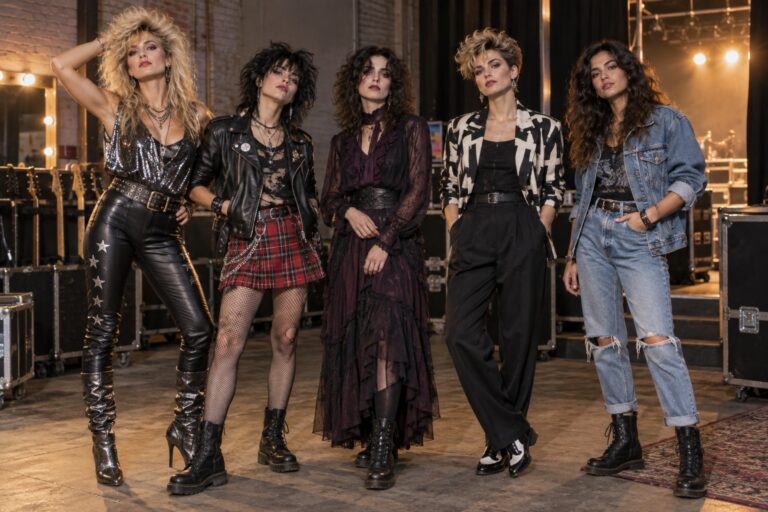
To recognize the New Romantic direction, look for historical drama and visible styling choices rather than for one specific item. A ruffled shirt with a tailored waistcoat, a romantic blouse with strong makeup, or an embellished jacket can all point in that direction. If an outfit seems designed to be seen under club lights or in a performance photograph, theatricality is probably part of the reference. That does not make the clothes less meaningful. The performance was the point.
Hip-hop style built a distinct streetwear language
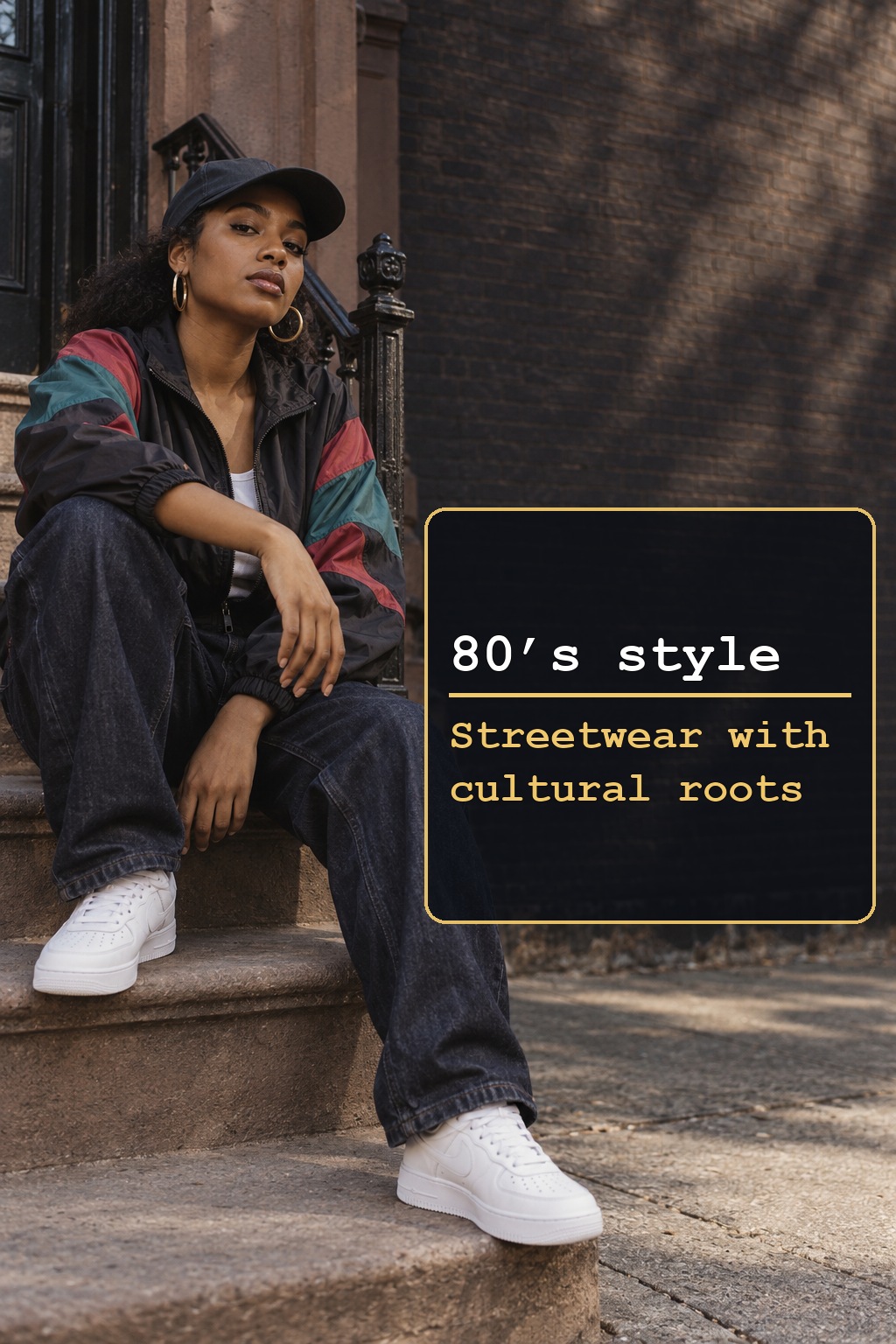
Hip-hop fashion developed from Black urban life and became one of the decade’s most influential style languages. Tracksuits, sneakers, denim, caps, Kangol hats, gold chains and bold prints could communicate pride, affiliation and taste. These choices were connected to artists and communities, not simply a department-store trend. As musicians appeared in videos, on record sleeves and in live performances, their style reached wider audiences and helped build new relationships between music, brands and fashion.
The National Museum of African American History and Culture recounts how the Kangol Kid’s preference for Kangol caps connected the headwear brand with early hip-hop and led to an endorsement. Artists such as RUN-DMC and LL Cool J also helped the cap become widely recognized. The story shows that influence did not flow only from established fashion houses to consumers. Musicians and communities created demand, gave garments meaning and helped shape commercial fashion on their own terms.
Women were part of that history from the start. NMAAHC describes women artists as active participants in hip-hop culture and fashion, not as an afterthought. Some looks used the same streetwear foundations as men’s outfits, while earrings, hair, color and styling expressed additional ideas about gender and identity. MC Lyte and Salt-N-Pepa are among the women whose presence helped broaden the visual language of the scene. A good account of 80’s style needs to include that creative contribution.
Hip-hop references are easiest to understand when their cultural origins remain visible. A fresh sneaker, a cap, a tracksuit or a gold chain may look like a simple accessory choice in isolation, but together they can evoke a specific musical community and era. When describing or styling these details, credit the people and scenes that made them significant. Treating them as generic decoration strips away the history that gave them resonance.
Experimental fashion challenged the decade’s polished image
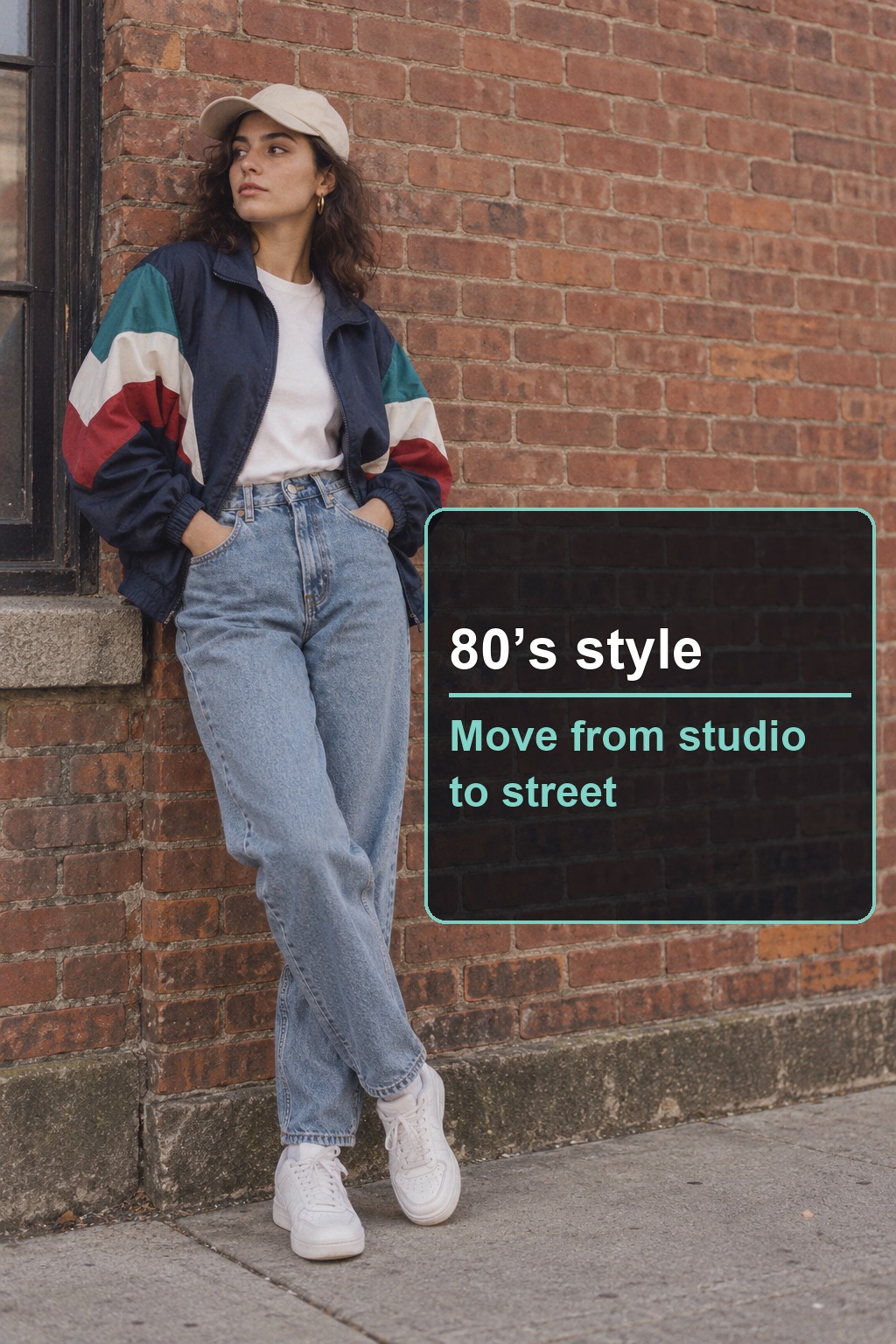
The eighties also held a powerful countercurrent to polished suits and bright fitness looks. Designers in Japan, London and elsewhere explored asymmetry, volume, deconstruction, unconventional materials and silhouettes that did not aim to flatter the body in conventional ways. Some work used muted color or black where mainstream fashion favored saturated shades. Other designers made clothing that seemed to distort, conceal or exaggerate the body. These ideas challenged the expectation that fashion should always produce an idealized outline.
London’s club scene made experimentation public. V&A accounts of the period describe club spaces as places where young people could dress outside everyday expectations and meet others with similar tastes. Designers and clubgoers influenced each other, while magazines such as The Face and i-D circulated new images. The scene included carefully made designer clothes, customized garments and combinations that looked improvised. A look could be rough, elegant, funny or confrontational, sometimes all at once.
Late-decade style continued to shift rather than settling into one final uniform. Clubwear moved through new music scenes, casual shapes returned, and designers combined industrial textures with camp details. The decade’s fashion history is therefore a sequence of exchanges: street to club, club to catwalk, sportswear to daily clothes, and tailoring to new ideas about gender and professional identity. The most memorable images are often those moments of exchange rather than a single trend in isolation.
This perspective makes it easier to identify an authentic reference. Ask whether the image is communicating authority, movement, music affiliation, theatricality or a challenge to conventional beauty. Then notice how the cut, fabric and accessories support that idea. A padded blazer and a distressed T-shirt may both belong to 80’s style, yet they express very different relationships to power and polish. Reading those differences is more useful than memorizing an endless list of trends.
How to read an 80’s style reference today
Start with the silhouette. Broad, structured shoulders suggest a stronger tailored outline, while a close-fitting jersey dress or bodysuit emphasizes stretch and shape. A relaxed sweatshirt or track jacket points toward sportswear. A gathered sleeve, sash or ornate blouse may suggest theatrical romanticism. These are clues, not rigid rules. The same piece can look different depending on its fabric, styling and cultural reference.
Next, notice the setting. A sharp suit in a workplace portrait is doing different work from a dramatic jacket in a club photograph. A cap and pristine sneakers in a hip-hop image carry different associations from a headband and leggings in an exercise scene. Context helps you understand whether the clothing is meant to project authority, support movement, signal music taste or create a character. Without context, a photograph can make every bold outfit seem interchangeable.
Then look at proportion and material together. Shoulder structure in a firm wool fabric has a different effect from a loose sweatshirt with a dropped shoulder. Lycra follows the body, while a gathered blouse creates volume. A metallic accessory can sharpen a simple outfit, but a head-to-toe combination of shine, pattern and oversized shapes can shift the mood toward stage costume. There is no universal rule against maximalism; the question is whether the details belong to the same visual story.
Finally, consider whose style is being referenced. Mainstream fashion coverage often remembers famous designers and television characters, but street and music scenes were equally creative. Hip-hop artists, club kids, dance culture and independent designers made the decade’s visual language richer. Naming those influences accurately leads to more thoughtful interpretation and avoids presenting one group’s innovations as if they appeared from nowhere.
The lasting choices behind 80’s style
Some elements of 80’s style keep returning because they solve real design problems. A structured shoulder gives a jacket presence. Stretch fabric can make a close-fitting garment comfortable. A modular set of pieces makes dressing more adaptable. Sportswear offers freedom of movement, while a dramatic accessory can make a basic outfit feel intentional. These are lasting ideas, not merely decade-specific decorations.
The strongest takeaway is that the decade rewarded clarity of purpose. Professional clothes could be confident, athletic clothes could move into daily life, and club fashion could create a character. A memorable outfit did not necessarily need every 1980s cue. It needed a point of view. When modern designers revisit the era, results often work best when they preserve that sense of intention instead of stacking every familiar reference together.
So when a look is described as 80’s style, ask which eighties it means. Is it the authority of power dressing, the movement of fitness wear, the theatricality of New Romantic fashion, the community and music of hip-hop, or the boundary-pushing work of experimental designers? Answering that question turns a vague label into a useful reading of clothes, culture and the people who shaped them.
FAQ
What defines 80’s style?
There is no single defining outfit. The decade included power tailoring, stretch sportswear, New Romantic club clothes, hip-hop streetwear and experimental designer fashion. Each used different silhouettes and materials to express its setting and point of view.
Were shoulder pads worn by everyone in the 1980s?
No. Structured shoulders became a highly visible feature of power dressing and some mainstream fashion, but many people wore relaxed sportswear, denim, club clothing or other silhouettes. Popular images make the shoulder pad seem more universal than it was.
How did music influence 80’s style?
Music scenes gave clothing new meanings and helped looks spread through performances, video, magazines and clubs. New Romantic fashion, hip-hop style and dancewear each developed recognizable codes connected to artists and communities.
What is the difference between New Romantic and power dressing?
Power dressing used strong tailoring to project professional authority. New Romantic style drew on theatrical, historical and romantic references for club and performance settings. Both could be dramatic, but their contexts and visual aims were different.
Did sportswear become everyday fashion in the 1980s?
Yes. Fitness culture and dance imagery helped leggings, sweatshirts, bodysuits, warm-up layers and other athletic pieces move into casual wardrobes. Designers also used jersey and stretch materials in more elevated clothing.
Why is hip-hop fashion important to the decade?
Hip-hop artists and communities built a distinct fashion language around items such as tracksuits, sneakers, caps, denim and jewelry. Their influence shaped popular culture and helped create new connections between musicians, brands and fashion.
Is 80’s style always bright and oversized?
No. Bright color and volume are familiar references, but the decade also included muted experimental design, sleek jersey clothing, denim, dark club looks and restrained professional wardrobes. The setting and subculture determine which details make sense.
Finish the look
The little extras that make a summer outfit feel complete
From beach days to city weekends, these easy pieces bring comfort, texture, and a polished finishing touch.

FENBEN
Straw Hobo Crossbody Bag
A handwoven straw bag with both short and crossbody straps—an effortless finishing touch for vacation looks and warm-weather outfits.
Shop the bag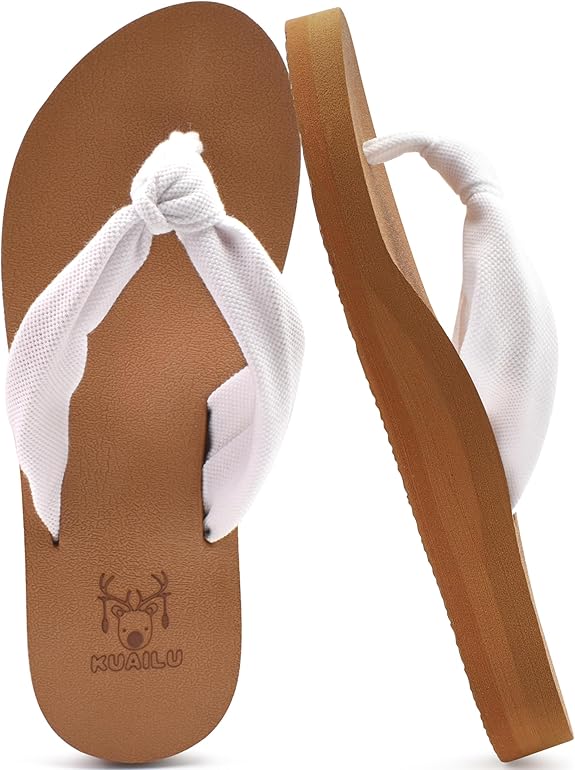
KuaiLu
Flip Flops with Arch Support
Cushioned, lightweight sandals with supportive arch design—a practical choice for beach trips, errands, and long summer walks.
Shop the sandals
baleaf
Athletic One-Piece Swimsuit
A functional one-piece with adjustable straps and moderate coverage, designed for swimming, training, surfing, and active beach days.
Shop the swimsuit
Astylish
Linen-Cotton Button-Down Shirt
A relaxed cotton-linen shirt with a collared V-neck and roll-up sleeves—easy to style over swimwear or with denim and shorts.
Shop the shirt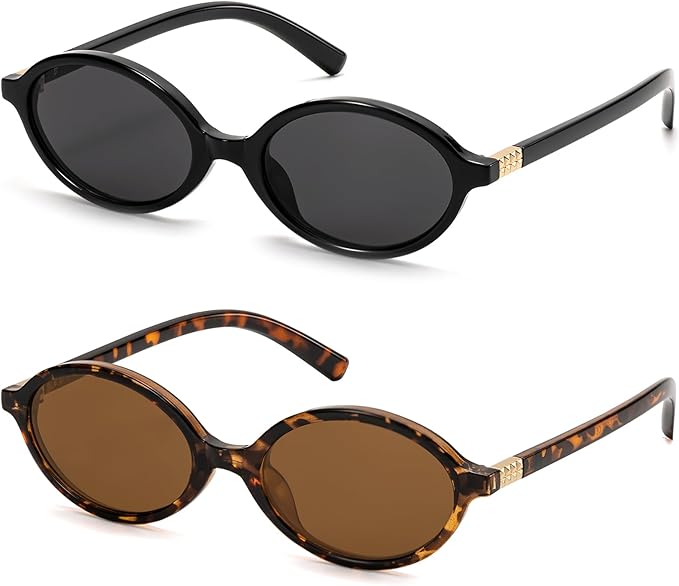
ViewJoy
Retro Oval Sunglasses
Small oval sunglasses with a 90s-inspired silhouette and UV400 lens protection—a quick way to add a vintage edge to everyday looks.
Shop the sunglasses
Affiliate disclosure: This section contains affiliate links. If you make a purchase through these links, I may earn a commission at no additional cost to you. Product selection, pricing, availability, and delivery terms may change—please review the current details on Amazon before purchasing.
As an Amazon Associate I earn from qualifying purchases.