80 Clothes 1980s Style: What to Wear Now
Trying to dress in 1980s clothes can get confusing fast. Search for inspiration and you may see neon workout gear beside a sharp office suit, ripped denim beside a tidy polo, and dramatic clubwear beside an ordinary sweatshirt. All of those images can be connected to the decade, but they do not belong to one universal outfit. Copying every familiar cue at once is what often makes a look feel like a costume. A better starting point is to name the kind of 1980s style you mean and the situation where you want to wear it.
The phrase 80 clothes 1980s style points to a wide wardrobe, not a single uniform. You can borrow the relaxed shape of a sweatshirt, the polish of a structured jacket, the clean contrast of a preppy shirt, or the visual confidence of a music-scene detail. The practical method is simple: choose one lane, pick one recognizable anchor, and let the rest of the outfit support it. That keeps the reference visible while making the clothes comfortable for a regular day, work, a concert, or a themed event.
Why 80s Clothes Feel Hard to Get Right
Decade labels compress a lot of different clothing into a few memorable images. The word “eighties” may bring to mind padded shoulders, bright aerobics clothes, acid-washed jeans, a popped collar, or a band T-shirt. Those things can each suggest the period, but a visual cue only makes sense in relation to the rest of the outfit. A performance-inspired outfit built around leggings and a sweatshirt is doing a different job from a preppy sweater and chinos or a tailored jacket with a defined shoulder. Mixing them without a reason can make the look read as dress-up rather than a considered reference.
The Fashion-Note Edit
Five effortless pieces to refresh your everyday wardrobe
A polished, practical edit for workdays, weekends, and everything in between.

The Drop
Women’s Blake Long Blazer
A longline, tailored blazer with a notched collar and a single-button closure—an easy layer for denim, dresses, or office-ready looks.
Shop the blazer
Amazon Essentials
Women’s Lightweight Crewneck
A soft, lightweight sweater with a clean crew neckline—the kind of reliable layer that works from cool mornings to air-conditioned spaces.
Shop the sweater
Amazon Essentials
Women’s Loafer Flat
A classic flat loafer that gives casual outfits a more polished finish and pairs naturally with tailored pants, skirts, and straight-leg jeans.
Shop the loafers
Levi’s
Women’s 501 90s Jeans
A relaxed, vintage-inspired take on the iconic 501 silhouette—made for an easy, lived-in look without the thrift-store search.
Shop the jeans
Colorfulkoala
High-Waisted 7/8 Leggings with Pockets
Soft, four-way-stretch leggings with side pockets and a high-rise waistband—designed for movement, errands, and off-duty comfort.
Shop the leggings
Affiliate disclosure: This section contains affiliate links. If you make a purchase through these links, I may earn a commission at no additional cost to you. Product selection, pricing, availability, and delivery terms may change—please review the current details on Amazon before purchasing.
As an Amazon Associate I earn from qualifying purchases.
The history itself is varied. The Fashion History Timeline at the Fashion Institute of Technology describes fitness wear, American workwear, preppy style, power dressing, punk and goth, and hip-hop looks among the fashions of the 1980s. A museum overview created with the Fashion History Museum also describes exercise clothes moving from gym settings into everyday wear and traces denim treatments and music-related youth styles. These are useful reminders that different communities and occasions produced different clothes. They are not a checklist that one person was expected to wear all together.
Your wedding style is personal.
Your plan should feel that way, too.
Zarellea keeps your guest list, budget, vendors, and every next step beautifully organized — so you can focus on the moments that feel like you.
Time within the decade matters too. A look in 1981 did not have to match a look in 1988. Designers and subcultures changed direction, while everyday wardrobes included familiar pieces that did not chase every new image. Museum of FIT’s account of Vivienne Westwood follows the designer from early-decade Pirate clothes associated with post-punk and New Romantics toward more structured work later on. That is one designer’s path, not a timeline for every closet, but it makes the larger point: “1980s” is a span of years, not a frozen mood board.
There is also a difference between historical recognition and modern styling. If the goal is a Halloween party, stronger references may be fun. For a workday or coffee run, you may only want the structure or energy of a period look. Neither approach is more authentic than the other. Decide how visible you want the reference to be before you get dressed. A single strong silhouette can say enough; an outfit with several bold pieces may be right when the occasion welcomes it.
Start With the Part of 1980s Style You Actually Want
Before choosing a top or shoes, finish this sentence: “I want this outfit to feel…” Words such as tidy, sporty, relaxed, dramatic, polished, or music-inspired point toward different clothes. Then consider where you are going and what you will do there. A long commute favors comfortable layers and shoes you can walk in. A presentation may call for a sharper jacket. A concert gives you more room for a graphic tee or a bolder accessory. This short decision prevents the common mistake of collecting period details before deciding what the outfit needs to do.
For everyday casual style, choose preppy or relaxed basics
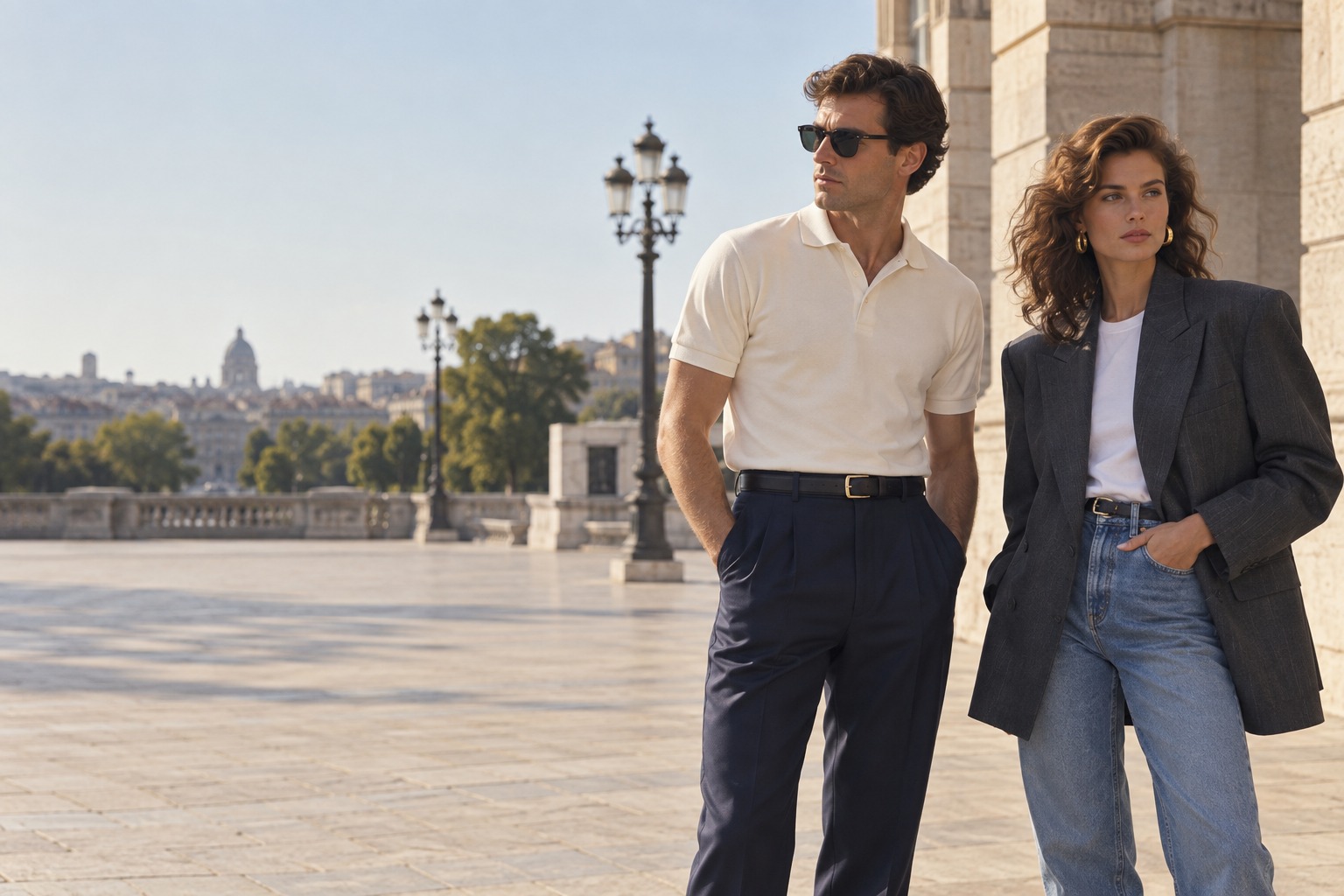
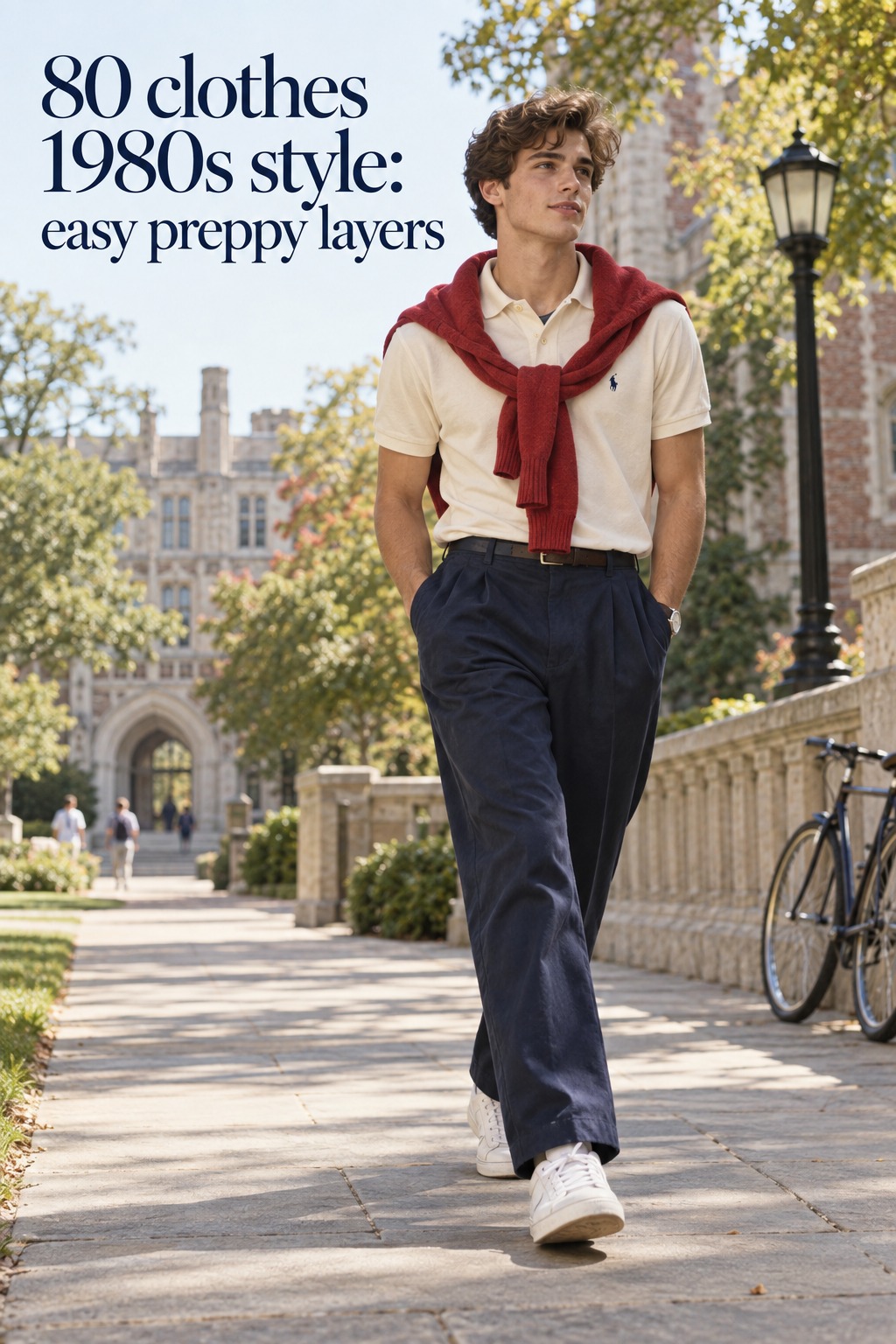
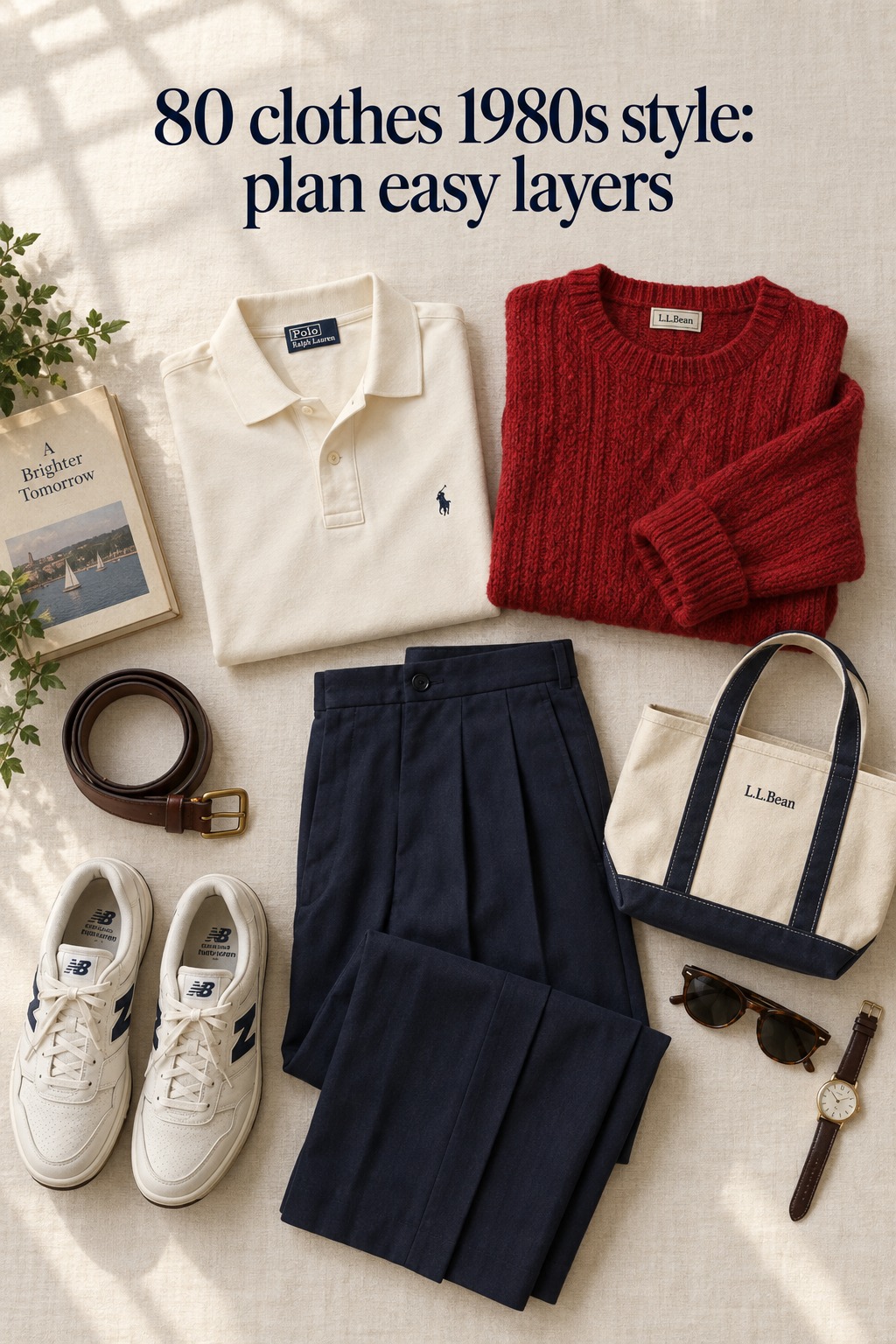
A preppy direction is useful when you want a neat, easy-to-read outfit. Start with a polo, button-down shirt, crew-neck knit, cardigan, or simple blazer. Add straight or tapered trousers, clean denim, a skirt, or another bottom that fits your day. Loafers, canvas sneakers, or simple leather shoes can keep the combination grounded. If you are borrowing only one cue, try a sweater layered over the shoulders, a visible shirt collar, or a contrast trim at the neckline. Keep the rest familiar so the outfit does not become a collection of costume signals.
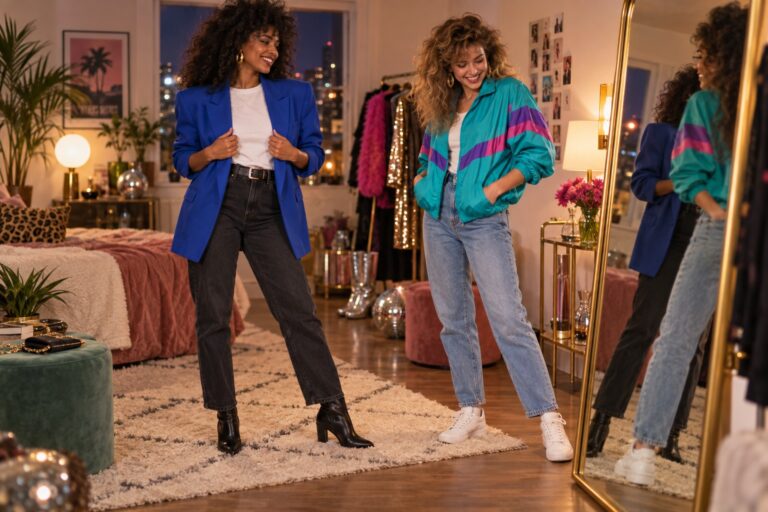
For a more relaxed version, use a sweatshirt, windbreaker, denim jacket, or roomy shirt as the main piece. Give its volume a clear partner: a broad top with a straighter or narrower bottom, or relaxed trousers with a closer-fitting layer above. These are modern balancing suggestions, not rules about what every person wore in the decade. Choose the shape that lets you move comfortably and feels like you. A washed denim jacket over a plain tee can carry a quiet reference without requiring an acid-wash set, slogan, bright leg warmers, and oversized jewelry together.
For work, borrow the intention of power dressing
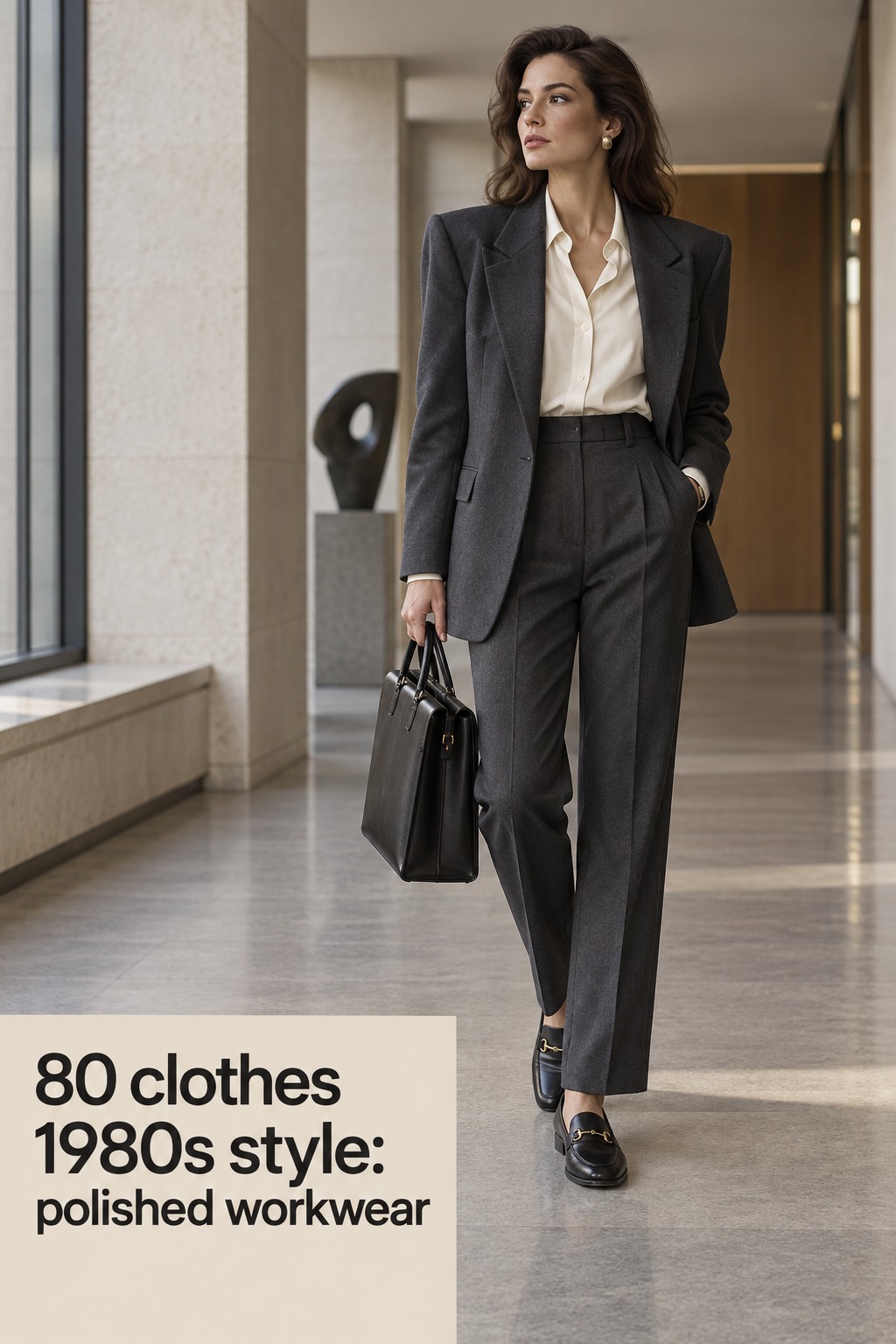
If you want an office-ready interpretation, look at shape and finish rather than dressing as a fictional executive. A structured blazer, a defined shoulder, a clean blouse, and tailored trousers or a skirt can create the confident outline many people associate with 1980s workwear. You can keep the colors restrained or use one saturated shade as the focal point. A simple shirt and understated shoes give the jacket space to lead. If a blazer feels too formal for your workplace, use a crisp shirt, a vest, or a more relaxed jacket with a clear shoulder seam.
Fit changes the message. A shoulder should sit securely rather than hanging so far past your frame that sleeves swallow your hands. A defined waist can come from the cut of the jacket, a tuck, or a belt, but you do not need to force a dramatic hourglass. Try the outfit while seated, reaching, and walking. When the jacket closes comfortably and the sleeve ends at a useful place, the silhouette looks intentional and works for the hours you need to wear it. This advice is about comfort and proportion, not a body type test.
For sporty style, make activewear the clear reference
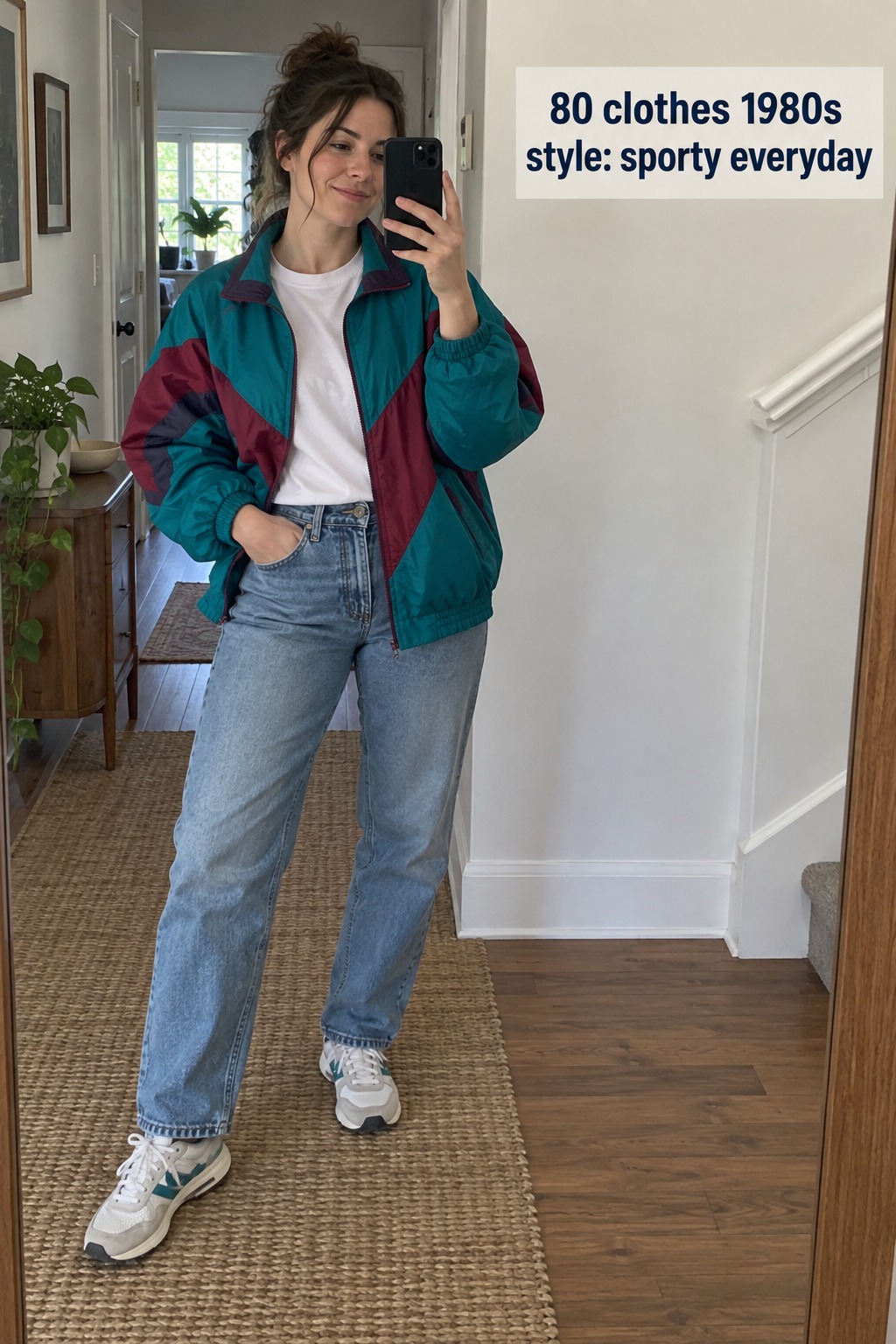
A sporty 1980s mood can start with a track jacket, windbreaker, sweatshirt, leggings, joggers, or athletic-inspired sneakers. Pick a combination that feels useful today: a zip jacket over a plain tee with straight jeans, or a sweatshirt with relaxed trousers and a simple sneaker. A headband or bright stripe can make the reference clearer, but treat it as an optional detail. If you are actually exercising, use clothes and footwear suited to your activity; an outfit inspired by old workout imagery is not a substitute for current functional gear.
Color blocking can help a track jacket stand out, but it does not have to dictate the whole palette. Pull one color from the jacket into a small detail, such as a sock, bag, or cap, and use neutrals or denim elsewhere. If your jacket already has several strong colors, let it be the only busy item. A balanced outfit gives the eye a place to rest and helps the sporty piece look like a choice rather than a costume prop. You can also keep the jacket open so the simpler layers underneath soften its impact.
For music-inspired looks, name the scene before adding details
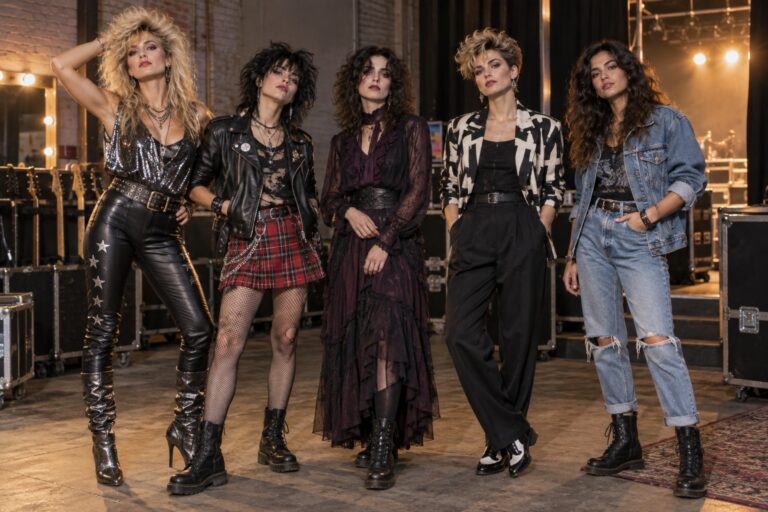
Music and clothing influenced one another, but there was no single “music look.” Punk, New Romantic, goth, rock, and hip-hop each have different visual vocabularies, and each changed over time. FIT’s decade timeline, for example, discusses early-to-mid-decade goth looks and later 1980s US hip-hop styling, including athletic shoes, tapered jeans, button-downs or polos, coach jackets, hooded sweatshirts, chains, and caps. This does not mean every hip-hop fan dressed alike, or that those pieces belong to every music-inspired outfit. Use the source as a reminder to choose a reference with care.
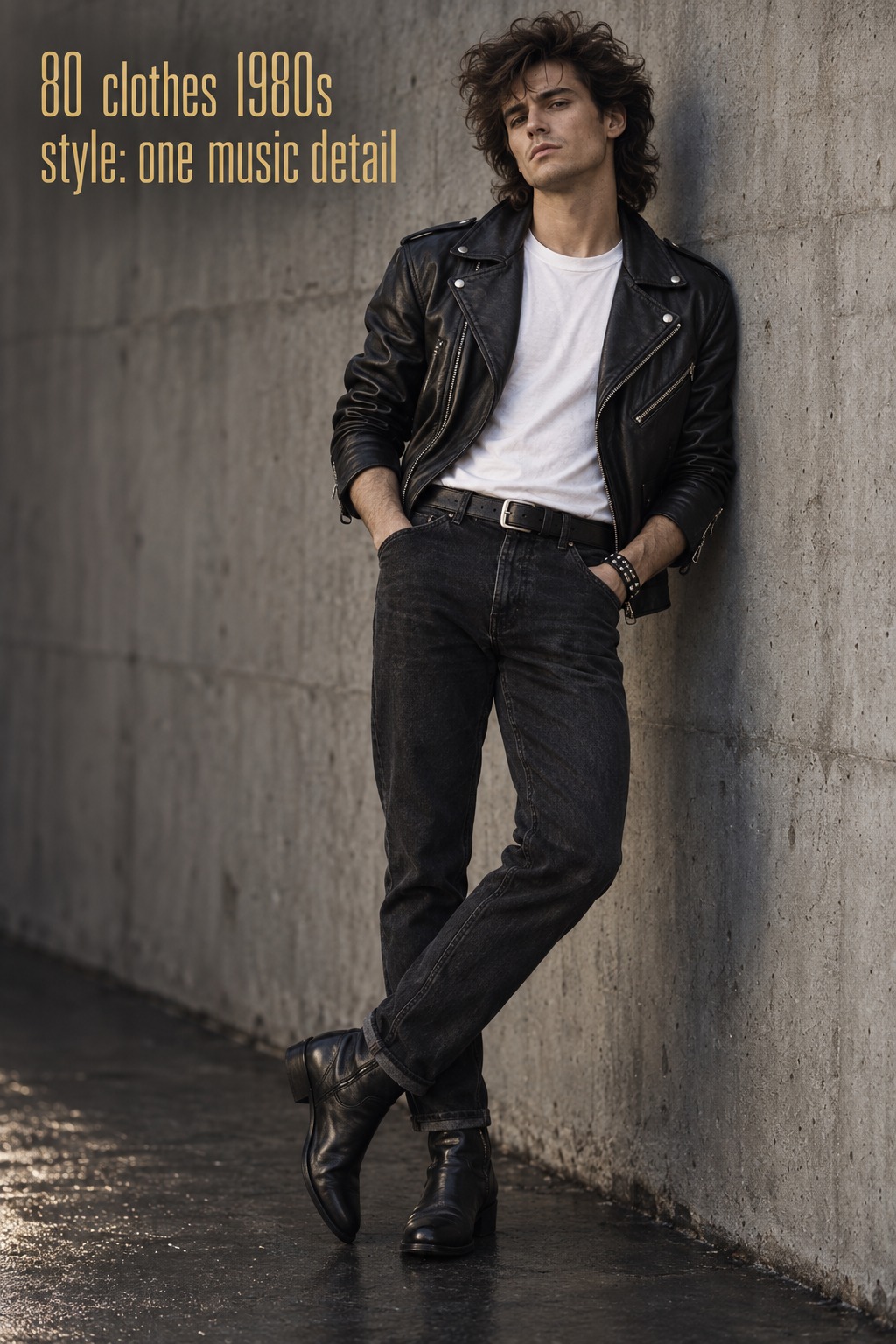
For a subtle music reference, build around a graphic tee, a dark jacket, one piece of jewelry, or a particular shoe shape. Keep the story coherent: a band shirt with denim and a leather-look jacket creates a different mood from a soft blouse, layered jewelry, and a dramatic skirt. If you are referencing a specific artist or scene, check whether the detail you remember actually belongs to that reference instead of relying on a generic “retro” mix. The V&A’s account of Vivienne Westwood shows how British punk-related design branched into Pirate, Buffalo, and later collections; it is a strong example of why scene names should not be used as interchangeable decoration.
Some looks also carry cultural histories beyond their surface styling. The late-decade hip-hop examples in FIT’s timeline describe a particular US scene and its clothing combinations. If you borrow that vocabulary, avoid reducing the scene to a chain or logo. Let fit, layering, footwear, and the whole context matter. You do not need to copy a culture to appreciate the clothing idea: you can choose ordinary sportswear or a clean track jacket as your own outfit anchor without claiming to represent a specific community or artist.
Research note: the period examples above are deliberately presented as examples, not universal rules. FIT’s 1980–1989 Fashion History Timeline and the Fashion History Museum’s collection story on 1980s fashion provide the historical context for the range of styles described here.
Build a Cohesive Outfit From the Clothes You Own
Once you have chosen a direction, build from your closet before shopping. Look for a piece that already carries the silhouette, color, texture, or attitude you want. It could be a blazer with a clear shoulder, a simple polo, a boxy sweatshirt, a windbreaker, a straight jean, a graphic shirt, or a pleated skirt. Lay it next to two or three likely partners. This lets you see whether the pieces belong together before you are standing in front of a mirror, changing the entire outfit one item at a time.
Choose one anchor and let it set the volume
Choose one item to carry most of the reference. If the anchor is broad or structured, try a cleaner line below it. If it is a close-fitting top, add a more relaxed trouser, skirt, or jacket. If the item is brightly colored or patterned, keep the adjacent pieces quieter. This kind of contrast helps each garment remain visible. You can still wear more than one statement piece when that is the look you want, but decide which item should lead and which should support it. Otherwise, every part competes to announce the decade.
Think about the full outline in a mirror, not just the garment close-up. A roomy top and a full skirt can feel expressive, while the same amount of volume with a long coat and wide trousers may feel cumbersome for your plans. A useful adjustment might be to tuck one edge of the shirt, open the jacket, roll a sleeve, or switch to a simpler bottom. These small edits can clarify the shape without changing the concept. Use a photo if helpful, since a quick picture often shows proportion and contrast differently from a mirror.
Use color to connect, not to tick off a decade checklist
Bright color can be part of an 1980s-inspired outfit, but the decade was not neon from head to toe. Decide how much intensity you want. One vivid jacket over denim and a plain shirt feels different from three competing brights plus metallic accessories. If you like color, choose a lead shade and repeat it once in a smaller detail. If you prefer a quieter outfit, use a saturated color in a narrow stripe, a bag, or a tee under a neutral layer. Both methods keep your reference readable without making color a required test.
Prints need the same editing. A geometric knit or graphic shirt can carry plenty of information by itself. If you combine prints, look for a shared color or a difference in scale, then keep the rest of the outfit calm. Denim is another useful bridge because it can make a dramatic blouse or bright top feel more everyday. The museum overview with the Fashion History Museum describes denim appearing in bleached, stone-washed, and frayed forms, but you do not need a period wash to create a reference. The garment’s shape and the other pieces around it do a lot of the work.
Balance texture and accessories with the occasion
Texture helps distinguish a look even when the palette is simple. Pair a crisp shirt with a soft knit, a smooth jacket with worn denim, or a matte sweatshirt with a clean shoe. Avoid piling several bulky textures if they make the outfit uncomfortable or obscure its shape. Accessories can finish the direction: a narrow belt, simple earrings, a watch, a cap, or one piece of jewelry may be enough. For a party or performance, you may enjoy adding more. For daytime, one deliberate detail often feels easier to live in.
Here are three starting formulas, offered as present-day styling ideas rather than exact reconstructions. For casual preppy: a polo or button-down, straight jeans or chinos, a light knit, and loafers or simple sneakers. For work: a structured jacket, clean top, tailored bottom, and comfortable shoes, with one color or accessory doing the expressive work. For sporty weekend dressing: a windbreaker or sweatshirt, denim or relaxed trousers, and athletic-inspired sneakers. Change any element to suit your comfort, dress code, weather, or personal style.
A music-inspired starting point could be a graphic shirt with an open jacket and denim, but the shirt should be something you actually want to wear, not a placeholder that feels borrowed. You can also leave the reference in the silhouette: try a dramatic shoulder or an unusual layered shape with a plain base. If a garment is uncomfortable, too delicate for your plans, or makes you feel self-conscious, replace it with a more wearable item that serves the same visual role. The intention is to make an outfit you can move through the day in.
Fix the Details That Make an Outfit Read Like a Costume
If the outfit feels too literal, do not start over. Identify the part that is carrying the reference most strongly, then remove or simplify one supporting detail. If the jacket is bright, trade a second bright layer for denim or a solid neutral. If the shoulder shape is dramatic, choose a simpler neckline and accessories. If the graphic shirt already sets a music mood, you may not need a bold hat, several necklaces, and conspicuous socks too. Editing works because the central idea becomes easier to see.
When the look feels too generic, add one more specific cue from the lane you chose. A preppy outfit might need a visible collar or a clean knit layer. A workwear interpretation may need stronger structure. A sporty look could use a windbreaker stripe or athletic shoe. A music-inspired outfit could use a shirt or accessory that actually connects to its chosen scene. Add one cue, then check the complete outfit again. Adding several details at once makes it harder to tell which change helped.
For an ordinary day, soften the statement piece
For errands, class, travel, or a casual lunch, comfort and movement come first. Let one period-inspired garment lead and pair it with familiar pieces you already reach for. A roomy sweatshirt can go with straight jeans. A bright track jacket can sit over a plain tee. A crisp polo can pair with a modern trouser. The outfit does not need a special hairstyle or a full set of era accessories to make its point. Choose a layer you can take off and shoes you can comfortably walk in.
Check practical details before leaving: can you sit without adjusting the waistband, reach without the shoulder seam pulling, and carry the bag you need? If you are layering, make sure the layers work open and closed. Small issues can interrupt the day and distract you from enjoying the clothes. You may prefer a subtle reference in a collar, jacket, or color rather than a full period outfit. That is still a coherent choice when it fits the plan.
For work, keep the silhouette intentional and the message clear
Workplaces vary, so use the dress code you actually have as the boundary. A jacket with a defined shoulder over a simple shirt may be enough. If the office is casual, substitute a knit blazer or neat cardigan. Avoid assuming that a period reference requires high heels, a very narrow waist, or a specific gender presentation. A sharp line can come from the garment’s cut, clean tucking, a pressed collar, or an uncluttered color palette. Make sure the outfit feels like you and allows the tasks of the day.
Accessories can make an outfit more or less formal. A polished shoe or a structured bag can balance a playful top, while a simple sneaker may make the same jacket feel more relaxed. If you are unsure, choose the quieter accessories first and add the more expressive piece only if the outfit still needs it. The goal is not to erase personality at work. It is to make the reference legible without competing with the setting or making you spend the day adjusting your clothes.
For a party, decide whether you want a nod or a full theme look
A themed event gives you permission to turn up the volume, but it still helps to choose a clear direction. Are you going sporty, preppy, glam, punk-inspired, or music-led? Pick the pieces that make that direction recognizable. If you want a gentle nod, a single silhouette or accessory may be enough. If the brief asks for a full costume, add more cues that belong together rather than every familiar 80s detail. This article’s focus is everyday clothing choices; for a costume event, think in terms of one coordinated character or scene instead of mixing unrelated references.
Finally, consider how much time you will spend standing, dancing, or sitting. Shoes that look right but hurt after a short walk can make an otherwise successful outfit difficult. A jacket that will be too warm indoors may be better worn as an arrival layer. You can make the outfit more comfortable without removing its central idea. A good event look supports the evening you are going to have, not just the photograph you hope to take.
A final check takes less than a minute. Name the style lane, point to the anchor piece, and ask whether the remaining items support it. Then move around, sit down, and look at the outfit from a few steps away. If the lane is clear and you feel comfortable, stop adding details. The most useful takeaway from 80 clothes 1980s style is not a shopping list. It is the freedom to select one part of a varied decade and make it work in your own life.
FAQ
What clothes were popular in the 1980s?
There was no single popular outfit. Clothing included preppy shirts and knits, workwear and power dressing, activewear, denim, and looks connected to music scenes such as punk, goth, New Romantic, and hip-hop. What someone wore depended on their setting, community, age, and taste. Start by deciding which of those directions you mean rather than treating every familiar cue as part of one uniform.
How can I wear 1980s clothes for everyday life?
Choose one recognizable piece, such as a structured jacket, polo, sweatshirt, windbreaker, or straight-leg denim, and pair it with clothes that suit your current routine. Keep your shoes comfortable and use a quieter layer or accessory to balance a strong color or silhouette. You do not need a full vintage outfit to create a clear reference.
Do I need shoulder pads to create an 80s look?
No. A defined shoulder is one possible visual cue, especially for a tailored or work-inspired outfit, but it is not required. A track jacket, denim, a polo, a graphic shirt, or a particular way of layering can suggest a different part of the decade. Choose the silhouette you enjoy wearing rather than adding padding just to meet a checklist.
How do I make an 80s outfit feel less like a costume?
Pick one style lane and one anchor piece, then simplify details that point in unrelated directions. If a piece already has strong color, shape, or print, let the remaining clothes support it. Use present-day pieces for comfort and fit, and check that the outfit works for the place you are going. A costume effect usually comes from stacking recognizable cues without a clear plan.
Can I create an 80s-inspired outfit with clothes I already own?
Yes. Look for a jacket, shirt, knit, denim piece, sweatshirt, or shoe that already carries the shape or mood you want. Then add one supporting detail, such as a collar, stripe, belt, or accessory. The styling choices matter as much as finding a vintage item. There is no need to buy a complete set of period clothes for one outfit.
What is an easy casual 1980s-inspired outfit?
Try a simple polo or button-down with straight jeans and sneakers, or a sweatshirt under a denim jacket with relaxed trousers. If you want a sportier direction, swap in a windbreaker. Keep the outfit comfortable for the activity and use one accessory only if it helps clarify the look. These are modern starting points, not claims that everyone dressed this way in the 1980s.
Were bright colors the whole story of 1980s fashion?
No. Bright colors and bold prints are memorable cues, but the decade also included restrained preppy clothes, tailoring, casual denim, and dark subcultural looks. You can wear a single vivid item, choose a muted palette, or use shape and layering instead. The right choice depends on the style direction you want, not on a requirement to wear neon.
How can men adapt 1980s clothing ideas today?
Men can start with a polo, button-down, crew-neck knit, coach jacket, sweatshirt, denim, or a structured blazer, then adjust fit and footwear to the occasion. The same method applies across genders: pick a style lane, select one anchor, and balance the rest of the outfit. FIT’s timeline includes both men’s and women’s styles, while historical examples should be understood in their specific context rather than as rules for how anyone must dress.
What shoes work with 1980s-inspired clothes?
Choose shoes that fit both the style direction and the day’s activity. Clean sneakers can suit casual or sporty outfits, loafers can reinforce a preppy or polished look, and boots can work with some music-inspired combinations. There is no single correct shoe for the decade. Comfort, weather, and the event are better guides than trying to match a nostalgic image exactly.
Finish the look
The little extras that make a summer outfit feel complete
From beach days to city weekends, these easy pieces bring comfort, texture, and a polished finishing touch.

FENBEN
Straw Hobo Crossbody Bag
A handwoven straw bag with both short and crossbody straps—an effortless finishing touch for vacation looks and warm-weather outfits.
Shop the bag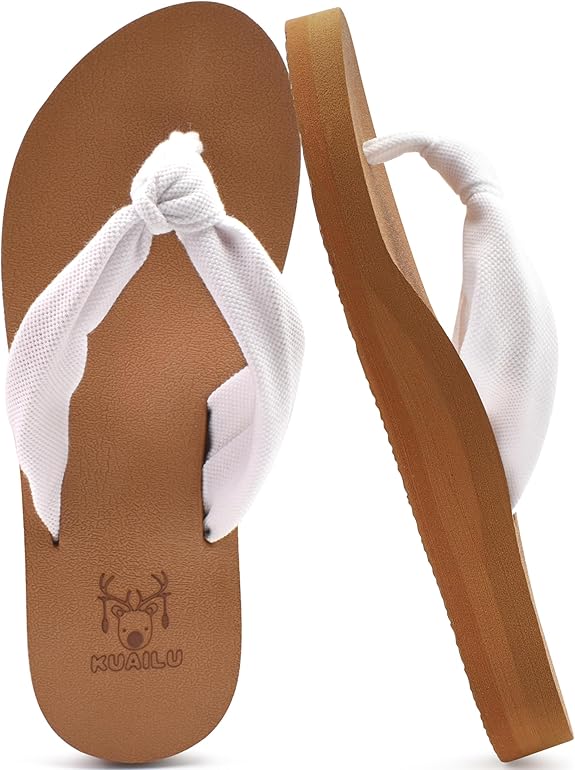
KuaiLu
Flip Flops with Arch Support
Cushioned, lightweight sandals with supportive arch design—a practical choice for beach trips, errands, and long summer walks.
Shop the sandals
baleaf
Athletic One-Piece Swimsuit
A functional one-piece with adjustable straps and moderate coverage, designed for swimming, training, surfing, and active beach days.
Shop the swimsuit
Astylish
Linen-Cotton Button-Down Shirt
A relaxed cotton-linen shirt with a collared V-neck and roll-up sleeves—easy to style over swimwear or with denim and shorts.
Shop the shirt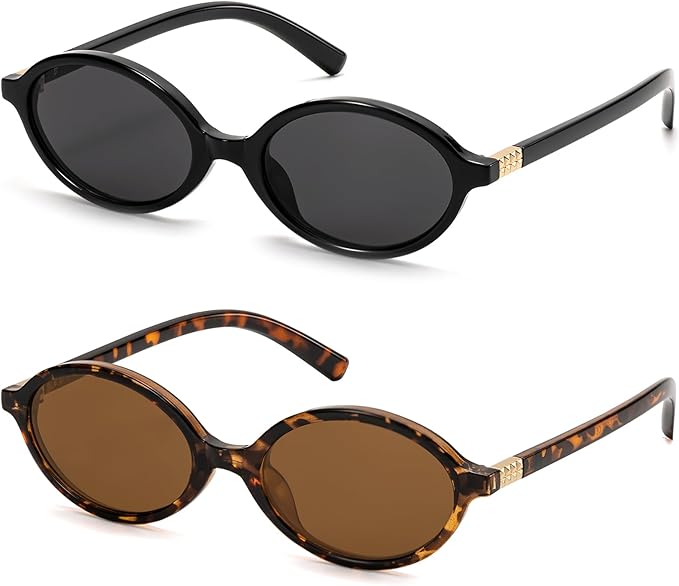
ViewJoy
Retro Oval Sunglasses
Small oval sunglasses with a 90s-inspired silhouette and UV400 lens protection—a quick way to add a vintage edge to everyday looks.
Shop the sunglasses
Affiliate disclosure: This section contains affiliate links. If you make a purchase through these links, I may earn a commission at no additional cost to you. Product selection, pricing, availability, and delivery terms may change—please review the current details on Amazon before purchasing.
As an Amazon Associate I earn from qualifying purchases.