80 Prom Dresses 1980s: Four Styles to Know
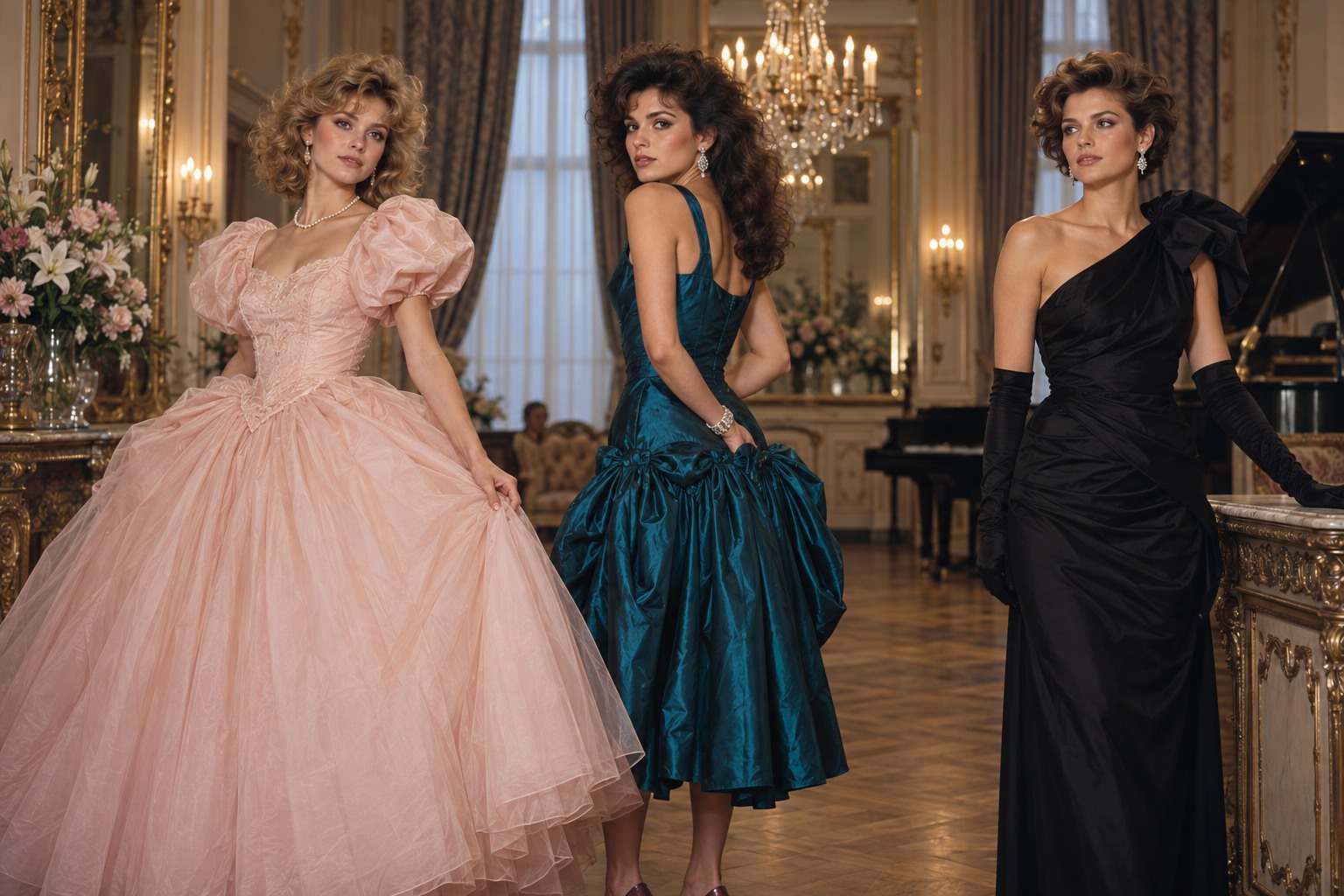
If you are searching for 80 prom dresses 1980s style, start with one useful idea: there was no single prom silhouette for the entire decade. Early and mid-1980s pictures often show romantic volume, ruffles, shine, and sleeves with presence. Other dresses used a dropped waist, a straight or softly shaped bodice, or a shorter skirt. Toward the late 1980s, bubble shapes and metallic accents joined the picture, while simpler formal looks remained an option.
That range is good news whether you are building a costume, finding a genuine vintage gown, or looking for a modern dress with an unmistakable 1980s reference. Instead of copying every recognizable detail at once, choose a silhouette first. Then use fabric, color, and accessories to make the reference clear. The result feels more intentional, fits the event better, and is easier to wear through a full evening.
This guide breaks the decade into practical dress directions, explains which details help each one read as 1980s, and gives you a fitting-room checklist for proportion and movement. You will also find ways to style a dress without letting the hair, jewelry, gloves, and skirt compete for attention.
The Fashion-Note Edit
Five effortless pieces to refresh your everyday wardrobe
A polished, practical edit for workdays, weekends, and everything in between.

The Drop
Women’s Blake Long Blazer
A longline, tailored blazer with a notched collar and a single-button closure—an easy layer for denim, dresses, or office-ready looks.
Shop the blazer
Amazon Essentials
Women’s Lightweight Crewneck
A soft, lightweight sweater with a clean crew neckline—the kind of reliable layer that works from cool mornings to air-conditioned spaces.
Shop the sweater
Amazon Essentials
Women’s Loafer Flat
A classic flat loafer that gives casual outfits a more polished finish and pairs naturally with tailored pants, skirts, and straight-leg jeans.
Shop the loafers
Levi’s
Women’s 501 90s Jeans
A relaxed, vintage-inspired take on the iconic 501 silhouette—made for an easy, lived-in look without the thrift-store search.
Shop the jeans
Colorfulkoala
High-Waisted 7/8 Leggings with Pockets
Soft, four-way-stretch leggings with side pockets and a high-rise waistband—designed for movement, errands, and off-duty comfort.
Shop the leggings
Affiliate disclosure: This section contains affiliate links. If you make a purchase through these links, I may earn a commission at no additional cost to you. Product selection, pricing, availability, and delivery terms may change—please review the current details on Amazon before purchasing.
As an Amazon Associate I earn from qualifying purchases.
Why 1980s prom dresses still read as distinctive
The decade’s formal dresses are memorable because they often combine a clearly shaped upper half with visible skirt volume, surface detail, or a strong color choice. A fitted bodice can meet a full skirt at the natural waist or below it. A sleeve can create width across the shoulder. Lace, satin-like shine, tulle, gathered fabric, bows, and ruffles can make the outline recognizable even in a small photograph.
Your wedding style is personal.
Your plan should feel that way, too.
Zarellea keeps your guest list, budget, vendors, and every next step beautifully organized — so you can focus on the moments that feel like you.
Yet “big” is only a shortcut, not a complete history. A prom timeline in Cosmopolitan’s year-by-year overview points to a drop-waist, billowing-skirt shape in 1983, ruffles in 1984, and sheer lace gloves in 1985. Meanwhile, the dated advertisements and catalog images collected by Click Americana show many variations in length, color, fabric appearance, and trim. Those are examples, not a claim that every school or student followed one trend.
It helps to read the dress as a set of design choices. Look at where the waist seam sits, how the skirt gains volume, what the neckline reveals, and whether the surface is matte, glossy, sheer, or decorated. These cues tell you more than a vague label such as “retro.” Two dresses can both feel 1980s while creating very different moods: one soft and romantic, another sculptural, bright, or pared back.
Time within the decade matters, too. Fashion changes gradually, so the following directions are a helpful map rather than strict year-by-year rules. Vintage catalogs and retrospective timelines can make a trend look more uniform than real wardrobes were. Use the details as visual clues, then decide which combination suits your event and your taste.
Four 1980s prom dress directions to know
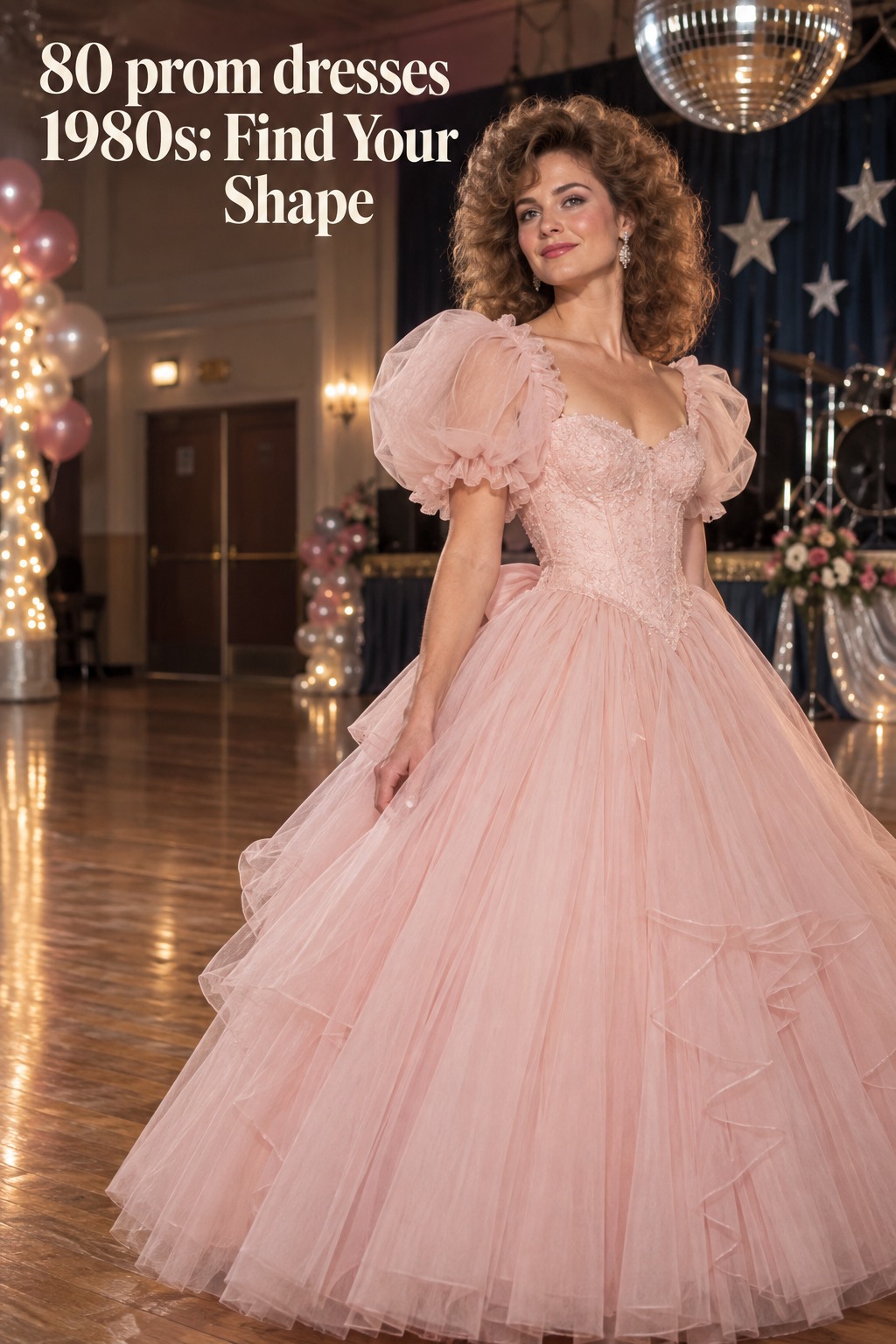
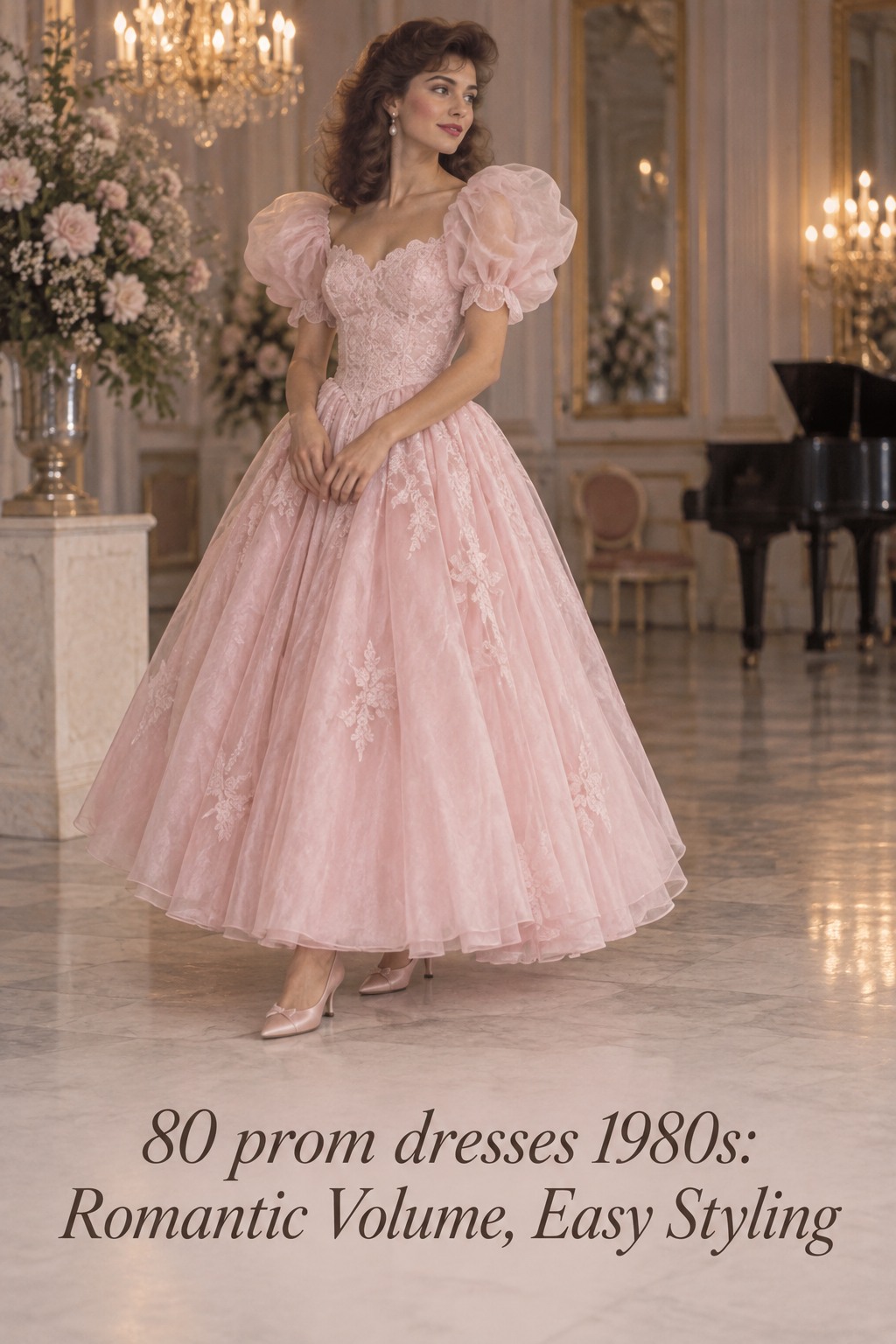
1. The romantic full-skirt gown. This is the storybook direction: a defined bodice, a generously gathered or layered skirt, and details such as lace, a bow, ruffles, or puffed sleeves. Pastels and pinks appear often in vintage prom imagery, but the idea works in many colors. The silhouette does most of the work, so a restrained neckline or a simple bodice can balance a very full skirt.
When evaluating this shape, look at the relationship between bodice and skirt rather than the amount of fabric alone. A high, natural, or dropped waist changes the visual line. A layer of tulle can create a light outline, while a denser skirt reads more structured. If the skirt is already dramatic, small accessories can preserve the romantic mood without adding more competing volume.
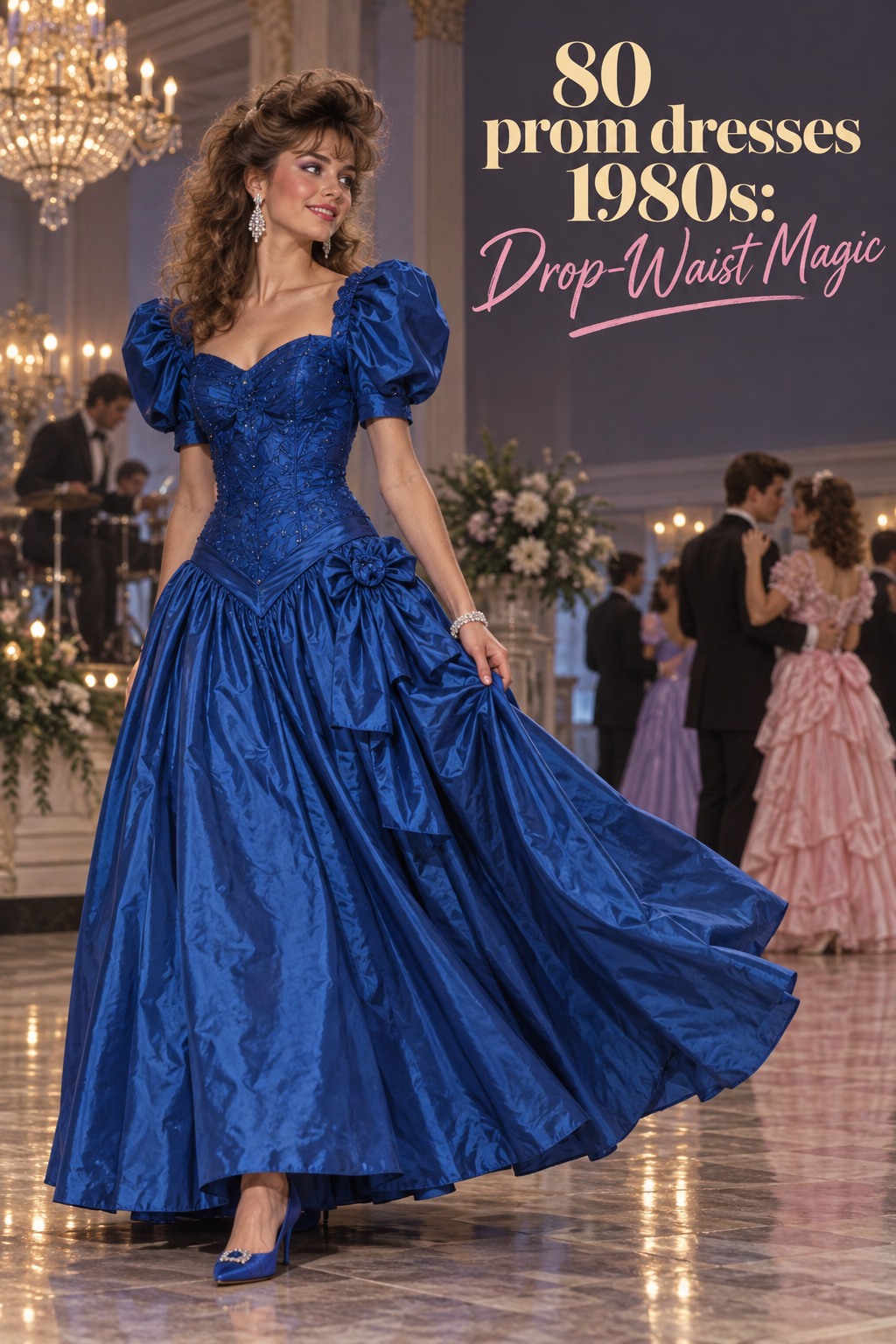
2. The dropped-waist dress. A dropped waist places the join between bodice and skirt lower than the wearer’s natural waist. Some examples continue into a softly gathered or billowing skirt. That lower seam is a strong period cue because it changes the whole proportion, even when the sleeves and decoration are relatively quiet. Search photographs for the seam itself; a waist seam can be hard to identify when a bow, belt, or heavy trim crosses it.
This shape can be floor length or shorter, ornate or comparatively simple. It does not have to be a stereotypical princess gown. If you want the silhouette to stand out, keep the bodice fit comfortable and let the seam placement remain visible. If you prefer a subtler reference, choose a modern dress with a lower waistline and add one era-inspired detail, such as a satin bow or a sheer sleeve.
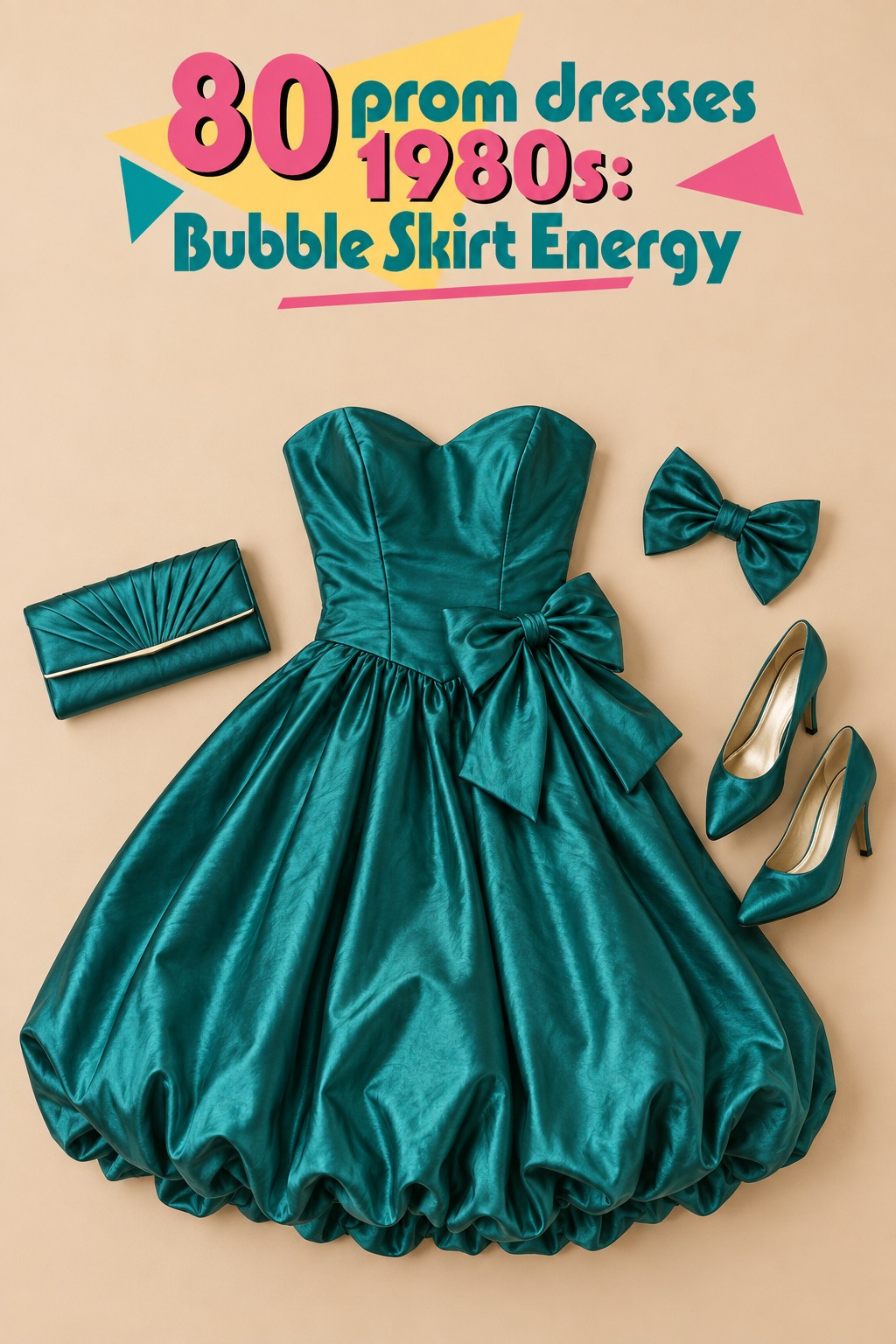
3. The short pouf or bubble skirt. A bubble skirt turns the hem inward to create a rounded, contained shape. In late-decade prom imagery, shorter dresses and inflated skirts provide a lively alternative to the floor-length gown. The hem construction is the clue: a gathered or tucked lower edge makes the skirt look rounded rather than simply flared. Some dresses pair that shape with a fitted velvet-like bodice, metallic-looking fabric, or a prominent bow.
Because the skirt is already a focal point, keep the rest of the outfit legible. Shoes can be visible, so think about their shape and whether you will stand or dance comfortably in them. If a short bubble dress feels too theatrical for your event, borrow only the rounded volume in a softer color or choose a simpler bodice. A reference can be clear without reproducing every detail of a catalog look.
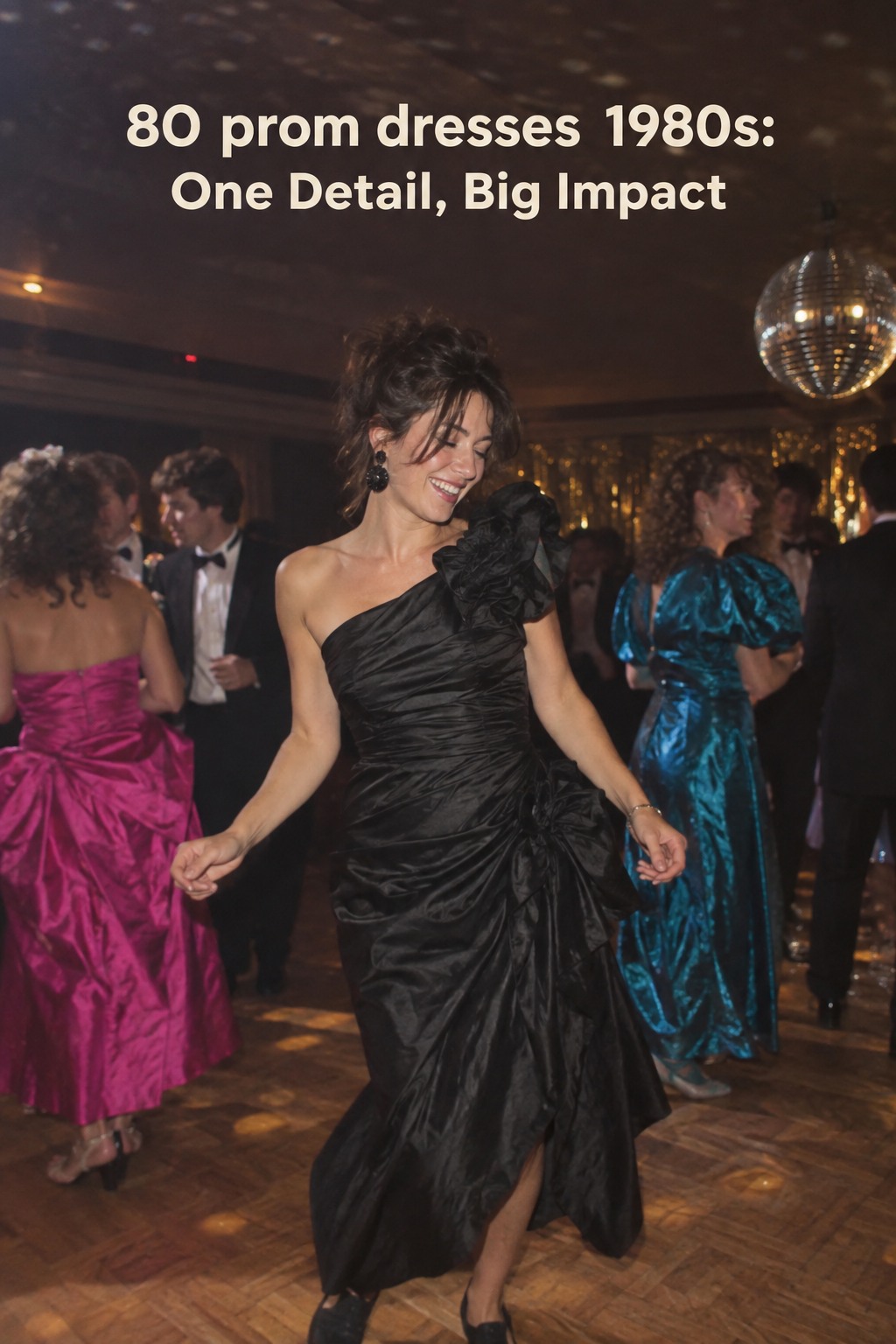
4. The sleeker formal alternative. Full skirts were not the only way to dress for a formal dance. Archival eveningwear collections include more streamlined gowns, and prom roundups show fitted, sleeveless, one-shoulder, or less decorated options alongside ruffles and pouf. A simpler line can still feel period-aware through a dropped waist, unusual sleeve shape, a strong jewel tone, a shiny surface, or a single expressive accessory.
This direction is useful if you like the decade’s confidence but do not want a large skirt. A straight or gently shaped dress can take a bold color, a sculptural neckline, or a dramatic earring. Rather than piling on references, select one feature you can point to: shoulder shape, waist position, sheen, or an accessory. The result gives the outfit a clear idea while leaving room for your own style.
These categories overlap. A gown might have a dropped waist and a full skirt, or a short bubble hem and puff sleeves. Think of them as a way to compare proportions, not as boxes that every historical dress must fit. If a listing calls any large dress an “80s prom gown,” look beyond the title and examine the seams, shape, trim, and construction shown in the photos.
How to choose an 80s prom dress for your vision
Before browsing, decide what you want the dress to communicate. A full-length romantic gown reads formal and theatrical. A shorter bubble skirt feels playful and energetic. A sleek dress with one shoulder or a clean bodice can suggest the decade with less volume. Knowing the intended mood narrows the search more effectively than starting with a color alone.
Choose the silhouette before the embellishment
Save a few reference images and compare the outline from shoulder to hem. Ask: Is the bodice close to the body or softly shaped? Where does the skirt begin? Is its volume at the hip, across the hem, or spread through layers? Is the dress long enough to cover the shoe or short enough to show it? These questions help separate a dropped-waist gown from a natural-waist ballgown and a bubble skirt from a regular gathered skirt.
Then choose one or two supporting details. A bow, ruffle, lace panel, puff sleeve, or shiny surface can strengthen the reference. You do not need all of them. If the dress already has strong shoulders and a full skirt, extra decoration may make the outfit harder to read. A quieter dress can take a bolder accessory because it has more visual space.
Decide between true vintage and a modern interpretation
A true vintage dress offers the original garment, with its own construction, history, and signs of prior wear. A modern interpretation offers a contemporary fit and may borrow just a few period cues. Neither choice is automatically more authentic as an outfit. Choose based on the experience you want, how you expect to wear the dress, and whether the particular garment can be fitted and cared for appropriately.
For a vintage listing, request clear photographs of the front, back, closures, seams, lining, hem, and any visible damage. Ask for garment measurements rather than relying only on the size printed on a label. The measurements that matter depend on the construction, but bust, waist, hip, shoulder, and total length are common starting points. Compare them with a similar dress that fits you, measured flat and without stretching it.
Look closely at areas that experience strain: underarm seams, zipper edges, hooks, shoulder seams, and places where a heavy skirt attaches to the bodice. On a pale or shiny surface, inspect for marks and uneven fading in more than one lighting condition if possible. If the seller cannot provide a detail you need, treat it as an unknown rather than assuming the garment is flawless. A photo can suggest an era, but appearance alone cannot establish the exact date or fiber content.
A modern dress inspired by the 1980s may be easier to alter or wear again, but product descriptions use period language loosely. Look for the actual feature: a dropped seam, gathered bubble hem, prominent shoulder, or layered skirt. A dress described as “retro” may have none of these. Let the design and garment measurements guide the decision rather than relying on search labels.
Fit-check the bodice, waist, and hem
In a fitting room, raise your arms, sit down, walk, and turn. The bodice should feel secure without forcing you to hold your shoulders rigidly. Check that a sleeve does not restrict your reach and that the neckline stays where you expect. If the dress has a dropped waist, confirm that the seam sits intentionally rather than twisting or riding up when you move.
For a full skirt, test how it moves around your legs and whether you can sit without constantly arranging it. For a bubble hem, check that the inner edge is comfortable and that the shape looks balanced from the side as well as the front. If you plan to wear a petticoat or another layer, bring it to the fitting. The added volume can change the way a dress hangs and the amount of space it takes up.
Wear the undergarments and shoes you are likely to choose, or bring similar ones. This helps you judge the neckline, waist, hem, and walking comfort together. Ask a tailor what adjustments are realistic before committing to a dress with complicated sleeves, beading, pleating, or layered netting. Alterations depend on the garment and the person doing the work, so do not assume a major change will be simple or invisible.
For a school event or themed dance, check any dress guidelines before buying. Rules differ by event, and a dress that works beautifully in a photograph may need a small adjustment to meet a particular setting. You can preserve the silhouette while changing a neckline layer, sleeve treatment, or hem, but make the plan with the actual garment in front of you.
How to style an 80s prom dress without overdoing it
Use a one-focal-point rule. Let the dress lead, then choose one supporting feature for the hair, jewelry, gloves, or shoes. If the skirt is huge, the bodice is covered in lace, and the sleeves have volume, a simple shoe and one pair of earrings may be enough. If the dress is sleek, a statement earring, a bow in the hair, or sheer gloves can make the period reference more visible.
For a romantic full skirt: try a small hair bow, soft updo, or restrained jewelry. Lace gloves can add a period cue, but they are optional and can compete with long sleeves or a decorated bodice. If you wear gloves, check that rings, bracelets, and the dress closure do not catch on the fabric.
For a drop-waist gown: keep the waistline visible. A long necklace or a jacket that ends at the seam can interrupt the silhouette, so test accessories in a full-length mirror. If the bodice is plain, a brighter shoe or a noticeable earring can add interest without hiding the dress’s defining line.
For a short bubble dress: shoes become part of the silhouette because more of the leg is visible. Choose a pair that feels stable for standing and dancing. A compact bag keeps the outline clean, and one accessory can echo the dress’s color or sheen. If the dress has metallic fabric, avoid adding shine in every other piece.
For a sleek dress: allow one bold detail to carry the look. A vivid color, sculptural shoulder, shiny clutch, or statement earring can provide enough contrast. If you are coordinating with a date or a group, a shared color accent can look deliberate without requiring exact matching from head to toe.
Hair can follow the dress rather than a generic decade costume. A gathered updo works with a romantic neckline; a side bow can complement a simpler dress; a softer shape can balance a sharp shoulder. Choose a style that stays comfortable and does not hide an interesting neckline or sleeve. If you want a high-volume look, test it with the actual dress so the proportions feel considered.
Modernize the outfit by editing rather than erasing. A vintage gown can pair with a simple shoe and a contemporary bag. A modern dress can gain a period note through its waistline and one accessory. You can also reinterpret the color story instead of reproducing a full catalog look. The goal is to make the reference understandable while still feeling like yourself.
Before the event, wear the complete outfit at home for a few minutes. Sit, walk, use the stairs, and carry the bag you plan to bring. Check whether the skirt catches, a strap slips, the hem hides your shoes, or an accessory tugs at the dress. Small practical adjustments can make a dramatic silhouette much more enjoyable.
Common 80s prom dress mistakes and a final fit check
The most common styling mistake is treating the decade as a costume checklist: big hair, big sleeves, bright color, ruffles, gloves, bows, and shine all at once. Those elements can be fun, but a dress usually looks more considered when one or two lead. Pick the silhouette you like, then edit accessories until the dress remains the first thing you notice.
Another mistake is choosing a dress from a thumbnail without checking the waist seam, lining, closure, or hem. Online photos can flatten skirt volume and hide construction details. Ask for measurements and close-ups, and compare the garment with your own fit preferences. If key information is missing, decide whether the uncertainty is acceptable before purchasing.
Do not assume that every shiny dress or puff sleeve is from the 1980s. Similar shapes appear in other decades and in modern revivals. Use several clues together: proportion, waist placement, skirt construction, trim, and the garment’s documented source. When the exact date is not established, describe it as 1980s-inspired rather than claiming certainty.
A final check can be quick. Confirm that the dress meets the event’s requirements, closes comfortably, stays secure when you move, and works with your planned shoes and undergarments. Check that you can sit, dance, and use the restroom without struggling with the skirt or accessories. Make sure any repair or alteration is complete before the event, and store or transport the dress in a way appropriate to its actual fabric and construction.
If you are still deciding, return to three questions: Which silhouette do I want to see in photos? Which details make that silhouette unmistakable? Can I comfortably move in this exact dress? Answering those questions gives you a better shortlist than chasing every 1980s feature at once.
Sources and methodology
This guide compares decade timelines, dated vintage catalog imagery, a specialist research repository, and museum records for 1980s formalwear. The visual roundups are useful for examples but are not complete surveys of what every student wore. The practical fit and styling suggestions are general guidance, not claims of first-hand testing. The article uses the original research pages linked above for the main period-specific claims and treats fashion categories as overlapping rather than strict year-by-year rules.
FAQ
What did most 80s prom dresses look like?
There was no single look across the whole decade. Common visual references include full or billowing skirts, dropped waists, ruffles, bows, shiny surfaces, lace, and expressive sleeves. Shorter bubble shapes and sleeker formal options also appear in late-decade imagery.
Were 1980s prom dresses always long and puffy?
No. Full-length gowns are memorable, but shorter bubble or pouf skirts and less ornate dresses are part of the decade’s prom imagery too. Check the outline and details of a specific dress rather than assuming all 1980s formalwear had one length.
What details make a prom dress look 1980s?
Look for a combination of cues such as a dropped waist, billowing skirt, bubble hem, puff sleeve, ruffles, bows, lace, or a shiny surface. One clear detail can be enough when the silhouette already supports the reference.
How can I style an 80s prom dress without looking like I am in a costume?
Choose one focal point and keep the other accessories simpler. A dramatic skirt may need only a small hair detail and comfortable shoes, while a sleek dress can carry a bolder earring or glove. Keep the silhouette recognizable, then edit the extras.
What should I check before buying a vintage 80s prom dress?
Ask for garment measurements and close photographs of the seams, lining, closures, hem, and any damage. Compare the measurements with a garment that fits you, and consider whether the dress can be altered. Do not rely only on the size label or a seller’s decade description.
Can a modern dress work for an 80s prom theme?
Yes. A modern dress can suggest the decade through a dropped waist, a bubble skirt, a strong shoulder, a shiny finish, or a single expressive accessory. Choose the specific design cue you want instead of adding every recognizable detail.
Finish the look
The little extras that make a summer outfit feel complete
From beach days to city weekends, these easy pieces bring comfort, texture, and a polished finishing touch.

FENBEN
Straw Hobo Crossbody Bag
A handwoven straw bag with both short and crossbody straps—an effortless finishing touch for vacation looks and warm-weather outfits.
Shop the bag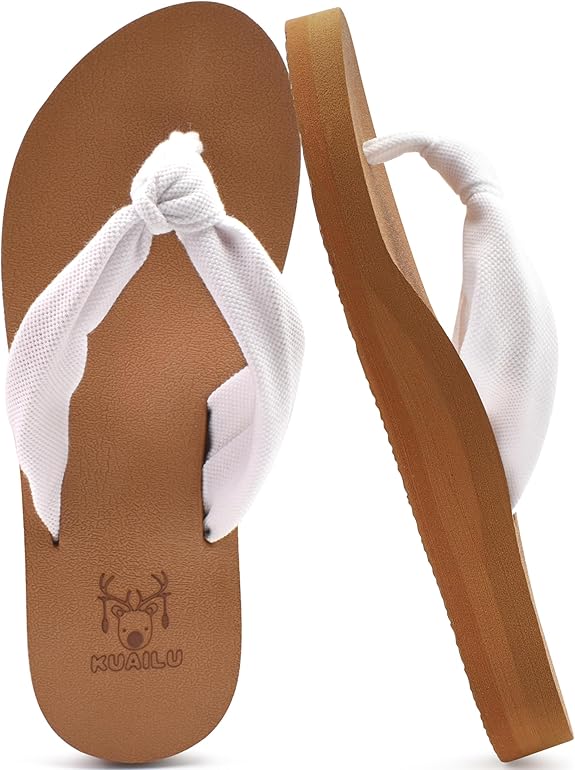
KuaiLu
Flip Flops with Arch Support
Cushioned, lightweight sandals with supportive arch design—a practical choice for beach trips, errands, and long summer walks.
Shop the sandals
baleaf
Athletic One-Piece Swimsuit
A functional one-piece with adjustable straps and moderate coverage, designed for swimming, training, surfing, and active beach days.
Shop the swimsuit
Astylish
Linen-Cotton Button-Down Shirt
A relaxed cotton-linen shirt with a collared V-neck and roll-up sleeves—easy to style over swimwear or with denim and shorts.
Shop the shirt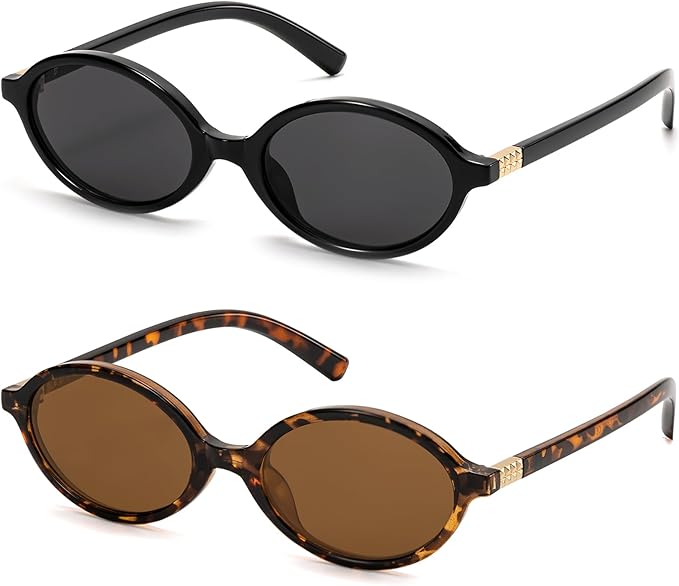
ViewJoy
Retro Oval Sunglasses
Small oval sunglasses with a 90s-inspired silhouette and UV400 lens protection—a quick way to add a vintage edge to everyday looks.
Shop the sunglasses
Affiliate disclosure: This section contains affiliate links. If you make a purchase through these links, I may earn a commission at no additional cost to you. Product selection, pricing, availability, and delivery terms may change—please review the current details on Amazon before purchasing.
As an Amazon Associate I earn from qualifying purchases.