80’s Fashion: How to Buy One Vintage Piece You’ll Wear
A geometric cardigan looks promising in a vintage listing. The sleeve shape is right and the listing says it fits a medium. You’ve already pictured it with a pair of trousers you don’t own. Then you notice the seller hasn’t shown the cuffs or measured from shoulder to hem.
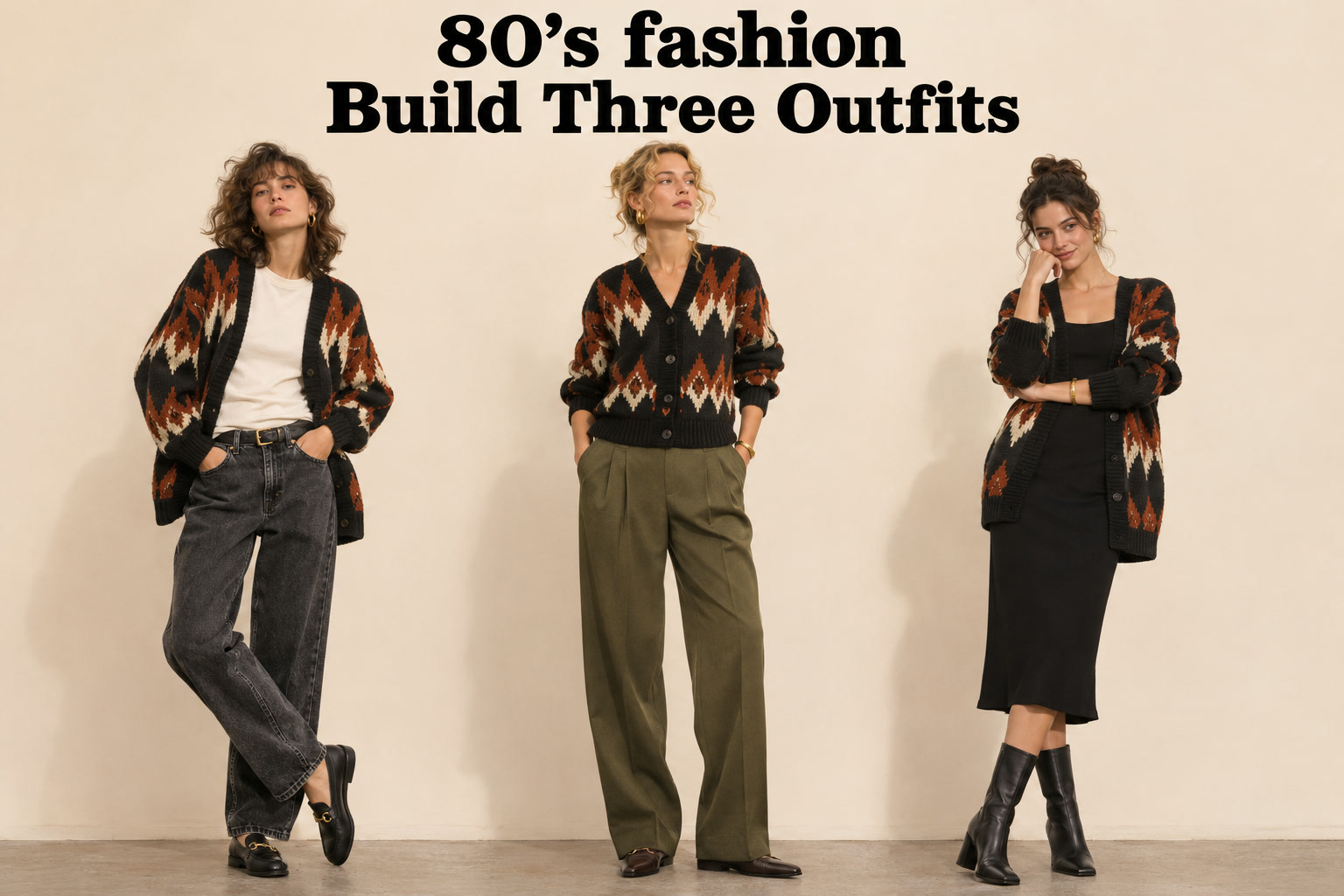
I’d judge an 80’s fashion find by the clothes it can work with this week. Before you buy it, sketch three outfits using clothes you own. That gives you something to check against the listing, right down to whether the sleeves will fit inside your coat.
Start with a garment you can compare
Pick the role before you pick the piece
Look at what you take off and put back on during a typical day. If your outfit is usually a T-shirt and straight pants, there’s room for a cardigan that can sit open over both. If you walk to work with a shoulder bag and carry a laptop, a light jacket with room through the upper arm may be more useful. Someone who already wears skirts most days could start with a patterned skirt. The easiest way to pick is to look at where you actually get stuck in the morning. If you keep getting dressed and wishing for a layer over your T-shirt, make that the first search.
The Fashion Institute of Technology’s timeline for 1980 to 1989 puts chunky knitwear, padded tailoring, and stretchy sportswear in the same decade. Even if only one of those appeals to you, there’s plenty to work with. If a strong color combination is the attraction, a geometric knit can carry it with the shoulders you already prefer. If you keep saving outfits with a pronounced shoulder line, look at the upper half of a jacket before committing to its color. A dusty blue blouse bought for its color can leave you with the same silhouette you wanted to change.
Put a piece you already wear on the table
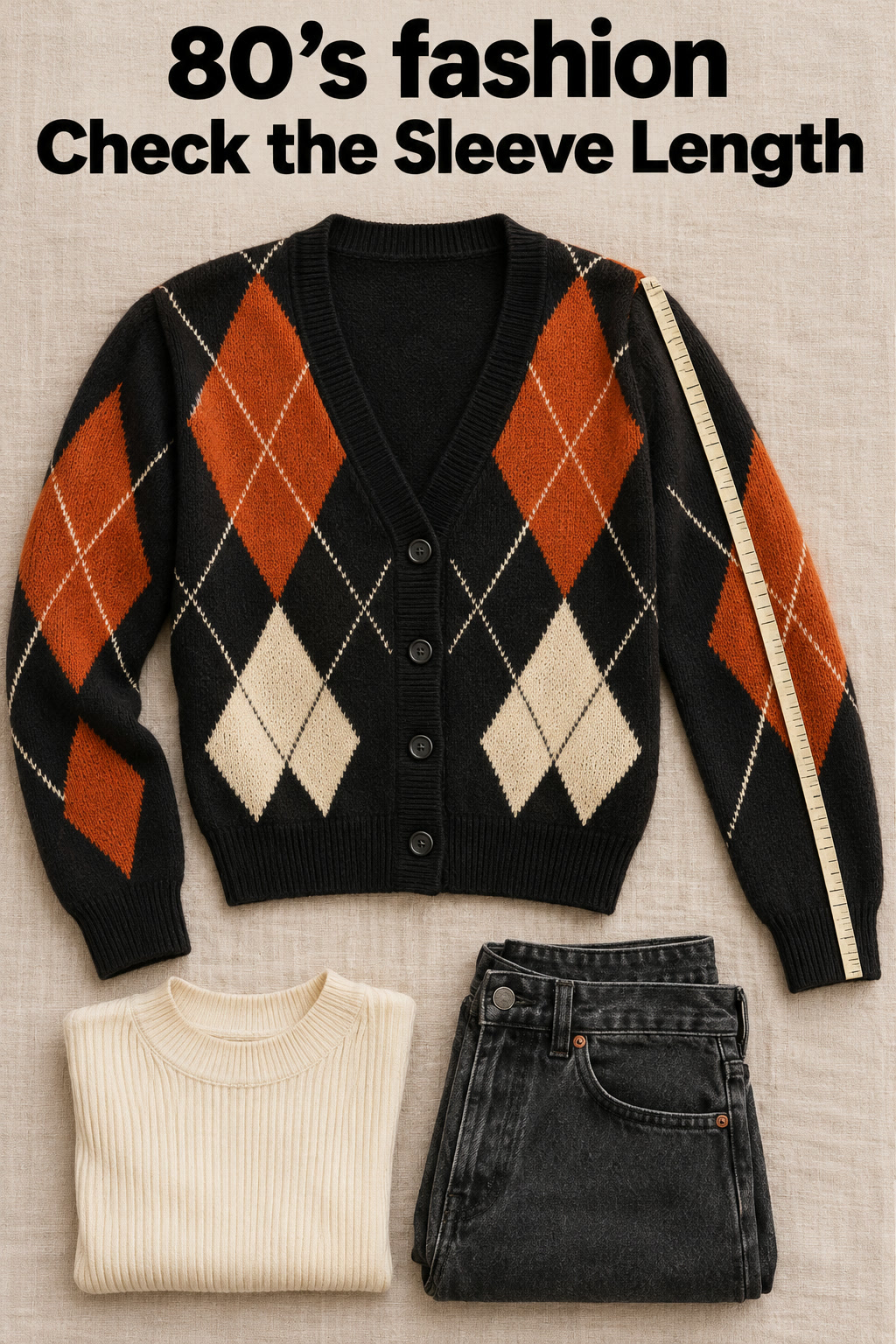
Choose a garment you know you can wear for several hours. For an open cardigan, use something you actually wear open, preferably over the layer you intend to keep underneath. Button it and lay it flat without pulling it. Measure the width across the chest under the arms, then note the shoulder width, sleeve length, and length from shoulder to hem. If you like where its hem sits with your pants, that last measurement is worth keeping even when you’re looking for a roomier candidate.
Check where the seller started and ended each measurement. A sleeve measured from the center back and a sleeve measured from the shoulder seam describe different distances. A dropped shoulder also changes where the sleeve starts. With that cut, a measurement from the back of the neck to the cuff can be a better comparison when both garments are measured the same way. If the listing offers just a tagged size, the most helpful question is about one dimension that would make you pass on the garment, such as an upper sleeve too narrow for your usual shirt.
Try the outfit before you can try the garment
Use the benchmark as a stand-in. If you have a plain dark cardigan and the listing has a black ground with rust and cream diamonds, drape a rust scarf over one side of the plain knit to see roughly how that color sits against your pants. Tuck the benchmark hem under temporarily to approximate a shorter length. Leave the question of drape for the fitting. For now, see which of your other pants work when the hem stops at that point.
Photograph the stand-in from far enough away to see the shoes. A cardigan can look right with a high waistband in a mirror close-up and still leave too much uninterrupted fabric below the hip in a full-length view. If you would have to replace the pants to make the length work, look for a different cardigan. Keep the photos handy if you shop in person. They show you what each candidate has to do in your closet.
Build three outfits around one find
Start with a black cardigan with rust and cream diamonds, an example you can substitute with whatever you’re considering. Use it with your real wardrobe first. Wear it open first, then see what it does when it’s buttoned all the way up. For the third outfit, give it a dressier job. If you rarely dress up, try it with something you’d actually wear on a weekend.
Open over a base you wear on repeat
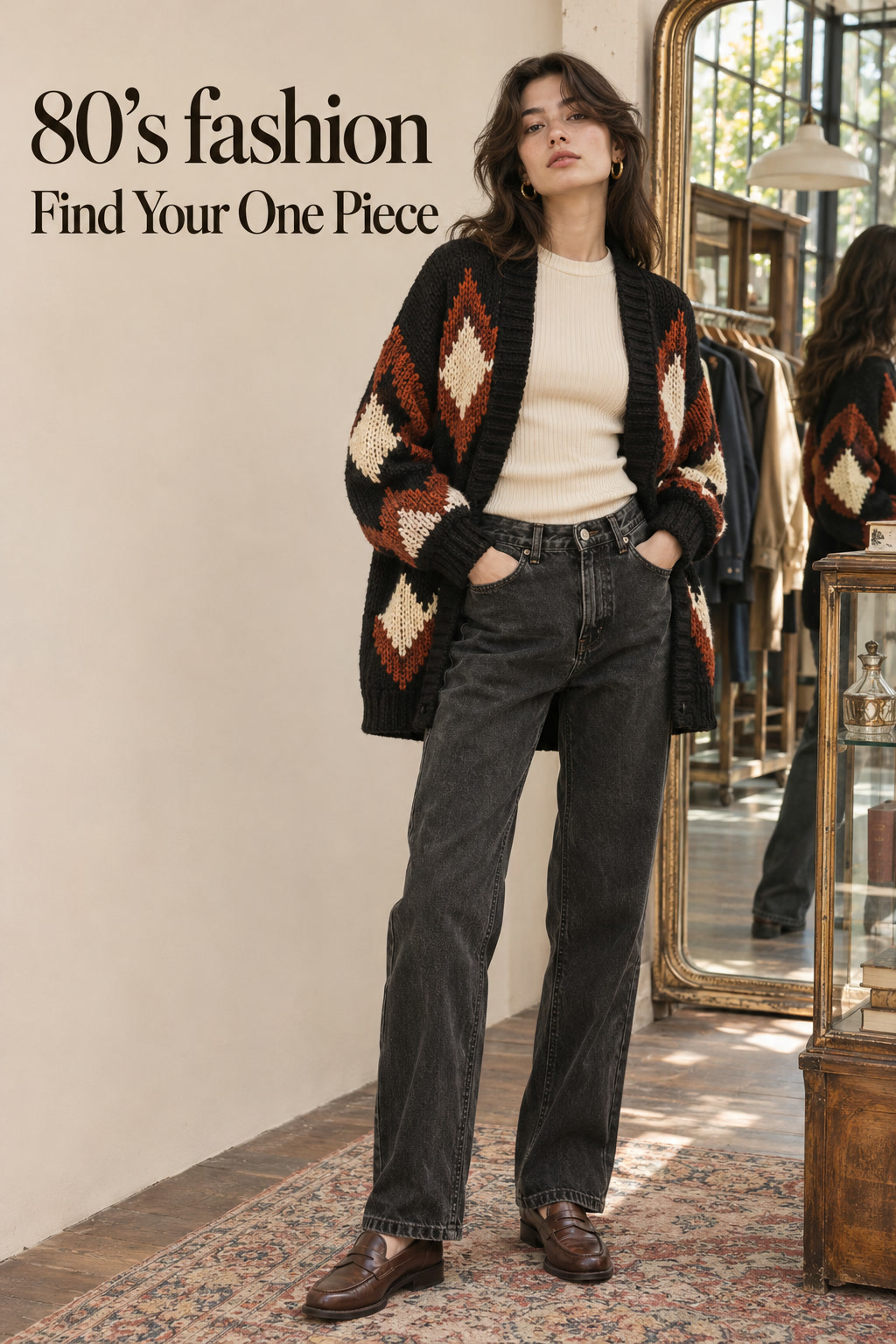
Try an ivory ribbed T-shirt, washed black straight jeans, and brown loafers. Wear the cardigan open with the T-shirt tucked if that’s how you normally wear it. The rust in the pattern can sit comfortably next to the brown shoes even if neither shade matches exactly. Check where the open fronts land when your hands are at your sides. A hem that lands across the widest part of an outer pocket might bunch when you reach in, especially if you also carry a bag tucked under your arm.
If the black jeans and black ground merge more than you’d like, keep the shoes and switch to faded blue jeans. That puts a little space between the two blacks without asking you to find pants that match a color in the knit. It’s also a useful test of whether the cardigan can work with your everyday denim or only the pair you’ve set aside for it.
Button it and change the hem relationship
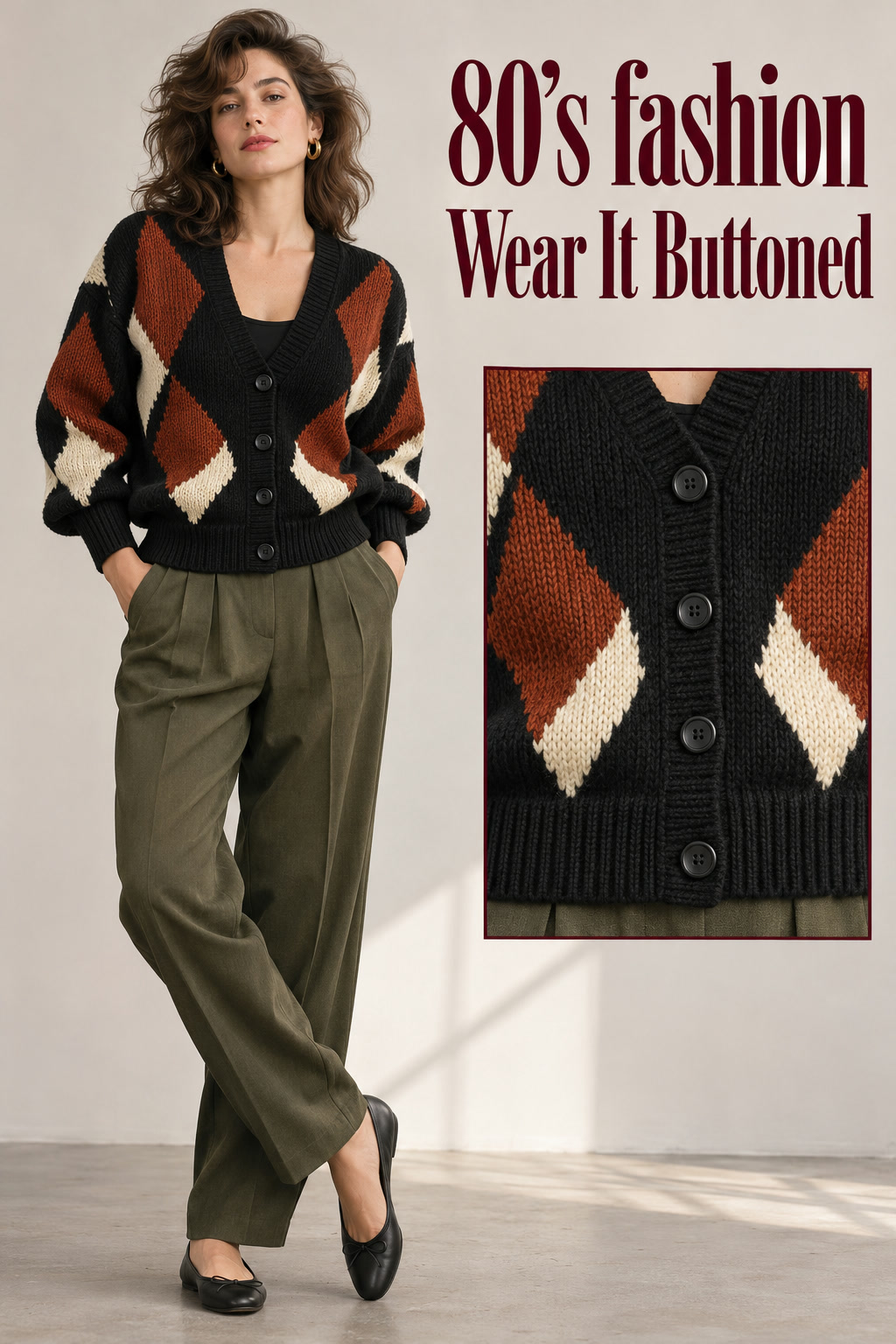
Try the same cardigan closed over a low-profile tank, with olive pleated trousers and dark flats. This time it’s the top you’re checking, so look at the spacing between the buttons and whether the ribbed hem creeps up when you sit down. A short cardigan can finish close to the waistband. A longer one may sit better with the last button left open, provided the fronts fall straight and you like the small opening.
A decorative stitch or pocket near the bottom can get lost if you tuck the hem. If the cardigan needs to be tucked to work with the trousers, try a skirt with a flatter waistband or stay with the open version and count a different third outfit. If you have to rearrange the hem every time you stand up, you’ll probably end up wearing it open.
Wear it over a dressier base
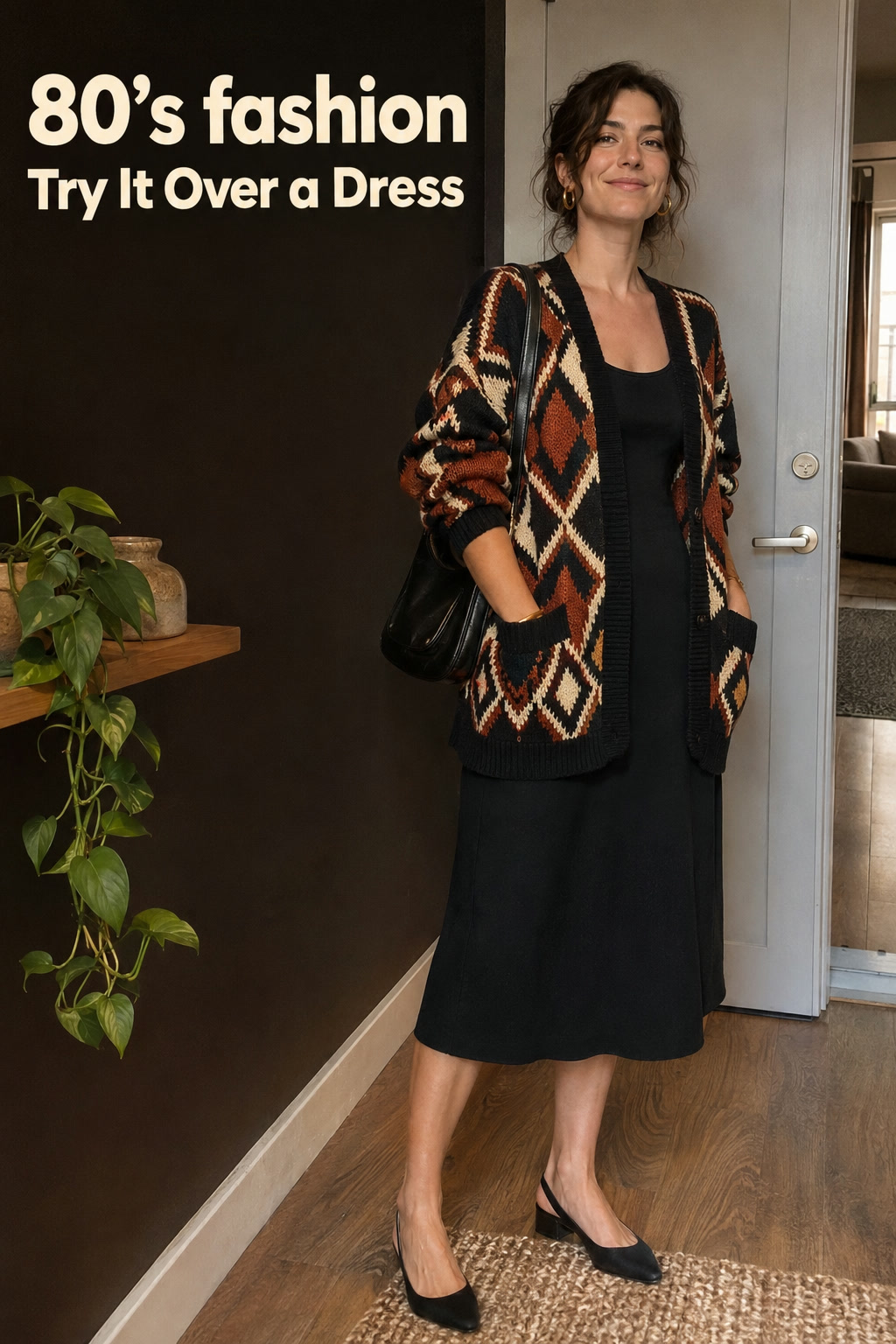
Put the cardigan over a matte black sleeveless midi dress and use a pair of dark low-heeled slingbacks. If the dress is straight, try the knit open and see what happens at the hem. If the dress has a seam at the waist, a shorter cardigan may end roughly where that seam is, letting the shape of the dress show. Keep jewelry small for the first try so you can tell whether you like the scale of the knit pattern in this setting.
A cardigan that obscures the dress or catches across the shoulders might still be a fine casual buy. If it doesn’t work over your dress, look at your other options before you count it out. With a closet full of plain tops you like, a patterned skirt may give you more combinations. Test it with a shirt you wear tucked, a sweater you wear loose, and the outer layer you’ll need later. Decide whether the waistband and pattern work in those three situations before worrying about what year it came from.
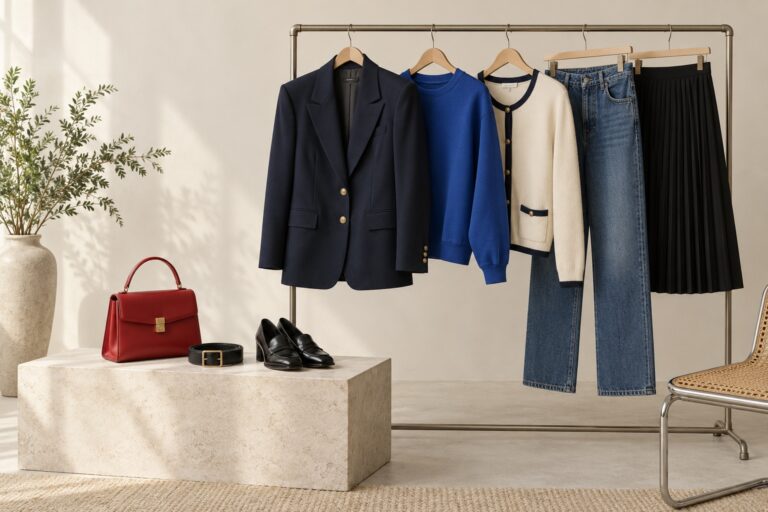
Four pieces for the outfit trials
Start with a cropped argyle knit
Put the hem against high-rise jeans
Try brown at shoe level
See the knit over a black midi
Check fit and condition before you pay
Read the measurements as a set
A seller might list a cardigan with a flat chest width of 21 inches. If your benchmark is 20 inches, that’s about two inches more around the chest when both garments are measured flat in the same way. Take the sleeve and neckline separately. A familiar chest measurement can come with a much narrower sleeve. A deep armhole can work well with a short sleeve underneath and still feel bulky when you add your winter coat.
For a jacket, compare it both closed and over the base layer you’ll wear. If your usual jacket is closed only for the walk from the train, then a tight button stance can still be a daily irritation. For a skirt that closes with a zipper, ask for a hip measurement as well as a waist measurement, especially if the fabric and lining appear to have little give. Use the same point below the waistband on your benchmark and the listing. Ragstock’s 80s collection lets you filter by chest width and length, among other dimensions. For bottoms, you can filter by waist or inseam.
Ask for the photo that would settle the decision
If the cardigan looks sound from the front, ask for its cuffs, elbows, and buttonholes in good light. Cuffs matter if you push your sleeves up through the day. Ask to see the front unbuttoned. You can get a better look at the stitching and see if any buttonholes have stretched. For a jacket, see the underarm lining and look at both shoulder seams. On a skirt, ask for the waistband inside and out, plus the top of the back slit if it has one. If you climb a lot of stairs, the close-up of the skirt slit matters. If you spend most of the day pushing your sleeves up, start with the cuffs.
Set your tolerance for repairs before you see the seller’s answer. A missing ordinary button may be worth replacing if you like the garment open and have a spare that works. A replacement for a distinctive set could mean changing every button. A torn shoulder lining is a different decision if you need a jacket to wear the next morning. If the seller describes a mark as small, ask where it sits. A mark hidden below a turnback cuff affects use differently from one just below the collar.
Decide how much the date matters
A later knit can give you the same colors and shape. Decide before you shop whether the year matters to you. If owning something from the 1980s is important, ask what supports the seller’s date. Request a clear label photo and the information the seller used to date the piece. A readable label gives you something to research. A stock image from a retro shoot or a familiar-looking pattern gives you a styling reference.
Compare the listing with the three outfits you sketched and check the return terms before paying. An unanswered question about a cuff is worth a message to the seller. If you have enough information to picture the fit and the outfits have somewhere to go, you can make a decision. If the dimensions already point to the same fit problem you have with a garment you never wear, leave the listing and use that measurement to narrow the next search.
Keep the same piece working through weather changes
Check the layer that goes on top
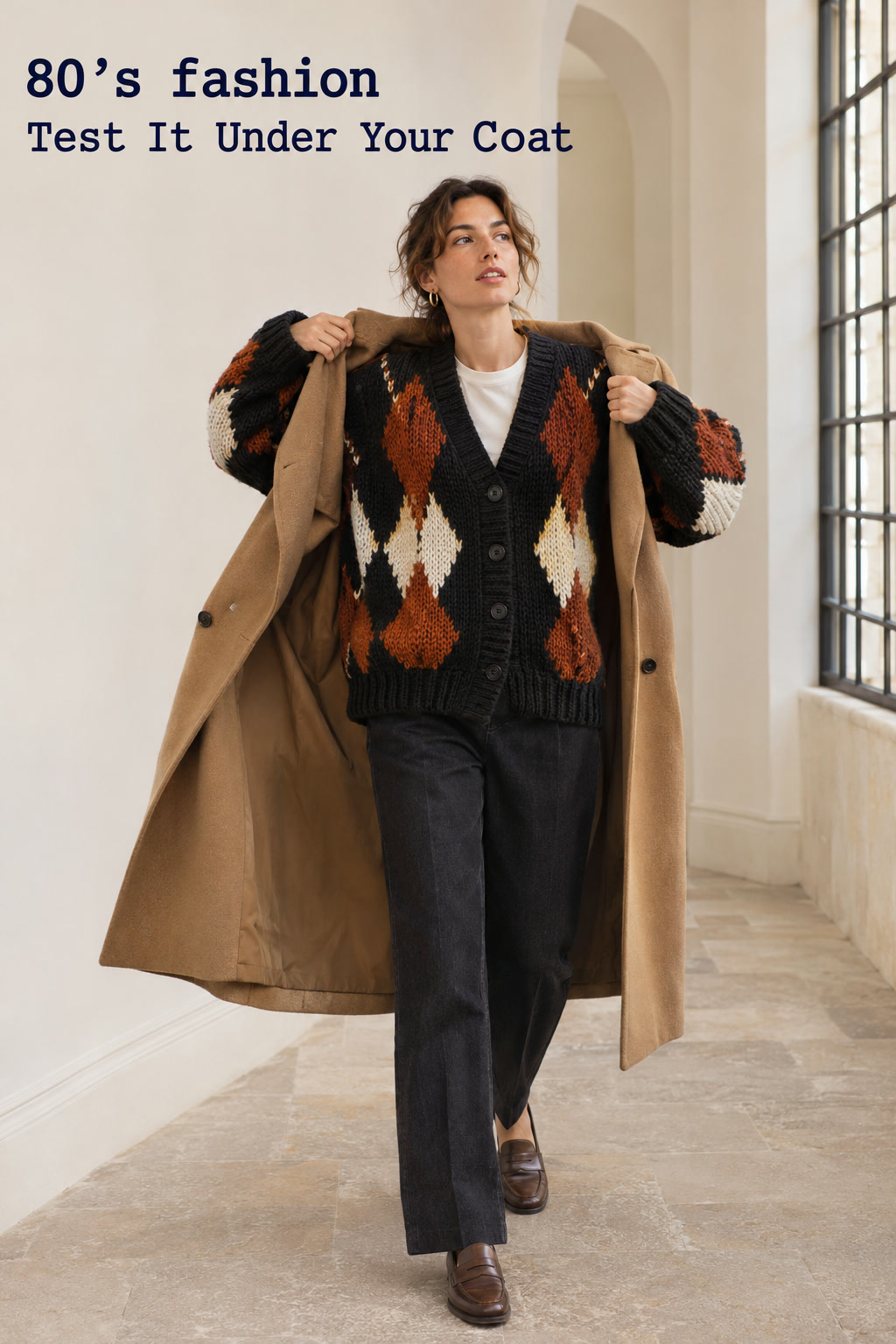
Try the mock-up cardigan with the actual coat you wear on cold mornings. Slide your arms in as you normally would, then reach forward as though you were steering a car or holding a rail. If the upper sleeve piles up inside the coat, try your second coat if you already own one. If that fails, decide whether the cardigan is still useful indoors or in transitional weather. You might still get plenty of use out of it in a cool office. If you’d need to buy another coat to wear it on your way there, count that cost before you order.
You can test colors at this stage, too. A patterned knit that looks fine with a tan coat closed might feel busy with the coat open over a plaid scarf. Swap in the solid scarf you already wear and see whether you like the two together. If you wear the coat mostly closed and remove it as soon as you get inside, the colors barely have to coexist. Give the fit issue more weight in that case.
Work with the clothes you switch to when it’s warm
If you wear the cardigan mainly at an air-conditioned office, keep a light top underneath that you’d be comfortable wearing on the way there. An ivory tee and full-length trousers can become a sleeveless shell and cropped trousers. Try both without the knit first. You should already like the outfit you’ll be left with. If the weather limits the cardigan to a few weeks, compare that with what you would get from a patterned cotton shirt or a skirt that can take tights. Choose the piece that fits the months and settings where your wardrobe has a gap.
Editor’s take
I’d save the listing and set out the layer and two bottoms you reach for most. A rare cardigan still has to fit the way you dress. Check how it would look buttoned with at least one of those bottoms if you wear your knits closed. A piece with only one job can still earn space if you do that job frequently. An office layer you’ll wear every Tuesday has a better case than a spectacular jacket you can picture only on a trip you haven’t planned. Measure the reference garment first. It gives you a clear question for the seller and a practical reason to keep looking if the answer comes back wrong.
Sources and methodology
The Fashion Institute of Technology timeline supplies the historical references, and Ragstock’s filters show how a vintage shop organizes measurements. The example outfits are hypothetical. The recommendations apply that research to shopping and styling decisions.
FAQ
What can I buy first if I’m new to 80’s fashion?
Start with a type of garment you already pull out regularly. A short geometric cardigan makes sense if you already wear short knits with your staple pants. If you mostly wear a jacket, compare vintage jacket shoulders and sleeve measurements with one you own. Familiarity with how the piece fits into a week makes it easier to choose the print or shape you want.
How should a vintage cardigan fit at the shoulder?
Check the sleeve design before judging where the seam sits. A dropped seam can fall below the bone and still work if the sleeve reaches where you want it to and the armhole gives you room to move. With a set-in sleeve you prefer neat, compare the seam placement with a sweater you wear often. Check the fit over whatever you’ll have underneath.
Is a flat measurement the same as my body measurement?
A flat width generally describes the garment measured across one side. Doubling it gives an approximate garment circumference at that point when the front and back are comparable. Pick a comfortable garment and measure it the seller’s way so you can compare two garments directly. That also helps account for how loose you like the clothes you already wear.
Can I make the outfits without buying vintage?
Yes. Repeat the outfit trials with a later piece that has the feature you like. If you want the strong geometry of a cardigan, use a new or secondhand knit with a similar scale of print. Compare it with the same pants, dress, and coat. If the print and cut give you what you wanted, the later knit can do the same job.
What should I do when the seller cannot provide measurements?
If you can try it on or return it on terms that work for you, compare it directly with your benchmark. I’d pass on a fitted piece if neither option is available. It’s especially difficult to judge how a fitted skirt or lined jacket will move from photos alone. Use your measurements to search for a similar candidate with fuller details.
Do all three outfit trials have to look distinctly 1980s?
Give the vintage feature room to show in each outfit, but count combinations you’ll genuinely wear. A patterned cardigan can be obvious against one simple dress and quieter when the dark ground blends with dark jeans. Both count if you can see yourself wearing them to different places and the rest of the outfit is already in your closet.