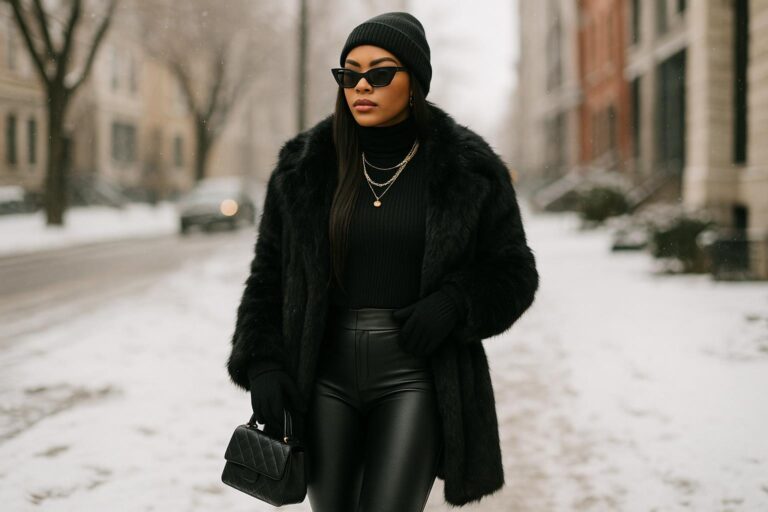
Warm Winter Outfits: A Capsule Wardrobe That Works
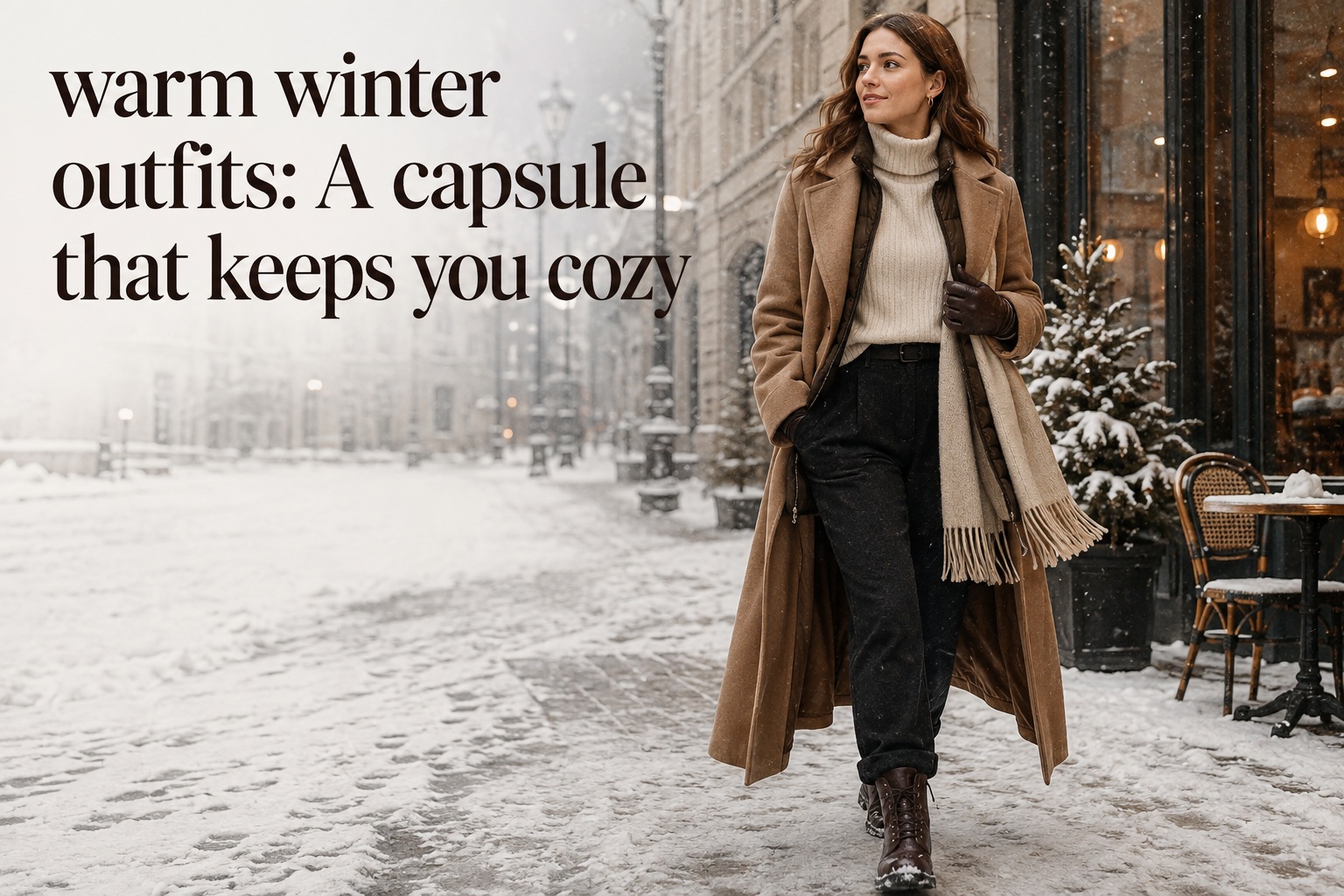
Warm winter outfits have one job before they have any aesthetic ambition: they need to keep you comfortable through the coldest part of the day. That sounds obvious, but it is easy to dress for the mirror and forget the walk to the car, the windy train platform, the overheated office, or the wet sidewalk after dark. The strongest winter wardrobe is not a collection of dramatic coats. It is a small system of pieces that can change jobs without making you feel bulky.
Think of every look as four connected decisions. The base layer manages comfort next to your skin. The middle layer holds warmth. The outer layer handles wind, snow, or rain. The finishing layer, including shoes and accessories, makes the outfit feel intentional. Once those jobs are clear, you can create warm winter outfits from jeans, trousers, skirts, dresses, knits, and pieces you already own. The goal is a wardrobe that feels cozy, useful, and recognizably yours.
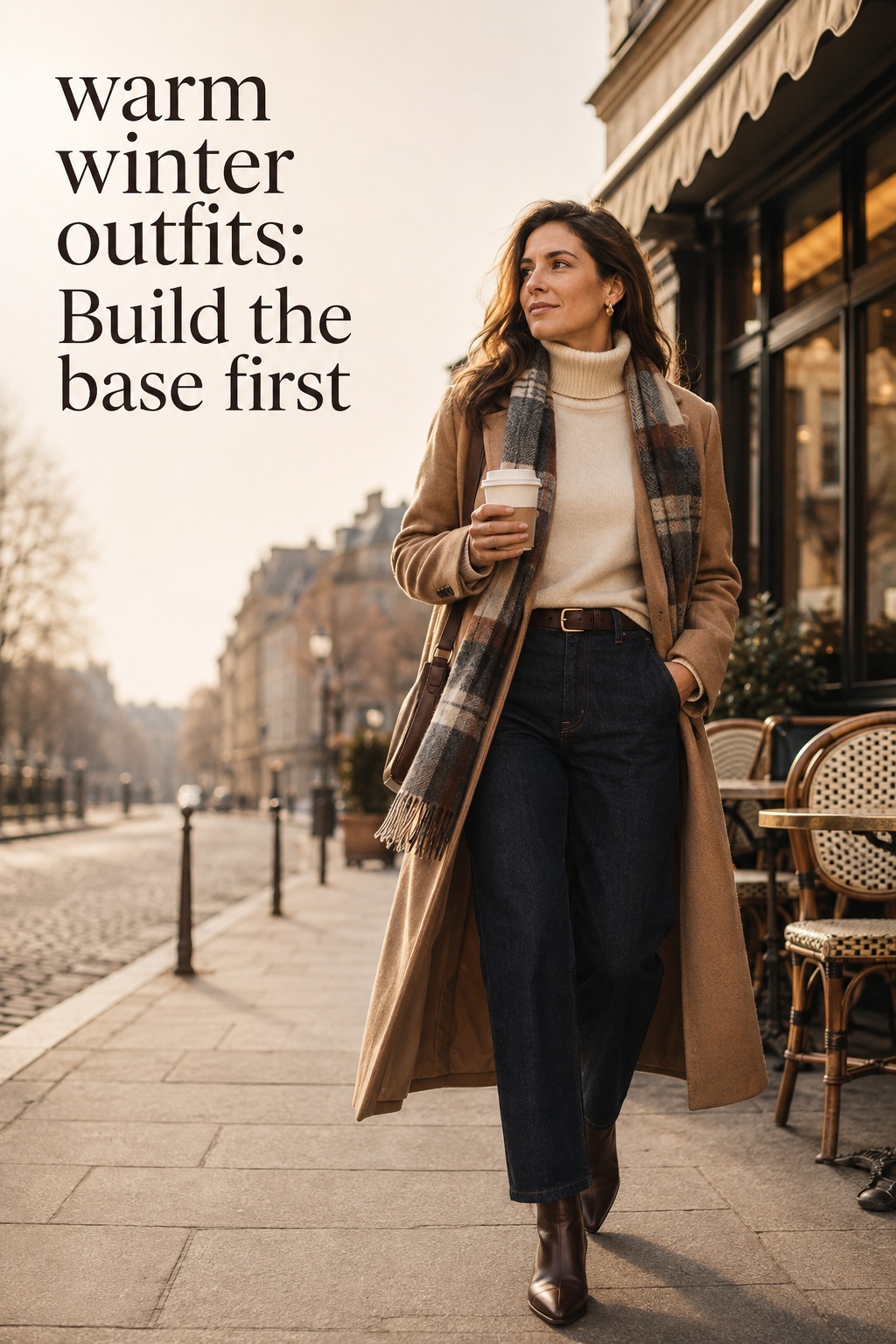
The four-layer system behind warm winter outfits
A good winter outfit is less about piling on clothes and more about assigning each layer a purpose. Start with the layer closest to your body. A fitted merino tee, fine thermal top, silk-blend camisole, or long-sleeve modal shirt can add warmth without changing the silhouette of the clothes above it. This is especially helpful when you want to wear a button-down, fitted dress, or slim trousers that cannot accommodate a thick sweater underneath.
The Fashion-Note Edit
Five effortless pieces to refresh your everyday wardrobe
A polished, practical edit for workdays, weekends, and everything in between.

The Drop
Women’s Blake Long Blazer
A longline, tailored blazer with a notched collar and a single-button closure—an easy layer for denim, dresses, or office-ready looks.
Shop the blazer
Amazon Essentials
Women’s Lightweight Crewneck
A soft, lightweight sweater with a clean crew neckline—the kind of reliable layer that works from cool mornings to air-conditioned spaces.
Shop the sweater
Amazon Essentials
Women’s Loafer Flat
A classic flat loafer that gives casual outfits a more polished finish and pairs naturally with tailored pants, skirts, and straight-leg jeans.
Shop the loafers
Levi’s
Women’s 501 90s Jeans
A relaxed, vintage-inspired take on the iconic 501 silhouette—made for an easy, lived-in look without the thrift-store search.
Shop the jeans
Colorfulkoala
High-Waisted 7/8 Leggings with Pockets
Soft, four-way-stretch leggings with side pockets and a high-rise waistband—designed for movement, errands, and off-duty comfort.
Shop the leggings
Affiliate disclosure: This section contains affiliate links. If you make a purchase through these links, I may earn a commission at no additional cost to you. Product selection, pricing, availability, and delivery terms may change—please review the current details on Amazon before purchasing.
As an Amazon Associate I earn from qualifying purchases.
Next comes insulation. This is the layer that traps warm air, such as a merino sweater, cashmere knit, fleece, quilted liner, wool cardigan, or fine turtleneck. The best middle layer is warm enough for the forecast but thin enough to fit under your coat. A chunky knit has visual impact, but it may be more useful as the outermost indoor layer on a mild day than as something squeezed beneath a tailored coat.
Your wedding style is personal.
Your plan should feel that way, too.
Zarellea keeps your guest list, budget, vendors, and every next step beautifully organized — so you can focus on the moments that feel like you.
- Base: Choose a smooth, breathable layer that prevents cold air from reaching your torso and does not bunch under clothing.
- Insulation: Use wool, fleece, cashmere, quilted fabric, or a warm knit to create a comfortable pocket of air.
- Protection: Add a coat, puffer, parka, or weather-resistant shell that blocks wind and precipitation.
- Finish: Use boots, socks, gloves, a hat, and a scarf to protect the places where cold enters most quickly.
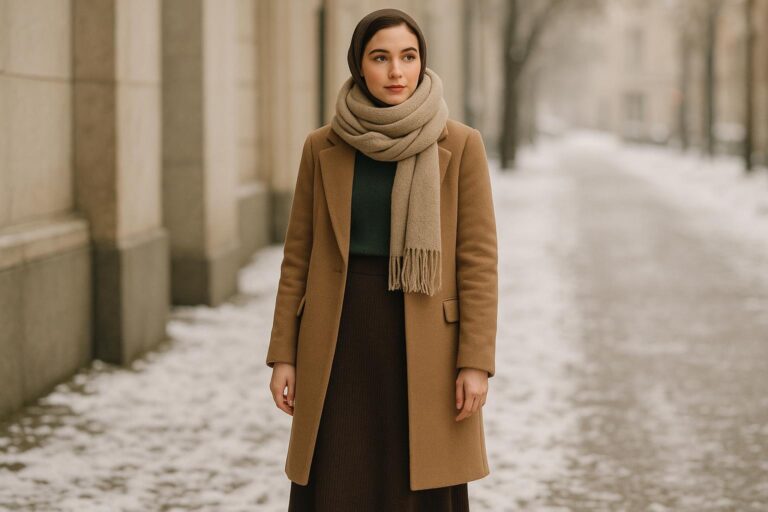
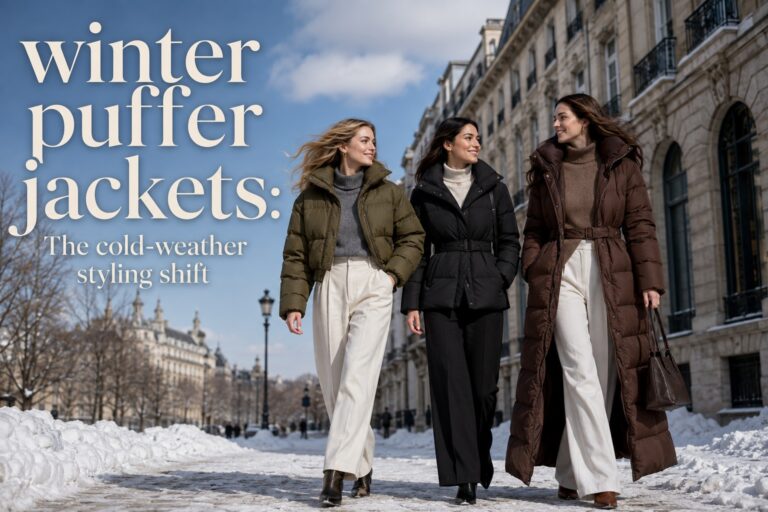
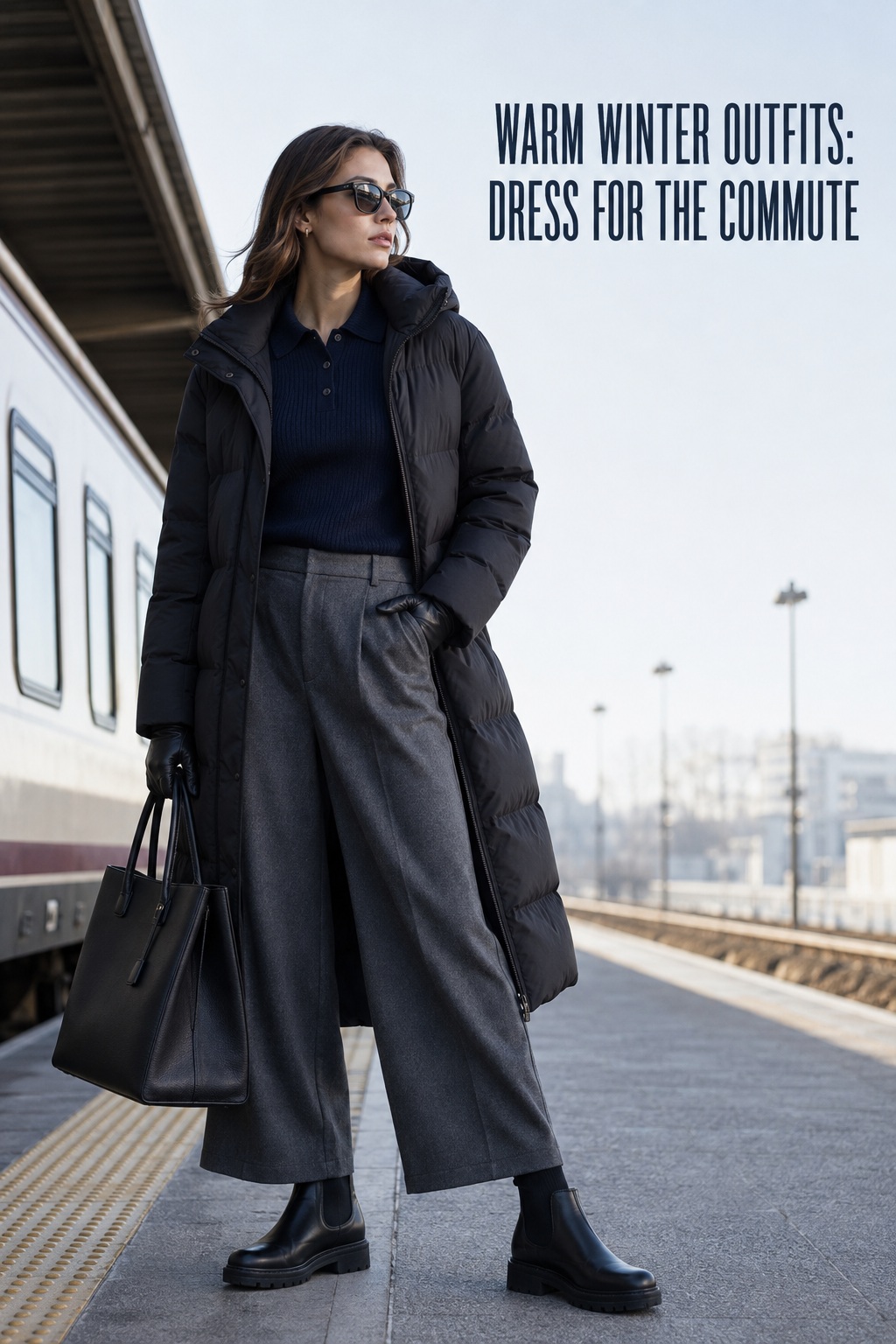
The outer layer should be chosen for the actual weather, not only for the outfit underneath. A wool coat is polished and often warm, but a long insulated puffer may be the better choice for a windy commute. A water-resistant parka makes more sense for wet snow than a delicate boucle jacket. If you walk or use public transit, give protection priority. You can always make a practical coat feel more personal with color, a belt, a scarf, or a structured bag.
Finally, close the small gaps. Warm socks matter when you are wearing boots. Gloves are essential if your hands will be outside for more than a few minutes. A scarf can protect your neck and create a strong color accent near the face. A knit hat keeps heat in without requiring another bulky sweater. These details often make the difference between an outfit that looks warm and one that actually carries you through the day.
Build the capsule with pieces that can repeat
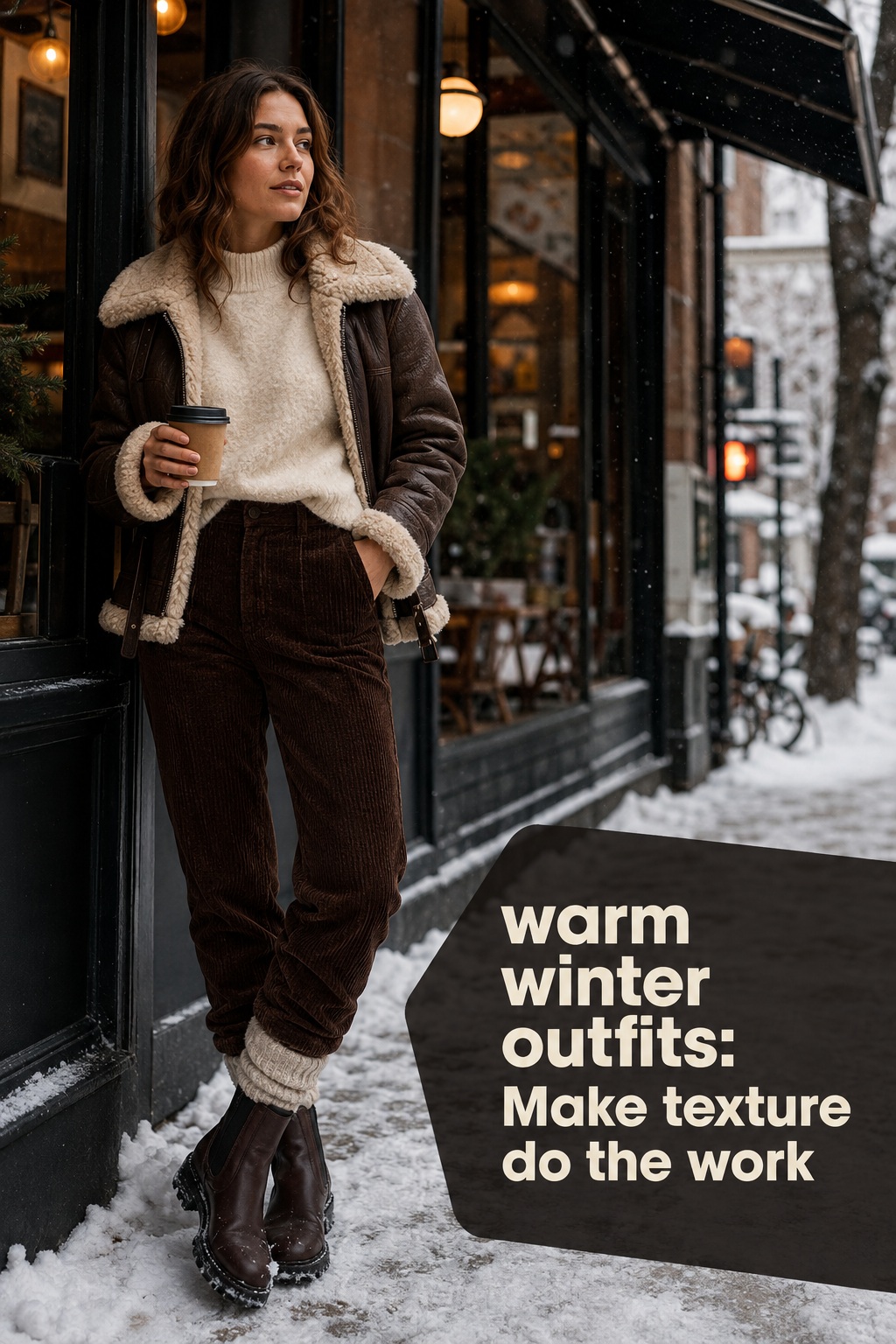
A winter capsule does not need a fixed number of garments. It needs a reliable number of connections. Start with two bottoms that work with most of your shoes, such as straight-leg denim and soft tailored trousers. Add a second denim or corduroy option if you do laundry infrequently or spend many days outside. For warmth, a slightly roomier cut is often more versatile than a very slim one because it leaves room for a base layer without pulling.
Choose three or four tops that create different levels of polish. A fine turtleneck can go under a blazer, cardigan, dress, or coat. A long-sleeve tee works with denim and under a sweater. A crisp button-down adds a visible collar and a little structure. A soft knit polo or refined sweatshirt gives you an option for casual days. Keep the colors connected. Cream, charcoal, navy, chocolate, olive, burgundy, and black are not the only winter colors, but a short palette helps more of your clothes work together.
Then add layers with distinct proportions. One long cardigan, one cropped or waist-length jacket, and one substantial sweater can produce more variety than three sweaters that all end at the same place. A long wool coat creates a clean column over trousers. A short shearling jacket gives shape to a wide-leg bottom. A quilted vest adds insulation while leaving the sleeves free. When the lengths change, repeated basics look like new combinations.
Buy outerwear according to the gaps in your week. If you already own a warm puffer but lack a polished layer, a wool coat may be the best next purchase. If your coat collection looks good but fails in rain or deep cold, choose a weather-ready option first. If you mostly work from home and take short walks, a warm cardigan, lined shoe, and good scarf may solve more problems than an expensive technical parka.
- First priority: One genuinely warm coat that matches your commute and climate.
- Second priority: A base layer that works under the clothes you already wear.
- Third priority: Dependable boots with traction, comfortable socks, and enough room for movement.
- Fourth priority: One versatile knit in a color that connects your bottoms and outerwear.
- Fifth priority: Weather accessories that you will actually carry and use.
Do not overlook care and fit. Wool and cashmere need air between wears, not constant washing. Boots need to be tried with the socks you plan to wear. A coat should allow you to move your arms and close comfortably over your thickest normal layer. The right item is not the one that looks impressive on a hanger. It is the one that makes several existing outfits easier.
Warm winter outfits for work, errands, and everyday movement
For a polished workday, start with a thin thermal or merino base, straight trousers, and a fine turtleneck. Add a long wool coat and ankle boots with a stable heel or flat sole. The outfit remains streamlined because every layer follows the body without clinging. A belt, watch, small earrings, or structured bag gives it a finished quality. If your office runs warm, the base layer means you can remove the sweater and keep a presentable top underneath.
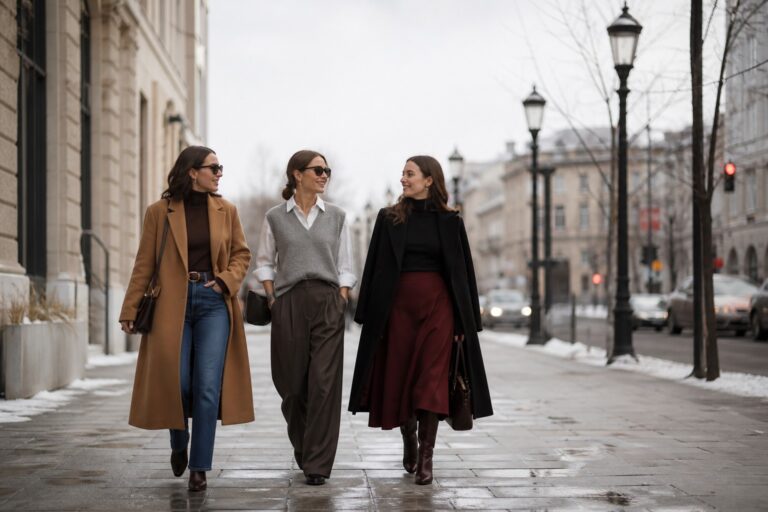
A second work formula uses a button-down under a sleeveless sweater vest or fine crewneck. Pair it with a midi skirt, opaque tights, and tall boots. The shirt collar supplies polish, while the knit adds insulation. Choose a skirt with enough movement for stairs and commuting. If the hem is lightweight, wear a thermal layer under the skirt or choose fleece-lined tights that do not feel overly thick inside the boot.
For errands, combine one relaxed item with one structured item. Try straight jeans, a fitted long-sleeve top, a roomy cardigan, and a leather or nylon crossbody. Or wear leggings with a longer wool-blend sweater, a short puffer, and supportive lug-sole boots. The contrast keeps the outfit from looking like sleepwear while preserving the comfort you need for walking, shopping, and carrying bags.
For a long outdoor day, use the most technical version of the system. A smooth base layer, fleece or merino middle layer, insulated coat, warm socks, and weatherproof boots will serve you better than a delicate outfit under a fashionable but thin coat. Keep the visual interest in the color story. A bright scarf, burgundy beanie, blue gloves, or patterned socks can make a functional look feel considered without interfering with the layers doing the hard work.
Travel outfits need flexibility. Wear a soft trouser or relaxed jean with a thin knit, a cardigan or quilted jacket, and a coat that can be carried or worn. Avoid a single giant sweater that becomes uncomfortable on a plane or train. A scarf can become a blanket, while a roomy tote can hold gloves and a lighter layer. Choose shoes that slip off easily but still have enough support for stations and terminals.
Use dresses, skirts, and interesting proportions in the cold
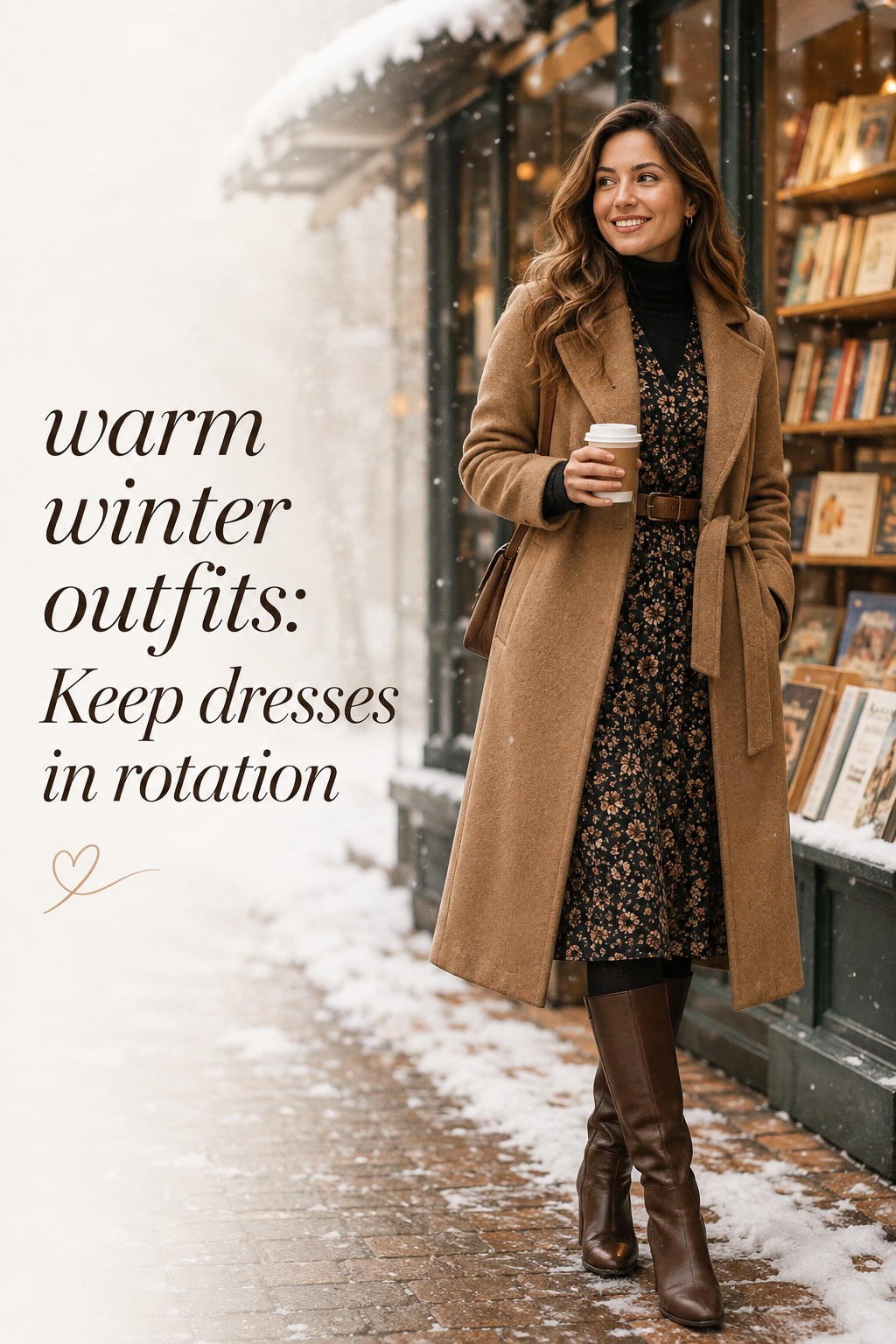
Winter does not require every outfit to become trousers and a sweater. A knitted midi dress is naturally easy to layer. Add a thin base underneath, a belt if you want definition, opaque tights, and knee-high boots. Finish with a long coat that follows the dress hem or ends several inches above it. If the dress is fitted, choose a coat with enough room through the shoulders. If the dress is loose, a structured outer layer can give the look direction.
A lighter dress can stay in rotation when you winterize it deliberately. Add a fine turtleneck underneath, thermal tights, and a cardigan or cropped jacket on top. Tall boots cover more of the leg, while a long coat protects the full silhouette outside. This works especially well with a printed dress because the solid layers quiet the pattern and make it feel seasonally grounded.
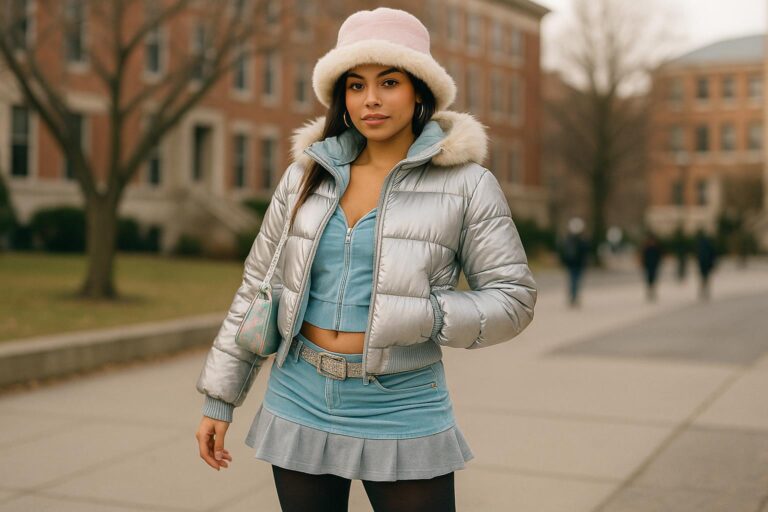
For skirts, balance exposed-looking proportions with warm coverage elsewhere. A midi skirt with a turtleneck, wool socks, and tall boots can be warmer than it appears. A shorter skirt can work with fleece-lined tights, a longer coat, and boots that cover the ankle or calf. Keep the top layer substantial enough to make the short hem feel intentional. A cropped puffer changes the mood, while a long tailored coat makes the same skirt more refined.
Play with texture when heavy layering makes you feel shapeless. Pair a smooth satin skirt with a chunky knit, brushed wool with denim, corduroy with shearling, or leather with a soft cashmere blend. Texture creates depth without requiring more layers. You can also use one volume contrast: wide trousers with a fitted base, an oversized sweater with a narrow skirt, or a long coat over a compact outfit. The eye reads the relationship between pieces, not the number of pieces.
Color can do the same work. A tonal outfit in cream, camel, and tan looks rich when the fabrics differ. Charcoal, black, and silver feel modern with a textured scarf. Olive, chocolate, and ecru create warmth without relying on bright color. If your coat is a strong shade, keep the base simple and repeat a small note of that color in the bag, sock, or glove. This makes the outfit look planned but not overly matched.
Adapt warm winter outfits to the forecast and the room
Not every cold day asks for the same outfit. On a mild winter day, use a long-sleeve base, a medium knit, and a wool coat. Leave the coat open while walking if the wind allows, and choose a lighter scarf. Indoors, you can remove the coat without losing the shape of the outfit. This is the easiest temperature range because you need warmth without maximum insulation.
On a windy day, protect the openings rather than simply adding bulk. Close the coat fully, wear a scarf that sits close to the neck, choose gloves, and select boots with a secure upper. A thin thermal top under a regular sweater may be more effective than adding a second bulky sweater. Wind-resistant fabric on the outside can matter as much as the fiber content of the middle layer.
For rain or wet snow, think about what can dry and what cannot. A water-resistant outer layer, treated boots, and a bag that will not absorb every drop are practical choices. Keep delicate suede, loosely woven knits, and long trailing hems away from the wettest commute. A warm wool coat can still work in light precipitation, but it should not be asked to perform like a rain shell.
In deep cold, make the base layer more serious and the silhouette slightly looser. Add thermal leggings beneath trousers, a thin down or quilted liner beneath a roomy coat, and warm socks that do not make your boots tight. Cover the ears, neck, and hands. If the outfit feels bulky, simplify the visible colors and repeat one vertical line, such as a long coat over similarly colored trousers. Visual order helps practical layers feel less overwhelming.
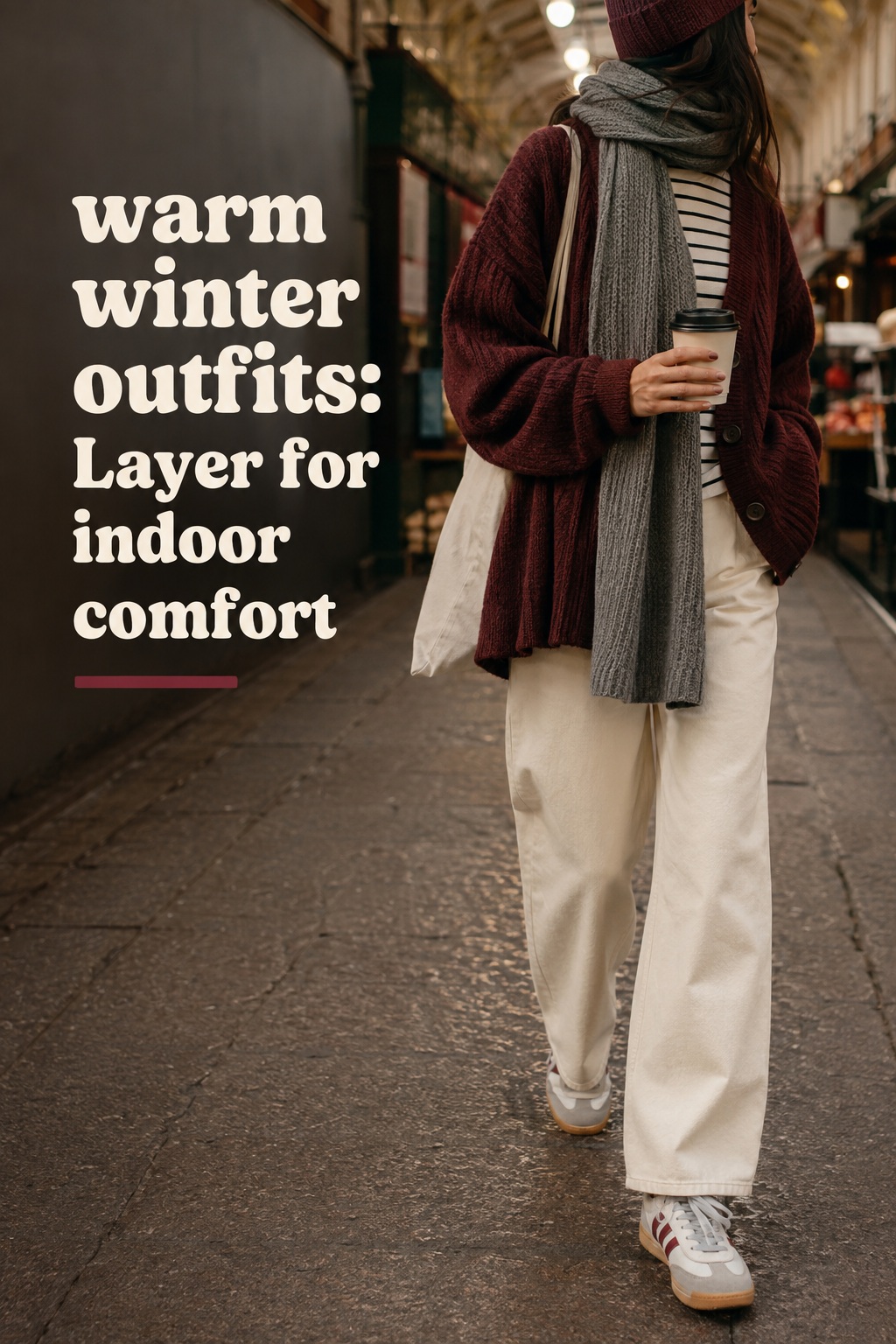
Indoor heating is the reason removable layers matter. A warm coat over a thick sweater may be perfect outside but uncomfortable at a restaurant or office. A fitted base and medium cardigan give you more control. Keep the warmest piece easy to remove, and avoid building an outfit that only works while every layer is worn. If you are going from cold streets to hot interiors, a scarf, vest, or cardigan is often more useful than another heavy top.
The final edit: warmth without the marshmallow effect
When an outfit feels bulky, remove layers strategically instead of removing warmth at random. First check whether two pieces are doing the same job. A thick sweater over a thick fleece may be unnecessary if a thin merino layer under the sweater gives you the same insulation. Next check the hem lengths. Several competing layers can create visual noise even when the total volume is manageable.
Use proportion to create a clear outline. A voluminous coat looks balanced over a narrow trouser or straight jean. Wide-leg pants can support a shorter jacket or a fitted top. A long cardigan works best when the base underneath is relatively simple. These are not strict body rules. They are ways to decide where the eye should rest when warm clothes naturally add volume.
Before buying anything new, make three outfits from your current wardrobe and photograph them. Note where each outfit fails. Is the coat not warm enough? Are the boots uncomfortable? Do you need a layer that works in a heated room? A specific gap is more useful than a general feeling that your winter wardrobe is boring. Shop for the missing function, then make sure the new piece works with at least three existing outfits.
The best warm winter outfits do not look like technical diagrams, even when they are built with careful logic. They can be romantic, minimal, sporty, colorful, classic, or dramatic. What makes them reliable is that each piece earns its place. Build around your real route, choose fabrics that suit your body and climate, and leave yourself a way to adjust when the forecast changes. Warmth becomes much easier to style when the wardrobe is connected.
FAQ
What makes a winter outfit genuinely warm?
A genuinely warm outfit combines a comfortable base layer, an insulating middle layer, a wind- or weather-protective outer layer, and accessories that cover the neck, hands, ears, and feet. The right combination depends on wind, precipitation, time outdoors, and how much you move.
How can I make warm winter outfits look less bulky?
Use thin base layers, choose one substantial insulating piece, and create a clear proportion between volume and shape. A fitted base under a roomy coat, or wide trousers with a shorter jacket, usually looks more intentional than several thick layers of similar length.
Which fabrics are best for cold-weather outfits?
Wool, merino, cashmere, fleece, quilted insulation, and dense cotton can all be useful. Breathability and construction matter as much as the fiber. Choose smooth fabrics for base layers, insulating textures for the middle, and weather-resistant materials for the outer layer.
Can I wear dresses and skirts in winter?
Yes. Add a fine base layer, warm tights, socks, boots, and a coat that protects the outfit outside. Knit dresses, midi skirts, and lighter dresses styled with a turtleneck are especially adaptable. Let your comfort and the weather determine the amount of coverage.
What should I buy first for a warm winter wardrobe?
Start with the item that solves your biggest repeated problem. For a cold commute, that may be a truly warm coat and dependable boots. For indoor-outdoor days, it may be a smooth base layer and removable knit. A purchase is worthwhile when it improves several outfits you already own.
How should I dress for cold weather and overheated indoor spaces?
Choose a thin base, a medium-weight removable layer, and an outer coat for the outside temperature. A cardigan, vest, or scarf is easier to remove than a second heavy sweater. Make sure the outfit still looks complete when the coat comes off.
How many winter outfits do I need?
You need enough combinations for your laundry schedule, climate, work requirements, and activities, not a universal number. A small wardrobe can feel generous when bottoms, tops, knits, coats, shoes, and accessories connect across several situations.
Finish the look
The little extras that make a summer outfit feel complete
From beach days to city weekends, these easy pieces bring comfort, texture, and a polished finishing touch.

FENBEN
Straw Hobo Crossbody Bag
A handwoven straw bag with both short and crossbody straps—an effortless finishing touch for vacation looks and warm-weather outfits.
Shop the bag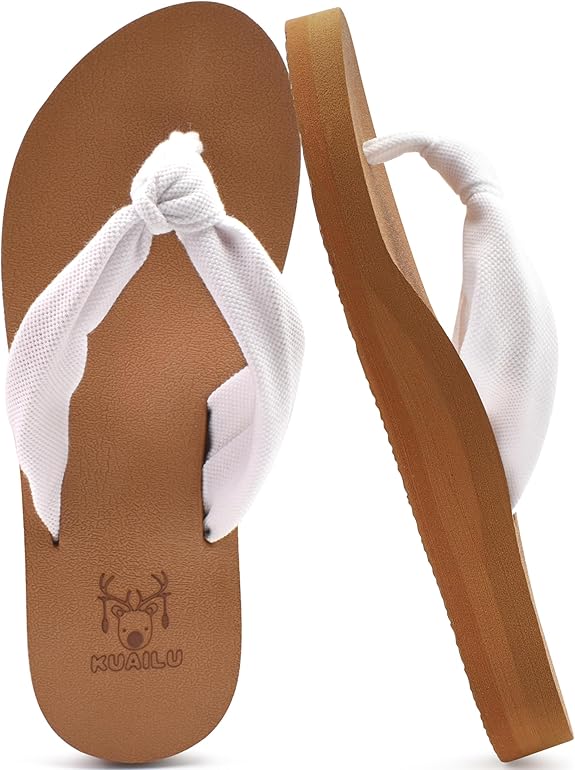
KuaiLu
Flip Flops with Arch Support
Cushioned, lightweight sandals with supportive arch design—a practical choice for beach trips, errands, and long summer walks.
Shop the sandals
baleaf
Athletic One-Piece Swimsuit
A functional one-piece with adjustable straps and moderate coverage, designed for swimming, training, surfing, and active beach days.
Shop the swimsuit
Astylish
Linen-Cotton Button-Down Shirt
A relaxed cotton-linen shirt with a collared V-neck and roll-up sleeves—easy to style over swimwear or with denim and shorts.
Shop the shirt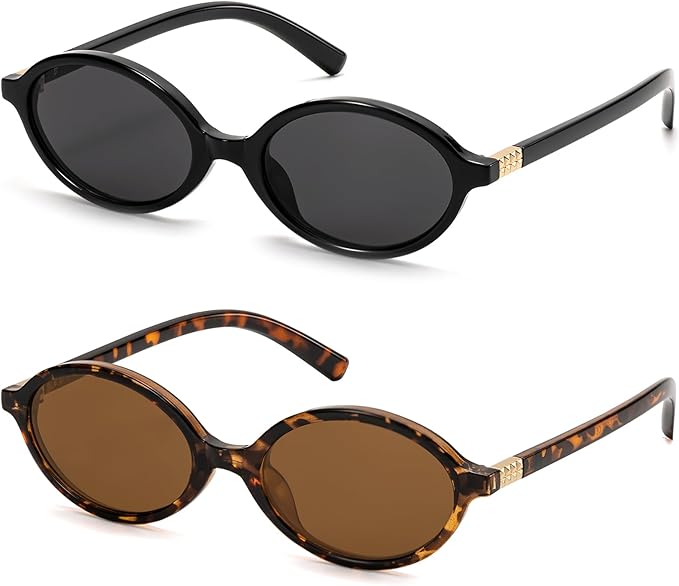
ViewJoy
Retro Oval Sunglasses
Small oval sunglasses with a 90s-inspired silhouette and UV400 lens protection—a quick way to add a vintage edge to everyday looks.
Shop the sunglasses
Affiliate disclosure: This section contains affiliate links. If you make a purchase through these links, I may earn a commission at no additional cost to you. Product selection, pricing, availability, and delivery terms may change—please review the current details on Amazon before purchasing.
As an Amazon Associate I earn from qualifying purchases.