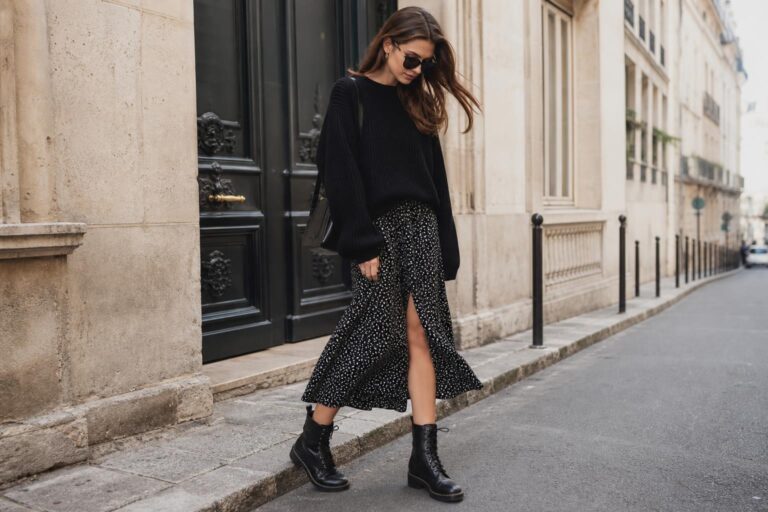
Spring Japanese Outfits Street Style That Feel Fresh in the City
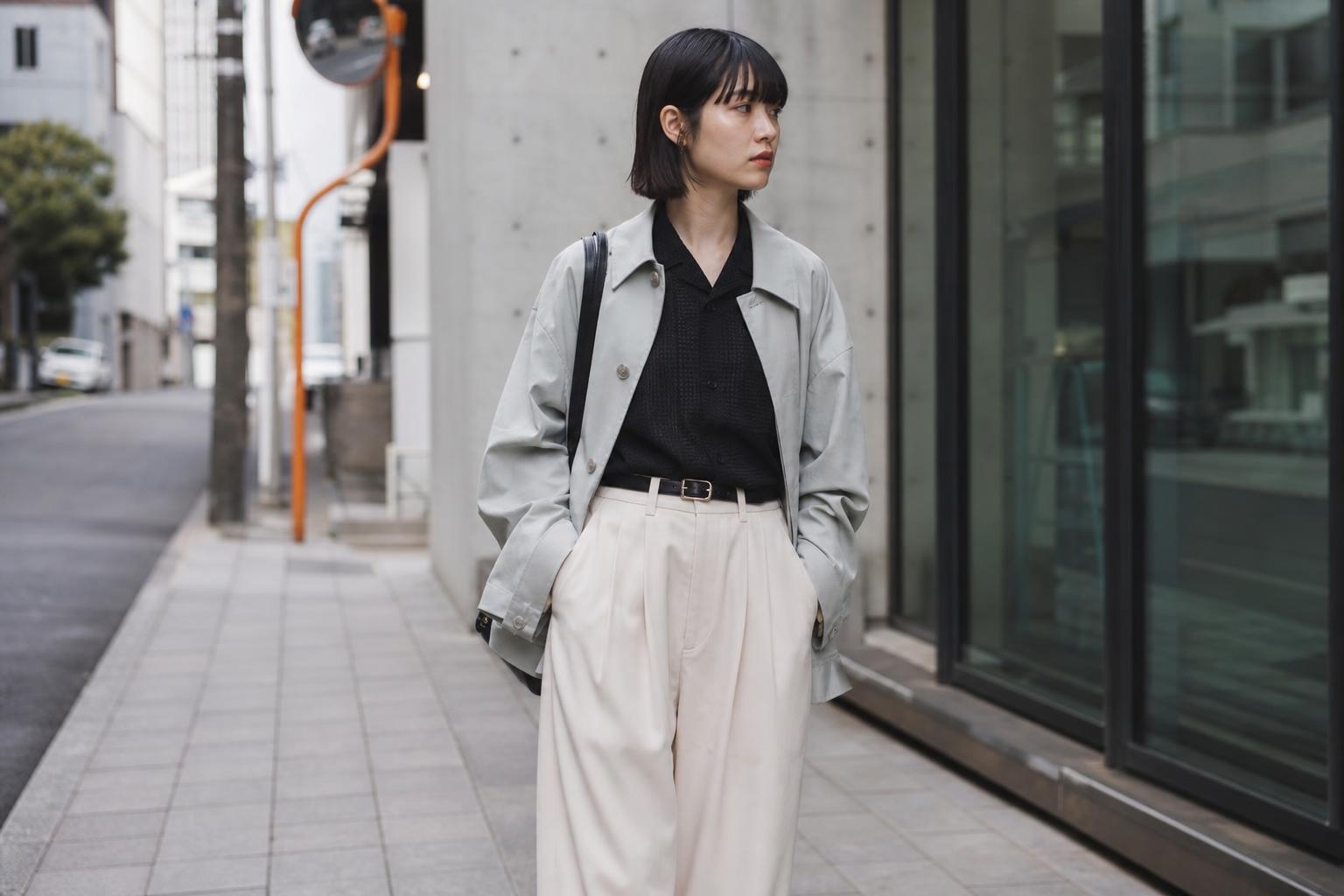
On a busy city morning, japanese outfits street style feels less like a costume and more like a way of moving through the day with intention. The appeal comes from the balance: soft structure against ease, practical layers against strong visual personality, and everyday pieces arranged with enough contrast to feel considered. Tokyo gives this style its pulse, Harajuku gives it freedom, and the result is a wardrobe language that can look polished, expressive, quiet, or bold without losing wearability.
What draws so many people to this aesthetic is how it turns ordinary dressing into something atmospheric. Wide trousers change the pace of a walk. A coat with clean drape sharpens simple basics. Tabi socks, a kimono-inspired layer, or a workwear jacket can shift a familiar outfit into a look that feels rooted in Japan’s street fashion vocabulary. It is visual, yes, but it also makes sense for real life: commuting, exploring a neighborhood, meeting friends, or building a wardrobe that feels more personal.
The most wearable version of Japanese street fashion today lives in that space between self-expression and function. It borrows from Tokyo streetwear, Harajuku experimentation, Osaka attitude, and even workwear practicality, then translates those references into silhouettes and textures that feel modern, city-ready, and easy to adapt.
The Fashion-Note Edit
Five effortless pieces to refresh your everyday wardrobe
A polished, practical edit for workdays, weekends, and everything in between.

The Drop
Women’s Blake Long Blazer
A longline, tailored blazer with a notched collar and a single-button closure—an easy layer for denim, dresses, or office-ready looks.
Shop the blazer
Amazon Essentials
Women’s Lightweight Crewneck
A soft, lightweight sweater with a clean crew neckline—the kind of reliable layer that works from cool mornings to air-conditioned spaces.
Shop the sweater
Amazon Essentials
Women’s Loafer Flat
A classic flat loafer that gives casual outfits a more polished finish and pairs naturally with tailored pants, skirts, and straight-leg jeans.
Shop the loafers
Levi’s
Women’s 501 90s Jeans
A relaxed, vintage-inspired take on the iconic 501 silhouette—made for an easy, lived-in look without the thrift-store search.
Shop the jeans
Colorfulkoala
High-Waisted 7/8 Leggings with Pockets
Soft, four-way-stretch leggings with side pockets and a high-rise waistband—designed for movement, errands, and off-duty comfort.
Shop the leggings
Affiliate disclosure: This section contains affiliate links. If you make a purchase through these links, I may earn a commission at no additional cost to you. Product selection, pricing, availability, and delivery terms may change—please review the current details on Amazon before purchasing.
As an Amazon Associate I earn from qualifying purchases.
What defines japanese outfits street style right now
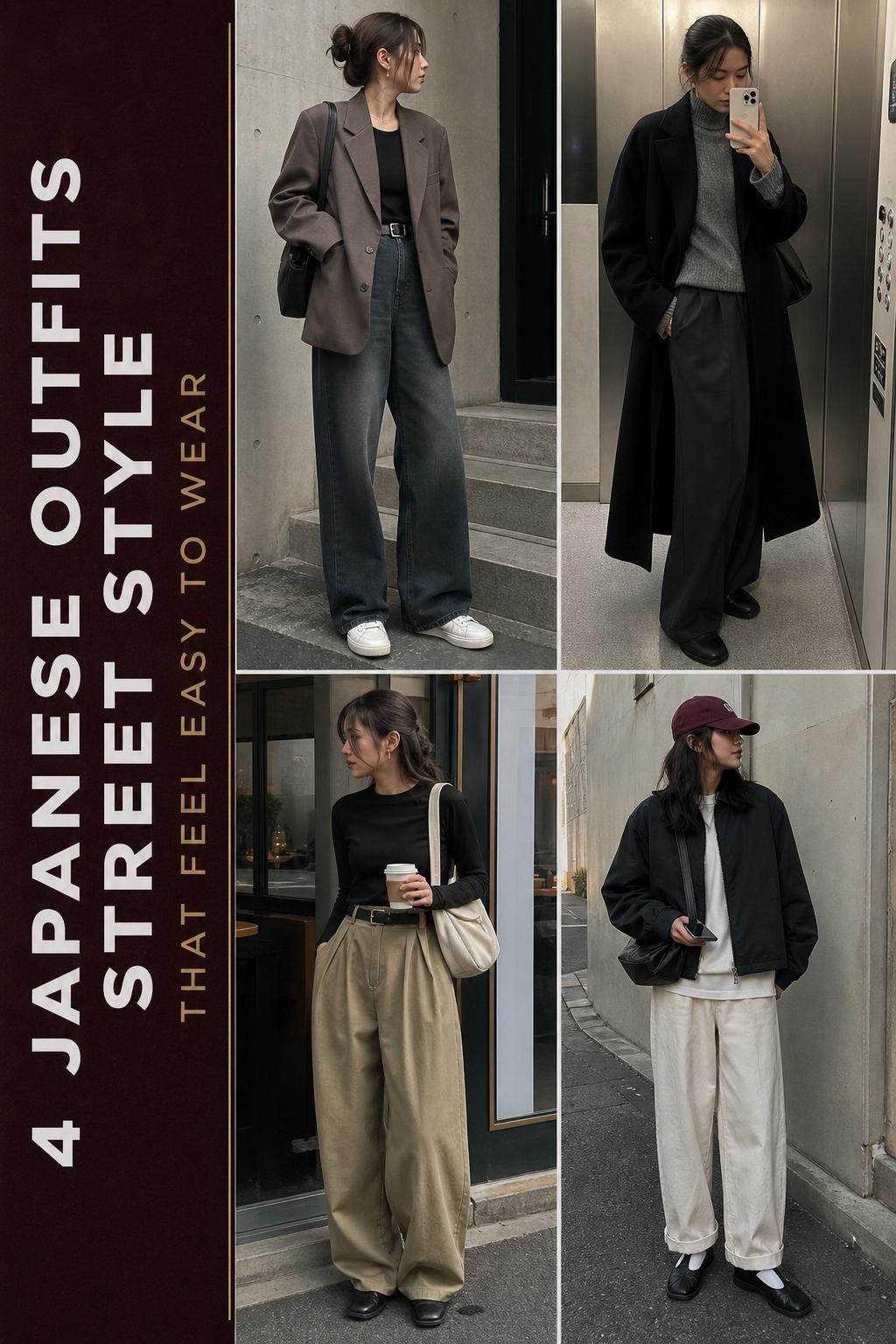
At its core, this style is built on silhouette balance, layered texture, controlled color, and practical movement. Instead of relying on one statement item, the outfit usually works as a full composition. A wider pant leg might be paired with a shorter jacket to keep proportions clean. Tonal layering can make neutral colors feel rich rather than flat. Texture contrast, such as soft cotton with structured outerwear or wool with denim, gives visual depth even when the palette stays restrained.
Your wedding style is personal.
Your plan should feel that way, too.
Zarellea keeps your guest list, budget, vendors, and every next step beautifully organized — so you can focus on the moments that feel like you.
Tokyo-inspired dressing often feels refined and intentional, while Harajuku introduces more freedom and subculture energy. That is why the same style family can hold very different moods: monochrome minimalism, expressive streetwear, traditional-modern fusion, or workwear-inflected casual dressing. The common thread is that every piece has a role in the overall line of the outfit.
Another defining trait is wearability. The best japanese outfits street style looks are not only photogenic. They are made for walking, layering through changing weather, and moving comfortably through urban spaces. Durable fabrics, easy drape, roomy shapes, and practical footwear are part of the appeal, especially in city dressing where comfort matters as much as aesthetics.
From Harajuku to Tokyo and Osaka: the scenes behind the look
Harajuku as the expressive heart
Harajuku remains one of the most recognizable references in Japanese street style because it represents self-expression in a very visible way. Takeshita Dori is often treated as a symbolic backdrop for this energy, where subculture fashion, accessories, and bold styling choices come together. When people talk about Harajuku fashion, they usually mean more than a place. They mean a spirit of experimentation.
That spirit was reinforced by FRUiTS magazine and the wider FRUiTS era, which helped document street fashion as something worthy of attention on its own terms. Shoichi Aoki is closely tied to that legacy, and his name often appears whenever Harajuku’s visual history is discussed. For readers building wearable versions of the look today, Harajuku is less about copying an exact outfit and more about understanding the permission it gives: mix references, build around personality, and let accessories carry meaning.
Tokyo as the center of polished streetwear
Tokyo streetwear tends to sharpen the silhouette without making it stiff. There is usually a strong awareness of proportion, fabric behavior, and tonal harmony. Shibuya adds energy, Omotesando suggests a more refined edge, and together these districts support the idea that Japanese street fashion can be expressive while still looking clean and composed.
This is where function-first pieces become especially relevant. Streetwear pants with durable fabric, good drape, and room to move fit naturally into the Tokyo wardrobe logic. They work with structured outerwear, simple knitwear, and understated shoes, creating an outfit that feels modern and practical instead of overloaded.
Osaka and the value of regional variation
Osaka expands the conversation by reminding readers that Japanese street fashion is not only about Tokyo. The overall style can feel bolder and more relaxed in attitude while still sharing the same interest in layered dressing and personality-led combinations. Including Osaka in the conversation matters because it opens up a broader reading of the aesthetic: not one fixed uniform, but a flexible street style language shaped by different city scenes.
For anyone adapting this style in the U.S., that regional variation is helpful. It gives you room to lean more polished for a downtown office, more eclectic for weekends, or more relaxed for casual city wear without stepping outside the core identity of the look.
Key influences that keep the style current
Japanese street fashion is often discussed through places and garments, but people also help define how the look evolves. Shoichi Aoki remains an important historical anchor through FRUiTS and Harajuku. Chitose Abe is often referenced when modern Japanese fashion conversations turn to the meeting point of structure, layering, and hybrid dressing. Motofumi “Poggy” Kobayashi, also referred to as Poggy, adds another useful lens: styling as curation, where contrast and individuality shape the final outfit.
Even when a reader is not following designers or fashion personalities closely, these names matter because they reinforce a larger point. Japanese street style is not random layering. It is usually thoughtful dressing, where each garment affects silhouette, mood, and visual rhythm. That is why a simple wide-leg trouser and cardigan combination can feel so much stronger when the hem length, outerwear shape, and accessory placement are considered together.
The wardrobe pillars that make the aesthetic wearable
A strong Japanese street style wardrobe does not need to be large, but it does need range in shape and texture. The most useful pieces are the ones that can move between polished Tokyo-inspired outfits, Harajuku-leaning layering, and more casual workwear combinations. Think of the wardrobe as a set of visual tools rather than a fixed set of trend pieces.
- wide-leg or relaxed streetwear pants with durable drape
- structured coats or jackets that create clean lines
- soft cotton shirts and tees for layering
- ribbed knits or wool layers for texture contrast
- workwear-inspired shirts or jackets for utility
- kimono-inspired pieces or hakama references for traditional-modern fusion
- tabi socks and accessories that add subtle identity
These pillars work because they support movement and proportion. A wider pant silhouette creates presence without needing loud color. A coat or cropped jacket defines the frame. Soft knits and cotton layers keep the outfit grounded in comfort. Traditional references such as hakama or kimono-inspired pieces can add depth, but they work best when integrated carefully with contemporary shapes rather than styled all at once.
Look: refined Tokyo casual with proportion play
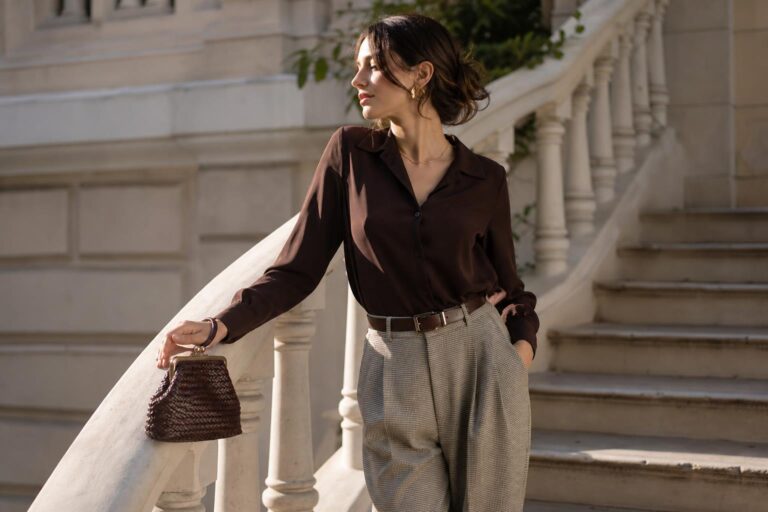
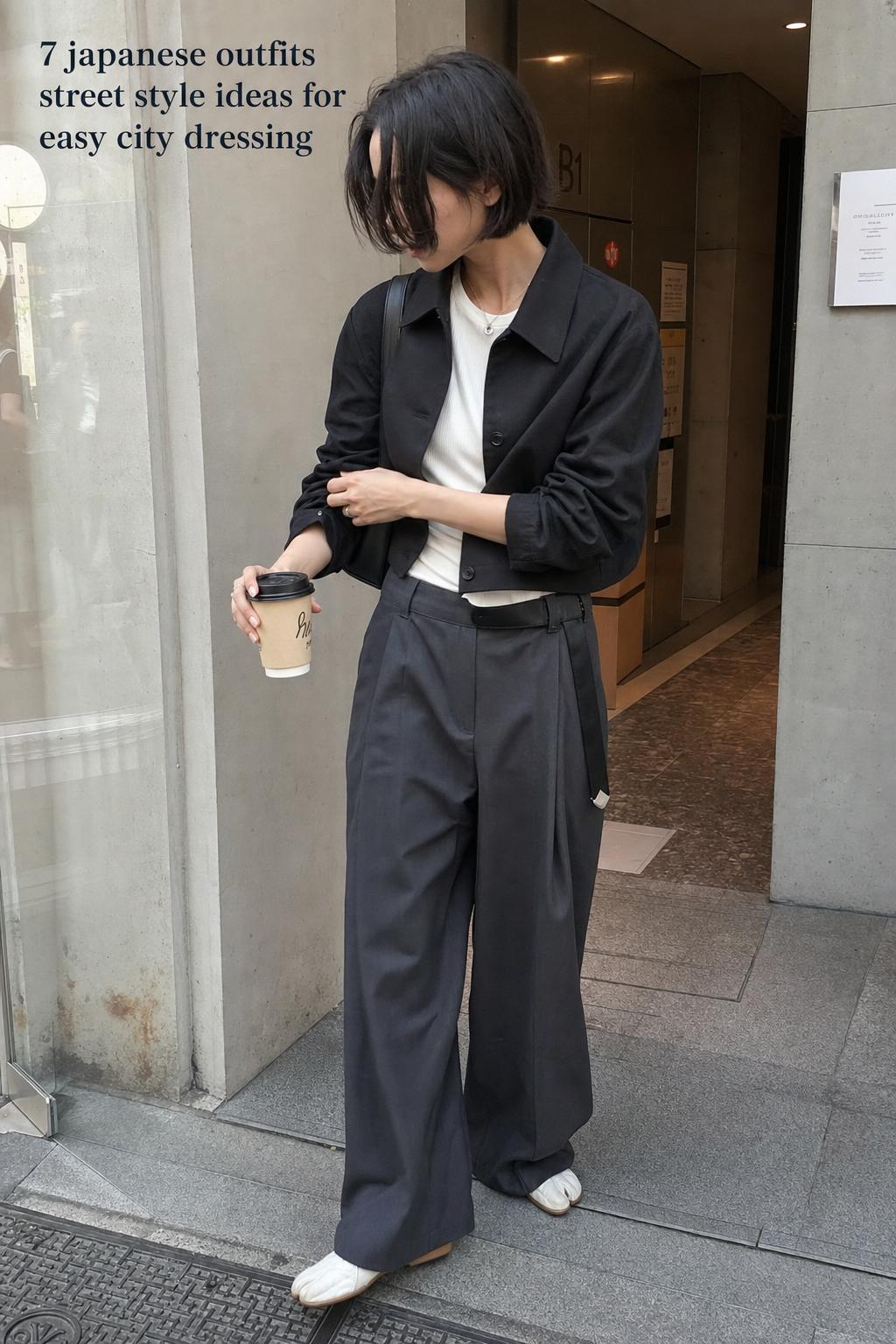
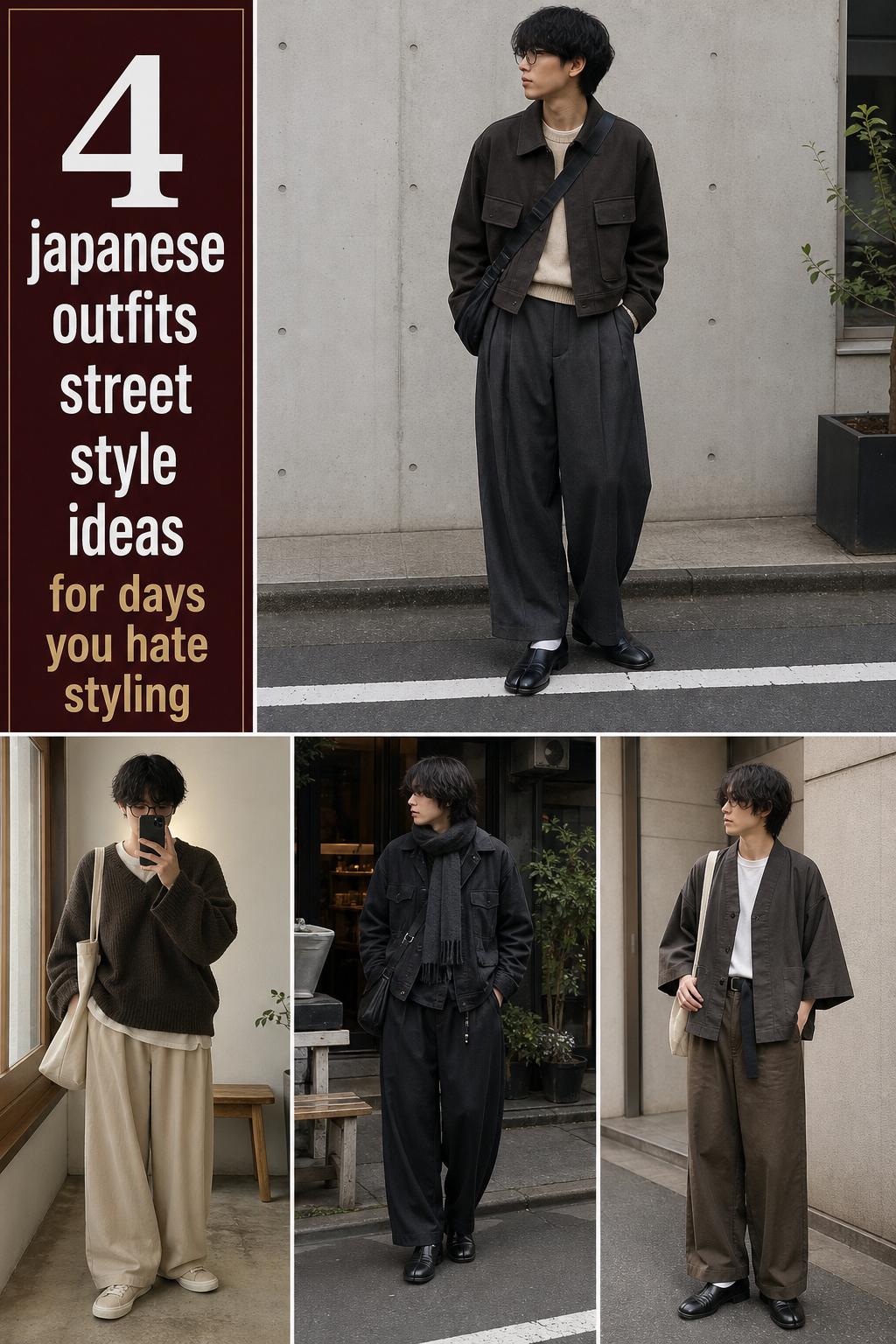
This is the version of the aesthetic that feels easiest to wear on a normal weekday in the city. The mood is calm, polished, and slightly architectural. A shorter structured jacket sits over a soft cotton top, while wide trousers create a long, fluid line through the leg. Nothing feels tight or overworked, but the shape still looks deliberate from every angle.
The palette works best in tonal neutrals: charcoal, black, stone, navy, or muted olive. Smooth cotton underlayers keep the base clean, while the outer layer can bring a little more weight through twill, wool, or durable workwear-style fabric. Footwear should feel grounded rather than flashy, and a simple bag or understated leather accent is enough to finish the look. If you want a small Japanese streetwear signal, tabi socks can add personality without overwhelming the outfit.
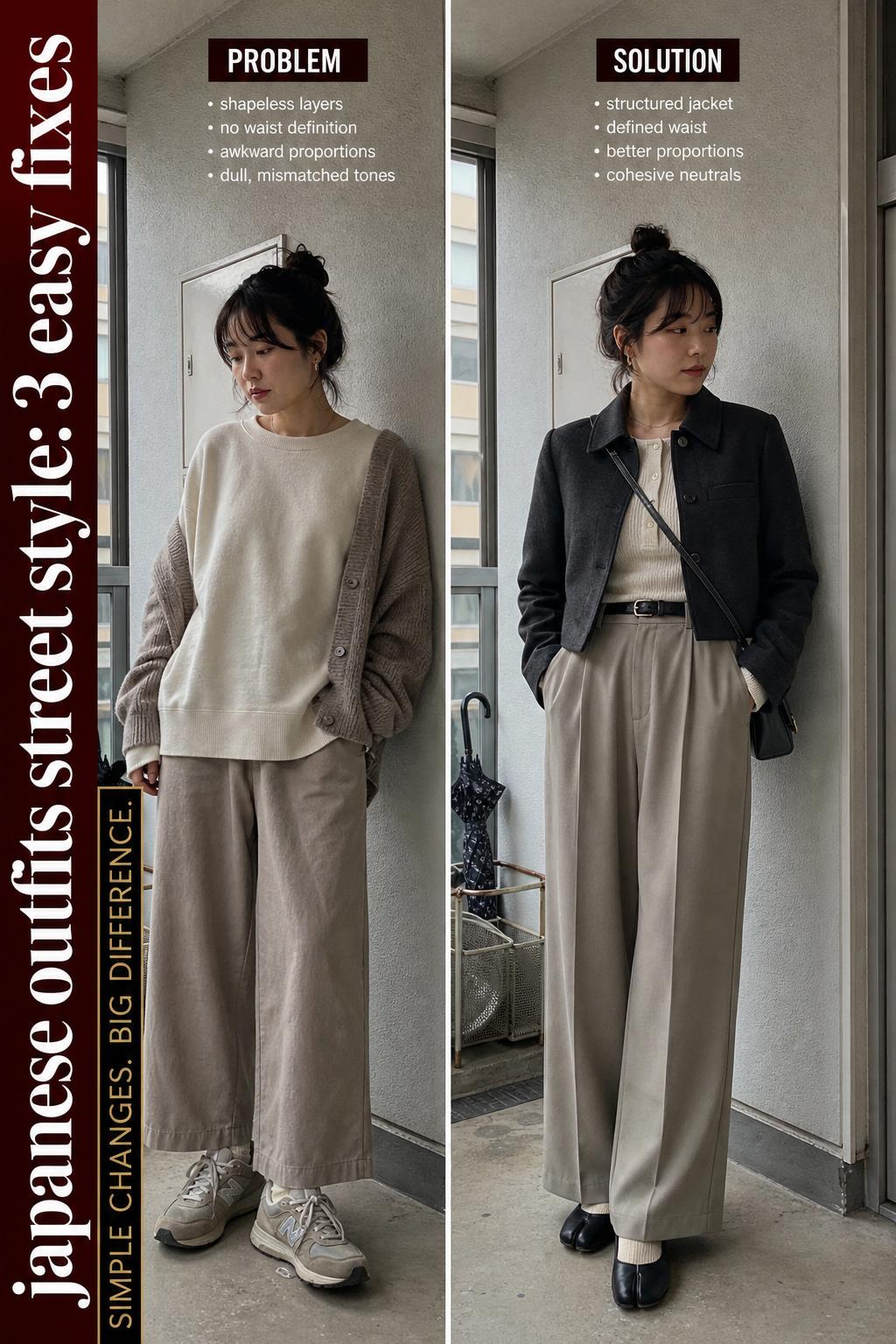
What makes this combination work is the contrast between width and control. The trousers bring movement, but the upper half stays compact enough to avoid a shapeless result. This is often the difference between a look that feels intentional and one that simply feels oversized. For everyday wear, it is one of the most reliable ways to interpret Tokyo street style without looking costume-like.
Look: Harajuku layering with subculture energy
This look leans into the expressive side of Japanese street fashion without losing practicality. The silhouette is more layered and visually active, with one piece peeking from under another and accessories acting like punctuation marks. The outfit should feel assembled rather than matched, with a little tension between sweet, structured, and street elements.
A lightweight shirt under a knit, topped with an outer layer, creates enough dimension to reference Harajuku styling habits. Accessories matter more here: socks, small bags, layered details, and eye-catching finishing pieces help create that personal feel associated with the area around Takeshita Dori. The palette can still stay controlled if you prefer wearability, but this is where a more playful mix of textures or color accents feels natural.
The reason this look remains appealing is that it allows individuality without demanding constant drama. In real life, a toned-down Harajuku-inspired outfit can work for gallery visits, creative workspaces, casual weekends, or city shopping days. The trick is to keep one strong idea at the center, whether that is the layering, the accessory story, or the silhouette, instead of making every element compete at once.
Look: workwear-influenced street style for everyday movement
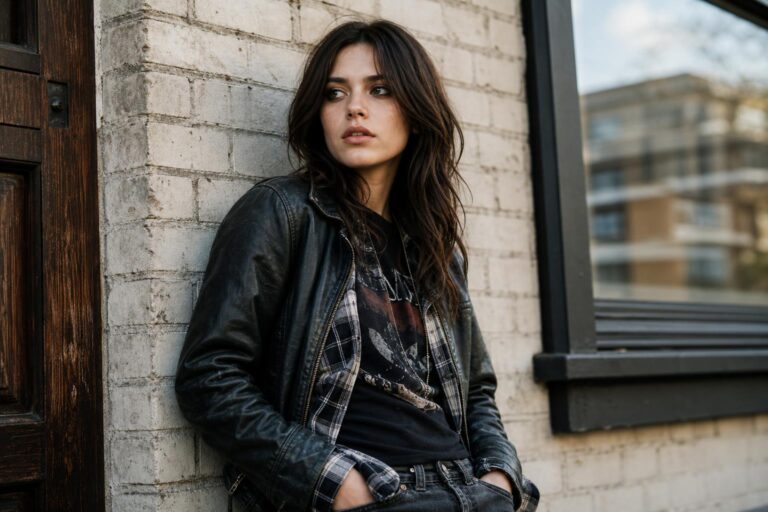
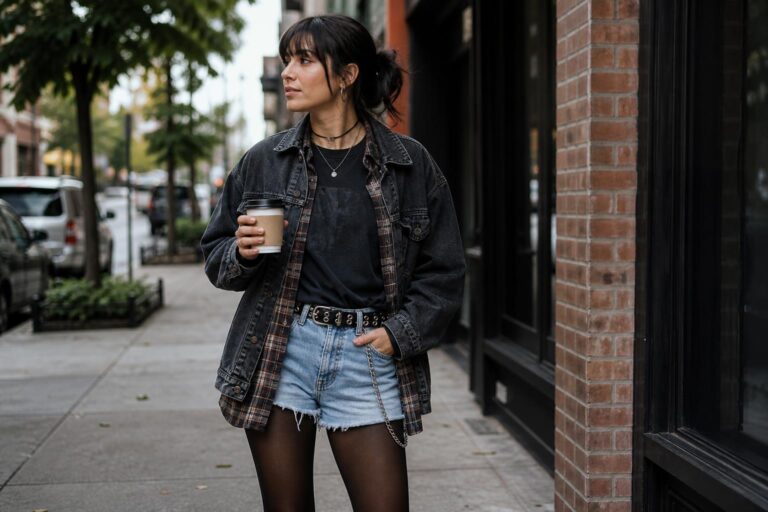
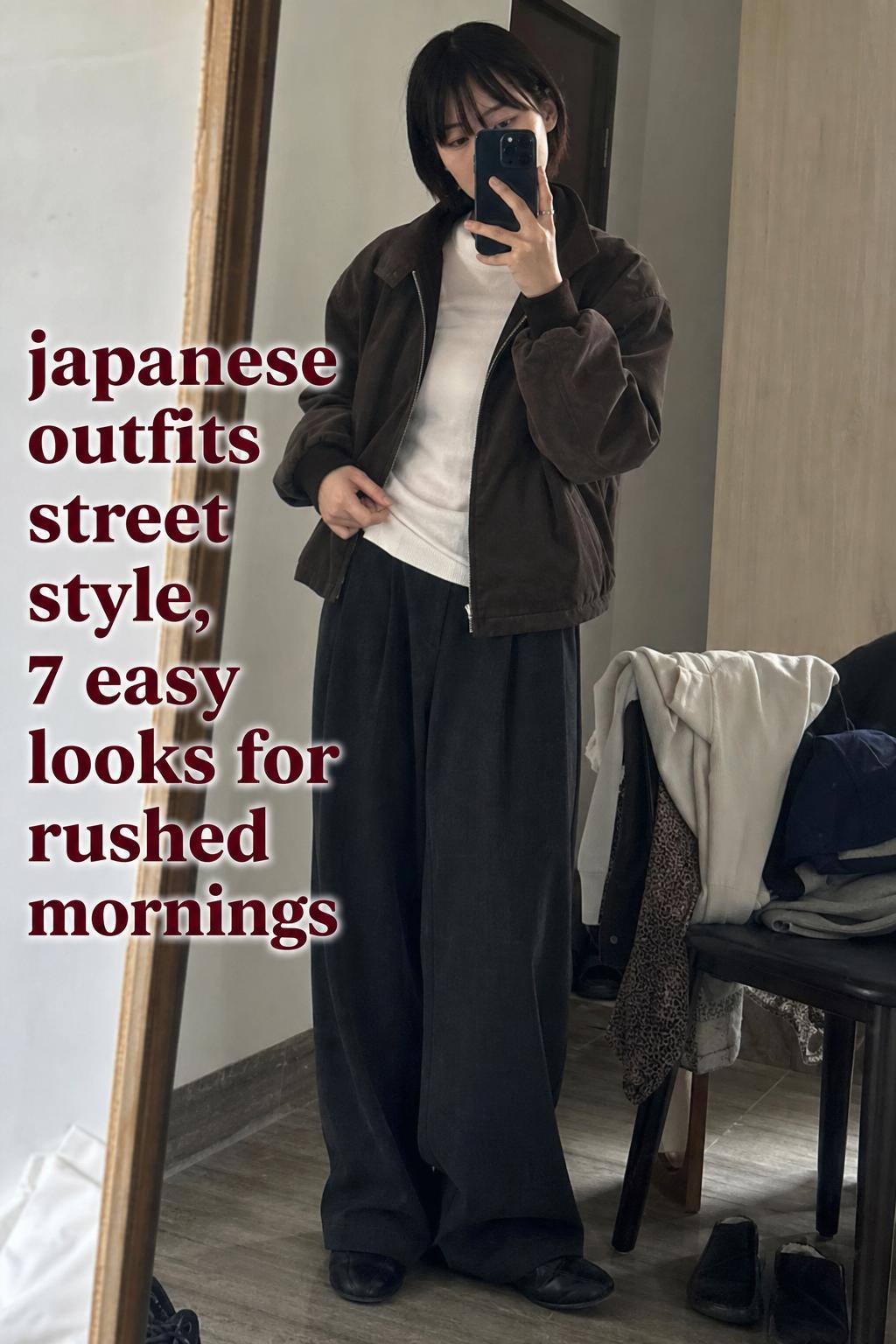
Some of the most wearable Japanese street style outfits come from the influence of workwear. The mood is straightforward, grounded, and quietly cool. A utilitarian jacket, durable shirt, or structured overshirt adds purpose to the outfit, while relaxed trousers keep the shape modern rather than rugged. This is the kind of look that suits long walking days, travel, and casual urban routines.
Fabric matters here more than decoration. Twill, sturdy cotton, denim, and other durable materials create the right sense of utility. A simple neutral base can support these textures well, especially when the color story stays close: washed black, deep navy, earthy olive, charcoal, or off-white. Shoes should support the function-first feel, and accessories should stay clean.
Why does this version work so well? It solves a common styling problem: how to make relaxed dressing look intentional. The answer is material integrity. When the fabric has structure and the proportions are considered, even a simple shirt-and-pants outfit can carry the weight of Japanese fashion streetwear. It is especially useful for readers who like the aesthetic but need something more practical than high-expression Harajuku styling.
Look: traditional-modern fusion with hakama and kimono-inspired pieces
This interpretation has a stronger visual identity and works best when handled with restraint. The mood is modern, composed, and slightly dramatic, with traditional lines entering a contemporary streetwear context. A hakama-inspired silhouette or kimono-influenced layer immediately changes the rhythm of an outfit, creating volume and movement that standard casualwear does not offer.
To keep it wearable, pair one traditional element with more familiar contemporary basics. A modern top with hakama-style trousers, or a kimono-inspired outer layer over a simple monochrome base, lets the shape stand out without making the outfit feel overloaded. Tabi socks can reinforce the direction in a subtle way, and minimal accessories help the silhouette remain the focal point. This is the same styling principle seen on product-led interpretations such as the hakama-based streetwear examples and traditional-modern storefront edits.
The practical insight here is balance. Traditional garments already carry visual history and strong form, so they do not need many competing details. If you want this look to feel city-ready, keep the palette narrow and the underlayers clean. That approach gives the outfit a modern edge while respecting the strength of the original silhouette.
Look: Osaka-inspired bold casual
Compared with the quieter Tokyo version, this look can feel more open in attitude. The outfit still relies on relaxed proportions and layered pieces, but the final impression is looser, bolder, and a little more direct. It is ideal for readers who enjoy Japanese street style but want something less restrained than tonal minimalism.
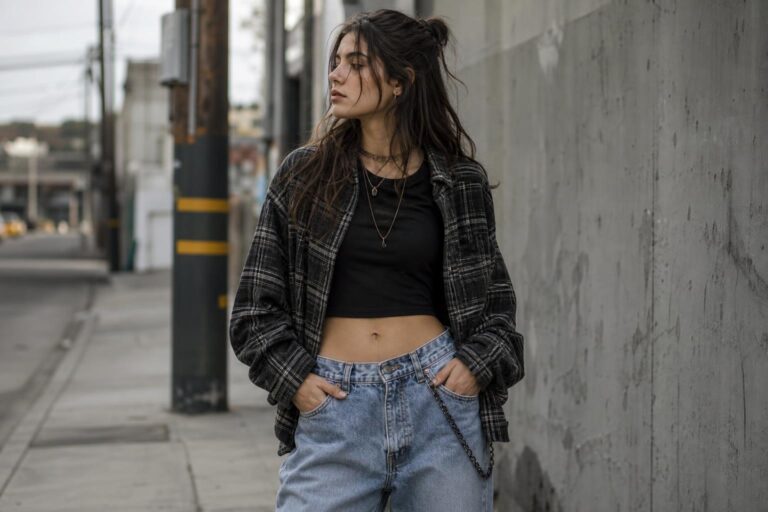
A roomy jacket over a simple tee, paired with wide pants and stronger accessory choices, creates the right mood. You can use contrast a bit more freely here, whether through color, texture, or a more visible streetwear reference. The pieces still need to relate to one another, but the overall styling can carry more personality and less polish than a Tokyo office-adjacent look.
This works best in casual settings where the outfit has space to breathe: weekend cafés, music events, neighborhood walks, or travel days. If the full look feels too bold, keep the silhouette and soften the palette. That one adjustment often preserves the Osaka spirit while making it easier to recreate with basics already in your closet.
How to build dimension without relying on loud color
One of the smartest lessons from Japanese streetwear is that interest does not have to come from bright color alone. Many of the strongest outfits use a restrained palette and let texture, proportion, and layering do the work. This approach is especially useful for readers who want a Pinterest-worthy result that still feels realistic for daily wear.
- mix matte and structured fabrics, such as soft cotton with wool or twill
- combine long and short layers to make the silhouette feel intentional
- use monochrome or tonal combinations to create a cleaner visual line
- let one accessory, such as tabi socks or a distinctive bag, carry the accent
- choose outerwear with shape rather than adding too many decorative elements
A neutral outfit often feels more expensive and more directional when the textures are varied. A black knit with black wide trousers can look flat if both fabrics have the same finish, but the combination becomes richer when one piece has weight and the other has drape. This is a small detail, yet it changes the whole mood of the outfit.
Seasonal styling that still feels like Japan street fashion
Spring and summer: light layers with movement
Warm-weather Japanese street style works best when the layering stays light but the silhouette still feels intentional. Soft cotton shirts, easy trousers, and lighter outer layers can preserve the shape of the look without adding bulk. This is the season for breezier drape and cleaner palettes, especially if you want something that works for walking all day.
A good spring or summer formula is a relaxed shirt, wide pants, and understated accessories. If you want a stronger fashion note, add a kimono-inspired lightweight layer or use socks and shoes to add visual punctuation. The overall feel should stay airy and practical rather than heavily styled.
Fall and winter: texture takes over
Cooler months are where Japanese outfits street style becomes especially rich. Wool, ribbed knits, structured coats, and heavier workwear fabrics add depth without needing more color. Layering naturally becomes more visible, so this is a good time to play with length differences, wide-leg pants, and stronger outerwear shapes.
The easiest way to keep winter outfits from looking heavy is to maintain one clean visual line. If the coat is oversized, keep the underlayers smooth. If the trousers are voluminous, let the top half feel more defined. This helps the outfit stay relaxed yet sophisticated instead of bulky.
A year-round capsule that stays flexible
If you want to dress this way consistently, a small capsule works better than chasing isolated statement pieces. A reliable set of wide trousers, one structured coat, one workwear jacket, soft cotton bases, one knit layer, and a few accessories can create many variations across seasons. The point is not to own every version of the aesthetic. The point is to have enough shape variety to shift the mood when needed.
Styling logic: why some outfits feel polished and others fall flat
The difference usually comes down to proportion and restraint. Japanese street style often looks effortless, but that ease is usually supported by very specific decisions. Hem lengths matter. Layer lengths matter. The volume of a pant affects what kind of outerwear will work. A tonal palette can look intentional, but only if the textures are varied enough to keep it alive.
Common mistakes tend to dilute the look rather than strengthen it. Too many unrelated details can make the outfit feel chaotic instead of expressive. Oversized everything can remove shape. Traditional garments can look disconnected if they are not grounded by contemporary basics. Even a good outfit formula can miss the mark if the shoe choice shifts the mood too far away from the rest of the silhouette.
Style tip: keep one element in charge
If the trousers are the statement, let the upper half support them. If the outerwear is architectural, keep the base simple. If you are using a hakama-inspired or kimono-inspired piece, reduce extra styling noise. This creates the clean visual hierarchy that makes the outfit feel deliberate.
City-ready outfit formulas you can actually recreate
Sometimes the easiest way to approach this aesthetic is through repeatable combinations rather than abstract inspiration. These formulas stay close to the way Japanese street fashion is worn in daily life: practical, layered, and visually clear.
- cropped or structured jacket + soft cotton top + wide-leg trousers + simple shoes
- workwear overshirt + relaxed tee + durable pants + minimal bag
- light knit over shirt + loose trousers + socks with visible styling role
- kimono-inspired outer layer + monochrome base + restrained accessories
- long coat + ribbed knit + draped trousers for fall and winter city dressing
Each formula can be adjusted depending on climate, comfort, and personal style. In Los Angeles, you might rely more on lighter shirts and easy layering. In New York, stronger outerwear and wool textures make more sense. The styling language stays the same even when the practical execution changes.
A quick note on Japanese streetwear versus Korean streetwear
Readers often compare the two because both are influential, but they tend to project different energies. Korean streetwear is often associated with cleaner lines and styled polish, while Japanese streetwear more often carries expressive layering and subculture influence. That does not mean one is better or more wearable than the other. It simply means the mood is different.
If your wardrobe already leans sleek and streamlined, you may want to borrow Japanese street style through proportion and texture first. If you already enjoy layering and visual contrast, Harajuku and Tokyo references may feel immediately natural. Understanding the distinction helps you choose which version of the look will truly suit your daily life.
Where this style fits in real life
One reason this aesthetic endures is that it adapts well. The refined Tokyo version works for city offices with relaxed dress codes, creative meetings, and dinner plans. Workwear-influenced outfits are practical for travel, commuting, and long weekends on foot. Harajuku-inspired layering suits events, neighborhood shopping, and casual settings where personal style can be more visible. Traditional-modern fusion looks are better for moments when you want a stronger fashion point of view.
That flexibility matters. A style can be visually inspiring and still fail if it does not match real schedules, real weather, and real movement. Japanese street fashion succeeds because even its more expressive versions often remain rooted in comfort, layering logic, and urban practicality.
Final styling notes for making the aesthetic your own
The easiest way to wear this style well is to focus on shape first, then texture, then detail. Start with a silhouette that feels good on your body and practical for your day. Add depth through fabric and layering. Only after that should you decide whether the outfit needs a stronger Harajuku touch, a workwear edge, or a traditional reference like tabi socks or a kimono-inspired layer.
Japanese outfits street style continues to resonate because it offers more than one path. It can be understated elegance, soft structured layers, casual with intention, or bold self-expression. The most convincing version is usually the one that respects the visual language of Tokyo, Harajuku, and Osaka while still fitting naturally into your own routine. That is what keeps the style modern, wearable, and worth returning to season after season.
FAQ
What is the easiest way to start wearing japanese outfits street style?
Start with silhouette rather than statement pieces. Wide-leg trousers, a structured jacket, and a simple cotton or knit base will give you the clearest entry point. Once that feels natural, add texture contrast, tonal layering, or smaller details such as tabi socks or a workwear-inspired overshirt.
Is Harajuku fashion only for younger people?
No. Harajuku is best understood as an approach to self-expression rather than an age-specific uniform. A more wearable interpretation might use layered textures, a strong accessory choice, or an eclectic mix of proportions without adopting the most extreme subculture styling.
How is Tokyo streetwear different from Harajuku style?
Tokyo streetwear often feels more refined, practical, and proportion-focused, while Harajuku style is more openly expressive and tied to subculture energy. Both share an interest in layering and individuality, but Tokyo usually reads cleaner and Harajuku reads more experimental.
Can Japanese street fashion be practical for everyday life in the U.S.?
Yes, especially when you focus on the more wearable foundations of the style: relaxed pants, structured outerwear, tonal dressing, and durable fabrics. Those elements adapt well to commuting, travel, and casual city routines while still keeping the visual character of Japanese streetwear.
What traditional pieces work best in a modern street style outfit?
Hakama-inspired silhouettes, kimono-inspired layers, and tabi socks are the easiest traditional references to integrate. They work best when paired with contemporary basics such as simple tops, monochrome layers, and clean outerwear so the traditional element remains intentional rather than overwhelming.
What colors work best for Japanese street style outfits?
Tonal neutrals are often the most versatile choice, including black, charcoal, navy, stone, olive, and off-white. These colors allow silhouette and texture to stand out, which is a major part of the appeal. If you want more personality, add it through one accent rather than many competing colors.
How do I keep oversized layers from looking sloppy?
Balance volume across the outfit. If the trousers are very wide, keep the top or jacket more controlled. If the coat is oversized, make sure the underlayers are cleaner and the hem lengths feel intentional. Structure in at least one part of the outfit keeps the silhouette polished.
What role does workwear play in Japanese street fashion?
Workwear contributes practicality, durable materials, and a function-first attitude that fits naturally into urban dressing. Jackets, shirts, and pants with utility roots often help Japanese streetwear feel grounded, especially for readers who want a more understated and everyday version of the style.
Why is FRUiTS magazine often mentioned in conversations about Harajuku?
FRUiTS is closely associated with documenting Harajuku street fashion and helping define its visual legacy. Shoichi Aoki is part of that conversation, and the publication remains an important reference point when discussing how Harajuku became a widely recognized symbol of Japanese street style.
How can I make a neutral Japanese street style outfit feel more interesting?
Use texture and layering to create depth. Combine soft cotton with wool, twill, denim, or ribbed knits, and pay attention to length differences between layers. A tonal outfit becomes far more dynamic when the fabrics, drape, and proportions are doing the visual work.
Finish the look
The little extras that make a summer outfit feel complete
From beach days to city weekends, these easy pieces bring comfort, texture, and a polished finishing touch.

FENBEN
Straw Hobo Crossbody Bag
A handwoven straw bag with both short and crossbody straps—an effortless finishing touch for vacation looks and warm-weather outfits.
Shop the bag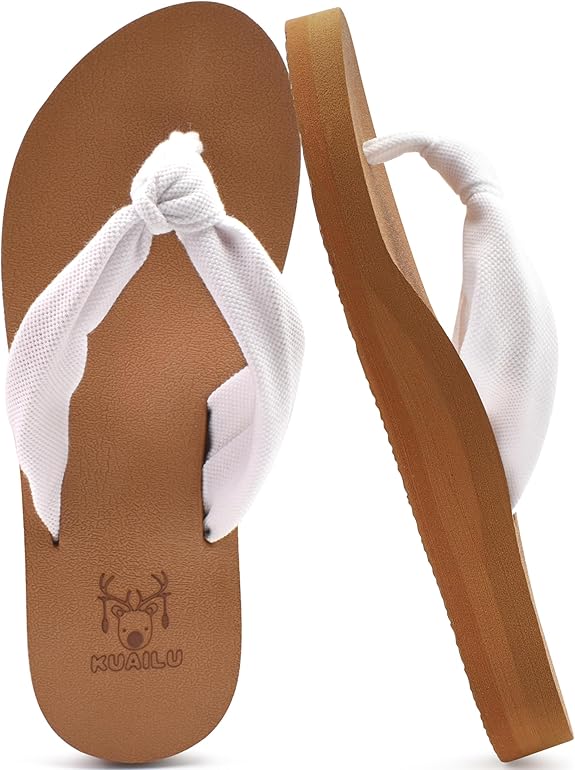
KuaiLu
Flip Flops with Arch Support
Cushioned, lightweight sandals with supportive arch design—a practical choice for beach trips, errands, and long summer walks.
Shop the sandals
baleaf
Athletic One-Piece Swimsuit
A functional one-piece with adjustable straps and moderate coverage, designed for swimming, training, surfing, and active beach days.
Shop the swimsuit
Astylish
Linen-Cotton Button-Down Shirt
A relaxed cotton-linen shirt with a collared V-neck and roll-up sleeves—easy to style over swimwear or with denim and shorts.
Shop the shirt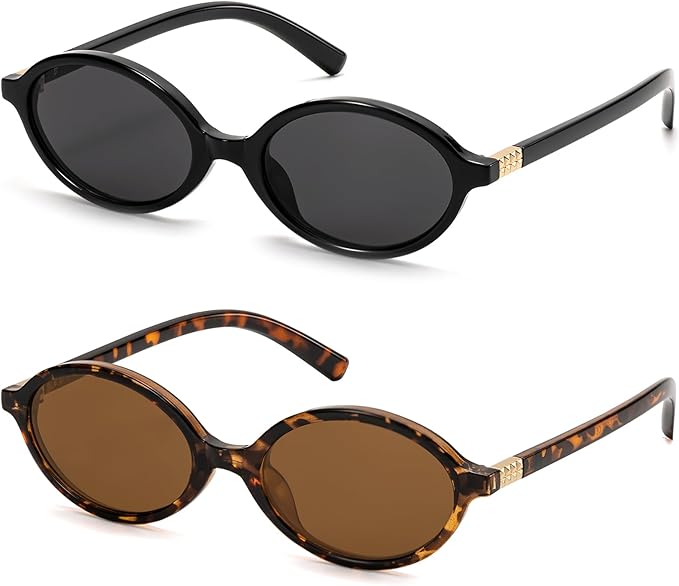
ViewJoy
Retro Oval Sunglasses
Small oval sunglasses with a 90s-inspired silhouette and UV400 lens protection—a quick way to add a vintage edge to everyday looks.
Shop the sunglasses
Affiliate disclosure: This section contains affiliate links. If you make a purchase through these links, I may earn a commission at no additional cost to you. Product selection, pricing, availability, and delivery terms may change—please review the current details on Amazon before purchasing.
As an Amazon Associate I earn from qualifying purchases.