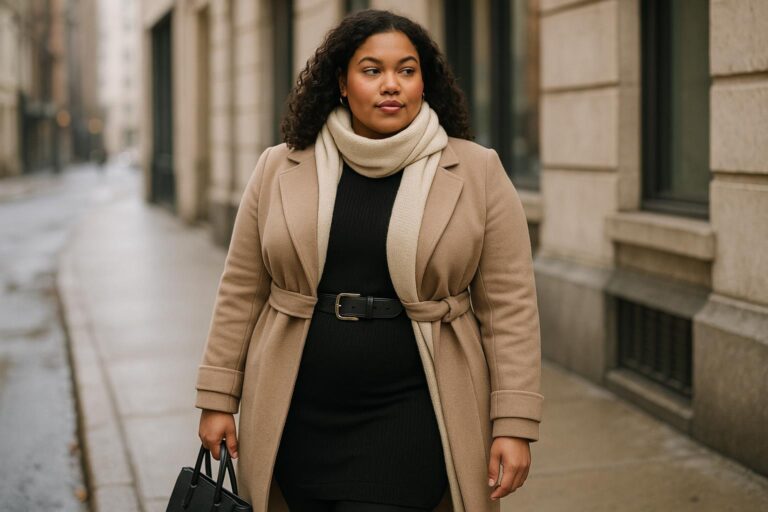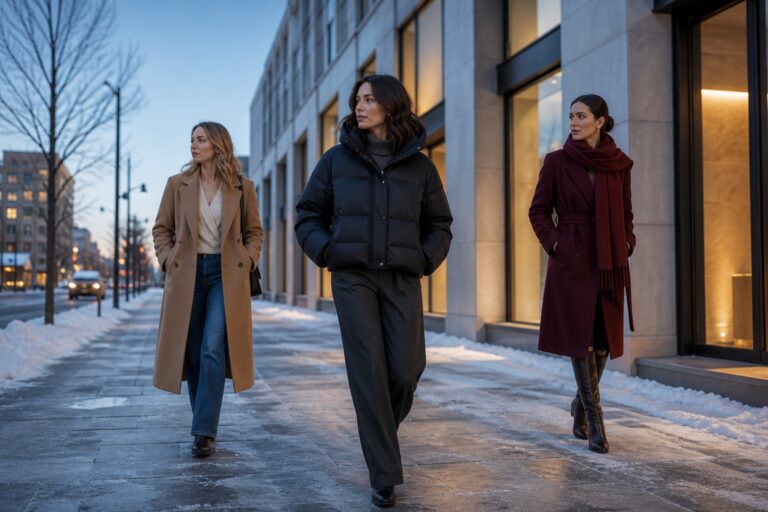
Korean Winter Outfits: 6 Warm, Polished Formulas
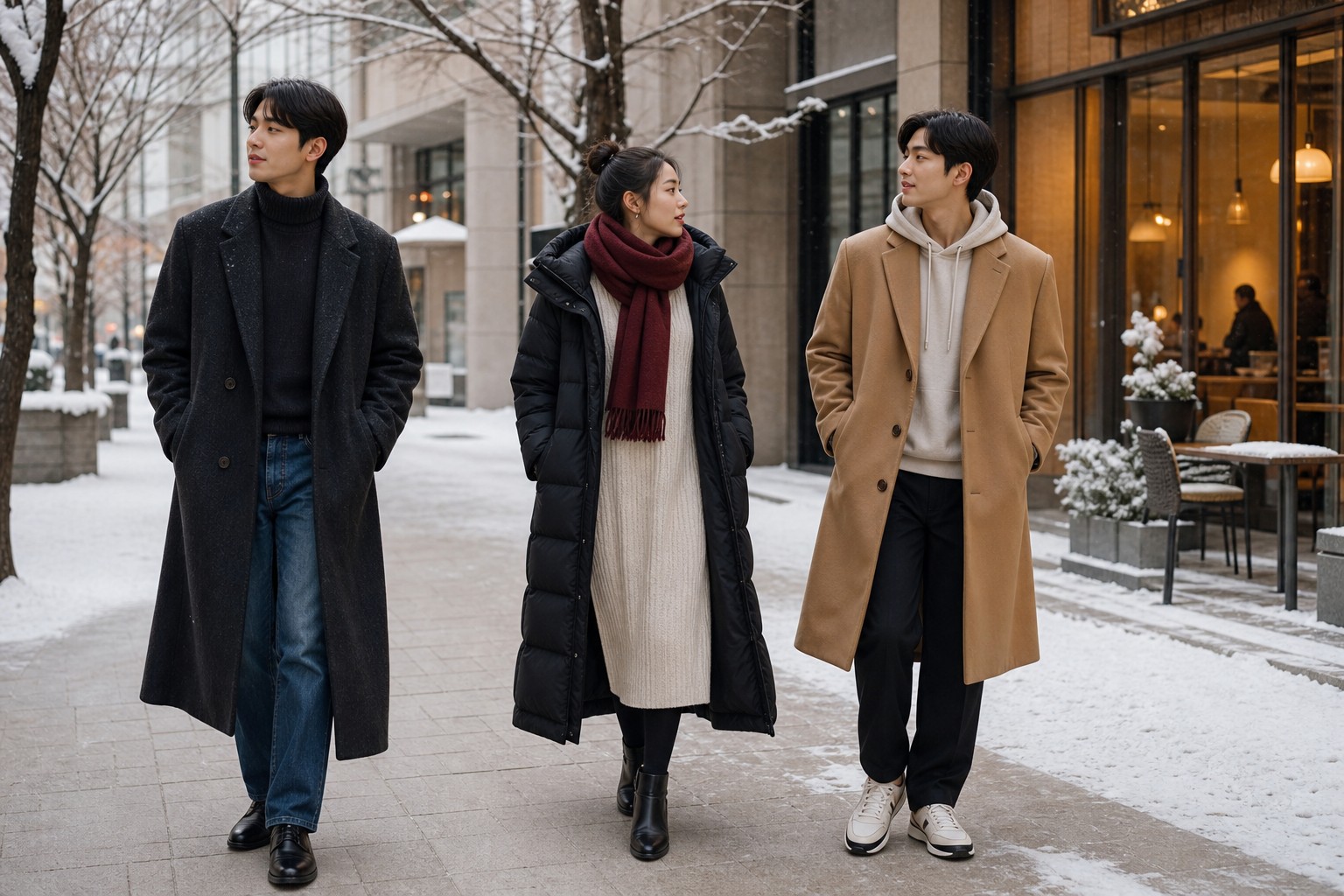
Korean winter outfits have a particular kind of balance: they look relaxed, but every layer seems deliberate. A long coat may be oversized, yet the outfit underneath still feels clean. A puffer can be genuinely warm without turning the wearer into a shapeless bundle. Even a casual hoodie often appears considered because its proportions, color, and accessories are doing quiet work together.
You do not need a Seoul shopping haul or a closet full of designer labels to use the idea. The most useful part of Korean winter fashion is a repeatable styling system. Start with a thin base, add one insulating layer, choose outerwear for the actual weather, then finish with a controlled palette and one memorable detail. The six formulas below show how to turn that system into outfits for commuting, school, errands, travel, and casual evenings.
Why Korean winter outfits look intentional, even when layered
The first principle is edited volume. Korean-inspired winter dressing often uses roomy coats, wide jeans, generous knits, or a soft scarf, but not every item is oversized at the same time. One large shape is balanced by a straighter or closer layer somewhere else. A long, broad coat can work with a fitted turtleneck. Wide-leg pants feel easier to wear when the top has a shorter hem or a clean shoulder line. A large puffer benefits from a simple lower half and shoes with enough visual weight.
The Fashion-Note Edit
Five effortless pieces to refresh your everyday wardrobe
A polished, practical edit for workdays, weekends, and everything in between.

The Drop
Women’s Blake Long Blazer
A longline, tailored blazer with a notched collar and a single-button closure—an easy layer for denim, dresses, or office-ready looks.
Shop the blazer
Amazon Essentials
Women’s Lightweight Crewneck
A soft, lightweight sweater with a clean crew neckline—the kind of reliable layer that works from cool mornings to air-conditioned spaces.
Shop the sweater
Amazon Essentials
Women’s Loafer Flat
A classic flat loafer that gives casual outfits a more polished finish and pairs naturally with tailored pants, skirts, and straight-leg jeans.
Shop the loafers
Levi’s
Women’s 501 90s Jeans
A relaxed, vintage-inspired take on the iconic 501 silhouette—made for an easy, lived-in look without the thrift-store search.
Shop the jeans
Colorfulkoala
High-Waisted 7/8 Leggings with Pockets
Soft, four-way-stretch leggings with side pockets and a high-rise waistband—designed for movement, errands, and off-duty comfort.
Shop the leggings
Affiliate disclosure: This section contains affiliate links. If you make a purchase through these links, I may earn a commission at no additional cost to you. Product selection, pricing, availability, and delivery terms may change—please review the current details on Amazon before purchasing.
As an Amazon Associate I earn from qualifying purchases.
The second principle is texture instead of decoration. Ribbed knitwear, smooth wool, matte nylon, brushed fleece, leather, denim, and soft shearling can make a neutral outfit feel rich without adding loud prints. This is why a cream sweater under a charcoal coat can look more styled than a colorful outfit with too many competing details. Let the fabrics create the interest, especially when you want a polished everyday result.
Your wedding style is personal.
Your plan should feel that way, too.
Zarellea keeps your guest list, budget, vendors, and every next step beautifully organized — so you can focus on the moments that feel like you.
The third principle is a limited color story. Begin with two dependable colors, such as black and ivory, camel and chocolate, or gray and navy. Add one accent through a scarf, bag, beanie, tights, or shoe. Burgundy, muted blue, olive, and soft red all work well because they bring personality without making the outfit feel like a costume. Repeating one color in two small places can make the whole look appear more finished.
Build the three-layer foundation
A good winter outfit starts with comfort, not the photograph. Korean winter outfits are often successful because the layers are chosen in an order that makes sense. The layer touching your skin should help manage warmth and moisture. The middle should insulate. The outer layer should block wind, hold the silhouette, and suit the day. If one layer is doing all three jobs, you usually end up with bulk, overheating, or an outfit that is difficult to adjust.
Base layer, insulation layer, and outer shell
For the base, choose a thin long-sleeve thermal, fine merino top, fitted mock neck, or smooth undershirt. The goal is a close layer that does not bunch beneath your sweater or coat. Cotton can work on a mild day, but it is less helpful when you are moving between cold streets and heated rooms. A base should disappear under the outfit, so avoid thick seams, bulky collars, and sleeves that push up inside a coat.
Your middle layer supplies insulation and personality. A medium-weight crewneck, cardigan, turtleneck, sweatshirt, or thin fleece is more versatile than one extremely chunky sweater. Look for a layer that leaves room for movement but does not stretch the outerwear. A collared shirt under a knit can add a crisp edge. A fitted turtleneck under a looser sweater creates the high-neck detail often associated with Seoul street style.
The shell depends on your weather. A wool coat works for dry, moderate cold when you want a clean line. A knee-length down coat or long puffer is better for freezing wind, snow, or a long outdoor commute. A teddy or shearling jacket adds warmth and texture, but it may need a thermal layer beneath it. Choose the outer piece first when the forecast is severe, then build the outfit underneath it.
Balance volume, hem lengths, and visual weight
Use a simple proportion test before leaving the house. Identify the widest item, the longest hem, and the heaviest shoe. If all three are competing in the same direction, the outfit may feel accidental. A long oversized coat can be balanced by a narrow trouser line and a compact shoulder bag. Wide jeans can work with a cropped puffer or a tucked knit. A mini skirt with a roomy coat needs opaque tights and a substantial boot so the lower half does not look disconnected.
Do not treat these guidelines as rules about body shape. They are visual tools, and you can adjust them for comfort and personal preference. If you like a fully oversized silhouette, create continuity by keeping colors close and choosing shoes with a sturdy sole. If you prefer a defined waist, add a belt over a coat or choose a jacket that ends near the high hip. The outfit should support your movement, not force you into a fashionable posture.
Choose a restrained palette with one clear accent
Neutrals make Korean winter outfits easy to repeat. Build a small palette from black, cream, gray, navy, camel, chocolate, or washed denim. Then choose one accent that can appear in several looks. A burgundy scarf may also connect to a hair ribbon or bag. Olive gloves can echo a sneaker detail. A soft blue sweater can brighten a dark coat without overwhelming it.
Monochrome does not mean every item must be the same shade. Tonal dressing is more interesting when the textures vary. Pair charcoal wool with graphite knitwear, black denim, and a slightly shiny bag. Pair ivory fleece with cream knitwear and beige trousers. The small differences in surface and value keep the outfit from looking flat while preserving the calm Korean-inspired mood.
Six practical Korean winter outfit formulas
These formulas are starting points, not uniforms. Use the closest version for your climate and substitute what you already own. The important part is the relationship between the pieces: a quiet base, a useful middle, intentional outerwear, and a finishing detail that gives the outfit direction.
Long coat, turtleneck, and straight denim
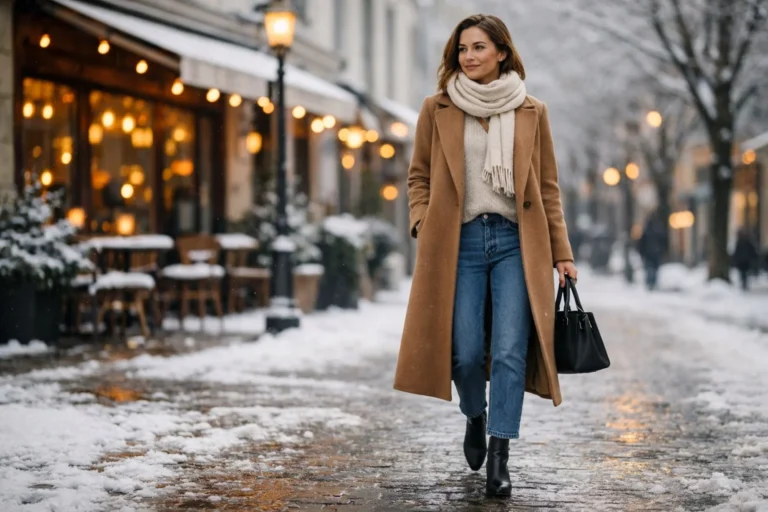
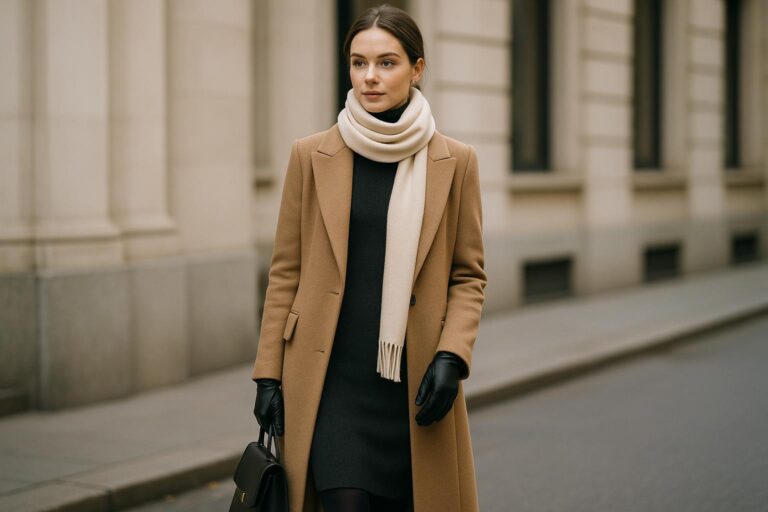
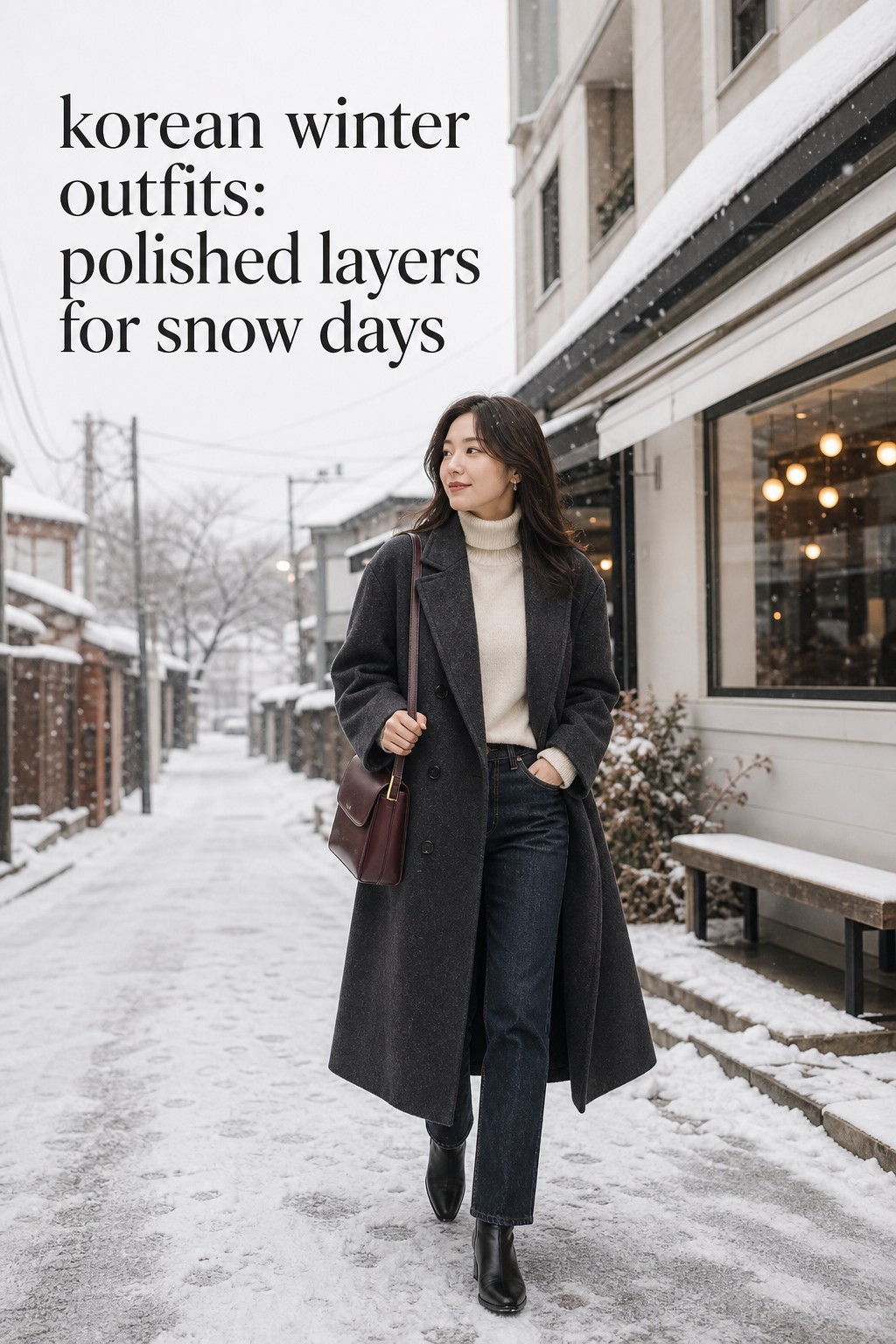
Choose a charcoal, black, camel, or deep navy coat that falls around the knee or lower calf. Wear it over a fitted turtleneck and straight-leg jeans. Add leather ankle boots or clean low-profile sneakers, depending on the ground and the formality of your day. This is one of the most reliable Korean winter outfits because the long vertical line feels elegant while the denim keeps it approachable.
Keep the accessories compact. A structured shoulder bag, narrow sunglasses, or a small hoop earring is enough. If the coat is very roomy, let the turtleneck show at the neck and keep the jeans hem clean. For extra warmth, add a thin thermal under the turtleneck rather than a second bulky sweater. The result works for an office with a relaxed dress code, a museum visit, or a cafe-to-dinner plan.
Long padding, knit dress, and grounded boots
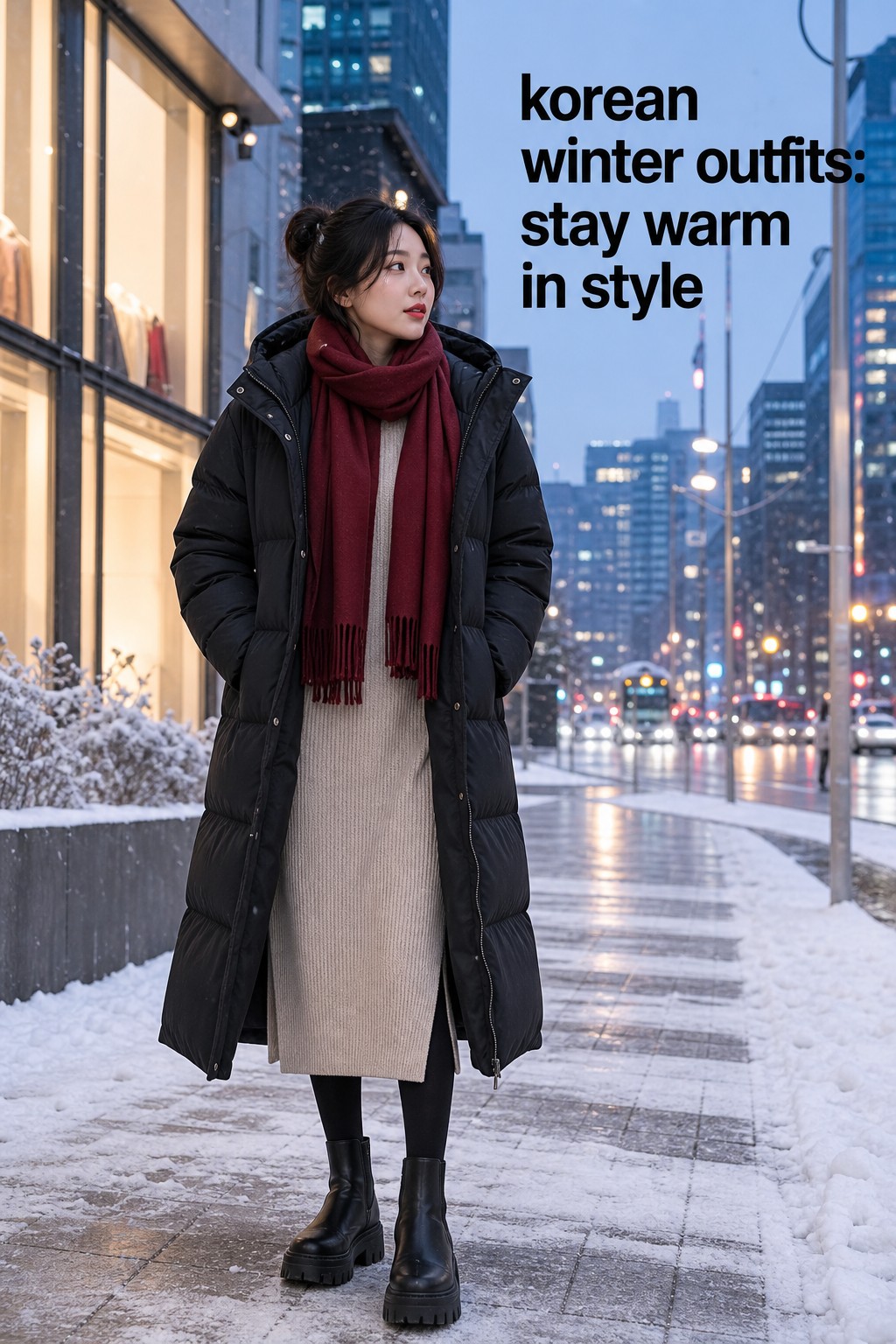
On the coldest days, style a knee-length down coat over a simple knit dress. A ribbed midi dress gives a long, clean line, while a sweater dress with a slightly looser fit feels softer. Add thermal tights, wool socks, and boots with a lug or textured sole. This combination keeps the outfit feminine without depending on bare legs or delicate footwear.
Use the coat as the visual anchor. Black, cream, or smoky gray makes the outfit easy to repeat, and a colored scarf can supply the accent. If you want more shape, use a slim belt under the open coat or choose a dress with a gentle waist seam. Avoid a belt that compresses the knit so tightly that it becomes uncomfortable when you sit or layer a base underneath.
Shearling jacket, wide-leg jeans, and soft accessories
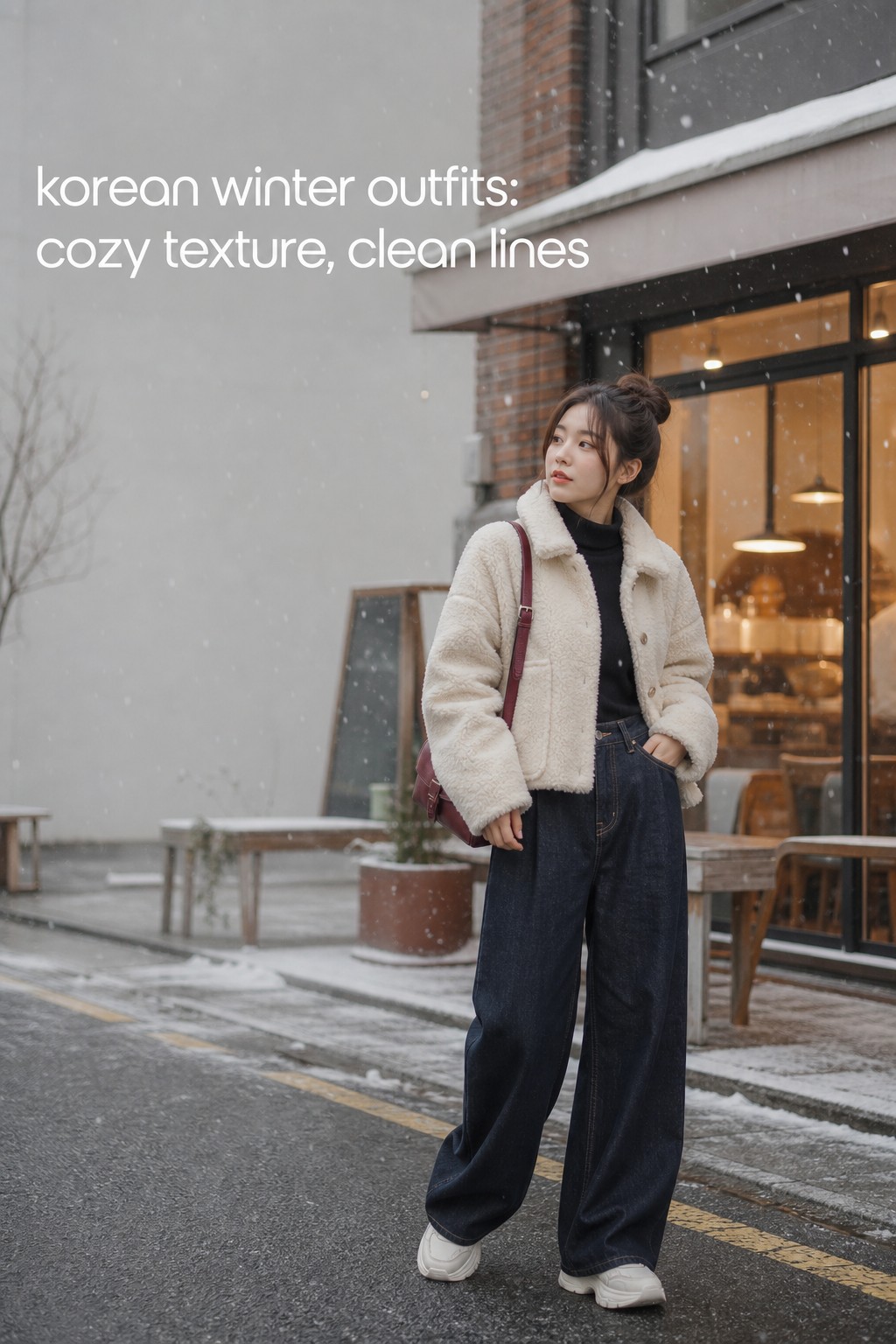
A shearling or teddy jacket creates the texture that makes a simple outfit feel cozy and styled. Balance its softness with dark wide-leg jeans, a fine knit top, and a sturdy sneaker or short boot. A cream jacket over black or indigo denim gives strong contrast. A brown jacket over ecru jeans creates a quieter tonal outfit.
The key is to prevent the outfit from becoming too fluffy everywhere. Choose a relatively smooth base layer and a bag with a defined shape. A ribbed beanie, small scarf, or corduroy tote can add warmth, but avoid stacking every soft accessory at once. This formula is ideal for weekend errands, casual classes, shopping, or a day when you want a relaxed silhouette that still photographs well.
Coat over hoodie with polished sneakers
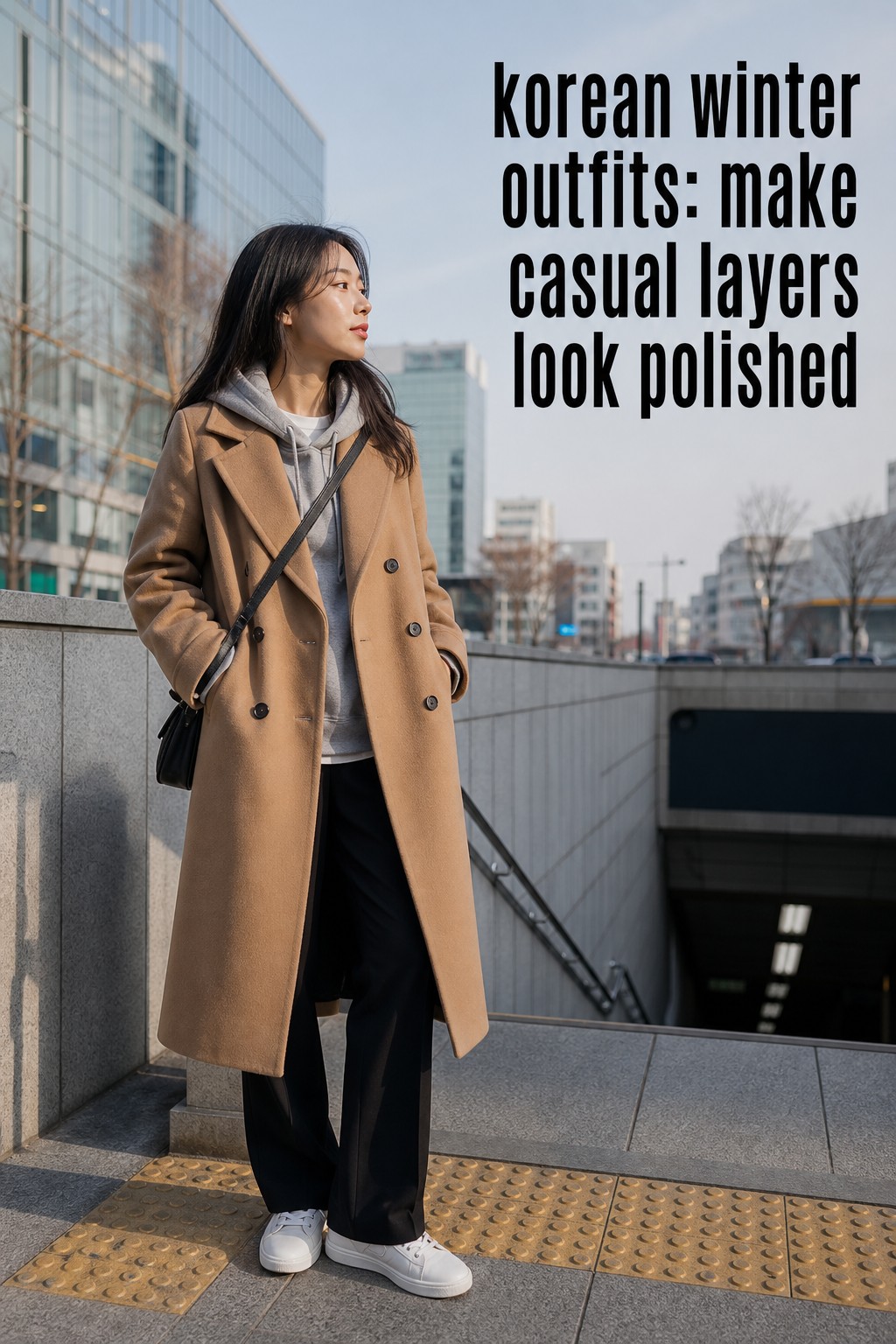
For a casual look with structure, layer a medium-weight hoodie beneath a double-breasted wool coat or a clean oversized topcoat. Keep the hoodie in a neutral shade and let the hood show naturally rather than forcing it into a perfect shape. Finish with straight trousers, relaxed jeans, or clean cargo pants and polished sneakers. The contrast between tailored outerwear and sportswear is what makes this one feel current.
Pay attention to the hoodie thickness. A thin fleece layer is easier under a coat than a heavy sweatshirt. If you need more warmth, add a thermal base beneath the hoodie and leave the coat open indoors. A cap, crossbody bag, or minimal silver jewelry can sharpen the outfit. Keep logos quiet if you want the result to feel more Seoul street style than overt teamwear.
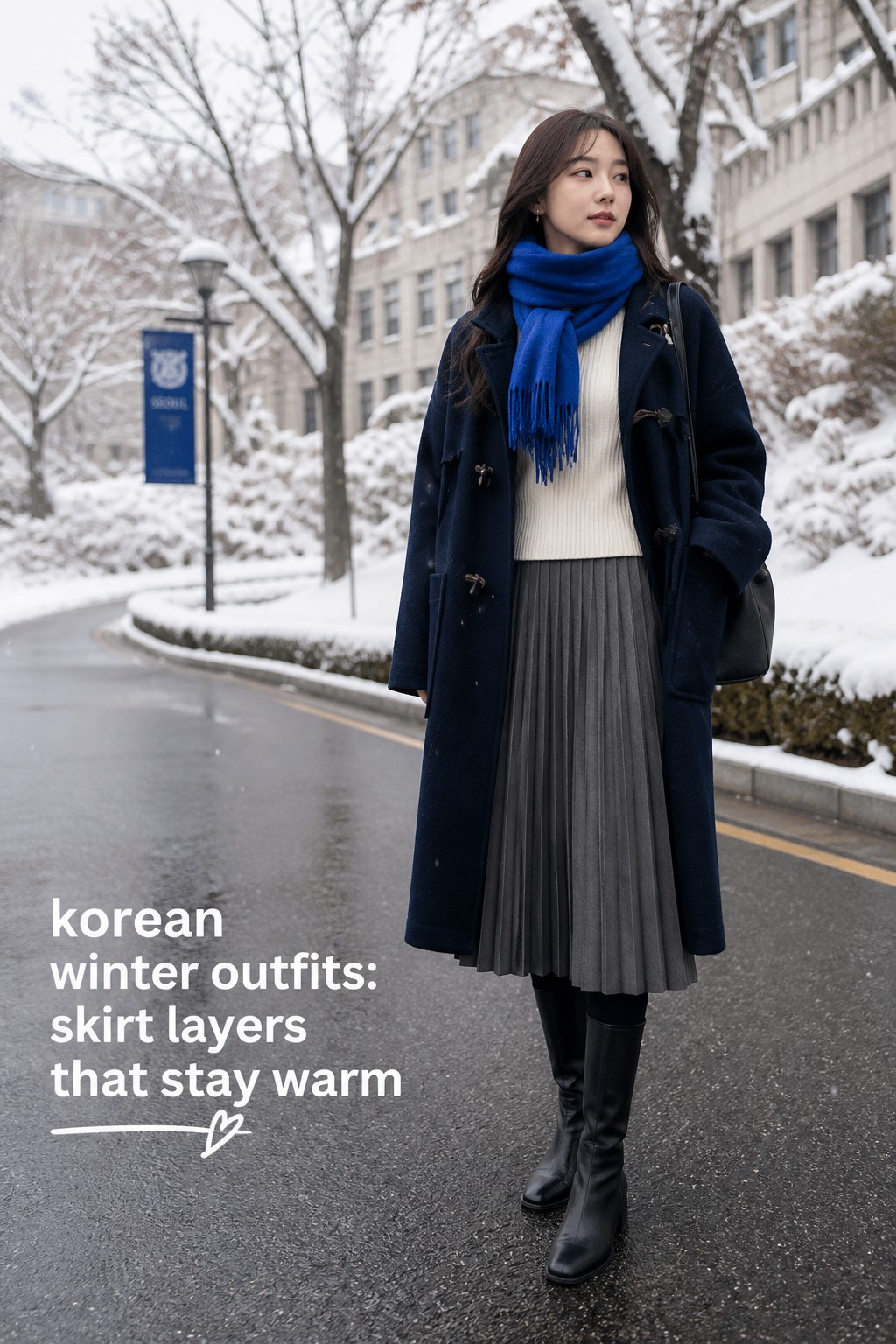
Skirt, tights, and oversized outerwear
A pleated midi skirt, denim skirt, or short skirt with opaque tights gives winter outfits movement. Add a fitted mock neck or neat sweater, then use an oversized duffel coat, wool coat, or puffer on top. The skirt creates a different line from jeans, while the outerwear keeps the look practical. Ankle boots make the formula polished; chunky sneakers make it more youthful and casual.
For a short skirt, make warmth visible and intentional. Choose fleece-lined tights, tall socks, or boots that cover the ankle well. A long coat can provide extra coverage and make the outfit easier for everyday wear. Keep the top relatively simple if the skirt has a print or strong pleats. Korean-inspired styling often looks best when one item supplies the visual idea and everything else supports it.
Tonal neutral layers with one color accent
When you want the most versatile option, build the outfit in one tonal family. Try a cream turtleneck, oatmeal cardigan, beige trousers, and a camel coat. Or use a charcoal knit, gray trousers, black coat, and black boots. Add one accent through a cherry-red scarf, cobalt bag, olive beanie, or colored socks. This formula makes getting dressed easier because every main piece already belongs together.
Vary the finish of the fabrics so the neutrals do not blur together. Combine matte wool with a fine rib, washed denim, smooth leather, or a slightly shiny nylon coat. The accent should be visible from a distance but not dominate the outfit. If you are unsure, start with a small accessory and repeat it in one additional detail rather than adding a second bright color.
Adapt the formulas for weather, commute, and indoor heat
The same outfit idea can succeed or fail depending on the forecast. Seoul-inspired styling is useful because it treats warmth as a layer problem, but your actual climate still decides what those layers need to do. Check wind, precipitation, time outdoors, and the temperature inside your destination before choosing the final coat.
Mild winter days
On a dry day above freezing, a thermal or long-sleeve base, medium knit, and wool coat may be enough. Let the knit provide most of the color and use a lighter shoe if the pavement is clear. A cardigan under a coat is especially useful because it can be removed easily. You can also replace a heavy boot with a loafer and wool sock when you are moving between heated spaces.
Freezing or windy days
When the wind is sharp, prioritize coverage at the neck, wrists, ankles, and lower legs. A long puffer, thermal base, wool middle layer, scarf, gloves, and wool socks will do more than simply adding another decorative sweater. Choose boots with traction if snow or ice is possible. You can keep the outfit polished with a monochrome palette, a clean coat shape, and one controlled accent.
Travel, school, work, and cafe-to-dinner dressing
For travel, use layers that can be removed without disturbing the outfit. A thin base, cardigan, and packable puffer or roomy coat make airport and train transitions easier. For school or a long campus day, choose a backpack-friendly coat, flexible trousers, and shoes you can walk in. For work, swap a hoodie for a fine knit or crisp shirt and choose a structured bag. For cafe-to-dinner plans, keep the warm base hidden and let the coat, scarf, or jewelry supply the polished finish.
Indoor heating is a styling factor, not an afterthought. Avoid a very thick middle layer if you will spend hours inside. A coat that opens easily, sleeves that do not cling, and a thin knit dress or turtleneck can make the difference between feeling elegant and feeling trapped. Carrying a compact scarf is often more useful than wearing an extra sweater all day.
Common mistakes and a final wardrobe checklist
The most common mistake is copying the outline without copying the logic. A large coat alone does not create Korean winter outfits if the layers underneath are uncomfortable or the shoes cannot handle the walk. Another mistake is adding too many trend signals at once: a huge puffer, loud graphic, bright bag, statement boots, and a novelty hat can compete instead of creating a clear point of view.
Before you buy anything, audit the pieces you own. Look for one long coat or puffer, two thin base layers, two medium knits, one hoodie or cardigan, straight or wide denim, a skirt or knit dress if you wear them, weather-ready boots, clean sneakers, and one useful scarf. A small set of compatible pieces will create more outfits than a drawer of single-purpose trend items.
- Check the forecast, wind, and time spent outdoors.
- Choose the outer layer for the weather, then dress underneath it.
- Keep one layer close, one layer insulating, and one layer protective.
- Balance one oversized piece with a cleaner line elsewhere.
- Use texture and tonal color before adding more decoration.
- Repeat one accent color in two small details.
- Test sitting, walking, reaching, and removing the coat before leaving.
The best Korean winter outfits feel calm because the decisions have already been made. You know which coat works in the wind, which knit fits underneath it, which shoes let you walk, and which small detail makes the look feel like yours. Build around that confidence, and the style will remain useful long after a particular trend disappears.
FAQ
What are the key pieces in Korean winter outfits?
The key pieces are a thin base layer, a medium insulating knit or sweatshirt, weather-appropriate outerwear, straight or wide trousers, practical boots or sneakers, and one finishing accessory such as a scarf or beanie. The styling depends on proportion and coordination more than on a specific brand.
How do you layer Korean winter outfits without looking bulky?
Use a close-fitting base, a medium-weight middle layer, and outerwear with enough room for movement. Balance an oversized coat with a cleaner trouser line or a fitted neck layer. Choosing similar colors also makes several layers read as one intentional silhouette.
What colors work best for Korean winter fashion?
Black, cream, gray, navy, camel, chocolate, and washed denim are reliable foundations. Add one accent such as burgundy, olive, muted blue, or soft red. Tonal combinations are especially easy to repeat because texture supplies interest without requiring many colors.
Can Korean winter outfits work in very cold weather?
Yes, if the look is adapted with a thermal base, insulating middle layer, long down coat or puffer, scarf, gloves, warm socks, and shoes with traction. A polished palette and clean proportions can preserve the Korean-inspired mood while the materials handle real cold.
How can I make a puffer look more polished?
Choose a simple color, keep the layers underneath streamlined, and pair the puffer with a structured bag or clean footwear. Matching the coat to one other item, such as the boots or scarf, creates cohesion. Avoid adding several oversized accessories at the same time.
What shoes go with Korean winter outfits?
Leather ankle boots, lug-sole boots, platform sneakers, clean low-profile sneakers, and loafers with warm socks can all work. Pick based on weather and walking distance first. The shoe should have enough visual weight for the coat and trousers, especially when the silhouette is loose.
How do I try Korean winter style without buying a new wardrobe?
Start with your longest coat, a neutral knit, straight or wide denim, and one practical shoe. Create a controlled palette, add one scarf or bag accent, and experiment with layering a turtleneck or shirt under the knit. Small proportion changes often create the biggest difference.
Finish the look
The little extras that make a summer outfit feel complete
From beach days to city weekends, these easy pieces bring comfort, texture, and a polished finishing touch.

FENBEN
Straw Hobo Crossbody Bag
A handwoven straw bag with both short and crossbody straps—an effortless finishing touch for vacation looks and warm-weather outfits.
Shop the bag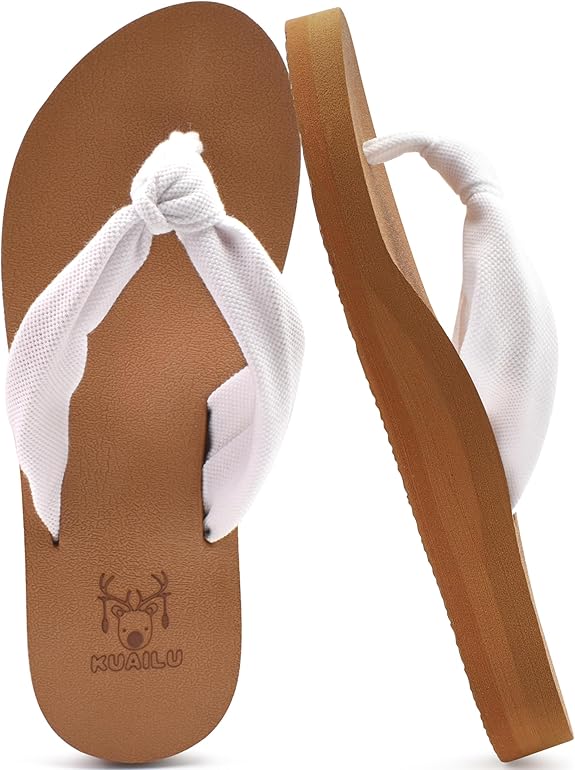
KuaiLu
Flip Flops with Arch Support
Cushioned, lightweight sandals with supportive arch design—a practical choice for beach trips, errands, and long summer walks.
Shop the sandals
baleaf
Athletic One-Piece Swimsuit
A functional one-piece with adjustable straps and moderate coverage, designed for swimming, training, surfing, and active beach days.
Shop the swimsuit
Astylish
Linen-Cotton Button-Down Shirt
A relaxed cotton-linen shirt with a collared V-neck and roll-up sleeves—easy to style over swimwear or with denim and shorts.
Shop the shirt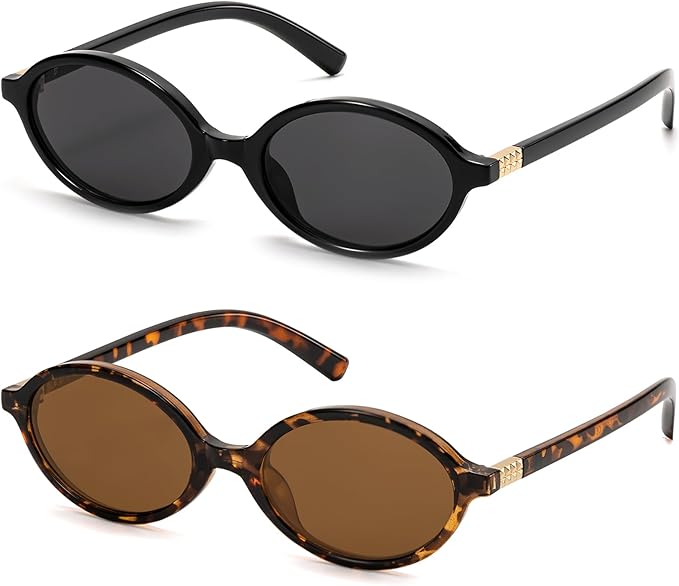
ViewJoy
Retro Oval Sunglasses
Small oval sunglasses with a 90s-inspired silhouette and UV400 lens protection—a quick way to add a vintage edge to everyday looks.
Shop the sunglasses
Affiliate disclosure: This section contains affiliate links. If you make a purchase through these links, I may earn a commission at no additional cost to you. Product selection, pricing, availability, and delivery terms may change—please review the current details on Amazon before purchasing.
As an Amazon Associate I earn from qualifying purchases.