College Student Outfits: Easy Looks for Every Campus Day

The best college student outfits do more than look good in a mirror. They need to survive a long walk between buildings, a two-hour lecture, a freezing library, a coffee run, and the possibility that your day will last much longer than planned. That is why the most reliable campus wardrobes are built around flexible pieces rather than a single aesthetic. You can have a preppy day, a sporty day, a minimal day, or a more expressive day without owning a completely different closet for each mood.
Think of getting dressed as a small decision system. Start with what your schedule requires, choose a comfortable base, add one useful layer, and finish with a shoe and bag that fit the route. Then add one personal detail, such as a color, texture, print, or favorite accessory. The result feels intentional without becoming overworked. Below, you will find practical principles and repeatable college student outfits for classes, studying, warm weather, cold weather, presentations, and the plans that happen after campus.
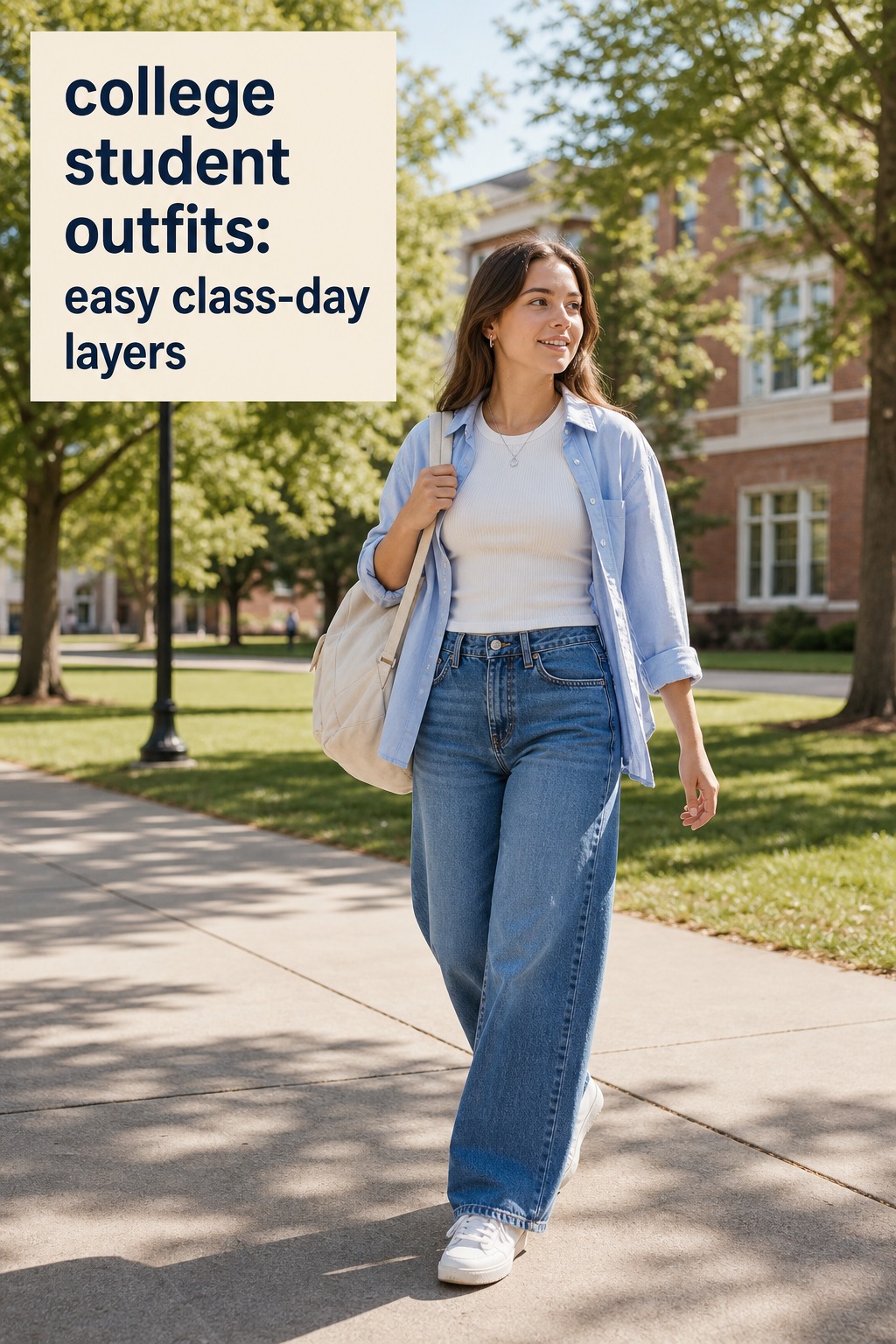
Build the college outfit around the day, not the aesthetic
Start with the schedule. A day with one lecture close to your dorm has different clothing needs from a day with four classes in buildings spread across campus. The first may allow a more delicate shoe or a less practical bag. The second calls for supportive footwear, a hands-free backpack, and layers that will not become annoying after the first hour. The outfit can still be stylish, but the logistics should decide the foundation.
The Fashion-Note Edit
Five effortless pieces to refresh your everyday wardrobe
A polished, practical edit for workdays, weekends, and everything in between.

The Drop
Women’s Blake Long Blazer
A longline, tailored blazer with a notched collar and a single-button closure—an easy layer for denim, dresses, or office-ready looks.
Shop the blazer
Amazon Essentials
Women’s Lightweight Crewneck
A soft, lightweight sweater with a clean crew neckline—the kind of reliable layer that works from cool mornings to air-conditioned spaces.
Shop the sweater
Amazon Essentials
Women’s Loafer Flat
A classic flat loafer that gives casual outfits a more polished finish and pairs naturally with tailored pants, skirts, and straight-leg jeans.
Shop the loafers
Levi’s
Women’s 501 90s Jeans
A relaxed, vintage-inspired take on the iconic 501 silhouette—made for an easy, lived-in look without the thrift-store search.
Shop the jeans
Colorfulkoala
High-Waisted 7/8 Leggings with Pockets
Soft, four-way-stretch leggings with side pockets and a high-rise waistband—designed for movement, errands, and off-duty comfort.
Shop the leggings
Affiliate disclosure: This section contains affiliate links. If you make a purchase through these links, I may earn a commission at no additional cost to you. Product selection, pricing, availability, and delivery terms may change—please review the current details on Amazon before purchasing.
As an Amazon Associate I earn from qualifying purchases.
Use a five-question check before you get dressed. How much will you walk? How long will you sit? Will you spend time outdoors? Do you need to carry a laptop, notebook, gym clothes, or lunch? Is there any part of the day that requires a sharper impression? These questions quickly separate a beautiful but fragile outfit from one that will actually support you. They also make shopping easier because you can identify the problem a new piece needs to solve.
Your wedding style is personal.
Your plan should feel that way, too.
Zarellea keeps your guest list, budget, vendors, and every next step beautifully organized — so you can focus on the moments that feel like you.
- Walking: Choose shoes that are already comfortable, with enough grip and support for your campus terrain.
- Sitting: Check that waistbands, skirts, and layers still feel comfortable after an hour in a chair.
- Temperature: Build in a removable layer for air-conditioning, shade, or a cool morning.
- Carrying: Match the bag to what you actually bring, not only to the outfit photograph.
- Schedule: Add one polished element if class leads to a meeting, event, internship, or dinner.
Comfort does not mean wearing whatever is closest to the bed. It means removing small sources of distraction. A waistband that digs in, shoes that rub, a shirt that needs constant tucking, or a jacket that slips off your shoulder can make a normal day feel harder. When the fit is dependable, you have more freedom to experiment with color and proportion.
Campus culture matters, but it is not a rulebook. Some schools lean casual, some are more polished, and some vary by major or social group. Observe what feels normal, then adapt it to your personality. If everyone wears athletic basics, you can add a structured tote and a cardigan. If the campus is dressier, relaxed jeans with a blazer and clean sneakers may give you the same ease with more polish. The goal is to look like yourself in the setting you are actually in.
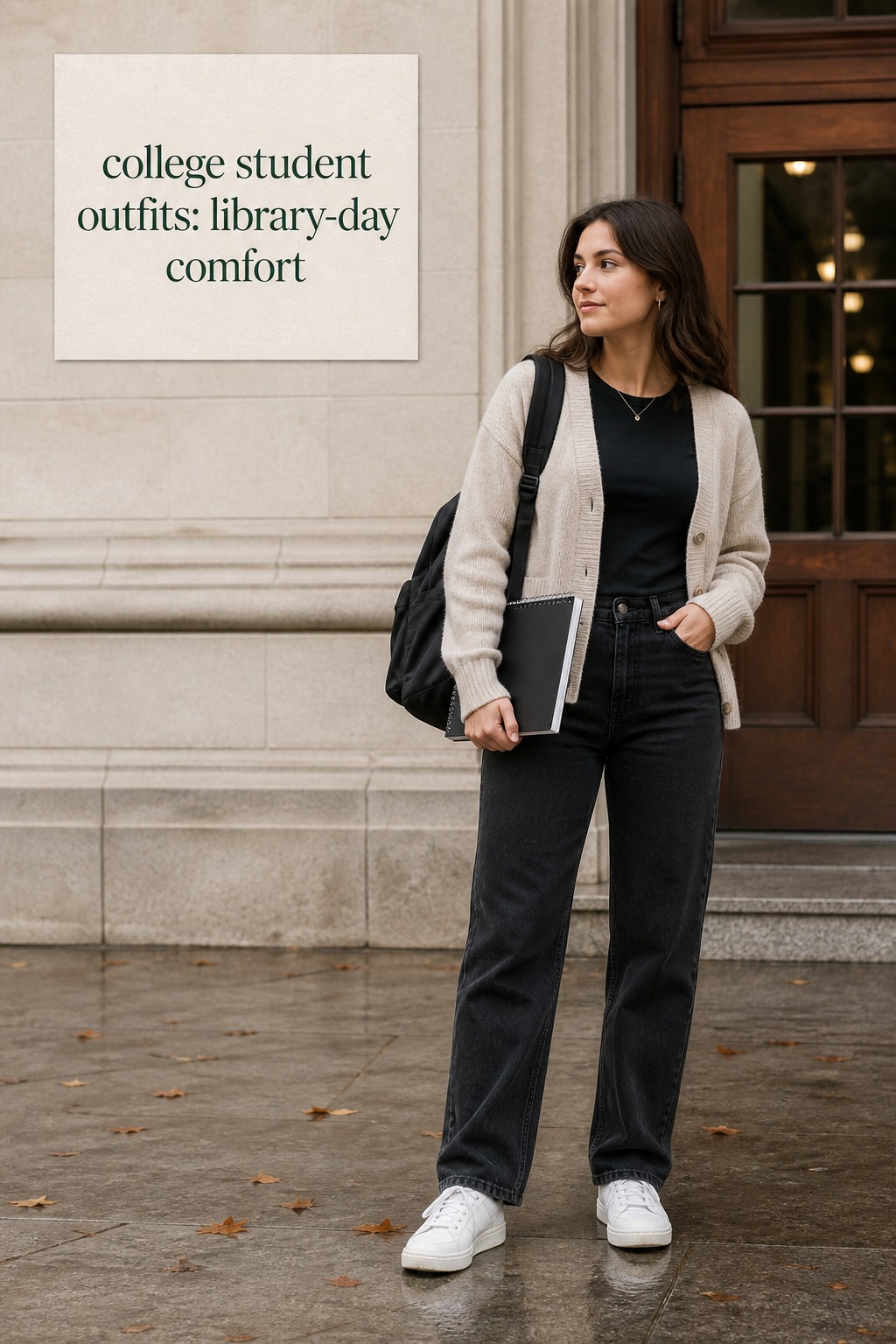
The small wardrobe system behind reliable college student outfits
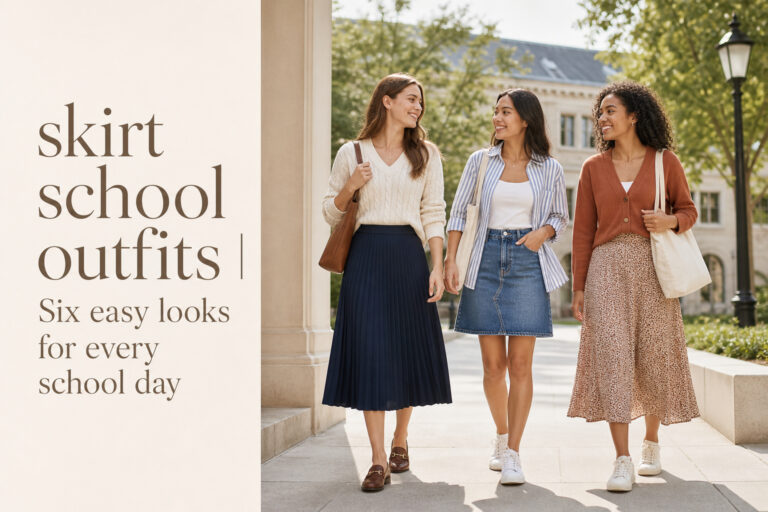
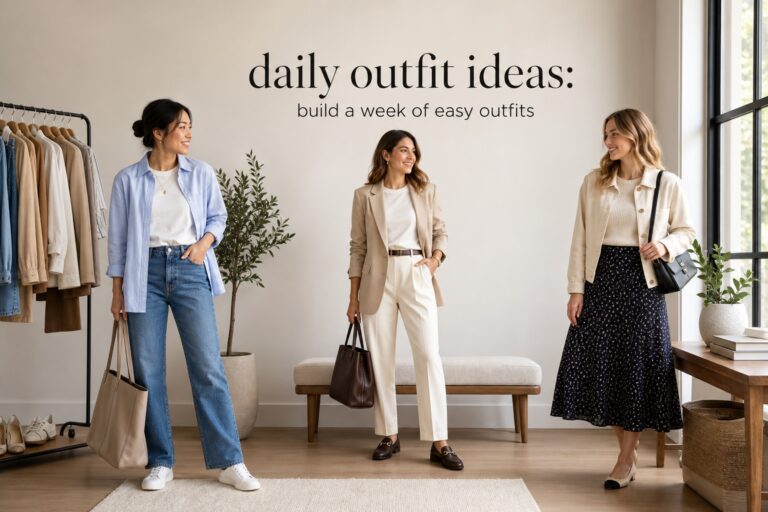
A useful college wardrobe does not need a magic number of pieces. It needs enough connection between pieces that you can get dressed when laundry is not perfectly timed. Begin with three outfit bases: a denim base, a soft or sporty base, and a slightly polished base. A denim base might be straight-leg or wide-leg jeans with a tee. A soft base could be joggers or relaxed trousers with a sweatshirt. A polished base could be tailored trousers or a midi skirt with a knit or button-down.
Next, choose layers that change the mood and manage temperature. A cardigan is useful for libraries and classrooms. A denim or utility jacket works over dresses, skirts, and trousers. A blazer can turn a tee and jeans into a presentation-friendly outfit. A lightweight overshirt is a strong option when you want structure without office-level formality. The best layers fit over more than one base and can be carried without becoming bulky.
Build the color palette before adding more trends. Three core colors plus neutrals are enough for many students. Navy, cream, denim, and a chosen accent can feel calm. Black, gray, white, and red can feel sharper. Brown, olive, ivory, and blue can feel softer. A palette does not mean every outfit must match. It simply makes it easier to combine pieces when you are tired or in a hurry.
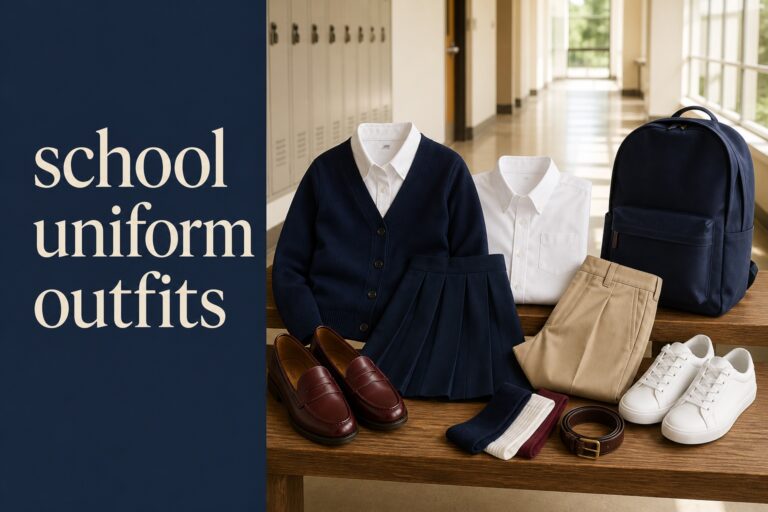
Shoes should cover the actual campus week. Start with a supportive everyday sneaker. Add a second shoe with a different visual effect, such as a loafer, ballet flat, Mary Jane, or clean boot. If your climate is wet or snowy, prioritize weather resistance before adding a third fashion shoe. A comfortable shoe that works with jeans, skirts, dresses, and trousers will earn more wear than a dramatic pair that only works for photos.
Bags are part of the outfit system too. A backpack is usually the practical choice for long walking days or heavy laptop loads. A tote can work for lighter days, a coffee shop, or a short library session. A small crossbody is useful when you want your hands free at an event. Choose bags that fit your routine and keep the contents organized. A stylish bag that cannot hold what you need is not a successful college accessory.
- Two or three dependable bottoms in different silhouettes.
- Simple tees, tanks, and one or two shirts that can layer.
- One cardigan, one casual jacket, and one more polished layer.
- One dress or skirt that can move between casual and dressier plans.
- Supportive sneakers plus one alternate shoe for variety.
- A backpack or tote that matches your school-day carrying needs.
- One personality piece, such as a bright knit, printed scarf, statement belt, or unusual jewelry.
Use the three-outfit test before buying anything new. Can the piece work with your denim base, your soft base, and your polished base? Can you wear it in at least two temperatures? Can it go through your normal laundry routine? If the answer is no to all three, it may be a special item rather than a wardrobe builder. Special items are fine, but they should be chosen deliberately rather than mistaken for essentials.
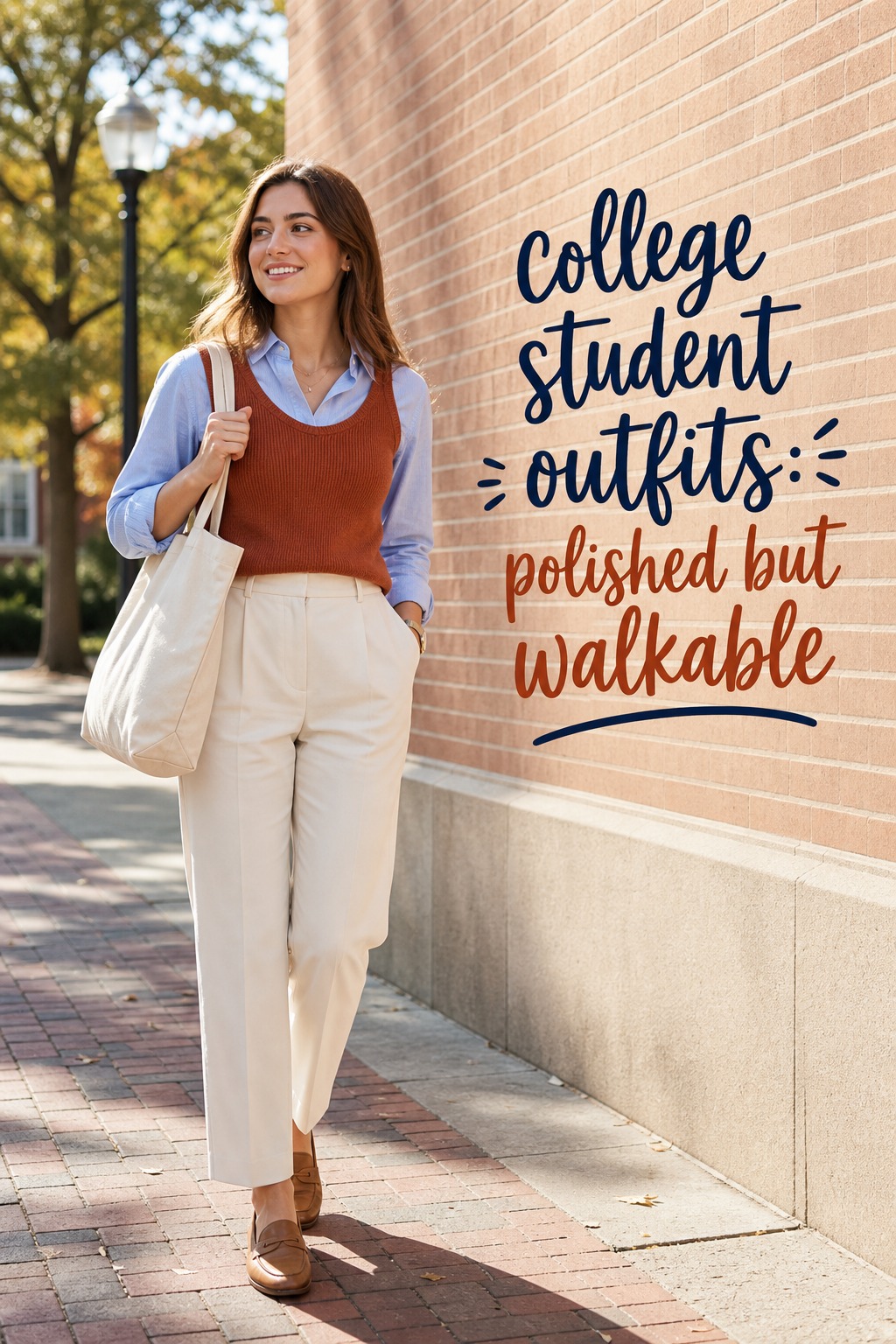
Step-by-step college student outfit formulas
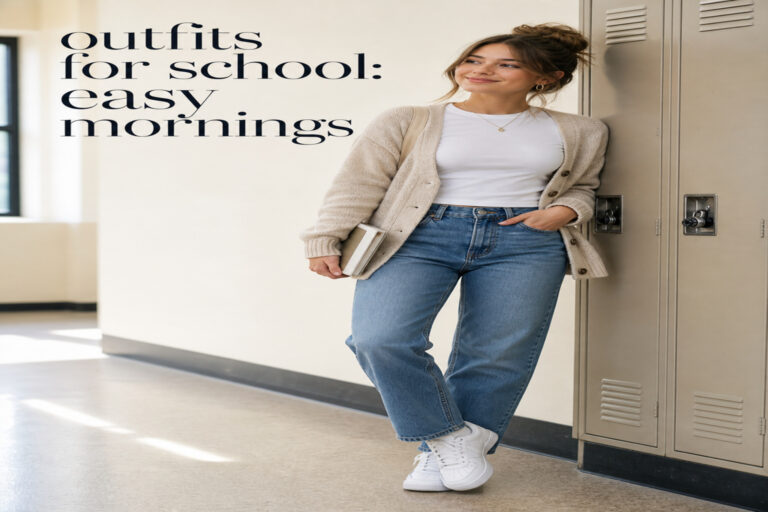
For a full class day: Start with wide-leg or straight-leg jeans, a fitted tee or tank, and an open button-down. Add supportive sneakers and a backpack. The fitted base gives definition while the open shirt adds coverage and an easy temperature adjustment. For a cooler day, swap the shirt for a cardigan or add a light jacket. A small hoop, belt, or colorful sock can make the formula feel personal.
For a library-heavy day: Choose soft trousers, a breathable tee, and a cardigan that will not itch or feel too tight when you sit. Finish with sneakers or comfortable loafers and a tote if you are carrying fewer items. Keep the outfit visually clean so the pieces do not need constant adjusting. If you tend to get cold while studying, choose two light layers instead of one heavy sweater that becomes uncomfortable when you leave.
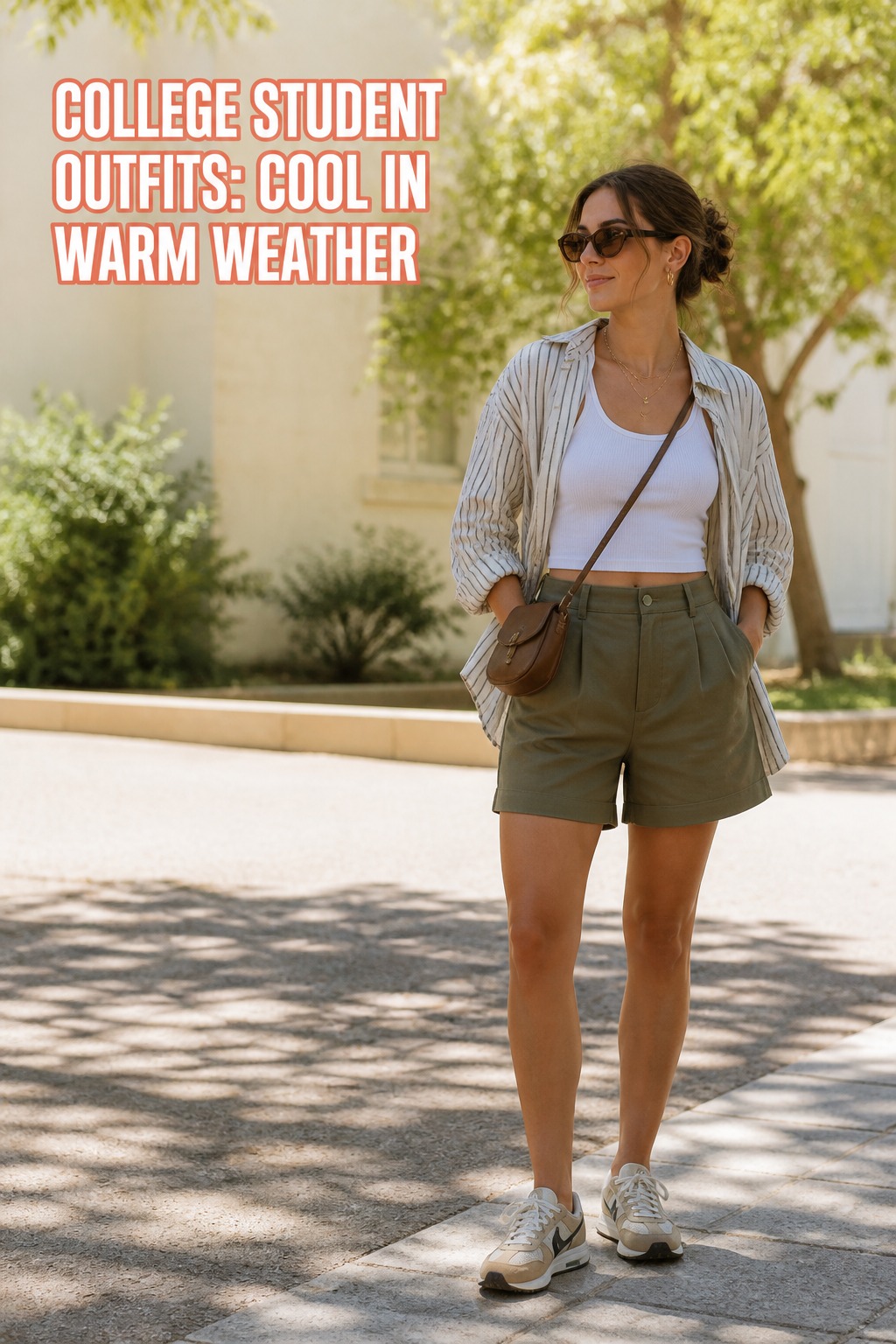
For a warm campus day: Try tailored shorts or a breathable skirt with a tank and an unbuttoned shirt. Flat sandals can work for short distances, but sneakers are better when you will cross a large campus. Keep a cardigan or thin overshirt in your bag for cold classrooms. Light colors, cotton, linen blends, and easy-care fabrics help the outfit feel fresh without requiring delicate maintenance.
For a first cold morning: Pair straight jeans or a midi skirt with a long-sleeve tee, a knit layer, and a weather-ready jacket. Add socks and shoes that can handle wet sidewalks. A beanie, scarf, or textured bag can supply personality without making the whole outfit bulky. If the afternoon warms up, the knit should be easy to remove or tie around your shoulders.
For a sporty day: Combine a clean sweatshirt or quarter-zip with leggings, relaxed joggers, or a skort. Add a structured layer, such as a denim jacket, cropped bomber, or neat overshirt, if the outfit feels too close to gym clothes. Coordinated colors and one intentional accessory, such as a cap, hair clip, or small crossbody, make the look feel finished. This formula works well for early classes, club activities, and days with a lot of movement.
For a presentation or campus event: Use one polished piece as the anchor. Tailored trousers with a tee and blazer are easy. A midi skirt with a fine knit also works. A simple dress with a cardigan or structured jacket creates a complete outfit with very little planning. Choose shoes you can walk in and a bag that holds what you need. Professional does not have to mean stiff, especially when the day includes stairs, outdoor paths, and informal conversations.
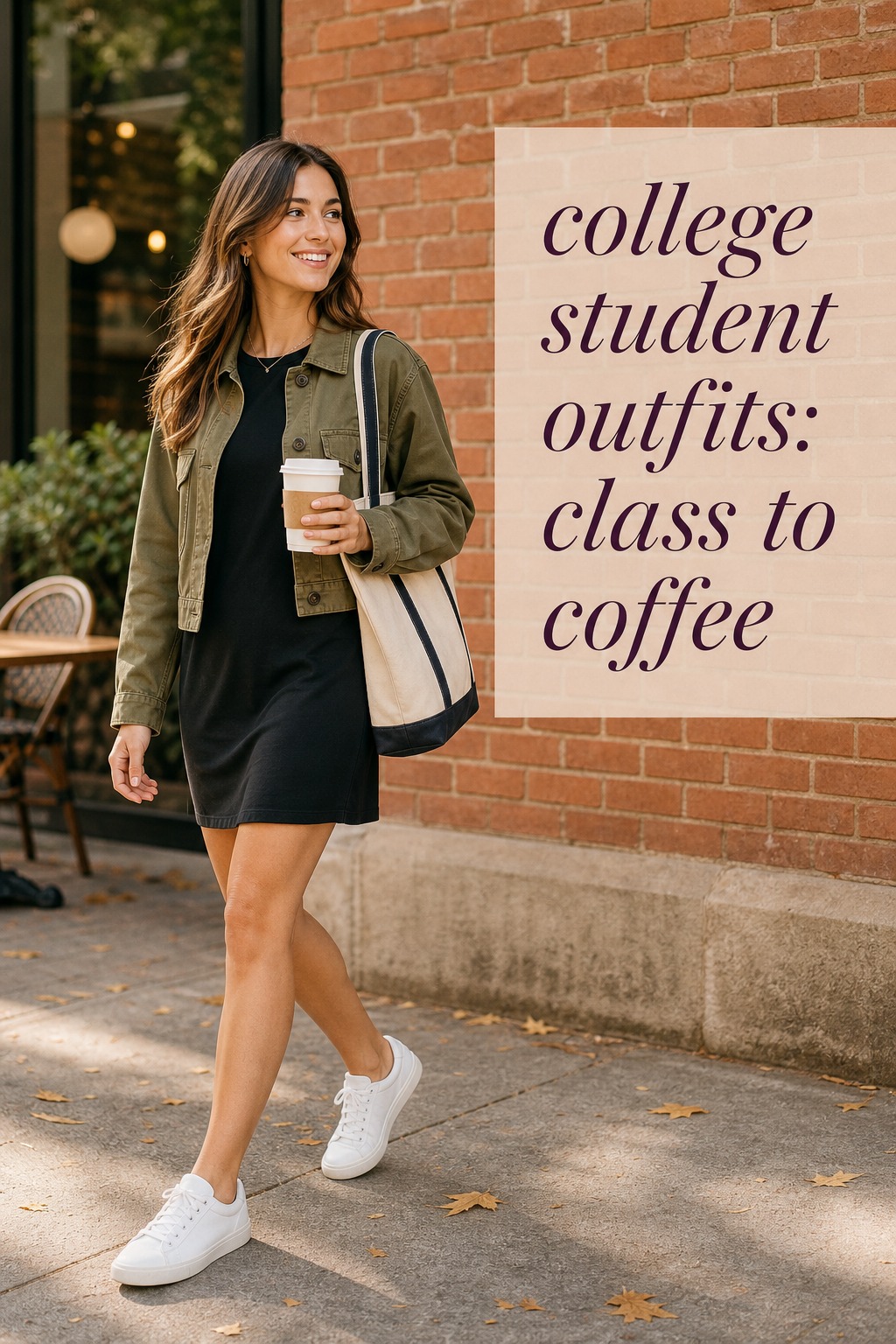
For class to coffee or dinner: Begin with a dependable base, then add a visible detail that can carry into the evening. A fitted top under a blazer, a colorful cardigan with jeans, or a slip dress under a denim jacket can shift easily from day to night. Trade a backpack for a smaller crossbody only if you no longer need your laptop. Otherwise, let accessories do the work: earrings, a belt, a bold lip color, or a more polished shoe.
For a low-energy morning: Use a matching knit set, a neutral sweatshirt with straight-leg jeans, or a T-shirt dress with sneakers. The key is coordination. A similar color story makes a quick outfit look intentional. Add a clean layer and a practical bag, then take one minute to check the shoes, lint, and proportions. A low-effort outfit does not need to look careless.
These formulas are starting points, not rules. Change the silhouettes to suit your preferences. If you do not like wide-leg pants, use a straight or relaxed cut. If you prefer skirts, make the skirt your base and borrow the same layers. If you dress modestly, use longer hems, higher necklines, and lightweight layers. If you like bold style, keep the practical structure and add the statement through color, print, jewelry, or shoes.
Make the rotation personal and easy to repeat
Repeating clothes is normal college life, and it becomes much easier when you repeat formulas rather than exact outfits. Wear the same jeans with a cardigan one day, a striped tee another day, and a blazer later in the week. Change the shoe or bag when the weather and schedule allow. The pieces stay familiar, but the proportion and finishing detail change the impression.
Plan three outfits at the beginning of the week, not seven rigid looks. Pick one class outfit, one comfortable study outfit, and one polished or social outfit. Then leave space for weather and laundry. This gives you a reliable starting point without turning clothing into another assignment. If you know you have a presentation or long campus day, solve that outfit first and let the rest of the week stay flexible.
Use proportion to update basics. A loose bottom often works well with a closer-fitting top or shorter jacket. A voluminous sweatshirt can balance a straighter bottom or a fitted skirt. A long dress may benefit from a cropped jacket or a defined bag. You do not need a new trend every semester if you understand how the shapes in your closet relate to one another.
Use accessories as low-cost style switches. A belt can define jeans or a dress. A scarf can add color to a neutral base. A hair accessory can make a sweatshirt feel more deliberate. Jewelry can move an outfit from gym-adjacent to campus-ready. A bag can signal sporty, academic, minimal, or playful without requiring a complete change of clothes.
Care is part of styling. Clean sneakers, a lint-free sweater, a wrinkle-free shirt, and a bag with a working zipper can make affordable pieces look more considered. Keep a small campus kit with stain remover, bandages, a hair tie, and a safety pin. Wash according to the care label and choose easy-care fabrics when you know your schedule is busy. The most stylish outfit is difficult to enjoy if it requires maintenance you cannot realistically provide.
Finally, let your wardrobe reflect your life rather than a social media fantasy. You may have a campus with hills, a commuter schedule, a lab requirement, a part-time job, or a climate that changes quickly. Those facts should influence your clothes. Start with comfort and function, then add the visual language that feels right to you. That is how college student outfits become repeatable, expressive, and genuinely useful.
FAQ
What should I wear to college class?
Choose a comfortable base, such as jeans and a tee, relaxed trousers and a knit, or a skirt with a simple top. Add a removable layer and shoes that can handle your campus walking distance. One polished detail, such as a clean sneaker, belt, cardigan, or structured bag, makes the outfit feel intentional.
What shoes are best for college student outfits?
Supportive sneakers are the most versatile starting point, especially on a large campus. Loafers, ballet flats, Mary Janes, and low boots can add variety if they are comfortable and secure. Break in new shoes before a long class day and choose weather-ready footwear when your campus has wet, icy, or uneven paths.
How many clothes do I need for college?
There is no perfect number. Start with enough versatile tops, bottoms, layers, shoes, and bags to cover your laundry schedule and activities. A smaller wardrobe works well when the colors coordinate and each major piece creates at least three outfits. Add special or trend-led items only after your everyday needs are covered.
How do I dress for hot weather and cold classrooms?
Wear a breathable base, such as a tank, tee, light dress, or skirt, and carry a cardigan, overshirt, or thin jacket. Removable layers are easier than one heavy piece because you can adjust between outdoor heat and indoor air-conditioning. Choose layers that fold easily and do not make your bag uncomfortably full.
What is a good college presentation outfit?
Try tailored trousers with a simple top and blazer, a midi skirt with a fine knit, or a clean dress with a structured cardigan or jacket. Keep the colors coordinated and the shoes walkable. The best presentation outfit lets you focus on speaking instead of adjusting clothing or worrying about discomfort.
Can I repeat college student outfits during the week?
Yes. Repeat key pieces and change the styling around them. Wear jeans with a tee, then a cardigan, then a blazer. Change the shoe, bag, accessory, or layer when appropriate. Repeating a reliable formula is practical and makes it easier to build a wardrobe that earns regular wear.
How can I make college outfits feel more personal?
Choose one consistent style signal, such as a favorite color, vintage jewelry, sporty sneakers, printed bags, textured knits, or a preference for polished tailoring. Add that detail to simple bases. Personal style becomes clearer when you repeat the details you genuinely enjoy instead of copying a complete aesthetic from someone else.
Finish the look
The little extras that make a summer outfit feel complete
From beach days to city weekends, these easy pieces bring comfort, texture, and a polished finishing touch.

FENBEN
Straw Hobo Crossbody Bag
A handwoven straw bag with both short and crossbody straps—an effortless finishing touch for vacation looks and warm-weather outfits.
Shop the bag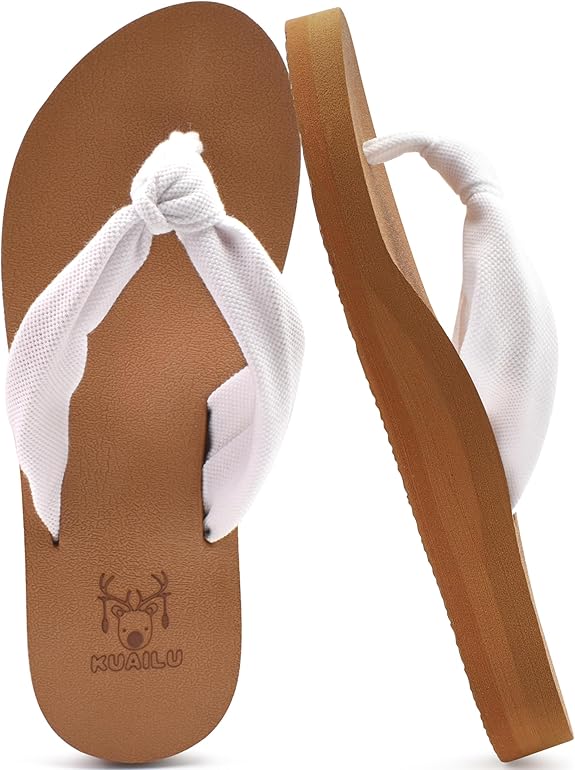
KuaiLu
Flip Flops with Arch Support
Cushioned, lightweight sandals with supportive arch design—a practical choice for beach trips, errands, and long summer walks.
Shop the sandals
baleaf
Athletic One-Piece Swimsuit
A functional one-piece with adjustable straps and moderate coverage, designed for swimming, training, surfing, and active beach days.
Shop the swimsuit
Astylish
Linen-Cotton Button-Down Shirt
A relaxed cotton-linen shirt with a collared V-neck and roll-up sleeves—easy to style over swimwear or with denim and shorts.
Shop the shirt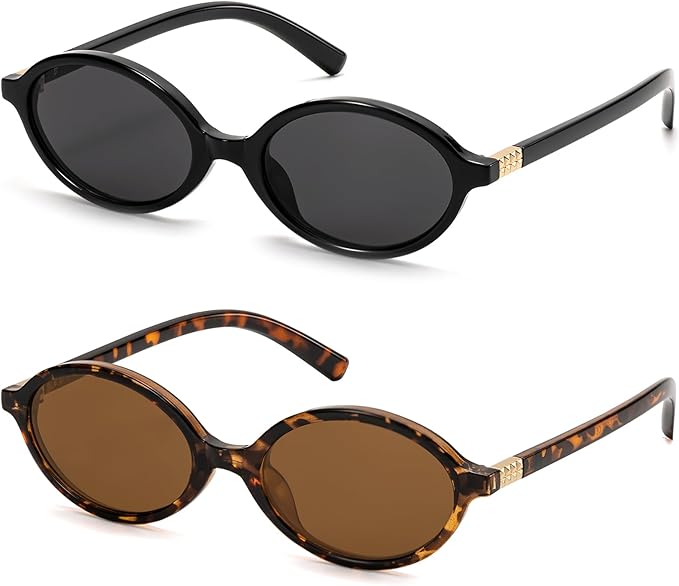
ViewJoy
Retro Oval Sunglasses
Small oval sunglasses with a 90s-inspired silhouette and UV400 lens protection—a quick way to add a vintage edge to everyday looks.
Shop the sunglasses
Affiliate disclosure: This section contains affiliate links. If you make a purchase through these links, I may earn a commission at no additional cost to you. Product selection, pricing, availability, and delivery terms may change—please review the current details on Amazon before purchasing.
As an Amazon Associate I earn from qualifying purchases.