First Day of School Outfits: A Stress-Free Checklist
The first day of school outfit has a demanding job. It should feel like you, look intentional in photos, follow the dress code, survive hours of walking and sitting, and work with weather that may change between the morning bus ride and the afternoon trip home. The answer is not buying an entirely new wardrobe. It is using a short checklist to make one familiar formula feel fresh and reliable.
This playbook helps you plan first day of school outfits for middle school, high school, or a casual college campus. Start with practical constraints, choose one outfit anchor, add a layer and comfortable shoes, then test the look before the night before. The result should feel easy enough to wear again, because the best first-day outfit is one you can actually move in and enjoy.
1. Preparation: Define the Real Constraints
Before looking for inspiration, define what the outfit must do. A school day is different from a party, photo shoot, or short coffee run. You may cross a large campus, sit in a cold classroom, carry a backpack, climb stairs, eat lunch outside, or move directly from class to practice. An outfit that looks perfect for ten minutes can become irritating after six hours if the waistband pinches, shoes rub, or the top needs constant adjusting.
The Fashion-Note Edit
Five effortless pieces to refresh your everyday wardrobe
A polished, practical edit for workdays, weekends, and everything in between.

The Drop
Women’s Blake Long Blazer
A longline, tailored blazer with a notched collar and a single-button closure—an easy layer for denim, dresses, or office-ready looks.
Shop the blazer
Amazon Essentials
Women’s Lightweight Crewneck
A soft, lightweight sweater with a clean crew neckline—the kind of reliable layer that works from cool mornings to air-conditioned spaces.
Shop the sweater
Amazon Essentials
Women’s Loafer Flat
A classic flat loafer that gives casual outfits a more polished finish and pairs naturally with tailored pants, skirts, and straight-leg jeans.
Shop the loafers
Levi’s
Women’s 501 90s Jeans
A relaxed, vintage-inspired take on the iconic 501 silhouette—made for an easy, lived-in look without the thrift-store search.
Shop the jeans
Colorfulkoala
High-Waisted 7/8 Leggings with Pockets
Soft, four-way-stretch leggings with side pockets and a high-rise waistband—designed for movement, errands, and off-duty comfort.
Shop the leggings
Affiliate disclosure: This section contains affiliate links. If you make a purchase through these links, I may earn a commission at no additional cost to you. Product selection, pricing, availability, and delivery terms may change—please review the current details on Amazon before purchasing.
As an Amazon Associate I earn from qualifying purchases.
Check the forecast and the building temperature
Look at the morning temperature, afternoon temperature, rain chance, wind, and your commute. Warm August mornings can still lead to aggressively air-conditioned classrooms. A light button-down, cardigan, zip hoodie, or thin overshirt is often more useful than a heavy statement jacket. If rain is possible, choose shoes that can handle wet sidewalks and a bag with a secure closure. If the day will be hot, select breathable cotton, linen blends, jersey, or lightweight denim.
Your wedding style is personal.
Your plan should feel that way, too.
Zarellea keeps your guest list, budget, vendors, and every next step beautifully organized — so you can focus on the moments that feel like you.
Read the dress code as a styling brief
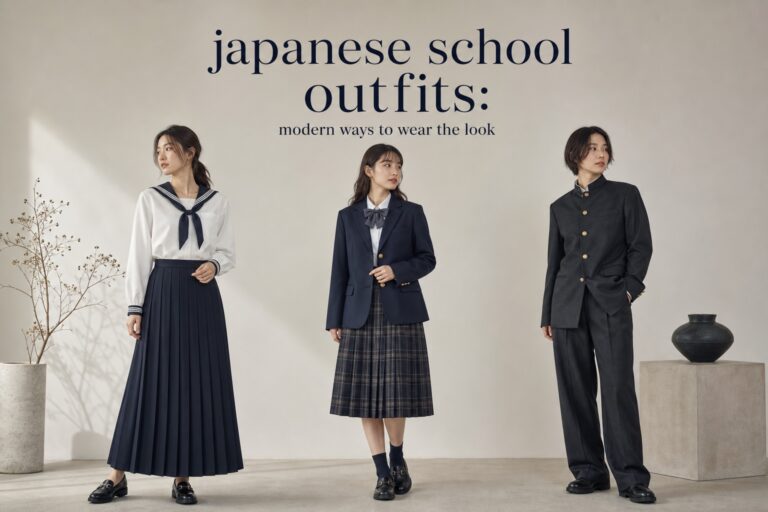
Dress codes vary widely, so check the actual rules before planning. Pay attention to shoulder coverage, hem lengths, exposed midriff, graphics, hats, footwear, and whether ripped denim is allowed. Treat the rules as boundaries rather than a reason to lose your personality. A colorful bag, patterned sock, hair ribbon, vintage watch, layered necklace, or favorite sneaker can make a conservative base feel personal. When a rule is unclear, prepare a simple substitute.
Choose the one piece that makes you feel like yourself
Pick one anchor first. It could be wide-leg jeans, a pleated skirt, soft knit polo, graphic tee, jersey dress, matching athletic set, or favorite color. Build around it with simple pieces you already trust. This keeps the outfit from becoming a costume assembled from too many new trends. If you want an expressive look, let the anchor provide the statement and keep the rest balanced.
- Forecast: What will you need from morning through afternoon?
- Schedule: Will you walk, sit, practice, present, or carry equipment?
- Dress code: Which pieces need a quick substitute?
- Comfort: Can you wear the outfit for eight hours?
- Personality: What color, texture, or accessory makes it yours?
- Repeat wear: Can each main piece work in at least two other outfits?
2. Decision Checklist: Build the Outfit in Three Parts
Use a three-part formula: base, layer, and finishing detail. The base is the main top and bottom or a one-piece outfit. The layer handles temperature and creates visual depth. The finishing detail can be footwear, jewelry, a belt, hair accessory, or bag. This formula works across personal aesthetics because it gives the outfit structure without requiring a large closet.
Build from a dependable base
Jeans are dependable because they pair with almost every school-ready top, but they are not the only option. Try straight-leg jeans with a fitted tee, barrel jeans with a ribbed top, or relaxed denim with a slim cardigan. For warmer weather, a knee-length short, cotton skirt, or pull-on trouser can be practical. If you prefer a dress, choose one with enough room for a backpack and a length that lets you sit comfortably without constant checking.
Add one intentional layer
A layer solves both comfort and styling problems. An oversized button-down adds a crisp contrast to leggings or a tank. A cardigan softens jeans and a tee. A varsity jacket creates a sporty-preppy effect over a dress or skirt. A utility jacket gives a simple outfit more shape. Choose a layer you can remove easily and carry without annoyance. It should fit over backpack straps or sit comfortably under them.
Make the shoes pass the full-day test
New shoes are a risky choice on the first day. If you want to wear a new pair, break them in for short periods first and add socks that prevent rubbing. Retro sneakers, clean canvas sneakers, loafers, Mary Janes, and supportive flats can work when they match your walking needs. Avoid footwear that slips, pinches, or requires a delicate stride. You want to remember your first day for conversations, not for a blister.
Keep the accessories useful
Accessories should finish the look, not create extra maintenance. A small crossbody, canvas tote, or structured backpack can hold essentials. Add a belt if the outfit needs a clear waist, or choose colorful socks, small hoops, a pendant, or a hair clip if the base feels plain. Keep anything noisy, fragile, or oversized out of the plan if it will interfere with desks, lockers, sports, or crowded hallways.
3. Worked Formulas for First Day of School Outfits
Use these formulas as starting points rather than strict costumes. Each has a practical reason to work, a way to personalize it, and a quick adjustment for weather or school rules. The goal is to make a decision quickly when your closet feels full but nothing seems right.
The polished denim formula
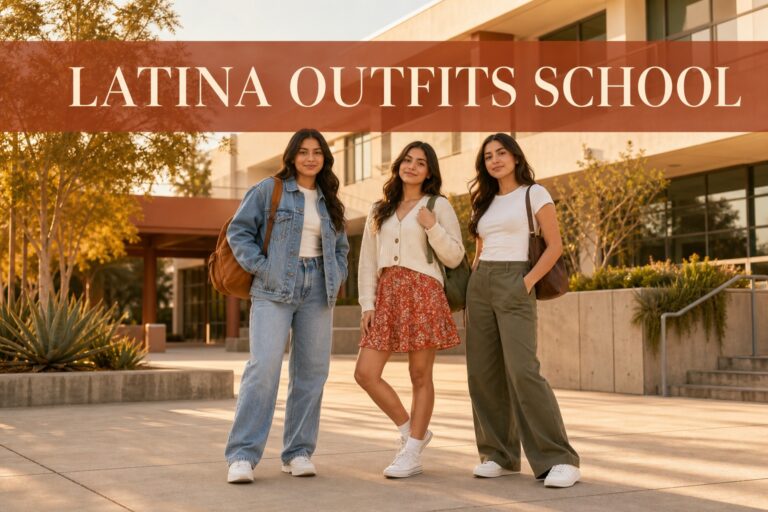
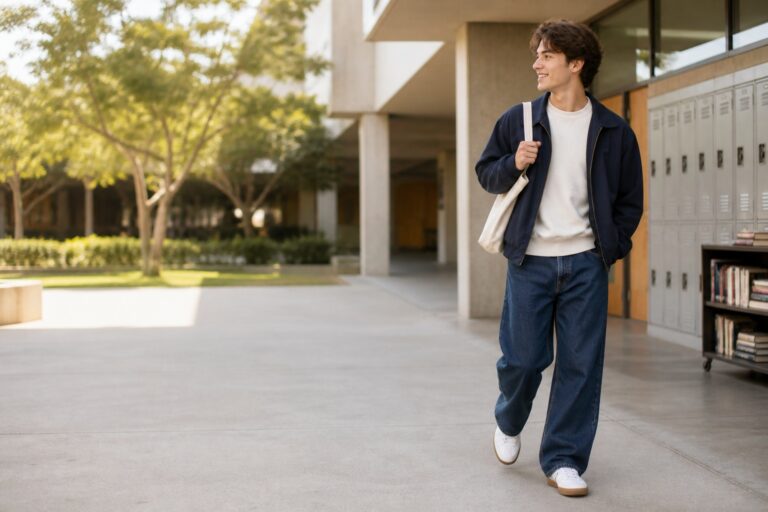
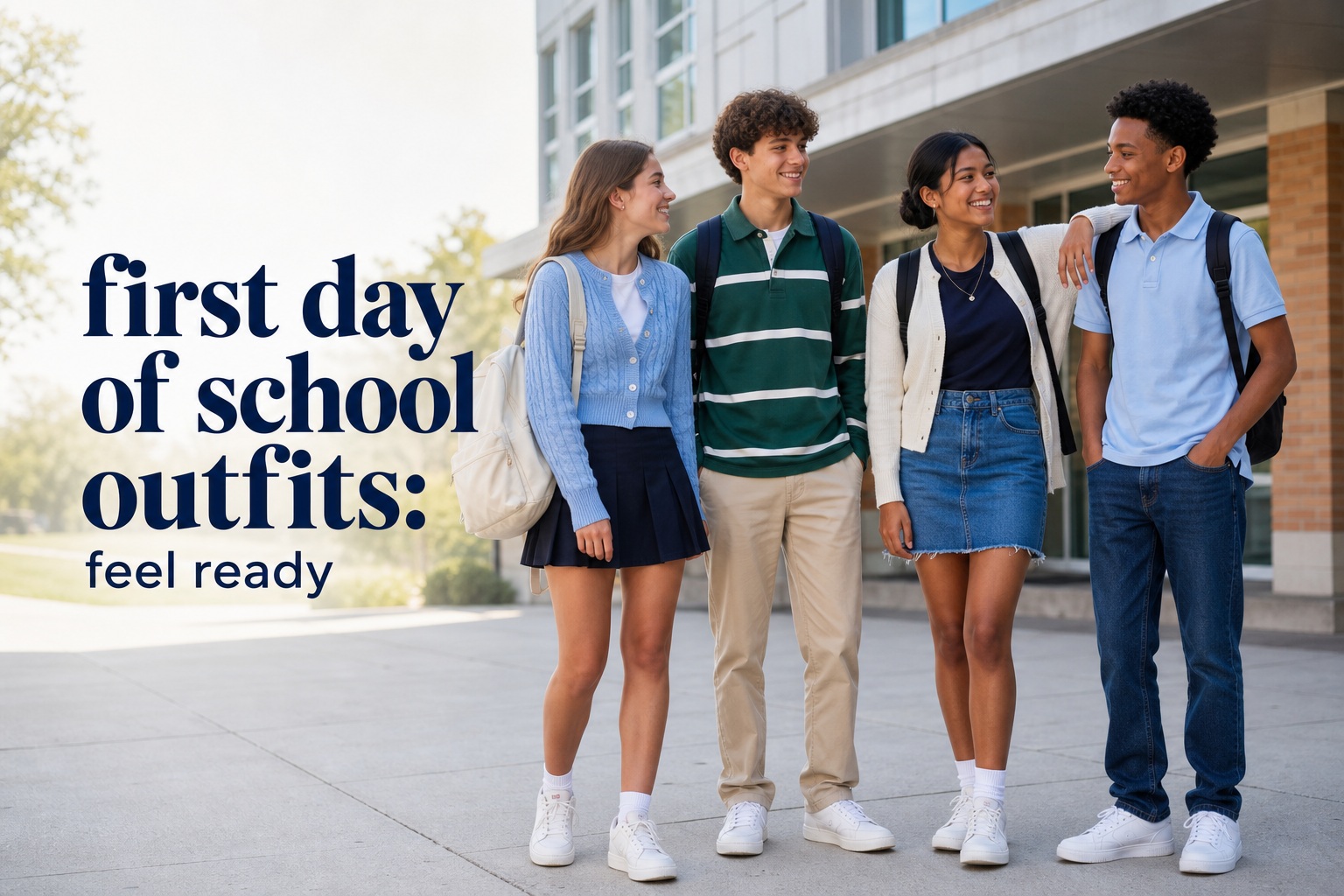
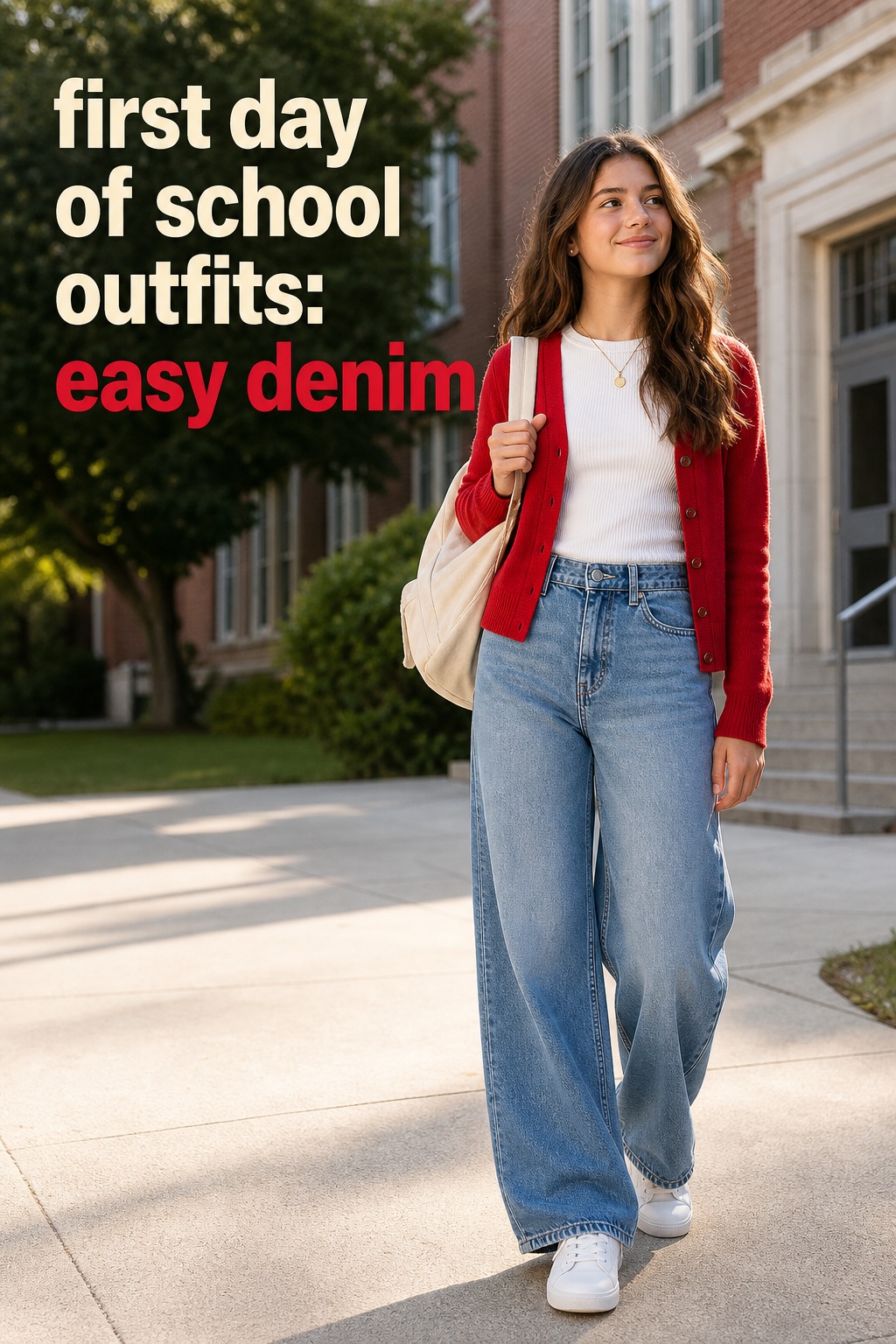
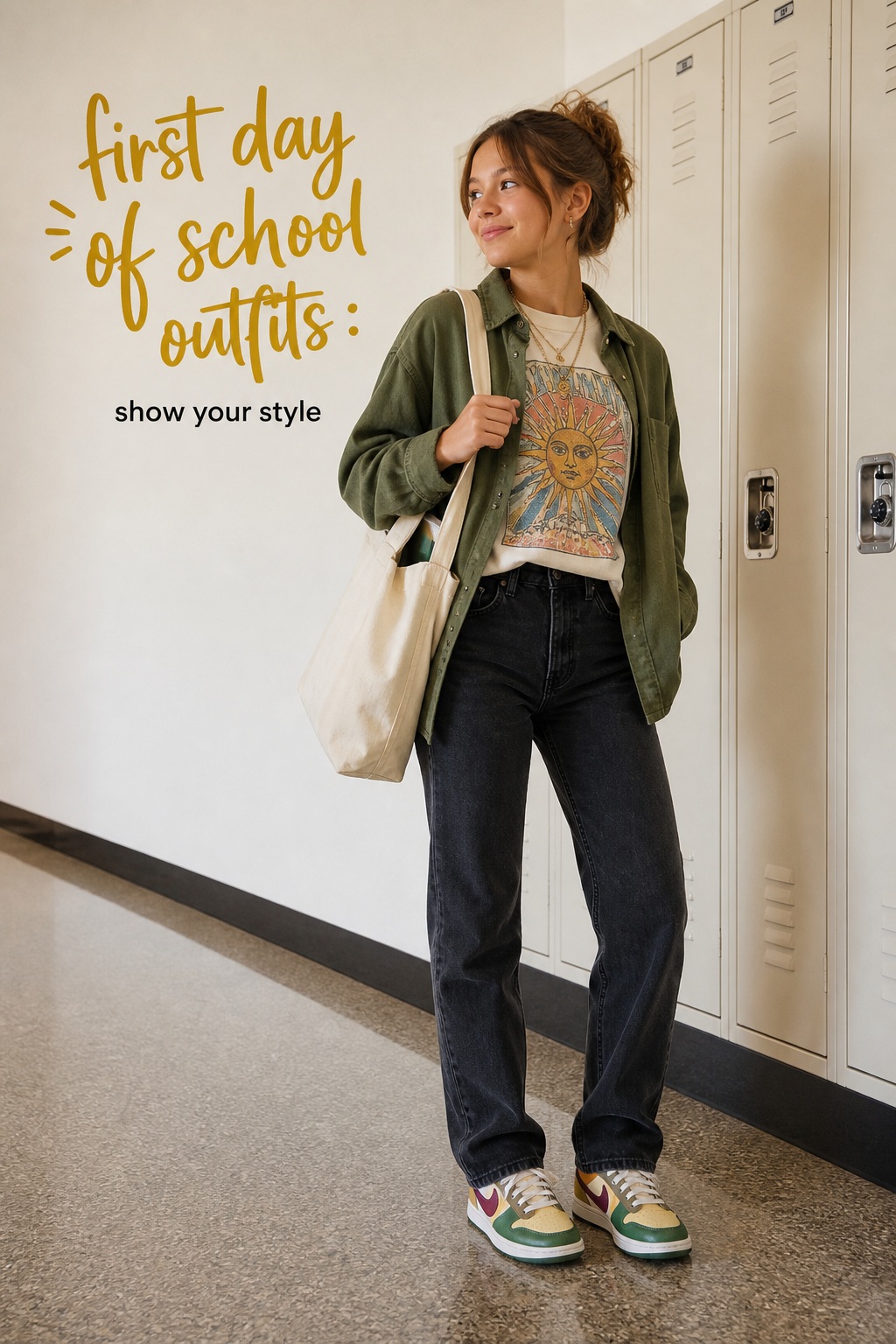
Pair straight or wide-leg jeans with a fitted tee, knit polo, or crisp button-down. Add low-profile sneakers and a cardigan or denim jacket. This is a strong choice when you want to look put together without feeling overdressed. Use a bright top, patterned bag, or colorful sneaker for personality. For a stricter dress code, choose a full-length top and dark, clean denim. For a warm day, roll the sleeves and use a lightweight cotton shirt as the layer.
The skirt and sweater formula
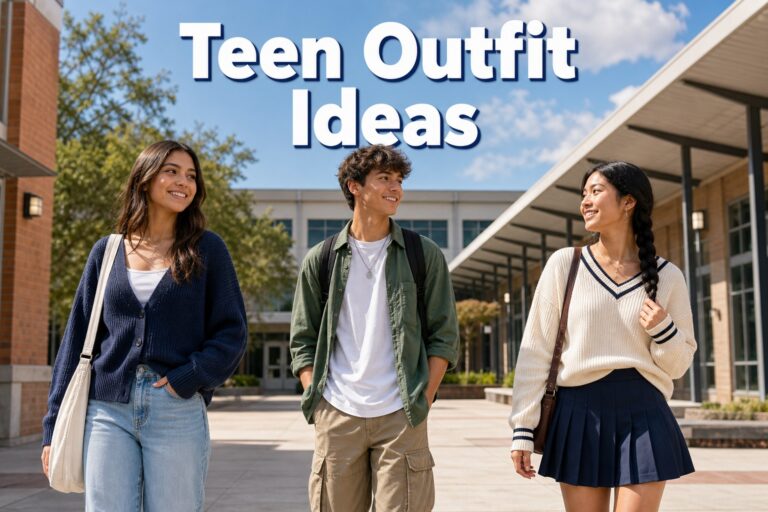
Start with a pleated, denim, or A-line skirt and add a fitted tee or lightweight sweater. Sneakers keep it relaxed, while loafers or Mary Janes make it preppy. If you feel exposed or spend time outside, add bike shorts underneath and a roomy cardigan on top. Keep proportions balanced: a fuller skirt works with a closer top, while a straight skirt can handle a slightly oversized sweater.
The one-piece comfort formula
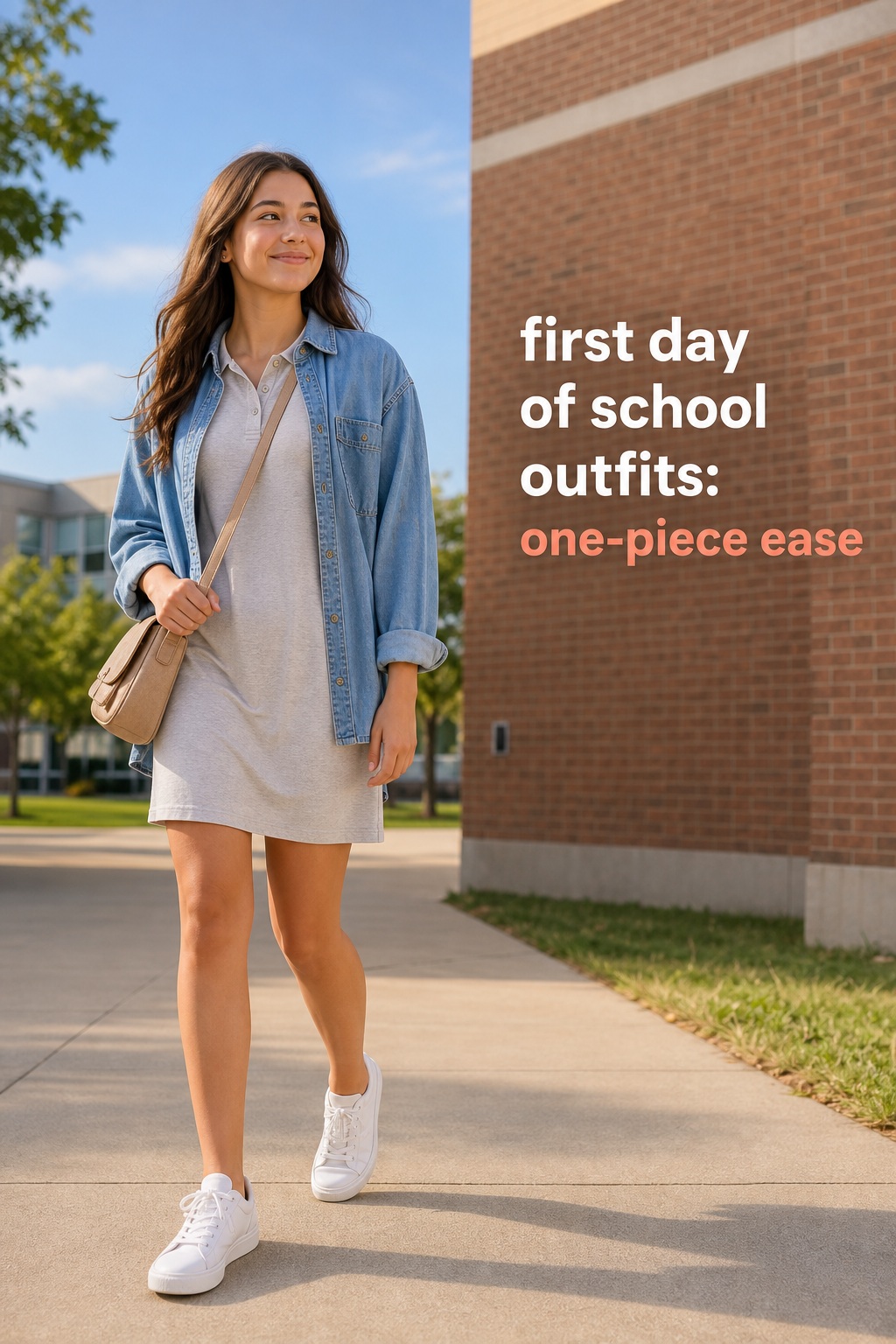
A casual jersey dress or polo dress can make getting ready easy. Add sneakers, a belt bag or backpack, and an open overshirt. This works when the morning is warm but classrooms are cool. Choose a fabric that is not sheer and a length that lets you sit, walk, and climb stairs without fuss. For more layering, wear a fitted tee underneath a sleeveless dress or add a cropped cardigan.
The athletic-inspired formula
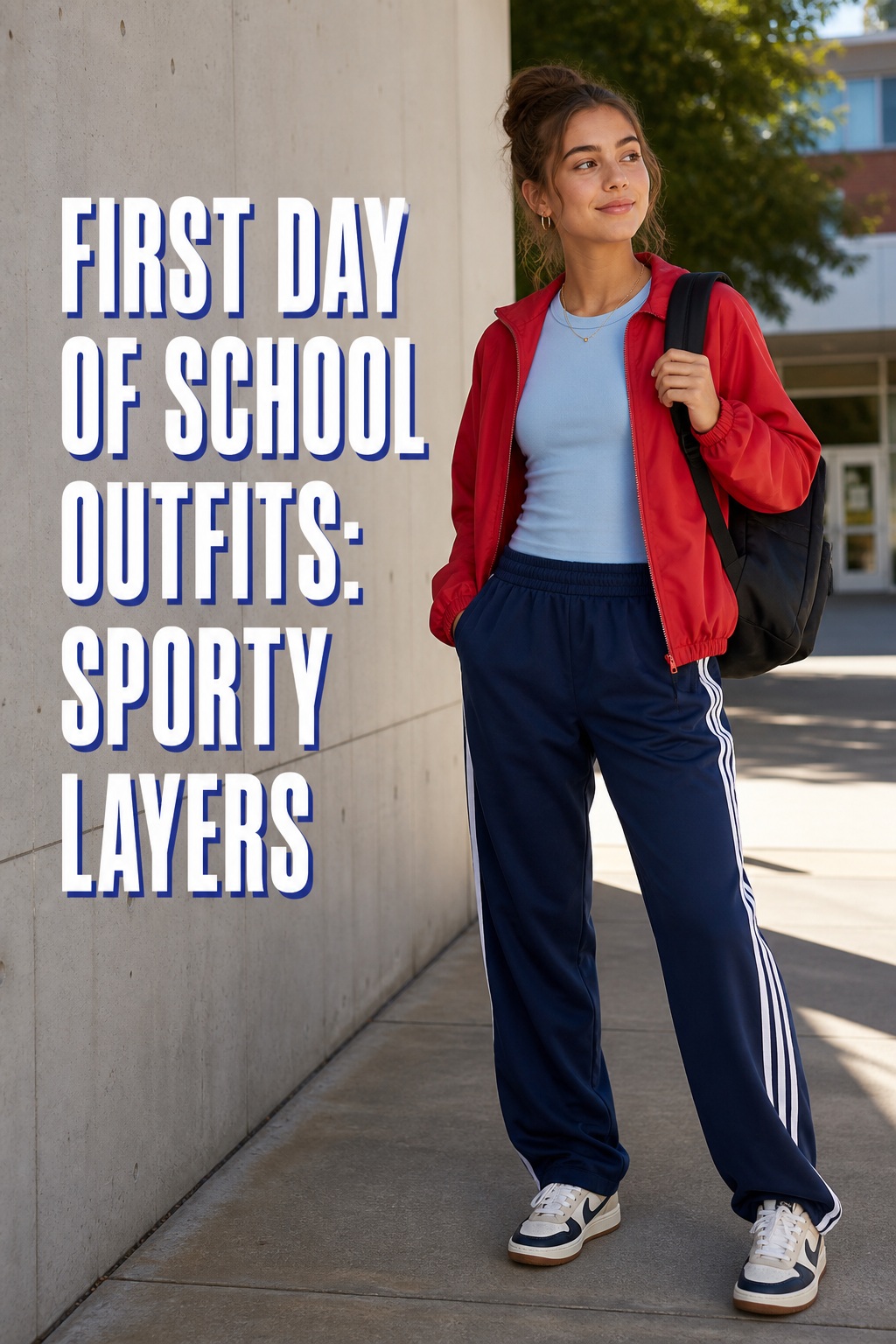
Combine track pants, polished leggings, a skort, or tailored joggers with a fitted tank or clean tee. Add an oversized button-down, bomber, or lightweight windbreaker and finish with supportive sneakers. This formula helps with long walks and busy schedules, but it should look intentional rather than like sleepwear. Use one structured piece, such as a crisp shirt, clean bag, or neat jacket, to define the soft pieces.
The soft preppy formula
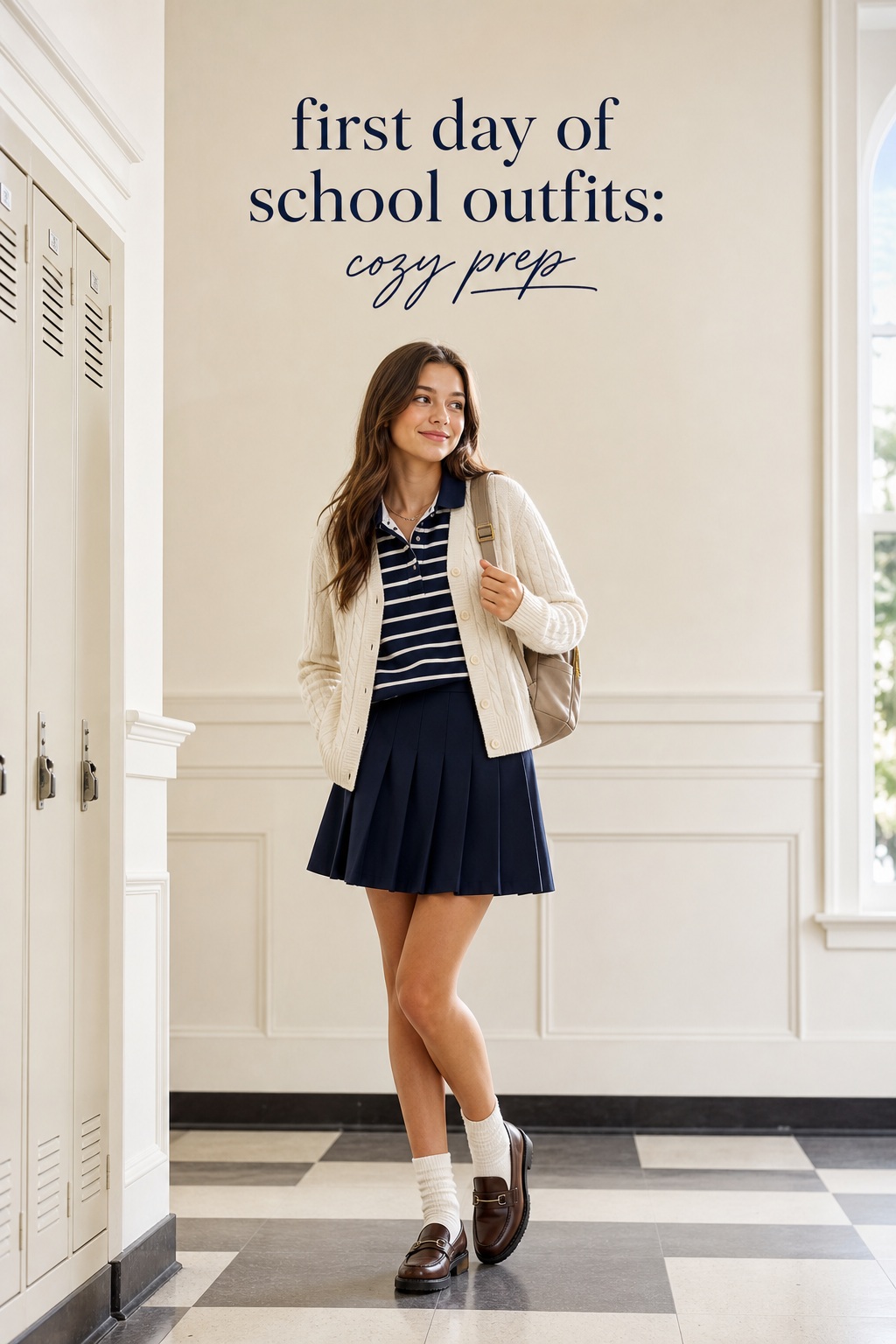
Try chinos, pleated trousers, a tennis skirt, or dark jeans with a striped tee, cable-knit sweater, cardigan, or rugby shirt. Add loafers, canvas sneakers, or Mary Janes and a simple tote. The look feels classic without needing a full uniform. Change the color story to make it personal: navy and cream feel calm, red and denim feel energetic, while chocolate brown and pale blue feel modern.
The creative graphic-tee formula
Let a graphic tee or band tee lead, then add dark jeans, cargo pants, a denim skirt, or loose trousers. Finish with sneakers and a neutral overshirt. Keep the graphic school appropriate and let the fit do some styling work. A front tuck, rolled sleeve, belt, or small chain can make the look feel considered without taking away the relaxed attitude.
4. Final Review: Test the Look Before Morning
The final review is where a nice idea becomes a reliable outfit. Put on every piece, including shoes and the bag you plan to carry. Sit in a chair, walk up stairs, reach for a high shelf, bend to pick something up, and wear the backpack for several minutes. Notice whether the top rides up, waistband shifts, shoes rub, or the layer becomes too warm. Fix those details before the first morning instead of hoping they will not matter.
Take a quick photo from the front and side
A mirror can hide proportion issues because you are used to seeing yourself in it. A quick phone photo shows whether the layers sit as intended and whether the outfit reads clearly. Check that the main piece is visible, shoes make sense with the hem, and the bag does not cover the best detail. Do not chase perfection. The photo is only a practical check that the outfit looks like the version you imagined.
Pack a small backup plan
Keep a hair tie, bandages, lip balm, a light layer, and weather-ready protection in your bag if there is room. If the forecast is uncertain, wear the breathable base and carry the layer. If you are trying new shoes, put blister protection in the bag. A backup plan does not mean the outfit failed. It means you designed it around a real day instead of a static photo.
Lay out the outfit, shoes, socks, bag, and accessories the night before. Confirm that every item is clean, comfortable, and within dress-code limits. Check that you can sit, walk, reach, and carry your backpack easily. Choose a low-maintenance hairstyle and accessories you will not adjust all day. Leave enough time for breakfast and one last weather check. A calm start makes even a simple outfit feel more confident.
- Forecast: choose breathable pieces and one removable layer.
- Schedule: plan for walking, sitting, stairs, and activities.
- Dress code: verify the hem, neckline, graphics, and footwear.
- Comfort: test the outfit for movement before the first morning.
- Style: select one color, texture, or accessory that feels personal.
- Repeat wear: make sure the main pieces work beyond day one.
FAQ
What should I wear on the first day of school?
Wear a comfortable outfit built from one piece you already love, a practical layer, and shoes you can walk in all day. Check the weather and dress code first, then add one accessory or color that reflects your personality. A polished version of your normal style usually feels more confident than a completely unfamiliar trend.
How can I look cute without being uncomfortable?
Use comfortable basics and make the outfit feel special through color, proportion, or one accessory. Try a neat cardigan over a tee, a belt with relaxed jeans, or clean sneakers with a skirt. Test the outfit while sitting and walking before school starts, and replace anything that needs constant adjusting.
Should I dress up for the first day of school?
You can dress up slightly, but aim for a version of your everyday style that feels intentional. A structured shirt, polished shoes, skirt, or favorite accessory can create a first-day feeling without making movement difficult. If you are unsure, wear one elevated piece with familiar basics.
What shoes are best for the first day?
The best shoes match your walking, weather, and comfort needs. Supportive sneakers are the safest choice for a large campus or active schedule. Loafers, Mary Janes, and flats can work if they are broken in and paired with comfortable socks. Avoid a completely new pair unless you have tested them.
How do I plan an outfit for a strict dress code?
Start with the most restrictive rules, then add personality through approved details. Full-length trousers, longer skirts, layered tops, cardigans, patterned socks, bags, jewelry, and color can create a distinct look. Keep a simple substitute nearby if you are uncertain about a hem, neckline, graphic, or shoe.
What should I wear when mornings are warm but classrooms are cold?
Choose a breathable base and add a removable layer such as a button-down, cardigan, zip hoodie, or lightweight jacket. Avoid relying on a bulky coat that is difficult to carry. A thin layer in a contrasting color can also make a simple outfit look more styled.
Do I need to buy a new outfit for the first day?
No. Start by combining one familiar favorite with a different layer, shoe, or accessory. Photograph two or three combinations and choose the one that fits the day’s practical needs. If you buy anything, prioritize a versatile piece you can wear at least two more ways during the season.
One more useful way to reduce first-day stress is to plan around the moments when clothing usually becomes inconvenient. If you have a long bus ride, choose a waistband that stays comfortable while seated and a top that does not bunch under a jacket. If you walk between buildings, select socks that stay in place and a bag that does not slide off one shoulder. If your schedule includes a presentation, keep the outfit simple enough that you can focus on speaking instead of adjusting a sleeve or skirt.
Think about the visual balance of the outfit from a distance. A school hallway is busy, so one clear idea reads better than five competing ideas. A strong color, a clean silhouette, or a deliberate texture can be enough. For example, pair a red cardigan with a white tee and denim, or let a striped rugby shirt carry a neutral trouser outfit. If the anchor is bold, keep the shoes and bag quieter. If the base is simple, use accessories to add energy.
Personal style also changes by age and setting. A middle school student may want playful color, a comfortable graphic, or a favorite character detail. A high school student may prefer vintage denim, a preppy layer, a sporty outfit, or a more minimal palette. A college student may need a look that works across lectures, errands, and a campus café. The same checklist works for all three, but the anchor should come from the person wearing it, not from a trend list.
When you are styling for photos, remember that natural posture matters more than a complicated outfit. Clothes that allow your shoulders to relax and your hands to move will usually look better than a dramatic look that makes you feel self-conscious. Check that the color near your face feels good in daylight, that your hair will not require constant repair, and that your favorite detail is visible without becoming the entire story.
If your first choice stops working during the morning, use the simplest fix available. Remove the layer if you are warm. Tie the overshirt around your waist if it is easy to carry. Swap to the backup shoes if you packed them. Tuck or untuck the top to change the proportion. The purpose of planning is not to lock you into one look. It is to give you enough options to stay comfortable while keeping the outfit coherent.
Finally, do not measure the success of the day by whether everyone notices your outfit. A good first day outfit supports confidence, movement, and connection. It gives you one less problem to solve while you find classrooms, remember names, learn the schedule, and settle into a new routine. Choose something that makes you feel ready to participate. That is the most useful style decision on the checklist.
Finish the look
The little extras that make a summer outfit feel complete
From beach days to city weekends, these easy pieces bring comfort, texture, and a polished finishing touch.

FENBEN
Straw Hobo Crossbody Bag
A handwoven straw bag with both short and crossbody straps—an effortless finishing touch for vacation looks and warm-weather outfits.
Shop the bag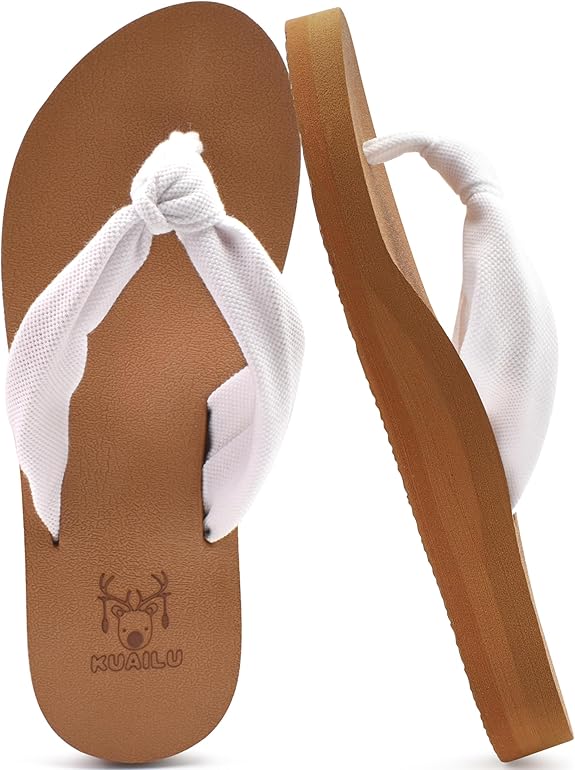
KuaiLu
Flip Flops with Arch Support
Cushioned, lightweight sandals with supportive arch design—a practical choice for beach trips, errands, and long summer walks.
Shop the sandals
baleaf
Athletic One-Piece Swimsuit
A functional one-piece with adjustable straps and moderate coverage, designed for swimming, training, surfing, and active beach days.
Shop the swimsuit
Astylish
Linen-Cotton Button-Down Shirt
A relaxed cotton-linen shirt with a collared V-neck and roll-up sleeves—easy to style over swimwear or with denim and shorts.
Shop the shirt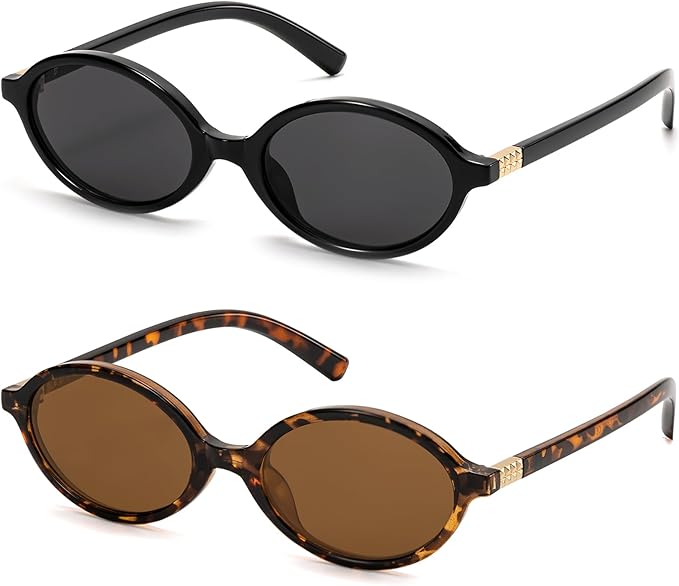
ViewJoy
Retro Oval Sunglasses
Small oval sunglasses with a 90s-inspired silhouette and UV400 lens protection—a quick way to add a vintage edge to everyday looks.
Shop the sunglasses
Affiliate disclosure: This section contains affiliate links. If you make a purchase through these links, I may earn a commission at no additional cost to you. Product selection, pricing, availability, and delivery terms may change—please review the current details on Amazon before purchasing.
As an Amazon Associate I earn from qualifying purchases.