Basic Outfits for School: Easy Looks That Work

Getting dressed for school should not require a new trend, a crowded closet, or twenty minutes of second-guessing. The most reliable basic outfits for school start with pieces that already earn their place in your wardrobe: a comfortable top, an easy bottom, a layer for changing temperatures, and shoes that can handle a full day. The goal is not to look identical every morning. It is to create a small set of combinations that feel like you and can be adjusted quickly.
This guide breaks the process into simple decisions. You will find the core pieces worth keeping, seven outfit formulas to repeat, ways to make each look work for different school settings, and a quick weekly reset that makes busy mornings calmer. Use the ideas as a starting point, then change colors, proportions, and accessories to match your dress code, climate, and comfort level.
Why Basic Outfits for School Work So Well
Basic does not have to mean boring. In a useful school wardrobe, basic means dependable, easy to combine, comfortable enough for real movement, and flexible enough to support your personality. A plain crew-neck tee can look sporty with joggers, polished with straight jeans and loafers, or layered under a cardigan. One pair of sneakers can support nearly every outfit while a scarf, hair accessory, or colorful bag changes the mood.
The Fashion-Note Edit
Five effortless pieces to refresh your everyday wardrobe
A polished, practical edit for workdays, weekends, and everything in between.

The Drop
Women’s Blake Long Blazer
A longline, tailored blazer with a notched collar and a single-button closure—an easy layer for denim, dresses, or office-ready looks.
Shop the blazer
Amazon Essentials
Women’s Lightweight Crewneck
A soft, lightweight sweater with a clean crew neckline—the kind of reliable layer that works from cool mornings to air-conditioned spaces.
Shop the sweater
Amazon Essentials
Women’s Loafer Flat
A classic flat loafer that gives casual outfits a more polished finish and pairs naturally with tailored pants, skirts, and straight-leg jeans.
Shop the loafers
Levi’s
Women’s 501 90s Jeans
A relaxed, vintage-inspired take on the iconic 501 silhouette—made for an easy, lived-in look without the thrift-store search.
Shop the jeans
Colorfulkoala
High-Waisted 7/8 Leggings with Pockets
Soft, four-way-stretch leggings with side pockets and a high-rise waistband—designed for movement, errands, and off-duty comfort.
Shop the leggings
Affiliate disclosure: This section contains affiliate links. If you make a purchase through these links, I may earn a commission at no additional cost to you. Product selection, pricing, availability, and delivery terms may change—please review the current details on Amazon before purchasing.
As an Amazon Associate I earn from qualifying purchases.
Repeatability is the biggest advantage. When several tops work with several bottoms, you get many outfits without buying many clothes. This is especially helpful when mornings are rushed or when you are trying to spend less. It also makes laundry and packing easier because you already know which pieces feel good together.
Your wedding style is personal.
Your plan should feel that way, too.
Zarellea keeps your guest list, budget, vendors, and every next step beautifully organized — so you can focus on the moments that feel like you.
Comfort supports confidence
School clothes need to survive sitting, walking, carrying books, changing rooms, crowded hallways, and temperature swings. A look that photographs well but pinches at the waist or requires constant adjusting will not feel successful by lunchtime. Choose fabrics and fits that let you move. If you prefer a close-fitting top, balance it with a roomier bottom. If you like wide-leg pants, a more defined shoulder or a tucked layer can keep the shape intentional.
Simple clothes leave room for personal style
Once the foundation is quiet, small details become more visible. Try a striped shirt, a vintage belt, a bright sock, a pendant, a textured sweater, or a bag in an unexpected color. You do not need a dramatic statement piece in every outfit. One chosen detail is often enough to make a familiar formula feel personal.
The Core Wardrobe Behind Easy School Looks
Think in categories rather than shopping for complete outfits. A compact wardrobe is easier to use when every category has a clear job. You can adjust the number of pieces to your laundry schedule, season, and school requirements.
- Tops: Keep a few solid tees, one or two long-sleeve shirts, a striped or graphic option, and a comfortable knit. White, black, gray, navy, cream, and one favorite color create easy combinations.
- Bottoms: Start with straight-leg or relaxed jeans, a softer trouser or cargo pant, and a skirt or dress if those shapes suit you. Choose bottoms that stay comfortable when you sit for long periods.
- Layers: A zip hoodie, cardigan, denim jacket, overshirt, or lightweight sweater handles cold classrooms and changing weather. Layers also make repeated outfits look different.
- Shoes: Clean sneakers are the everyday anchor. Add loafers, flat boots, or another comfortable option if you want a dressier direction and your commute allows it.
- Accessories: Use a belt, simple jewelry, hair clips, a cap, scarf, or socks to add personality. Keep at least one accessory practical enough for a regular school day.
- Bag: A backpack or roomy tote should fit what you actually carry. A practical bag can still support your color palette and make the outfit look finished.
Before buying anything, check what you already own. Lay out your most-worn top, bottom, and shoes. If they cannot make at least three combinations, the issue may be a missing connector piece rather than a lack of clothes. A neutral layer, versatile sneaker, or comfortable base shirt often solves more outfits than another eye-catching top.
Use a simple color plan
A color plan removes unnecessary decisions. You might use two neutrals, one denim shade, and two accent colors. For example, black and cream can connect blue denim, olive pants, burgundy accessories, and soft blue knits. This does not mean every piece must match. It simply means more of your wardrobe can work together without effort.
Check fit before chasing aesthetics
The same outfit formula can feel completely different depending on proportion. Notice where a top ends, where the waistband sits, and whether the shoes echo the volume of the clothes. A relaxed sweatshirt often looks balanced with straight jeans or leggings. A fitted cardigan can work with a fuller skirt or wide-leg trousers. The right fit is the part that makes basic pieces look deliberate.
Seven Basic Outfit Formulas for School
These formulas are intentionally familiar. Their value comes from how easily you can adjust them. Start with the suggested base, then swap the color, layer, or shoe depending on the day.
1. The clean tee, straight jeans, and sneaker formula
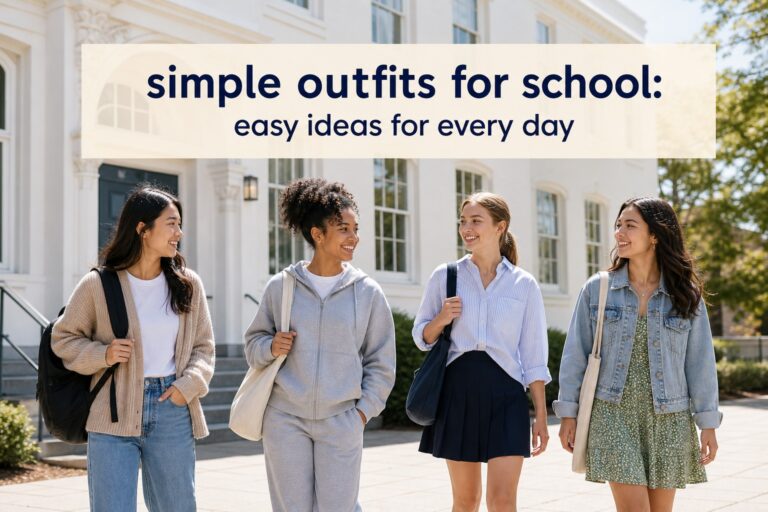
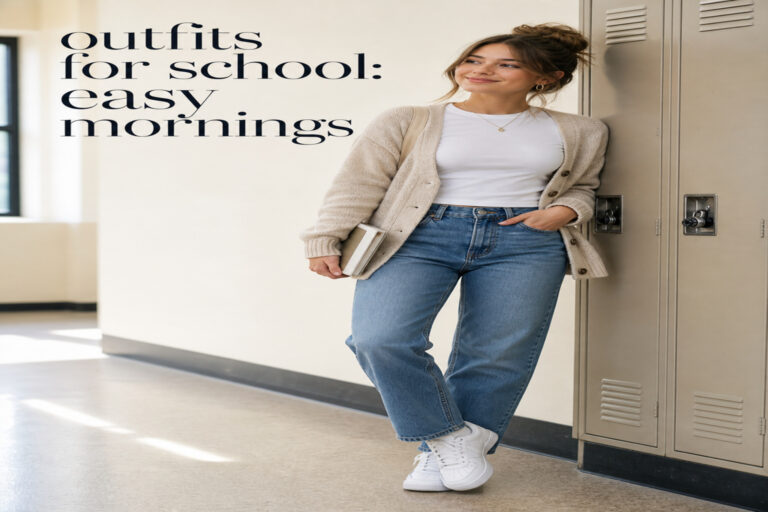
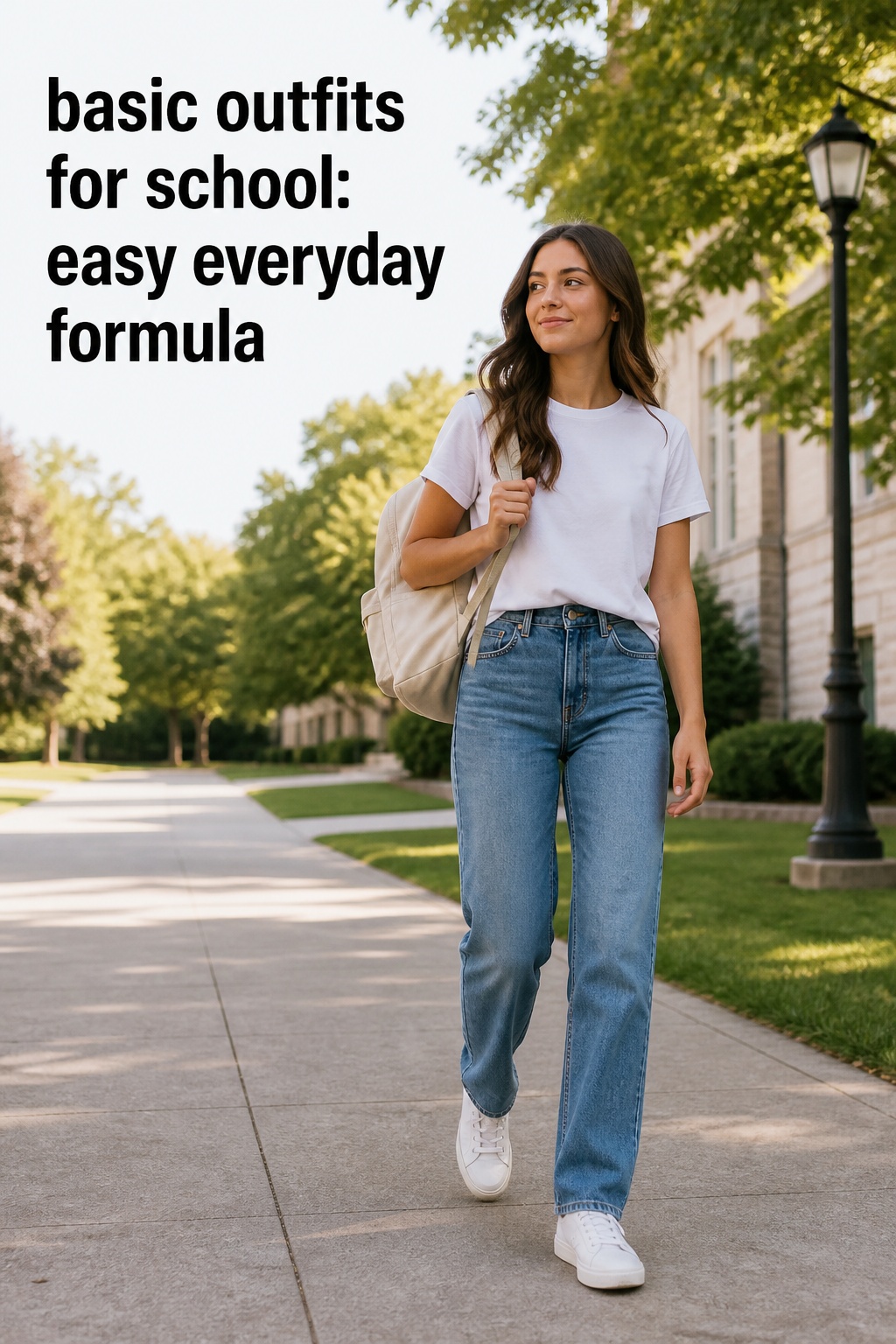
Pair a solid crew-neck tee with straight-leg jeans and comfortable sneakers. A front tuck, small cuff, or visible sock can add shape without making the outfit fussy. In cooler weather, add an overshirt, cardigan, or denim jacket. For a softer look, choose a relaxed tee and a medium-wash jean. For a sharper look, choose a tucked tee, dark denim, and a slim belt.
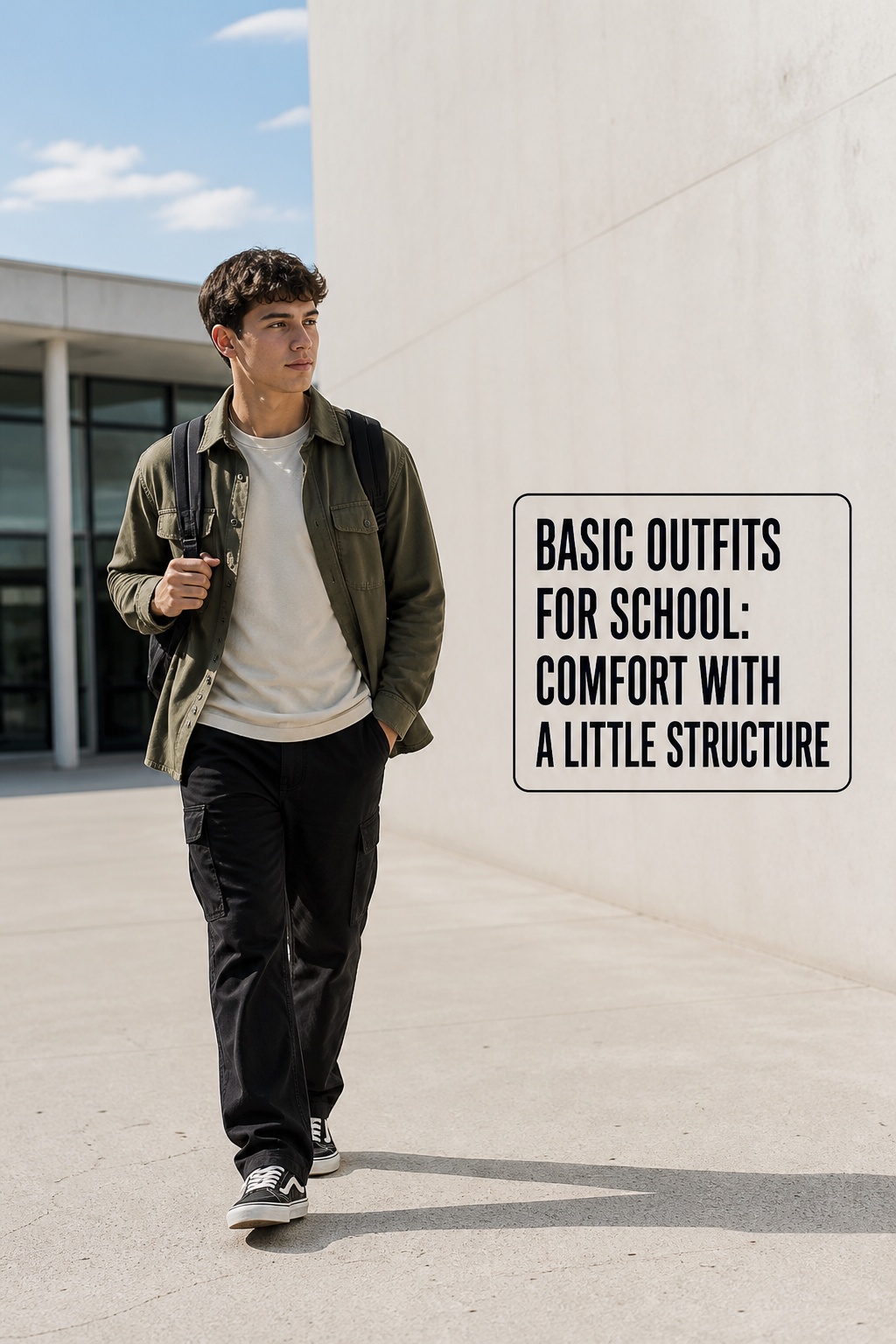
2. The knit, wide-leg pant, and low-profile shoe formula
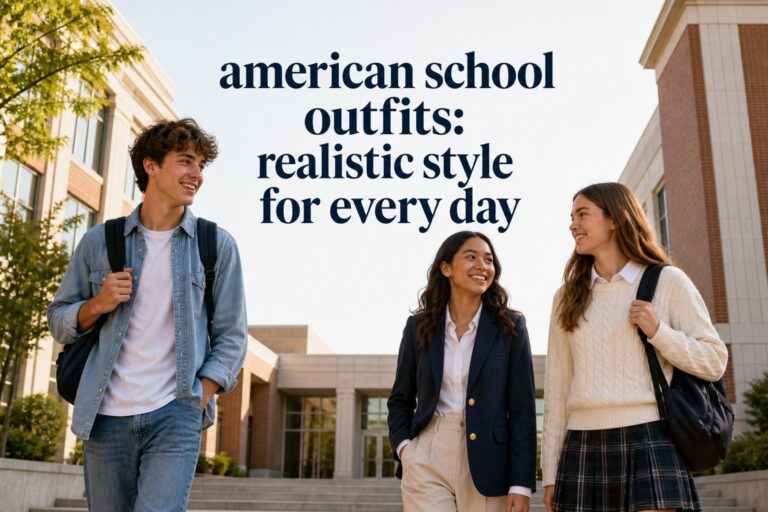
A lightweight sweater or fitted knit balances wide-leg trousers, corduroy pants, or relaxed chinos. Tuck the front or choose a shorter layer so the waist does not disappear. Low-profile sneakers keep the look casual, while loafers make it feel more polished. This combination works well for presentations, long campus days, or any morning when you want comfort with a little structure.
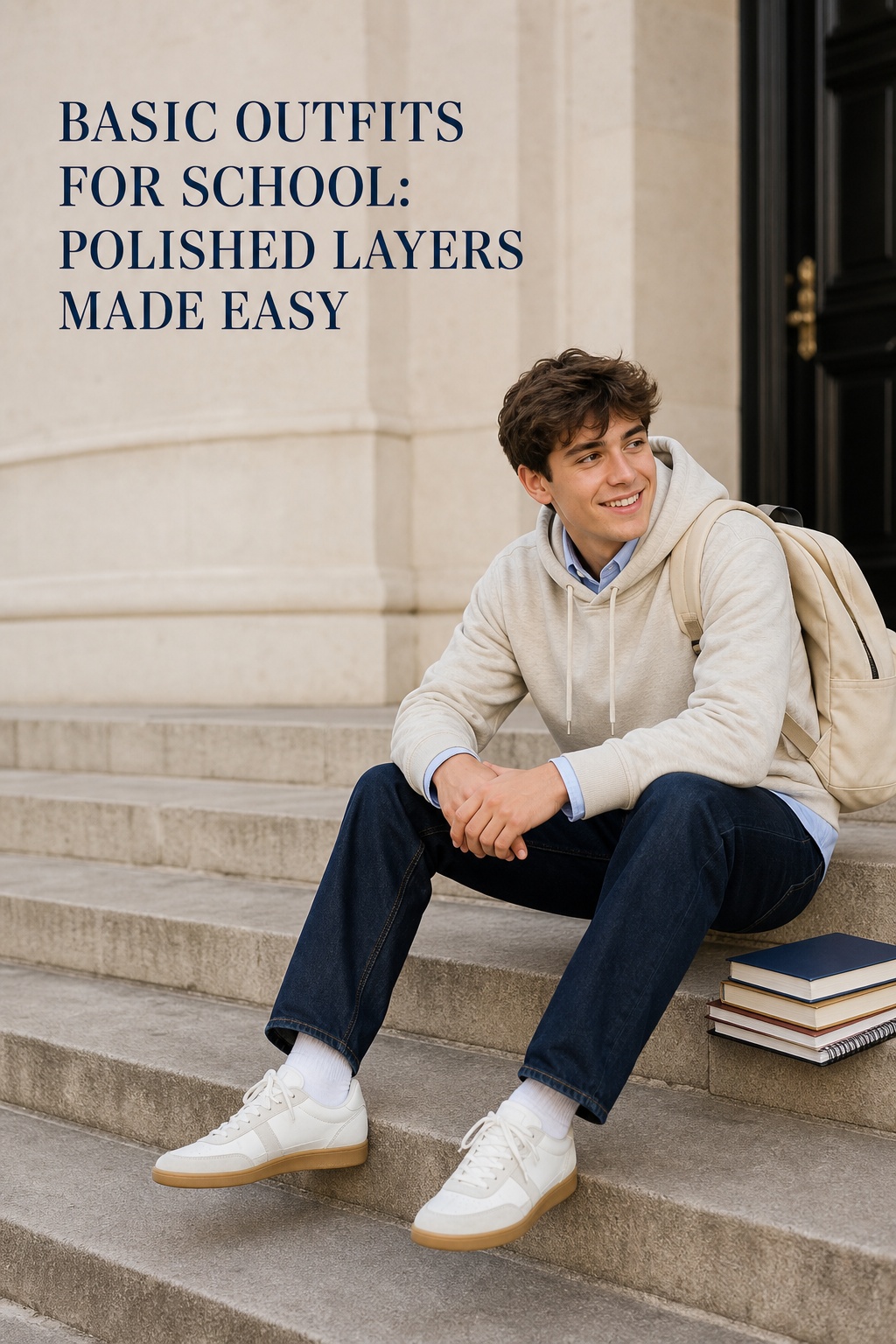
3. The hoodie, straight denim, and layered collar formula
Wear a plain hoodie with straight jeans and sneakers, then add a collared shirt underneath so the collar shows at the neckline. The collar creates a small polished detail while the hoodie keeps the outfit relaxed. You can replace the shirt with a striped long-sleeve tee or add a jacket over the hoodie on colder days. Keep the rest of the look simple so the layers do not feel bulky.
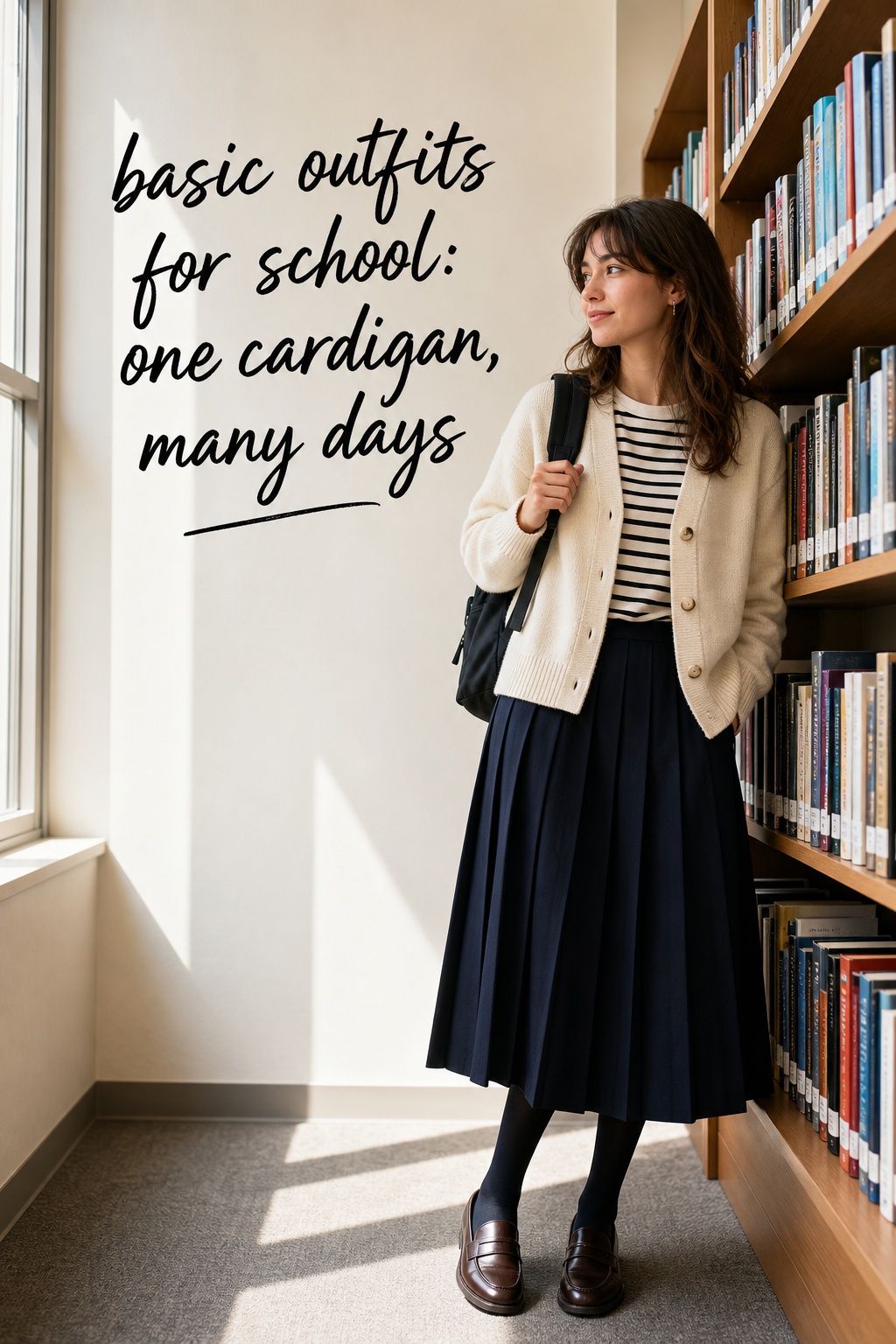
4. The cardigan, tee, and skirt formula
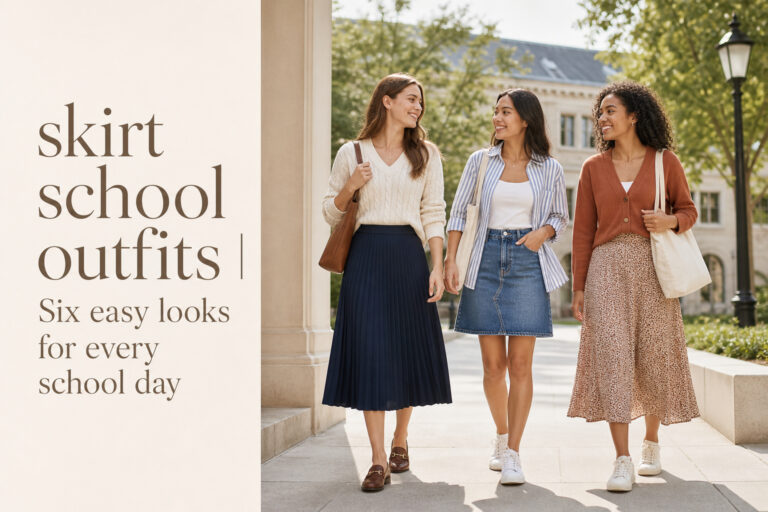
Choose a tee or slim knit under a cardigan and pair it with a denim, pleated, knit, or longer skirt. Sneakers make the outfit practical; loafers or flat boots add a more academic feeling. Pay attention to length and movement so the skirt feels right for your school and your day. Opaque tights and warm socks can make the formula useful in cooler weather.
5. The button-down, tank, and relaxed trousers formula
Use a simple tank or tee as the base and wear an unbuttoned cotton shirt over it with relaxed trousers. The open shirt creates a vertical line and gives you an easy layer to remove. Try white with khaki, blue with black, or a fine stripe with denim. If your school requires more coverage, button the shirt and add a small necklace or watch instead.
6. The casual dress, jacket, and sneaker formula
A simple cotton or knit dress can be one of the fastest basic outfits for school. Add a denim jacket, cardigan, or lightweight bomber and finish with sneakers. If the dress is loose, use a crossbody bag or a jacket with a defined shoulder to give the look direction. In colder weather, layer a long-sleeve tee underneath, add tights, and choose boots.
7. The coordinated sweatshirt set with a structured layer
Matching sweatpants and a sweatshirt can look purposeful when the fit is clean and the colors are calm. Add a denim jacket, trench-style raincoat, structured vest, or long wool-blend coat. Crisp sneakers and a useful backpack complete the look. This is a good choice for early classes, travel between buildings, or days when comfort is the main priority.
To avoid repeating the exact same outfit, change only one element at a time. Keep the hoodie but switch jeans to trousers. Keep the jeans but change the tee to a striped knit. Keep the cardigan but use a dress instead of a skirt. Small changes are enough because the underlying formula is already doing the work.
How to Adapt the Formulas for Real School Days
The best basic outfits for school are flexible. A formula should help you respond to the day rather than force you into a fixed aesthetic. Start with the practical condition that matters most, then style around it.
Adjust for temperature
Classrooms can feel completely different from the walk to school. Use a breathable base and a removable middle layer instead of relying on one heavy piece. A tee under a cardigan, a long-sleeve shirt under an overshirt, or a thin turtleneck under a sweatshirt gives you options. For rain, choose a water-resistant outer layer and shoes that can handle wet sidewalks. For heat, prioritize breathable cotton, linen blends, and lighter colors.
Adjust for school type and dress code
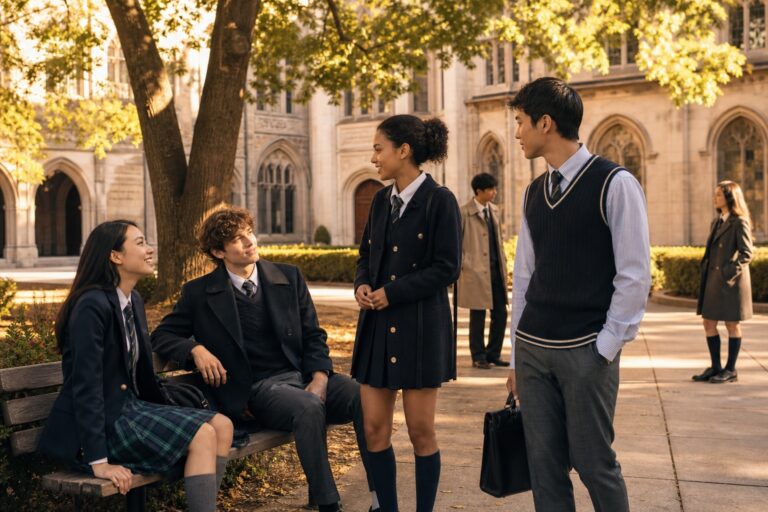
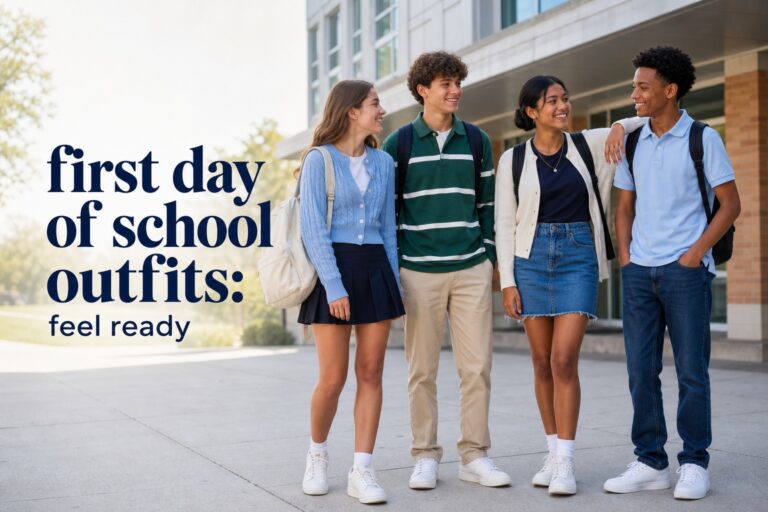
There is no universal school dress code, so treat the rules at your school as the starting point. If you need more coverage, use longer layers, higher necklines, opaque tights, and relaxed rather than very short bottoms. If uniforms are involved, personalize through approved knitwear, outerwear, socks, bags, or hair accessories. For college, you may have more freedom, but comfort still matters when your day includes walking and long lectures.
Adjust for activity and commuting
Choose shoes first when your day involves a long walk, stairs, or public transportation. A polished outfit is not useful if the shoes make you slow down or change your posture. Similarly, avoid layers that catch on backpack straps or bags that do not stay comfortable on your shoulder. If you have sports, lab work, art, or another activity, build the outfit around movement and easy changes.
Use accessories as a low-effort style switch
Accessories are an efficient way to make basic clothes feel new. A belt defines a loose outfit, a scarf adds color, and small hoops or a pendant bring focus to a simple neckline. Hair clips, a cap, patterned socks, or a colorful tote can change the mood without changing the entire outfit. Keep the accessory practical and choose one main detail so the look stays easy.
Mistakes to Avoid and a Five-Minute Weekly Reset
Many wardrobe frustrations come from small decisions made repeatedly. If your outfit feels unfinished, the answer is not always more clothing. It may be better fit, cleaner shoes, a useful layer, or a clearer place for your everyday accessories.
- Buying isolated statement pieces: Before purchasing, name at least three things you can wear with the item.
- Ignoring the middle layer: A useful cardigan, overshirt, or sweatshirt often creates more outfits than another basic tee.
- Choosing shoes only for appearance: School days reward supportive, broken-in footwear.
- Wearing the same proportion every day: Alternate fitted and relaxed shapes to keep outfits visually fresh.
- Forgetting maintenance: Clean sneakers, lint-free knits, and intact hems make inexpensive basics look more considered.
- Overcomplicating accessories: One intentional detail usually looks better than several uncomfortable ones.
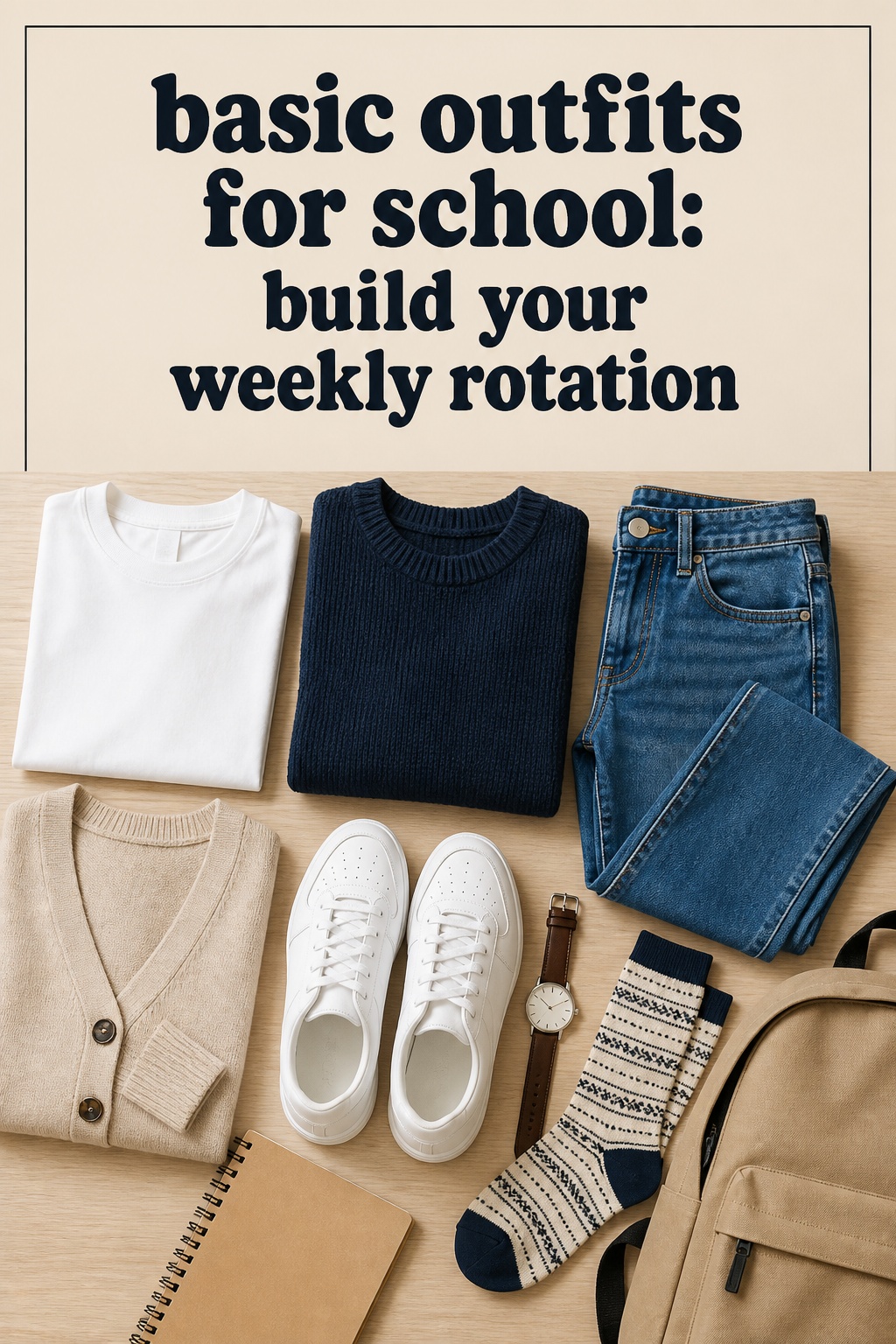
Once a week, spend five minutes creating a small outfit rail or a phone note. Pick two bottoms, three tops, one layer, and two shoe options. Make at least five combinations, then check the weather and your schedule. Put the most practical outfit first for the busiest morning. This tiny reset turns basic outfits for school into a usable system rather than a collection of ideas you never wear.
What to buy first on a limited budget
Start with the item that connects the most clothes. If you have tops but no comfortable bottoms, look for a versatile pair of jeans or relaxed trousers. If you have outfits but no layer, choose a cardigan, overshirt, or hoodie in a color that works with most of your wardrobe. If you walk a lot, prioritize reliable sneakers. Secondhand stores, clothing swaps, sales, and careful wardrobe edits can stretch the budget further than impulse purchases.
FAQ
What are the easiest basic outfits for school?
The easiest options are a tee with straight jeans and sneakers, a hoodie with denim, a knit with relaxed trousers, or a casual dress with a jacket and sneakers. Choose the formula that fits your comfort needs, then change the color or layer when you want variety.
How many school outfits do I need?
You can create a useful rotation with about five tops, three bottoms, two layers, and two pairs of everyday shoes, adjusted for laundry and weather. The number matters less than whether the pieces combine easily. A smaller wardrobe with strong connections is often easier to wear than a larger wardrobe full of one-time outfits.
How can I make basic school outfits look more stylish?
Focus on fit, proportion, and one finishing detail. Tuck or partially tuck a top, balance a roomy bottom with a neater layer, keep shoes clean, and add a belt, scarf, jewelry, or interesting socks. A consistent color palette also makes simple pieces look more intentional.
What shoes work with most school outfits?
Clean neutral sneakers are the most versatile choice for many school wardrobes. Depending on your dress code and commute, comfortable loafers, canvas shoes, or flat ankle boots can add variety. Choose shoes that are already broken in and suitable for the amount of walking you do.
How do I dress comfortably without looking lazy?
Combine one relaxed piece with one structured or polished piece. Try sweatpants with a neat jacket, a hoodie with a collared shirt, or an oversized sweater with straight-leg denim. Clean shoes, a useful bag, and one simple accessory also make comfort look deliberate.
How can I repeat clothes without repeating the same outfit?
Keep a favorite item but change the supporting pieces. Style the same jeans with a tee, cardigan, button-down, or knit. Wear one dress with sneakers and a denim jacket one day, then tights, boots, and a long cardigan another day. Changing the layer or shoe often creates the biggest visible difference.
What should I consider when shopping for school basics?
Consider comfort while sitting, school rules, care requirements, weather, commute, and how many existing pieces the item can connect. Try moving, sitting, and layering before buying when possible. A basic is a good purchase when you can imagine wearing it in several real situations, not only in one styled photo.
Finish the look
The little extras that make a summer outfit feel complete
From beach days to city weekends, these easy pieces bring comfort, texture, and a polished finishing touch.

FENBEN
Straw Hobo Crossbody Bag
A handwoven straw bag with both short and crossbody straps—an effortless finishing touch for vacation looks and warm-weather outfits.
Shop the bag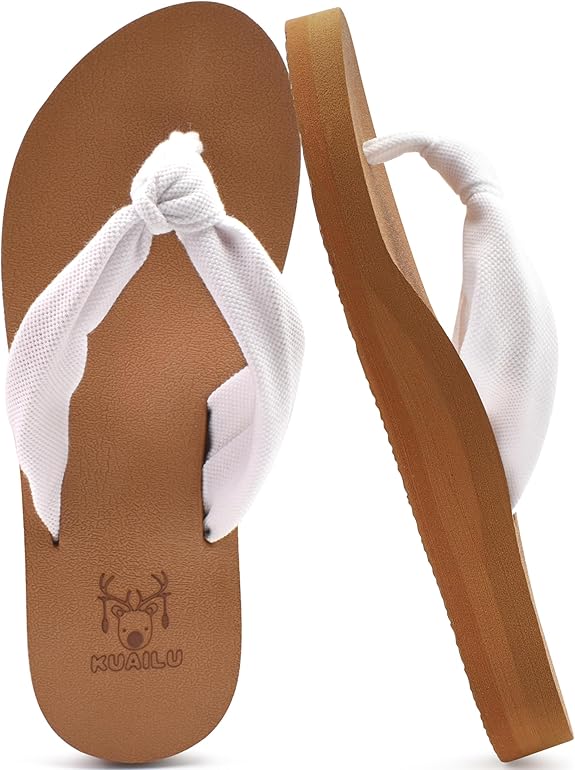
KuaiLu
Flip Flops with Arch Support
Cushioned, lightweight sandals with supportive arch design—a practical choice for beach trips, errands, and long summer walks.
Shop the sandals
baleaf
Athletic One-Piece Swimsuit
A functional one-piece with adjustable straps and moderate coverage, designed for swimming, training, surfing, and active beach days.
Shop the swimsuit
Astylish
Linen-Cotton Button-Down Shirt
A relaxed cotton-linen shirt with a collared V-neck and roll-up sleeves—easy to style over swimwear or with denim and shorts.
Shop the shirt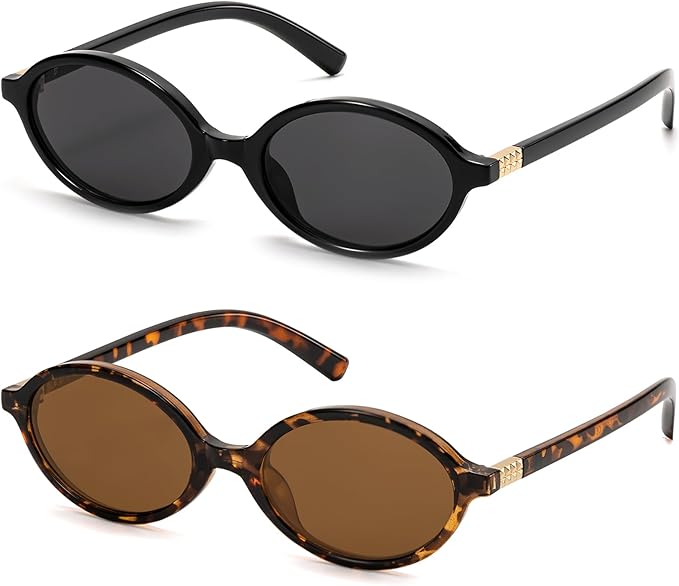
ViewJoy
Retro Oval Sunglasses
Small oval sunglasses with a 90s-inspired silhouette and UV400 lens protection—a quick way to add a vintage edge to everyday looks.
Shop the sunglasses
Affiliate disclosure: This section contains affiliate links. If you make a purchase through these links, I may earn a commission at no additional cost to you. Product selection, pricing, availability, and delivery terms may change—please review the current details on Amazon before purchasing.
As an Amazon Associate I earn from qualifying purchases.