80 Inspired Outfits: Wear the 1980s Your Way
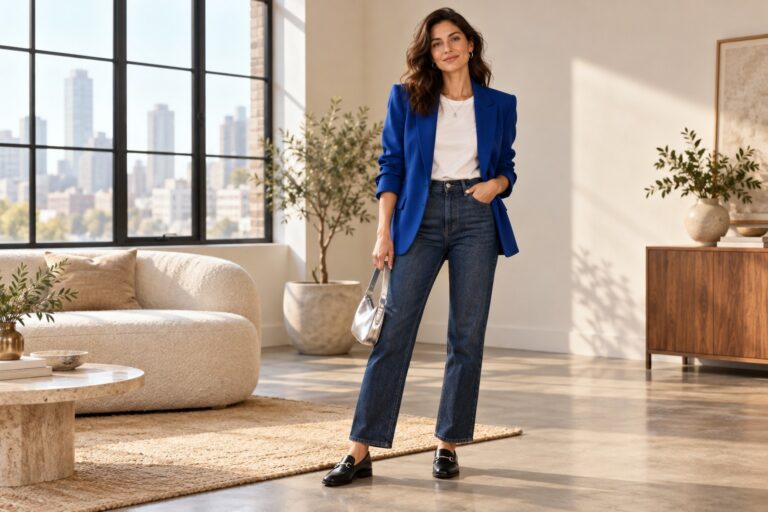
The easiest way to make an 80s-inspired outfit feel wearable is to begin with one detail you actually like, then let the rest of the look give it room. Maybe it is the clear shape of a blazer, the swish of a full skirt, a bright sweatshirt, or a glint of metallic jewelry. You do not need a complete vintage wardrobe to get the point across. One intentional reference can make familiar clothes feel more expressive while keeping the outfit useful for your real day.
This guide helps you decide what kind of 1980s energy you want, translate that reference into clothes you may already own, and adjust the balance for casual plans, a polished daytime setting, errands, or an evening out. Think of each example as a starting point. Change the color, coverage, footwear, or level of shine to suit your comfort and personal style.
Start With the Part of the Outfit You Want to Feel Different
Before choosing a garment, choose the feeling or visual change you want. A retro detail can add structure, movement, color, texture, or a little drama. Naming that job keeps your outfit decisions simple. It also helps you avoid collecting several unrelated references just because they all belong to the same decade.
The Fashion-Note Edit
Five effortless pieces to refresh your everyday wardrobe
A polished, practical edit for workdays, weekends, and everything in between.

The Drop
Women’s Blake Long Blazer
A longline, tailored blazer with a notched collar and a single-button closure—an easy layer for denim, dresses, or office-ready looks.
Shop the blazer
Amazon Essentials
Women’s Lightweight Crewneck
A soft, lightweight sweater with a clean crew neckline—the kind of reliable layer that works from cool mornings to air-conditioned spaces.
Shop the sweater
Amazon Essentials
Women’s Loafer Flat
A classic flat loafer that gives casual outfits a more polished finish and pairs naturally with tailored pants, skirts, and straight-leg jeans.
Shop the loafers
Levi’s
Women’s 501 90s Jeans
A relaxed, vintage-inspired take on the iconic 501 silhouette—made for an easy, lived-in look without the thrift-store search.
Shop the jeans
Colorfulkoala
High-Waisted 7/8 Leggings with Pockets
Soft, four-way-stretch leggings with side pockets and a high-rise waistband—designed for movement, errands, and off-duty comfort.
Shop the leggings
Affiliate disclosure: This section contains affiliate links. If you make a purchase through these links, I may earn a commission at no additional cost to you. Product selection, pricing, availability, and delivery terms may change—please review the current details on Amazon before purchasing.
As an Amazon Associate I earn from qualifying purchases.
Start with the plan for the day. For a normal coffee run or a long stretch of errands, you might want an outfit that moves easily and has one recognizable cue near the face or waist. For a presentation or a dinner where you want a sharper silhouette, structure may be the useful part. If your wardrobe is mostly neutral, a saturated knit or a patterned accessory can provide the energy without requiring a new head-to-toe color story.
Your wedding style is personal.
Your plan should feel that way, too.
Zarellea keeps your guest list, budget, vendors, and every next step beautifully organized — so you can focus on the moments that feel like you.
It helps to think of 1980s style as a set of different visual languages. The decade included power dressing, sporty separates, romantic sleeves and bows, preppy combinations, and harder-edged leather and denim. The Fashion History Timeline at FIT describes that range, including early sportswear and New Romantic references alongside later structured suits and body-conscious stretch fabrics. That history is a useful reminder that your reference can be subtle or bold, soft or sharp.
Choose a lane by asking which existing outfit you would like to refresh. If your usual uniform is jeans and a fitted top, perhaps you want more shape at the shoulder or a more defined waist. If you wear simple dresses, a strong shoe, a sculptural earring, or a jacket with a clear outline may be enough. If you prefer relaxed clothes, borrow the decade’s graphic confidence through a color-blocked sweatshirt or a generous knit rather than forcing yourself into a fitted silhouette.
Keep the setting in view, but do not confuse setting with a dress code. A daytime outfit can still be expressive, and an evening look can be comfortable. The question is what needs to work while you are wearing it. Consider how much walking, sitting, layering, or weather exposure the plan involves. Then let that practical information guide the shoe, hem, and outer layer while the retro element supplies the personality.
Choose One 1980s Signal and Give It a Job
A recognizable outfit often has one focal point and one supporting idea. The focal point is the detail that first catches the eye. The supporting idea makes it look deliberate, such as repeating a color in a small accessory or echoing a strong shoulder with a straighter trouser. The remaining pieces can be quiet. This simple order makes a retro reference readable without making every item compete.
Use structure when you want a cleaner outline
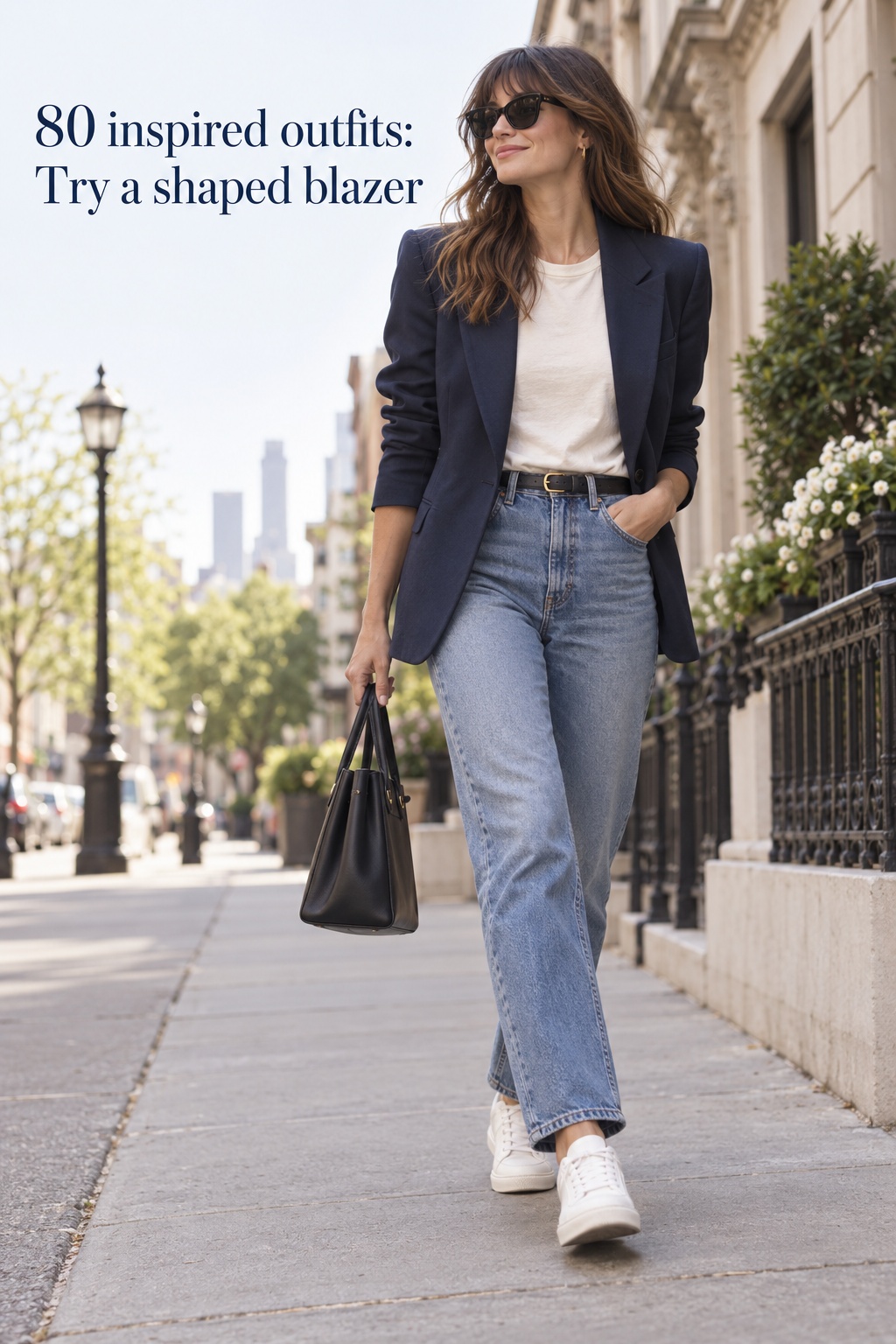
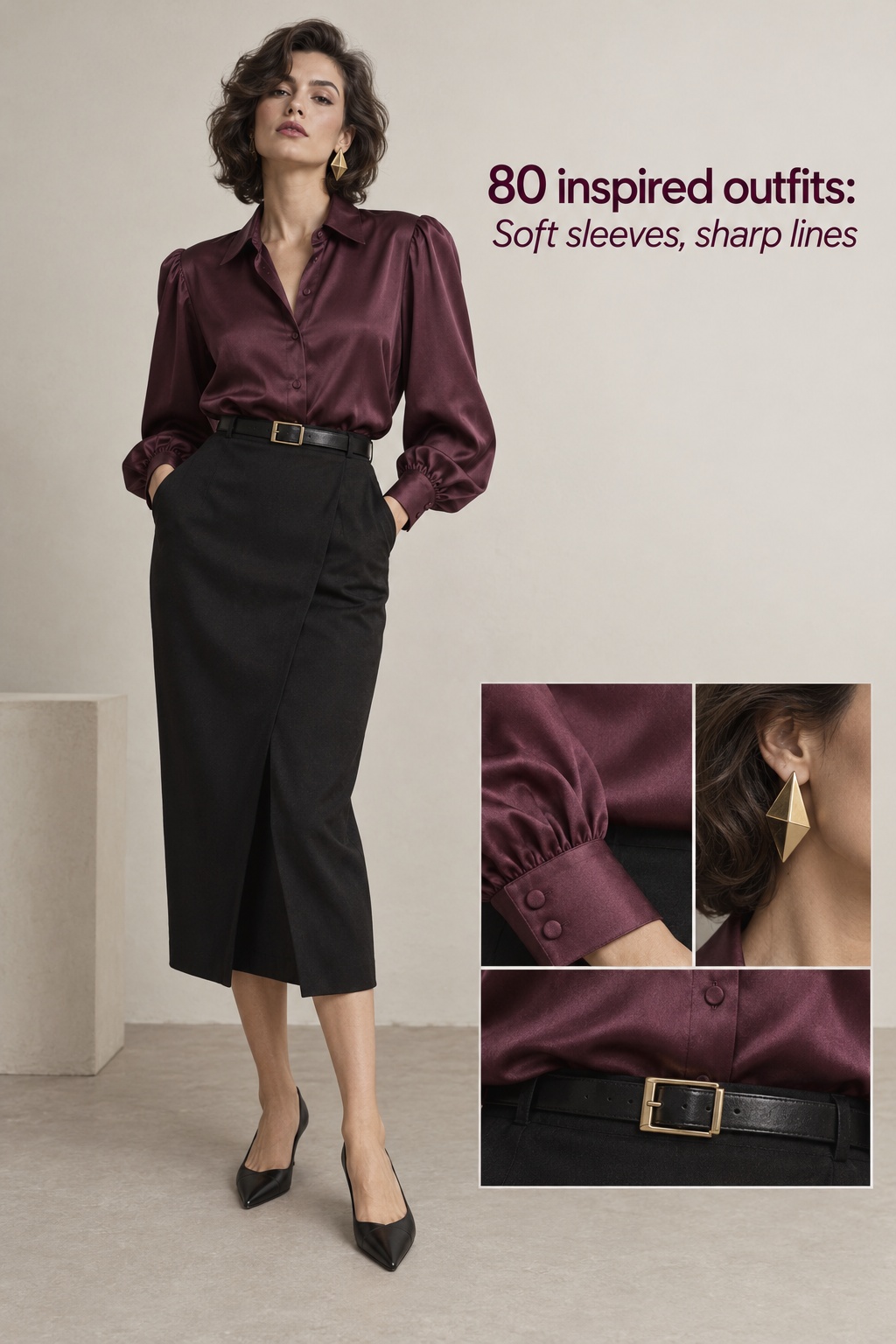
A blazer, a crisp collared shirt, a defined shoulder seam, or a shaped jacket can create the confident outline many people associate with 1980s power dressing. You do not need exaggerated padding. Try a jacket with a little room through the shoulder over a plain tee and straight-leg trousers. Keep the shirt untucked for ease, or tuck it in and add a narrow belt if you want a clearer waist. The shape of the jacket does most of the work, so simple shoes help the outfit feel current.
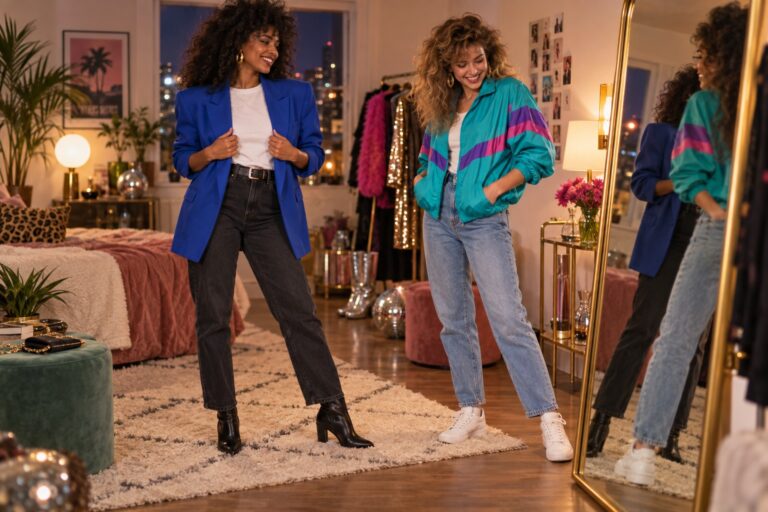
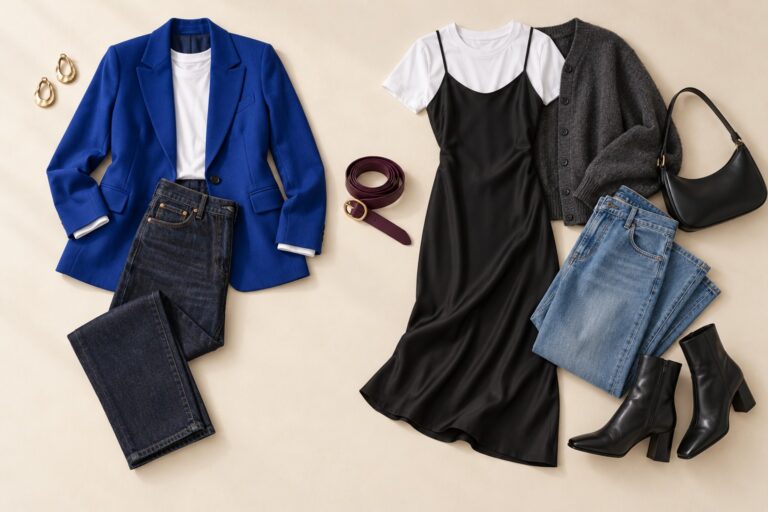
For a relaxed version, wear the blazer open over a fine knit and dark jeans. If it feels too formal, push up the sleeves, switch a structured bag for a soft tote, or choose clean sneakers. For a polished version, button the blazer over a fluid blouse and pair it with a column skirt or tailored pants. Those two settings use the same cue, but the finishing choices change its mood.
Use volume when you want movement
Volume can come from a puff sleeve, a fuller skirt, a roomy sweatshirt, or a softly gathered blouse. Pick one area for that extra space and give the opposite side of the outfit a calmer line. A puff-sleeve top can sit neatly into straight jeans. A full skirt can pair with a close-fitting tee or a fine cardigan. A roomy sweatshirt looks balanced with a straighter trouser or a clean short, depending on the weather and your preferred coverage.
When both the top and bottom are oversized, use a small anchor to keep the outline intentional. A half tuck, a visible waistband, a sleeve pushed above the wrist, or a defined shoe can create that point of reference. You are not trying to make your body fit a rule. You are deciding where you want the outfit’s shape to be easiest to read.
Use color, texture, or shine when the silhouette is already simple
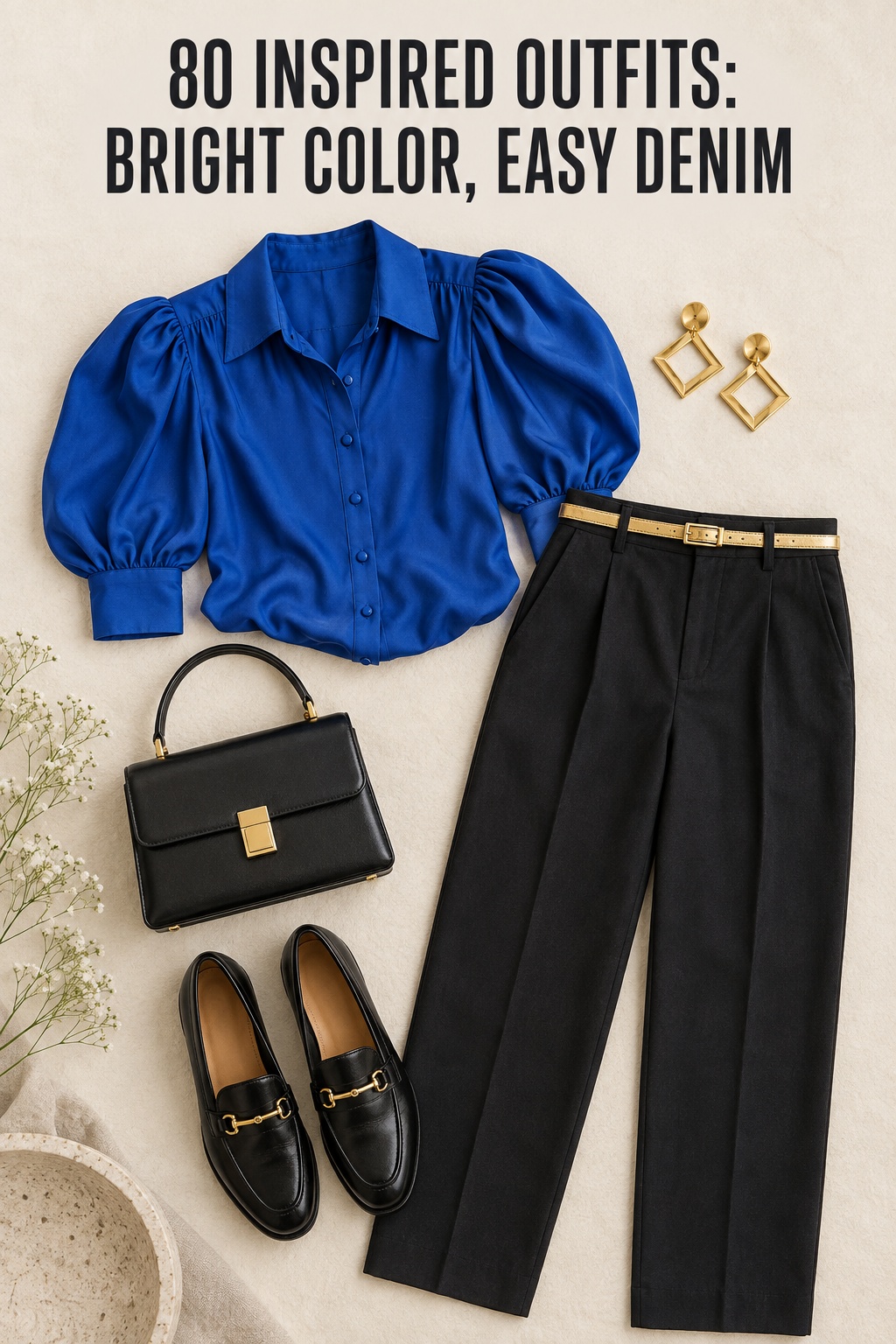
If you already have a familiar shape that fits well, you can bring in the decade through color or surface. Try a cobalt cardigan with dark trousers, a bright belt against denim, a metallic shoe with a simple dress, or a velvet accessory next to cotton. A single saturated shade can look polished when the rest of the outfit stays neutral. Texture also helps: ribbed knits, soft leather, denim, and a little sheen each catch light differently, giving a basic combination more depth.
There is no requirement to use neon. Strong color can be red, teal, violet, green, or any shade you enjoy wearing. For a lower-key reference, choose a colored sock, a small bag, or an earring. For a stronger look, let the color occupy the top half of the outfit and keep the lower half in dark denim, black, cream, or another steady neutral. Harper’s Bazaar’s archive of 1980s looks includes very different moments, from leather and punk details to checked blazers and draped tops, so use a reference that suits your wardrobe rather than a single shorthand for the whole decade.
Let an accessory do the smallest version of the work
If clothing proportions are not your thing, start with an accessory. Geometric earrings, a wide belt, a stack of slim bangles, a headband, or a pair of bold sunglasses can change a very simple outfit. Pick one accessory family and keep the rest edited. For instance, dramatic earrings do not need a statement necklace beside them. A bold belt may be the only high-contrast detail the outfit needs.
This approach is especially helpful when you are trying 80 inspired outfits for the first time. You can see how the reference feels before changing your usual silhouettes. If you like the result, build outward with another piece over time. If the accessory does not feel like you, remove it and try a different signal instead of deciding that the entire decade is off limits.
Build 80 Inspired Outfits for Real-Life Plans
The formulas below are meant to be adaptable rather than prescriptive. Use the garments you have, substitute a similar shape, and adjust the outfit to your climate and comfort. Each formula has a clear focal point and a quieter counterweight, so you can stop when the look feels complete.
For an easy daytime outfit, start with denim and one shaped layer
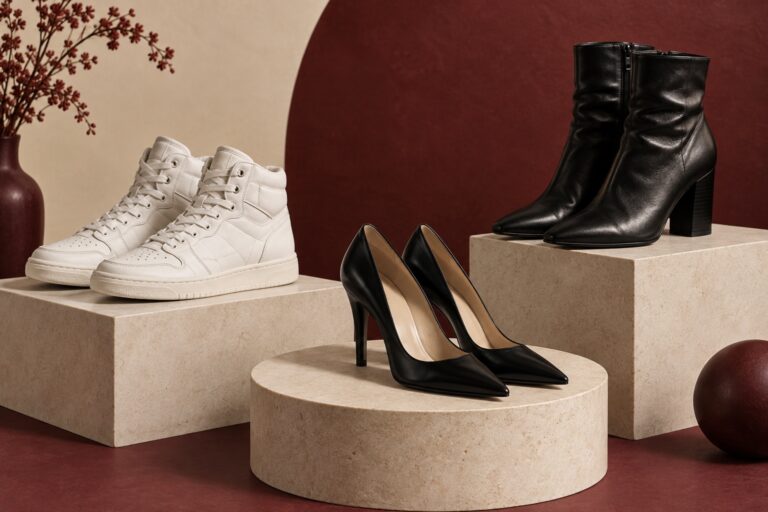
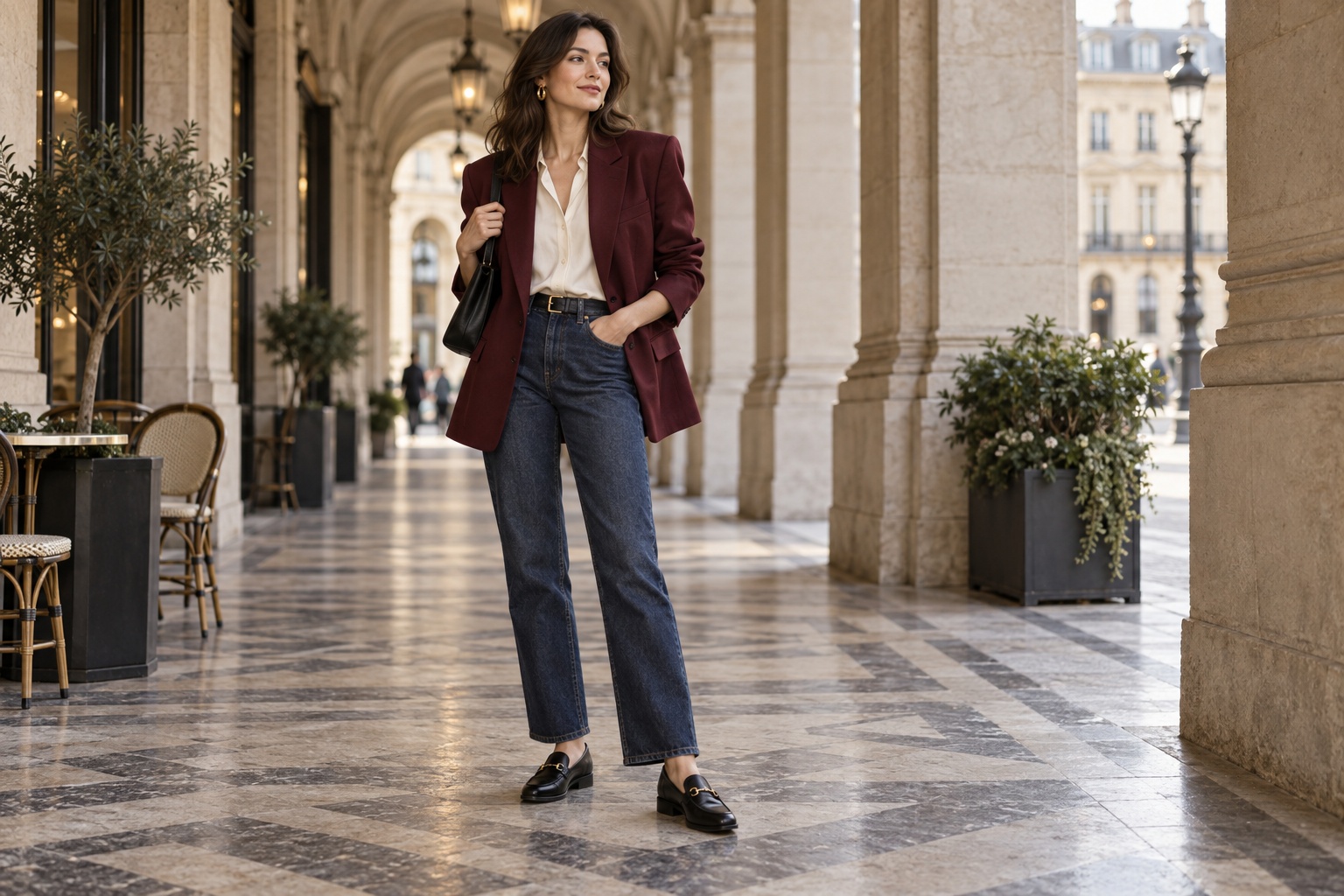
Pair high-rise straight jeans with a plain tank or tee and a cropped or hip-length jacket that has a distinct shoulder line. A denim jacket gives a relaxed reference; a blazer feels more polished; a leather-look layer adds a little edge. Add a belt if you want the waist to show, then choose sneakers, loafers, or ankle boots based on the day. Keep the wash of the jeans simple if your jacket already has a strong color or texture.
To make the outfit feel softer, switch the tee for a blouse with a small puff sleeve and use a cardigan instead of a jacket. To make it more expressive, add a bright sock, a playful earring, or a vintage-inspired graphic tee. You can also reverse the proportions: wear a roomy jacket over a close base and keep the jeans straight rather than very wide. The outfit still has a clear reference without borrowing every detail at once.
For a polished daytime plan, let a blouse or blazer carry the shape
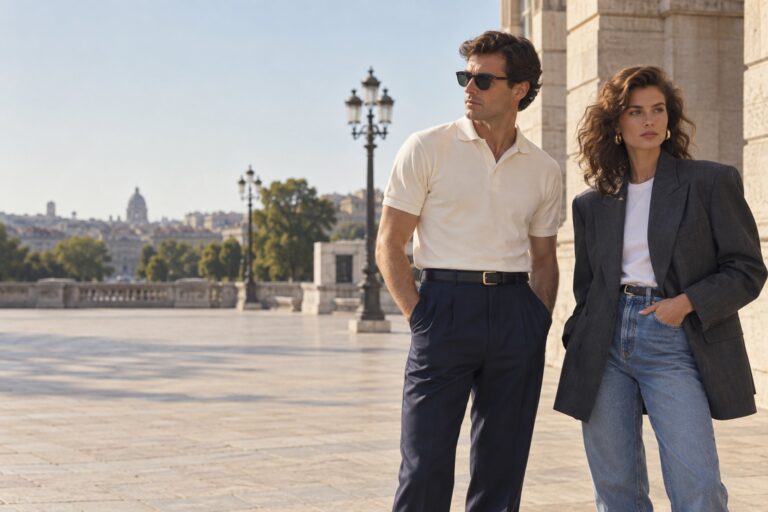
Try a fluid blouse with gentle sleeve volume tucked into a simple midi skirt, or wear a clean shirt under a blazer with tailored trousers. Add one waist detail, such as a belt or a neat tuck, and keep the jewelry focused. A low heel, loafer, or polished flat can make the look feel composed while staying useful for a day that includes walking. If the blouse has a print, choose quieter shoes and a bag with a simple outline.
For a more casual workplace or a lunch, wear the blouse with straight jeans and a refined flat. For a more formal meeting, use tailored pants and a jacket that holds its shape. If the outfit feels too corporate, soften just one piece: swap the pointed shoe for a loafer, loosen the tuck, or use a less structured bag. The goal is a confident outline that still belongs to you.
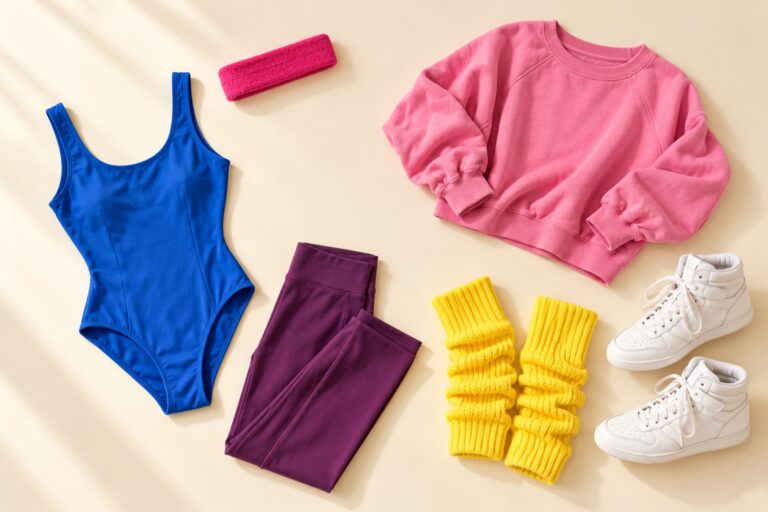
For errands or travel, borrow the decade’s sporty energy
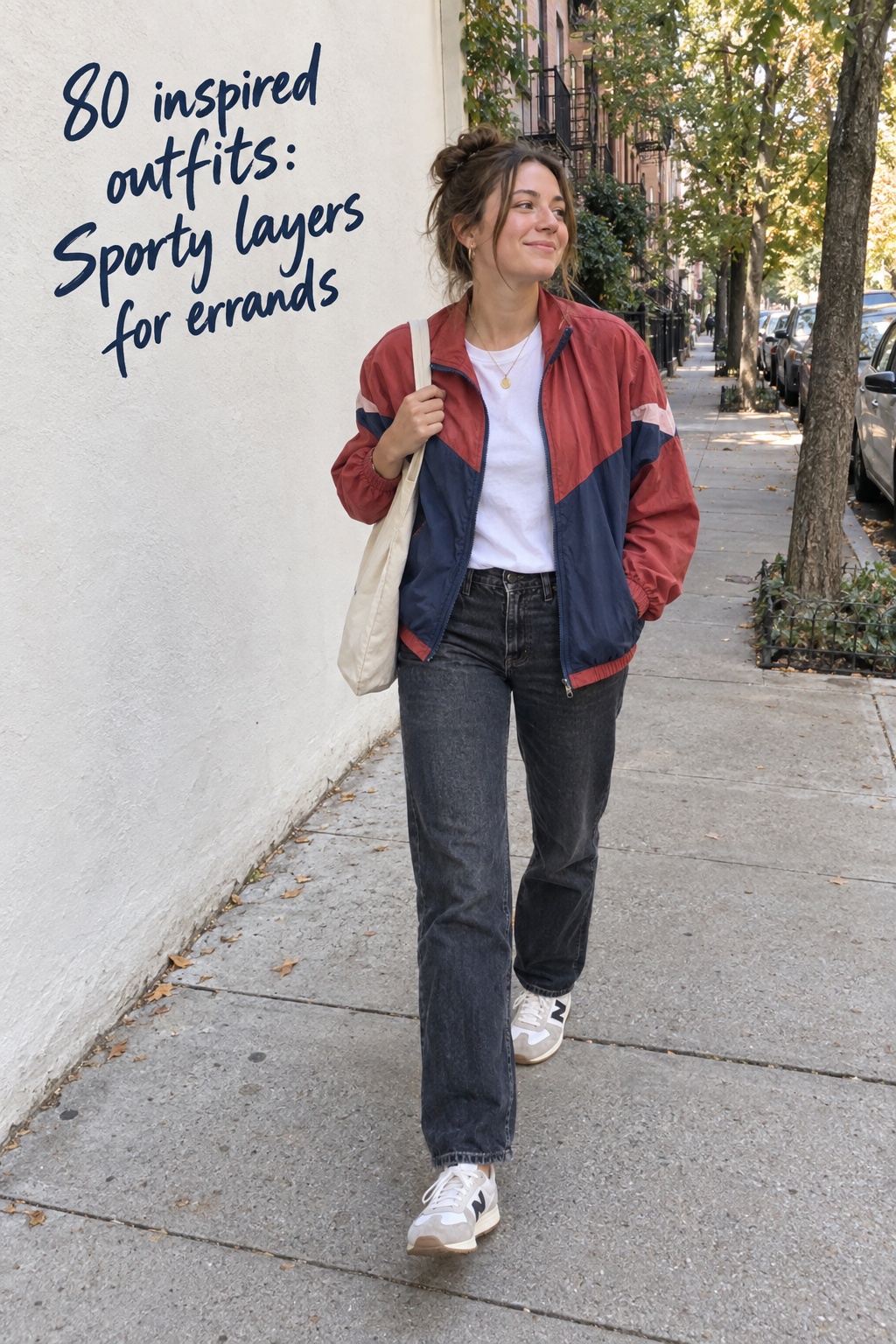
Build a practical base with leggings, a longer tee, and a zip sweatshirt or track-style jacket. Then make one detail deliberate: choose a color-blocked layer, a vintage-style crewneck, contrast socks, or a bright bag. Comfortable sneakers keep the outfit grounded. If you want more coverage, add a long coat or an open button-down. If you want more definition, make sure the sweatshirt hem and the waistband of your leggings or pants sit where you feel comfortable.
A sporty reference works beyond a workout setting because it is easy to move in and simple to adjust as the day changes. For a calmer version, keep the base monochrome and let the jacket provide color. For a stronger version, use a graphic top and one visible accessory, then let the rest stay uncomplicated. You can make the same formula feel more finished with a clean sneaker and a compact crossbody, or more relaxed with a roomy tote.
For evening, choose either a vivid surface or a memorable outline
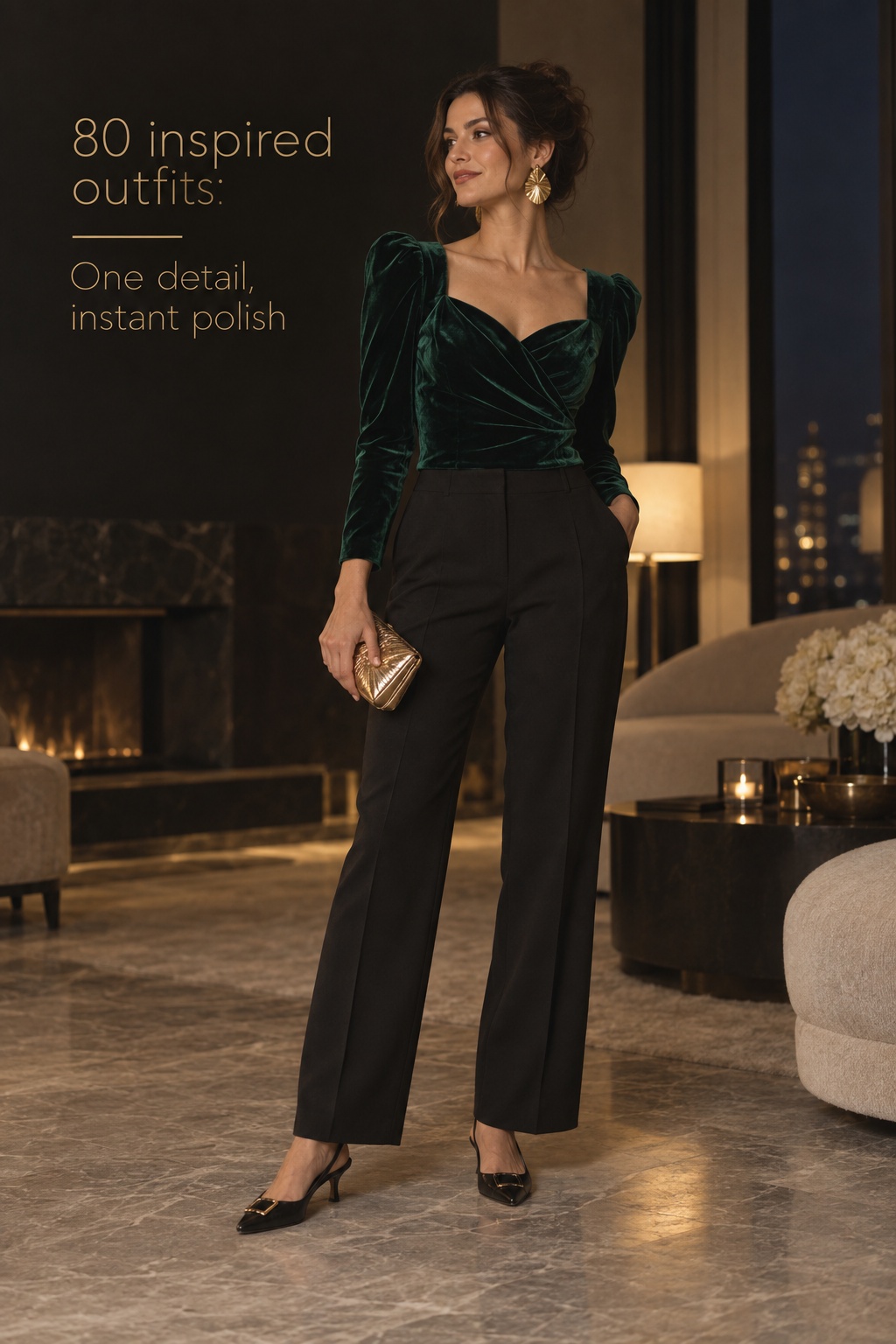
A satin or velvet top with straight trousers is a simple route to evening texture. A one-shoulder top, a draped dress, or a skirt with a little volume gives the silhouette its own interest. Pair one of those with shoes you can stand and walk in, then add one reflective detail such as a metallic bag, a cuff, or a pair of earrings. A clean base lets the focal point feel intentional and prevents the outfit from becoming visually crowded.
If you prefer trousers, try a bright blouse with black pants, or a leather-look jacket over a slip-style dress. If you prefer a dress, let its color or neckline provide the reference and keep the accessories simple. For a more expressive night, combine two related details, such as a strong shoulder and a bold earring. Keep the third element quiet. A good outfit can still feel celebratory without requiring a costume or a difficult shoe.
Once you have the main pieces, check the outfit in motion. Sit down, raise your arms, walk a few steps, and see whether you are adjusting anything repeatedly. A hem that rides up or a sleeve that slides may be a sign to switch one piece, not to abandon the whole formula. Comfort is part of the styling because it affects how naturally you carry the look.
Edit the Look Before You Leave
Give the outfit a quick edit before adding more. Stand back from the mirror and identify its focal point. If you cannot name one, remove an accessory or simplify a layer. If the outfit feels flat, add one small detail that supports what is already there, such as a belt that defines the waist or a shoe that repeats a color. Editing is not about making every outfit minimal. It is about giving the interesting parts enough space to register.
Check proportion from head to toe
Look at where the jacket ends, where the waistband sits, and how the shoe meets the hem. If the top layer is long and roomy, a straighter base often makes the outline clearer. If a skirt is full, a shorter or more fitted top can make the volume feel intentional. These are options, not fixed rules. A full-on relaxed silhouette can be beautiful when you like it. The useful question is whether the shape matches the mood you meant to create.
Pay attention to visual weight as well as garment length. A heavy shoe can anchor a fluid dress, but a delicate sandal may make the same dress feel lighter. A large bag can balance a broad shoulder, while a compact bag can preserve a sharper line. Small changes in footwear and accessories often make an existing outfit read more finished without adding another statement garment.
Use color repetition to connect separate pieces
A color does not need to match exactly to feel connected. Repeat a family of color in two places, such as a red print in the top and a dark cherry bag, or a cobalt jacket and a small blue detail in the shoe. If you are mixing patterns, choose one larger print and let the other color references stay small. When a bright shade is the focal point, keep the number of competing contrasts modest so the outfit retains a clear center.
Keep the pieces that make you feel at ease
Try the outfit with the underlayers you will really wear, and notice whether the fabric moves comfortably. If you are borrowing a strong silhouette, make sure you can sit and lift your arms. If the clothing is fitted, check that it stays put and that the seams feel comfortable. If you are using a vintage piece, inspect its closures and fabric in daylight before deciding how to wear it. These practical checks help you spend more time enjoying an outfit and less time adjusting it.
Skip the common mistake of adding every reference at once: padded shoulders, bright leggings, layered jewelry, big hair, a wide belt, and a metallic shoe can all compete for attention. Choose the details that actually express your idea and leave the rest for another outfit. Likewise, do not assume that the loudest version is the most authentic or the most flattering. The best reference is the one you recognize and can wear with ease.
A useful last-minute sequence is simple: choose the focal piece, add a quiet base, balance the volume, select shoes for the plan, and remove one detail if the outfit feels busy. Save a quick mirror photo if you want to remember the combination, then note which pieces made it work. Repeating a successful formula with a new color or accessory is often more useful than rebuilding the whole look each time.
Sources and Methodology
This guide uses fashion-history and editorial outfit research to distinguish the decade’s varied references from the single neon-and-shoulder-pads shorthand. The Fashion History Timeline at FIT documents several 1980s style directions, including sportswear, New Romantic dressing, structured suits, and stretch fabrics. Vogue’s history overview provides additional context for power suits and changing silhouettes. The outfit formulas here are original styling suggestions, not claims of first-hand testing or a recommendation to buy specific products.
Sources: Fashion History Timeline, 1980–1989 and Vogue, A 1980s Fashion History Lesson.
FAQ
What is the easiest way to make an outfit feel 1980s inspired?
Start with one recognizable detail, such as a shaped blazer, a puff sleeve, a bright sweatshirt, high-rise denim, or a bold accessory. Keep the remaining pieces simple enough to let that detail read clearly.
Can I create 80 inspired outfits from clothes I already own?
Yes. Look for pieces with a clear shoulder, a defined waist, a saturated color, a relaxed sporty shape, or a noticeable texture. Combine one of those with familiar basics such as straight jeans, a plain tee, or tailored trousers.
How many retro details should I wear at once?
One focal detail is a useful starting point. You can add a second if it supports the same idea, such as a bold earring with a strong shoulder. Keep a third element quieter so the outfit still has a clear center.
Do 80s inspired outfits have to include neon or shoulder pads?
No. The decade included many directions, from sporty layers and romantic sleeves to leather, denim, tailoring, and preppy looks. A single shape, texture, or accessory can suggest the era without neon or exaggerated padding.
How can I keep a retro outfit comfortable for a full day?
Choose footwear for how much you will walk, test the outfit while sitting and moving, and wear the layers you actually need. If a piece needs constant adjusting, try a different cut or use it in a shorter plan.
How do I make a bold 1980s detail work with a neutral wardrobe?
Let one accessory, blouse, shoe, or layer provide the color or shine. Pair it with the neutrals you already wear, such as denim, black, cream, gray, or brown. Repeating one accent color in a small second detail can connect the outfit.
Finish the look
The little extras that make a summer outfit feel complete
From beach days to city weekends, these easy pieces bring comfort, texture, and a polished finishing touch.

FENBEN
Straw Hobo Crossbody Bag
A handwoven straw bag with both short and crossbody straps—an effortless finishing touch for vacation looks and warm-weather outfits.
Shop the bag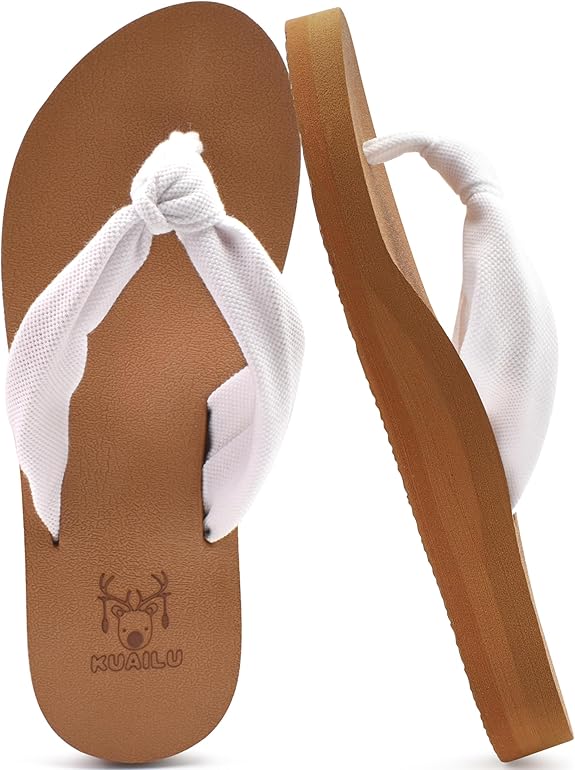
KuaiLu
Flip Flops with Arch Support
Cushioned, lightweight sandals with supportive arch design—a practical choice for beach trips, errands, and long summer walks.
Shop the sandals
baleaf
Athletic One-Piece Swimsuit
A functional one-piece with adjustable straps and moderate coverage, designed for swimming, training, surfing, and active beach days.
Shop the swimsuit
Astylish
Linen-Cotton Button-Down Shirt
A relaxed cotton-linen shirt with a collared V-neck and roll-up sleeves—easy to style over swimwear or with denim and shorts.
Shop the shirt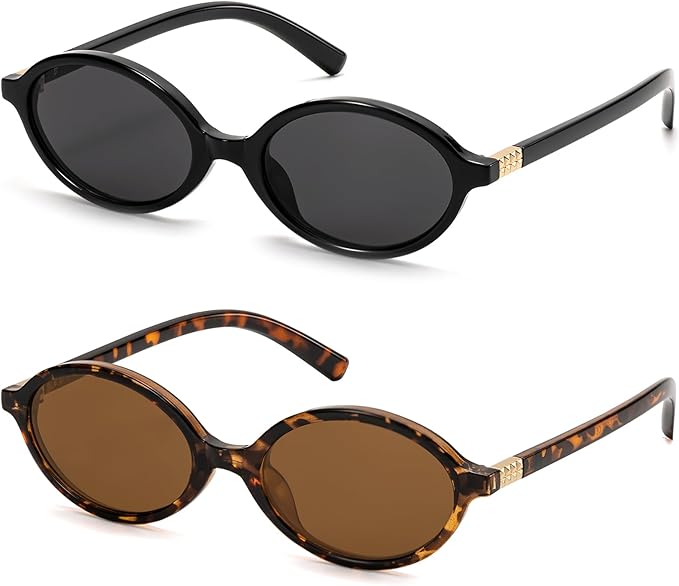
ViewJoy
Retro Oval Sunglasses
Small oval sunglasses with a 90s-inspired silhouette and UV400 lens protection—a quick way to add a vintage edge to everyday looks.
Shop the sunglasses
Affiliate disclosure: This section contains affiliate links. If you make a purchase through these links, I may earn a commission at no additional cost to you. Product selection, pricing, availability, and delivery terms may change—please review the current details on Amazon before purchasing.
As an Amazon Associate I earn from qualifying purchases.