80 Rock Outfits Women Can Build by Rock Subgenre
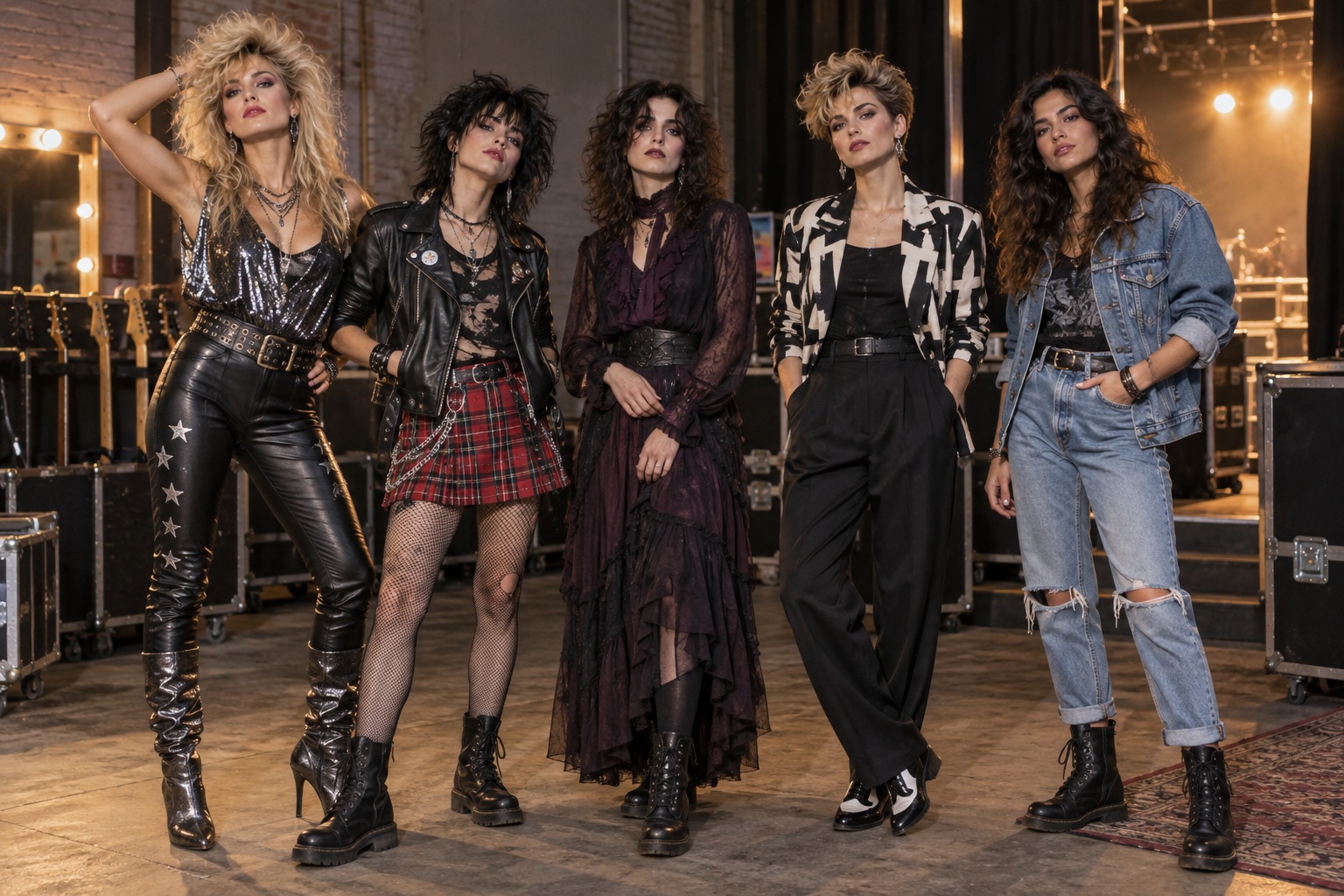
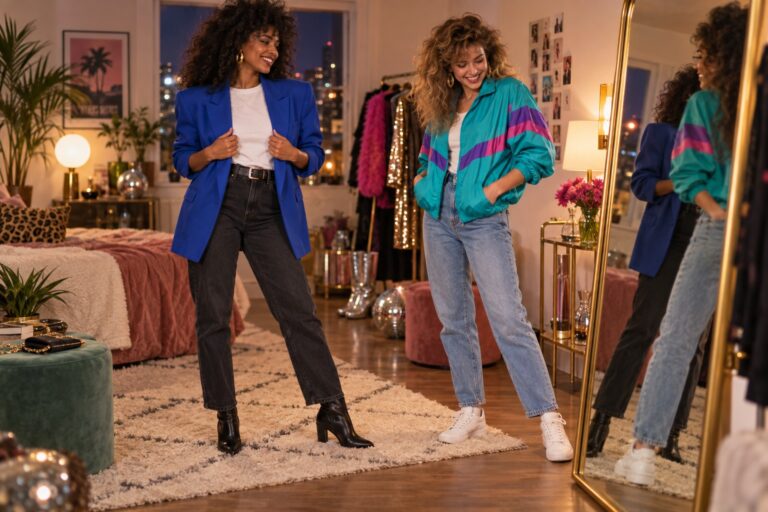
“80s rock” can mean a teased-hair glam-metal look, a patched-up punk outfit, a shadowy goth silhouette, or the easy denim uniform of a night at a show. Those references overlap in attitude, but they do not use the same outfit language. The most convincing 80 rock outfits women can wear start by choosing one musical mood, then repeating two or three details from it.
This comparison guide breaks the choices down by silhouette, texture, color, accessories, and effort. You can use a vintage piece, shop your closet, or borrow just one reference for a themed party. There is no need to copy a performer or wear every rock-coded item at once. A clear point of view usually reads more intentional than a pile of leather, chains, fishnets, and neon competing for attention.
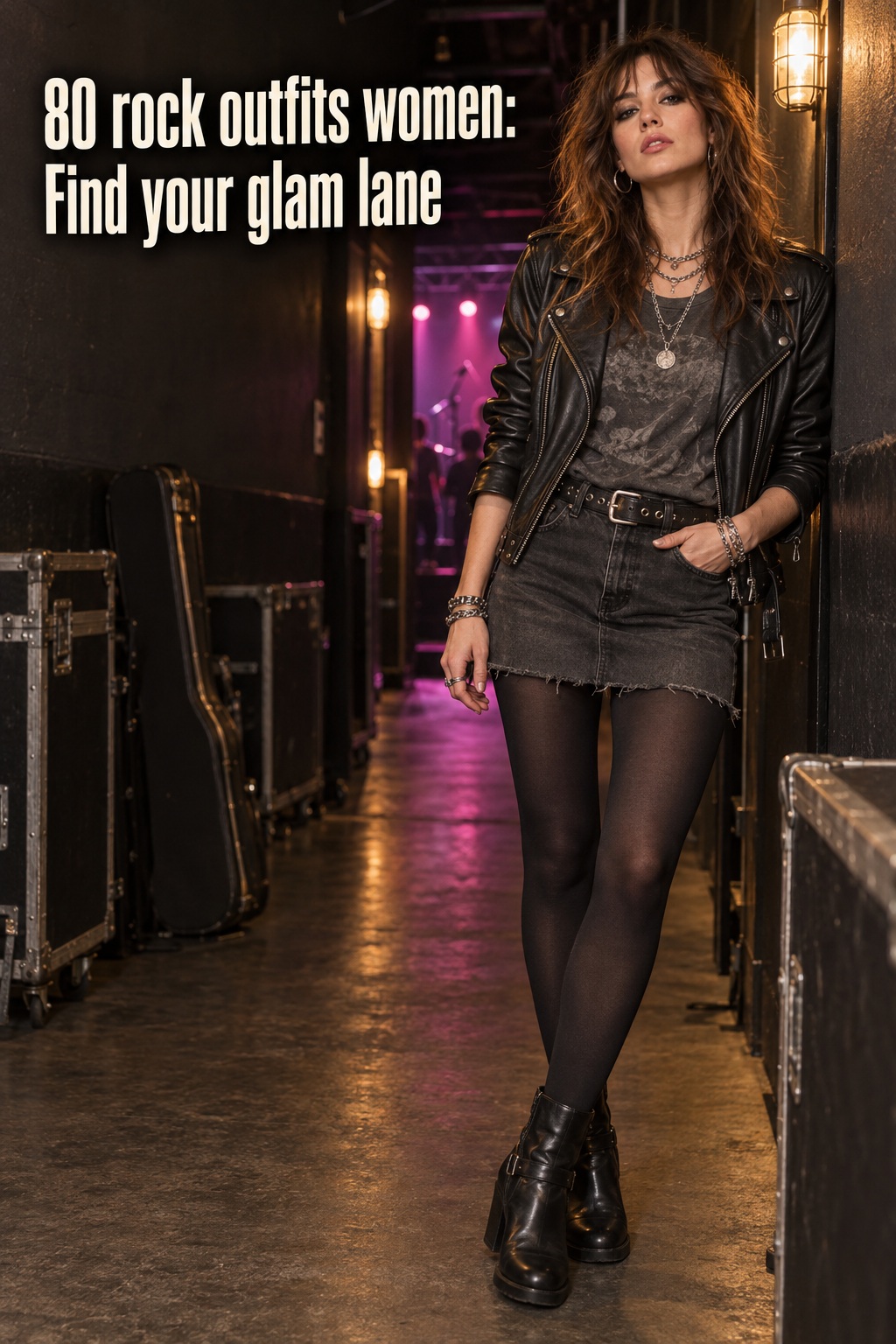
Start with the feeling you want: glossy and theatrical, rough and handmade, dark and romantic, graphic and sharp, or relaxed and concert-ready. Then compare the options below and choose the one that works with your clothes and the place you are going.
The Fashion-Note Edit
Five effortless pieces to refresh your everyday wardrobe
A polished, practical edit for workdays, weekends, and everything in between.

The Drop
Women’s Blake Long Blazer
A longline, tailored blazer with a notched collar and a single-button closure—an easy layer for denim, dresses, or office-ready looks.
Shop the blazer
Amazon Essentials
Women’s Lightweight Crewneck
A soft, lightweight sweater with a clean crew neckline—the kind of reliable layer that works from cool mornings to air-conditioned spaces.
Shop the sweater
Amazon Essentials
Women’s Loafer Flat
A classic flat loafer that gives casual outfits a more polished finish and pairs naturally with tailored pants, skirts, and straight-leg jeans.
Shop the loafers
Levi’s
Women’s 501 90s Jeans
A relaxed, vintage-inspired take on the iconic 501 silhouette—made for an easy, lived-in look without the thrift-store search.
Shop the jeans
Colorfulkoala
High-Waisted 7/8 Leggings with Pockets
Soft, four-way-stretch leggings with side pockets and a high-rise waistband—designed for movement, errands, and off-duty comfort.
Shop the leggings
Affiliate disclosure: This section contains affiliate links. If you make a purchase through these links, I may earn a commission at no additional cost to you. Product selection, pricing, availability, and delivery terms may change—please review the current details on Amazon before purchasing.
As an Amazon Associate I earn from qualifying purchases.
Choose the 80s Rock Mood Before You Build the Outfit
Rock is a wide umbrella, not a single dress code. In the 1980s, music and street scenes carried different visual cues into fashion. Some looks amplified shine and volume, while others used worn surfaces, dark layers, or sharp graphic shapes. The decade’s punk and goth styles also drew on subcultures with their own histories, so it is more useful to select the reference you like than to treat every item as interchangeable.
Your wedding style is personal.
Your plan should feel that way, too.
Zarellea keeps your guest list, budget, vendors, and every next step beautifully organized — so you can focus on the moments that feel like you.
Choose one anchor piece first. It might be a black leather jacket, a band-style tee, a velvet top, a pair of straight jeans, a plaid skirt, or a structured blazer. Ask what that piece already suggests. A cropped jacket with metallic details leans glam; a worn tee and everyday denim feel closer to a concert uniform; a black lace layer points toward goth or post-punk. Let the answer guide your accessories.
Next, set your intensity. A subtle outfit can use one clear cue, such as a leather jacket over a plain top. A middle-ground look might repeat a metal detail in a belt and earrings. A full theme look can add a more dramatic silhouette, stronger makeup, or multiple textures. Deciding this in advance helps prevent the familiar last-minute problem of adding one more thing until the outfit loses its center.
Finally, picture the setting. A seated dinner, a dance floor, an outdoor concert, and a casual costume party ask different things of shoes and layers. A heel may finish a glam look, while a stable boot makes more sense if you expect to stand for a set. The comparison below gives each direction its own visual logic, so you can make a choice that feels expressive and still works for the evening.
Compare Five 80s Rock Outfit Directions Side by Side
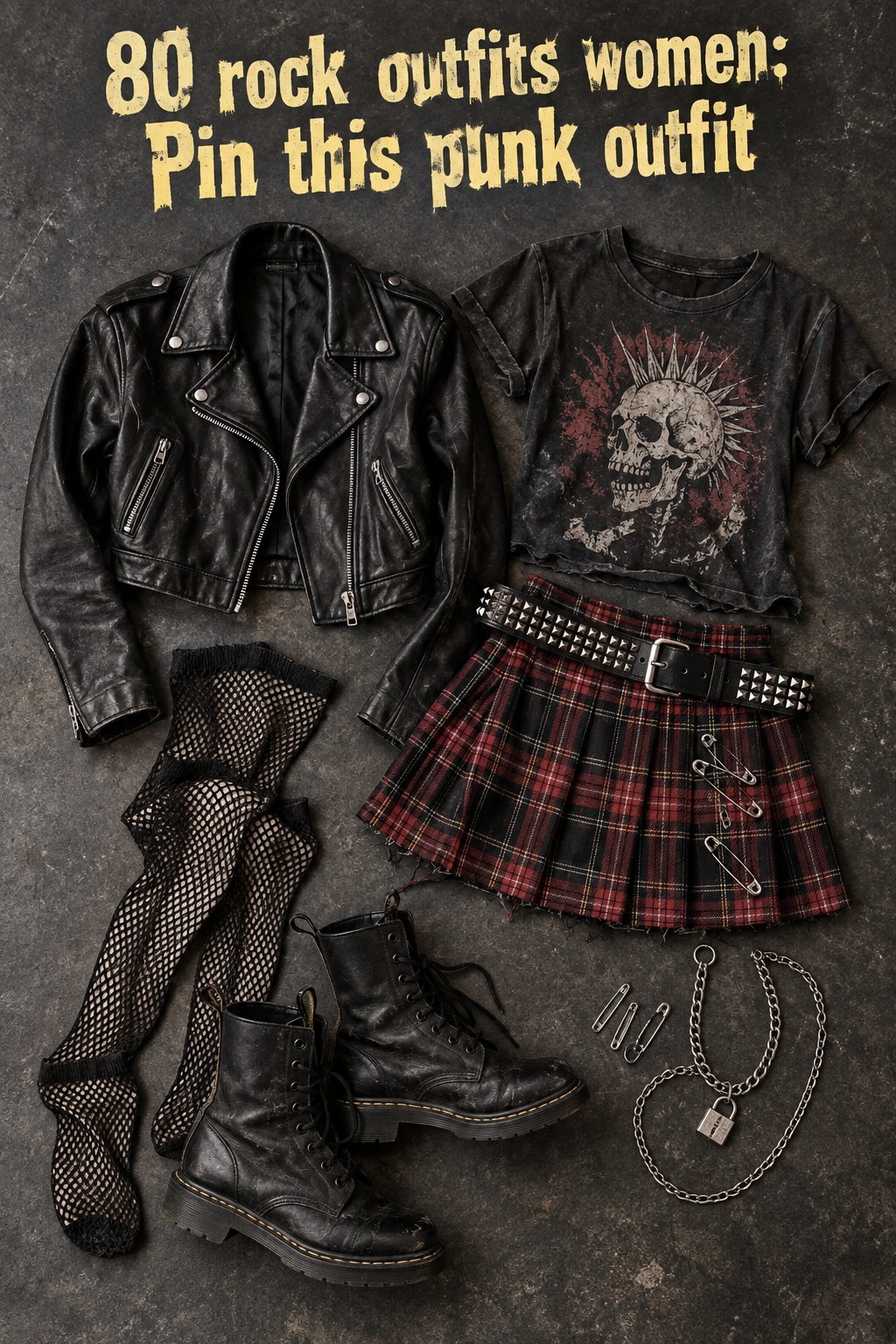
Use the five lanes as starting points, not strict historical uniforms. A modern outfit can borrow a shape or texture without pretending to be an archival reproduction. The useful question is what makes each lane readable: usually one main garment, a supporting proportion, and a small set of details.
Glam metal: shine, volume, and a strong focal point
Glam metal is the most theatrical option in this group. Think a fitted tee or satin-like top under a cropped jacket, a short skirt or slim jeans, and one reflective accent such as a metallic belt, glossy boots, or layered necklaces. Hair can be bigger, makeup can be bolder, and color can be brighter, but you do not need to max out all three. Choose one focal point and let the rest of the outfit support it.
For a closet-friendly version, use a black top and dark jeans as the base, then add a sparkly scarf, statement earrings, or a jacket with a little shine. The contrast between a simple base and one high-impact detail gives the look stage energy without requiring a costume set. If the outfit already has sequins or metallic fabric, keep jewelry streamlined and choose shoes that let you move comfortably.
Punk: DIY texture and deliberate contrast
Punk works through visible construction and contrast: a worn tee beside a sharper leather layer, a plaid skirt with opaque tights, or denim marked by patches and pins. A belt, a pair of boots, or a small cluster of chains can add definition. The idea is not to damage a garment for the night. A removable pin, a thrifted patch, or a scarf tied at the waist can create the handmade impression while leaving your everyday clothes intact.
The Met’s Costume Institute describes punk through DIY materials and techniques such as hardware, bricolage, graffiti, and destruction, which is a useful reminder that the look is built from choices and treatment, not only from black clothing. For an outfit you can wear again, make one area carry the rough detail: the jacket, the skirt, or the accessories. Leave another piece clean so that the textures remain legible instead of turning into visual noise.
Goth and post-punk: dark layers with a romantic edge
Goth and post-punk can feel more atmospheric than loud. Build with black, charcoal, or deep jewel tones, then vary the surfaces: sheer fabric over a solid top, velvet beside denim, lace with a tailored jacket, or a long sleeve under a slip dress. Pointed boots, a narrow belt, or a small silver pendant can sharpen the silhouette. The effect comes from line and texture as much as from color.
FIT’s Fashion History Timeline connects the early-to-mid-1980s rise of goth fashion with punk and music-led street styles. For a wearable interpretation, choose one dark romantic element and one everyday anchor, such as a lace top with straight jeans or a velvet blazer over a plain dress. Keeping the outline simple lets the material do the work. If you want more drama, add a darker lip or a sheer sleeve rather than piling on unrelated symbols.
New wave: graphic shapes and a sharper finish
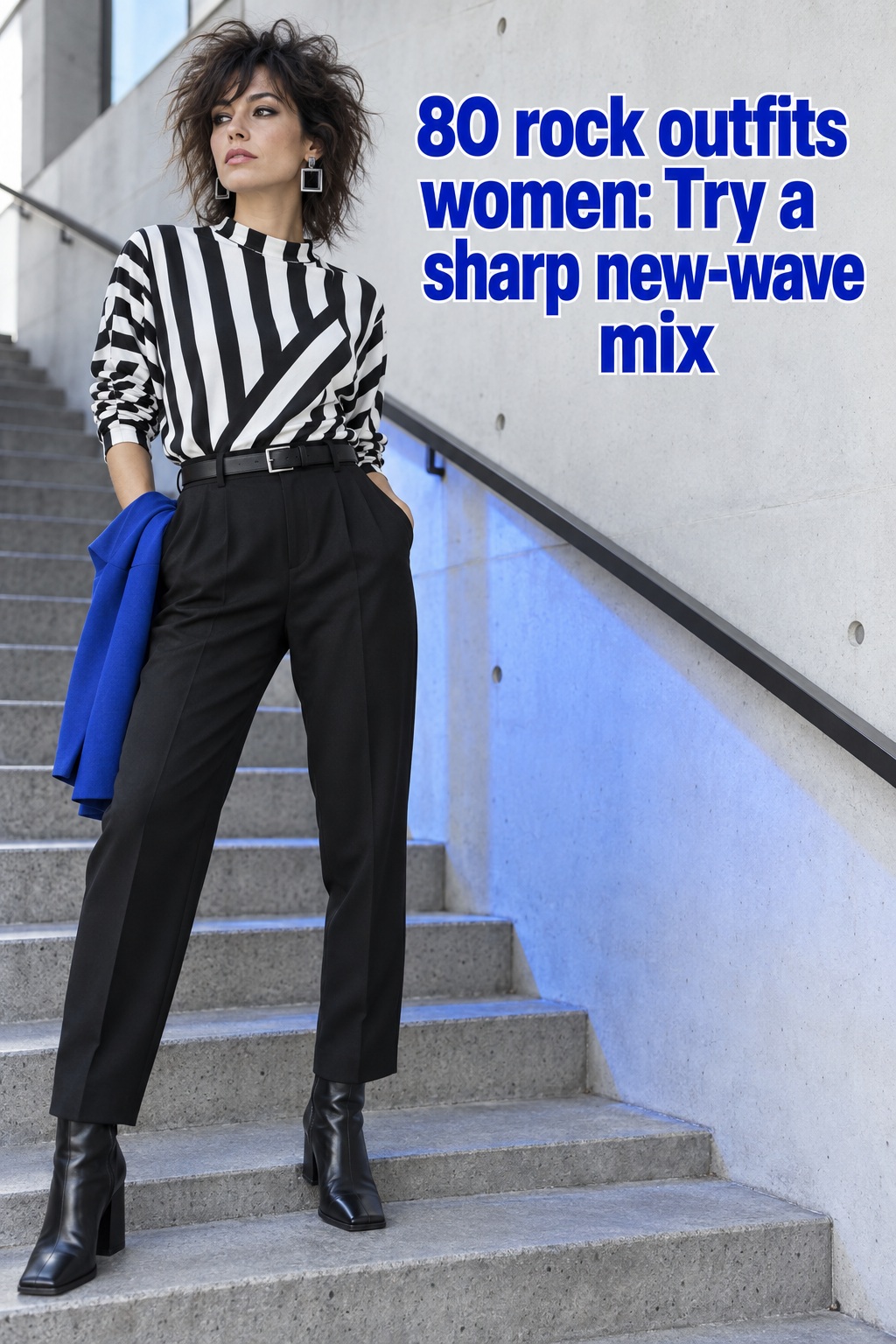
New wave offers a cleaner, more graphic route. Use stripes, color blocking, a crisp jacket, a geometric earring, or a strong shoulder line. A black-and-white base with one vivid accent can feel distinctly energetic without relying on distressed pieces. Trousers and ankle boots make a composed outfit; a mini skirt and tights shift it toward the dance floor. Keep the shapes intentional and let one unexpected color carry the personality.
This lane suits anyone who likes a rock reference but does not want a visibly rugged outfit. Try a striped top with high-waisted trousers, a slim belt, and one bright bag or accessory. If the pattern is already bold, avoid adding a second loud print. If you have no graphic top, use a plain outfit and make the accent come from a saturated jacket, earrings, or shoes.
Classic rock and concert denim: relaxed, durable, and personal
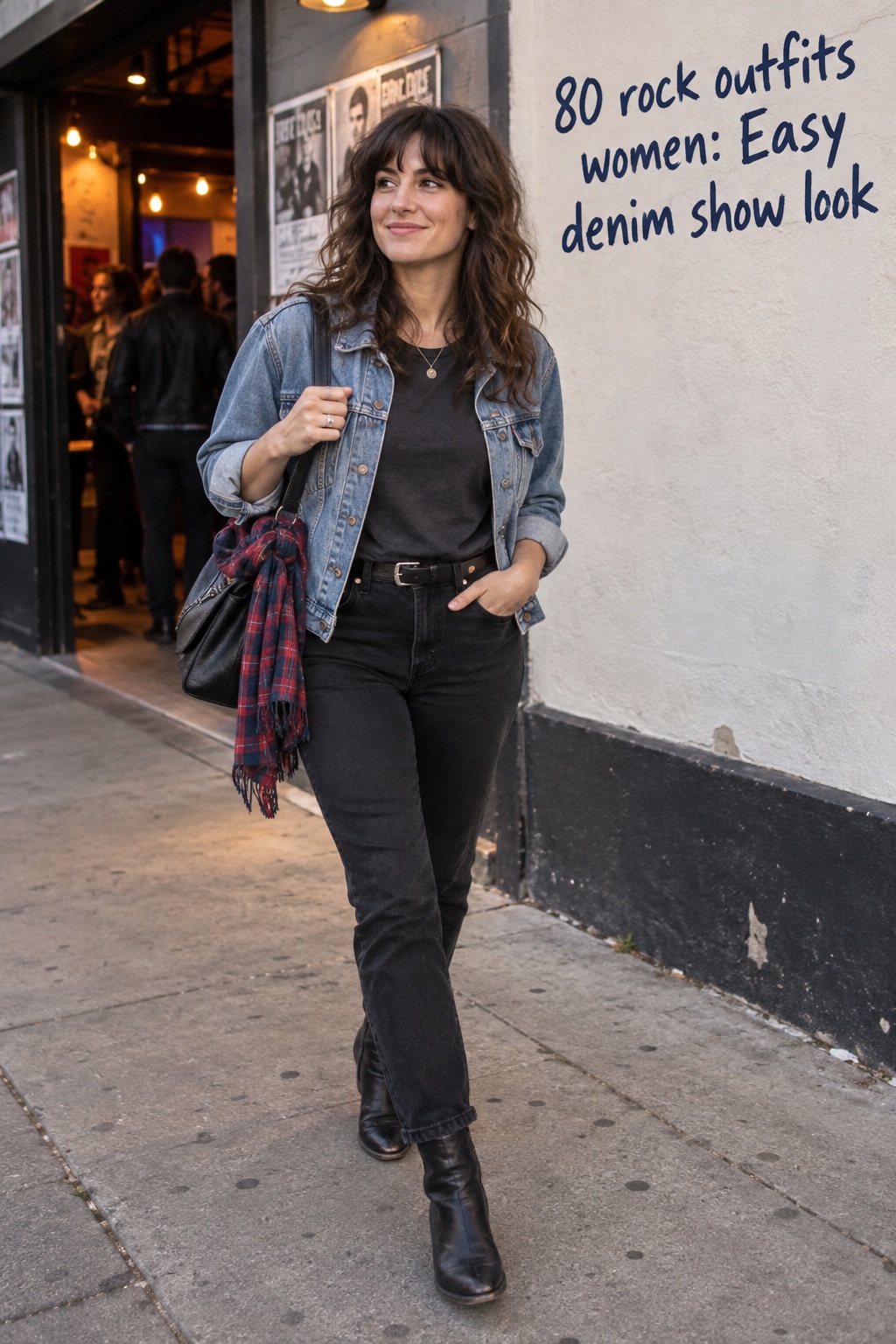
A denim-led concert look is the easiest lane to adapt to an ordinary closet. Start with a dark tee, straight or relaxed jeans, and a denim or leather jacket. A plaid shirt tied around the waist, a simple chain, or a worn-in belt adds a lived-in note. Keep the footwear sturdy if the plan involves standing. This outfit can still read as rock-inspired without fringe, a wig, or head-to-toe black.
For a concert outfit, think about comfort and how the clothing will behave through the evening. Pick a jacket you can carry or tie around your waist, choose pockets or a small hands-free bag, and wear shoes you already know are comfortable. A favorite tee or personal accessory can make this direction feel like your outfit instead of a generic reference.
Pick the Rock Outfit That Fits Your Closet and Occasion
The best starting point is often the item you already own and actually enjoy wearing. Match that item to the closest lane, then borrow just enough from the decade to make the reference clear. You can build a satisfying look with one statement garment and a few smaller details; every part does not need to come from a vintage shop.
If your statement piece is a leather jacket
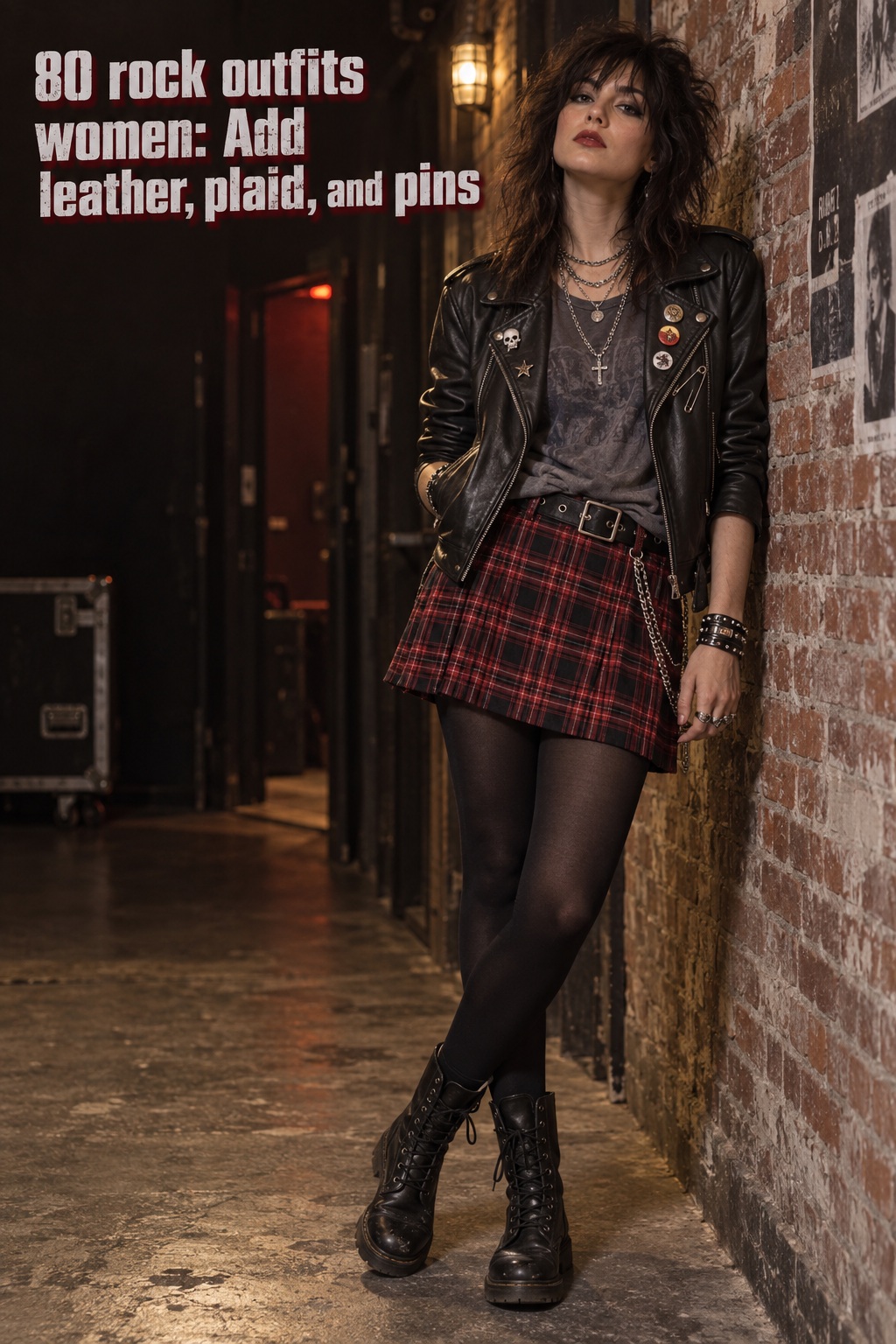
A leather or faux-leather jacket can point in several directions. For punk, pair it with a faded tee, plaid, and a few metal accents. For glam metal, use a fitted base, a more polished skirt or slim trouser, and one shiny accessory. For goth, place it over a dark dress or lace layer and keep the palette quiet. The jacket is the shared item; the base, finish, and accessory choices make the look specific.
Check the jacket’s proportions against what sits underneath. If it is oversized, a straighter or narrower bottom half can make the silhouette feel deliberate. If it is cropped, a high-waisted skirt or trouser creates a clear waistline. The goal is not to enforce one body shape. It is to give the eye a simple relationship between the jacket and the rest of the outfit.
If you have a band-style tee or graphic top
Let the graphic have room. Tuck it into jeans, wear it beneath an open jacket, or balance it with a plain skirt. For a punk direction, add plaid or a removable patch. For a concert-denim look, keep the rest relaxed and add a sturdy shoe. For a brighter glam interpretation, use a metallic belt or bold earrings instead of another competing print.
If the shirt is not connected to a band you follow, a plain graphic or vintage-style print is enough. Avoid relying on a name or logo as the whole outfit idea. The shape of the top, the way it is layered, and the relationship between the tee and the bottom half can still give the look a music-scene reference. A soft overshirt also makes the outfit easy to adjust indoors.
If your closet is mostly black basics
Black basics are especially useful for goth, post-punk, and punk-inspired looks, but texture keeps them from becoming flat. Combine matte denim with a sheer sleeve, a smooth top with a textured jacket, or opaque tights with a skirt. Add a silver chain or a narrow belt as a single point of light. To move toward new wave, add a crisp stripe or one saturated accessory.
Keep the outfit readable by varying only one or two materials at a time. A pile of lace, mesh, studs, chains, and distressed edges can hide the silhouette and make dressing feel more complicated than it needs to be. Choose the detail that carries the mood, then let the rest act as a frame. A dark outfit can feel expressive without requiring a full set of subculture markers.
If the event is dressier or includes dancing
For a dressier party, translate the rock reference through shape or surface. A satin-like top with a tailored jacket can suggest glam without a full costume. A velvet dress with a slim belt leans dark and romantic. A graphic mini with tights and a neat boot gives a sharper new-wave direction. If you plan to dance, check that the skirt stays comfortable when you move and that sleeves or jewelry will not snag.
For a concert or a long evening on your feet, make comfort part of the look rather than a last-minute compromise. Try the shoes with the full outfit and walk around the room. Bring a layer for temperature changes, keep jewelry secure, and choose a bag that leaves your hands free. A grounded shoe does not cancel a glam or punk direction; it simply makes the outfit usable for the event you are attending.
If you want a subtle reference instead of a costume
Use one 80s cue in a modern outfit: a broad-shouldered jacket, a washed denim layer, a graphic tee, a geometric earring, or a bright belt. Keep the rest of the clothes familiar. This is a good option for an office-to-party plan, a casual gathering, or anyone who prefers pieces they can repeat later. A single well-chosen detail can be more recognizable than wearing several unrelated references at once.
Choose the cue that makes you feel most like yourself. If you dislike high heels, do not force them into a glam look. If fishnets are uncomfortable, opaque tights or bare legs can work with the same skirt and jacket. Style references are flexible tools. The best version is the one you can move in, enjoy in photographs, and wear without spending the evening adjusting it.
Avoid the Styling Mix-Ups That Blur Each Rock Look
Rock-inspired outfits can use a lot of personality, but more detail does not automatically create a clearer reference. Use these checks to decide what belongs and what can be edited out.
Mixing every subgenre in one outfit
A metallic fringe jacket, plaid mini, lace gloves, neon leggings, and dark romantic makeup each point in a different direction. Any one of them could work, but together they may compete. Pick a lead lane, then borrow one supporting detail from another only if it connects naturally. A glam outfit can use a worn tee; a goth outfit can use denim. The lead silhouette should still be clear when you look at the complete outfit.
Using accessories before the outfit has a shape
Belts, chains, earrings, and hair details are useful finishing touches, but they cannot replace a clear base. First decide whether the outfit is built around a jacket, a dress, a tee, or a pair of trousers. Then add accessories that echo its mood. If the anchor piece is graphic, avoid a second statement piece at the same scale. If the outfit is simple, one strong accessory can become the focal point.
Choosing shoes only for the photograph
Footwear can change the mood, but it also affects how long you can enjoy the event. Try the complete outfit while standing, walking, sitting, and raising your arms. Secure any loose jewelry and check that layers stay in place. If your preferred shoes are low-profile, use socks, tights, or a stronger jacket detail to carry the reference instead of forcing an uncomfortable heel or boot.
Assuming the loudest version is the most authentic
A full costume can be fun, but not every 1980s-inspired look needs neon, teased hair, distressed denim, and stacks of jewelry. Fashion scenes included many different expressions of rock and music culture. A dark, tailored, graphic, or denim-led outfit may feel more appropriate to the reference you chose. Let your cues be specific instead of relying on volume alone.
Before leaving, take one quick photograph from the front and side. Look for the anchor piece, the color story, and the silhouette. If all three are easy to read, stop styling. If the look feels scattered, remove one accessory or one extra layer. That final edit often makes the outfit feel more confident and less like a collection of props.
Sources and Methodology
This comparison uses museum and fashion-history material to distinguish punk, goth, new wave, and broader 1980s dress from present-day outfit roundups. The Met Costume Institute’s punk exhibition and FIT’s 1980-1989 timeline informed the subgenre distinctions. Outfit formulas here are styling suggestions, not claims of a single historically correct uniform, and the generated fashion images are illustrative rather than documentary photographs.
FAQ
What makes an outfit look like 80s rock?
Start with a recognizable anchor such as a leather jacket, graphic tee, denim layer, plaid skirt, or bold structured piece. Then repeat one or two details in texture, color, or accessories. The exact combination depends on whether you want glam metal, punk, goth, new wave, or a relaxed concert look.
How can women dress like an 80s rocker without buying a costume?
Use clothes you already own and add a clear reference: a dark tee with denim, a jacket with a belt and silver jewelry, or a graphic top with straight trousers. Removable pins, a scarf, or one statement accessory can make the mood more specific without requiring a complete costume.
Are punk and glam metal outfits styled the same way?
No. Punk usually emphasizes DIY texture, distressed or patched details, and contrast. Glam metal tends toward shine, volume, and a more theatrical focal point. Both can include leather or fitted pieces, but the finish and supporting details tell different stories.
What shoes work with an 80s rock outfit?
Boots are a flexible choice for punk, goth, or concert-inspired outfits. Ankle boots or heels can sharpen a glam look, while a clean ankle boot also works with new-wave tailoring. Choose a pair that fits the event and lets you stand or dance comfortably.
How do I make a rock outfit feel less costume-like?
Choose one lead style and limit the number of obvious references. Pair a statement piece with familiar basics, keep logos optional, and use one or two accessories that reinforce the same mood. A clear silhouette and comfortable fit usually feel more intentional than wearing every recognizable detail together.
Can I wear an 80s rock look to a concert today?
Yes. A band-style tee, denim or leather layer, practical trousers, and comfortable shoes create an easy starting point. Add a plaid layer, a chain, or one brighter detail if you want a stronger decade reference. Check the venue’s weather and movement needs before choosing your final shoes and outer layer.
Finish the look
The little extras that make a summer outfit feel complete
From beach days to city weekends, these easy pieces bring comfort, texture, and a polished finishing touch.

FENBEN
Straw Hobo Crossbody Bag
A handwoven straw bag with both short and crossbody straps—an effortless finishing touch for vacation looks and warm-weather outfits.
Shop the bag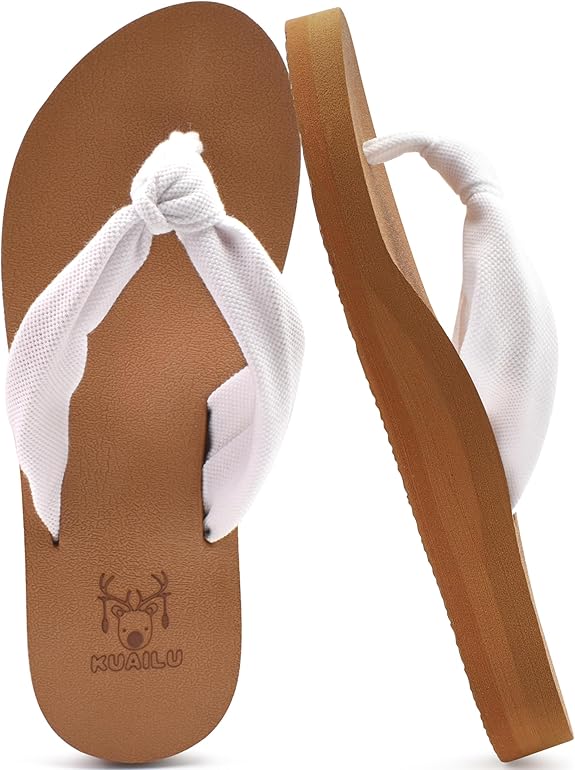
KuaiLu
Flip Flops with Arch Support
Cushioned, lightweight sandals with supportive arch design—a practical choice for beach trips, errands, and long summer walks.
Shop the sandals
baleaf
Athletic One-Piece Swimsuit
A functional one-piece with adjustable straps and moderate coverage, designed for swimming, training, surfing, and active beach days.
Shop the swimsuit
Astylish
Linen-Cotton Button-Down Shirt
A relaxed cotton-linen shirt with a collared V-neck and roll-up sleeves—easy to style over swimwear or with denim and shorts.
Shop the shirt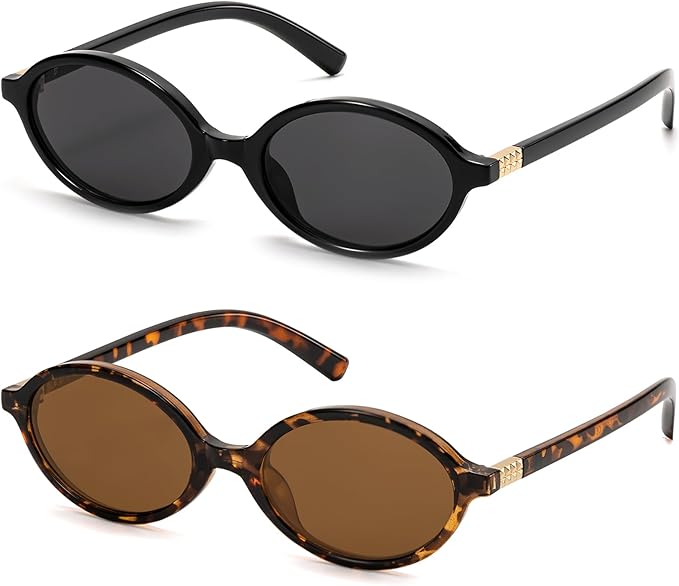
ViewJoy
Retro Oval Sunglasses
Small oval sunglasses with a 90s-inspired silhouette and UV400 lens protection—a quick way to add a vintage edge to everyday looks.
Shop the sunglasses
Affiliate disclosure: This section contains affiliate links. If you make a purchase through these links, I may earn a commission at no additional cost to you. Product selection, pricing, availability, and delivery terms may change—please review the current details on Amazon before purchasing.
As an Amazon Associate I earn from qualifying purchases.