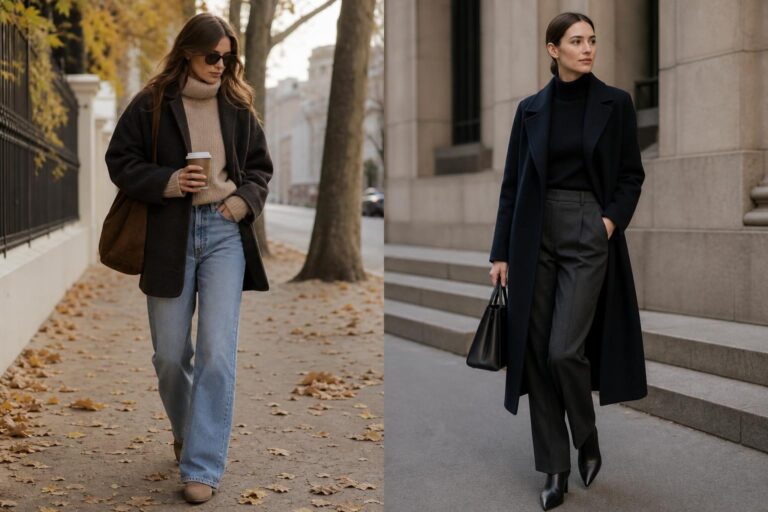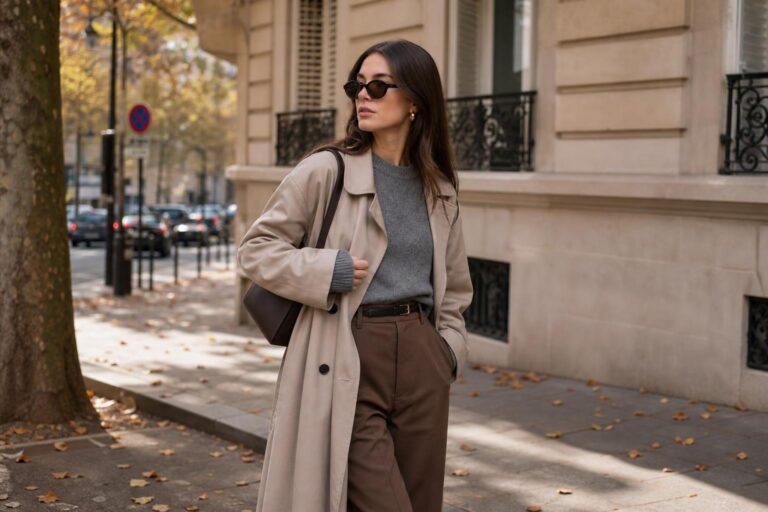
Warm Weather Fall Outfits That Feel Polished
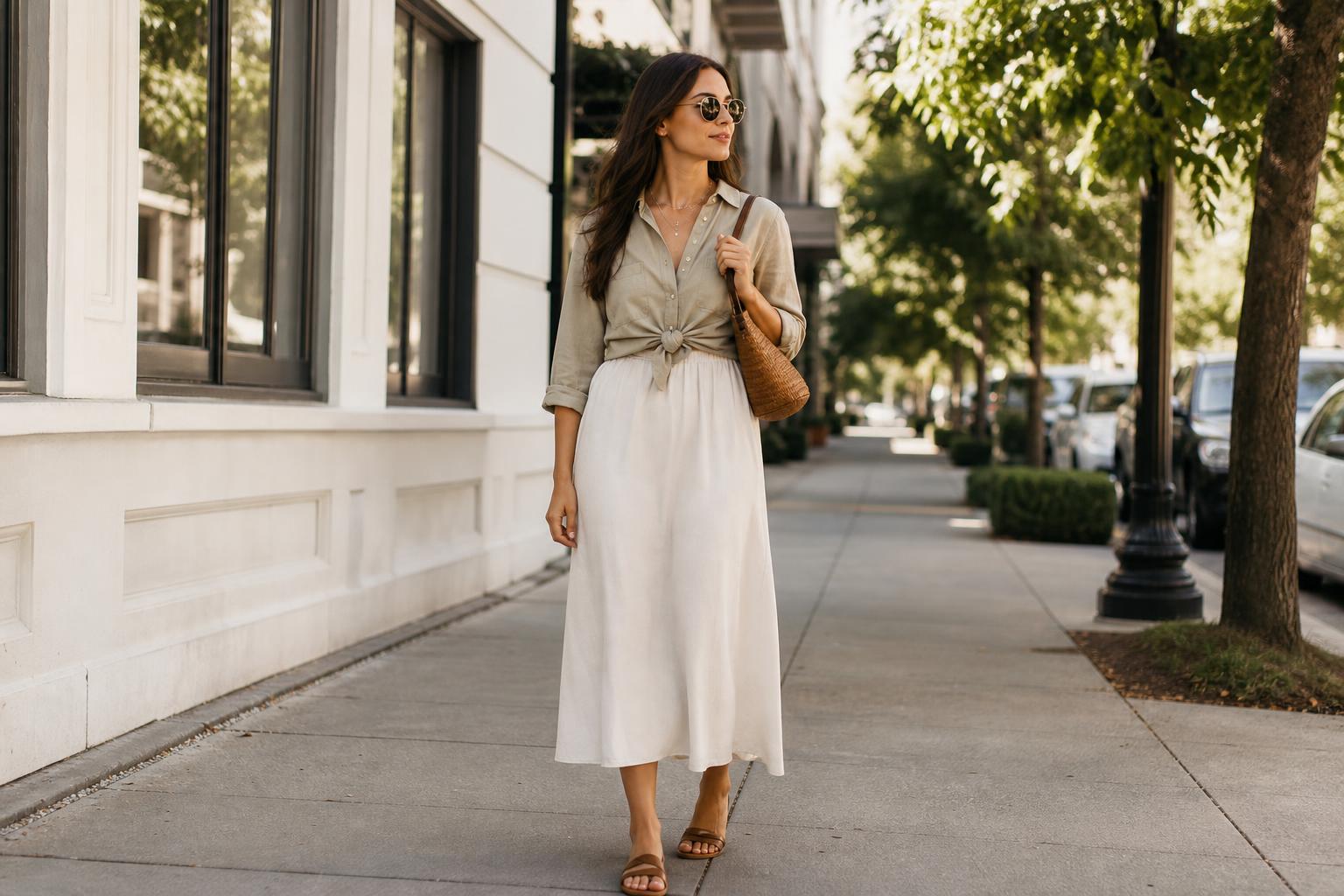
Early fall can be the most confusing part of the year to dress for. The calendar says autumn, but the temperature still feels closer to late summer, and that is exactly why warm weather fall outfits can feel harder than winter layers or simple summer dressing. You want the outfit to look seasonally right without overheating by noon, and you want comfort without losing that more polished fall mood.
This is where transitional styling matters. A good warm-weather fall look is not about forcing heavy jackets, boots, or thick knits into a hot day. It is about using fall color stories, light layering, breathable fabrics, and smart accessories so the outfit feels intentional, wearable, and easy to move through real life in.
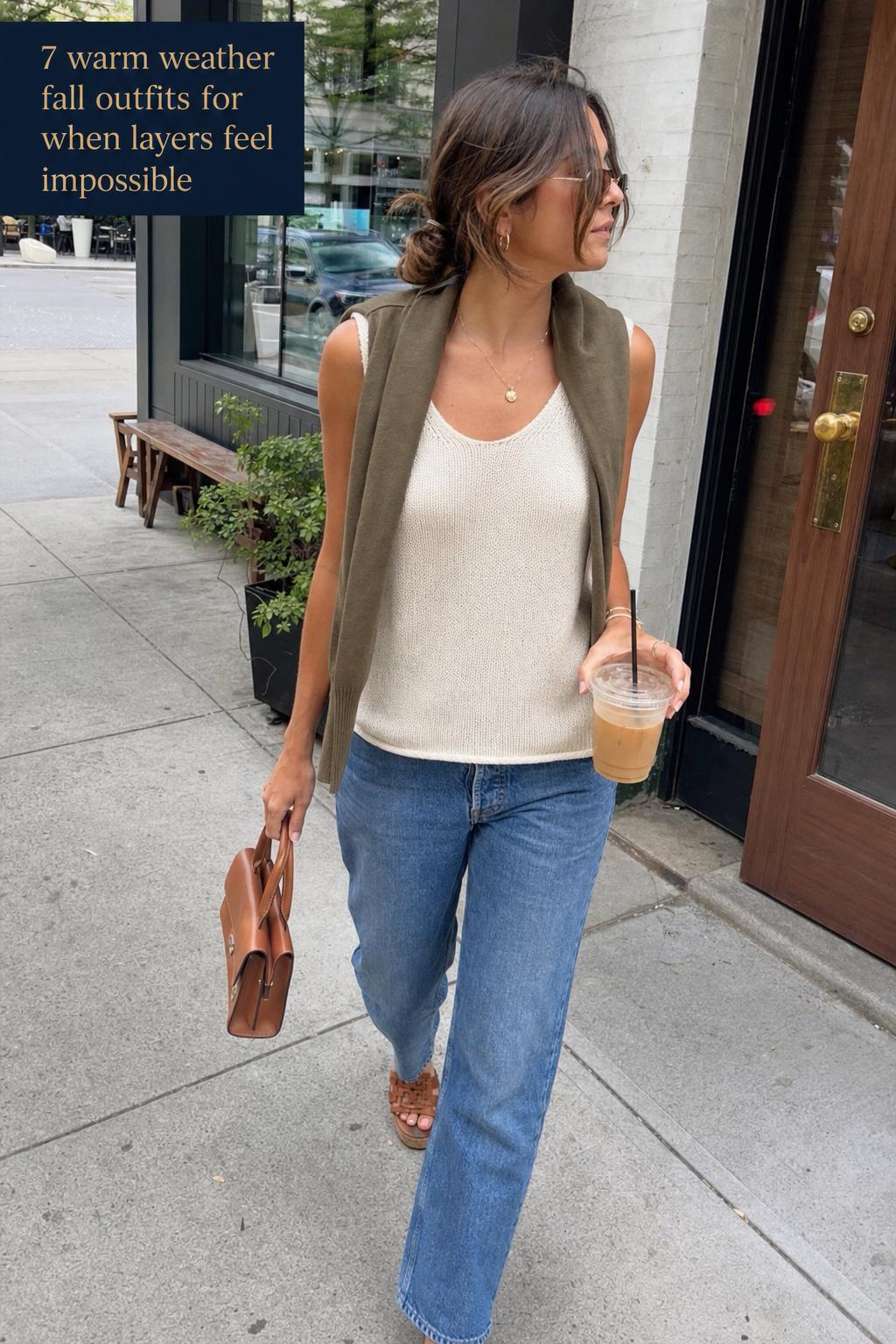
Whether you are getting dressed for campus, a city coffee run, a casual office day, travel, or everyday errands, the goal is the same: create outfits that feel relaxed but intentional, polished but practical, and unmistakably fall without fighting the weather. Below, you will find the styling logic that makes these outfits work, along with wearable ideas you can actually repeat.
The Fashion-Note Edit
Five effortless pieces to refresh your everyday wardrobe
A polished, practical edit for workdays, weekends, and everything in between.

The Drop
Women’s Blake Long Blazer
A longline, tailored blazer with a notched collar and a single-button closure—an easy layer for denim, dresses, or office-ready looks.
Shop the blazer
Amazon Essentials
Women’s Lightweight Crewneck
A soft, lightweight sweater with a clean crew neckline—the kind of reliable layer that works from cool mornings to air-conditioned spaces.
Shop the sweater
Amazon Essentials
Women’s Loafer Flat
A classic flat loafer that gives casual outfits a more polished finish and pairs naturally with tailored pants, skirts, and straight-leg jeans.
Shop the loafers
Levi’s
Women’s 501 90s Jeans
A relaxed, vintage-inspired take on the iconic 501 silhouette—made for an easy, lived-in look without the thrift-store search.
Shop the jeans
Colorfulkoala
High-Waisted 7/8 Leggings with Pockets
Soft, four-way-stretch leggings with side pockets and a high-rise waistband—designed for movement, errands, and off-duty comfort.
Shop the leggings
Affiliate disclosure: This section contains affiliate links. If you make a purchase through these links, I may earn a commission at no additional cost to you. Product selection, pricing, availability, and delivery terms may change—please review the current details on Amazon before purchasing.
As an Amazon Associate I earn from qualifying purchases.
Why dressing for fall in warm weather feels so tricky
The problem usually starts with a mismatch between season and climate. Most people associate fall fashion with jackets, scarves, boots, dense knits, and layered textures. But in warm regions, mild autumn days and even hot fall afternoons make those traditional combinations uncomfortable fast. The result is often an outfit that looks autumnal in theory but feels impractical the moment you step outside.
Your wedding style is personal.
Your plan should feel that way, too.
Zarellea keeps your guest list, budget, vendors, and every next step beautifully organized — so you can focus on the moments that feel like you.
Layering adds another challenge. When light pieces are stacked without enough structure, the outfit can start to look bulky even if the fabrics are thin. A loose dress under an oversized jacket, plus heavy shoes, can feel visually off-balance in warm weather. The body wants airflow, but the eye still wants some seasonal depth. That tension is why so many people end up defaulting to summer clothes that do not quite feel right for September and October.
Footwear is often where the frustration becomes obvious. Sandals may still make sense from a comfort standpoint, but they can feel too summery unless the rest of the outfit introduces fall elements through color, denim, lightweight outerwear, or accessories. On the other hand, boots can feel too hot and visually heavy. The same issue shows up with fabrics: thick knits and stiff layers trap heat, while airy pieces need styling support so they do not read as peak summer.
That is why the best transitional outfits rely less on seasonal clichés and more on balance. Fashion editors, stylists, and contributors across fashion media and blogs consistently return to a few ideas: breathable layers, dresses with structure, denim, loafers, lightweight jackets, scarves used lightly, neutral palettes, warm-to-cool color stories, and easy outfit combinations that can flex between morning and afternoon temperatures.
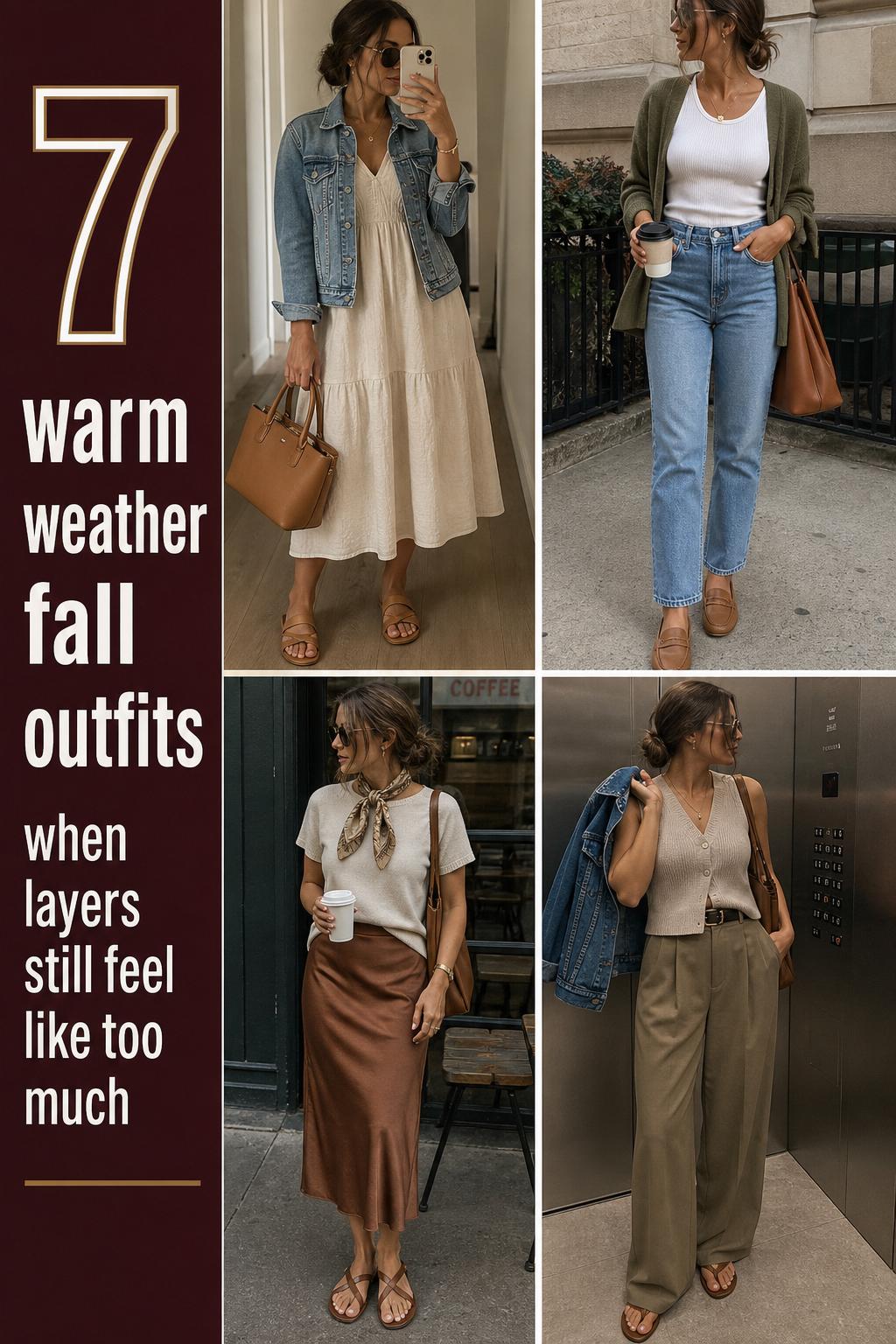
The principles that make warm-weather fall styling work
Choose breathable fabrics before adding visual fall cues
Breathable fabrics do most of the practical work in warm weather. Cotton, linen blends, light knits, and other airy materials let you keep the softness and movement of summer pieces while shifting the outfit toward fall through color and layering. This works better than reaching immediately for thick sweaters because it keeps the body comfortable first, then builds a seasonal look around that comfort.
Use light layering instead of heavy layering
Light layering means adding one intentional extra piece rather than multiple dense ones. A denim jacket, vest, lightweight knit, or soft outer layer creates that transitional feeling without making the outfit feel trapped. This is especially helpful on mild autumn days when mornings and evenings are cooler but midday still feels warm.
Let color do part of the seasonal work
One of the easiest ways to make an outfit feel more autumnal in warm weather is through color stories. Neutrals, richer earth tones, muted shades, and warm-to-cool palettes help summer silhouettes feel more aligned with fall. This is why a dress or skirt that might feel summery in bright high-season colors can suddenly feel transitional when styled with softer neutrals, denim, or deeper accessories.
Balance silhouette so the outfit stays clean and wearable
Many transitional outfits succeed or fail based on proportion. If the base is flowy, adding a more structured layer keeps the silhouette from looking shapeless. If the outer layer is relaxed, a cleaner skirt, dress, or pant shape underneath helps. This kind of visual control is especially important when you are using lightweight pieces because it keeps the look polished without needing a lot of clothing.
Keep footwear practical but seasonally grounded
Footwear should support both comfort and mood. Loafers, sandals styled with more autumnal clothing, and other easy everyday shoes often work better than forcing boots too early. The best choice depends on how much visual weight the outfit needs. A breezy dress may feel more balanced with loafers or a structured bag, while relaxed denim can still work with sandals when the rest of the outfit leans fall.
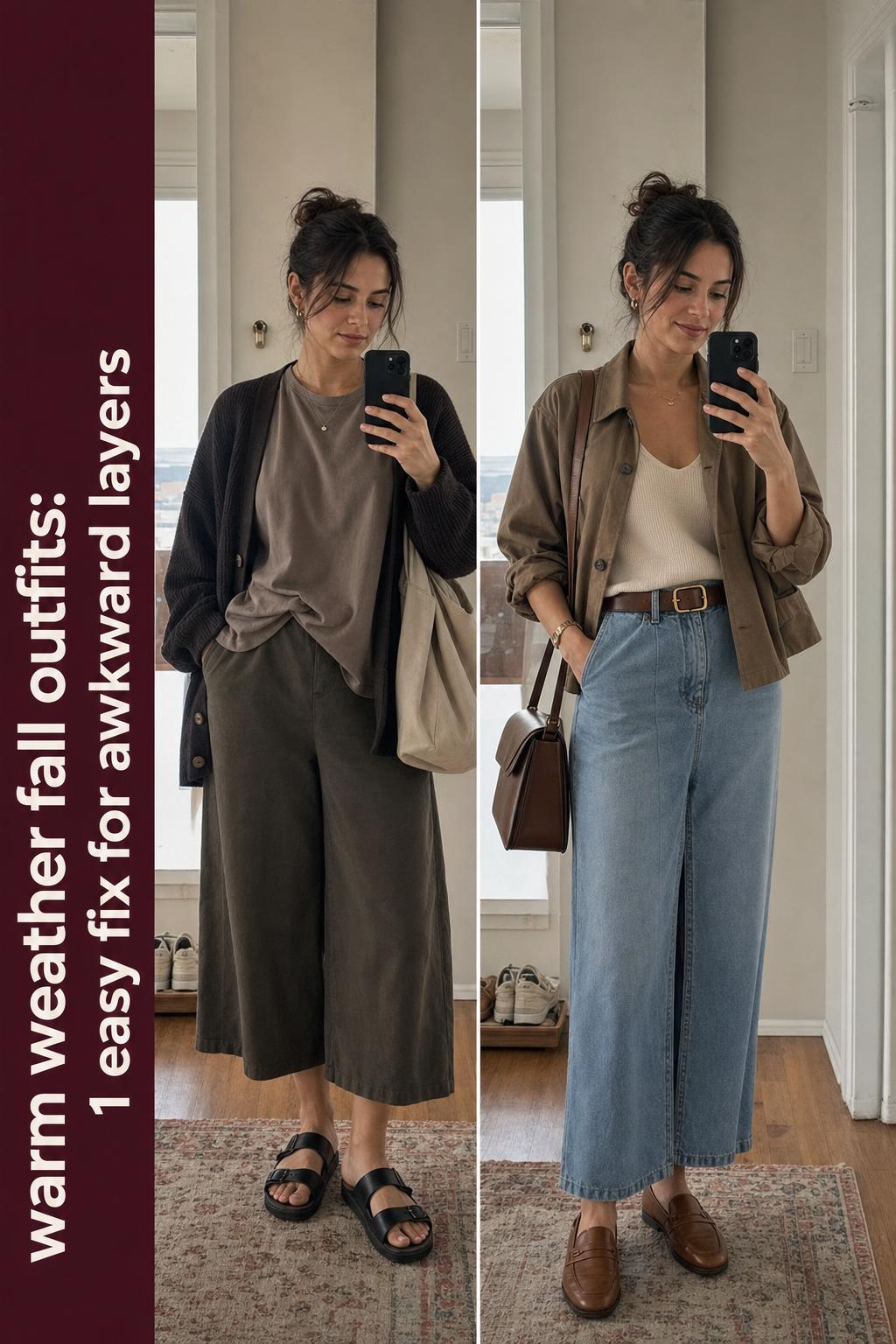
The small styling changes that make outfits feel more like fall
Sometimes the outfit itself is already close. What makes it feel finished is a small adjustment: adding a scarf lightly rather than wrapping it like cold-weather gear, swapping a bright summer tote for a more neutral bag, choosing a vest over a jacket, or using a lightweight knit across the shoulders for texture. These changes matter because they shift the visual story without adding too much heat.
This is also where fashion media such as Who What Wear, Marie Claire, Her Campus, and style blogs tend to overlap in approach. The outfit formulas are rarely complicated. The difference comes from thoughtful pairings: dresses with denim, skirts with light knits, sandals with richer tones, jackets over breathable basics, and casual pieces made more intentional with accessories and cleaner proportions.
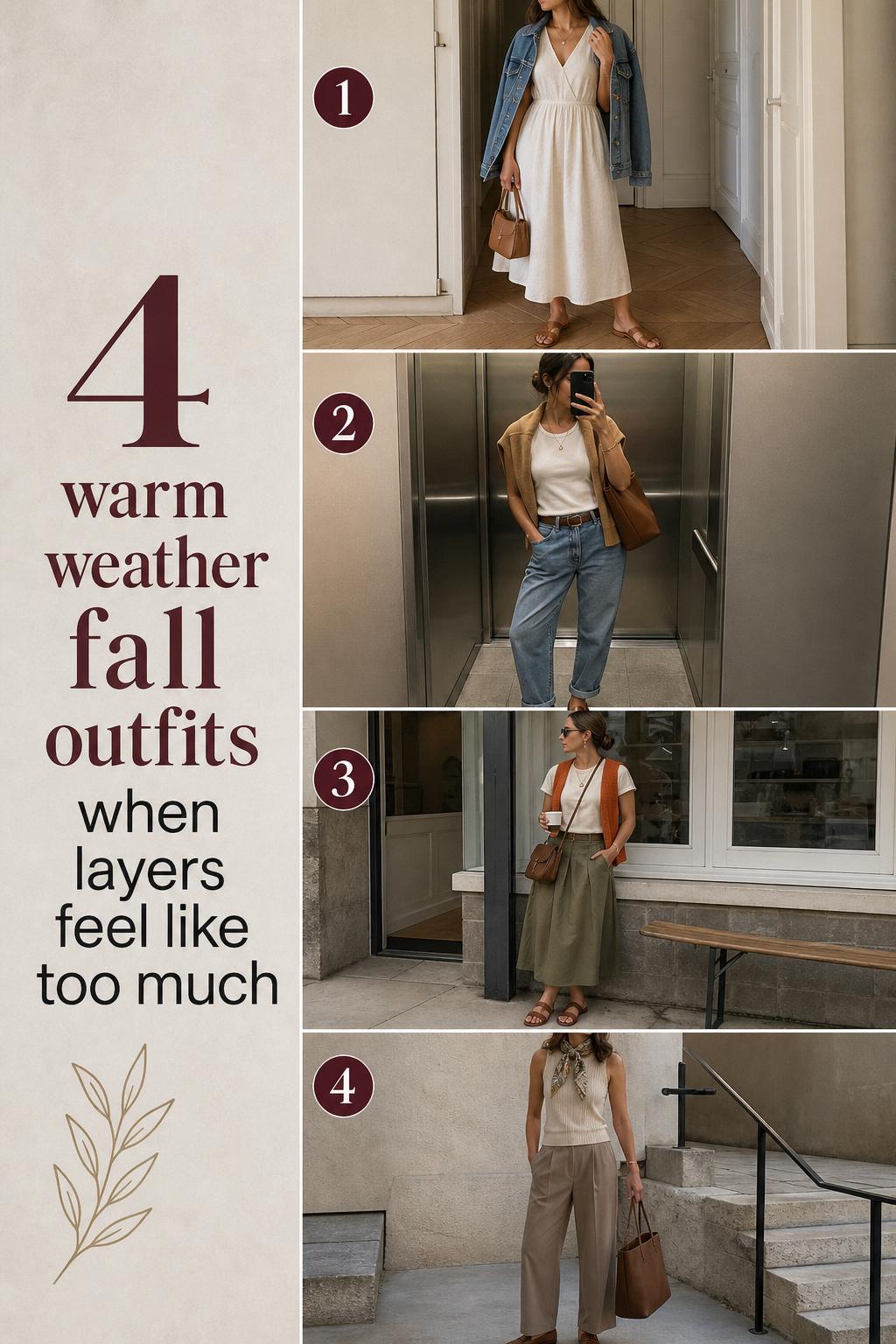
Outfit solution: lightweight layered balance for everyday city days
This is the outfit for days when the air suggests fall, but the sidewalk still feels warm. The mood is relaxed city dressing with just enough structure to feel seasonal. It works well for coffee runs, casual meetings, browsing stores, or an easy afternoon in an urban setting. The goal is to look put-together without relying on heavy layers.
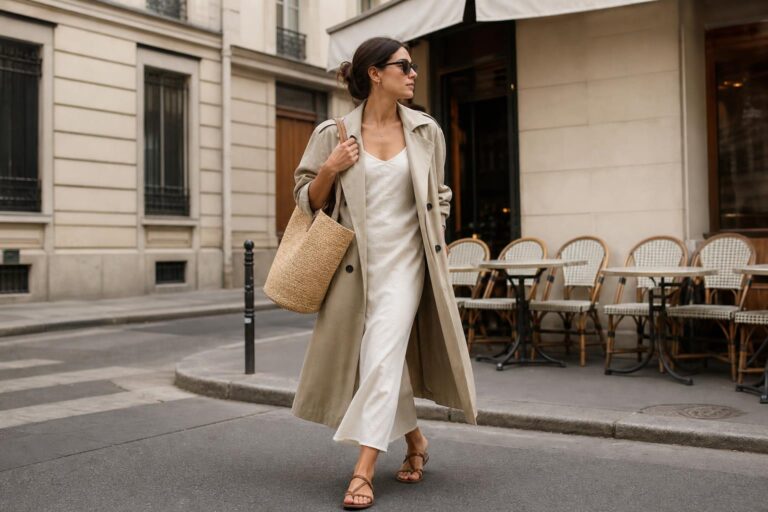
Start with a breathable dress in a neutral or muted tone, then add a denim jacket worn open. Keep the jacket lightweight rather than stiff so it adds shape without trapping too much heat. Sandals can still work here, especially if the dress and jacket combination already gives enough autumn context. A simple bag and minimal accessories keep the outfit clean and easy.
The reason this formula works is that the dress keeps the body cool while the denim adds the familiar fall texture people associate with transitional fashion. It feels especially useful in places where temperatures swing between warm afternoons and slightly cooler evenings. If the day gets hotter, the jacket can come off without the whole outfit losing direction.
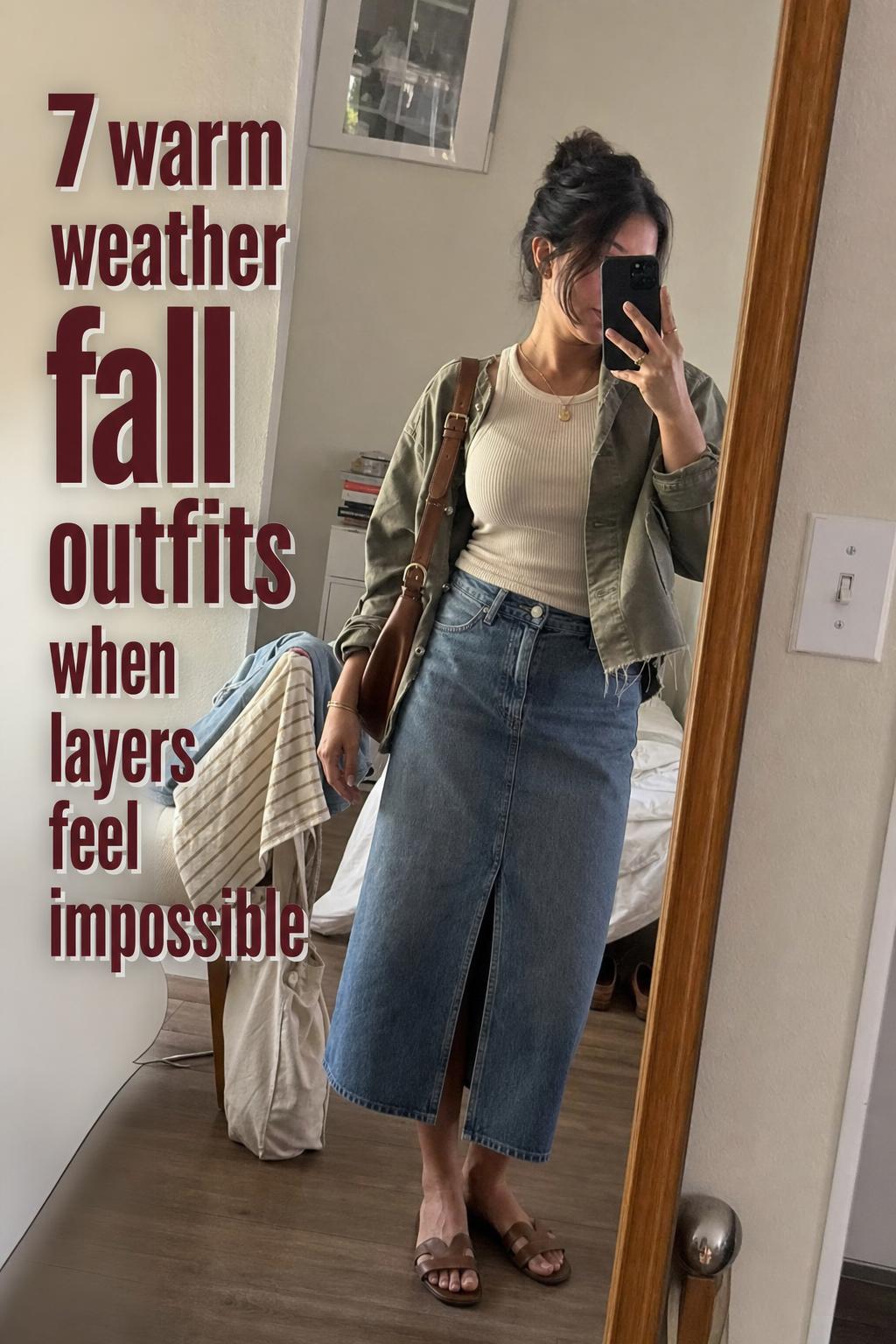
Outfit solution: mild autumn denim and loafers
For readers who want something more grounded than a dress but still light enough for warm weather, this combination solves a very common problem: how to look more fall-appropriate without wearing too much clothing. The overall effect is polished casual, with a little structure from the denim and a more seasonal finish from the shoes.
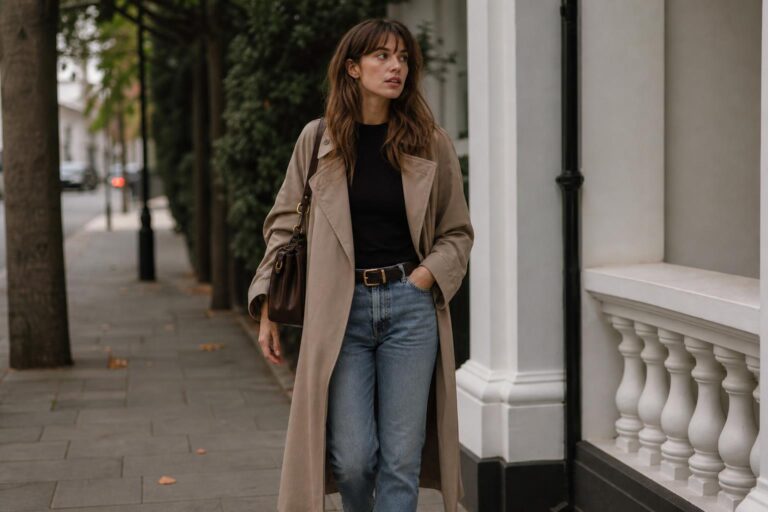
Use straight or relaxed denim with a breathable top or lightweight knit. Then finish with loafers instead of sandals. A vest or light jacket can be added if you want another layer, but it should stay easy and unforced. This kind of look often appears in fashion editor styling because it gives enough visual weight for fall while staying practical in mild weather.
Loafers help anchor the outfit without making it feel overly dressed or too hot. They are especially useful when you want a campus look, city outfit, or casual office option that feels more intentional than summer basics. If you run warm, this can be one of the most wearable warm-weather fall outfits because it uses familiar pieces with just enough seasonal framing.
Outfit solution: a skirt and lightweight knit that feels relaxed but intentional
This outfit is ideal when you want softness and movement but still want the outfit to register as fall. It works well for brunch, everyday errands, or a low-key dinner where you want to feel comfortable without looking too casual. The mood is easy, feminine, and transitional rather than overtly summery.
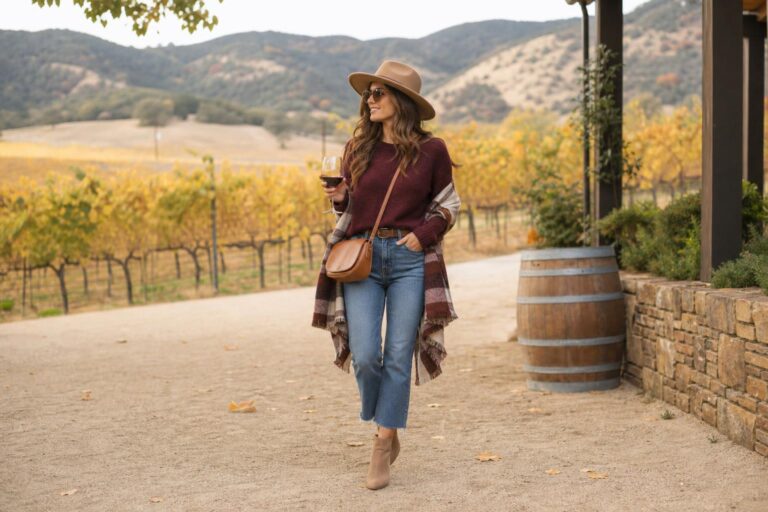
Pair a skirt with a lightweight knit or a breathable top styled to create a cleaner waistline. The knit should feel light, not heavy, so the outfit keeps airflow and avoids bulk. Neutral shades, muted color palettes, or warmer seasonal tones help the combination feel more autumnal. If needed, add a light scarf or simple outer layer for texture.
What makes this look effective is proportion. The softness of the skirt needs a little visual structure from the top, which is why lightweight knits work so well in transition dressing. They add the suggestion of fall without fully committing to cold-weather clothing. This is also an easy place to experiment with skirts you already wear in summer by simply changing the top and accessories.
Outfit solution: the dress-and-vest combination for hot fall afternoons
Some early fall days stay genuinely hot, and on those days a full jacket can feel unrealistic. A vest is often the better answer because it adds layering interest without wrapping the whole body in another layer. The overall vibe is practical and modern, with enough seasonal texture to shift a simple outfit into fall territory.
Begin with a dress in a breathable fabric, then add a vest for structure. Keep the shape clean so the outfit does not feel busy. Sandals or another lightweight shoe can still make sense here, especially if the vest and color palette already bring in that autumn feeling. A neutral bag or understated accessories help maintain balance.
The styling logic is simple: the dress handles comfort, while the vest changes the seasonality of the look. This is a strong option for travel, casual daytime plans, or warm regions where autumn arrives visually before it arrives in temperature. It gives you layering flexibility without the heaviness that often makes traditional fall outfits fail in hot weather.
Outfit solution: campus-ready warm-weather fall outfits
Campus dressing has its own demands. You need movement, comfort, and practicality for long days, but you still want the outfit to feel current and intentional. Student-friendly styling often works best when it combines ease with a little seasonal structure rather than trying to imitate cooler-weather editorial looks too literally.
A simple formula is a breathable top with a skirt or relaxed pants, plus either loafers or sandals depending on the temperature. Add a denim jacket you can carry between classes. This kind of outfit feels realistic for everyday life and fits the casual fashion perspective often seen in Her Campus and college-focused style content. If you prefer dresses, choose one that can stand alone in the heat and still work with an extra layer later.
The best part of this outfit category is flexibility. It can handle classroom air conditioning, a warm walk across campus, and a quick stop for coffee after class. It also keeps the silhouette uncomplicated, which matters on busy days when comfort and functionality are just as important as style.
Outfit solution: easy travel styling for warm fall destinations
Travel adds another layer of decision-making because you need outfits that stay comfortable through movement, changing temperatures, and long hours out. For warm-weather fall destinations, the ideal outfit feels light enough for walking but still gives that seasonal shift many people want in photos and day-to-evening plans.
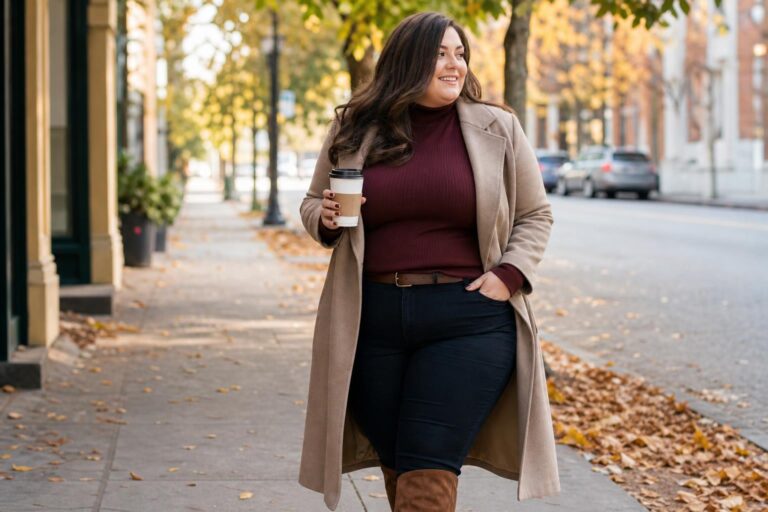
Choose relaxed pants or a breathable dress, then add one versatile layer such as a denim jacket, vest, or lightweight knit. Keep the color palette grounded in neutrals or soft fall tones so the outfit reads cohesive without needing many accessories. Footwear should support walking first, then style second, which is why simple, practical shoes usually outperform anything too heavy or restrictive.
This kind of look works because every piece has a clear role. The base layer keeps you cool, the top layer handles transitions, and the overall color story gives the outfit that mild autumn mood. For travel, that simplicity matters. It creates outfits that are easy to repeat with small changes instead of requiring completely separate daytime and evening wardrobes.
Why transitional color palettes matter more than extra layers
When the weather does not support classic fall clothing, color becomes one of your strongest tools. Richer neutrals, muted tones, and warm-to-cool combinations signal the season quickly, even when the outfit itself is light. This is often what makes a skirt, dress, or pair of sandals feel less summery and more transitional.
That is also why so many warm-weather fall outfits rely on neutral palettes with fall accents rather than dramatic layering. You do not need a heavy coat to create a seasonal look. Often, all you need is a more autumn-leaning color direction combined with denim, loafers, a vest, or a scarf used in a softer, lighter way.
Best fabrics and pieces to keep on repeat
- Breathable dresses that can be worn alone or with a jacket
- Denim jackets for structure without full outerwear weight
- Lightweight knits that add softness without overheating
- Vests for hot days when a jacket feels too much
- Skirts that work with both summer tops and fall layers
- Relaxed pants for travel and everyday styling
- Loafers for an easy autumn finish
- Sandals when the weather is still hot but the outfit needs fall styling elsewhere
- Scarves used lightly as an accessory rather than cold-weather protection
These pieces appear again and again because they solve the real problem of transitional dressing. They let you build variety without overcomplicating the wardrobe, and they can move between casual, campus, travel, and everyday city settings with only minor swaps.
Tips for making the outfit feel more polished instantly
A polished warm-weather fall outfit is usually less about adding more and more about editing well. Keep the base simple, then add one finishing element that changes the tone. A denim jacket, loafers, a vest, or a better color story often has more impact than piling on multiple accessories.
- Use one structured piece to balance a soft or flowy base
- Keep accessories minimal so the outfit stays clean in warm weather
- Swap bright summer colors for neutrals or muted fall tones
- Choose shoes that match the visual weight of the outfit
- Repeat one color through the outfit to make it feel intentional
If an outfit still feels too summery, the fastest fix is usually not adding a heavy layer. It is changing the footwear, adding denim, or shifting the palette. Those smaller moves create a stronger autumn signal while still respecting the temperature.
Common mistakes that make warm fall outfits harder to wear
One common mistake is dressing for the season name instead of the actual weather. This usually leads to jackets that never come off comfortably, shoes that feel too heavy, or knits that look nice in the mirror but feel overwhelming by midday. The outfit may photograph as fall, but it does not function well in real life.
Another issue is ignoring balance. A breezy dress with a bulky outer layer or delicate sandals with an overly heavy top can make the outfit feel disconnected. Transitional style works best when the visual weight is distributed more evenly. That does not mean every piece has to match exactly, but the outfit should feel coherent from top to bottom.
It is also easy to overcomplicate things by chasing too many trends at once. In warm weather, simpler combinations usually look better because they leave room for comfort and movement. Editors, contributors, and style bloggers often return to elevated basics for a reason: they are easier to wear, easier to repeat, and easier to adapt as temperatures shift.
How to build repeatable outfit formulas from what you already own
You do not need a completely separate wardrobe for warm fall dressing. In most cases, the best approach is to keep wearing your lighter dresses, skirts, and breathable basics, then reframe them with seasonal layers and accessories. Think of it as a styling change, not a total reset.
- Summer dress plus denim jacket plus sandals
- Skirt plus lightweight knit plus loafers
- Relaxed pants plus breathable top plus vest
- Dress plus scarf plus structured bag
- Denim plus soft top plus light outer layer
This formula-based approach is especially useful if your week includes different settings like work, travel, campus, and casual plans. One base piece can be restyled several ways with just a few transitional items. That is what makes warm-weather fall outfits feel manageable rather than frustrating.
A practical note on inspiration from editors, stylists, and everyday blogs
There is a noticeable overlap across sources that cover this topic, from magazine-style platforms like Marie Claire and Who What Wear to more personal outfit blogs such as My Chic Obsession, Champagne and Savings, Neutrally Nicole, Besoyou, Travel Pander, and College Fashionista. The exact outfits vary, but the styling logic is consistent: keep the fabrics lighter, let denim and knits carry some of the fall mood, and use accessories and color palettes to bridge the seasonal gap.
That consistency is helpful because it confirms something practical. You do not need dramatic trend styling to get this right. What works most often is a realistic wardrobe built around dresses, skirts, denim, jackets, loafers, sandals, scarves, and lightweight layers that adapt to changing conditions. The outfits that last are the ones you can actually wear from morning through evening without needing a complete change.
Final thoughts on dressing for a warm fall
The easiest way to approach early fall dressing is to stop treating it like a cold-weather season and start treating it like a styling transition. That shift makes everything clearer. Instead of forcing heavy pieces, focus on breathable fabrics, cleaner proportions, light layering, and color palettes that feel more autumnal.
When those elements are in place, warm-weather fall outfits become much easier to build. A dress works because denim grounds it. A skirt works because a lightweight knit adds balance. Sandals still make sense when the rest of the outfit carries the season. Small changes create the polished, practical result most people are actually looking for.
FAQ
What are the best warm-weather fall outfits for everyday wear?
The best everyday options usually combine breathable basics with one clear fall element, such as a dress with a denim jacket, a skirt with a lightweight knit, or relaxed pants with a vest and loafers. These combinations feel comfortable in warm temperatures while still looking seasonally appropriate.
How do I make summer clothes look more like fall?
The easiest way is to keep the summer silhouette but change the styling around it. Add denim, a light knit, a vest, loafers, a scarf, or a more neutral and muted color palette. Those details shift the outfit toward fall without making it too hot to wear.
Can I still wear sandals in fall if the weather is warm?
Yes, sandals can still work in warm fall weather, especially if the rest of the outfit brings in autumn through color, layering, or texture. A dress with a denim jacket or a skirt with a lightweight knit can make sandals feel more transitional and less purely summery.
What shoes work best for mild autumn outfits?
Loafers are one of the most useful choices because they add seasonal structure without the heaviness of boots. Sandals can still be practical on hotter days, while other simple everyday shoes work best when they match the overall visual weight of the outfit.
What fabrics should I wear for fall when it is still hot outside?
Breathable fabrics are usually the most reliable choice, including cotton, linen blends, and lightweight knits. These materials let you layer lightly and stay comfortable, which is more effective than relying on dense fall fabrics too early in the season.
How can I layer without looking bulky in warm weather?
Use one intentional extra layer instead of several heavy ones. A denim jacket, vest, or soft lightweight knit works better than stacking oversized pieces. Keeping one part of the outfit more structured also helps maintain a cleaner silhouette.
Are dresses still a good option for warm fall days?
Dresses are often one of the best options because they keep the base outfit cool and comfortable. They become more fall-appropriate when styled with a denim jacket, vest, scarf, or richer color palette, which makes them ideal for transitional weather.
What is the easiest way to build a warm fall outfit for campus or travel?
Start with a breathable base such as a dress, skirt, or relaxed pants, then add one versatile layer you can remove easily. Finish with practical shoes and a simple bag. This keeps the outfit flexible for movement, changing temperatures, and long hours out.
Finish the look
The little extras that make a summer outfit feel complete
From beach days to city weekends, these easy pieces bring comfort, texture, and a polished finishing touch.

FENBEN
Straw Hobo Crossbody Bag
A handwoven straw bag with both short and crossbody straps—an effortless finishing touch for vacation looks and warm-weather outfits.
Shop the bag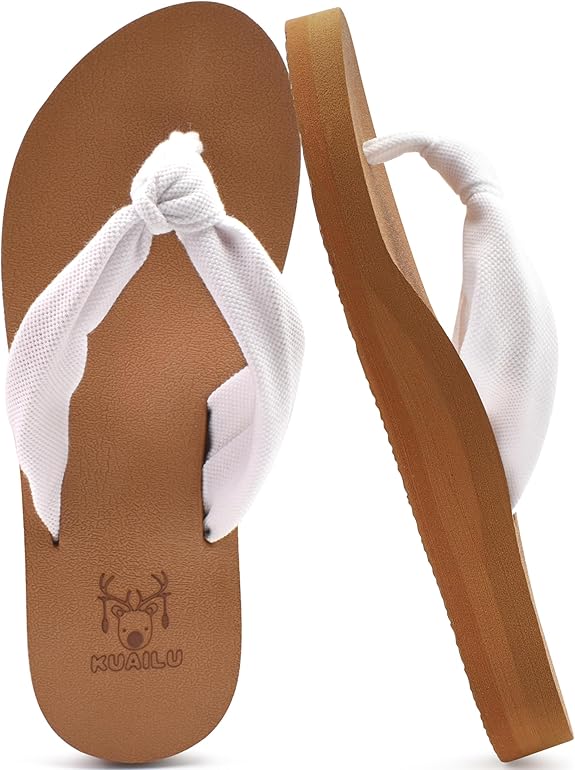
KuaiLu
Flip Flops with Arch Support
Cushioned, lightweight sandals with supportive arch design—a practical choice for beach trips, errands, and long summer walks.
Shop the sandals
baleaf
Athletic One-Piece Swimsuit
A functional one-piece with adjustable straps and moderate coverage, designed for swimming, training, surfing, and active beach days.
Shop the swimsuit
Astylish
Linen-Cotton Button-Down Shirt
A relaxed cotton-linen shirt with a collared V-neck and roll-up sleeves—easy to style over swimwear or with denim and shorts.
Shop the shirt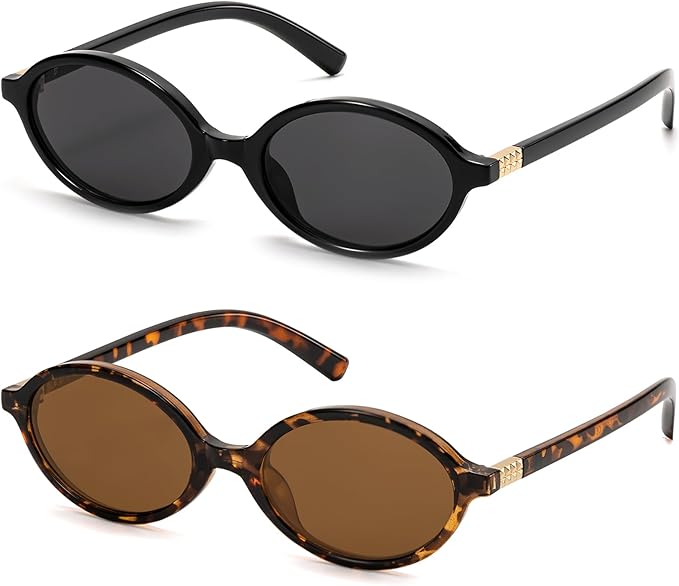
ViewJoy
Retro Oval Sunglasses
Small oval sunglasses with a 90s-inspired silhouette and UV400 lens protection—a quick way to add a vintage edge to everyday looks.
Shop the sunglasses
Affiliate disclosure: This section contains affiliate links. If you make a purchase through these links, I may earn a commission at no additional cost to you. Product selection, pricing, availability, and delivery terms may change—please review the current details on Amazon before purchasing.
As an Amazon Associate I earn from qualifying purchases.