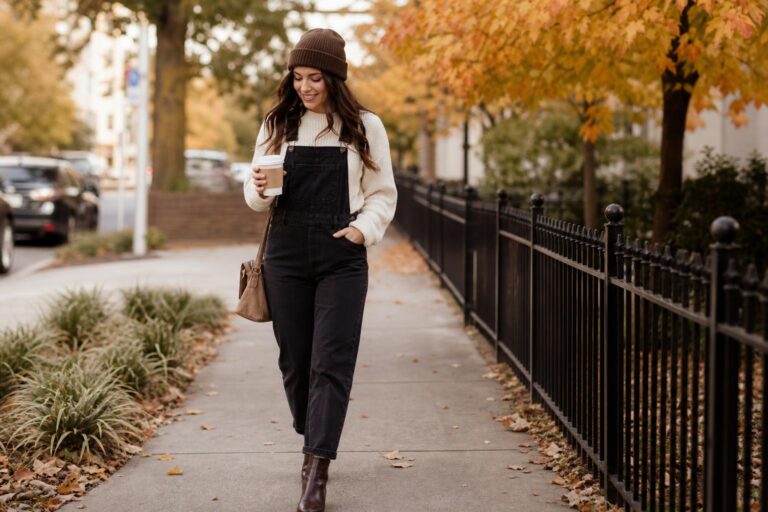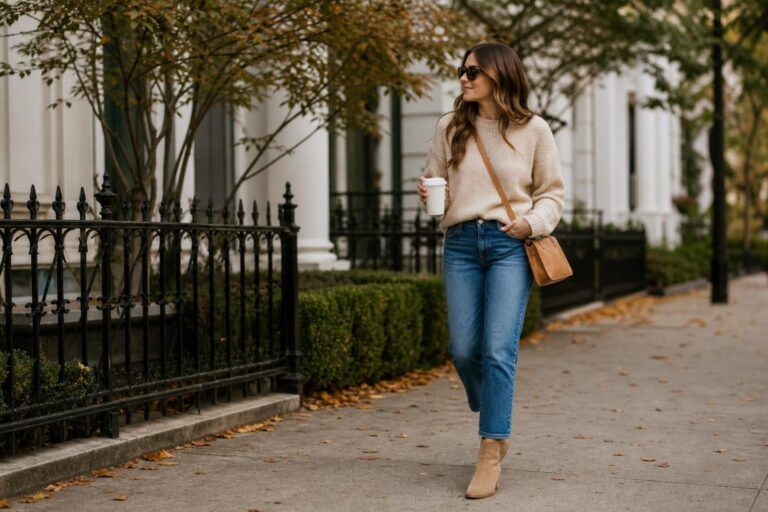
What to Wear: Summer Fall Outfits for City Days and Dinners
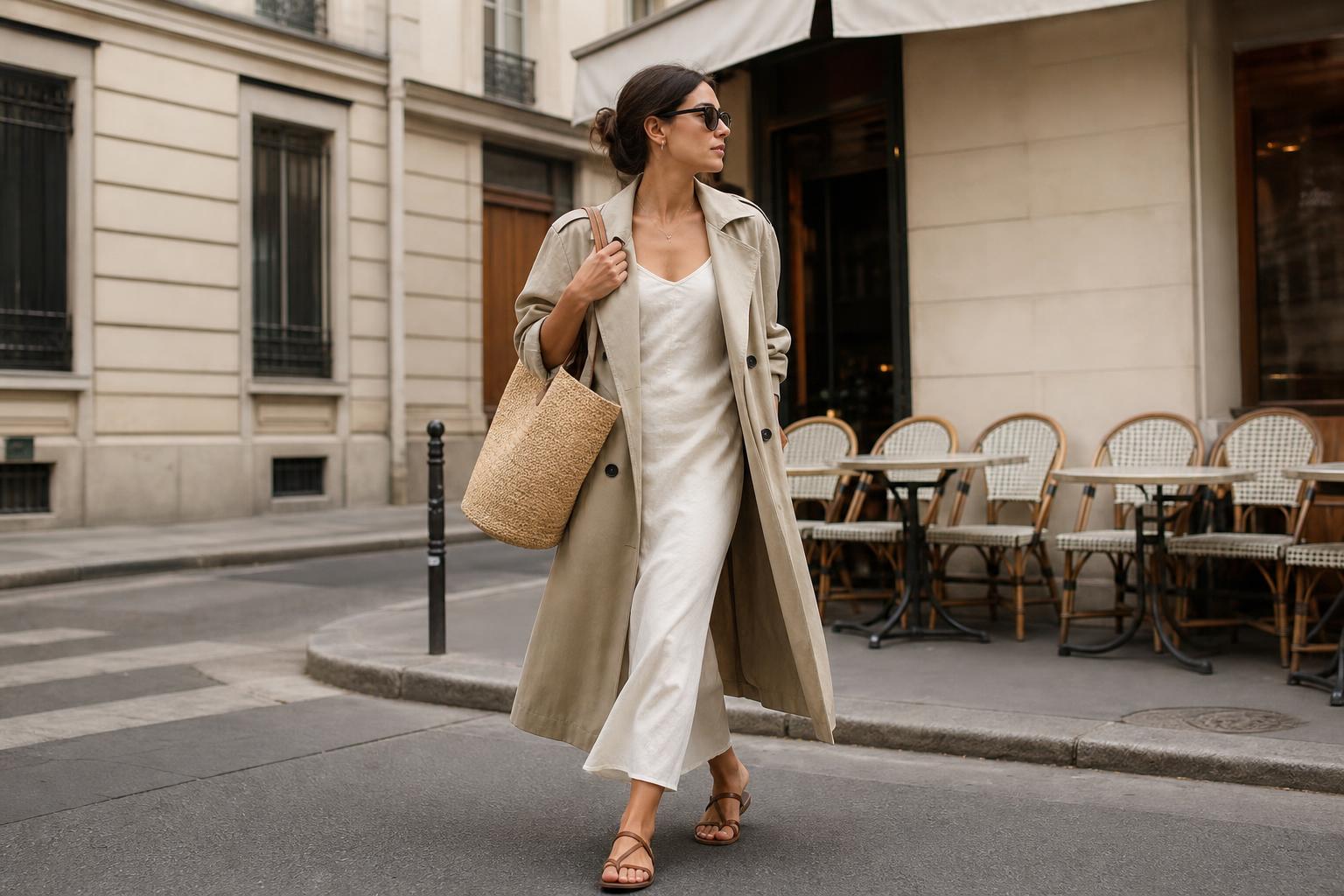
Summer fall outfits: two ways to dress the in-between season
There is a very specific moment in late summer when getting dressed becomes less automatic. Mornings feel cool, afternoons still carry heat, and the same dress that worked in July suddenly needs a layer, a different shoe, or a richer color beside it. That is why summer fall outfits are so often built around comparison: not summer versus fall as opposites, but summer pieces reworked through fall styling logic.
The two approaches most readers are really choosing between are easy summer minimalism and polished transitional layering. They are often discussed together because both use the same foundation pieces—white dresses, skirts, linen trousers, cotton basics, sandals, totes, denim jackets, trenches, and light knits. The difference is in mood, proportion, and how much structure the outfit adds.
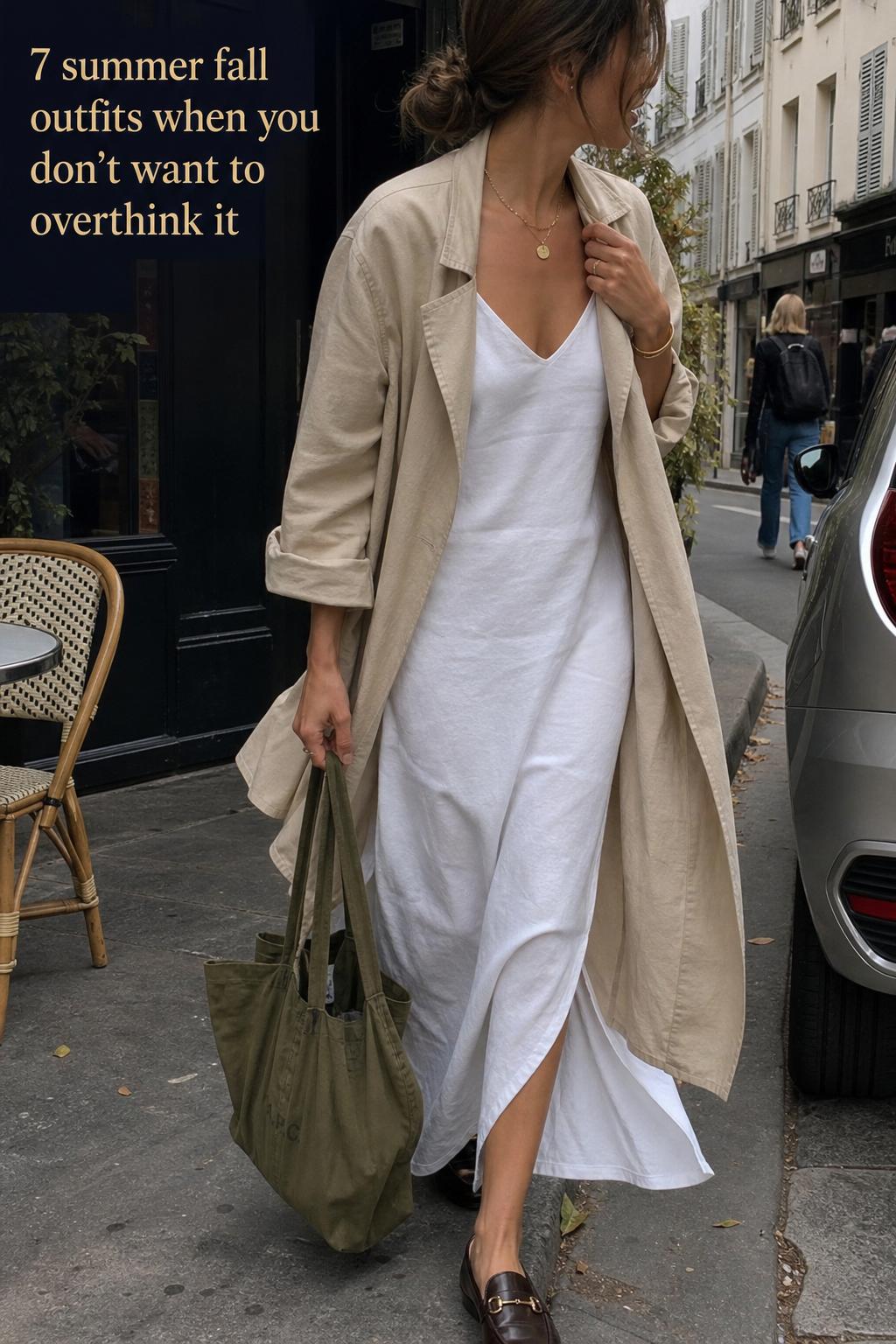
Below, the focus is on how these two styling directions compare in real life: what they look like on a city walk, what works for work or travel, how color shifts from airy neutrals to olive, navy, or chocolate, and how to tell whether an outfit still reads as summer or has moved into that early fall space.
The Fashion-Note Edit
Five effortless pieces to refresh your everyday wardrobe
A polished, practical edit for workdays, weekends, and everything in between.

The Drop
Women’s Blake Long Blazer
A longline, tailored blazer with a notched collar and a single-button closure—an easy layer for denim, dresses, or office-ready looks.
Shop the blazer
Amazon Essentials
Women’s Lightweight Crewneck
A soft, lightweight sweater with a clean crew neckline—the kind of reliable layer that works from cool mornings to air-conditioned spaces.
Shop the sweater
Amazon Essentials
Women’s Loafer Flat
A classic flat loafer that gives casual outfits a more polished finish and pairs naturally with tailored pants, skirts, and straight-leg jeans.
Shop the loafers
Levi’s
Women’s 501 90s Jeans
A relaxed, vintage-inspired take on the iconic 501 silhouette—made for an easy, lived-in look without the thrift-store search.
Shop the jeans
Colorfulkoala
High-Waisted 7/8 Leggings with Pockets
Soft, four-way-stretch leggings with side pockets and a high-rise waistband—designed for movement, errands, and off-duty comfort.
Shop the leggings
Affiliate disclosure: This section contains affiliate links. If you make a purchase through these links, I may earn a commission at no additional cost to you. Product selection, pricing, availability, and delivery terms may change—please review the current details on Amazon before purchasing.
As an Amazon Associate I earn from qualifying purchases.
The two style directions behind most summer-to-fall dressing
Style overview: timeless summer minimalism
This style begins with the pieces fashion editors and style blogs return to repeatedly: linen sets, white dresses, simple skirts, cotton tops, lightweight fabrics, sandals, and easy totes. The silhouette is usually relaxed and clean rather than sharply constructed. A white dress might fall loosely through the body, linen trousers may skim rather than cling, and the overall mood is effortless, neutral, and light.
Your wedding style is personal.
Your plan should feel that way, too.
Zarellea keeps your guest list, budget, vendors, and every next step beautifully organized — so you can focus on the moments that feel like you.
The color palette stays close to soft neutrals, especially white, cream, beige, and other understated shades. Texture does a lot of the visual work. Linen, cotton, and silk blends keep the outfit feeling breathable and pared back. Even when inspired by New York or Paris street style, the effect is not dramatic. It feels wearable, almost capsule-like, with each piece easy to repeat.
Style overview: polished transitional layering
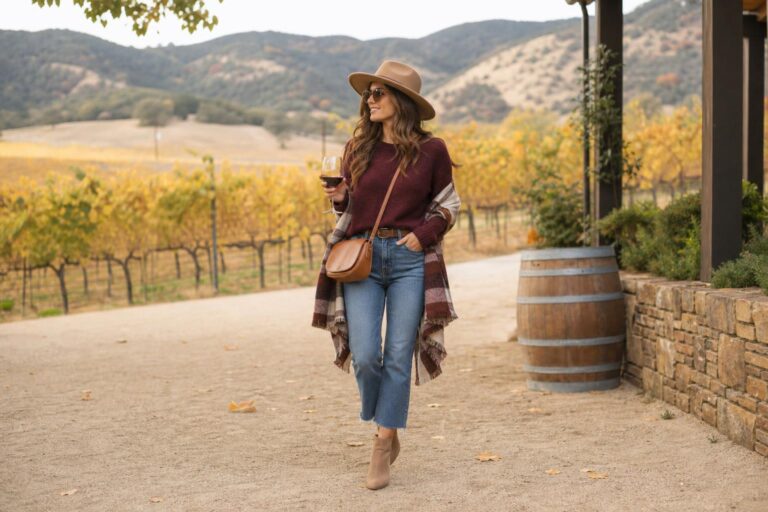
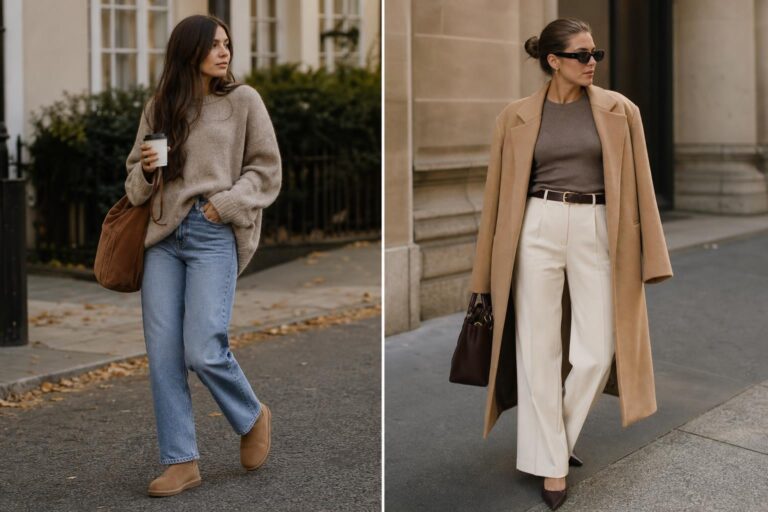
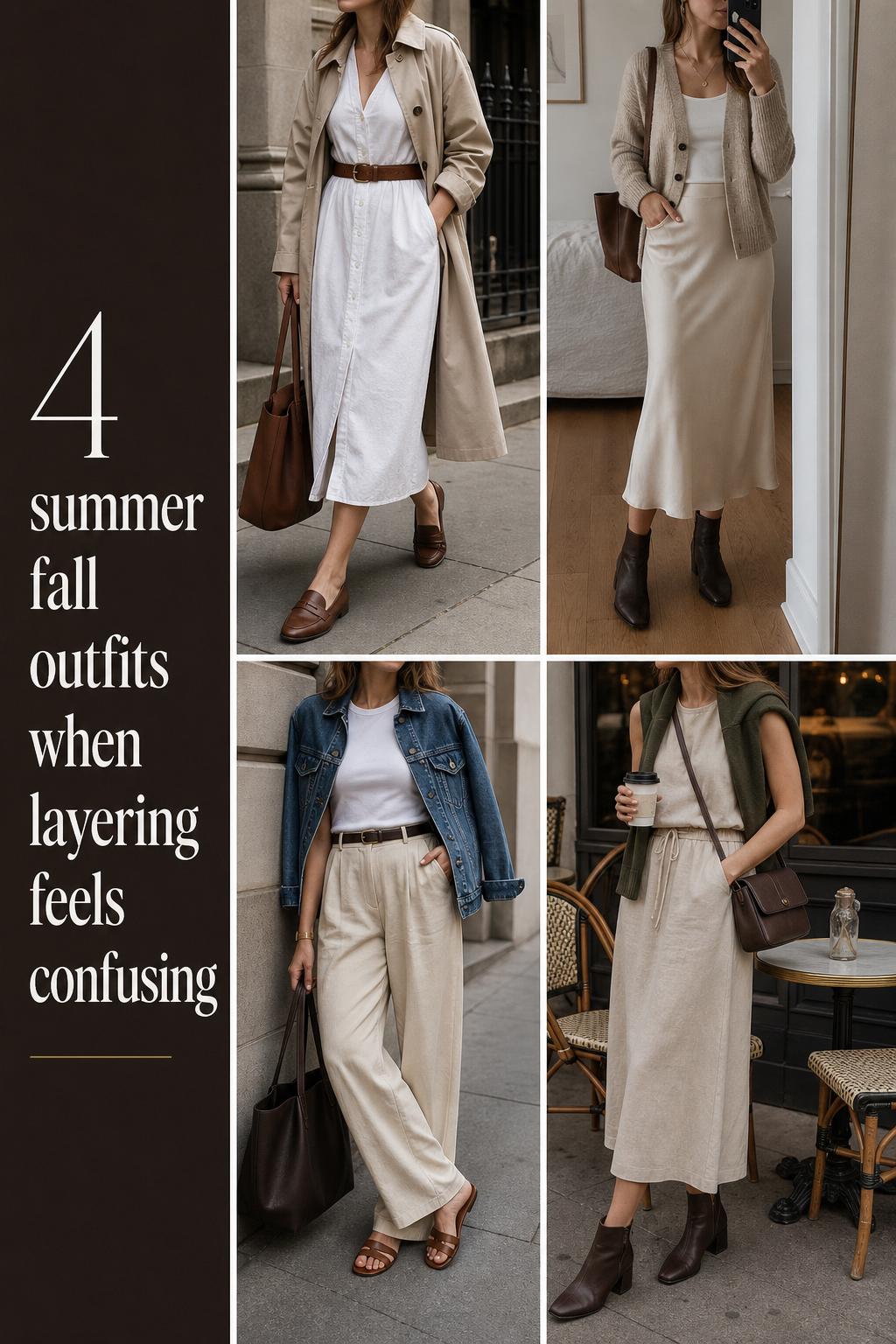
This second style starts with many of the same summer staples but introduces more fall-coded elements: trench coats, cardigans, denim jackets, lightweight knits, ankle boots, loafers, belts, scarves, and richer accent colors such as olive, navy, and chocolate. The mood becomes more grounded and slightly more structured, even when the base layer remains a summer dress or slip skirt.
The silhouette here is more built. A loose dress may be anchored by a jacket. Linen trousers are sharpened by a trench. A floral or white dress that felt open and airy in peak summer starts to look intentional and seasonal once leather, suede accents, or knitwear come in. This is the language of transitional outfits: using layering to move familiar pieces into a different season without replacing the whole wardrobe.
Where they overlap, and why they are often confused
These styles are easy to mix up because they share the same wardrobe base. Both rely on dresses, skirts, linen or cotton pieces, simple tops, and practical accessories. Both also lean on versatility, which is why so many magazine features and personal style blogs frame the season as a remix problem rather than a shopping problem.
The overlap is strongest in pieces that can live in both worlds: a white dress, a floral midi, linen trousers, a tank, a tote, or a soft cardigan. What changes is not necessarily the garment itself but the styling system around it. One approach keeps the outfit open, airy, and distinctly summery. The other adds enough depth—through color, layering, texture, or footwear—to make the outfit feel ready for early fall.
That is also why transitional dressing works so well for capsule wardrobes. It extends cost-per-wear, supports sustainability through re-use, and gives more versatility to pieces already in rotation. Instead of treating seasonal fashion cycles as a hard reset, it treats the wardrobe as a continuum.
The clearest differences in summer minimalism versus transitional layering
Silhouette and structure
Timeless summer minimalism tends to favor softer lines. Think of a dress worn on its own, a simple sandal, and a tote with very little interruption to the shape. Transitional layering introduces stops and frames: a jacket at the shoulder line, a belt at the waist, boots at the ankle, or a scarf that changes the upper half of the outfit. The body line looks more segmented and more deliberate.
Color palette
The summer side leans lighter and more tonal. White dresses, neutral palettes, and airy combinations dominate. Transitional outfits still use neutrals, but they usually add one moodier note—olive, navy, or chocolate—so the outfit reads seasonally balanced rather than beach-adjacent. This one-accent-color approach appears repeatedly because it is easy to control and rarely feels overdone.
Formality and polish
Minimal summer styling often feels naturally casual, even when elegant. Transitional layering can move toward polished dressing much more easily. A trench coat, loafer, or knit over the shoulders can make a skirt or dress feel office-appropriate in a way that sandals and bare arms usually do not. The shift is subtle, but it matters in work environments and travel settings.
Styling philosophy
The first approach says: keep the outfit clean and let fabric, lightness, and ease carry the look. The second says: keep the summer base, then add one or two fall signals with purpose. Neither is better in every case. The right choice depends on weather, schedule, and how finished you want the outfit to appear.
How the two styles read visually in everyday life
Layering approach
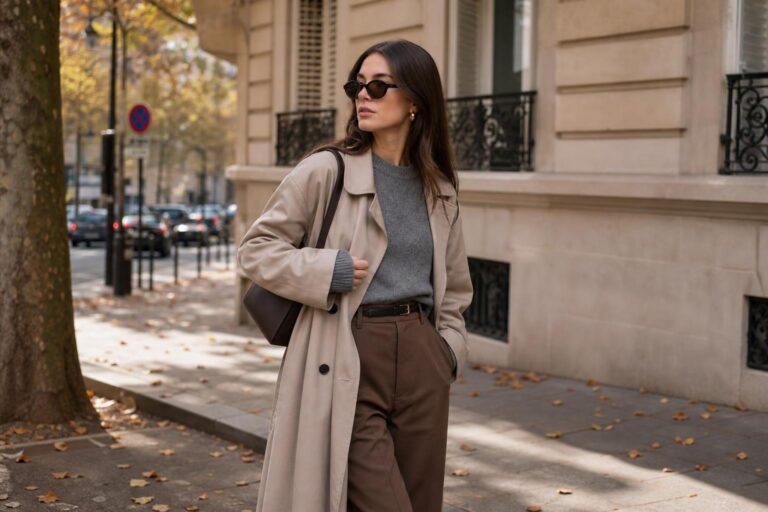
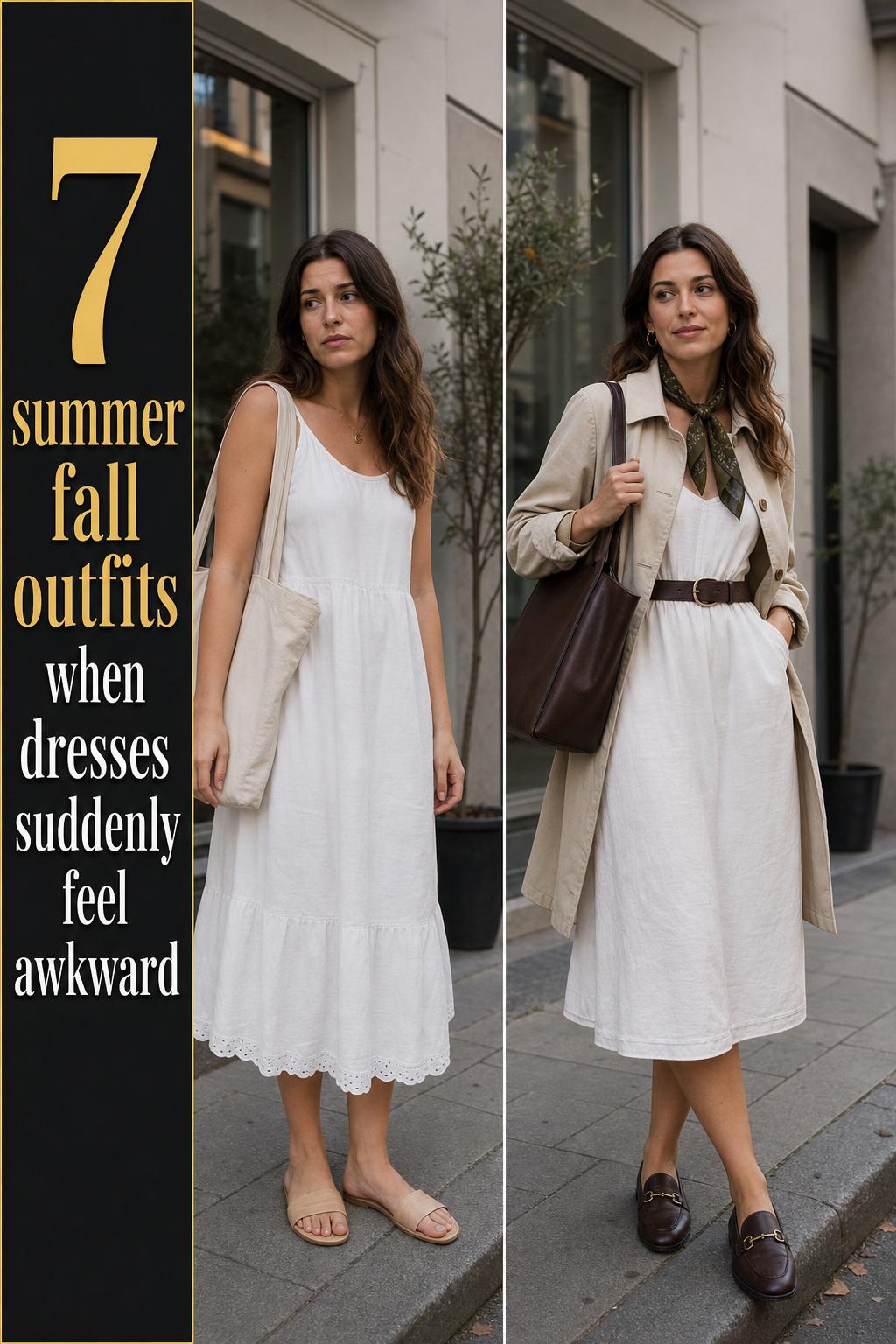
In a summer-led outfit, layering is minimal and often optional. A cardigan may be draped or carried rather than fully integrated. In a transitional look, the layer becomes part of the composition. A denim jacket over a floral dress changes the entire visual weight of the outfit. A trench over linen trousers creates vertical lines and makes the look feel more urban, especially in city settings associated with New York and Paris style references.
Proportions and balance
Summer minimalism usually allows a little more looseness from head to toe. Transitional dressing often works best when at least one element adds definition. If the skirt is fluid, the jacket gives shape. If the trousers are relaxed linen, the knit tank or belt sharpens the silhouette. This balance is one reason the outfits photograph well and feel composed without becoming heavy.
Accessories and footwear
Accessories are one of the fastest ways to show the difference between the two styles. Sandals, raffia textures, and an open tote keep an outfit rooted in summer. Ankle boots, loafers, belts, lightweight scarves, and more structured handbags push the same outfit toward early fall. Even a very simple dress can shift seasons quickly once the shoe changes.
That does not mean sandals disappear immediately. Several transitional outfit formulas still include them, especially with dresses and light layers. But as soon as the rest of the outfit adds knitwear, a trench, or richer colors, sandals read less beachy and more cross-seasonal.
A closer look at the pieces that carry both styles
White dresses and floral dresses
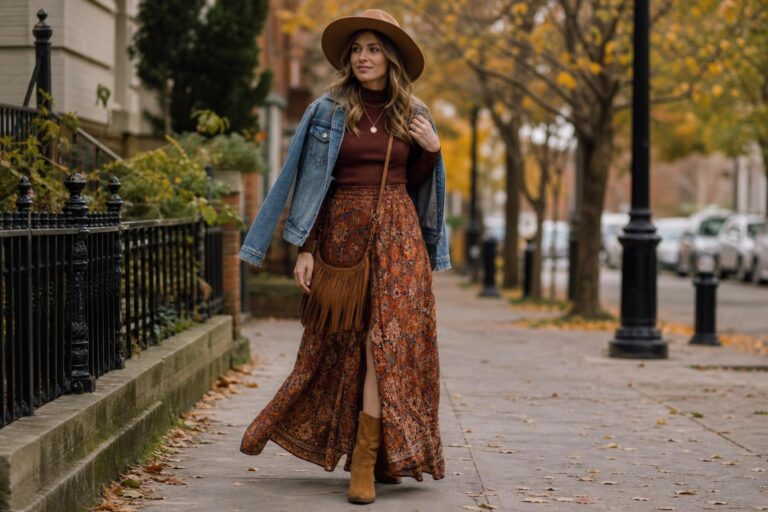
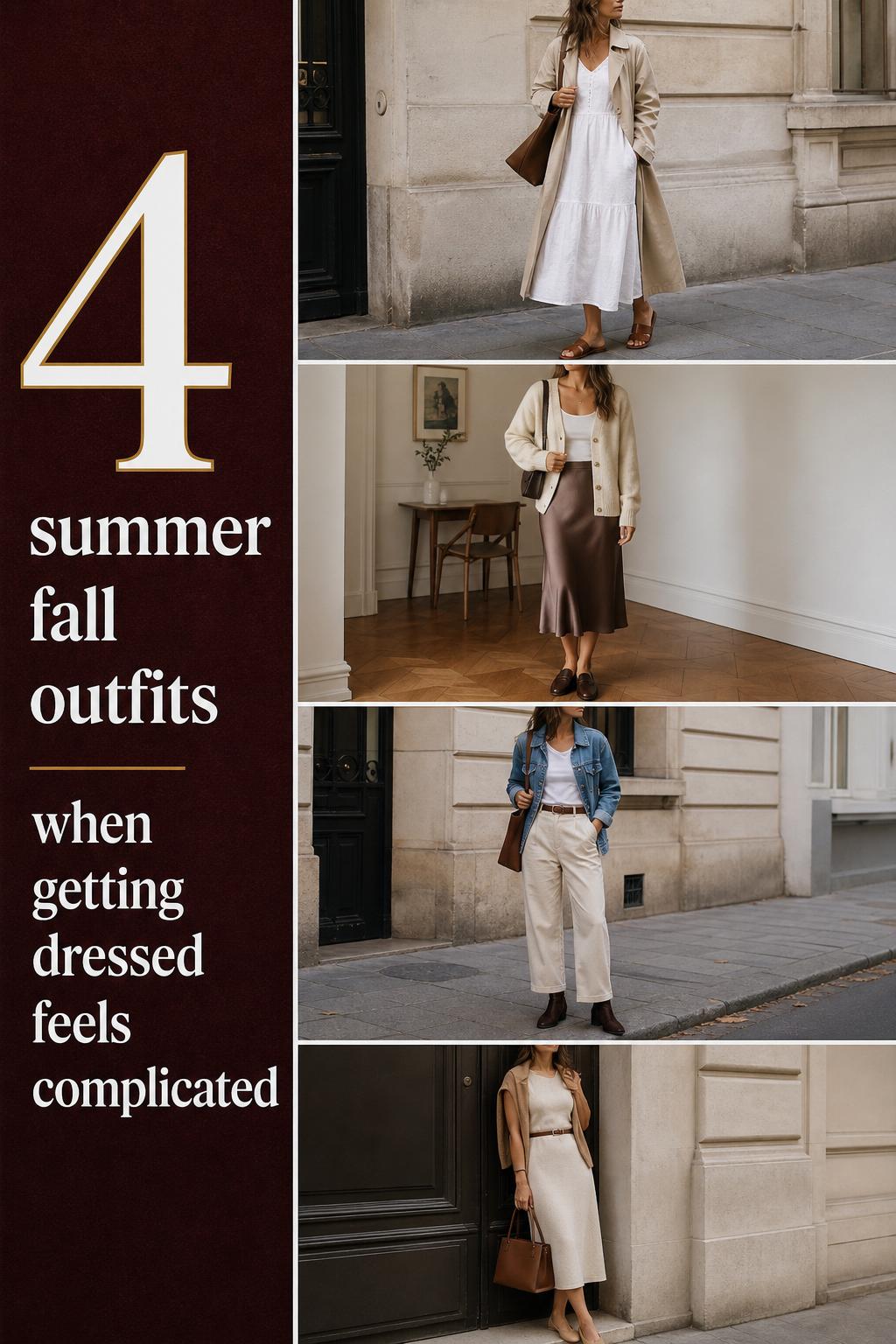
A white summer dress is one of the clearest examples of how styling changes meaning. In its summer version, it is clean, open, and light with sandals and a tote. In its transitional version, it becomes a base layer for a leather jacket, moto jacket, or denim jacket with ankle boots. A floral dress works in the same way, though its print already adds visual interest, so the layer can stay simpler.
Skirts and slip skirts
Skirts sit in the middle of both approaches because they can feel airy or grounded depending on the top and shoe. A skirt with a sleeveless top and sandals still reads late summer. The same skirt with knitwear, a jacket, or boots starts to feel fully transitional. Slip skirts in particular absorb color shifts well, especially when paired with navy, olive, or chocolate layers.
Linen trousers and cotton bottoms
Linen is often treated as purely summer, but many strong summer-to-fall outfits keep linen trousers in rotation. The key is contrast. A knit tank, lightweight trench, or cardigan gives linen a cooler-weather partner. Cotton pieces behave similarly. They remain useful when the rest of the look introduces the season through layers and accessories instead of heavier fabrics alone.
The light jacket family
Cardigans, denim jackets, trenches, and lightweight jackets are the real bridge pieces of the season. They are practical on cool mornings, easy to remove in warm afternoons, and visually important because they signal autumn without forcing a full cold-weather wardrobe. In most transitional closets, these do the heaviest lifting.
Outfit comparisons that show the difference clearly
Brunch in the city: airy versus grounded
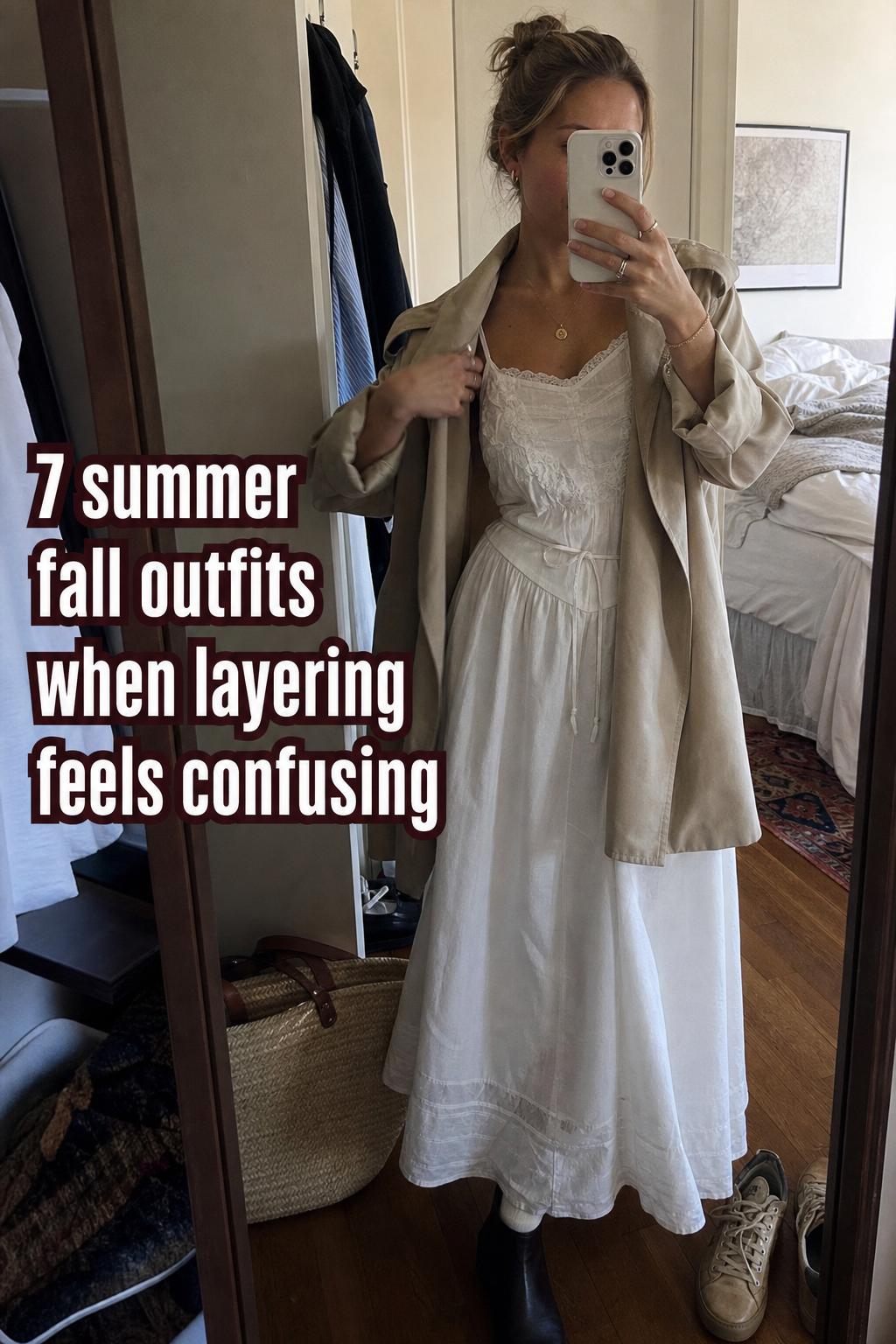
For a relaxed city brunch, the summer-minimal version might be a white dress in cotton or linen with simple sandals and a tote. The shape stays uninterrupted, the color story remains bright, and the whole look feels easy for a warm sidewalk afternoon.
The transitional version starts with that same white dress but adds a denim jacket or leather jacket and ankle boots. The look feels more grounded immediately. It suits a cooler morning, a breezy patio, or a day that continues into the evening. The styling logic is not to hide the dress, but to let the jacket and boots change its seasonal context.
Office-ready dressing: soft summer base versus polished layering
For work, the summer-led interpretation could be a midi skirt with a simple blouse or tee in a neutral palette, finished with clean sandals. It feels calm and light, especially in offices that stay warm through early fall.
The polished transitional version uses the same skirt but adds a trench coat or cardigan and a more substantial shoe such as loafers or ankle boots. This version feels more complete in professional settings because the layers create structure. If the palette shifts from cream into navy or olive, the outfit gains even more seasonal clarity without becoming dark or heavy.
Weekend travel look: relaxed ease versus weather-smart styling
On a travel day, a summer-minimal outfit might center on linen trousers and a tank with sandals and a tote. It is comfortable, breathable, and ideal for warm transit or a California coast style mood where light layering is enough.
The transitional interpretation keeps the linen trousers but introduces a knit, cardigan, or lightweight trench. That one change matters on planes, in air-conditioned stations, or during a Midwest temperature drop between morning and afternoon. The outfit still looks relaxed, but it functions better across changing conditions.
Casual dinner: bare simplicity versus texture contrast
For a simple dinner out, the summer approach may be a slip skirt with a light top and sandals, staying sleek and minimal. The silhouette is fluid and uncomplicated, with texture kept soft.
The transitional version might use the same slip skirt but layer in lightweight knitwear, a belt, and boots. Suddenly the outfit has contrast between smooth skirt fabric and the knit or leather elements. It feels more intentional for evening, especially as the light changes and temperatures drop.
Color does more work than people expect
One of the most reliable shifts from summer to fall happens through color rather than through heavy fabric. A full neutral outfit can work in both styles, but the addition of one deeper accent often decides the mood. Olive, navy, and chocolate are especially effective because they sit naturally beside white, cream, beige, and denim.
This is where the comparison becomes practical. If you love a light wardrobe and do not want to leave it behind, you do not need to replace your base pieces. You only need a controlled color update around them. A cream dress with navy knitwear, linen trousers with an olive trench, or a neutral skirt with chocolate accessories keeps the outfit seasonally relevant without losing its simplicity.
Tip: use one mood color, not several
Transitional outfits usually look stronger when only one richer tone enters the palette. Too many competing fall colors can make a light summer base feel disconnected. One accent color keeps the wardrobe flexible and makes repeat styling much easier.
Fabric and weather: the practical side of choosing a style
Fabric performance matters more in shoulder season than many people expect. Linen and cotton are still useful because afternoons can remain warm, but they often need a partner fabric to work through the whole day. That is where silk blends, lightweight knits, and practical outer layers become important. The goal is not maximum warmth. It is temperature adaptability.
In humid climates, keeping the base breathable usually matters more than adding too much structure. A dress or cotton top with a light cardigan works better than piling on several pieces. In dry or cooler conditions, a trench or denim jacket becomes more valuable because the added layer stays comfortable for longer. In rainy stretches, a weather-aware layer matters not just visually but functionally, since a beautiful summer dress loses impact if the outfit does not handle the conditions.
Tip: let the base stay light when the forecast is mixed
If the day starts cool and warms up quickly, keep the innermost outfit close to summer and let the outermost layer carry the fall feeling. That way the look still makes sense after lunch, not just at 8 a.m.
Common mistakes that make transitional outfits feel off
- Adding too many heavy fall pieces at once, which can make the outfit feel visually out of season.
- Keeping every element too summery, so the look appears unfinished for early fall.
- Ignoring footwear, even though shoes often determine whether the outfit reads as summer or transitional.
- Using layers that are practical indoors but too warm outdoors.
- Forgetting balance, such as pairing a flowing dress with no grounding element on a cool day.
The best summer-to-fall outfits usually get one thing exactly right: they preserve the ease of summer while introducing just enough depth to feel intentional. Most styling problems happen when the outfit commits too hard to one side without respecting actual weather or occasion.
When each style works best in a real wardrobe
Choose summer minimalism for warm days that still need ease
This approach works best for casual days, warm-weather travel, outdoor lunches, afternoon walks, and settings where comfort and breathability matter most. It also suits wardrobes built around a capsule philosophy, since neutral dresses, skirts, linen pieces, and sandals can be repeated often with very little effort.
Choose transitional layering for polish, movement, and schedule changes
This style makes more sense for work, city days that begin cool and end late, dinner plans, or travel that moves through different temperatures. It is especially useful when you want the outfit to feel composed in photos, meetings, or urban settings influenced by fashion-capital street style. The added layer gives the whole look more authority.
Mix both when your closet is built around repeat pieces
Most real wardrobes do not sit entirely in one camp. A white dress can stay minimal one day and become transitional the next. Linen trousers can feel almost summery with sandals, then office-ready with a trench. This flexibility is exactly why the season is so useful for wardrobe planning. The best combinations come from reusing what already works and changing only the frame around it.
Practical styling notes for readers building wearable summer fall outfits
- Start with one reliable base: a dress, skirt, or linen trouser.
- Add one clear fall signal: trench, cardigan, denim jacket, boots, loafers, or a richer accent color.
- Keep accessories in step with the weather, not just the calendar.
- Use neutral palettes to make layering easier across multiple outfits.
- Repeat core items often and vary the outer layer to shift the mood.
Readers often think they need many new pieces for the between-season window, but the wardrobe usually becomes more functional through a few strong transitional layers rather than a full reset. That is why so many outfit galleries, from magazine editorials to personal style blogs, return to the same formulas year after year. The formulas work because they respect how people actually dress.
The final distinction
The core difference is simple: summer minimalism lets the outfit breathe, while transitional layering gives the same outfit more structure, depth, and seasonal weight. One relies on ease and openness. The other relies on contrast and framing.
You can usually identify the style at a glance. If the look is driven by light fabrics, sandals, and soft neutrals, it stays closer to summer. If a trench, knit, boots, or a deeper accent color reshapes the same base, it becomes transitional. In practice, the most wearable wardrobes borrow from both—keeping the simplicity of summer pieces and using thoughtful layers to carry them into fall.
FAQ
what are the easiest pieces to use for summer to fall outfits?
The easiest pieces are the ones mentioned again and again in transitional dressing: white or floral dresses, skirts, linen trousers, cotton basics, denim jackets, cardigans, lightweight trenches, and simple knitwear. These work well because they can be worn alone in warm weather and layered when mornings and evenings turn cooler.
how do i transition summer outfits to fall without buying a whole new wardrobe?
Keep your summer base pieces and change the styling around them. A dress can move into fall with a denim jacket or leather jacket and ankle boots, while linen trousers can feel seasonally appropriate with a trench or cardigan. The idea is to reuse summer staples and add one or two fall elements rather than replace everything.
are sandals still appropriate in early fall?
Yes, especially in warmer regions or on mild days. Sandals can still work in early fall when the rest of the outfit includes a transitional layer such as a cardigan, trench, or jacket. If the temperature drops or the overall look needs more grounding, switching to loafers or ankle boots usually makes the outfit feel more balanced.
which colors make an outfit feel more transitional?
Neutrals remain the base, but adding one deeper accent color helps the outfit move into early fall. Olive, navy, and chocolate are especially useful because they work naturally with white, cream, beige, and denim. A single richer tone is often enough to shift the mood without making the outfit feel too heavy.
what is the best layering strategy for humid weather?
In humid conditions, keep the base breathable with cotton, linen, or other lightweight fabrics, then use only one light outer layer if needed. A cardigan or lightweight jacket is usually more practical than multiple pieces. The goal is to preserve comfort while still giving the outfit a slight fall direction.
can linen still work in fall?
Yes, especially in early fall and mixed-weather climates. Linen trousers and other lightweight pieces can still look right when paired with knitwear, trenches, or more substantial footwear. Linen tends to feel too summery only when the entire outfit stays light and open with no seasonal contrast.
what shoes work best with dresses in summer-to-fall outfits?
Ankle boots are one of the strongest choices because they ground dresses quickly and make the look feel transitional. Loafers also add polish, especially for work. Sandals can still work on warm days, but boots and loafers usually create a clearer early-fall effect.
how many pieces do i need for a simple transitional capsule wardrobe?
You do not need a large number of pieces if the wardrobe is built around repeatable foundations. A small group of dresses, skirts, or trousers plus a few versatile layers—such as a trench, cardigan, denim jacket, and one or two pairs of practical shoes—can create many summer-to-fall combinations. The strength of a capsule comes from mixing pieces across both seasons.
Finish the look
The little extras that make a summer outfit feel complete
From beach days to city weekends, these easy pieces bring comfort, texture, and a polished finishing touch.

FENBEN
Straw Hobo Crossbody Bag
A handwoven straw bag with both short and crossbody straps—an effortless finishing touch for vacation looks and warm-weather outfits.
Shop the bag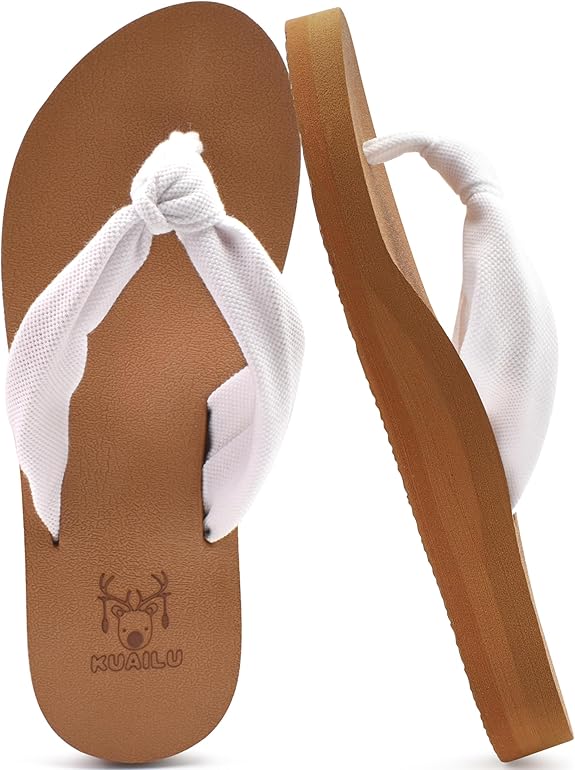
KuaiLu
Flip Flops with Arch Support
Cushioned, lightweight sandals with supportive arch design—a practical choice for beach trips, errands, and long summer walks.
Shop the sandals
baleaf
Athletic One-Piece Swimsuit
A functional one-piece with adjustable straps and moderate coverage, designed for swimming, training, surfing, and active beach days.
Shop the swimsuit
Astylish
Linen-Cotton Button-Down Shirt
A relaxed cotton-linen shirt with a collared V-neck and roll-up sleeves—easy to style over swimwear or with denim and shorts.
Shop the shirt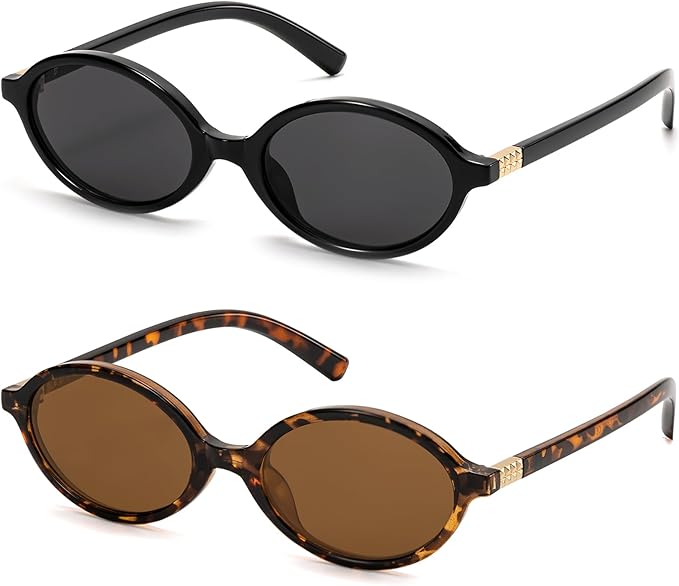
ViewJoy
Retro Oval Sunglasses
Small oval sunglasses with a 90s-inspired silhouette and UV400 lens protection—a quick way to add a vintage edge to everyday looks.
Shop the sunglasses
Affiliate disclosure: This section contains affiliate links. If you make a purchase through these links, I may earn a commission at no additional cost to you. Product selection, pricing, availability, and delivery terms may change—please review the current details on Amazon before purchasing.
As an Amazon Associate I earn from qualifying purchases.