White Elegant Outfit Ideas That Work in Daylight
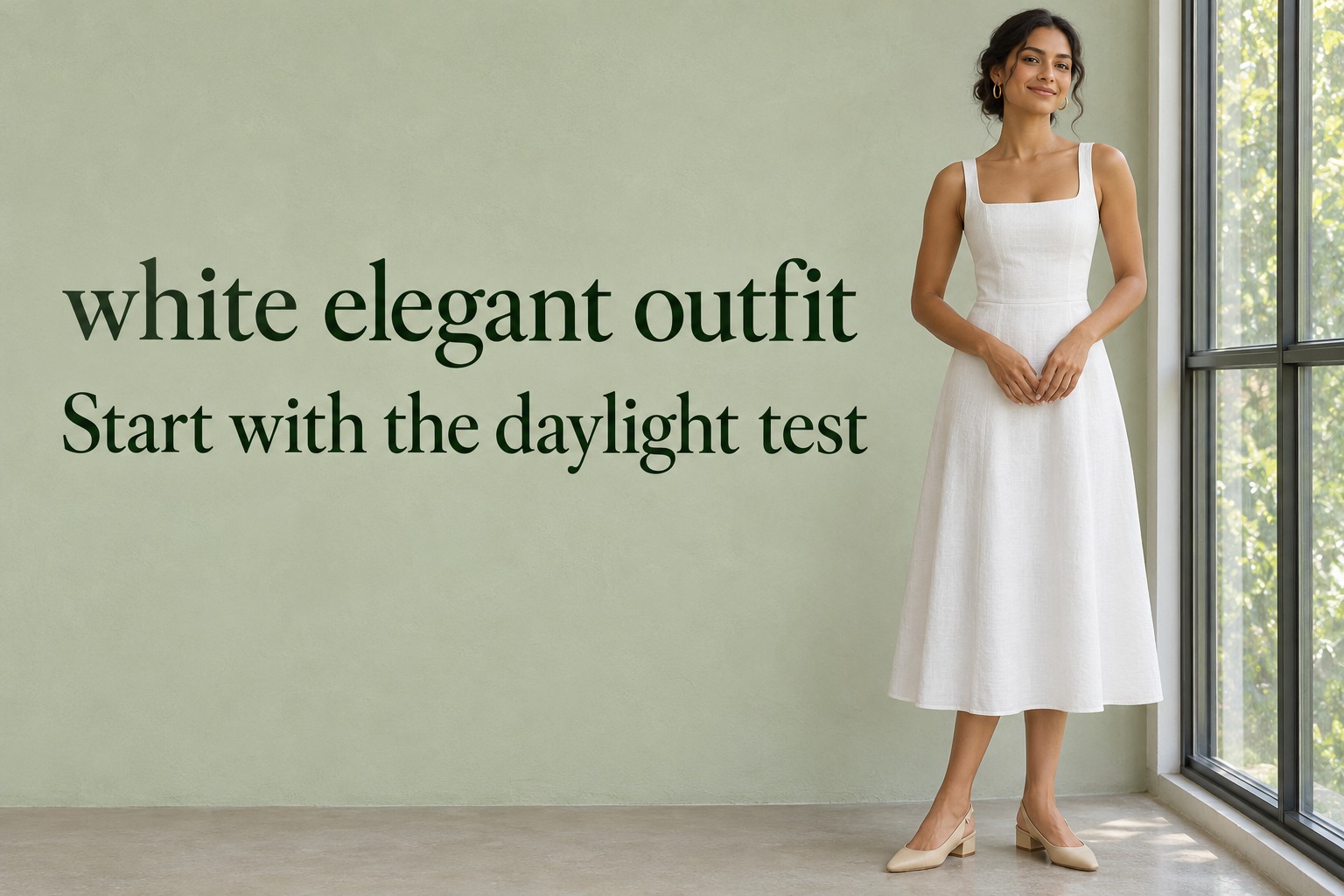
You buy a white dress that looks opaque in the fitting room. At home, by the window, you can see exactly where the lining stops. Before choosing shoes or jewelry for a white elegant outfit, I’d check how much coverage the clothes give you in the light you’ll spend time in. You may be able to keep the piece you love with one small change.
A trouser pocket you can see through the fabric is one problem. A cream jacket that looks yellow beside a white shirt is another. Sit in the outfit and then look at it in daylight. Where the fabric pulls, or where two colors meet, will tell you what to try first.
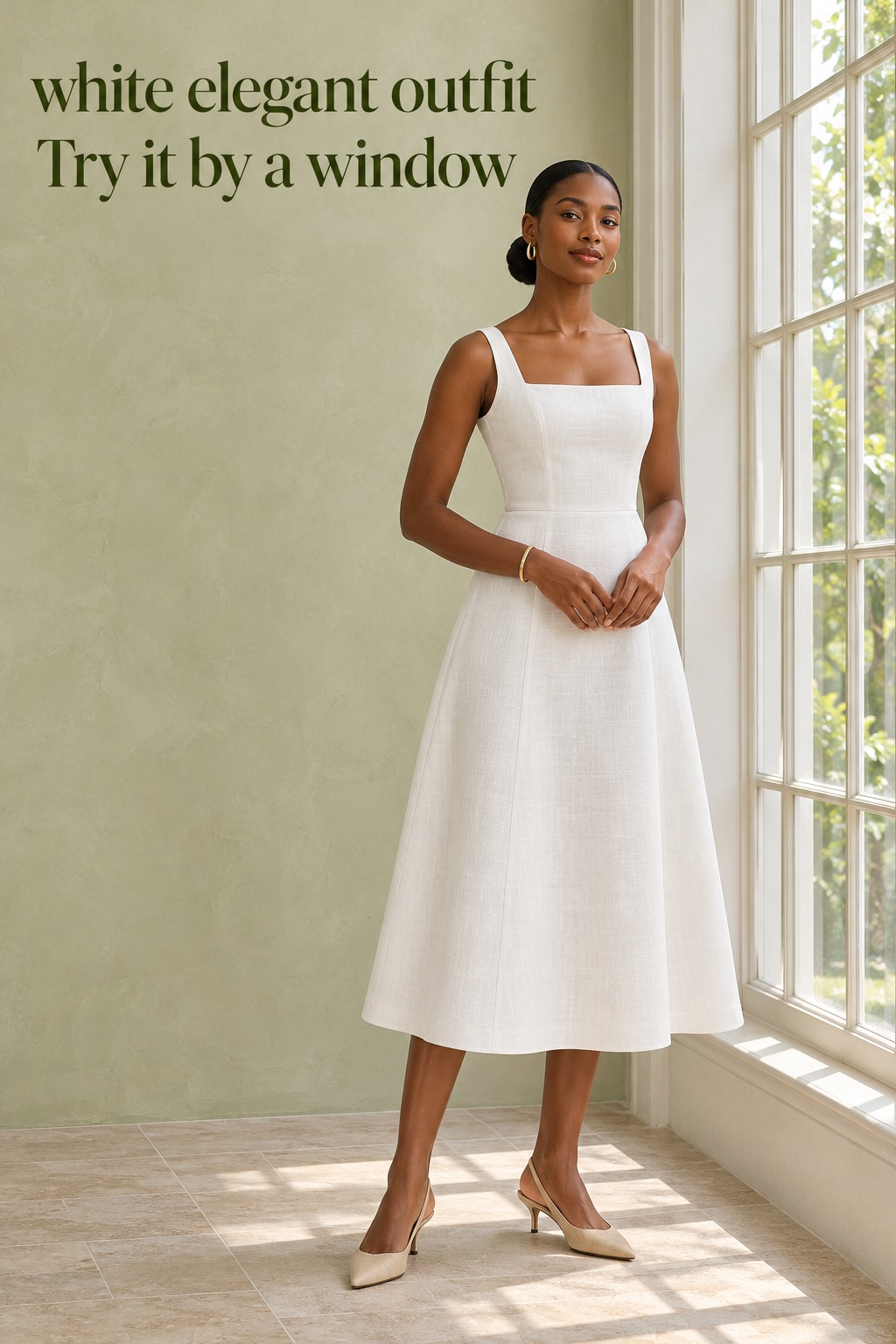
Find what changes when you step into the light
Look for the shape you can see through the fabric
Put on the outfit and the underwear you plan to wear. Face a window, turn sideways, and then turn your back to it. Take a photo from behind with the window off to one side. The hips and back of a dress can look more transparent from that angle than they did in the mirror. On white pants, look at the fly and pockets.
If the outline you see belongs to the underwear, try a smoother pair in a shade close to your skin and check again. Hold that color against your skin where the garment will sit. A pair marked nude may be much lighter or darker than you expect. If the pocket bag, seam allowance, or lining edge is the part you see, changing underwear may do very little. Check whether that detail is visible in the whole outfit, at the distance someone would stand to talk to you. A faint pocket shadow may be fine for an ordinary day. A sharp line straight across the front of the thigh may bother you every time you look down.
Check the difference between a standing fit and a seated fit
Sit until the fabric settles across your lap, then stand and let the garment fall on its own. Watch for a brighter patch over the hips that appears only when the dress is pulled tight or the pockets open. In a blouse, look for horizontal lines between buttons after you reach forward. If the placket gaps as you reach, try the next size with the same bra. An undershirt will cover the opening. A different cut may sit better across the chest without leaving the shoulders loose.
A fold that holds its place can be part of the design. If it shifts every time you bend, see what the fabric is pulling against. Keep your shoes on for the comparison, especially when a dress falls below the knee.
Decide whether the whites are different enough on purpose
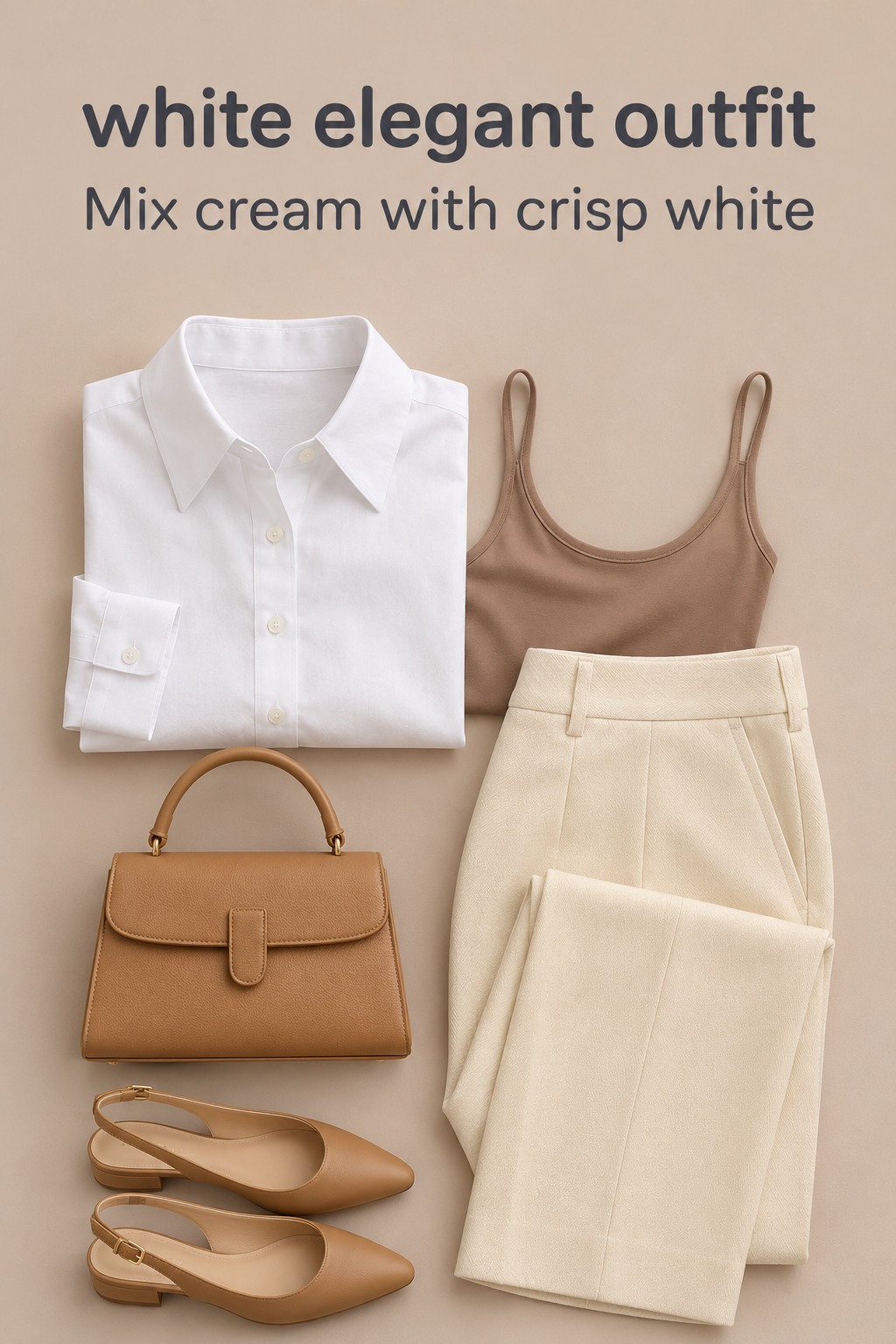
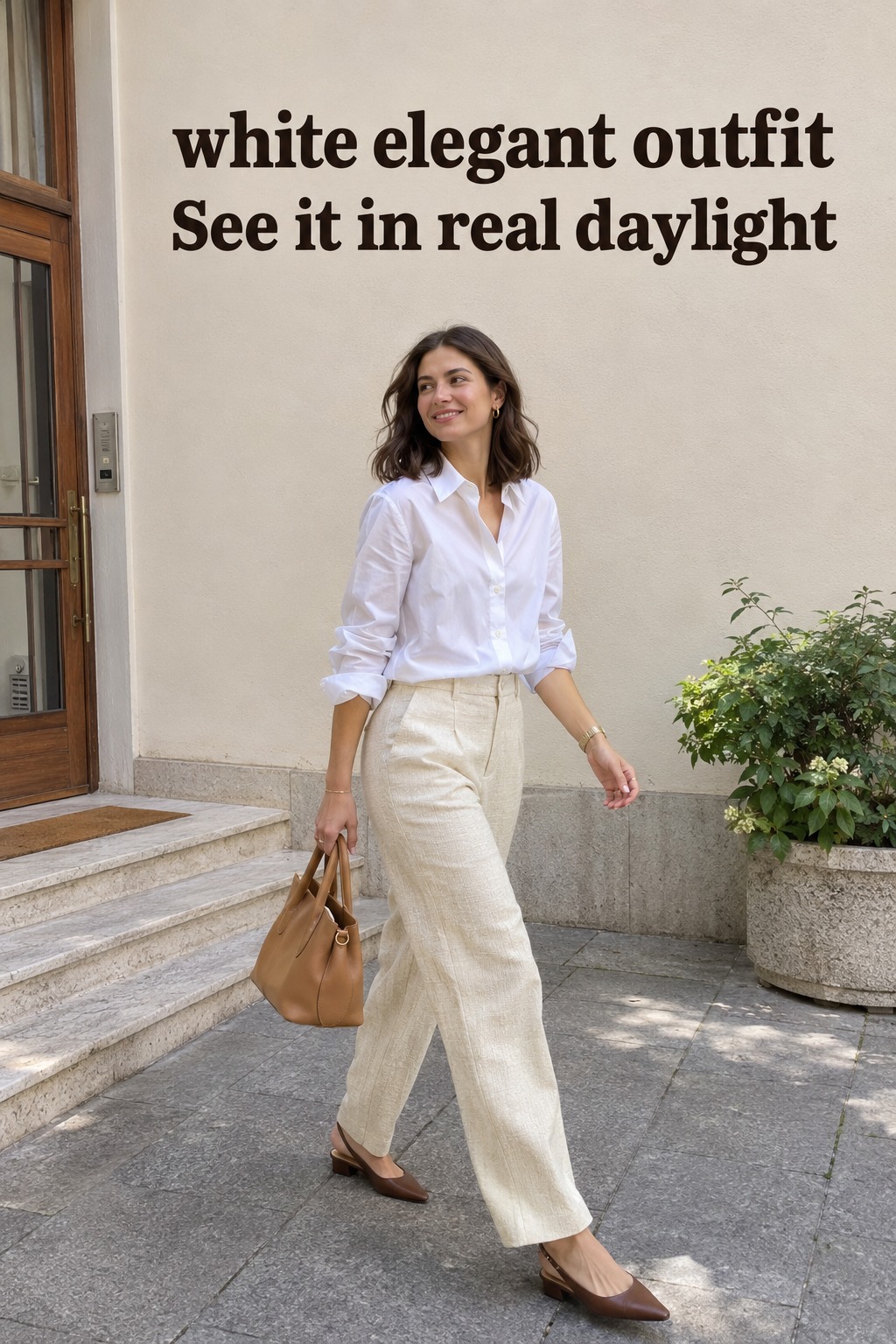
Hold the fabric edges together near a window. A bright white cotton shirt can sit nicely over noticeably cream trousers, especially when there is a clear break where one ends and the other begins. Two almost identical whites in smooth fabric may read as a mismatched suit if you can see the pieces side by side from shoulder to hip. A change of finish can give the shades more separation. A matte shirt over a subtly textured pant can be enough.
Compare at the seam where the colors meet and then step back to see how the whole outfit reads. When two white pieces are already working, you have more freedom with the bag and shoes. I would try a tan accessory before buying a third white just to match the other two. A tan belt or bag gives the eye somewhere to go if the two whites are very close.
Four pieces to try in daylight
Start with a dress that has a lining
Try crisp white beside cream
Try a longer slip under a longer skirt
Add a layer that stays below the opening
Choose coverage for the room you will be in
For a workday near windows
For a bright office or a daytime presentation, I’d try a white cotton poplin shirt with cream trousers that have enough coverage for window light. Look for pants with a clean front that you can sit in without the pockets opening. If the shirt is slightly translucent, wear a smooth skin-tone camisole whose neckline stays below the first open button. A low scoop can work if you wear the shirt partly unbuttoned. Hold the shirt near a window before buying the camisole so you can see how much coverage you actually want.
If you can see the tucked shirttail through the pants, try wearing the shirt out under a light jacket, assuming that feels right for your office. Check that the jacket still closes with the shirt underneath. In a more formal office, a shorter blouse or an opaque pair of trousers will give you the option of a clean tuck with less fabric to arrange.
For an afternoon with pictures
For a graduation lunch or family portrait, a lined white midi dress with a simple neckline gives you room to move and one shade of white through most of the outfit. I would choose the length with the actual liner in mind. Turn toward the window, then take a few strides to see if the lining stays where you expected. If the skirt has a slit, the liner can be shorter for a reason. Its shape should make sense when the slit opens, including when you cross one leg over the other.
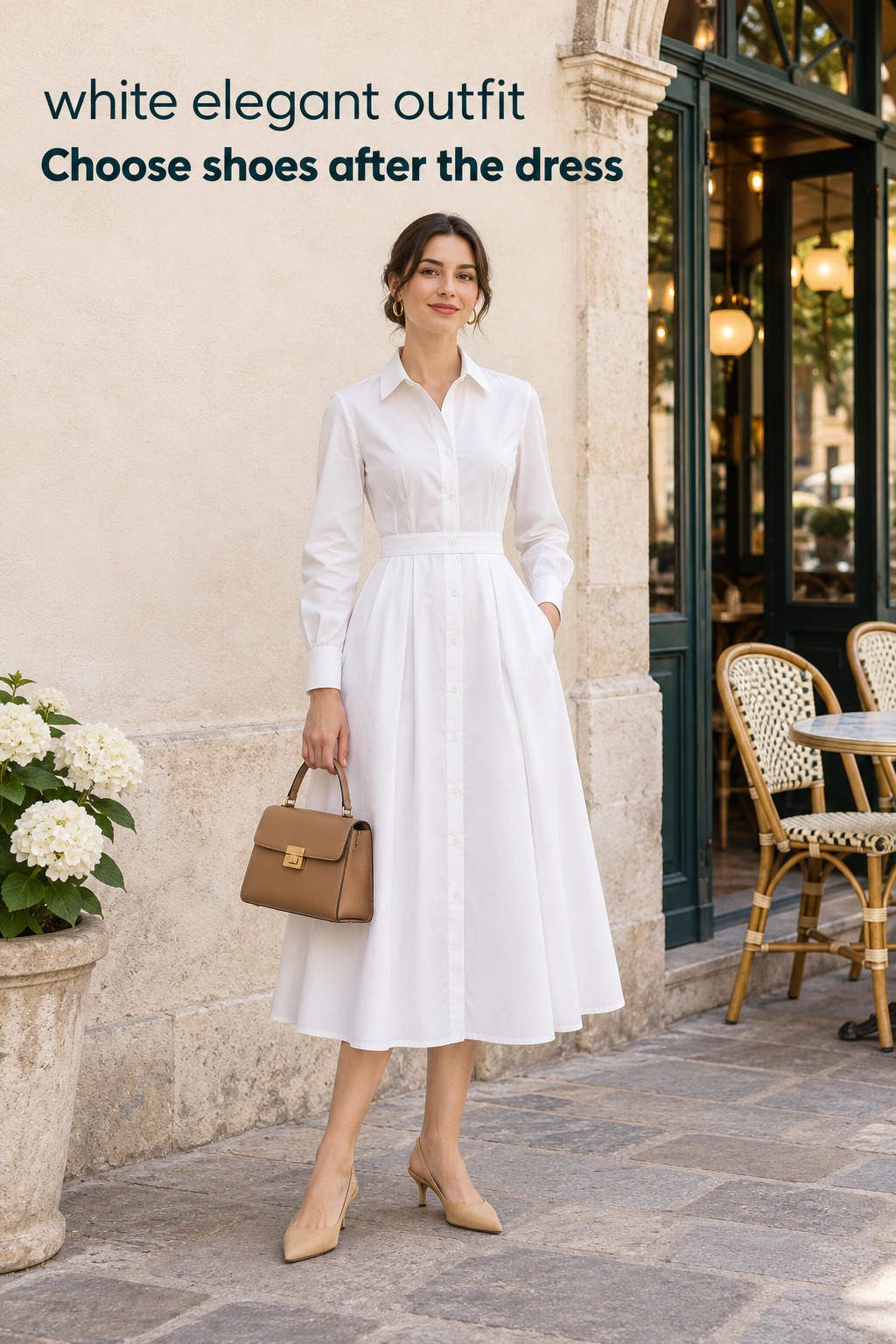
Sit on the edge of a chair and ask for a photo at waist height. The lining may be much more apparent with the hem spread across your legs. If you can see the same line in a photo and in the mirror, decide whether the look is worth a new underlayer. For shoes, try a sand slingback or a low heel you can stand in while people arrange themselves. If the path to the picture spot is uneven, try the shoes on a similar surface first.
For dinner when you want some sheerness
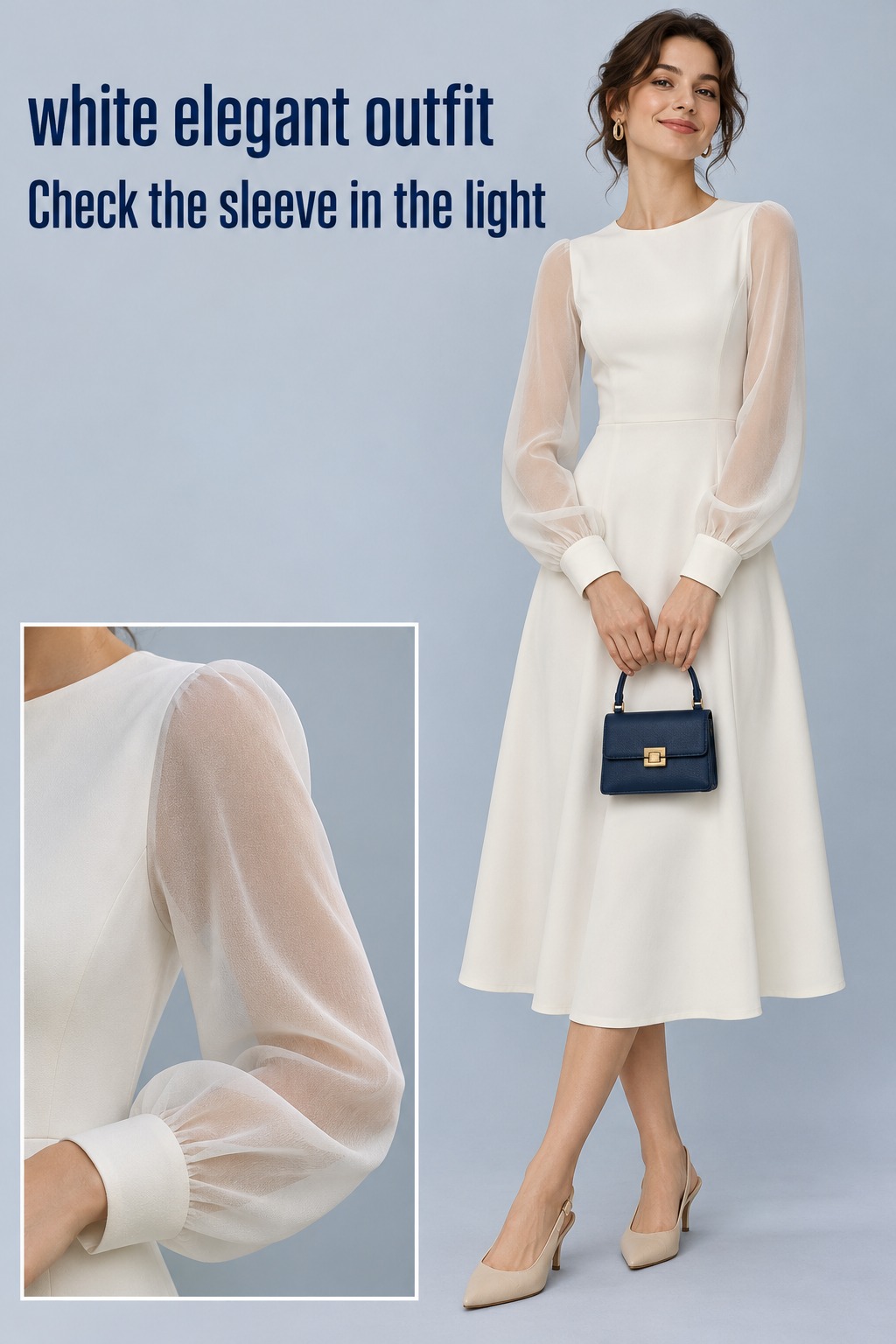
If you like the look of a sheer sleeve, put it next to a bodice with coverage you already feel good in. An ivory dress with translucent sleeves and an opaque body makes room for that effect through the arms. With separates, try an ivory blouse with sheer sleeves and a lining panel through the body. Look at the back and the upper chest with the same attention you give to the sleeves. If the top is intentionally sheer through the front too, see whether the neckline of a smooth camisole sits where you want that second line.
I would keep the bag small and choose a finish that doesn’t compete with the sleeves. On a dress with distinct cuffs, skip a bracelet for a first fitting and see if the cuff falls freely. A small earring can give the look some light higher up.
Fix the outfit without rebuilding it
When the white dress fits and the underwear shows
A smooth slip in a tone close to your skin is worth trying under a dress with enough space for it to hang. The slip can cover a visible underwear edge, although its own hem may show through a thin, fitted skirt. Try it under the whole dress and check where the straps sit. A lower neckline helps under an open collar. A shorter hem can clear a slit. Look at the transition across your legs before you pick a shorter length, as that moves the edge to another part of the skirt.
If you only need coverage on top, start with the camisole. Try it under the blouse after you’ve adjusted the straps and buttoned the shirt as you intend to wear it. A thick band can be visible under a lightweight shirt. If you can see it when the blouse is relaxed, look for a thinner edge. When you compare two underlayers, take both test photos from the same spot.
When white pants are good apart from the pockets
Pinching the pocket opening closed for a moment can tell you if the outline you dislike is the flap opening or the lining itself. Empty the pockets before checking, including the phone you usually carry. If the opening settles when you empty it and the pocket bag is barely apparent, carry your phone in your handbag for that outfit. Sit for a few minutes and see whether the pocket edge stays flat.
If the pale pocket bag still forms two bright shapes below the waist, a thicker outer fabric or a different pocket arrangement may get closer to what you want. You can ask a tailor whether the pocket bag can be changed without affecting the fit. Keep the pockets if you use them. In a new purchase I would try the opaque option first and compare the two in daylight, especially if you want to wear the trousers with tucked tops and short jackets.
When a line across the skirt comes from the lining
Find the line while holding the skirt away from the body and see whether it matches the liner. If the liner ends near the knee and you can clearly see its edge when you walk, adding a second slip may put another line below the first. Try a longer slip under the dress only if the layers have enough room and the inside edge looks softer with it there. Moving the dress into a dimmer room can tell you how it reads at dinner, but it still needs to work for the light you’ll be in beforehand.
If you keep pinching the fabric to hide the line, try a different dress or ask whether the lining can be adjusted. I would choose a cut that lets the outer layer fall freely when pictures and a long seated meal are both on the schedule. Save the lighter dress for a plan where that degree of sheerness is something you want.
Solve the last problem at the door
Take one more photo if you expect flash
Make a quick pair of photos in a darker room, one with direct flash and one without. Keep the distance and angle about the same. The check is useful for comparing how obvious the underlayer looks when brief, bright light hits from the front. Daylight from behind and flash from ahead can bring out different things. If you see a sharp bra outline only in the flash photo, try a different bra or a smoother camisole, then repeat the shot. If your event is outdoors in daylight, the window check is the more relevant one.
Give the camera time to settle on your face if you want to judge details lower down. Look at the original image, before a friend adds a filter or an app smooths the contrast. If there’s one spot you want to change, correct it and take the same photo again.
Look at what touches the fabric
Check whether a dark bag leaves a strong shape across the center of a white dress, especially if you wear it crossbody. For a quieter effect, carry it by the handle for a minute and see how the uninterrupted front looks. You can also try an ivory bag with softer edges, or a tan bag if your shoes already sit in that range. If you prefer a dark bag for a sharp accent, give it room against the simple dress.
Before you go, walk a few steps with your coat and bag on. Some longer skirts lift a bit as they move around a bag or the edge of a coat. If you are going to be outside, check whether you habitually pull the skirt up on stairs and how much lining that reveals. You may prefer the shorter dress for that outing.
Editor’s take
I would pick the piece you can wear in the brightest light on your schedule with the fewest adjustments. For a midday portrait, that’s usually the lined dress you can sit in without watching the skirt. For a workday, I would give the trousers first priority and solve the shirt with a thin layer if it needs one. If sheer sleeves are the reason you love an ivory dress, keep them and check the bodice from the front and back. Before ordering anything, try on the piece you’ve already got by a window. If it gives you the coverage you want there, start with that and try your shoes next.
Sources and methodology
Vogue’s street-style feature shows how structure, texture, and color breaks work in white separates. The Lulus white outfit guide discusses choosing slips and camisoles for lightweight pieces. The fitting checks here are styling recommendations drawn from those examples and the wider research.
FAQ
What color underwear should I wear under a white dress?
Try a smooth pair near your skin tone. Stand next to a window and see how its edge looks through the dress. Compare two options if you can. The contrast against your skin matters when the fabric lets that color show, and the edge matters when the fabric follows its shape.
Can white and cream go in the same outfit?
Yes. Put the shades together in daylight and see whether you like the difference. A bright white shirt against clearly cream pants is easier to read when you can see the edge between them. If the two shades are almost alike and the mismatch distracts you, try a different texture or move one shade to an accessory.
Will a lined white dress still need a slip?
Possibly. Wear it by a window, take a long step, and see where the lining ends when you sit. If there is plenty of coverage and the dress moves well, leave the extra layer out. If a slip adds a second visible line or makes the dress cling, look for a dress with a different lining or cut.
How can I check whether white clothing will show through in pictures?
Take a photo near a window with the light beside or behind you, and try a seated angle. For an indoor evening event, compare photos with and without direct flash. Use the same bra and underlayer you would wear out, including any camisole you expect to keep on throughout the event.
How do I style a white dress that has sheer sleeves?
Keep the sleeves visible and decide how much coverage you want in the body. Check where the opaque section begins when you raise and lower your arms. If the sleeves have a distinctive cuff or edge, give it enough room to fall without catching on a bracelet or jacket sleeve.
Which shoes work when my whites are slightly different?
Try a tan, sand, or soft metallic shoe you can walk in. Those finishes make the shoe look like an intentional accent. If you prefer a white shoe, check how it reads against the nearest garment in daylight, with the same amount of ankle or foot that will show when you wear it.