Elegant Formal Outfit Ideas for Your Invitation
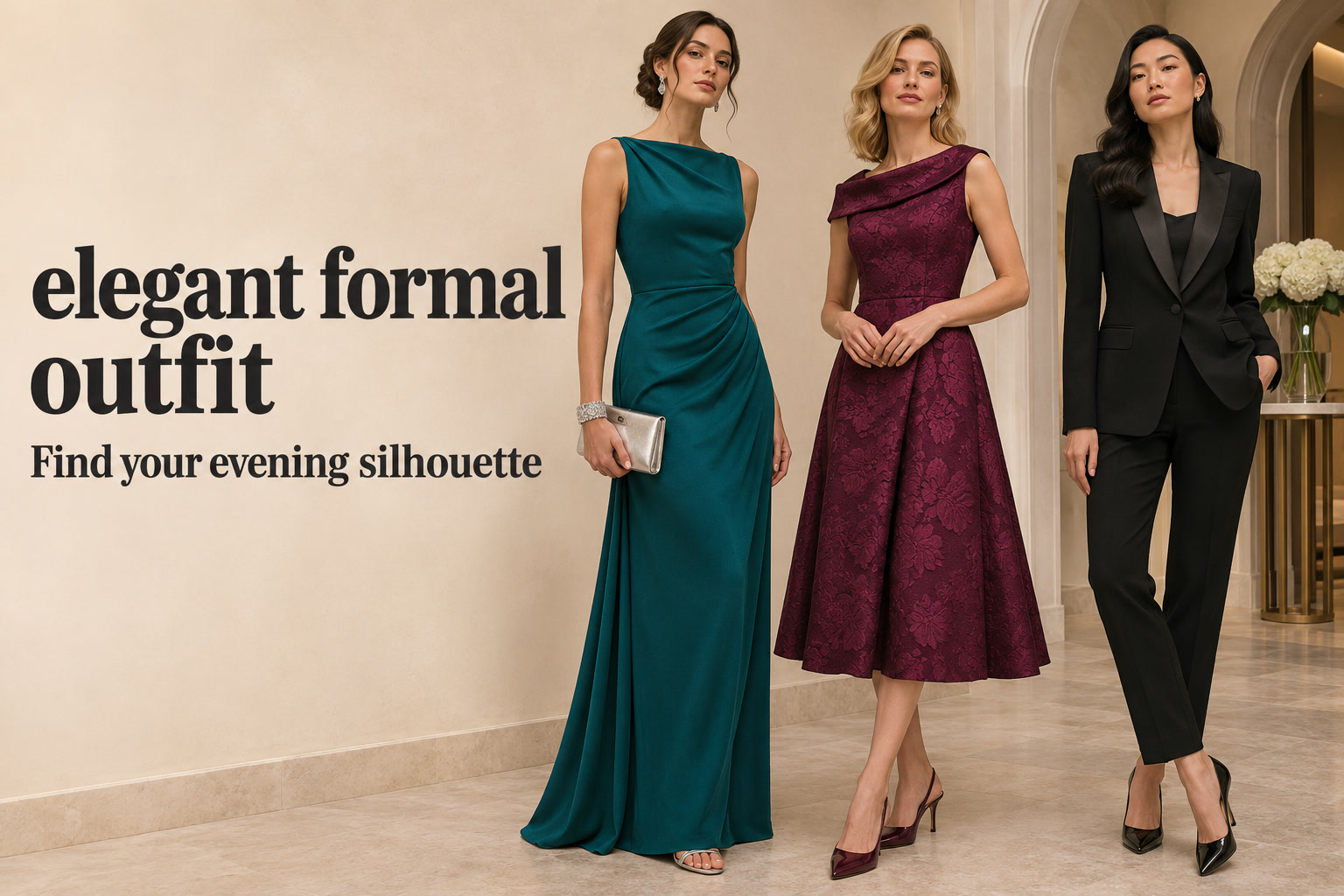
If your invitation says black tie and gives you very little else to go on, I’d try on the long gown first. For a less prescriptive invitation, I’d give a structured midi or a matching evening suit an equal chance in the fitting room. An elegant formal outfit still has to work when you’re climbing stairs, squeezing past a table, or sitting down to eat. Find out how much leeway you have while those choices are still open.
Compare outfits you could actually wear to the same event. Under a gown, a low shoe might barely show. With a midi, you’ll see it all night. With a suit, a little sheen at the lapel may be enough to give the outfit an evening feel. Getting out of a car and sitting down in each candidate will tell you more about the fit than another look at the hanger.
Read the invitation before choosing a silhouette
Start with the exact wording. For traditional black tie, a floor-length gown is the clearest choice, especially if you’re attending a ballroom gala or sitting at a head table. The Emily Post attire guide also includes dressy cocktail dresses under black tie and lists dressy separates among the black-tie-optional choices. If you’re choosing a shorter dress for a particularly traditional event, check the host’s preferences before committing.
If the invitation just says “formal attire,” I’d compare an ankle-length or floor-length gown with a substantial midi and a matching evening suit. Vogue’s formal attire guide includes dresses well below the knee and sharply tailored suits, with some occasions calling for a floor- or ankle-length option. The invitation itself still comes first. Check the event website or written instructions in case “formal” is accompanied by a note about hemlines, venue access, or a color request. For a work event, find out whether the organizer means a business dress code or a dinner dress code. The same word can send you to very different parts of your closet.
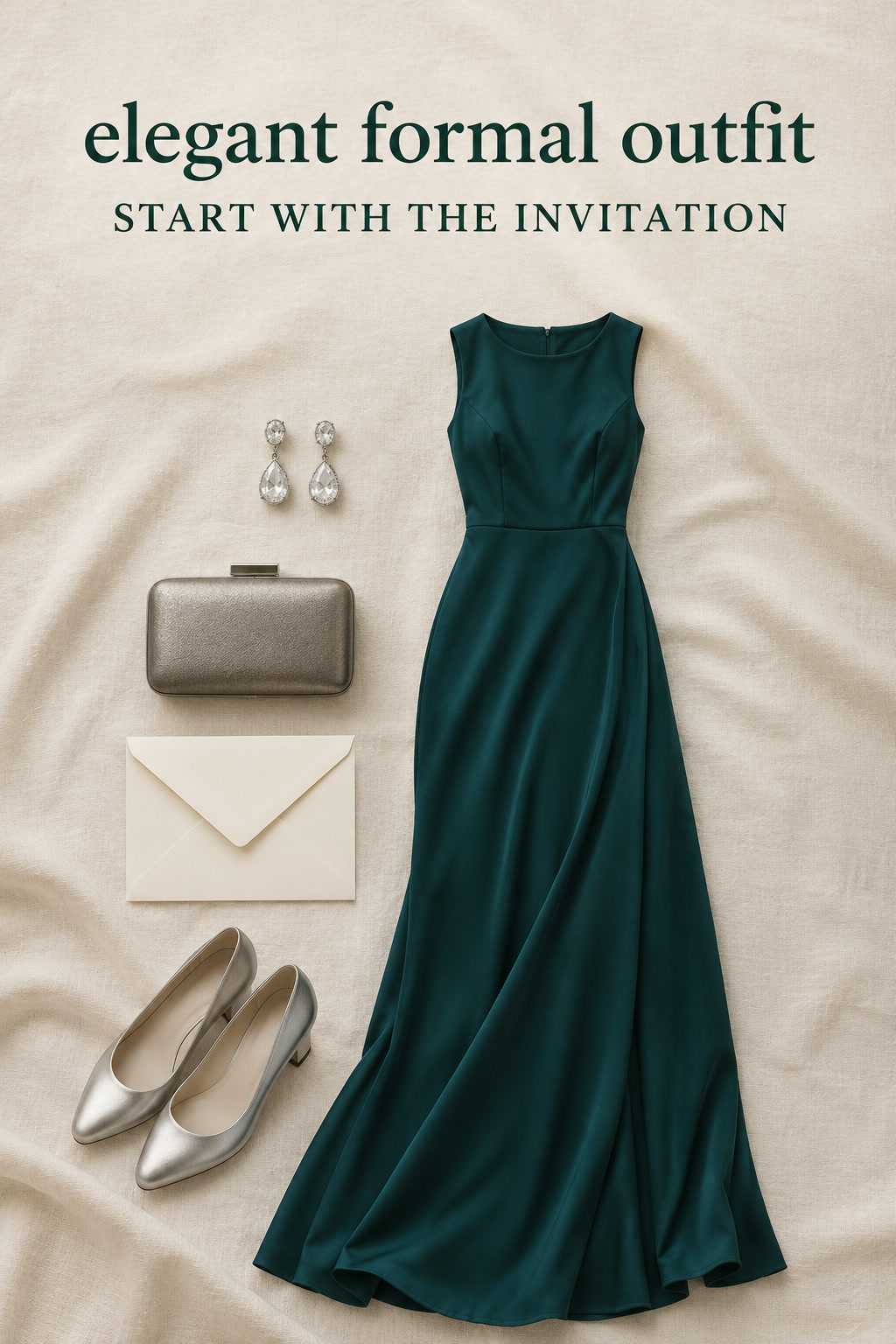
A simple long dress is the most practical starting point if you want a single garment that works for a traditional evening invitation. Look for a bodice you can sit in, a skirt with room for a normal stride, and a hem that clears the front of the shoe. If the dress has a plain neckline, a small pair of drop earrings and a compact evening bag are enough to finish it. Bring the shoes you actually intend to wear to any fitting.
Four pieces to try with your evening outfit
Start with the one-shoulder gown
Keep a hand free at the gala
Add one detail by the neckline
Fit the gown with silver flats
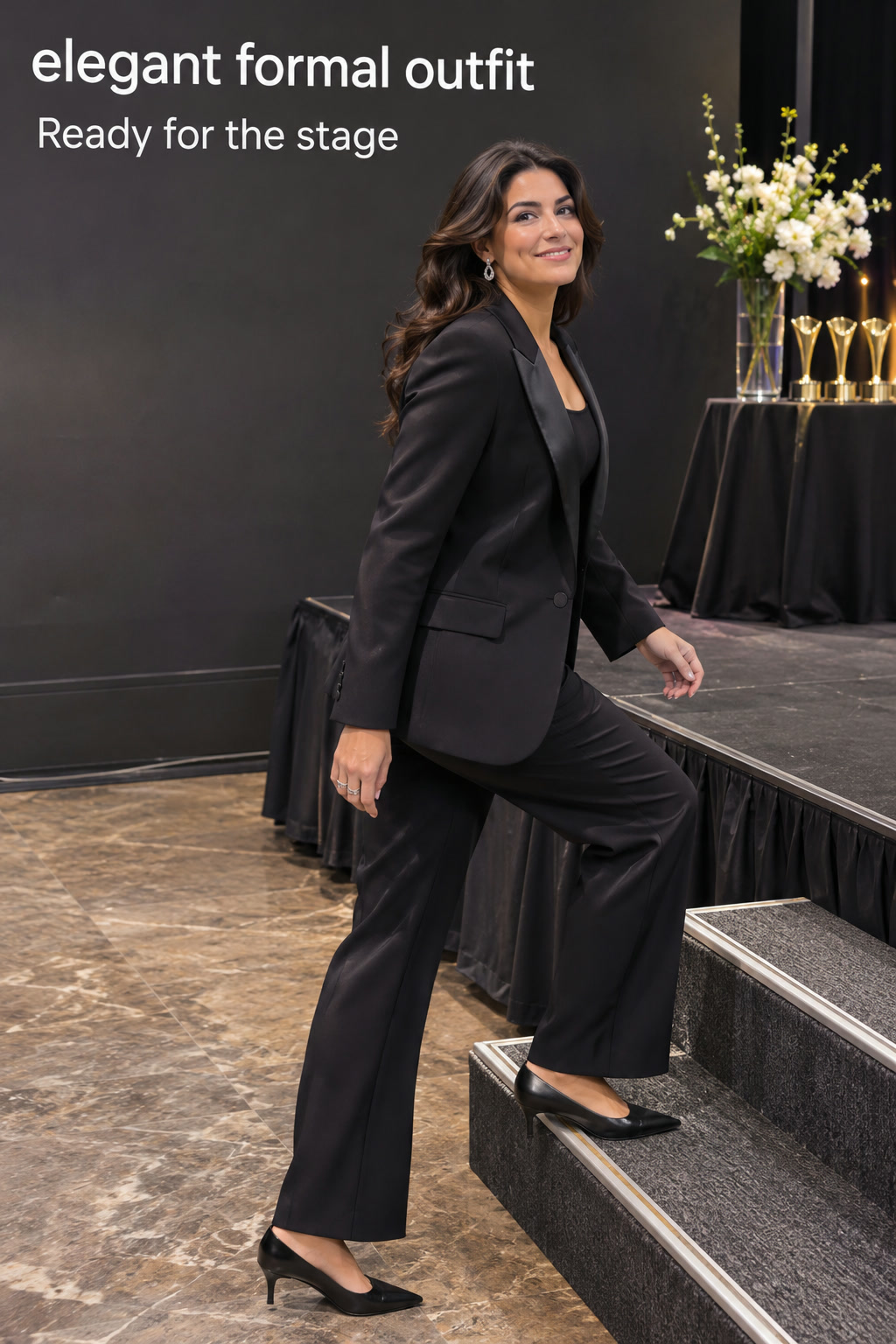
If most of the evening is a seated dinner, give the fit at the waist and shoulders more weight. Presenting an award? Try a staircase in the shoes you plan to wear, especially if the stage steps are steep. Use any wardrobe instructions sent to speakers or other participants as your starting point. Guest photos show what people wore for a different role.
When the wording is vague, make your question easy to answer. “Would a dark matching evening suit fit the dress code?” is more useful than asking how dressed up people will be. The host can approve a specific outfit or tell you what they had in mind. If what you own is already close, send a short description before you pay for a rental or alterations. For a formal wedding, include the color if the couple has published a palette or an attire request.
What a gown, midi dress, and evening suit each do best
A gown gives you the clearest formal silhouette
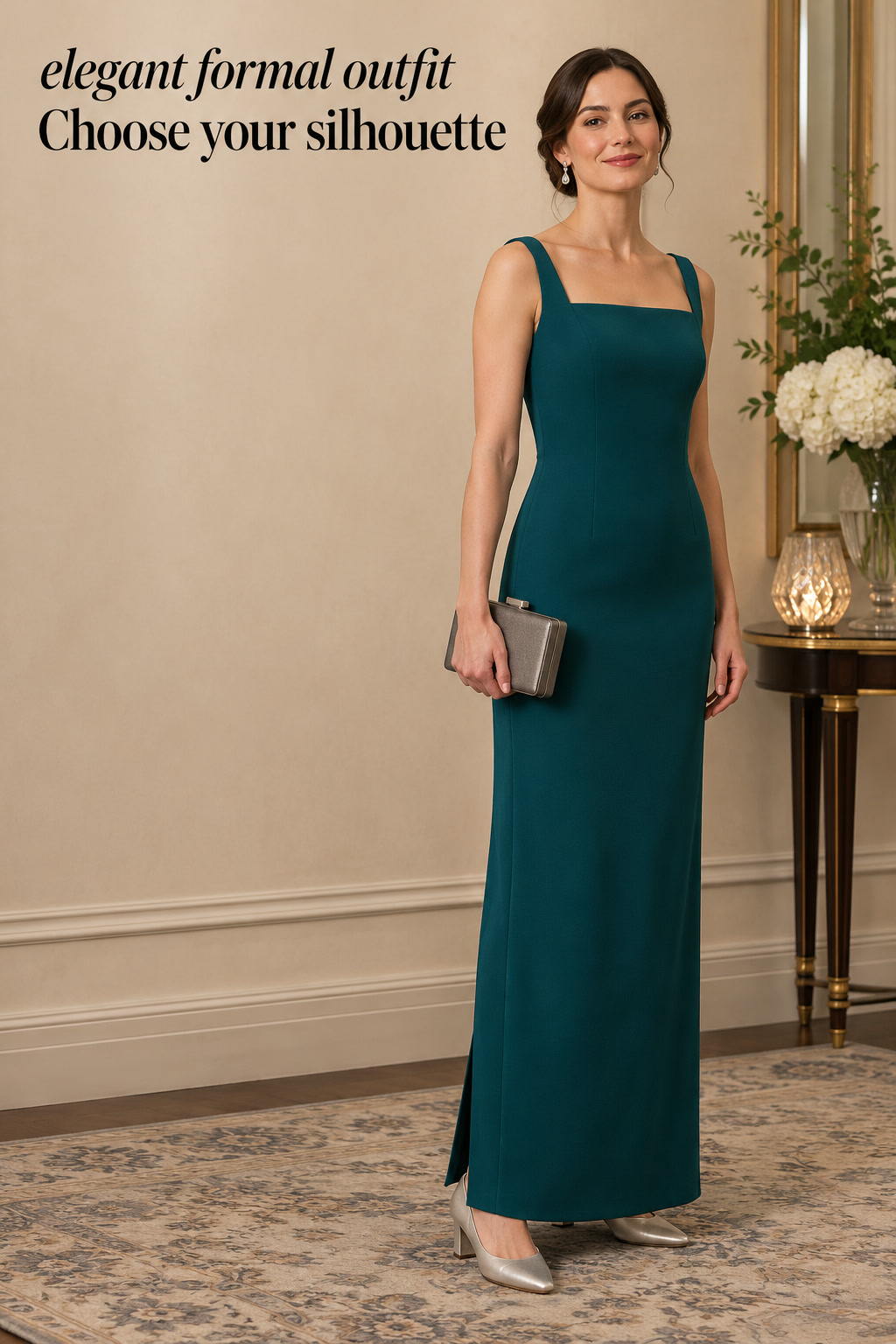
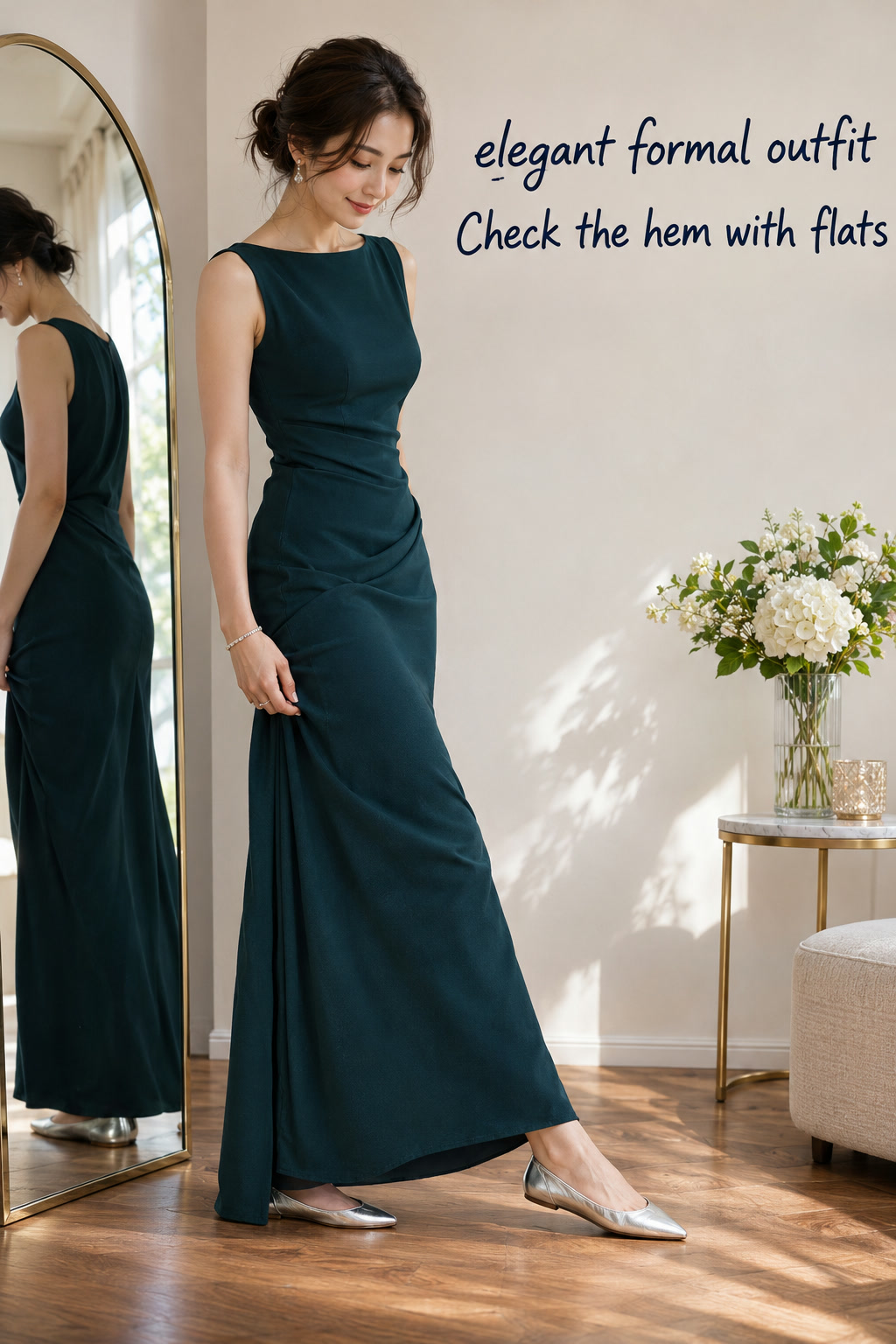
A long hem carries much of the visual weight of a gown, so the top can be quite simple. A deep teal column with a square neckline, for example, can work with small silver drops and a plain pewter clutch. Check how far the skirt opens when you take a full step. With a straight skirt, test getting into a car or stepping onto a curb in the fitting shoes. An A-line skirt offers room around the knees if you’ll be moving often, though a very full skirt takes up space between chairs. See how easily you can gather the fabric in one hand without disturbing the bodice.
Work out the shoe height before a tailor marks the hem. If you expect to change from a heel to a flat during the evening, walk in both pairs before deciding which one to use for the fitting. If the fabric drags in the flats, pick one shoe for the whole night or try a different gown. At the fitting, look at the back as well as the front. A hem that clears your toes may still catch under the heel as you step backward from a chair.
A dressy midi leaves the shoes in view
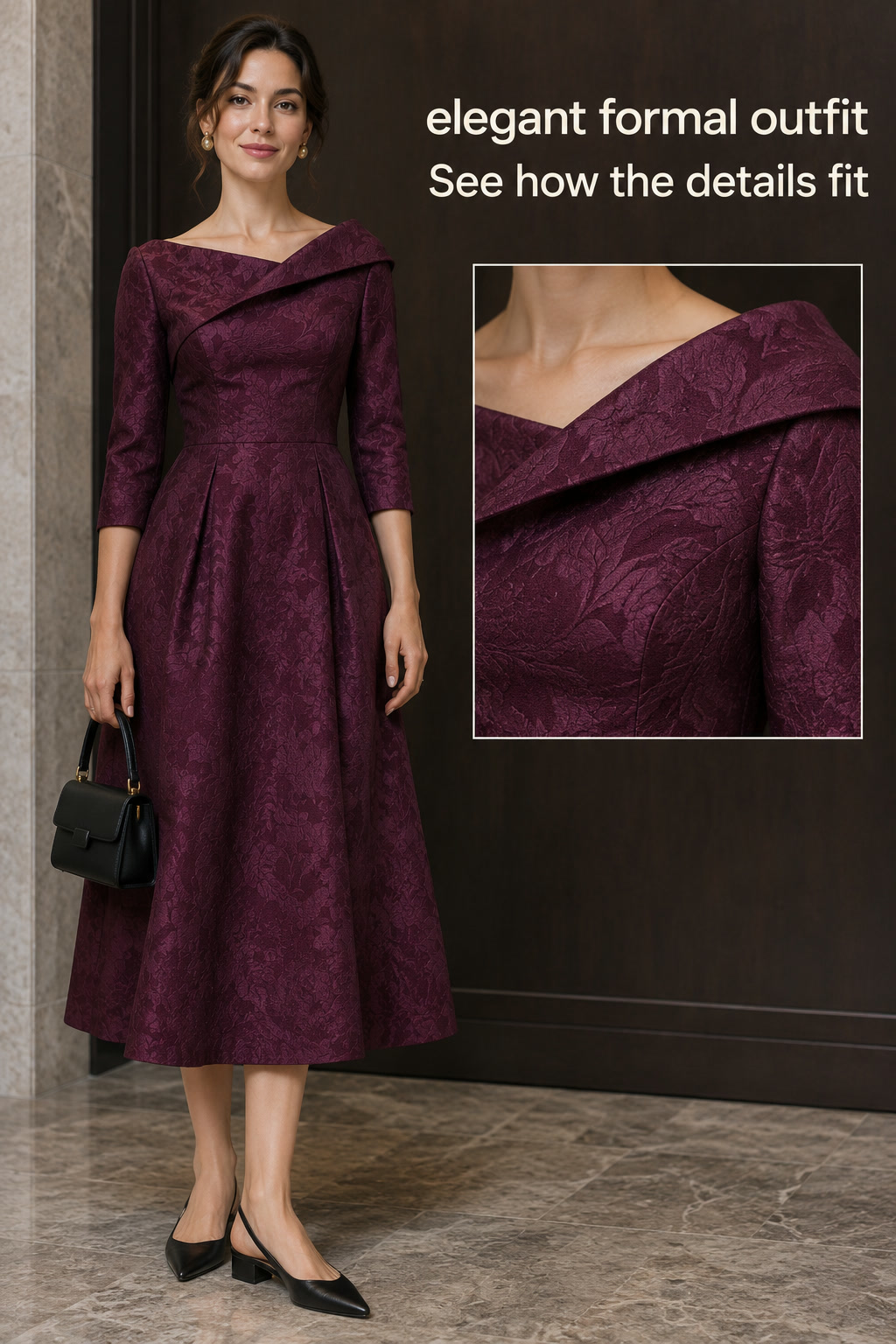
At a formal event with some flexibility, a dressy midi is useful when you expect to stand and mingle, or when the route to dinner involves stairs or stepping in and out of a car. Look for a substantial bodice, a skirt that hangs smoothly, or a finish that suits an evening room. Picture a dark plum jacquard midi with a folded neckline and a slim slingback. The fold frames your face and the shoe shows below the hem. Try them together before deciding whether there’s room for a necklace.
Midi hems can land in several places depending on how tall you are and how a brand cuts the skirt. Try the dress at its current length with the shoes on, then view it with the hem temporarily folded up. You may prefer the shorter line, or you may find that the extra length gives the skirt a better swing. Check how high it rises as you sit. If the shorter fold looks better standing and puts the hem higher than you want over dinner, keep the longer length.
An evening suit gives you more control over fit
I’d look for a jacket and trousers designed to be worn together. Matching fabric helps the suit read as one outfit, especially in a dark color where two slightly different blacks can stand out under direct light. A satin-faced lapel on a black tuxedo-style jacket supplies a small amount of shine. With full-length matching trousers and a matte shell, it can be enough detail for a formal dinner. Look at the shell on its own as well. If the jacket comes off, the top should still feel like an intentional part of the outfit.
Check the jacket with your arms in a few realistic positions. Reach across a table and bring your hands together as if you’re holding a microphone. Try sitting with the jacket open and buttoning it again as you stand. If it pulls across the shoulders both open and closed, try a different cut. If the shoulders fit and the trousers are too long, bring the shoes when you ask about hemming them. Buying the jacket and trousers in separate sizes can help where that is an option.
Three invitations and what I’d wear to each
A ballroom gala with black tie on the card
I’d choose the teal column gown with silver drop earrings and a pewter clutch, provided the skirt allows a comfortable step. At a fundraiser you may be walking between tables, standing for introductions, and carrying a bag while shaking hands. Try holding the clutch under your arm with the other hand free. If you immediately want a strap, choose a compact evening bag with a chain you can leave inside at dinner. Walk a few paces with the bag by your side, too. An exposed clasp can brush against a textured dress.
A low silver pump can sit under the hem. Match the height on both feet if you compare shoes at a fitting, since standing unevenly makes the hem harder to judge. If the column limits your stride, I’d keep the color and neckline and try a wider skirt. You’ll keep the top half of the look and gain space around your knees. If you’re already watching where you step, stick with the low pump and leave the train off your list.
A museum wedding with a ceremony upstairs
If the couple confirms that midis are welcome, I’d wear the dark plum jacquard dress with a low slingback and a small bag with a short handle. The folded neckline already frames the face, so small earrings leave the shoulder detail visible. Use the first stair at home to check how the skirt moves as you lift your knee. If a fitted back vent opens farther than you’d like, try a dress with more room through the skirt. Check the vent again as you sit so you can see how much the skirt opens at the table.
If the invitation asks for a gown, try an ankle-skimming dress only if the couple confirms that the length fits their plans. Otherwise, keep the long hem and choose a skirt you can lift discreetly with one hand. A low block heel can give you a wider base for the stairs. Check that the dress falls cleanly back into place after you let go, especially if the lining and outer layer are cut to different lengths.
An awards dinner with a walk to the stage
For a board-hosted dinner where evening tailoring is welcome, I’d choose black matching trousers and a satin-lapel jacket over a matte shell. A low pointed pump or polished flat leaves you free to concentrate on the steps. If you’ll be wearing a name badge or microphone, decide where it will clip. A lapel with a smooth surface may show a mark from a pin. Try the placement on an inside edge first, or ask the organizer what kind of attachment they use.
Look at the suit from several feet away with the jacket open. A shell that folds into a visible ridge under the buttons may need a smoother tuck or a different length. If you’ll take the jacket off while eating, check the shell’s opacity with the same lighting you used for the suit. Take a photo with the camera at eye level to see what the jacket, neckline, and badge look like together. You can leave anything you carry in your bag at your place before going up to speak.
What to change when the outfit almost works
If the dress appears too casual for the invitation, look at the base first. A flimsy underskirt or a hem that reads like daywear will do more to set the tone than a jeweled heel. A structured midi might only need a change of bag. Swap your everyday bag for a compact evening one and look again before reaching for jewelry. If the outfit still looks underdressed beside the host’s examples, move on to a longer hem or a tailored option the host has approved.
If your feet hurt during the fitting, look for a lower shoe with a similar toe shape to preserve the line you liked. Make sure your foot doesn’t lift out of the back when you take a long step. With a gown, revisit the hem after any change in heel height. With trousers, see whether the front edge of the hem catches on the top of the shoe. Put your foot on the lowest stair and check whether you can keep the cloth clear without picking up the trouser leg.
Check how closure and support behave during ordinary motion. A strapless bodice that stays up when you stand still can shift when you reach. Raise your arms far enough to put on a coat and then take it off. With a backless dress, try the exact undergarment or support you intend to wear and take a photo from behind. If the plan relies on constant adjustment, choose a bodice you can keep in place through the evening.
Pack the bag before you approve it. Put your phone in its usual case inside, along with anything you’ll actually need to carry. Close the clasp with one hand while standing. If the bag strains or you have to slide your phone in diagonally every time, a slightly wider evening bag may be less distracting to use. Consider the strap length with the bag full. You should be able to sit down and take it off without lifting it over an earring or brushing a delicate sleeve.
Editor’s take
If I had two plausible outfits and an invitation that gives little direction beyond “formal,” I’d put on the simpler full-length dress first with the lowest evening shoe I’m happy to wear all night. That gives me a clear reference for the amount of polish the other outfit needs. A well-cut midi or matching evening suit may suit the event better if the host gives you room and the evening involves stairs, mingling, or speaking. That’s my reading of the dress-code guidance and the garments I compared for this guide. Before ordering anything, take the best candidate you own off the hanger and try it with your evening shoes. If you can sit and walk comfortably and the invitation gives you the go-ahead, you may only need a hem adjustment.
FAQ
Can a midi dress count as a formal outfit?
Yes, when the host allows that length and the dress has an evening finish. A structured bodice, a fabric with some presence, or a considered neckline helps a midi work in that setting. If a black-tie invitation stresses traditional attire, start with a long gown and confirm the shorter option with the host.
Can I wear a pantsuit to a formal wedding?
A matching evening suit can work if the couple’s dress code allows it. Try a dark suit with a dressier lapel or a carefully chosen top and polished shoes. If the invitation is black tie and the accompanying guidance specifies gowns or tuxedos, describe your proposed outfit to the couple or planner and check first.
Do I need high heels with a floor-length gown?
A low heel or a polished flat can work. Bring the exact pair to the fitting, since the shoe height affects where the fabric falls. Check that the front edge clears your toes when you go forward and that the back clears your heel when you step back from a seat.
How can I tell whether my suit looks like office wear?
Look at the outfit in the lighting you expect at dinner. Start with the matching jacket and trousers. A satin-faced lapel can be enough on its own. If you have plain lapels, try a dressy shell and swap the work tote for the evening bag you’ll carry.
What bag goes with an embellished formal dress?
Try a compact bag with a smooth exterior and enough room for your phone. If it has a chain, check that the links don’t catch against the dress. You can match one metal detail at the neckline or let the bag sit quietly in a similar shade to the fabric.
Which part of a formal outfit should I fit first?
Start with the pieces that need to work together. For a gown, try the bodice with the right undergarments and set the hem with the final shoe. With a suit, make sure the jacket fits through the shoulders before paying for sleeve or trouser alterations. Add the bag once you can move comfortably in the clothes.