School Uniform Outfits: Build a 5-Day Capsule
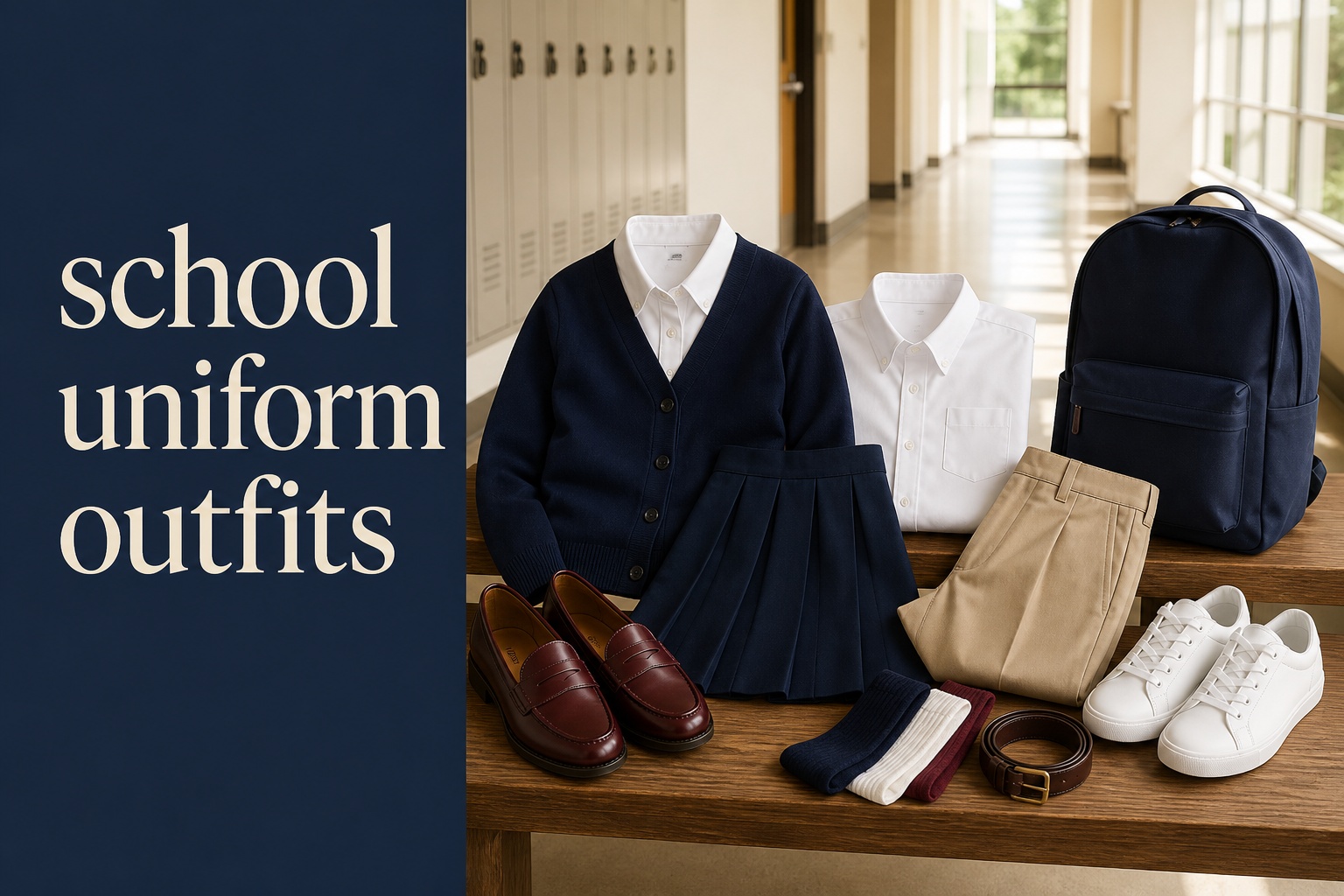
The best school uniform outfits are not the ones with the most pieces. They are the ones that make a small, approved wardrobe feel flexible enough for five school days, changing weather, long commutes, and different kinds of school activities. When every morning starts with the same shirt, skirt, trousers, or jumper, the answer is not buying endless versions of the same item. It is building a clear system around fit, layers, footwear, and a few personal details your school actually permits.
This capsule approach also makes getting dressed easier. You can see which pieces do the most work, replace worn items in the right order, and create outfits that feel intentional without turning school dressing into a daily styling project. The exact rules will vary by school, so use the ideas below as a planning framework rather than permission to ignore a handbook.
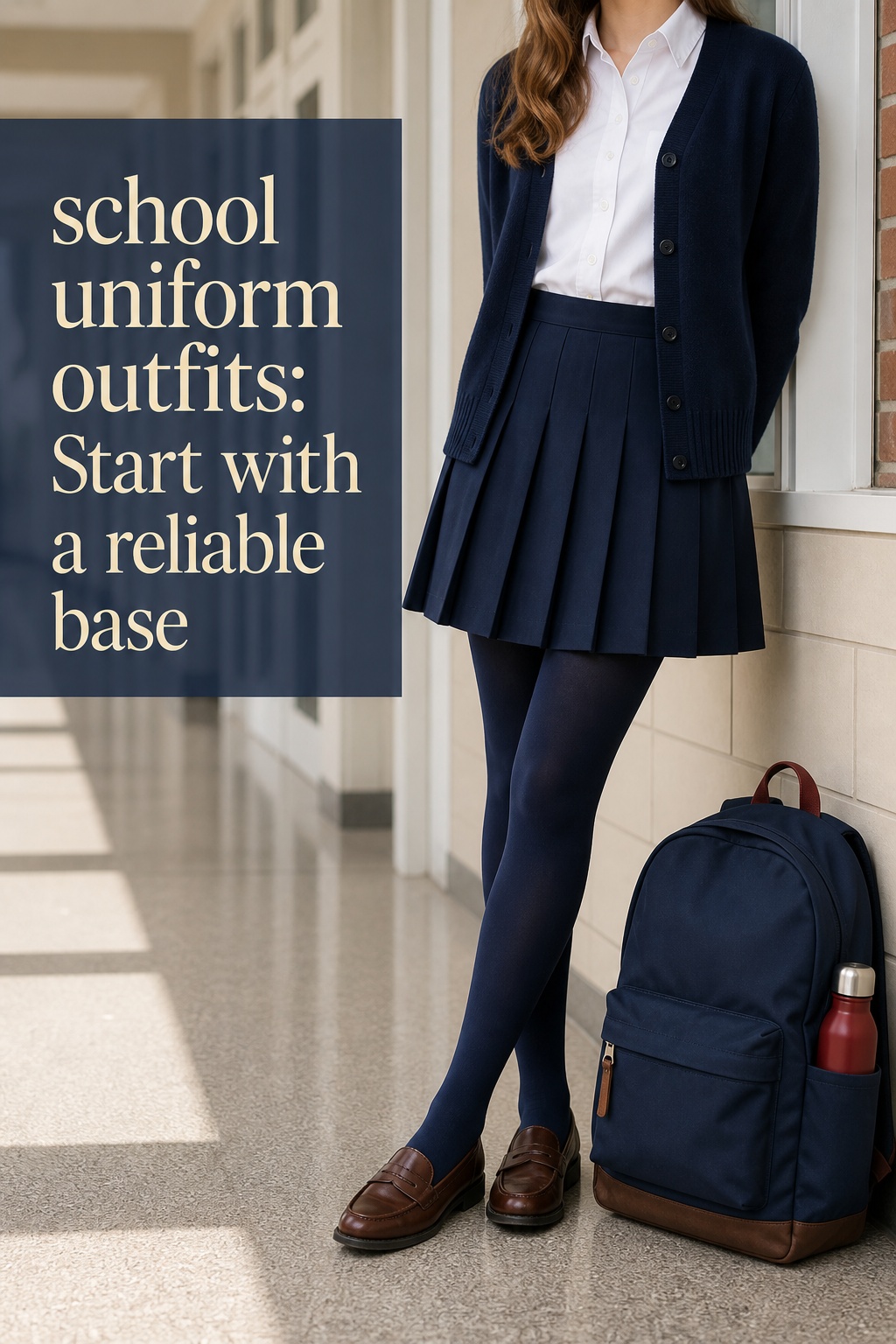
Build the school uniform capsule around one reliable base
Start by identifying the non-negotiable base of your uniform. It might be a white polo with navy trousers, a button-down shirt with a plaid skirt, a jumper dress, or a school-colored top with khakis. Write down the required colors, silhouettes, logos, hem lengths, footwear rules, and outerwear restrictions before you shop. This simple inventory prevents a common mistake: buying attractive pieces that cannot be worn together or cannot be worn at school.
The Fashion-Note Edit
Five effortless pieces to refresh your everyday wardrobe
A polished, practical edit for workdays, weekends, and everything in between.

The Drop
Women’s Blake Long Blazer
A longline, tailored blazer with a notched collar and a single-button closure—an easy layer for denim, dresses, or office-ready looks.
Shop the blazer
Amazon Essentials
Women’s Lightweight Crewneck
A soft, lightweight sweater with a clean crew neckline—the kind of reliable layer that works from cool mornings to air-conditioned spaces.
Shop the sweater
Amazon Essentials
Women’s Loafer Flat
A classic flat loafer that gives casual outfits a more polished finish and pairs naturally with tailored pants, skirts, and straight-leg jeans.
Shop the loafers
Levi’s
Women’s 501 90s Jeans
A relaxed, vintage-inspired take on the iconic 501 silhouette—made for an easy, lived-in look without the thrift-store search.
Shop the jeans
Colorfulkoala
High-Waisted 7/8 Leggings with Pockets
Soft, four-way-stretch leggings with side pockets and a high-rise waistband—designed for movement, errands, and off-duty comfort.
Shop the leggings
Affiliate disclosure: This section contains affiliate links. If you make a purchase through these links, I may earn a commission at no additional cost to you. Product selection, pricing, availability, and delivery terms may change—please review the current details on Amazon before purchasing.
As an Amazon Associate I earn from qualifying purchases.
Next, choose the number of versions you need based on laundry rather than fantasy. A student who does laundry twice a week may be comfortable with three everyday tops and two bottoms. A student who needs a full week between washes will need more. The goal is enough rotation to keep garments fresh, not a closet that looks impressive on the first day and becomes difficult to maintain by October.
Your wedding style is personal.
Your plan should feel that way, too.
Zarellea keeps your guest list, budget, vendors, and every next step beautifully organized — so you can focus on the moments that feel like you.
For many school uniform outfits, a practical starting capsule includes four or five tops, two bottoms, one alternate bottom or dress option if permitted, one warm layer, one lighter layer, and two pairs of everyday shoes. You can scale that list up or down according to your school calendar, laundry access, climate, and how often you participate in sports or after-school activities. The best capsule is the one that matches real life.
Use color as the connector. If your required pieces are navy, white, gray, khaki, or burgundy, let those colors do most of the work. A small accent such as a school-approved red hair ribbon, striped sock, or colored cardigan can add variety without creating a new matching problem. A two-color base plus one accent is an easy way to keep outfits visually calm and make every item more useful.
Fit is the first style decision. A clean shirt with the right shoulder seam, a waistband that stays comfortable when sitting, and a hem that follows the rules will look more polished than an expensive accessory. Avoid sizing up too far just to create growing room. Slight extra room can be practical, but clothing that collapses at the shoulder or drags at the hem usually makes movement harder and looks less deliberate.
Think about movement while checking fit. Sit at a desk, walk up stairs, reach for a backpack, and bend to pick something up. Trousers should not pinch at the waist, skirts should stay secure when moving, and shirts should not pull across the back. If a uniform piece is almost right but needs a small adjustment, a permitted alteration can create more value than replacing the whole outfit.
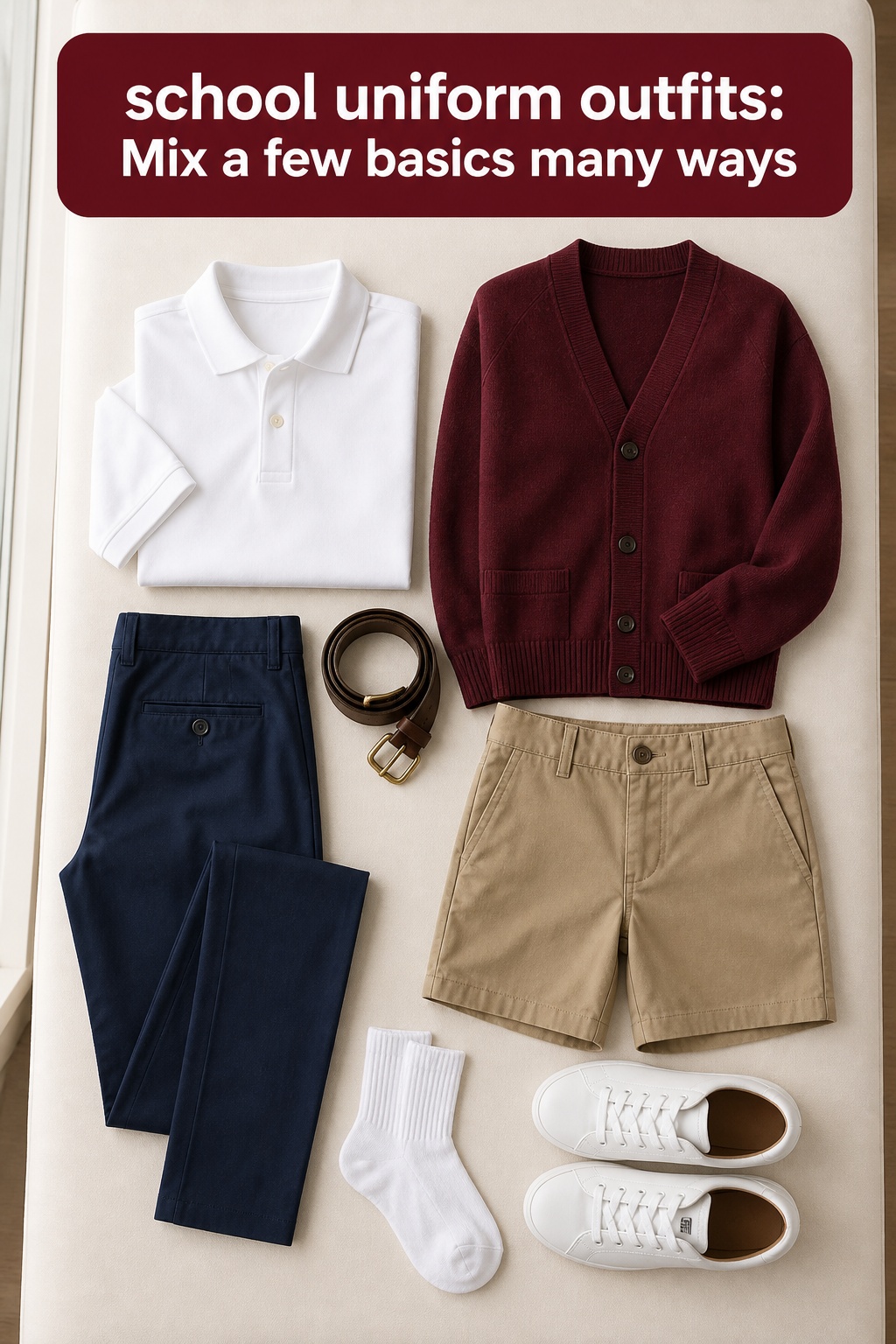
Create outfit combinations from fit, layers, shoes, and small approved details
Once the required base is clear, build combinations by changing one practical variable at a time. A white shirt with trousers can become a different look through a cardigan, approved sweater, belt, socks, or shoes. A pleated skirt can be paired with a short-sleeve shirt on warm days, a cardigan for a cool morning, and a blazer or sweater for a more structured presentation. The base remains familiar, but the outfit serves a different situation.
Use a simple five-day rotation to test your capsule. Monday can be the crisp, structured combination with freshly pressed trousers or a skirt and polished loafers. Tuesday can use the same base with a cardigan and comfortable flats. Wednesday can be the movement-focused version with trousers or permitted shorts and supportive sneakers. Thursday can introduce the alternate layer. Friday can use the easiest combination, provided it still meets the rules.
Do not treat every difference as a fashion statement. A good school uniform system is often quiet. Changing the shirt collar, rolling a permitted sleeve once, choosing a different approved sock height, or switching from loafers to clean sneakers may be enough. If your school has strict rules, personal expression may need to happen through a backpack, hairstyle, watch, or the way you care for the clothes.
Layering is where a uniform capsule earns its keep. A cardigan creates softness and warmth without adding much bulk. A V-neck sweater can frame a collar and make a simple shirt feel more finished. A school-approved blazer adds structure for assemblies or presentations. Choose layers that fit over the shirt without pulling at the arms and that can be removed easily when a classroom becomes warm.
Keep the visual proportions balanced. If the bottom is full, such as a pleated skirt or wide-leg trouser, a shirt that sits neatly at the shoulder will create clarity. If the top is relaxed, a straighter trouser or a clean skirt can prevent the outfit from looking oversized everywhere. These are not rules about body type. They are simple ways to make the uniform silhouette easier to move through the day.
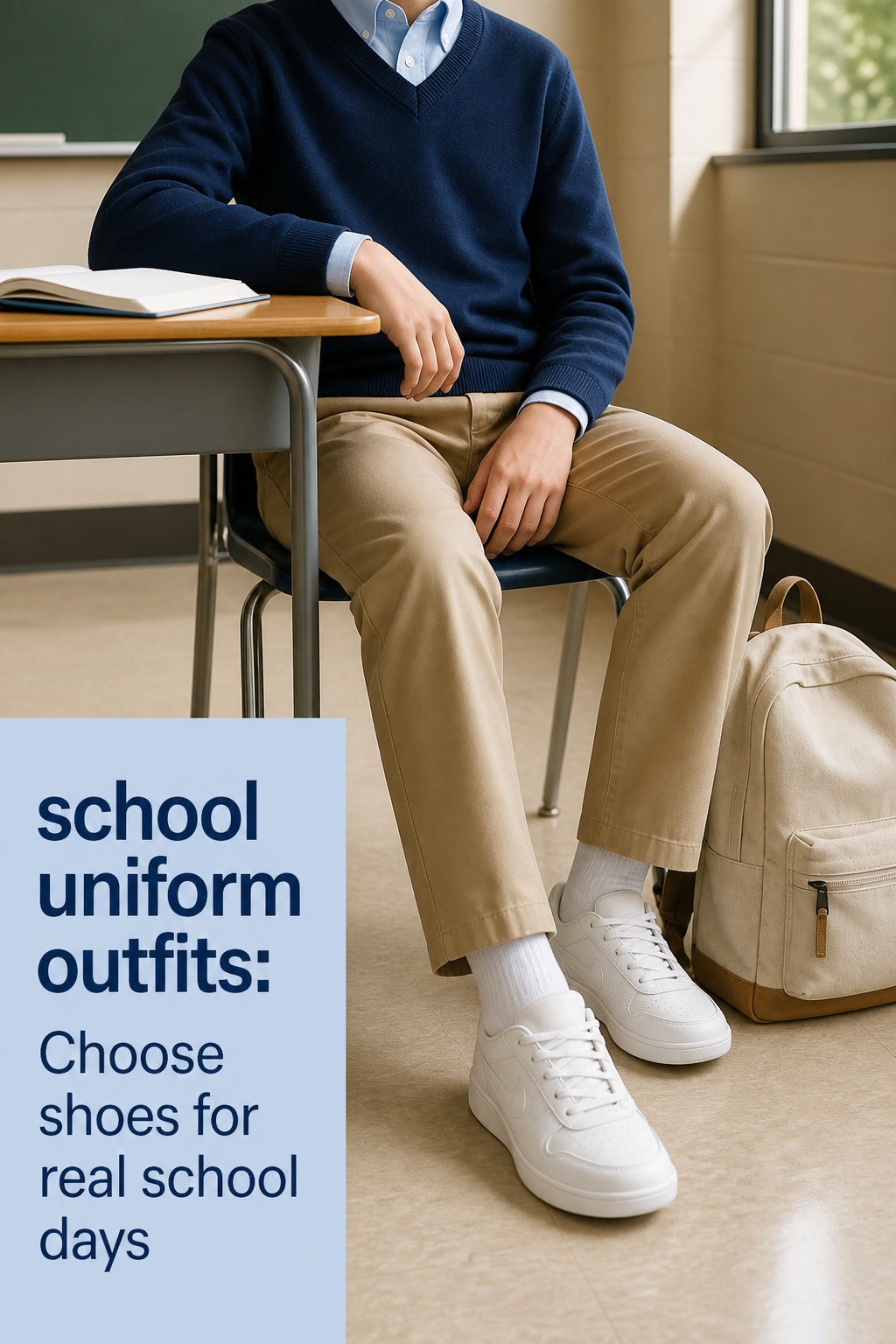
Shoes deserve their own planning category because they carry the outfit and the student. Look for a pair that is allowed, comfortable after several hours, secure on stairs, and appropriate for the weather. Loafers and Mary Jane shoes work with skirts, dresses, and trousers when the shape is comfortable. Clean school-approved sneakers may be the best choice for walking-heavy days. A shoe that looks good but creates pain will not make a successful school uniform outfit.
Socks and tights can connect the shoes to the uniform. Neutral socks keep a formal outfit simple, while a school-approved stripe or texture can add a small point of interest. In cold weather, opaque tights or warm socks can make skirts and dresses more practical. Always check the exact policy, since length, color, and pattern requirements vary significantly between schools.
Accessories should solve a problem before they decorate. A sturdy belt keeps trousers comfortable. A watch helps with the school day. A headband or braid can keep hair controlled. A backpack should hold the required items without forcing the wearer to carry it awkwardly. When a school allows jewelry, one small piece usually looks more intentional than several items competing with the uniform.
Adapt school uniform outfits to weather, movement, and the real school day
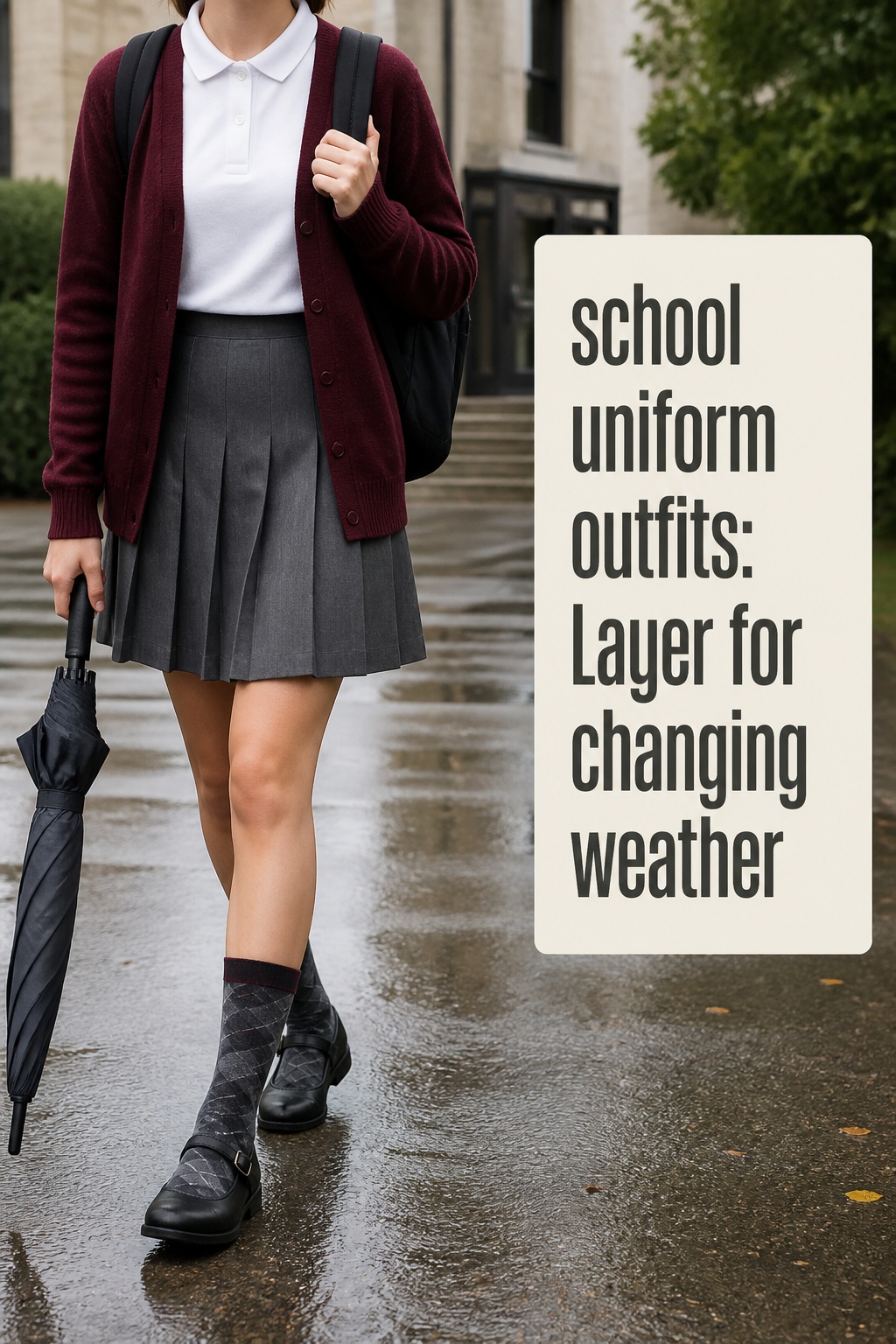
School uniform outfits have to work in more than a mirror. They need to survive a walk to the bus, a crowded hallway, a chilly classroom, lunch outside, and a backpack full of books. Plan around the whole day instead of dressing only for the temperature at 7 a.m. The most useful strategy is a breathable base, a removable layer, and shoes that match the ground conditions.
For warm weather, prioritize lightweight approved fabrics and a base that does not require constant adjusting. A short-sleeve polo or breathable button-down can work with trousers, shorts, a skirt, or a jumper depending on the uniform. Keep the palette simple and let clean construction carry the look. If the school permits a small hair accessory, it can add color without adding heat or bulk.
For a cool morning and a warm classroom, use a layer that can be removed and stored. A cardigan is often easier to manage than a bulky sweatshirt, while a thin sweater can add warmth under a blazer. Make sure the layer does not hide required logos or create a conflict with the dress code. A foldable layer is especially useful for students who move between outdoor pickup, indoor classes, and after-school activities.
Rain changes the priority order. Waterproof outerwear and traction matter more than a delicate shoe. If rain boots are allowed for the commute but not for the classroom, plan a pair of school shoes that can be carried without soaking books. A dark backpack, quick-drying socks, and a simple hairstyle can make a rainy day less stressful. The polished part of the outfit is preparation, not pretending the weather is not happening.
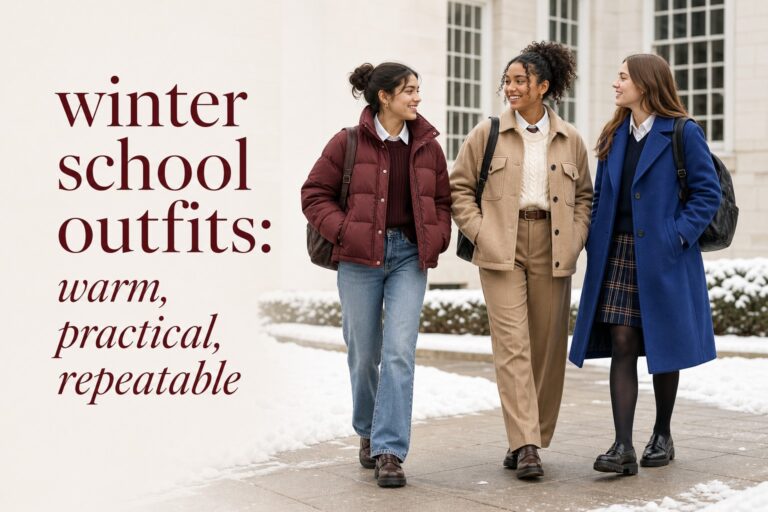
Cold weather calls for warmth without losing the shape of the uniform. Start with a comfortable base layer if it is allowed, then add approved tights, socks, a sweater, coat, or scarf. Keep bulky pieces outside the classroom when possible. If a skirt or dress is part of the uniform, warm tights and practical shoes may be more useful than adding decorative layers that cannot handle a full day.
Consider activity days before committing to a dressier formula. Trousers or permitted shorts may be the better option for a day with lots of walking, lab work, or outdoor supervision. A skirt or dress can work well when the fit is secure and the student feels comfortable sitting and moving. There is no single correct uniform silhouette. The best choice is the approved one that matches the day’s demands.
For students who prefer less traditionally gendered styling, build from the same practical categories. A polished outfit can use a shirt with trousers, a polo with shorts, a cardigan over a dress, or a sweater with a skirt if those options are allowed. Focus on fit, comfort, color, and movement rather than assigning a style formula to a gender. Uniform policies are different, so the handbook and the student’s comfort should guide the final choice.
Personal style can also show up in grooming and care. A neat braid, a simple bun, clean nails, polished shoes, or a well-organized backpack may be more noticeable than a dramatic accessory. These details are low-cost, repeatable, and useful. They also create a sense of readiness that makes a uniform feel considered even when the clothing options are limited.
Shop, maintain, and troubleshoot the capsule without overbuying
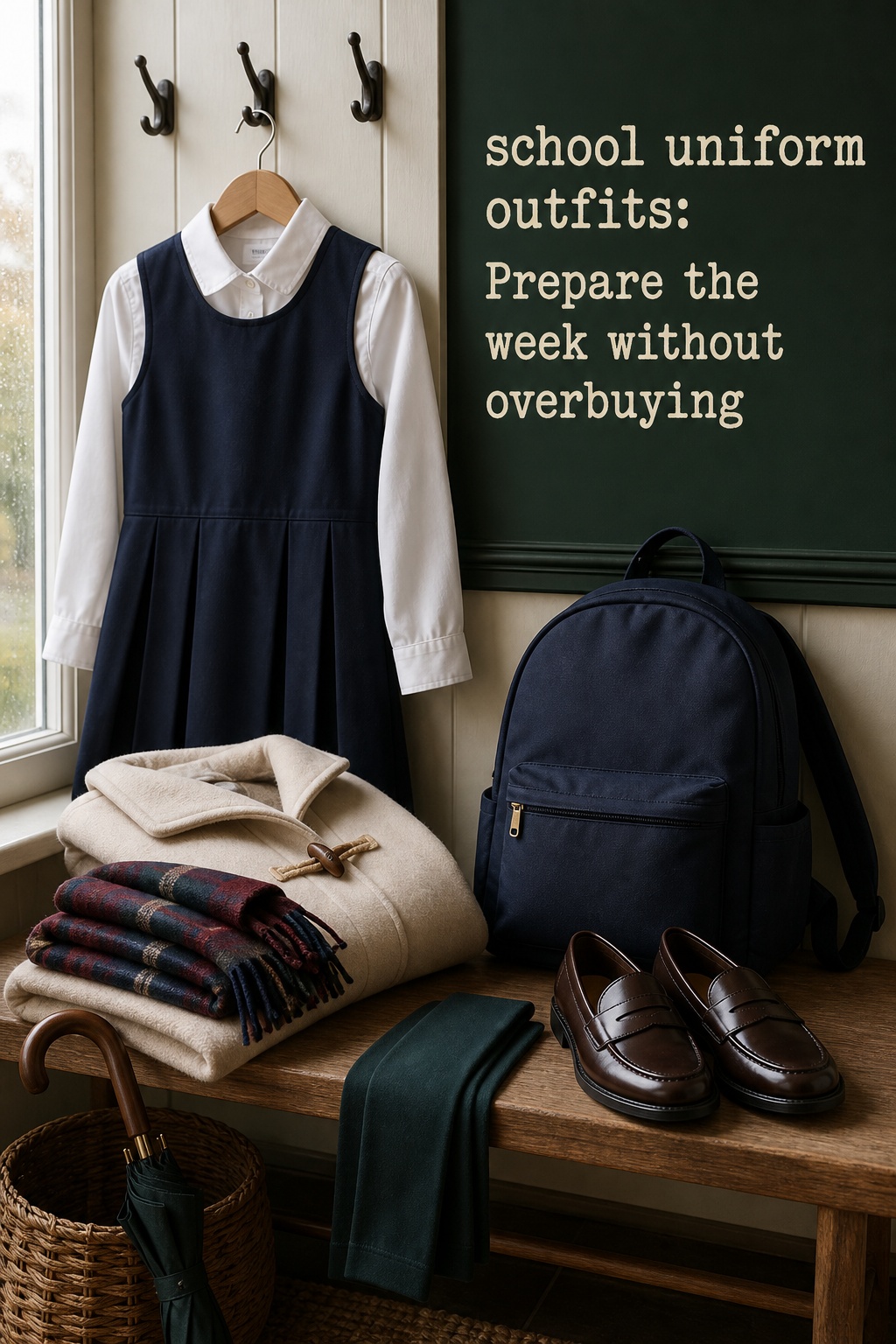
Shop in order of wear. Replace the shoes that hurt or are falling apart, then the shirt that is worn at the collar, then the layer that no longer fits or does not work with the base. Do not begin with novelty accessories if the core pieces are uncomfortable. A capsule becomes more stylish when its most-used items are reliable.
Before buying, make a quick outfit matrix. Put the tops across the top of a page and the bottoms down the side. Mark combinations that meet the rules, feel comfortable, and work with at least one pair of shoes. If an item creates only one possible outfit, ask whether it fills a real gap. If a cardigan works with every top and both bottoms, it is probably a better purchase.
Care is part of the styling system. Follow the label, spot-clean when appropriate, and let shoes dry fully between wears. Keep a small repair kit for loose buttons, missing hooks, and minor hems. Press or steam the items that wrinkle most. A clean collar and smooth front can make a repeated outfit look fresh without changing the formula.
Give each item a job. One shirt may be the durable everyday option, another may be reserved for presentations, and a third may be the comfortable backup. The same applies to shoes and layers. Naming those roles helps distribute wear and keeps the best-looking piece from becoming the only piece you ever choose.
If the uniform feels boring, diagnose the problem precisely. Is the fit too loose? Is the shirt fabric uncomfortable? Are the shoes too plain, or simply not in good condition? Does the outfit need a layer, a better sock, or a more organized morning routine? Specific problems have affordable solutions. Replacing every item at once usually creates more cost and more decision fatigue.
If the uniform feels uncomfortable, check pressure points first. Waistbands, collars, seams, socks, and shoe insoles can change the entire day. A permitted undershirt, softer sock, different shoe fastening, or small alteration may help. If discomfort continues, involve a parent, guardian, or school staff member rather than accepting pain as part of looking polished.
Use a weekly reset. Check the laundry, polish or clean shoes, repack the backpack, repair small issues, and choose five combinations that match the forecast and schedule. This takes less time than solving the same problem every morning. It also makes it easier to notice which pieces are genuinely useful and which ones are sitting unworn.
A strong school uniform capsule should feel calm, not restrictive. It gives you enough options to respond to weather and activities while keeping the morning simple. Start with the required base, improve fit, add layers with a clear purpose, choose comfortable footwear, and let small approved details express personality. Those decisions create more successful school uniform outfits than a crowded wardrobe ever will.
FAQ
How many school uniform outfits do I need?
Most students can begin with enough tops and bottoms to cover their laundry schedule, rather than buying a separate outfit for every day. Three to five tops, two bottoms, one alternate option if allowed, a reliable layer, and two pairs of shoes can create a useful rotation. Increase the numbers if laundry is less frequent or the uniform gets dirty during activities.
What shoes work best with school uniforms?
The best shoes are school-approved, comfortable for several hours, secure while walking, and appropriate for the weather. Loafers, Mary Janes, flats, lace-up shoes, and clean sneakers can all work depending on the policy. Test the shoes with the actual uniform and wear them at home before relying on them for a full school day.
How can I personalize a strict school uniform?
Begin with permitted variables such as fit, approved layers, shoes, socks, hair, a watch, or a backpack. Keep the main colors coordinated and choose one detail that feels personal. Always check the handbook first. The goal is to make the uniform feel intentional while respecting the rules, not to create a stressful outfit that may be challenged at school.
How do I style a school uniform for cold weather?
Use approved layers that add warmth without making movement difficult. Depending on the rules, that may include a base layer, tights, warm socks, a cardigan, sweater, blazer, coat, or scarf. Choose layers that can be removed in a heated classroom and make sure outerwear works with the commute and ground conditions.
Can school uniform outfits include trousers or shorts?
Many schools allow trousers or shorts, but the exact cut, color, length, and season may be restricted. If those options are permitted, style them with the same attention to fit, layers, and footwear as a skirt or dress. Choose the approved option that feels comfortable for the weather, movement, and activities scheduled that day.
How do I make a school uniform more comfortable?
Identify the exact source of discomfort, such as a waistband, collar, seam, sock, or shoe, then address that point with an approved alteration, softer underlayer, different fastening, or better-fitting replacement. Sit, walk, and reach while trying on uniform pieces. If the problem continues, ask a trusted adult or school staff member for help.
Finish the look
The little extras that make a summer outfit feel complete
From beach days to city weekends, these easy pieces bring comfort, texture, and a polished finishing touch.

FENBEN
Straw Hobo Crossbody Bag
A handwoven straw bag with both short and crossbody straps—an effortless finishing touch for vacation looks and warm-weather outfits.
Shop the bag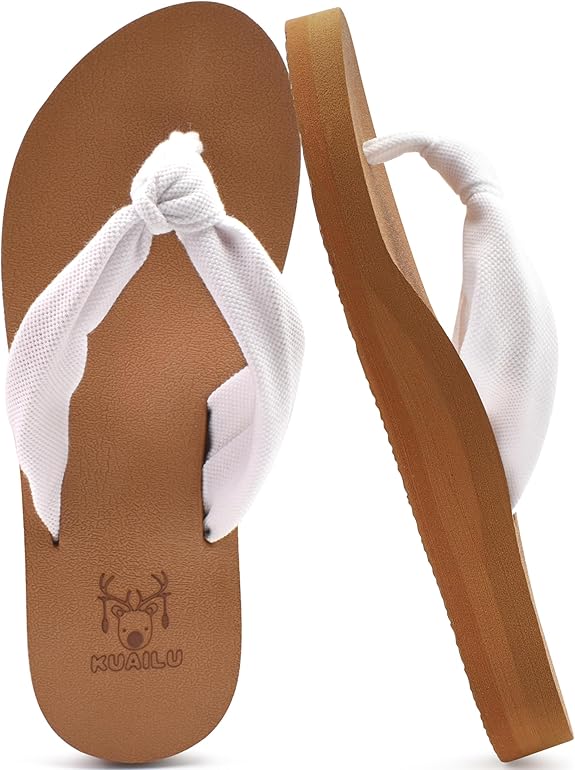
KuaiLu
Flip Flops with Arch Support
Cushioned, lightweight sandals with supportive arch design—a practical choice for beach trips, errands, and long summer walks.
Shop the sandals
baleaf
Athletic One-Piece Swimsuit
A functional one-piece with adjustable straps and moderate coverage, designed for swimming, training, surfing, and active beach days.
Shop the swimsuit
Astylish
Linen-Cotton Button-Down Shirt
A relaxed cotton-linen shirt with a collared V-neck and roll-up sleeves—easy to style over swimwear or with denim and shorts.
Shop the shirt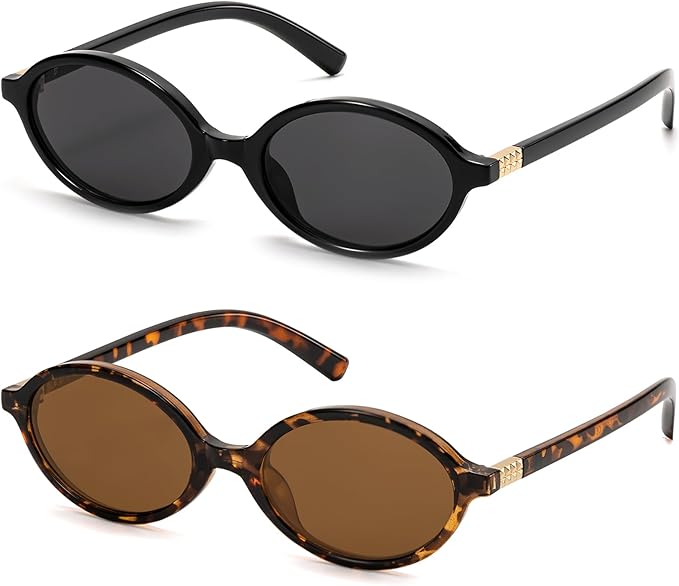
ViewJoy
Retro Oval Sunglasses
Small oval sunglasses with a 90s-inspired silhouette and UV400 lens protection—a quick way to add a vintage edge to everyday looks.
Shop the sunglasses
Affiliate disclosure: This section contains affiliate links. If you make a purchase through these links, I may earn a commission at no additional cost to you. Product selection, pricing, availability, and delivery terms may change—please review the current details on Amazon before purchasing.
As an Amazon Associate I earn from qualifying purchases.