Outfits for Winter: Warm Looks That Work All Day
Outfits for winter have to solve a surprisingly complicated problem. You may leave home in freezing air, spend an hour on a train or sidewalk, walk into a heated office, and then head out again for dinner. A look that feels perfect at the front door can become too hot, bulky, slippery, or uncomfortable before lunch. Add rain, snow, a long commute, a dress code, and the pressure to look pulled together, and getting dressed can feel like a daily negotiation.
The answer is not to pile on every warm item you own. The most reliable outfits for winter use a simple system: a comfortable base, one useful middle layer, a weather-ready outer layer, and accessories that protect the places where cold gets in. Once the system is clear, you can change the colors, proportions, and personality without rebuilding your wardrobe every morning. Here is how to diagnose the common problems and turn them into warm, wearable formulas.
Why outfits for winter often feel cold, bulky, or impractical
The first winter dressing mistake is treating the coldest moment of the day as the only condition that matters. A heavy sweater, thick leggings, padded coat, and large scarf may be excellent for a short wait outdoors, but the same combination can feel overwhelming in a warm store or crowded office. The opposite mistake is dressing for the heated interior and hoping a thin coat will be enough outside. That usually creates a day of shivering, rushing, and wishing you had planned better.
The Fashion-Note Edit
Five effortless pieces to refresh your everyday wardrobe
A polished, practical edit for workdays, weekends, and everything in between.

The Drop
Women’s Blake Long Blazer
A longline, tailored blazer with a notched collar and a single-button closure—an easy layer for denim, dresses, or office-ready looks.
Shop the blazer
Amazon Essentials
Women’s Lightweight Crewneck
A soft, lightweight sweater with a clean crew neckline—the kind of reliable layer that works from cool mornings to air-conditioned spaces.
Shop the sweater
Amazon Essentials
Women’s Loafer Flat
A classic flat loafer that gives casual outfits a more polished finish and pairs naturally with tailored pants, skirts, and straight-leg jeans.
Shop the loafers
Levi’s
Women’s 501 90s Jeans
A relaxed, vintage-inspired take on the iconic 501 silhouette—made for an easy, lived-in look without the thrift-store search.
Shop the jeans
Colorfulkoala
High-Waisted 7/8 Leggings with Pockets
Soft, four-way-stretch leggings with side pockets and a high-rise waistband—designed for movement, errands, and off-duty comfort.
Shop the leggings
Affiliate disclosure: This section contains affiliate links. If you make a purchase through these links, I may earn a commission at no additional cost to you. Product selection, pricing, availability, and delivery terms may change—please review the current details on Amazon before purchasing.
As an Amazon Associate I earn from qualifying purchases.
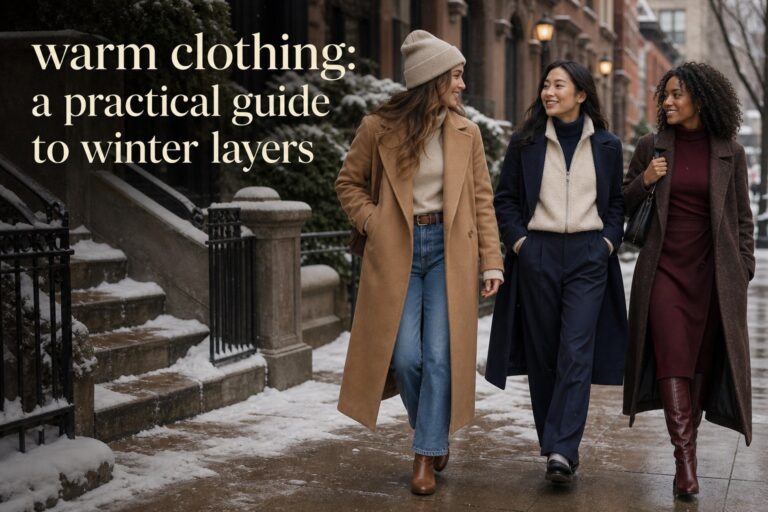
Think in zones rather than in a single pile of clothing. The base layer sits next to your skin and should feel comfortable for hours. The middle layer creates warmth and shape, but it needs to be removable. The outer layer handles wind, rain, or snow. Shoes and accessories protect your feet, neck, hands, and head. When each zone has a job, you can adjust one piece without making the rest of the outfit fail.
Your wedding style is personal.
Your plan should feel that way, too.
Zarellea keeps your guest list, budget, vendors, and every next step beautifully organized — so you can focus on the moments that feel like you.
- Long outdoor time: prioritize wind protection, covered ankles, warm socks, and a coat with enough length.
- Short commute: choose flexible layers that can move from a cold street into a warm room.
- Wet conditions: select water-resistant shoes and outerwear before thinking about the most fashionable color.
- Long sitting: check that waistbands, sleeves, and sweater hems remain comfortable in a chair.
- Dress code: keep the foundation appropriate, then use texture, color, and accessories for personality.
Fit also changes how warm an outfit feels. Clothing that is too tight can restrict movement and compress the insulating air between layers. Clothing that is extremely oversized can leave gaps at the wrists, neck, or waist and make a coat difficult to close. The goal is enough room for movement and a small amount of air, with no distracting bunching under the outer layer.
Finally, remember that practical does not mean plain. A monochrome base, a contrasting scarf, a shaped coat, an interesting knit, or a polished boot can make a simple formula look intentional. Winter style becomes easier when you make the structure dependable first and let the visual details come second.
Build a three-zone layer system before choosing an outfit
Start with the base. A long-sleeve T-shirt, fitted mock-neck, fine merino-blend top, or smooth thermal can add warmth without creating a large lump under a sweater. The best base is one that disappears into the outfit. Look for sleeves that do not bunch at the wrist and a neckline that works with the next layer. A mock-neck can add a polished line beneath a cardigan, while a simple crewneck is easy under a sweatshirt or button-up.
Next comes the middle layer, which is the most visible part of many outfits for winter. Cardigans, fine-gauge sweaters, sweater vests, quilted vests, fleece pullovers, and structured overshirts all work here. Choose one main middle layer for an ordinary day. Two thick sweaters may look cozy in theory but can make your arms hard to move and your coat impossible to zip. If you need more warmth, make the base warmer or improve the outer layer instead of continually adding bulk.
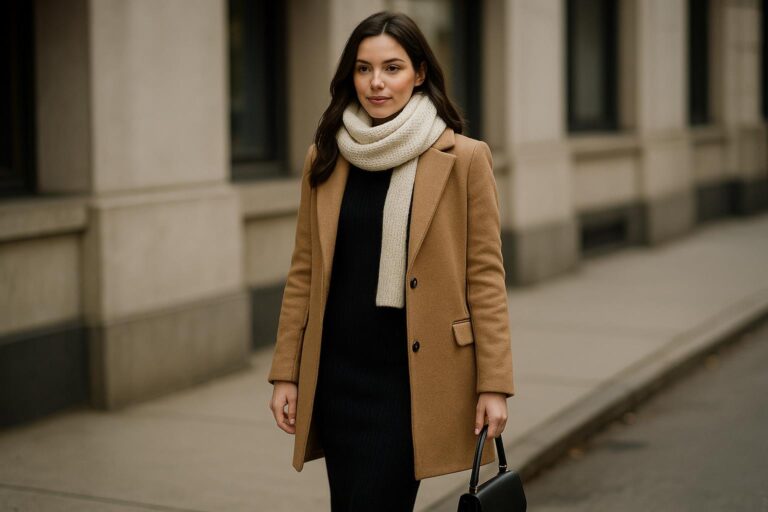
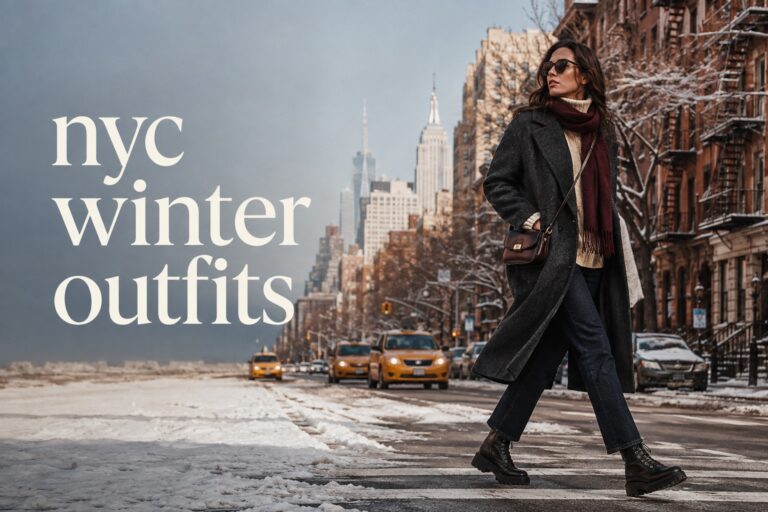
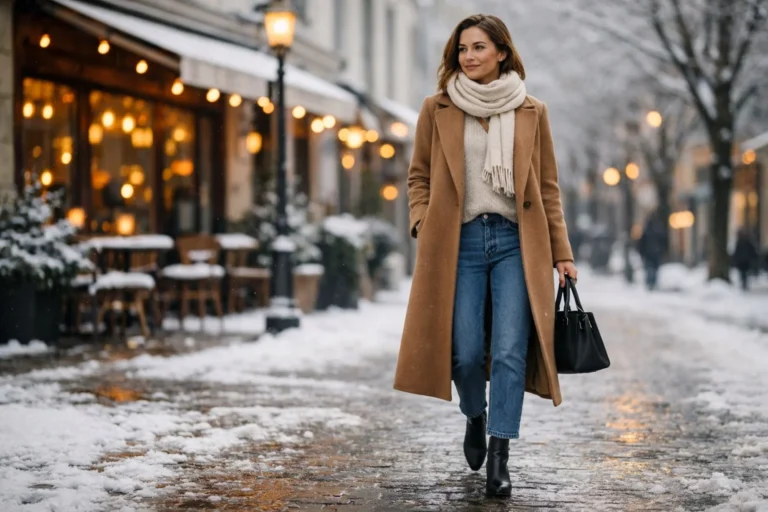
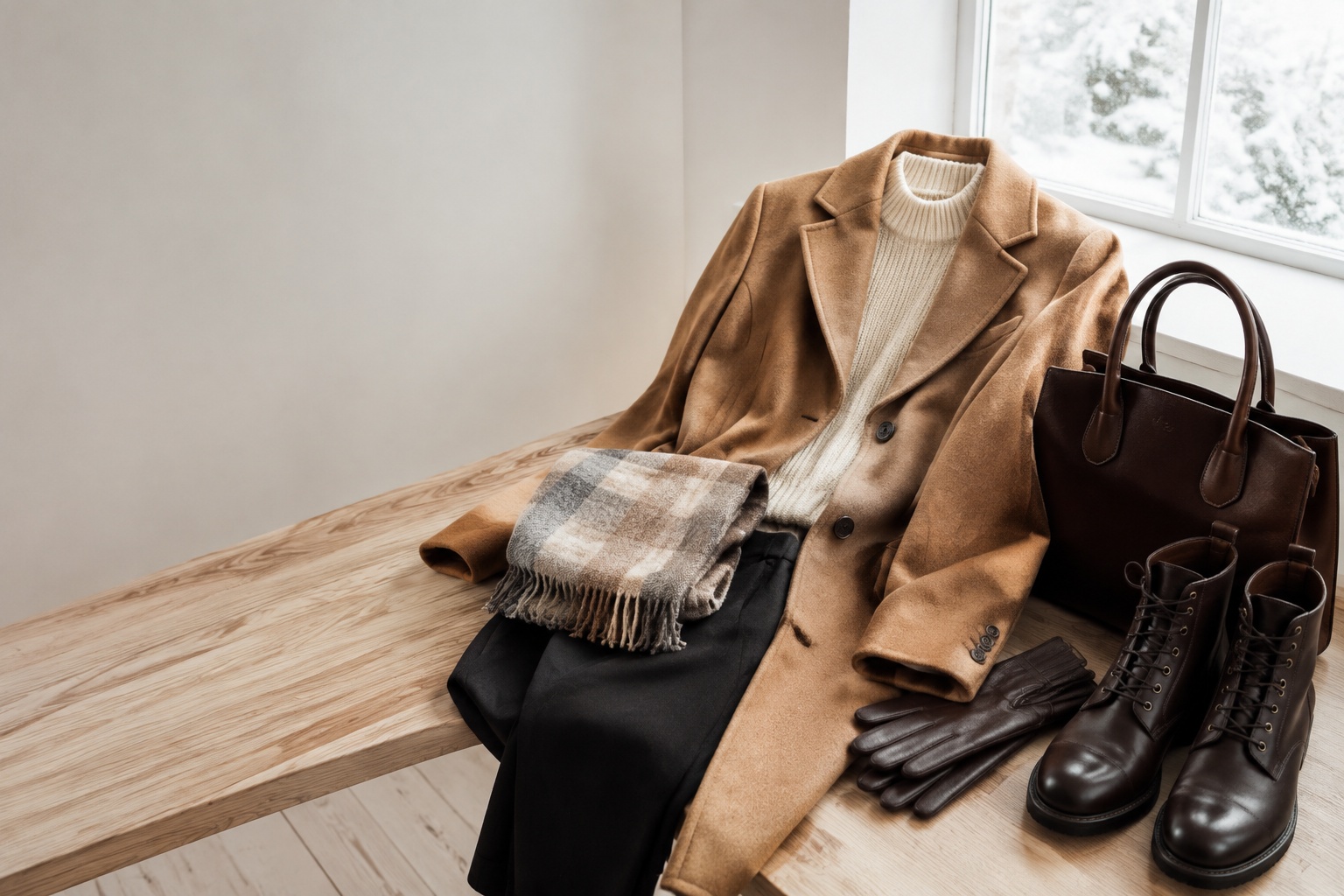
The outer layer should match the weather and your route. A wool-blend coat is polished for dry cold and office settings. A puffer is useful for wind, long walks, and very low temperatures. A water-resistant parka or shell is more reliable for rain and slush. A shorter jacket can work for a car-based day, while a longer coat is more practical when you spend time standing outdoors. Coat length is not only a style decision. It changes how much of the outfit and body must handle the weather on its own.
- Base: smooth, breathable, comfortable next to the skin, and easy to tuck.
- Middle: warm enough to matter, removable indoors, and compatible with your coat.
- Outer: selected for wind, moisture, temperature, commute length, and the space needed for layers.
- Accessories: chosen to close the gaps at the neck, hands, head, and ankles.
Use color to make the system look deliberate. A tonal base in black, navy, gray, cream, or brown creates a calm foundation. Add one contrast through a burgundy sweater, red scarf, olive vest, cobalt bag, or textured hat. If your outerwear is bright, keep the layers underneath simpler. If your coat is neutral, let the middle layer do more of the visual work.
Proportion matters as much as warmth. A long coat can balance straight-leg jeans and a close-fitting top. A cropped puffer can work with high-rise wide-leg trousers or a long skirt. A loose sweater often looks clearer with a straight or slim bottom. These are not strict rules, but they help the outfit retain a visible shape when several layers are involved.
Outfits for winter by situation, temperature, and schedule
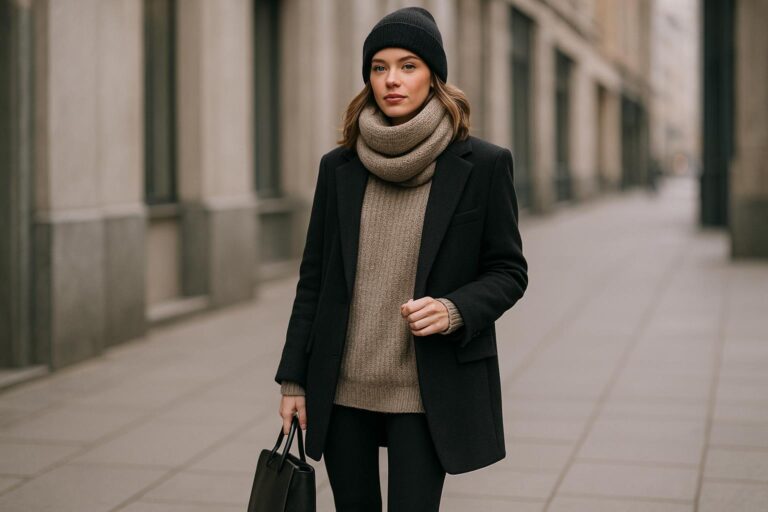
For a freezing morning commute, begin with a fitted thermal or long-sleeve top, straight-leg jeans, and a fine-gauge sweater. Add a puffer or wool coat that covers the upper thigh if you will stand outside. Finish with wool-blend socks, insulated boots, gloves, and a beanie that can fit beneath a hood. Keep the inner layers smooth so the coat closes easily. If you warm up indoors, remove the coat first and leave a complete-looking sweater outfit underneath.
For a mild winter day, choose a breathable tee, relaxed jeans, and a cardigan or overshirt. Ankle boots make the formula feel seasonal, while clean sneakers work when sidewalks are dry. Carry a compact scarf or lightweight jacket for the evening. This combination is especially useful in places where mornings are crisp but the afternoon is comfortable enough for an open coat.
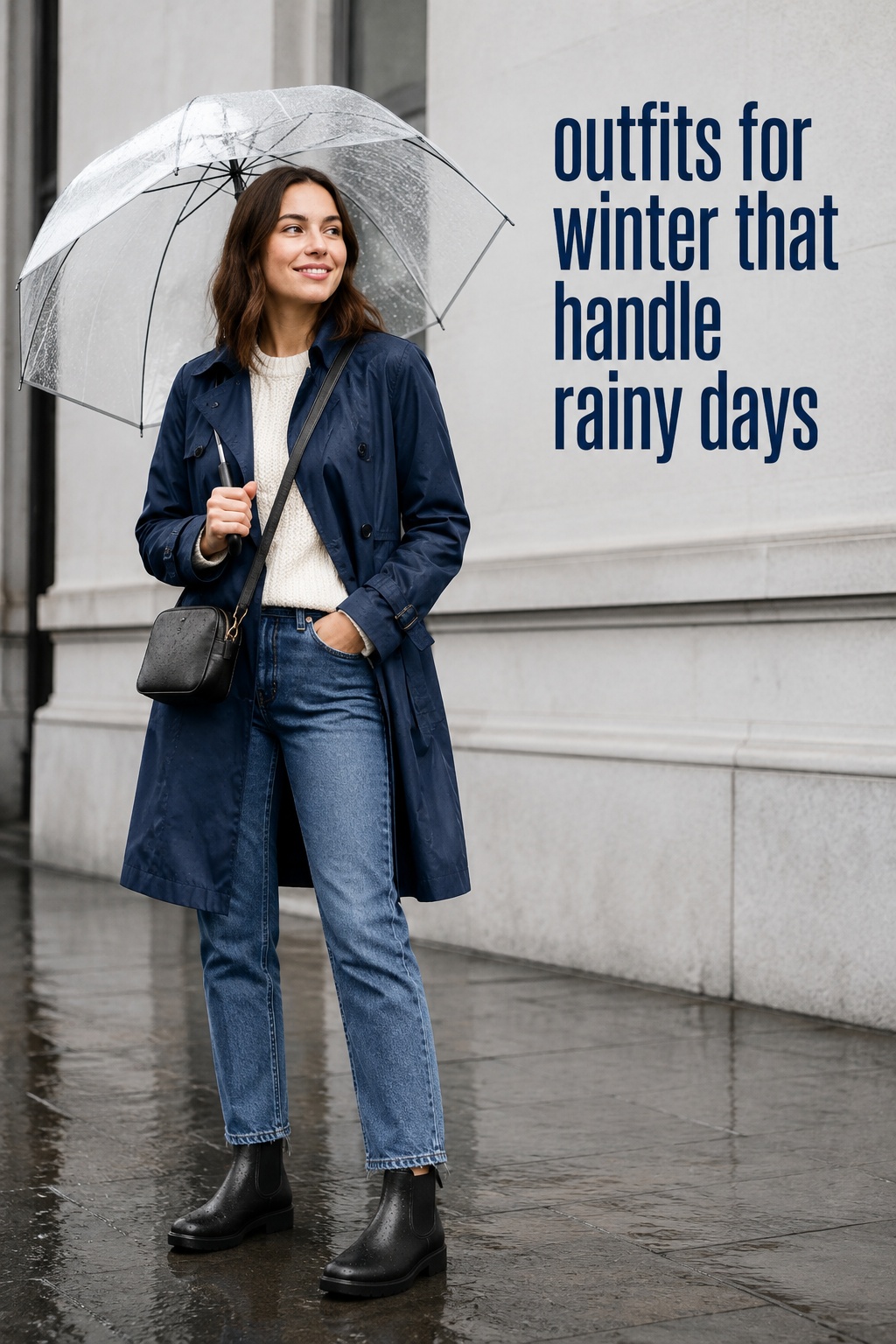
For rain and slush, build from the feet upward. Choose boots with traction and a water-resistant finish, then pair them with pants that do not drag near puddles. Add a thermal or long-sleeve base, a practical sweater, and a waterproof or water-resistant coat. A nylon tote or protected backpack is more dependable than a delicate suede bag. Keep a small pouch for wet gloves, tissues, and electronics protection so the weather does not turn into a full-day problem.
For snow and bitter wind, prioritize coverage over novelty. A longer insulated coat, warm socks, boots with a stable sole, and gloves that allow you to use your phone will do more for the day than an extra decorative layer. Wear a close-fitting base under a fleece or knit middle layer. A scarf or neck warmer should seal the neckline without creating a knot that catches on your bag. Keep the outfit’s colors coordinated so the practical pieces feel like part of the look.
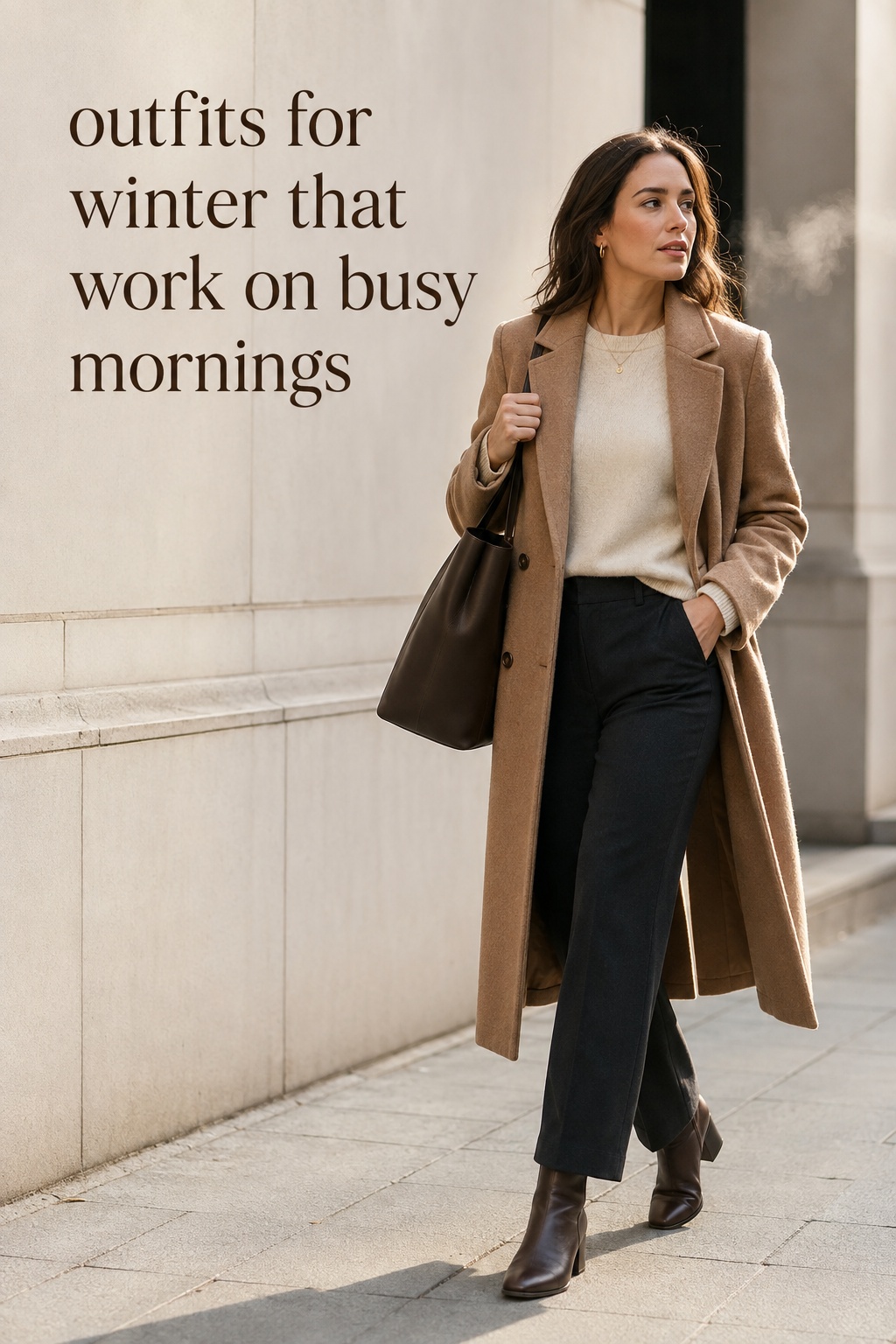
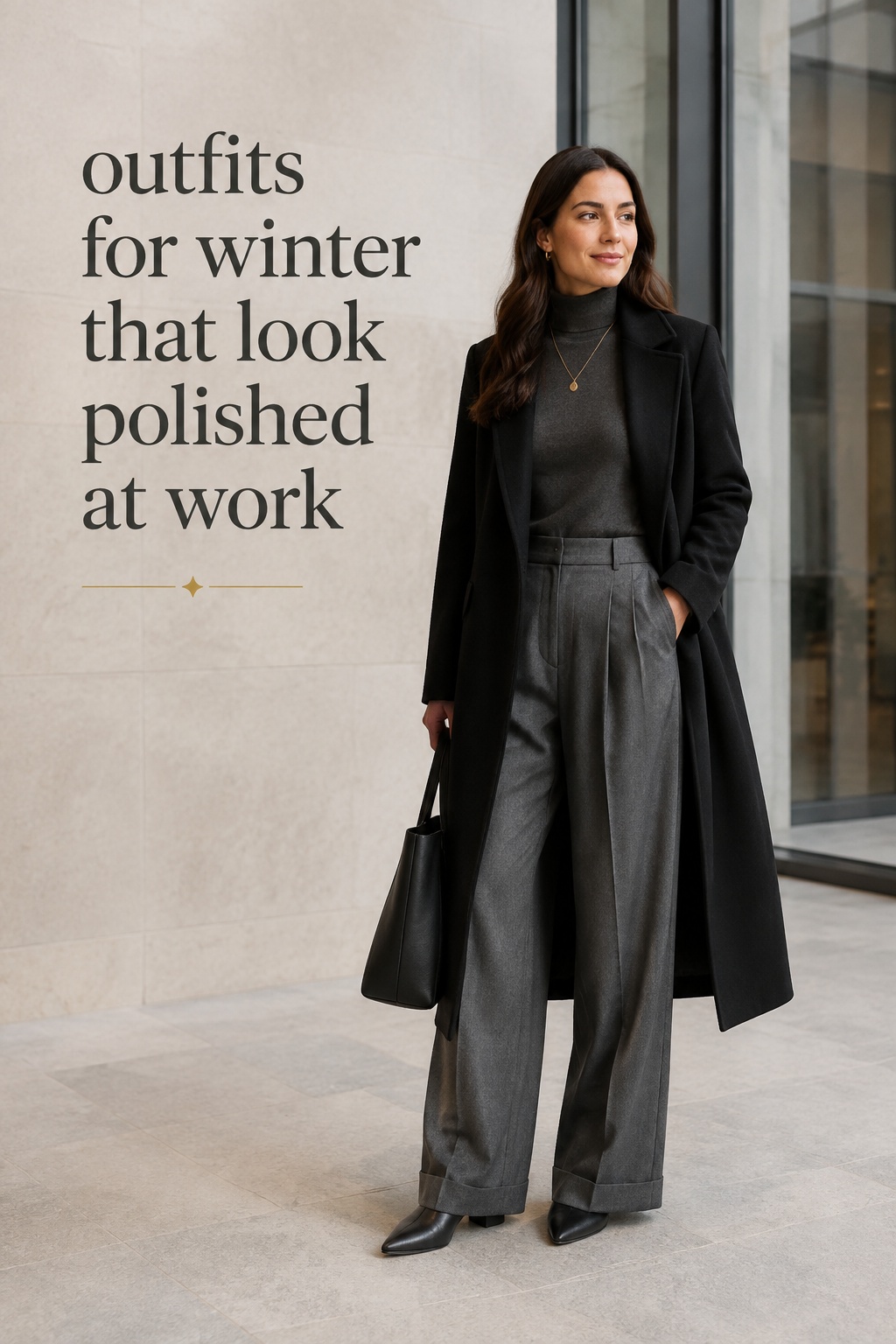
For work or a polished meeting, use one tailored piece as the anchor. Try a fine mock-neck with wide-leg trousers, loafers or sleek ankle boots, and a wool-look coat. A knit dress with opaque tights and a structured coat is another efficient option. If you need to commute on foot, choose a low heel or a flat with traction, then carry a second shoe only when it genuinely improves the day. A belt, watch, or simple earrings can supply polish without adding another bulky layer.
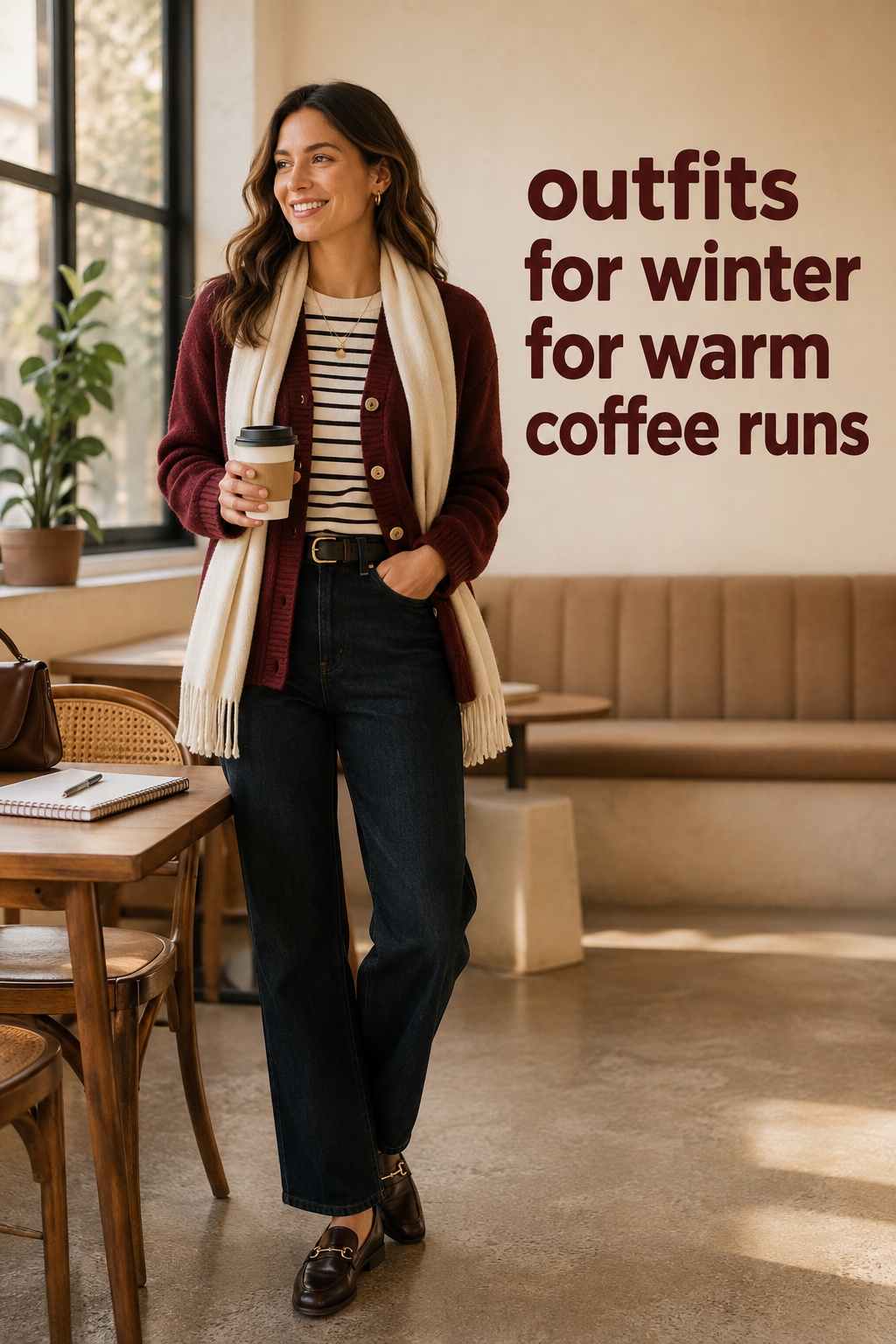
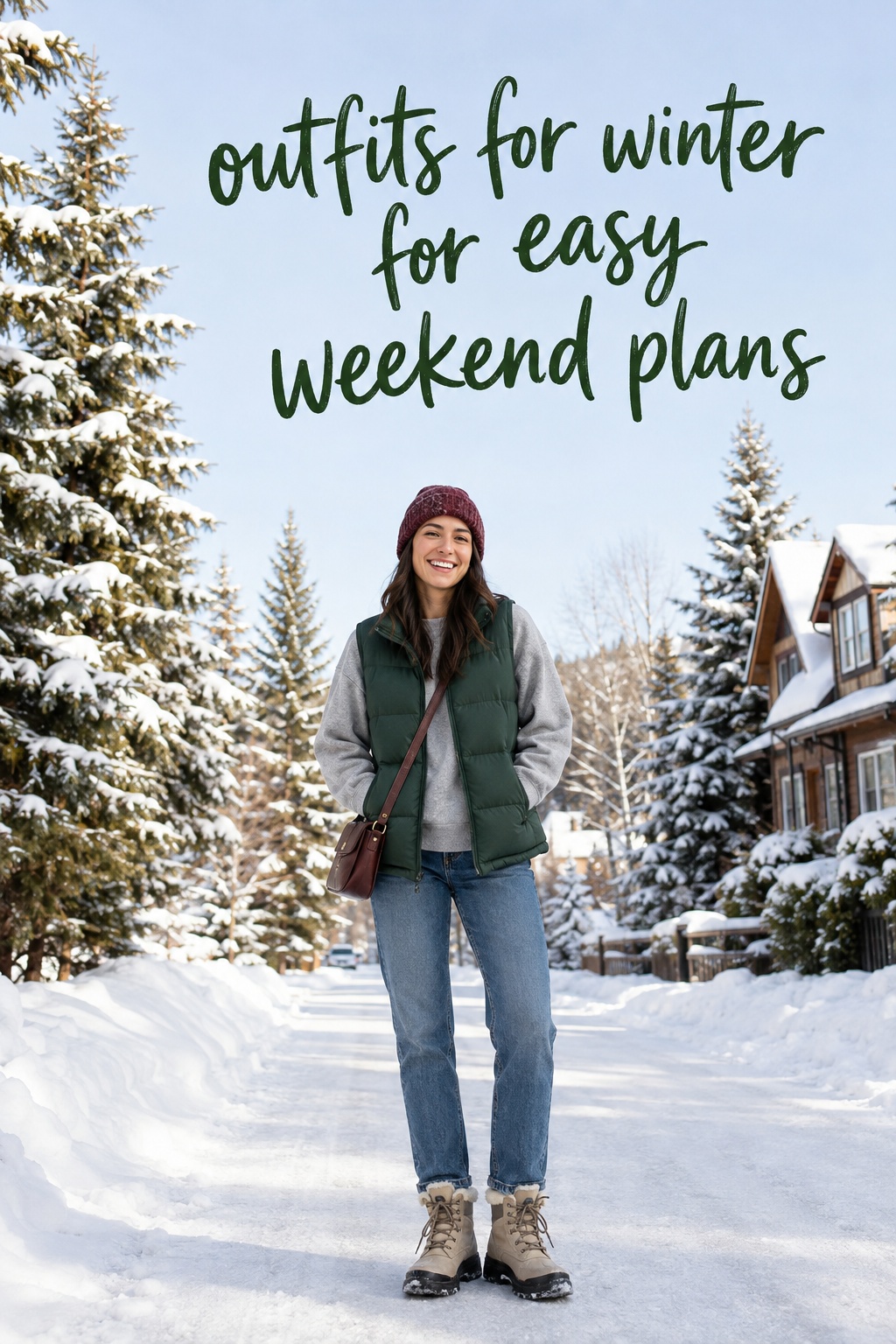
For a casual weekend, pair a sweatshirt or striped long-sleeve top with straight jeans, a quilted vest, and sneakers or weather-ready boots. The vest adds warmth at the torso while preserving arm movement. A cap can work on a dry day, while a beanie and scarf make the same formula more winter-ready. Add a structured crossbody or clean tote to keep the outfit from drifting into sleepwear.
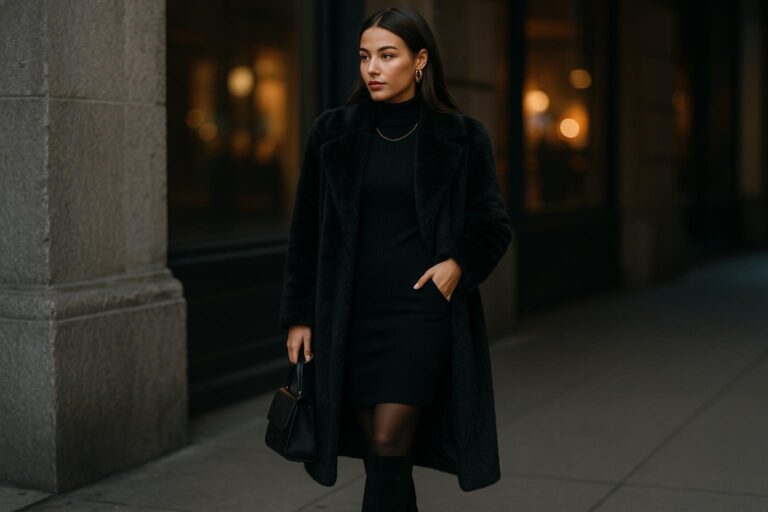
For a skirt or dress, make the legs part of the plan. Opaque tights, knee socks, or thin thermal leggings can add warmth without hiding the silhouette. Pair a midi skirt with a fitted mock-neck and cropped jacket, or wear a knit dress with tights, flat boots, and a long coat. Check the outfit while sitting, walking, and climbing stairs. A beautiful winter look is only useful if the hem, layers, and shoes behave throughout the day.
For a dinner or evening plan, use the coat and accessories to create the shift from daytime to evening. A simple base of black trousers and a fine knit can feel more special with a long coat, bold earrings, a small bag, and a polished boot. A satin skirt can work with a warm sweater and opaque tights. Do not sacrifice comfort for a delicate shoe if you will be outside. Let texture, color, and jewelry create the occasion feeling.
For an active day, separate your walking layer from your activity layer. A breathable tee, joggers or flexible trousers, a zip jacket, and a light puffer vest can carry you through errands and movement. Pack workout clothing in its own pouch and keep a dry pair of socks available. Clean indoor sneakers protect your feet and keep wet outdoor shoes from becoming a problem at the gym or studio.
Quick fixes when winter dressing is not working
If every outfit feels bulky, remove thickness before removing warmth. Replace a chunky sweater with a fine-gauge knit and improve the coat. Replace two loose tops with one close base and one structured middle layer. Check the shoulders and wrists first because excess fabric there creates the fastest feeling of restriction. A longer coat can also look sleeker than several short layers stacked at the waist.
If you overheat indoors, plan the outfit for the moment the coat comes off. The sweater, shirt, or middle layer should look finished on its own. Cardigans, zip jackets, and vests are especially useful because they can be removed quickly. Avoid wearing a scarf or coat as camouflage for an incomplete indoor outfit. Choose breathable fabrics where possible, and keep the warmest piece on the outside.
If your feet are cold, check the shoes and socks together. Tight shoes can reduce comfort, while cotton socks may hold moisture against the skin. Choose socks that fit without compressing your toes and footwear with enough room for them. If you change into indoor shoes at work, carry the second pair in a breathable bag and let the outdoor boots dry fully when you return home.
If your winter outfits look repetitive, change the third piece rather than replacing the entire base. Wear the same jeans and top with a cardigan on Monday, a quilted vest on Wednesday, and a blazer or long coat for an evening plan. You can also change the visual weight at the feet, provided the weather allows it. A new silhouette often comes from a different layer, not a completely new wardrobe.
If proportions look shapeless, identify one clear line. Tuck or half-tuck a fine sweater into trousers, add a belt over a dress, choose a cropped middle layer with a high-rise bottom, or let a long coat create one continuous column. You do not need to make every garment fitted. You only need to give the eye a place to understand the outfit’s shape.
If the look feels unfinished, use a finishing triangle. Repeat one color in two small places, create a clear balance between volume and length, and add one practical accessory. Burgundy in a sweater and socks, a long coat over straight pants, and a structured bag can be enough. This approach is faster and more reliable than adding random jewelry or another layer.
Keep a small winter rescue kit in your bag or desk. Spare socks, lip balm, stain-remover wipes, hair ties, tissues, hand cream, and a lightweight tote are useful on long days. The kit does not make the outfit fashionable, but it helps the outfit survive real life. Clothing that remains comfortable and presentable after weather, walking, and indoor heating is always more successful than clothing that only looks good in a mirror.
Mistakes to avoid when planning outfits for winter
Do not choose shoes only for appearance. Smooth soles can become unsafe on wet tile, packed snow, and icy sidewalks. Delicate fabric may also be damaged by salt and slush. A practical boot can look polished when the rest of the outfit has a clean palette and balanced proportions. If you want to wear a different shoe indoors, carry it and change after arriving.
Do not ignore the bag. A wide sweater sleeve, a slippery coat shoulder, or a long scarf can make backpack straps fall and create constant adjustments. Test the outfit with the bag you actually use. Walk, sit, reach, and open a door before deciding that a combination works. The small annoyances are usually easier to fix at home than on a crowded commute.
Do not assume that the thickest item is the warmest solution. Breathable base layers, a wind-resistant coat, dry socks, and covered skin can be more effective than a large acrylic sweater. Think about moisture, wind, coverage, and the ability to remove a layer. Warmth is a system, not a single fabric or trend.
Do not buy a new seasonal piece before checking what your closet already does. A shirt under a sweater vest, a turtleneck beneath a dress, a skirt with opaque tights, or a vest over a sweatshirt can create a fresh combination from familiar clothes. Before shopping, ask whether the new item works with at least three existing pieces and across more than one temperature.
Do not copy an inspiration photo without adapting it to your climate and schedule. A bare ankle may be fine for a quick car trip in mild weather but frustrating in wind and snow. A cropped jacket may look great but fail during a long wait outdoors. Use inspiration for color, proportion, and texture, then make the final decision based on your actual day.
A final five-minute check can prevent most winter outfit problems. Look at the forecast, estimate your outdoor time, confirm the shoes, test the bag, and remove one unnecessary layer. If the outfit still works after the coat comes off, you have built something flexible. If you can walk comfortably and stay dry, you have solved the practical part. The remaining details are simply a chance to show your style.
FAQ
What are the warmest base layers for outfits for winter?
A close-fitting thermal, soft merino-blend top, or breathable mock-neck is a useful base for many outfits for winter. Choose one that feels comfortable for several hours and fits smoothly beneath your middle layer. The best base is warm enough to help but thin enough that your coat still closes easily.
How can I stay warm without making my outfit look bulky?
Use thinner base layers, one intentional middle layer, and an outer layer selected for the actual weather. Balance a relaxed sweater with a straighter bottom, or pair wide-leg pants with a shorter jacket. Warm accessories and a wind-resistant coat often help more than adding several thick sweaters.
What shoes are practical for winter outfits?
Weather-resistant boots with dependable traction are the safest starting point for snow, slush, and long outdoor walks. In dry weather, supportive sneakers, loafers, or ankle boots can work depending on your route. Check that the shoes leave room for warm socks and do not force you to change how you walk.
Can I wear skirts and dresses in cold weather?
Yes. Add opaque tights, warm socks, or thin thermal leggings, then pair the outfit with a suitable boot and a coat that provides enough coverage. Test the hem and layers while sitting and walking. A knit dress or midi skirt can be especially easy to adapt when the base and outer layer are warm.
How do I dress for a warm office and a cold commute?
Make the indoor outfit complete first, then add warmth outside. Try a breathable top, one cardigan or vest, comfortable trousers, and a weather-ready coat. Choose layers that come off quickly, and avoid relying on a heavy sweater that will be uncomfortable once you sit at your desk.
How many pieces do I need for a winter capsule wardrobe?
You can start with two or three bottoms, several simple tops, two or three middle layers, one casual jacket, one weather-ready coat, and two dependable shoe options. Add accessories that change the look. The exact number depends on laundry, climate, work requirements, and how often you spend time outside.
How can I make casual outfits for winter look more polished?
Combine one relaxed item with two structured details. A sweatshirt can work with straight jeans and a shaped coat. Joggers can look more intentional with a cardigan, clean sneakers, and a neat bag. Coordinated colors, tidy shoes, and one visible accessory usually create more polish than adding extra clothing.
Finish the look
The little extras that make a summer outfit feel complete
From beach days to city weekends, these easy pieces bring comfort, texture, and a polished finishing touch.

FENBEN
Straw Hobo Crossbody Bag
A handwoven straw bag with both short and crossbody straps—an effortless finishing touch for vacation looks and warm-weather outfits.
Shop the bag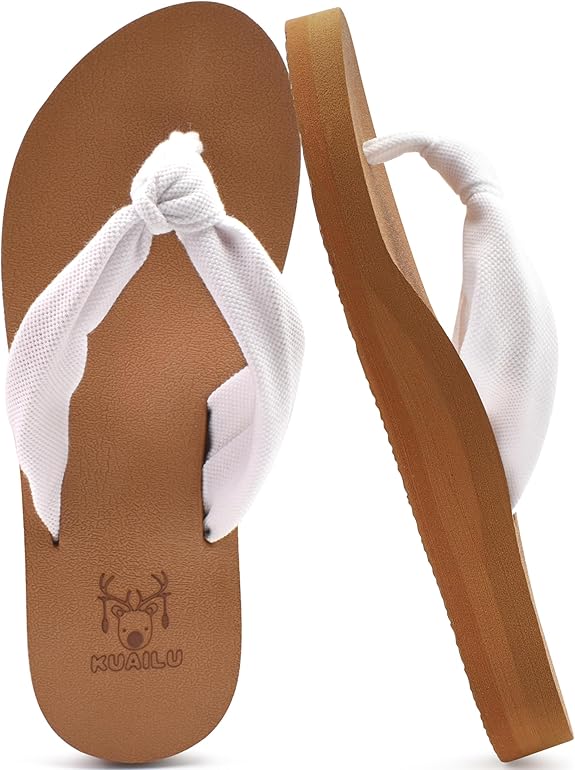
KuaiLu
Flip Flops with Arch Support
Cushioned, lightweight sandals with supportive arch design—a practical choice for beach trips, errands, and long summer walks.
Shop the sandals
baleaf
Athletic One-Piece Swimsuit
A functional one-piece with adjustable straps and moderate coverage, designed for swimming, training, surfing, and active beach days.
Shop the swimsuit
Astylish
Linen-Cotton Button-Down Shirt
A relaxed cotton-linen shirt with a collared V-neck and roll-up sleeves—easy to style over swimwear or with denim and shorts.
Shop the shirt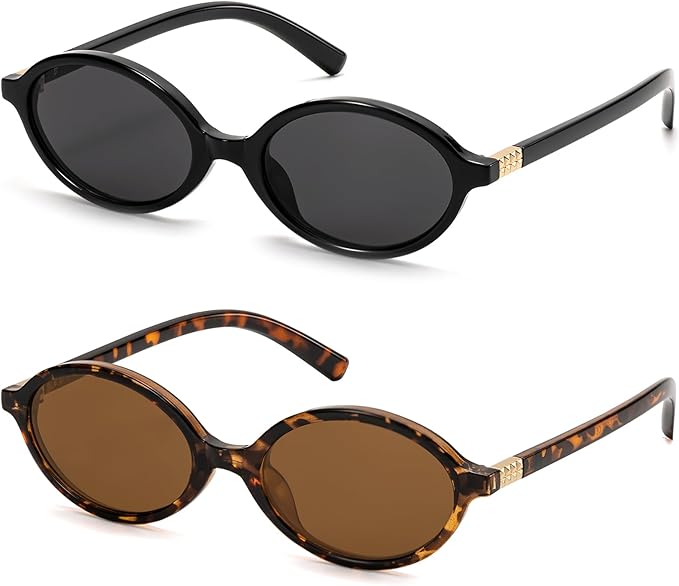
ViewJoy
Retro Oval Sunglasses
Small oval sunglasses with a 90s-inspired silhouette and UV400 lens protection—a quick way to add a vintage edge to everyday looks.
Shop the sunglasses
Affiliate disclosure: This section contains affiliate links. If you make a purchase through these links, I may earn a commission at no additional cost to you. Product selection, pricing, availability, and delivery terms may change—please review the current details on Amazon before purchasing.
As an Amazon Associate I earn from qualifying purchases.