Elegant Graduation Outfit You Can Wear Under a Gown
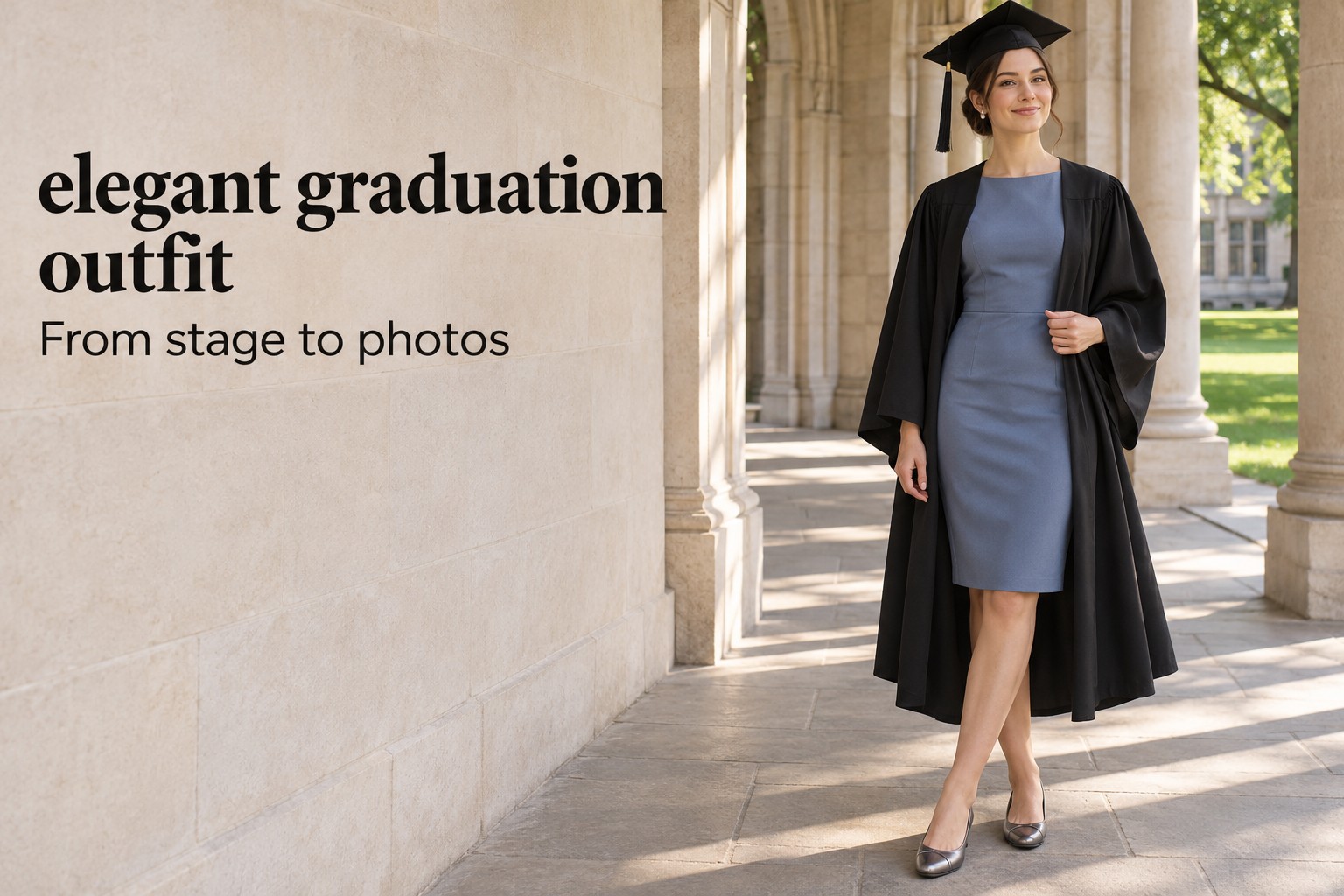
For an elegant graduation outfit, I would choose the shoes first and try on the rest with the gown zipped. Check for a ridge at the shoulders once the robe is on. Then walk in the shoes you planned to wear in photos. A pair that feels fine in front of the mirror might start to slip halfway down a ramp.
Start with one outfit that works for the ceremony and the pictures afterward. A neat dress, dressy separates, or a jumpsuit can all do the job if your school allows them. Sit for a few minutes with the gown fastened, then get up and walk at the pace you’d use to cross the stage. If you have to pull a sleeve straight or step around a hem, make that the first thing you fix.
Read the ceremony instructions and map the walk
Open the instructions for your own ceremony
Look for the page from your school or program that tells graduates where to report and what to wear. Write down any rules about footwear or clothing under the gown. If a general university page and your program email seem to give different directions, ask the commencement office which applies to your ceremony. The answer could change your shortlist before you pull anything out of the closet.
Set out the full regalia. Include any stole or hood your school expects you to wear. If you’ve already picked out an outfit, try it on as soon as you collect the gown. A gown whose shoulders sit lower than you expected changes where seams rub. The extra fabric of a hood may sit right over the detail you had intended to show in portraits.
Put your ceremony clothes beside the gown, down to the socks or hosiery. Hang your dinner jacket separately. If there’s nowhere to leave it during the ceremony, decide who can bring it to dinner or leave it at home.
Find the surface your shoes have to handle
Trace the route from check-in to your seat and from your seat to the stage, as far as the school has described it. A ceremony listed as indoors can still start with a walk from another building. An outdoor procession can bring you from pavement onto grass before you reach a ramp. If a venue map leaves out the surface, ask someone who has attended at that location or check the event office’s instructions.
Start with a closed-toe ballet flat or a dressy loafer that stays on at your normal walking pace. If you prefer some height and the ceremony permits it, try a low block heel. A slingback strap should hold your heel when you take a full step. Try the pair at home with the same socks or hosiery you plan to wear, since the lining can feel and fit differently against a bare foot.
Pieces to try with your gown
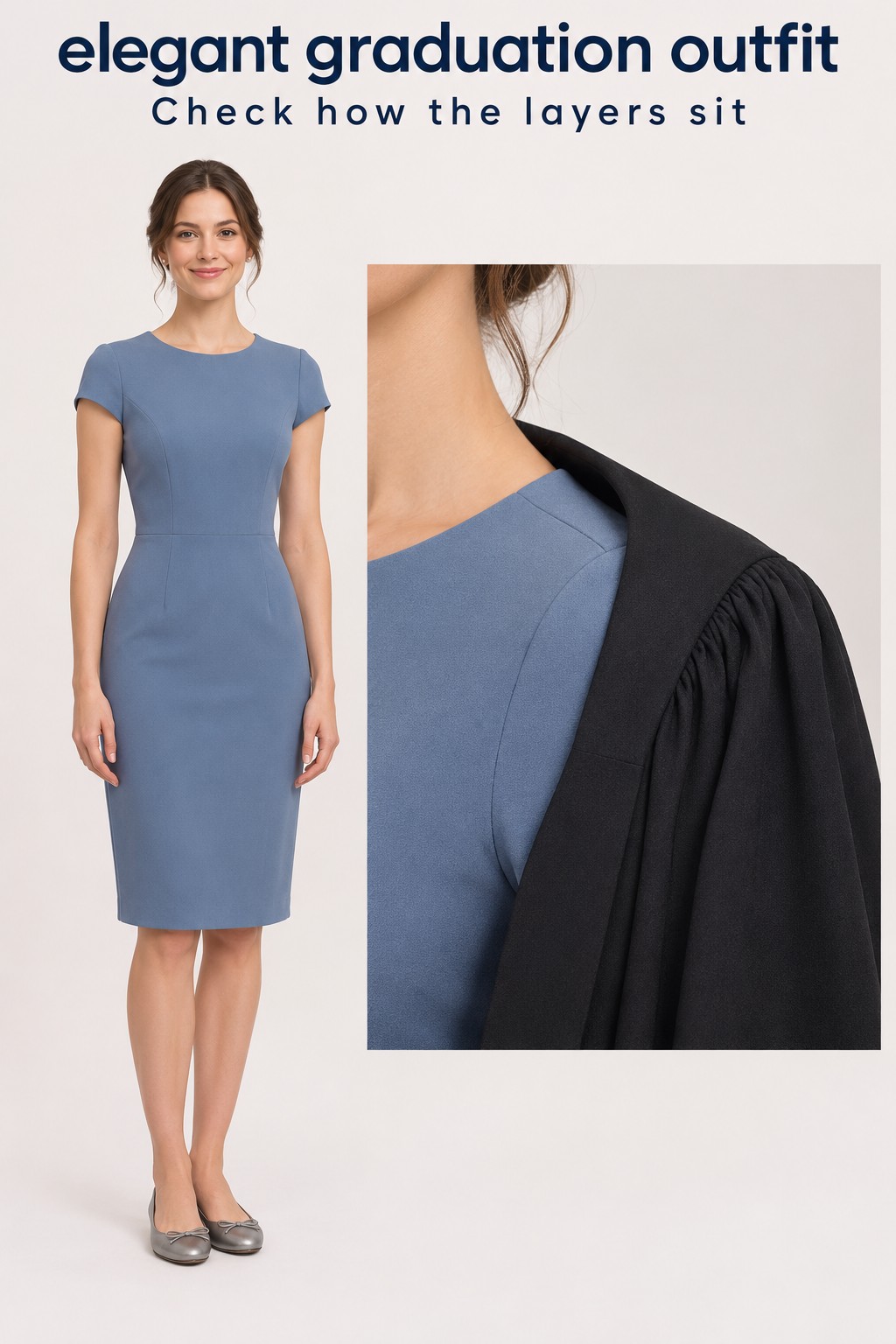
Try a crepe sheath under the gown
Check trouser length with your shoes
Try a closed-toe flat first
Keep earrings clear of the cap
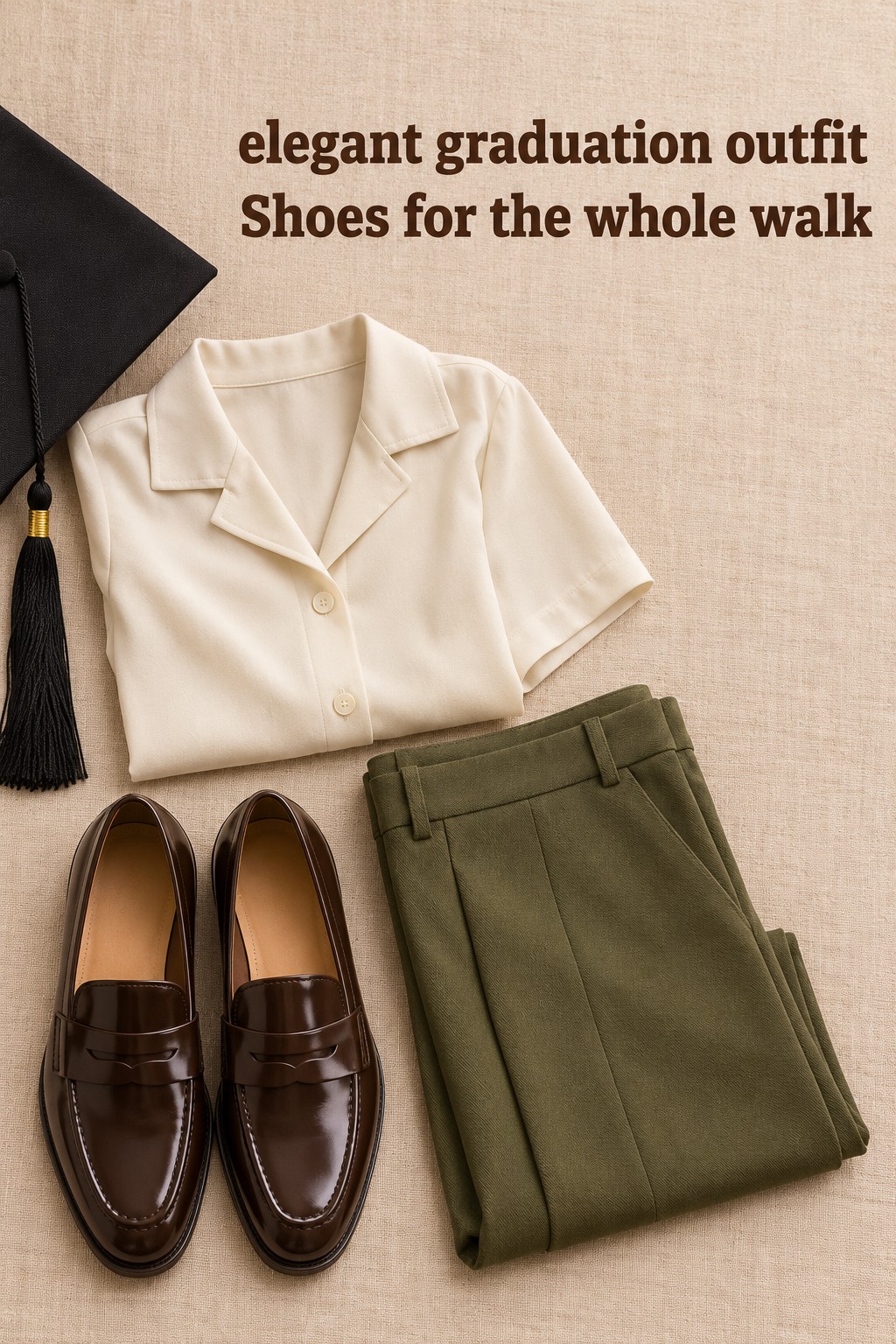
Try the whole outfit under your gown
Raise your arm and check the shoulders
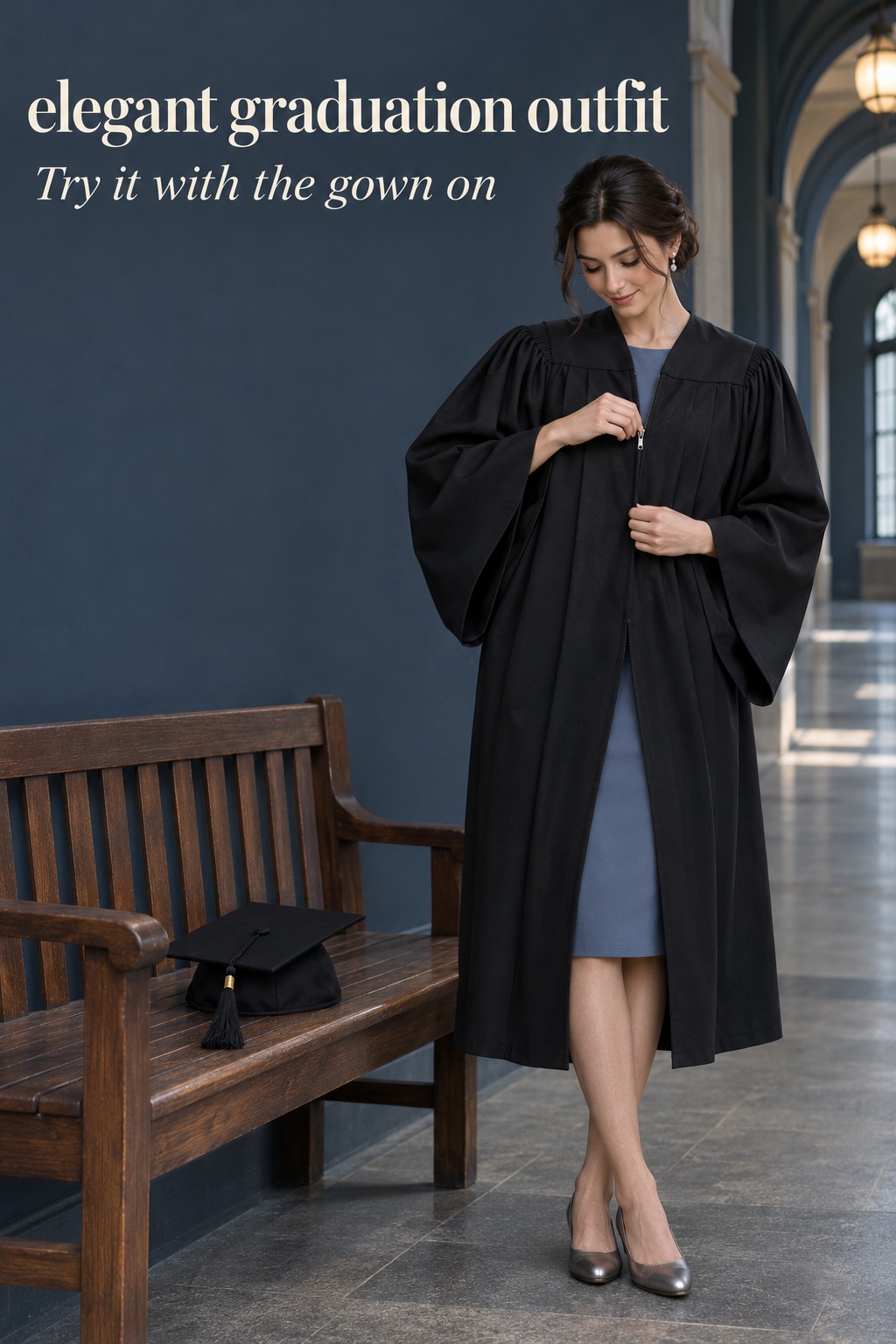
Put on the base outfit, then the regalia, and fasten the gown the way the school directs. Let the sleeves hang and take a front photo. Reach one arm forward to shake a hand, then reach up to adjust the cap. If a sleeve twists, check whether the lining caught on a puffed shoulder or a jacket cuff. If the whole top moves as you reach, unfasten the gown and repeat the motion to see whether the base outfit itself is tight.
Change the layer causing the drag and take another picture. For instance, you could save the padded jacket for dinner and keep the sleeveless shell for the ceremony, if the dress code allows bare shoulders under the gown. A matte blouse with flat shoulder seams is another option. Check the side view for a tie or bow that pushes the gown away from your back.
Look at the hem from across the room
Place your phone far enough away to show your shoes and the bottom of the gown in one frame. Stand straight, then walk toward the camera. A dress can hang inside the gown when you stand and show at each side when you turn. A narrow, even band of fabric can look deliberate if the school allows a visible hem. A corner that pops out at one knee may be the loose end of a wrap or an asymmetric hem you never see from above.
If you are choosing trousers, test the full combination with the shoes. Walk up a few steps you can use safely and check whether the front hem clears the toes. Try it again when you come down. If the back is long enough to slip under the heel of your flat, pick a shorter pair or arrange the alteration with the exact shoes you plan to wear. Switching to a taller pair just to clear a hem changes how the entire outfit handles the route.
Sit for longer than a photo takes
Sit in an ordinary chair for a few minutes with the gown fastened. Lean forward as though you’re reaching for a program. You’ll feel a tight waistband or a jumpsuit that pulls at the shoulders. Check where the skirt settles while you’re seated. Then stand with both hands free. If you automatically reach to fix something, check whether a different underlayer, a more forgiving waistband, or a different garment solves it.
Bring the gown photographs up side by side with pictures of the outfit on its own. Review the portrait image in the light you actually expect. A cream dress that looked opaque in the bedroom deserves a quick check by a bright window. Under a dark robe and colored stole, only a little of the neckline or hem may be visible. Once the gown comes off, the dress and shoes need to look like they belong together without that dark border.
Run the checks on three graduation outfits
A dusty-blue sheath for an indoor ceremony
Try a knee-length dusty-blue sheath with short sleeves, dark pewter flats, and small silver studs. A shallow neckline leaves room for a bright stole, and the plain front means there is little to rearrange after opening the gown for pictures. I’d look for a back vent if the skirt tapers. Walk from one end of the room to the other at your normal pace and try a stair before deciding how much room the skirt gives you.
Suppose the sheath feels fine on the stairs but the sleeves bunch into a ridge where your gown rests. Take the robe off, pull each dress sleeve flat, and try again. If the ridge comes back, I’d keep the dusty blue and pewter flats and try a dress with a plain set-in sleeve. For portraits without the gown, a square neckline can give the dress some shape above the waist.
Olive separates for a ceremony on a lawn
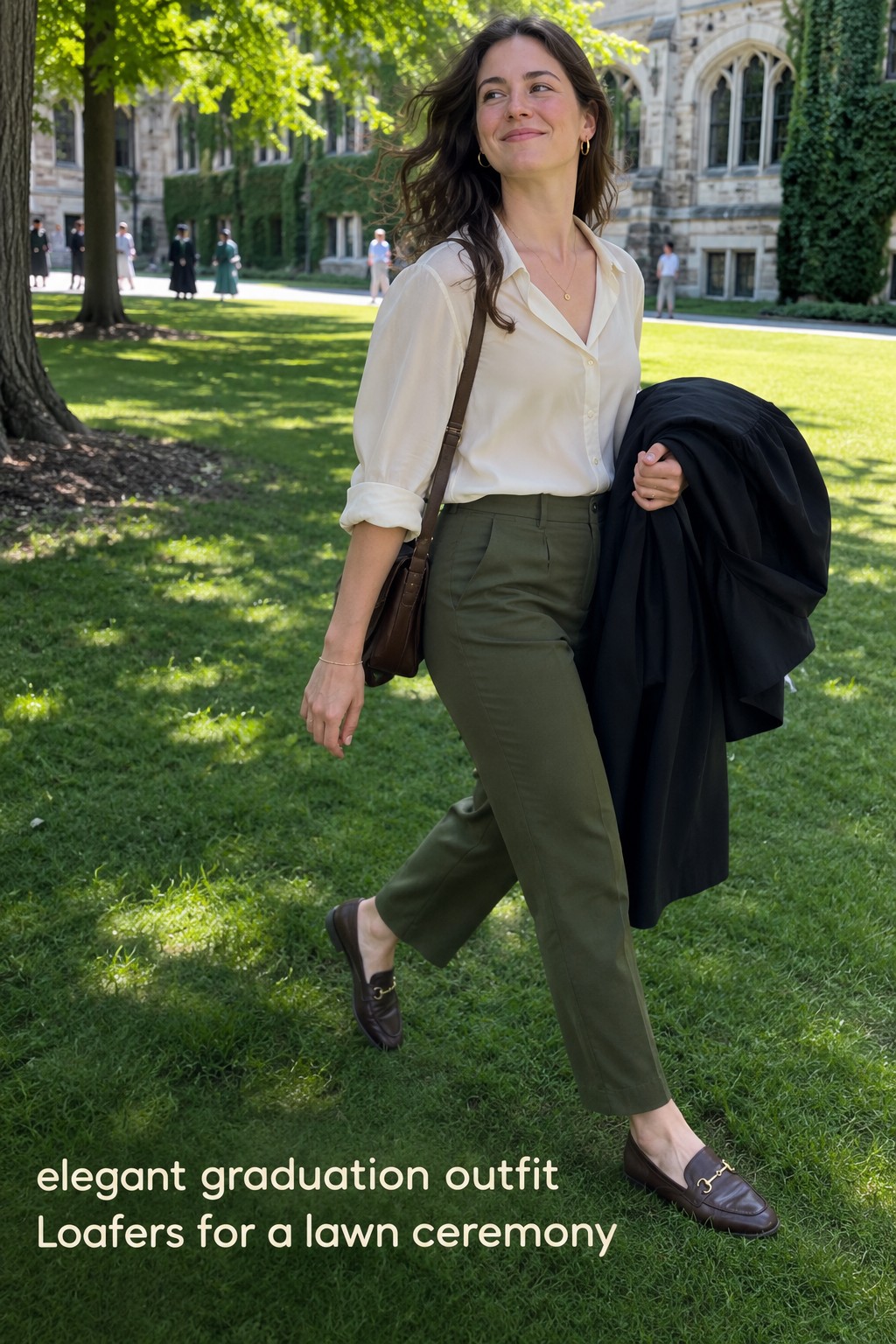
Pair ankle-length olive trousers with an ivory short-sleeve blouse and chocolate loafers that you’ve worn on a long walk. Keep the trousers full enough through the thigh to sit easily. Check the rise with the blouse untucked and tucked before making a choice. A long blouse tucked into a fitted waist can leave a lump after you stand. A shorter blouse that already looks finished at the hem can save you a trip to the restroom before photos.
When the grass is part of the procession route, take the shoes out for a short walk on a similar surface if practical. Check whether the sole feels stable and whether grass catches the trouser hem. If your school allows heels and you want some height, try a low block heel on the same surface. An ankle hem should give you room to switch between the two pairs. Walk in both to check.
A burgundy jumpsuit for graduation and family dinner
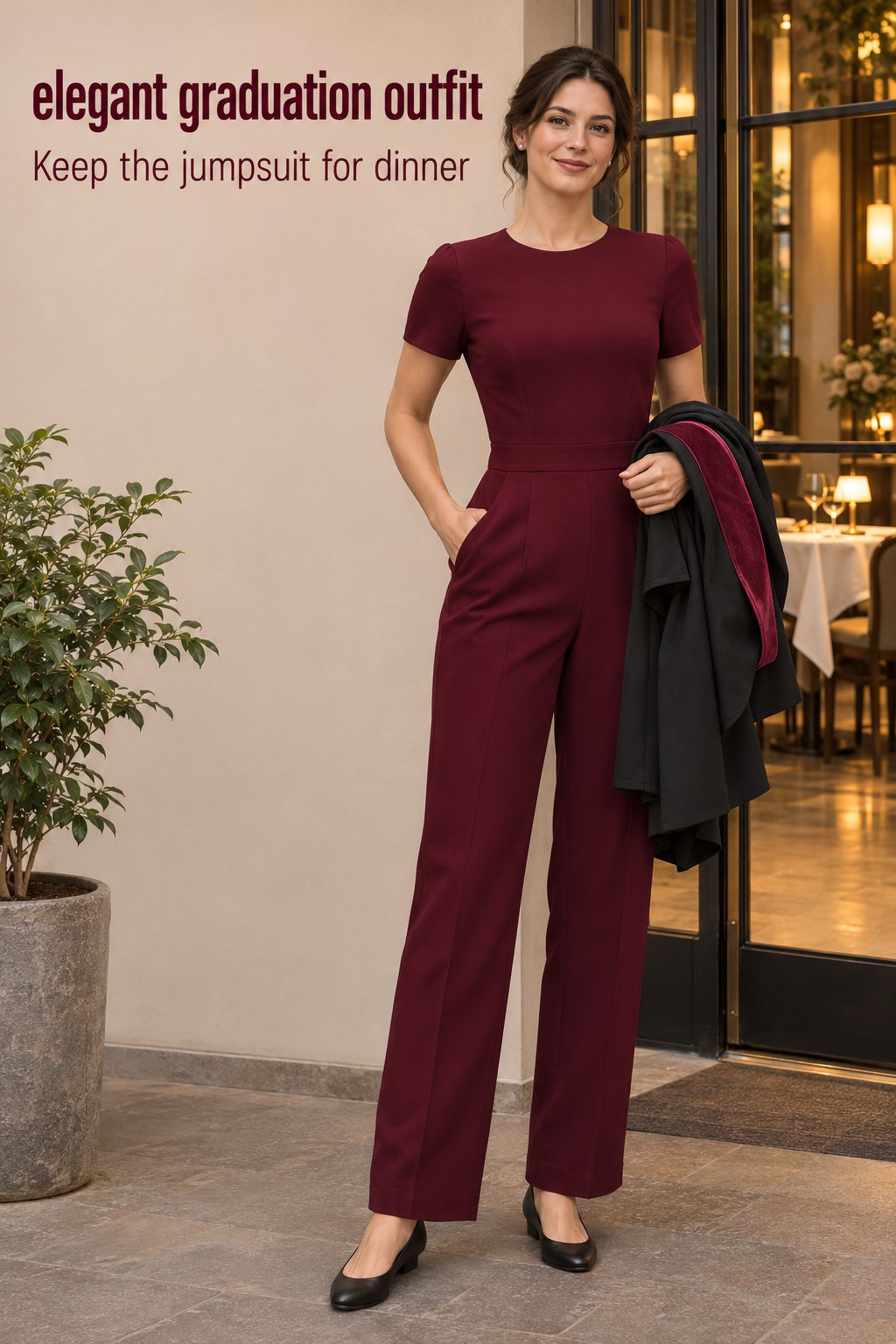
A burgundy jumpsuit with a flat front, straight legs, and an easy closure gives you a single outfit for the ceremony and dinner. Try it with a low, closed-toe pump with a secure back if that’s the pair you already trust. If your gown is dark, check the color in a window photo to see how much of it shows. You might see only a strip of burgundy during the ceremony. With the gown off, the color can carry the outfit at dinner with the same pumps and studs.
Time yourself using the closure with the robe off, especially if the jumpsuit zips high at the back. Think through where you can put the gown in a bathroom stall or whether you’ll have to hold it. Will someone be close by to help with a high zipper? If your family will be seated separately, plan for the restroom break on your own. If this is the only check it fails, try it for dinner and put trousers and a blouse under the gown. If it passes, make sure its leg length still works if you switch to a backup flat.
Make the final call before ceremony day
Decide what to keep, adjust, or replace
Write down the first thing you had to fix with your hands during the rehearsal. It might be pushing the blouse back into your waistband or tugging a gown sleeve clear of your elbow. Do the same motion again with a different piece from your closet. Leave the replacement on the hanger if you can repeat the motion without reaching to adjust it. Save a photo of the complete combination so you remember which shoes and layer you tested.
If a necklace bunches under the stole, save it for the portraits. Shorter earrings can clear the edge of the cap. Give yourself more time to sort out anything that affects how you walk. Set aside a skirt that cuts your stride or a shoe that slips at the heel until you have a replacement that passes the same check. Make the decision early enough to allow for an alteration if you want one.
If two outfits both work, use the daylight photo to choose. Look at where the edge of the gown meets the color underneath, then at the portrait without the gown. I prefer a clean edge and one detail I can see from a few feet away, such as a softly squared neckline or the shape of a loafer. If you can move easily in both outfits, that detail can settle the choice.
Pack around the places you can actually change
Decide what needs to be with you at check-in and what can stay with a guest. Read the venue’s bag guidance before packing. If there is no convenient place to switch shoes near the ceremony, wear the rehearsal pair from the start. A bag big enough for a second pair can become one more thing to manage while you carry a gown and look for the line.
For a dinner jacket or portrait accessory, arrange a handoff that fits the day. Ask someone to meet you at the portrait spot with the item, or leave it at the place where you’ll change. Set out the basics together the night before, including the undergarments you used in the test. Check that anything tucked away for pictures is easy to find while you’re holding the gown.
Editor’s take
I would buy something only after the rehearsal identifies a gap. An existing pair of flats that holds your heel and a dress that sits cleanly inside the gown would be my first picks. Check the school’s instructions before you settle on either, particularly if most of your dress shoes are open at the toe. These suggestions come from research and editorial judgment. Start tonight with the shoes you expect to wear, the whole gown, and a chair. If you can stand up and take a few unhurried steps without reaching for a hem, take a picture of the outfit and set those pieces aside for graduation.
Sources and methodology
Purdue University’s commencement attire guide recommends lightweight business-casual clothing under the gown and comfortable, closed-toe shoes. UMass Global’s commencement FAQ discusses shoe choice for grass, ramps, the stage, and possible stairs. Use your own school’s instructions for the final clothing and shoe decisions.
FAQ
Do I have to wear white to graduation?
Check your school or program’s clothing instructions. If it leaves color up to you, try white, dusty blue, burgundy, or a neutral you already own with the gown and stole. Check a light dress by a bright window with the undergarments you plan to wear. Compare the colors in a picture with the gown on and another with it off.
Can my dress hang below my graduation gown?
Follow your school’s hem rules if it gives any. If it allows a dress hem to show, check whether the amount of fabric is even around the gown and looks the way you want it to when you walk. Choose a shorter dress if a flap of fabric swings out of the gown with each step or you’d prefer a single hemline in the pictures.
Can I wear trousers under a graduation gown?
If your school permits them, tailored trousers and a blouse make a complete graduation outfit. Try the trousers with your ceremony shoes, then sit and stand with the gown zipped. A hem that ends clear of the shoe and a waistband that stays comfortable in a chair are two things to check before settling on a pair.
Are flats dressy enough for commencement?
A neat loafer or ballet flat can look dressy with a simple dress or pressed trousers. If the ceremony requires closed toes, check that the pair qualifies. Walk fast enough to match a line of graduates and see if your heel lifts out. That test is especially helpful with a flat you wear only for short outings.
What should I do if the gown arrives just before graduation?
Pick two base outfits with different shoulder shapes and use your most familiar school-appropriate shoes for both. Once the gown arrives, check how it hangs over each one and sit down before you make a choice. Keep the outfit that needs fewer adjustments. Have a spare layer ready if your first choice feels too warm under the robe and the school permits a swap.
Can I use this checklist if I’m a guest?
Yes, especially for walking, sitting, and dressing for the venue. Guests can use the host’s attire guidance and skip the regalia fit checks. If you’ll spend part of the day on bleachers or a lawn, test your shoes for those surfaces before deciding whether to dress up more for dinner.