All White Party Outfits for Rooftops, Beaches, and Beyond
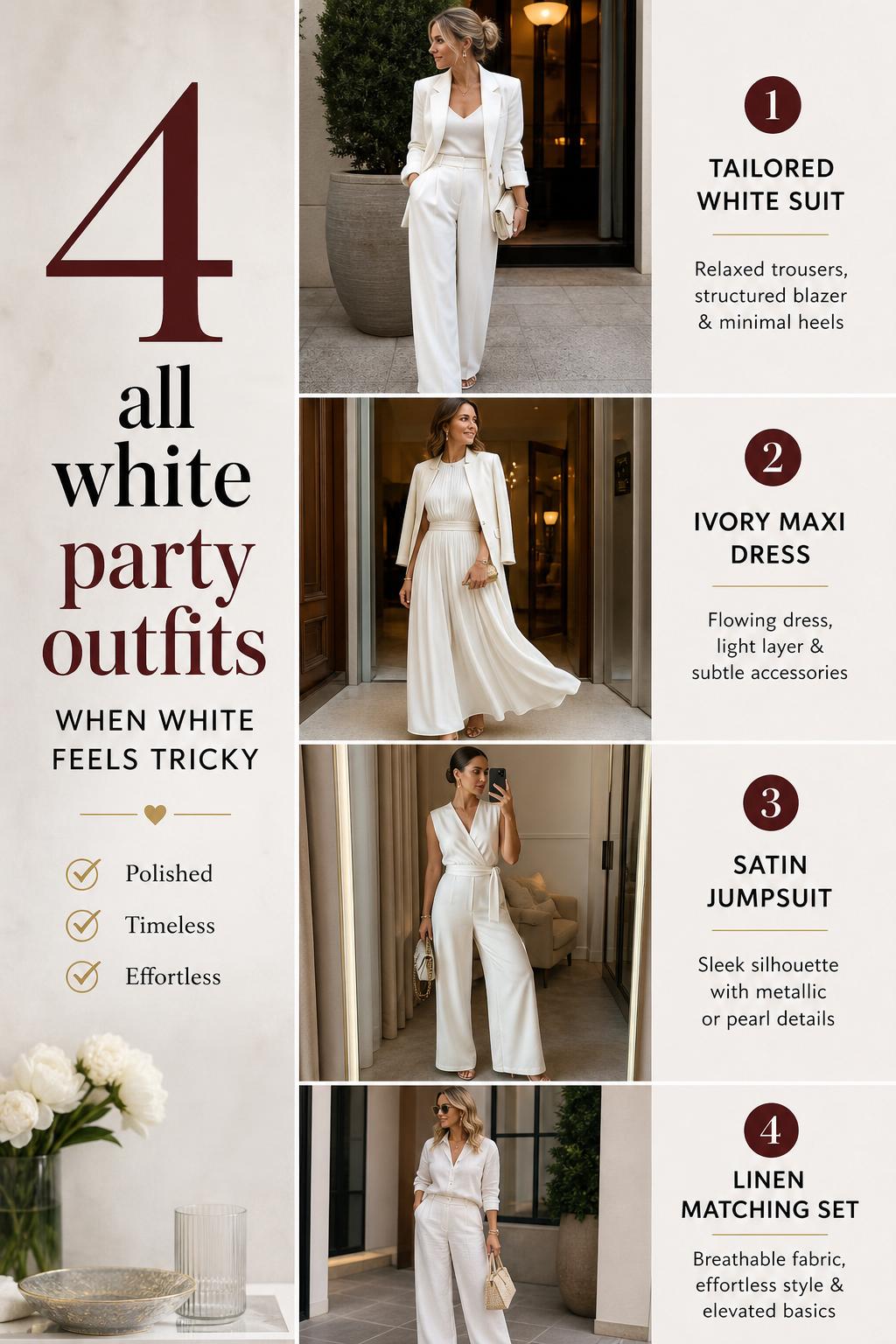
A white party dress code seems simple until you start building the outfit. The difference between a breezy daytime look and a polished evening look often comes down to silhouette, fabric, and the way the white tones are styled together. That is why all white party outfits can feel either effortlessly refined or slightly unfinished, even when the color palette is the same.
What makes this category so interesting is that it sits between fashion mood and event etiquette. A white linen set for a rooftop gathering communicates something very different from a satin maxi dress for an evening gala, and a tailored white blazer shifts the mood again. Once you understand the visual logic behind these choices, shopping and styling become much easier.
This breakdown looks at the main outfit directions people reach for most often: dresses, jumpsuits, sets, suiting, and textured pieces. It also explains how fabrics like linen, cotton, satin, lace, and knit change the impression of an all-white look, how accessories affect the final balance, and how to choose a version that actually fits the venue, the weather, and your own style.
The Fashion-Note Edit
Five effortless pieces to refresh your everyday wardrobe
A polished, practical edit for workdays, weekends, and everything in between.

The Drop
Women’s Blake Long Blazer
A longline, tailored blazer with a notched collar and a single-button closure—an easy layer for denim, dresses, or office-ready looks.
Shop the blazer
Amazon Essentials
Women’s Lightweight Crewneck
A soft, lightweight sweater with a clean crew neckline—the kind of reliable layer that works from cool mornings to air-conditioned spaces.
Shop the sweater
Amazon Essentials
Women’s Loafer Flat
A classic flat loafer that gives casual outfits a more polished finish and pairs naturally with tailored pants, skirts, and straight-leg jeans.
Shop the loafers
Levi’s
Women’s 501 90s Jeans
A relaxed, vintage-inspired take on the iconic 501 silhouette—made for an easy, lived-in look without the thrift-store search.
Shop the jeans
Colorfulkoala
High-Waisted 7/8 Leggings with Pockets
Soft, four-way-stretch leggings with side pockets and a high-rise waistband—designed for movement, errands, and off-duty comfort.
Shop the leggings
Affiliate disclosure: This section contains affiliate links. If you make a purchase through these links, I may earn a commission at no additional cost to you. Product selection, pricing, availability, and delivery terms may change—please review the current details on Amazon before purchasing.
As an Amazon Associate I earn from qualifying purchases.
What an all-white party outfit actually means
An all-white party outfit is not just any outfit with a white top. It usually follows a monochrome or near-monochrome approach, where the clothing reads visually white from head to toe. That can include bright white, ivory, eggshell, pearl, or soft off-white, depending on the dress code and the event interpretation.
Your wedding style is personal.
Your plan should feel that way, too.
Zarellea keeps your guest list, budget, vendors, and every next step beautifully organized — so you can focus on the moments that feel like you.
The reason this matters is visual harmony. White reflects texture, seam lines, and proportion more clearly than darker colors, so every styling decision becomes more visible. A simple cotton midi dress can look clean and casual, while a lace or satin version of the same length instantly feels dressier. In white, fabric often speaks louder than color.
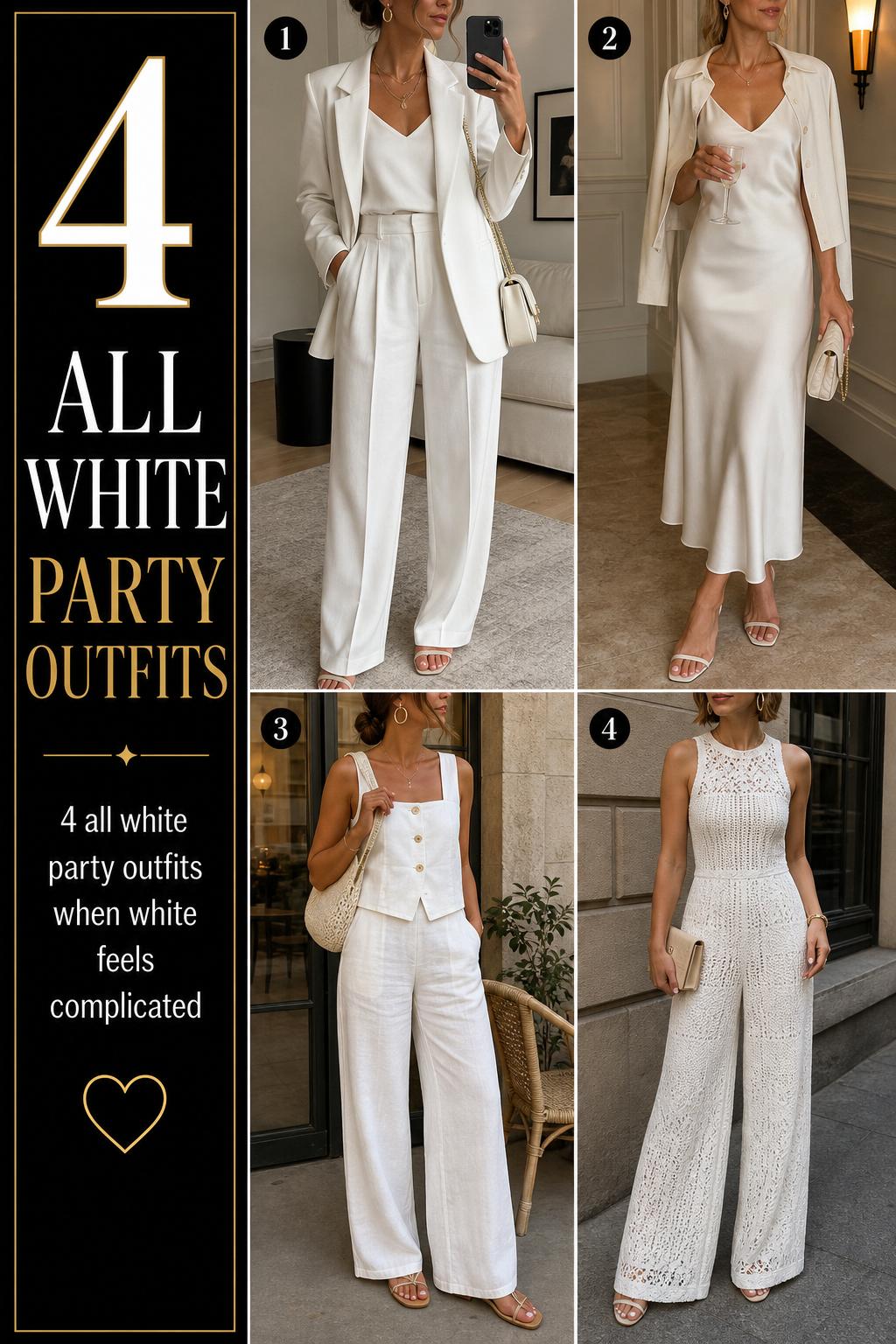
Across retailer collections from Macy’s, Showpo, AKIRA, GLS Collective, and Summersalt, the same pattern appears again and again: the most successful white party outfits are built around a clear silhouette and then finished with just enough accessories to define the occasion. The outfit works best when the white feels intentional rather than accidental.
Why all-white looks are often confused, but rarely identical
People often talk about all-white outfits as if they are one category, but in practice there are several distinct style directions. A beach-ready white outfit, a rooftop set, and a white cocktail dress may all follow the same dress code while giving off completely different energy. One feels relaxed and airy, another feels sleek and urban, and another feels occasion-led and polished.
The confusion usually comes from the shared color palette. Since everything is white, readers tend to focus less on structure. But structure is exactly what separates a casual white look from a formal one. Volume, tailoring, length, drape, and texture are doing the real work.
This is also why all-white party outfits for women often look best when they are chosen by venue first, then refined by fabric. Coastal settings, rooftops, summer parties, evening events, and more formal white dress code occasions all ask for different visual decisions.
The major style families of white party dressing
White maxi dresses: soft movement and easy drama
A white maxi dress creates one of the clearest all-white party statements because it delivers length, movement, and polish in a single piece. It tends to work especially well for day-to-night events, outdoor gatherings, and occasions where you want elegance without looking too formal too early.
Visually, the maxi dress reads fluid and slightly romantic, even when the design is simple. In linen or cotton, it feels lighter and more relaxed. In satin or silk-inspired finishes, it becomes more evening-oriented and more glamorous. Flowy maxi dresses in retailer collections such as Macy’s and Summersalt often sit in that sweet spot between comfort and presence, which is exactly why they remain a core white party category.
If you are deciding between a white maxi dress and another option, the real question is whether you want the outfit to move with softness or stand with structure. Maxi dresses lean into movement, which makes them especially effective for beach, rooftop, and warm-weather settings.
White mini and midi dresses: sharper, more social, more cocktail-ready
Mini and midi lengths shift the mood immediately. They often feel more playful, more urban, and more tuned to cocktail events. A white mini dress can look crisp and confident for a party setting, while a midi dress usually offers a bit more balance when the event is dressy but not fully formal.
This is where details become especially important. Since the shorter or mid-length silhouette already feels more social, the styling needs to be clean. Too many extras can make the outfit feel busy. White cocktail dresses work best when the shape is doing most of the talking, whether that is through a fitted waist, soft drape, or a subtle textured finish.
For readers browsing collections at Macy’s or Showpo, this is the category that often feels the most immediately wearable because it translates easily to many party settings. The trade-off is that it also needs the most careful accessory editing.
White jumpsuits and sets: sleek, directional, and modern
A white jumpsuit or coordinated set has a different kind of impact. Instead of reading soft or romantic, it reads intentional. These outfits tend to feel modern, slightly sharper, and less expected than dresses, which is why they stand out in white party collections from AKIRA, Showpo, and GLS Collective.
The visual appeal comes from continuity. A jumpsuit gives you one uninterrupted line, while a matching set creates a two-piece silhouette that still feels cohesive. For rooftop events, fashion-forward social settings, and women who want a polished monochrome look without wearing a dress, this option makes a lot of sense.
Compared with a maxi dress, the jumpsuit approach usually feels more controlled and less floaty. It is a strong choice if you want ease of movement, cleaner lines, or a look that leans more chic minimalism than soft occasionwear.
White suiting and tailored separates: the most structured interpretation
White suiting takes the same color story and gives it a power-dressing edge. A white blazer with tailored pieces feels more architectural than a dress or jumpsuit, and that structure creates a stronger visual impression right away. It can read sophisticated, polished, and slightly fashion-editorial while still being practical for a party where you want more coverage or a stronger silhouette.
This category works particularly well for evening gatherings, upscale rooftop settings, and events where a standard white party dress might feel too predictable. Tailored separates also let you adjust proportion more precisely. A fitted blazer with fluid trousers creates one mood; a softer blazer with a cleaner, slimmer bottom creates another.
The advantage of suiting is clarity. The limitation is that it can feel too formal or heavy if the venue is beachy, coastal, or very relaxed. White tailored pieces need the right context.
Textured and embellished white outfits: when fabric becomes the statement
Lace, sequin details, crochet, and textured finishes change the personality of an all-white look without changing the color palette. Instead of relying on shape alone, these outfits create depth through surface detail. That can be very effective for readers who want monochrome dressing to feel more dimensional and less flat.
The key is balance. A white lace dress or sequin white dress already carries visual interest, so the rest of the styling should stay more restrained. These outfits tend to photograph beautifully and feel event-ready quickly, but they can become overly styled if you add too many competing accessories.
How fabric changes the mood of white
If there is one shortcut to understanding white party dressing, it is this: fabric tells the guest what kind of event you thought you were attending. In all-white outfits, material often communicates formality faster than silhouette does.
Linen and cotton for daytime ease
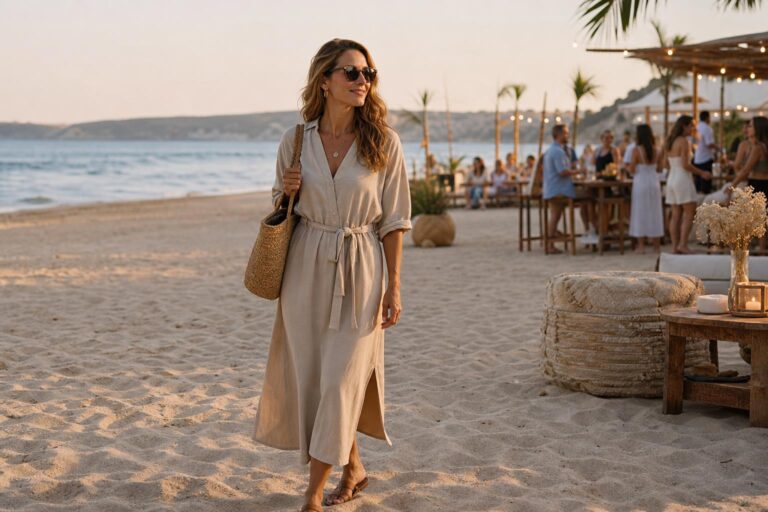
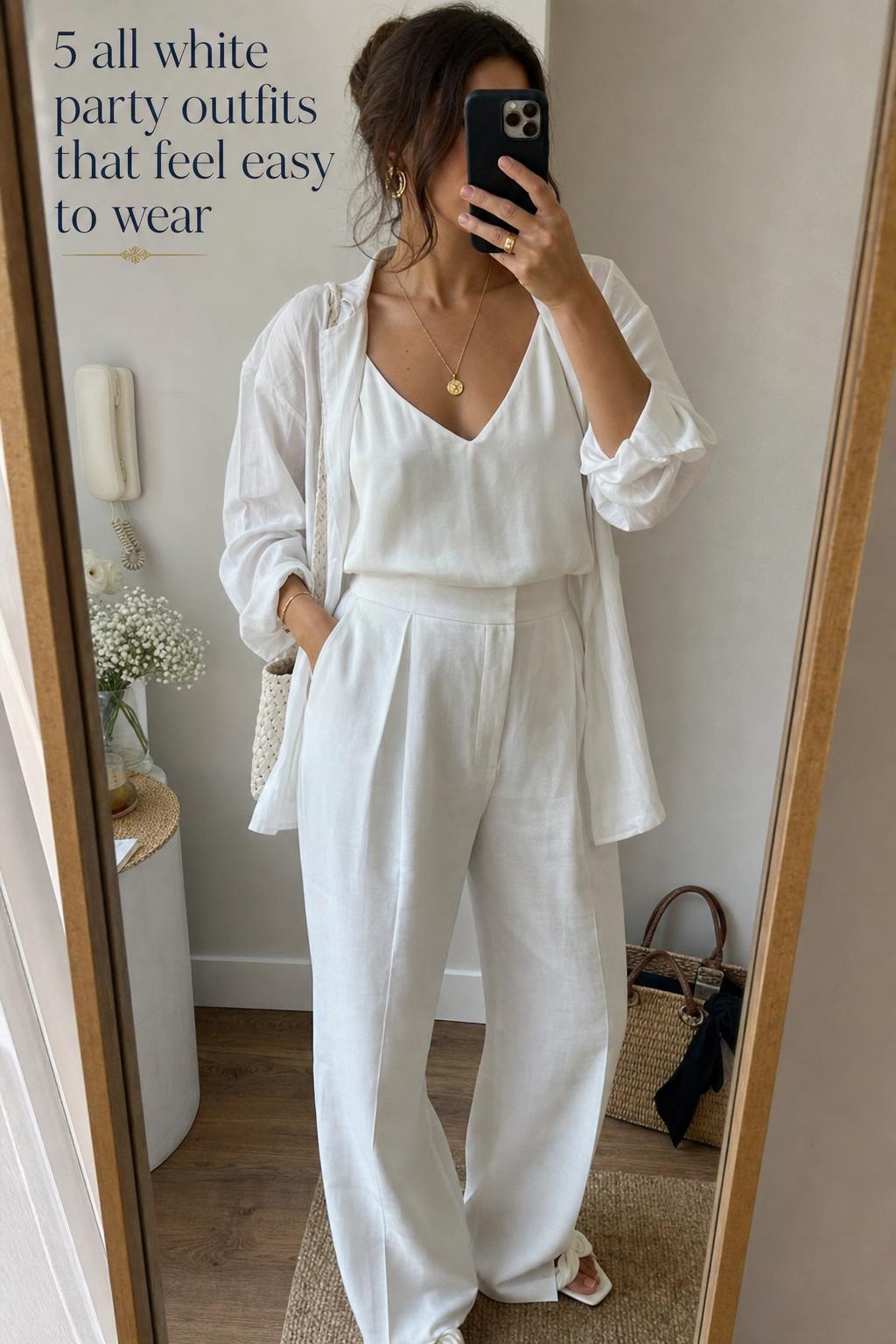
Linen and cotton belong naturally to daytime events, beach gatherings, casual rooftop parties, and warm-weather celebrations. They have breathability and a light, lived-in texture that makes white feel relaxed rather than precious. A white linen set or cotton midi dress looks especially right when the setting is open-air or summer-focused.
These fabrics also create a softer form of monochrome styling. They do not try too hard, which is often the point. The slight texture keeps the outfit from looking sterile and gives it that easy white-on-white feel often seen in more casual outfit ideas.
Satin, silk, and lace for evening polish
Satin, silk-inspired finishes, and lace push the same color into evening wear territory. They catch light, hold drape differently, and immediately elevate the outfit. A white satin jumpsuit or long white dress in a smoother finish reads more formal because the surface itself looks more deliberate.
This is where white party outfits start to feel sleek rather than breezy. If your event is after dark, dressier, or closer to gala energy, these fabrics usually make more sense than linen. They also pair more naturally with metallic accents and polished accessories.
Knit and crochet for texture-led summer styling
Knit and crochet pieces add a more tactile kind of interest. They are especially effective for summer soirées, coastal locations, and poolside-adjacent settings where an overly formal fabric would feel out of place. A white knit dress or crochet top can make an all-white outfit feel curated without looking stiff.
The important thing here is proportion. Since textured knits already add visual weight, the rest of the outfit often benefits from cleaner lines and simpler accessories.
How to instantly tell the difference between a casual white look and a dress-code look
Not every white outfit belongs at an all-white party. The difference is usually easy to spot once you know what to look for.
- A casual white look often uses simpler cotton pieces, looser styling, and fewer finishing details.
- A white dress code outfit usually has a clearer silhouette, more intentional accessories, and fabric that matches the occasion.
- Daytime looks often rely on linen, cotton, and easy sets.
- Evening looks often use satin, lace, smoother tailoring, or more sculpted dresses.
- True party styling tends to look complete from shoes to bag, not just from the main garment.
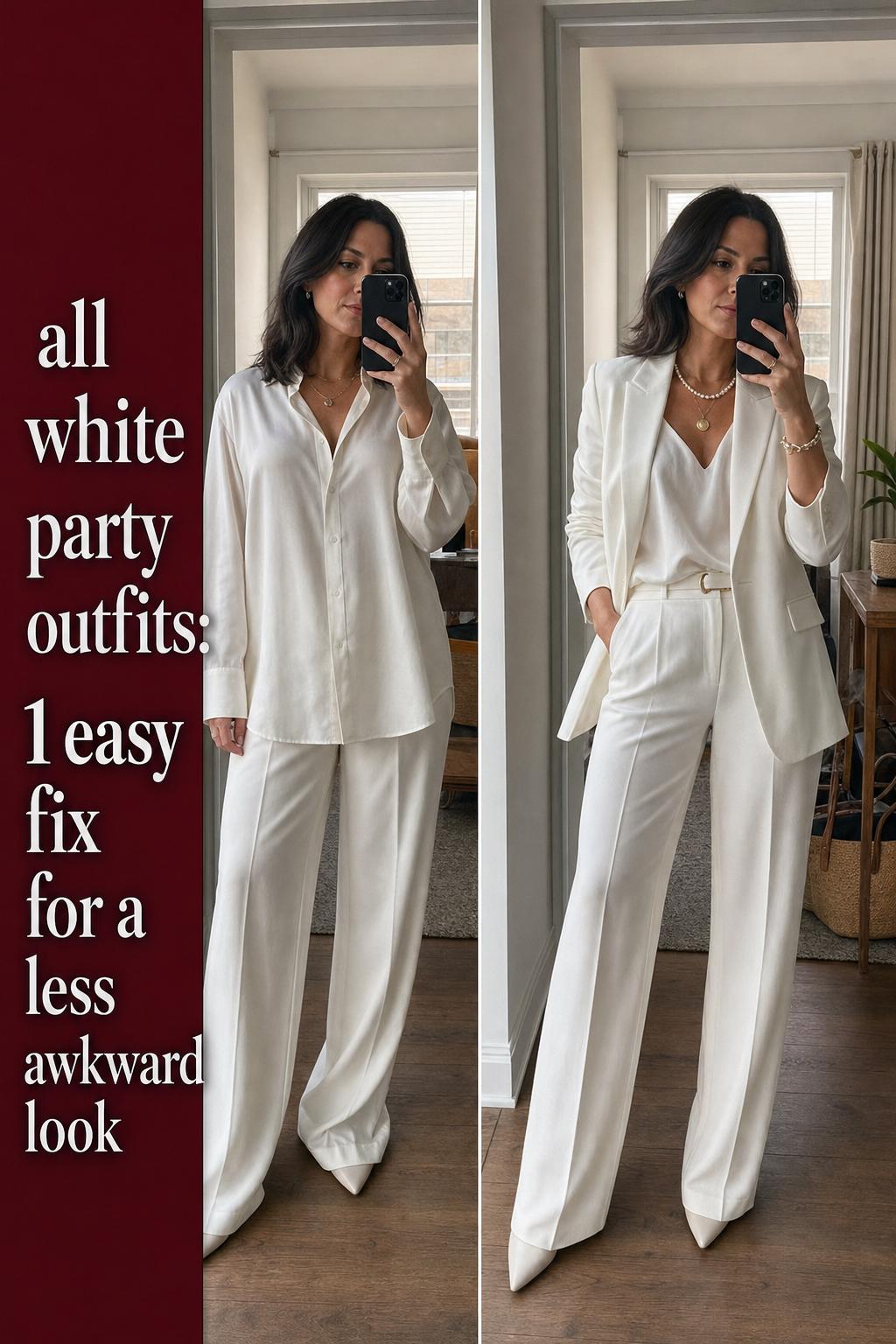
This is why a white shirt and random bottoms can feel unfinished, while a coordinated white pants set or a white cocktail dress immediately reads as event-appropriate.
Venue changes everything
Rooftop parties: clean lines, lighter structure, city polish
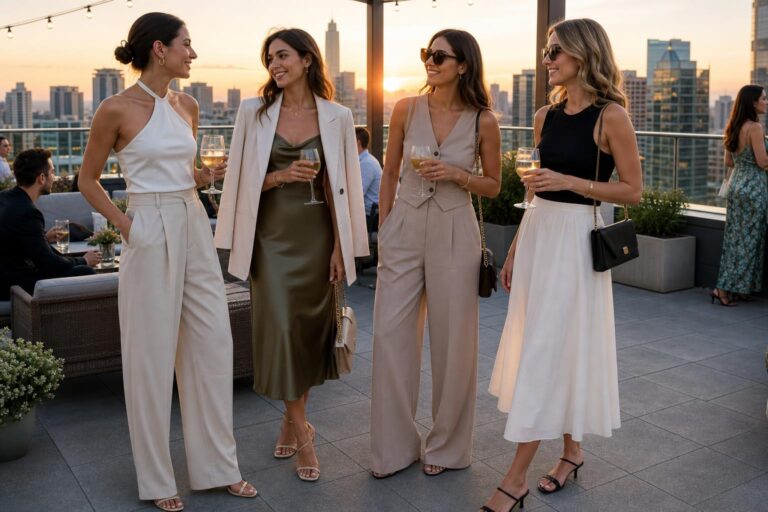
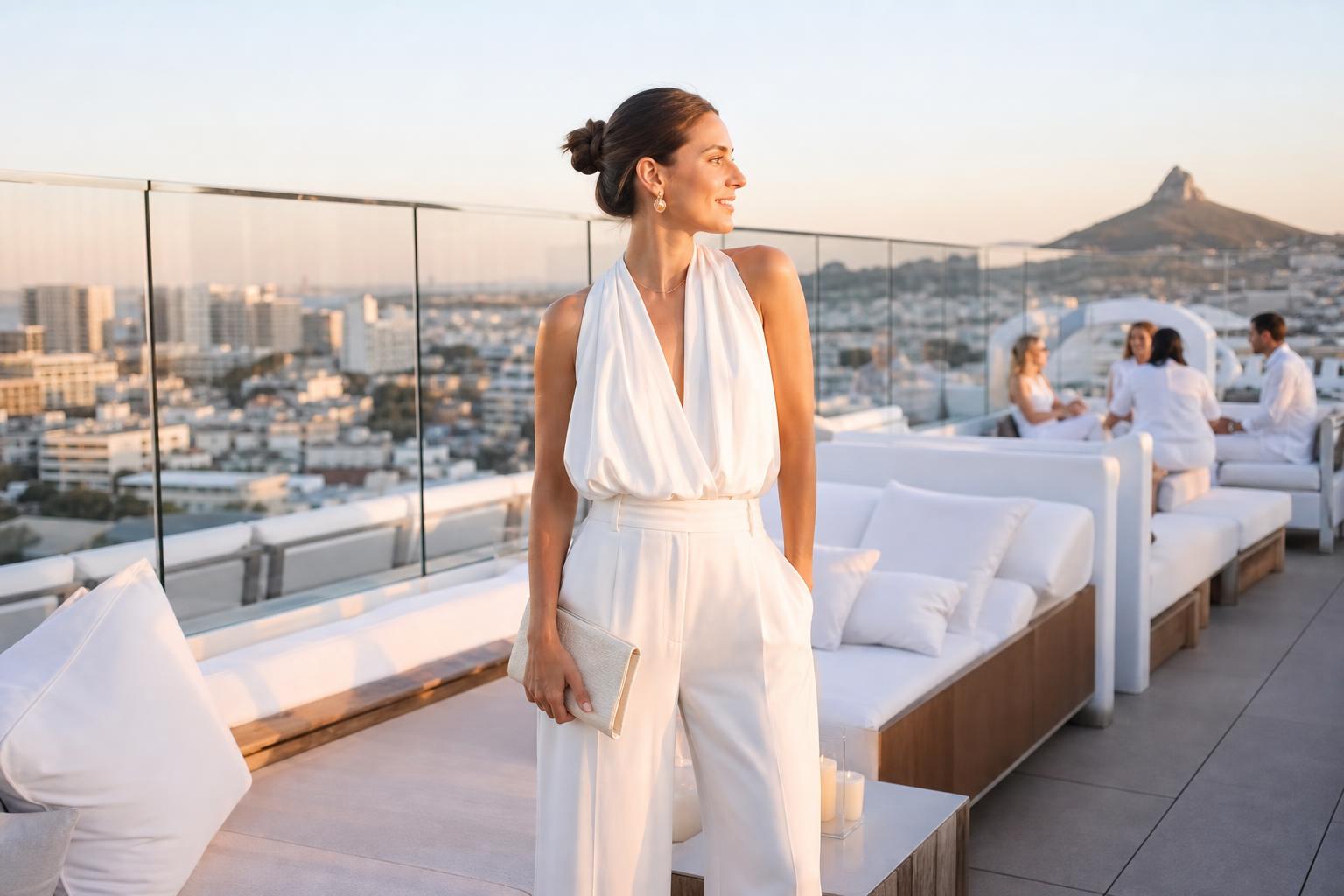
A rooftop white look usually works best when it feels fresh and streamlined. This is where white jumpsuits, white suits for women, midi dresses, and matching sets tend to shine. The setting often calls for something modern enough for an urban environment, but not so formal that it feels disconnected from the social mood.
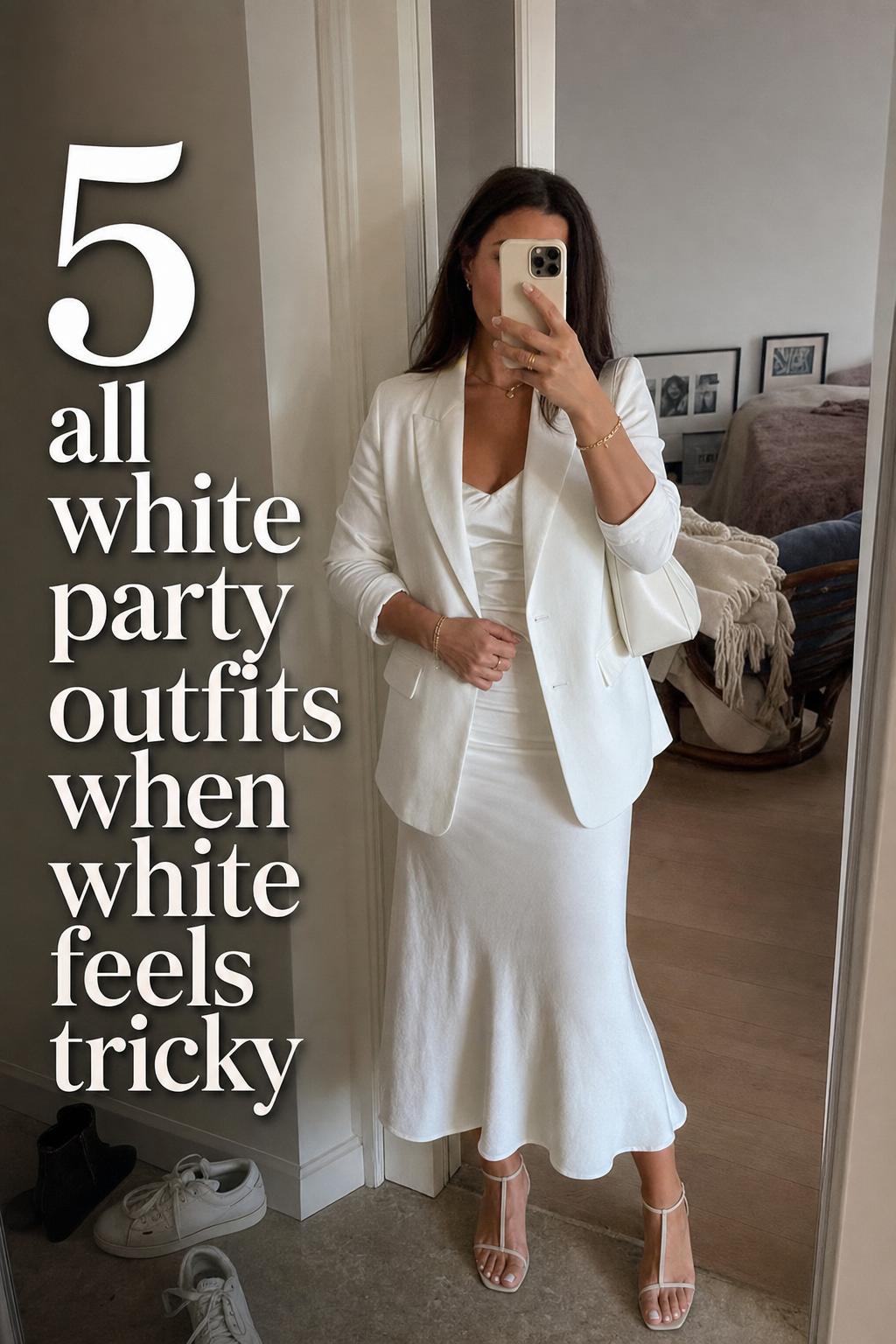
Think of a softly tailored white blazer over coordinated separates, or a white midi dress with simple jewelry and a compact bag. The silhouette should feel edited. Rooftop events reward clarity.
Beach and poolside settings: movement, texture, and breathability
Beach-ready white outfits need to move differently. Linen, cotton, crochet, and looser maxi silhouettes make more sense here than heavy tailoring. The visual goal is ease. A white maxi dress with breathable texture or a relaxed white linen set feels naturally connected to the setting, while a sharply tailored blazer can feel too rigid.
This is also one of the best contexts for softer off-white, ivory, and eggshell tones within the broader white dress code look, because they blend beautifully with daylight and natural surroundings.
Evening gala energy: drape, finish, and stronger definition
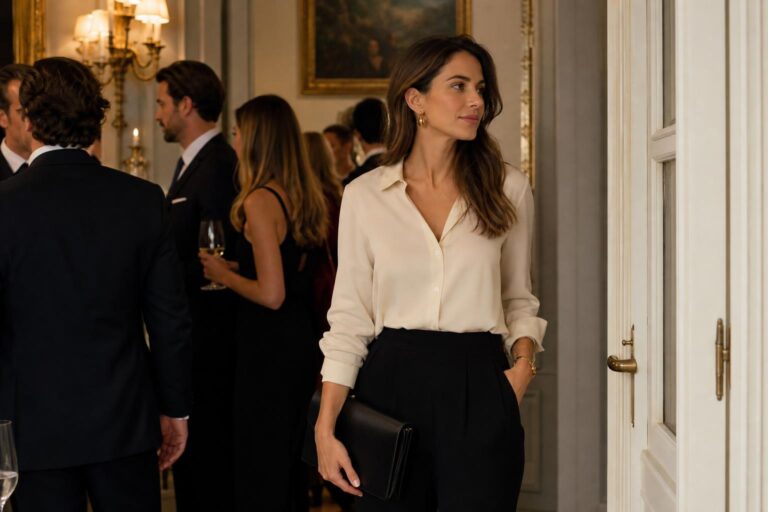
An evening white party asks for more definition. Satin, lace, and long white dresses become especially effective because they hold presence after dark. A tailored jumpsuit can also work here if it has the right finish and a more elevated shape.
If your outfit feels right in daylight but a little plain at night, it usually needs one of three things: more fluidity, more structure, or a more polished fabric. Evening dressing in white depends on visual depth.
Outfit comparisons that show the styling logic
Same event, different mood: the rooftop approach
One person might choose a white jumpsuit from AKIRA or a similar sleek retailer collection, creating a long uninterrupted line that feels confident and modern. Another might choose a white midi dress with softer drape from Macy’s or Showpo, which feels lighter and more social. Both fit the dress code, but the first leans directional while the second leans classic.
The difference comes down to structure. The jumpsuit controls the silhouette; the dress softens it. If you like cleaner lines and less fuss, the jumpsuit often wins. If you want an easier transition from day to night and a slightly softer impression, the dress usually feels more natural.
Same party theme, different venue: beach versus city
For a beach setting, a flowy maxi dress or linen set from a retailer like Summersalt feels grounded in the environment. The outfit moves with air, sits comfortably in warm weather, and looks right with simple accessories. For a city venue, that same softness might feel underdressed. A white blazer, coordinated set, or sharper midi silhouette tends to hold up better visually against an urban backdrop.
What changes is not the dress code but the mood. Beach styling wants breathability and movement. City styling wants shape and finish.
Same all-white concept, different formality: dinner party versus gala
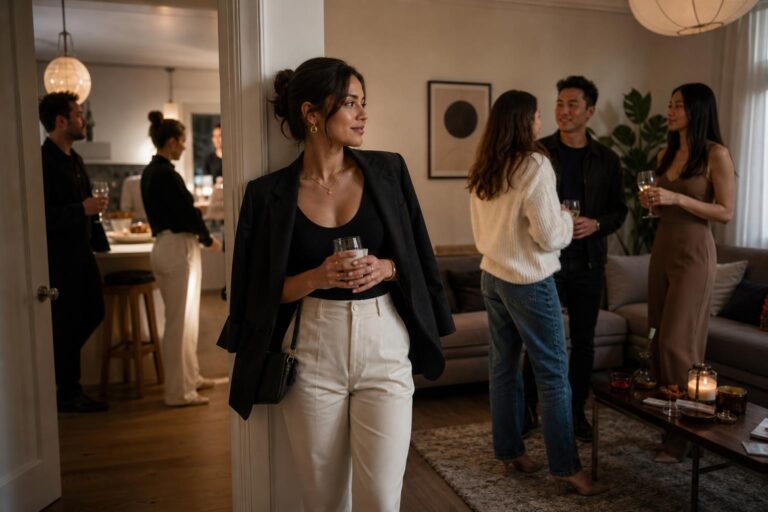
A dinner party can work beautifully with a clean cotton midi dress, a white pants set, or a minimal jumpsuit. The look feels polished but still approachable. A gala-leaning event usually asks for more drama, whether that comes from a satin maxi dress, textured lace, or stronger tailoring. The visual contrast is less about more clothing and more about more intention.
This is where many styling mistakes happen. People often choose a silhouette that fits the event but a fabric that does not. A casual fabric in a formal room can flatten the whole look.
The small details that change the entire outfit
Accessories do not just finish all-white party outfits. They control the final message. The same white dress can feel beachy, minimal, cocktail-ready, or polished depending on the shoes, bag, jewelry, and layering piece.
Footwear and bags
Shoes and bags are where many monochrome looks either stay elegant or become visually heavy. White footwear can keep the line very clean, while metallics or nude tones add separation. A white clutch or compact bag supports a more cohesive dress-code look, especially for evening wear, while a softer bag shape can make the outfit feel more casual.
In practical terms, if the outfit already has texture or embellishment, simpler footwear usually works better. If the outfit is very minimal, the accessories can carry a little more interest.
Jewelry and hair accessories
Pearl earrings, gold jewelry, and subtle hair accessories all support white party dressing because they add refinement without breaking the visual quietness of the outfit. Pearls tend to reinforce a softer, more classic direction, while gold jewelry can sharpen a cleaner modern look.
The key is scale. Monochrome styling tends to look best when accessories feel edited. A few clear details usually work better than too many competing ones.
Outerwear and layering
A white blazer is one of the most useful layering pieces in this category because it can elevate a dress, sharpen a set, or add structure to softer separates. A white cover-up or lighter layer works better for beach and daytime events. Layering should support the venue rather than overpower the base outfit.
Tips that make monochrome white look more intentional
- Match the fabric to the event before you think about accessories.
- If the silhouette is soft, keep the accessories cleaner and more precise.
- If the outfit is tailored, avoid adding too many sharp details at once.
- Use ivory, eggshell, pearl, or off-white thoughtfully when the dress code allows a softer interpretation.
- Build the look from one anchor piece first: a maxi dress, a jumpsuit, a white blazer, or a matching set.
One useful styling habit is to check whether the outfit still looks complete without explanation. If it only works once you describe the idea behind it, it may need a stronger silhouette or a more cohesive finish.
Where each white outfit style works best in real life
Different white party outfits suit different wardrobes and lifestyles. The best option is not always the most dramatic one. It is the one that makes sense for how you move, where you are going, and how long you will be wearing it.
- Maxi dresses work well for day-to-night events, coastal venues, and warm-weather parties because they combine presence with ease.
- Mini and midi dresses suit social gatherings, cocktail settings, and readers who want a familiar but polished option.
- Jumpsuits and sets are useful for movement-heavy events, rooftop parties, and women who prefer sleek lines over soft dresses.
- White suiting works best for city venues, dressier occasions, and wardrobes that already lean toward tailoring.
- Textured pieces are ideal when you want your monochrome outfit to feel more dimensional in photos and in person.
This is also where retailer personality can help. Macy’s offers broad dress and accessory options, AKIRA often leans into statement-ready party pieces, Showpo balances social occasion dressing with trend-aware styling, GLS Collective curates white monochrome groupings, and Summersalt presents easy white party categories with flowy maxi dresses and tailored separates. The best choice depends less on the logo and more on which silhouette language fits your event.
Under-discussed considerations that matter more than people expect
Size inclusivity and ease of wear
One of the most helpful ways to think about white party dressing is to separate trend appeal from wearability. Not every popular silhouette feels equally comfortable or practical. Inclusive sizing ranges, easier-to-wear silhouettes, and adaptive considerations matter because white can highlight fit more clearly than darker shades. A look that feels secure and balanced usually looks more polished in motion too.
Care and maintenance
White outfits demand a little realism. Stain prevention, laundering, and storage all matter if you want the piece to stay crisp. This is especially true for linen, cotton, satin, and lace, which all behave differently. A beautiful white outfit loses impact quickly when the fabric no longer looks fresh, so maintenance is part of styling, not a separate concern.
Cultural and dress-code context
Not every white-only event carries the same meaning. Some settings are simply party-themed, while others may have stronger etiquette expectations tied to anniversaries, weddings, or culturally specific celebrations. In those cases, understanding how strict the all-white dress code is can help you decide whether off-white tones, embellished pieces, or more fashion-forward styling are appropriate.
Celebrity influence and why some white outfits feel instantly recognizable
Editorial coverage often uses celebrity-inspired white outfits to show how simple monochrome dressing can still feel memorable. Public figures and fashion events help reinforce the appeal of chic minimalism in white, especially when the styling is restrained and the silhouette is clear. In that context, white stops being plain and starts reading intentional.
What stands out in those looks is rarely excess. It is usually one strong idea: a sharp white suit, a long fluid dress, or a clean monochrome set. That same principle translates well to real-life dressing. The most convincing all-white party outfits usually commit to one mood and execute it fully.
Common mistakes that make all-white party outfits feel less polished
- Choosing a fabric that clashes with the venue, such as heavy tailoring for a beach setting or casual cotton for a formal evening event.
- Adding too many accessories to an already textured or embellished outfit.
- Ignoring proportion, especially when combining oversized pieces without a clear line.
- Wearing whites that look disconnected rather than intentionally tonal.
- Focusing on the main garment and forgetting the shoes, bag, and layering piece.
Most of these issues are not about fashion rules. They are about visual consistency. White is unforgiving when an outfit lacks a clear point of view, but it looks striking when every element supports the same mood.
How to blend soft and structured white styling together
Not everyone wants to choose between a romantic maxi dress and a sharp tailored set. One of the smartest approaches is blending the two. A fluid white dress with a structured blazer, or tailored separates softened by lace or gentle drape, can create a more personal outfit that still fits the all-white theme.
This kind of styling works especially well for readers who want all-white party outfits that feel polished but not too strict. It also adapts well across locations like New York or Los Angeles, where event settings can range from rooftop social gatherings to more relaxed summer parties. Structure gives authority; softness keeps the outfit wearable.
Final style read
The core difference between strong all-white party outfits and forgettable ones is not simply the color white. It is the combination of silhouette, fabric, and occasion logic. A white maxi dress, a satin jumpsuit, a linen set, and a tailored blazer can all be right, but they are right for different reasons.
Once you start reading white outfits by mood instead of by color alone, the choices become clearer. Soft fabrics create ease. Tailoring creates definition. Texture creates depth. Accessories set the level of polish. That is the visual language behind monochrome dressing.
Whether you are drawn to breezy beach-ready whites, sleek rooftop sets, white cocktail dresses, or structured separates from retailers like Macy’s, AKIRA, Showpo, GLS Collective, or Summersalt, the best outfit is the one that fits the setting and feels complete in real life. White looks most stylish when it feels deliberate, comfortable, and fully considered.
FAQ
What fabrics are best for all-white party outfits?
Linen and cotton usually work best for daytime, beach, and casual rooftop events, while satin, silk-inspired finishes, and lace are better suited to evening parties, cocktail settings, and more formal white dress code occasions.
Can I wear off-white, ivory, or eggshell to a white party?
In many cases, yes, especially when the event allows a softer interpretation of white. Ivory, eggshell, pearl, and off-white can still read as part of an all-white look, but stricter dress codes may expect a cleaner true-white appearance, so venue context matters.
Are white jumpsuits appropriate for white party dress codes?
Yes, white jumpsuits are one of the strongest alternatives to dresses because they create a sleek monochrome line and often feel modern and polished. They work particularly well for rooftop parties, city venues, and events where you want ease of movement.
How do I make a white outfit look more formal?
Choose a more elevated fabric like satin or lace, look for stronger tailoring or a longer silhouette, and keep the accessories cohesive. Formal white outfits usually rely on finish and structure rather than a lot of extra styling pieces.
What are the easiest all-white party outfits for women to wear?
White maxi dresses, coordinated sets, and clean midi dresses are often the easiest because they simplify the outfit-building process while still looking intentional. They also adapt well to different accessories and party settings.
How should I accessorize a white party outfit?
Keep the accessories aligned with the mood of the outfit. White shoes and bags create a seamless look, while metallics, nude tones, pearl earrings, and gold jewelry can add polish without overpowering the monochrome styling.
What is the difference between a white party dress and a casual white dress?
A white party dress usually has a clearer occasion feel through its silhouette, fabric, or styling details, while a casual white dress tends to rely on simpler materials and a more relaxed finish. The difference is often in the overall level of intention.
How do I keep white outfits looking fresh during and after an event?
Pay attention to stain prevention, fabric-specific cleaning, and proper storage. White fabrics show wear more quickly than darker colors, so keeping linen, cotton, satin, and lace clean and bright is part of maintaining the overall impact of the outfit.
Finish the look
The little extras that make a summer outfit feel complete
From beach days to city weekends, these easy pieces bring comfort, texture, and a polished finishing touch.

FENBEN
Straw Hobo Crossbody Bag
A handwoven straw bag with both short and crossbody straps—an effortless finishing touch for vacation looks and warm-weather outfits.
Shop the bag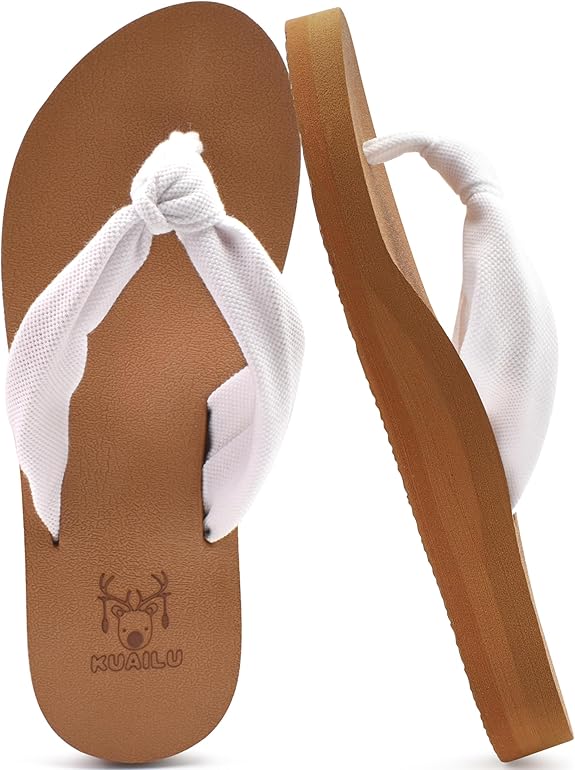
KuaiLu
Flip Flops with Arch Support
Cushioned, lightweight sandals with supportive arch design—a practical choice for beach trips, errands, and long summer walks.
Shop the sandals
baleaf
Athletic One-Piece Swimsuit
A functional one-piece with adjustable straps and moderate coverage, designed for swimming, training, surfing, and active beach days.
Shop the swimsuit
Astylish
Linen-Cotton Button-Down Shirt
A relaxed cotton-linen shirt with a collared V-neck and roll-up sleeves—easy to style over swimwear or with denim and shorts.
Shop the shirt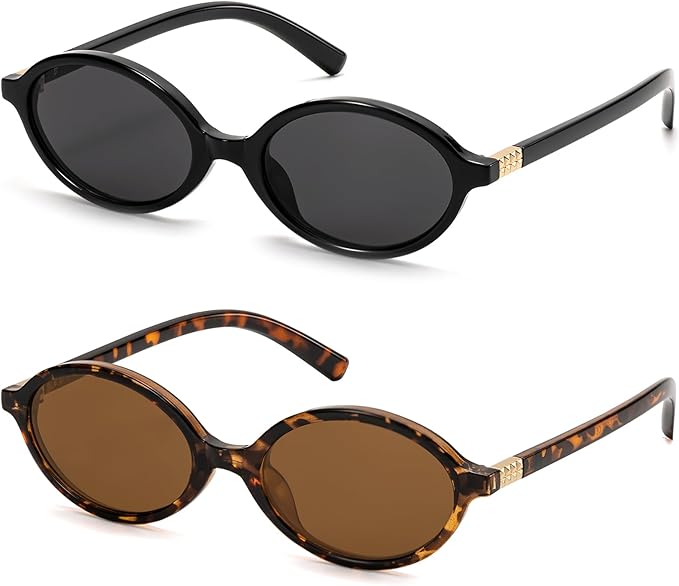
ViewJoy
Retro Oval Sunglasses
Small oval sunglasses with a 90s-inspired silhouette and UV400 lens protection—a quick way to add a vintage edge to everyday looks.
Shop the sunglasses
Affiliate disclosure: This section contains affiliate links. If you make a purchase through these links, I may earn a commission at no additional cost to you. Product selection, pricing, availability, and delivery terms may change—please review the current details on Amazon before purchasing.
As an Amazon Associate I earn from qualifying purchases.