Spring Tea Party Outfits for Women with Polished Charm
There is a reason tea party outfits for women are so often compared to garden party dressing, afternoon tea looks, and even vintage-inspired daytime event style. On the surface, they share the same soft details: a midi dress, a polished shoe, a hint of lace, maybe pearls or a small hat. But once you look more closely, the mood shifts. Some tea party outfits feel romantic and traditional, while others look modern, minimal, and quietly refined.
That distinction matters because tea party dressing is not only about wearing a pretty dress. It is about understanding setting, etiquette, proportion, and how the outfit reads in daylight. A hotel lounge tea, a home tea party, and a garden gathering may all fall under the same occasion, but they do not ask for exactly the same styling choices.
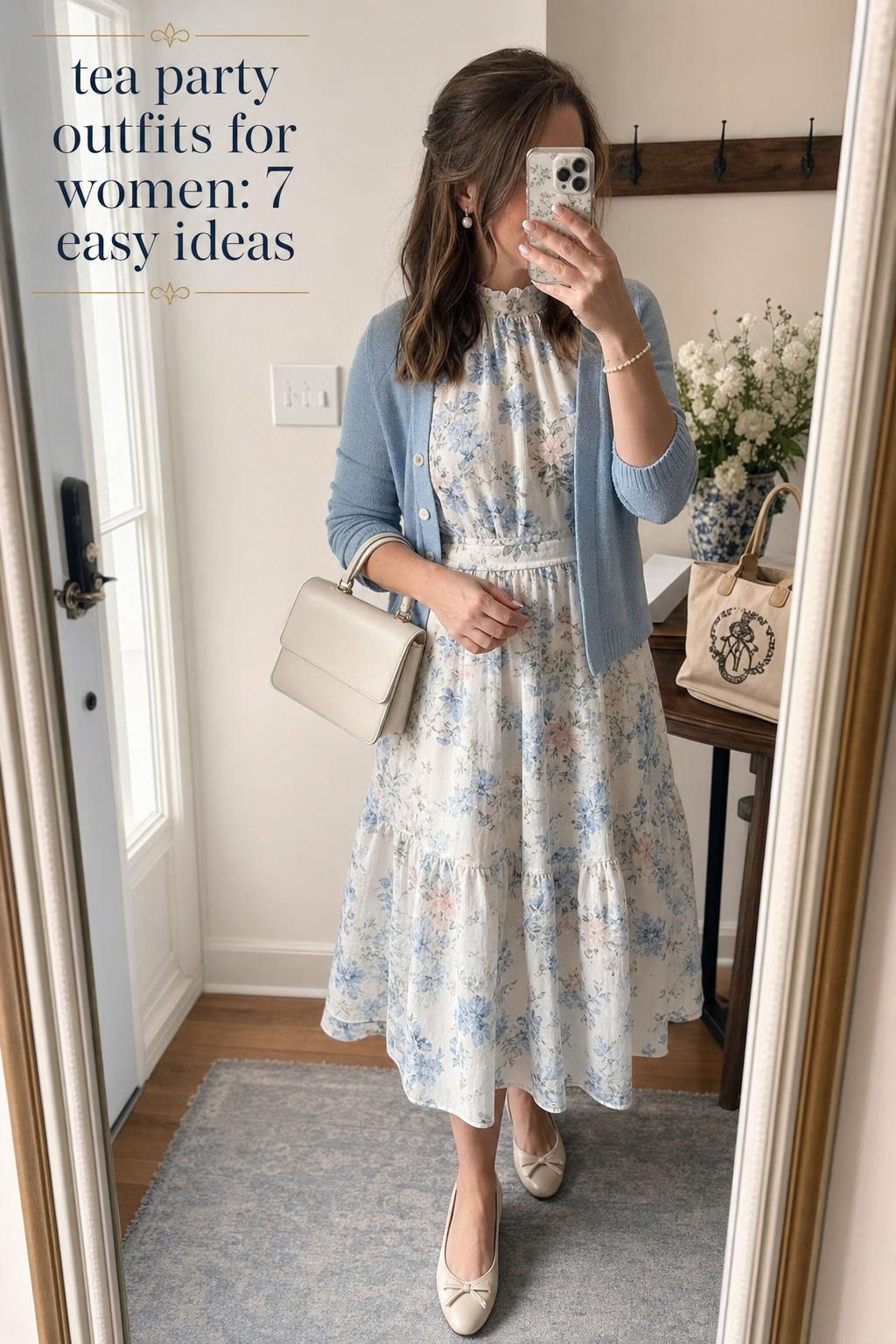
This breakdown looks at the visual logic behind tea party attire, from classic A-line and fit-and-flare silhouettes to softer fabrics like chiffon and lace, and from pearls and gloves to more understated modern accessories. The goal is simple: help you recognize the difference between styles, understand why they create different impressions, and choose the version that actually fits your wardrobe and the event in front of you.
The Fashion-Note Edit
Five effortless pieces to refresh your everyday wardrobe
A polished, practical edit for workdays, weekends, and everything in between.

The Drop
Women’s Blake Long Blazer
A longline, tailored blazer with a notched collar and a single-button closure—an easy layer for denim, dresses, or office-ready looks.
Shop the blazer
Amazon Essentials
Women’s Lightweight Crewneck
A soft, lightweight sweater with a clean crew neckline—the kind of reliable layer that works from cool mornings to air-conditioned spaces.
Shop the sweater
Amazon Essentials
Women’s Loafer Flat
A classic flat loafer that gives casual outfits a more polished finish and pairs naturally with tailored pants, skirts, and straight-leg jeans.
Shop the loafers
Levi’s
Women’s 501 90s Jeans
A relaxed, vintage-inspired take on the iconic 501 silhouette—made for an easy, lived-in look without the thrift-store search.
Shop the jeans
Colorfulkoala
High-Waisted 7/8 Leggings with Pockets
Soft, four-way-stretch leggings with side pockets and a high-rise waistband—designed for movement, errands, and off-duty comfort.
Shop the leggings
Affiliate disclosure: This section contains affiliate links. If you make a purchase through these links, I may earn a commission at no additional cost to you. Product selection, pricing, availability, and delivery terms may change—please review the current details on Amazon before purchasing.
As an Amazon Associate I earn from qualifying purchases.
The two directions most tea party outfits fall into
Most tea party dressing lands in one of two style directions. The first is the classic tea party look: feminine, polished, and etiquette-aware, often built around tea-length dresses, soft florals or pastels, pearls, hats, gloves, and dress silhouettes that feel timeless. This is the version people often associate with afternoon tea, traditional tea salons, and elegant daytime gatherings.
Your wedding style is personal.
Your plan should feel that way, too.
Zarellea keeps your guest list, budget, vendors, and every next step beautifully organized — so you can focus on the moments that feel like you.
The second is the modern daytime event interpretation. This still respects the tea party setting, but the outfit is cleaner and less decorative. Instead of leaning into a fully vintage tea party fashion mood, it may use a midi dress in a solid shade, subtle jewelry, a simple handbag, and refined shoes. The feeling is still polished, but less costume-like and more adaptable to contemporary social settings in the U.S.
Neither direction is automatically better. The right choice depends on the dress code, the venue, the weather, and how dressed up the event feels. Understanding these two moods makes it much easier to build an outfit that feels right rather than random.
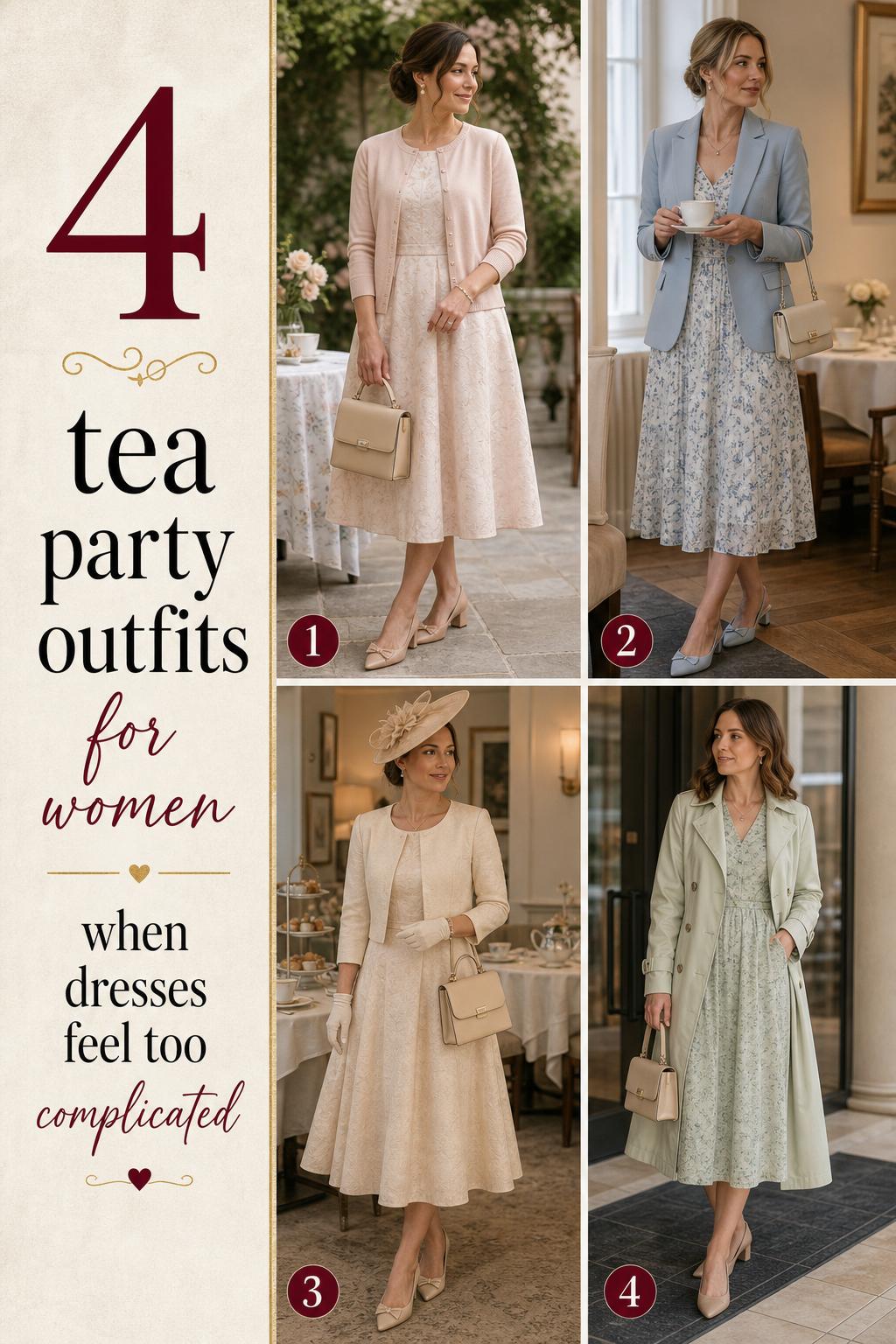
Style overview: the classic tea party aesthetic
The classic tea party aesthetic is soft, graceful, and visibly occasion-focused. It is the version most closely tied to tea party etiquette and to the familiar visual language of afternoon tea: elegant but daytime-appropriate, modest without feeling severe, and feminine without looking overdone when styled well.
Silhouette matters a lot here. A-line dresses and fit-and-flare dresses work especially well because they create shape without looking too structured for a daytime setting. Tea-length and midi options are central to this mood because they feel polished and practical at the same time. They allow movement, keep the outfit comfortable for sitting and socializing, and suit the more refined atmosphere associated with tea parties.
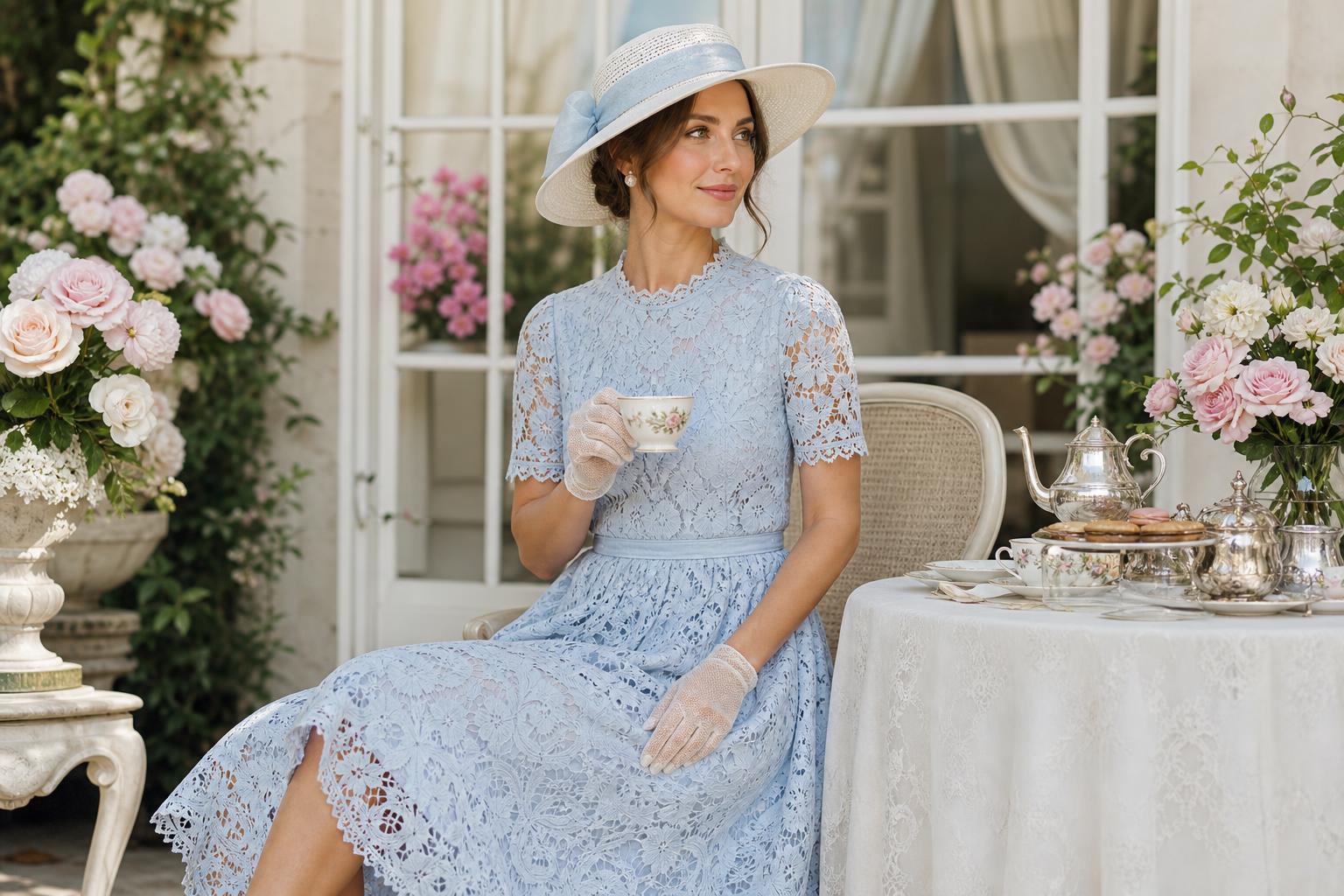
Fabrics help define the softness of the look. Lace and chiffon are especially effective because they catch light gently and add visual delicacy without requiring heavy embellishment. The color palette usually leans pastel, cream, soft blue, or similarly light tones that feel calm, romantic, and easy in daylight. Accessories complete the impression: pearls, gloves, a headpiece or hat, and a dressy handbag all reinforce the sense of occasion.
Visually, this style reads as intentional and traditional. It works especially well when the event itself has a formal or ceremonial quality, or when the venue already has an elegant atmosphere that invites a more dressed-up approach.
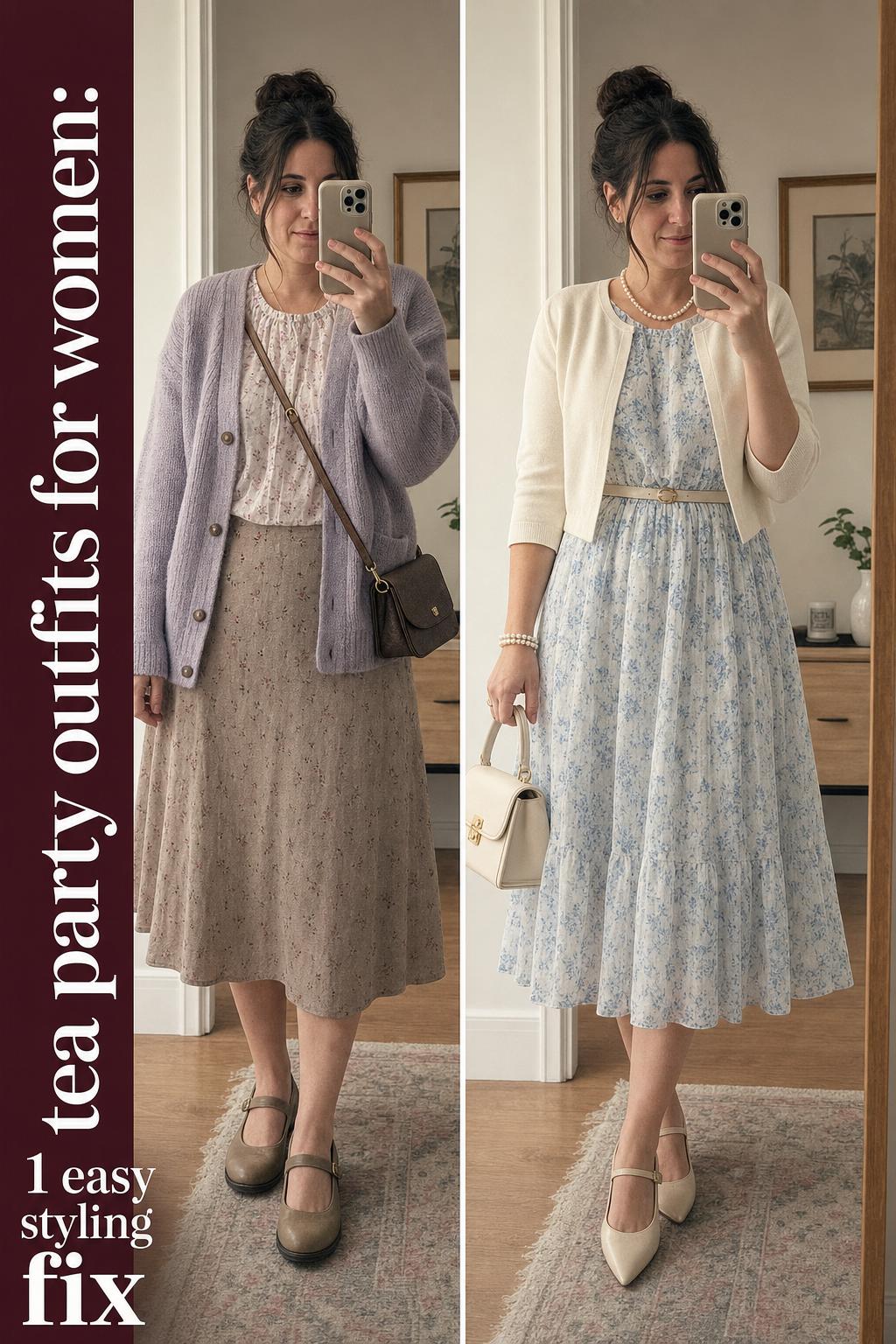
Style overview: the modern tea party look
The modern tea party look keeps the same basic principles of refinement and appropriateness, but strips the styling back. Instead of building the outfit around nostalgic details, it focuses on clean lines, well-chosen fabrics, and a lighter touch with accessories.
A modern tea party outfit might still use an A-line or fit-and-flare silhouette, but the effect is simpler. A solid midi dress, a lightly textured chiffon piece, or a softly structured dress in a flattering cut often feels enough on its own. Rather than leaning on multiple accessory layers, the outfit gets its polish from balance: an elegant hemline, a considered color palette, and footwear that looks neat without dominating the look.
This is the version that works well for hotel lounge teas, city daytime events, or women who want their tea party attire to feel wearable beyond one occasion. The mood is polished but relaxed, feminine but not overly decorative. It often photographs beautifully because the cleaner styling allows silhouette and fabric to stand out.
Where the classic version signals tea party immediately, the modern version signals sophisticated daytime dressing first and tea party appropriateness second. That subtle shift is what makes the two approaches look related, yet clearly different.
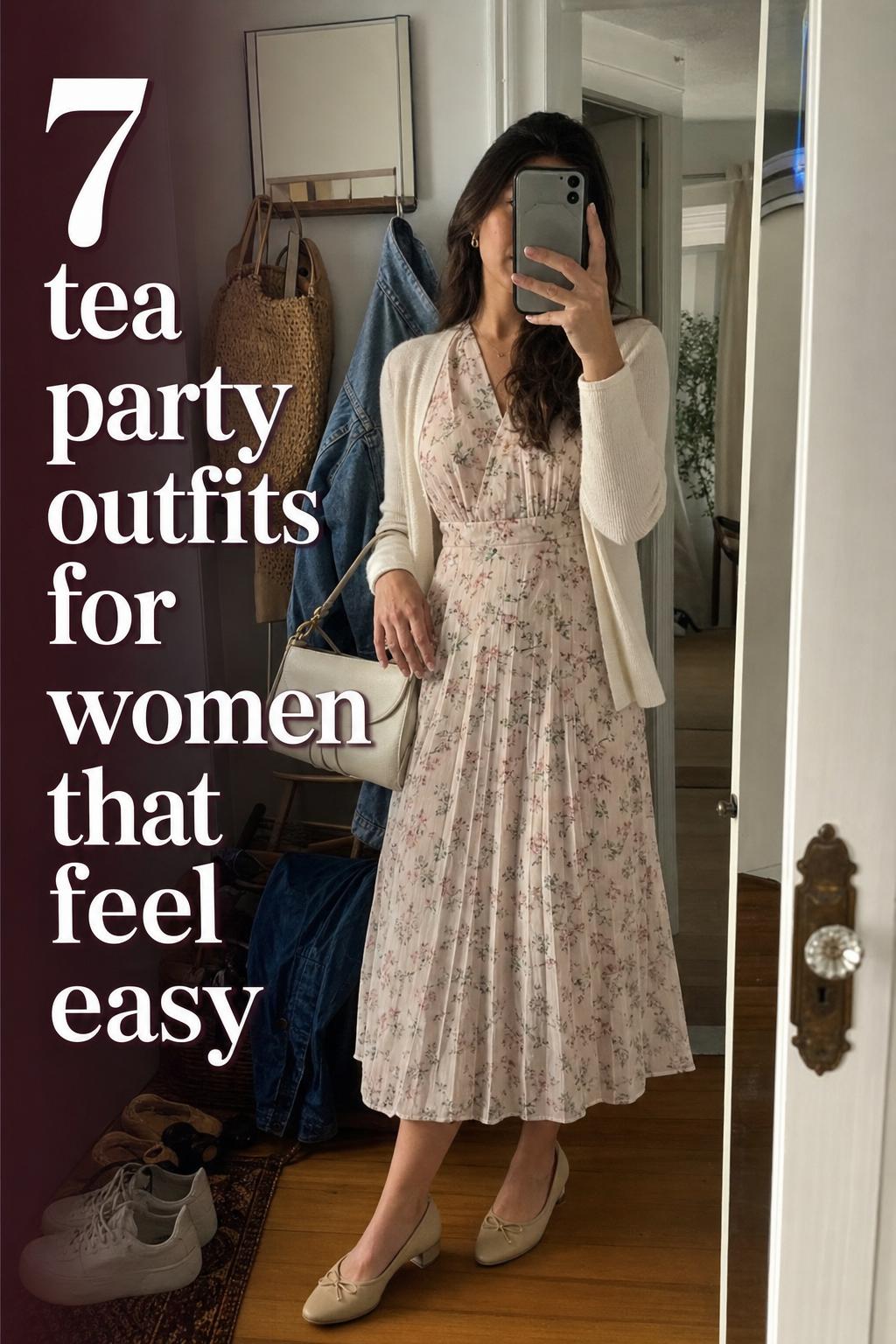
Why these styles are often confused
They share the same foundation. Both rely on dresses over heavily casual separates. Both favor daytime-appropriate elegance over evening drama. Both often use midi lengths, soft colors, and delicate accessories. That overlap is why tea party outfits, garden party outfits, and afternoon tea outfits often end up grouped together.
The difference appears in the level of styling emphasis. A classic tea party outfit treats the occasion as a clear dress code moment. A modern tea party outfit treats it more like an elevated daytime event. One may welcome gloves, a hat, and pearls as natural finishing pieces. The other may stop at subtle jewelry and a polished shoe.
This is also why some women feel overdressed or underdressed when they rely on generic daytime event formulas. Tea party dressing has its own visual rhythm. It needs softness, composure, and a little more intentionality than an ordinary brunch look, even when the final outfit remains simple.
Understanding tea party dress codes by setting
The setting shapes the outfit more than many people expect. “Tea party” can describe several kinds of events, and each one changes what feels natural.
Garden party styling
A garden tea usually invites the most romantic interpretation. This is where floral influence, lace touches, and softer accessories make the most sense. A fit-and-flare dress or tea-length silhouette feels especially at home outdoors because it moves well and visually suits the setting. Shoes matter here too. A polished option that can handle grass or garden paths is often more practical than anything too delicate or unstable.
Hotel lounge and afternoon tea
Hotel or concierge lounge teas tend to favor a slightly sleeker approach. The room itself often adds the elegance, so your outfit does not need as many decorative signals. A midi dress in chiffon or a softly structured A-line style works well, especially with understated jewelry and a small handbag. This is often the easiest setting for women who prefer a modern tea party look over a more obviously vintage-inspired one.
Home tea party outfits
A home tea party allows a more relaxed interpretation, but not a casual one. A skirt-and-blouse combination can work beautifully here, especially if the overall silhouette remains polished. The advantage of this approach is comfort: you still look occasion-ready, but the outfit can feel softer and easier for a smaller, more intimate gathering.
Tip: if you are unsure how formal the tea party will be, it is usually safer to choose a polished midi or tea-length dress and keep accessories adjustable. You can always add pearls or a headpiece, but it is harder to rescue an outfit that began too casual.
The silhouettes that instantly read as tea party appropriate
Silhouette does most of the work in tea party attire. Even before color or accessories, the cut of the outfit tells people whether the look fits the occasion.
- A-line dresses: These flatter most figures and create a soft, balanced outline that feels refined without being stiff. They are one of the safest choices for a wide range of tea party settings.
- Fit-and-flare dresses: This silhouette has a more defined feminine shape and works especially well when you want the outfit to feel polished and celebratory.
- Tea-length dresses: They feel especially aligned with traditional tea dressing because the hemline itself reinforces the occasion. It is modest, elegant, and visually distinctive.
- Midi dresses: A midi dress is one of the most versatile options because it can lean classic or modern depending on fabric and accessories.
- Skirt-and-blouse combinations: These are a useful alternative when you want flexibility. The key is to keep the line cohesive and the styling elevated.
What usually works less well is anything that feels too severe, too body-conscious, or too casual for the setting. Tea party looks are built on ease and polish. A silhouette that fights those qualities can make the whole outfit feel off, even if the individual pieces are attractive on their own.
Fabric is what turns a dress into a tea party dress
Two dresses can share the same shape and still create very different impressions depending on fabric. That is why tea party dresses are so often described not only by silhouette but also by material. Lace, chiffon, and lightweight knits appear repeatedly because they support the mood of the occasion rather than competing with it.
Lace for a romantic, traditional finish
Lace immediately softens a look and gives it a more occasion-specific feel. It works especially well for classic tea party outfits, where the goal is to look graceful and intentionally dressed. The trade-off is that lace can quickly make the outfit feel more formal, so it works best when the setting supports that level of detail.
Chiffon for light movement
Chiffon is ideal when you want the outfit to feel airy and feminine without looking heavy. It suits daytime events particularly well because it moves softly and keeps the silhouette visually light. For summer tea parties, chiffon also makes practical sense because it aligns with the season’s lighter mood.
Lightweight knits and soft textures for modern wearability
For women who prefer a simpler outfit, lightweight knits and other soft textures can make tea party dressing feel more current. They are especially useful for home teas or less formal daytime gatherings, where the outfit should still be polished but not overly precious.
Print also plays a role. Solid colors often create a cleaner, more modern effect, while delicate prints lean more romantic and garden-party friendly. If photos matter, this decision becomes even more visible. Prints add charm, but solids often highlight shape and styling details more clearly.
Color palette: soft does not have to mean predictable
Tea party color palettes are usually gentle, but there is still room for personality. Pastels, creams, and soft blues are common because they feel refined in daylight and work naturally with lace, chiffon, pearls, and garden settings. They also support the calm, composed mood associated with afternoon tea.
That said, softness is more important than any single color family. A tea party outfit can feel perfectly appropriate in a solid tone if the overall effect remains polished and feminine. This is where the modern approach often becomes more appealing. Instead of relying on an obviously sweet palette, it uses color restraint to create understated elegance.
Tip: if you want your outfit to feel timeless rather than themed, let the dress carry the color and keep accessories quieter. If you want a stronger garden party aesthetic, use the opposite approach and allow accessories to reinforce the romantic mood.
The small details that change the entire outfit
Accessories are where tea party looks begin to separate most clearly. The dress may set the foundation, but the finishing details decide whether the final outfit reads classic, modern, playful, or overly formal.
Hats and headpieces
A hat or headpiece is one of the quickest ways to signal a traditional tea party aesthetic. It adds ceremony and visual charm, especially in garden settings or more elegant daytime gatherings. At the same time, it is not mandatory. In a hotel tea or a more contemporary social setting, a hat may feel more dressed than the event requires. This is where reading the room matters.
Pearls, jewelry, and gloves
Pearls remain one of the most natural jewelry choices for tea party attire because they are polished without feeling severe. Gloves create a more traditional impression and work best when the outfit already leans classic. If the dress is simple and modern, adding both gloves and strong jewelry can shift the balance too far. The easiest approach is to choose one accent direction and let it lead.
Shoes and handbags
Shoes should support the tone of the outfit, not interrupt it. A refined daytime shoe works better than anything that feels too evening-focused or too casual. The handbag should stay compact and neat. Tea party dressing is usually about clean visual balance, so oversized or highly practical bags can make an otherwise polished look feel mismatched.
How to instantly tell the difference between a garden party look and a hotel tea look
Garden party outfits usually look softer, more decorative, and more atmospheric. You notice movement in the skirt, a floral or pastel palette, perhaps lace or embroidery, and accessories that feel a little more expressive. The whole look is built to harmonize with an outdoor setting.
Hotel tea outfits usually look cleaner, smoother, and slightly more urban. You are more likely to see solid shades, simpler lines, restrained jewelry, and an overall finish that feels polished but not overly styled. Both are appropriate forms of tea party attire, but the visual language is different.
This is one of the most useful distinctions to keep in mind when choosing what to wear to a tea party. Once you know the setting, many styling decisions become easier.
Brand style breakdown: how different labels shape the tea party mood
Brand examples can be helpful because they show how tea party dressing shifts even within the same category of occasion wear. Adrianna Papell, Windsor, and Sherri Hill all connect to tea party attire, but they do not communicate it in exactly the same way.
Adrianna Papell: polished femininity with detail
Adrianna Papell fits the tea party conversation especially well because the brand’s editorial approach highlights dress silhouettes, accessories, and occasion framing together. This makes it easy to picture a full tea party look rather than just a single dress. If you like lace, chiffon, pearls, hats, and a clearly dressed-up afternoon tea mood, this direction makes immediate sense.
Windsor: category-driven and approachable
Windsor approaches tea party dressing from the product side, focusing on tea party dresses as a shopping category. That often makes the styling feel straightforward and practical. It is useful for women who already know they want an A-line, midi, or fit-friendly silhouette and are looking for a wearable event dress rather than a fully styled editorial look.
Sherri Hill: dress-first occasion styling
Sherri Hill brings a more occasion-focused perspective, with attention to dresses, jewelry, and accessories. This can be helpful if you want your tea party attire to feel distinctly special. It tends to suit women who are comfortable treating the event as a real dress-up moment rather than simply a polished daytime outing.
FormalDressShops and Lady Black Tie also reinforce this more editorial, dress-code-aware direction, while fashion media and blog sources often broaden the styling conversation to include vintage references, garden-party aesthetics, and more flexible ways to interpret the look.
Real-life outfit comparisons: same occasion, different tea party interpretation
An outdoor charity tea
The classic version might use a tea-length lace dress in a soft pastel, paired with pearls, a structured handbag, and a hat that adds presence without overwhelming the outfit. The silhouette feels gently formal and very occasion-aware. The modern version might choose a chiffon midi dress in a solid soft blue with understated jewelry and clean shoes. It still feels elevated, but the mood is lighter and less ceremonious.
A hotel afternoon tea with friends
The classic approach could still work here, but often in a toned-down way: perhaps a fit-and-flare dress with pearls and a neat handbag, without gloves or a dramatic headpiece. The modern version is especially strong in this setting. A polished midi dress, subtle jewelry, and refined shoes look effortless and in step with the indoor lounge atmosphere.
A home tea party
A classic interpretation may use a floral A-line dress with soft accessories and a cardigan or light layer if needed. A modern take may shift toward a skirt-and-blouse combination in a soft palette, using texture rather than ornament for interest. The result feels relaxed but intentional, which suits a smaller social setting well.
Common styling mistakes that make tea party outfits feel off
Tea party dressing is usually less about dramatic errors and more about subtle mismatches. A few small choices can change the whole impression.
- Choosing a dress that feels more like eveningwear than daytime attire.
- Going too casual with shoes or bag, which can flatten the elegance of the outfit.
- Adding every classic detail at once, creating a costume effect instead of a balanced look.
- Ignoring the venue, especially when an outdoor garden setting and a hotel lounge call for different levels of decoration.
- Using a silhouette that restricts comfort, even though tea parties involve sitting, moving, and socializing over time.
Tip: a strong tea party outfit usually has one clear message. It is either softly traditional, clean and modern, or romantic in a garden-party way. When too many style signals compete, the outfit loses its clarity.
Seasonal shifts: how tea party attire changes through the year
Season affects tea party dressing more through fabric and layering than through a complete change in silhouette. Spring and summer naturally support chiffon, lighter lace, and airy midi dresses. These fabrics look right in daylight and feel in tune with garden parties and afternoon tea settings.
In cooler months, the same tea party silhouettes still work, but the outfit may need more thoughtful layering. This is where structure becomes important. You want the extra layer to support the dress rather than weigh it down. A tea party look should still feel light in spirit, even when the weather requires a little more coverage.
The easiest way to keep seasonal tea party outfits cohesive is to preserve the same overall mood: polished, soft, and daytime-appropriate. Seasonal adjustment should refine the outfit, not change its identity.
Where each tea party style works best in a real wardrobe
The classic tea party look works best for women who enjoy occasion dressing and want clothing that clearly marks special daytime events. It is a strong choice for formal afternoon tea, elegant garden party events, and any gathering where etiquette and presentation matter. It also suits wardrobes that already include pearls, dressy handbags, and feminine occasion dresses.
The modern tea party look works best for women who prefer versatility. If you want a dress that can move from a hotel tea to another daytime event with only minor accessory changes, this direction is more practical. It is especially helpful for minimalist wardrobes, city settings, and women who want to look polished without feeling overly styled.
Many readers will find that the most wearable solution sits in the middle: a dress with classic tea party proportions, but accessories styled with more restraint. That balance often feels the most natural in contemporary U.S. settings.
How to blend both aesthetics together
If you love the romance of traditional tea party attire but want it to feel easier to wear, blending both aesthetics is often the smartest move. Start with a silhouette that clearly fits the occasion, such as a midi A-line or fit-and-flare dress. Then decide whether you want the fabric or the accessories to carry the mood.
For example, a lace dress with very simple jewelry can feel current and elegant. A plain chiffon midi with pearls and a hat can lean more classic without becoming heavy. This mix-and-balance approach keeps the outfit believable. It also lets you adjust according to venue, age, comfort, and personal taste without losing the tea party spirit.
That is often the difference between an outfit that looks thoughtfully styled and one that feels copied from a single idea of what tea attire should be. Real-life dressing works best when the mood is clear but the proportions and details still feel like you.
A practical tea party dressing checklist
- Choose the setting first: garden party, hotel afternoon tea, or home gathering.
- Build around a tea-appropriate silhouette like A-line, fit-and-flare, tea-length, or midi.
- Select fabric based on mood: lace for romance, chiffon for softness, lighter textures for modern ease.
- Keep the palette refined with pastels, cream, soft blue, or another gentle tone.
- Add accessories with intention rather than all at once.
- Make sure shoes support both the venue and the length of the event.
- Check that the final outfit reads as daytime elegance, not eveningwear or casual dressing.
The lasting appeal of tea party style
Tea party dressing continues to appeal because it offers something many modern wardrobes do not always prioritize: softness with structure. It makes room for femininity, etiquette, and thoughtful styling without requiring the drama of formalwear. Whether expressed through Adrianna Papell lace, a Windsor midi, a Sherri Hill occasion dress, or a simpler skirt-and-blouse combination, the appeal is the same. The outfit feels composed, social, and pleasantly intentional.
The core visual distinction is easy to remember. Classic tea party style leans decorative, romantic, and tradition-aware. Modern tea party style leans clean, balanced, and quietly polished. Once you see that difference, it becomes much easier to recognize what kind of tea party look you are drawn to and how to recreate it in a way that suits the occasion.
And in real life, that is usually the best outcome: not dressing by formula, but understanding the mood well enough to create an outfit that feels right the moment you walk into the room.
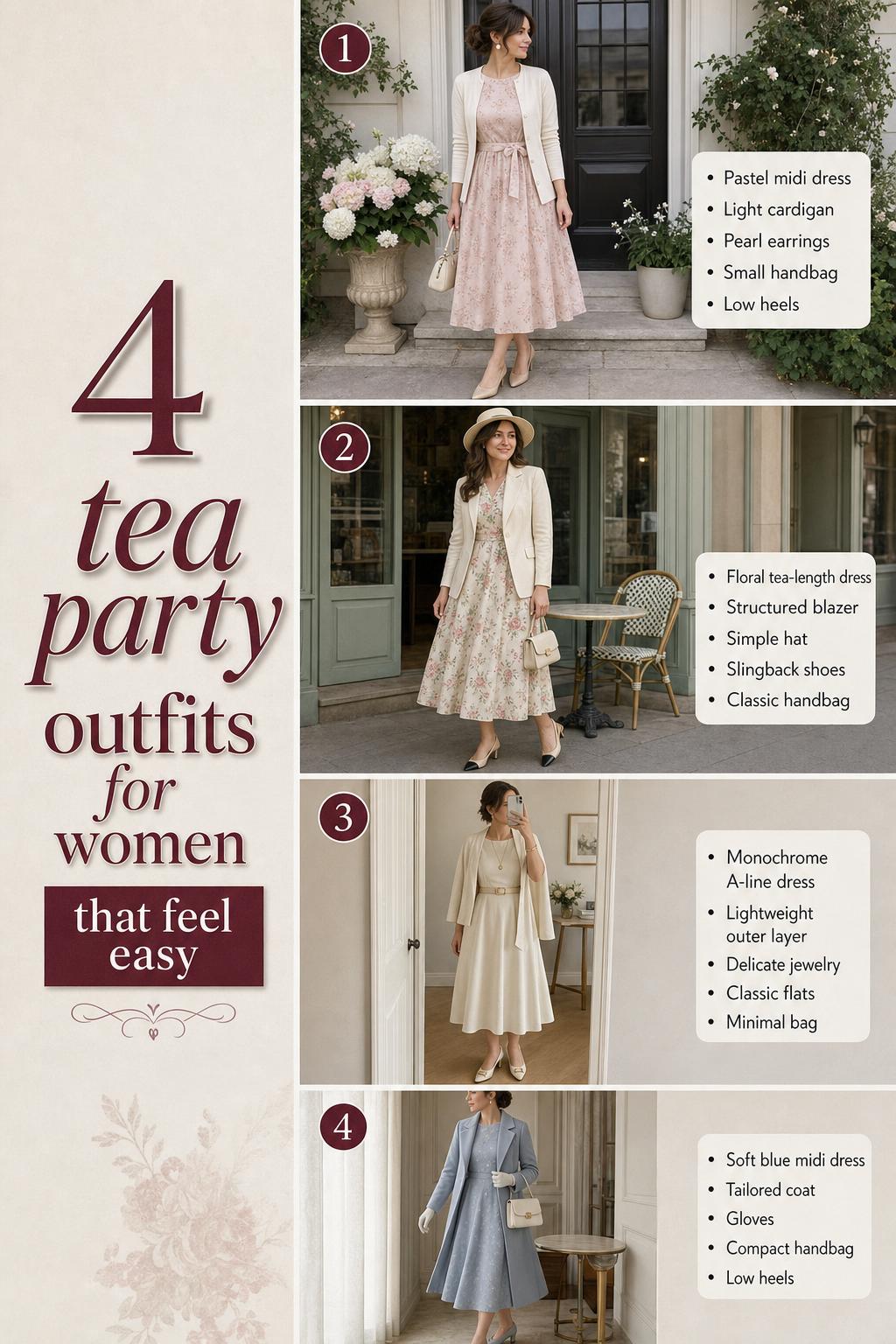
FAQ
What should women wear to a tea party?
A tea party outfit usually works best when it feels polished, feminine, and appropriate for a daytime event. A-line dresses, fit-and-flare dresses, tea-length styles, and midi dresses are the most natural choices, especially in soft fabrics like lace or chiffon. Accessories can be classic, such as pearls or a hat, or more modern and understated depending on the setting.
Is a midi dress appropriate for afternoon tea?
Yes, a midi dress is one of the most versatile options for afternoon tea because it balances elegance, comfort, and modesty. It can read traditional or modern depending on the fabric, color, and accessories, which makes it suitable for hotel lounges, garden parties, and home tea gatherings.
Do you need to wear a hat to a tea party?
No, a hat is optional rather than required. It suits classic tea party attire and can look especially fitting at a garden party or more formal daytime event, but a hotel tea or contemporary gathering often works just as well with simple jewelry and a polished hairstyle instead.
What colors work best for tea party outfits for women?
Pastels, cream, and soft blue are especially popular because they feel refined in daylight and pair naturally with tea party fabrics and accessories. Solid shades can also work beautifully, especially if you want a more modern look. The most important thing is that the palette feels gentle and polished rather than harsh or overly dramatic.
What is the difference between a tea party outfit and a garden party outfit?
They overlap, but a garden party outfit usually leans more romantic, decorative, and outdoor-friendly, while a tea party outfit can range from traditional to modern depending on the venue. Garden party styling often welcomes softer prints, lace, and expressive accessories, while indoor afternoon tea may call for a cleaner and more restrained look.
Can you wear separates instead of a dress to a tea party?
Yes, a skirt-and-blouse combination can work well, especially for a home tea party or a less formal daytime setting. The key is to keep the silhouette cohesive and the overall outfit polished, so it still reflects the elegance expected of tea party attire.
Are pearls a good accessory for tea party attire?
Pearls are one of the easiest and most classic accessory choices for tea party attire because they add polish without overpowering the outfit. They work especially well with lace, chiffon, and feminine dress silhouettes, and they can support both traditional and more modern tea party looks.
How formal should tea party dresses be?
Tea party dresses should feel refined, but they do not usually need to be as formal as eveningwear. The right level depends on the event. A garden or charity tea may support a more dressed-up look, while a hotel lounge or home tea often looks best with a polished but slightly simpler outfit.
What fabrics are best for tea party dresses?
Lace and chiffon are especially well suited to tea party dresses because they create softness and movement that fit the daytime mood. Lightweight knits and other soft textures can also work for more modern or relaxed interpretations, especially when the silhouette remains elegant.
How do I avoid looking overdressed at a tea party?
The easiest way is to match your accessories to the venue. Start with a tea-appropriate silhouette such as a midi or A-line dress, then adjust the finishing pieces based on setting. For example, a hat and gloves may suit a formal garden tea, while subtle jewelry and a neat handbag often feel more balanced for hotel afternoon tea.
Finish the look
The little extras that make a summer outfit feel complete
From beach days to city weekends, these easy pieces bring comfort, texture, and a polished finishing touch.

FENBEN
Straw Hobo Crossbody Bag
A handwoven straw bag with both short and crossbody straps—an effortless finishing touch for vacation looks and warm-weather outfits.
Shop the bag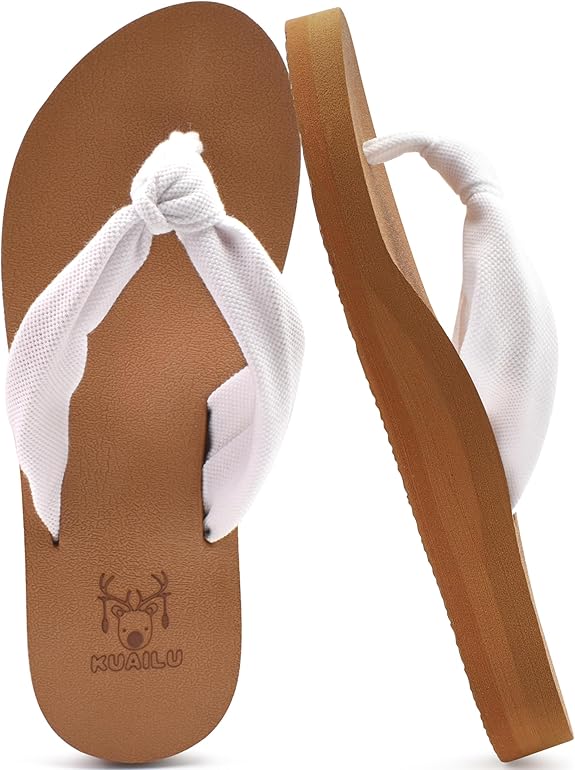
KuaiLu
Flip Flops with Arch Support
Cushioned, lightweight sandals with supportive arch design—a practical choice for beach trips, errands, and long summer walks.
Shop the sandals
baleaf
Athletic One-Piece Swimsuit
A functional one-piece with adjustable straps and moderate coverage, designed for swimming, training, surfing, and active beach days.
Shop the swimsuit
Astylish
Linen-Cotton Button-Down Shirt
A relaxed cotton-linen shirt with a collared V-neck and roll-up sleeves—easy to style over swimwear or with denim and shorts.
Shop the shirt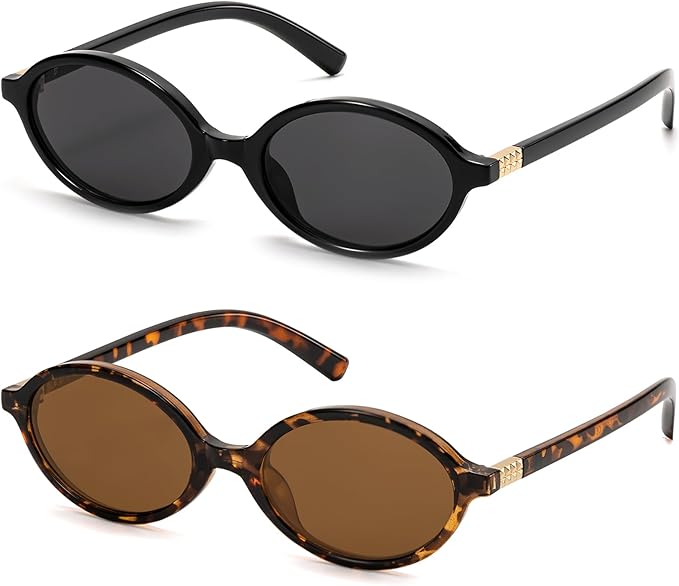
ViewJoy
Retro Oval Sunglasses
Small oval sunglasses with a 90s-inspired silhouette and UV400 lens protection—a quick way to add a vintage edge to everyday looks.
Shop the sunglasses
Affiliate disclosure: This section contains affiliate links. If you make a purchase through these links, I may earn a commission at no additional cost to you. Product selection, pricing, availability, and delivery terms may change—please review the current details on Amazon before purchasing.
As an Amazon Associate I earn from qualifying purchases.