Styling a Turtleneck: A 5-Formula Capsule
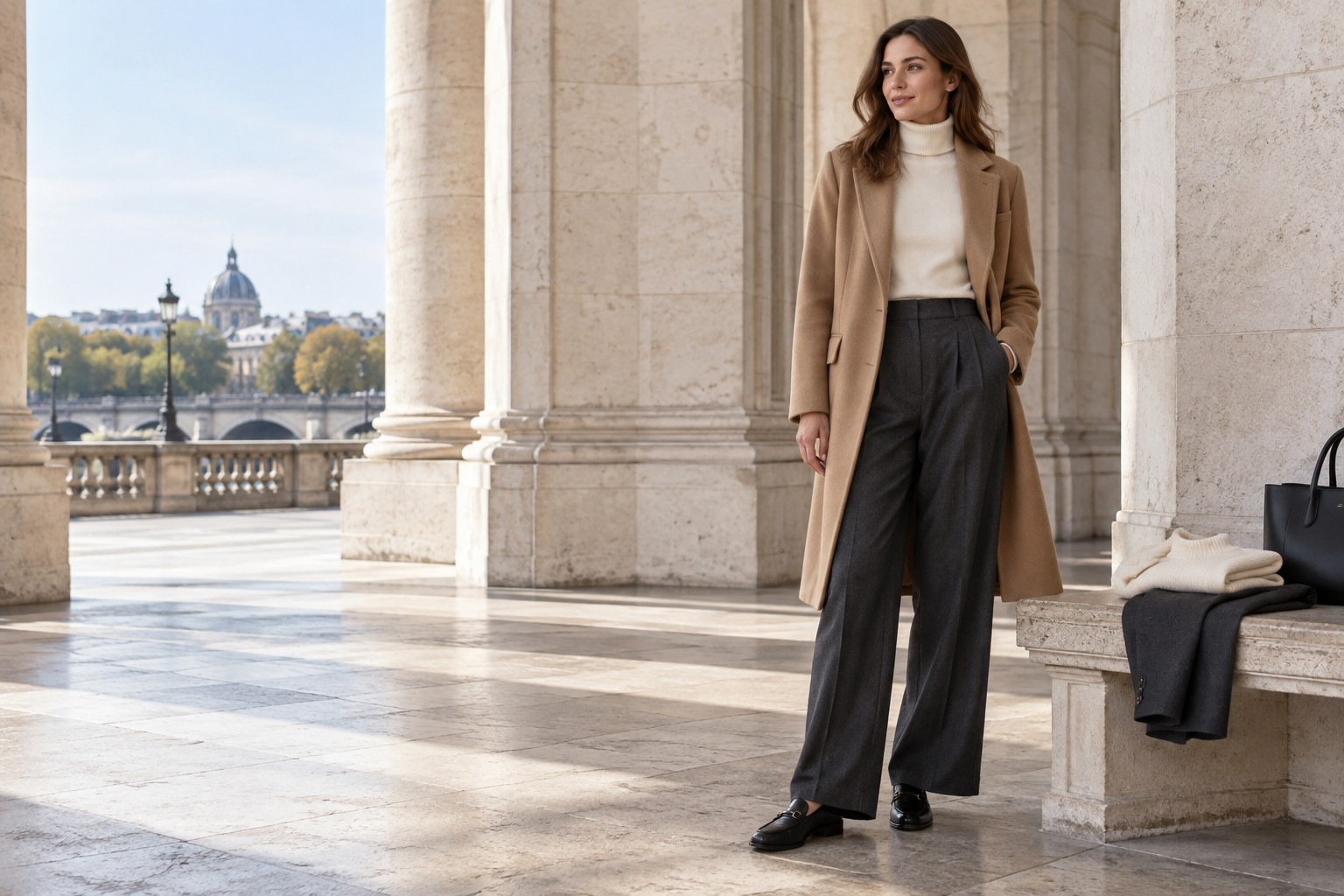
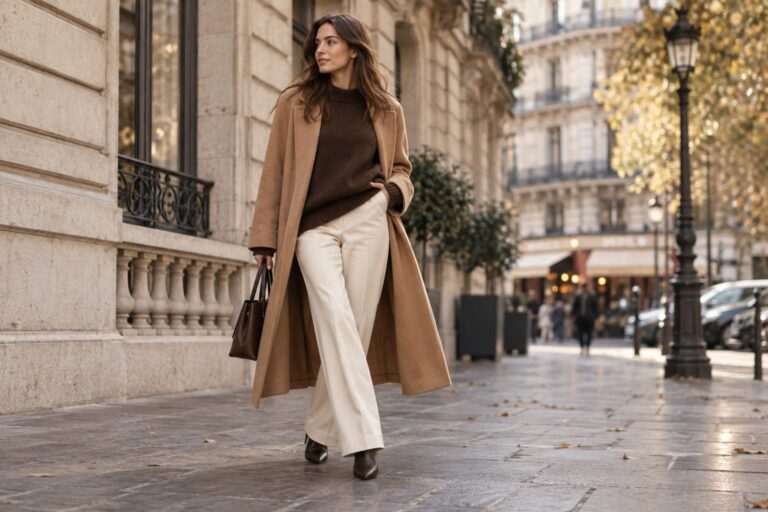
Styling a turtleneck gets much easier when you stop treating it as one specific look. A fine black knit can disappear under a blazer, become the cleanest part of a denim outfit, or create a sharp line beneath a dress. A chunky version asks for a different supporting cast. The useful question is not simply, “What goes with a turtleneck?” It is, “What job should this turtleneck do today?”
This capsule guide gives you a repeatable way to answer that question. You will choose the knit weight, decide where volume belongs, and then build five outfits from familiar wardrobe pieces. The goal is variety without a crowded closet: one turtleneck can act as a base layer, a color accent, a polished top, a cozy focal point, or a bridge between seasonal items.
Build the turtleneck capsule around three decisions
Before you pull out trousers, skirts, or accessories, identify the three variables that control the entire outfit: knit weight, silhouette, and color. This small pause prevents the most common styling mistake, which is adding layers before deciding whether the turtleneck is supposed to create a smooth foundation or visible volume.
The Fashion-Note Edit
Five effortless pieces to refresh your everyday wardrobe
A polished, practical edit for workdays, weekends, and everything in between.

The Drop
Women’s Blake Long Blazer
A longline, tailored blazer with a notched collar and a single-button closure—an easy layer for denim, dresses, or office-ready looks.
Shop the blazer
Amazon Essentials
Women’s Lightweight Crewneck
A soft, lightweight sweater with a clean crew neckline—the kind of reliable layer that works from cool mornings to air-conditioned spaces.
Shop the sweater
Amazon Essentials
Women’s Loafer Flat
A classic flat loafer that gives casual outfits a more polished finish and pairs naturally with tailored pants, skirts, and straight-leg jeans.
Shop the loafers
Levi’s
Women’s 501 90s Jeans
A relaxed, vintage-inspired take on the iconic 501 silhouette—made for an easy, lived-in look without the thrift-store search.
Shop the jeans
Colorfulkoala
High-Waisted 7/8 Leggings with Pockets
Soft, four-way-stretch leggings with side pockets and a high-rise waistband—designed for movement, errands, and off-duty comfort.
Shop the leggings
Affiliate disclosure: This section contains affiliate links. If you make a purchase through these links, I may earn a commission at no additional cost to you. Product selection, pricing, availability, and delivery terms may change—please review the current details on Amazon before purchasing.
As an Amazon Associate I earn from qualifying purchases.
1. Start with knit weight
A fine-gauge turtleneck is the most flexible capsule piece. It slides under a button-down shirt, blazer, slip dress, vest, or tailored coat without fighting the layer above it. It also tucks cleanly into high-rise denim and skirts. If you want one turtleneck that can move between work, weekends, and evening plans, begin with a smooth, close-fitting knit.
Your wedding style is personal.
Your plan should feel that way, too.
Zarellea keeps your guest list, budget, vendors, and every next step beautifully organized — so you can focus on the moments that feel like you.
A medium knit has enough presence to wear alone but still works under a roomy jacket. It is a good middle ground for straight-leg jeans, wide-leg trousers, and lighter outerwear. A chunky turtleneck is different. It is usually the main event, so it needs breathing room around the sleeves, shoulders, and hem. Use it with simple bottoms, a long skirt, or slim pants rather than stacking it under several structured layers.
2. Decide whether the shape is the base or the focal point
A fitted turtleneck creates a long, uninterrupted line from neck to waist. That makes it excellent beneath a jacket or an open shirt, especially when you want the outer layer to keep its shape. An oversized turtleneck creates softness and movement. Balance it with a clean lower half, a defined ankle, or a visible waistline so the outfit has an intentional frame.
Think in terms of visual jobs. The base layer should clarify the neckline and support the outfit. The focal layer should provide texture, color, or volume. When both pieces compete for the same job, the look can feel heavy even if the clothes are comfortable. A fine black turtleneck under a patterned blazer has a clear hierarchy. A thick turtleneck under a thick cardigan under a thick coat does not.
3. Choose color with the next layer in mind
Black, cream, gray, and camel are easy capsule colors because they connect with denim, leather, wool, and tailoring. A tonal combination can look especially calm when the textures differ: cream ribbing with a smooth ivory skirt, or gray knitwear with charcoal trousers. Contrast works too. A bright turtleneck under a dark blazer can give a familiar outfit a single point of energy without turning the whole look into color blocking.
- Choose a neutral turtleneck when the jacket, skirt, or trousers already have a strong pattern.
- Choose a saturated color when the supporting pieces are simple and quiet.
- Use a similar color family when you want the silhouette to look longer.
- Use a lighter neckline under a dark layer when you want the face area to feel more open.
For a useful visual reference, Vogue’s turtleneck guide shows how the same category can move from simple gray and cashmere to stripes and a bright pink accent. The lesson is not to copy a particular item. It is to notice how color and surface change the role of the neckline.
Use proportion to make every layer earn its place
Once you know the turtleneck’s job, build the rest of the outfit around proportion. The neckline is already visually concentrated, so the clothing below it should either support a clean vertical line or introduce one deliberate counterpoint. You do not need a complicated styling trick. You need enough space for each layer to be seen.
Keep fine knits close to the body under structure
When a turtleneck goes beneath a blazer, vest, jacket, or button-down, check the shoulder and underarm area first. The base layer should lie flat rather than bunching at the sleeve head. A smooth ribbed knit usually works better than a fuzzy or heavily cabled sweater. If the outer layer is tailored, let its lapel and shoulder line stay visible. The contrast between a close base and a structured top layer creates polish with very little effort.
Give chunky knits a clean lower half
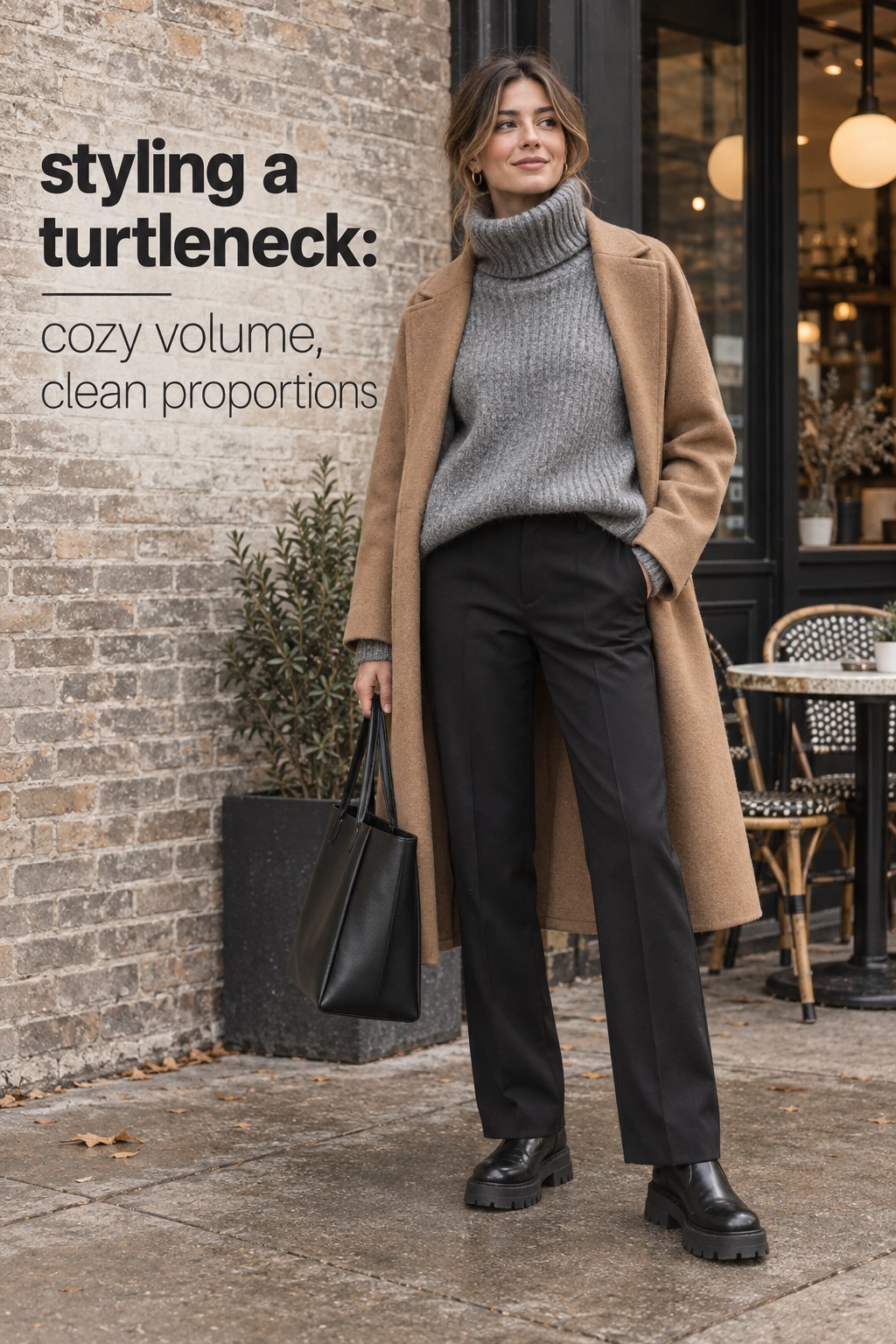
A chunky turtleneck looks balanced with straight jeans, slim trousers, a column skirt, or leggings with a substantial boot. This does not mean the bottom must be tight. It means the eye should be able to understand where the sweater ends and the lower silhouette begins. A long coat can help by creating an outer vertical line, while a partial tuck or a belt can keep the middle from becoming shapeless.
Use hem length as a styling tool
A cropped turtleneck works naturally with high-rise bottoms because the waistline becomes part of the composition. A longer fitted version can disappear into a skirt or trousers for a streamlined look. A longer, relaxed sweater benefits from a visible side slit, a front tuck, or a shorter jacket above it. These small changes keep the outfit from looking like one uninterrupted block of fabric.
Neckline contrast is another useful tool. A fine turtleneck beneath an open white shirt, a V-neck sweater, or a low-cut dress creates two clear lines instead of one crowded area. The turtleneck can fill the space without requiring a necklace or scarf. As AARP’s styling overview notes, a simple black version can work as a neckline filler under jackets and open shirts, or as a way to bring a summer skirt into a colder outfit.
Five turtleneck outfit systems for real wardrobe moments
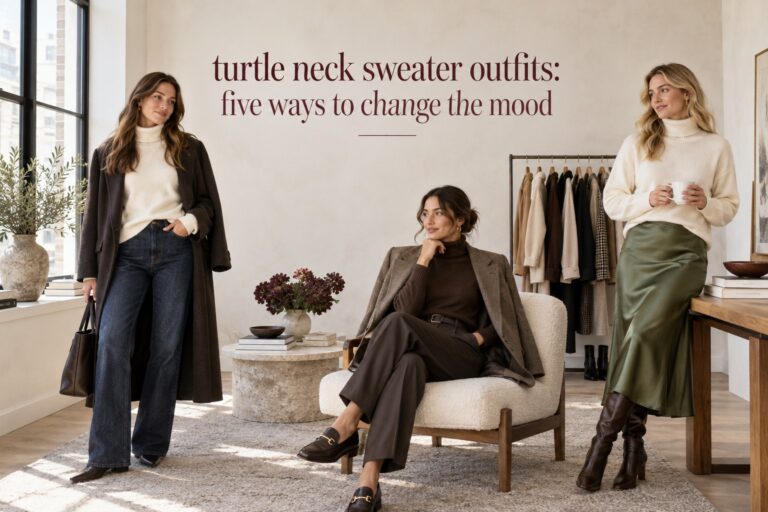
These formulas are designed as systems, not rigid uniforms. Start with the stated base and adjust color, shoe shape, and coat length to suit your wardrobe. Each formula gives the turtleneck a different job, so the outfits will not feel like five versions of the same black sweater and jeans combination.
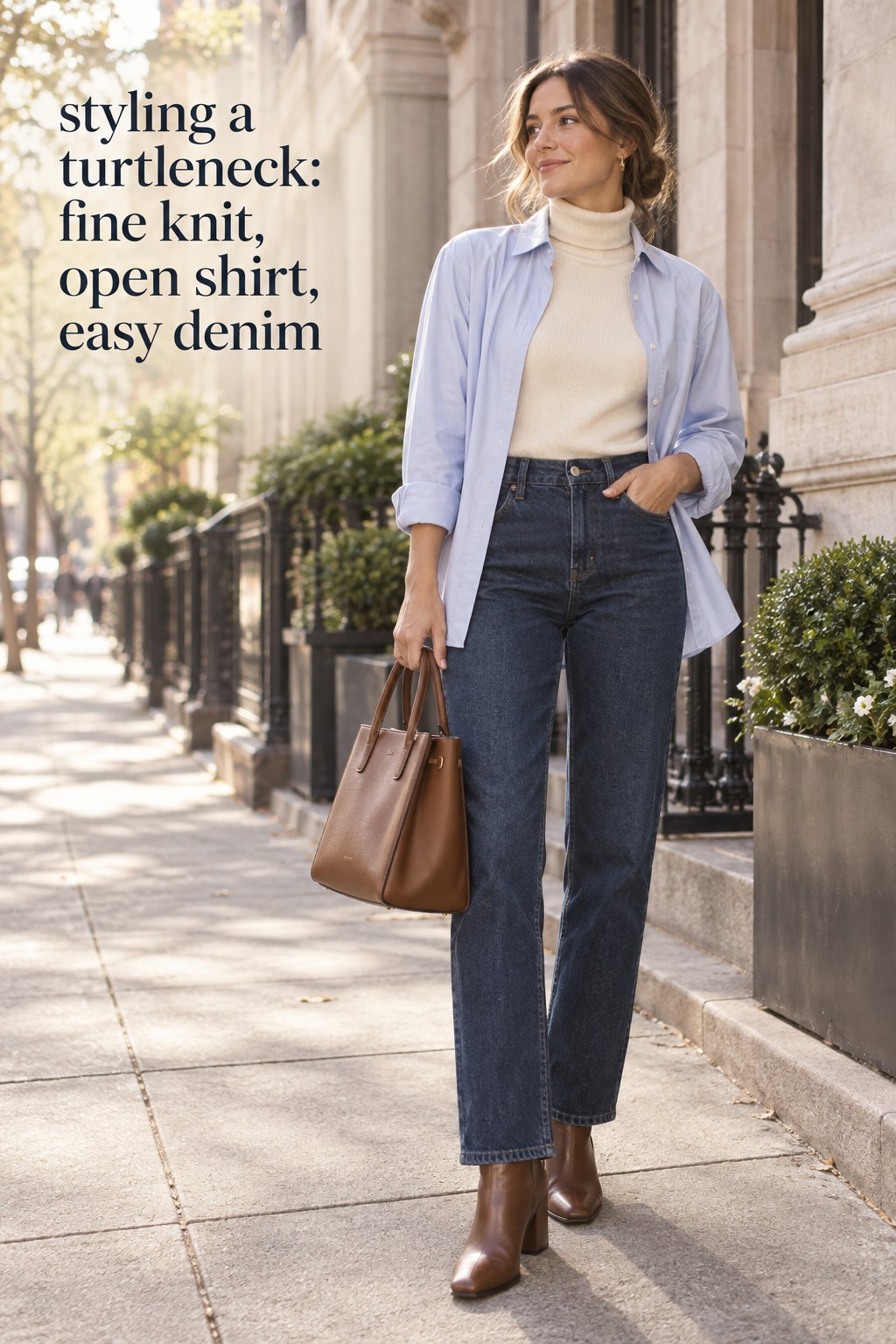
Formula one: fine turtleneck, open shirt, straight denim
Use a fitted fine-gauge turtleneck beneath an unbuttoned cotton shirt, then add straight-leg jeans and ankle boots or loafers. The shirt supplies a second neckline and a little movement, while the turtleneck keeps the outfit visually anchored. This is a strong everyday formula because every piece remains useful on its own.
- Keep the turtleneck smooth at the collar and wrists.
- Choose a shirt with enough room to sit over the knit without pulling at the buttons.
- Let one shirt cuff show if the sleeve lengths allow it.
- Add a belt when the outfit needs a clearer waistline.
For a softer interpretation, use a cream turtleneck, pale blue shirt, medium-wash denim, and tan shoes. For a sharper city version, use black, white, dark denim, and a structured bag. The formula works because the layers are visible but not bulky.
Formula two: turtleneck, tailored trousers, and a short jacket
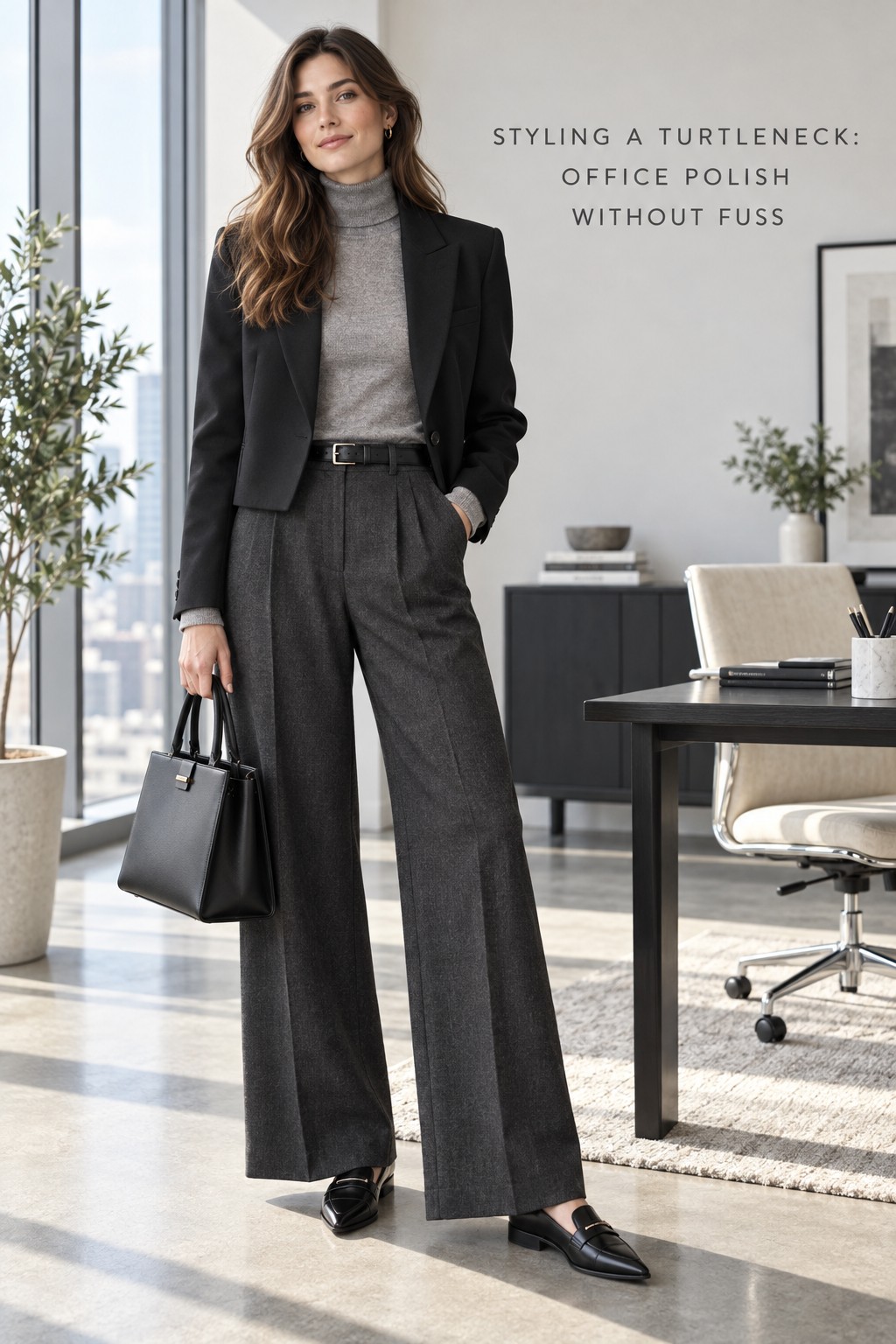
Choose a fine or medium turtleneck, tuck it into high-rise tailored trousers, and finish with a cropped jacket, short blazer, or neat cardigan. The tucked neckline creates a clean foundation while the shorter top layer points attention toward the waist. Loafers, pointed flats, or a low block heel keep the outfit polished without making it feel formal.
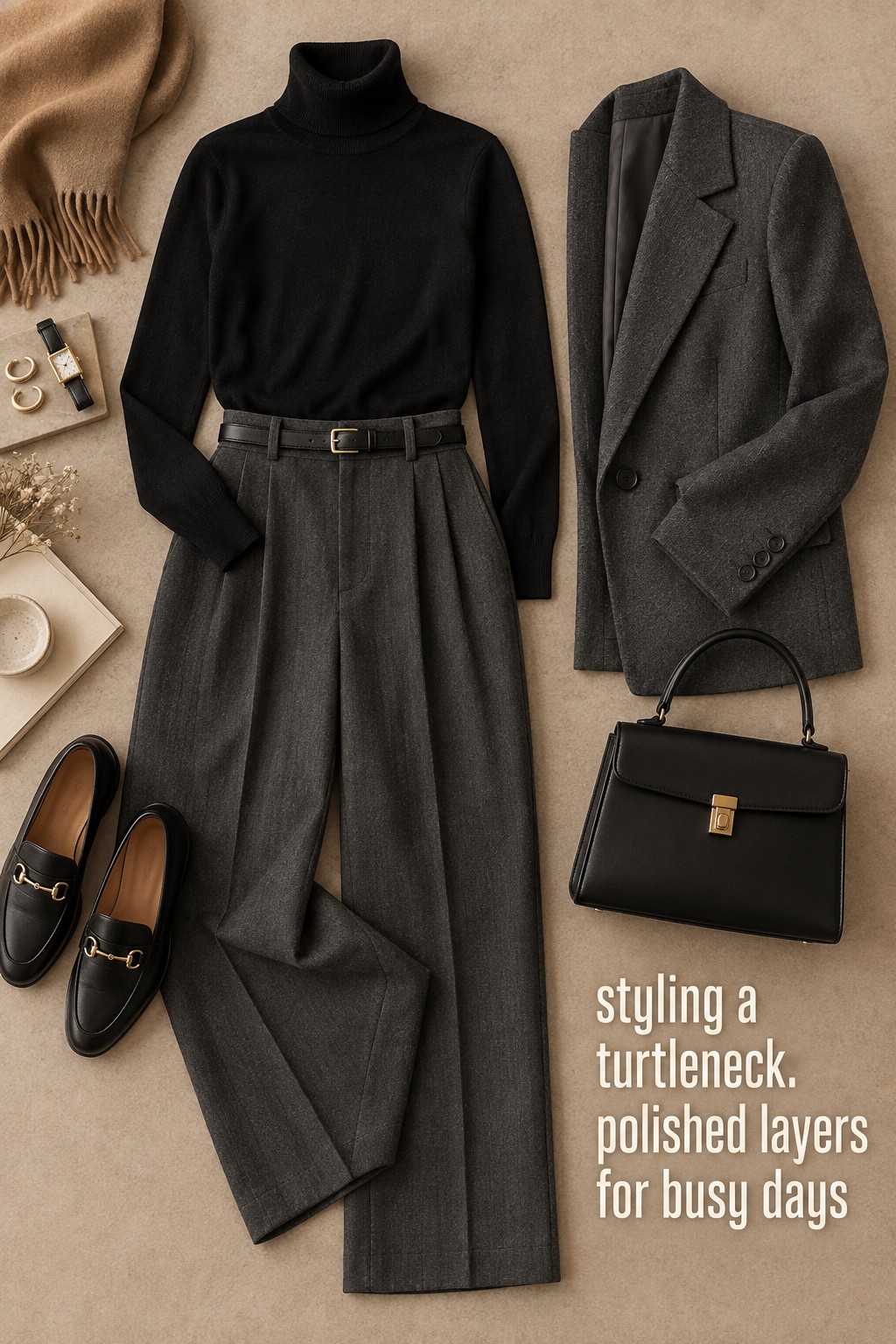
This is the capsule answer when you need to look organized quickly. Use a monochrome base, such as a gray turtleneck with charcoal trousers, then add texture through a leather belt or a jacket with a subtle pattern. If the trousers are wide, keep the turtleneck relatively close to the body. If the trousers are slim, a slightly relaxed knit can add ease.
Formula three: fine turtleneck, slip skirt, and long coat
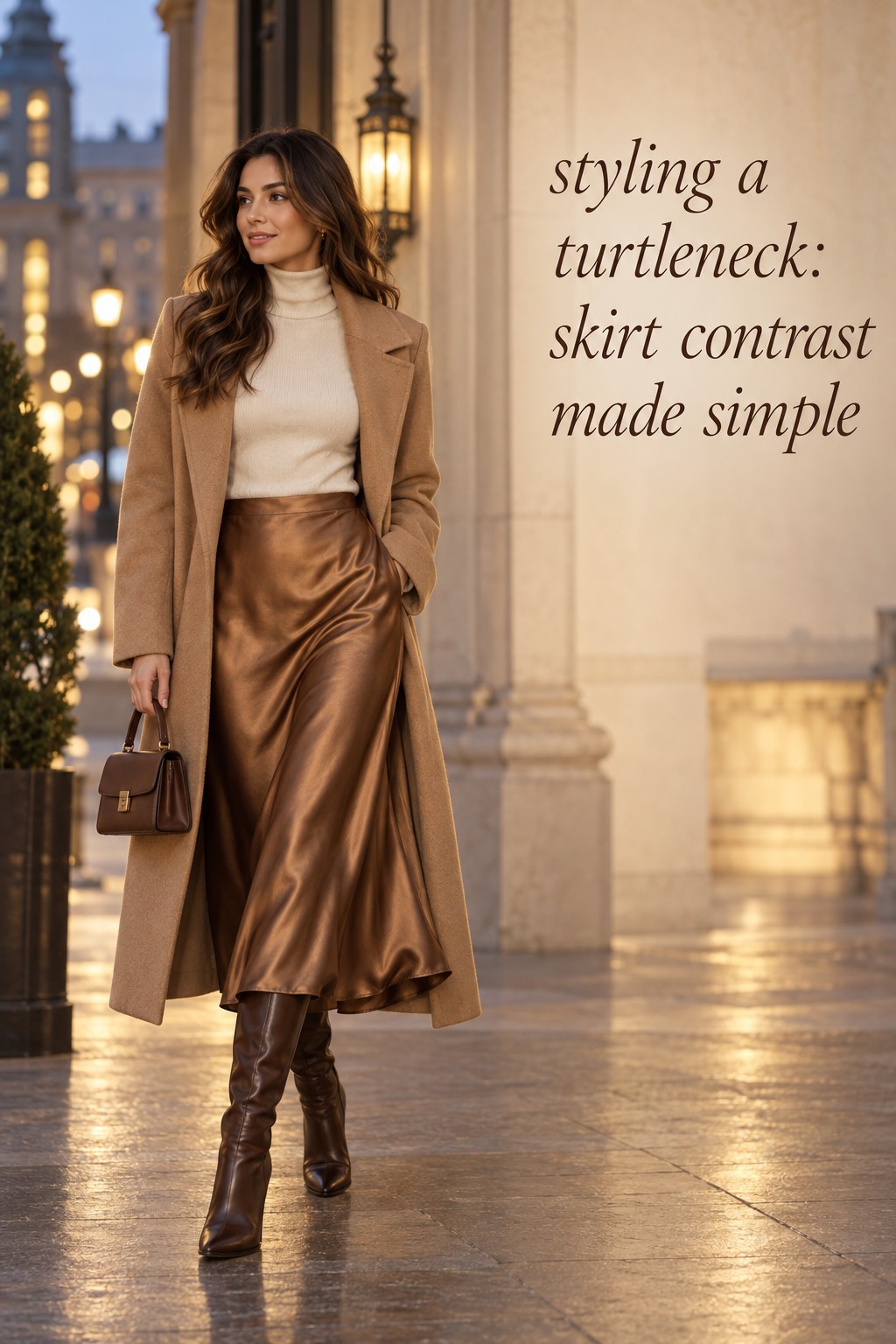
A fitted turtleneck is an easy way to make a satin or slip skirt feel more grounded. Tuck the top in, add a long coat, and repeat one color in the shoes or bag. The contrast between matte knit and fluid skirt creates enough interest without requiring a statement accessory. Knee-high boots make the outfit feel seasonally connected, while sleek flats keep it lighter.
Use this formula when you want softness with structure. A black turtleneck and bronze skirt feels evening-ready. A cream turtleneck with a denim-colored skirt and a camel coat reads more relaxed. If the skirt is patterned, keep the turtleneck plain and let the coat echo one quiet shade from the print.
Formula four: chunky turtleneck, simple bottom, visible boot
Make a chunky knit the focal point by pairing it with straight or gently tapered bottoms and a boot that can be seen. The boot matters because it gives the relaxed sweater a clear endpoint. Try an oversized cream turtleneck with dark straight jeans and a brown leather boot, or a textured gray knit with black trousers and a lug-soled boot.
Keep accessories edited. A structured bag, small hoop, or watch is often enough. If you add a scarf, choose a lighter fabric or wear it over the coat rather than wedging it under the thick collar. The simplest version usually looks the most intentional because the knit already supplies texture.
Formula five: colorful turtleneck, quiet base, strong outer layer
Use a bright or patterned turtleneck under a neutral jacket, trench, or coat. Keep the bottoms uncomplicated: dark denim, black trousers, or a clean midi skirt. The color sits near the face and becomes the outfit’s point of view, while the outer layer keeps the result wearable. This is also a practical way to test a bold color without buying several new pieces.
- Try red under charcoal, cobalt under camel, or soft pink under chocolate brown.
- Repeat the accent color only once, in a small accessory or shoe detail.
- Choose a simple neckline above it so the color remains readable.
- Keep prints to one main area unless the colors are closely related.
If a bright top feels too loud, use a partially open coat or jacket so the color appears as a narrow vertical panel. If it feels too quiet, add a contrasting bag or a more graphic shoe. The point is to make the turtleneck an intentional accent rather than an accidental flash of color.
Repair the outfit before buying anything new
Most turtleneck outfits fail in small ways. The fix is usually a change in order, proportion, or texture rather than another purchase. Use this five-minute review before deciding that the garment does not work.
When the neckline feels crowded
Remove the scarf, open the shirt, or choose a jacket with a cleaner lapel. If the turtleneck is thick, let it stand alone beneath the coat. If it is thin, create a deliberate V with the layer above it. The eye needs one clear neckline story.
When the outfit looks bulky
Check the layers in order. Swap a chunky base for a fine knit, remove the cardigan, or choose a roomier coat rather than tightening every piece. Smooth the shoulder and underarm area, then look at the hem. A small front tuck can restore shape without making the entire sweater fitted.
When the outfit looks flat
Add texture before adding color. Try ribbing with denim, a smooth knit with leather, or a matte sweater with a subtle satin skirt. Then add one finish, such as a belt, watch, or structured bag. Texture creates depth while keeping the color palette calm.
When the waist disappears
Use a full tuck with a fine knit, a partial tuck with a medium knit, or a belt over a longer relaxed shape. You can also create definition by choosing a shorter jacket over a longer top. The best option depends on comfort, so do not force a tuck if it creates bunching.
When the shoes send the wrong message
Change the shoe before changing the clothes. Loafers make a knit and trouser combination feel more polished. Sneakers make a coat and denim formula feel relaxed. A pointed boot sharpens a skirt, while a lug boot gives a chunky sweater more weight. The shoe should echo the outfit’s level of structure.
Sources and methodology
This guide was developed from a Google US Top 10 review of current turtleneck styling pages, including Vogue, Harper’s Bazaar, AARP, Wantable, PORTER, Paul James Knitwear, Who What Wear, and SheWhatWear. The sources were used to identify recurring outfit structures and reader friction points. The capsule sequence, five formulas, and repair order are editorial synthesis for Fashion Note, not claims of personal testing or universal rules.
FAQ
What is the easiest way to start styling a turtleneck?
Start with a fine-gauge neutral turtleneck, straight-leg jeans, and a structured jacket. This combination lets the neckline provide polish while the denim keeps the outfit relaxed. Add loafers, ankle boots, or clean sneakers depending on the setting.
Should a turtleneck be tight or loose?
Choose a fitted turtleneck when it will sit under another layer. Choose a looser or chunkier shape when it will be the focal point. The important rule is to create space around the layer that has the most volume.
Can you wear a turtleneck under a button-down shirt?
Yes. A thin, smooth turtleneck works best under an open or partially buttoned shirt. Leave enough room through the chest and arms so the shirt does not pull, and let the contrasting neckline become the intentional detail.
What bottoms look best with a chunky turtleneck?
Straight jeans, slim or gently tapered trousers, column skirts, and simple leggings can all work. Balance the sweater by keeping the lower silhouette easy to read. A visible boot or a defined waist can help anchor a relaxed top.
How do you style a turtleneck with a skirt?
Tuck a fine turtleneck into a midi, slip, or pleated skirt and add a coat or jacket with a clear shoulder line. Use boots for a grounded cold-weather look or sleek flats for a lighter finish. Let the knit and skirt contrast in texture.
What color turtleneck is most versatile?
Black, cream, gray, and camel are reliable capsule options because they connect with denim, tailoring, leather, and coats. Choose the neutral that complements the layers you already own. A bright color can be just as useful when the rest of your wardrobe is simple.
How can you make a turtleneck outfit look more polished?
Keep the neckline smooth, define one proportion, and add one structured finish. A belt, tailored jacket, polished boot, or structured bag can provide enough clarity. Avoid adding several accessories at once because the high neckline already concentrates attention near the face.
Finish the look
The little extras that make a summer outfit feel complete
From beach days to city weekends, these easy pieces bring comfort, texture, and a polished finishing touch.

FENBEN
Straw Hobo Crossbody Bag
A handwoven straw bag with both short and crossbody straps—an effortless finishing touch for vacation looks and warm-weather outfits.
Shop the bag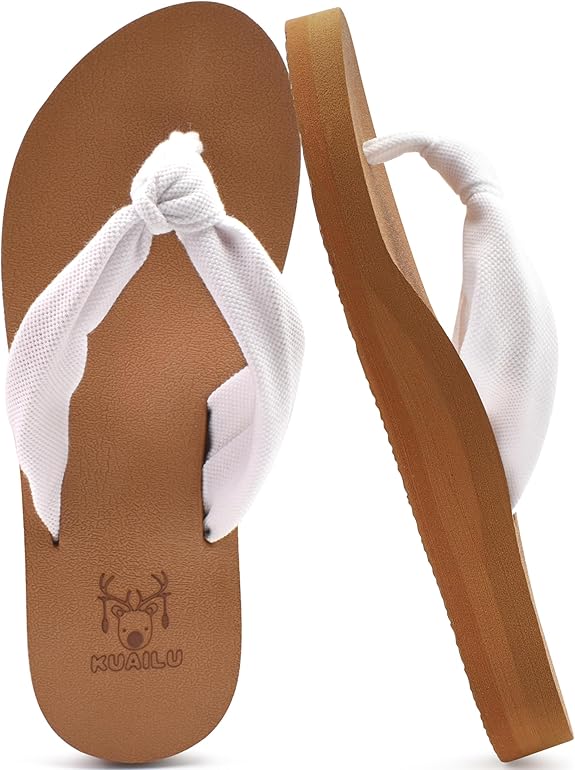
KuaiLu
Flip Flops with Arch Support
Cushioned, lightweight sandals with supportive arch design—a practical choice for beach trips, errands, and long summer walks.
Shop the sandals
baleaf
Athletic One-Piece Swimsuit
A functional one-piece with adjustable straps and moderate coverage, designed for swimming, training, surfing, and active beach days.
Shop the swimsuit
Astylish
Linen-Cotton Button-Down Shirt
A relaxed cotton-linen shirt with a collared V-neck and roll-up sleeves—easy to style over swimwear or with denim and shorts.
Shop the shirt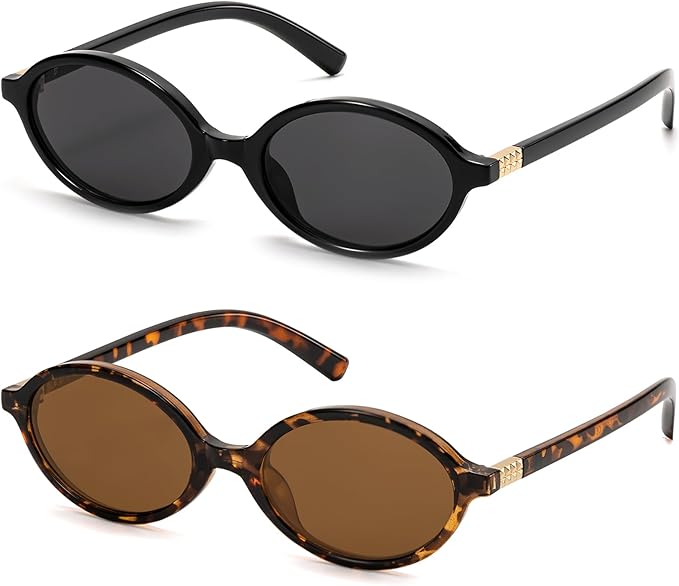
ViewJoy
Retro Oval Sunglasses
Small oval sunglasses with a 90s-inspired silhouette and UV400 lens protection—a quick way to add a vintage edge to everyday looks.
Shop the sunglasses
Affiliate disclosure: This section contains affiliate links. If you make a purchase through these links, I may earn a commission at no additional cost to you. Product selection, pricing, availability, and delivery terms may change—please review the current details on Amazon before purchasing.
As an Amazon Associate I earn from qualifying purchases.