Sweater Outfits Men: Build a Better Capsule Wardrobe
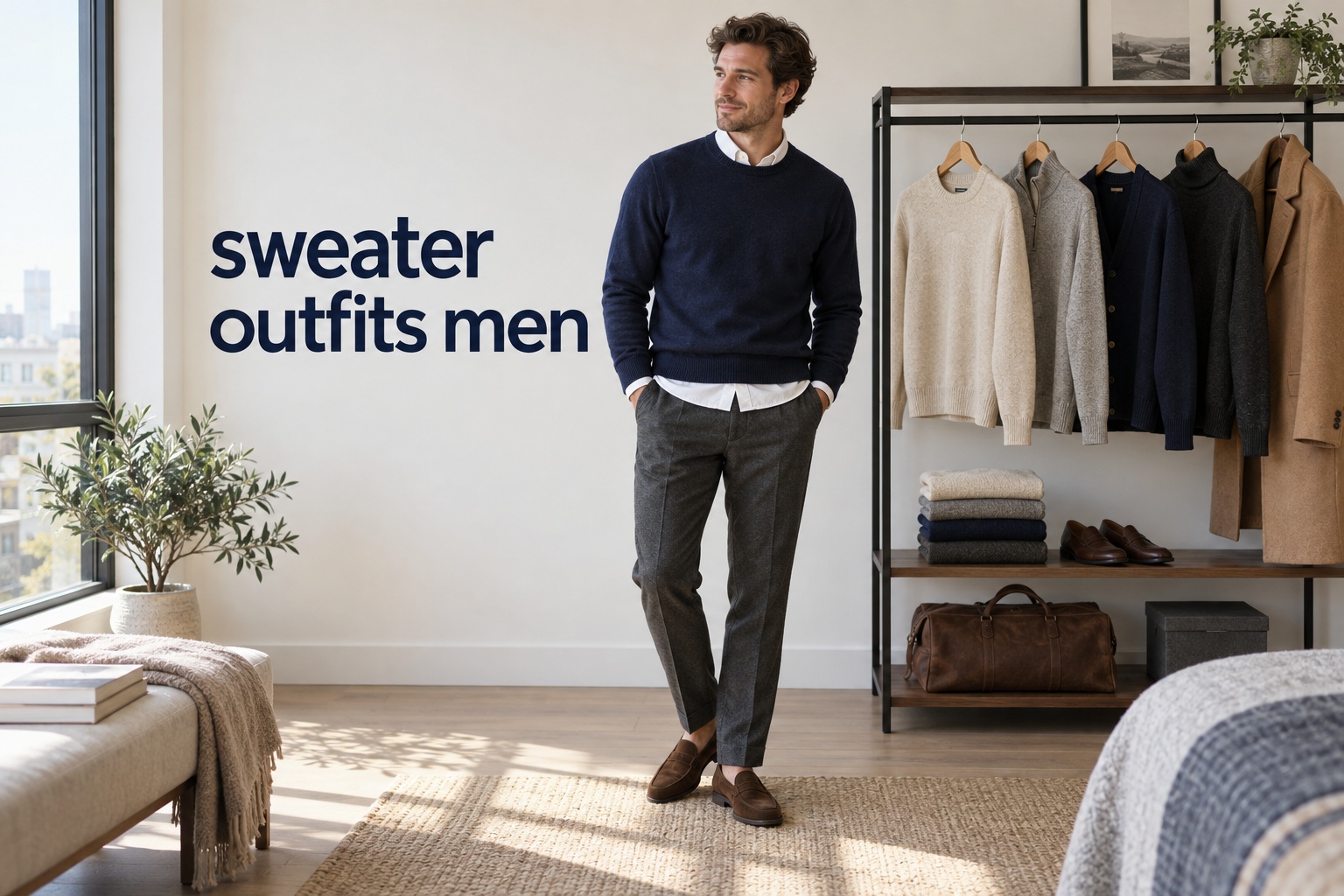
If you own a few sweaters but still stand in front of the closet wondering what to wear, the problem is probably not a lack of clothes. It is a lack of connections between them. The right sweater outfit gives each piece a job: a crewneck makes denim feel finished, a fine V-neck sharpens a collared shirt, and a cardigan can move between a relaxed office and dinner without looking like a costume.
This guide treats sweater outfits men can actually repeat as a small capsule system. You will see which sweater types deserve space, how to choose bottoms and shoes, and how to adjust the same formula for casual, professional, evening, and colder days. The goal is not to copy one photograph. It is to understand the few decisions that make almost any knit look deliberate.
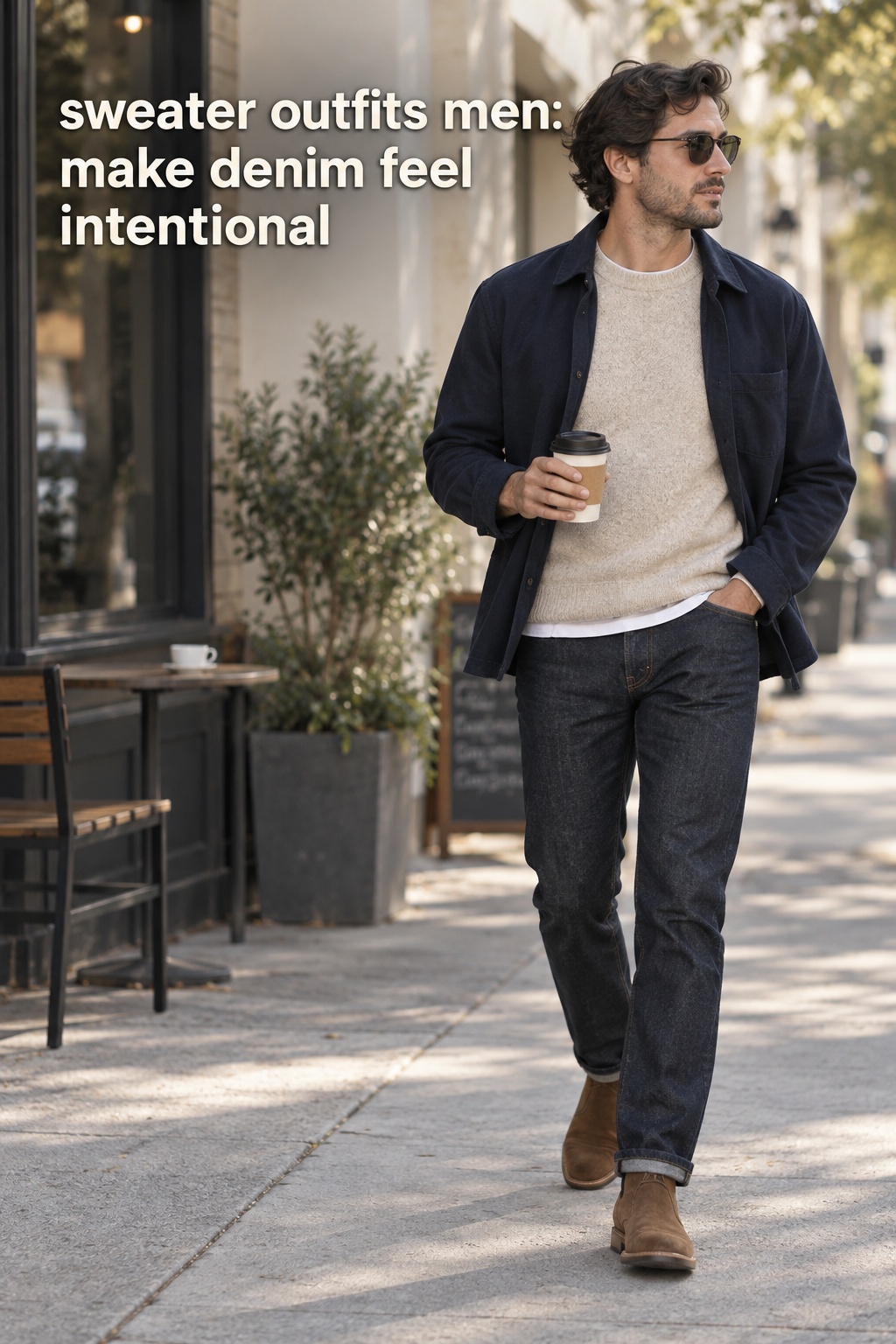
Build the men’s sweater capsule around five outfit jobs
Start by assigning each sweater a role instead of buying colors at random. A useful men’s capsule does not need every neckline. It needs coverage for the moments when you dress. The five jobs below create a strong starting point and prevent a closet full of near-duplicates.
The Fashion-Note Edit
Five effortless pieces to refresh your everyday wardrobe
A polished, practical edit for workdays, weekends, and everything in between.

The Drop
Women’s Blake Long Blazer
A longline, tailored blazer with a notched collar and a single-button closure—an easy layer for denim, dresses, or office-ready looks.
Shop the blazer
Amazon Essentials
Women’s Lightweight Crewneck
A soft, lightweight sweater with a clean crew neckline—the kind of reliable layer that works from cool mornings to air-conditioned spaces.
Shop the sweater
Amazon Essentials
Women’s Loafer Flat
A classic flat loafer that gives casual outfits a more polished finish and pairs naturally with tailored pants, skirts, and straight-leg jeans.
Shop the loafers
Levi’s
Women’s 501 90s Jeans
A relaxed, vintage-inspired take on the iconic 501 silhouette—made for an easy, lived-in look without the thrift-store search.
Shop the jeans
Colorfulkoala
High-Waisted 7/8 Leggings with Pockets
Soft, four-way-stretch leggings with side pockets and a high-rise waistband—designed for movement, errands, and off-duty comfort.
Shop the leggings
Affiliate disclosure: This section contains affiliate links. If you make a purchase through these links, I may earn a commission at no additional cost to you. Product selection, pricing, availability, and delivery terms may change—please review the current details on Amazon before purchasing.
As an Amazon Associate I earn from qualifying purchases.
- The everyday crewneck: Choose a medium-weight gray, navy, oatmeal, or forest green knit. It should work with jeans, chinos, sneakers, and a casual jacket.
- The collared-layer sweater: A fine-gauge V-neck, crewneck, or quarter-zip in navy, charcoal, or camel gives you an easy route over an Oxford or other button-down.
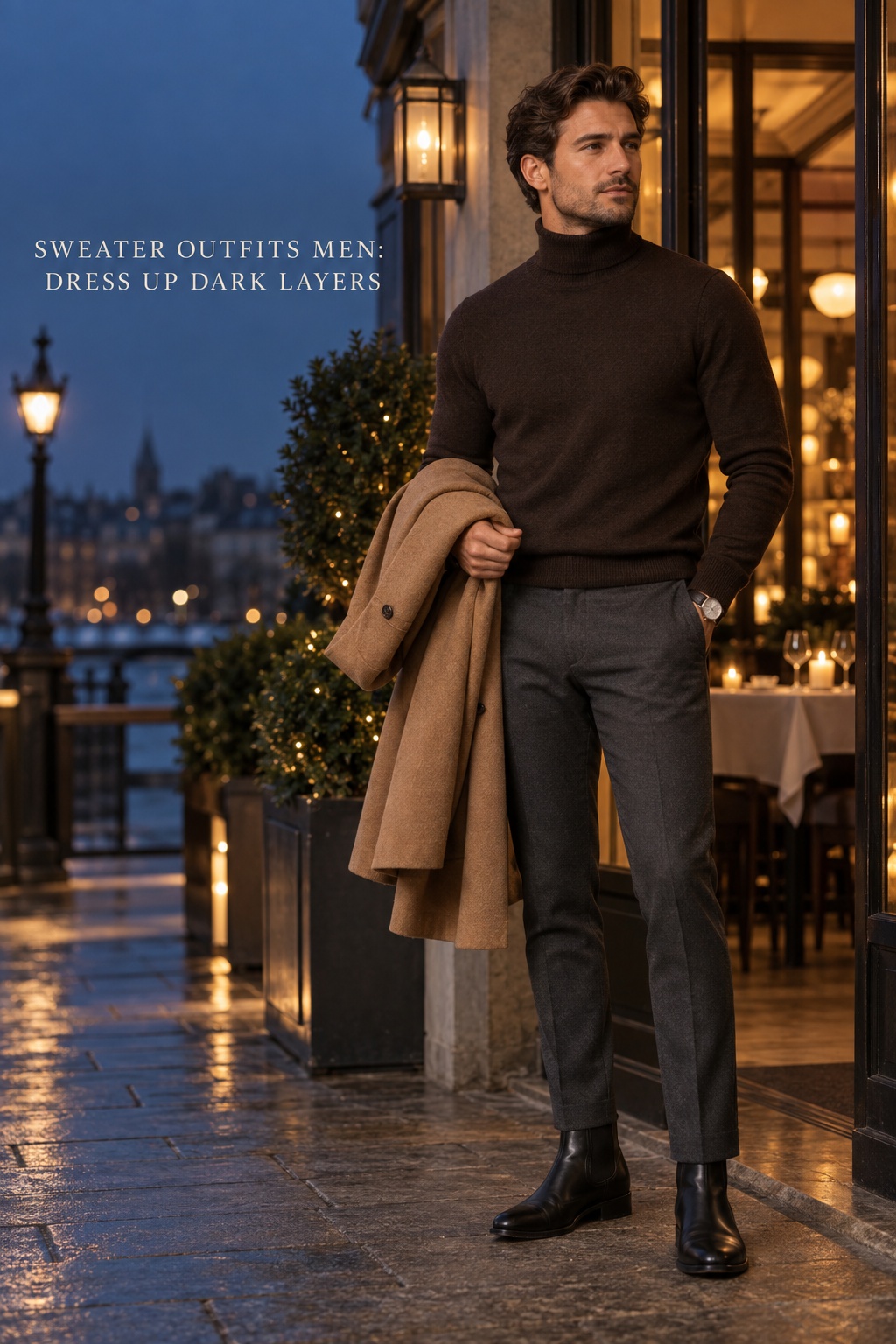
- The polished turtleneck: A slim but comfortable black, espresso, or dark charcoal turtleneck can replace a shirt under a blazer or sit beneath a wool coat.
- The flexible cardigan: A lightweight button cardigan behaves like a soft jacket. A chunkier shawl-collar version is more casual and should have room for a tee or thin shirt underneath.
- The texture piece: A cable knit, brushed knit, stripe, or carefully chosen color provides interest. It should be the one sweater that makes simple trousers and shoes feel new.
Think of these roles as a five-piece editing exercise, not a shopping mandate. If you already own a black turtleneck and never wear it, it does not belong in your personal capsule just because it is theoretically versatile. Your best sweater wardrobe reflects your actual week. Someone who works in a relaxed studio may need more crewnecks and cardigans. Someone in a business-casual office may get more use from fine-gauge V-necks, quarter-zips, and merino layers.
Your wedding style is personal.
Your plan should feel that way, too.
Zarellea keeps your guest list, budget, vendors, and every next step beautifully organized — so you can focus on the moments that feel like you.
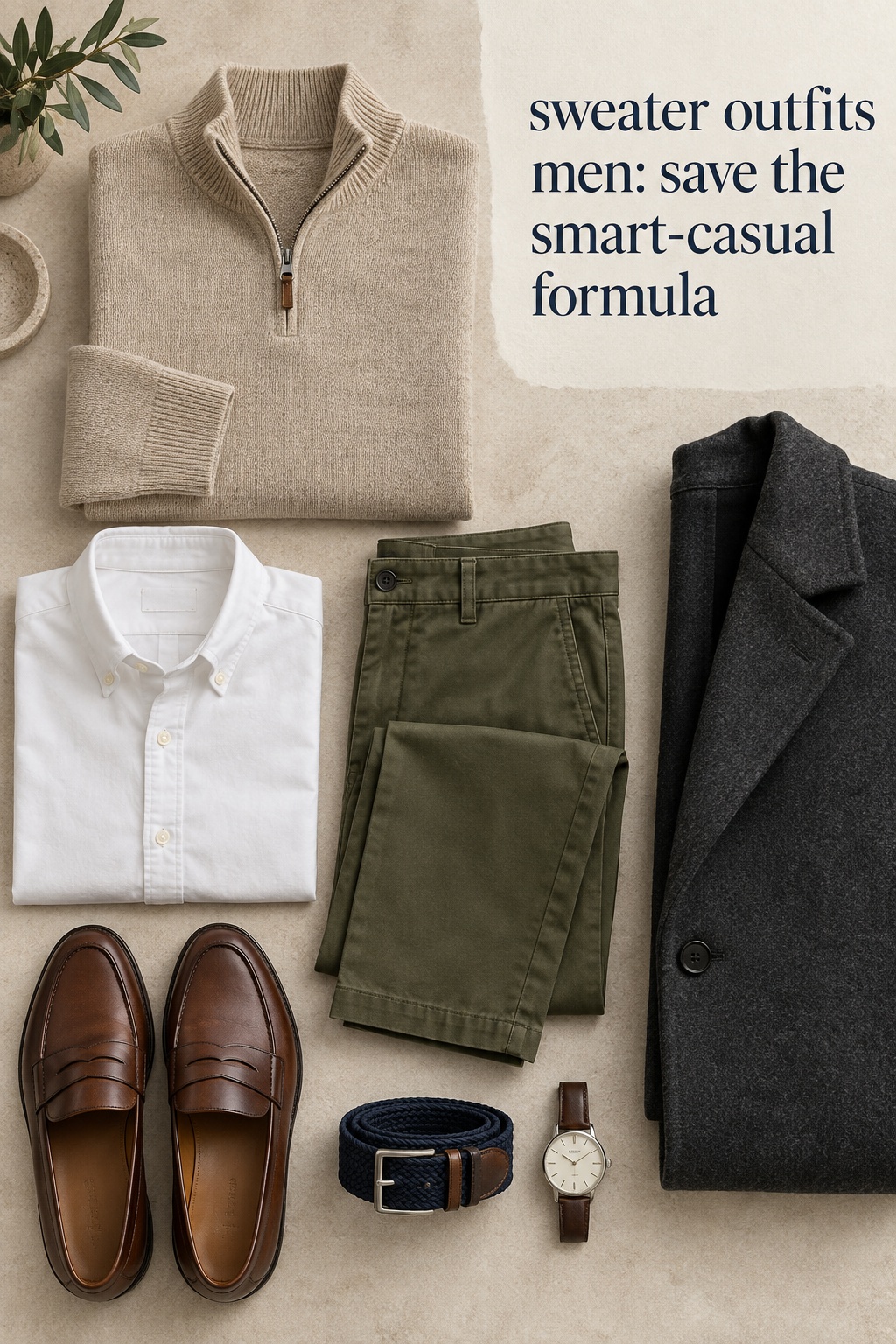
Use proportion, texture, and color to make every sweater outfit look intentional
Once the roles are clear, use three checks before you add another piece: proportion, texture, and color. These checks matter more than whether the sweater is technically on trend. They explain why a plain sweater with clean jeans can look better than a complicated outfit assembled from fashionable pieces.
Match the weight of the knit to the shape of the bottom
A fine sweater sits easily over a shirt and under a jacket, so it can work with straight or tailored trousers. A chunky sweater has more visual and physical volume. Give it room below with straight-leg denim, relaxed chinos, or sturdy cords. That does not mean every thick knit needs wide trousers, but it does mean that very slim pants can make the upper half look heavy and the lower half look fragile.
The opposite is also useful. If your trousers are broad or pleated, try a medium-weight sweater with a clean shoulder and a hem that ends around the mid-fly. The outfit will feel balanced without requiring a tight fit. Matching silhouettes is a better rule than simply labeling something slim or oversized.
Let one texture lead
Texture adds depth, but too many strong textures compete. A cable-knit sweater, flannel shirt, suede boot, and corduroy trouser can all be appealing separately. Together, they may make the outfit feel busy. Let one texture lead and keep the supporting pieces calmer. With a cable knit, use smooth denim and leather sneakers. With a suede jacket, choose a fine merino sweater. With corduroy trousers, a plain crewneck usually looks more controlled.
Use color to set the dress code
Neutral colors are useful because they connect easily. Navy, charcoal, gray, cream, camel, olive, brown, and black can form the base of several sweater outfits men can wear throughout the week. Add one accent color if you want more personality, such as burgundy, rust, cobalt, or muted lavender. The accent feels more intentional when the rest of the outfit stays quiet.
Color contrast also changes formality. A navy sweater over a crisp white shirt with gray trousers reads cleaner and more professional than the same sweater with faded jeans and bright sneakers. A camel sweater with dark denim and brown boots feels relaxed but considered. When you are unsure, keep the sweater and trousers within a close tonal family, then use the shirt, belt, or shoe to create a small point of contrast.
Five repeatable sweater outfit formulas for real days
These formulas are starting points, not uniforms. Change the colors and materials while keeping the underlying job intact. Each one uses a small number of pieces so you can get dressed quickly and still have a clear reason for every item.
1. Weekend denim: crewneck, straight jeans, and clean sneakers
Use a medium-weight crewneck with straight-leg blue, black, or ecru jeans. Add a plain tee beneath it if the neckline allows, then finish with low-profile sneakers or casual leather boots. The easy version is gray crewneck, dark denim, white sneakers, and a navy overshirt. The warmer version is an oatmeal knit, mid-wash denim, and brown suede boots.
Keep the jeans long enough to create a clean break over the shoe. If you cuff them, make the cuff narrow and purposeful rather than repeatedly rolling a thick stack. The sweater hem should cover the waistband without falling so low that it hides the shape of the jeans. This is a relaxed outfit, but tidy edges keep it from looking like sleepwear.
2. Smart casual: fine knit, Oxford shirt, chinos, and loafers
For a polished day that does not require a suit, layer a fine crewneck, V-neck, or quarter-zip over a white, blue, or subtle stripe Oxford. Pair it with chinos in tan, navy, olive, or charcoal. Brown loafers, derby shoes, or minimal leather sneakers decide how far the outfit moves toward formal.
Show only enough shirt to make the layering visible. The collar should sit flat, the cuffs should not balloon beyond the sweater sleeves, and the shirt tail should not create a long uneven fringe. If the sweater is a V-neck, the V should frame the collar rather than pull it apart. For a quarter-zip, open the zip slightly and let the shirt collar remain relaxed.
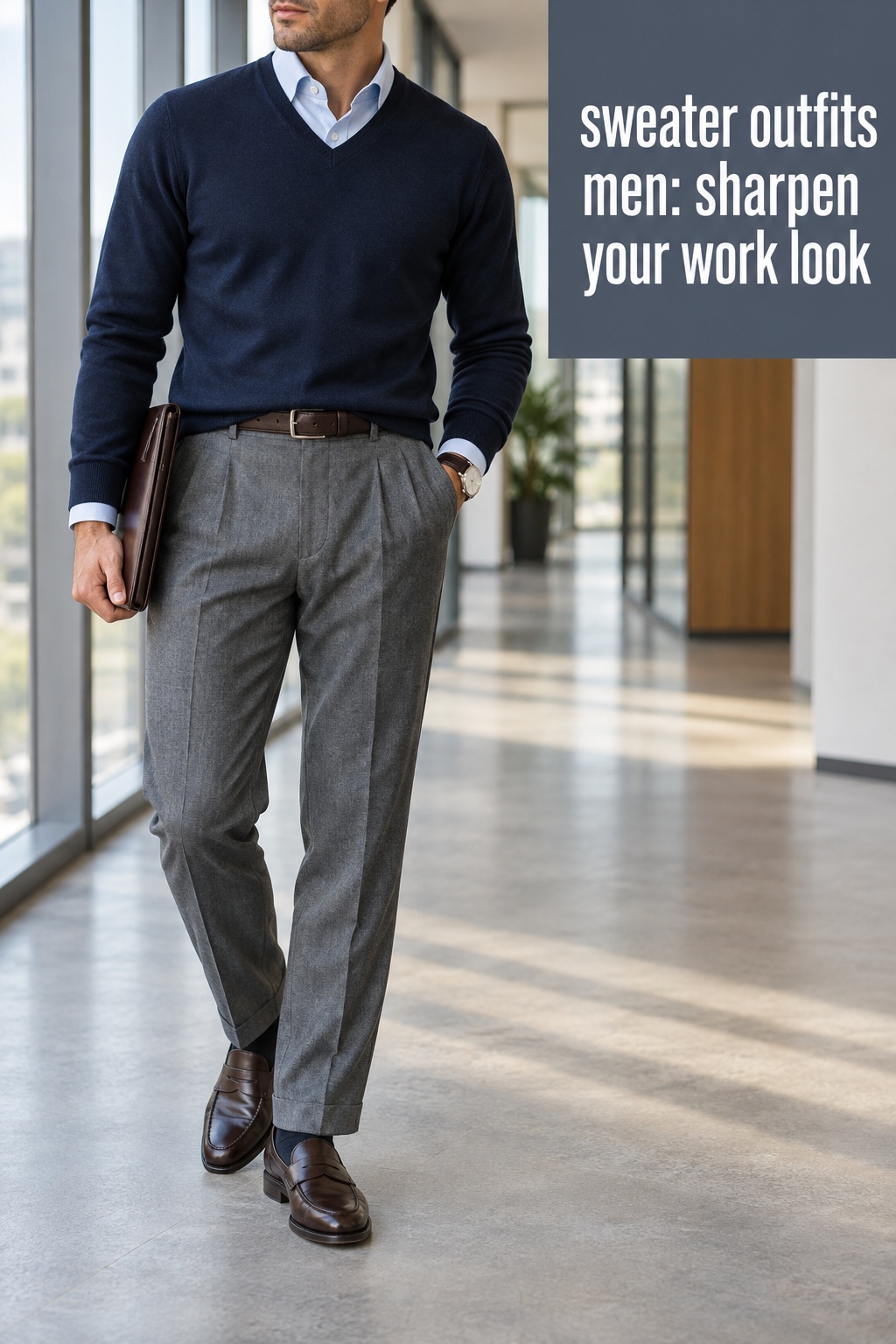
3. Office-ready: dark sweater, tailored trousers, and structured shoes
Choose a fine merino or smooth cotton sweater in navy, charcoal, black, or dark brown. Wear it with gray, navy, or taupe tailored trousers and finish with derbies, loafers, or sleek Chelsea boots. A white or pale blue shirt can sit underneath when the office expects a collar. In a more relaxed workplace, the sweater can stand alone beneath a structured jacket.
The main risk is looking too much like a school uniform. Prevent that by varying texture and proportion. Try a subtle ribbed knit with a softly structured trouser, or a clean crewneck with a pleated trouser and suede loafer. Avoid a very tight sweater over extremely narrow trousers. A little ease through the body and leg makes the outfit more current and comfortable.
4. Date night: fine turtleneck or cardigan, dark trousers, and one warm accent
A turtleneck can make an evening outfit feel refined without a tie. Wear a black or espresso knit with charcoal trousers and black boots, or try a deep green turtleneck with dark denim and brown leather shoes. If you prefer a cardigan, choose a fine button style over a plain tee or open-collar shirt, then add dark trousers and a simple watch.
Use one warm accent to keep dark colors from becoming flat. It can be a cognac belt, burgundy sock, brown shoe, or a textured coat. The accent should support the outfit rather than announce itself. A clean neckline and polished shoes do more for date-night presence than a loud graphic or an excessive stack of accessories.
5. Cold-weather layering: base shirt, sweater, outer layer, and practical boots
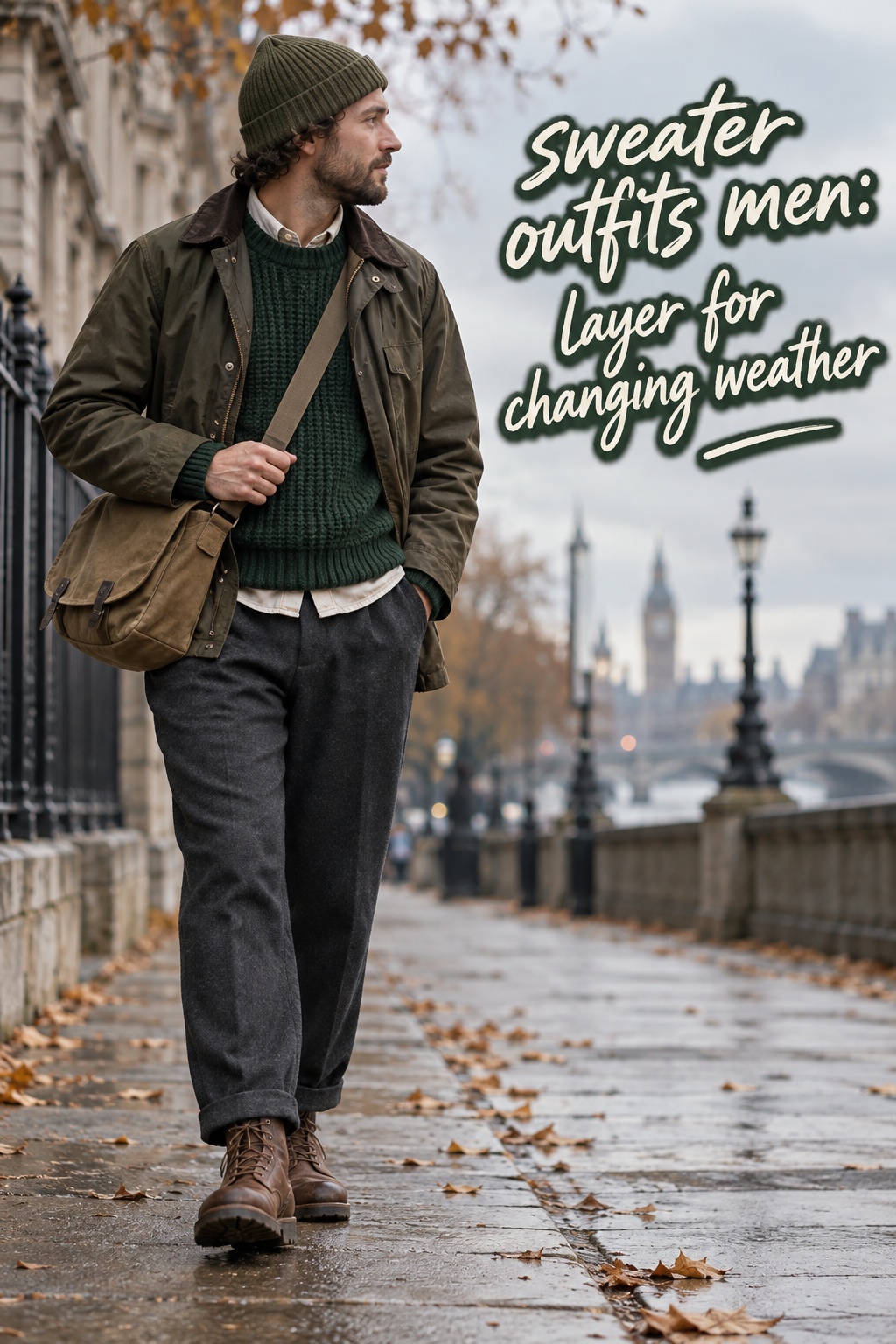
When the temperature drops, build from the inside out. Start with a breathable tee or thin shirt, add a medium-weight sweater, then choose an outer layer with enough room at the shoulders and chest. A wool coat over a fine turtleneck looks streamlined. A field jacket over a crewneck and Oxford feels practical. A parka over a chunky knit works when the coat has a generous cut.
Do not force every layer to be visible. The goal is a comfortable temperature range and a clean silhouette. Keep the base layer thin enough that the sweater does not pull at the armholes. Let the collar, cuff, or hem show only when it adds useful contrast. Finish with boots that can handle the day, and check that the trouser opening works with the boot shaft instead of bunching around it.
Buying priorities, care, and the final fit check
Buy the sweater that solves the largest gap first. If your closet is full of casual pullovers but you struggle to dress for work, a fine navy or charcoal knit may be more useful than another patterned crewneck. If your wardrobe is formal but uncomfortable on weekends, start with a medium-weight crewneck that works with denim and sneakers. A good purchase should create at least three complete outfits with pieces you already own.
- Check the shoulders: The shoulder seam should sit near the end of your shoulder unless the design is deliberately relaxed.
- Check the sleeve: The sleeve should reach the wrist without covering most of the hand. A small amount of shirt cuff can show under a fine knit.
- Check the body: The sweater should skim rather than cling. You need enough room to sit, move, and add the intended base layer.
- Check the hem: It should cover the waistband and finish around the mid-fly. A very short hem or an extra-long body can make proportions harder to manage.
- Check the surface: Look for pilling, loose seams, uneven ribbing, and transparency under normal indoor light.
- Check the care: Read the care label before buying. A sweater that requires care you will not provide is not a versatile piece for your life.
Store knits folded rather than hanging them for long periods, especially if they are heavy. Give them air between wears, remove pills gently, and wash according to the fiber and care label. These small habits protect the shape and make a modest capsule feel more luxurious because every piece stays ready to wear.
For additional fit and sweater-type reference, the buying checklist from Real Men Real Style is useful, while the category guidance from Men’s Health reinforces the difference between casual, smart-casual, and polished sweater roles. The recommendations here adapt those ideas into a smaller wardrobe system rather than a product list.
FAQ
What pants go best with men’s sweaters?
Jeans are the easiest casual option, chinos sit in the smart-casual middle, and tailored trousers create a more polished result. Match the bottom to the sweater weight: straight or relaxed pants usually balance chunky knits, while fine knits can work with slimmer or tailored shapes.
Can men wear a shirt under a crewneck sweater?
Yes. Choose a fine or medium-weight crewneck with a collar that lies flat. Let a small amount of collar and cuff show, keep the shirt fabric smooth, and avoid a bulky base layer that makes the sweater pull across the chest.
Should a sweater be tucked in?
Usually, a sweater looks best untucked. A thin, fine-gauge knit can be lightly tucked into higher-rise trousers when the hem and fabric support it. Do not tuck a chunky knit, and do not force a short sweater over a waistband if it keeps riding up.
What shoes work with sweater outfits men can wear casually?
Clean leather or canvas sneakers, suede desert boots, casual leather boots, and loafers all work. Use sneakers for a lighter weekend feel, boots for texture and colder weather, and loafers when you want chinos or dark denim to look sharper.
How many sweaters does a man need?
A practical starting capsule is three to five sweaters: an everyday crewneck, a fine collared-layer sweater, a polished option such as a turtleneck or cardigan, and one texture or accent piece. Add more only when a new sweater creates combinations you cannot make with what you own.
How do you stop a sweater outfit from looking boring?
Change one styling variable at a time. Try a stronger texture, a visible collar, a warmer shoe, a more interesting trouser shape, or one controlled accent color. The outfit will feel more personal when one element leads and the other pieces stay simple.
One final habit makes the capsule easier to use: take a quick full-length look before leaving. Check the line from shoulder to shoe, then ask whether the outfit has one clear focal point. If the sweater is textured, calm the accessories. If the trousers are wide, keep the upper layer neat. If everything is dark, add one lighter shirt, shoe, or controlled accent. This short review catches most proportion problems before they become an uncomfortable day.
A capsule is a tool for reducing decisions, not a rulebook that removes personality. The same navy crewneck can feel sporty with sneakers, collegiate with an Oxford and chinos, or refined with gray trousers and loafers. Small changes in the supporting pieces let you repeat a favorite sweater while keeping the overall wardrobe flexible.
Finish the look
The little extras that make a summer outfit feel complete
From beach days to city weekends, these easy pieces bring comfort, texture, and a polished finishing touch.

FENBEN
Straw Hobo Crossbody Bag
A handwoven straw bag with both short and crossbody straps—an effortless finishing touch for vacation looks and warm-weather outfits.
Shop the bag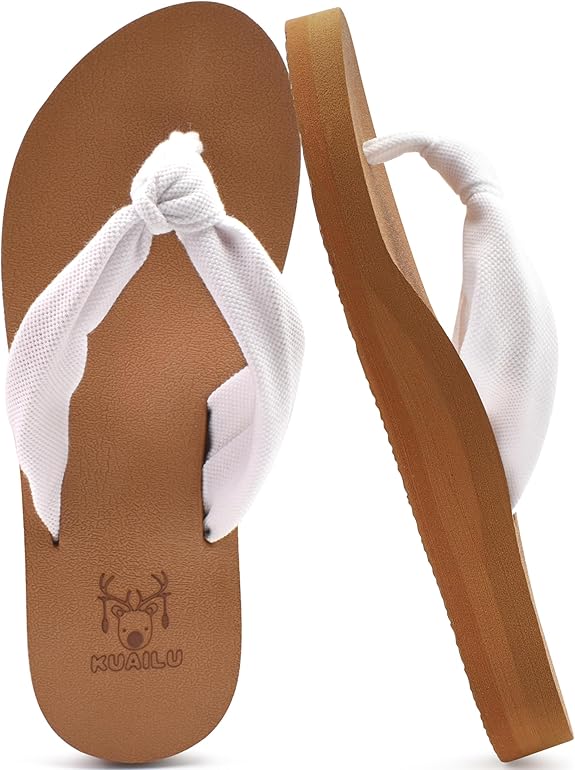
KuaiLu
Flip Flops with Arch Support
Cushioned, lightweight sandals with supportive arch design—a practical choice for beach trips, errands, and long summer walks.
Shop the sandals
baleaf
Athletic One-Piece Swimsuit
A functional one-piece with adjustable straps and moderate coverage, designed for swimming, training, surfing, and active beach days.
Shop the swimsuit
Astylish
Linen-Cotton Button-Down Shirt
A relaxed cotton-linen shirt with a collared V-neck and roll-up sleeves—easy to style over swimwear or with denim and shorts.
Shop the shirt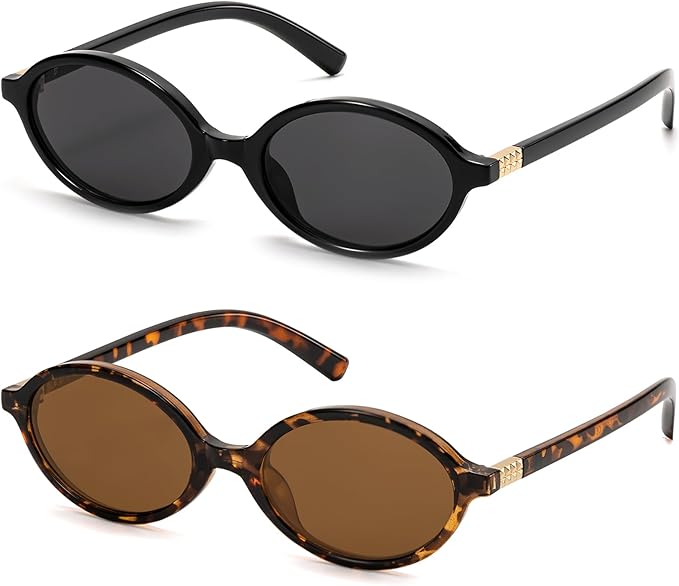
ViewJoy
Retro Oval Sunglasses
Small oval sunglasses with a 90s-inspired silhouette and UV400 lens protection—a quick way to add a vintage edge to everyday looks.
Shop the sunglasses
Affiliate disclosure: This section contains affiliate links. If you make a purchase through these links, I may earn a commission at no additional cost to you. Product selection, pricing, availability, and delivery terms may change—please review the current details on Amazon before purchasing.
As an Amazon Associate I earn from qualifying purchases.