Layering Clothes: 9 Outfit Formulas That Feel Easy
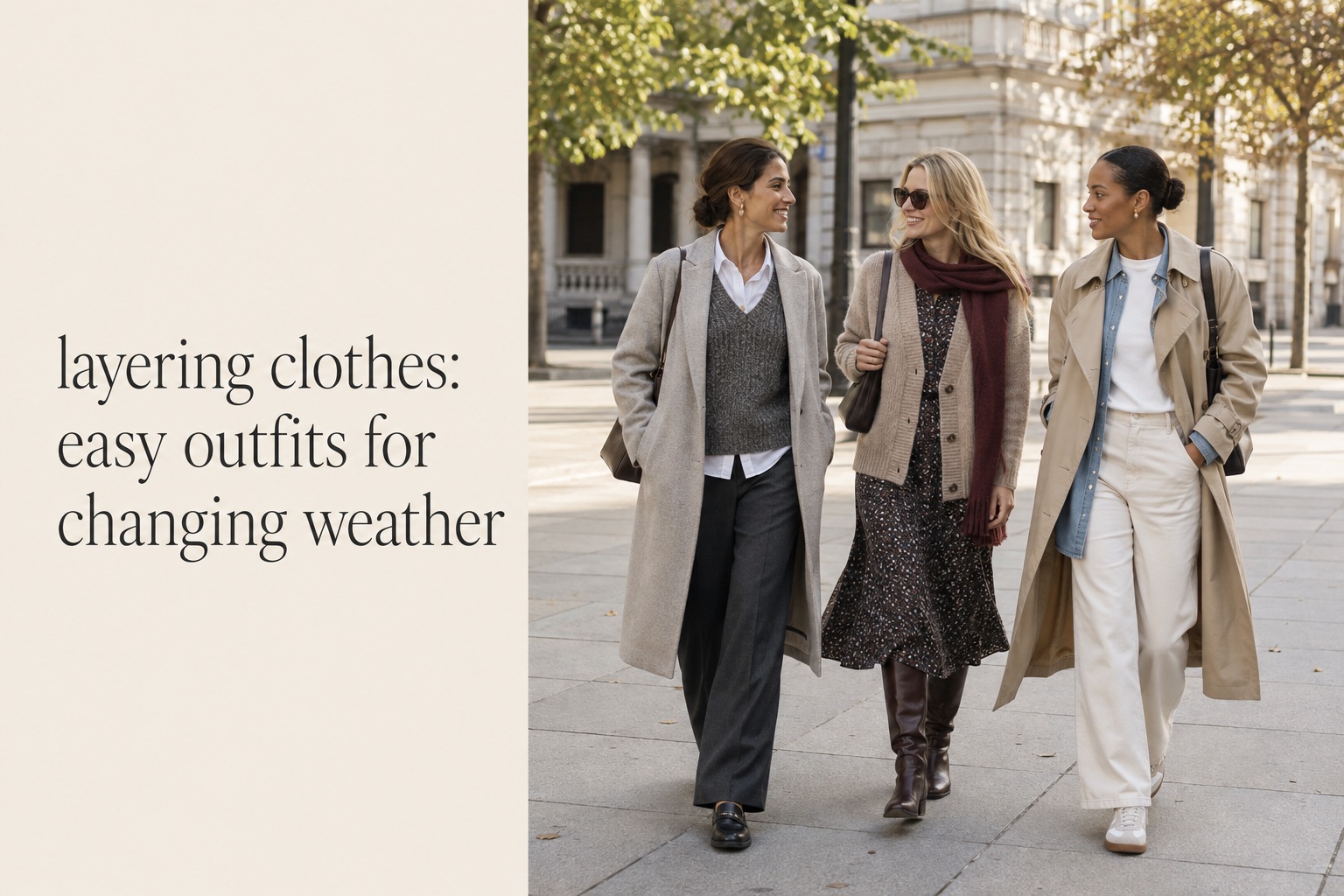
At 7:20 a.m., the forecast says 48 degrees, the train platform feels colder, and your afternoon calendar includes a sunny walk across town. You pull on a sweater, then a coat, then wonder what happens when the office heating turns the whole outfit into a sauna. This is the daily puzzle that makes layering clothes feel harder than it should.
The answer is not simply adding more pieces. Good layers work like a small conversation: each one has a job, the proportions make sense together, and every piece can be removed without leaving the outfit unfinished. When the base is comfortable, the middle adds texture or insulation, and the outer layer creates shape, you can move through a changing day with much less wardrobe drama.
Why layering clothes changes the way an outfit feels
Layering is often described as a winter trick, but that definition is too narrow. It is a way to make one outfit adjustable. A crisp shirt under a fine sweater can handle a cool morning, while the shirt alone may be enough when the temperature rises. A dress with tights and a cardigan can travel across seasons. A blazer over a tee can make casual clothes feel intentional without turning them formal.
The Fashion-Note Edit
Five effortless pieces to refresh your everyday wardrobe
A polished, practical edit for workdays, weekends, and everything in between.

The Drop
Women’s Blake Long Blazer
A longline, tailored blazer with a notched collar and a single-button closure—an easy layer for denim, dresses, or office-ready looks.
Shop the blazer
Amazon Essentials
Women’s Lightweight Crewneck
A soft, lightweight sweater with a clean crew neckline—the kind of reliable layer that works from cool mornings to air-conditioned spaces.
Shop the sweater
Amazon Essentials
Women’s Loafer Flat
A classic flat loafer that gives casual outfits a more polished finish and pairs naturally with tailored pants, skirts, and straight-leg jeans.
Shop the loafers
Levi’s
Women’s 501 90s Jeans
A relaxed, vintage-inspired take on the iconic 501 silhouette—made for an easy, lived-in look without the thrift-store search.
Shop the jeans
Colorfulkoala
High-Waisted 7/8 Leggings with Pockets
Soft, four-way-stretch leggings with side pockets and a high-rise waistband—designed for movement, errands, and off-duty comfort.
Shop the leggings
Affiliate disclosure: This section contains affiliate links. If you make a purchase through these links, I may earn a commission at no additional cost to you. Product selection, pricing, availability, and delivery terms may change—please review the current details on Amazon before purchasing.
As an Amazon Associate I earn from qualifying purchases.
The best layered looks also create visual rhythm. A little collar peeking above a crewneck, a narrow cuff below a jacket sleeve, or a coat hem extending past a knit gives the eye somewhere to move. This is why an outfit made from simple basics can look considered. The interest comes from the relationship between pieces, not from collecting the loudest items in the closet.
Your wedding style is personal.
Your plan should feel that way, too.
Zarellea keeps your guest list, budget, vendors, and every next step beautifully organized — so you can focus on the moments that feel like you.
There is a practical benefit too. A single heavy sweater gives you one level of warmth. Three lighter pieces give you options. You can remove the scarf, open the coat, push up the cardigan sleeves, or take off the blazer while keeping a complete outfit underneath. That flexibility is valuable during fall, spring, travel days, and any commute that moves between outdoor air and heated interiors.
The four jobs every layer should do
- Base: sits close to the body and keeps the first layer comfortable. Think tee, tank, camisole, slim long-sleeve top, or lightweight thermal.
- Middle: adds warmth, texture, or color. This is where a shirt, vest, cardigan, fine knit, or sweatshirt earns its place.
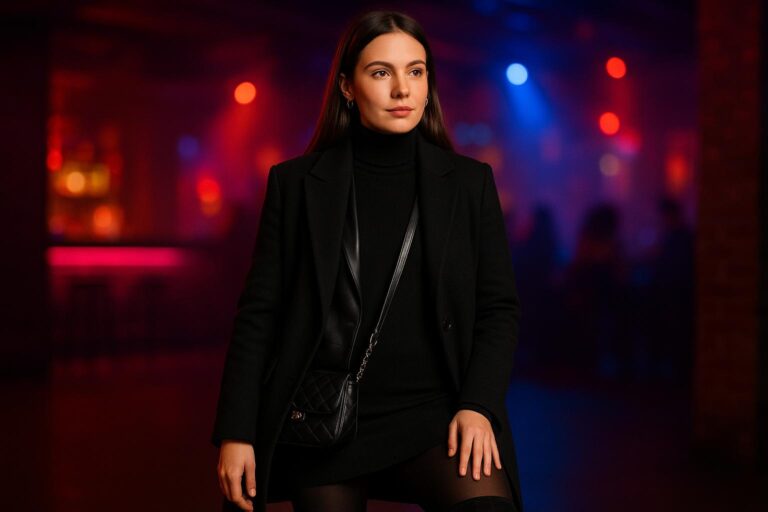
- Shape: gives the outfit a clear silhouette. A blazer, chore jacket, denim jacket, overshirt, or tailored cardigan can define the look.
- Protection: handles wind, rain, or serious cold. This may be a trench, wool coat, puffer, shell, or weather-ready accessory.
You do not need all four jobs every day. A mild afternoon may need only a base and shape layer. A snowy commute may need all four. The useful question is not “How many pieces can I wear?” but “What job is missing from this outfit?”
How to build a layered outfit without adding bulk
Start with fabric weight, not color. The closest layer should usually be the thinnest and smoothest. If a chunky sweater sits directly over a crisp button-down with stiff seams, the result can bunch at the shoulders and under the arms. Reverse the order with a thin knit under a looser shirt jacket, and the same amount of clothing feels more comfortable.
Next, check the neckline. Necklines that repeat exactly can look flat, while necklines that fight each other create clutter. A crewneck tee under a V-neck sweater shows a clean base. A turtleneck under a sleeveless dress creates a deliberate frame. A collared shirt under a cardigan works when the collar has room to sit naturally instead of being forced down.
Proportion matters more than following a strict rule about fitted pieces. You can wear an oversized layer over another relaxed layer if one line is controlled. Pair a roomy cardigan with straight-leg trousers and a compact shoe, or wear a boxy jacket over a slim knit with a fluid skirt. The outfit needs an anchor, not a uniform amount of looseness everywhere.
Use hems and sleeves as quiet styling tools
A visible hem makes a layered outfit look planned. Let a shirt extend one to three inches below a sweater, or allow a longer coat to cover a shorter jacket. Avoid several hems ending at nearly the same point, because that can create a crowded horizontal line. The same idea applies to sleeves. A narrow cuff showing below a blazer looks finished; a thick sleeve trapped under a tight jacket looks uncomfortable.
Keep the palette calm when the silhouette is busy. Cream, camel, navy, charcoal, denim, and black can support several layers without looking noisy. If you prefer color, choose one accent such as a red scarf, butter-yellow cardigan, or green vest, then let the other pieces support it. Texture can carry interest when color stays simple.
- Pair thin under thick, not thick under thick.
- Leave room at the shoulder so your arms can move.
- Use one dominant length and one supporting length.
- Keep the visible base layer smooth around the waist.
- Test the outfit while seated, walking, and carrying your bag.
Make a removal plan. Decide which piece comes off first and whether the outfit still works without it. This catches many layering problems. If removing the blazer exposes a wrinkled tee, or removing the coat reveals a cardigan that clashes with the skirt, the outfit is not flexible yet.
Nine layering clothes formulas worth repeating
These formulas are starting points, not uniforms. Change the color, fabric, shoe, or proportion to match your wardrobe. The goal is to have reliable relationships that make getting dressed easier when the weather or schedule changes.
1. The shirt and sweater vest formula
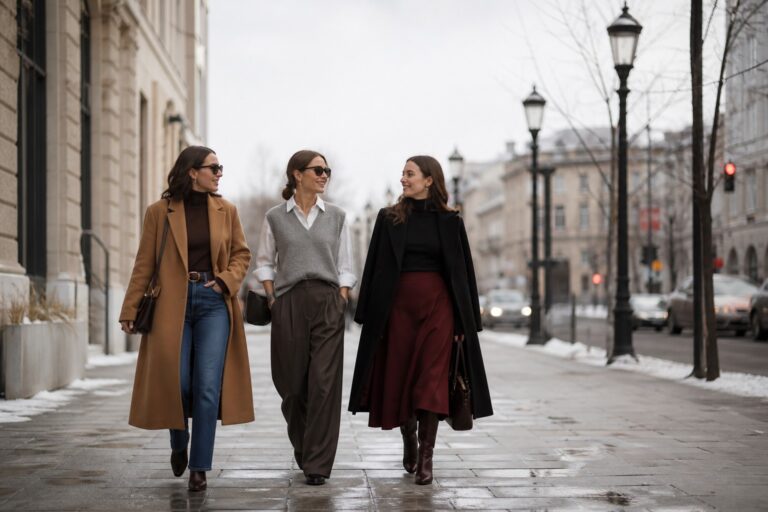
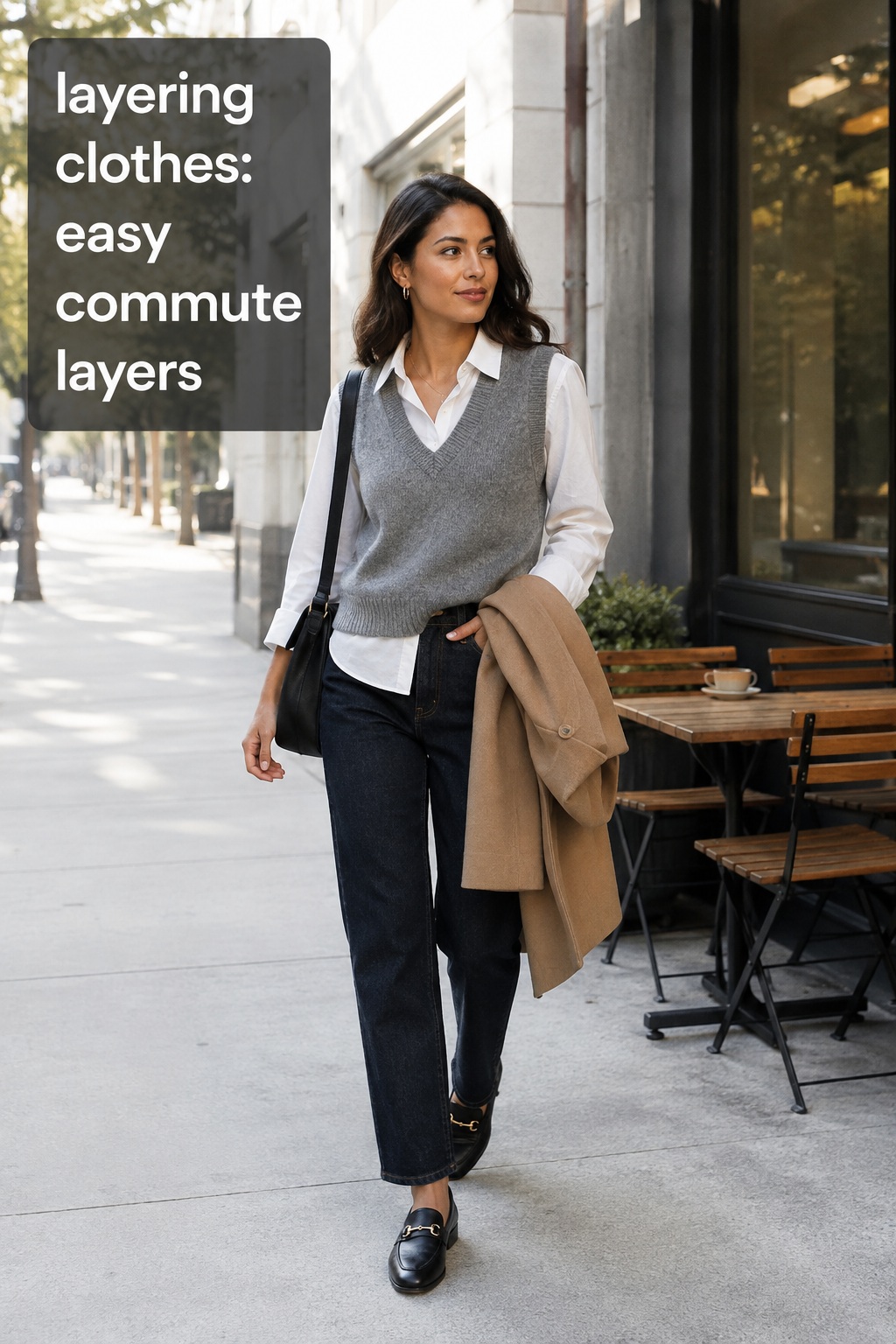
Wear a crisp button-down under a sweater vest with straight jeans or tailored trousers. The shirt supplies a clean collar and cuff, while the vest adds warmth without swallowing the shape. Choose a longer shirt with a cropped vest for contrast, or keep both close in length for a neater work-ready effect. Loafers make it polished; slim sneakers make it campus and weekend friendly.
2. The fine knit and blazer formula
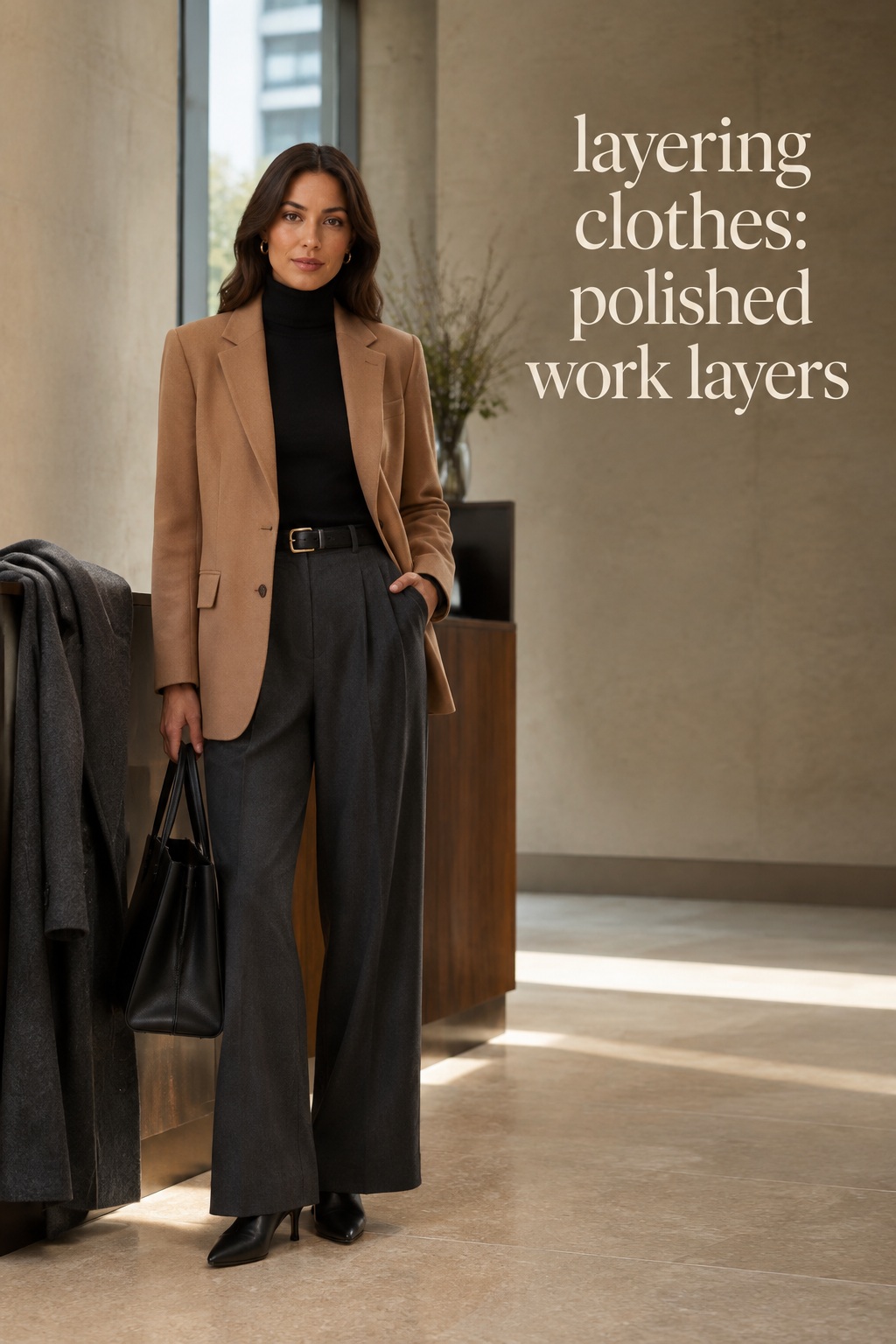
A lightweight turtleneck or crewneck under a blazer works for an office, dinner, or travel day. The knit removes the need for a bulky shirt, and the blazer gives structure. Try charcoal under camel, or use a navy blazer to sharpen cream and denim. Keep the knit sleeves close to the arm so the blazer remains comfortable.
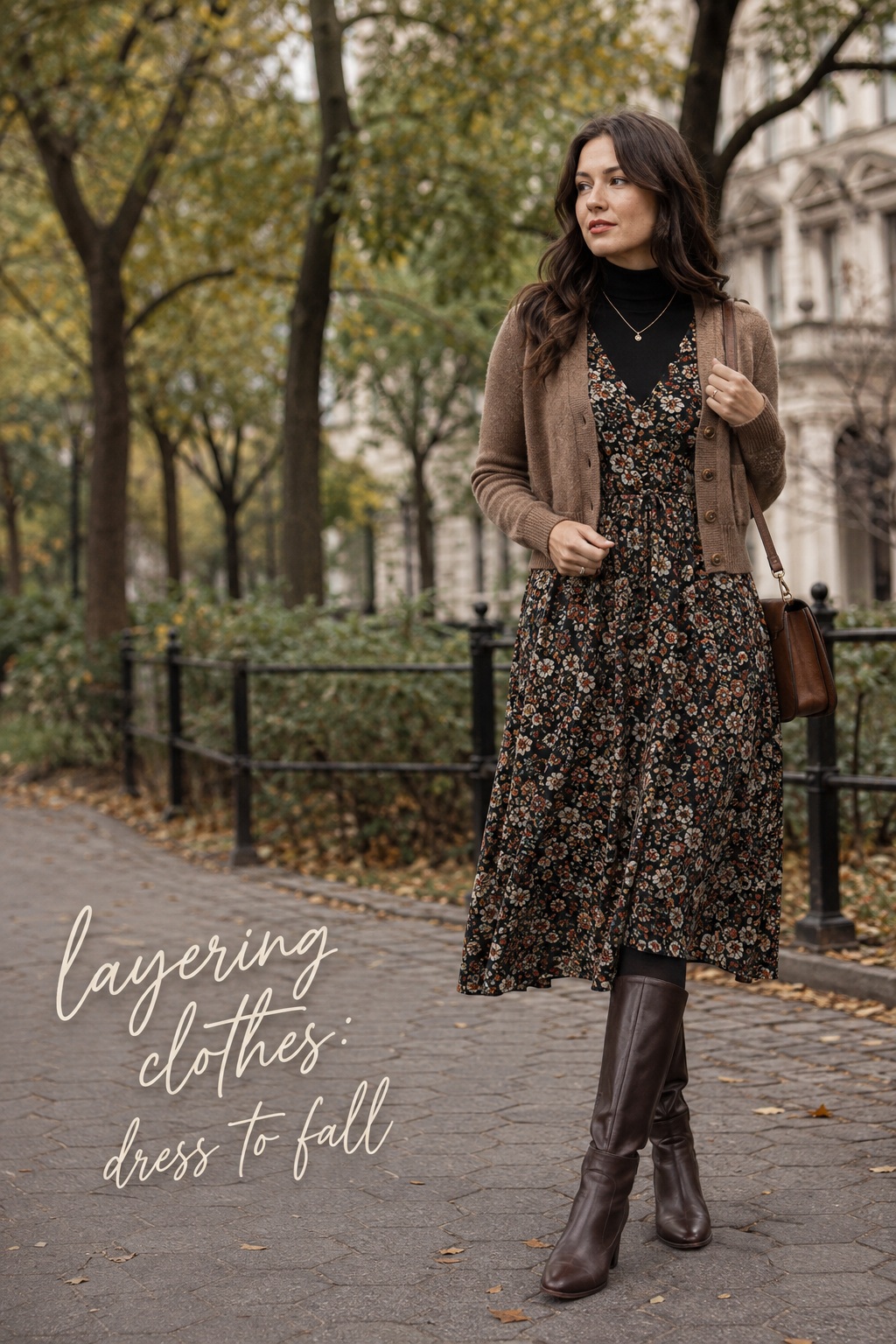
3. The dress, cardigan, and coat formula
Do not pack away a favorite dress when the season changes. Add opaque tights, ankle boots, a fine cardigan, and a coat. The cardigan can be worn open for a long vertical line or buttoned at the waist for extra warmth. A simple coat lets the dress provide the personality. This works best when the dress has a clear waist or a fluid skirt that will not bunch under the knit.
4. The tee, overshirt, and trench formula
For mild rain or a cool city day, combine a fitted tee with an open overshirt and a trench coat. The tee keeps the base easy, the overshirt adds texture, and the trench protects the outfit without the visual weight of a winter coat. Choose denim, cotton twill, or corduroy for the overshirt. Keep the trench open when you want the layers to show, then belt it when the wind picks up.
5. The skirt, tights, and cropped jacket formula
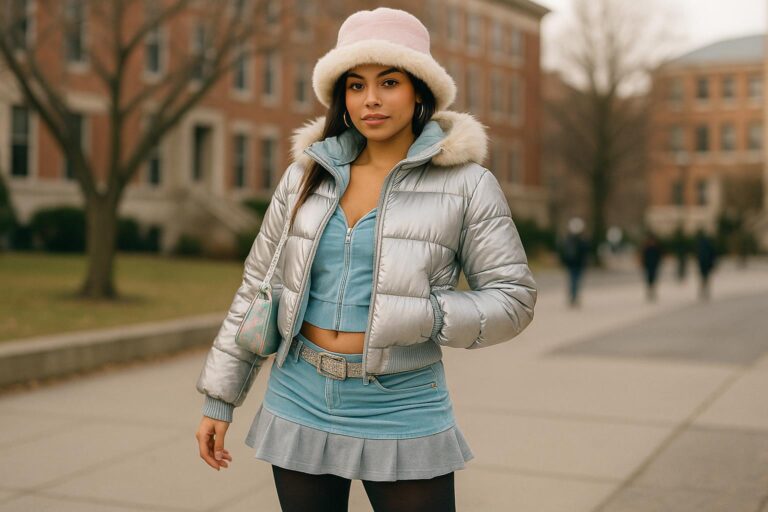
A midi skirt with tights, a slim knit, and a cropped jacket creates warmth while preserving a defined waist. The shorter jacket balances the longer skirt, and the tights make the outfit more practical for cool streets. Try a leather jacket for contrast, denim for a casual mood, or a quilted jacket for softer texture. Finish with boots that repeat the visual weight of the jacket.
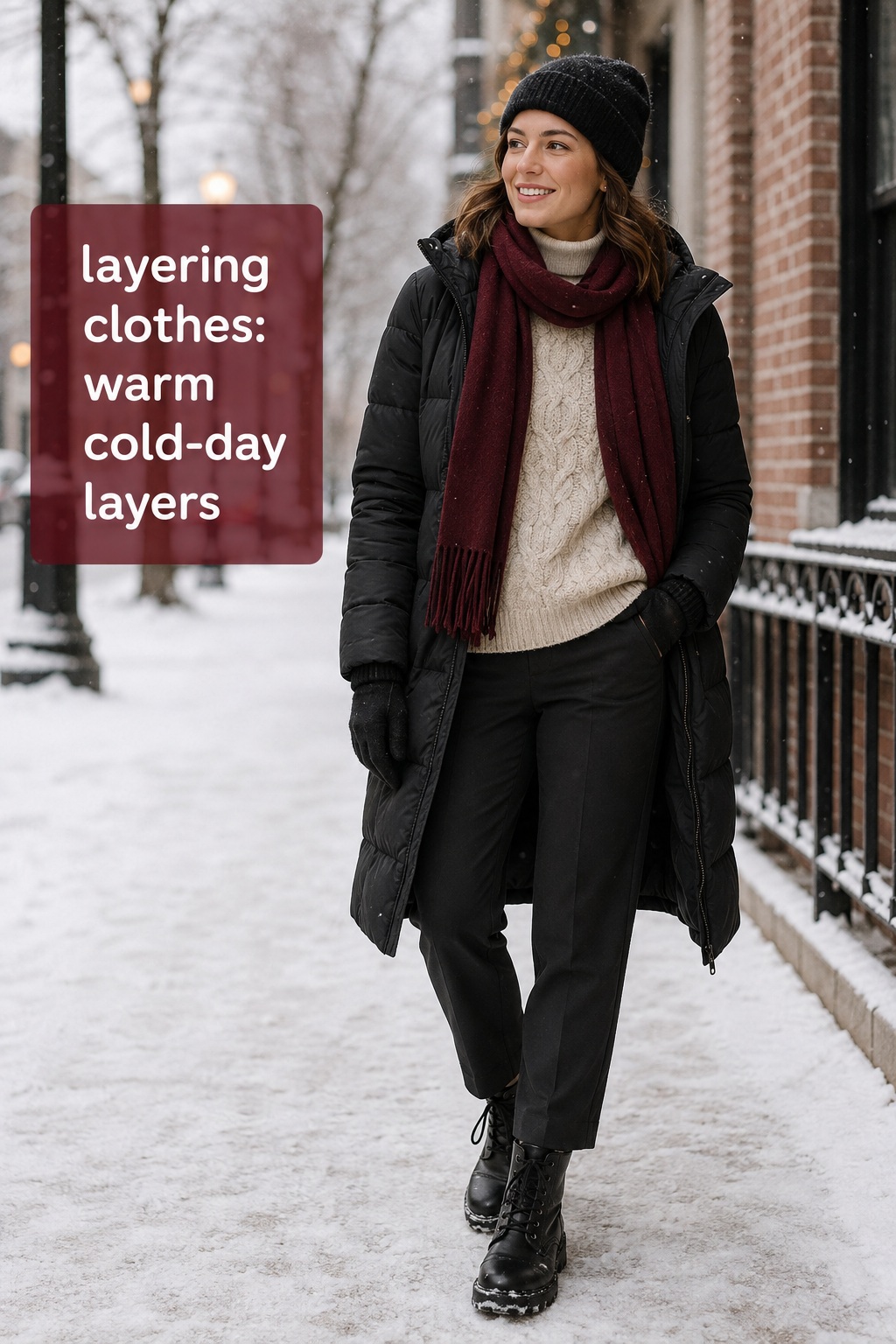
6. The monochrome base with a bright scarf
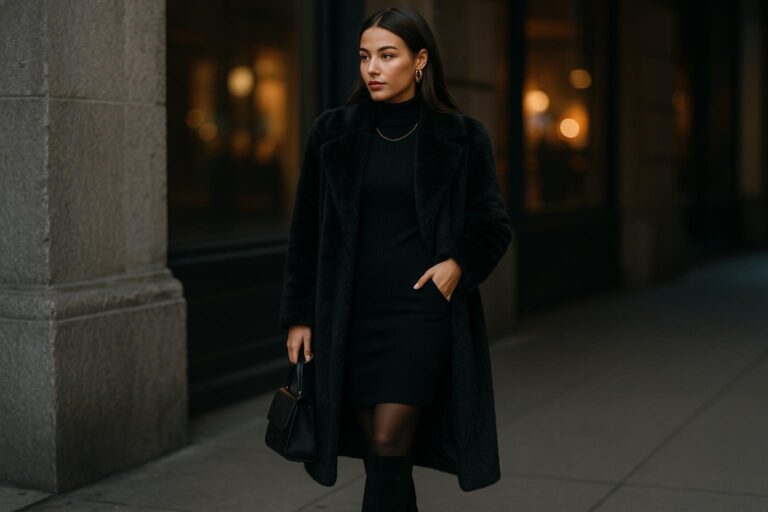
When you want layers to look sleek, begin with one color from top to bottom. Black trousers and a black knit create a long base; gray trousers and a charcoal sweater feel softer. Add a coat in a nearby neutral and finish with one bright scarf. Because the base is quiet, the scarf can bring personality without competing with every other layer.
7. The denim jacket under a wool coat formula
A denim jacket can act as a structured middle layer under a roomier wool coat. Wear it over a slim long-sleeve top with trousers or a knit dress. The denim adds casual contrast, while the coat keeps the overall look refined. Make sure the coat has enough ease at the shoulders and sleeves. This combination is more comfortable when the denim jacket is not heavily lined.
8. The sleeveless dress over a fitted base
Layer a sleeveless dress over a fitted tee, turtleneck, or fine mock neck. This reuses a warm-weather shape while creating a more substantial outfit. Keep the base smooth and let the dress provide the volume. A boot, compact bag, and short jacket can make the combination feel modern. Use a close color relationship if the dress has a print.
9. The thermal base under everyday clothes
On genuinely cold days, warmth often improves when the invisible base layer does more work. A thin merino or technical thermal top under a shirt and sweater can be more comfortable than adding a second bulky sweater. Add warm socks, tights, or a thin legging under trousers when needed. Keep the visible layers simple so the outfit does not look overloaded.
How to adapt layers for real life
For work, prioritize smooth fabrics and removable structure. A fine knit, shirt, or shell under a blazer looks composed in a meeting, while a scarf or coat can handle the commute. Avoid too many delicate layers if you will be carrying a laptop or moving between buildings. A washable base and one polished outer layer usually offer more value than several fussy pieces.
For travel, choose pieces that can perform more than one job. A cardigan can be a mid layer, a seat blanket, or an evening cover-up. A button-down can sit under a sweater, open over a tank, or work as a light jacket. Pack one strong outer layer, two compatible bases, and one accessory that changes the mood. The aim is a small system that survives temperature changes and repeated wear.
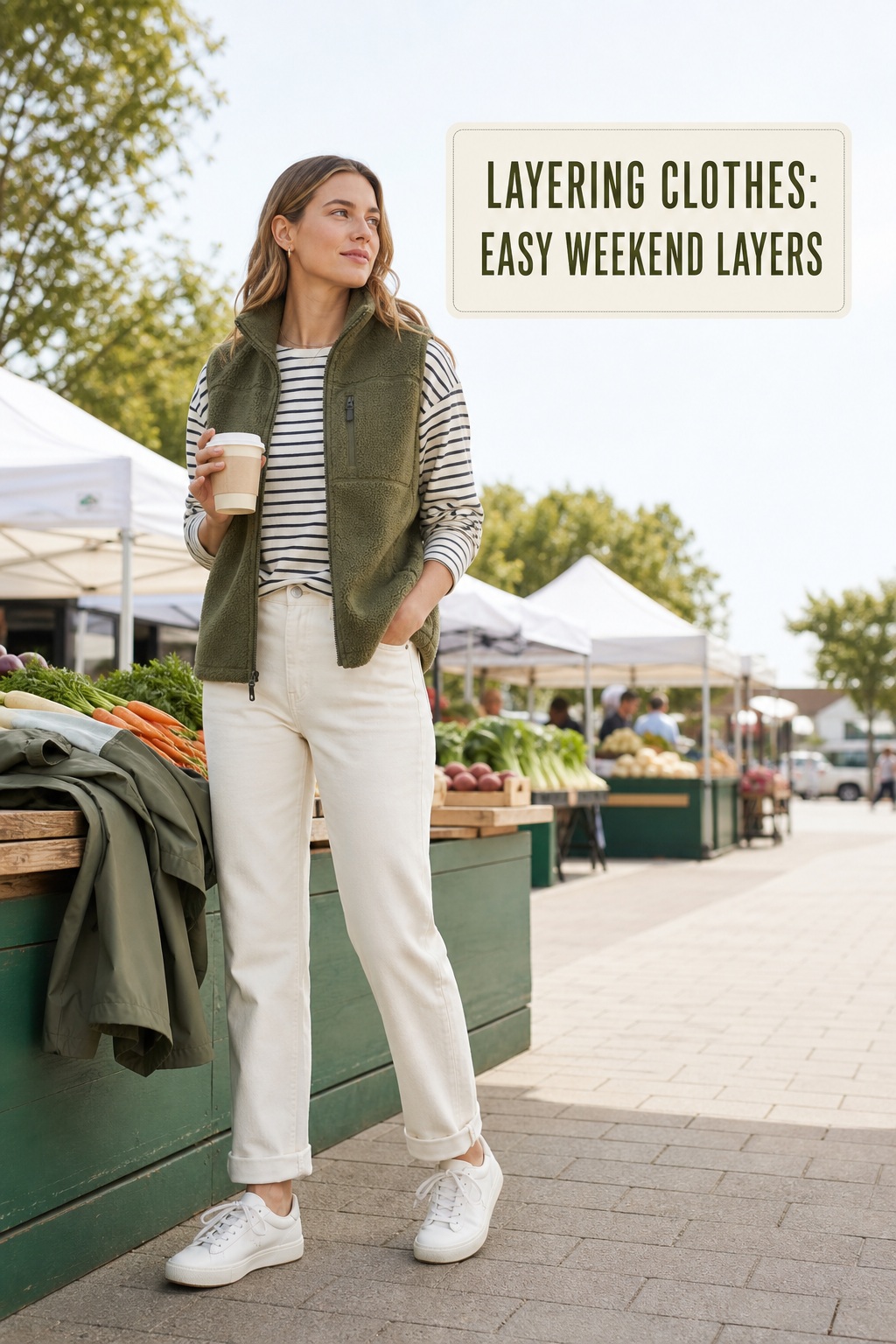
For weekends, relax the rules by changing the texture. A sweatshirt under a trench, a striped tee under a cardigan, or a fleece vest over a long-sleeve top can feel easy while still looking intentional. Use one refined element, such as leather loafers, a structured bag, or a clean coat, to keep casual layers from becoming shapeless.
For warm climates, think in terms of shade, air conditioning, and evening temperature rather than winter insulation. Linen shirts, cotton cardigans, lightweight overshirts, and silk scarves can provide coverage without trapping heat. Leave the outer layer open, choose breathable shoes, and avoid stacking synthetic fabrics directly against the skin.
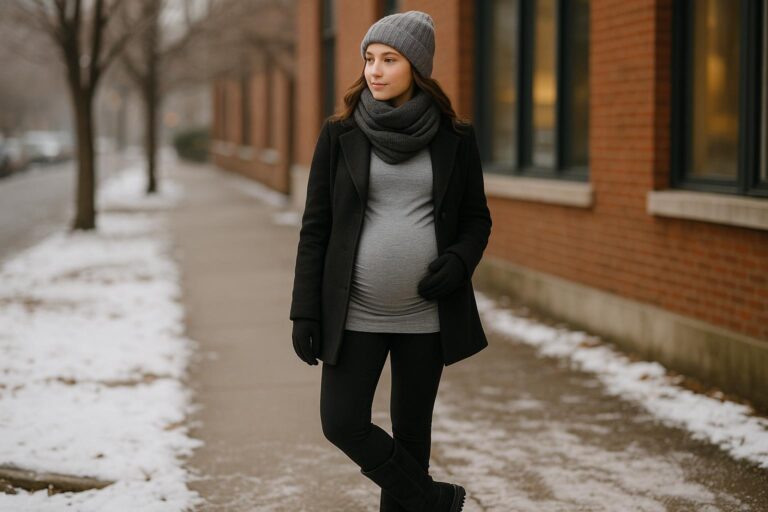
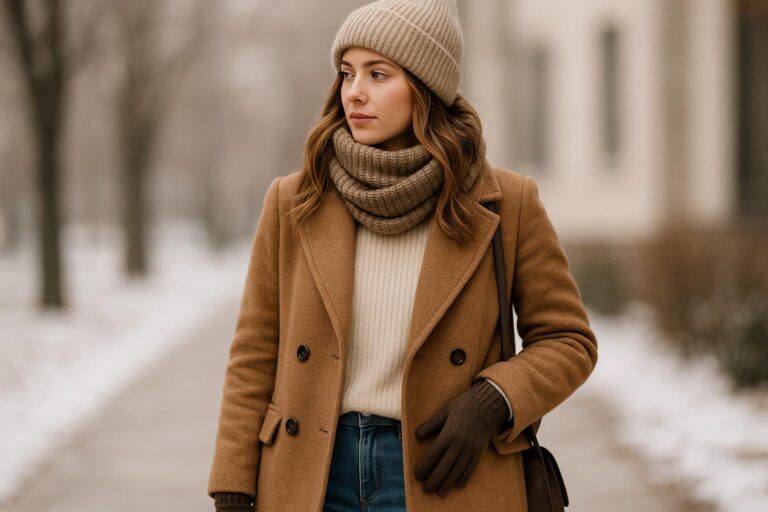
For cold climates, protect the points where heat escapes. A close base, insulating middle layer, wind-resistant outer layer, warm socks, gloves, and a hat can be more effective than an oversized coat alone. Keep enough room for air between layers, but do not let the sleeves twist or the shoulders restrict movement.
The five-minute final review
- Can you remove the warmest layer and still look dressed?
- Are the thinnest fabrics closest to your body?
- Do the collars, cuffs, and hems look deliberate?
- Can you sit, walk, reach, and carry your bag comfortably?
- Does one color, texture, or accessory give the outfit a clear point of view?
If the answer is yes, stop adding. Layering clothes works best when the final piece solves a real problem rather than filling an empty space.
FAQ
What is the best order for layering clothes?
Start with the thinnest, most comfortable base, add a breathable middle layer for warmth or texture, then add a shape-giving jacket or coat. Finish with weather protection and accessories only when needed. The closest layer should usually be the smoothest.
How do you layer clothes without looking bulky?
Use thin fabrics under thicker fabrics, control the shoulder fit, and avoid several stiff or chunky pieces together. Choose one relaxed layer and keep another part of the outfit clean, such as straight trousers or a defined waist. Visible hems and cuffs should look intentional.
Can you layer clothes in warm weather?
Yes. Choose breathable pieces such as linen shirts, cotton cardigans, lightweight overshirts, and silk scarves. Use layers for shade, air conditioning, or cooler evenings, and make sure each piece can be removed quickly. Avoid heavy fabrics directly against the skin.
What should you wear under a sweater?
A smooth tee, camisole, slim long-sleeve top, or fitted button-down can work under a sweater. Pick the base according to the neckline and warmth you need. If you want the collar or cuffs to show, choose a shirt with enough structure to stay in place without adding excess fabric.
How many layers should you wear on a cold day?
There is no universal number, because wind, activity, fabric, and personal comfort all matter. A useful starting point is a close base, an insulating middle layer, and a protective outer layer. Add warm accessories or a second thin middle layer when necessary, while preserving room for movement.
What are the most versatile layering pieces?
The most useful pieces are a smooth base top, a fine cardigan, a crisp button-down, a sweater vest, a lightweight blazer, a shirt jacket, a trench, and a coat with comfortable shoulder room. Choose colors that connect with your existing trousers, denim, skirts, and dresses instead of building a separate wardrobe.
How can you layer clothes over a dress?
Try tights and boots under the dress, then add a cardigan, denim jacket, blazer, or coat. You can also wear a fitted turtleneck under a sleeveless dress. Keep the base layer smooth and check that the dress does not bunch under the jacket. A defined waist or a clean vertical line helps the outfit feel balanced.
How do you make layered clothes look intentional?
Repeat one visual idea across the outfit. That might be a tonal color palette, a shared texture, a visible collar and cuff, or one accent accessory. Check the proportions in a mirror, make sure the layers can be removed, and stop when every piece has a clear job. Intention comes from editing as much as from adding.
Finish the look
The little extras that make a summer outfit feel complete
From beach days to city weekends, these easy pieces bring comfort, texture, and a polished finishing touch.

FENBEN
Straw Hobo Crossbody Bag
A handwoven straw bag with both short and crossbody straps—an effortless finishing touch for vacation looks and warm-weather outfits.
Shop the bag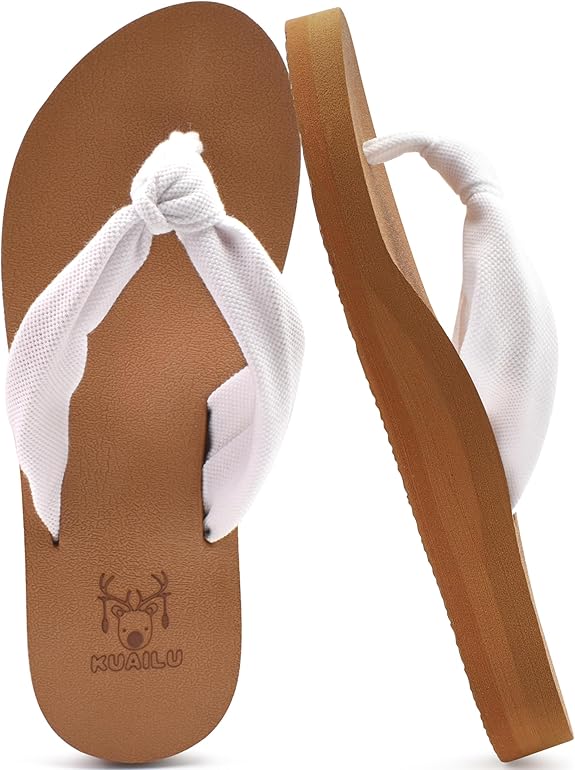
KuaiLu
Flip Flops with Arch Support
Cushioned, lightweight sandals with supportive arch design—a practical choice for beach trips, errands, and long summer walks.
Shop the sandals
baleaf
Athletic One-Piece Swimsuit
A functional one-piece with adjustable straps and moderate coverage, designed for swimming, training, surfing, and active beach days.
Shop the swimsuit
Astylish
Linen-Cotton Button-Down Shirt
A relaxed cotton-linen shirt with a collared V-neck and roll-up sleeves—easy to style over swimwear or with denim and shorts.
Shop the shirt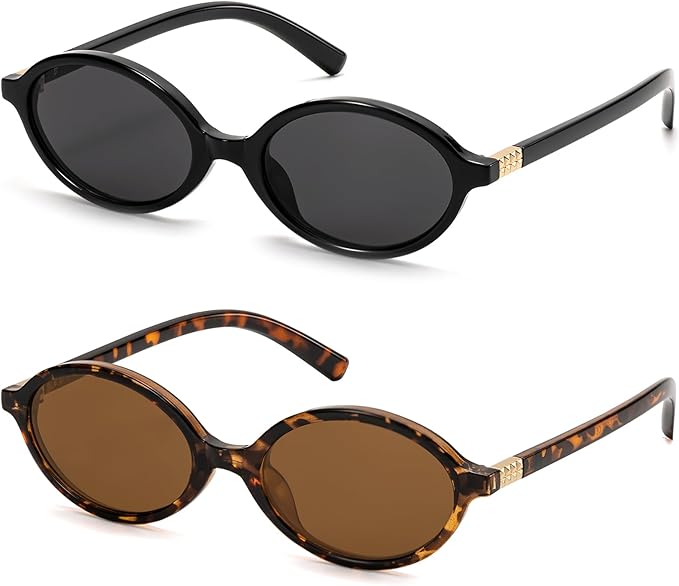
ViewJoy
Retro Oval Sunglasses
Small oval sunglasses with a 90s-inspired silhouette and UV400 lens protection—a quick way to add a vintage edge to everyday looks.
Shop the sunglasses
Affiliate disclosure: This section contains affiliate links. If you make a purchase through these links, I may earn a commission at no additional cost to you. Product selection, pricing, availability, and delivery terms may change—please review the current details on Amazon before purchasing.
As an Amazon Associate I earn from qualifying purchases.