Oversized Coats: A Practical Outfit Styling Checklist
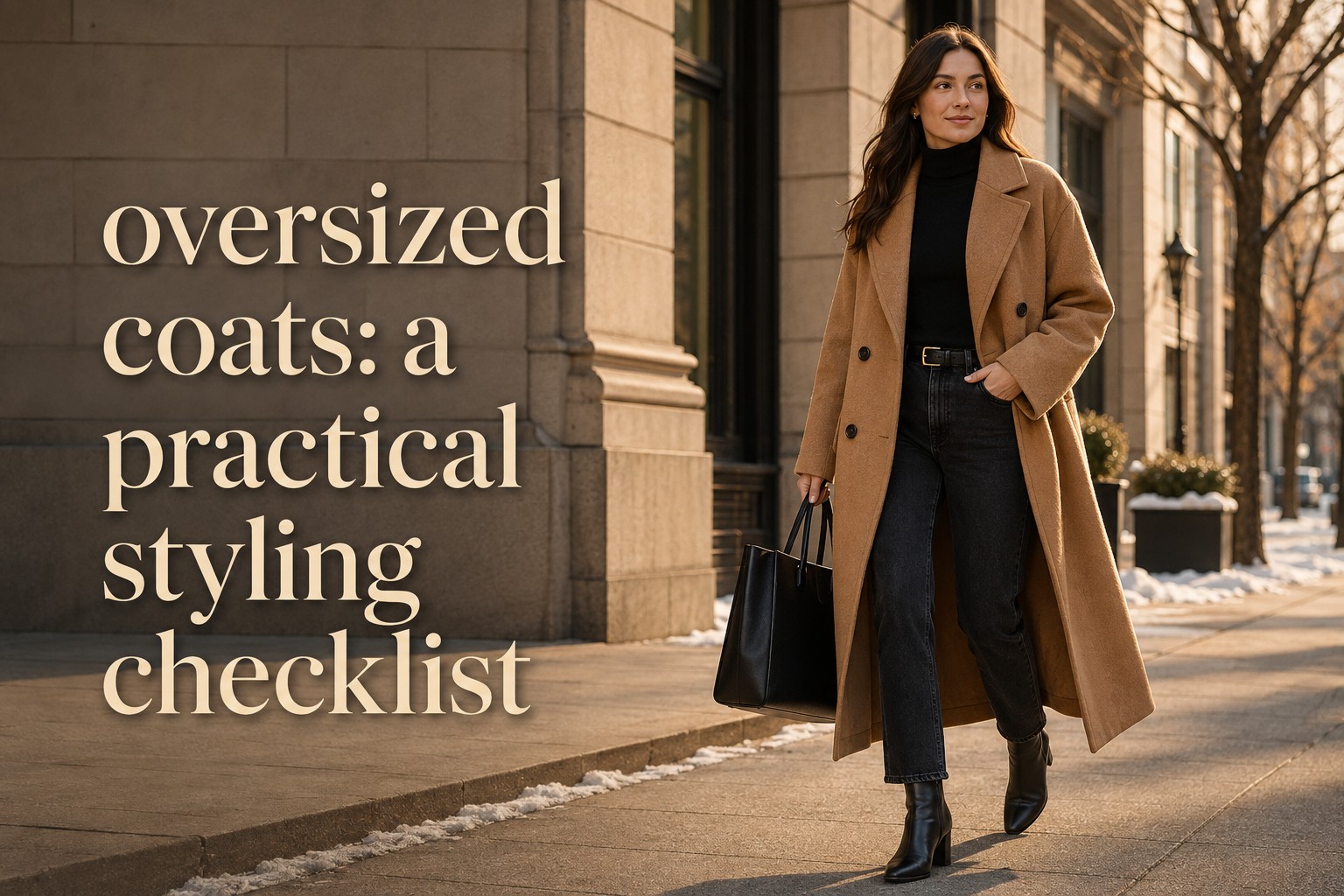
An oversized coat can make an outfit look instantly modern, but it can also hide every thoughtful choice underneath it. The difference is rarely about body type or wearing a particular trend. It comes down to a few visible decisions: how much volume you want, where the coat ends, what the base layer is doing, and whether the shoes can carry the extra visual weight. Once those decisions are clear, oversized coats become some of the most useful pieces in a wardrobe.
This checklist-playbook will help you build oversized coat outfits for ordinary errands, office days, travel, cold commutes, weekends, and evening plans. You will learn how to check the fit before styling, choose layers without creating unnecessary bulk, balance different bottoms, and make one coat work across several moods. The aim is not to make every look slim or tightly controlled. It is to make the volume feel intentional, comfortable, and easy to repeat.
Start with the coat: oversized by design or simply too large?
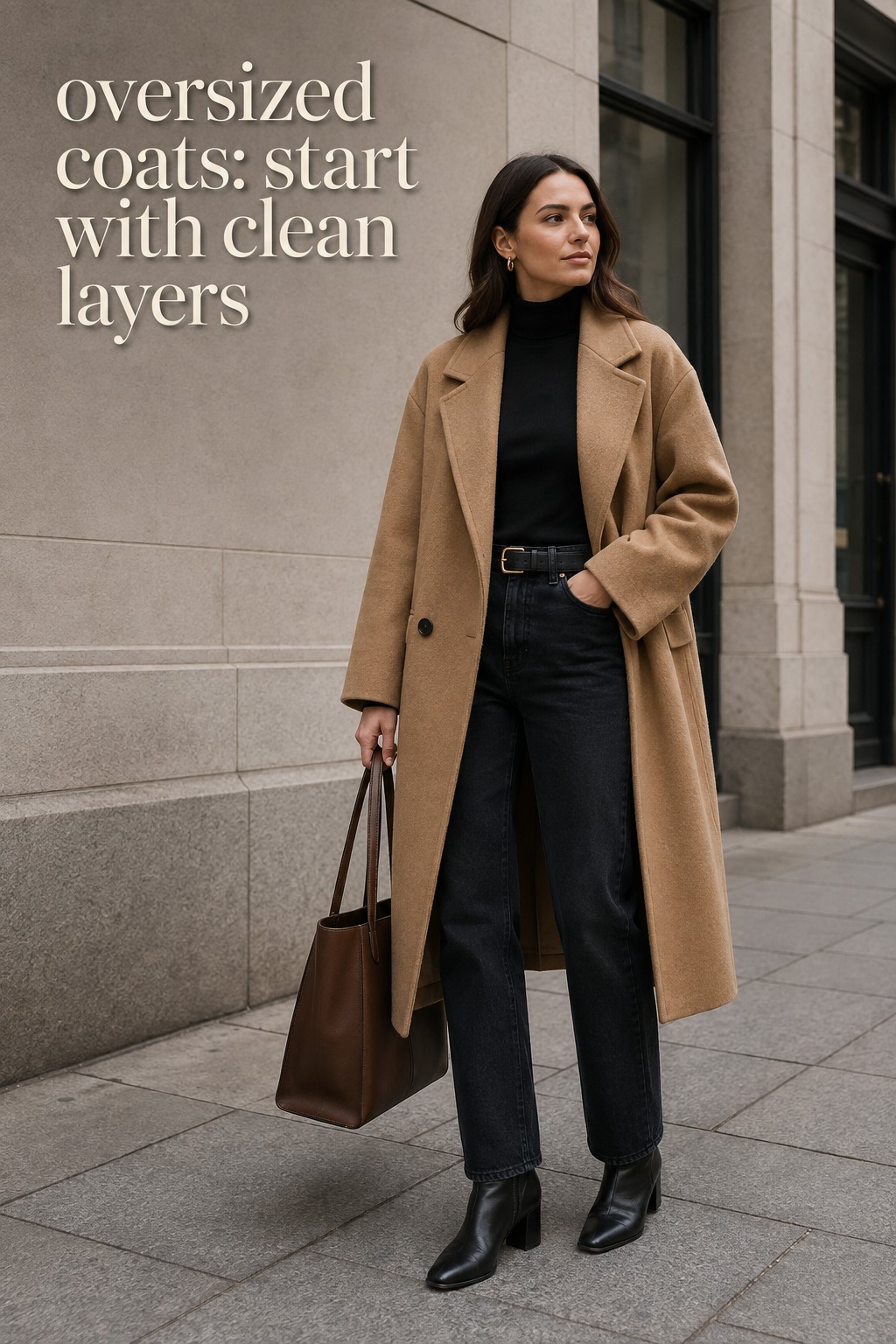
Before choosing an outfit, decide what kind of oversized coat you own. A coat designed with a generous silhouette usually has deliberate shoulder placement, a considered sleeve width, and enough room for a sweater without pulling. A coat that is merely too big may have shoulders that fall far beyond your natural line, sleeves that cover your hands, or a collar that collapses in a way that makes the garment look accidental. Styling cannot fully solve a coat that does not have a workable foundation.
The Fashion-Note Edit
Five effortless pieces to refresh your everyday wardrobe
A polished, practical edit for workdays, weekends, and everything in between.

The Drop
Women’s Blake Long Blazer
A longline, tailored blazer with a notched collar and a single-button closure—an easy layer for denim, dresses, or office-ready looks.
Shop the blazer
Amazon Essentials
Women’s Lightweight Crewneck
A soft, lightweight sweater with a clean crew neckline—the kind of reliable layer that works from cool mornings to air-conditioned spaces.
Shop the sweater
Amazon Essentials
Women’s Loafer Flat
A classic flat loafer that gives casual outfits a more polished finish and pairs naturally with tailored pants, skirts, and straight-leg jeans.
Shop the loafers
Levi’s
Women’s 501 90s Jeans
A relaxed, vintage-inspired take on the iconic 501 silhouette—made for an easy, lived-in look without the thrift-store search.
Shop the jeans
Colorfulkoala
High-Waisted 7/8 Leggings with Pockets
Soft, four-way-stretch leggings with side pockets and a high-rise waistband—designed for movement, errands, and off-duty comfort.
Shop the leggings
Affiliate disclosure: This section contains affiliate links. If you make a purchase through these links, I may earn a commission at no additional cost to you. Product selection, pricing, availability, and delivery terms may change—please review the current details on Amazon before purchasing.
As an Amazon Associate I earn from qualifying purchases.
Stand in front of a mirror wearing the thickest layer you realistically plan to use. Close the buttons or zip, lift your arms, sit down, and place your usual bag on your shoulder. The coat should move without strain, but it should not feel as if you are disappearing inside it. Check whether the cuffs stop near the wrist bone, whether the shoulder seam looks intentional, and whether the hem creates a clean relationship with your bottom layer.
Your wedding style is personal.
Your plan should feel that way, too.
Zarellea keeps your guest list, budget, vendors, and every next step beautifully organized — so you can focus on the moments that feel like you.
- Shoulders: a dropped shoulder can be stylish, but it should still look symmetrical and deliberate.
- Sleeves: leave enough room for a knit cuff, while keeping your hands available for keys and phone.
- Closures: the coat should close without pulling across the chest or bunching at the hips.
- Length: check the hem with your most common trousers, skirts, and dresses.
- Fabric: soft wool drapes differently from a structured twill, leather, or padded technical fabric.
- Movement: walk, climb stairs, reach for a seat, and wear the bag you actually use.
Do not assume that a larger coat must be styled with very narrow clothing. The real goal is controlled contrast. A relaxed coat can work with straight-leg denim, wide trousers, or a full skirt when the layers share a clear line and the shoes look substantial enough. Conversely, a slim base is helpful when the coat is very long, very padded, or strongly rounded through the shoulders.
Use the four-part checklist before getting dressed
Build the outfit in this order: temperature, base, volume, and finish. Temperature decides whether you need a fine thermal, a sweater, a scarf, or weather-resistant footwear. The base is the clothing visible when the coat is open or removed. Volume determines whether the rest of the look is streamlined, relaxed, or intentionally dramatic. The finish includes shoes, bag, jewelry, hair, and any small detail that makes the outfit look complete.
For the base, start with one close or smooth layer whenever the coat is soft, long, or rounded. A fitted mock-neck, fine-gauge turtleneck, simple T-shirt, or sleek button-down creates a clean surface beneath the outerwear. If you need warmth, add a thin middle layer that can be removed indoors. A cardigan, compact sweater vest, lightweight fleece, or zip knit usually behaves better than two thick sweaters stacked together.
Then choose the volume balance. If the coat is the largest item, let the bottom stay clean through the hip and thigh, or show a deliberate wide line from waist to shoe. Avoid combining a puffy coat, a bulky sweater, very full trousers, and tiny shoes unless the oversized effect is the entire point. Three soft, oversized zones can make the outfit look heavy even when each item is attractive on its own.
- Streamlined base: use when the coat is long, padded, furry, or strongly cocoon-shaped.
- Relaxed base: use with a structured oversized wool coat that has visible lapels or clean shoulders.
- Statement base: use when the coat is plain and the outfit needs a print, bright knit, or textured skirt.
- Simple finish: use when the coat has plaid, a bold color, unusual buttons, or a dramatic collar.
- Textured finish: add suede, polished leather, ribbed knit, or a structured bag when the palette feels flat.
Finally, perform a two-minute reveal test. Wear the coat open, remove it, and look at the outfit in both states. If the base only works when hidden, add a finished neckline, tuck or half-tuck the top, or replace one layer. If the coat looks like it is swallowing the base, open the lapels, push the sleeves slightly, or use a bag that creates a clear vertical line.
Choose the bottom by proportion, not by a strict rule
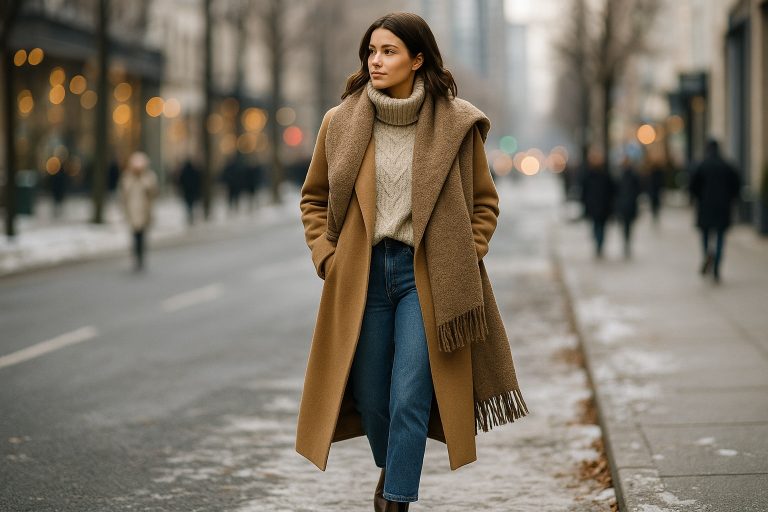
Jeans are the easiest starting point for oversized coats because they provide familiar structure. Straight-leg jeans with a fine knit and a wool coat create a clean everyday uniform. Slim-straight jeans work especially well with a long coat because they keep the lower line visible without feeling as restrictive as a very skinny silhouette. Wide-leg jeans can also work, but give them a clear beginning at the waist with a tucked top, shorter middle layer, or belt.
For a simple weekend formula, try a camel or charcoal oversized coat over a white T-shirt, straight blue jeans, and leather sneakers. Add a compact crossbody or structured tote so the outfit does not become a loose column. For a sharper version, change the T-shirt to a black turtleneck, the sneakers to loafers or ankle boots, and the denim to a dark wash. The coat stays the same while the finish changes the message.
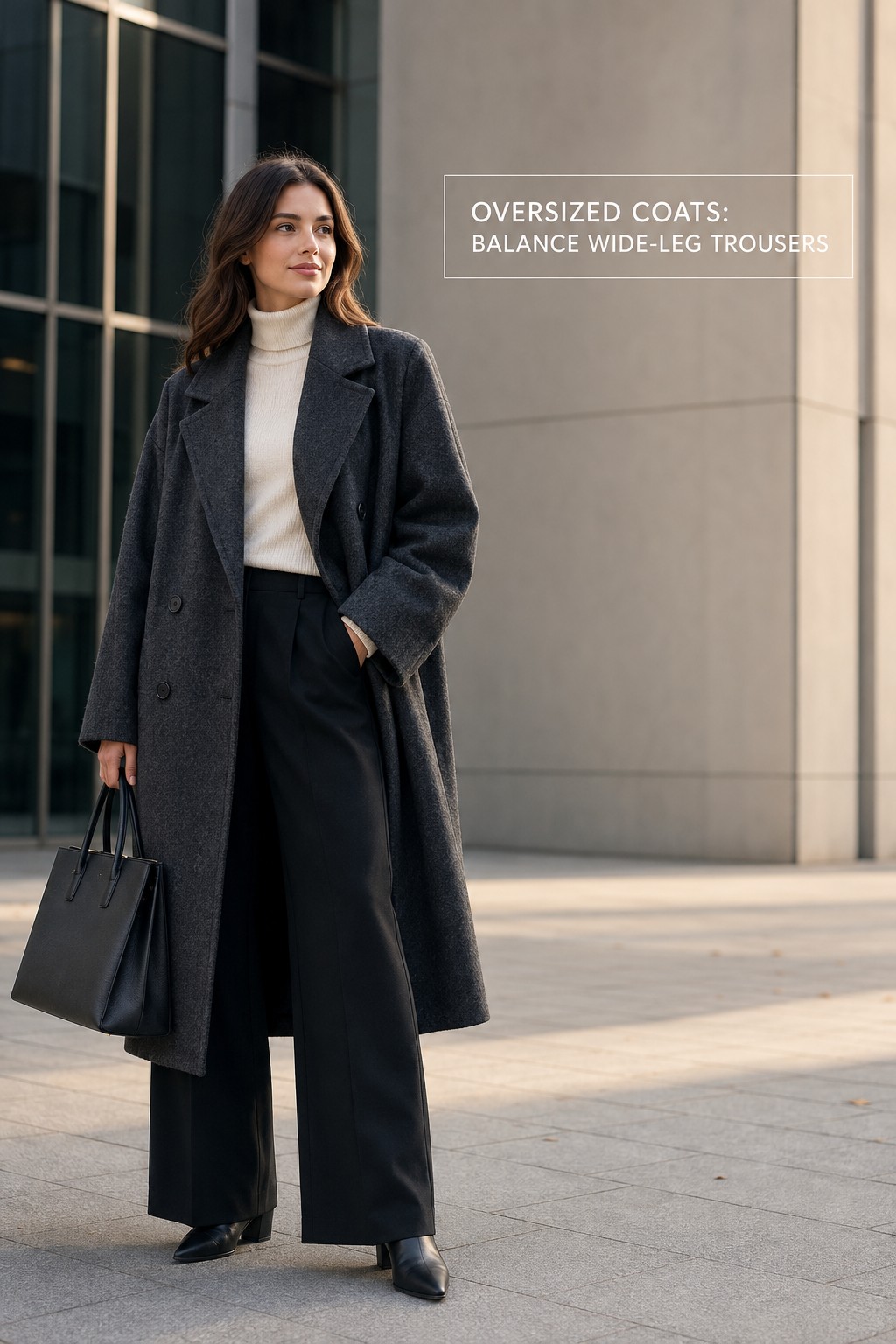
Wide-leg trousers suit an oversized coat when the fabrics are not competing for attention. A fluid trouser with a crisp shirt and a structured wool coat looks intentional because the softness is supported by tailoring. If both the coat and trousers are very relaxed, add a visible waist through a tucked fine knit, a shorter top, or a belt worn under an open coat. The waist does not need to be tightly cinched. It only needs to give the eye a point of orientation.
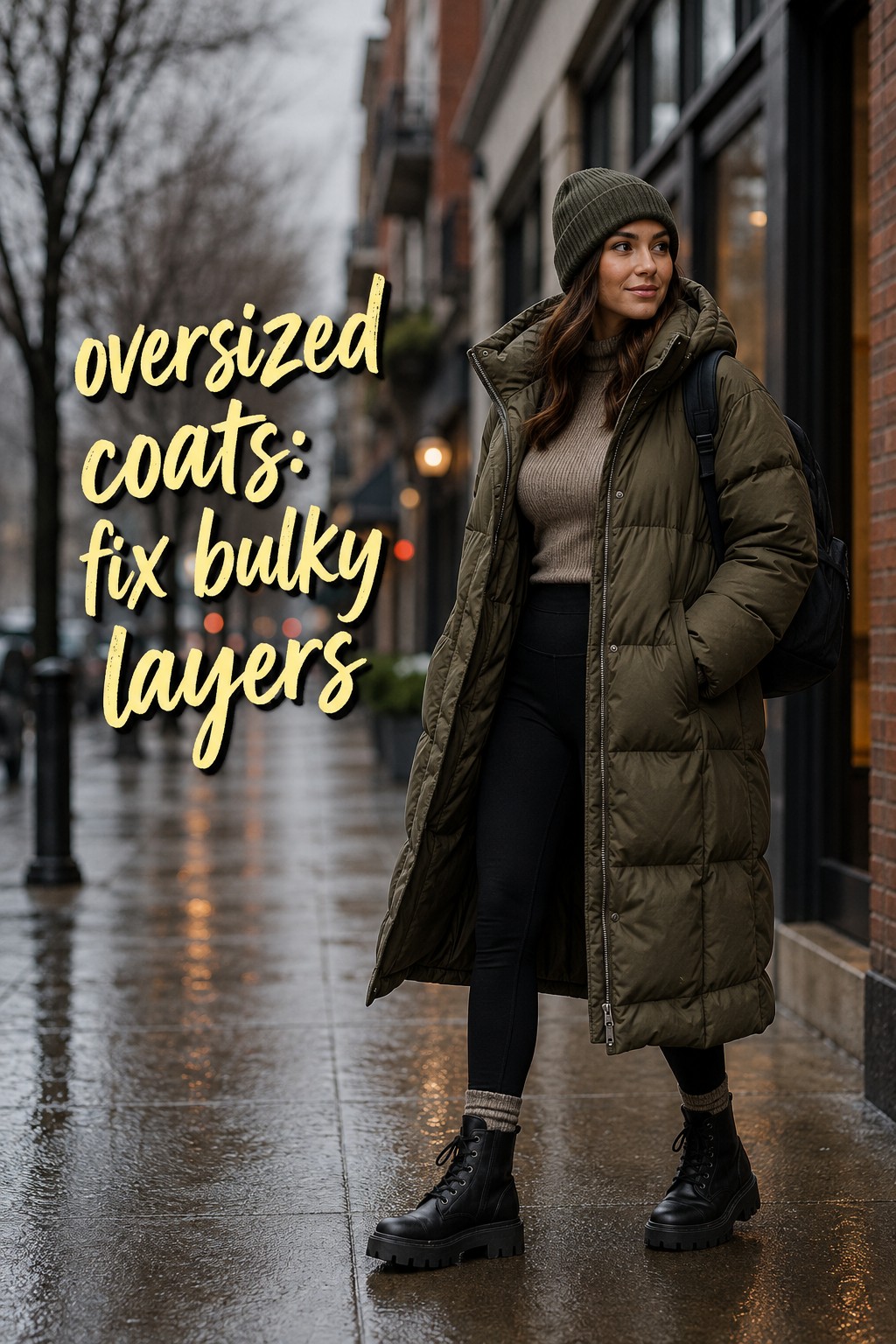
Leggings and ponte pants can be useful with long oversized coats, particularly for travel and errands. The coat provides coverage while the close-fitting base keeps walking easy. Choose a substantial shoe such as a lug-sole loafer, sleek boot, or clean platform sneaker. Very delicate flats can disappear beneath a long, generous coat unless the rest of the outfit is deliberately light and minimal.
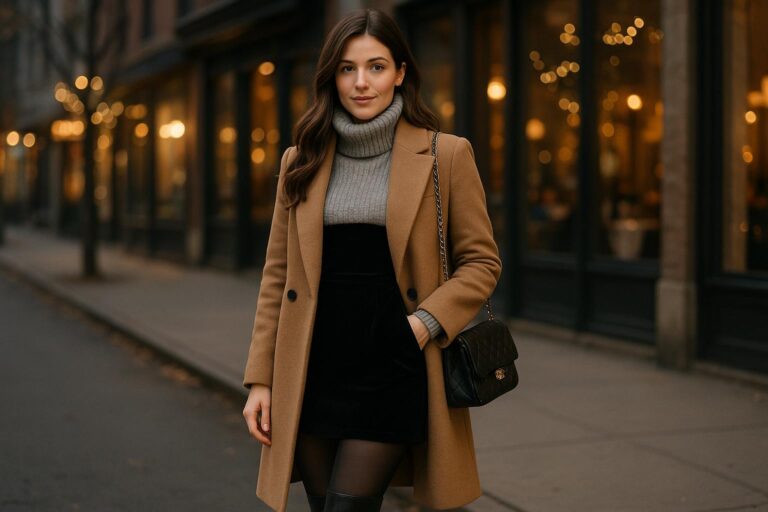
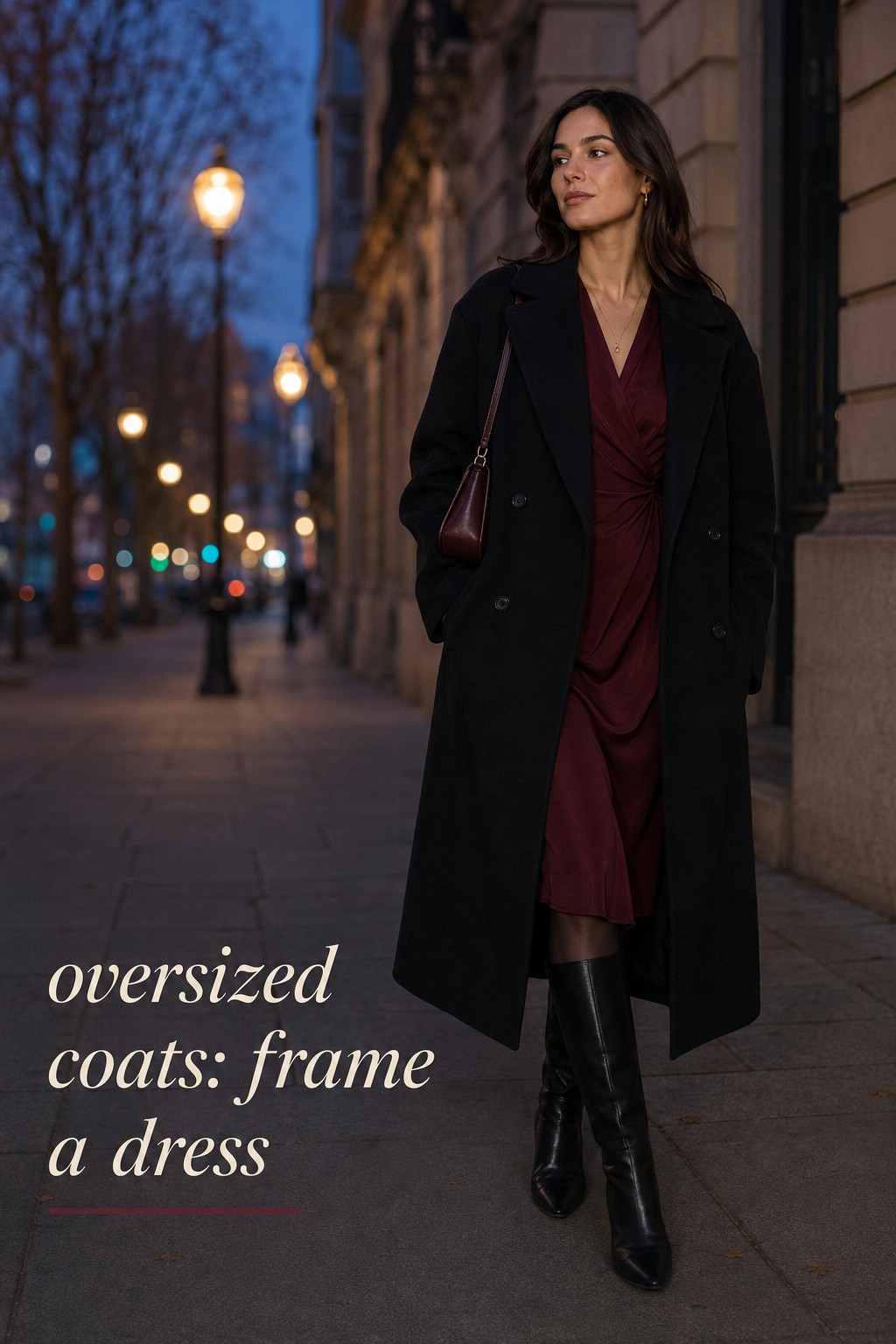
Skirts and dresses create a different kind of contrast. With a fitted dress, an oversized coat can look elegant and relaxed at the same time. With a full dress or voluminous skirt, choose a coat with more structure or a hem that meets the dress in a clean way. A coat that stops at an awkward mid-thigh point can visually cut the legs, while a waist-length coat or a longer coat usually creates a clearer frame.
- Straight-leg jeans: the reliable everyday choice with almost every oversized coat.
- Wide-leg trousers: best with a tucked or shorter top and shoes that have visual weight.
- Leggings or ponte: practical with a long coat, a coverage-conscious top, and boots or sneakers.
- Midi skirt: pair with a coat at the waist or one that is at least as long as the skirt.
- Sweater dress: add a long coat and tall boots for a streamlined cold-weather line.
- Maxi dress: use a cropped coat for contrast or a long coat for a continuous column.
These are starting points, not body-shape rules. The best proportion is the one that lets you move, see the clothing you enjoy, and feel balanced from the side as well as the front. If a look feels too top-heavy, change the shoe, expose a little ankle or waist, or simplify one upper layer before abandoning the bottom altogether.
Build oversized coat outfits for real situations
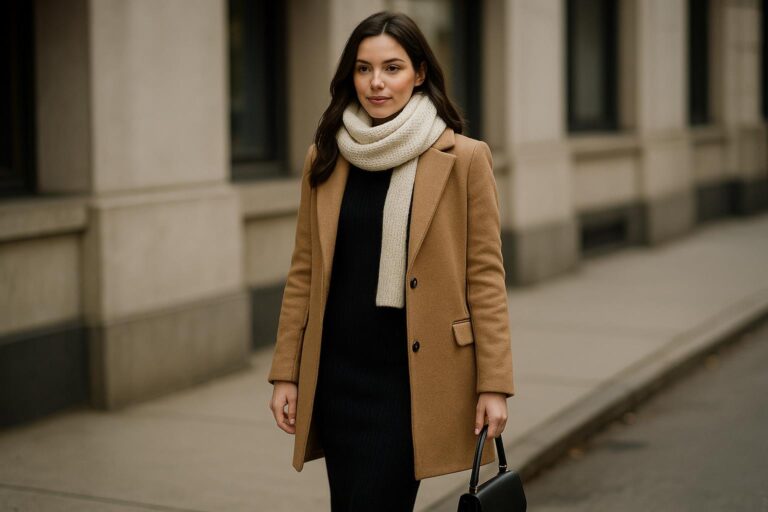
For an office commute, start with a fine turtleneck, tailored trousers, and an oversized wool coat in camel, gray, navy, or black. Add loafers or a low block heel, then choose a structured tote that can hold your daily essentials. Keep the coat open on arrival if the interior layers are polished. A small earring, watch, or leather belt is enough to make the outfit feel considered.
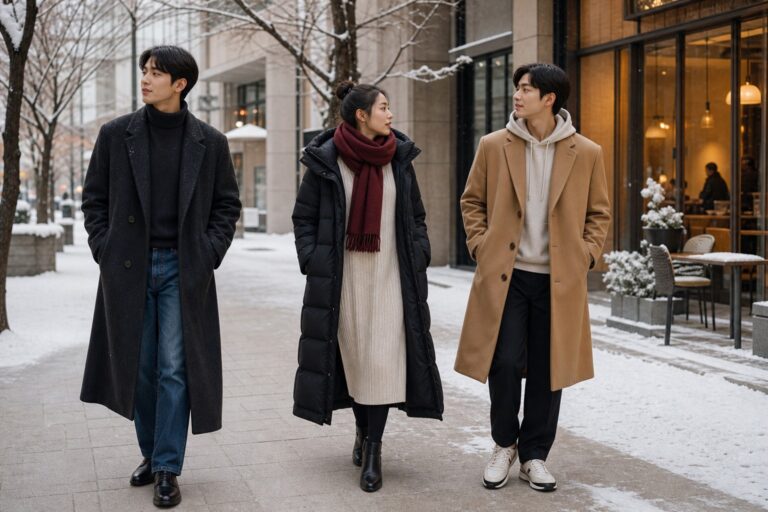
For a casual city day, use a smooth long-sleeve top, straight jeans, and clean sneakers under a large coat. Add a baseball cap, compact scarf, or crossbody if you want a more relaxed direction. Repeat one color between the shoes, bag, and a small accessory so the generous silhouette still feels connected. The result should look easy, not unfinished.
For a cold commute, plan the outfit in layers that have separate jobs. Use a breathable base next to the skin, a warm but removable middle layer, and a coat that blocks wind or moisture. Add socks that reach above the shoe line, boots with traction, and gloves that do not make your sleeves constantly slide down. A long oversized coat is useful here because it protects more of the outfit, but do not sacrifice visibility and safe movement for length.
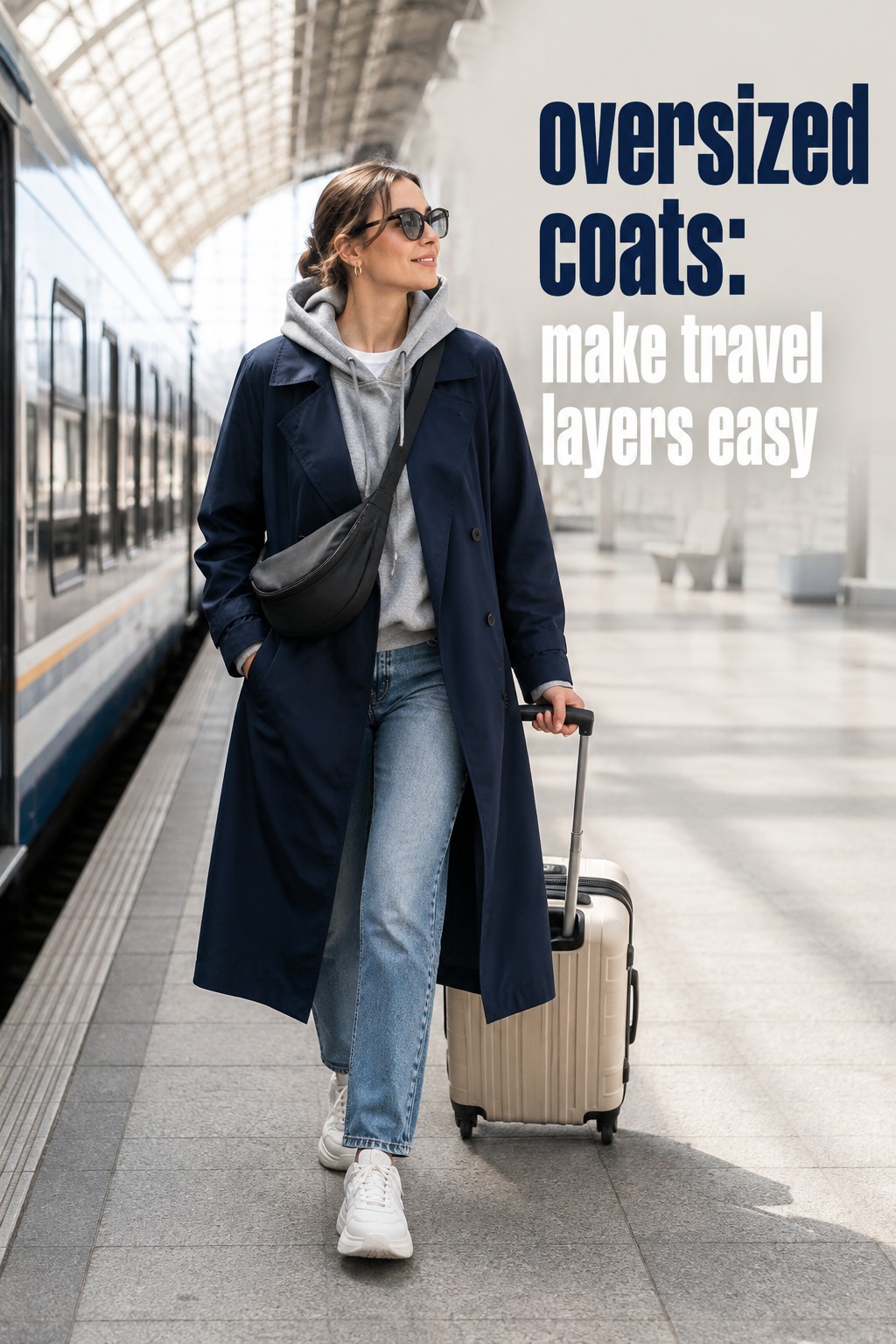
For travel, pair a relaxed coat with a knit set, straight jeans, or ponte pants. Choose a bag with a firm base and straps that stay on your shoulder. Avoid extra-long scarves, very wide sleeves, and open shoes if you will move through stations or airports. A matching knit top and bottom can look polished under the coat, while sneakers keep the outfit practical for long walking days.
For a skirt or dress evening look, let the coat act as part of the occasion rather than a cover-up. A black oversized coat over a slip dress creates a strong contrast, while a camel coat over a knit dress feels softer. Match the coat length to the dress when possible, or use a deliberate cropped proportion. Heeled boots, pointed flats, or a small shoulder bag can make the outfit feel finished without requiring many accessories.
For an athleisure outfit, combine one sporty element with two grounded pieces. A hoodie, leggings, and oversized coat work well with a structured bag and substantial sneakers. A long coat over joggers can look current when the colors are coordinated and the hoodie is not so bulky that it crowds the collar. If the outfit feels like loungewear, change the bag, shoes, or base layer before adding more jewelry.
For a statement coat, simplify everything underneath. A bright puffer, checked wool coat, leather-trimmed style, or textured sherpa piece already supplies visual interest. Use a calm base in black, cream, denim, or one tonal color family. This lets the coat remain the focal point and makes the look easier to repeat. A simple base does not have to be boring when the fabric quality and fit are clear.
Finish the silhouette with shoes, texture, and small corrections
Shoes are especially important with oversized coats because the upper half already carries visual volume. Boots with a sturdy sole, loafers with a defined vamp, platform sneakers, and low heels can all anchor the look. The right choice depends on the bottom. A cropped trouser may need a visible sock or ankle boot, while a long straight trouser often benefits from a shoe that can be seen just beneath the hem.
Use texture to create interest without adding extra layers. A matte wool coat can sit beside polished leather boots, a ribbed knit, or a smooth satin skirt. A padded coat may benefit from a crisp cotton shirt or compact denim. If every item is soft, fuzzy, and matte, the outfit can lose definition. If every item is shiny or stiff, it can feel costume-like. One or two contrasting surfaces are usually enough.
Accessories should respond to the scale of the coat. A tiny bag may look lost beside a long, dramatic silhouette, while a very large slouchy tote can add too much softness. Try a medium structured bag, a crossbody with a clear strap line, or a shoulder bag that sits near the waist. Jewelry can be simple but visible. A medium hoop, a long pendant, or a watch often reads better than several tiny pieces hidden by a scarf.
- If the coat looks too heavy: open it, reveal the base, and change to a clearer shoe.
- If the outfit looks too flat: add one texture contrast or repeat a color in the bag and shoe.
- If the coat shortens you visually: create a longer base line with tonal trousers and a similar-color shoe.
- If sleeves dominate: push them slightly, show a knit cuff, or choose a slimmer middle layer.
- If the waist disappears: tuck the base top, use a shorter layer, or tie the coat belt behind you.
- If you overheat indoors: replace thickness with a warmer outer layer and a lighter removable middle layer.
Before leaving, use the movement test. Sit down, walk quickly, lift your arms, open your bag, and look at the outfit with the coat open. The garment should not pull at the shoulders, drag under your shoes, or force you to hold the front closed. Style is more convincing when the clothes support ordinary actions.
A final review for repeatable oversized coat outfits
Once you have chosen a successful combination, write it down as a formula rather than treating it as a one-time look. For example: oversized camel coat, black mock-neck, straight dark denim, lug loafers, and structured tote. A second formula might be: oversized gray coat, fine knit, wide-leg trousers, ankle boots, and a small belt. A third might be: long black coat, sweater dress, tall boots, and a compact shoulder bag. The formula helps you shop your own wardrobe before buying another piece.
Review the coat across at least three settings: open and closed, indoors and outdoors, and with the bag you normally carry. If the look only succeeds in one position, make a small adjustment. Change the middle layer, expose the neckline, alter the shoe, or move the belt. Small corrections often do more than adding a new trend item.
The most successful oversized coats are not styled through a single universal trick. They work because the outfit has a visible plan. The coat has enough room for the day, the base looks complete without it, the bottom gives the silhouette direction, and the accessories match the scale. Keep those four ideas in place, and you can make the same outerwear feel casual, polished, cozy, dramatic, or practical whenever the schedule changes.
FAQ
What should I wear under an oversized coat?
Start with a smooth base such as a T-shirt, fine knit, mock-neck, or fitted button-down, then add one removable middle layer if needed. Avoid stacking several bulky pieces under a coat that is already soft or padded. The coat should close without pulling, and the outfit should still look finished when you take the coat off.
Can oversized coats work with wide-leg pants?
Yes. Create a clear starting point at the waist with a tucked top, shorter layer, or belt, and choose shoes with enough visual weight for the trouser hem. A structured coat works especially well when both the trousers and outerwear are relaxed. If the look feels too loose, simplify the top rather than abandoning wide-leg pants.
How do I wear an oversized coat without looking shapeless?
Use contrast in at least one place: a smooth base, a visible waist, a cleaner bottom line, or a defined shoe. You do not need tight clothing everywhere. A tucked fine knit, straight jeans, and a structured bag can give enough orientation under a generous coat. Wearing the coat open can also reveal the outfit’s vertical lines.
What coat length is easiest to style?
A hip-length or below-the-knee coat is often the easiest starting point because it works with jeans, trousers, and many skirts. A very long coat creates a strong continuous line, while a mid-thigh hem can be more difficult when it cuts across a skirt or wide trouser. Choose the length that suits your usual bottoms and commute, then test it with real shoes.
Can I wear a dress with an oversized coat?
Absolutely. A fitted dress pairs naturally with a soft oversized coat, while a fuller dress usually looks best under a coat with structure or a clean matching length. Try tall boots in cold weather, and keep the coat at the waist or at least as long as the dress when you want a more continuous line.
What shoes balance oversized coats?
Sturdy ankle boots, lug loafers, platform sneakers, tall boots, and low block heels can all balance the visual weight of oversized coats. Match the shoe to the bottom and the weather. If the coat is long and the outfit is dark, a defined sole or a tonal shoe helps prevent the lower half from disappearing.
How can I stay warm without adding bulky layers?
Use a breathable close-fitting base, a thin warm middle layer, and an outer coat that blocks wind or moisture. Add warmth through socks, gloves, a scarf, and weather-ready shoes instead of automatically adding another thick sweater. A removable vest or compact cardigan can be easier to manage indoors than several heavy layers.
How do I choose an oversized coat for my proportions?
Focus on the garment’s shoulder, sleeve, hem, and movement rather than applying a rigid body-type rule. Try the coat with your real base layer and bag, then check the front and side views. If the coat overwhelms the look, show more of the base, choose a clearer shoe, or select a shorter or more structured cut.
Finish the look
The little extras that make a summer outfit feel complete
From beach days to city weekends, these easy pieces bring comfort, texture, and a polished finishing touch.

FENBEN
Straw Hobo Crossbody Bag
A handwoven straw bag with both short and crossbody straps—an effortless finishing touch for vacation looks and warm-weather outfits.
Shop the bag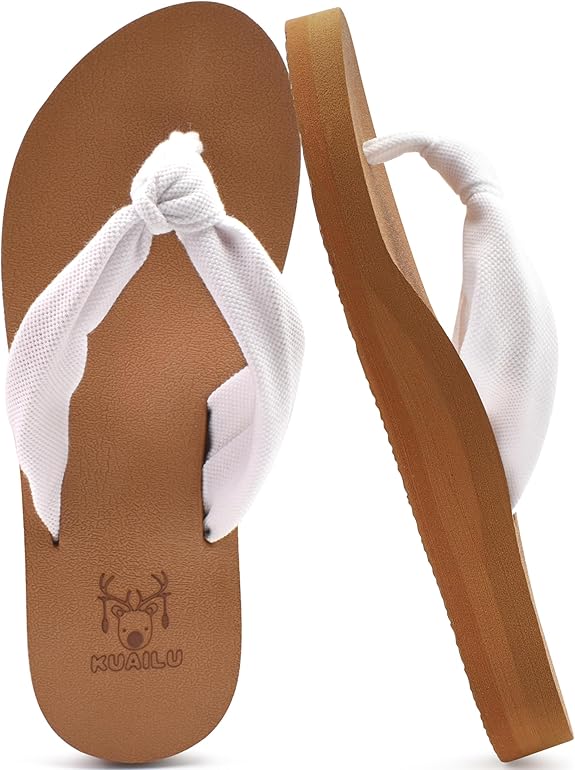
KuaiLu
Flip Flops with Arch Support
Cushioned, lightweight sandals with supportive arch design—a practical choice for beach trips, errands, and long summer walks.
Shop the sandals
baleaf
Athletic One-Piece Swimsuit
A functional one-piece with adjustable straps and moderate coverage, designed for swimming, training, surfing, and active beach days.
Shop the swimsuit
Astylish
Linen-Cotton Button-Down Shirt
A relaxed cotton-linen shirt with a collared V-neck and roll-up sleeves—easy to style over swimwear or with denim and shorts.
Shop the shirt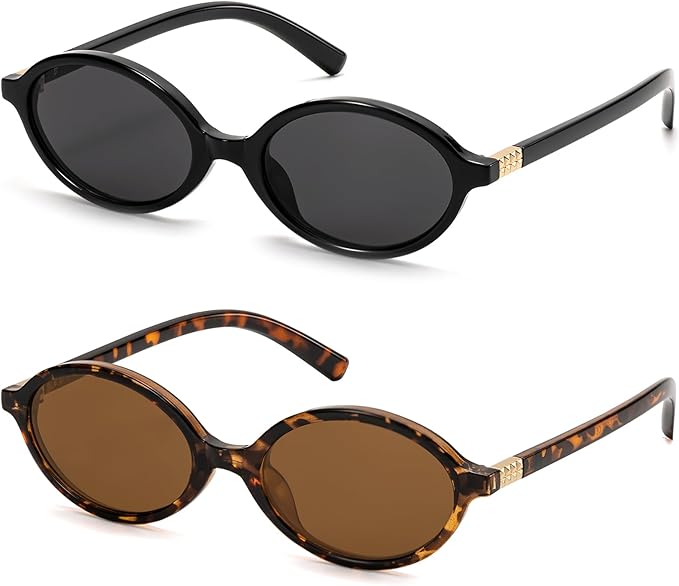
ViewJoy
Retro Oval Sunglasses
Small oval sunglasses with a 90s-inspired silhouette and UV400 lens protection—a quick way to add a vintage edge to everyday looks.
Shop the sunglasses
Affiliate disclosure: This section contains affiliate links. If you make a purchase through these links, I may earn a commission at no additional cost to you. Product selection, pricing, availability, and delivery terms may change—please review the current details on Amazon before purchasing.
As an Amazon Associate I earn from qualifying purchases.