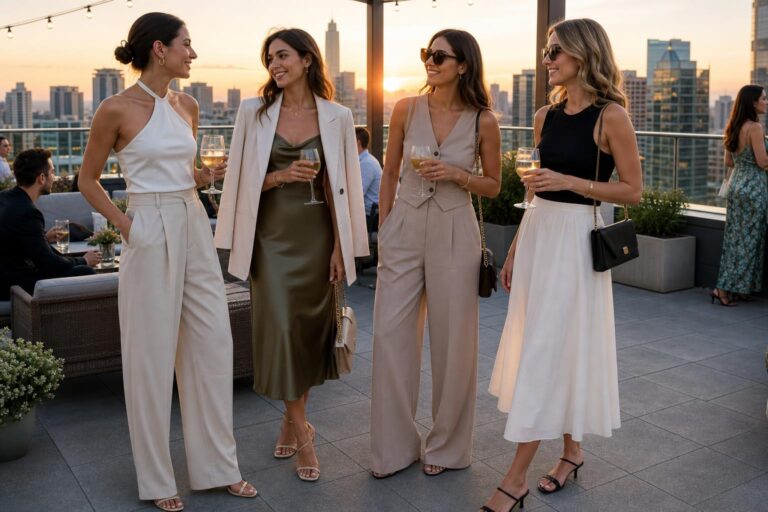
Dinner Party Outfits for Polished Evenings
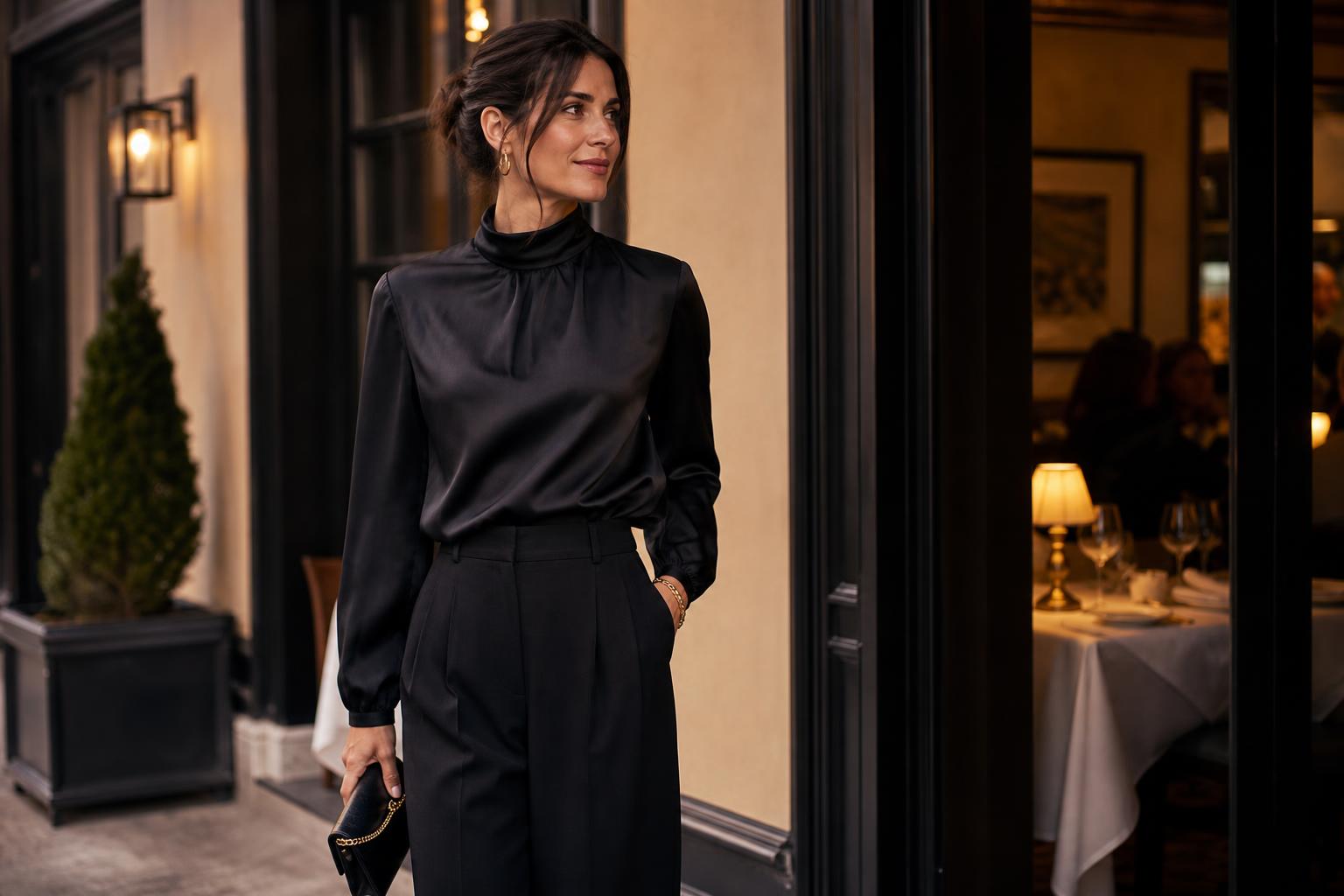
The mood of a dinner party can shift quickly from relaxed to polished, and that is exactly why dinner party outfits often feel harder to plan than other event looks. You are not dressing for a single fixed dress code. You may be heading to a casual restaurant gathering, a work dinner, a chic city evening in New York, or a more glamorous host-led event that feels closer to cocktail attire than a simple meal.
That overlap is what makes so many aesthetics blur together. A satin slip dress can read quiet and minimal with The Row-inspired accessories, or look far more glamorous with metallic heels and jewelry. A tailored blazer can feel work-appropriate, fashion-forward, or party-ready depending on texture, silhouette, and styling. The real difference is not the item itself but the visual logic behind how it is worn.
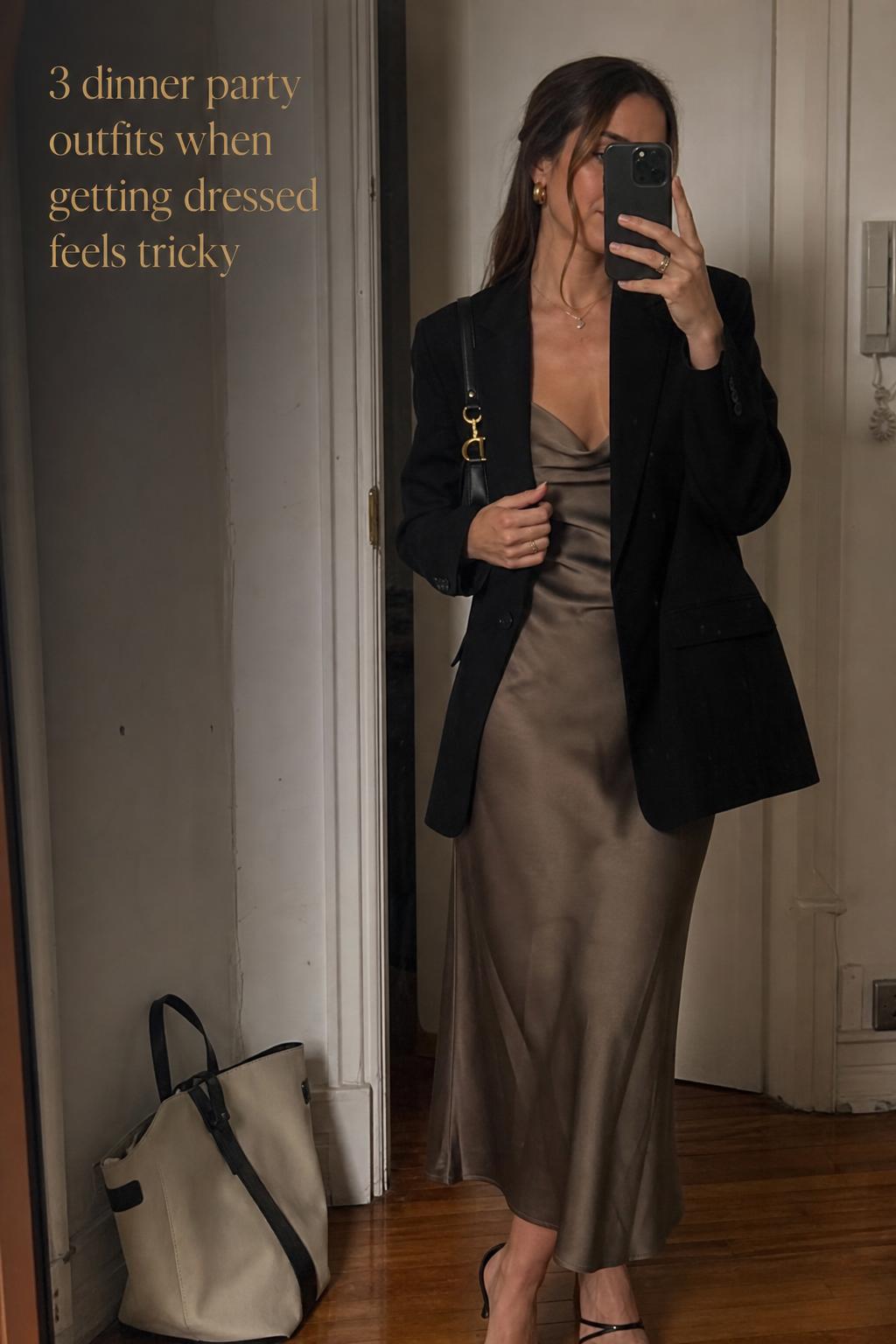
This guide breaks down the most useful dinner party style directions, how to tell them apart, and how to wear them in real life. Instead of a generic list, the focus here is on silhouette, fabric, accessories, and occasion so you can understand what makes an outfit feel polished, effortless, glam, or smart casual.
The Fashion-Note Edit
Five effortless pieces to refresh your everyday wardrobe
A polished, practical edit for workdays, weekends, and everything in between.

The Drop
Women’s Blake Long Blazer
A longline, tailored blazer with a notched collar and a single-button closure—an easy layer for denim, dresses, or office-ready looks.
Shop the blazer
Amazon Essentials
Women’s Lightweight Crewneck
A soft, lightweight sweater with a clean crew neckline—the kind of reliable layer that works from cool mornings to air-conditioned spaces.
Shop the sweater
Amazon Essentials
Women’s Loafer Flat
A classic flat loafer that gives casual outfits a more polished finish and pairs naturally with tailored pants, skirts, and straight-leg jeans.
Shop the loafers
Levi’s
Women’s 501 90s Jeans
A relaxed, vintage-inspired take on the iconic 501 silhouette—made for an easy, lived-in look without the thrift-store search.
Shop the jeans
Colorfulkoala
High-Waisted 7/8 Leggings with Pockets
Soft, four-way-stretch leggings with side pockets and a high-rise waistband—designed for movement, errands, and off-duty comfort.
Shop the leggings
Affiliate disclosure: This section contains affiliate links. If you make a purchase through these links, I may earn a commission at no additional cost to you. Product selection, pricing, availability, and delivery terms may change—please review the current details on Amazon before purchasing.
As an Amazon Associate I earn from qualifying purchases.
The four dinner party style moods that shape almost every look
Most dinner party outfits fall into four broad style moods: dressy, glam, chic, and casual. These categories often overlap, which is why people confuse them, but each one creates a different impression. Once you recognize the visual signals, choosing what to wear becomes much simpler.
Your wedding style is personal.
Your plan should feel that way, too.
Zarellea keeps your guest list, budget, vendors, and every next step beautifully organized — so you can focus on the moments that feel like you.
Dressy
Dressy dinner looks tend to feel neat, event-aware, and intentionally elevated without going fully formal. Think a satin midi dress, a sleek skirt and top, or a tailored jumpsuit with clean lines. The silhouette usually stays refined rather than dramatic, and accessories are chosen to complete the outfit rather than dominate it. This is the category that works especially well for restaurant dinners, hosted evenings, and many social gatherings where you want to look polished but not overdone.
Glam
Glam dinner party outfits lean into shine, contrast, and stronger visual impact. Sequins, velvet, satin, and open-back details all sit naturally here. This mood is closer to eveningwear and often appears in celebrity-inspired looks, designer dressing, and gala-adjacent events. A Paco Rabanne-inspired metallic texture, a Zimmermann dress with movement, or a dramatic gown can all signal glam depending on styling. Heels, statement jewelry, and a more defined finish matter more in this category.
Chic
Chic is often the most modern and the most misunderstood. It usually relies on restraint. A black dress with a sharp blazer, a minimalist two-piece set, or a sleek skirt with understated jewelry can look far more current than a louder party look. Brands such as The Row, Khaite, and Marant Etoile are useful references because their appeal is often built around proportion, subtle luxury, and controlled styling rather than obvious embellishment.
Casual
Casual dinner looks still need intention. Casual does not mean careless. It usually means softer structure, easier layering, and more practical separates. A relaxed blouse with a skirt, a two-piece set, or polished jumpsuit can work well for a low-key dinner party. The aim is balance: enough ease to suit the setting, enough refinement to respect the occasion.
Why these dinner party outfits are often confused
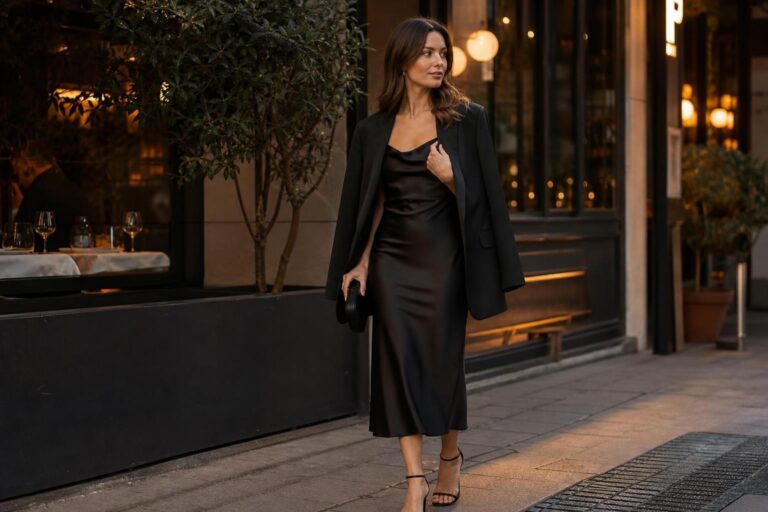
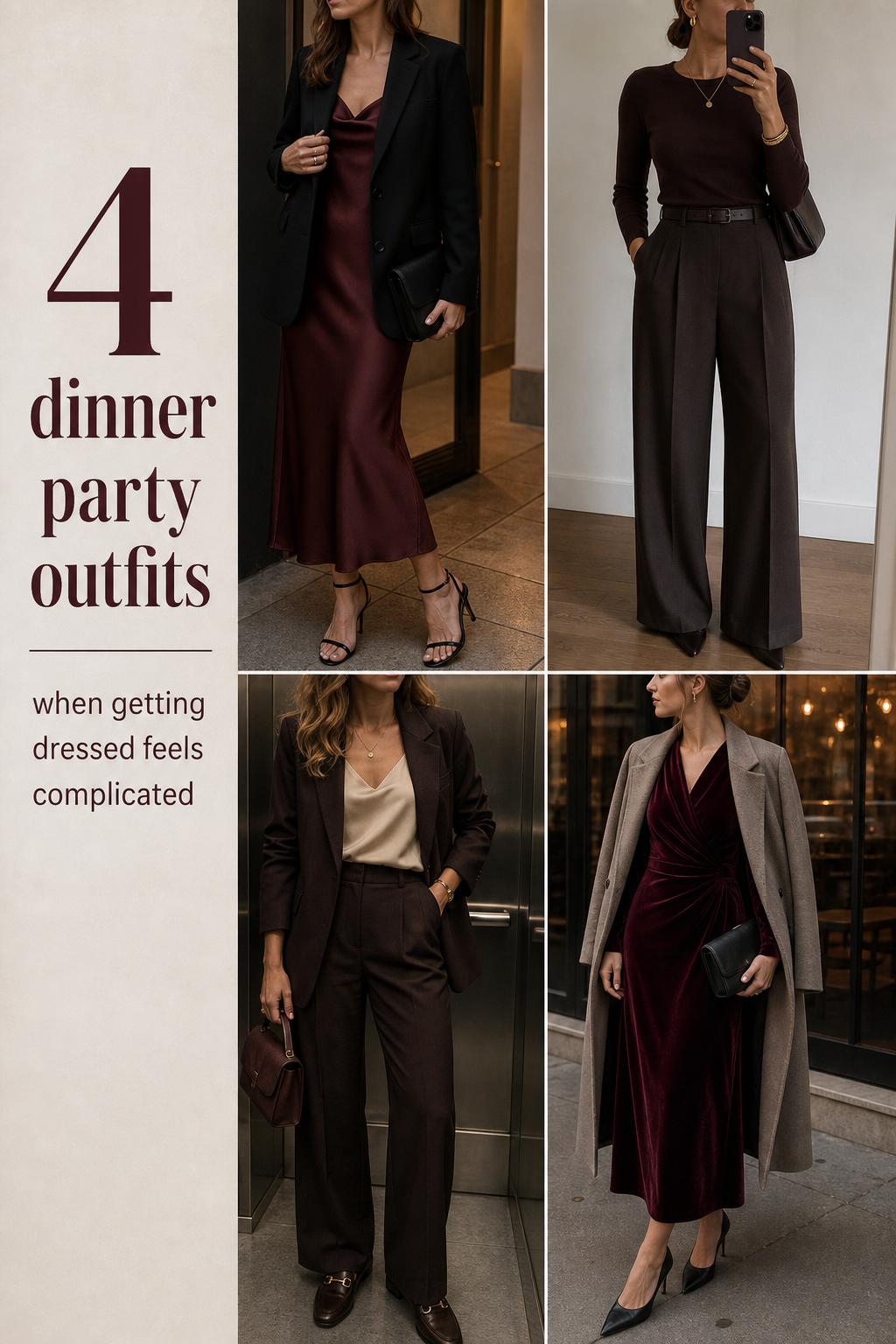
The same garment can move between categories depending on styling. A slip dress is the easiest example. In one version, it is paired with barely-there heels, a clutch, and a sleek evening finish for a glam dinner party outfit. In another, it is layered under a structured blazer with quieter accessories and becomes chic. Add softer shoes and simpler jewelry, and it turns into an easy dressy look.
That is why silhouette alone is never the full story. Texture, proportion, and accessories are what shift the mood. Satin brings fluidity and evening light. Velvet adds depth and weight. Sequins create celebration. A tailored blazer sharpens almost anything. A soft knit or more relaxed top instantly lowers the formality.
Location can also change the reading of an outfit. A look that feels perfectly standard in Los Angeles may feel understated in a Lower East Side setting, while a polished Gramercy Park dinner may call for a more refined version of the same idea. City context matters because dinner parties often reflect venue, host style, and social setting as much as fashion trends.
Silhouette first: how dresses, jumpsuits, sets, and separates create different impressions
If you want to understand dinner party dressing quickly, start with silhouette. Before color, before accessories, before trend references, the shape of the outfit tells people how formal, relaxed, or modern it feels.
The dress: the easiest path to a polished look
Dresses remain the clearest anchor for dinner party outfits because they solve the outfit in one visual line. A midi dress in satin feels fluid and elegant. A velvet dress feels richer and more evening-specific. An open-back dress adds drama without needing heavy styling. Maxidresses can lean formal or resort-inspired depending on print, movement, and accessories, which is why they often appear in summer dinner party outfit ideas.
What makes dresses practical is their ability to adapt. A Zimmermann dress might bring softness and femininity, while a cleaner black column shape can feel closer to The Row. The visual difference is less about whether both are dresses and more about structure, texture, and finish.
The jumpsuit: sleek, modern, and quietly confident
A jumpsuit changes the mood immediately because it replaces softness with line. It often looks more directional than a dress and can feel especially strong for work dinners or modern city evenings. A tailored jumpsuit works well when you want an alternative to traditional cocktail attire but still want a complete outfit that feels considered.
The trade-off is that a jumpsuit tends to read cleaner and sharper, so accessories need to support that simplicity. Strappy heels and a compact bag usually keep the shape light. Heavy styling can make the look feel too formal or visually crowded.
The two-piece set: effortless coordination
Two-piece sets work because they create instant harmony. Whether the set is soft and flowy or more tailored, the matching fabric gives the outfit a deliberate finish that feels smarter than random separates. This category is especially useful for readers who want dinner party outfits that look polished without relying on dresses.
In real life, a set also gives flexibility. You can soften the overall impression with minimal jewelry and a simple bag, or make it more evening-ready with heels and a stronger accessory choice. That adaptability is part of why curated collections often place two-piece sets next to gowns and cocktail dresses.
Skirt and top: the most adjustable option
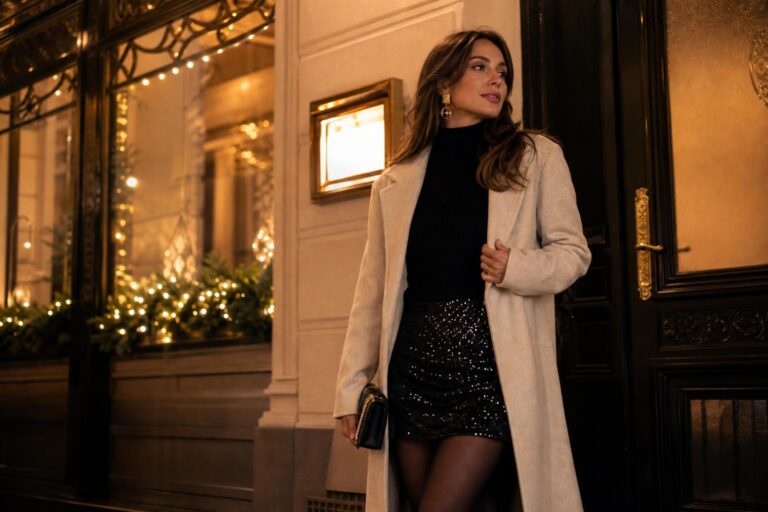
A skirt and top combination gives you more control over balance. A satin skirt with a more structured top creates contrast. A fitted skirt with a softer blouse feels more romantic. A sequined skirt with a simple top is often a better dinner party choice than a fully embellished dress because it keeps the outfit visually grounded.
This is also the easiest route if you want to shift between casual and dressy. The same skirt can look understated with a cleaner top or much more festive with richer fabric and evening accessories.
How to instantly tell the difference between chic and glam
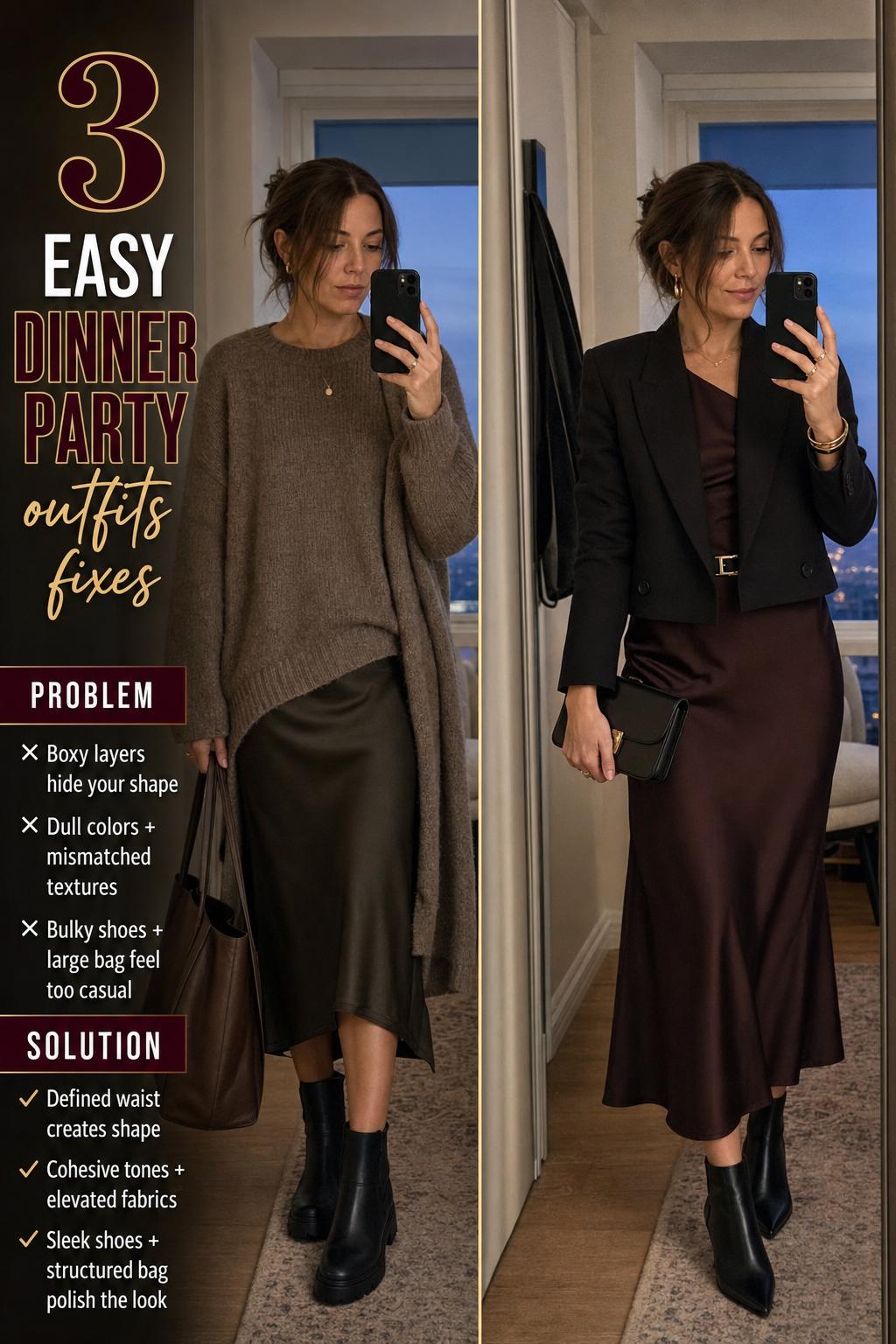
Chic and glam are the two dinner party aesthetics people confuse most often because both are elevated. The difference is in how visible the effort feels.
- Chic usually relies on cleaner lines, fewer statement elements, and quieter accessories.
- Glam uses shine, stronger texture, and a more obvious evening finish.
- Chic often feels softly structured and controlled.
- Glam feels more celebratory and intentionally high-impact.
- Chic may center on black, tonal dressing, or subtle contrast.
- Glam often welcomes metallics, deeper jewel tones, sequins, or richer velvet.
A Khaite-inspired silhouette with a sleek bag and minimal heels will often read chic even if the dress itself is body-skimming. A Paco Rabanne-style metallic effect or a velvet gown with jewelry will move into glam because the finish becomes part of the message. Both are valid dinner party outfits, but they suit different rooms and different personalities.
By occasion: what to wear to a dinner party depending on the setting
One of the biggest styling mistakes is dressing only for the word dinner and ignoring the actual context. A work dinner, date night, formal dinner, and casual restaurant gathering can all happen in the evening, but they do not ask for the same level of polish.
Work dinner attire
Work dinners need a sharper balance between personality and professionalism. This is where blazers, tailored jumpsuits, refined dresses, and sleek two-piece sets make the most sense. You want enough structure to feel credible, especially if the dinner extends from office culture, but enough softness that the outfit does not feel like daytime workwear carried too literally into the evening.
A black or deep-toned dress with a tailored blazer is one of the safest and strongest choices. It reads polished, modern, and appropriate across many settings. Accessories should support the look rather than distract from it.
Date night dinner
Date night invites a little more mood. Satin, open-back details, softer movement, and jewelry feel natural here because the atmosphere is more personal. A slip dress, a fluid skirt and top, or a sleek jumpsuit can all work well. The best version usually feels easy rather than overstyled, especially if the venue is intimate.
This is where fabric matters. Satin catches light softly and feels evening-specific without automatically becoming formal. Velvet can look beautiful in cooler seasons because it adds warmth and depth at the same time.
Formal dinner party
A formal dinner is where glamour can step forward. Gowns, elegant maxidresses, richer fabrics, and stronger accessories become more appropriate because the event supports a more finished appearance. Eveningwear cues matter more here, and this is often where designer references such as Markarian, Zimmermann, or Talbot Runhof feel most relevant.
The easiest way to judge a formal dinner outfit is to ask whether the look holds its own in a room with candles, polished tables, and a host-led atmosphere. If the outfit feels too plain under that kind of setting, it may need either stronger texture or more refined accessories.
Casual dinner gathering
Casual dinner outfits work best when they look intentionally relaxed. A simple dress, a skirt and top, or a cleaner set can all suit the occasion. The trick is to avoid looking as though you dressed for daytime errands. One elevated element helps: satin texture, a polished bag, refined jewelry, or a sharper shoe choice can keep a casual look from feeling flat.
The fabric and color playbook that makes outfits feel right after dark
Color and fabric often do more for dinner party outfits than trend details. Evening settings absorb and reflect light differently, so certain textures naturally perform better. That is why satin, velvet, chiffon, and sequins appear so often in party dressing.
Satin and silk-like finishes
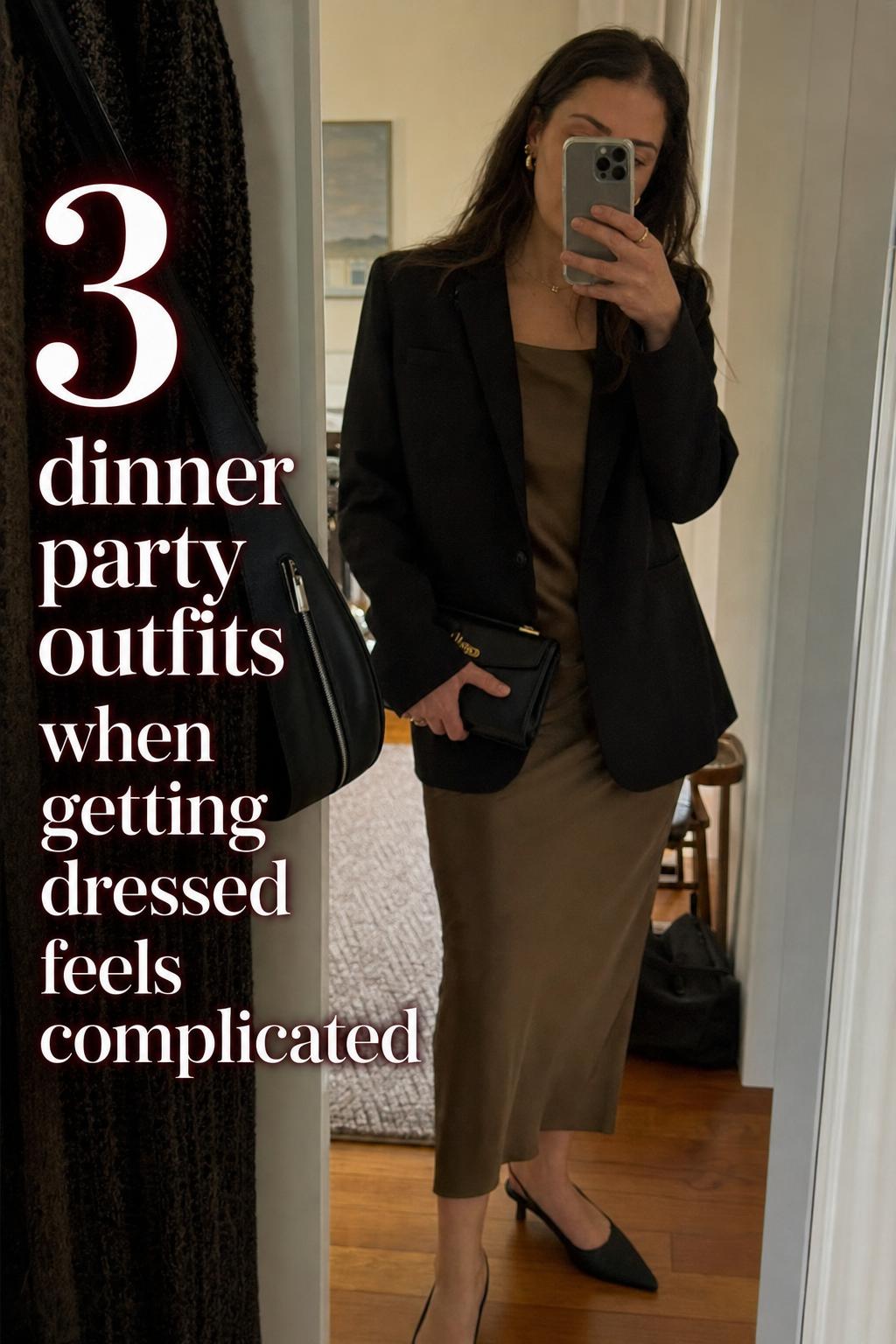
Satin creates movement and soft shine, which is why it works so well for dresses, skirts, and tops at dinner. It reads elevated but still wearable. In a minimalist silhouette, it feels chic. In a slip dress or fluid shape, it can lean romantic or glam. It is one of the easiest ways to make a simple outfit feel event-appropriate.
Velvet and deeper evening texture
Velvet brings visual depth. It tends to feel richer, slightly more formal, and especially effective for cooler weather or more elegant dinners. A velvet dress or velvet-accented piece does not need much styling because the texture already carries presence.
Sequins and celebratory surfaces
Sequins are best used with restraint unless the event clearly supports high glamour. A fully sequined look can work for festive dinners or gala-adjacent settings, but a sequined skirt or detail is often easier to wear. That approach keeps the outfit balanced and lets the texture do the talking.
Color palettes that feel polished at dinner
Black remains the easiest anchor because it sharpens silhouette and gives accessories room to stand out. Emerald, gold, and other rich evening tones add depth without feeling loud. Gingham ensembles and lighter summer palettes can also work, especially in warm-weather city settings or resort-inspired dinners, but the shape and finish should still feel elevated.
Tip: when the outfit itself is simple, richer color or texture can create enough interest. When the outfit already has shine or embellishment, a more controlled palette usually keeps the look sophisticated.
The small accessories that change the whole outfit
Accessories are where many dinner party outfits either become polished or lose focus. They are not just add-ons. They determine whether the outfit feels modern, glam-casual, minimal, or unfinished.
- Strappy heels keep dresses and jumpsuits light and evening-ready.
- A clutch or smaller bag looks more intentional than a large daytime tote for most dinner settings.
- Jewelry can either refine a quiet outfit or push it into glamour.
- A blazer can act like an accessory in itself by adding structure and balancing softer fabrics.
Think about the role each piece is playing. If the dress is already strong, accessories should steady it. If the outfit is minimal, accessories can add personality. This is where many chic dinner outfits separate themselves from generic party looks. The styling is precise, not crowded.
Even smaller details such as a bag shape or a cleaner heel can shift the impression from trendy to timeless. That is one reason fashion readers often gravitate toward references from The Row or Khaite when trying to make dinner outfits feel elevated without becoming overly embellished.
Real-life outfit comparisons: the same dinner, interpreted four different ways
City restaurant dinner
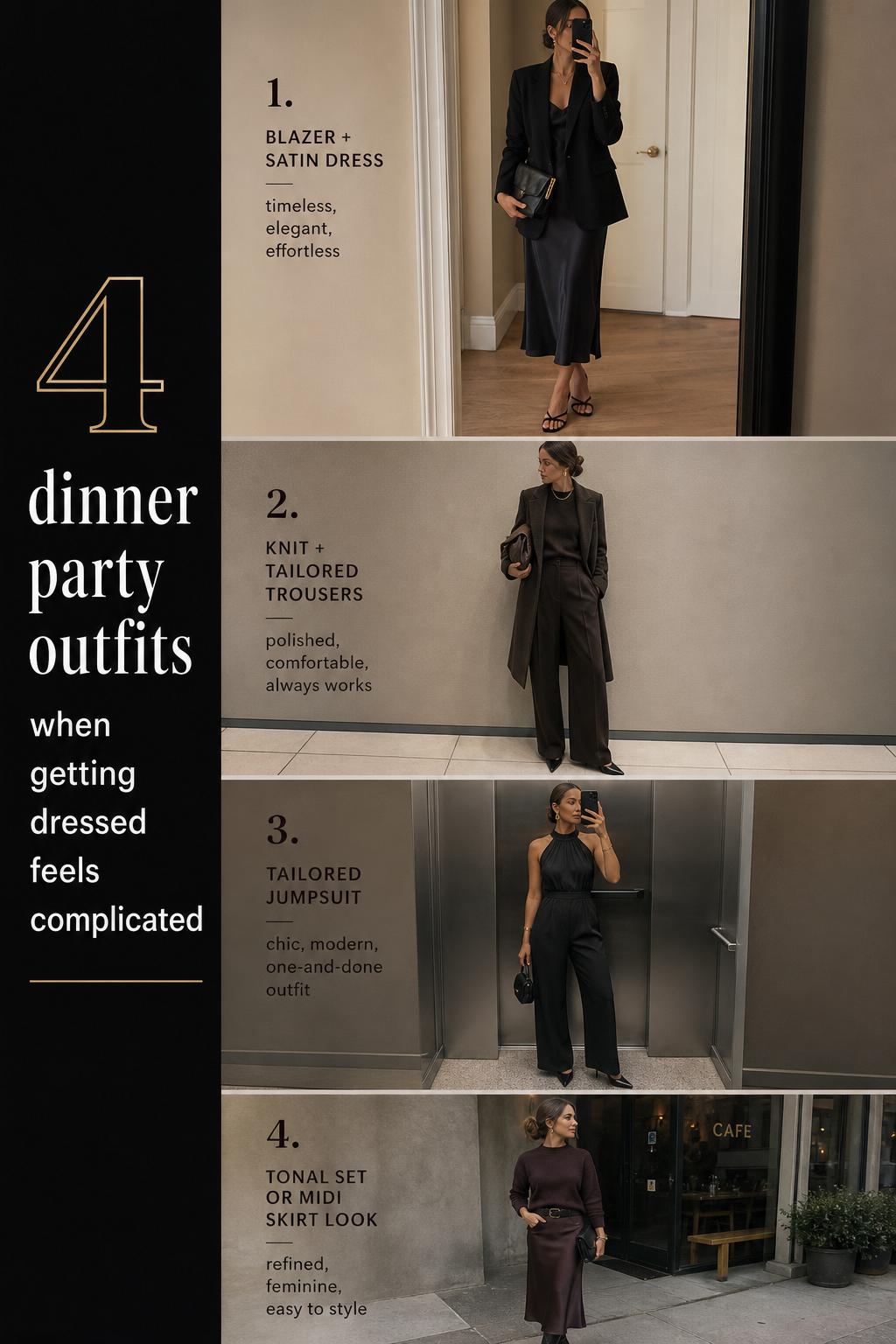
A chic version might be a black midi dress, clean heels, and a compact bag with minimal jewelry. The silhouette feels controlled and modern. A glam version of the same dinner could use a satin dress in emerald or gold tones, more visible jewelry, and a sharper evening finish. A dressy take could be a skirt and top with subtle texture, while a casual version might be a polished two-piece set with simpler accessories.
Summer dinner party in New York
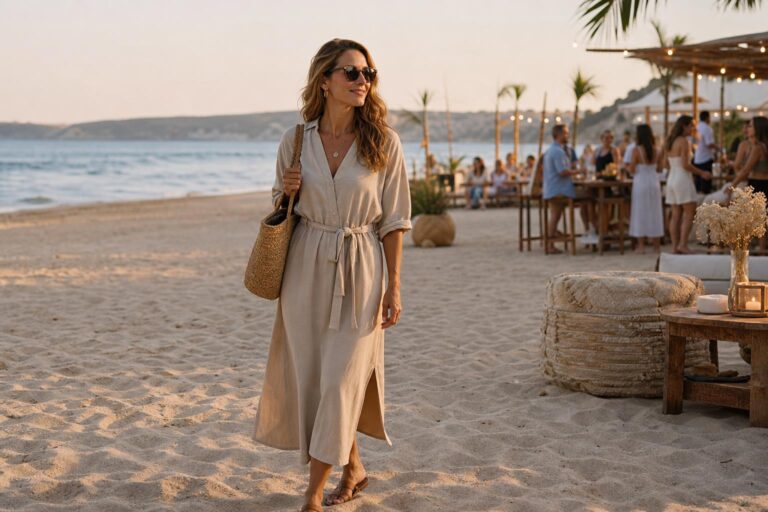
A summer look in New York can carry more fashion energy, especially in neighborhoods such as Gramercy Park or the Lower East Side. A gingham ensemble or flowing maxidress can feel fresh and city-aware when paired with refined accessories. A more minimal interpretation would use a sleeker dress and restrained bag. The difference is whether you want the outfit to feel playful and visible or polished and quiet.
Los Angeles-hosted social dinner
In Los Angeles, a dinner party look often tolerates a little more ease. A fluid dress with delicate heels, or a sleek set with relaxed styling, can feel just right. This is where glam-casual hybrid dressing works especially well. The outfit is elevated, but it still looks effortless. A celebrity-inspired reference like Kendall Jenner can help illustrate that balance: polished, clean, and unfussy rather than heavily formal.
Hosted formal evening
For a more formal dinner, the visual expectation rises. A gown, an open-back dress, or a velvet evening piece becomes far more natural. Compared with a casual restaurant look, the styling here should feel complete from head to toe. The outfit does not need excess, but it does need intention. This is where labels such as Markarian, Paco Rabanne, Zimmermann, and Talbot Runhof become useful style references because they are often associated with defined occasion dressing.
Brand references that help define the mood
Brands can act like shorthand when you are deciding which direction your outfit should take. Not everyone shops from the same labels, but understanding the style language behind them can make planning easier.
- The Row: minimal, refined, quietly polished dinner dressing.
- Zimmermann: feminine movement, occasion softness, and elegant statement appeal.
- Khaite: sleek structure with a modern edge.
- Marant Etoile: relaxed fashion energy with an effortless feel.
- Paco Rabanne: stronger texture, metallic impact, and glam evening mood.
- Markarian and Talbot Runhof: more overtly occasion-driven elegance.
You do not need to wear these exact brands to use the style logic. The point is to notice what each one emphasizes. Some build the outfit around clean silhouette. Others build it around surface, movement, or occasion drama.
Common styling mistakes that make dinner outfits feel off
The most common mistake is dressing for a party image rather than for the actual dinner. If the venue, host, or setting suggests ease, a very formal gown can feel disconnected. If the event leans elegant, overly casual separates can look unfinished even if the pieces are individually attractive.
Another frequent issue is competing focal points. Sequins, a bold shoe, oversized jewelry, and a strong bag all at once can overwhelm the outfit. Dinner party styling usually looks better when one element leads and the others support.
There is also the practical side. Fabrics that wrinkle easily, shoes that limit movement, or bags that are too large for an evening setting can all pull an outfit away from that polished finish. Real-life wear matters because dinner events often involve walking, sitting for long stretches, and moving between indoor and outdoor spaces.
Tip: if you are unsure, refine rather than add. A better heel, sharper blazer, or richer fabric often improves a look more than piling on extra details.
Which style works best for your wardrobe and lifestyle
If your wardrobe already leans minimal, chic dinner party outfits will probably feel the most natural. They ask for fewer statement pieces and depend more on line, quality-looking fabric, and balanced accessories. This makes them practical for readers who want reusable outfits that can move between dinners, date nights, and polished social plans.
If you enjoy occasion dressing and want your evening clothes to feel distinctly special, glam or more dressy looks may suit you better. Sequins, velvet, open-back dresses, and stronger jewelry create more separation from daily wear, which is often exactly the point.
For mixed lifestyles, two-piece sets, tailored jumpsuits, and versatile dresses often give the most range. They can be styled down for casual dinners or elevated for formal plans with simple changes in shoes, bags, and jewelry. That flexibility is especially useful if you attend both work dinners and social events.
How to blend chic and glam without losing the balance
Some of the best dinner party outfits sit between categories. That middle ground often looks the most modern because it avoids both stiffness and excess. The key is to combine one quiet element with one expressive element.
- A sequined skirt with a clean top.
- A satin slip dress with a structured blazer.
- A minimal black dress with metallic heels.
- A sleek jumpsuit with richer jewelry and a clutch.
This kind of styling creates contrast, and contrast is what makes outfits feel thoughtful. The result is often more wearable than going fully in one direction, especially for modern dinner gatherings where dress codes are not always clearly announced.
Shopping and budget thinking: what matters more than price
When shopping for dinner party outfits, it helps to focus less on building a one-time look and more on identifying the elements that carry the most visual weight. Usually that means silhouette first, fabric second, and accessories third. A well-cut dress in satin or velvet often looks more convincing than a trend-heavy piece in a weaker fabric.
If you are deciding where to spend more, start with the anchor piece. A strong dress, jumpsuit, or matching set does most of the work. Shoes and a bag can then refine the mood. This is also why curated collections and editorials often build outfits around a single focal garment and support it with simpler finishing pieces.
For readers who prefer a practical closet, pieces that can shift between work dinner attire and social events usually offer the best value. A blazer, a polished black dress, a clean jumpsuit, or a skirt in an evening fabric can all adapt well across settings.
Final styling notes for getting dressed without overthinking it
The easiest way to approach dinner party outfits is to decide three things before you choose the clothes: how formal the setting feels, whether you want the outfit to read chic or glam, and which silhouette makes you feel most comfortable for a full evening. That framework narrows your options quickly and usually leads to a better result than chasing trends in the moment.
In practice, the strongest dinner looks are rarely the busiest. They are the ones where the silhouette suits the occasion, the fabric responds well to evening light, and the accessories finish the outfit without pulling it apart. Whether you prefer a sleek The Row-inspired dress, a feminine Zimmermann shape, a sharper Khaite-style line, or a more festive velvet or sequined piece, the most convincing outfit is the one that looks intentional in the room you are walking into.
Once you start noticing the difference between dressy, glam, chic, and casual execution, dinner party dressing becomes much easier to read. And that is usually the real goal: not just wearing something pretty, but understanding why the outfit works.
FAQ
What should I wear to a dinner party if the dress code is unclear?
A polished middle ground usually works best: a satin midi dress, a tailored jumpsuit, or a skirt and top with refined accessories. These options feel dressed up enough for most settings without looking too formal for a casual dinner.
What is the difference between a chic dinner outfit and a glam dinner outfit?
A chic dinner outfit relies on cleaner lines, quieter accessories, and a more restrained finish, while a glam dinner outfit uses stronger texture, shine, richer fabrics, or more visible statement details. Both are elevated, but chic feels more controlled and glam feels more celebratory.
Are jumpsuits appropriate for dinner party outfits?
Yes, especially for modern city dinners, work dinners, or events where you want a sleek alternative to a dress. A tailored jumpsuit usually looks best with lighter evening accessories such as strappy heels and a smaller bag.
What fabrics work best for evening dinner outfits?
Satin, velvet, chiffon, and sequins are the most natural evening fabrics because they catch or absorb light in a flattering way. Satin feels fluid and versatile, velvet adds depth, chiffon brings softness, and sequins create a more festive mood.
How do I dress for a work dinner without looking too corporate?
Choose pieces with structure but not strict office energy, such as a refined dress with a blazer, a tailored jumpsuit, or a sleek two-piece set. The goal is to keep the outfit professional while softening it enough for an evening setting.
Can I wear separates to a dinner party instead of a dress?
Absolutely. A skirt and top or a coordinated two-piece set can look just as polished as a dress, especially if the fabric has some evening texture and the accessories feel intentional. Separates are often one of the easiest ways to control formality.
What shoes work best with dinner party outfits?
Strappy heels are the most common choice because they keep the outfit light and evening-ready, but the best shoe depends on the outfit’s silhouette and level of formality. Cleaner shoes usually suit chic looks, while metallic or more decorative styles can support glam outfits.
How can I make a casual dinner outfit look more polished?
Add one elevated element such as satin texture, a structured blazer, refined jewelry, or a smaller evening bag. That single upgrade often makes the difference between a daytime outfit and a casual dinner look that still feels intentional.
Finish the look
The little extras that make a summer outfit feel complete
From beach days to city weekends, these easy pieces bring comfort, texture, and a polished finishing touch.

FENBEN
Straw Hobo Crossbody Bag
A handwoven straw bag with both short and crossbody straps—an effortless finishing touch for vacation looks and warm-weather outfits.
Shop the bag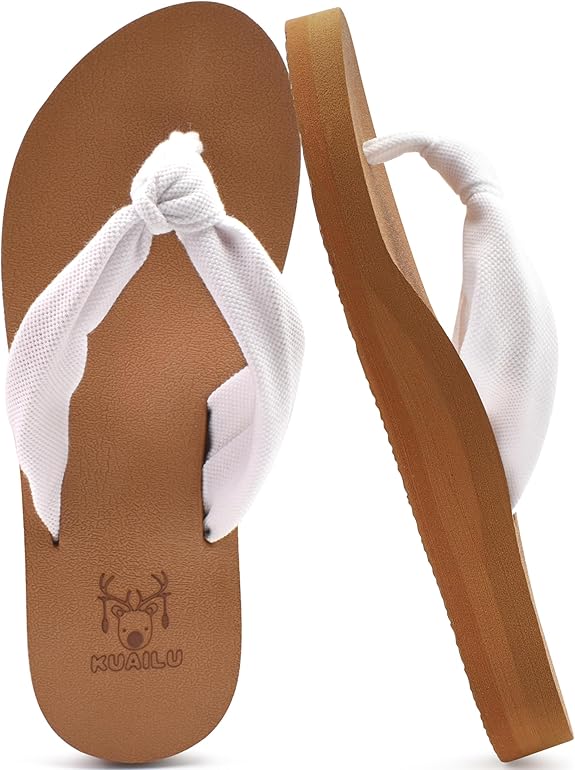
KuaiLu
Flip Flops with Arch Support
Cushioned, lightweight sandals with supportive arch design—a practical choice for beach trips, errands, and long summer walks.
Shop the sandals
baleaf
Athletic One-Piece Swimsuit
A functional one-piece with adjustable straps and moderate coverage, designed for swimming, training, surfing, and active beach days.
Shop the swimsuit
Astylish
Linen-Cotton Button-Down Shirt
A relaxed cotton-linen shirt with a collared V-neck and roll-up sleeves—easy to style over swimwear or with denim and shorts.
Shop the shirt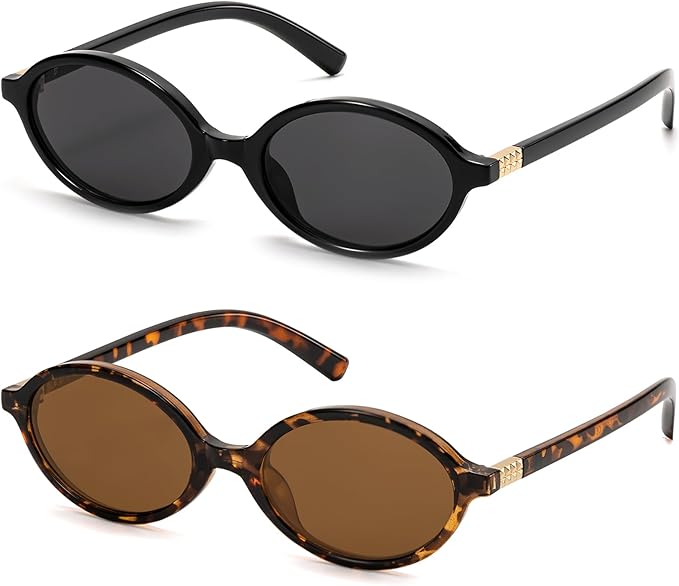
ViewJoy
Retro Oval Sunglasses
Small oval sunglasses with a 90s-inspired silhouette and UV400 lens protection—a quick way to add a vintage edge to everyday looks.
Shop the sunglasses
Affiliate disclosure: This section contains affiliate links. If you make a purchase through these links, I may earn a commission at no additional cost to you. Product selection, pricing, availability, and delivery terms may change—please review the current details on Amazon before purchasing.
As an Amazon Associate I earn from qualifying purchases.