Fall Hiking Outfits That Feel Polished
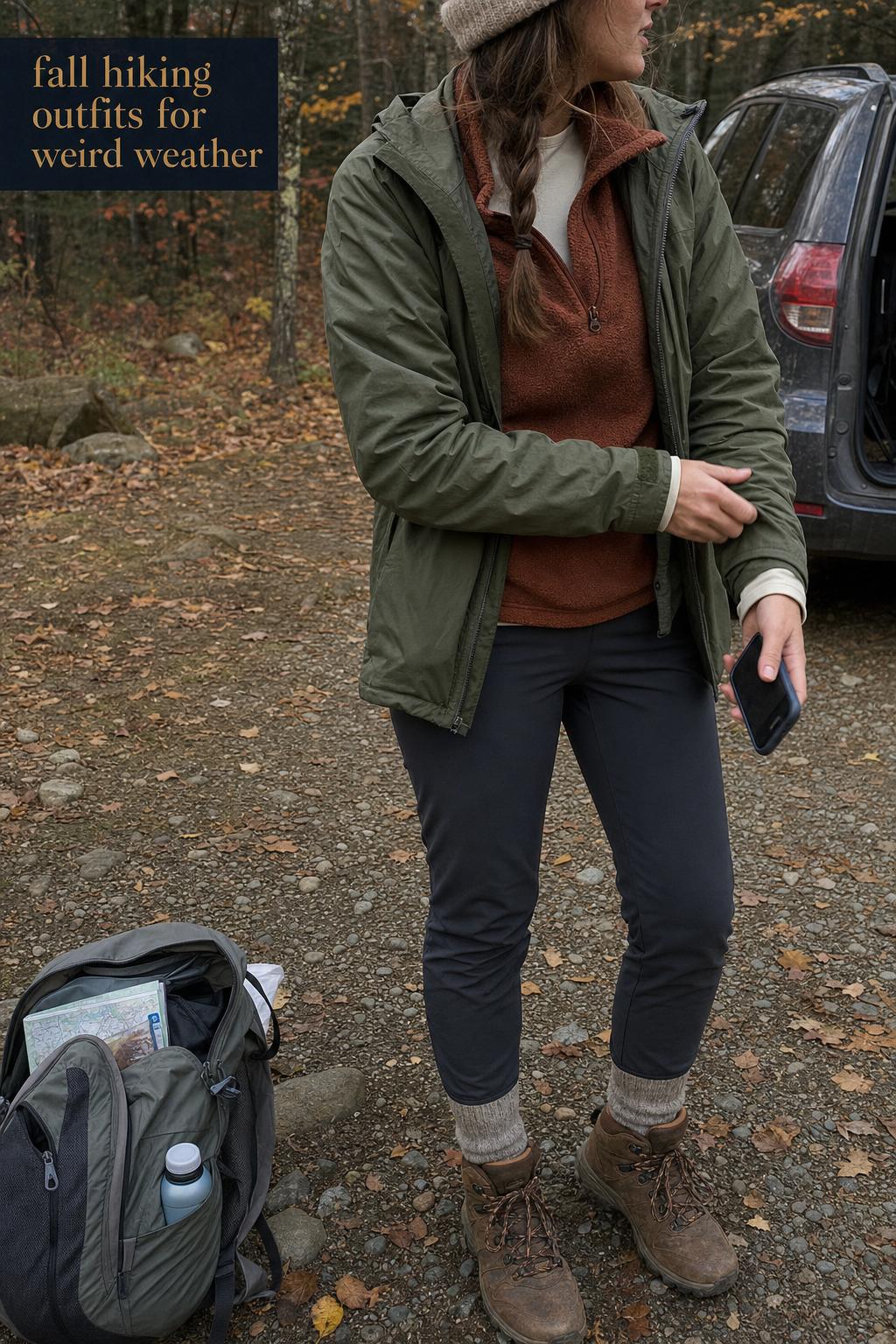
Cool mornings, warmer afternoons, windy ridgelines, shady forest trails, and the constant question of what to do with that extra layer once you start moving—this is exactly why fall hiking outfits can feel harder to plan than summer or winter gear. In autumn, the problem usually is not just getting dressed. It is dressing for changing conditions without feeling bulky, underprepared, or visually disconnected from the season.
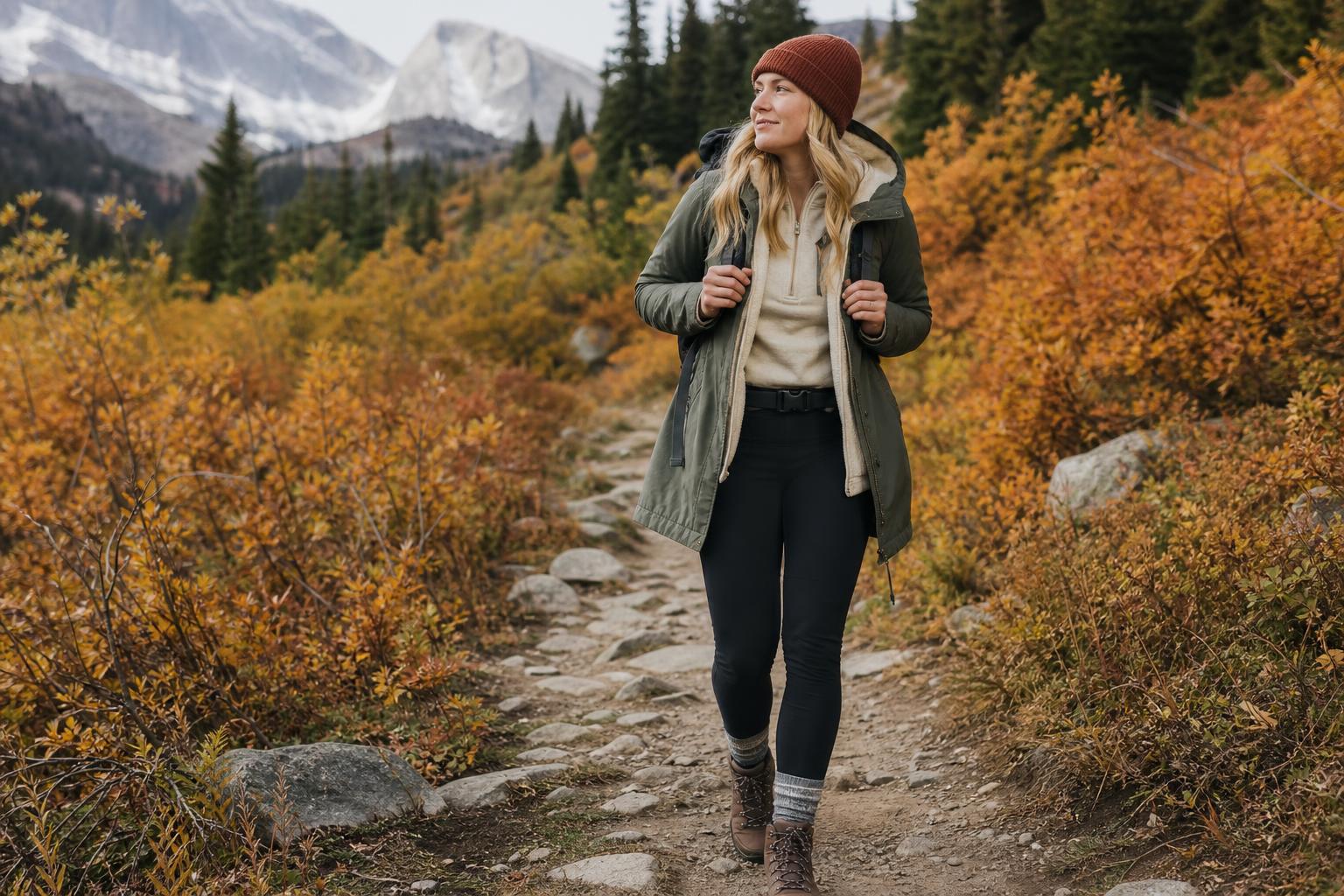
The best fall hiking outfits solve several things at once: warmth, breathability, movement, weather protection, and a look that still feels like you. Some hikers want a technical, gear-focused setup for shoulder season miles. Others want a practical outfit that also feels polished in earthy tones, plaid, or soft neutrals for a leaf-peeping trail day. Both needs are valid, and the smartest outfits usually sit somewhere in the middle.
This guide breaks the challenge down in a realistic way. You will find the layering logic behind a good outfit, practical combinations for different trail situations, regional adjustments for U.S. conditions, and styling details that make autumn hiking clothes feel intentional instead of random.
The Fashion-Note Edit
Five effortless pieces to refresh your everyday wardrobe
A polished, practical edit for workdays, weekends, and everything in between.

The Drop
Women’s Blake Long Blazer
A longline, tailored blazer with a notched collar and a single-button closure—an easy layer for denim, dresses, or office-ready looks.
Shop the blazer
Amazon Essentials
Women’s Lightweight Crewneck
A soft, lightweight sweater with a clean crew neckline—the kind of reliable layer that works from cool mornings to air-conditioned spaces.
Shop the sweater
Amazon Essentials
Women’s Loafer Flat
A classic flat loafer that gives casual outfits a more polished finish and pairs naturally with tailored pants, skirts, and straight-leg jeans.
Shop the loafers
Levi’s
Women’s 501 90s Jeans
A relaxed, vintage-inspired take on the iconic 501 silhouette—made for an easy, lived-in look without the thrift-store search.
Shop the jeans
Colorfulkoala
High-Waisted 7/8 Leggings with Pockets
Soft, four-way-stretch leggings with side pockets and a high-rise waistband—designed for movement, errands, and off-duty comfort.
Shop the leggings
Affiliate disclosure: This section contains affiliate links. If you make a purchase through these links, I may earn a commission at no additional cost to you. Product selection, pricing, availability, and delivery terms may change—please review the current details on Amazon before purchasing.
As an Amazon Associate I earn from qualifying purchases.
Why autumn trails make outfit planning tricky
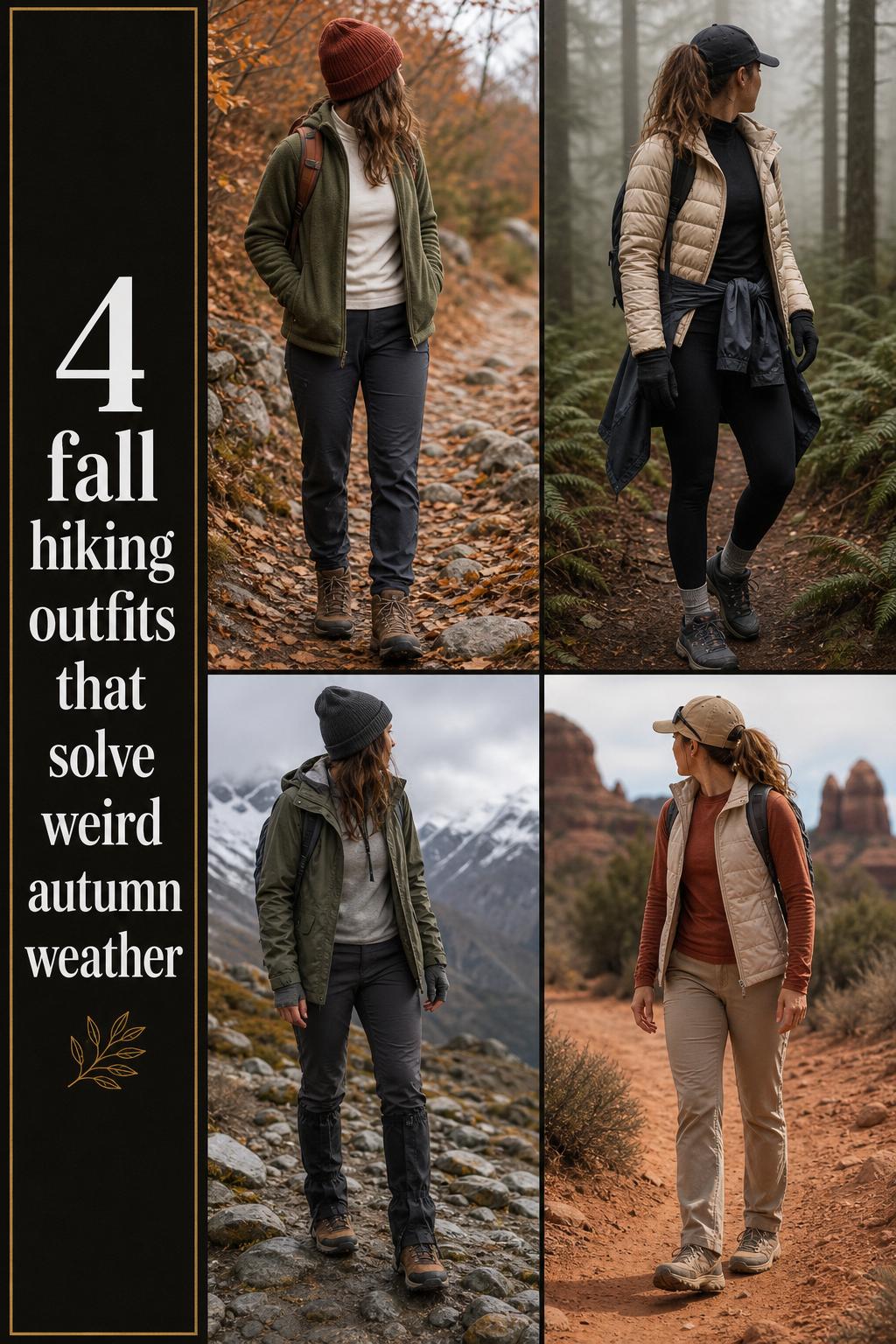
Fall asks more from your clothes than many people expect. Morning temperatures can feel almost cold, especially on Northeast and New England trails, while a few hours of steady movement may make the same jacket feel unnecessary. In the Pacific Northwest and Cascades, damp air and rain gear become part of the outfit conversation. In the Southwest and desert regions such as Arizona and Nevada, mornings may start cool while the afternoon still calls for lighter layers and sun protection.
Your wedding style is personal.
Your plan should feel that way, too.
Zarellea keeps your guest list, budget, vendors, and every next step beautifully organized — so you can focus on the moments that feel like you.
There is also the practical side. Hiking clothing has to move well, manage moisture, and work with trail shoes or hiking boots. At the same time, many people want outfits that look good in real life, not just in a gear checklist. That is why so many fall hiking outfit ideas revolve around layering, fleece, jackets, base layers, boots, hats, and a color palette that feels grounded in the season—olive, rust, beige, and other earthy tones.
The tension is simple: style can suffer when you over-focus on utility, and comfort can suffer when you dress only for the photo. A better approach is to build the outfit around performance first, then refine the silhouette, texture, and color so it feels cohesive.
The dressing principles that make fall hiking outfits work
A strong fall hiking outfit follows the same basic logic whether you prefer an L.L.Bean-inspired classic trail look, a more image-led outfit in Nicole’s style direction, or a gear-focused setup closer to Treeline Review. Start with a layering system, then adjust for weather, trail length, and personal style.
- Use a base layer that can handle moisture rather than trap it.
- Add a mid-layer for warmth, usually fleece or a lightweight insulated piece.
- Finish with an outer layer only when wind or rain protection is necessary.
- Choose pants, leggings, or hiking bottoms that move easily and work with changing temperatures.
- Let accessories do small but important jobs: warmth, visibility, and comfort.
This system works because each layer has a purpose. A base layer sits closest to the skin and helps with moisture management. A mid-layer adds warmth without making the outfit feel rigid. An outer shell protects against weather. Once you understand that logic, it becomes much easier to build outfits instead of guessing.
Base layers are the quiet foundation
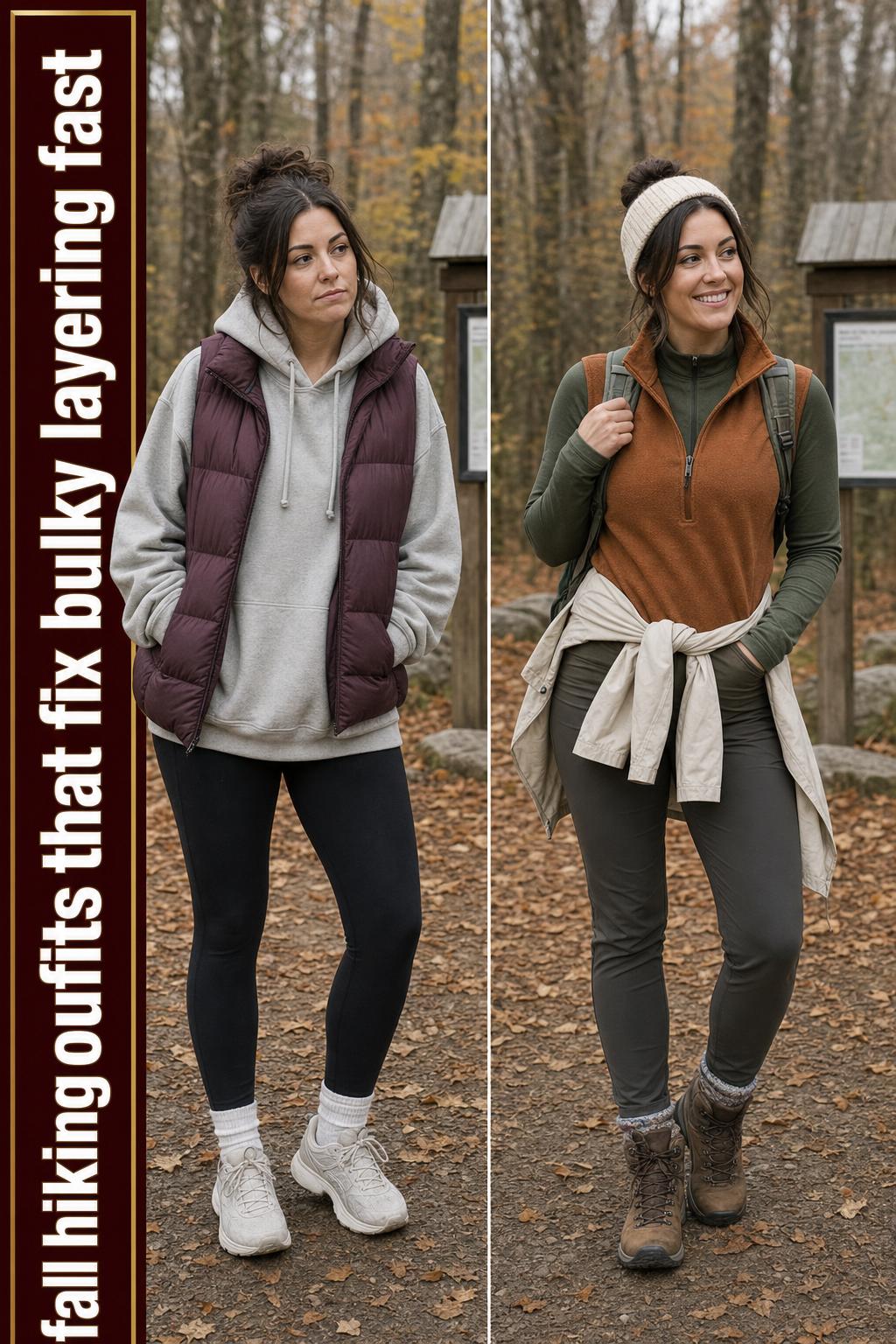
The best base layers for fall hiking are there to support the outfit, not dominate it. Merino wool and synthetic options both appear repeatedly in fall layering advice because they are practical for shoulder season conditions. A fitted long-sleeve base layer under a vest, fleece, or shell creates a clean silhouette and prevents that heavy, overstuffed look that happens when every piece is oversized.
If your hike starts chilly but is expected to warm up, a simple base layer with hiking pants or leggings is often the smartest visual anchor. Everything else can be added or removed around it.
Midlayers carry most of the visual weight
For most fall hiking outfits, the mid-layer is what people actually see for much of the day. This is where fleece jackets, lightweight puffies, fleece vests, or soft pullovers shape the overall look. A Men’s Mountain Classic Fleece Jacket or a Women’s Mountain Classic Fleece Vest gives a classic trail profile. A Patagonia Micro Puff or Montbell Thermawrap moves the outfit toward a more technical, gear-oriented direction.
Fleece often feels softer and more relaxed in appearance, which is why it works well for shorter day hikes, forest trails, and style-forward autumn looks. A lightweight puffy usually looks neater and more compact, which can help on windier or colder hikes when warmth matters more.
Outerwear should solve a clear problem
Not every fall outfit needs a shell from the trailhead. But when conditions are wet, windy, or changeable, outerwear becomes essential. Rain shells, softshells, and weather-resistant outerwear are useful because they add protection without replacing the whole outfit. Fabrics and membrane names such as Gore-Tex and Pertex come up in this conversation because the goal is not just staying dry. It is staying comfortable while still able to move and vent heat.
A shell works best when the layers underneath are not too bulky. That is the trade-off many hikers miss: if your mid-layer is too thick, the outerwear can feel tight and awkward, even if each piece seems right on its own.
Building the outfit before you pick the colors
It is tempting to begin with the aesthetic part of fall hiking outfits—earth tones, plaid flannel, rust-colored beanies, olive jackets—but the outfit looks better when the structure is handled first. Think in this order: temperature range, hike length, exposure, and then visual style.
A short leaf-peeping trail near New England calls for a different balance than a longer shoulder season hike in the Sierra or along sections of the Pacific Crest Trail. One setting rewards a cozy layered look with a fleece vest, fitted base layer, and boots. The other may require more serious rain protection, insulating layers, and a stronger footwear plan.
Once the structure is right, color is what makes the outfit feel intentional. Beige, olive, rust, and muted neutrals work well because they connect naturally with autumn scenery and also make technical pieces feel less harsh. Plaid can be a useful accent, especially when the rest of the outfit is simple and practical.
Outfit solution: the easy forest trail layer stack
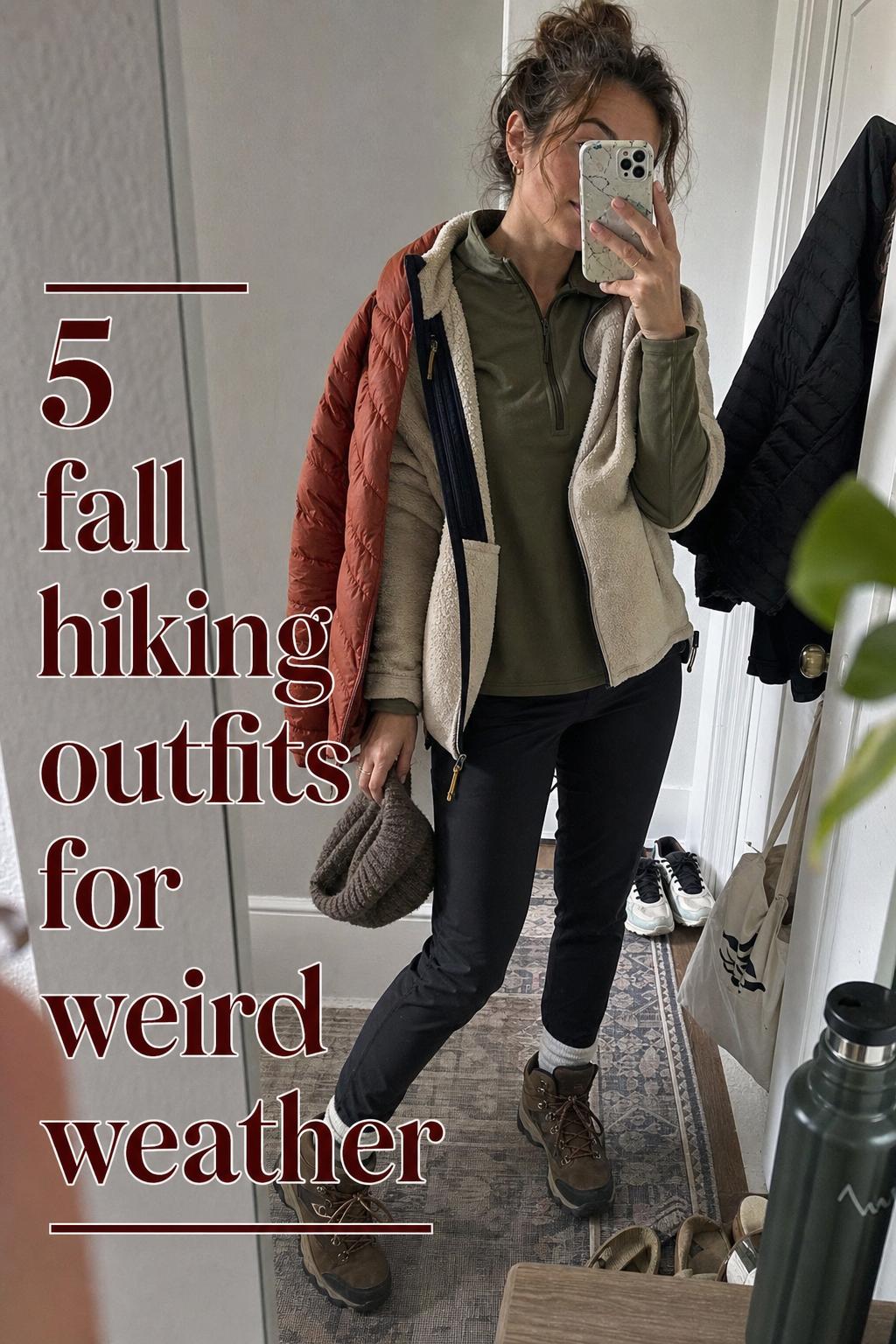
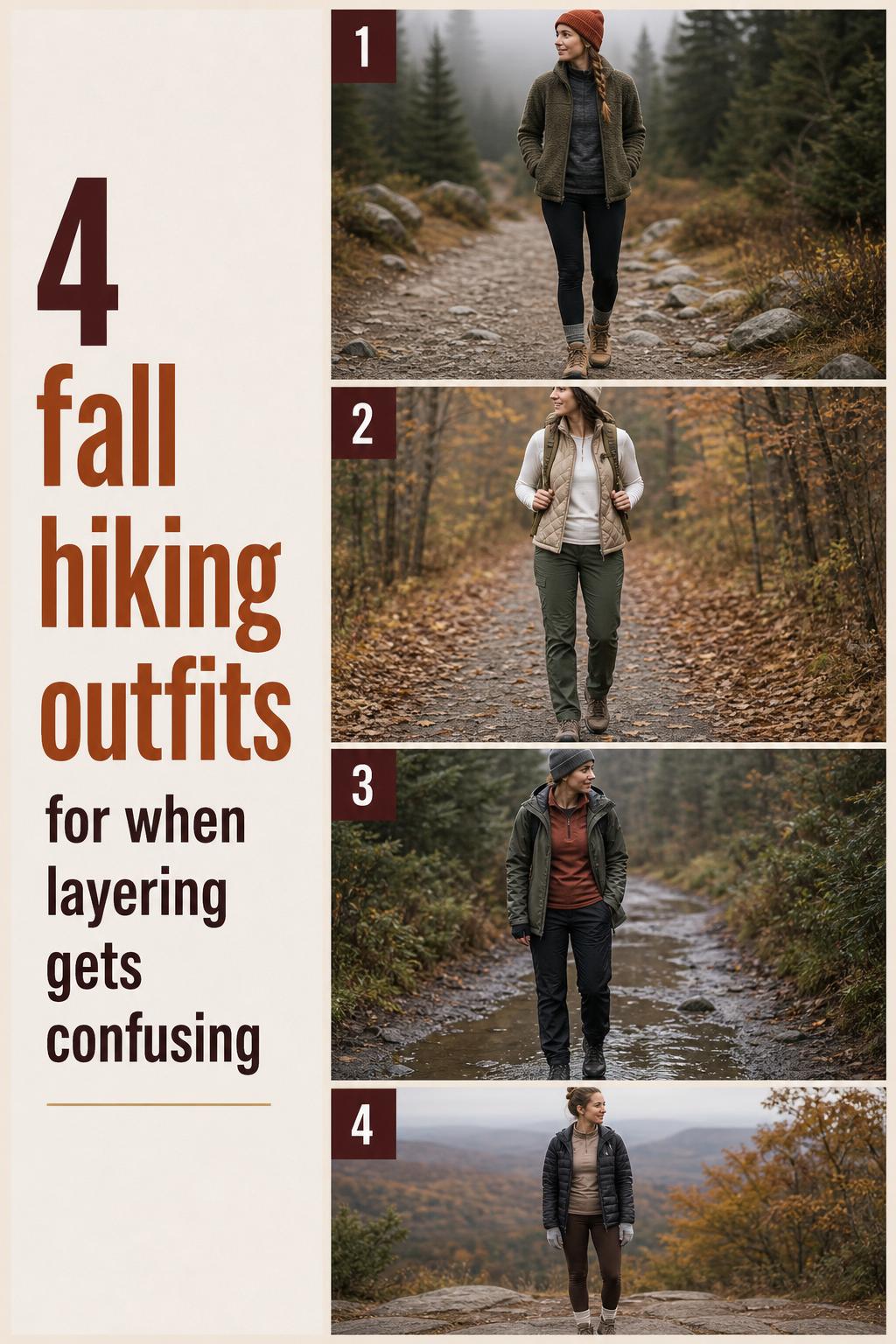
This is the outfit for a relaxed day hike with cool air, tree cover, and enough movement that you want warmth without overheating. Start with a fitted moisture-wicking base layer in a neutral or earthy tone. Add slim hiking pants or trail leggings. Over that, wear a fleece jacket or fleece vest—something in the spirit of an L.L.Bean fall staple works especially well here because fleece feels classic, comfortable, and visually soft against autumn landscapes.
The silhouette is simple: close to the body underneath, slightly textured through the mid-layer, and finished with trail shoes or hiking boots. A beanie or warm hat and a light pair of gloves can stay in your pack or pocket until needed. This combination works because it handles changing body temperature well. Once the hike warms up, the fleece can come off and the outfit still looks complete.
For style, olive or beige bottoms with a rust, cream, or muted plaid top layer feel particularly right for this setting. It is an outfit that looks natural on a forest path and practical at the trailhead cafe afterward.
Outfit solution: the crisp morning leaf-peeping look
On scenic Northeast or Appalachian Trail-adjacent day hikes where the morning starts cold but the trail is not overly technical, a lightweight insulated jacket creates a cleaner line than a bulky coat. Begin with a merino or synthetic base layer, then add a compact puffy such as the kind represented by pieces like the Patagonia Micro Puff, Montbell Thermawrap, or an L.L.Bean ultralight down option.
Pair it with hiking pants that taper neatly or with streamlined leggings if the route is shorter and conditions are dry. Finish with boots or supportive trail shoes, plus merino socks. The reason this outfit works so well is that the insulation is concentrated in one efficient layer. You stay warm at the start, but the outfit does not become visually heavy or awkward once the sun comes up.
In terms of style, this is where soft autumn color palettes really help. A muted olive jacket, charcoal or camel bottoms, and a neutral hat create a polished outdoor look without trying too hard. It feels practical, but still photo-friendly in the way many women look for when searching for cute fall hiking outfits.
Outfit solution: the rainy Pacific Northwest combination
In Washington, Oregon, and the broader Pacific Northwest, fall hikes often need a different approach. Damp trails and shifting drizzle make a waterproof shell more important than a fashion-first outer layer. Start with a breathable base layer, add a lightweight fleece for warmth, and top it with a rain shell. This is where weather-resistant outerwear earns its place.
The key is restraint underneath the shell. If the fleece is too thick, the whole outfit feels stiff. If the base layer is too warm, you will overheat while still feeling damp on the outside. Keep the inner pieces trim and let the shell be the protective layer. Hiking pants with practical movement and traction-ready footwear complete the look.
Visually, the outfit is strongest when it stays clean and understated. Deep green, slate, black, or muted beige layers work well against mossy trails and gray skies. Add a neck gaiter for comfort, and if visibility matters in a crowded mixed-use area, choose accessories with reflective details where possible.
Outfit solution: the high-output shoulder season setup
Some fall hikes are not cozy at all. They are long, uphill, and variable, with real temperature changes tied to pace and elevation. For those days, the smartest outfit is often less visually layered than people expect. Start with a moisture-wicking base layer and hiking pants, then carry a lightweight puffy or fleece rather than wearing it immediately. Add a shell only if conditions call for wind or rain protection.
This setup works because it prevents overheating in the first hour, which is one of the most common layering mistakes in shoulder season. When you stop, summit, or hit a more exposed section, the insulating layer comes out quickly. A compact piece like a Patagonia Micro Puff or Montbell Thermawrap fits this kind of use especially well because packability matters when layers are moving on and off throughout the day.
The outfit may look more minimal at first, but it solves the actual trail problem better than a heavy starting outfit. It is especially relevant on routes in the Sierra, Rocky Mountain conditions, or any hike where elevation changes affect comfort more than trailhead temperature does.
Outfit solution: the Southwest desert fall balance
Fall in the Southwest can create one of the biggest outfit contrasts of the season. Early hours may feel cold enough for a jacket, while midday calls for lighter layers and sun-conscious choices. In places like Arizona and Nevada, begin with a base layer or lightweight long-sleeve top, add a light insulating layer for the morning, and keep the rest of the outfit streamlined with breathable hiking bottoms and trail shoes.
A sun hat or sun-protective accessory can be more useful here than an extra warm layer. The reason this outfit works is flexibility. It acknowledges that cool air at the start does not mean all-day cold. Once temperatures rise, the jacket comes off, and the outfit underneath still feels complete and functional.
Color-wise, desert fall hikes look especially good with warm neutrals, dusty olive, sand, and rust accents. The palette suits the landscape and keeps the outfit from feeling too severe.
Where style fits in: earthy tones, plaid, and visual balance
Style matters on the trail, but in autumn it works best when it follows function. Earthy tones are popular for a reason. Olive, rust, beige, and soft brown shades blend easily with base layers, fleece, vests, and shells, so outfits feel coordinated even when you remove or add a piece. That flexibility is important because a fall hiking outfit is rarely static.
Plaid also has a place, especially in lower-intensity hiking outfits or short scenic walks. The easiest way to use it is as a visual accent rather than the main technical layer. A plaid button-up or flannel-inspired layer tied to a simple fleece, fitted base, or neutral bottoms gives the outfit texture without interfering with practicality.
Nicole’s style-led approach to fall hiking outfits highlights something useful here: people often want a “cute” outfit not because they are ignoring performance, but because they want clothes that feel wearable, flattering, and seasonally right. The solution is not choosing between style and function. It is building the outfit so both can exist together.
Footwear and socks can fix or ruin the whole outfit
Even the best jacket and layering system cannot rescue an outfit that fails from the ankle down. Fall terrain often brings leaves, damp ground, colder air, and more variable traction. Trail shoes may be enough for shorter or drier hikes, while hiking boots often make more sense for longer routes or more uneven conditions.
Socks matter just as much because moisture management starts there too. Merino socks are repeatedly associated with fall hiking for good reason: they support comfort without making the footwear feel too warm too early. If the rest of the outfit is layered thoughtfully but your feet stay damp or cold, the whole day feels off.
From a visual standpoint, footwear grounds the outfit. A sleek trail shoe creates a lighter, faster look. A structured boot makes the outfit feel more rugged and anchored. Neither is automatically better; the right choice depends on terrain, weather, and how technical the hike actually is.
Accessories that make fall hiking outfits feel complete
Accessories are often the difference between an outfit that is merely acceptable and one that feels prepared. In fall, the small pieces do a lot of work because they handle edge-case discomfort: cold ears, windy ridgelines, chilly hands, and the sudden temperature drop when you stop moving.
- Warm hat or beanie for cold starts and exposed sections
- Gloves for early morning hikes or windy weather
- Neck gaiter for adjustable warmth without bulk
- Hunter orange or high-visibility details when safety is part of the setting
Treeline Review’s emphasis on hunter orange is especially useful in certain shoulder season contexts. It is not a universal styling detail, but where visibility and safety matter, it becomes part of responsible outfit planning. The smartest version of this is often a small, intentional addition rather than overcomplicating the entire look.
Regional wardrobe shifts across U.S. trails
A good fall hiking outfit in the United States should respond to place. The same fleece-and-jacket formula does not behave the same way everywhere, and this is one reason generic outfit advice often falls short.
Northeast and New England
Think cooler mornings, classic leaf-peeping conditions, and outfits that benefit from visible layering. Fleece, lightweight puffies, hiking pants, beanies, and gloves all make sense here. This region rewards cozy-looking outfits that still allow mid-day adjustment.
Pacific Northwest and Cascades
Rain shells, damp-friendly layering, and practical footwear become more central. The outfit should look less soft and decorative, and more weather-ready. A strong shell over a slim fleece and base layer is often more useful than a heavier insulated look.
Southwest and desert trails
The challenge is handling cold mornings and warmer days without carrying too much. Lightweight layers, sun-aware accessories, and breathable clothing usually outperform bulkier combinations.
Tips for choosing gear without overbuying
One of the easiest mistakes in building fall hiking outfits is assuming every layer has to be premium, specialized, or brand-new. In reality, the most useful wardrobe is often the one built around a few dependable categories: a base layer that handles moisture well, one reliable fleece or lightweight insulated piece, a shell for weather protection, trail-ready bottoms, and footwear that matches your terrain.
Brand examples such as L.L.Bean, Patagonia, Montbell, Smartwool, and REI are helpful reference points because they show the range of products people use for fall hiking gear, from fleece and down insulation to base layers and shells. But the real decision should come back to what problem the piece solves. Warmth, packability, weather protection, and comfort all have trade-offs, and no single item wins in every category.
Tips: if you hike short trails near home, a soft fleece and well-fitted base layers may serve you better than a more technical shell-heavy setup. If your hikes are longer, wetter, or tied to more variable conditions, prioritize weather-resistant outerwear and layers that can be added and removed quickly.
Common mistakes that make autumn outfits harder than they need to be
Most fall hiking outfit problems come from overcorrecting. People either dress too lightly because they expect to warm up fast, or they pile on too much at the start and spend the first climb feeling trapped in their own layers.
- Starting in too many warm layers and overheating early
- Relying on cotton when moisture management matters more
- Choosing a bulky mid-layer that does not fit under outerwear
- Wearing jeans for hikes where movement and weather protection matter
- Ignoring accessories until cold hands or ears become the main problem
The jeans question comes up often for a reason. On very casual, low-demand outings, people may be tempted to treat a fall hike like a regular outdoor walk. But once weather shifts, the trail gets damp, or the hike lasts longer than expected, jeans become a limiting choice. Hiking pants, leggings, or purpose-built trail bottoms usually solve the problem more cleanly.
Another common mistake is choosing pieces that each make sense alone, but not together. A puffy, shell, and thick base layer may all seem useful, yet the combined outfit can be stiff and too hot. Good layering is less about having more pieces and more about making sure the pieces cooperate.
A practical way to plan tomorrow’s outfit
If you want a simpler way to get dressed, build your outfit around three questions: what will the trail feel like at the start, what will your body temperature do after thirty minutes of movement, and what layer do you need in reserve if conditions change. That thought process works for a New England day hike, a damp Washington trail, or a dry Arizona morning.
Then refine the outfit visually. Choose one or two autumn colors, keep the silhouette streamlined, and let the accessories support the outfit rather than dominate it. This is the easiest way to create fall hiking outfits that feel realistic, wearable, and ready for the actual trail.
When the outfit works, you notice the trail more than the clothes. That is usually the best sign that you got it right.
FAQ
What should I wear hiking in fall when the temperature changes all day?
Use a layering system built around a moisture-wicking base layer, a warm mid-layer such as fleece or a lightweight puffy, and an outer layer only when wind or rain protection is needed. This works well because you can remove or add pieces as the day shifts without the outfit falling apart.
What are the best base layers for fall hiking?
Merino wool and synthetic base layers are the most practical options mentioned for fall hiking because they support moisture management and fit easily under fleece, vests, or shells. The best choice depends on how much warmth you need and how active the hike will be.
Can fall hiking outfits still look cute and stylish?
Yes, as long as style comes after function. Earth tones such as olive, rust, and beige, plus details like plaid, fleece texture, and a clean layered silhouette, can make an outfit feel polished without sacrificing comfort or trail practicality.
Are hiking boots better than trail shoes in autumn?
Not always. Trail shoes can work well for shorter or drier hikes, while hiking boots often make more sense for longer routes, colder conditions, or terrain with more uneven footing. The better choice depends on the trail, the weather, and how much support you want.
What outer layer should I bring for rainy fall hikes?
A rain shell or weather-resistant outer layer is usually the most useful option because it adds wind and rain protection without replacing the rest of your outfit. This is especially important in damp regions such as the Pacific Northwest, where shell layering is often more practical than relying on insulation alone.
Can I hike in jeans in the fall?
Jeans may feel fine for a very casual outing, but they are usually not the best option for true fall hiking conditions. Once the trail becomes damp, the weather changes, or the hike lasts longer, hiking pants or leggings are more comfortable and easier to move in.
What accessories make the biggest difference on fall hikes?
A warm hat, gloves, and a neck gaiter often make the biggest difference because they handle the small comfort issues that become distracting on cool trails. In some shoulder season settings, hunter orange or visibility-focused accessories may also be important for safety.
How do I dress for fall hiking in the Northeast versus the Southwest?
In the Northeast, outfits usually need more visible warmth for cool mornings, so fleece, beanies, gloves, and light insulation make sense. In the Southwest, the better strategy is flexible lightweight layering, since mornings can be cold but daytime conditions may warm up quickly.
What brands are commonly used for fall hiking gear?
Commonly referenced brands in fall hiking clothing and gear include L.L.Bean, Patagonia, Montbell, Smartwool, and REI. They appear in discussions around fleece, base layers, lightweight insulated jackets, and practical outerwear, but the right choice still depends on your trail conditions and layering needs.
Finish the look
The little extras that make a summer outfit feel complete
From beach days to city weekends, these easy pieces bring comfort, texture, and a polished finishing touch.

FENBEN
Straw Hobo Crossbody Bag
A handwoven straw bag with both short and crossbody straps—an effortless finishing touch for vacation looks and warm-weather outfits.
Shop the bag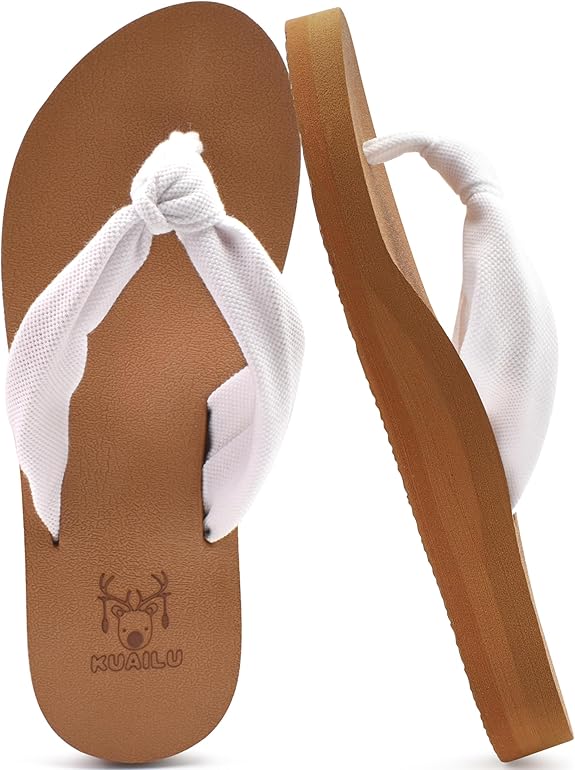
KuaiLu
Flip Flops with Arch Support
Cushioned, lightweight sandals with supportive arch design—a practical choice for beach trips, errands, and long summer walks.
Shop the sandals
baleaf
Athletic One-Piece Swimsuit
A functional one-piece with adjustable straps and moderate coverage, designed for swimming, training, surfing, and active beach days.
Shop the swimsuit
Astylish
Linen-Cotton Button-Down Shirt
A relaxed cotton-linen shirt with a collared V-neck and roll-up sleeves—easy to style over swimwear or with denim and shorts.
Shop the shirt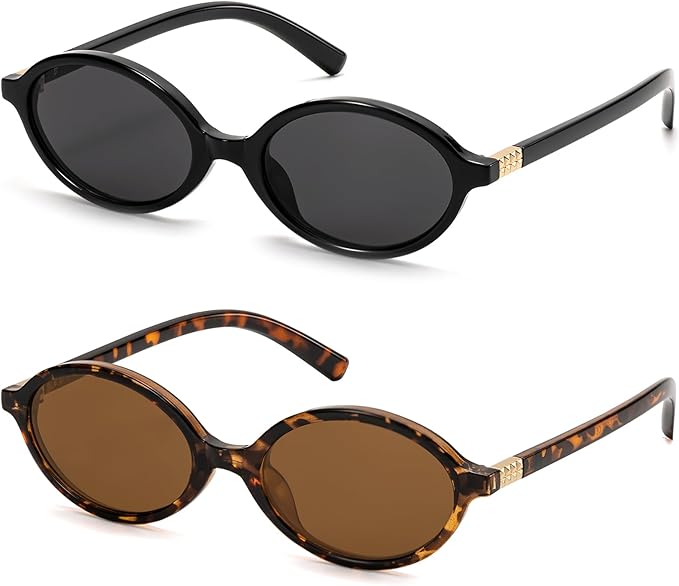
ViewJoy
Retro Oval Sunglasses
Small oval sunglasses with a 90s-inspired silhouette and UV400 lens protection—a quick way to add a vintage edge to everyday looks.
Shop the sunglasses
Affiliate disclosure: This section contains affiliate links. If you make a purchase through these links, I may earn a commission at no additional cost to you. Product selection, pricing, availability, and delivery terms may change—please review the current details on Amazon before purchasing.
As an Amazon Associate I earn from qualifying purchases.