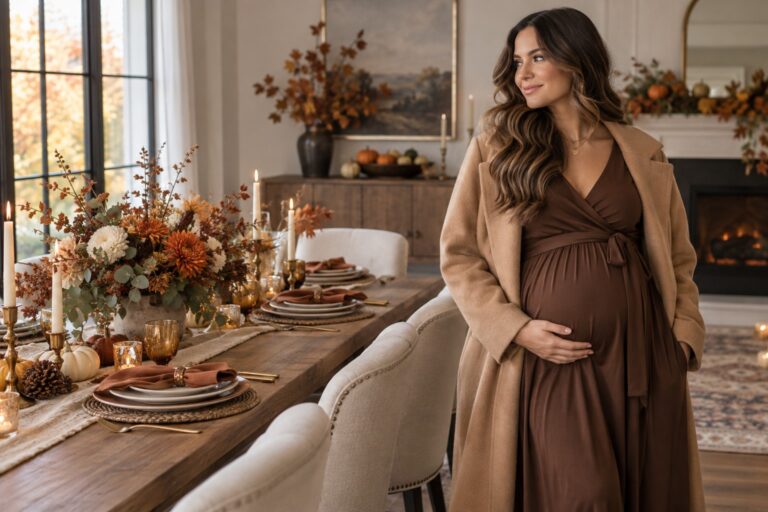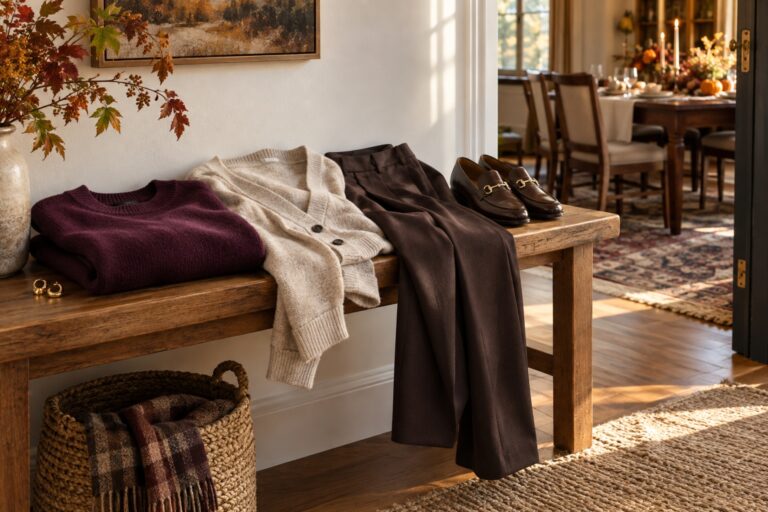
Thanksgiving Outfit Aesthetic: Make It Your Own
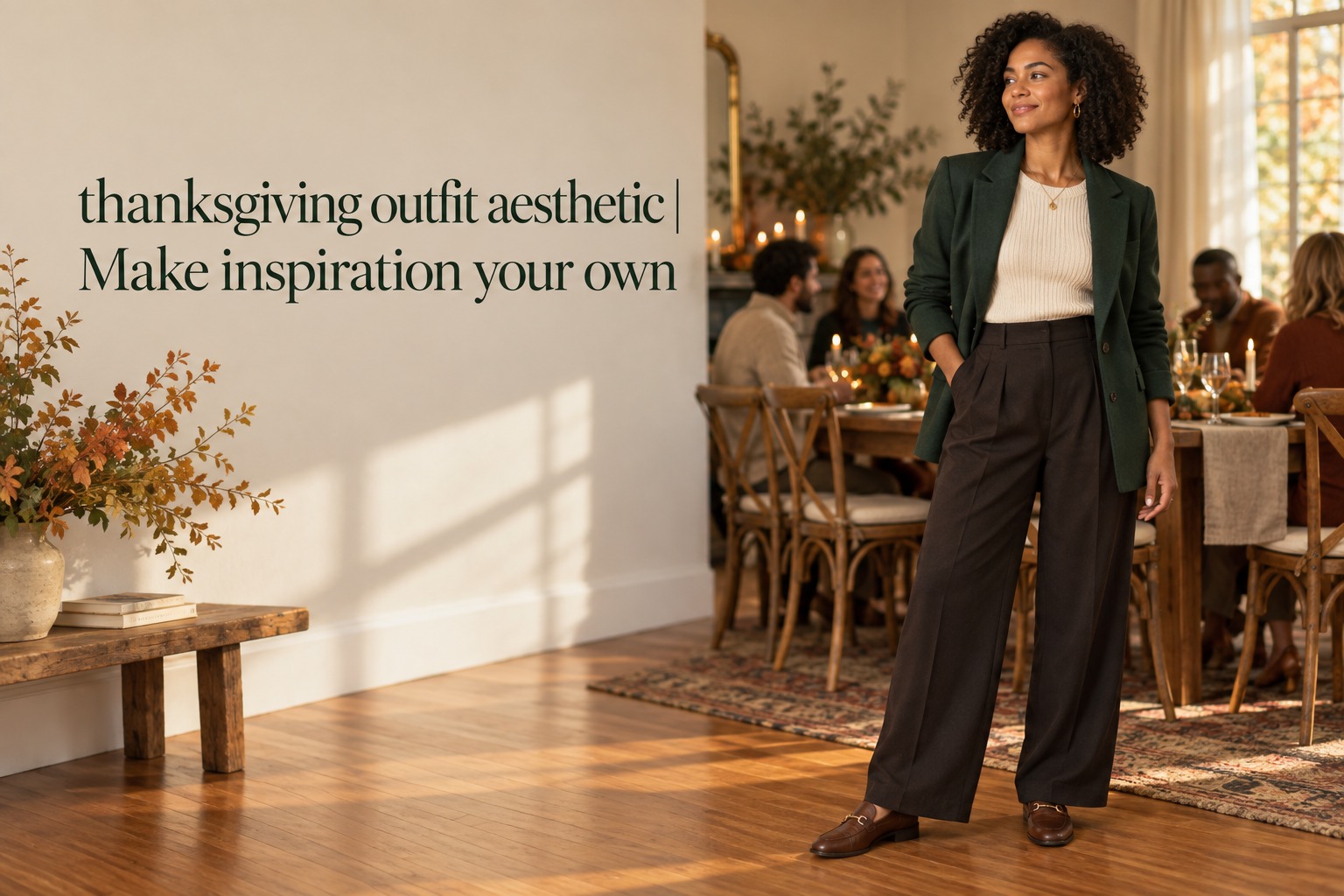
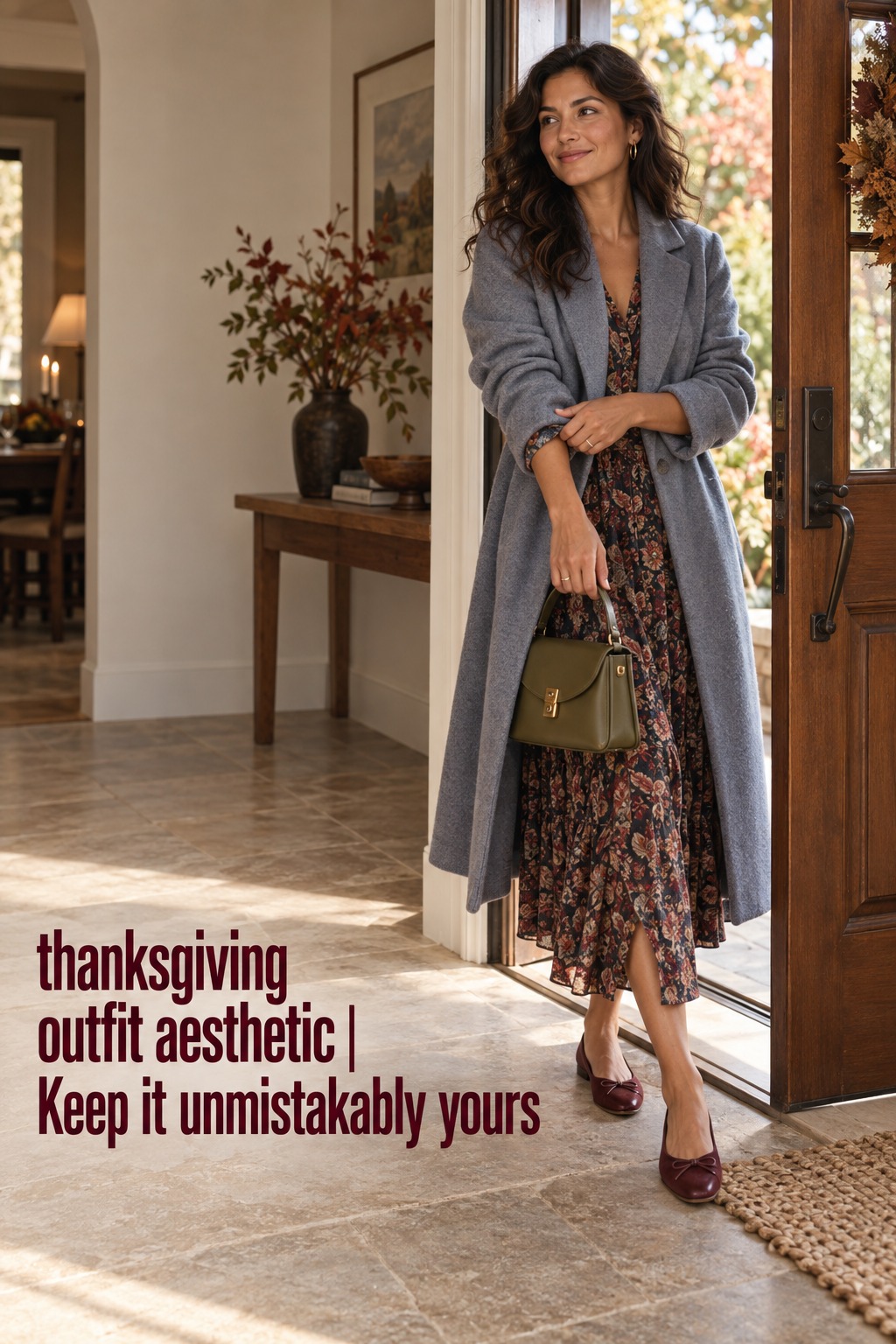
A Thanksgiving outfit aesthetic is easiest to build when you begin with a feeling, not a shopping list. Maybe your saved image feels softly romantic, quietly tailored, or a little artsy. Use that image as a clue about color, texture, shape, and mood, then translate those clues into clothes you already like wearing. The goal is not to recreate someone else’s look. It is to make your own outfit feel coherent, comfortable, and right for the gathering.
This practical guide gives you a repeatable way to do that. You will choose one clear reference, identify its visual ingredients, and make four decisions before getting dressed. Then you can adjust the result for the dinner, the room, and your own style. A thoughtful outfit can feel festive without relying on a themed sweater, a full new wardrobe, or a look that feels unlike you.
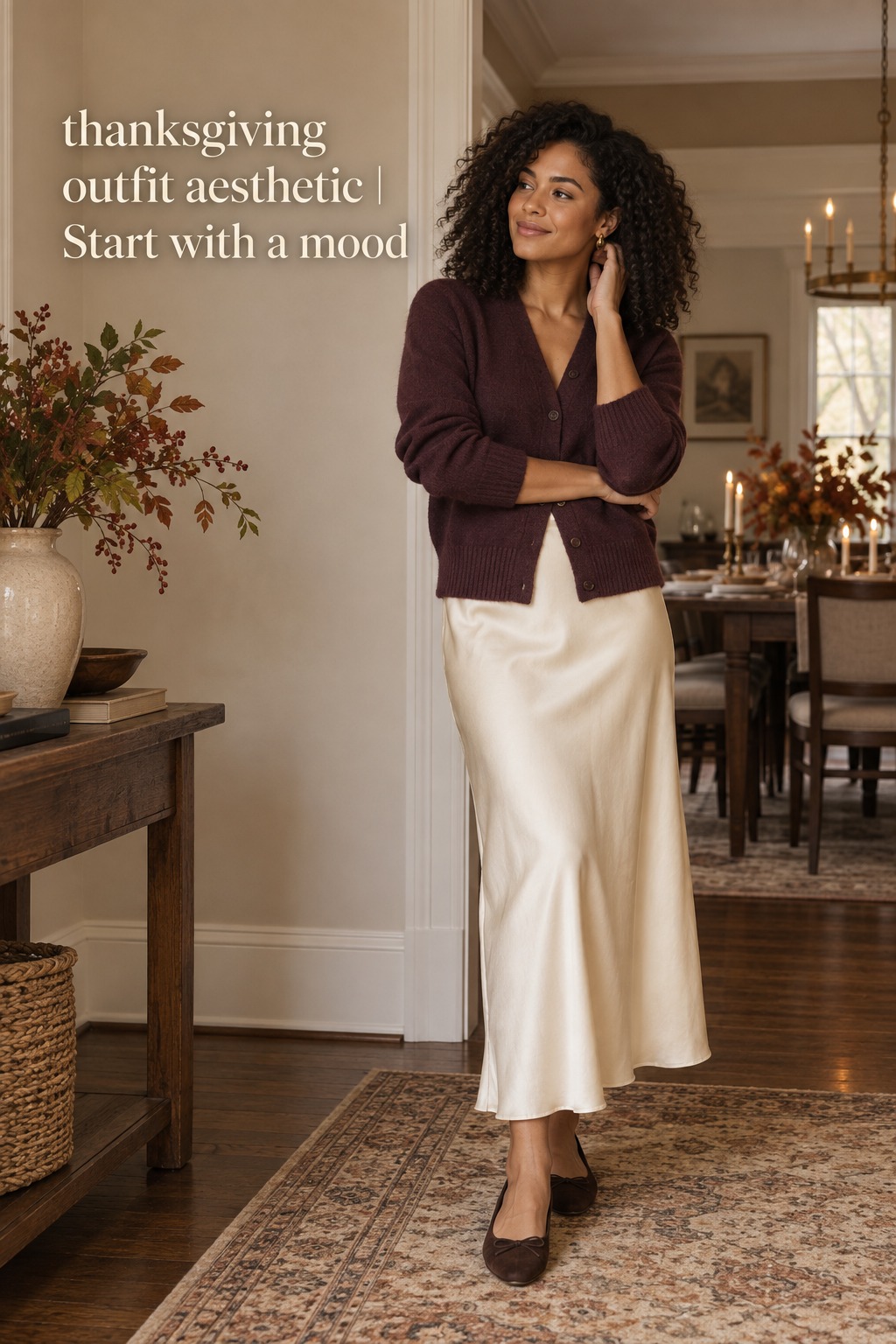
Why start with a mood, not a copied outfit
A saved outfit photo is useful because it shows relationships. You can notice how a soft knit balances a crisp trouser, how a dark shoe grounds a light skirt, or how a loose layer changes the line of a simple dress. Copying every item misses the most helpful part. The image is a small visual lesson. It can show you what kind of contrast, proportion, or finish you respond to, even when the exact clothes are unavailable or would not suit your plans.
The Fashion-Note Edit
Five effortless pieces to refresh your everyday wardrobe
A polished, practical edit for workdays, weekends, and everything in between.

The Drop
Women’s Blake Long Blazer
A longline, tailored blazer with a notched collar and a single-button closure—an easy layer for denim, dresses, or office-ready looks.
Shop the blazer
Amazon Essentials
Women’s Lightweight Crewneck
A soft, lightweight sweater with a clean crew neckline—the kind of reliable layer that works from cool mornings to air-conditioned spaces.
Shop the sweater
Amazon Essentials
Women’s Loafer Flat
A classic flat loafer that gives casual outfits a more polished finish and pairs naturally with tailored pants, skirts, and straight-leg jeans.
Shop the loafers
Levi’s
Women’s 501 90s Jeans
A relaxed, vintage-inspired take on the iconic 501 silhouette—made for an easy, lived-in look without the thrift-store search.
Shop the jeans
Colorfulkoala
High-Waisted 7/8 Leggings with Pockets
Soft, four-way-stretch leggings with side pockets and a high-rise waistband—designed for movement, errands, and off-duty comfort.
Shop the leggings
Affiliate disclosure: This section contains affiliate links. If you make a purchase through these links, I may earn a commission at no additional cost to you. Product selection, pricing, availability, and delivery terms may change—please review the current details on Amazon before purchasing.
As an Amazon Associate I earn from qualifying purchases.
Start by describing the image in ordinary words. Try three feeling words such as relaxed, polished, and warm, or expressive, soft, and a little vintage. Avoid labels that require a specific trend identity. The description should be clear enough to guide choices, but flexible enough to include your own closet. If you cannot explain what you like about the picture, look again and name what catches your eye first: its color, outline, texture, or one memorable detail.
Your wedding style is personal.
Your plan should feel that way, too.
Zarellea keeps your guest list, budget, vendors, and every next step beautifully organized — so you can focus on the moments that feel like you.
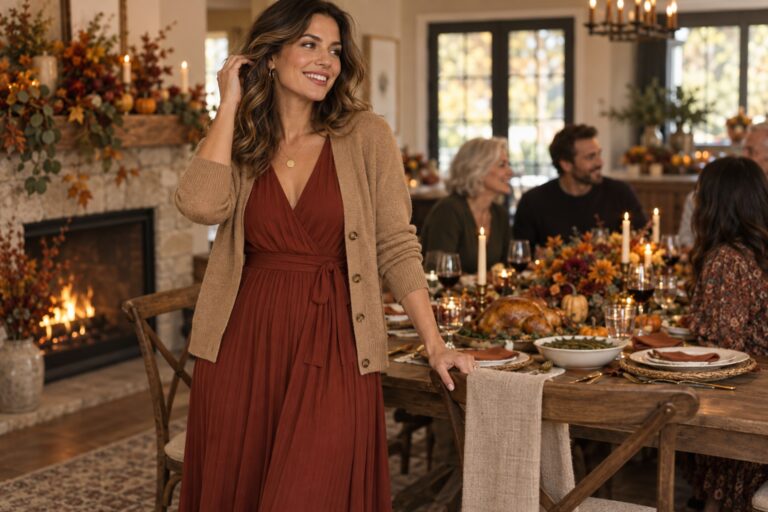
Next, separate the mood from the circumstances. A photo may have been taken outdoors, styled for a fashion shoot, or built around a piece you would never wear for a long meal. Keep the visual idea and change the practical parts. A sheer skirt might become a lined midi skirt; a high heel might become a polished flat; a short jacket might become a softer cardigan. The translation is successful when the mood remains recognizable while the outfit fits your actual day.
One reference is usually enough. Saving twenty images can make a simple decision feel like a trend report, especially when the pictures disagree. Choose the image that best represents the feeling you want, then put the others aside. If two images matter, identify their shared element. Perhaps both use a long, clean silhouette, or both pair a muted base with one interesting texture. That common thread can become your visual brief.
A useful visual brief is specific but not prescriptive. “Soft layers, a long line, and one dark accent” is more useful than “look chic.” “Clear tailoring with a relaxed shoe” gives you a direction without demanding a blazer or a particular brand. Write your brief as a short sentence before you open your closet. It keeps the outfit focused and gives you a way to decide whether an added accessory contributes or merely adds noise.
This approach also makes personal style visible. If you always reach for a bright bag, a favorite boot, or a familiar necklace, let that item stay in the look. The reference should help you see new combinations, not ask you to become a different person for dinner. An outfit feels more assured when a seasonal detail meets something you already recognize as yours.
Choose the four visual decisions that make a look feel intentional
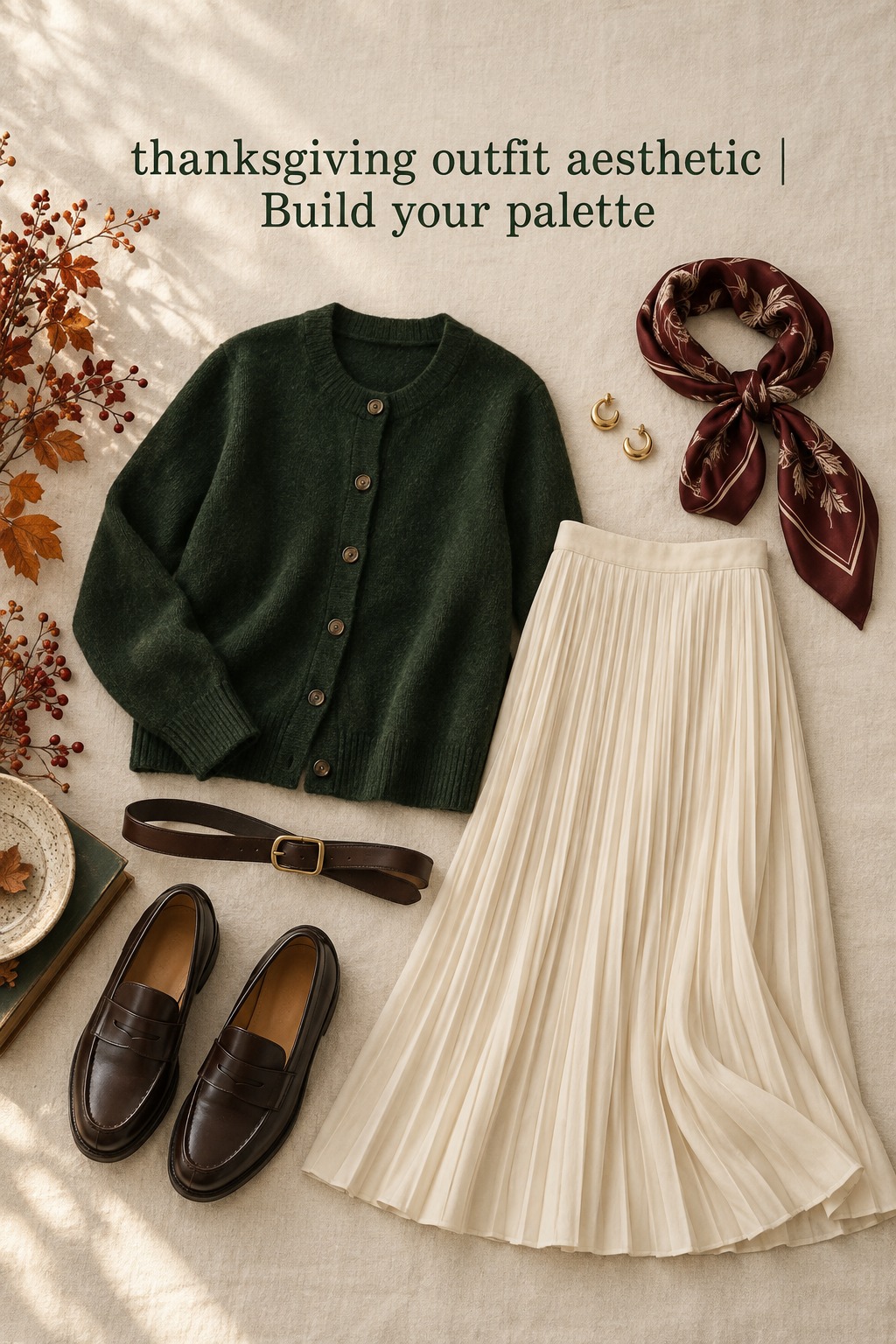
Once you have a mood, make four decisions: palette, texture, silhouette, and focal point. These are not strict rules or a formula that everyone must follow. They are a way to notice why a look feels connected. When one decision is already strong, keep the others simpler. When the outfit feels flat, strengthen one visual choice instead of adding several unrelated details.
1. Set a small palette
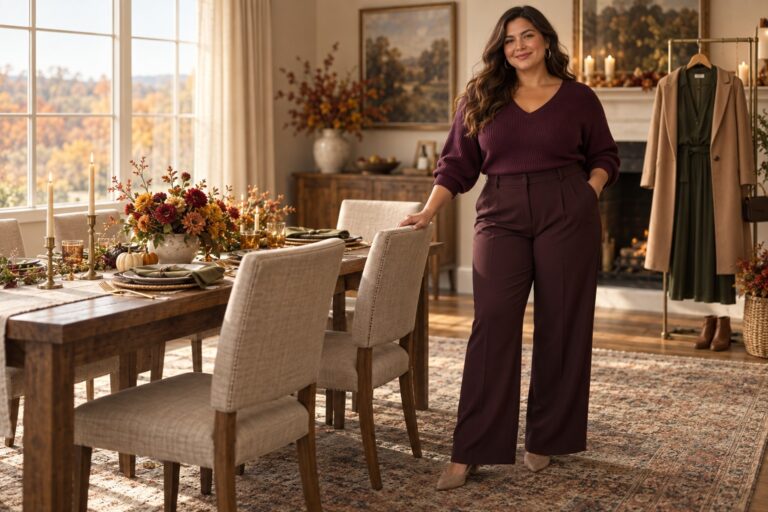
Choose a base color, a supporting color, and an optional accent. The base might come from trousers, a dress, or a jacket. The supporting color can appear in a knit, shoe, or bag. The accent is a small signal, such as a scarf, earring, lipstick, or belt. You do not need to match each item exactly. Related shades, repeated undertones, and a deliberate contrast can make the palette feel considered without looking like a uniform.
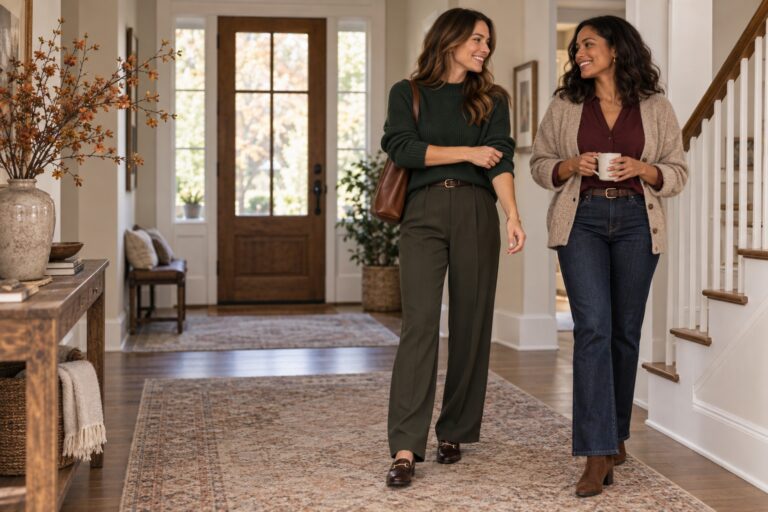
For example, a charcoal base can take a warm cream layer and a burgundy accent. A navy base might feel softer with pale blue and a brown shoe. A muted green could work with denim and a small touch of gold. These are starting points, not seasonal requirements. If you prefer black, a bright color, or a print, keep it. The aim is to decide which colors lead and which ones support them.
2. Let texture do some of the work
Texture makes an outfit legible even when its colors are quiet. A smooth satin-like skirt beside a brushed knit creates a clear contrast. Denim can make a delicate blouse feel less precious. Corduroy can add structure to a soft top, while a crisp shirt can give a relaxed cardigan a cleaner edge. Choose one texture that carries the mood, then use quieter surfaces around it so the outfit does not become a collection of competing statements.
Think about how the fabric behaves as well as how it looks. A stiff layer can hold a shape; a fluid layer moves when you sit or walk; a fine knit can sit beneath a jacket without adding bulk. You do not need to identify fabric names perfectly. Ask whether the piece looks crisp, soft, matte, shiny, nubby, or fluid. Those simple observations help you recreate the contrast you liked in the image with clothes you own.
3. Decide what line the outfit should make
Silhouette is the outline you see from a few steps away. A long cardigan creates a vertical line; a cropped jacket changes where the eye pauses; a full skirt adds movement below a defined waist. When you combine loose pieces, give the outfit one point of shape through a cuff, tucked hem, open collar, belt, or shorter layer. When your base is tailored, a softer sleeve or relaxed shoe can keep it from feeling too formal.
Use your own comfort preferences to choose that line. If you dislike a tucked top, a shorter sweater can still show where the outfit changes from top to bottom. If you prefer a roomy waist, a long vest or open jacket can create shape without pulling fabric tight. The goal is not to make a particular body look smaller. It is to make the clothes sit in a way that feels intentional when you stand, sit, reach, and move through the gathering.
4. Give the eye one place to land
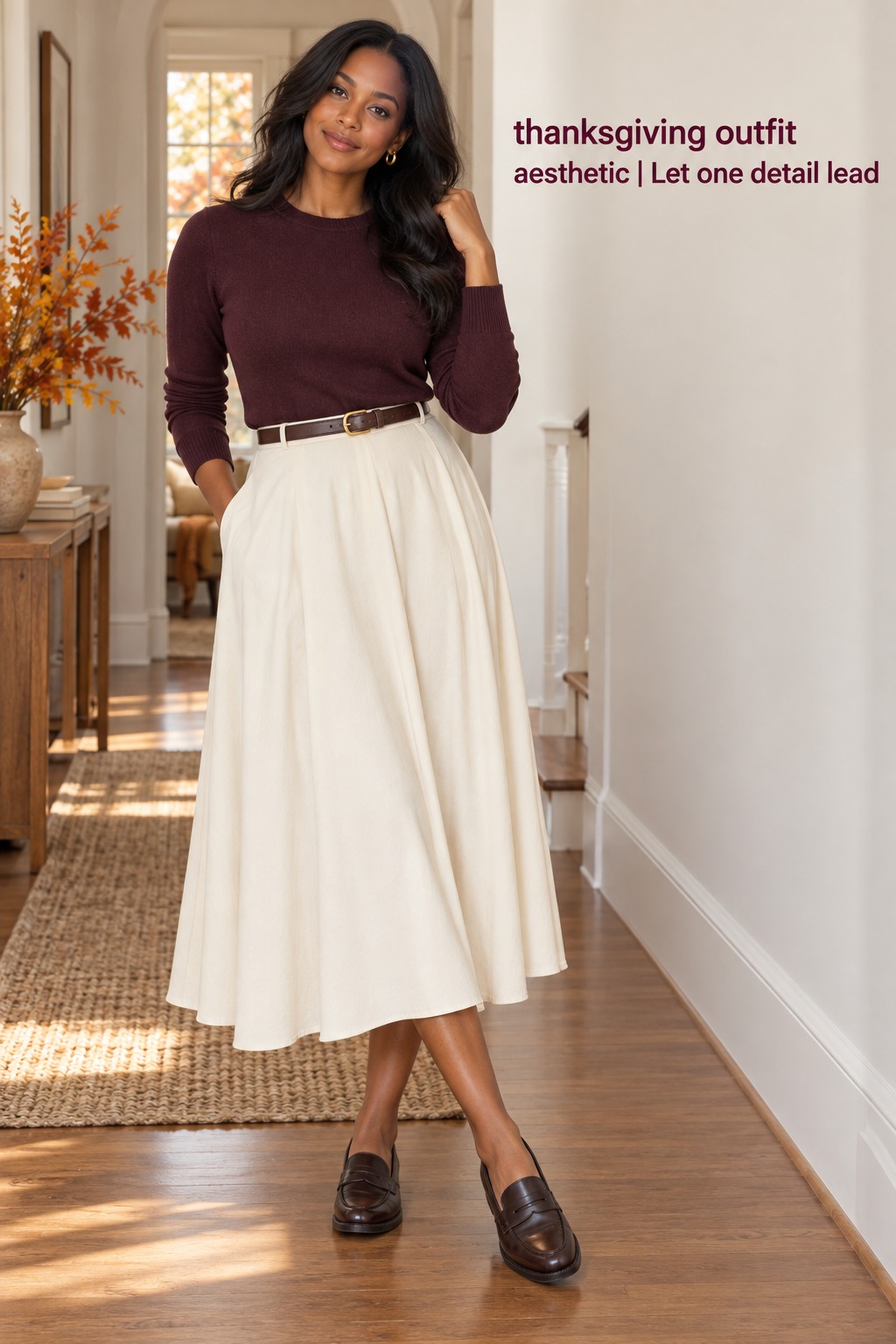
Every outfit benefits from a point of emphasis, but that point can be subtle. It may be a textured jacket, a strong neckline, a sculptural earring, a colored shoe, or the shape of a bag. Choose one lead detail and let the rest play a supporting role. If your eye jumps between a bold print, shiny jewelry, a statement belt, and a dramatic shoe, remove or quiet one or two of them.
A focal point does not need to be a new item. It can be the way you fold a cuff, leave a collar open, or repeat a color from your shoes in a small accessory. It can also be the texture of a piece you already love. The most useful question is not “What else can I add?” but “What do I want someone to notice first?” Answering that gives the outfit a clear visual order.
These four decisions work together. A warm palette can support a soft texture; a crisp silhouette can make an expressive print feel deliberate; a quiet outfit can use one bright accent as its focal point. You do not have to make every element match. In fact, a small contrast often gives the look personality. Just make sure the contrast feels chosen rather than accidental.
Translate one saved image into a Thanksgiving outfit
Use this sequence when you are ready to get dressed. Keep the reference visible, but do not use it as a shopping checklist. You are looking for visual clues that can be recreated with different pieces. Start with the event itself, because a look should work for the room and the people in it. Then build from the pieces you can wear comfortably for the whole visit.
Step one: write a one-line brief
Write down the three feeling words you chose and one concrete visual clue. For example: “Easy, thoughtful, and a little romantic, with a long soft line.” Another brief could be “Tailored, low-key, and creative, with one unexpected color.” Keep it short. The brief should make choices easier, not become another standard you have to satisfy. If an item you love fits the mood, it belongs even if it was not in the reference photo.
Step two: read the plans before the closet
Think through the order of the day. Will you help prepare food, arrive after the meal begins, travel between homes, or sit outside for a group photo? Is the gathering casual, dressy, or hard to read? These details affect sleeves, layers, shoes, and how much adjustment you can tolerate. If the dress level is uncertain, ask the host or a family member what they expect. A small question can prevent the outfit from feeling either overdone or underthought.
Comfort is not separate from the aesthetic. A sleeve that stays out of the way, a shoe you can walk in, and a hem that does not need constant attention help you look settled. If the plan includes cooking, consider whether the outer layer can come off easily and whether a bracelet or cuff will catch on things. If you are a guest, choose an outfit that lets you sit, eat, and join the conversation without monitoring every seam.
Step three: find the anchor piece
Look through your closet for one piece that already carries part of the brief. It could be a skirt with movement, a jacket with a clean shoulder, a sweater in a color you like, or trousers that feel polished but not stiff. Start with the piece you are happiest to wear, rather than the item you feel obliged to wear because it seems especially seasonal. If your anchor is right, the rest of the outfit often becomes easier to solve.
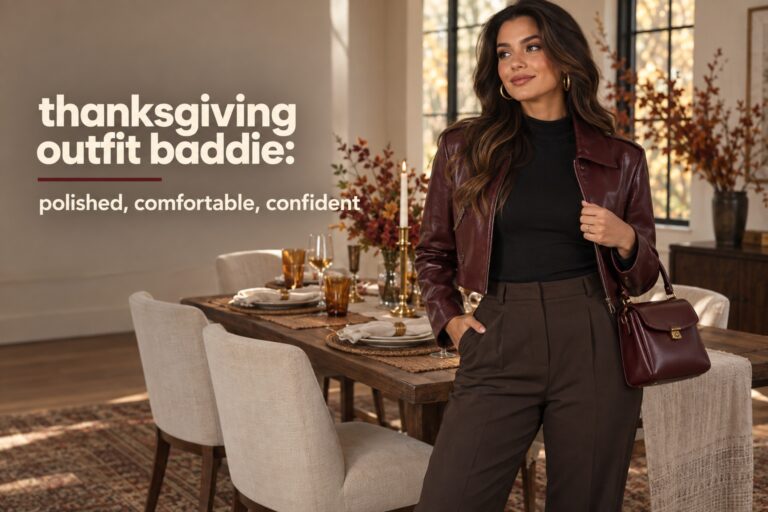
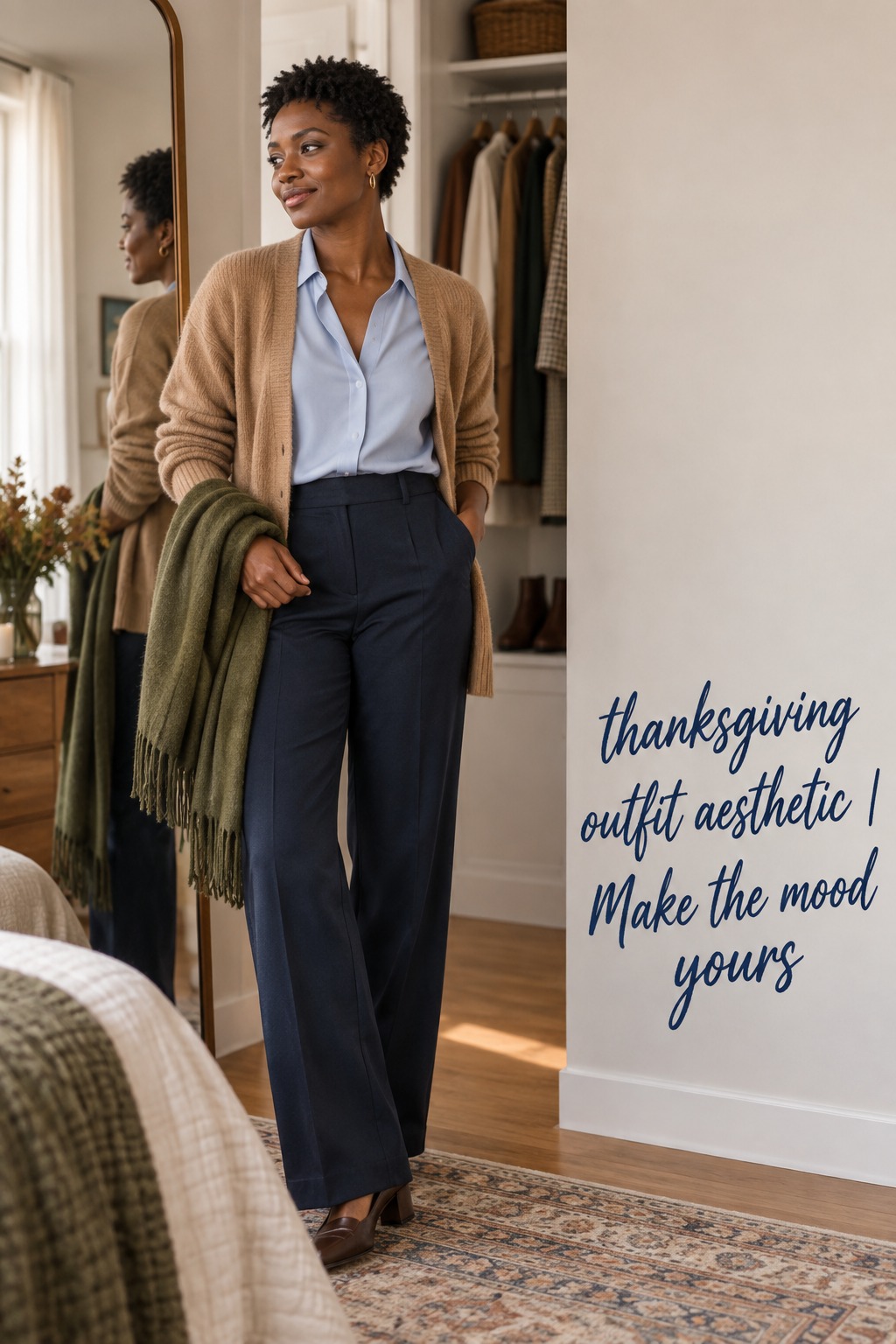
Imagine a reference with a pale blouse, dark wide trousers, and an elongated coat. You might not own those exact pieces. A cream cardigan, straight black pants, and a long open layer could keep the same light-over-dark balance. If the image shows a romantic skirt and delicate shoes, a soft midi skirt with a familiar flat can preserve the movement and gentleness without copying the styling. Describe what the pieces do, not just what they are.
Step four: add support, then pause
Add the pieces that help your anchor carry the mood. Build the base first, then add the layer, shoe, and one accessory. Pause before adding jewelry or a second accent. Check whether your palette has a clear lead, whether the textures are balanced, and whether the silhouette still makes sense once the coat is on. If a detail does not support the brief, you do not need to keep it just because it is attractive by itself.
For a calm, creative direction, a dark column of trousers and top could meet a soft cardigan and a patterned scarf. The scarf becomes the focal point, so a simple shoe keeps the outfit grounded. For a more structured direction, straight jeans and a fine knit could sit beneath a sharper jacket, with a small earring as the finish. Both can feel like a Thanksgiving outfit aesthetic when the visual choices relate to the reference and to the wearer.
Step five: take a quick full-length look
Look at the whole outfit from a few steps away, then check a seated position if you can. Ask whether the focal point is clear, the proportions feel balanced, and the outfit still resembles your original brief. Notice the coat, bag, and shoes because they may change the overall line more than a close-up mirror suggests. A phone photo can help you see the whole composition, but use it as a tool, not a judgment about your body.
If something feels off, change one thing at a time. Try a different shoe before replacing the whole outfit. Remove an accessory before adding another. Open the top layer or adjust the cuff before deciding that the proportions are wrong. Small edits preserve the good parts of the look and keep you from rebuilding it from scratch. When the visual brief is visible and you can move comfortably, the outfit is ready.
Edit the look until it feels like you
The final edit is where inspiration becomes personal style. It is also where many outfits become overworked. People often keep adding seasonal signals because they want the look to read as Thanksgiving: more rust, more plaid, more jewelry, another layer. A single seasonal note can be enough. The gathering, the people, and the setting already make the occasion clear. Your clothes do not need to explain the holiday literally.
Start by removing the least useful detail. If the scarf, belt, and earrings are all drawing attention, decide which one carries the brief best. If the outfit feels busy, keep the focal point and simplify its neighbors. If it feels too plain, add texture or a small color accent before reaching for a large print. Editing works in both directions. You can take away noise or add one considered detail.
Do not confuse coordination with exact matching. A bag does not need to repeat the shoe color, and every warm shade does not have to be identical. Repetition can be small: a warm metal in an earring and bag clasp, a dark shoe that echoes a dark top, or one color that appears in both a print and a scarf. These connections help the outfit feel related while leaving enough variation for it to look natural.
Pay attention to what the outfit asks of you. If a waistband becomes distracting when you sit, choose a different base. If a layer slides off your shoulder or a sleeve catches while you help in the kitchen, leave it at home. If a shoe changes how you walk, choose the pair that lets you be present. Personal style includes the small practical decisions that let you enjoy the event instead of tending to your clothes.
It can help to make two versions from the same brief. Keep the first one close to your reference, then create a second that uses a familiar item or a more comfortable shoe. Compare them without asking which one looks more fashionable. Ask which one makes sense for the gathering and feels most like you. The best option may be the one that borrows only one detail from the reference, such as its color relationship or long silhouette.
After the event, remember what worked. Perhaps the open neckline made a heavy layer feel lighter, or a patterned bag gave a neutral outfit enough personality. That observation can guide future looks without turning your closet into a strict capsule. Keep a short note or save the photo you took. Over time, you will recognize the visual decisions that make your own outfits feel finished.
A Thanksgiving outfit aesthetic does not depend on buying a particular piece or following one named style. It comes from making a few choices that support one another, then leaving room for your taste. Start with a mood, choose your palette, texture, shape, and focal point, and edit the result for the day ahead. A saved image can point you in a direction. Your closet and your preferences make the final look yours.
FAQ
How do I create a Thanksgiving outfit aesthetic without buying new clothes?
Choose one inspiration image, identify its palette, texture, silhouette, and focal point, then look for similar relationships in your closet. Recreate the feeling with different pieces you already wear. A color echo or a similar outline may be enough.
What makes a Thanksgiving outfit feel intentional?
A clear visual direction helps. Decide which color or texture leads, choose a silhouette that feels comfortable, and give the eye one focal point. The pieces can contrast, as long as the contrast looks chosen and the outfit fits the gathering.
Can I wear black or bright colors for Thanksgiving?
Yes. Black, bright colors, prints, and neutrals can all work. If your base color is not traditionally associated with fall, you can connect it to the occasion through texture, a warm accent, or a more relaxed layer. You do not need to use a seasonal palette.
How many statement pieces should I wear?
Start with one focal point, such as a textured jacket, patterned scarf, expressive shoe, or striking neckline. Add another noticeable detail only if it supports the first. If your eye keeps jumping around the outfit, remove or quiet one element.
How can I make an outfit comfortable for a long dinner?
Try the complete outfit while sitting, walking, and reaching. Choose a waistband, shoe, sleeve, and layer that will not need constant adjusting. Let comfort guide the translation of the reference, so the finished look works for the actual plans.
What should I do if my inspiration photo feels too formal?
Keep one visual feature you like, such as its long line, color pairing, or texture, and replace the more formal pieces with relaxed versions from your closet. A refined shape can still feel casual when the fabric, shoe, or top layer is softer.
Finish the look
The little extras that make a summer outfit feel complete
From beach days to city weekends, these easy pieces bring comfort, texture, and a polished finishing touch.

FENBEN
Straw Hobo Crossbody Bag
A handwoven straw bag with both short and crossbody straps—an effortless finishing touch for vacation looks and warm-weather outfits.
Shop the bag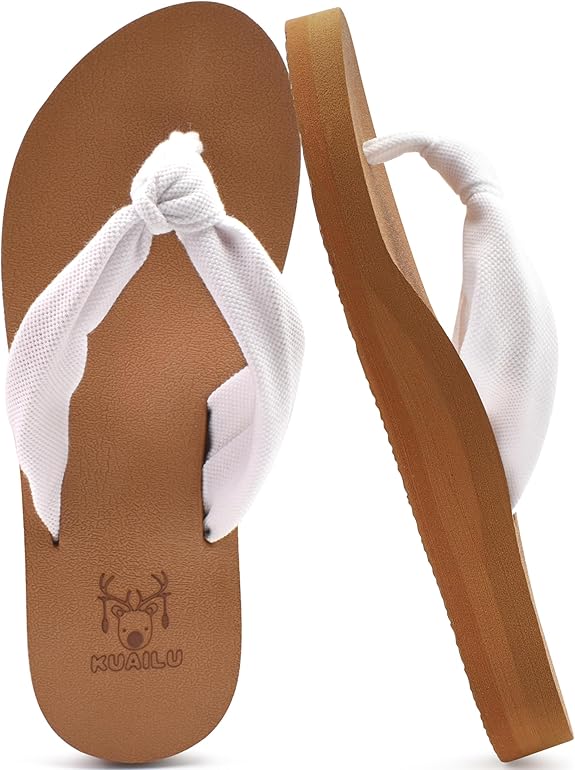
KuaiLu
Flip Flops with Arch Support
Cushioned, lightweight sandals with supportive arch design—a practical choice for beach trips, errands, and long summer walks.
Shop the sandals
baleaf
Athletic One-Piece Swimsuit
A functional one-piece with adjustable straps and moderate coverage, designed for swimming, training, surfing, and active beach days.
Shop the swimsuit
Astylish
Linen-Cotton Button-Down Shirt
A relaxed cotton-linen shirt with a collared V-neck and roll-up sleeves—easy to style over swimwear or with denim and shorts.
Shop the shirt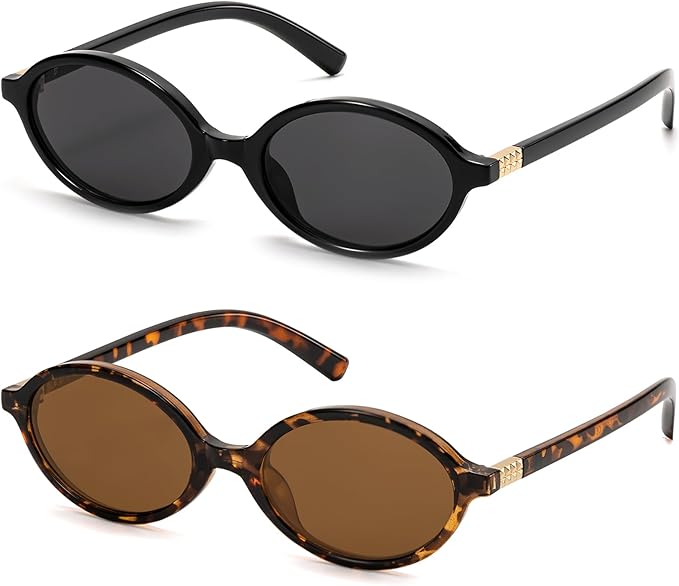
ViewJoy
Retro Oval Sunglasses
Small oval sunglasses with a 90s-inspired silhouette and UV400 lens protection—a quick way to add a vintage edge to everyday looks.
Shop the sunglasses
Affiliate disclosure: This section contains affiliate links. If you make a purchase through these links, I may earn a commission at no additional cost to you. Product selection, pricing, availability, and delivery terms may change—please review the current details on Amazon before purchasing.
As an Amazon Associate I earn from qualifying purchases.