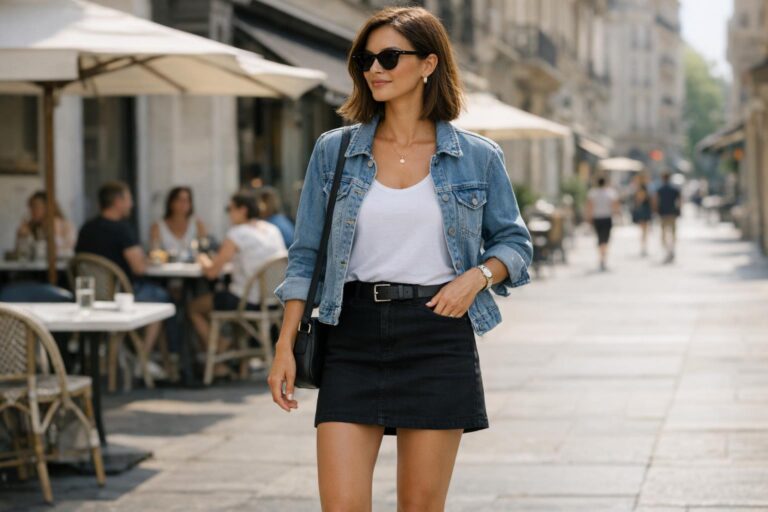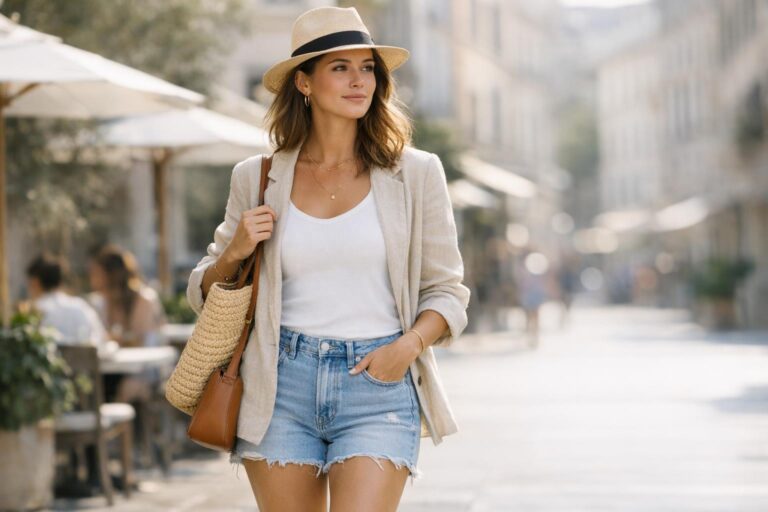
Summer Business Casual Outfits: Polished in Heat and A/C
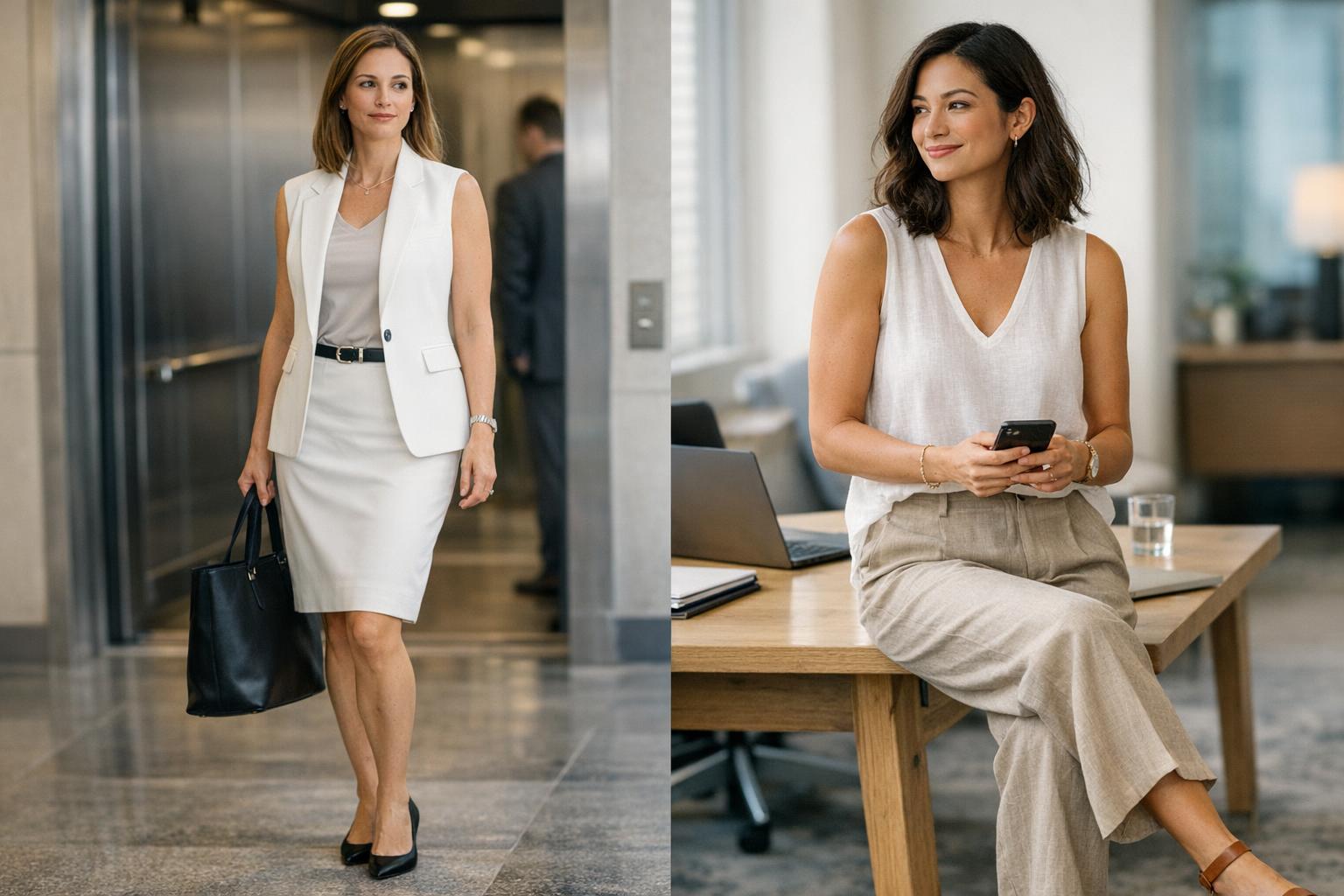
Summer business casual outfits: why “polished” can mean two different things
There’s a specific kind of morning that makes summer business casual outfits feel complicated: the forecast says heat and humidity, your calendar says meetings, and your closet is split between crisp office pieces and warm-weather staples that read more weekend than work. In that squeeze, a lot of people land on “business casual” and assume it’s one clear style. In practice, it usually splits into two very different styling approaches.
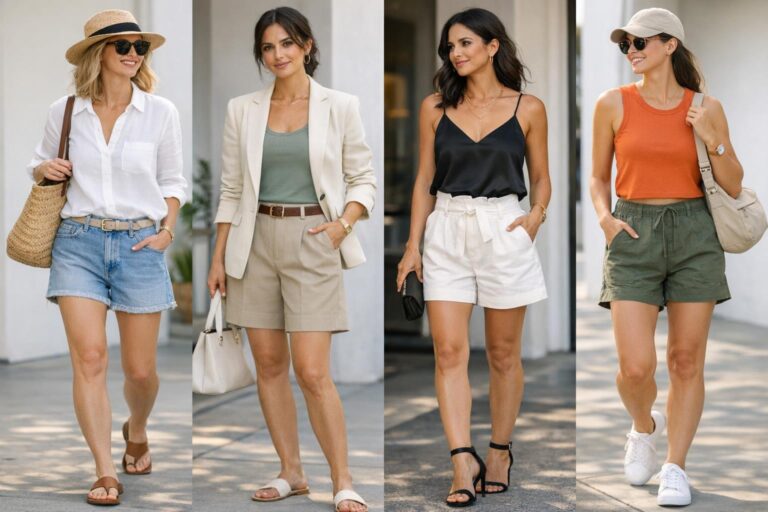
This breakdown compares two aesthetics that get discussed together because they share a similar goal—looking professional without feeling overdressed—but they achieve it in different ways. One approach leans structured and classic (think a streamlined business outfit with clear lines). The other leans lighter and more fashion-forward (a look di moda interpretation that still stays work-appropriate). They overlap enough to be confused, especially when you’re building a summer outfit professional enough for an office, yet comfortable enough to commute in.
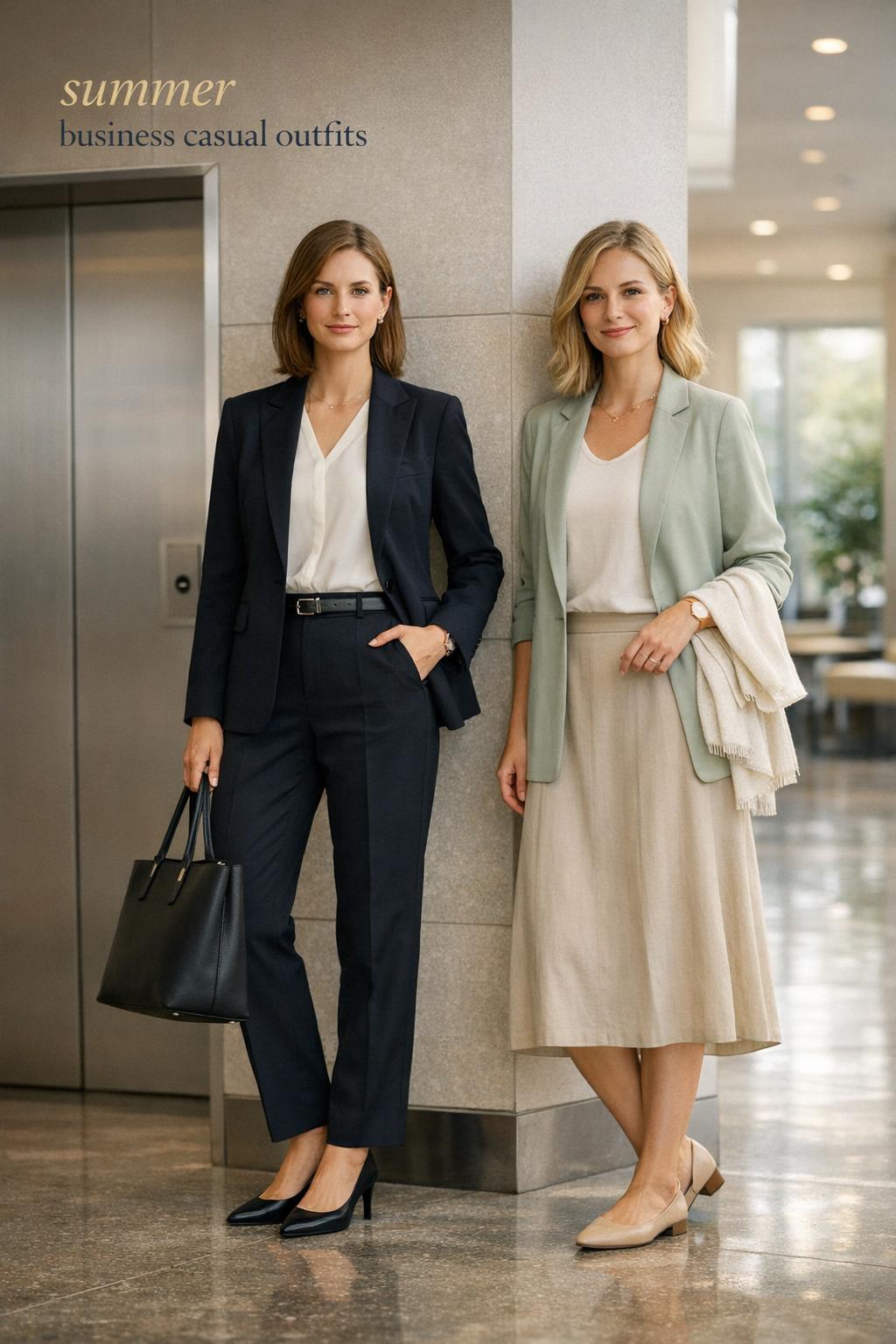
You’ll learn how to tell these styles apart by silhouette, fabric behavior in heat, color choices, and the “finishing” details that make an outfit feel either traditionally office-ready or modern and relaxed. Along the way, you’ll get practical comparisons you can actually use: cute job outfits that won’t fall apart by midday, and a daily classy outfit formula you can repeat without feeling like you’re wearing the same thing every week.
The Fashion-Note Edit
Five effortless pieces to refresh your everyday wardrobe
A polished, practical edit for workdays, weekends, and everything in between.

The Drop
Women’s Blake Long Blazer
A longline, tailored blazer with a notched collar and a single-button closure—an easy layer for denim, dresses, or office-ready looks.
Shop the blazer
Amazon Essentials
Women’s Lightweight Crewneck
A soft, lightweight sweater with a clean crew neckline—the kind of reliable layer that works from cool mornings to air-conditioned spaces.
Shop the sweater
Amazon Essentials
Women’s Loafer Flat
A classic flat loafer that gives casual outfits a more polished finish and pairs naturally with tailored pants, skirts, and straight-leg jeans.
Shop the loafers
Levi’s
Women’s 501 90s Jeans
A relaxed, vintage-inspired take on the iconic 501 silhouette—made for an easy, lived-in look without the thrift-store search.
Shop the jeans
Colorfulkoala
High-Waisted 7/8 Leggings with Pockets
Soft, four-way-stretch leggings with side pockets and a high-rise waistband—designed for movement, errands, and off-duty comfort.
Shop the leggings
Affiliate disclosure: This section contains affiliate links. If you make a purchase through these links, I may earn a commission at no additional cost to you. Product selection, pricing, availability, and delivery terms may change—please review the current details on Amazon before purchasing.
As an Amazon Associate I earn from qualifying purchases.
Style overview: classic business casual (structured, timeless, quietly sharp)
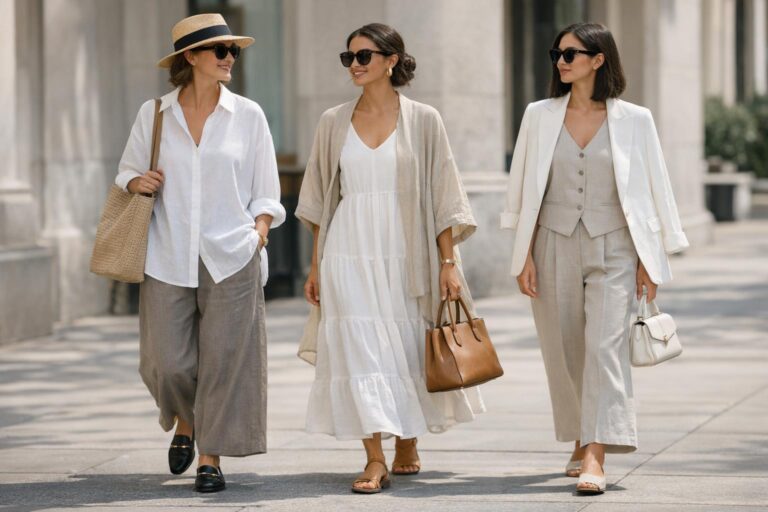
Classic business casual is the “I need to look dependable” lane. The defining characteristic is structure: clean shoulders, defined waistlines (even if subtle), and pieces that hold their shape. This is the style that reads as a traditional business outfit even when you skip a full suit.
Your wedding style is personal.
Your plan should feel that way, too.
Zarellea keeps your guest list, budget, vendors, and every next step beautifully organized — so you can focus on the moments that feel like you.
Silhouettes tend to be straight or gently tailored—think refined proportions rather than oversized volume. The palette usually stays grounded: neutrals, soft solids, and low-contrast combinations that feel intentional. Fabrics are chosen for polish first and breathability second, which is why summer can be tricky: you want the crisp look without the stiffness that traps heat.
The mood is “prepared.” It’s not severe, but it is deliberate. If your office leans traditional, or you prefer a daily classy outfit that never feels risky, classic business casual is the easiest way to look right for the room.
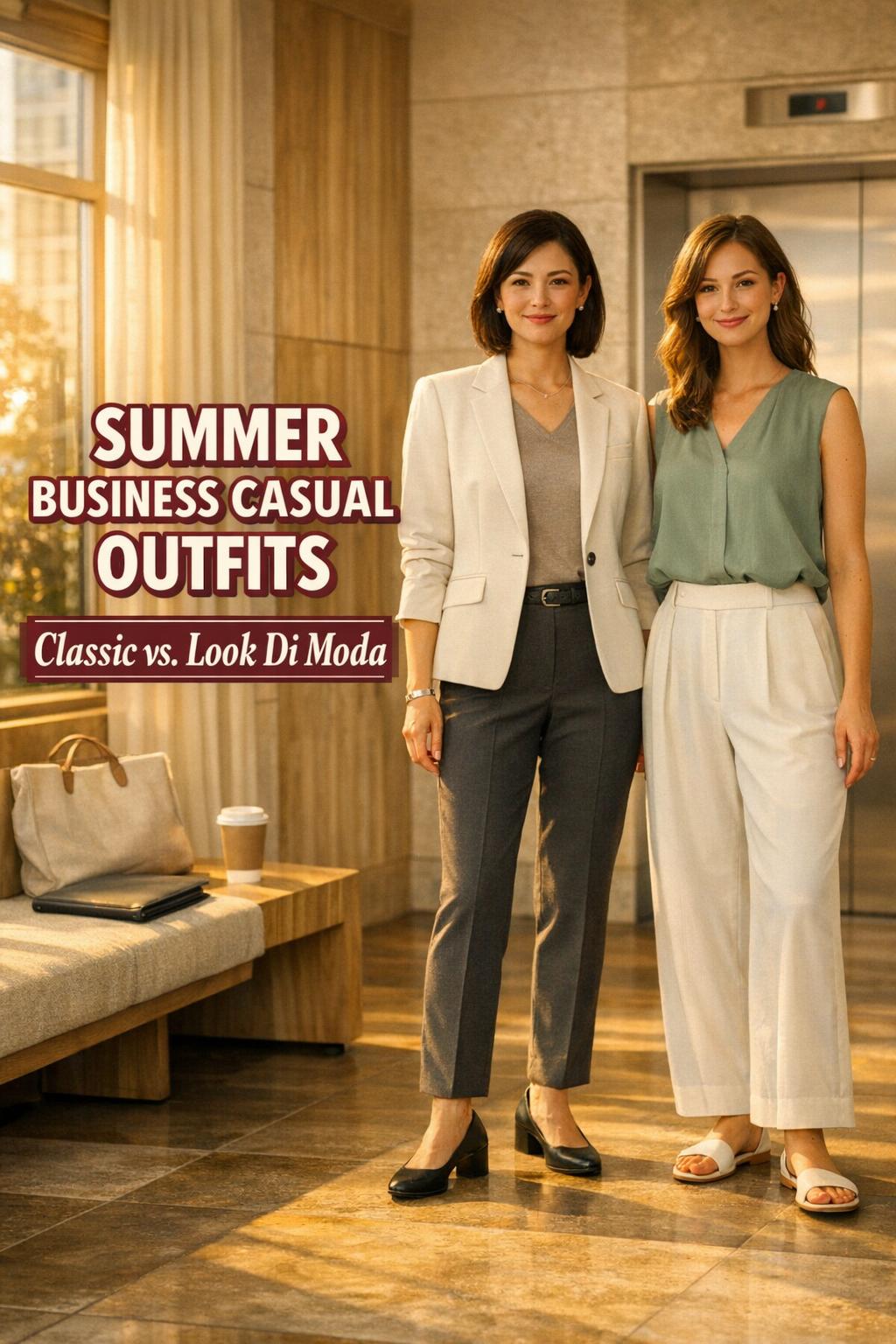
Style overview: modern summer business casual (lighter, more relaxed, subtly fashion-forward)
Modern summer business casual is still professional, but it’s more about ease and airflow. The defining characteristic is lightness—both literally (in fabric and layering) and visually (in proportion and mood). This is where a look di moda vibe can show up without turning into nightlife dressing.
Silhouettes often play with relaxed tailoring: a slightly looser line through the leg, a softer drape at the blouse, or a longer, straighter layer that moves as you walk. Color can be brighter or more varied, but the outfits stay cohesive by keeping the overall look simple—one focal point, then quiet supporting pieces.
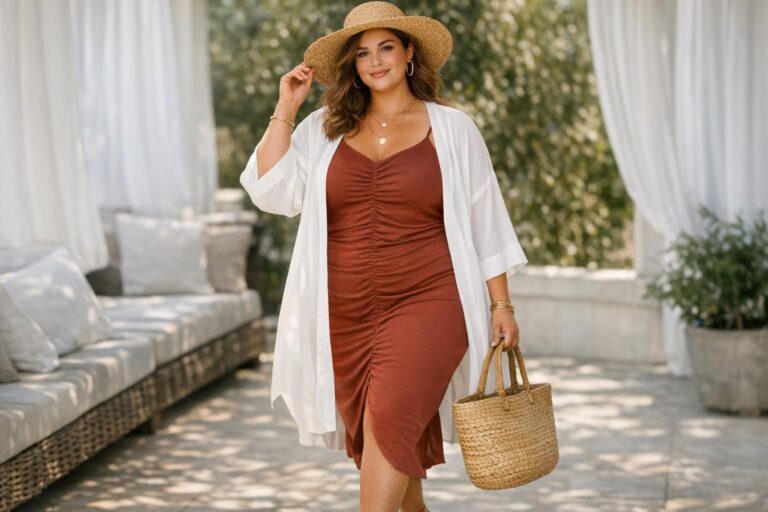
The mood is “current, but not loud.” It’s the lane for cute job outfits that still respect workplace expectations—especially in summer, when comfort and sweat-proof practicality matter as much as looking pulled together.
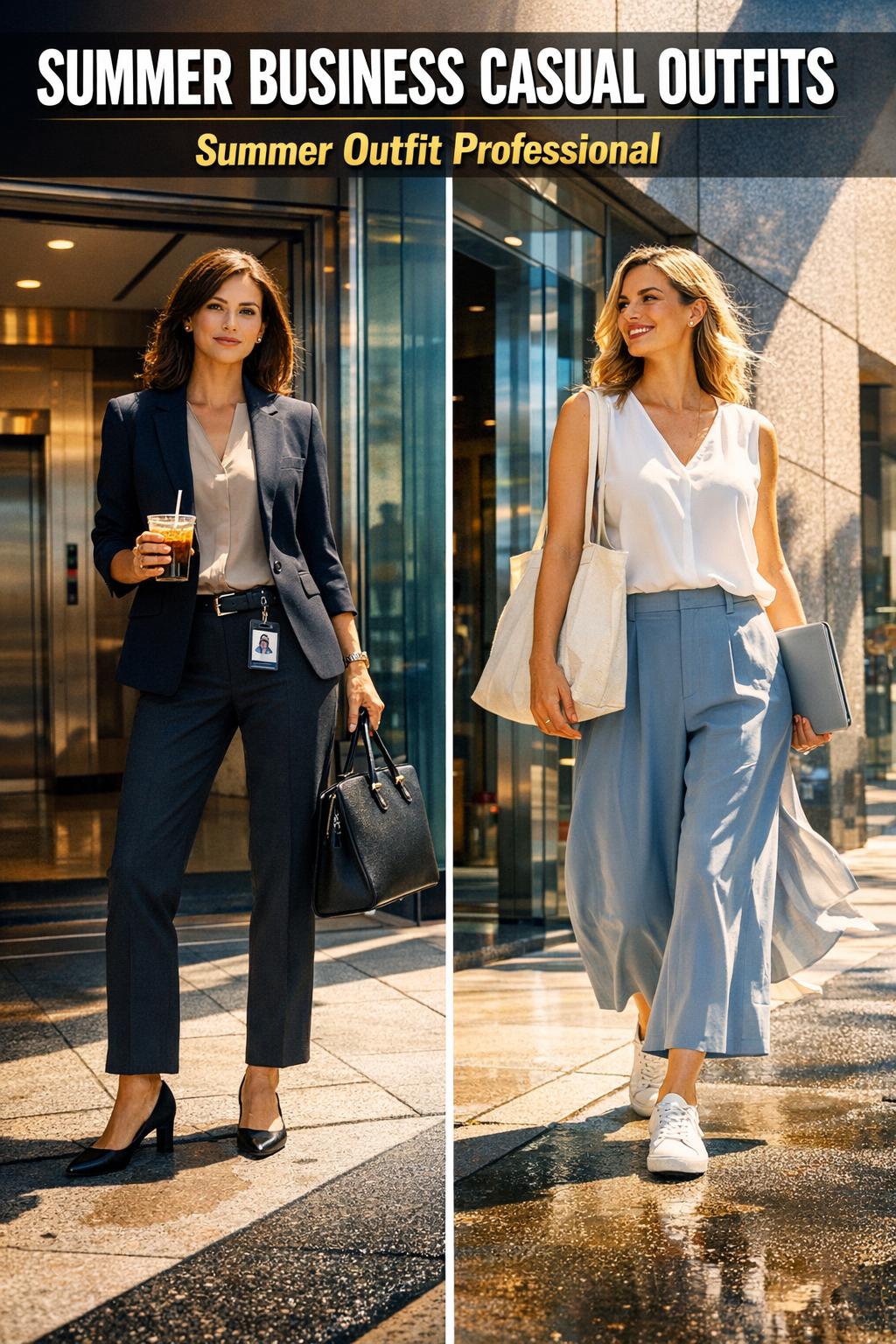
Key differences that actually show up in real outfits
Silhouette and structure: crisp lines vs. relaxed precision
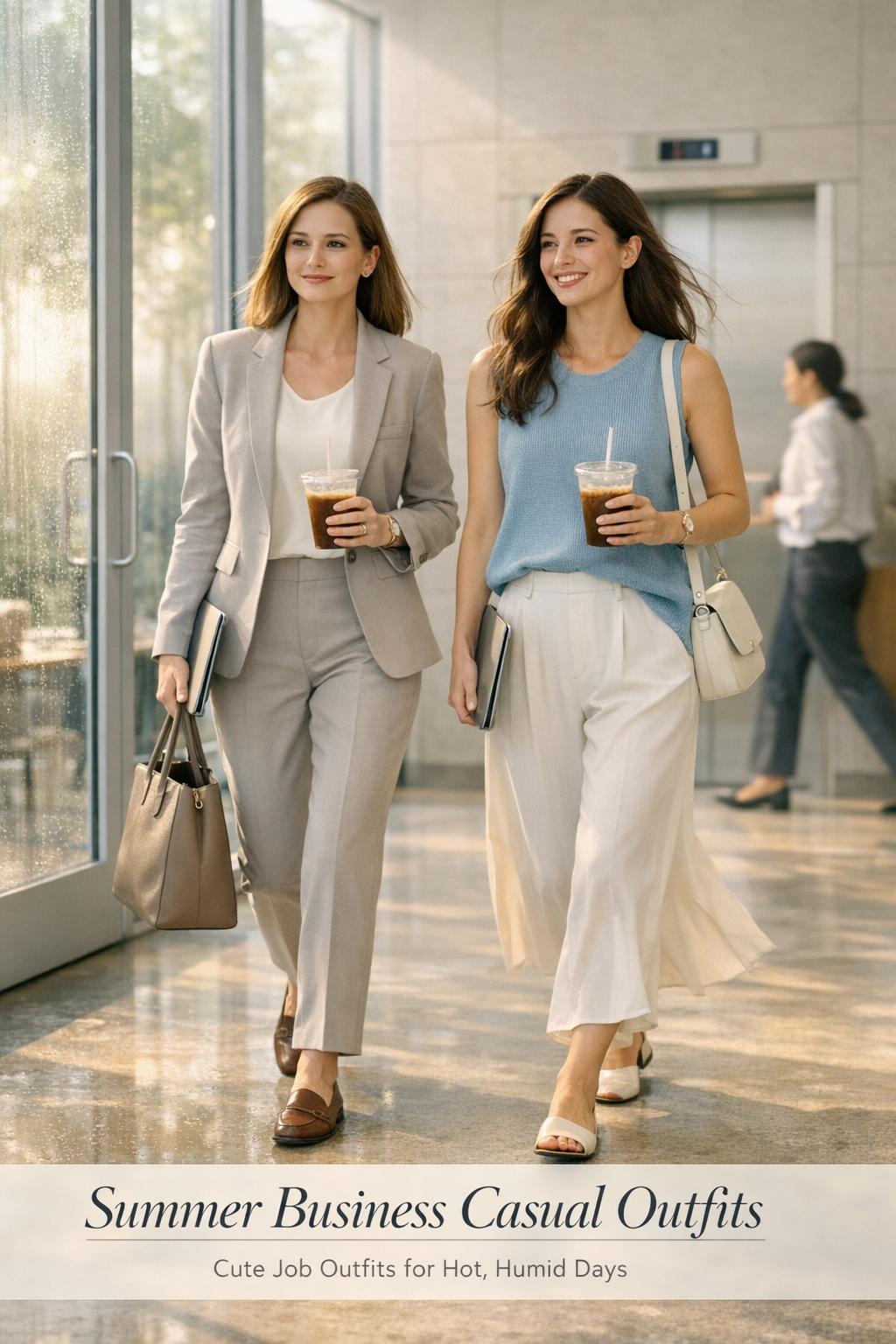
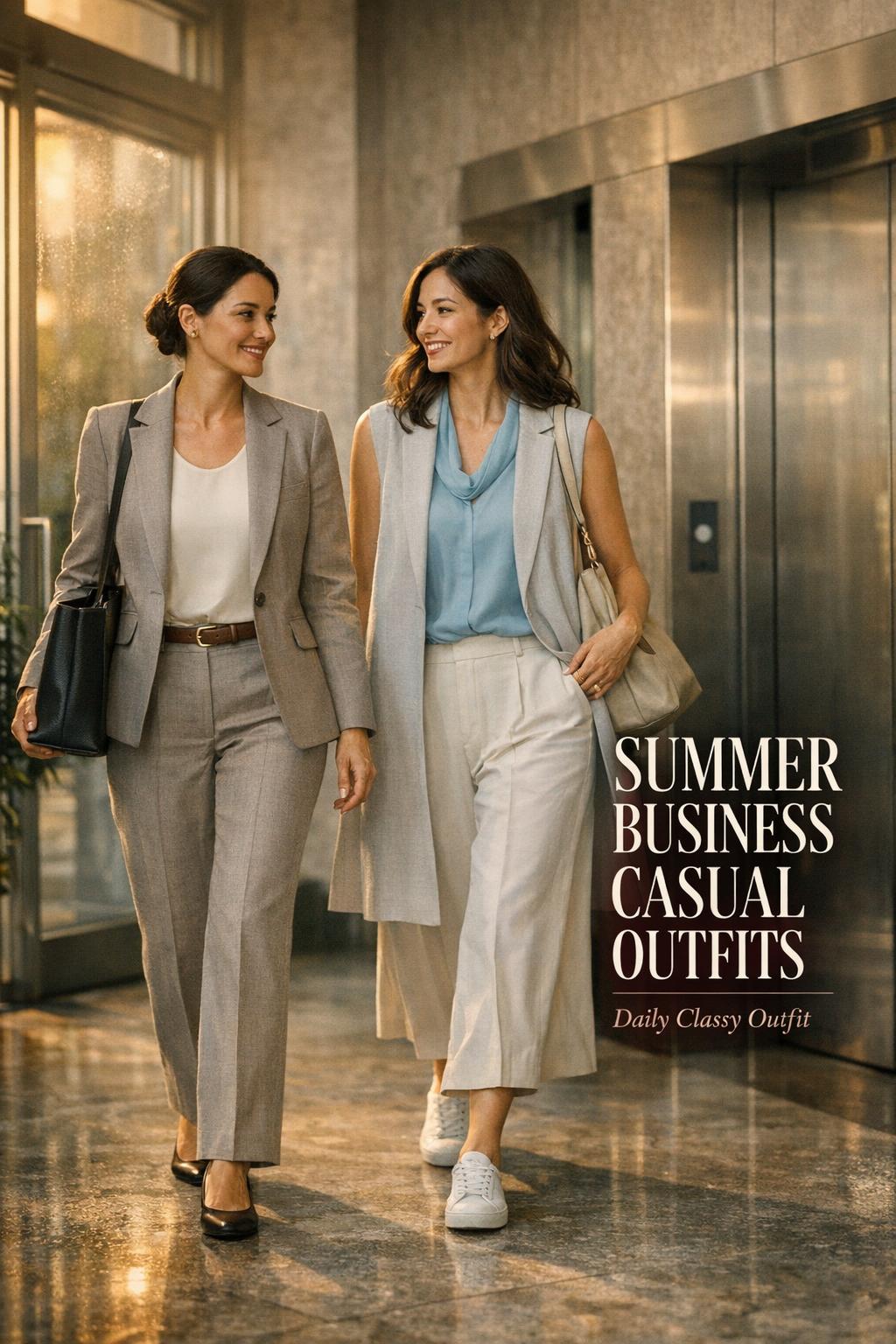
Classic business casual relies on pieces that keep a defined outline—especially at the shoulders and waist—so the outfit reads “office” even from a distance. Modern summer business casual softens that outline. You still want intention, but it’s built through proportion (a clean tuck, a longer top over a straighter leg) rather than firm tailoring. If you tend to feel boxy in summer layers, this difference matters: relaxed precision looks airy without looking sloppy, while crisp lines can look sharp but may feel rigid in heat.
Color palette: muted coordination vs. light, breathable contrast
Classic outfits usually stay in a muted range to keep the effect formal. Modern summer business casual often brings in lighter tones and slightly higher contrast because it reads seasonal and fresh. The trick is balance: a brighter or lighter element should look anchored by a calmer piece so the outfit stays professional. If your goal is a summer outfit professional enough for a meeting, color can help or hurt—classic leans safe, modern leans strategic.
Fabric behavior in heat: “stays crisp” vs. “moves and breathes”
In summer, fabric is the difference between looking composed at 9 a.m. and feeling uncomfortable by noon. Classic business casual often prioritizes fabrics that look smooth and structured; modern summer business casual prioritizes fabrics that move, release heat, and don’t cling. The visual difference shows up immediately: crisp fabric creates sharper edges, while breathable fabric creates softer lines. Neither is automatically better—your commute, office temperature, and how much you’re moving during the day decide what’s realistic.
Styling philosophy: “professional first” vs. “wearable first”
Classic business casual starts with credibility: you build the outfit around a clearly office-coded piece and then ease it into summer. Modern summer business casual starts with wearability: you build around comfort and then refine it so it reads work-appropriate. Both can look equally polished, but they feel different to wear. If you’ve ever put on a perfectly tailored look and felt overdressed for your actual workday, you’ve felt the mismatch classic styling can create in casual offices.
Visual style breakdown: what you’d notice on the street, in the elevator, at your desk
Layering: strategic structure vs. minimal, breathable layers
Classic business casual usually uses layering to add structure—an extra piece that makes the outfit feel “finished.” In summer, that can be a challenge, because more layers can mean more heat. The modern approach tends to reduce layers and rely on clean outfit architecture instead: a well-proportioned top, a tidy waistline, and simple accessories that make the look intentional without extra fabric.
Proportions: balanced tailoring vs. elongated ease
Classic proportions are often balanced and contained—nothing too oversized, nothing too fluid. Modern summer business casual stretches the vertical line: slightly longer hems, straighter legs, and tops that skim rather than grip. This is one reason it can feel more comfortable in heat; clothes that don’t cling tend to look calmer and feel cooler.
Accessories and finishing: understated and traditional vs. edited and modern
Classic finishing details aim for consistency: accessories that match the level of formality and don’t compete. Modern finishing is more “edited”—fewer pieces, but each one is chosen to steer the vibe toward current without becoming distracting. If you’re building cute job outfits, modern finishing can help you look intentional even in simple separates; classic finishing can make the same separates feel more formal and conservative.
Footwear: office-coded vs. commute-friendly polish
Footwear often gives away which lane you’re in. Classic business casual tends to choose shoes that clearly signal office formality. Modern summer business casual tends to prioritize shoes you can actually walk in—still polished, but chosen for comfort and movement. If your day includes a commute, stairs, or walking between buildings, this difference isn’t aesthetic; it’s practical.
Comparison outfit scenarios: same setting, two different style logics
Instead of listing endless options, it’s more useful to see how the two styles solve the same real-life situation. Think of these as side-by-side interpretations you can adapt to your own closet while keeping the result firmly in the summer business casual outfits category.
Office day with a last-minute meeting: classic business outfit vs. modern look di moda
Classic business casual would build this around a structured anchor piece so you feel instantly “meeting-ready.” The outfit reads crisp and dependable, with a neat silhouette that holds its shape when you stand, sit, and gesture. Modern summer business casual would aim for the same authority but with less stiffness—clean lines, breathable drape, and a sharper waist definition through tucking or proportion rather than heavy structure. The classic version looks more traditional at first glance; the modern version looks current and calm, especially in warm weather.
Creative office or casual Friday: daily classy outfit vs. cute job outfits energy
Classic business casual keeps “Friday casual” within a narrow range: you might soften the formality, but you maintain a composed outline and conservative color story. Modern summer business casual embraces a slightly more relaxed vibe while keeping the look intentional—this is where cute job outfits can still feel professional if the fit is clean and the palette is controlled. If you’re often unsure how casual is too casual, classic styling gives you guardrails; modern styling gives you comfort and personality without losing polish.
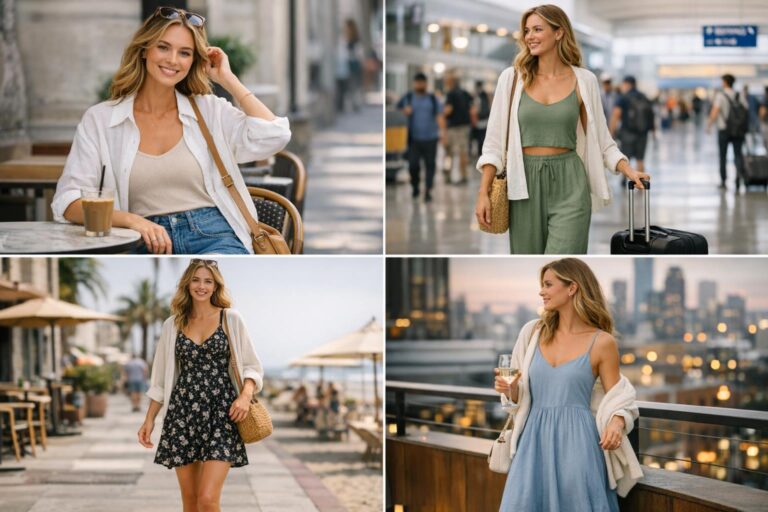
Hot commute, cold office: summer outfit professional with a temperature plan
Classic business casual solves temperature swings by adding a layer that looks formal and consistent with the outfit, so you can step into a chilly office without looking like you grabbed a random extra piece. Modern summer business casual solves it by choosing a light, easy layer that still looks intentional—less structured, more adaptable, and comfortable to carry when you’re outside. The important difference is bulk: classic layering can feel heavier; modern layering often feels lighter but can look too casual if the shapes aren’t clean.
Client-facing lunch: traditional polish vs. relaxed refinement
For a client-facing lunch, classic business casual prioritizes “safe and sharp.” The look is quietly formal, with low visual risk. Modern summer business casual aims for relaxed refinement: it looks elevated but less rigid, which can feel more approachable in social-professional settings. If you’re unsure of the venue’s formality, classic gives you a stronger safety net; modern can work beautifully if you keep the outfit clean, avoid anything too revealing, and make sure the overall balance reads composed.
How to decide which style fits your workplace (and your actual day)
Choosing between these two summer business casual outfits approaches isn’t about “right” or “wrong.” It’s about matching the visual message to the environment, then making sure the outfit holds up through a real day—sitting, walking, commuting, and being seen in different contexts.
- Choose classic business casual if your office is more traditional, you’re frequently in formal meetings, or you prefer a business outfit that feels instantly professional without needing styling tweaks.
- Choose modern summer business casual if your workplace is relaxed, your day involves a lot of movement, or you want a summer outfit professional enough for work but lighter, cooler, and more contemporary.
- Blend both if you want credibility and comfort: use classic structure in one piece, then keep everything else breathable and minimal.
It also helps to be honest about your personal comfort threshold. If you spend the day adjusting your clothes—tugging at hems, pulling fabric off your skin, or feeling restricted—you’ll look less confident, no matter how “correct” the outfit is on paper.
Where summer business casual outfits go wrong (and how to fix it fast)
Mistake: trying to “summer-ize” a winter formula
A common problem is taking an outfit formula that works in cooler months and simply swapping in lighter colors, while keeping the same heavy layering and tight structure. The result can look overly rigid for the season and feel physically uncomfortable. The fix is to reduce visual weight: fewer layers, cleaner proportions, and breathable fabrics that still look neat. If you love classic business casual, keep the structure in one element and let the rest of the outfit relax.
Mistake: confusing “relaxed” with “unpolished”
Modern summer business casual only works when it’s edited. Too many casual elements at once can make the outfit look like weekend wear. The fix is to keep one part of the outfit clearly office-appropriate—clean lines, controlled palette, and intentional finishing. If you’re aiming for cute job outfits, choose just one playful element and keep everything else quiet and composed.
Mistake: ignoring how fabric behaves after a few hours
Some outfits look perfect for the first 20 minutes, then lose their shape or show every crease once you’ve been sitting. In summer, that’s amplified by heat and movement. The fix is practical: prioritize fabrics that recover well and silhouettes that don’t rely on constant adjusting. A daily classy outfit is the one you can wear through a full day and still look put-together when you stand up for an afternoon meeting.
Tips for building a repeatable “summer outfit professional” capsule (without feeling bored)
Summer workwear feels easiest when you can rotate a few reliable shapes and vary the mood with small changes. The goal isn’t a huge wardrobe; it’s a consistent set of silhouettes that always land in business casual, whether you lean classic or more look di moda.
Tip: pick one signature silhouette and run it two ways
Choose a silhouette you know looks good and feels good—then style it in a classic direction and a modern direction. That might mean keeping the same base proportions but switching how structured the finishing feels. This is one of the easiest ways to get more outfits from fewer pieces while keeping your summer business casual outfits consistent across different types of workdays.
Tip: anchor your palette, then rotate one “fresh” element
A grounded base palette makes it easier to get dressed quickly and look coherent, especially in the morning rush. Then, to avoid boredom, rotate one lighter or brighter element that still feels work-appropriate. This keeps the outfit seasonal and modern without pushing into overly casual territory.
Tip: use finishing details to shift the vibe
If you want your wardrobe to work across more settings, use finishing details as the dial. Classic business casual reads more formal when the overall finish is consistent and traditional. Modern summer business casual reads more current when the finish is minimal, edited, and intentional. This is a subtle way to turn the same base into either a conservative business outfit or a softer, more relaxed daily classy outfit.
A practical blend: the “classic core, modern edge” method
If your office sits somewhere in the middle—or you move between internal work and more visible meetings—blending is often the smartest choice. The most wearable formula is “classic core, modern edge”: keep one piece clearly classic and structured, then let the other elements bring the airy, warm-weather ease that makes summer business casual outfits feel realistic.
In practice, this approach keeps you from feeling overdressed on casual days and underdressed on formal ones. It’s also an easy way to incorporate a look di moda touch without it taking over the whole outfit. The best part is that it naturally produces cute job outfits that still look grounded—because the classic piece provides authority while the modern pieces provide comfort.
- Classic core: one structured item that signals “work” immediately.
- Modern edge: breathable, relaxed pieces that keep the outfit light and seasonally appropriate.
- Clean finish: minimal, intentional details that keep the look professional.
Warm-weather realities: dressing for humidity, sun, and long days
Summer business casual isn’t just an aesthetic problem—it’s a comfort and performance problem. On hot days, your outfit needs to survive the walk from car to building, a commute on public transit, or a mid-day errand without looking rumpled or feeling sticky. This is where the difference between classic structure and modern ease becomes more than style preference.
Classic outfits can look immaculate, but they may feel less forgiving when temperatures climb. Modern outfits can feel breathable, but they require sharper editing so they don’t drift into weekend territory. If you’re building a summer outfit professional enough for real workdays, plan for the full day: morning heat, afternoon meetings, and whatever temperature your office air conditioning decides on.
Quick comfort checks before you commit to an outfit
- Can you sit for an hour without the outfit riding up, wrinkling heavily, or feeling restrictive?
- Does the outfit look intentional if you remove a layer mid-commute?
- Will the fabric cling in humidity, or does it keep a clean line?
- Can you walk briskly without constantly adjusting?
These are small tests, but they’re the difference between a cute job outfit in the mirror and a daily classy outfit that lasts through a real schedule.
Choosing your lane: when each style works best
Classic business casual works best for
Classic business casual is the right choice when you need your clothing to communicate professionalism quickly and clearly. It’s especially useful for environments where expectations aren’t spelled out but the culture leans traditional. It also suits days when you’ll be seen by new people—interviews, presentations, or important meetings—because the structure and restraint read as dependable.
Modern summer business casual works best for
Modern summer business casual shines in warmer climates and more relaxed workplaces where you still want to look composed. It’s also ideal for days with a lot of movement—walking between meetings, commuting, or traveling between locations—because the lighter approach tends to be more comfortable. If you like a look di moda edge, this lane lets you keep outfits current while staying within the boundaries of workwear.
The blend works best for
The blend is best when you’re navigating multiple dress codes in one day—office hours, a client lunch, then a more casual team moment. It also suits anyone who wants their wardrobe to do more with less: a few reliable business outfit anchors plus lighter pieces that make summer outfit professional dressing feel easy.
Pulling it all together: the core distinction you can spot instantly
Classic business casual is defined by structure, restraint, and a traditional polish that reads professional at a glance. Modern summer business casual is defined by breathable ease, cleaner minimal finishing, and proportion-based tailoring that feels current—often the sweet spot for summer business casual outfits when comfort matters as much as credibility.
You can usually identify the lane by asking one simple question: is the outfit relying on crisp structure to look “work,” or is it relying on refined ease and editing? Once you know that, you can borrow from both sides—use classic elements to keep your look grounded, and modern elements to keep it wearable in heat. That’s how you build cute job outfits that still feel like a daily classy outfit, not a compromise.
FAQ
What counts as summer business casual outfits for a U.S. workplace?
Summer business casual outfits typically balance professional, work-appropriate silhouettes with warm-weather comfort, using lighter layers and breathable shapes while still looking intentional and polished for an office setting.
How do I make a summer outfit professional without wearing heavy layers?
Focus on clean proportions and a tidy finish—like a structured “core” piece or a sharp waist definition—so the outfit reads office-ready even with minimal layering, then keep the rest of the look breathable and simple.
What’s the difference between a classic business outfit and a modern look di moda work look?
A classic business outfit relies on structure, muted coordination, and traditional polish, while a look di moda approach keeps the outfit professional but feels lighter and more current through relaxed precision, edited finishing details, and an easier overall mood.
How can I build cute job outfits that still look work-appropriate?
Keep the outfit grounded with one clearly office-appropriate element (clean lines, controlled palette, intentional finishing), then add only one “cute” detail at a time so the look stays balanced and doesn’t tip into weekend casual.
What’s the easiest daily classy outfit formula for hot weather?
Choose a repeatable, comfortable silhouette you trust, keep the palette cohesive, and rely on small finishing details to look intentional; the goal is an outfit you can wear through commuting, sitting, and meetings without constant adjusting.
How do I handle a hot commute and a cold office in summer business casual outfits?
Plan an intentional light layer that works with the outfit visually, so you can remove it outside and put it back on indoors without the look feeling mismatched or overly bulky.
Can I mix classic and modern summer business casual in the same outfit?
Yes—one of the most wearable strategies is “classic core, modern edge,” where a structured, traditional piece provides authority and the rest of the outfit stays breathable and minimal for warm-weather comfort.
How do I keep my business outfit from looking too formal in summer?
Reduce visual weight by minimizing layers, choosing lighter-feeling proportions, and keeping the finish clean rather than heavy; this maintains professionalism while making the outfit feel seasonally appropriate.
Finish the look
The little extras that make a summer outfit feel complete
From beach days to city weekends, these easy pieces bring comfort, texture, and a polished finishing touch.

FENBEN
Straw Hobo Crossbody Bag
A handwoven straw bag with both short and crossbody straps—an effortless finishing touch for vacation looks and warm-weather outfits.
Shop the bag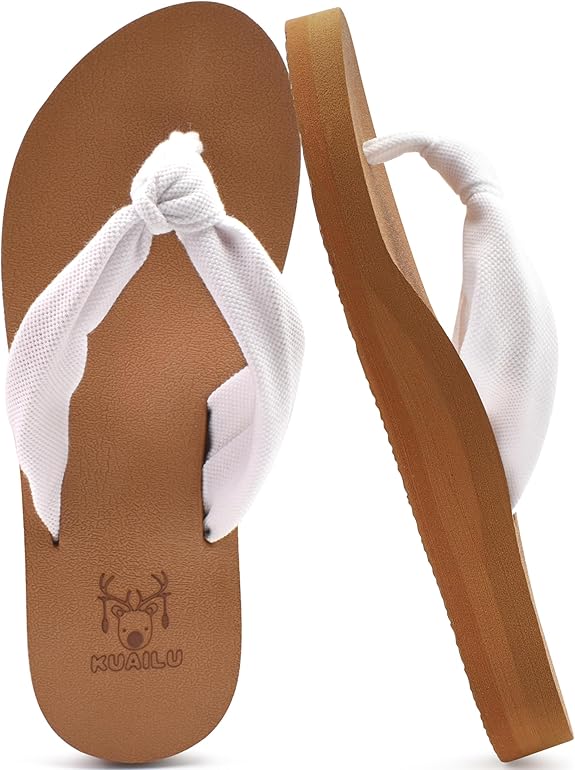
KuaiLu
Flip Flops with Arch Support
Cushioned, lightweight sandals with supportive arch design—a practical choice for beach trips, errands, and long summer walks.
Shop the sandals
baleaf
Athletic One-Piece Swimsuit
A functional one-piece with adjustable straps and moderate coverage, designed for swimming, training, surfing, and active beach days.
Shop the swimsuit
Astylish
Linen-Cotton Button-Down Shirt
A relaxed cotton-linen shirt with a collared V-neck and roll-up sleeves—easy to style over swimwear or with denim and shorts.
Shop the shirt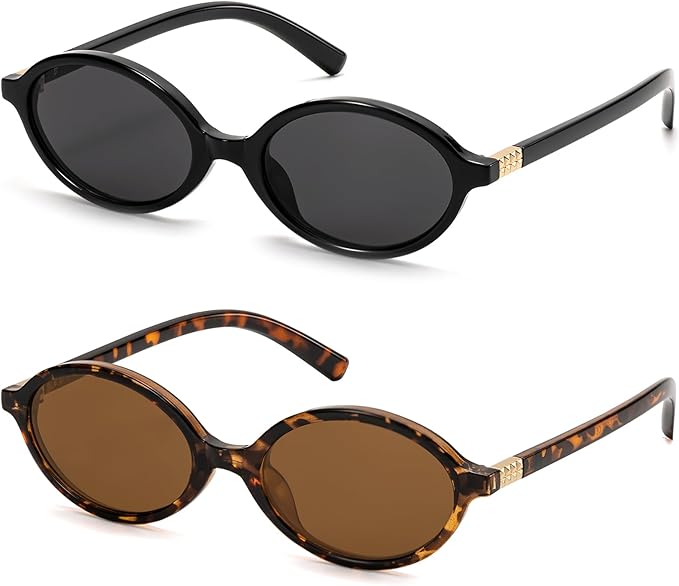
ViewJoy
Retro Oval Sunglasses
Small oval sunglasses with a 90s-inspired silhouette and UV400 lens protection—a quick way to add a vintage edge to everyday looks.
Shop the sunglasses
Affiliate disclosure: This section contains affiliate links. If you make a purchase through these links, I may earn a commission at no additional cost to you. Product selection, pricing, availability, and delivery terms may change—please review the current details on Amazon before purchasing.
As an Amazon Associate I earn from qualifying purchases.