Spring Layering Outfits: Smart Outfit Formulas for Unpredictable Weather
Spring style always revolves around one simple challenge: the weather rarely stays the same for long. A cool morning commute can quickly turn into a warm afternoon, while evenings often bring wind, rain, or sudden temperature drops. The key to looking polished throughout the day is not packing more clothes — it is learning how to layer them well.
Spring layering outfits are built around lightweight pieces that work together. Instead of heavy winter coats or overly minimal summer outfits, spring wardrobes rely on flexible combinations: light jackets, structured blazers, relaxed knits, breathable shirts, and comfortable bottoms that allow easy movement.
Spring weather can change quickly during city days or travel. If you’re planning outfits for trips across Europe, our guide to spring travel outfits for European city trips shows how to build a practical travel capsule.
The Fashion-Note Edit
Five effortless pieces to refresh your everyday wardrobe
A polished, practical edit for workdays, weekends, and everything in between.

The Drop
Women’s Blake Long Blazer
A longline, tailored blazer with a notched collar and a single-button closure—an easy layer for denim, dresses, or office-ready looks.
Shop the blazer
Amazon Essentials
Women’s Lightweight Crewneck
A soft, lightweight sweater with a clean crew neckline—the kind of reliable layer that works from cool mornings to air-conditioned spaces.
Shop the sweater
Amazon Essentials
Women’s Loafer Flat
A classic flat loafer that gives casual outfits a more polished finish and pairs naturally with tailored pants, skirts, and straight-leg jeans.
Shop the loafers
Levi’s
Women’s 501 90s Jeans
A relaxed, vintage-inspired take on the iconic 501 silhouette—made for an easy, lived-in look without the thrift-store search.
Shop the jeans
Colorfulkoala
High-Waisted 7/8 Leggings with Pockets
Soft, four-way-stretch leggings with side pockets and a high-rise waistband—designed for movement, errands, and off-duty comfort.
Shop the leggings
Affiliate disclosure: This section contains affiliate links. If you make a purchase through these links, I may earn a commission at no additional cost to you. Product selection, pricing, availability, and delivery terms may change—please review the current details on Amazon before purchasing.
As an Amazon Associate I earn from qualifying purchases.
When done right, layering creates outfits that feel intentional and stylish rather than bulky. The goal is to build outfits where each layer contributes to the overall look, whether you’re heading to work, traveling through a city, meeting friends for brunch, or spending a full day walking outdoors.
Your wedding style is personal.
Your plan should feel that way, too.
Zarellea keeps your guest list, budget, vendors, and every next step beautifully organized — so you can focus on the moments that feel like you.
In this guide you’ll find practical spring layering formulas, outfit ideas, and styling strategies that help you stay comfortable and polished even when the weather changes throughout the day.
Why Layering Is Essential for Spring Style
Spring outfits often fail because they rely on only one temperature scenario. In reality, spring days move through several micro-seasons in a matter of hours.
Many travelers notice the same challenge when planning outfits for European destinations. Guides like Europe spring outfits Americans can pack in a carry-on highlight how layering becomes the key to staying comfortable across changing temperatures.
A smart layering outfit solves this by allowing small adjustments throughout the day. You might start with a light sweater and coat in the morning, remove the coat in the afternoon, and keep only a breathable base layer by early evening.
The best spring layers share three qualities:
- lightweight fabrics that do not add bulk
- neutral colors that combine easily
- versatile silhouettes that work across multiple outfits
These pieces create the foundation for effortless everyday outfits.
Classic Spring Layering Outfit Formulas
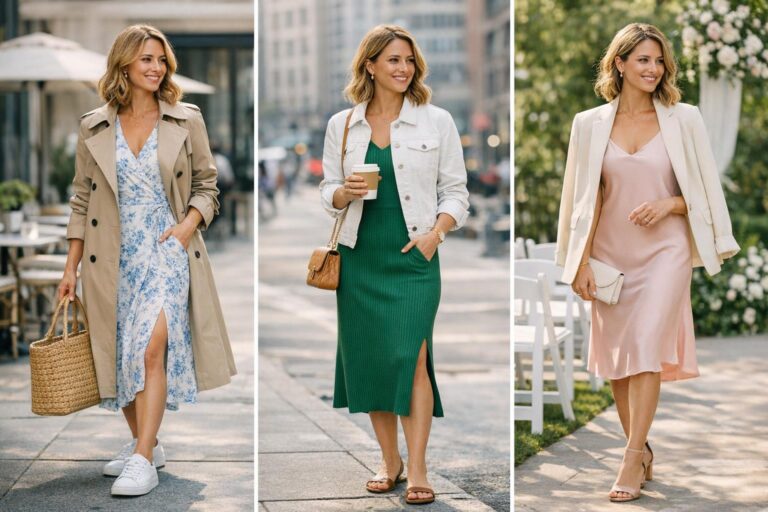
Instead of thinking in terms of individual items, it helps to think in outfit formulas. These repeatable combinations make it easier to pack for travel, plan outfits quickly, and maintain a consistent style.
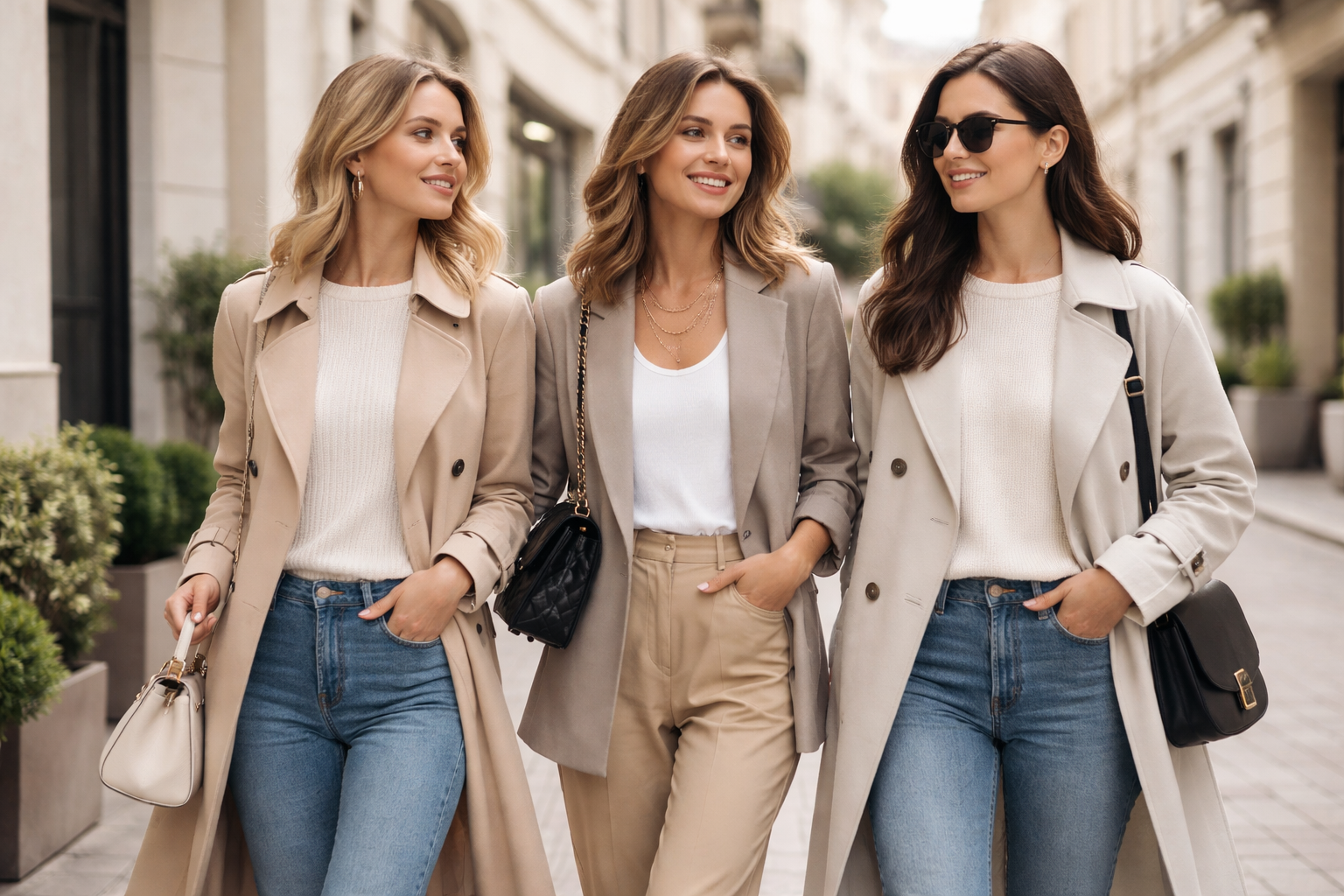
Light Jacket + Knit + Straight Jeans
This is one of the most reliable spring outfit combinations. A light jacket adds structure while a knit sweater provides warmth during cooler hours.
Simple sneakers or ankle boots keep the outfit comfortable for long days.
This formula works especially well for casual city days and everyday errands.
This outfit formula works particularly well for casual sightseeing days in cities like London or Copenhagen where mornings can be cool and afternoons warmer.
Blazer + T-Shirt + Tailored Pants
For a more polished look, layering a relaxed blazer over a basic tee creates a clean silhouette without feeling overly formal.
Tailored trousers or straight-leg pants keep the outfit balanced while comfortable shoes make it practical for daily movement.
This combination works perfectly for workdays, meetings, or city lunches.
This type of polished but comfortable layering appears often in destination guides such as Paris spring outfits or Madrid spring outfits for U.S. travelers.
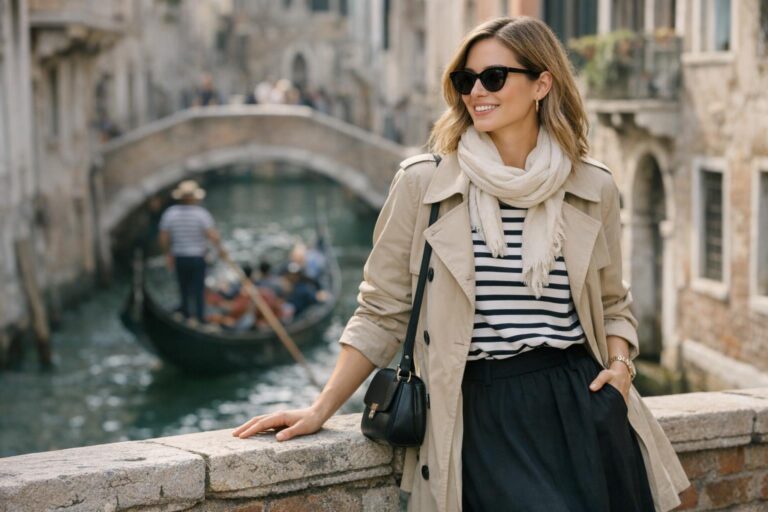
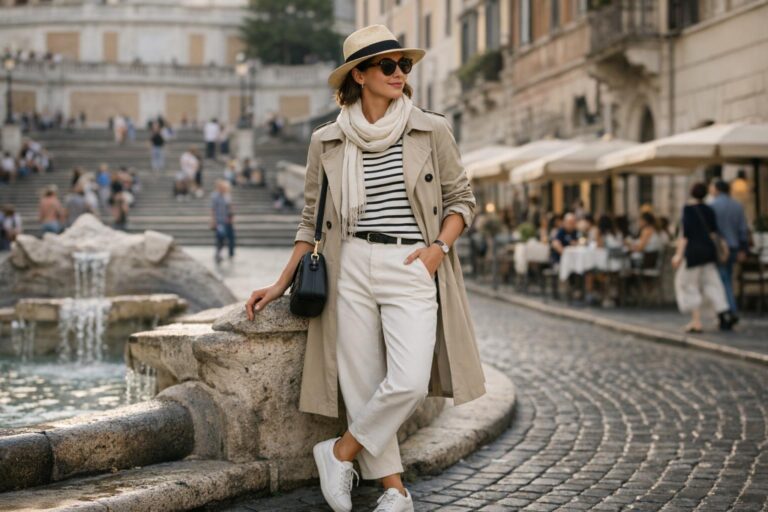
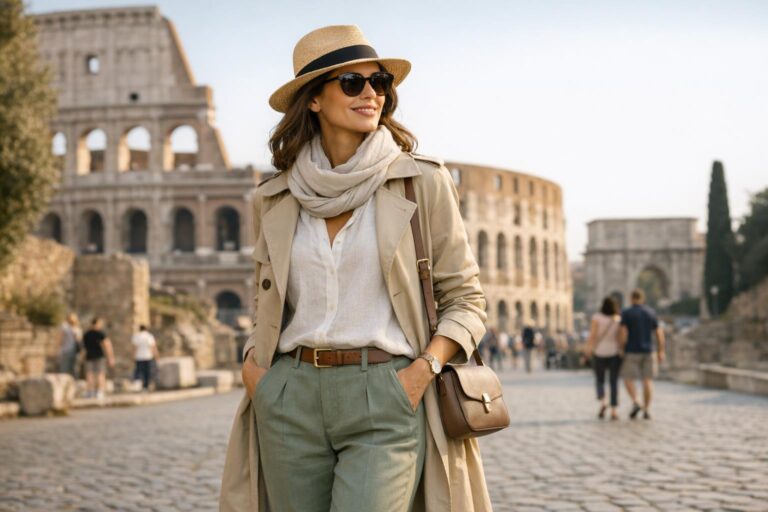
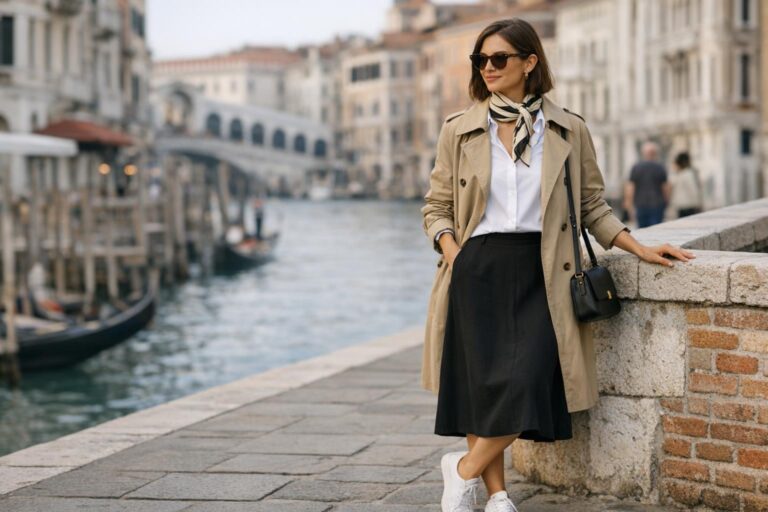
Trench Coat + Shirt + Denim
The trench coat is one of the most iconic spring layers. Its lightweight structure provides coverage against wind and light rain while remaining breathable.
A crisp shirt underneath keeps the look sharp, while denim balances the outfit with casual energy.
Trench coats are especially popular in Southern European destinations where spring weather shifts between sun and wind. You will often see this layer in guides like Italy spring outfits or Florence spring outfits for Tuscany days.
Spring Layering Pieces Worth Building a Capsule Around
Key spring layering staples include:
- lightweight trench coats
- structured blazers
- cotton or merino sweaters
- relaxed button-down shirts
- straight-leg jeans
- versatile sneakers or loafers
These pieces form the backbone of a practical spring wardrobe.
Many of these pieces also appear in travel-focused wardrobe guides such as Portugal spring outfits or Greece spring outfits for U.S. travelers, where lightweight layers are essential.
Spring Layering for Different Occasions
Spring layering outfits can easily adapt to different environments.
For casual days, relaxed knits and denim create comfortable outfits that still look intentional. For work settings, structured layers such as blazers or lightweight coats provide polish without feeling heavy.
Travel outfits benefit from layers the most. A light jacket or cardigan can transform a basic outfit into something that works across multiple climates and destinations.
Explore More Spring Outfit Ideas
If you’re building a spring wardrobe or planning seasonal outfits, these guides will help you explore different styles and destinations.
City and travel outfits
- Spring Travel Outfits: Chic Outfit Ideas for European City Trips
- Europe Spring Outfits Americans Can Pack in a Carry-On
- London Spring Outfits Guide
- Madrid Spring Outfits for U.S. Travelers
- Greece Spring Outfits for U.S. Travelers
Destination style guides
- Italy Spring Outfits
- Florence Spring Outfits
- Portugal Spring Outfits
- Spain Spring Outfits
These outfit collections show how the same layering principles work across different cities and travel scenarios.
Final Thoughts
Great spring outfits are not built around individual pieces — they are built around systems of layers that work together. When you focus on versatile fabrics, neutral colors, and repeatable outfit formulas, planning your wardrobe becomes much easier.
Instead of packing dozens of items, a small group of thoughtfully chosen pieces can create dozens of outfits. That is the secret behind effortless spring style.
Finish the look
The little extras that make a summer outfit feel complete
From beach days to city weekends, these easy pieces bring comfort, texture, and a polished finishing touch.

FENBEN
Straw Hobo Crossbody Bag
A handwoven straw bag with both short and crossbody straps—an effortless finishing touch for vacation looks and warm-weather outfits.
Shop the bag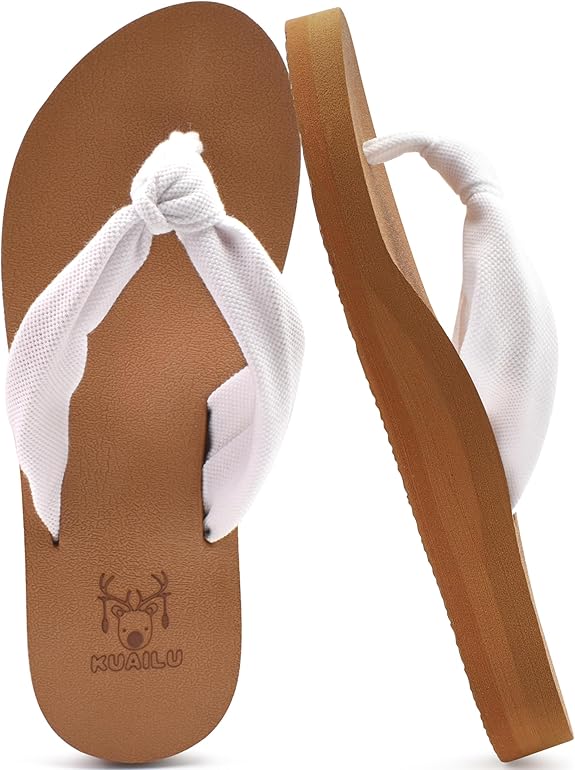
KuaiLu
Flip Flops with Arch Support
Cushioned, lightweight sandals with supportive arch design—a practical choice for beach trips, errands, and long summer walks.
Shop the sandals
baleaf
Athletic One-Piece Swimsuit
A functional one-piece with adjustable straps and moderate coverage, designed for swimming, training, surfing, and active beach days.
Shop the swimsuit
Astylish
Linen-Cotton Button-Down Shirt
A relaxed cotton-linen shirt with a collared V-neck and roll-up sleeves—easy to style over swimwear or with denim and shorts.
Shop the shirt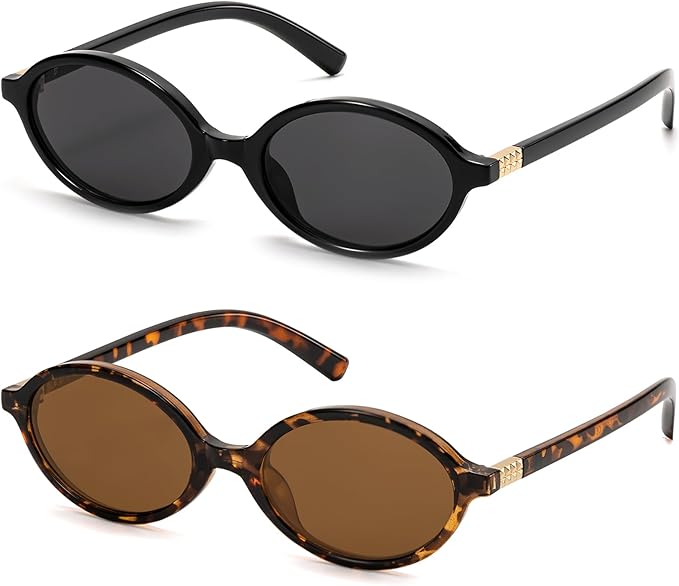
ViewJoy
Retro Oval Sunglasses
Small oval sunglasses with a 90s-inspired silhouette and UV400 lens protection—a quick way to add a vintage edge to everyday looks.
Shop the sunglasses
Affiliate disclosure: This section contains affiliate links. If you make a purchase through these links, I may earn a commission at no additional cost to you. Product selection, pricing, availability, and delivery terms may change—please review the current details on Amazon before purchasing.
As an Amazon Associate I earn from qualifying purchases.