Red and Green Outfits That Feel Modern, Not Costume-Like
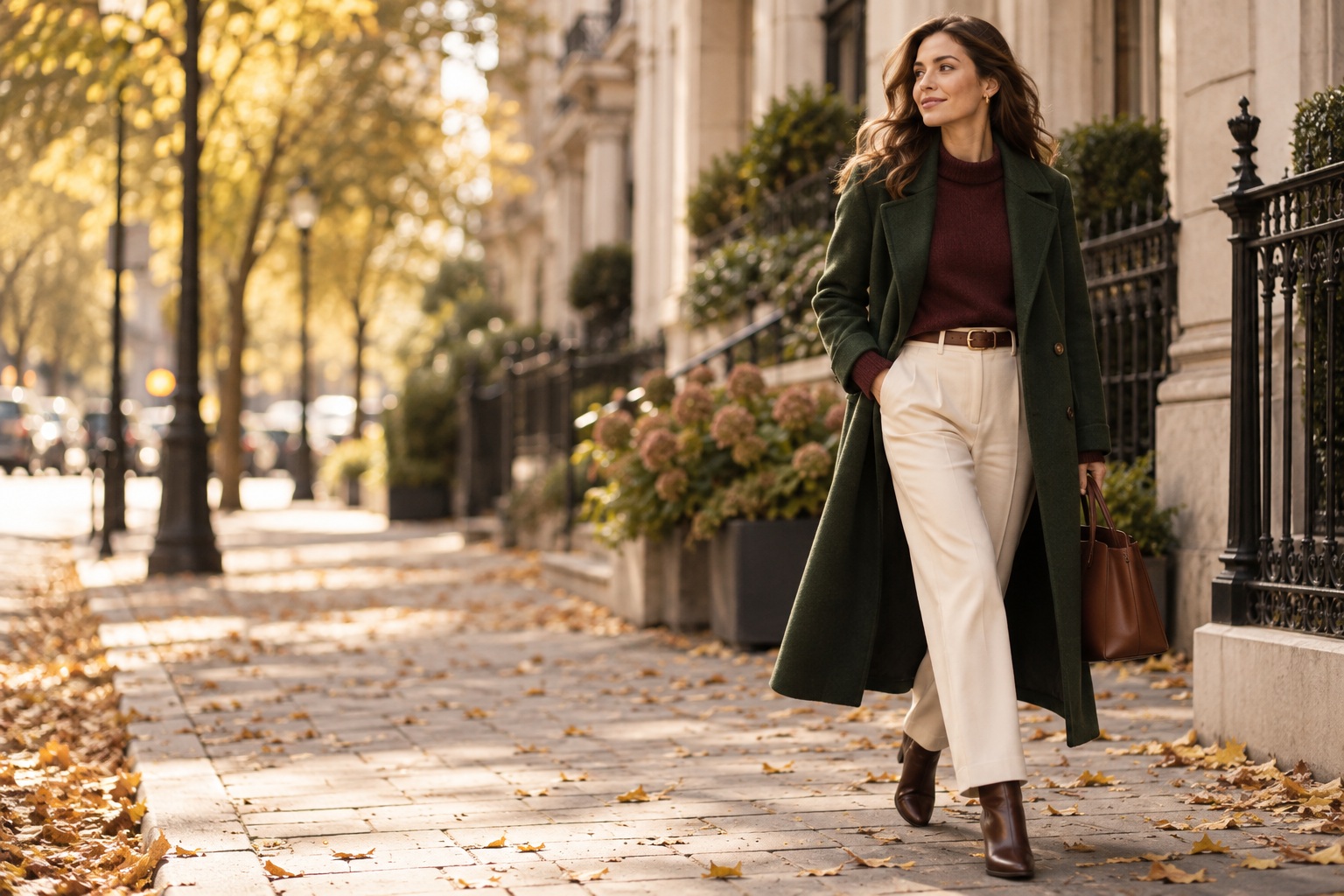
Red and green outfits can look incredibly polished, but they can also become the first thing you notice for the wrong reason. Put a bright red top beside a bright green skirt, add a shiny accessory, and the outfit may read as a holiday costume before the person wearing it gets a chance to make it personal. That does not mean the colors are impossible. It means the combination needs a little direction.
The easiest fix is to stop treating red and green as equal team captains. Decide which shade leads, soften or deepen the other, and give the eye a quiet place to rest. Denim, cream, chocolate brown, navy, black, and warm tan can separate the colors without making the outfit boring. The formulas below will help you diagnose the problem, build red and green outfits for real situations, and make quick adjustments when a look feels too loud.
Why red and green outfits sometimes feel too festive
Red and green sit opposite each other on the traditional color wheel, so they create immediate contrast. Contrast is useful because it gives an outfit energy and makes simple pieces look intentional. It becomes difficult when both colors are equally bright, equally large, and equally shiny. The eye has nowhere to settle, and the outfit can start to resemble a seasonal decoration.
The Fashion-Note Edit
Five effortless pieces to refresh your everyday wardrobe
A polished, practical edit for workdays, weekends, and everything in between.

The Drop
Women’s Blake Long Blazer
A longline, tailored blazer with a notched collar and a single-button closure—an easy layer for denim, dresses, or office-ready looks.
Shop the blazer
Amazon Essentials
Women’s Lightweight Crewneck
A soft, lightweight sweater with a clean crew neckline—the kind of reliable layer that works from cool mornings to air-conditioned spaces.
Shop the sweater
Amazon Essentials
Women’s Loafer Flat
A classic flat loafer that gives casual outfits a more polished finish and pairs naturally with tailored pants, skirts, and straight-leg jeans.
Shop the loafers
Levi’s
Women’s 501 90s Jeans
A relaxed, vintage-inspired take on the iconic 501 silhouette—made for an easy, lived-in look without the thrift-store search.
Shop the jeans
Colorfulkoala
High-Waisted 7/8 Leggings with Pockets
Soft, four-way-stretch leggings with side pockets and a high-rise waistband—designed for movement, errands, and off-duty comfort.
Shop the leggings
Affiliate disclosure: This section contains affiliate links. If you make a purchase through these links, I may earn a commission at no additional cost to you. Product selection, pricing, availability, and delivery terms may change—please review the current details on Amazon before purchasing.
As an Amazon Associate I earn from qualifying purchases.
The association with Christmas makes this pairing more sensitive than many other complementary combinations. A saturated true red beside a saturated emerald green carries a familiar holiday message even when the clothing itself is minimal. A different proportion or a more nuanced shade can completely change the mood. Burgundy with olive feels autumnal. Tomato red with mint feels fresh. Cherry shoes with a green trouser look directional when a white tank breaks up the color.
Your wedding style is personal.
Your plan should feel that way, too.
Zarellea keeps your guest list, budget, vendors, and every next step beautifully organized — so you can focus on the moments that feel like you.
First, identify the source of the problem
Look at the outfit in four parts: hue, proportion, texture, and context. Hue asks whether the colors are bright, muted, warm, or cool. Proportion asks whether red and green each occupy half the outfit or whether one is only an accent. Texture asks whether the pieces are matte, glossy, fuzzy, tailored, or patterned. Context asks whether you are dressing for a regular workday, a winter party, a summer lunch, or a team event.
- If the hues are too bright, deepen one color or add a faded version of the other.
- If the proportions feel loud, make one shade the focal point and use the second in a smaller area.
- If the textures feel seasonal, mix one rich piece with a simple matte staple.
- If the context feels too holiday-coded, use denim, cream, brown, or navy as a third color.
Build a balanced red and green outfit
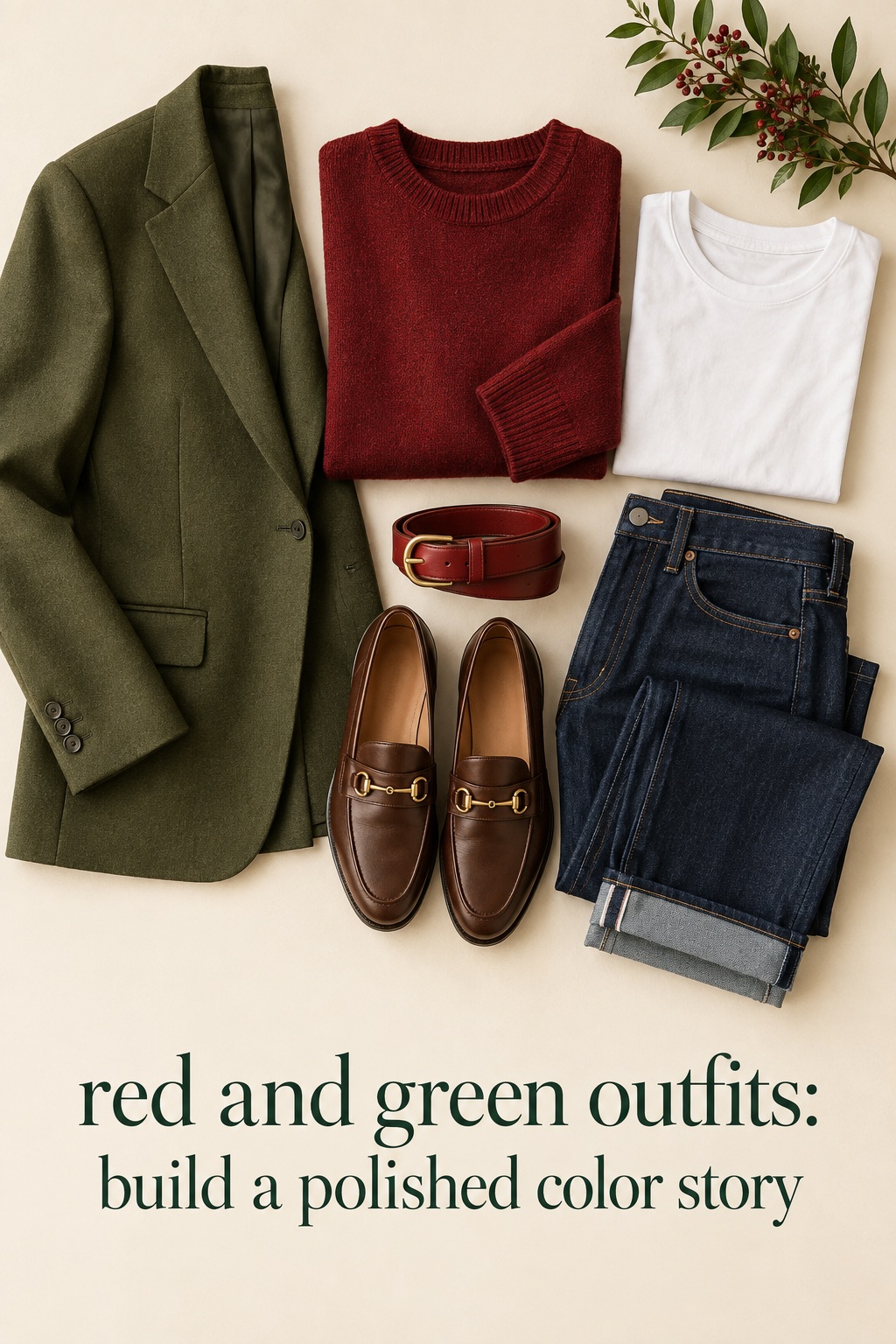
A reliable red and green outfit usually starts with one dominant color, one supporting color, and one quiet neutral. Think of the dominant color as about half of the visual story, the neutral as a bridge, and the supporting color as the accent that makes the outfit memorable. The percentages do not need to be exact. They simply keep two strong shades from competing for every inch of attention.
Let the shade do the mood-setting
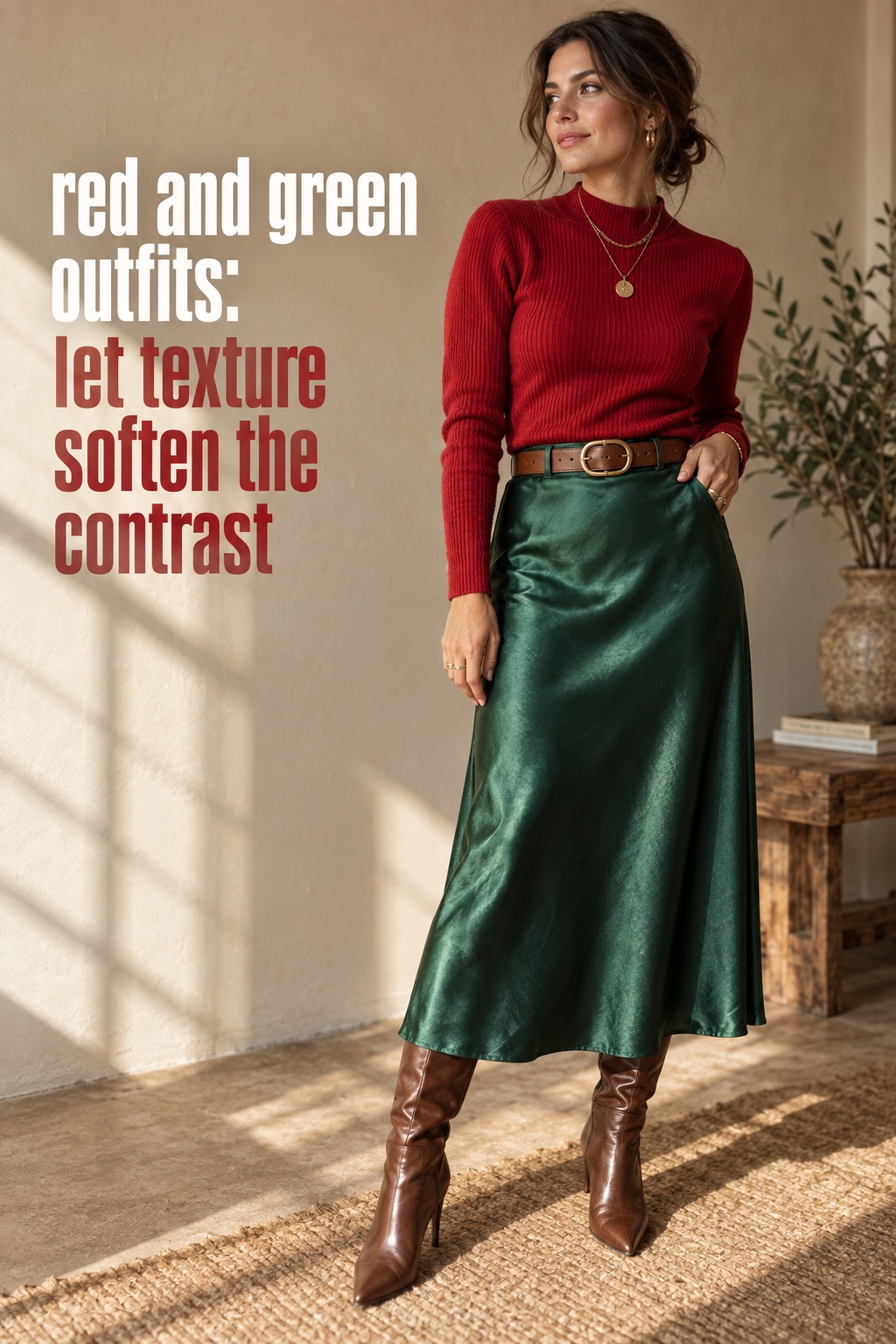
For the most wearable version, begin with softened combinations. Olive and tomato red feel relaxed because olive has a dusty, earthy quality. Forest green and burgundy feel rich without looking cartoon-bright. Avocado or moss green with cherry red can feel playful, especially when one shade appears only in a shoe or bag. Mint and red create a lighter, more retro result that works well in spring and summer.
When you want saturated color, keep the silhouettes clean. A simple red knit with straight-leg green trousers is easier to style than a ruffled red blouse, a pleated green skirt, and a glittering bag all at once. Strong color already supplies visual interest. Let the cut, accessories, and finish stay edited.
Use a neutral as breathing room
A neutral does not have to be a large third garment. A cream tee under a red cardigan, a white tank between green pants and a red shoe, or a camel coat over a colorful dress can create enough separation. Brown is especially useful because it connects warm reds and earthy greens. Navy makes the pairing feel crisp and less expected, while black increases drama and works best when the accessories are simple.
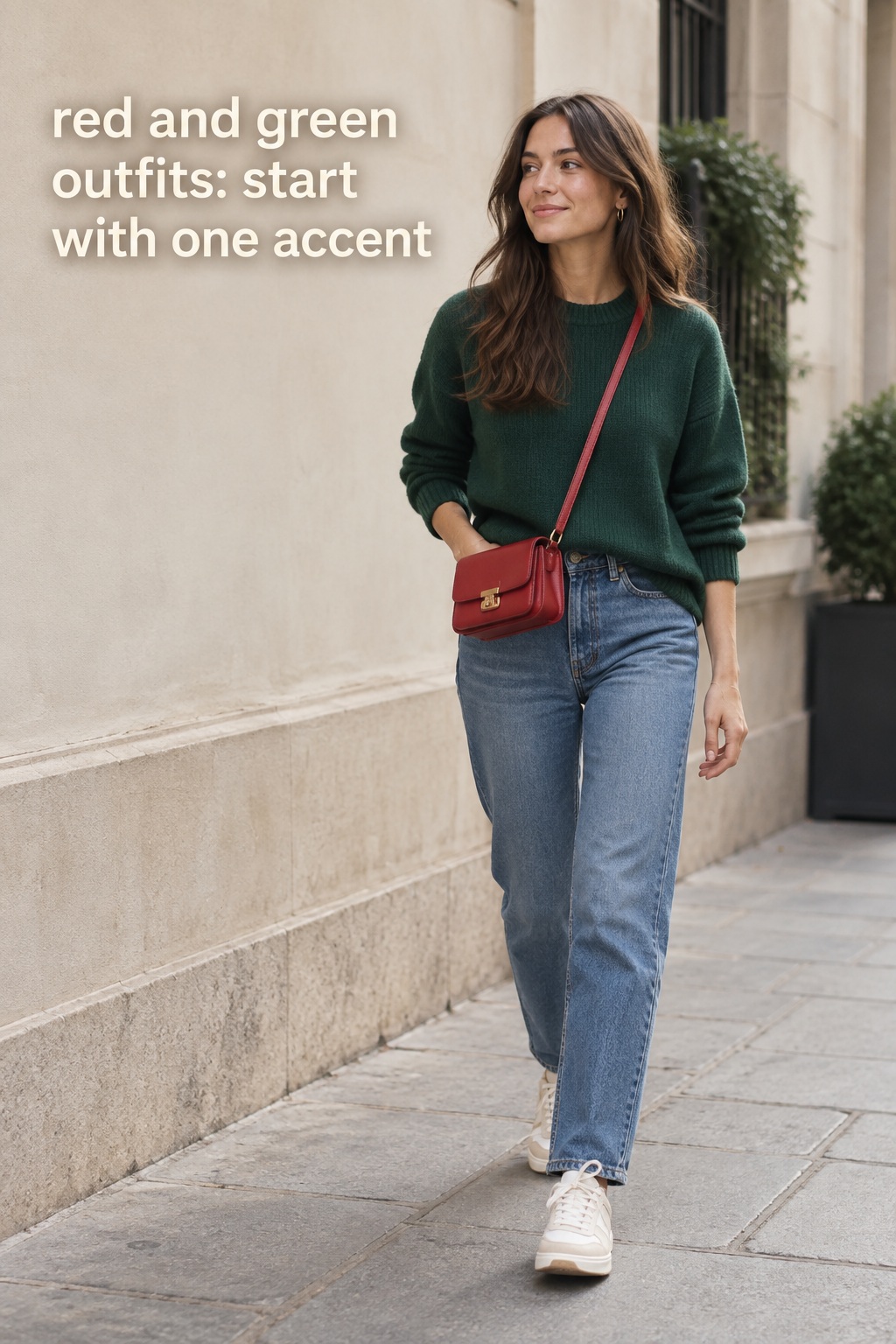
Denim is the easiest casual buffer. Try a red sweater with medium-wash jeans and a green bag, or a green jacket over a white tee with a red sneaker. The blue does not erase the color story. It makes the combination look like a real wardrobe rather than a themed outfit assembled for one date on the calendar.
Red and green outfits for common situations
The right formula depends on how visible, comfortable, and formal you want the outfit to be. A grocery run, office meeting, dinner party, and outdoor game all allow different levels of contrast. Use the situation to decide whether color should be a small accent, a polished block, or the main event.
For an everyday casual day
Start with familiar basics and add one clear color decision. A forest green sweatshirt, straight-leg jeans, and red low-top sneakers look relaxed but considered. For a slightly sharper version, wear olive cargo pants with a cream tee, a red cardigan, and brown loafers. A red belt or crossbody bag can be enough if you prefer a mostly neutral wardrobe.
Keep the accessories useful rather than decorative. A canvas tote, simple watch, leather belt, or clean sneaker grounds the color. If the outfit includes a pattern, let that pattern combine the shades for you. A small plaid shirt worn open over a white tee is an easy bridge because the red and green already share a visual language.
For the office
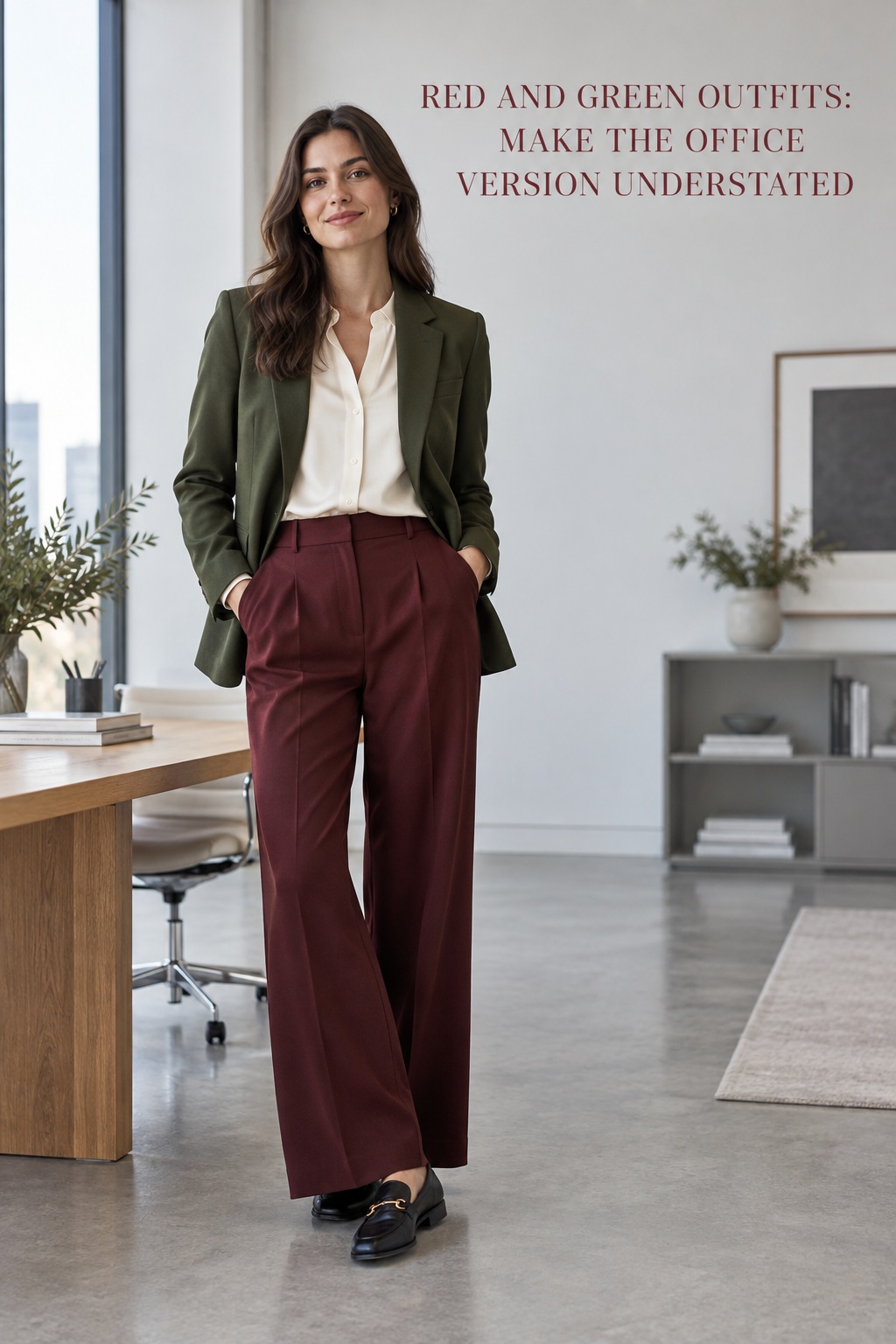
Workwear benefits from darker shades and tailored lines. Try a burgundy knit under an olive blazer with black trousers, or wear a forest green blouse with a red-brown skirt and pointed flats. If your workplace is conservative, keep the clothing mostly neutral and introduce red through a shoe, belt, or small bag. The combination will still feel intentional without becoming the center of the meeting.
Texture matters here. Matte wool, smooth cotton, fine knitwear, and polished leather look more professional than multiple sequins or high-shine satins. If you choose a red dress, add a deep green shoe or a structured bag rather than another large block of color. A simple silhouette gives the palette room to look sophisticated.
For a dinner or party
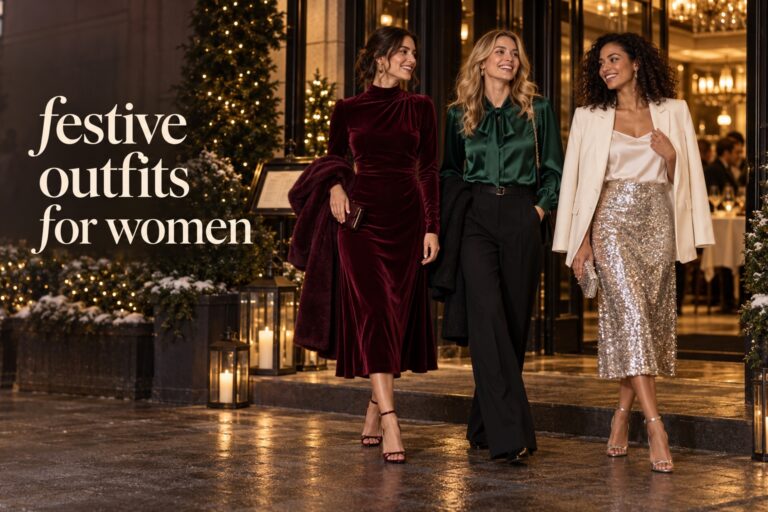
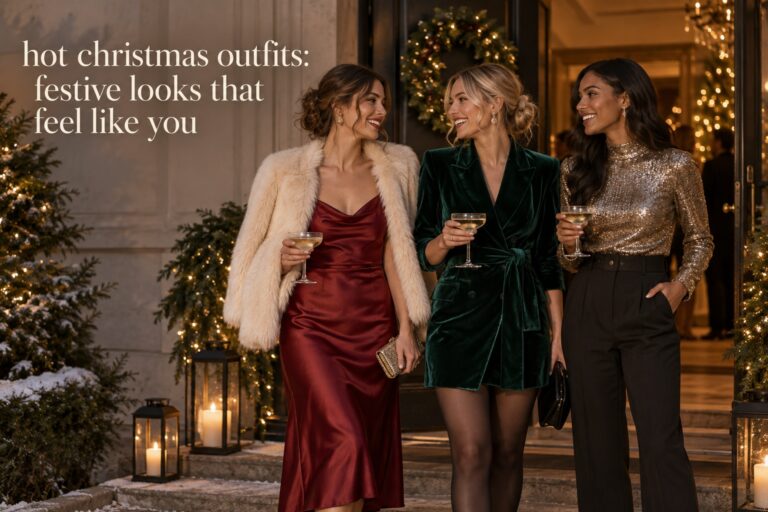
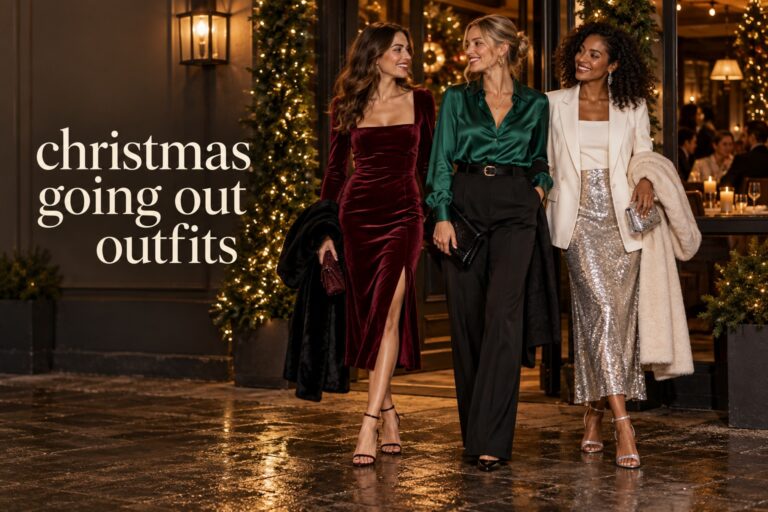
Evening dressing gives you permission to increase saturation or shine, but choose one place for the drama. An emerald slip dress with red lipstick and a small burgundy clutch is elegant because the red stays close to the face and accessories. A red satin blouse with a dark green midi skirt works when the shoes and jewelry are quiet. You can also use a red dress with emerald earrings or a green velvet jacket.
For a holiday event, you can lean into the seasonal association on purpose. The key is to make it look styled rather than accidental. Combine one festive texture, such as velvet or metallic leather, with one matte piece. A red velvet top, forest trousers, and simple gold earrings feels more modern than red velvet, green sequins, glitter tights, and a novelty bag all at once.
For spring and summer
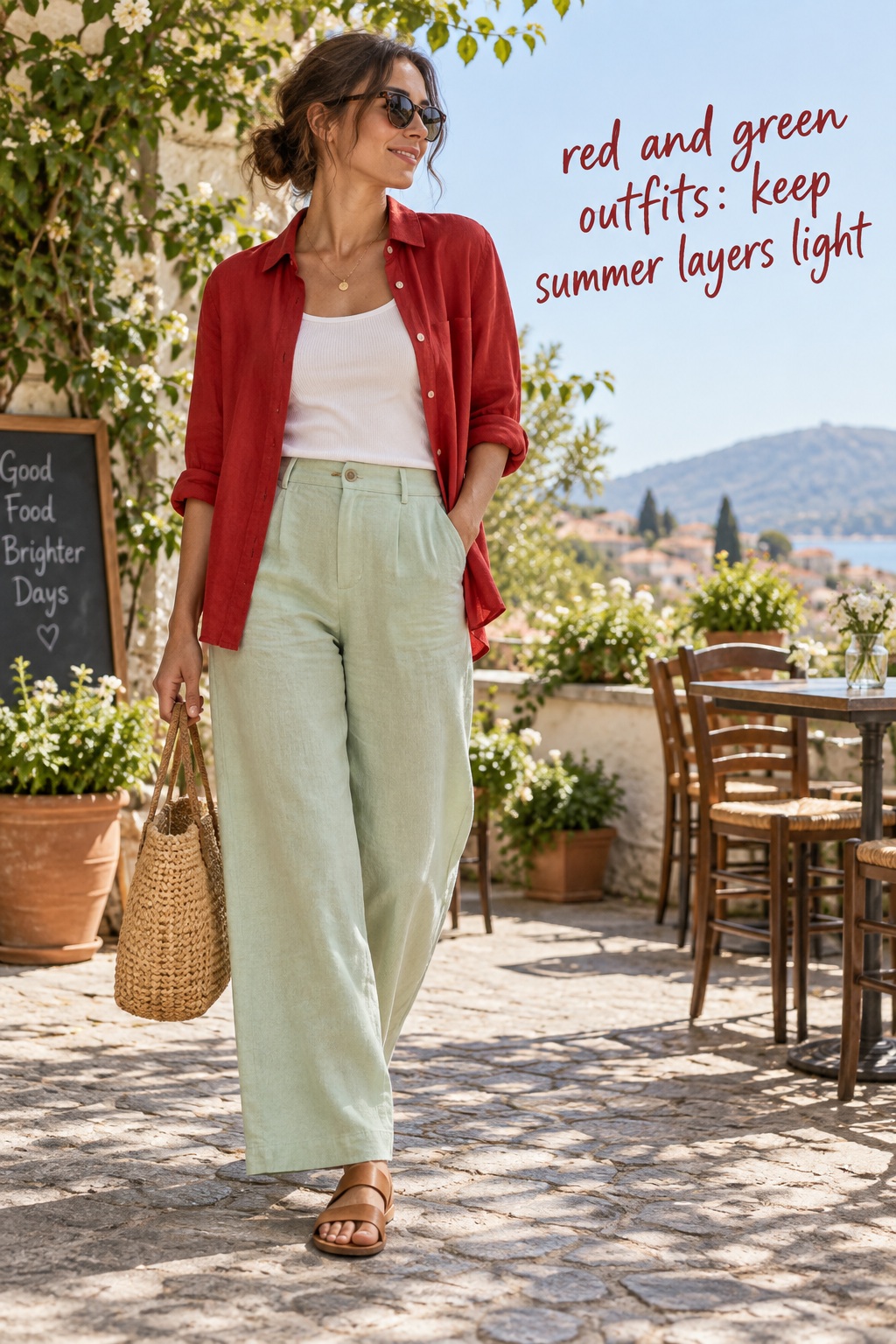
Warm weather calls for lighter fabrics and less visual weight. Pair a tomato red tank with pale green trousers, or wear a red linen shirt over a mint dress. A green skirt with a red sandal is an easy introduction because the shoe provides a small, deliberate accent. Natural textures such as raffia, cotton, linen, and woven leather help the palette feel sunny rather than wintry.
Use fewer accessories in hot weather. The colors already create a strong impression, so one bag and one piece of jewelry may be enough. White, cream, and light denim are particularly effective buffers. If you want a bolder color-blocked look, keep the shapes simple and let the skin or a pale neutral create a visual pause.
For winter layering
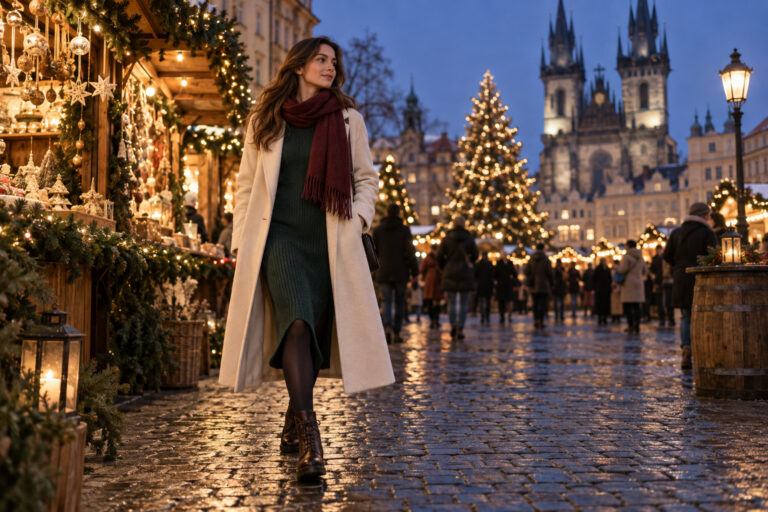
Winter is the natural home for deeper red and green combinations. Try a red wool coat over a cream sweater and forest green trousers, or layer a green coat over a burgundy knit and houndstooth pants. Chocolate boots and a camel scarf can soften the look. If the coat is the strongest shade, keep the layers underneath quieter so the outfit does not become visually heavy.
Pay attention to bulk as well as color. A large green coat, oversized red sweater, wide trousers, and chunky boots can make the body disappear under four strong statements. Balance volume with one closer-fitting layer, a defined shoulder, or a visible waist. The goal is warmth with shape, not a pile of competing pieces.
Complete formulas to copy
Use these combinations as starting points, then substitute the pieces you already own. The most successful red and green outfits are often built from dependable basics, not from buying a matching set in both colors.
- Olive blazer, white tee, burgundy trousers, and brown loafers for polished casual dressing.
- Red crewneck sweater, straight-leg denim, forest green bag, and white sneakers for a weekend outfit.
- Emerald midi dress, cherry-red flats, and a small black shoulder bag for dinner.
- Green cargo pants, red fitted tank, cream overshirt, and tan sandals for summer.
- Burgundy cardigan, forest green satin skirt, sheer black tights, and ankle boots for a party.
- Red wool coat, gray knit, olive trousers, and chocolate boots for winter errands.
- Green sweater vest, red-and-cream striped shirt, dark jeans, and loafers for an easy layered look.
- Red mini skirt, white button-down, cropped green jacket, and simple Mary Jane shoes for a playful city outfit.
Quick fixes when the outfit feels wrong
You do not always need to change the whole outfit. Small edits can shift the balance in under five minutes. Start by removing the accessory that repeats one color too many times. If the outfit has red clothing, red shoes, and red nails, try neutral shoes or a softer lip. If the green is bright from head to toe, add a cream or denim layer before deciding that the color itself is the problem.
When it looks too much like Christmas
Replace one bright shade with a muted version. Swap true green for olive or forest, or trade clear red for burgundy, wine, or rust. Remove glitter and novelty details. Add brown leather, faded denim, or navy. These changes preserve the red and green idea while taking away the most recognizable holiday signals.
When the colors look like they clash
Check whether the colors have competing intensity. If the red is vivid, make the green softer or darker. If both pieces are saturated, add a neutral between them, such as a white shirt or black belt. You can also move one color away from the face. A green shoe or red bag is easier to wear than two strong shades directly beside your skin when you are still getting comfortable with the combination.
When the outfit feels flat
Add texture rather than adding another color. A ribbed knit, suede shoe, leather belt, satin skirt, or wool coat gives the eye something to explore. You can also change the proportion by adding a cropped jacket, rolling a sleeve, or exposing a small amount of cream or white. Red and green already provide contrast, so texture and shape are more useful than a fourth bright hue.
Common mistakes to avoid
The first mistake is assuming the colors must be worn in equal amounts. They do not. The second is choosing color before considering the occasion, weather, or movement. A dramatic red and green outfit may look wonderful for a party but feel uncomfortable during a long commute. The third is ignoring finish. Two bright glossy pieces can feel much louder than the same shades in cotton or wool.
- Do not combine two saturated colors with several novelty accessories unless a deliberately maximalist look is the goal.
- Do not force every accessory to repeat red or green. Neutrals often make the main colors look richer.
- Do not judge the outfit only in indoor lighting. Check it near a window and in a full-length mirror.
- Do not buy a new piece until you can name at least two existing outfits it will complete.
- Do not let color theory overrule comfort. The best pairing is the one you can wear naturally.
Ultimately, red and green outfits work when they feel like an expression of your wardrobe rather than a costume borrowed from a calendar. Choose a shade relationship that suits your personality, give one color the lead, and use texture or a neutral to make the contrast feel deliberate. Once you understand those three moves, the combination becomes much more flexible: casual with denim, polished with tailoring, fresh with mint, rich with burgundy, and festive only when you want it to be.
FAQ
Can you wear red and green together without looking festive?
Yes. Use one dominant color, choose muted shades such as olive and burgundy, and add a neutral like denim, cream, brown, or navy. Keeping the silhouettes simple also makes the pairing feel like everyday fashion instead of a holiday costume.
What shade of green goes best with red?
Olive, forest, moss, emerald, mint, and avocado can all work. Olive and forest create the most understated result, while emerald and mint create more contrast. Match the intensity of the colors, or let one shade appear only as an accent.
What neutral colors work with red and green outfits?
Cream, white, black, navy, denim, camel, tan, and chocolate brown are useful neutrals. Brown is especially effective with warm red and earthy green. White and cream create a lighter, fresher break between strong colors.
How can I wear red and green in summer?
Choose lightweight fabrics and lighter shades. Try a red linen shirt with mint trousers, a green skirt with red sandals, or a red tank with pale green shorts. Keep accessories limited and use cream, white, woven leather, or light denim to keep the outfit airy.
Can red and green work for the office?
They can work well in darker, tailored versions. Wear burgundy with olive, forest green with red-brown, or a mostly neutral outfit with one red or green accessory. Matte fabrics and clean silhouettes usually feel more professional than several shiny or novelty pieces.
What shoes go with red and green outfits?
Brown, black, cream, tan, white, and metallic shoes are flexible choices. A red shoe can energize a green outfit, while a green shoe can make a red dress feel more unexpected. Choose a neutral shoe when both clothing pieces are already bright.
“Finish the look
The little extras that make a summer outfit feel complete
From beach days to city weekends, these easy pieces bring comfort, texture, and a polished finishing touch.

FENBEN
Straw Hobo Crossbody Bag
A handwoven straw bag with both short and crossbody straps—an effortless finishing touch for vacation looks and warm-weather outfits.
Shop the bag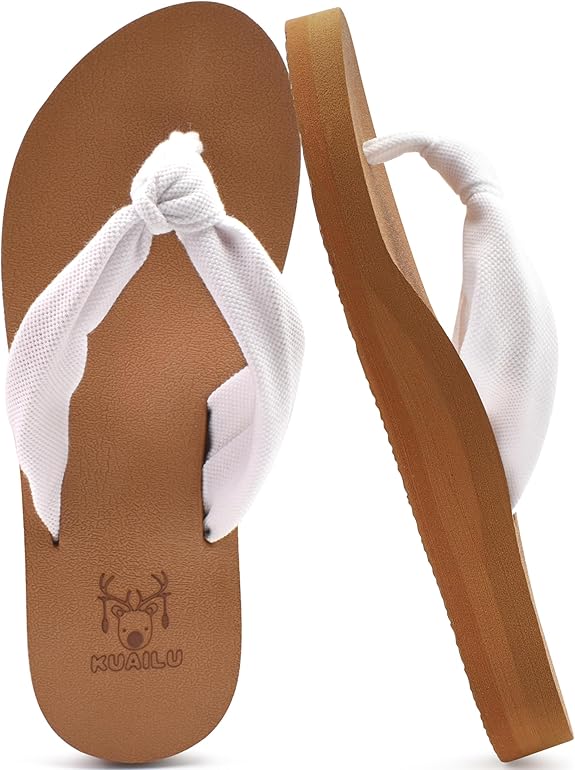
KuaiLu
Flip Flops with Arch Support
Cushioned, lightweight sandals with supportive arch design—a practical choice for beach trips, errands, and long summer walks.
Shop the sandals
baleaf
Athletic One-Piece Swimsuit
A functional one-piece with adjustable straps and moderate coverage, designed for swimming, training, surfing, and active beach days.
Shop the swimsuit
Astylish
Linen-Cotton Button-Down Shirt
A relaxed cotton-linen shirt with a collared V-neck and roll-up sleeves—easy to style over swimwear or with denim and shorts.
Shop the shirt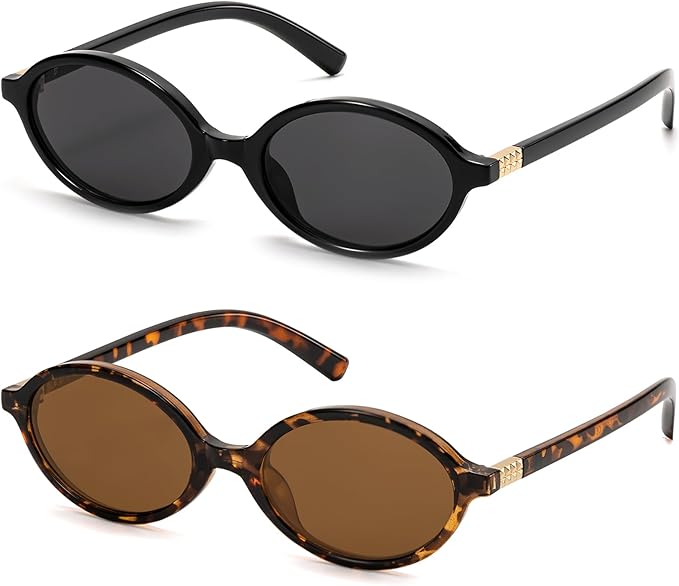
ViewJoy
Retro Oval Sunglasses
Small oval sunglasses with a 90s-inspired silhouette and UV400 lens protection—a quick way to add a vintage edge to everyday looks.
Shop the sunglasses
Affiliate disclosure: This section contains affiliate links. If you make a purchase through these links, I may earn a commission at no additional cost to you. Product selection, pricing, availability, and delivery terms may change—please review the current details on Amazon before purchasing.
As an Amazon Associate I earn from qualifying purchases.