Neutral Color Outfits for a Quietly Luxurious Wardrobe
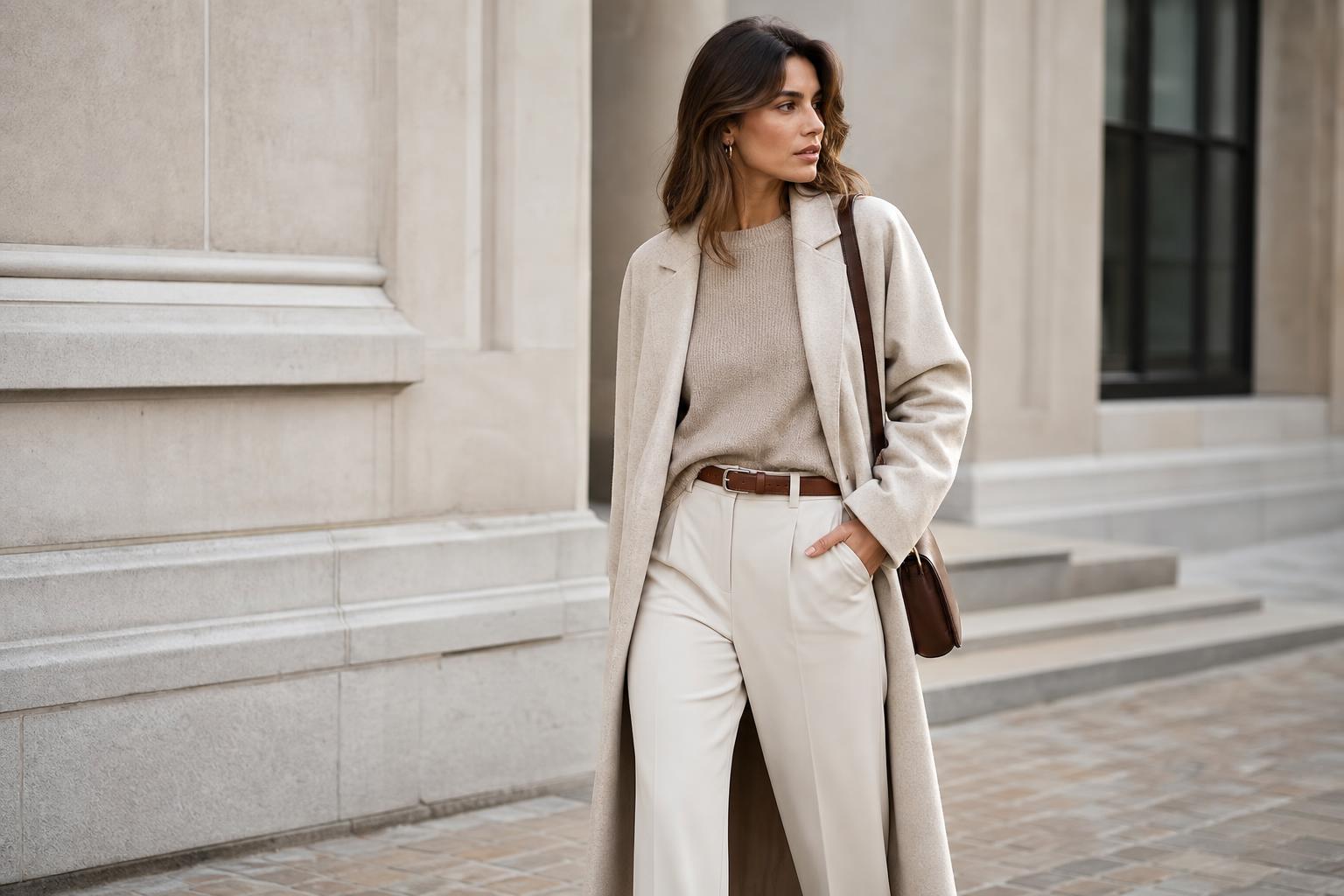
Some of the most useful outfits in a wardrobe are the ones that never create friction. You put them on for a coffee run, a travel day, a casual office morning, or a last-minute dinner, and they simply work. That is the appeal of neutral color outfits. They feel effortless, chic, and grounded, but they also solve a real styling problem: how to look polished without overthinking every piece. Beige, cream, white, black, gray, brown, denim, and soft tonal layers have a way of making even simple clothes look intentional.
The strongest neutral outfits are rarely about color alone. They rely on outfit formulas, texture contrast, and smart wardrobe staples like a blazer, coat, scarf, sweater, jacket, skirt, jeans, and dress. A monochrome palette can create a cleaner silhouette, while layering wool, cashmere, leather, cotton, or denim keeps the look from feeling flat. Whether you lean minimalist, build a capsule wardrobe, or just want more timeless combinations, neutral dressing gives you an easy framework you can repeat across every season.
Why neutral outfits keep looking timeless
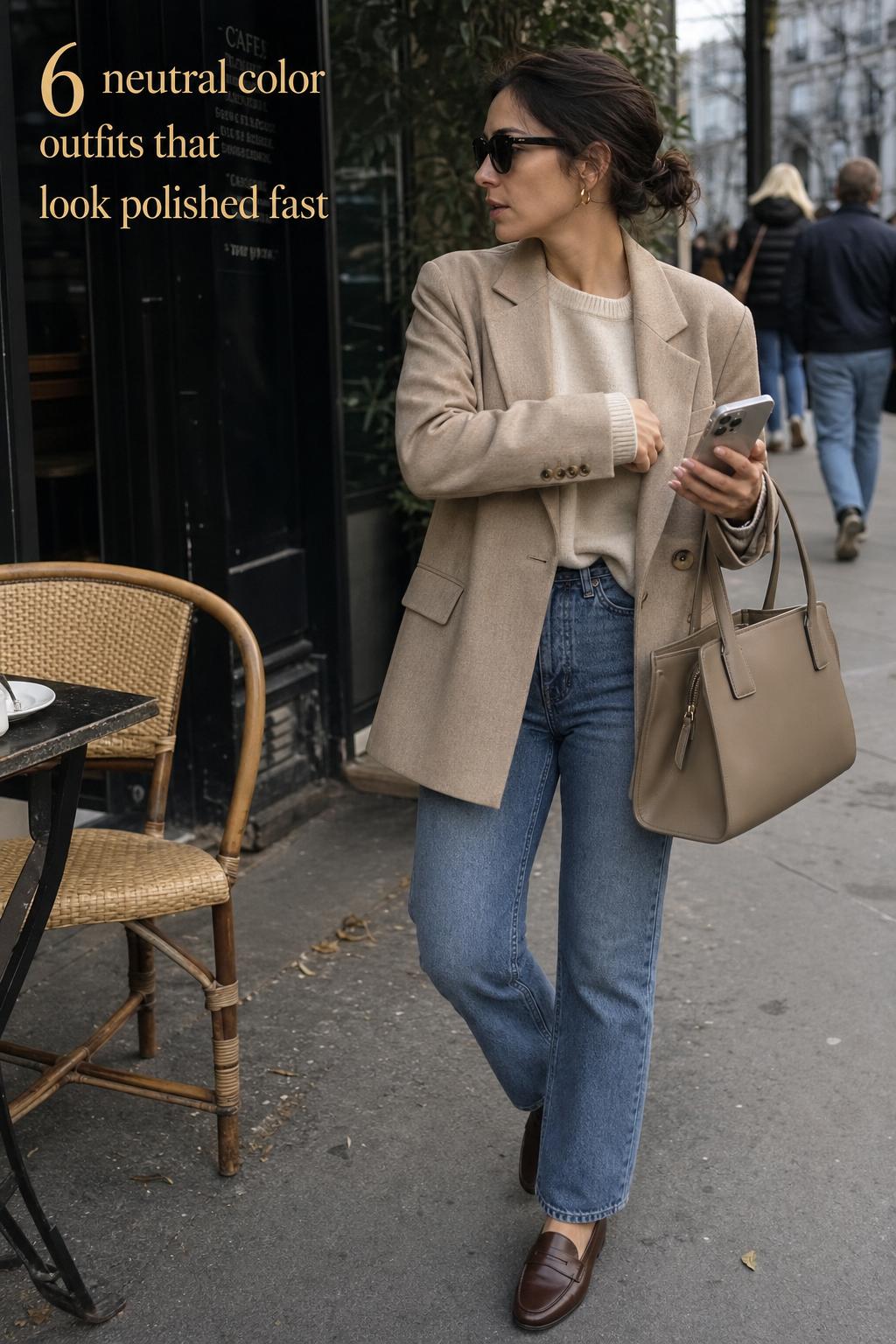
Neutral color outfits stay relevant because they do not depend on one statement trend to feel complete. Instead, they use a grounding neutral as the base and build interest through shape, fabric, and proportion. This is why a simple coat with jeans and a scarf can feel just as current as something more fashion-driven. The look is balanced, wearable, and easy to adapt.
The Fashion-Note Edit
Five effortless pieces to refresh your everyday wardrobe
A polished, practical edit for workdays, weekends, and everything in between.

The Drop
Women’s Blake Long Blazer
A longline, tailored blazer with a notched collar and a single-button closure—an easy layer for denim, dresses, or office-ready looks.
Shop the blazer
Amazon Essentials
Women’s Lightweight Crewneck
A soft, lightweight sweater with a clean crew neckline—the kind of reliable layer that works from cool mornings to air-conditioned spaces.
Shop the sweater
Amazon Essentials
Women’s Loafer Flat
A classic flat loafer that gives casual outfits a more polished finish and pairs naturally with tailored pants, skirts, and straight-leg jeans.
Shop the loafers
Levi’s
Women’s 501 90s Jeans
A relaxed, vintage-inspired take on the iconic 501 silhouette—made for an easy, lived-in look without the thrift-store search.
Shop the jeans
Colorfulkoala
High-Waisted 7/8 Leggings with Pockets
Soft, four-way-stretch leggings with side pockets and a high-rise waistband—designed for movement, errands, and off-duty comfort.
Shop the leggings
Affiliate disclosure: This section contains affiliate links. If you make a purchase through these links, I may earn a commission at no additional cost to you. Product selection, pricing, availability, and delivery terms may change—please review the current details on Amazon before purchasing.
As an Amazon Associate I earn from qualifying purchases.
There is also a practical reason they last. Neutral wardrobes make styling faster. A cream knit works with black trousers, denim, a brown leather skirt, or a soft beige outerwear layer without much effort. That flexibility is at the heart of a timeless wardrobe and explains why neutral dressing is closely tied to capsule wardrobe thinking. Fewer pieces can create more combinations when the palette is cohesive.
Your wedding style is personal.
Your plan should feel that way, too.
Zarellea keeps your guest list, budget, vendors, and every next step beautifully organized — so you can focus on the moments that feel like you.
Another reason these outfits read as elevated is visual calm. Monochrome neutrals and tonal dressing reduce harsh contrast, which often creates a more streamlined silhouette. That matters in real life. On busy mornings, a soft head-to-toe palette can make an outfit look more expensive and more put-together even when the individual pieces are simple.
The outfit formula that makes neutrals easier to wear
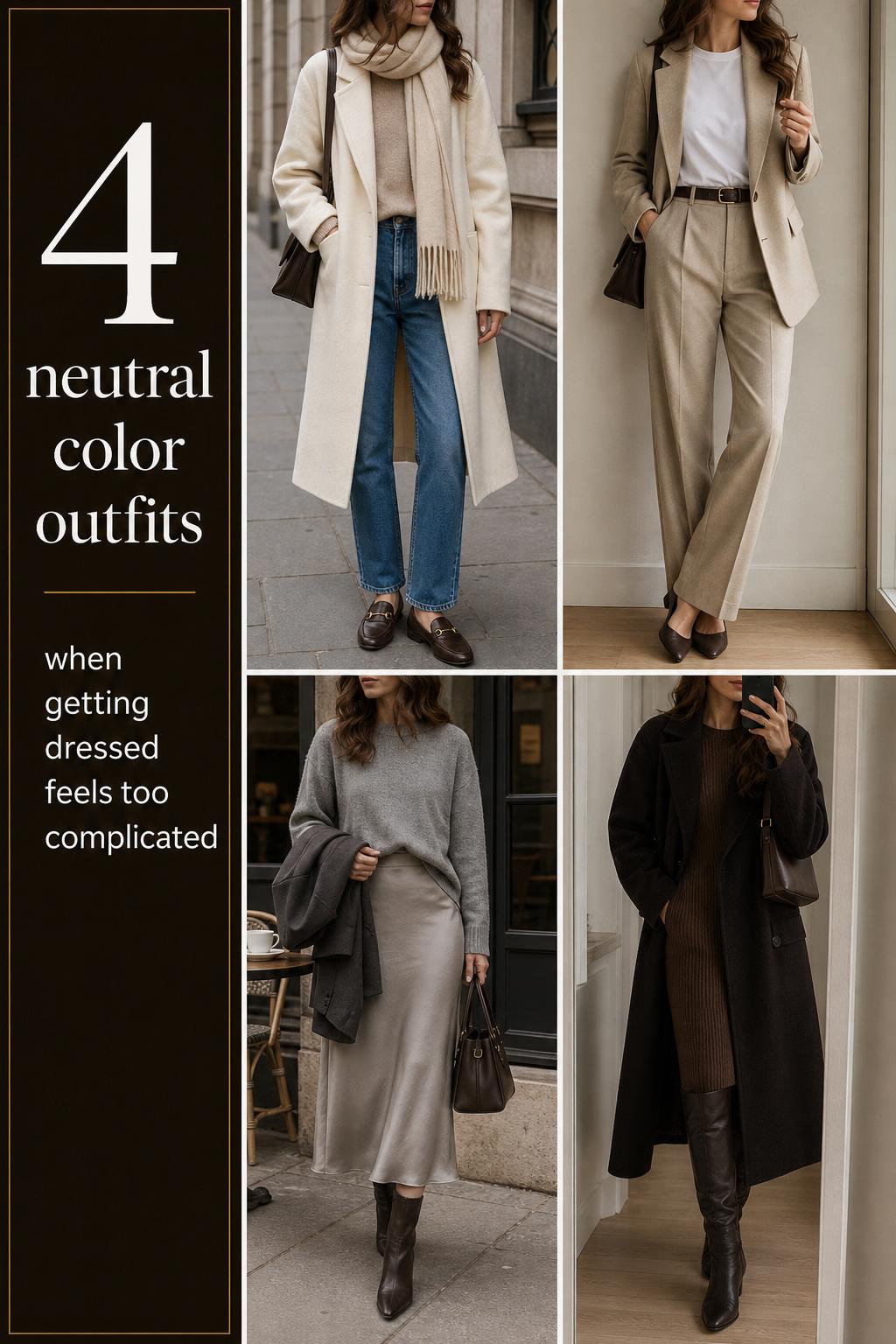
A helpful way to build neutral color outfits is to think in three parts: one foundation piece, one grounding neutral, and one styling moment. This mirrors the strongest outfit formulas because it gives structure without making the look rigid. You do not need a closet full of options. You need a reliable framework.
The foundation piece
This is the item that sets the mood of the outfit. It could be straight jeans, a knit dress, leather pants, a skirt, or a tailored coat. If you want the outfit to feel easy, choose pieces with a clean line and simple shape. High-waisted jeans or a softly structured dress tend to create a strong base because they define proportion early.
The grounding neutral
This is the color anchor that holds everything together. Think black, cream, gray, beige, brown, white, or classic denim. In many outfits, the grounding neutral appears in the largest visual area, such as outerwear, trousers, or a sweater. It keeps the outfit calm and wearable, especially if one item has more shape or texture than the others.
The styling moment
This is the detail that stops a neutral outfit from feeling too plain. A scarf, leather jacket, belt, sharp blazer, soft cashmere layer, or rich texture contrast can be enough. The styling moment does not have to be loud. In neutral dressing, subtle differences often do more than obvious ones. A cream wool coat over faded denim or a leather layer against a soft knit creates depth without breaking the palette.
Texture is what makes a neutral outfit look expensive
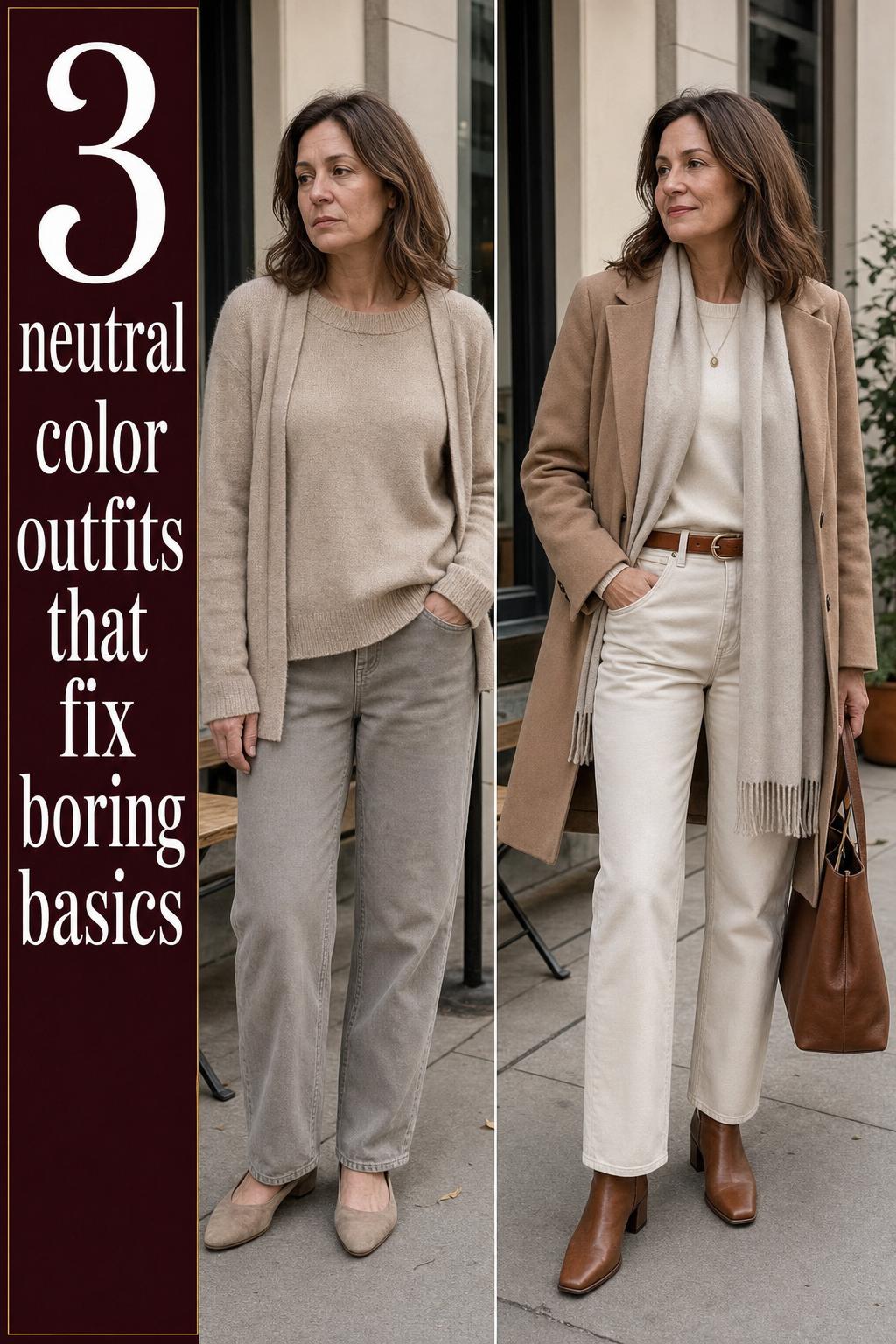
Color is only part of the story. Texture is what gives neutral outfits dimension. Without it, a beige-on-beige outfit can fall flat. With it, the same palette looks cozy but polished. This is where wool, cashmere, leather, denim, and soft cotton become important. Their surfaces catch light differently, which creates interest even when the color range stays quiet.
A useful styling trick is to combine one soft texture, one structured texture, and one everyday texture. For example, a cashmere sweater with denim jeans and a leather jacket naturally feels layered and considered. You are not adding more color, but you are adding visual movement. This is why texture contrast appears again and again in strong neutral styling.
Structured outerwear is especially effective here. A coat or blazer can sharpen casual basics and make them feel more intentional. This works well when the base outfit is simple, such as a knit with jeans. The tailored top layer provides shape, while the denim keeps the outfit approachable.
Quick texture combinations to save
- Cashmere sweater + straight jeans + leather belt
- Wool coat + knit dress + soft scarf
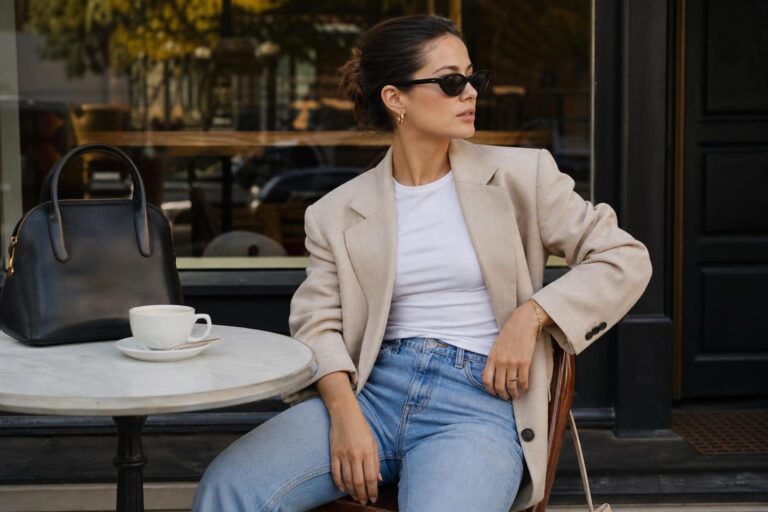
- Blazer + cotton top + denim
- Leather pants + oversized knit + structured jacket
- Skirt + sweater + polished outerwear
Monochrome neutrals and tonal dressing that never feel boring
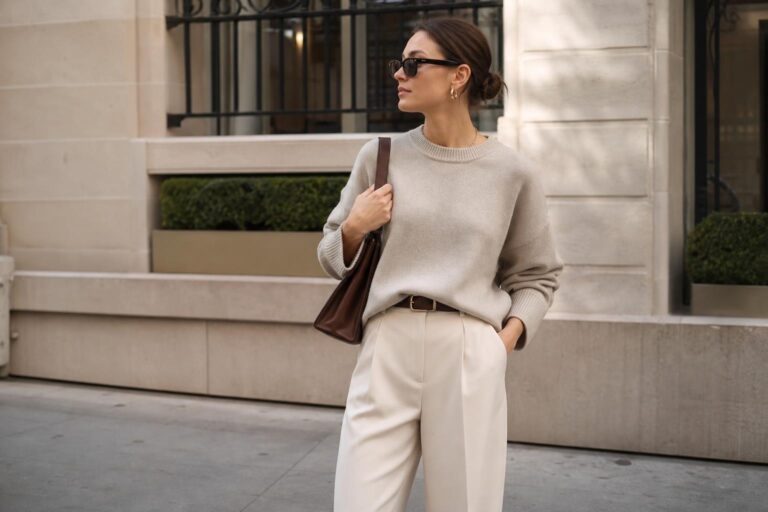
Monochrome neutrals are often the easiest way to look polished fast. Wearing similar shades from head to toe creates a long, uninterrupted line, which can make the silhouette feel cleaner and more refined. This is also a flattering approach for many body types because it reduces visual breaks.
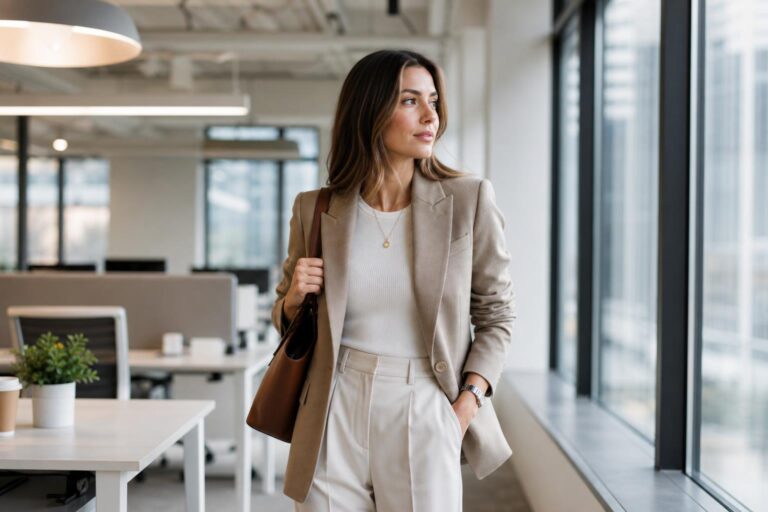
The key is not matching everything too perfectly. Instead, use tonal variation. A cream sweater, oatmeal coat, beige trousers, and a soft brown belt feel more interesting than one exact shade repeated from top to bottom. The slight shifts in color add depth while preserving that minimalist effect.
If you prefer darker neutrals, the same principle applies. Black, charcoal, and deep gray layered together can feel sleek and grounded. For readers who want a wardrobe that transitions easily between casual and slightly elevated settings, tonal neutrals are often more flexible than high-contrast outfits.
Why this outfit logic works
Monochrome dressing simplifies the eye. When the eye is not pulled in multiple directions by strong color contrast, shape and fabric become the focus. That is why neutral monochrome outfits often look sophisticated even when made from wardrobe staples. A simple coat, sweater, and trousers can suddenly feel intentional because the palette creates unity.
Real-life neutral color outfits you can actually wear
The best outfit ideas are the ones you can picture yourself wearing in a real setting. These combinations are built around practical wardrobe staples and simple styling moments, with enough detail to feel save-worthy but still easy to recreate.
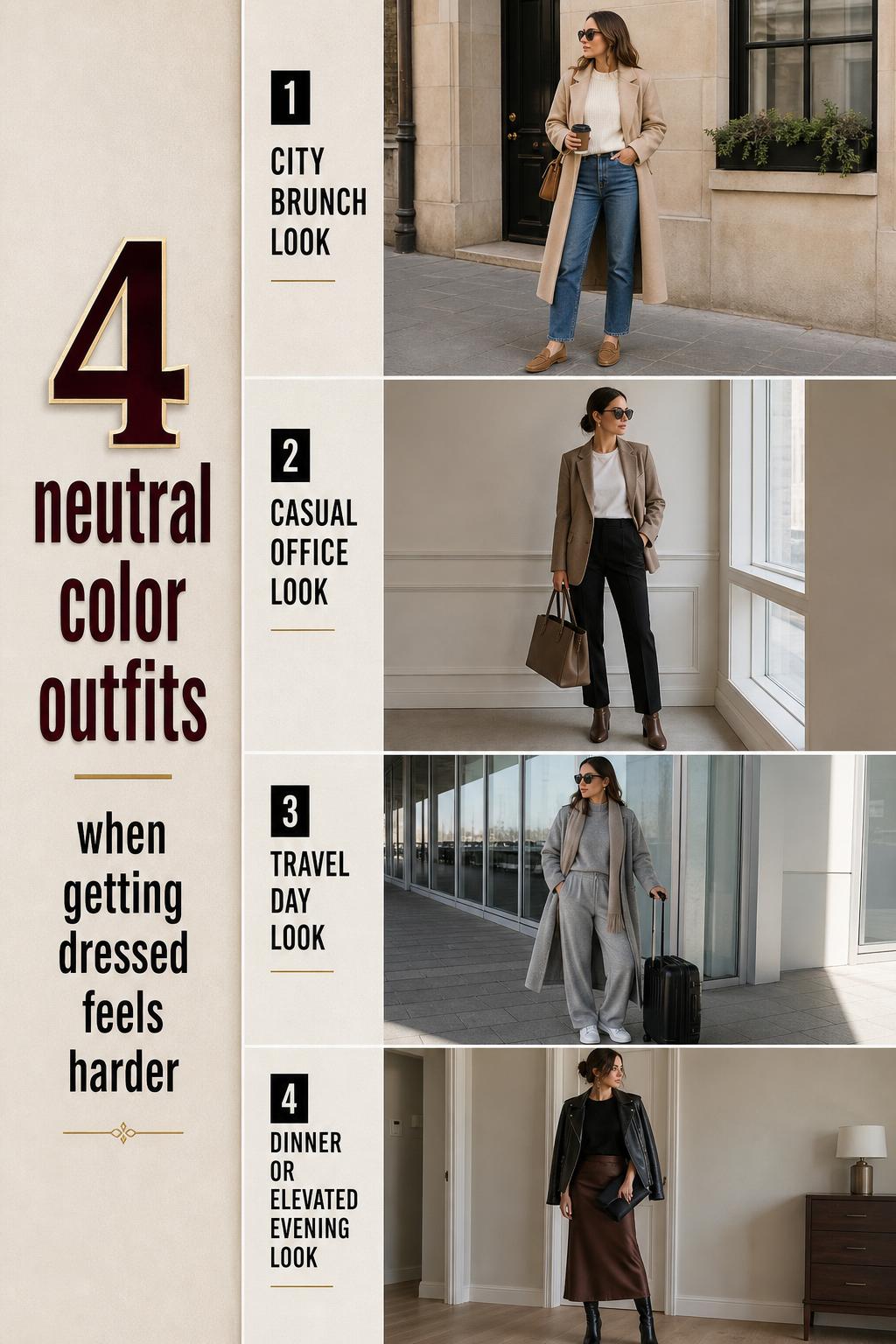
Relaxed city brunch: blazer, jeans, and a soft knit
A cream or gray knit tucked lightly into straight denim jeans creates an effortless base for a casual brunch. Add a tailored blazer and a simple belt for structure. This outfit feels casual yet put-together because the relaxed denim is balanced by the sharper line of the blazer. If you want a slightly longer-looking leg line, keep the jeans straight and avoid too much fabric bunching at the ankle.
Why this outfit works: the silhouette has contrast. The blazer brings polish, the knit softens the look, and denim keeps it grounded. It is one of the easiest outfit formulas to repeat because every piece belongs in a capsule wardrobe.
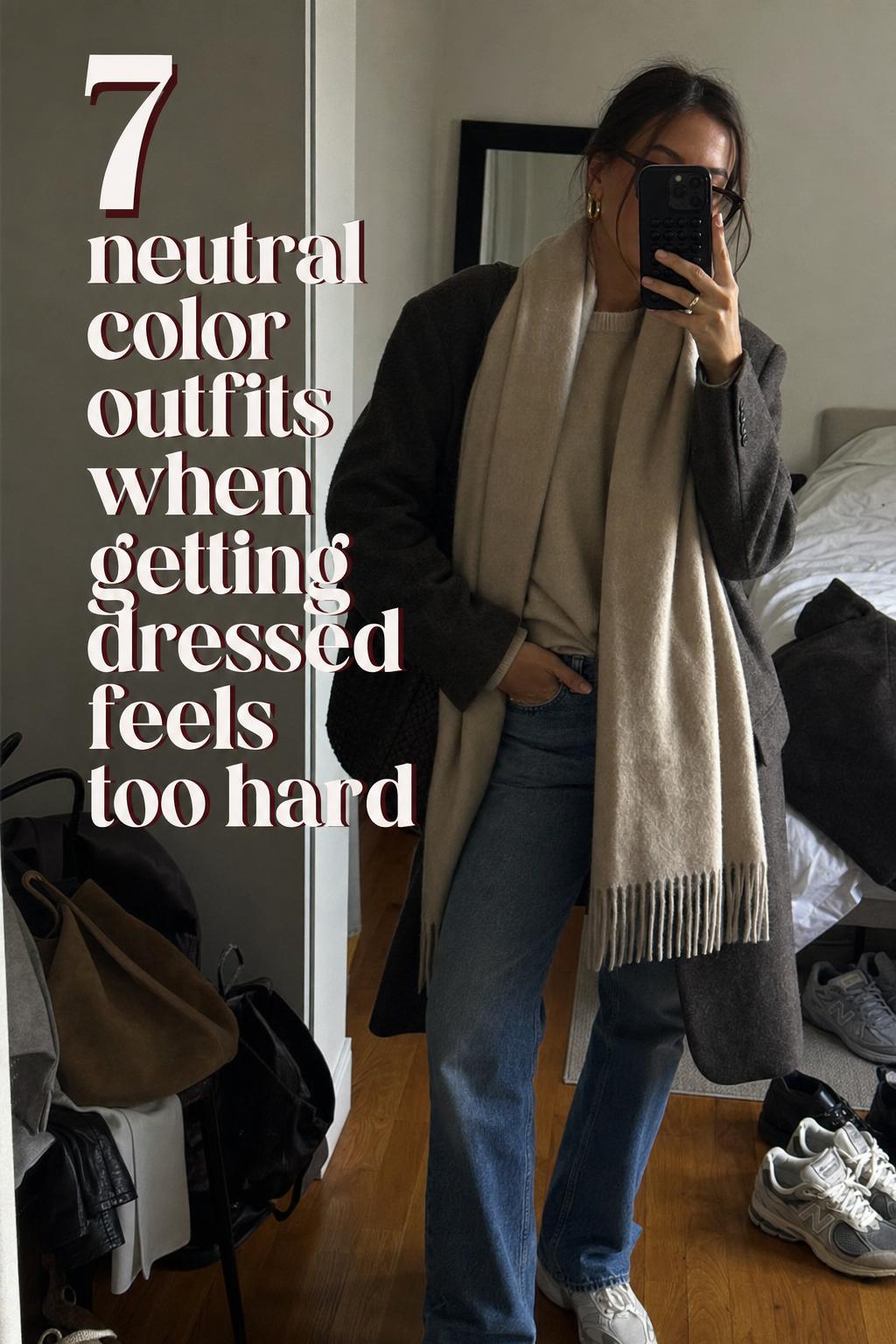
Travel-day neutral: coat, scarf, and denim layers
For a travel day or long afternoon out, start with jeans and a lightweight neutral top, then add a coat and scarf. This combination is practical because you can adjust the layers as temperatures change. A scarf also works as the styling moment, giving shape and softness near the face without making the outfit fussy.
Why this outfit works: layering adds comfort and flexibility, while the neutral palette keeps multiple pieces from looking bulky together. A structured coat also makes casual travel basics feel more elevated, which is especially helpful when you want comfort without looking undone.
Easy everyday look: sweater with a skirt and jacket
A soft sweater with a neutral skirt and a light jacket creates a flattering combination for days when jeans feel too casual. If the skirt has movement, keep the top slightly more fitted or neatly tucked to avoid losing shape. If the sweater is oversized, a belt or defined waistline can help restore balance.
Why this outfit works: it mixes softness and structure. The skirt adds motion, the jacket gives form, and the sweater keeps the outfit comfortable. This is a useful formula when you want something feminine without feeling dressed up.
Minimal dinner look: dress with outerwear in tonal neutrals
A neutral dress with tonal outerwear is one of the simplest ways to look refined for dinner, a gallery visit, or a polished daytime plan. Keep the palette close, such as cream with beige or gray with black, and let the coat or jacket do the work. If the dress is fitted, choose slightly roomier outerwear for proportion. If the dress is loose, a more structured coat prevents the outfit from feeling shapeless.
Why this outfit works: tonal dressing creates a clean column of color, and the outerwear adds authority. It feels timeless with a modern twist because the pieces are simple but the silhouette is intentional.
Cold-weather contrast: cashmere, leather pants, and a coat
For a more elevated neutral outfit, combine a soft cashmere knit with leather pants and a wool coat. This look depends on texture contrast more than anything else. The softness of cashmere against the smoother finish of leather creates depth immediately, while the coat pulls the outfit into a polished shape.
Why this outfit works: each fabric plays a different role. Cashmere makes it cozy, leather sharpens the look, and wool keeps it grounded. It is ideal for days when you want a neutral palette to feel a little stronger without needing a bold color.
How to adapt neutral outfits across every season
One of the strengths of neutral dressing is that the same formulas can shift with the weather. You do not need a completely different wardrobe from season to season. You need to change fabric weight, layering, and how much structure the outfit carries.
Warm-weather neutrals
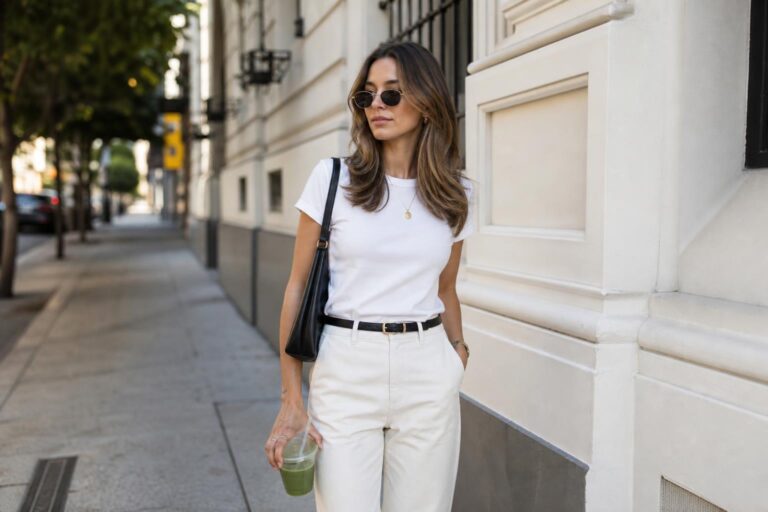
In warmer conditions, neutral outfits look best when the fabrics feel light and breathable. A simple dress, a soft skirt, or denim with a relaxed top keeps the outfit easy. Lighter tones such as cream, white, and beige often feel especially fresh in daylight, and they help neutral outfits look airy rather than heavy.
For comfort, avoid over-layering. One visible texture difference is often enough in warm weather. A soft cotton top with denim or a light dress under a simple jacket can still feel styled without trapping heat.
Cool-weather neutrals
When temperatures drop, layering becomes the real style tool. This is where coats, scarves, wool, cashmere, and leather come into their own. Neutral palettes are especially useful in cold weather because multiple layers look cohesive rather than busy. You can add a coat, sweater, scarf, and structured jacket across a season and still keep the outfit clean.
One practical note: if your outerwear is oversized, keep the lower half more streamlined. Straight jeans, leather pants, or a slimmer skirt often balance volume better than adding width everywhere. This small proportion shift helps the outfit feel polished rather than heavy.
Capsule wardrobe thinking makes neutral dressing easier
Neutral color outfits become much more useful when you think in terms of repeatable wardrobe staples. A capsule wardrobe does not mean owning very little. It means choosing pieces that connect easily, so you spend less time forcing combinations that never quite work.
- A blazer for instant structure
- A coat for layering and polish
- A sweater in a soft neutral
- Straight jeans in classic denim
- A skirt that works with both knits and jackets
- A simple dress for easy one-piece styling
- A scarf to add softness and depth
- A leather piece, such as pants or a jacket, for texture contrast
What makes these staples effective is their overlap. A blazer works with jeans, a skirt, or a dress. A scarf updates outerwear and knitwear. Denim keeps polished pieces from feeling too formal. When your wardrobe is built around these relationships, getting dressed becomes simpler and more consistent.
Small styling decisions that change the whole outfit
Neutral outfits often succeed because of subtle choices. The color palette may be calm, but the details are doing a lot of work. These are the moments that create the difference between basic and elevated.
Use structure to sharpen soft pieces
If your outfit includes flowing or cozy pieces, add one structured item. A blazer over a soft knit, a coat over a dress, or a jacket with a skirt creates visual balance. This prevents all-soft neutral outfits from looking sleepy and gives the silhouette a more finished line.
Let one piece define the shape
In a neutral outfit, too many loose items can blur proportion. It helps to decide where the shape should come from. That might be high-waisted jeans, a tucked sweater, a belt at the waist, or a more tailored outerwear layer. Once one piece defines the body line, the rest of the outfit can relax around it.
Keep accessories in the same visual language
Accessories matter more in neutral dressing because they are often more visible than color accents. A scarf, belt, or jacket should feel connected to the overall palette and mood. If the outfit is soft and tonal, a harshly unrelated accessory can interrupt the clean effect. The goal is cohesion, not perfect sameness.
Common mistakes that make neutral outfits fall flat
Neutral dressing may look simple, but a few missteps can make the outfit feel unfinished. The good news is that the fixes are usually straightforward.
- Using one flat texture throughout the outfit, which can make the palette feel dull
- Choosing all oversized pieces without a defined shape
- Relying on color alone instead of adding a styling moment like a scarf, blazer, or coat
- Making every item the exact same shade, which can remove depth instead of creating polish
- Ignoring seasonality and wearing heavy-looking layers when the weather calls for something lighter
A simple way to check a neutral outfit before leaving the house is to ask three questions. Does it have enough contrast in texture? Is the silhouette balanced? Is there one detail that makes it feel intentional? If the answer is yes to all three, the outfit usually reads as complete.
Styling tips for making neutrals feel modern, not predictable
Because neutral color outfits are timeless, some readers worry they can start to feel repetitive. The easiest fix is not adding louder color. It is varying the outfit logic while keeping the palette calm. A skirt one day, denim the next, a dress after that, then leather pants with cashmere in cooler weather. The neutrals stay consistent, but the silhouette changes.
Another useful shift is to move between minimalist and slightly more styled versions of the same formula. A sweater with jeans is the minimalist version. Add a blazer and scarf, and the same foundation feels more editorial and polished. This kind of layering strategy helps neutral dressing feel fresh without requiring a whole new wardrobe.
Tips to keep in mind
- Use denim to relax polished pieces like a blazer or coat
- Add leather when soft neutrals need a sharper edge
- Choose cashmere or wool when the outfit needs warmth and richness
- Try monochrome neutrals when you want a cleaner silhouette
- Use a scarf as a low-effort styling trick that adds depth instantly
A few standout neutral combinations worth repeating
Some pairings come back again and again because they solve multiple style needs at once. They are wearable, flattering, and easy to adapt.
Coat and jeans
This is one of the strongest everyday combinations because it mixes polish with ease. The coat creates structure, while denim keeps the outfit grounded. Add a scarf for softness, and the result feels practical enough for daytime but polished enough for casual plans after.
Blazer and skirt
This pairing works when you want a slightly more defined outfit without losing comfort. The blazer sharpens the look, and the skirt adds movement. A simple sweater underneath keeps the outfit wearable and not overly formal.
Dress and jacket
This is a useful formula for transitional weather. The dress creates an easy base, and the jacket changes the tone of the outfit instantly. A softer jacket keeps it relaxed, while a more structured one adds polish. The simplicity of the neutral palette lets these shifts feel subtle and refined.
Cashmere and leather
This combination is especially effective when you want a neutral outfit to feel elevated. The contrast between softness and edge creates built-in interest, so the look never depends on bold color. It is a strong example of how texture contrast can carry an entire outfit.
What fashion-minded dressers keep returning to in neutrals
Across style blogs, retailer guides like The Jacket Maker, and editorial outlets such as Who What Wear and Fashion Gone Rogue, a few ideas consistently stand out: grounding neutrals, outfit formulas, texture contrast, monochrome styling, and practical layering. Even when the final looks vary, the logic is similar. The outfit feels complete because the base is simple, the proportions are balanced, and one styling detail gives it personality.
That is also why neutral outfits remain so useful beyond trend cycles. They are not tied to one season, one event, or one dramatic color story. They work for the reader building a timeless wardrobe, the person refining a capsule wardrobe, and the one who just wants better everyday combinations that feel easy to wear.
FAQ
What counts as neutral colors in outfits?
Neutral colors in outfits usually include black, white, cream, beige, brown, gray, and classic denim tones. These shades work well together because they create a calm base that is easy to layer, repeat, and style across seasons.
How do I keep neutral color outfits from looking boring?
The easiest way is to focus on texture contrast and silhouette rather than adding more color. Combine materials like wool, cashmere, leather, and denim, and balance relaxed pieces with structured ones such as a blazer, coat, or jacket.
Are monochrome neutral outfits flattering?
Yes, they often are because monochrome neutrals create a long, continuous line. That cleaner visual effect can make the outfit feel more streamlined, especially when you vary the shades slightly so the look has depth rather than appearing flat.
What are the best wardrobe staples for neutral outfits?
Some of the most useful staples are a blazer, coat, sweater, jeans, skirt, dress, scarf, and a leather piece such as pants or a jacket. These items mix easily and make it simple to build a timeless wardrobe or capsule wardrobe around neutral dressing.
How can I make a neutral outfit look more expensive?
Use a cohesive palette, add structure through outerwear, and include at least one strong texture contrast. A wool coat over denim, a cashmere knit with leather, or a blazer with a simple skirt can instantly make basic pieces look more polished and intentional.
Do neutral outfits work in every season?
They do, as long as you adjust the fabrics and layering. Lighter neutrals and simpler combinations work well in warm weather, while coats, scarves, wool, cashmere, and leather help neutral outfits feel richer and more practical in cooler months.
What is the easiest outfit formula for neutrals?
A simple formula is one foundation piece, one grounding neutral, and one styling moment. For example, jeans as the base, a cream sweater as the anchor, and a blazer or scarf as the finishing detail. This approach keeps the outfit easy but still polished.
Can neutral outfits still feel modern?
Yes, because modern style in neutrals usually comes from proportion, layering, and fabric choice rather than bold color. Tonal dressing, structured outerwear, leather accents, and clean outfit formulas can make neutral looks feel current without losing their timeless appeal.
Finish the look
The little extras that make a summer outfit feel complete
From beach days to city weekends, these easy pieces bring comfort, texture, and a polished finishing touch.

FENBEN
Straw Hobo Crossbody Bag
A handwoven straw bag with both short and crossbody straps—an effortless finishing touch for vacation looks and warm-weather outfits.
Shop the bag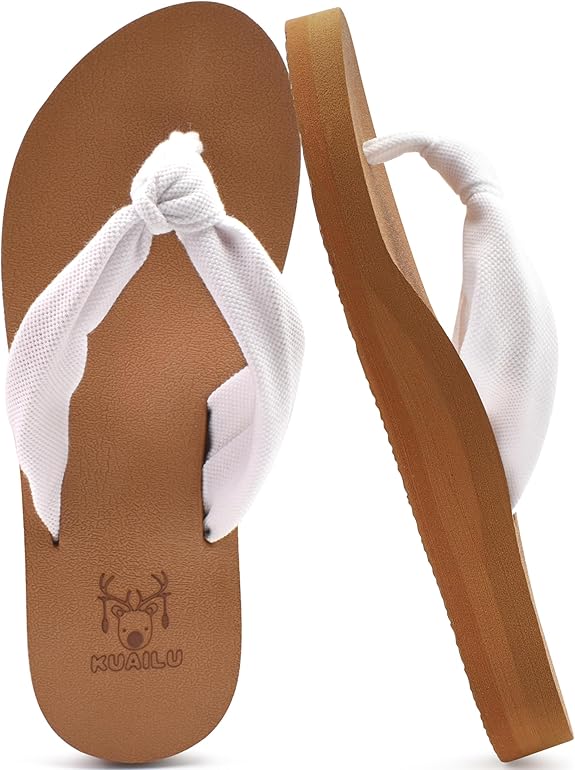
KuaiLu
Flip Flops with Arch Support
Cushioned, lightweight sandals with supportive arch design—a practical choice for beach trips, errands, and long summer walks.
Shop the sandals
baleaf
Athletic One-Piece Swimsuit
A functional one-piece with adjustable straps and moderate coverage, designed for swimming, training, surfing, and active beach days.
Shop the swimsuit
Astylish
Linen-Cotton Button-Down Shirt
A relaxed cotton-linen shirt with a collared V-neck and roll-up sleeves—easy to style over swimwear or with denim and shorts.
Shop the shirt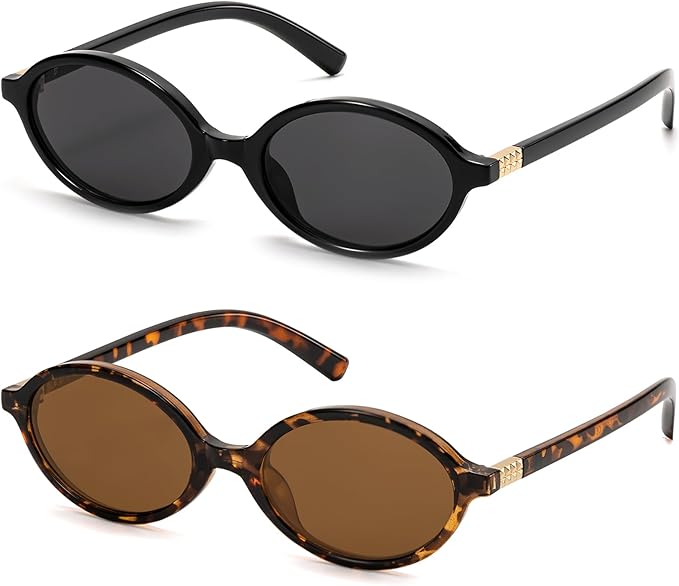
ViewJoy
Retro Oval Sunglasses
Small oval sunglasses with a 90s-inspired silhouette and UV400 lens protection—a quick way to add a vintage edge to everyday looks.
Shop the sunglasses
Affiliate disclosure: This section contains affiliate links. If you make a purchase through these links, I may earn a commission at no additional cost to you. Product selection, pricing, availability, and delivery terms may change—please review the current details on Amazon before purchasing.
As an Amazon Associate I earn from qualifying purchases.