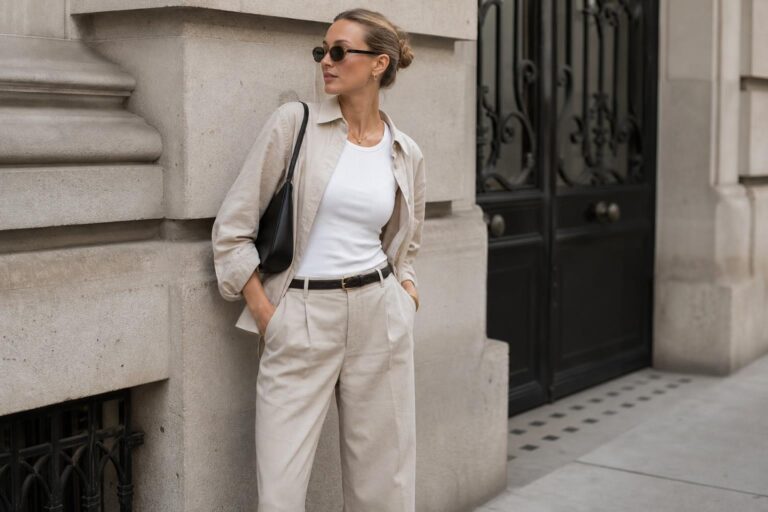
Monochrome Outfits for Women That Feel Polished and Modern
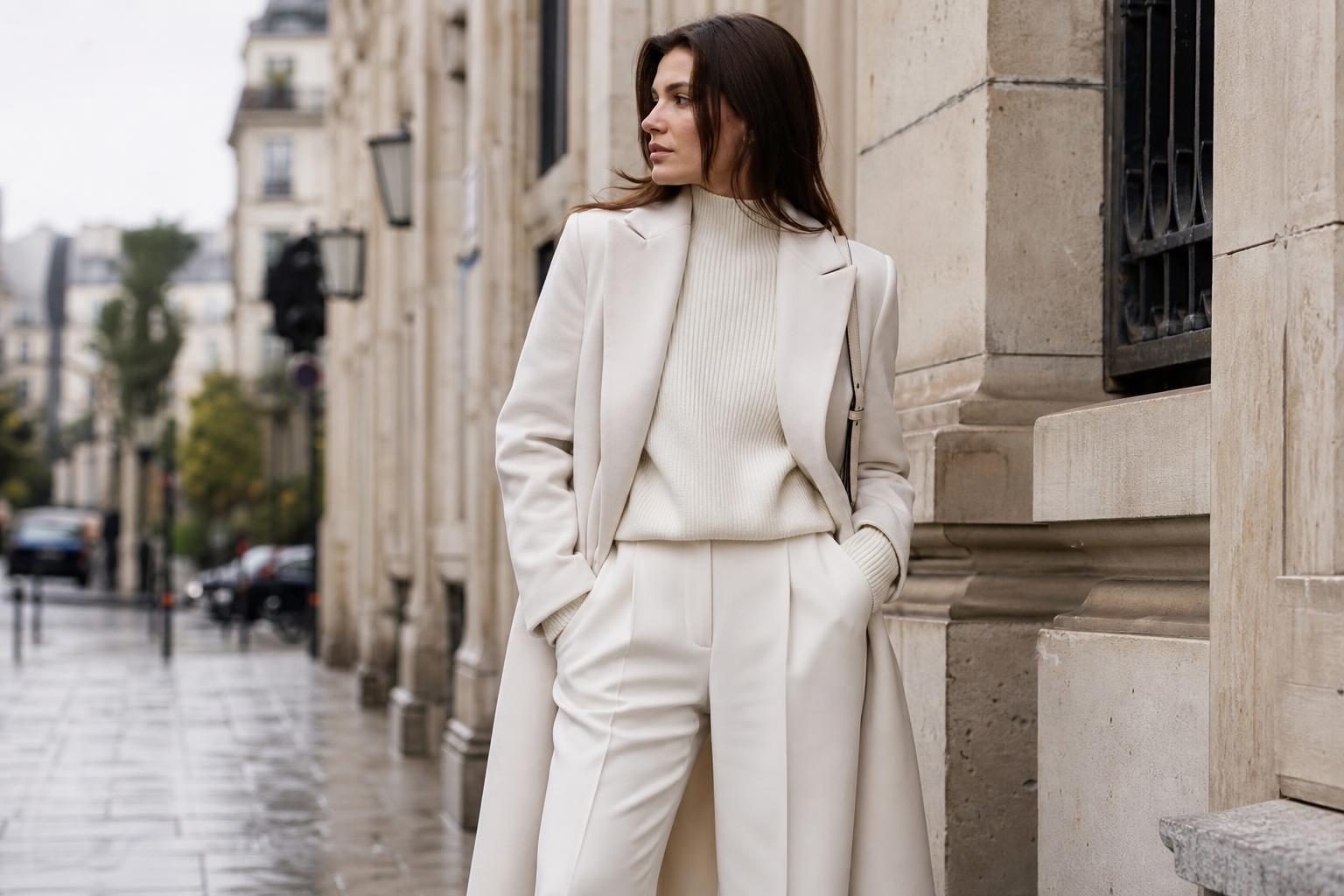
Some outfits do not need a print, a loud accessory, or a complicated formula to feel memorable. The appeal of monochrome outfits for women is exactly that kind of clarity: one color story, one visual direction, and a silhouette that feels instantly cleaner the moment everything works in the same family. Whether the palette is sharp black, winter white, soft beige, quiet gray, or a richer head-to-toe shade, monochrome dressing creates a polished mood that feels intentional without looking overworked.
There is also a practical reason this aesthetic keeps returning in editorials, shopping guides, and everyday wardrobes. A monochrome outfit is easy to wear in real life. It makes getting dressed simpler, photographs well, travels well, and adapts to work, weekends, evenings, and seasonal layering. The mood can shift from relaxed elegance to model-off-duty energy just by changing the fabric mix, the cut of the outerwear, or the finish of the shoes.
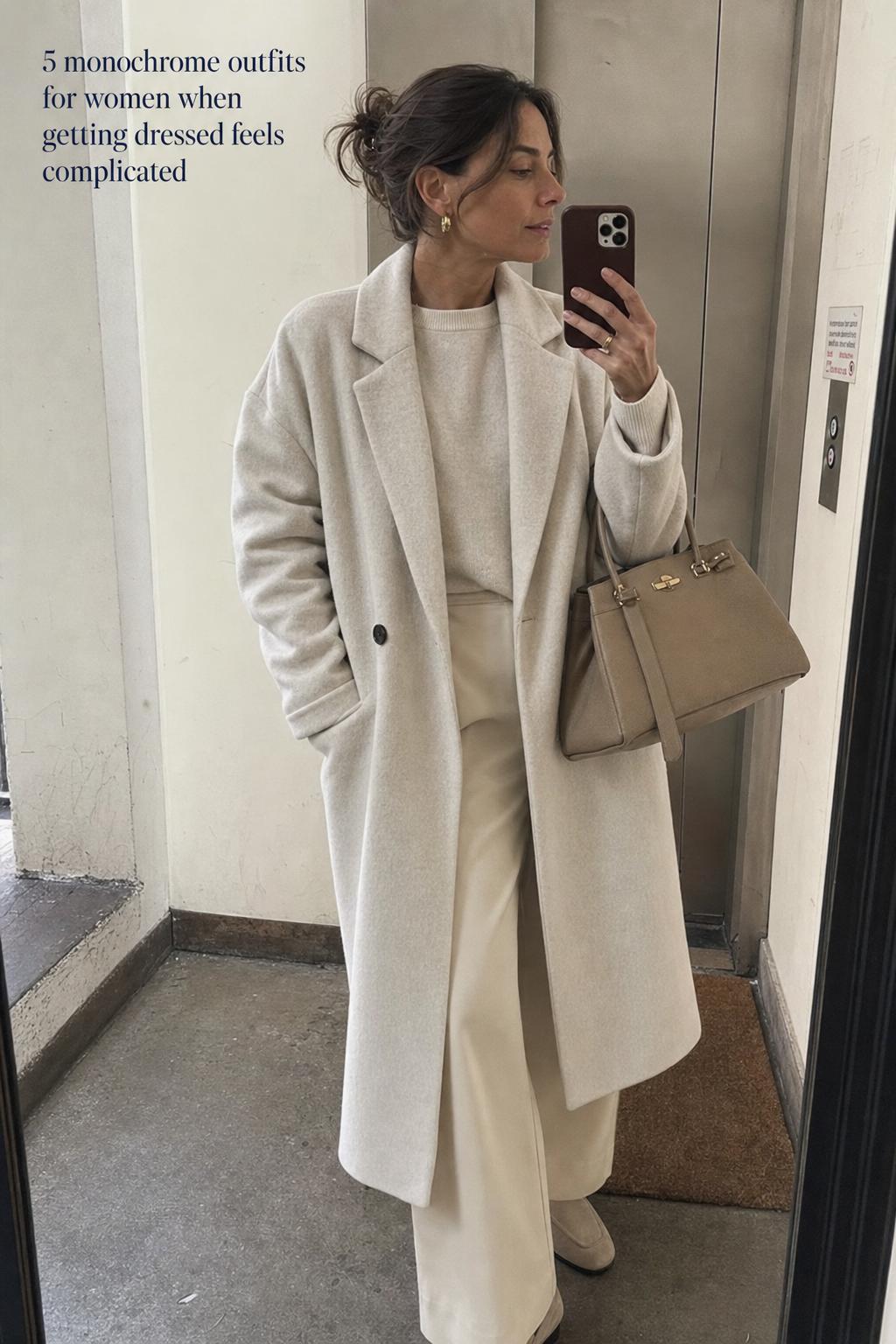
What makes the look especially wearable is that it does not have to mean flat or strict dressing. The most interesting one-color outfits rely on tonal dressing, texture contrast, fit, and subtle depth. A wool coat over a ribbed knit and tailored trousers feels very different from satin with leather accents, even if the pieces stay within the same palette. That is where monochrome becomes less about matching and more about styling.
The Fashion-Note Edit
Five effortless pieces to refresh your everyday wardrobe
A polished, practical edit for workdays, weekends, and everything in between.

The Drop
Women’s Blake Long Blazer
A longline, tailored blazer with a notched collar and a single-button closure—an easy layer for denim, dresses, or office-ready looks.
Shop the blazer
Amazon Essentials
Women’s Lightweight Crewneck
A soft, lightweight sweater with a clean crew neckline—the kind of reliable layer that works from cool mornings to air-conditioned spaces.
Shop the sweater
Amazon Essentials
Women’s Loafer Flat
A classic flat loafer that gives casual outfits a more polished finish and pairs naturally with tailored pants, skirts, and straight-leg jeans.
Shop the loafers
Levi’s
Women’s 501 90s Jeans
A relaxed, vintage-inspired take on the iconic 501 silhouette—made for an easy, lived-in look without the thrift-store search.
Shop the jeans
Colorfulkoala
High-Waisted 7/8 Leggings with Pockets
Soft, four-way-stretch leggings with side pockets and a high-rise waistband—designed for movement, errands, and off-duty comfort.
Shop the leggings
Affiliate disclosure: This section contains affiliate links. If you make a purchase through these links, I may earn a commission at no additional cost to you. Product selection, pricing, availability, and delivery terms may change—please review the current details on Amazon before purchasing.
As an Amazon Associate I earn from qualifying purchases.
What defines a monochrome outfit and why it works
In fashion, a monochrome outfit is a head-to-toe look built around a single color family. That can mean a true one-color outfit, or a tonal combination that stays close within the same palette. Black with charcoal, cream with white, or beige with taupe all sit comfortably inside the monochrome idea because the overall effect remains cohesive.
Your wedding style is personal.
Your plan should feel that way, too.
Zarellea keeps your guest list, budget, vendors, and every next step beautifully organized — so you can focus on the moments that feel like you.
The reason it works so consistently is visual continuity. When the eye moves through similar tones from top to bottom, the silhouette reads as longer, smoother, and more refined. This is why monochrome dressing appears so often in fashion week coverage, editorial shoots, and quiet luxury styling. The color story creates harmony, while the details carry the personality.
It is also helpful to separate monochrome from a rigid matching set mindset. The strongest outfits usually include variation in tone, shade, tint, or surface. Wool against silk, denim against knit, boucle against leather, or satin against soft cotton adds dimension. Without that texture play, a monochrome outfit can feel too uniform. With it, the same color becomes layered, rich, and far more flattering.
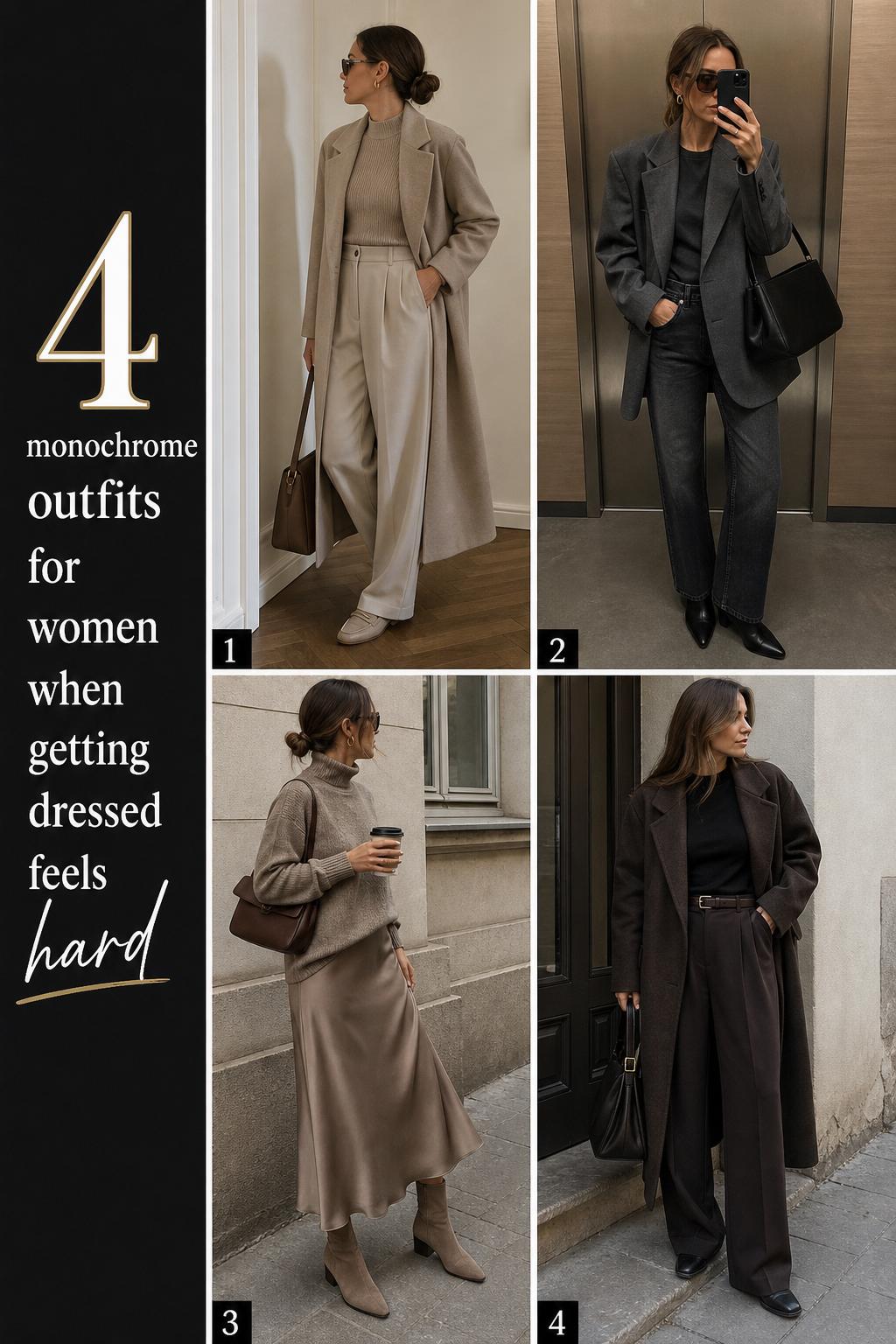
The color families that make monochrome dressing feel modern
Black and white classics
Black and white sit at the center of monochrome fashion because they are timeless and easy to build around. All-black outfits tend to feel sleek, urban, and slightly sharper, while all-white outfits feel bright, clean, and editorial. Both can look expensive very quickly, but they depend heavily on fabric quality, proportion, and finishing pieces.
An all-black palette works especially well with tailored silhouettes, long coats, leather accents, structured bags, and refined footwear. White, on the other hand, benefits from softness and layering: a wool coat, a knit, and fluid trousers or a dress can create the kind of winter white outfit that feels calm rather than severe. This is the version often seen in seasonal editorials and cold-weather styling stories.
Neutrals like beige, taupe, and gray
Neutral monochrome outfits are often the most wearable for everyday life because they combine softness with flexibility. Beige, taupe, camel-adjacent tones, and gray create a quiet, understated elegance that feels easy at brunch, in the office, during travel, or on a casual city day. They are also highly forgiving when you want to mix textures because ribbed knits, wool, soft cotton, suede, and structured outerwear all sit naturally together.
Gray is especially useful when you want a monochrome outfit to look polished without feeling too formal. Beige is a favorite when the goal is warmth and a more relaxed luxury mood. These palettes are frequently associated with the refined styling language seen around New York, Paris, and Milan, where simple color stories often do more than busy outfits.
Bold monochromes in blue, green, red, and yellow
Bold monochrome has a different kind of energy. Head-to-toe blue, olive, green, red, or yellow is less about quiet minimalism and more about commitment to one color atmosphere. It can still feel sophisticated, but the styling usually needs clearer control. Texture and shape matter even more here because a strong hue becomes the main statement.
For readers drawn to trend-focused dressing, this is often the most exciting area of monochrome outfits for women. It brings in the fresh color stories seen in newer 2025-style inspiration while keeping the outfit cohesive. A bold palette can work beautifully when the silhouette stays simple and the accessories are clean rather than competitive.
Why texture matters more than perfect color matching
The quickest way to make a monochrome look feel flat is to build it with pieces that all reflect light the same way. The quickest way to elevate it is to combine surfaces that create contrast without breaking the palette. This is why so many strong examples of tonal dressing rely on wool, silk, denim, leather, boucle, satin, and knits rather than on exact color duplication.
Texture changes how color is perceived. A charcoal wool coat looks deeper than a black satin skirt. A cream rib knit feels warmer than smooth white cotton. A beige suede shoe brings more softness than a glossy leather pump in the same family. These small shifts create depth, which is often what people mean when they say a monochrome outfit looks expensive.
- Silk or satin adds light and movement.
- Wool and cashmere create softness and structure.
- Denim gives monochrome outfits a more grounded casual feel.
- Leather accents sharpen the palette and make it feel more intentional.
- Ribbed knits and boucle add visible texture even in quiet neutrals.
If you are recreating the look with basics already in your wardrobe, focus less on finding identical shades and more on mixing tactile finishes. That approach is usually easier, more realistic, and far more wearable across seasons.
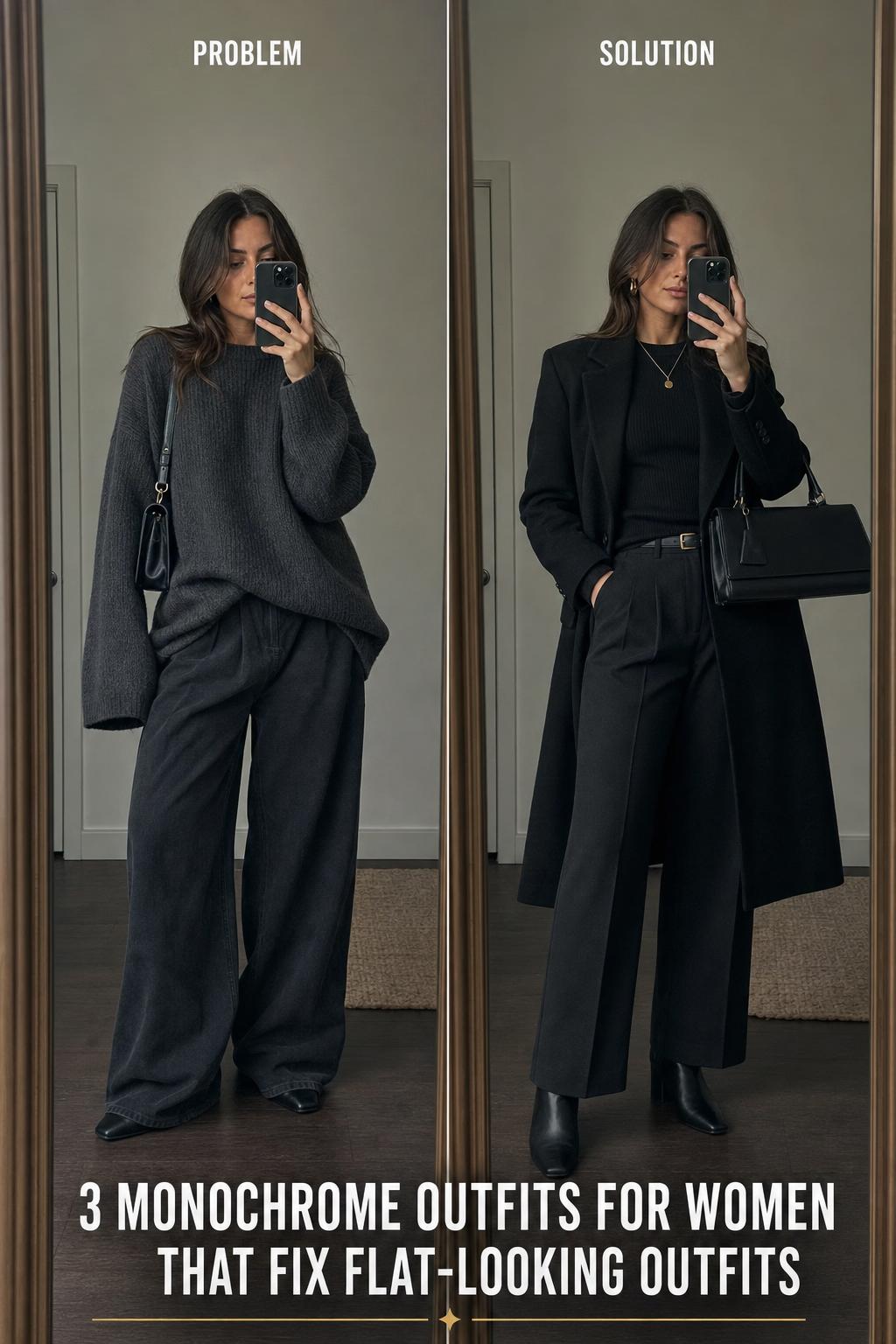
Silhouette first, color second
Monochrome outfits succeed when the silhouette has purpose. Because the palette is controlled, the eye notices length, volume, waist placement, shoulder shape, and layering much more quickly. That can be a benefit, but it also means fit matters. If an outfit feels off, the issue is often proportion rather than color.
A longline coat over straight trousers creates one uninterrupted vertical line, which is why this combination works so well in black, gray, or beige. A fitted knit with wide-leg pants feels balanced because the upper half stays clean while the lower half adds movement. A fluid midi dress in one tone becomes more polished when topped with structured outerwear. These choices shape the mood before accessories even enter the picture.
Woman & Home’s perspective on avoiding a severe result is useful here in a broader styling sense: monochrome should be softened or sharpened according to the wearer, not according to a rule. If the color family already feels strict, ease it with softer fabrics, relaxed tailoring, or a less rigid shoe. If the palette feels too casual, structure it with cleaner lines and more defined outerwear.
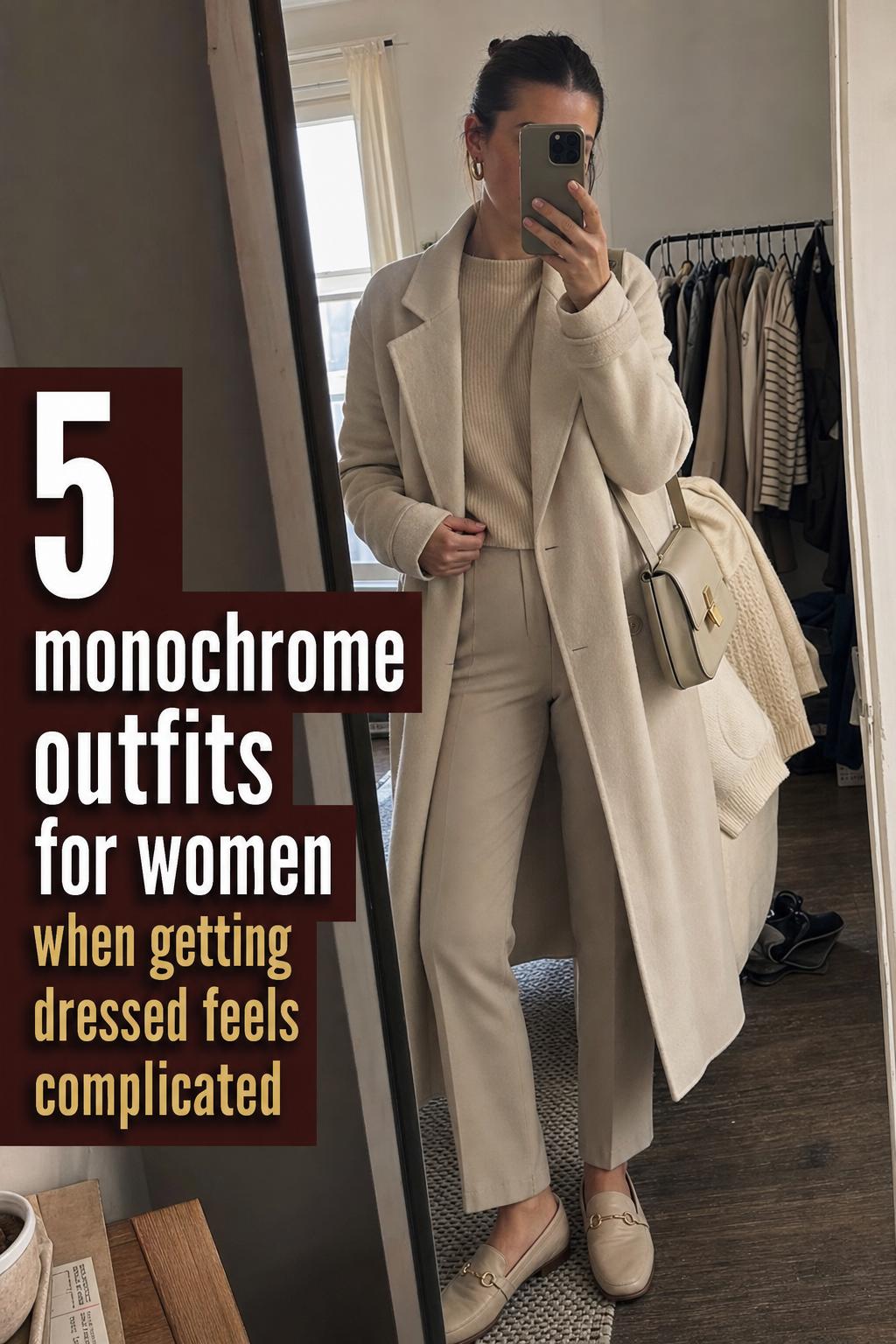
Look: relaxed city minimalism in all black
For a weekday in the city, an all-black outfit has a calm authority that always feels relevant. The best version is not overly tight or overly dramatic. Think of a column-like shape with a tailored coat, a fine knit or soft cotton top, and straight or slightly wider trousers that skim rather than cling. The mood is polished, a little urban, and easy to imagine on a morning commute, at a casual meeting, or moving between coffee and dinner.
Texture is what keeps this palette from disappearing into itself. A matte wool coat over a smoother knit, black trousers with clean drape, leather ankle boots, and a structured bag creates enough contrast to make the outfit feel intentional. Minimal jewelry can stay within the monochrome story by remaining discreet rather than decorative. If you want a softer finish, suede footwear can replace polished leather without losing the overall effect.
This works because all-black sharpens the silhouette and reduces visual interruption. If oversized layers are part of your wardrobe, keep one area controlled. A roomy coat over a slimmer knit works well, while a relaxed top and wide trouser can still look balanced if the waistline and hem lengths feel deliberate. This is one of the easiest monochrome outfits for women to repeat because most wardrobes already have the core pieces.
Look: winter white with soft structure
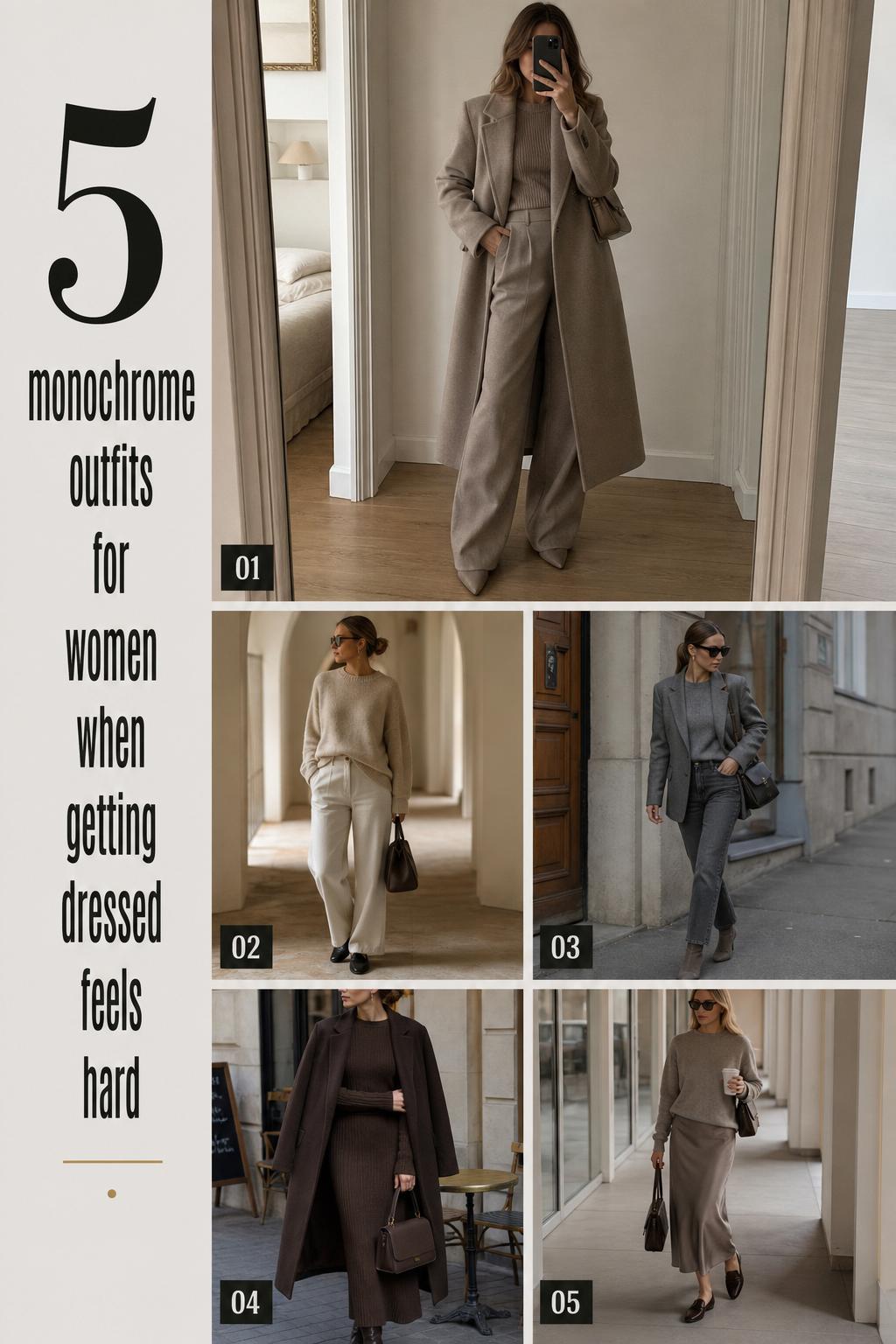
A winter white outfit has a lighter, cleaner atmosphere. It feels especially right for cold weather days when heavy fabrics are necessary but you still want the overall impression to feel bright. The silhouette works best when the layers are soft but not shapeless: a cream coat, a knit with some texture, and tailored trousers or a knit dress underneath. The mood is quiet, refined, and more approachable than a stark formal white.
Wool, cashmere, and ribbed knits make this palette believable in real life because they add warmth and depth. White or cream boots, a matching bag, and gentle tonal variation between ivory, off-white, and soft winter white create dimension without breaking the color family. This is where tonal dressing does the heavy lifting. Perfectly identical whites can sometimes look too stark, but closely related shades feel more natural and easier to wear.
The practical trick here is contrast through fabric rather than contrast through color. If the outfit begins to feel too precious, introduce a more grounded texture like wool coating or a heavier knit. That keeps the look elegant without making it look fragile. It is one of the most useful monochrome directions for readers who want something polished but not severe.
Look: soft neutral layers for everyday quiet luxury
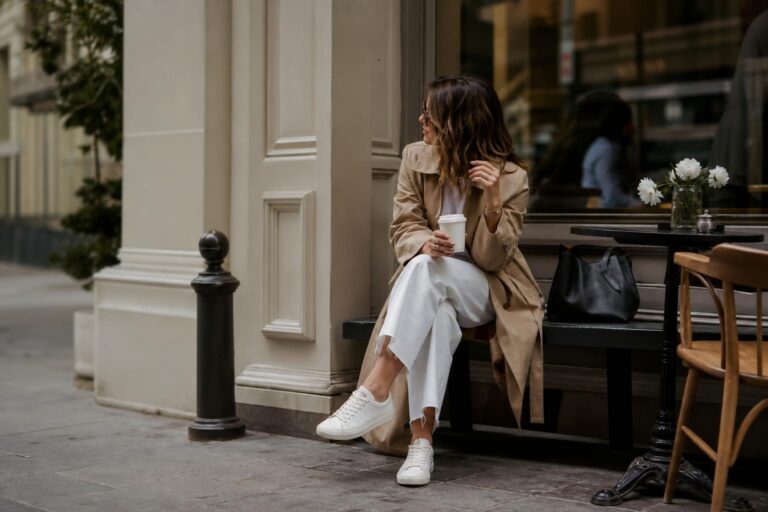
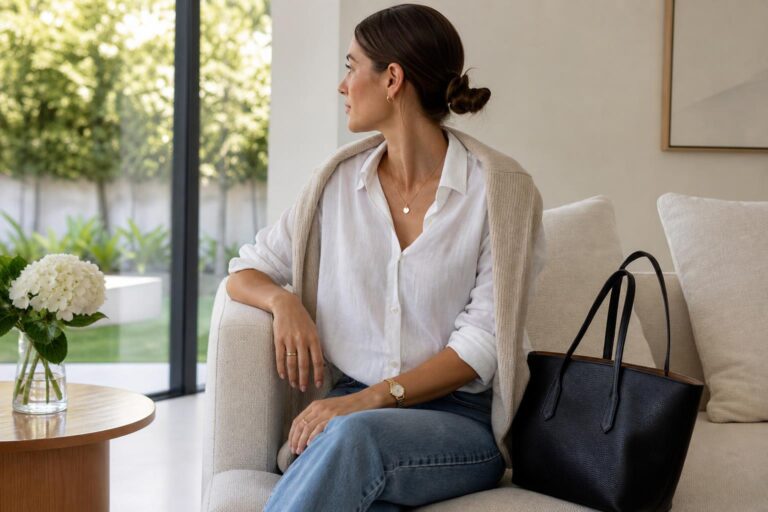
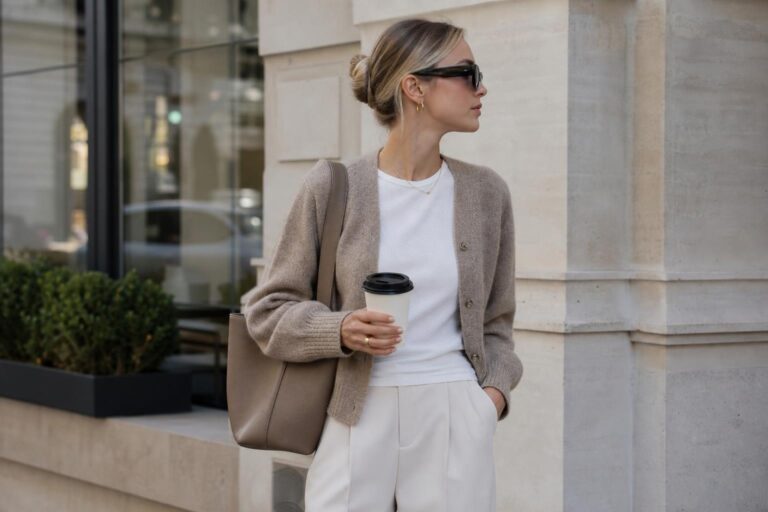
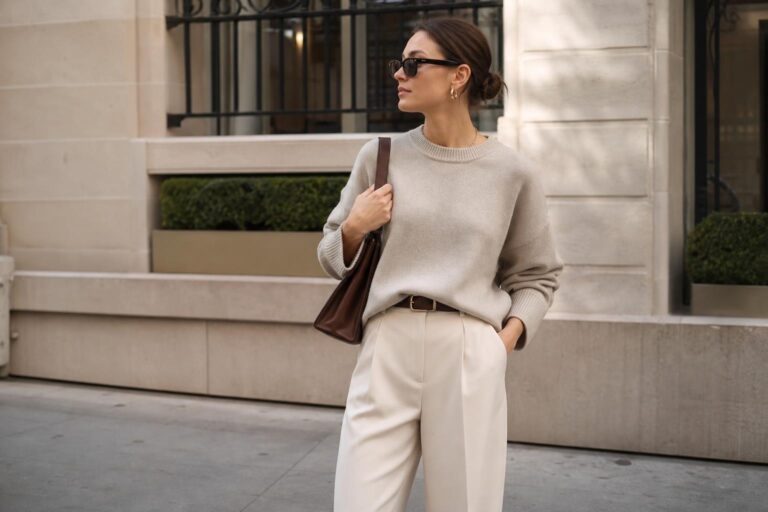
This is the monochrome outfit many readers naturally save because it feels expensive and wearable at the same time. A beige, taupe, or soft camel-adjacent palette creates an easy sense of calm. Picture a relaxed knit tucked into tailored trousers, or a fluid skirt under a softly structured coat. The shape is gentle, the color atmosphere is warm, and the overall styling feels relaxed yet sophisticated.
Ribbed knits, wool trousers, suede loafers or boots, and a leather belt in the same family build the texture contrast that this palette needs. A structured tote keeps it practical for work or travel, while understated jewelry keeps the focus on the lines of the outfit. The reason this direction appears so often in contemporary brand edits is simple: neutrals flatter the eye without asking for much effort.
If you want to make beige monochrome outfits for women feel less washed out, keep at least one piece with visible structure. That could be a coat with shape through the shoulders, a pleated trouser, or a shoe with a more substantial finish. Soft palettes need an anchor, and once they have it, they become one of the easiest ways to wear tonal dressing every day.
Look: gray tailoring for work without feeling strict
For office settings, gray monochrome has a particular advantage. It feels professional, but it is less stark than black and less delicate than white. A gray blazer over a knit top and matching trousers creates a clean work-ready line that moves easily from meetings to lunch to after-hours plans. The mood is composed, modern, and a little more understated than a classic dark suit.
Mixing a softer gray knit with a sharper suiting fabric is usually enough to create dimension. Add gray or charcoal footwear, a structured bag, and simple jewelry, and the outfit stays coherent without looking repetitive. In colder months, a long wool coat in a nearby gray tone extends the monochrome line. In milder weather, the same outfit works with lighter layering and a smoother fabric mix.
The styling value of gray is that it supports proportion well. Wide-leg trousers, midi hemlines, or oversized tailoring can all look intentional here because the color family keeps the outfit controlled. If your workplace leans conservative, gray is often one of the easiest entry points into head-to-toe monochrome.
Look: off-duty denim in one color family
Monochrome does not always mean polished tailoring. On casual days, denim can lead the whole outfit while staying within a single palette. A blue monochrome look built from denim, a knit, and a jacket in related tones feels relaxed and current. The mood is easy, slightly sporty, and ideal for weekend coffee runs, errands, or travel days when comfort matters as much as appearance.
The appeal here comes from mixing weight and finish. A denim base with a softer knit on top and smoother accessories gives the outfit enough variation to feel styled rather than accidental. Keep the footwear simple and in the same color atmosphere to maintain the clean line. A blue bag or quiet jewelry can complete the story without distracting from it.
This kind of one-color dressing is especially helpful for readers who want monochrome fashion to feel realistic rather than formal. The formula is simple: stay within one family, vary the texture, and let the casual fabric do the work. It is approachable, modern, and much easier to repeat than many people expect.
Look: evening monochrome with satin and sharper accessories
Evening monochrome needs a little more contrast in surface and shape. The easiest route is to keep the palette focused and allow the fabric to create the drama. A fluid dress, a satin skirt with a fitted knit, or a more tailored suit in one tone can all work beautifully when the accessories are edited and the silhouette is clear. The mood shifts from daytime restraint to something more refined and intentional.
Black is the obvious evening choice, but deep neutrals or richer colors can feel just as sophisticated. Satin, silk, leather accents, and more defined footwear change the energy immediately. A bag with structure and jewelry that stays within the same visual tone complete the look without breaking the monochrome effect. This is where the clean line of one color often feels the most striking.
The reason evening monochrome works is that it avoids visual clutter. Instead of building impact through multiple details, it relies on shape, finish, and confidence. If you are adapting a daytime monochrome outfit for night, switching the shoe, adding a smoother fabric layer, or replacing a casual bag with something more architectural is often enough.
How accessories change the personality of the outfit
Accessories can either reinforce the monochrome effect or soften it. Shoes, bags, belts, and jewelry do not need to be exact matches, but they should stay in conversation with the main palette. When they sit within the same family, the outfit reads as coherent. When they contrast too strongly, they interrupt the line and shift the look away from true monochrome.
- Matching shoes and bag create a more polished, dressed feel.
- Suede accessories soften neutral outfits and make them feel warmer.
- Leather accents sharpen black, gray, and tailored looks.
- Minimal jewelry supports clean girl aesthetic dressing without competing with the silhouette.
- A belt in the same color family can define the waist without breaking the visual flow.
This is also where a monochrome outfit becomes more adaptable. The same beige knit-and-trouser base can look office-ready with a structured tote and sleek shoe, or weekend-appropriate with softer footwear and a more relaxed bag. The clothes stay almost the same, but the finishing pieces change the mood.
A practical way to build a monochrome capsule
Many shopping-led guides point toward the same conclusion: monochrome dressing is easiest when your wardrobe already contains a few reliable pieces in the same family. You do not need a full closet devoted to one shade. A compact capsule is enough to create several looks for work, casual wear, evening plans, or travel.
A simple five-piece base can be built around one color story: outerwear, knitwear or top, bottom, footwear, and a bag. Once these pieces speak the same tonal language, styling becomes much faster. This is why retailers such as Macy’s, JCPenney, and Ally Fashion often frame monochrome through basics and layering rather than through highly specific statement items.
- A coat or jacket with clear structure
- A knit, blouse, or soft cotton top
- Trousers, a skirt, or denim in the same family
- Shoes that match the mood of the palette
- A bag that keeps the outfit visually connected
If you want variety without losing cohesion, build around one neutral family first, then add a second monochrome option in a bolder shade later. That approach tends to be more wearable than buying disconnected statement pieces.
Shopping mood by budget and brand direction
Monochrome can be interpreted across price points because the concept depends more on cohesion than on labels. Affordable retailers often make it easiest to find matching basics and layering pieces, while contemporary and luxury names can bring stronger fabric stories and more refined silhouettes. The choice depends on whether you want wardrobe staples, trend-forward color stories, or investment pieces with lasting shape.
Within the brand references that appear around monochrome trend coverage, labels such as ME+EM, Malene Birger, and Almada Label are associated with a more curated color narrative and modern minimal styling. Department store guides from Macy’s and JCPenney lean practical, showing how to build wearable monochrome through accessible separates. Wakakuu’s edit-driven approach places monochrome within a more directional seasonal trend context.
The trade-off is straightforward. More accessible pieces can help you experiment with all-white outfits, gray tailoring, or beige knit layers without much commitment. Contemporary and luxury options may offer stronger fabric quality, sharper drape, or more elevated texture combinations. Both approaches can work well if the silhouette and color family are handled thoughtfully.
Style notes from fashion cities and editorial dressing
Monochrome has a global quality, but it does not always look the same. In New York, the mood often leans sharper and more practical, with black, gray, and tailored layers leading the way. In Paris, the same one-color styling may feel softer, more relaxed, and a touch more fluid. Milan often pushes stronger fashion presence through richer texture and a slightly bolder finish. These are not strict rules, but they help explain why the same palette can carry very different energy.
That variety is one reason monochrome remains so relevant in fashion week and editorial studio imagery. It gives photographers and stylists a clear visual framework while leaving room for subtle shifts in mood. A single color family can express restraint, ease, confidence, or drama depending on fabric and shape. For everyday wear, this means you can borrow the discipline of editorial dressing without needing an impractical wardrobe.
Common mistakes that make monochrome harder to wear
Most monochrome missteps are easy to fix. They usually come down to texture, proportion, or footwear rather than to the color concept itself. If a one-color outfit feels off, the problem is rarely that monochrome does not suit you. More often, the layers need more depth or the silhouette needs more balance.
- Using identical flat fabrics from top to bottom with no texture contrast
- Choosing pieces in the same color family but with mismatched mood, such as a formal satin item with overly casual footwear
- Letting oversized layers overwhelm the frame without a clear focal point
- Breaking the palette too sharply with accessories that pull attention away from the outfit line
- Wearing a strict monochrome palette without softening it when the result feels too severe
A simple fix is to adjust one element at a time. Add a textured knit, switch to a more structured bag, replace glossy shoes with suede, or choose a coat with cleaner shape. Small changes usually have a large effect because monochrome styling is visually concentrated.
Tips for keeping monochrome outfits fresh through the seasons
The easiest seasonal transition happens through fabric weight and layering, not by abandoning the palette. A monochrome wardrobe built around black, white, beige, or gray can move through the year by shifting from wool and heavy knits to lighter cotton, smoother separates, and less outerwear. The color family remains the same, but the feeling changes.
Winter white works best with wool, cashmere, and thicker knits. Neutral spring dressing benefits from softer cotton and lighter layers. Denim-based blue monochrome feels especially right for casual transitional weather. In colder months, gray and black gain depth through coats and boots; in milder conditions, the same palettes can feel lighter with cleaner shoes and simpler layering.
For travel, monochrome is especially practical. A compact group of tonal pieces mixes easily, keeps luggage more efficient, and photographs in a more coherent way. This is one reason the aesthetic feels so useful for city breaks, work trips, and long days that move across multiple settings.
Where sustainability fits into monochrome dressing
A monochrome wardrobe naturally supports more thoughtful shopping because it encourages repeated wear and easier coordination. When pieces stay within clear color families, they tend to combine more often, which can reduce impulse buying around isolated colors that do not integrate with the rest of the closet.
Material choices also matter. Eco-conscious fabrics and attention to dye processes are part of the broader conversation around modern wardrobe planning, especially for readers who want their basics to last and maintain dye-lot integrity over time. In practical terms, this means texture, fabric quality, and wardrobe cohesion are not only aesthetic choices. They also influence longevity and how often a piece earns its place in rotation.
How to make the aesthetic more wearable in real life
The most successful monochrome outfits for women rarely begin with a desire to look perfect. They begin with a realistic base: the coat you already rely on, the trousers that fit well, the knit that layers easily, or the dress that works from day to night. Once that base exists, the monochrome idea simply organizes it.
If a full head-to-toe look feels intimidating, start with one easy family such as black, gray, or beige. Use nearby tones rather than exact duplicates. Let one piece add texture, and let one piece add structure. Keep the shoes in the same mood as the outfit. That small amount of discipline is usually enough to create the clean, elevated effect people are looking for.
The beauty of this aesthetic is that it can be quiet, cozy, strong, or refined depending on how you wear it. It suits work wardrobes, casual weekends, evenings out, and travel because it simplifies styling while still leaving room for personality. In a wardrobe full of choices, monochrome remains one of the clearest ways to make an outfit feel intentional.
FAQ
What is the difference between monochrome and tonal dressing?
Monochrome usually refers to dressing in one color family from head to toe, while tonal dressing allows nearby shades, tints, and depths within that same family. In real life, the two often overlap, and tonal variation is what helps a monochrome outfit feel more natural and dimensional.
How do I wear monochrome without looking severe?
Use softer fabrics, mix textures, and pay attention to fit. If a one-color outfit feels too sharp, add a relaxed knit, suede footwear, or less rigid outerwear. Neutral palettes, winter white, and softer silhouettes are especially useful when you want the look to feel polished but approachable.
Which colors are easiest to start with for monochrome outfits?
Black, gray, beige, and white are the easiest starting points because they are widely available, easy to layer, and simple to adapt for work, weekends, and evenings. These color families also make texture contrast more visible, which helps new monochrome outfits feel richer and more styled.
Can petite women wear head-to-toe monochrome?
Yes. Monochrome can be especially flattering because it creates one continuous visual line. The key is proportion: keep hemlines, waist placement, and outerwear length intentional, and avoid letting oversized pieces overwhelm the frame without some balance elsewhere in the outfit.
How can I make a neutral monochrome outfit feel more interesting?
Build interest through texture and shape rather than adding another color. Try ribbed knits with wool trousers, suede shoes with a leather bag, or a structured coat over softer layers. These combinations create depth while keeping the outfit calm and cohesive.
Are monochrome outfits good for work?
They are often ideal for work because they look organized and polished without requiring complicated styling. Gray, black, and soft neutrals are especially effective for office-ready dressing, particularly when paired with tailoring, refined knitwear, and structured accessories.
What shoes work best with monochrome outfits?
Shoes that stay in the same color family usually work best because they keep the outfit line uninterrupted. Leather creates a sharper finish, while suede gives a softer mood. The choice depends on whether you want the outfit to read more polished, relaxed, or evening-ready.
Do monochrome outfits have to match exactly?
No. Exact matching can sometimes look flatter than a thoughtful mix of related tones. Combining nearby shades within the same palette is often more wearable and gives the outfit more depth, especially when fabrics such as wool, silk, denim, and knit add subtle variation.
Finish the look
The little extras that make a summer outfit feel complete
From beach days to city weekends, these easy pieces bring comfort, texture, and a polished finishing touch.

FENBEN
Straw Hobo Crossbody Bag
A handwoven straw bag with both short and crossbody straps—an effortless finishing touch for vacation looks and warm-weather outfits.
Shop the bag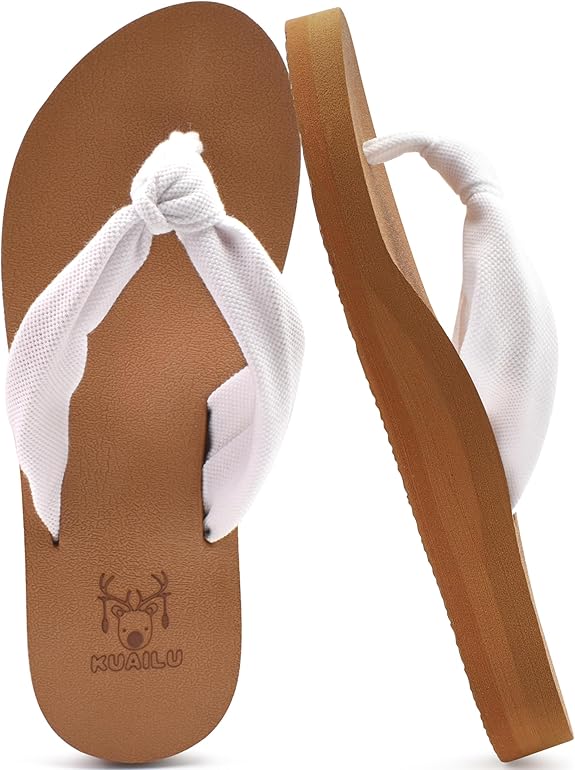
KuaiLu
Flip Flops with Arch Support
Cushioned, lightweight sandals with supportive arch design—a practical choice for beach trips, errands, and long summer walks.
Shop the sandals
baleaf
Athletic One-Piece Swimsuit
A functional one-piece with adjustable straps and moderate coverage, designed for swimming, training, surfing, and active beach days.
Shop the swimsuit
Astylish
Linen-Cotton Button-Down Shirt
A relaxed cotton-linen shirt with a collared V-neck and roll-up sleeves—easy to style over swimwear or with denim and shorts.
Shop the shirt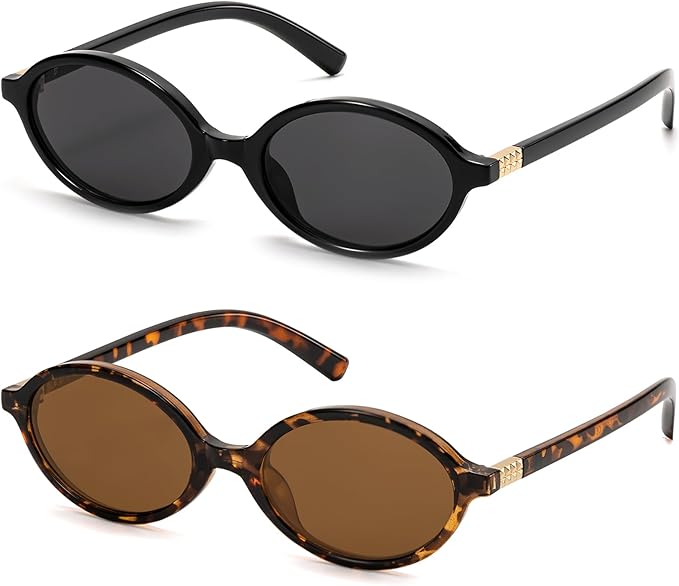
ViewJoy
Retro Oval Sunglasses
Small oval sunglasses with a 90s-inspired silhouette and UV400 lens protection—a quick way to add a vintage edge to everyday looks.
Shop the sunglasses
Affiliate disclosure: This section contains affiliate links. If you make a purchase through these links, I may earn a commission at no additional cost to you. Product selection, pricing, availability, and delivery terms may change—please review the current details on Amazon before purchasing.
As an Amazon Associate I earn from qualifying purchases.