Elegant All Black Outfit Ideas From a Small Capsule
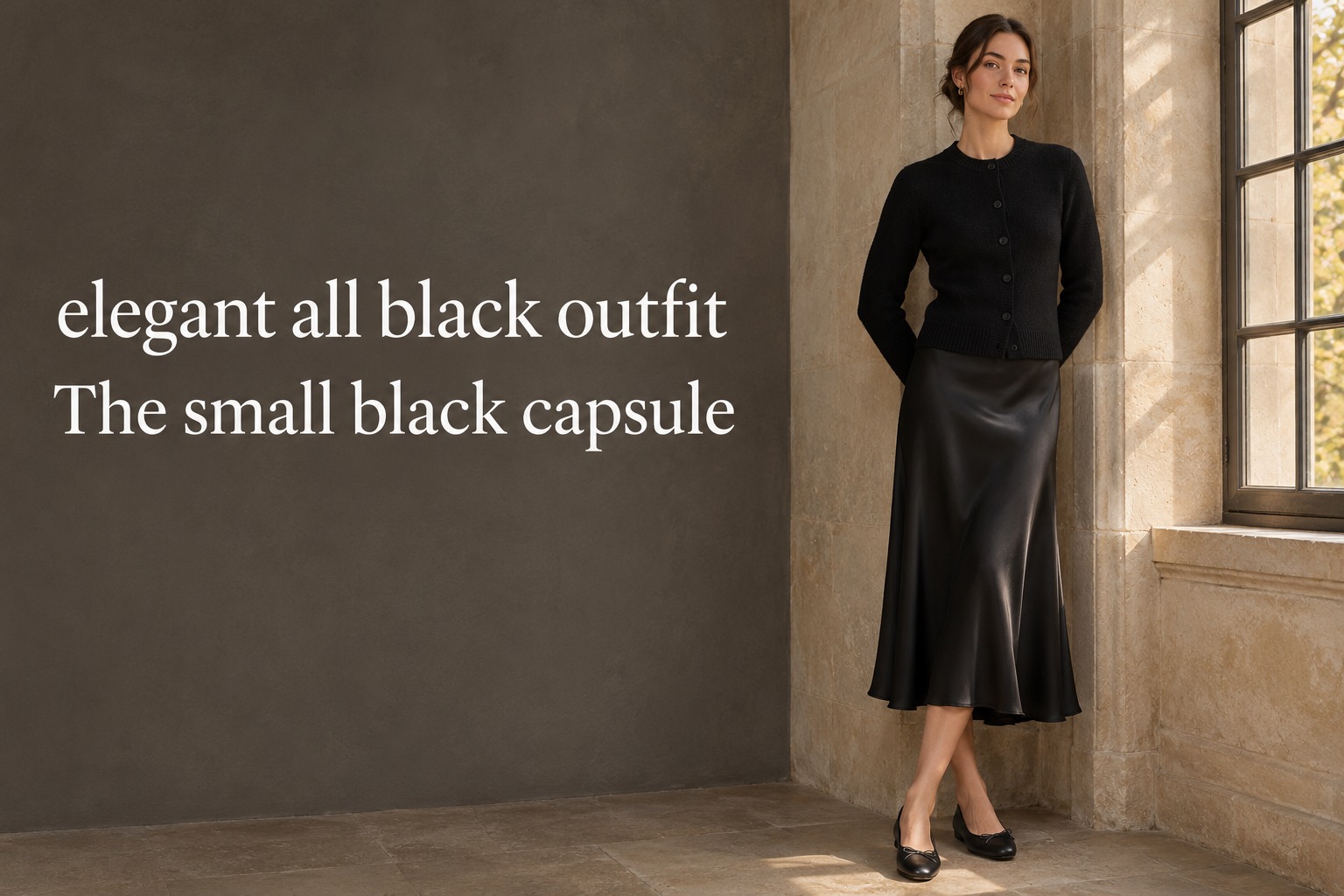
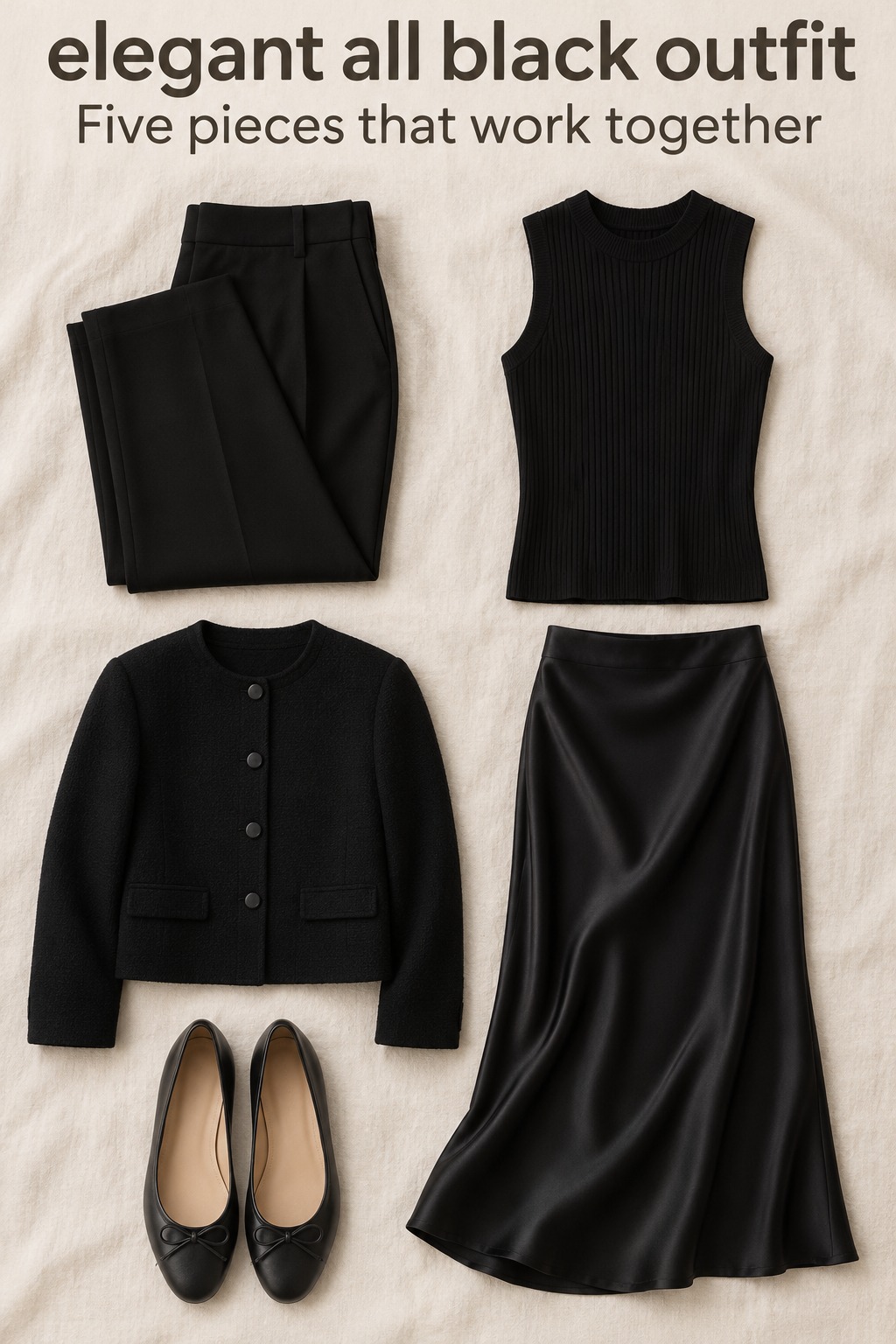
Start with the black pants and shoes you already wear together. If the hem falls cleanly over the shoe and you can walk without catching it under your heel, you have the foundation for an elegant all black outfit. From there, I’d build around a short black cardigan jacket, a ribbed shell, and a satin midi skirt. I like these pieces because the cardigan can replace the shell and the skirt can take over for the pants without sending you back to the closet for different shoes.
A closet full of black clothes can still leave you stumped. A long sweater bunches over a skirt waistband, an ankle-length pant catches on the top of a shoe, and two smooth fabrics under dim light can make the layers disappear. Try the pieces where they touch, especially at the waist and over the shoe. Those are the spots that decide whether you can wear a piece again tomorrow with something else.
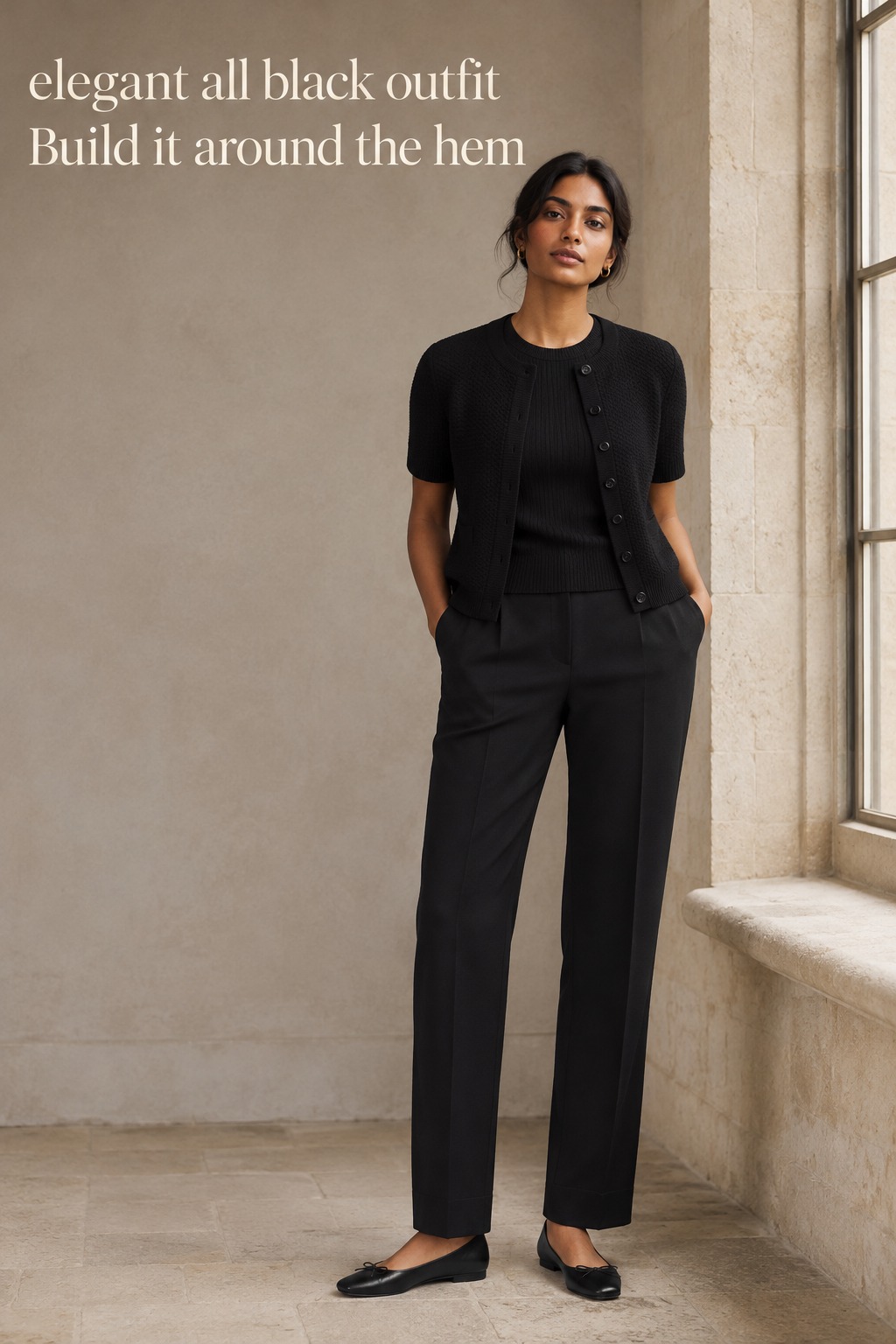
Choose pieces that meet cleanly at the waist and shoe
Start with the trouser hem
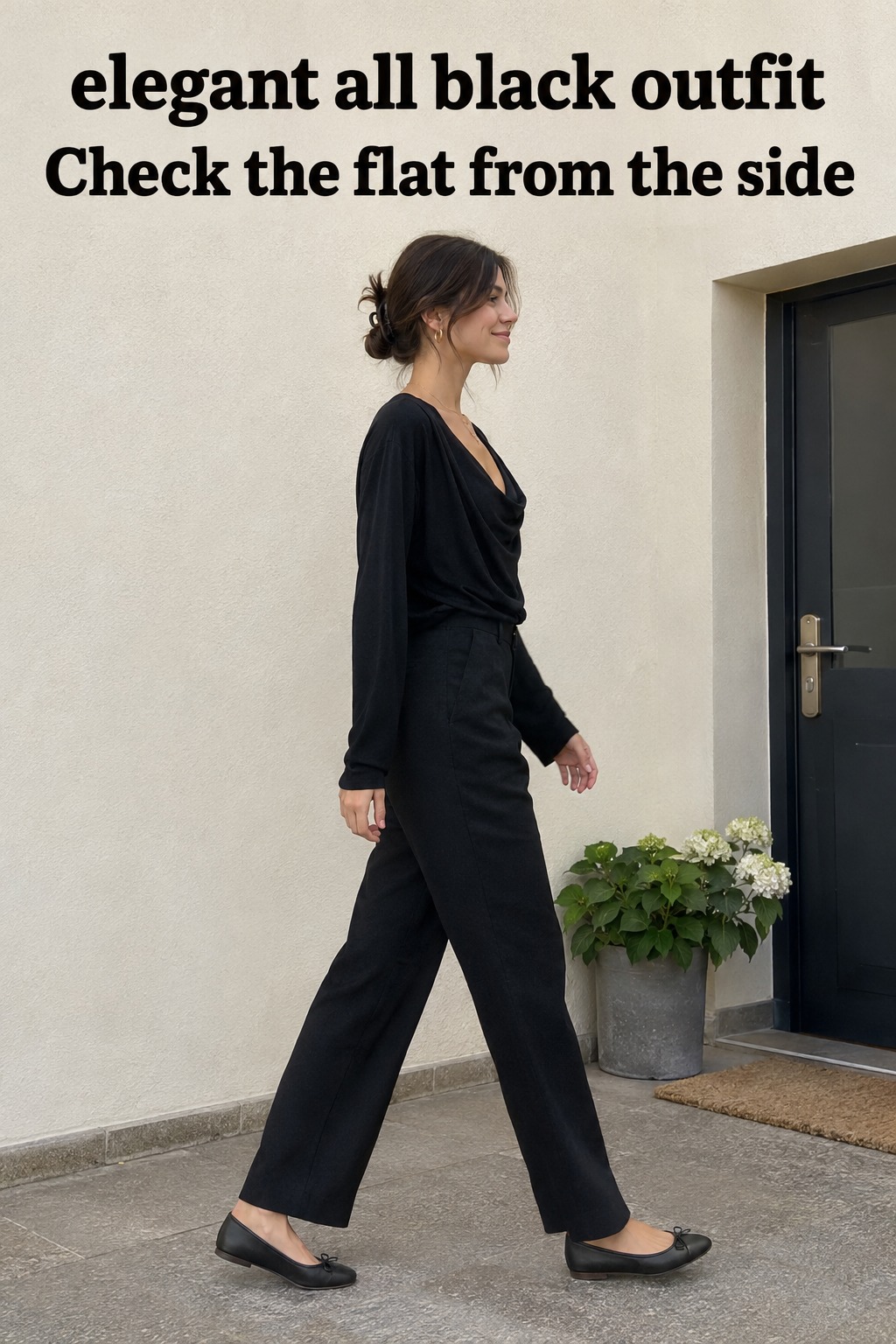
Look for matte straight-leg trousers with enough room for the front crease to stay straight when you sit and then stand. Put on the black flats you expect to wear with the trousers and look from the side, where it’s easier to see whether the fabric catches on the shoe. A full-length hem can skim the upper and leave the back of the trouser clear of the floor. If you usually wear ankle pants, leave a visible gap above a high vamp so the fabric has room to move when you bend your ankle.
A low-vamp black ballet flat is an easy place to start. The open instep gives the hem space and is particularly useful with a relatively narrow opening. If the toe rubs or your heel slips, try a different shoe before deciding the pants need shortening. For a wider shoe with a square toe, look down after taking a few quick steps. If the fabric twists around the toe, try a wider leg opening or have the hem pinned higher before committing to an alteration. Bring the actual shoes to the fitting.
Give the top and skirt different surfaces
A black ribbed shell should have a neat armhole and enough length to stay tucked while you reach, without a thick fold beneath the waistband. Fine ribs give the top some definition at conversation distance. Pick a crew or shallow scoop that sits clear of the cardigan’s neckline. With the cardigan open, you should be able to see where one neckline ends and the other begins. A thin ribbed top with sleeves works here, too. Try it under the cardigan to see whether the extra fabric fits through the upper arm.
For the skirt, use a black satin midi skirt with a waistband that sits flat when you sit. I would look for a simple cut with some movement below the hip and enough room for a normal walking stride. Hold the shell beside the skirt near a window. The skirt’s broad reflection should be visibly different from the narrow lines of the rib. Indoors, these surfaces can still read differently even if they look like the same shade when hung side by side. If your skirt is matte, try a lightly lustrous top with it and keep the same shape checks.
Pick a cardigan jacket that closes on its own
Choose a firm button-front knit that works both open as a layer and closed as a top. Its bottom edge should sit close to the skirt’s waistband without catching on it. When you raise an arm, watch where the hem lands again. A long knit can cover the waistband beautifully, provided it skims past it. A shorter knit has the advantage of leaving room to see the skirt move as you walk.
Fasten the cardigan, sit down, and reach forward as if you were across a table. Try the next size if the placket opens between buttons. In the larger size, look to see where the shoulder seam falls. A cardigan can be roomy through the chest and still sit neatly around the shoulder, depending on its cut. If you want to wear it as a top, check the inside seams and neckline against bare skin before counting on that second use.
Four pieces to try with what you own
Try a wider straight leg
Try the flats with your pants
Give the ribbed top a satin pairing
Wear the cropped knit open or closed
Wear the same pieces to four different plans
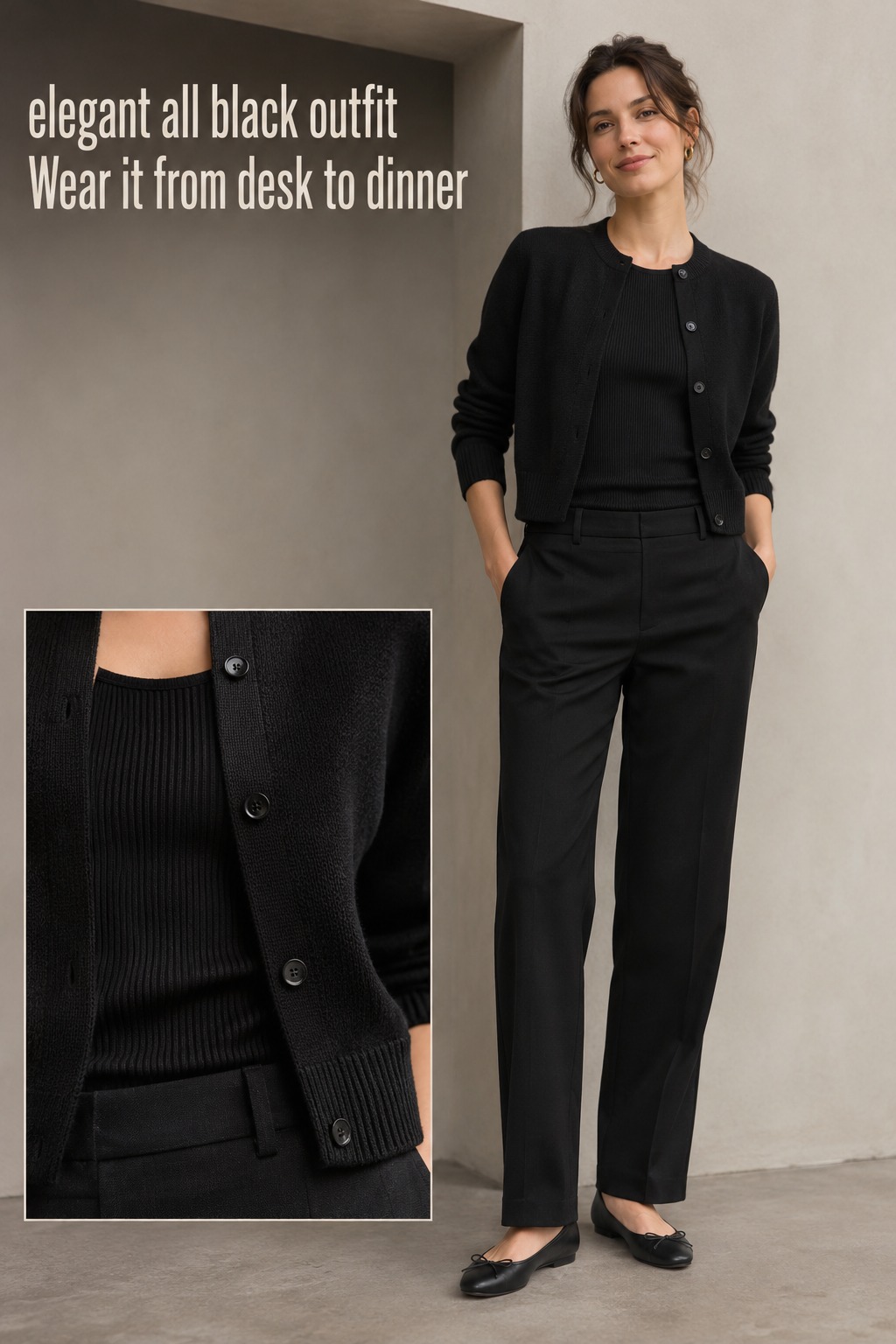
A workday in straight trousers and an open cardigan
Tuck the shell into the trousers and leave the cardigan open so that its two front edges frame the ribbed fabric. Add black ballet flats and a roomy black bag. If the cardigan and trousers look similar in finish, the visible strip of rib will provide the distinction. A plain bag works here, especially if the knit already has noticeable buttons. When the room calls for a more structured top layer, substitute the black jacket you already wear to meetings and keep the original pant hem and shoe pairing.
Check the outfit after sitting at a desk. If the shell works free at the back, see if it stays put when tucked into a slightly higher rise you already own. You can also wear it untucked with the cardigan open if the shell has a finished hem that clears the front pocket openings. A belt is optional. I would try it only if it sits flat under the knit and the buckle adds something you want to see when the cardigan is open.
An afternoon opening in the satin midi
Wear the ribbed shell and black satin midi skirt with the flats. Carry the cardigan so you can put it on inside. With this combination, most of the shine is below the waist, where the folds of the satin catch the light as you walk around the room. I like a bag that can sit under the arm without pinning the skirt to the hip, particularly if the fabric is fluid enough to catch under a longer strap.
If you need a bag large enough for a book or a folded umbrella, wear it first and see where its bottom rests. A tote that’s fine beside trousers can push a soft skirt in toward your knee. Try shortening the strap, carrying it by the handles, or moving the bag higher against your side. Take a few stairs at home with the bag on. You’ll know if you have to lift the skirt or keep moving the bag out of the way.
A dinner reservation in the cardigan worn closed
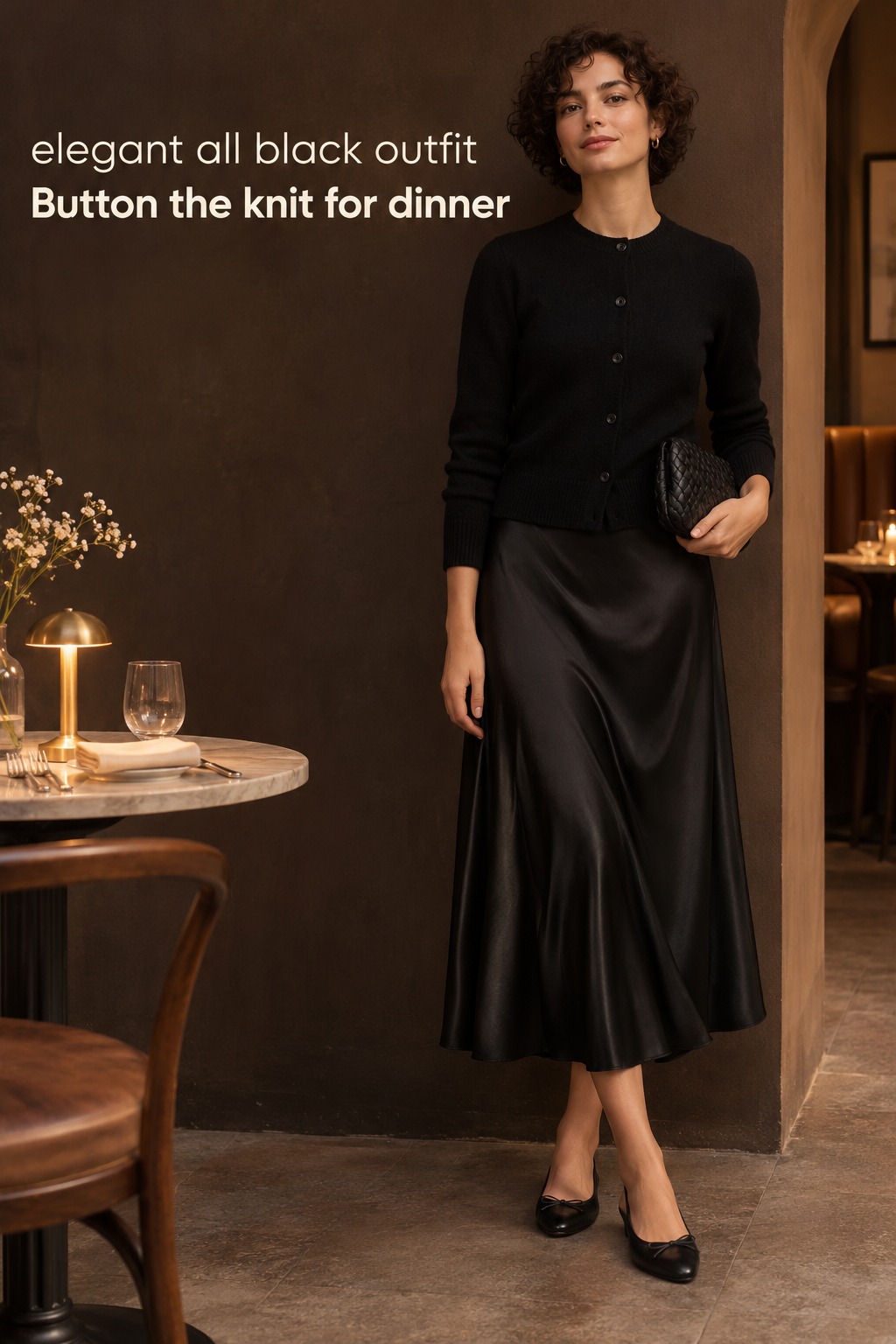
Button the cardigan over the skirt and let the knit sit just above the skirt’s fullest folds. The small row of buttons gives the upper half a visible line, even in low light. With plain flats, I’d try a compact black clutch with a lightly textured surface. Fit your glasses case inside before you count on taking it to dinner. I would use a small shoulder bag on an evening that also involves a coat check or a crowded train.
Before heading out, look at the front of the outfit while seated. If the cardigan rides above the waistband, a thin black layer underneath can cover the opening. If the ribbed shell has a higher neckline than the cardigan, either let enough of it show to look deliberate or use a lower camisole instead. Try the latter near a lamp to see if the edges of the camisole are visible through the knit.
A recital or reception in trousers and a dressier top
Keep the straight-leg trousers and switch the shell for a black top with a softly draped neckline or a sheen you can see in room light. The outfit keeps the same bottom line as the work version. If you want a dressier black shoe, try a defined toe in the same heel range as the flats, then check the hem from behind. A low block heel may lift the back just enough, depending on how the original hem was set.
Sit for a few minutes and see if you keep putting the neckline back into place. Try it once with the cardigan open to see if the extra layer helps it settle. You can also go back to the ribbed shell and let the sheen come from a small bag. That keeps the outfit more understated, which may suit a daytime recital especially well.
Buy for the gap that breaks two outfits
Put your first purchase through two fittings
Set out two outfits you would wear in the next few weeks and see what’s missing from both. You might have two tops that already work with the skirt and still spend mornings reaching for jeans because your black trousers drag on the shoes you wear most. If your trousers have room through the thigh when you sit, see whether an alteration would make both outfits wearable with the shoes you like.
If the pants work with one shoe and fail with a second, decide whether you need that second shoe in the capsule. If you want one hem for both, bring both shoes to the fitting and pin one pant leg at the proposed length. Walk on a hard floor and see where the ends land. If the difference throws off the line in either pair, I’d set the length for the shoe you expect to wear most and assemble a separate skirt outfit around the other.
Replace a layer that has too narrow a job
A very thick cardigan may fill a real need in winter, but it can be difficult to wear closed with the skirt. Look inside your closet for a cropped, firm knit, a short black knit jacket, or a soft jacket that closes comfortably before buying. Put the layer beside the skirt and trousers in daylight, then try it on with both. Check whether you can slip a thin long-sleeve top underneath. That determines whether the layer has a second use when the weather turns.
A new satin skirt makes more sense if your trousers have become your only reliable option for every invitation and you already own two tops that can work with a skirt. Try the skirt with the flats first. Knee-length, midi, and longer hems all give different amounts of open space above the shoe. Stand back and see which one lets you notice the shoe shape. Then move around and see which skirt still hangs comfortably. Try the hem you can walk in without thinking about it.
Check blacks where the clothes touch
Compare overlap at the waistband and shoulder near a window, then under a lamp. A slightly faded knit can sit well above a deep black trouser if the difference is visible enough to look intentional. A small difference is easier to see where two smooth black fabrics meet along a long line. Try opening the cardigan so a ribbed shell shows between the front edges. Move one piece to another outfit if the difference still pulls your eye toward the seam every time you look down.
Change the layer when the temperature changes
In warm weather I would wear the shell and skirt without the cardigan and bring the knit only for an air-conditioned room. If you choose black sandals, check how much foot shows below the skirt and whether the skirt crowds the straps during a long step. With trousers, try a slim sandal first and see if the back of the hem stays clear of the floor. If the trousers were pinned for a thicker sole, wear the skirt instead or keep the original flats.
In colder weather, replace the shell with a thin black long-sleeve layer. Pull the cardigan over it and bend your elbow. If both sleeves bunch up, try straightening the inner layer first. With a skirt, black tights and slim ankle boots can leave the same simple line below the hem. With trousers, the boot shaft belongs under a leg opening that has room to fall around it. Boots can look fine while you’re standing and catch in the pant leg as soon as you get up from a chair.
Try your coat with the entire outfit. A coat that feels light enough over the shell may feel tight across the back when the cardigan is underneath. Reach forward and let both layers drop back into place before judging the fit. I would keep the thinner layer indoors if you expect to carry the coat, particularly at a dinner where you will sit close to other people.
Editor’s take
I would put the first fitting session into the trousers and flats. Once the hem falls cleanly over a shoe you can walk in, you have the bottom half of more than one dressy outfit. If you usually wear skirts, start by buttoning the cardigan over your favorite skirt and sitting down in it. Pull out those two pieces tonight and try them with the right shoes. Take a side photo, then walk around the room. If the hem or cardigan needs adjustment every time you move, fix that connection first. These are styling judgments drawn from the research behind this guide.
Sources and methodology
Litkovska’s styling guide gives examples of using garment lengths and shoe shapes to change a monochrome look. Stunning Style’s guide compares how matte and shiny surfaces sit next to each other, right down to the boots. The capsule combinations and fitting checks here are Fashion Note’s editorial recommendations.
FAQ
Do all the black pieces in an outfit need to match exactly?
Leave some room for differences in depth and finish. A black knit can look slightly softer than satin in daylight and still sit well next to it. Look closely when two smooth black pieces meet at the waist or down the front. If the break catches your eye, try moving one piece to another outfit or bring a visible ribbed layer between them.
Can flats look dressy enough with black trousers?
A flat with a defined toe and a secure heel works well for work or a dinner where you plan to walk. Check where the upper meets the trouser hem, then check the fabric while climbing stairs and getting up from a chair. The line looks cleaner when the pant drapes over the shoe or clears it entirely.
How do I keep a tucked top from making a satin skirt look lumpy?
Try a finer rib or wear a short cardigan that ends just above the waistband. When you tuck, smooth the fabric all the way around and move any extra fullness to a place where the skirt has more room. Sit for a minute and smooth the skirt again. If the ridge comes back when you stand, try a thinner top.
What can I use if I don’t own a satin midi skirt?
Use a fluid black skirt you already wear and keep the test at the waist and shoe. With a matte skirt, visible ribbing or a more open cardigan neckline can give the upper half some definition. If both pieces are close fitting, see whether an untucked, slightly roomier shell looks better over the waistband.
Should I hem my trousers to wear with both flats and heels?
Try both shoes with the hem temporarily pinned. The difference between a thin flat and a higher heel may change where the hem breaks in front as well as how high it sits at the back. If you can get a clean line with both, use that length. Otherwise, choose the shoes you wear more often.
Can I wear gold or silver jewelry with an all-black outfit?
Yes. If the cardigan has prominent metal buttons, try one pair of earrings in the same tone and see what they add near your face. If the clothing already has a reflective neckline or a dramatic drape, you might prefer a small ring or a discreet pair of studs so the neckline has room.