Rich Elegant Outfit Ideas Using What You Own
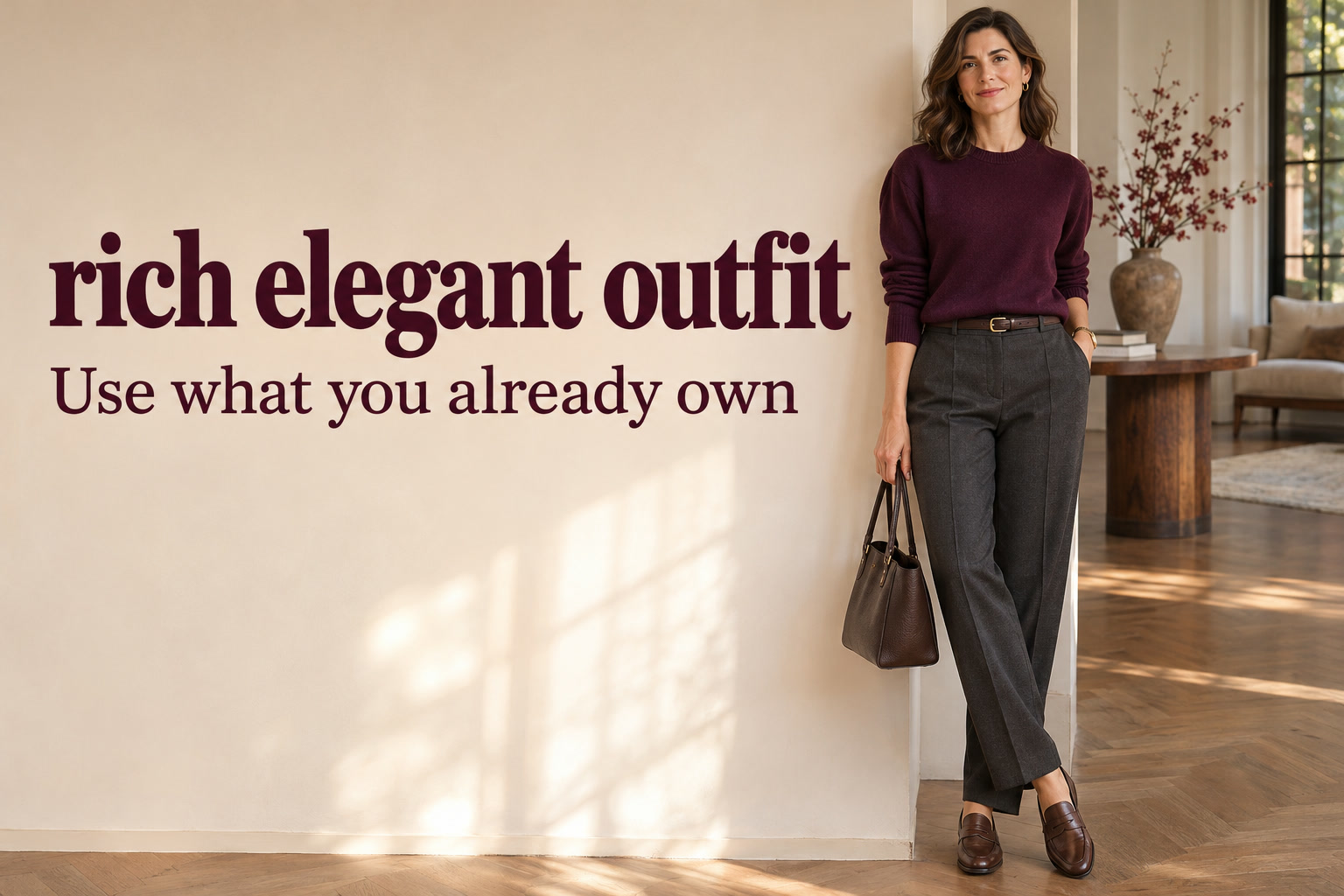
Start with the piece that already hangs the way you want it to. I’d take a favorite plum sweater or a crisp ivory shirt as the starting point for a rich elegant outfit. Get the shape right first, then pick a color or finish you can repeat in one small detail. An espresso belt can link a plum sweater to a brown bag, even when the trousers in between are charcoal.
Try it on an outfit you wear every week. Take a full-length photo before you leave the house. Change the shoes, take a second photo from the same spot, and look at where the trouser leg falls in each. You can do the same with a cuff or a tuck. Keeping the rest of the outfit in place lets you see what each change does before you decide your closet has a gap.
Why one repeated detail makes an outfit feel finished
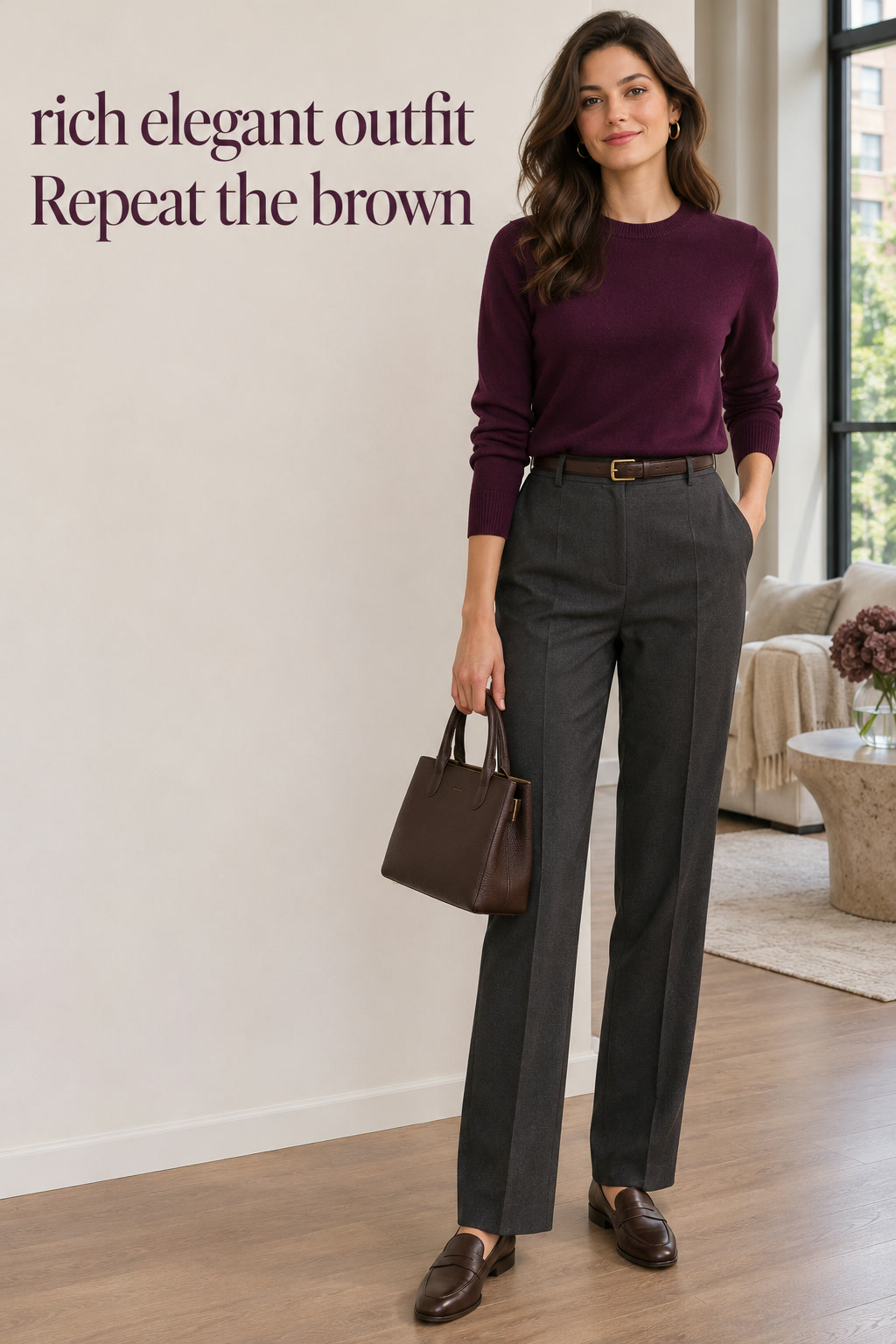
Put a plum crewneck with charcoal trousers and see where your eye goes. With an espresso belt at the waist and a small brown bag in your hand, you get a pair of related details separated by a large area of charcoal. The plum can stay the only strong clothing color. A tan belt and a near-black bag usually won’t have the same relationship, though a medium brown bag can still work if the belt and bag look like related shades in daylight.
A slim espresso belt is where I’d start if your outfit has a visible waistband and needs a second brown detail. Let the buckle sit in the center and keep its size in proportion to the belt loops. Hold your bag against the trousers with the belt on. If the edge of the bag nearly disappears into the pants, look at its handle or surface texture to see whether the brown still reads. With an untucked sweater covering the waist, get the same repetition from brown loafers and the bag.
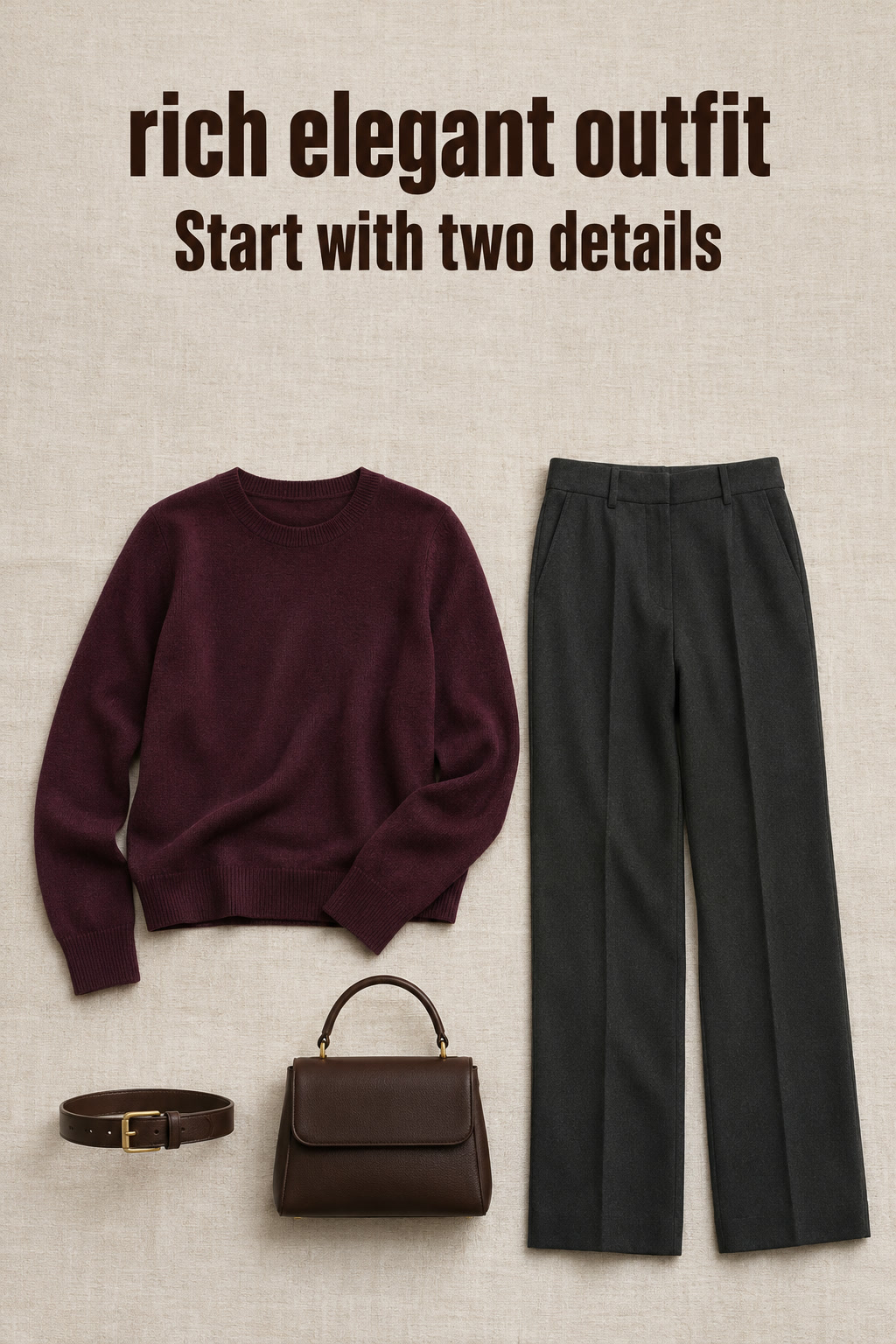
Four pieces for a more polished outfit
Repeat brown at the waist
Carry the second brown detail
Try loafers under straight jeans
Repeat the finish near your face
The original outfit examples in Who What Wear’s wealthy outfit guide include a brown sweater, white denim, tan loafers and a tan tote. You can borrow the relationship between the shoes and bag without assembling that exact set. Try slate-blue trousers and a cream top with two brown details, for example. The blue gets to be the biggest area of color while the two brown pieces make sense together.
You can repeat a finish instead. A small brushed gold earring has something in common with a low-shine buckle. Stand several feet back from the mirror and see whether that’s enough for the pairing to register. A very bright buckle or a large chain might draw the eye away from a neckline you wanted to show. With prominent ribbing near the face, I’d leave the collar clear and put the second detail at the waist or in the bag.
Get the outline right before you add accessories
Clear one edge at the waist
Put on the top and bottom without a belt. If your sweater ends right over a skirt waistband and forms a roll, try folding its hem under by a little. Stand sideways so you can see both layers. With a lightweight shirt, try a full tuck and release just enough material for an easy reach. A front tuck can work when the shirt falls cleanly at the sides. When the back bunches or the waistband feels tight, leave the shirt out and look at where the hem lands on your hips.
Try a shorter top or a light tuck with a lower rise. Put the skirt or trousers where you’ll actually wear them and see how much top shows. If you keep pulling the waistband into place after sitting, change the combination before you add a belt.
Look at the cuff while your arms are down
A sleeve can look fine when your arms are bent and then cover much of your hand when you drop them. If a poplin shirt is under a jacket, try exposing a small section of cuff at each wrist. Check whether that gives the light shirt a second visible spot below the neckline. A large cuff over a narrow jacket sleeve can catch or flare. Fold it once, then move your arms for a minute. If the fold creeps back, a narrower shirt cuff may sit better inside that jacket.
With an open collar and a short sleeve, the outfit might need very little jewelry. Hold a small pair of hoops near your ear and then check the silhouette from farther back. If your shirt has big collar points, a few millimeters of gold can be plenty. If you’re wearing a high crewneck with your hair down, a stud or smaller hoop may be almost hidden. Decide whether you want the visible detail by your face or farther down.
Put the shoes on before you judge the pants
Straight trousers can look sharp over a neat loafer, then bunch above the toe of a bulky sneaker. Try the shoes you actually walk in. A little crease where the fabric meets the shoe can look deliberate. Several folds may distract from the line you like above the knee. An ankle-length pant creates a separate patch of color if bright socks show between the shoe and hem. To keep the trouser line calm, try a sock near the color of the pants or shoe.
Charmed by Camille’s styling guide suggests bringing the intended shoes to a trouser fitting. You can test the decision at home first by folding a long hem inside and taking a quick photo. Compare the proposed length with your usual shoe and the second pair you wear most. If the same fold gives both pairs a comfortable clearance and the rear looks good, you have something specific to discuss with a tailor. Check it on both legs before deciding.
Rework three outfits one change at a time
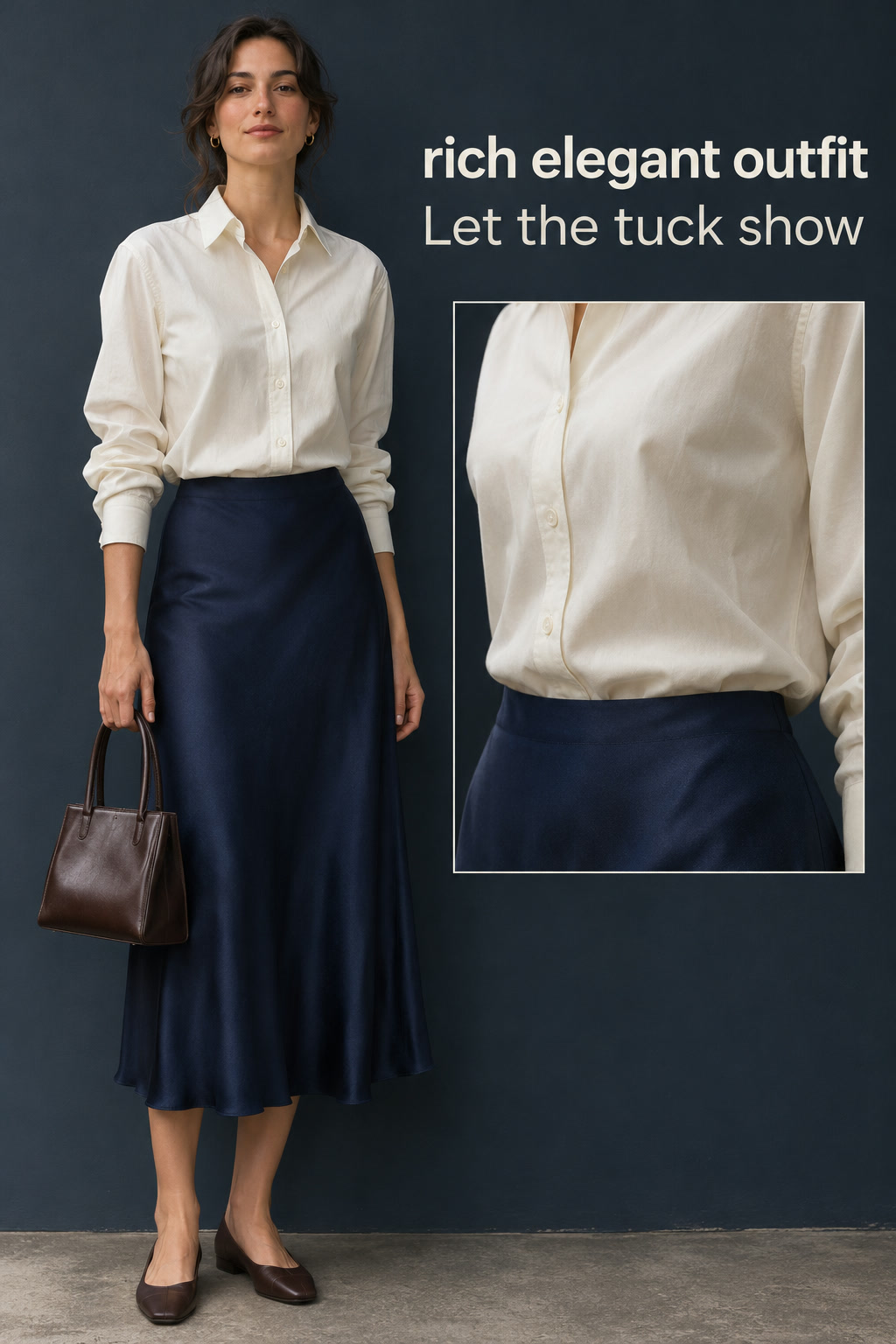
Ivory poplin and an ink-blue skirt
Start with an ivory cotton poplin shirt and a fluid ink-blue bias skirt. The shirt brings a crisp edge near the face, and the skirt softens the line below the waist. Try the shirt fully tucked so you can see where the skirt begins. If the fabric shows through the skirt in ridges, test a shallower front tuck and smooth the shirt along your hips with both hands before taking the photo. A thin shirt can be easier to arrange here than a weighty Oxford.
I’d finish this outfit with a dark brown flat and a dark brown bag you can carry by a short handle. Take a second photo with one of those pieces out of the frame. If the skirt looks just as good with the flat doing all the work, keep the bag you need for the day. The shape of the flat matters too. A slim toe leaves a clear space under the hem, while a rounder toe may make the outfit feel softer. Both are worth seeing with the actual skirt length.
If the shirt looks stiff at the neck, open one button and check how the collar sits. Let the cuff or collar be the lightest detail you see. A white tank peeking out near the base of the opening may create another band of white. If that starts to pull your attention, try a lower neckline beneath the shirt or button it back up. Keep the waist the same in both photos while you decide what to do with the collar.
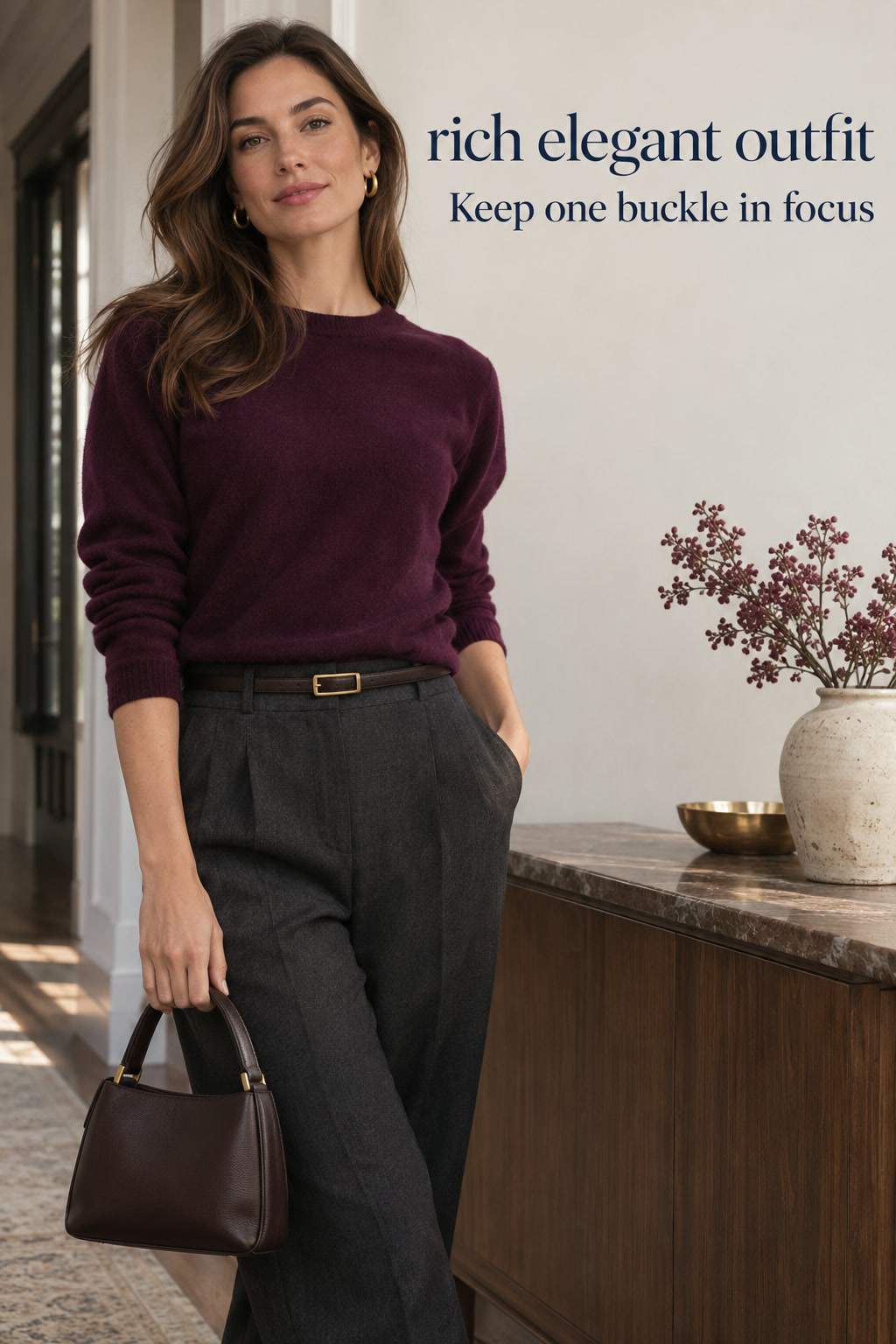
Plum knit and charcoal trousers
A fine-gauge plum crewneck with straight charcoal trousers leaves room for a narrow espresso belt. Tuck just enough knit to show the buckle and shift the rest of the fabric around the waist so there’s no large fold at the center. If the knit is bulky and already lands above the waistband, try leaving it out. The bag and shoe can repeat brown lower down. Look at how much knit hangs below your elbow from the side when you pick up the bag.
Test a small cognac or espresso bag against your usual bag. Cognac has a warmer cast and can brighten a deep plum look. Espresso keeps the strongest color near your face. I would choose the quieter option if the knit is already saturated and the bag has a shiny clasp. With a faded plum sweater, the warmer bag can bring out the difference between the shirt and trousers. Give it a minute in daylight because the colors may look nearly identical under a warm bedroom lamp.
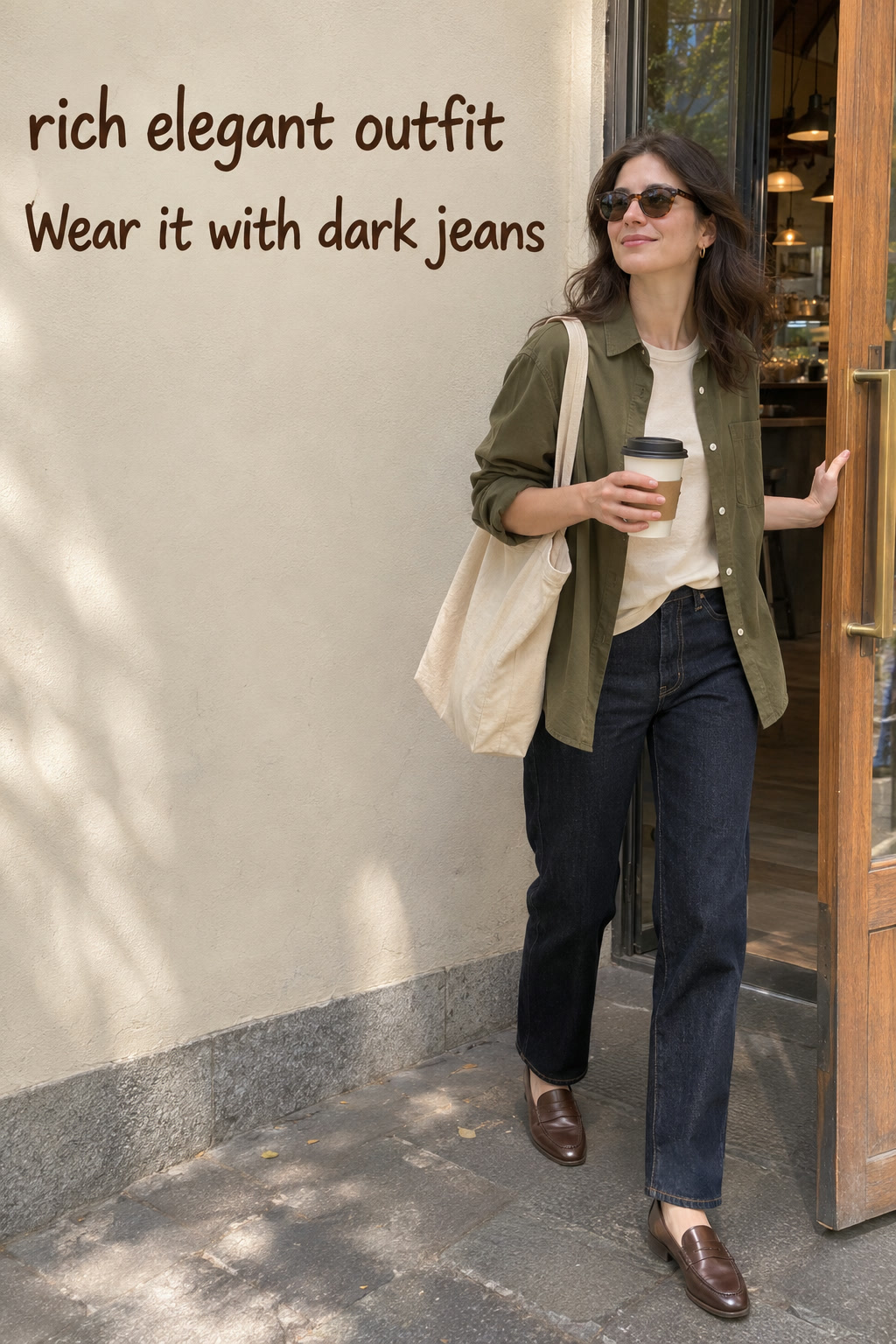
Olive overshirt and indigo jeans
Wear the olive overshirt open over a plain bone-colored tee. Choose dark straight jeans with an even wash, then consider whether the top needs a small front tuck to show where the jeans sit. If the shirt is long and the tee hangs low, two hems can show below the waist. Tuck the shorter layer first. Let the overshirt hang loose and try walking a few steps to see where it opens and closes as it moves.
For shoes, try dark brown loafers. If your jeans brush the top of the loafers and the opening of the overshirt makes a clean line, the look may already have enough detail. Add an espresso belt if you see a little of it under the tee, or repeat the shoe color in the bag. A canvas tote is fine for a quick errand. Check how it hangs when it has your things inside. You may prefer the way a bag you already use sits against an open shirt.
Fix the details that compete for attention
When two pieces in the same color family look slightly wrong together, set them side by side near a window. An ivory shirt with a yellow cast and a cool off-white bag can look disconnected because you notice the difference in each. Move the lighter accessory away from the shirt and bring in a distinctly darker piece to compare. With two colors close in depth, a visible difference in texture can also help. Look at a matte knit next to a skirt with a gentle sheen, then stand back. If the boundary still disappears, change one piece to a deeper shade.
Check hardware at the distance at which you’ll be seen. You might like a silver watch with a gold buckle if the watch is thin and the buckle is partly hidden. If a bag’s prominent clasp and a necklace both shine brightly, put on one of them and see where the light lands. A small earring close to the face can still be worth keeping. A photo in overhead light makes it easier to see which piece catches the eye first.
Look at shoes and bags when something seems off even though the colors make sense. Pay attention to a puckered bag handle, scuffed toes or lint that shows against dark trousers. If you have a second pair of shoes in better condition, try it before assuming you need a new accessory. Follow a garment’s care instructions when deciding how to tackle a visible mark. Taking a close photo can help you tell the difference between a mark on the fabric and a shadow where the material folds.
If you’re tempted to order something, name the exact problem it would solve. “A slim brown belt that fits these loops” tells you more than “a nicer belt.” Test its color with a bag or shoe you already reach for. If it would mean buying another bag and new trousers, keep working with the outfit you’ve got. A well-placed tuck or different shoe might settle the choice before you spend anything. When your pants consistently need the same temporary fold with the shoes you wear most, getting a quote for the hem is a more targeted next step.
Editor’s take
I’d keep the garment you already like wearing and take your first photo in the outfit as it is. Look for the edge you’d clear up first. It might be a fold at the waist or the spot where the pants meet the shoe. Make that change, then see if the belt and bag still need to pick up the same color. If you like the way an overshirt moves when you leave it open, keep that ease and tuck only the layer underneath. This is my judgment after comparing styling guides and their outfit examples. Take a second photo from the same spot and keep the version that hangs the way you want.
FAQ
Can a rich elegant outfit include jeans?
Yes. Try an even indigo wash and a straight leg with a clean hem, then put on the shirt and shoes you plan to wear. A crisp overshirt can give the look a little structure. Choose the denim you can sit in comfortably and check the hem over the shoes from the side.
Do the belt, shoes, and bag need to match?
Two items can be enough. If the belt and bag are related shades of brown, your shoes can be a dark color that works with the pants. If the belt is barely visible, use the bag and shoe as the repeated detail. Check the pieces together in natural light.
What if my favorite piece is bright?
Start with it. Consider a trouser or skirt color that gives it a little room and use a small accessory to repeat a secondary shade, if that helps. A plum knit can stand alone above charcoal trousers. Brown accessories can connect the lower half without adding another large area of color.
How do I make a loose outfit look deliberate?
Try showing one sharper edge, such as the cuff of a shirt, the hem of the jeans, or the waistband beneath an open overshirt. You can wear a relaxed layer with a relaxed bottom when the two hang well together. Check the side view for fabric piling up where the layers meet.
Which accessory would you buy first?
Buy for a gap you can point to in an outfit you already wear. If you keep wanting a darker belt to go with your everyday bag, measure the belt loops and try the color with those clothes. If you rarely tuck your tops, a shoe or bag you’ll use often may do more.
How do I know whether a trouser hem needs altering?
Try an inward fold with your two most-used shoes. Take a side photo and look at the back of the leg as well as the toe. Walk and sit with the fold in place. When the same length works with both pairs and you prefer how it hangs, you have a useful starting point for a fitting.