80’s Outfit Ideas: Choose a Moment, Build the Look
Good 80’s outfit ideas start with a smaller question than “What did everyone wear in the eighties?” The decade did not have one uniform. An early look built around a loose blouse and defined waist, a playful middle-decade dress, and a sharper late-decade jacket can all be recognizable without belonging in the same outfit. Pick one moment, decide where you are going, and then make three visible choices that support it.
This is a practical playbook for doing that. You will choose a reference period, test the outfit’s shape, and add one confirming detail. Three worked examples show how to move from a documented 1980s idea to clothes you could wear now. The examples are interpretations, not claims that every person in a given year dressed exactly this way. The point is to make a look that has an identifiable source and a real use, whether you are dressing for an ordinary day, an evening out, or a creative event.
First, Pick a Moment and a Setting
Before choosing a jacket or earrings, choose an approximate part of the decade: early, middle, or late. These are working labels, not hard borders. Trends overlapped, and street clothing did not change on January 1. The labels simply keep you from stacking an early romantic blouse, a high-impact mid-decade workout cue, and a late-decade tailored jacket without deciding which one leads. You can mix eras deliberately, but the result is easier to style when you know you are mixing them.
The Fashion-Note Edit
Five effortless pieces to refresh your everyday wardrobe
A polished, practical edit for workdays, weekends, and everything in between.

The Drop
Women’s Blake Long Blazer
A longline, tailored blazer with a notched collar and a single-button closure—an easy layer for denim, dresses, or office-ready looks.
Shop the blazer
Amazon Essentials
Women’s Lightweight Crewneck
A soft, lightweight sweater with a clean crew neckline—the kind of reliable layer that works from cool mornings to air-conditioned spaces.
Shop the sweater
Amazon Essentials
Women’s Loafer Flat
A classic flat loafer that gives casual outfits a more polished finish and pairs naturally with tailored pants, skirts, and straight-leg jeans.
Shop the loafers
Levi’s
Women’s 501 90s Jeans
A relaxed, vintage-inspired take on the iconic 501 silhouette—made for an easy, lived-in look without the thrift-store search.
Shop the jeans
Colorfulkoala
High-Waisted 7/8 Leggings with Pockets
Soft, four-way-stretch leggings with side pockets and a high-rise waistband—designed for movement, errands, and off-duty comfort.
Shop the leggings
Affiliate disclosure: This section contains affiliate links. If you make a purchase through these links, I may earn a commission at no additional cost to you. Product selection, pricing, availability, and delivery terms may change—please review the current details on Amazon before purchasing.
As an Amazon Associate I earn from qualifying purchases.
Early 80s: softer volume or a strong new shoulder
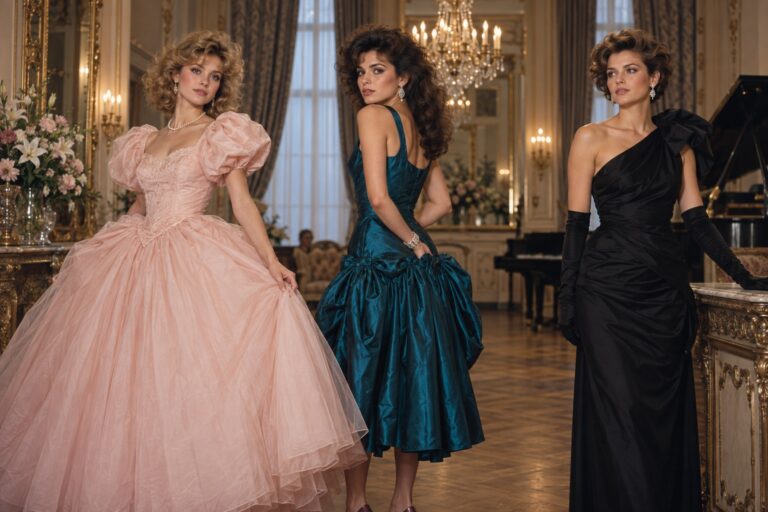
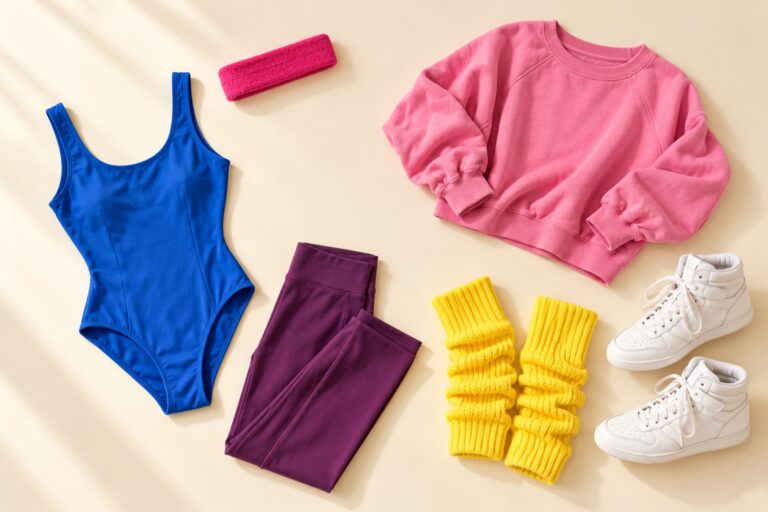
The opening years make room for more than the familiar neon stereotype. The Fashion History Timeline at FIT describes stylish sportswear and soft New Romantic dressing near the start of the decade, alongside the rise of power dressing. That range gives you two useful routes. One is a loose, softly shaped top with a visible waist. The other is a defined shoulder that makes a simple skirt or trouser feel purposeful. Choose which route your clothes already support.
Your wedding style is personal.
Your plan should feel that way, too.
Zarellea keeps your guest list, budget, vendors, and every next step beautifully organized — so you can focus on the moments that feel like you.
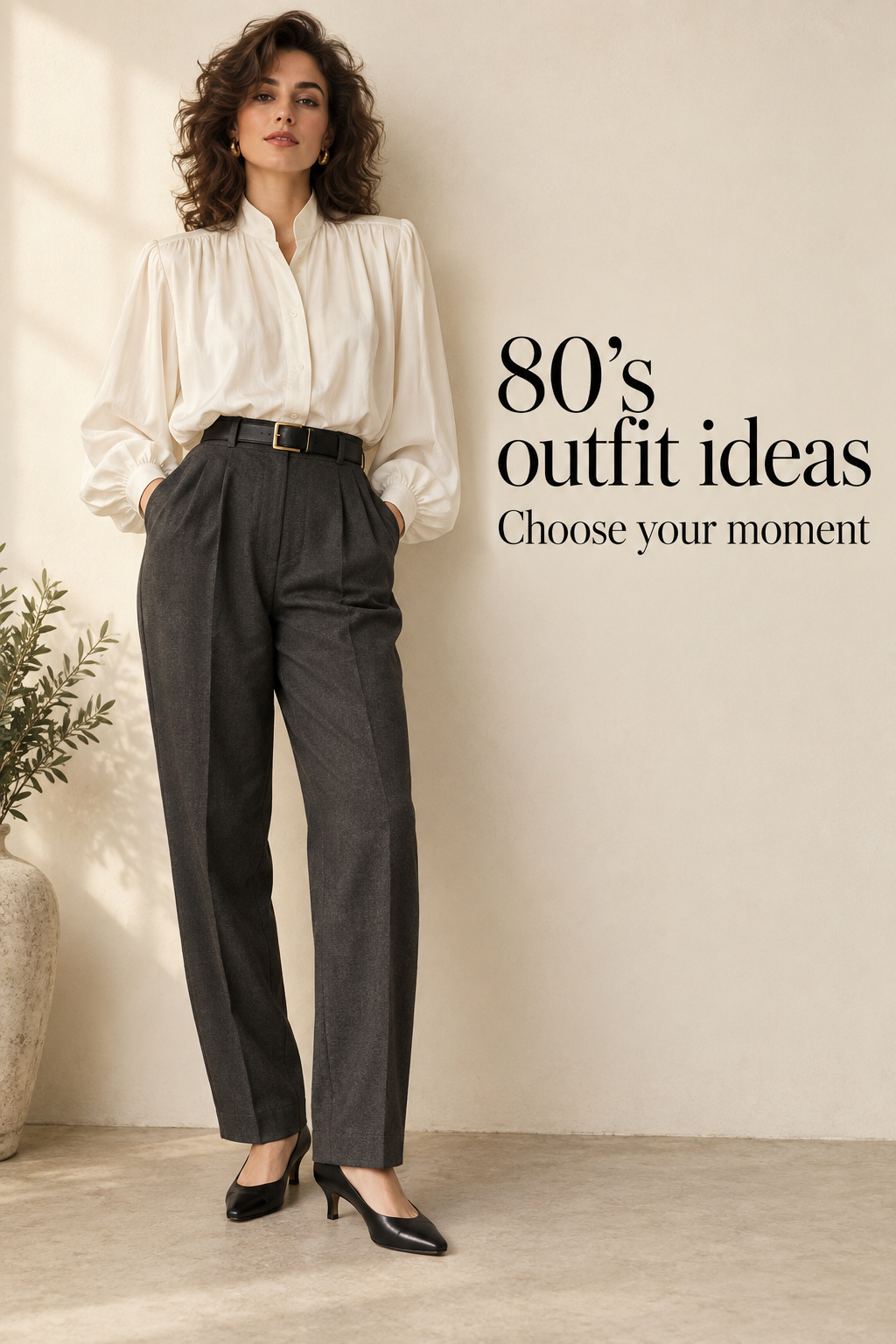
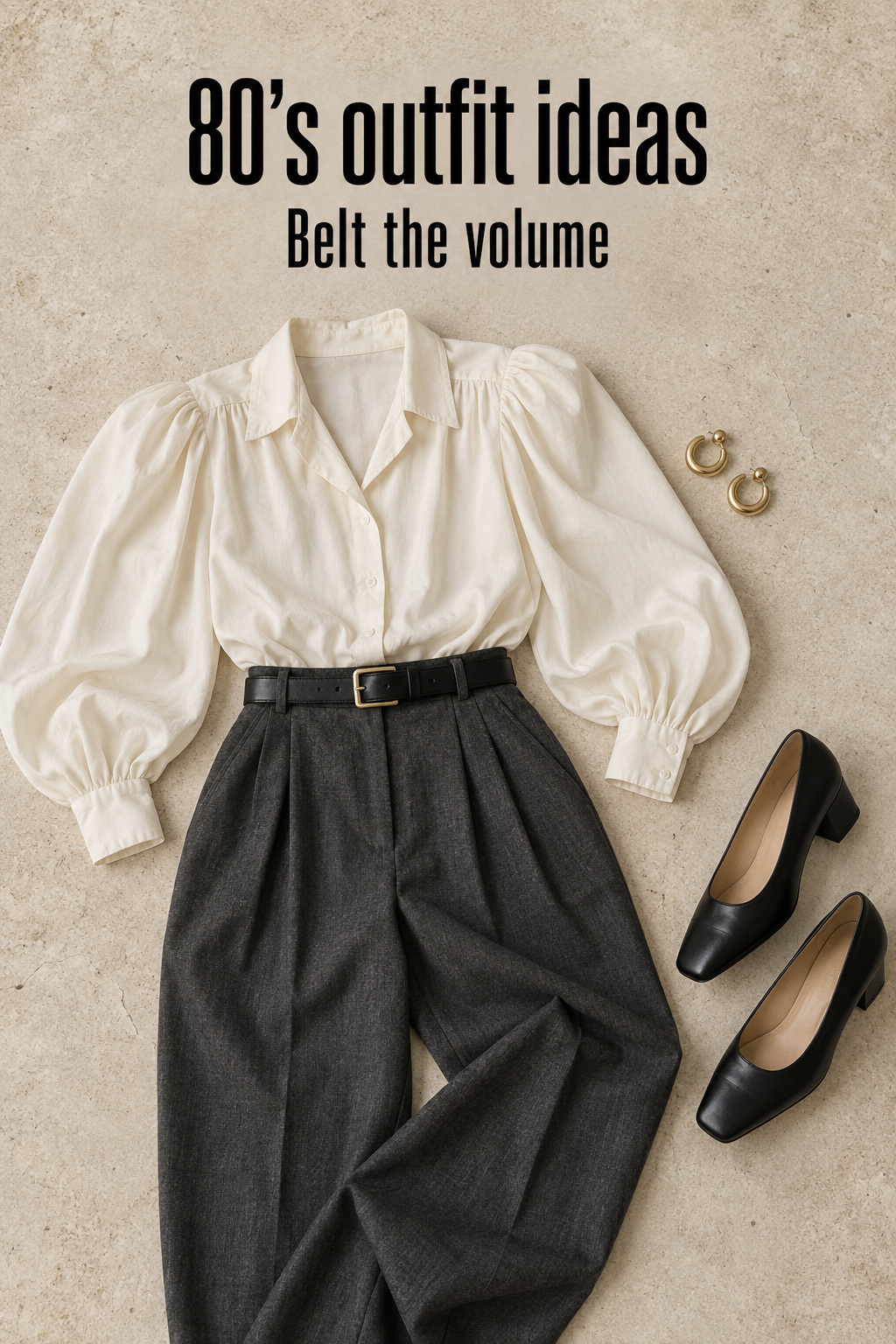
If you own a blouse with a generous sleeve, it can become the focal point. Tuck it into high-waisted trousers or a skirt and add a belt so the upper volume does not swallow the outfit. If your better piece is a jacket, use a plain top underneath and let the shoulder line do the work. You are not required to find a garment manufactured in 1982. The useful reference is the relationship between volume and waist, or shoulder and a cleaner lower half.
Middle 80s: a clearer graphic statement
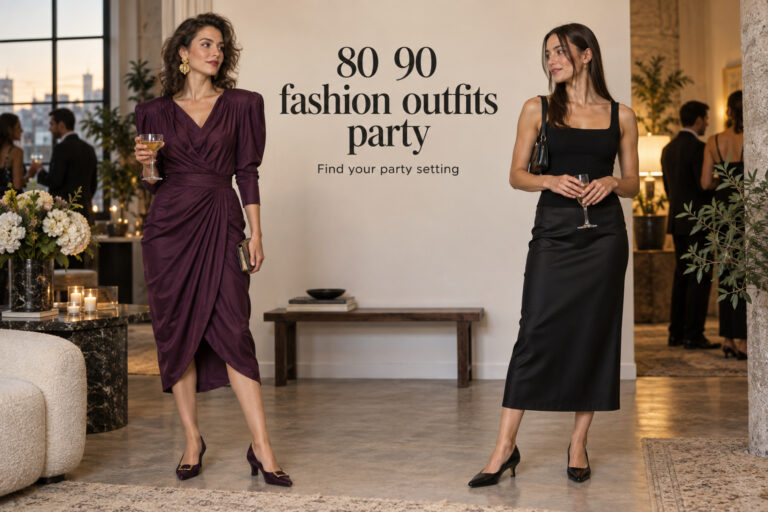
The middle years offer strong color, bolder accessories, and playful surfaces, but those are options rather than a command to wear everything. A clean dark dress with a concentrated area of color can be more interesting than a full neon outfit. A graphic sweater can lead if the trousers and shoes are quiet. A wide belt can make a loose shirt read as one deliberate silhouette. Choose one statement that a person across the room would notice first.
For a casual setting, that statement might be a striped knit or a jacket in a saturated shade. For an evening event, it could be a dress with a playful detail at the neckline or waist. In either case, decide what the piece is saying before you add earrings, a bag, and shoes. A coherent outfit can be energetic without looking like a collection of separate references.
Late 80s: sharper tailoring or a refined dark line
For a late-decade direction, consider stronger tailoring, a controlled jacket shape, or a darker look whose interest comes from cut and texture. The key is the outline. A short jacket over higher-waisted trousers makes a different picture from a long, loose blazer over a dress. A black knit dress with a single sculptural accessory can still have a distinct 1980s mood. You do not need bright color to make the reference visible.
Take care with labels such as “late 80s” if you are aiming for historical accuracy. A look inspired by a dated museum object is different from a literal reconstruction of how most people dressed. You can borrow a shape or styling principle without claiming that the outfit is an exact 1988 uniform. This distinction lets you be both more creative and more honest.
Match the reference to where you will actually go
Write down the setting before pulling clothes from the wardrobe. A museum visit, a dinner, a workplace with a flexible dress code, and a themed party ask different things of your shoes and layers. The reference period can stay the same while the level of drama changes. An early blouse-and-belt idea can use flat shoes for daytime and a dressier pair for evening. A graphic mid-decade dress can take a neat jacket if you need an extra layer. A late tailored outfit can use simple jewelry for work and a stronger earring after dark.
The Three-Point 80s Outfit Checklist
Use this checklist before buying anything or adding accessories. It is meant to be quick enough to use beside your closet. First, identify one dated or at least clearly early, middle, or late reference. Second, build a silhouette you can describe in one sentence. Third, add a confirming detail that belongs to the same story. If you cannot answer all three, simplify the outfit and try again. The checklist is a decision tool, not a demand for historical perfection.
Check 1: Can you name the source of the idea?
A source might be a museum garment with a date, a period photograph, or a carefully described fashion archive. A mood board with unattributed images can be useful for color, but it may blend 1982, 1987, and modern reproductions. Ask what you can actually see: a wide sleeve, a lifted shoulder, a high waist, a black column, or a repeated button detail. Write that one cue down. “I like the defined waist under the loose blouse” is a clearer starting point than “I want the full eighties vibe.”
You can make an outfit from an undated vintage piece, but avoid stating an exact year unless you know it. If the garment has a label and you want to identify it, compare its construction, care label, and reliable catalog records. For styling purposes, you often need less certainty: choose a reference shape and describe the outfit as inspired by it. That keeps the useful visual lesson without overstating provenance.
Check 2: What is the outfit’s outline?
Lay out the top, bottom, and outer layer. Can you tell which part has volume? A generous blouse benefits from a visible waist or a calm bottom. A strong blazer can sit above a fitted top and straight trousers. A closer dress may need only one jacket or accessory to change its mood. When every piece is oversized, the look can lose the particular period reference you chose. When every piece is very tight, the result may feel unrelated to the source. Let one area set the shape and the rest explain it.
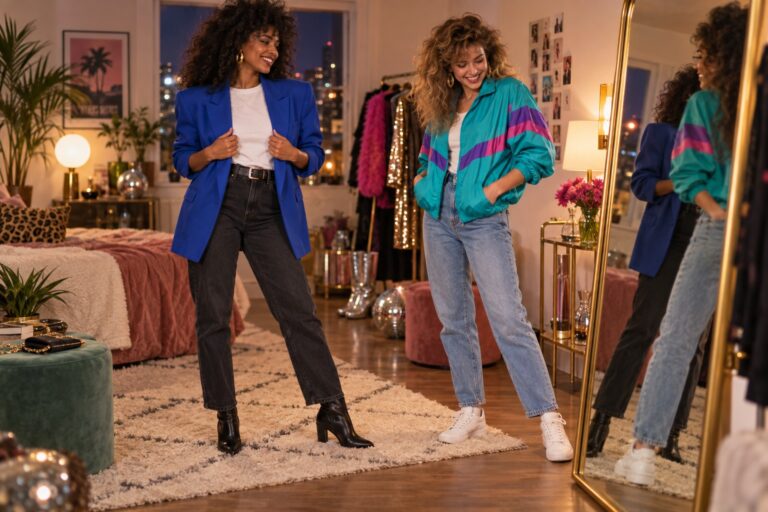
Try the outfit in a full-length mirror, then photograph it at normal distance. A close-up mirror view can make a belt or earring feel important when it disappears in the whole outfit. The photograph helps you see the large shapes first. Adjust the tuck, hem, or jacket length before changing the accessories. A small fit decision often does more than another purchase.
Check 3: Which one detail confirms the period?
Choose one detail that strengthens the reference rather than adding a second story. A wide belt can clarify an early voluminous blouse. A bright row of buttons can turn a simple dark dress into a playful middle-decade interpretation. A sculptural earring can sharpen a late tailored look. The detail should have a visual job. If you remove it and the outfit reads the same, it may be decorative rather than useful.
Check scale, too. A large earring, a bold belt, and a graphic bag all compete when they sit close together. Keep the strongest one and test the outfit again. If you want more drama for a party, you can add a second element that clearly echoes the first, such as an earring that picks up the color of the buttons. This gives the eye a path through the outfit instead of three unrelated stops.
Make the checklist practical
Before calling the outfit finished, answer three ordinary questions: Can you sit in it? Can you walk in the shoes for your plans? Can you remove or carry the outer layer? These are part of styling, not a separate afterthought. A jacket that only looks good while held closed is a poor anchor for a long evening. A belt that twists whenever you move cannot reliably create the waist you planned. Fix comfort while the outfit is still on the bed or in the mirror.
Three Worked Looks From Across the Decade
These examples translate period evidence into wearable clothes. They are not replicas of museum garments, and the dates are reference points rather than a claim that only these looks existed in those years. Each example follows the same three checks: source, outline, and confirming detail. You can change the color or fabric if the visual relationship stays clear.
Look one: an early-decade blouse and belt, inspired by 1982
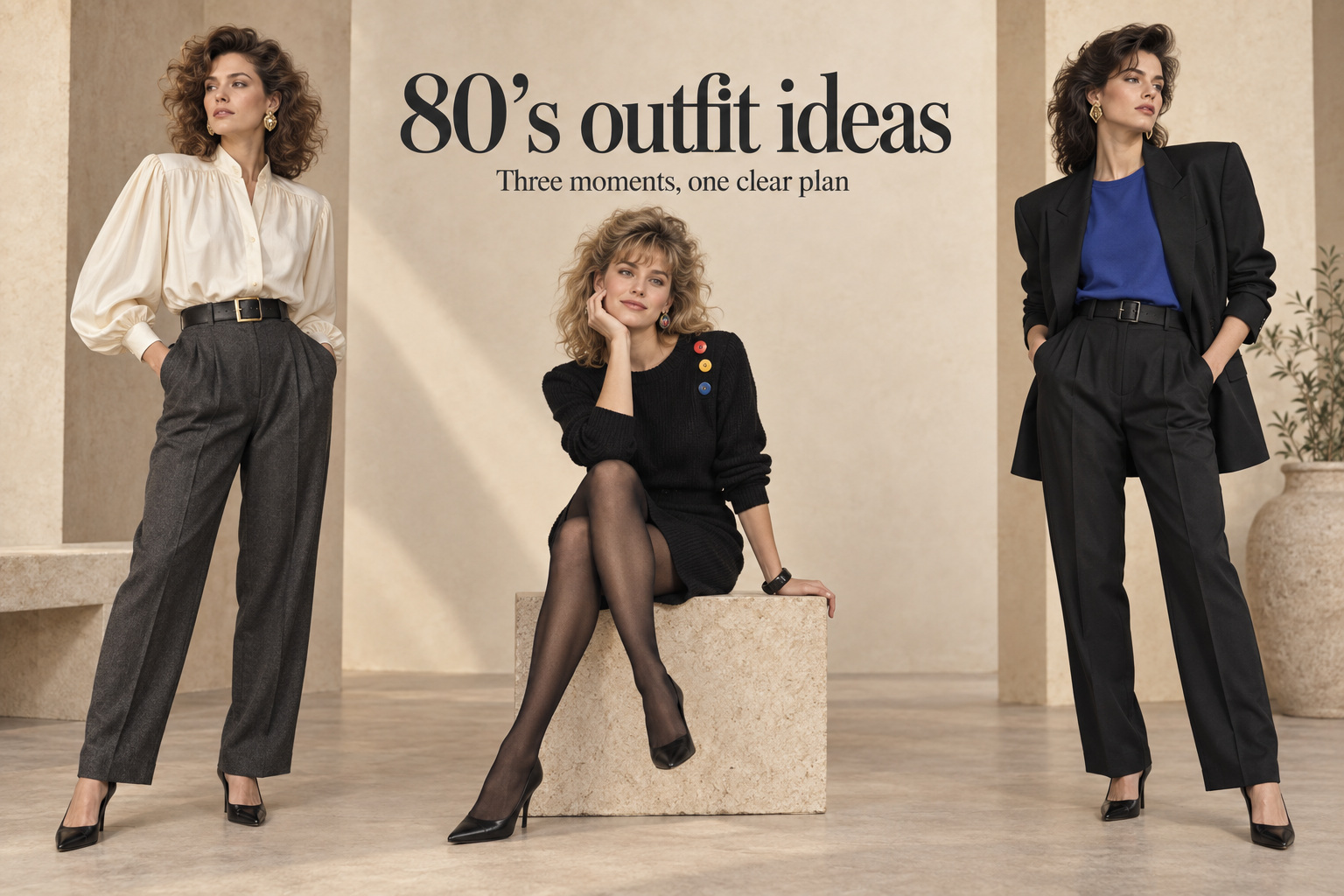
The FIT account of fashion in 1982 records oversized blouses, statement belts, pronounced sleeves, and broader shoulders. For a wearable interpretation, choose a loose ivory blouse with some sleeve volume, high-waisted dark trousers, a medium-width belt, and neat shoes. The blouse is the statement, so choose a solid fabric or a restrained print. Tuck enough of the hem to reveal the belt without forcing every fold flat.
For daytime, use low loafers or simple ankle boots and a compact bag. For dinner, switch to a slightly glossier shoe or one strong earring. Keep the waist visible in both versions. If the blouse has very large sleeves, avoid a jacket with equally large sleeves that cannot sit comfortably over it. A sleeveless outer layer or no jacket may be the better choice. The look succeeds when the generous top and defined center remain visible together.
Look two: a playful dark dress, inspired by the middle years
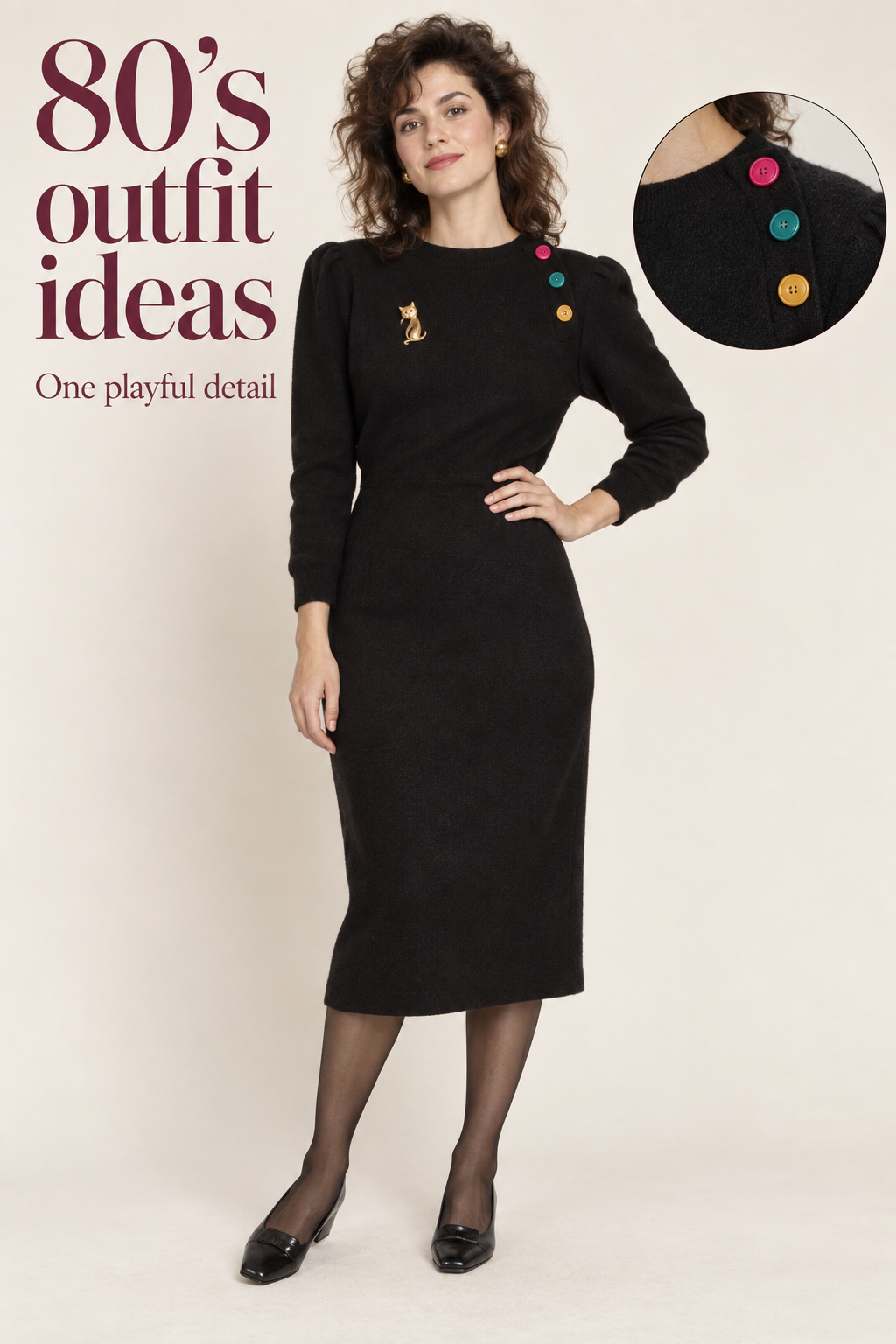
Begin with a black knit dress that fits comfortably rather than one that needs constant adjustment. Add a small, intentional cluster of colorful buttons at the shoulder or waist if the garment already has them, or echo that idea with a single playful brooch. The FIT analysis of a 1986 Patrick Kelly dress shows how a dark base and concentrated button detail can create energy without relying on neon from head to toe. Use the idea, not a copy of Kelly’s design.
Finish with opaque tights if you want them, low boots or flats, and a simple bag. Keep jewelry small if the buttons or brooch already form the focal point. If you do not own a dress with detail, choose a dark dress and a colorful belt or a single graphic accessory instead. Do not sew decorative pieces onto a garment you are not ready to alter. The styling lesson is that one compact area of color can carry a middle-decade mood.
Look three: a later tailored outline with controlled color
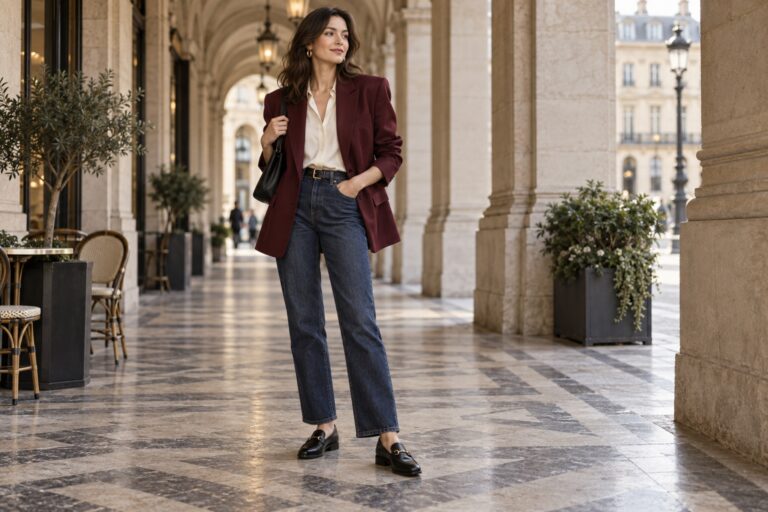
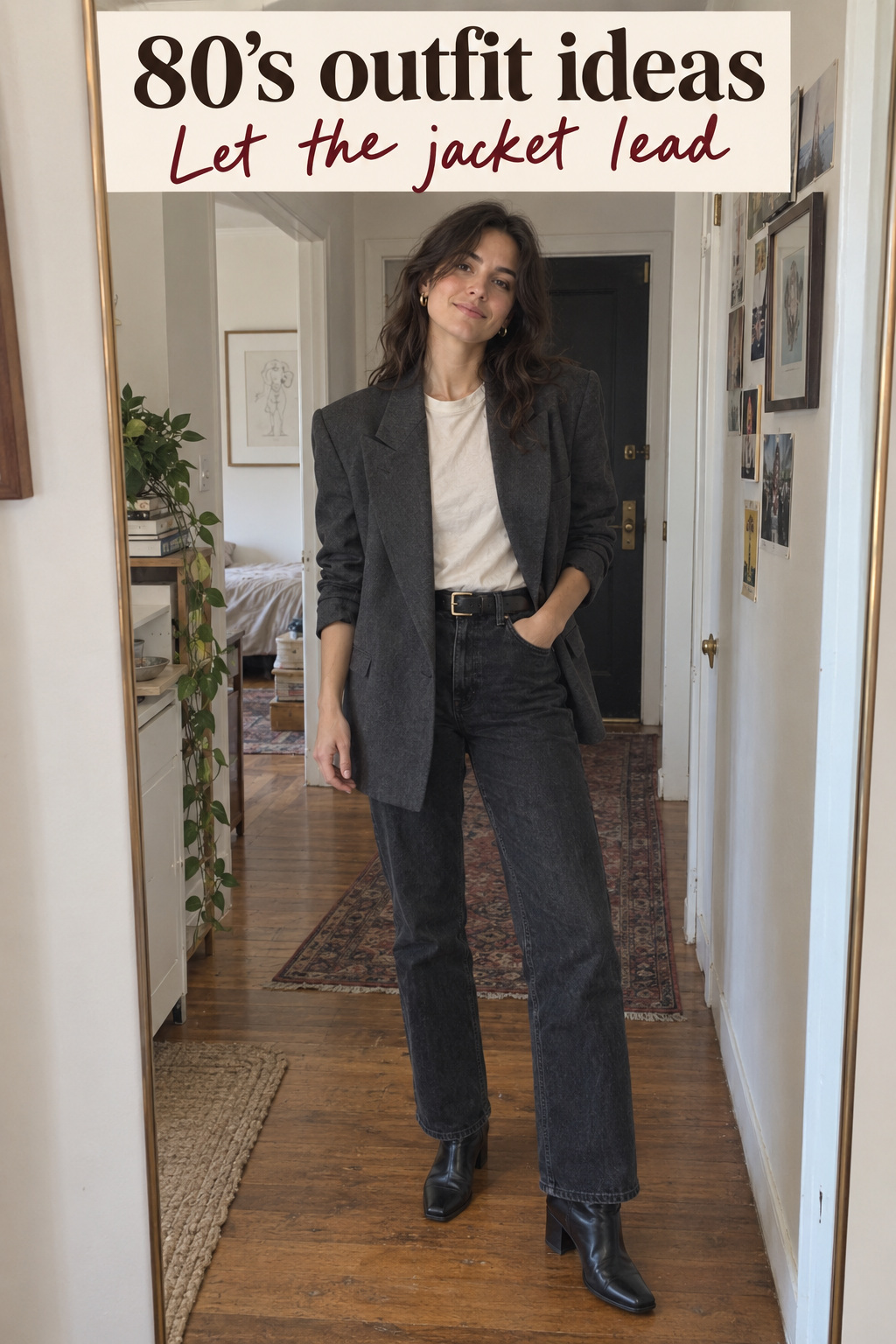
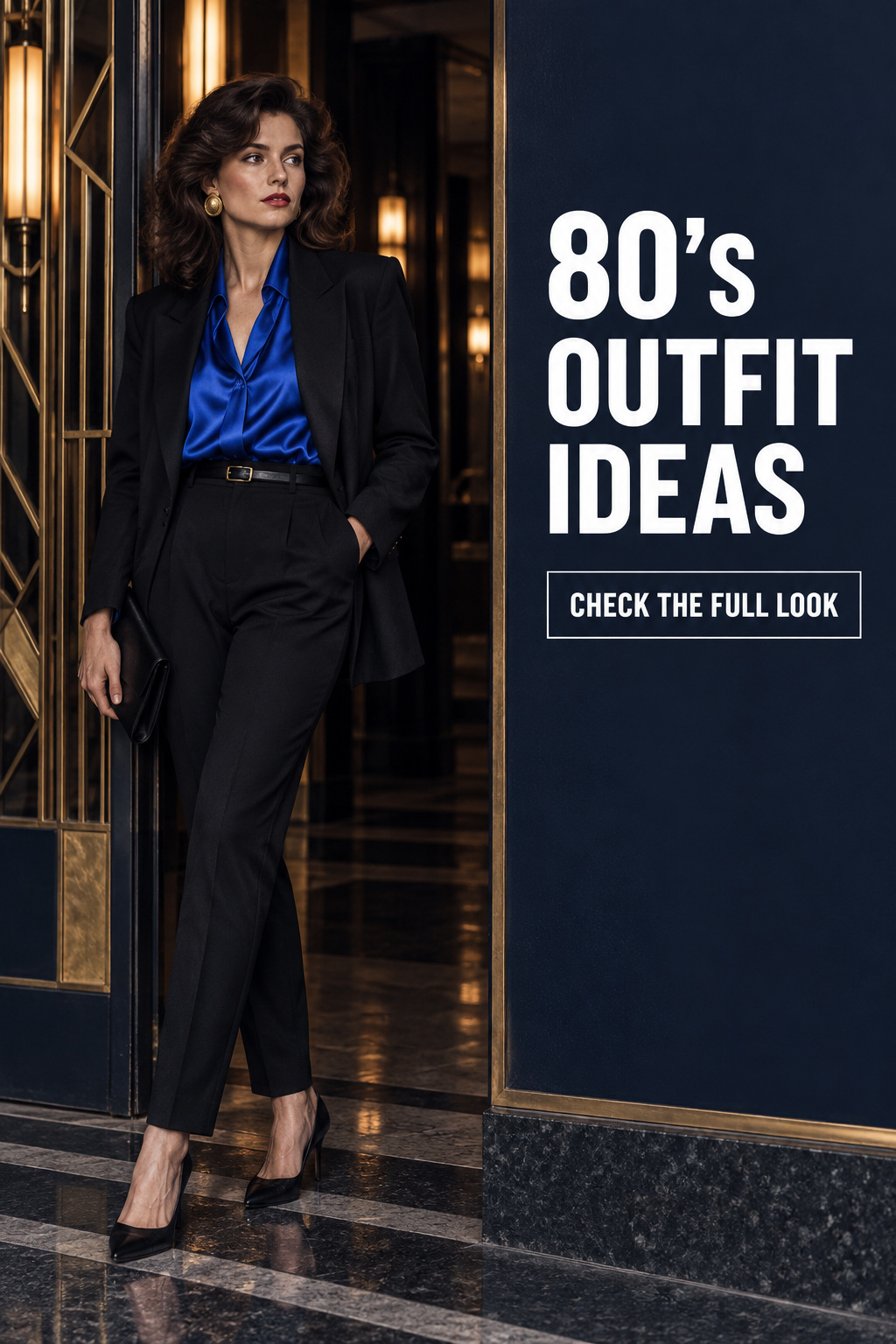
For a later-decade interpretation, choose a jacket with a clear shoulder and a waist you can define. Put it over a simple top and high-waisted trousers or a straight skirt. A dark jacket with a jewel-toned top gives you color without making the full outfit loud. Alternatively, use a patterned jacket and keep the rest nearly monochrome. The silhouette should be understandable before the earring or bag enters the picture.
Check the jacket both open and closed. If it looks best closed, confirm you can still sit and reach comfortably. If it looks better open, use the top and belt to create the center line. A sculptural earring or a slightly pointed shoe can confirm the reference without crowding the jacket. This is a strong choice for an evening event or a modern workplace that permits expressive tailoring. It can also be the starting point for a more theatrical outfit if the occasion calls for it.
How to adapt any of the three examples
Keep the role of each garment, then substitute within that role. The blouse can be striped instead of ivory if the stripe is the only print. The dark dress can be a black top and skirt if they make one continuous line. The tailored jacket can be charcoal rather than black. These changes do not erase the idea because the outline and focal point remain. Write the look as a short formula before you put it on: “loose top, high waist, belt,” “dark column, one playful detail,” or “sharp jacket, calm bottom, controlled color.”
If you dislike a formula once you wear it, diagnose the problem instead of abandoning the reference. Does the blouse bunch under the belt? Try a softer tuck. Does the dress feel too bare? Add a plain cardigan or tights. Does the jacket overwhelm your frame? Try a shorter length or wear it open with a visible waist underneath. These are specific fixes. They keep the historical cue in place while making the clothes work for your proportions and plans.
Final Review Before You Wear It
Put on the complete outfit, including shoes and the bag you intend to carry. Name its reference moment. Then identify the first thing your eye sees. If your answer is different from the focal point you planned, make one edit. A bright shoe may be pulling attention away from an early blouse. A large necklace may hide the concentrated detail on a dark dress. A loud bag may compete with the tailored jacket. Remove or change the competing item and take another look.
Keep the date claim as precise as the evidence
If you are posting a photograph or explaining the outfit to someone, “inspired by an early 1980s blouse silhouette” is a useful and honest description. “Exact 1982 outfit” needs stronger evidence about the garments and styling. You can enjoy the visual history without turning every outfit into a costume study. A dated museum piece is a reference, and your clothes are your interpretation. That clarity also helps you make more original combinations.
Check your silhouette at normal distance
Step away from the mirror or use a full-length photograph. At a normal distance, does the blouse have a visible waist, does the dress have one clear playful point, or does the jacket have a readable shoulder line? If not, adjust the proportion before adding another period accessory. A small tuck or a more secure belt may solve the problem. When the outline works, the outfit can stay simple and still carry its inspiration.
Wear it for the plan, not just the photograph
Walk, sit, reach, and carry your bag. If the look only survives a still photograph, change the shoe, layer, or fit. This does not make the reference weaker. It makes the outfit usable. An 80s-inspired idea is successful when you can recognize the moment you chose and still feel comfortable moving through the actual day. Once those tests pass, stop adding things. The finished look has already made its point.
FAQ
Where should I start with 80’s outfit ideas?
Choose one reference moment within the decade and one real setting for the outfit. Then select a dominant silhouette, such as a loose blouse with a belt, a dark dress with one concentrated detail, or a sharply shaped jacket. Add only one confirming accessory after the main clothes work together.
Did all 1980s outfits use neon and shoulder pads?
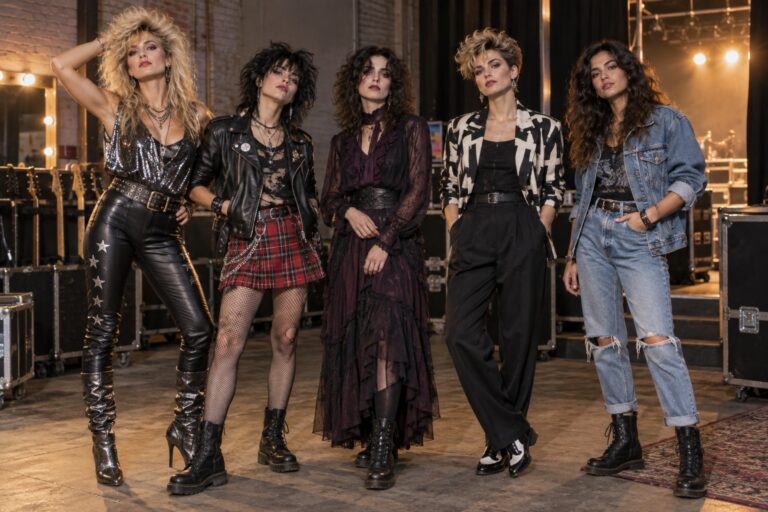
No. Period fashion also included romantic shapes, dark experimental dress, sportswear, simple knitwear, and varied forms of tailoring. Neon and strong shoulders are recognizable options, but they do not describe the entire decade. A specific dated image or museum garment is a better starting point than a generic list of 80s symbols.
How can I make an early 80s outfit from clothes I own?
Try a blouse with some sleeve volume, high-waisted trousers, and a belt that creates a visible center. Keep the shoe and bag quiet until the silhouette is clear. If you own a structured jacket instead of a blouse, let its shoulder line be the leading feature and simplify what sits beneath it.
What is an easy middle-decade outfit idea?
A dark dress with one playful color detail makes an easy interpretation. The detail might be buttons already on the dress, a brooch, or a single graphic belt. Choose simple shoes and limit other accessories so that one area of color stays the focus. This gives you energy without needing a head-to-toe costume.
Can an 80s-inspired outfit be suitable for work?
Yes, if your workplace allows expressive tailoring. A defined blazer over a simple top and high-waisted trousers can carry the reference while remaining tidy. Keep the color and jewelry controlled, choose shoes appropriate for your day, and check that the jacket is comfortable when you sit and move.
How do I avoid mixing too many 80s references?
Name the outfit’s period and main shape in one sentence. Then ask whether every added print, accessory, and texture supports that sentence. If a piece introduces a second unrelated story, take it off and view the whole look again. Keeping one strong focal point usually makes the decade reference easier to read.
Finish the look
The little extras that make a summer outfit feel complete
From beach days to city weekends, these easy pieces bring comfort, texture, and a polished finishing touch.

FENBEN
Straw Hobo Crossbody Bag
A handwoven straw bag with both short and crossbody straps—an effortless finishing touch for vacation looks and warm-weather outfits.
Shop the bag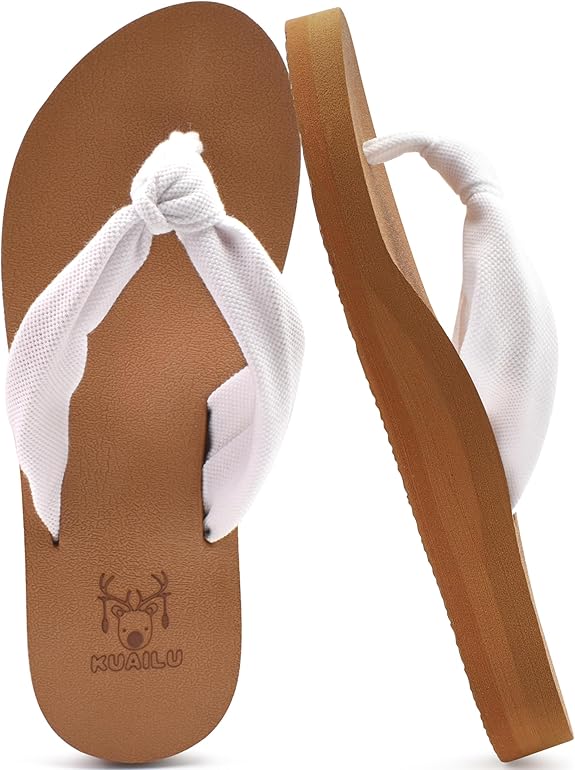
KuaiLu
Flip Flops with Arch Support
Cushioned, lightweight sandals with supportive arch design—a practical choice for beach trips, errands, and long summer walks.
Shop the sandals
baleaf
Athletic One-Piece Swimsuit
A functional one-piece with adjustable straps and moderate coverage, designed for swimming, training, surfing, and active beach days.
Shop the swimsuit
Astylish
Linen-Cotton Button-Down Shirt
A relaxed cotton-linen shirt with a collared V-neck and roll-up sleeves—easy to style over swimwear or with denim and shorts.
Shop the shirt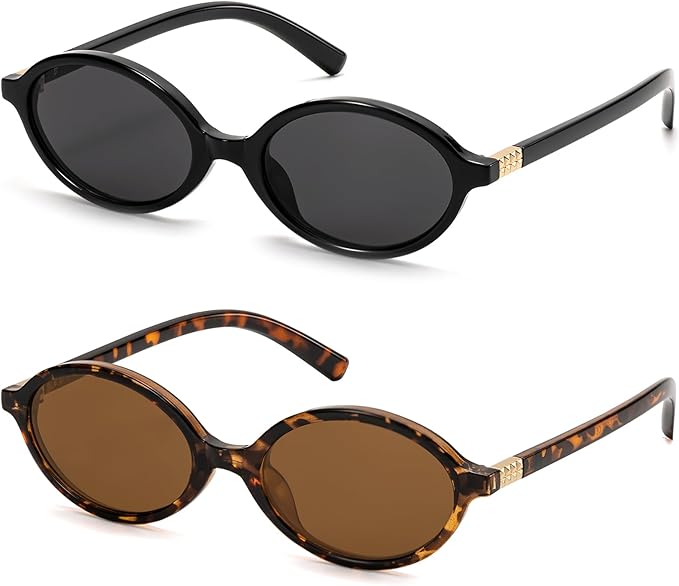
ViewJoy
Retro Oval Sunglasses
Small oval sunglasses with a 90s-inspired silhouette and UV400 lens protection—a quick way to add a vintage edge to everyday looks.
Shop the sunglasses
Affiliate disclosure: This section contains affiliate links. If you make a purchase through these links, I may earn a commission at no additional cost to you. Product selection, pricing, availability, and delivery terms may change—please review the current details on Amazon before purchasing.
As an Amazon Associate I earn from qualifying purchases.