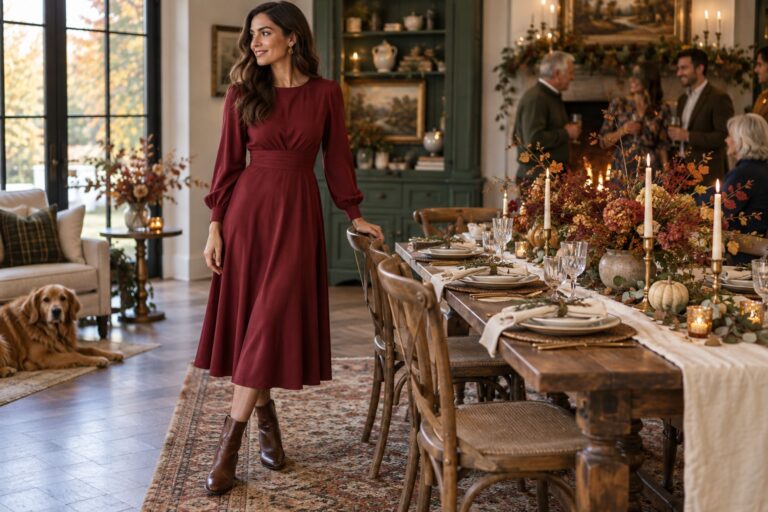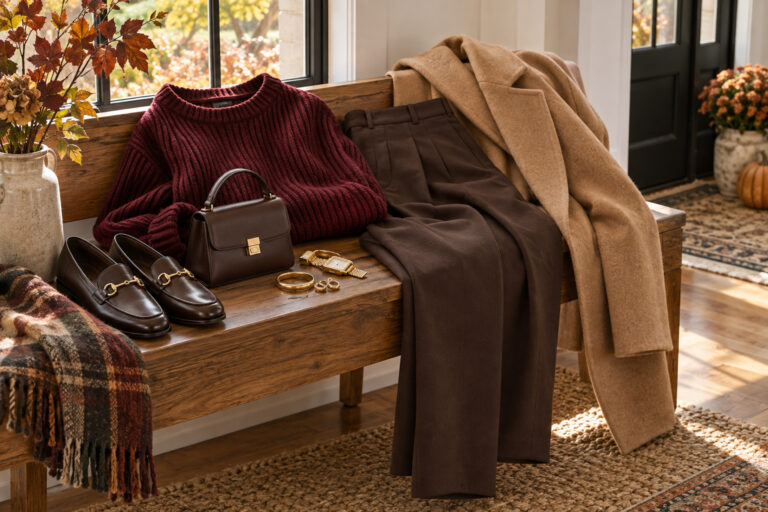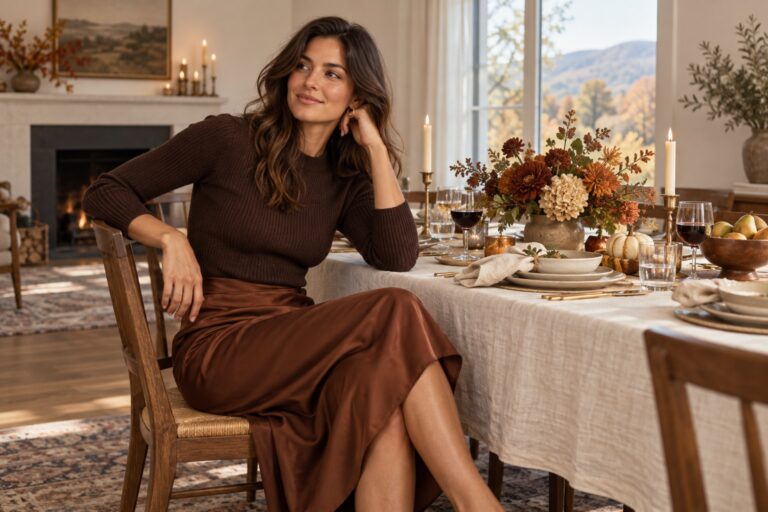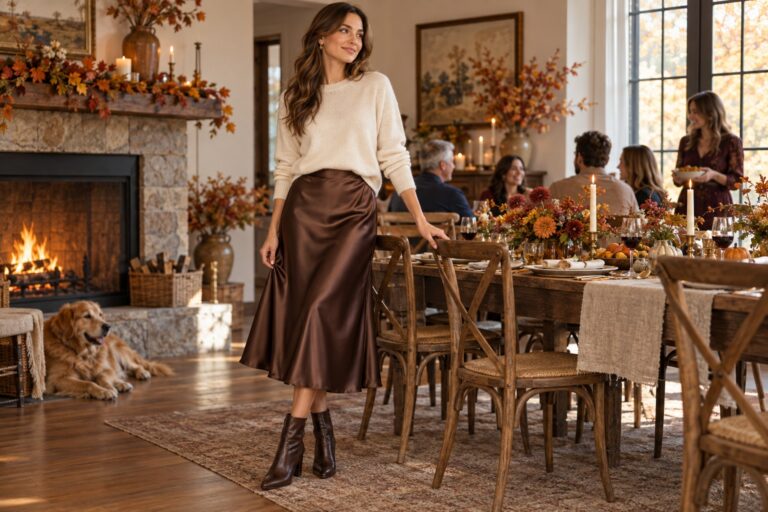
Thanksgiving Outfit Dress: A Practical Fit Checklist

A Thanksgiving dress can look right in a mirror and still feel wrong once you are carrying a serving dish, sitting through dinner, or stepping outside for a family photo. The answer is not necessarily a new outfit. It is a quick way to check whether the dress you have in mind can handle the day you actually expect.
Use this checklist to build a Thanksgiving outfit dress around three moments: standing, sitting, and reaching or moving. Then add one removable layer and a small backup plan. The result can be relaxed or dressy, colorful or quiet, and still feel considered from arrival through dessert.
Start With the Day, Not the Dress
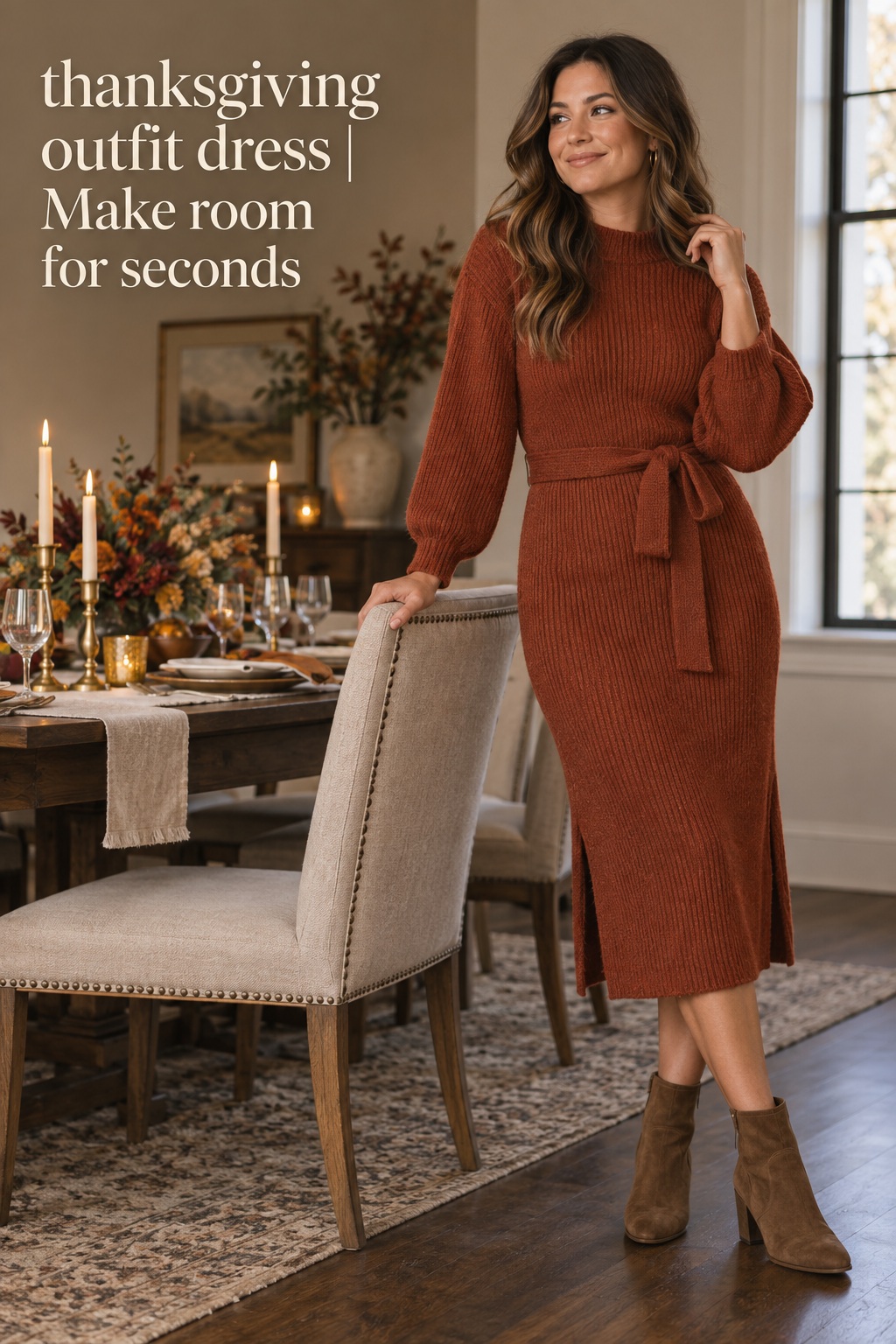
Before choosing shoes or accessories, write down the day in one line: where you are going, what you will do, and whether you will move between indoors and outside. A guest who will sit down soon after arriving has different needs from a host who will be in the kitchen for an hour. A restaurant reservation may call for a more polished finish than a relaxed family meal. These are outfit constraints, not rules about what anyone must wear.
The Fashion-Note Edit
Five effortless pieces to refresh your everyday wardrobe
A polished, practical edit for workdays, weekends, and everything in between.

The Drop
Women’s Blake Long Blazer
A longline, tailored blazer with a notched collar and a single-button closure—an easy layer for denim, dresses, or office-ready looks.
Shop the blazer
Amazon Essentials
Women’s Lightweight Crewneck
A soft, lightweight sweater with a clean crew neckline—the kind of reliable layer that works from cool mornings to air-conditioned spaces.
Shop the sweater
Amazon Essentials
Women’s Loafer Flat
A classic flat loafer that gives casual outfits a more polished finish and pairs naturally with tailored pants, skirts, and straight-leg jeans.
Shop the loafers
Levi’s
Women’s 501 90s Jeans
A relaxed, vintage-inspired take on the iconic 501 silhouette—made for an easy, lived-in look without the thrift-store search.
Shop the jeans
Colorfulkoala
High-Waisted 7/8 Leggings with Pockets
Soft, four-way-stretch leggings with side pockets and a high-rise waistband—designed for movement, errands, and off-duty comfort.
Shop the leggings
Affiliate disclosure: This section contains affiliate links. If you make a purchase through these links, I may earn a commission at no additional cost to you. Product selection, pricing, availability, and delivery terms may change—please review the current details on Amazon before purchasing.
As an Amazon Associate I earn from qualifying purchases.
Keep the brief short enough to use. For example: “Hosting at home, serving food, mostly indoors, quick walk to the porch, casual but photo-ready.” Or: “Guest at a restaurant, seated dinner, short drive, dressy casual.” That sentence gives you a better starting point than picking a dress because its color feels seasonal.
Your wedding style is personal.
Your plan should feel that way, too.
Zarellea keeps your guest list, budget, vendors, and every next step beautifully organized — so you can focus on the moments that feel like you.
Mark the parts of the day that affect the outfit
Make three small notes: activity, setting, and formality. Activity means cooking, greeting, carrying, sitting, or walking. Setting means a warm kitchen, a cooler entry, a restaurant, a backyard, or a mix. Formality means the level your host or venue expects. If you are unsure, a quick question to the host can prevent an outfit that feels out of place.
Next, choose the one constraint you most want the outfit to solve. It might be keeping sleeves out of the way, avoiding a waistband that distracts you while seated, or having a layer that can come off without disrupting the whole look. When you identify the main friction point first, it is easier to edit the outfit rather than adding more pieces.
Pick a dress you can adapt
Start with a dress already in your closet if it suits the brief. A knit dress may feel easy for a long meal; a wrap or adjustable-waist shape gives you room to fine-tune the fit; a shirt dress can leave space for a thin layer underneath; a simple shift can be a useful base for a cardigan or jacket. These are starting points, not guarantees. The exact fit, fabric feel, and your own preferences matter more than the label on the silhouette.
If the dress needs constant tugging, a particular bra you do not want to wear, or shoes you cannot comfortably stand in, take that as useful information. The goal is not to pass a fashion test. It is to make the outfit feel like yours for the full gathering.
Run the Three-Moment Dress Test
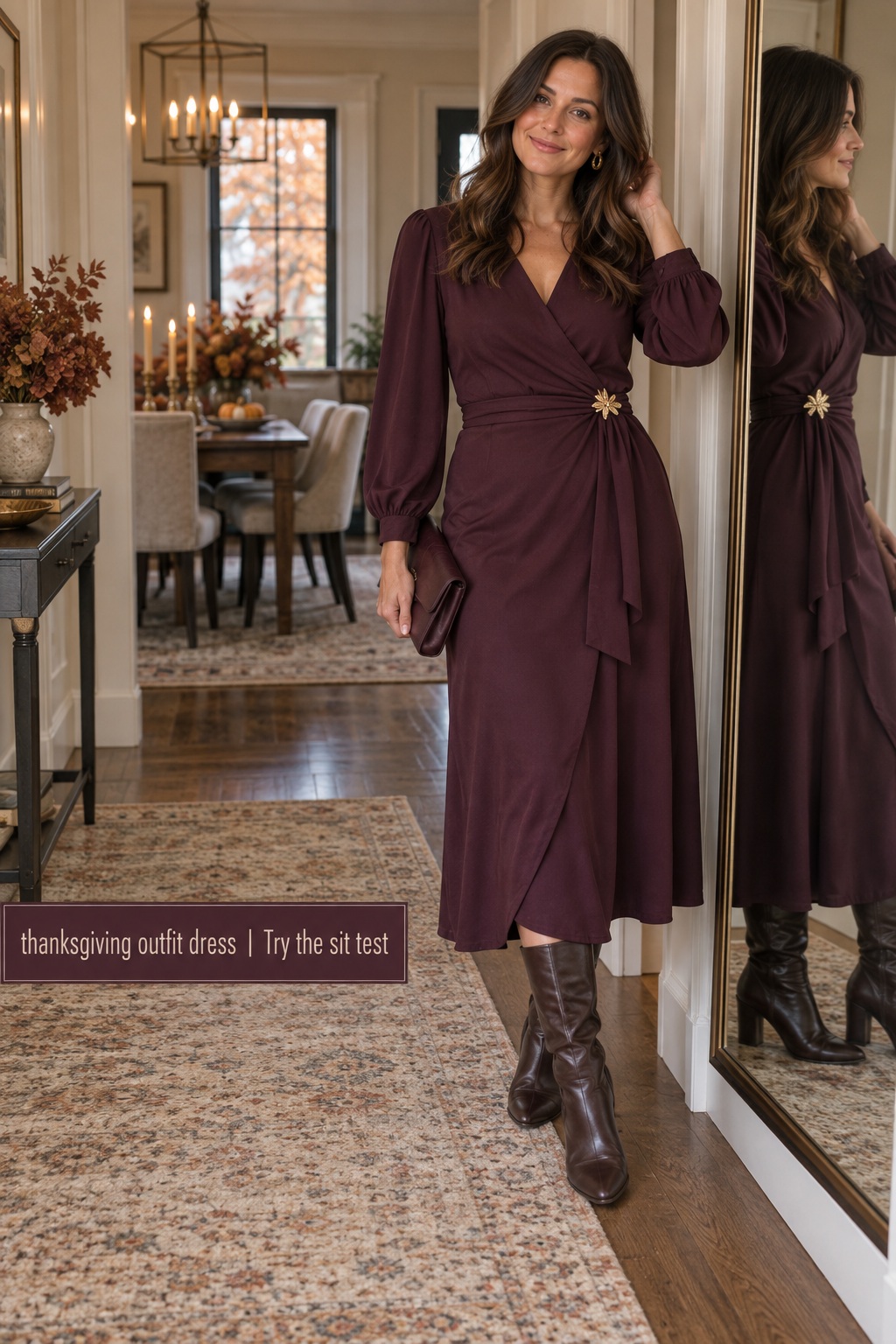
Try the full outfit at home, including the underlayer, shoes, and any tights you plan to wear. Give each moment a pass or a fix. A fix can be small: change the belt position, swap a layer, add a slip you already own, or choose a different shoe. If the same problem remains after a simple adjustment, choose another dress.
Moment one: stand and walk
Stand naturally, walk across the room, turn, and take a few steps as if you were greeting someone at the door. Check whether the hem stays where you expect and whether the neckline or shoulder seams remain comfortable. Notice what happens when you take a normal stride. A skirt that needs careful little steps may become irritating if you will be moving between rooms or greeting guests.
Look at sleeves while your arms hang naturally. Do they fall over your hands, slide down, or catch when you move? If you plan to help serve, test whether you can push them up and keep them there comfortably. If not, a bracelet sleeve, a shorter sleeve, or a removable layer with sleeves you can roll may make more sense.
Moment two: sit through a meal
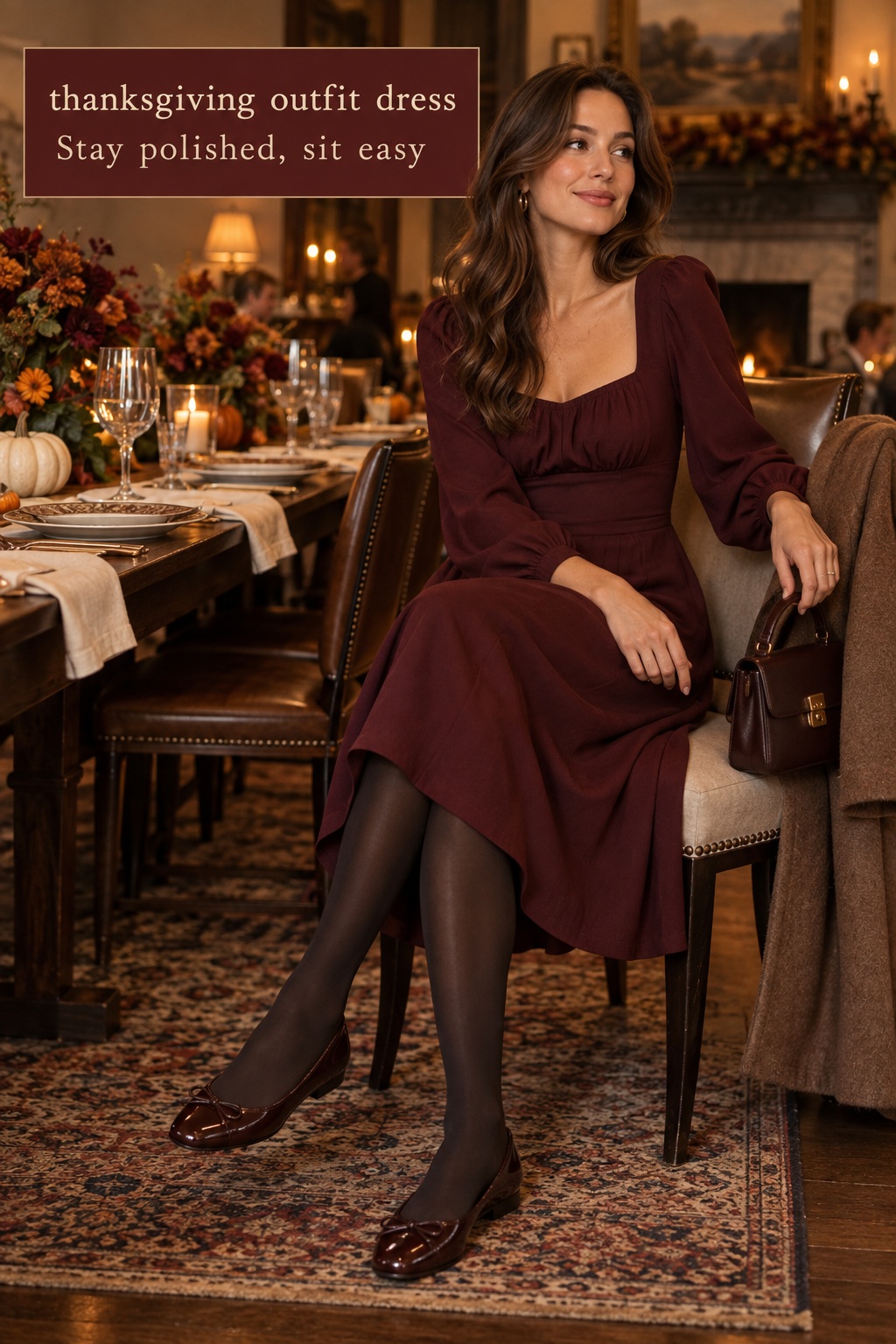
Sit in a dining chair for several minutes. Use the same posture you would at the table, then lean back as you might while chatting. Check the waist, underarm, bust, and hem. Does a seam press? Does the skirt ride higher than you like? Does the neckline shift when you lean forward? A mirror check while standing cannot answer these questions, so make the seated check part of your decision.
If a waist feels restrictive, try loosening a belt or choosing a different underlayer before rejecting the dress. For a wrap style, secure the tie in a way that feels stable without pulling tightly. If the dress has no adjustable point and you remain aware of the pressure when seated, switch to a softer or roomier option. Comfort is personal, so trust the signal you get from wearing it.
Moment three: reach, bend, and carry
Reach for a shelf, bend to pick something up, and carry a light bag or serving tray. You do not need to simulate every possible task. These simple movements reveal whether the dress limits your stride, pulls across the back, exposes more than you want, or makes the sleeves get in the way. If you are hosting, test the movements you expect to repeat. If you are a guest, focus on sitting, walking, and reaching for a chair or coat.
Use a simple scoring rule: pass, adjust, or replace. “Pass” means you can do the movement without thinking about the outfit. “Adjust” means one easy change solves the issue. “Replace” means the dress still distracts you after a reasonable change. The checklist helps you choose, not judge your body or the garment.
Match the Dress Construction to the Friction Point
When a dress fails one part of the test, name the exact problem before choosing a replacement. “This feels wrong” is hard to act on. “The waist presses when I sit,” “the sleeve drops into the sink,” or “the hem makes stairs awkward” points to a useful adjustment.
If the waist is the issue
Try the dress without a belt, or move the belt to the point where it feels comfortable while sitting. A wrap tie or adjustable waist may allow a small change between standing and seated positions. A dress with a relaxed waist can also work if you prefer less definition. Avoid tightening a belt just to create a silhouette in a standing mirror if you already know it will bother you at the table.
For a dress that feels loose rather than restrictive, define the shape with an open cardigan, a cropped jacket, or a belt you can remove easily. You do not have to add structure at the waist if the fabric already gives you a line you like. The best solution is the one that remains comfortable in the seated test.
If the sleeves or neckline are the issue
For kitchen tasks, sleeves that stay clear of your hands can be simpler than sleeves that need repeated rolling. If you want a sleeveless or short-sleeve dress but expect a cooler walk, add a cardigan or jacket you can remove. A thin top under a sleeveless dress is another option when the neckline and armholes sit comfortably over it. Check that the added layer does not bunch or pull when you sit.
Pay attention to the neckline when you bend forward or sit back. If you are adjusting it every few minutes, a camisole or base layer may make it feel more secure. If layering changes the look more than you want, try a different neckline or choose a light scarf that can be removed for dinner. Keep the adjustment simple enough that you will actually use it.
If the hem or shoes are the issue
Walk up and down a step if you expect stairs, and sit down to see how the hem behaves. If you need to keep pulling it into place, a different length may be easier. Try the shoes you plan to wear rather than deciding the hem works with a different pair. A lower heel or familiar flat can make a dress feel more relaxed without changing the dress itself.
If you are traveling to the gathering, wear shoes you already know you can walk in, or bring a simple second pair for the indoor portion. A shoe change can be a practical transition, not a second outfit. Keep the spare pair close enough to reach without unpacking the whole car or bag.
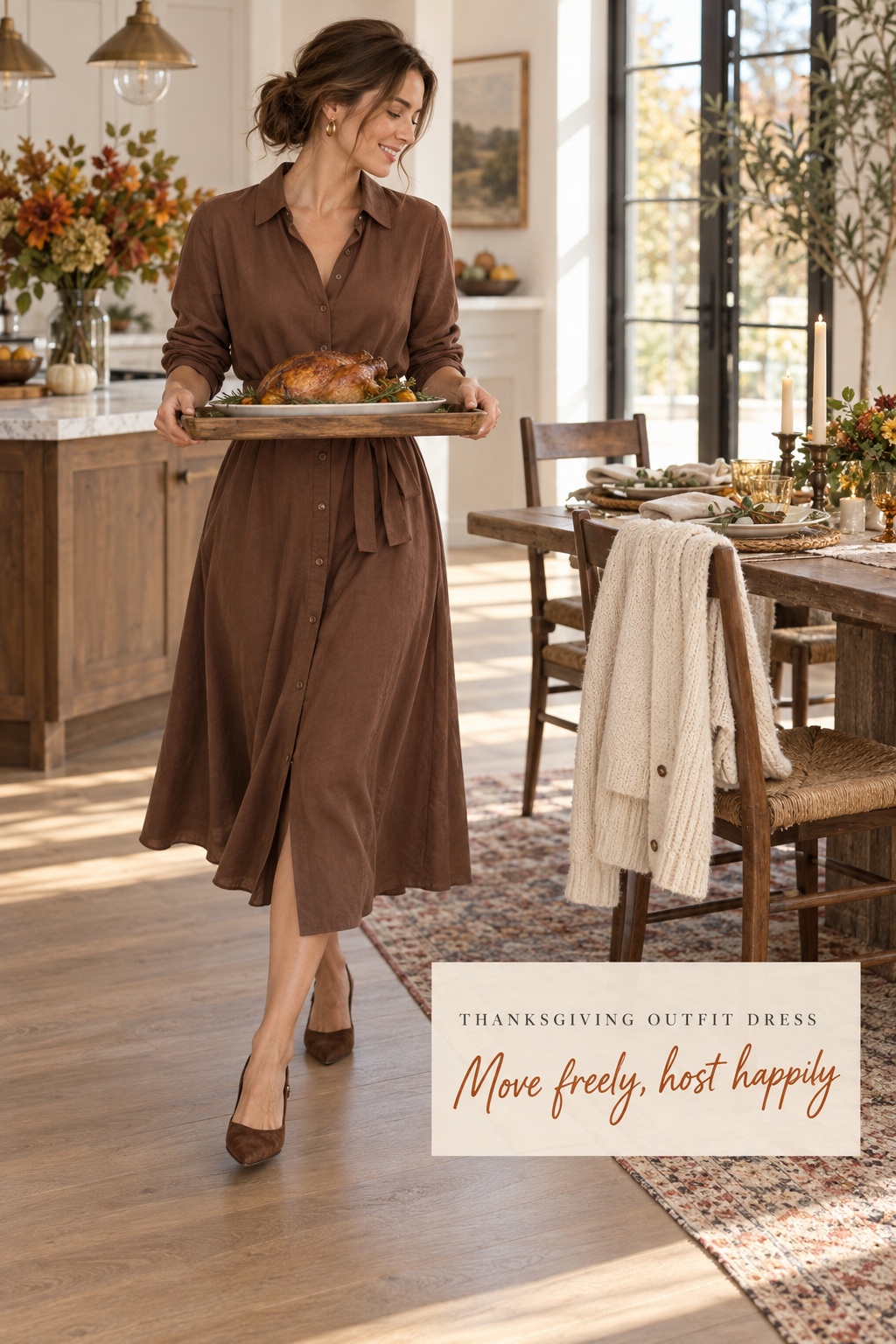
Build a Removable Layer Plan
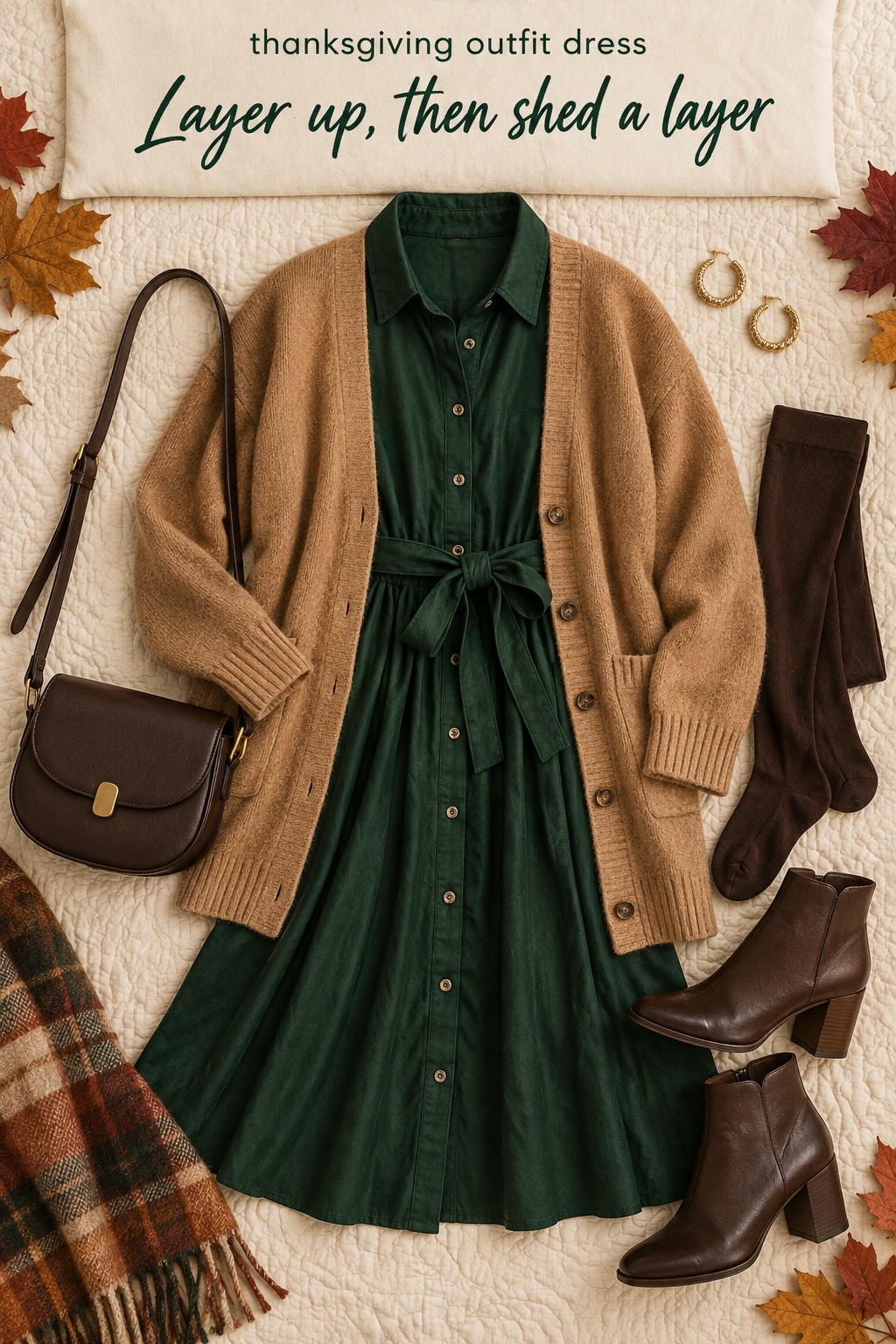
Instead of trying to predict one perfect temperature, make the outfit work with a base and one easy layer. The base is the dress and any underlayer you want. The outer layer handles the trip, a cooler room, or a porch photo. It should be easy to put on and take off without changing the dress or flattening the details that make you feel dressed.
Choose the layer based on the dress shape. A cardigan can work over a simple knit dress; a cropped jacket can pair with a fuller skirt; a longer coat may be useful for travel or an outdoor arrival. These are styling options rather than fixed pairings. Check the combination in a mirror and while seated so the layer does not bunch at your back or catch at the waist.
Keep the indoor outfit complete on its own
Assume you may remove the layer after arriving. The dress should still feel finished without it. That can mean choosing earrings you like, a bag that works indoors, or a dress color and texture that already feels intentional. Avoid relying on a coat or scarf to cover a fit issue that appears as soon as you take it off.
If the gathering moves between a warm kitchen and a cooler doorway, make the layer easy to set down and retrieve. A cardigan with a comfortable drape, a light jacket, or a soft wrap can be carried without fuss. You do not need multiple backup layers unless your plans specifically call for them.
Use color and texture to make a simple base feel deliberate
A solid dress can feel special through texture, a warm-toned layer, or one accessory with a little shine. A printed dress may need only a simple shoe and a small bag. If you prefer a quieter palette, combine two related tones and let the shape do the work. If you like a more festive look, choose one accent such as a patterned scarf, a velvet-like texture, or a brighter earring rather than adding several competing details.
Use what is already in your wardrobe as the starting point. The point of the checklist is to create a coherent outfit from pieces that pass the comfort test, not to turn a holiday into a shopping assignment. If you do decide to buy something, first identify the problem it solves and make sure it works with at least one layer and one pair of shoes you own.
Finish With a Low-Risk Polish Check
Once the dress passes the movement test and the layer plan is settled, add only the finishing pieces that help the outfit feel appropriate. Use the venue and invitation as your guide. A relaxed home gathering may suit flats and a small earring; a restaurant meal may call for a more structured shoe or a dressier bag. If you are unsure about formality, ask the host rather than trying to solve it with extra accessories.
Choose shoes for the parts of the day you will actually do
Try the shoes with the dress while walking on the surfaces you expect, including a hallway or porch if that is part of the visit. Check whether the hem catches, whether the shoe feels stable, and whether you could stand in it while talking. A comfortable flat, low heel, or familiar boot can all work. The right choice depends on the setting and on what feels secure to you.
If you love a dressier shoe but do not want to wear it for the entire trip, keep a second pair in the car or a tote. This is especially helpful when a short outdoor walk is part of the plan. Make the change before you arrive or after you are inside, whichever keeps the outfit feeling easiest.
Pack a compact backup kit
A small backup kit can contain a safety pin, a spare hair tie, a stain-removal wipe if you already use one, and any medication or personal item you normally carry. Treat these as optional conveniences, not as a reason to worry about the outfit. If you are driving, a spare layer or shoes can stay in the car. If you are traveling light, pick only the one backup most relevant to your dress.
Do one final check before leaving: sit, stand, reach, walk, and remove the layer once. Then look at the whole outfit together. If each movement feels fine and you can still recognize your own style, stop adjusting. A Thanksgiving outfit is ready when it lets you focus on the people and plans around you.
FAQ
What kind of dress is easiest to wear for Thanksgiving dinner?
Choose a dress that feels comfortable when you sit, walk, and reach. Knit, wrap, shirt, and shift dresses can all work, depending on their fit and the setting. Try the exact dress with its planned shoes and layer before deciding.
How can I tell if a dress will be comfortable through a long meal?
Sit in it for several minutes and notice the waist, seams, neckline, and hem. If you keep adjusting one area, make a simple change or choose another dress. A standing mirror check alone will not show how it feels at the table.
What should I wear if I am hosting Thanksgiving?
Start with the tasks you expect to do. A dress with sleeves that stay out of the way, shoes you can stand in, and a removable layer can be practical. Test reaching and carrying movements before the day, and add an apron if that is part of your usual routine.
How do I layer a Thanksgiving dress for changing indoor temperatures?
Use a dress as the base and add one layer that is easy to remove, such as a cardigan, jacket, or wrap. Check that the layer sits smoothly while you are seated and that the dress still feels complete without it.
Can I wear a casual dress to a restaurant Thanksgiving dinner?
Yes, if it fits the restaurant and the invitation. A simple dress can read more polished with a structured layer, a refined bag, or shoes suited to the venue. If the expected dress code is unclear, ask your host or check the restaurant’s guidance.
What shoes work with a Thanksgiving dress outfit?
Flats, boots, and low heels can all work. Choose a pair you can walk and stand in for the activities planned, and check that the shoe height works with the dress hem. Bring a second pair if travel or outdoor walking makes a change useful.
How can I make a simple dress feel festive without buying a new outfit?
Add one detail you already enjoy, such as a textured layer, a warm accent color, earrings, or a small dressier bag. Keep the rest simple so the outfit remains comfortable and feels like your own style.
Finish the look
The little extras that make a summer outfit feel complete
From beach days to city weekends, these easy pieces bring comfort, texture, and a polished finishing touch.

FENBEN
Straw Hobo Crossbody Bag
A handwoven straw bag with both short and crossbody straps—an effortless finishing touch for vacation looks and warm-weather outfits.
Shop the bag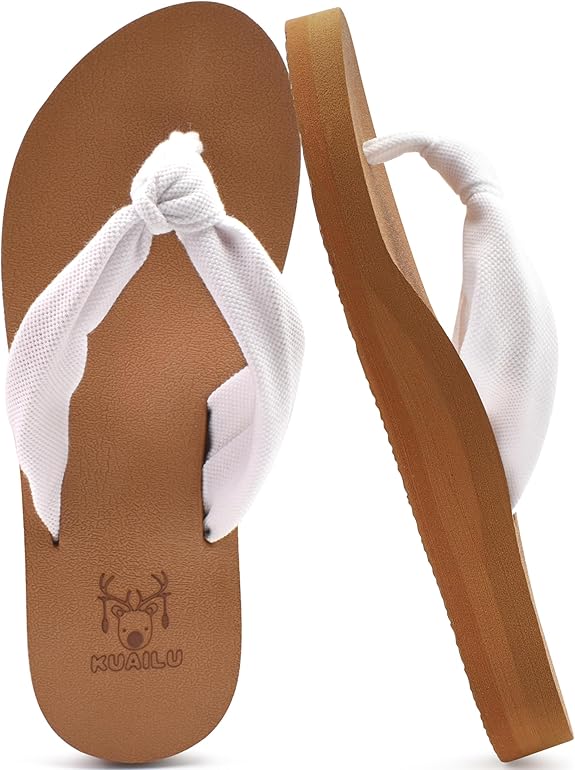
KuaiLu
Flip Flops with Arch Support
Cushioned, lightweight sandals with supportive arch design—a practical choice for beach trips, errands, and long summer walks.
Shop the sandals
baleaf
Athletic One-Piece Swimsuit
A functional one-piece with adjustable straps and moderate coverage, designed for swimming, training, surfing, and active beach days.
Shop the swimsuit
Astylish
Linen-Cotton Button-Down Shirt
A relaxed cotton-linen shirt with a collared V-neck and roll-up sleeves—easy to style over swimwear or with denim and shorts.
Shop the shirt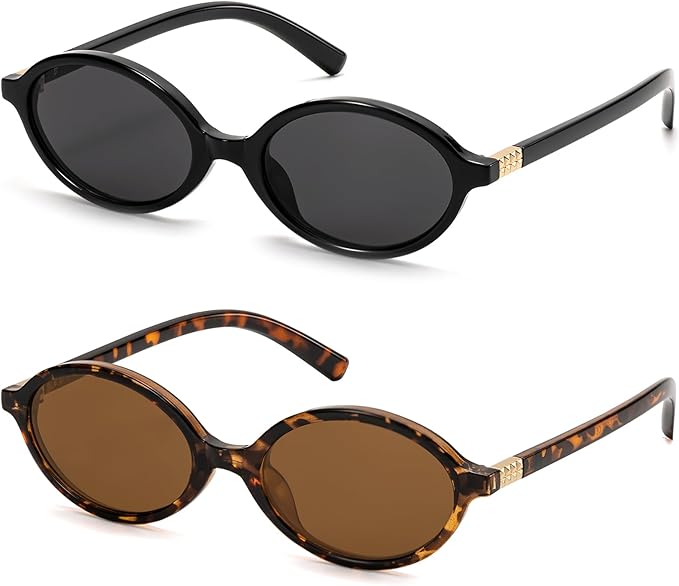
ViewJoy
Retro Oval Sunglasses
Small oval sunglasses with a 90s-inspired silhouette and UV400 lens protection—a quick way to add a vintage edge to everyday looks.
Shop the sunglasses
Affiliate disclosure: This section contains affiliate links. If you make a purchase through these links, I may earn a commission at no additional cost to you. Product selection, pricing, availability, and delivery terms may change—please review the current details on Amazon before purchasing.
As an Amazon Associate I earn from qualifying purchases.