Winter Sweater Outfits: A Warmth-First Guide
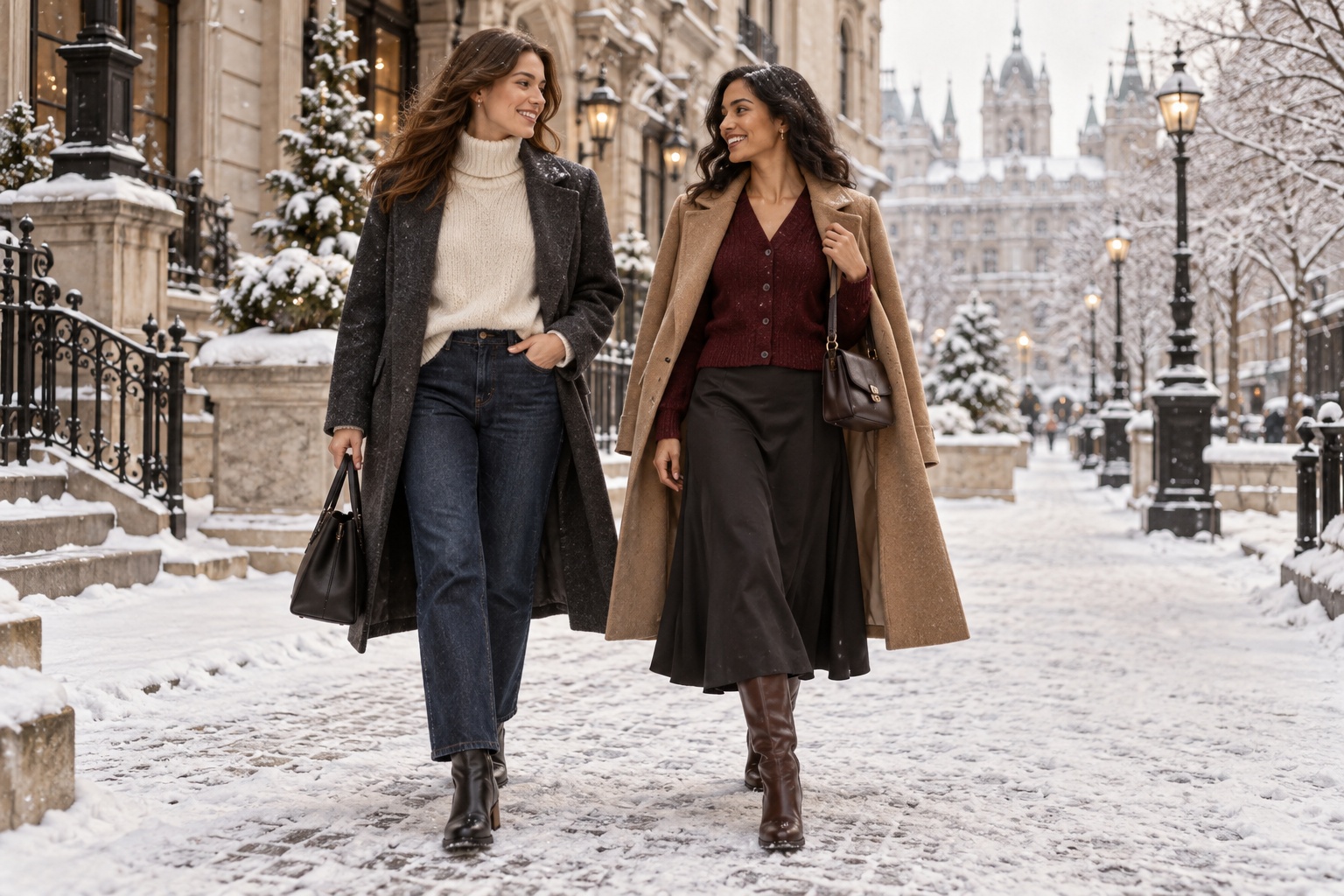
The easiest way to build winter sweater outfits is to solve warmth first and styling second. Start by deciding how long you will be outside, then give each layer one job: a close base layer for comfort, a sweater for insulation and texture, and an outer layer that protects the shape from wind and cold. Once those jobs are clear, the jeans, skirt, trousers, boots, and accessories become much easier to choose.
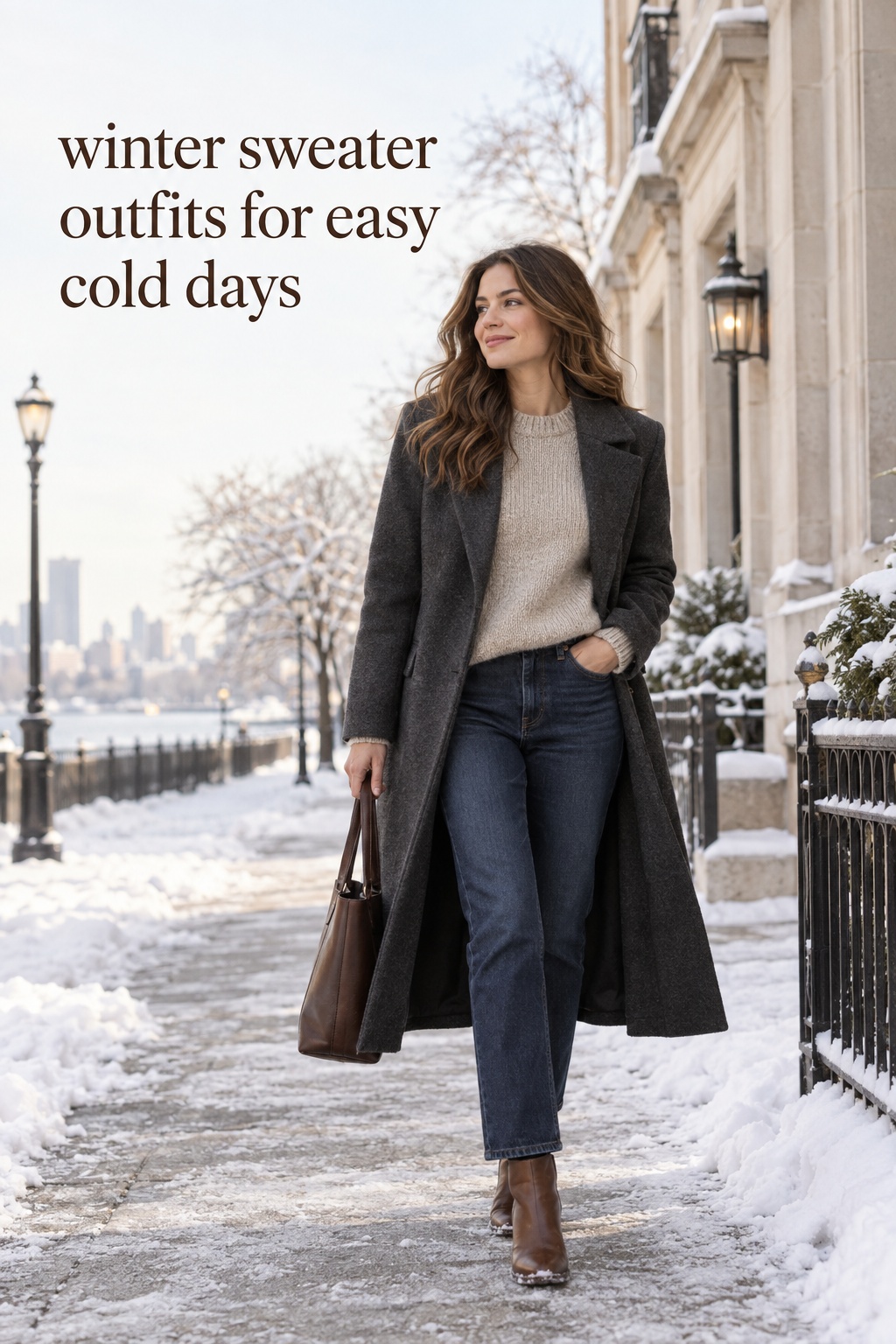
This guide turns that idea into a repeatable dressing system. You will learn how to match fine, medium, and chunky knits to the layers around them, how to keep a long sweater from swallowing the outfit, and how to switch the same formula between a quick errand, a workday, and a dinner plan. The goal is not to make winter dressing complicated. It is to make warm clothes look intentional.
The Fashion-Note Edit
Five effortless pieces to refresh your everyday wardrobe
A polished, practical edit for workdays, weekends, and everything in between.

The Drop
Women’s Blake Long Blazer
A longline, tailored blazer with a notched collar and a single-button closure—an easy layer for denim, dresses, or office-ready looks.
Shop the blazer
Amazon Essentials
Women’s Lightweight Crewneck
A soft, lightweight sweater with a clean crew neckline—the kind of reliable layer that works from cool mornings to air-conditioned spaces.
Shop the sweater
Amazon Essentials
Women’s Loafer Flat
A classic flat loafer that gives casual outfits a more polished finish and pairs naturally with tailored pants, skirts, and straight-leg jeans.
Shop the loafers
Levi’s
Women’s 501 90s Jeans
A relaxed, vintage-inspired take on the iconic 501 silhouette—made for an easy, lived-in look without the thrift-store search.
Shop the jeans
Colorfulkoala
High-Waisted 7/8 Leggings with Pockets
Soft, four-way-stretch leggings with side pockets and a high-rise waistband—designed for movement, errands, and off-duty comfort.
Shop the leggings
Affiliate disclosure: This section contains affiliate links. If you make a purchase through these links, I may earn a commission at no additional cost to you. Product selection, pricing, availability, and delivery terms may change—please review the current details on Amazon before purchasing.
As an Amazon Associate I earn from qualifying purchases.
Start with the warmth level, then choose the sweater shape
Before reaching for a favorite knit, picture the day in three parts: the outside stretch, the indoor destination, and the transition between them. A short walk from a car to a building needs a different setup from a long commute, a market visit, or an afternoon spent moving between heated rooms and cold streets. This small check prevents the common mistake of wearing one huge sweater when several lighter layers would be warmer and easier to adjust.
Your wedding style is personal.
Your plan should feel that way, too.
Zarellea keeps your guest list, budget, vendors, and every next step beautifully organized — so you can focus on the moments that feel like you.
Give the base layer a quiet, close-fitting job
A thin long-sleeve tee, camisole, thermal top, or fine turtleneck can make a sweater outfit feel warmer without visibly changing the silhouette. Keep the base layer smooth at the shoulders, underarms, and waist. If it bunches, the sweater above it will also look crowded. A base layer in a similar color creates a clean line, while a white collar or cuff can become a deliberate styling detail under a vest or V-neck.
Think about the neckline before you choose the base. A crewneck sweater usually works with a low-profile tee or a narrow mock neck. A V-neck can frame a crisp shirt collar. A turtleneck already fills the neck area, so it normally needs a simple coat lapel rather than a thick scarf and another high collar. The aim is one readable neckline story.
Choose fine knits when you need layers to stack cleanly
Fine-gauge merino, cotton, cashmere, or smooth synthetic knits are the most flexible building blocks. They can sit beneath a blazer, denim jacket, vest, trench, wool coat, or puffer without taking over the shoulder line. A fitted fine sweater also tucks more easily into trousers or a skirt, which makes it useful when you want a clear waist.
Use a fine knit when the outfit has another strong layer doing the visual work. A tailored coat, patterned blazer, satin skirt, or statement boot can be the focal point. The sweater supports that piece by adding color, warmth, or a clean neckline instead of adding more volume.
Choose medium knits for the everyday middle ground
A medium-weight sweater can be worn alone with jeans, tucked into a skirt, or layered beneath a roomy coat. It is often the easiest weight for daily winter outfits because it has enough texture to feel cozy but does not demand a special bottom shape. Crewnecks, relaxed V-necks, half-zips, and neat cardigans all work well in this category.
When a medium sweater looks unfinished, check the transition at the hem. A small front tuck, a visible waistband, a shorter jacket, or a structured bag can give the outfit a clear middle. You do not need to make the sweater tight. You only need to show where the upper and lower parts connect.
Save chunky knits for outfits with room around them
Chunky cable, fisherman, brushed, and textured sweaters are usually the main event. They look best when the layers beneath are thin and the coat above has enough room through the shoulders and sleeves. A straight jean, column skirt, slim trouser, or simple legging can give the lower half a calm outline. A fluid skirt can work too, as long as the waist or hem remains visible.
Do not automatically pair a chunky sweater with a narrow bottom. The real rule is clarity, not tightness. Wide-leg trousers can work when the sweater is cropped, partially tucked, or balanced by a defined shoulder. A long skirt can work when the knit ends at the waist or when a long coat creates a second vertical line. Keep at least one edge of the silhouette easy to read.
Balance knit volume with the bottom and coat
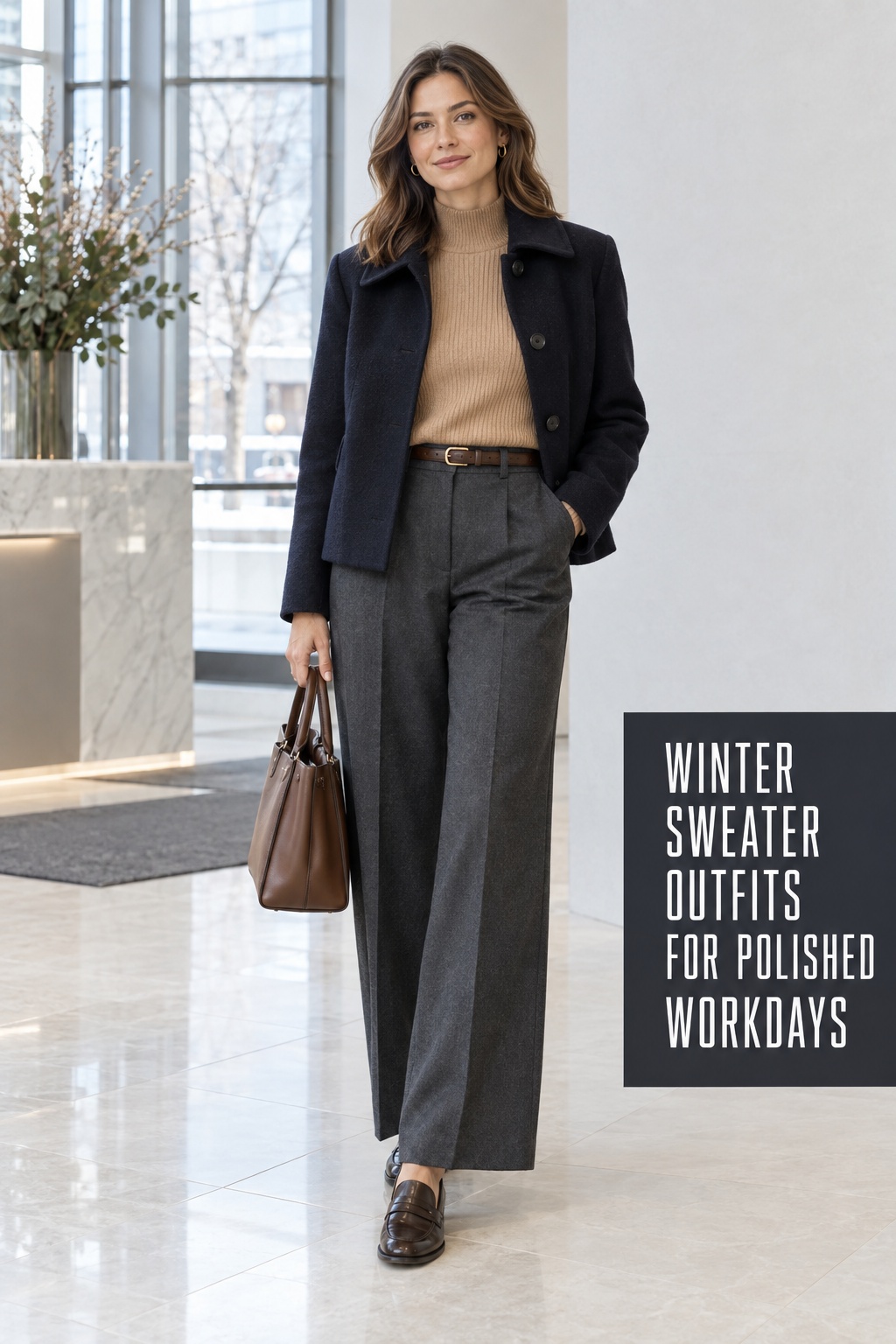
Winter sweater outfits feel polished when the eye can understand the relationship between three shapes: the sweater, the bottom, and the coat. You can use contrast or continuity. Contrast means a large sweater over a simple column skirt. Continuity means a fine sweater tucked into wide trousers and continued by a long coat. Both approaches work, but each needs one anchor.
Pair a fitted or fine sweater with wider bottoms
A close-fitting knit makes wide-leg jeans, pleated trousers, and fuller skirts easier to read because the waist and upper body stay defined. Tuck the sweater fully if the fabric is smooth. If the knit is slightly relaxed, use a front tuck or choose a cropped hem that meets the waistband naturally. Add a belt when the outfit needs a crisp transition between colors.
The shoe should not disappear completely beneath a wide leg. A pointed toe, low block heel, substantial loafer, or clean boot gives the lower half a finish. In wet or icy conditions, choose the weather-ready pair first and let the trouser hem accommodate it. A beautiful silhouette is not useful if the hem drags through slush.
Pair a chunky sweater with one calm lower line
Straight jeans, gently tapered trousers, a column skirt, and simple leggings are reliable partners for a chunky sweater because they let the knit provide the texture. A visible boot can be especially helpful. It gives the relaxed top a firm endpoint and makes the outfit feel ready for the season.
If the outfit feels too heavy, change one thing at a time. Remove a scarf, expose a little ankle or boot shaft, switch to a smoother sweater, or open the coat. Do not add a belt, statement necklace, patterned bag, and bright shoe all at once. The sweater already has visual presence.
Use coat length to finish the winter silhouette
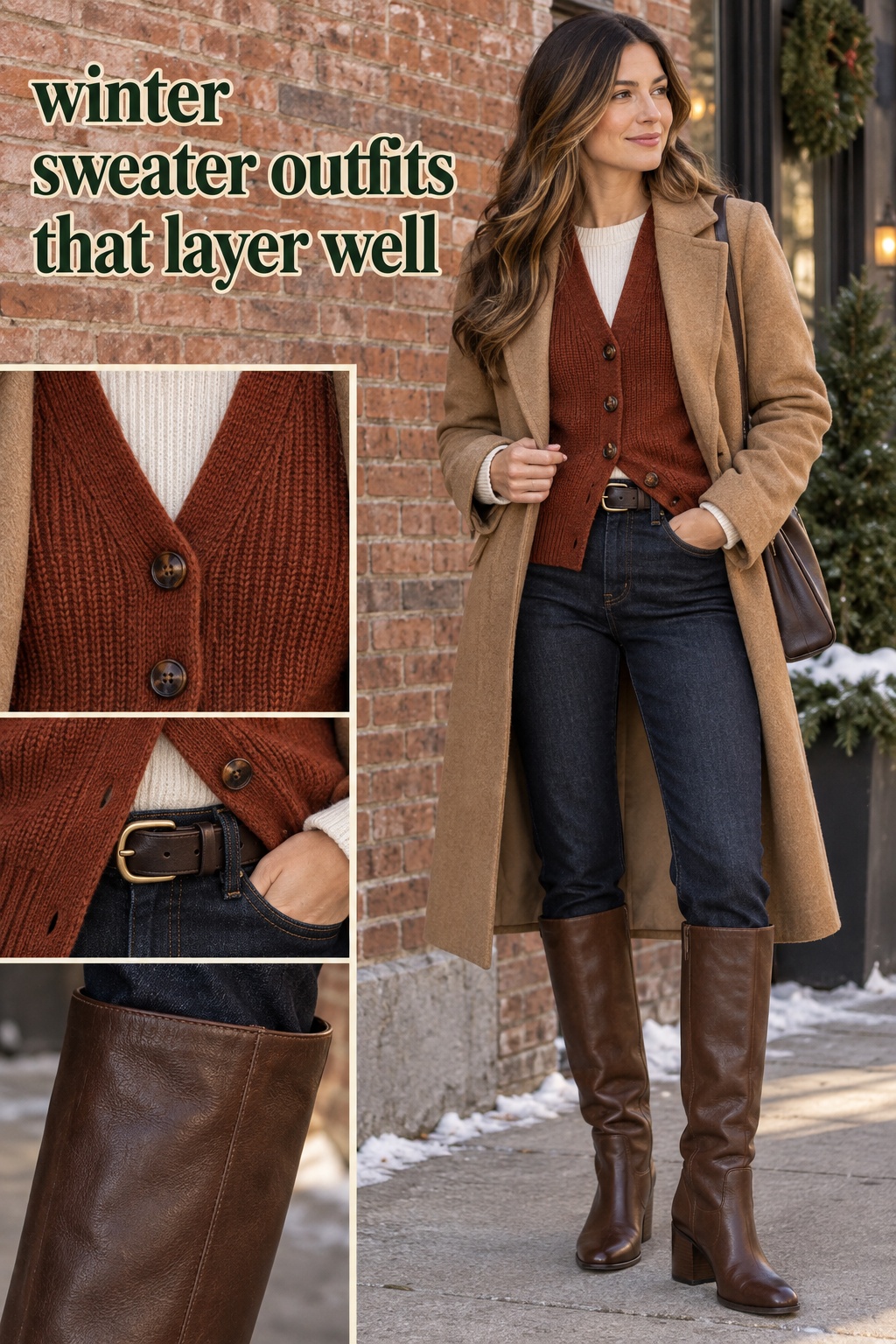
A short jacket can clarify the waist of a high-rise bottom and keep a cropped sweater from feeling accidental. A mid-length coat can balance a sweater with straight jeans or a midi skirt. A long wool coat or puffer creates a strong outer line over an oversized knit, especially when the sweater hem is longer than the jacket underneath.
Check the coat with the sweater closed and open. If the sweater only works when the coat is open, the outer layer may be too narrow or the knit may be too thick for that combination. A coat that allows the sweater to keep its natural shape often looks cleaner than one that compresses every layer against the body.
Let texture do more work than extra color
Winter outfits can look rich without using a complicated palette. Combine a ribbed sweater with smooth denim, a fuzzy knit with matte trousers, a cable knit with leather-look pants, or a soft cardigan with a satin skirt. When the textures are different, neutrals feel purposeful rather than plain.
- Use a neutral sweater when the coat or bottom has a strong pattern.
- Use one bright knit when the jeans, trousers, and coat are quiet.
- Repeat a small color detail in the shoe, bag, or belt instead of matching every item.
- Choose one focal texture and let the other layers support it.
Build four winter sweater outfit formulas step by step
The following formulas use different sweater jobs, so they do not become four versions of a sweater with jeans. Start with the base version, then make one weather switch and one setting switch. This keeps the outfit practical without losing its point of view.
Formula one: medium sweater, straight denim, and grounded boots
Begin with a medium crewneck or half-zip, straight-leg jeans, and ankle boots with enough visual weight to meet the knit. Add a smooth base layer if you will be outside for more than a short walk. Finish with a wool coat, puffer, or lined jacket that leaves room through the shoulders. This is the dependable winter uniform because the denim gives the outfit a clean line while the sweater provides comfort and texture.
For a casual version, use a heather gray sweater, blue jeans, and lug boots. For a polished version, use a cream knit, dark denim, a leather belt, and a structured coat. If the weather is wet, choose a treated boot and keep the jeans slightly cropped or neatly rolled so the hem does not collect moisture.
Formula two: fine knit, tailored trousers, and a short structured layer
Choose a fine crewneck, mock neck, or V-neck and tuck it into high-rise tailored trousers. Add a blazer, short wool jacket, or neat cardigan that ends near the waistband. Loafers, pointed flats, or a low block heel keep the outfit organized. This formula is useful when you want warmth at the base but a sharper surface for work, appointments, or a lunch plan.
Keep the base layer thin enough that the sweater lies flat beneath the jacket. If the trousers are wide, a fitted knit usually creates the clearest balance. If the trousers are straight, a slightly relaxed sweater can work with a partial tuck. Add a long coat for the commute and remove it indoors without disturbing the main outfit.
Formula three: sweater, midi skirt or dress, and warm leg line
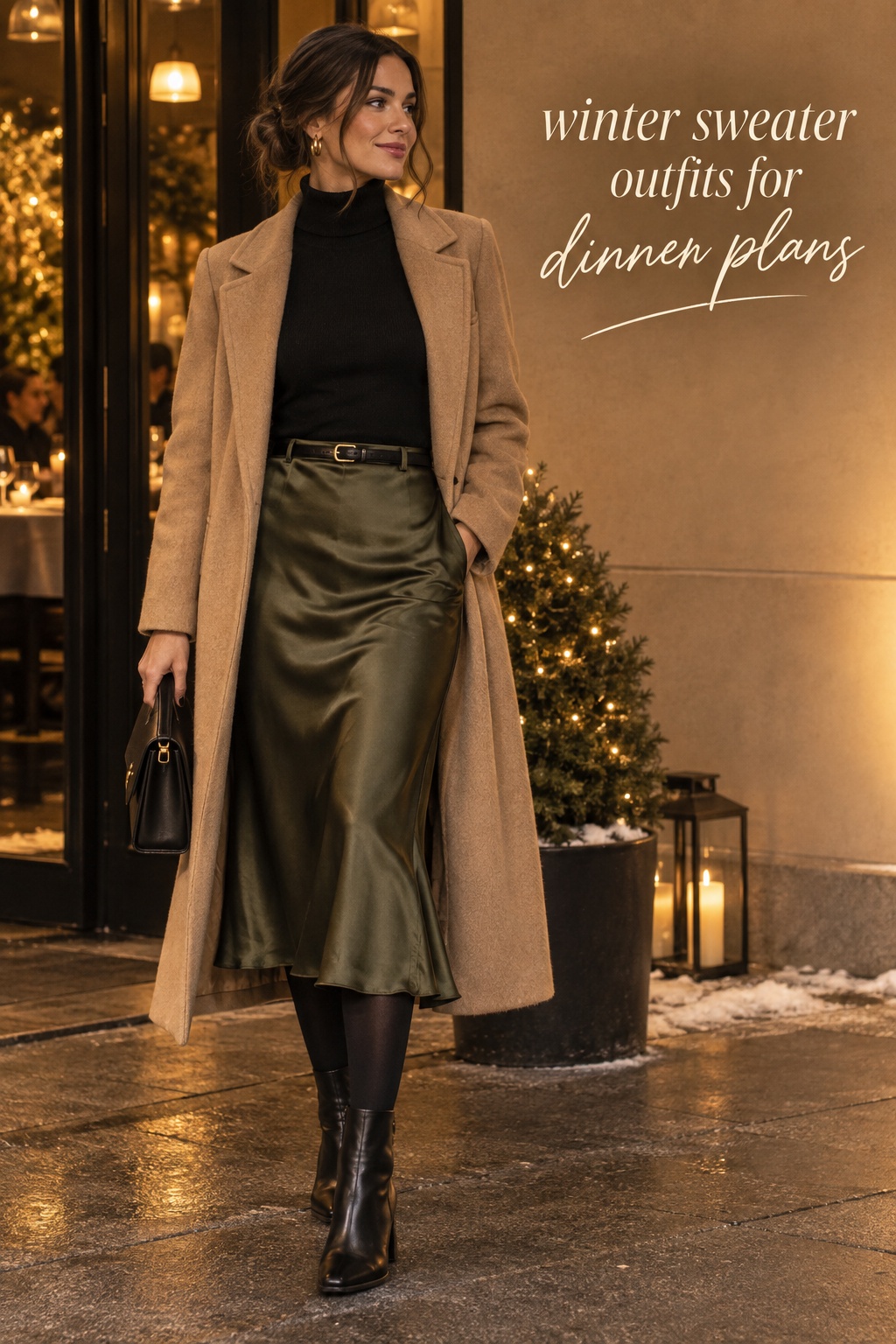
Pair a fine or medium sweater with a midi skirt, or layer a sweater over a simple dress. Tuck the knit when it lies flat, or choose a shorter shape that ends near the waist. Add opaque tights, warm socks, and ankle or knee-high boots when the temperature requires more coverage. The contrast between knit texture and a fluid skirt or dress creates interest without relying on a busy print.
For daytime, try a cream sweater, dark olive skirt, and flat boots under a long coat. For evening, use a black fine knit over a slip dress or with a satin skirt, then add a small shoulder bag and a polished boot. If the sweater is chunky, keep the skirt simple and let the waist or coat line provide the structure.
Formula four: sweater vest or cardigan over a visible base
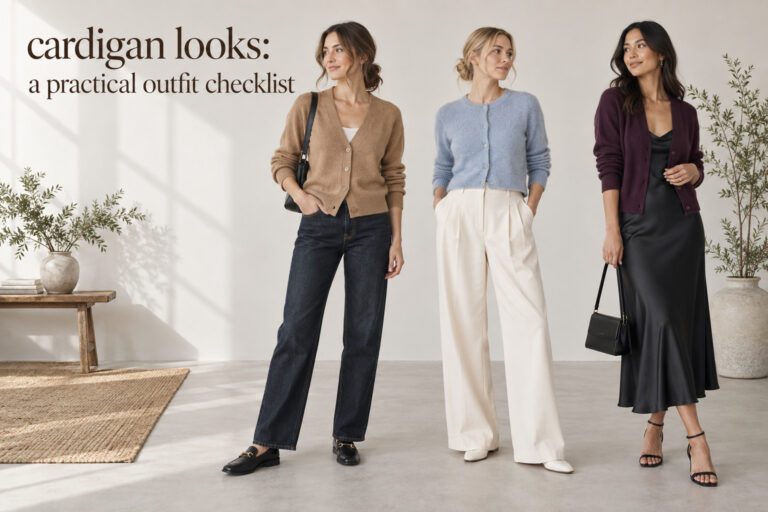
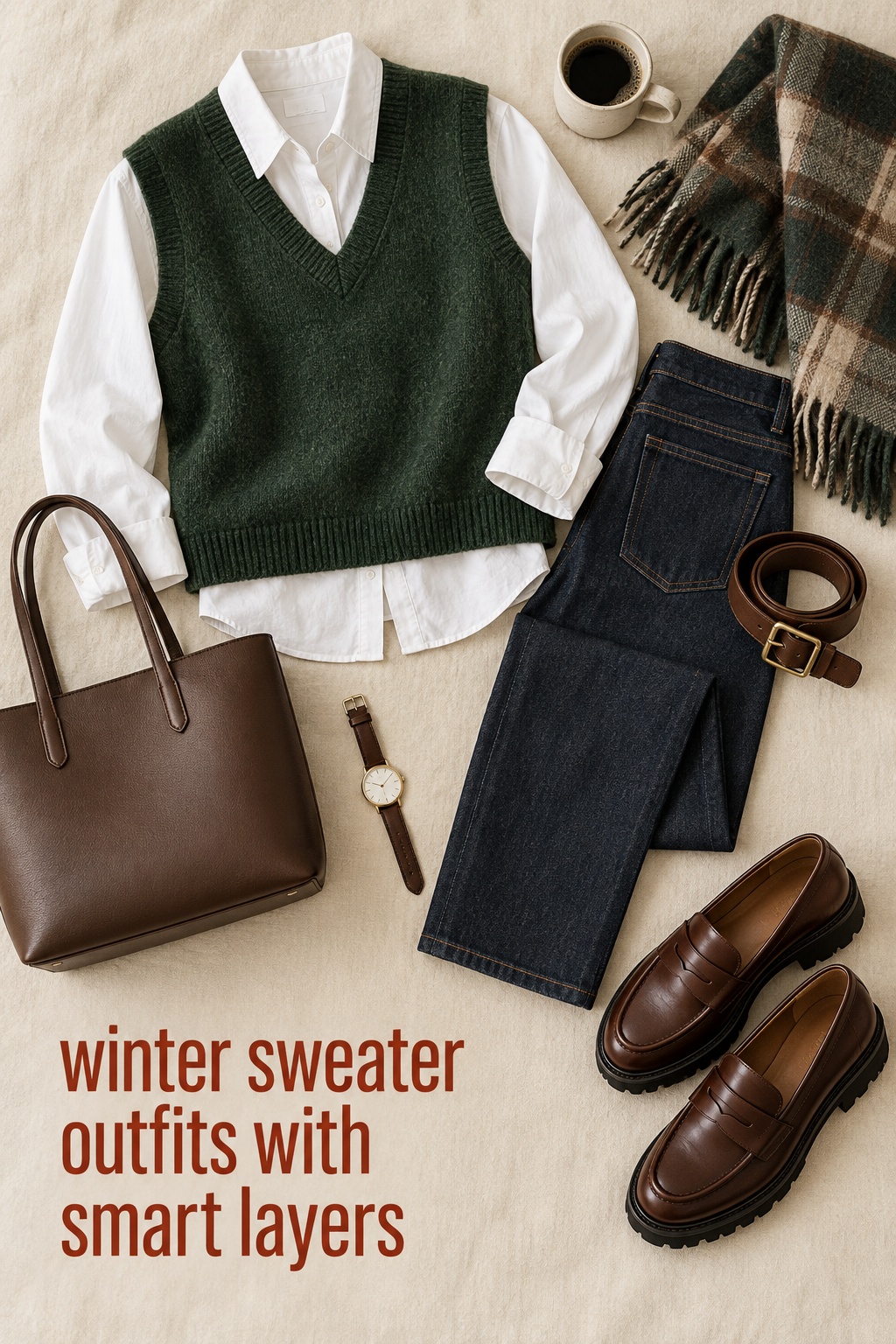
A vest or cardigan creates warmth in adjustable layers. Wear a sweater vest over a crisp button-down with straight jeans and loafers, or wear a buttoned cardigan as a top with tailored trousers. You can also leave a cardigan open over a slim tee and a column skirt. The key is to let the base layer show clearly at the collar, cuff, or hem.
For a colder day, add a thin thermal layer beneath the shirt and a long coat above it. Keep the inner pieces smooth so the vest or cardigan remains the visible texture. When the shirt hem is longer, make that length intentional by showing it evenly. When it is shorter, tuck it cleanly and let the vest define the waist.
Solve the winter sweater problems that make outfits feel off
When a winter outfit feels wrong, the sweater is rarely the only problem. Look at the layer order, the space between pieces, and the final contact point at the shoe. A small correction usually works better than replacing the whole outfit.
When the outfit is warm but looks bulky
Remove the thickest unnecessary layer first. A chunky sweater usually does not need a thick shirt, a heavy scarf under the coat, and a narrow jacket. Replace the base with a smooth thin layer, open the coat, or choose a roomier outer layer. If the bottom is wide too, use a shorter sweater or create one visible waist point.
When there is a cold gap between the sweater and coat
Check the wrists, lower back, neck, and ankles. A longer base layer can cover the waist, a scarf can protect the neck, and warm socks can close the gap above boots. If the sweater hem is exposed beneath a short coat, either repeat that length with the base layer or switch to a longer coat so the overlap looks planned.
When the outfit loses your waist
Create one definition point instead of tightening every garment. Try a full tuck with a fine knit, a loose front tuck with a medium knit, a belt over a cardigan, or a shorter jacket over a long sweater. If tucking is uncomfortable, use a visible waistband, a crossbody strap, or a clear shoe line to add structure elsewhere.
When the layers compete at the neckline
Choose one focal neckline. A V-neck can show a shirt collar. A turtleneck can stand alone under a coat. A vest over a button-down already has a collar and cuff story, so avoid adding another high, thick layer. If you need extra warmth, place the scarf over the coat rather than under several knit layers.
When the outfit feels flat despite having many layers
Change texture before adding another color. Try ribbing with denim, a smooth sweater with corduroy, or a soft knit with a satin skirt. Then repeat one small detail, such as brown boots with a brown belt or silver hardware with simple jewelry. The connection will make the outfit feel edited without making it look overly matched.
When the shoes are stylish but impractical
Start with the ground conditions. Choose traction, water resistance, and warmth before deciding whether the outfit needs a loafer, boot, or sneaker. You can keep the rest of the formula polished with a structured coat, belt, or bag. In winter, a substantial weather-ready boot often improves a chunky sweater outfit because the visual weights agree.
Sources and methodology
This guide was informed by a Google US Top 10 review of winter sweater styling pages, including the category and proportion overview from Macy’s and the layered winter formulas collected by Who What Wear. The sources helped identify recurring sweater weights, layer combinations, bottom shapes, and footwear decisions. The warmth-first sequence, four formulas, and repair steps are editorial synthesis for Fashion Note, not claims of personal testing or universal rules.
FAQ
What is the easiest winter sweater outfit to start with?
Start with a medium-weight crewneck, straight-leg jeans, and weather-ready ankle boots. Add a thin base layer and a coat with room through the shoulders. This combination is comfortable for everyday plans and can look more polished with dark denim, a belt, and a structured bag.
How many layers should you wear under a winter sweater?
Use as many as the temperature and activity require, but keep each layer thin enough to move comfortably. A smooth base layer plus a sweater is often enough indoors, while a thermal top and sweater under a protective coat can work for longer outdoor time. Add warmth at the neck, wrists, and ankles before adding another bulky torso layer.
What bottoms look best with a chunky winter sweater?
Straight jeans, gently tapered trousers, column skirts, and simple leggings are easy partners because they keep the lower line clear. Wide-leg bottoms can also work when the sweater is cropped, partially tucked, or balanced by a defined shoe and coat. The goal is a readable silhouette, not one required body shape.
Can you wear a sweater with a midi skirt in winter?
Yes. A fine or medium sweater can tuck into a midi skirt, while a shorter chunky sweater can sit at the waist. Add tights, warm socks, and boots for coverage, then use a long coat to connect the outfit from shoulder to hem. Keep either the sweater or the skirt relatively quiet if the other piece has strong texture.
Should a winter sweater be tucked?
Tuck a fine sweater fully when the fabric lies flat and you want a clear waist. Use a loose front tuck with a medium knit, and leave a chunky sweater untucked when its hem already balances the bottom. If the tuck creates bunching, choose a shorter sweater or define the shape with a jacket instead.
What coat works over an oversized sweater?
Choose a coat with enough room through the shoulders and sleeves to let the knit keep its shape. A long wool coat or roomy puffer can create a clean outer line, while a short jacket works when the sweater is not too thick and the lower half has a clear waist. If the coat compresses the sweater, try a thinner base or a larger outer size.
Which shoes work best with winter sweater outfits?
Ankle boots, knee-high boots, substantial loafers, and clean sneakers can all work, depending on the weather and the outfit’s visual weight. Match chunky knits with grounded shoes, and fine knits with lighter flats or polished boots. For snow, rain, or ice, choose traction and protection first, then make the rest of the outfit carry the polish.
Finish the look
The little extras that make a summer outfit feel complete
From beach days to city weekends, these easy pieces bring comfort, texture, and a polished finishing touch.

FENBEN
Straw Hobo Crossbody Bag
A handwoven straw bag with both short and crossbody straps—an effortless finishing touch for vacation looks and warm-weather outfits.
Shop the bag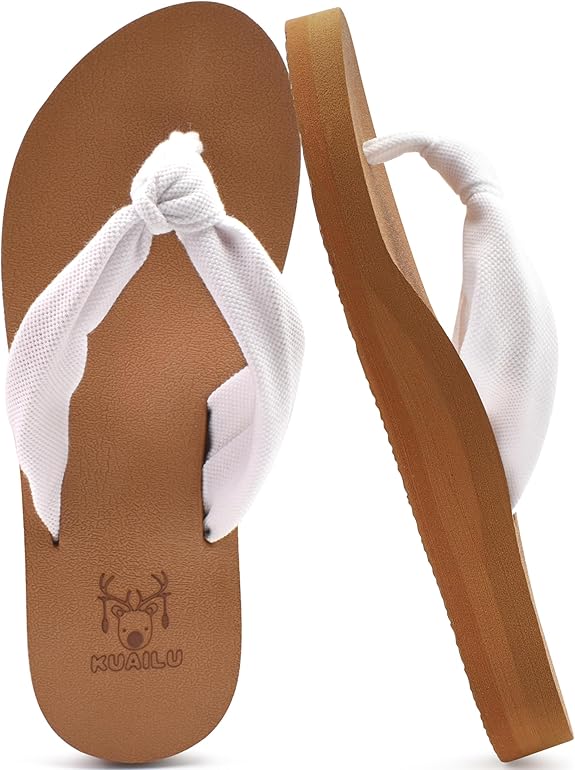
KuaiLu
Flip Flops with Arch Support
Cushioned, lightweight sandals with supportive arch design—a practical choice for beach trips, errands, and long summer walks.
Shop the sandals
baleaf
Athletic One-Piece Swimsuit
A functional one-piece with adjustable straps and moderate coverage, designed for swimming, training, surfing, and active beach days.
Shop the swimsuit
Astylish
Linen-Cotton Button-Down Shirt
A relaxed cotton-linen shirt with a collared V-neck and roll-up sleeves—easy to style over swimwear or with denim and shorts.
Shop the shirt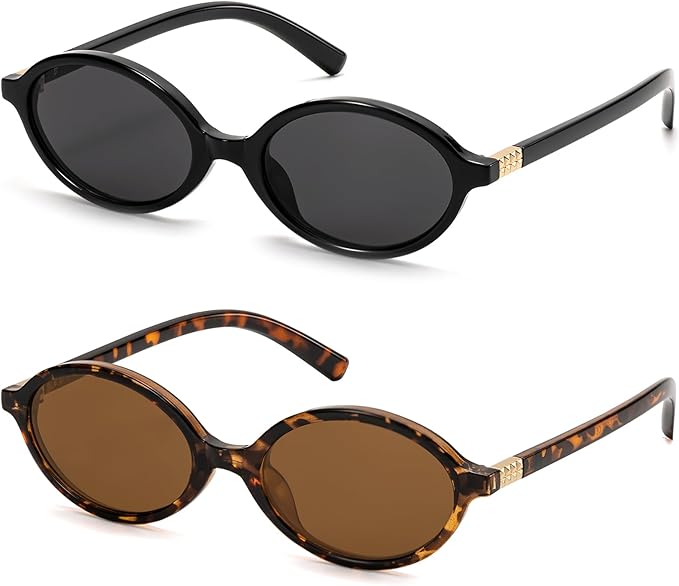
ViewJoy
Retro Oval Sunglasses
Small oval sunglasses with a 90s-inspired silhouette and UV400 lens protection—a quick way to add a vintage edge to everyday looks.
Shop the sunglasses
Affiliate disclosure: This section contains affiliate links. If you make a purchase through these links, I may earn a commission at no additional cost to you. Product selection, pricing, availability, and delivery terms may change—please review the current details on Amazon before purchasing.
As an Amazon Associate I earn from qualifying purchases.