Old Money Party Outfits with Quiet Polish
The dress code for a cocktail room, private dinner, gallery opening, or polished townhouse party often feels harder than it looks. You want elegance, but not flash. You want presence, but not anything too trend-driven. That is exactly why old money party outfits remain so appealing: they rely on restraint, tailoring, refined fabrics, and a calm sense of confidence that reads elevated without trying too hard.
At their best, old money party outfits are built from pieces that already feel timeless on their own: a navy blazer, a silk blouse, tailored trousers, a column dress, a pencil or column skirt, a structured bag, pearls, and polished pumps or loafers. The magic is not in wearing the most dramatic item in the room. It is in getting the proportion, texture, and finish exactly right.
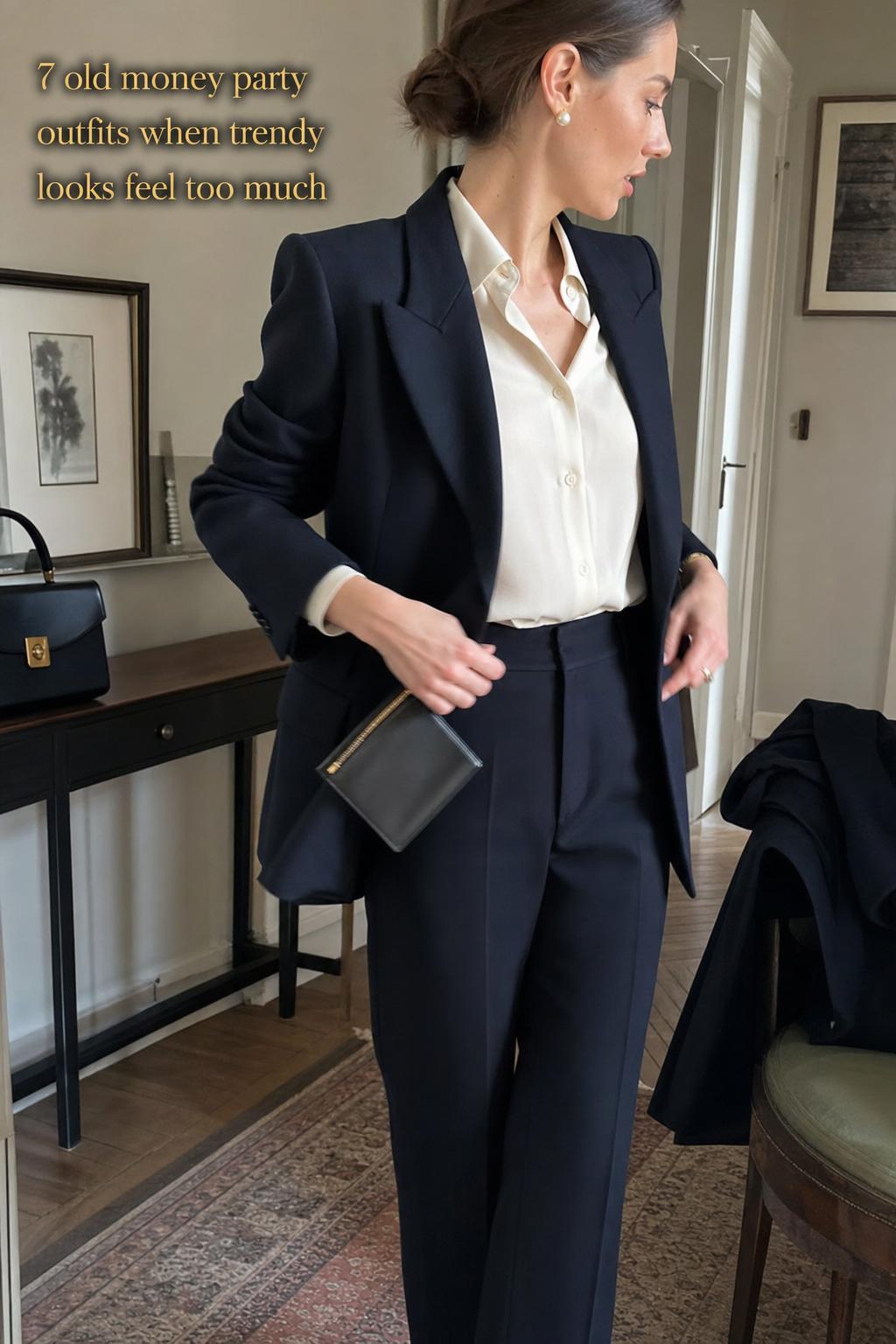
This style guide breaks the look down in a practical way, with real outfit logic, easy swaps, and occasion-based ideas you can actually wear. Whether your version of the aesthetic leans Upper East Side, Hamptons-style, Newport gallery night, or simply quiet luxury with a preppy edge, the goal is the same: timeless elegance that feels natural in motion.
The Fashion-Note Edit
Five effortless pieces to refresh your everyday wardrobe
A polished, practical edit for workdays, weekends, and everything in between.

The Drop
Women’s Blake Long Blazer
A longline, tailored blazer with a notched collar and a single-button closure—an easy layer for denim, dresses, or office-ready looks.
Shop the blazer
Amazon Essentials
Women’s Lightweight Crewneck
A soft, lightweight sweater with a clean crew neckline—the kind of reliable layer that works from cool mornings to air-conditioned spaces.
Shop the sweater
Amazon Essentials
Women’s Loafer Flat
A classic flat loafer that gives casual outfits a more polished finish and pairs naturally with tailored pants, skirts, and straight-leg jeans.
Shop the loafers
Levi’s
Women’s 501 90s Jeans
A relaxed, vintage-inspired take on the iconic 501 silhouette—made for an easy, lived-in look without the thrift-store search.
Shop the jeans
Colorfulkoala
High-Waisted 7/8 Leggings with Pockets
Soft, four-way-stretch leggings with side pockets and a high-rise waistband—designed for movement, errands, and off-duty comfort.
Shop the leggings
Affiliate disclosure: This section contains affiliate links. If you make a purchase through these links, I may earn a commission at no additional cost to you. Product selection, pricing, availability, and delivery terms may change—please review the current details on Amazon before purchasing.
As an Amazon Associate I earn from qualifying purchases.
What defines the old money party look
The old money aesthetic for evening wear is less about one exact outfit and more about a visual code. The recurring elements are strong tailoring, neutral colors, quality-feeling fabrics, and accessories that support the outfit rather than compete with it. You will see black, navy, ivory, cream, camel, beige, and soft tonal combinations much more often than bright, attention-seeking shades.
Your wedding style is personal.
Your plan should feel that way, too.
Zarellea keeps your guest list, budget, vendors, and every next step beautifully organized — so you can focus on the moments that feel like you.
Quiet luxury is closely tied to this look, but for parties the styling usually becomes slightly sharper. Silk, satin, wool, cashmere, velvet, and silk charmeuse bring in depth and light reflection, while clean lines keep the result disciplined instead of overly glamorous. That discipline matters. A glossy fabric needs a simple silhouette. A structured blazer works best with an elegant underlayer. Pearls or minimal gold accents should frame the look, not dominate it.
One useful way to think about it: old money style is never random. Even the easiest outfit looks considered because each piece has a job. The blazer adds authority, the silk blouse softens the structure, the trousers create length, and the leather clutch or structured bag keeps the finish polished.
The foundation pieces worth building around
- Tailored blazer in navy, black, cream, or camel
- Silk blouse or silk camisole
- Tailored trousers with a clean straight or softly wide leg
- Pencil skirt or column skirt
- Midi dress, sheath dress, or column dress
- Cashmere knit for layering in cooler weather
- Structured leather bag or compact clutch
- Loafers, pumps, or simple ballet flats for lighter settings
- Pearls or small gold jewelry
These pieces appear over and over because they create a wardrobe that can move across dress codes. The same silk blouse can work with a pleated midi skirt for a garden party or with dark tailored trousers for a city cocktail event. That kind of flexibility is part of what makes the aesthetic feel expensive even when the wardrobe itself is edited rather than oversized.
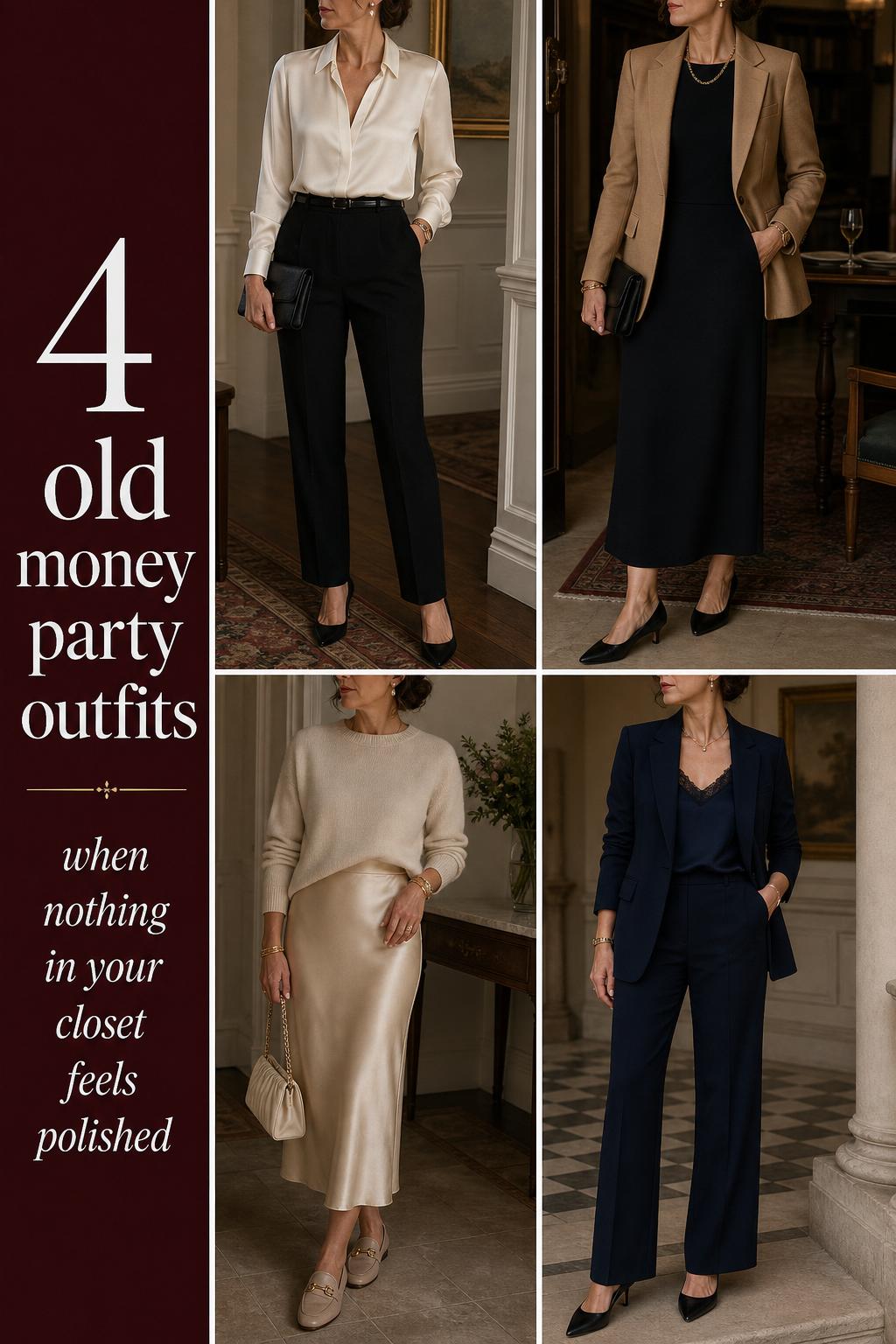
Silhouettes that instantly read polished
Silhouette is where many outfits either become quietly elegant or lose the old money effect entirely. The most reliable shapes are sheath, column, A-line, and softly structured tailoring. They skim the body instead of clinging too tightly, and they create a long, clean visual line.
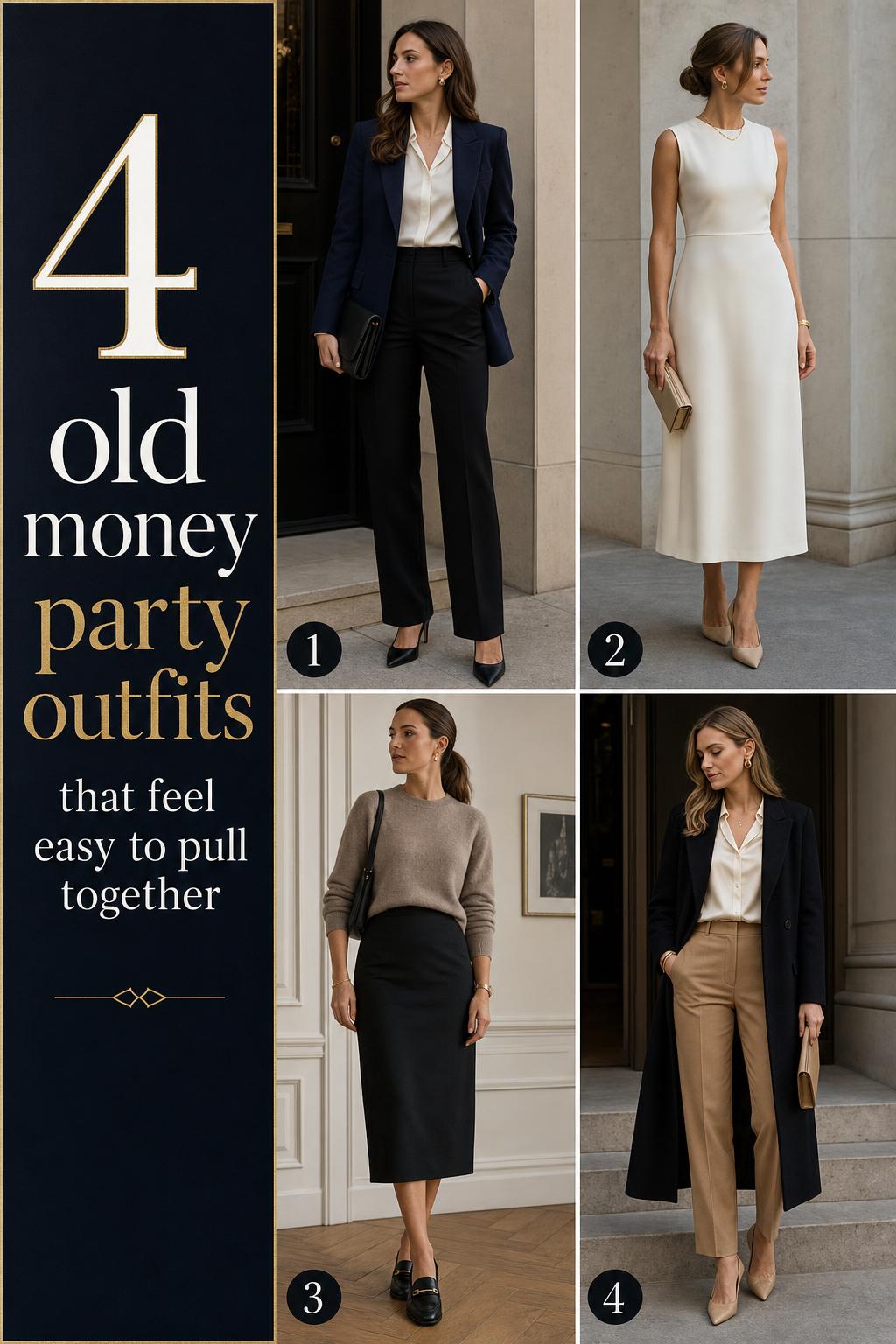
A column dress is especially effective for evening because it looks minimalist but sophisticated. It does not need much styling beyond pumps, a leather clutch, and a simple necklace or pearls. If you prefer separates, a fitted pencil or column skirt with a silk blouse gives a similar result while offering more flexibility with proportions.
Tailored trousers are often the smartest choice if you want comfort through a long event. They allow easier movement, feel more grounded in cooler weather, and can read just as formal as a dress when paired with satin, silk, or a sharply cut blazer. A slight drape through the leg can also be more flattering than anything too skinny, because it lengthens the frame and keeps the overall line smoother.
Why proportion matters so much
The old money look depends on balance. If the top half is structured, the lower half should feel equally clean rather than overly busy. If you wear a flowing or glossy skirt, keep the top more contained. Oversized layers typically work best with fitted or straighter bottoms because too much volume everywhere can make the outfit feel less intentional. On the other hand, a slim column skirt with a blazer or cashmere knit creates contrast that feels effortless and flattering.
Monochrome or near-monochrome dressing is another smart trick. Navy with navy, ivory with cream, or black with charcoal creates one long uninterrupted shape, which reads cleaner and often more expensive than high-contrast styling. It is one of the easiest ways to make a simple outfit feel elevated.
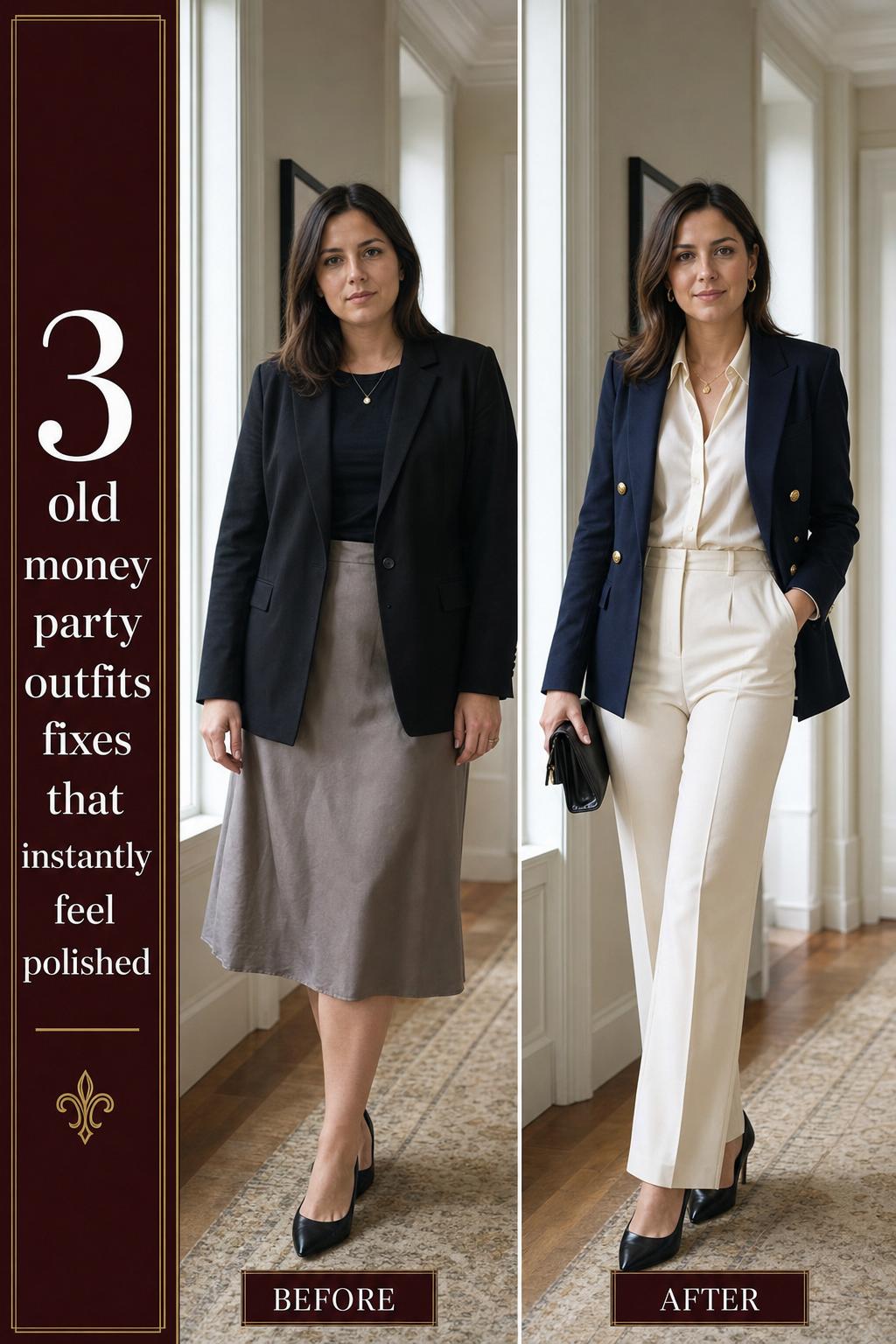
Party settings where this aesthetic works especially well
One reason readers search for old money party outfits instead of just old money outfits is context. A daytime garden party and a cocktail room call for different outfit energy, even if the same style principles apply. The best results come from matching the restraint of the aesthetic to the mood of the venue.
Private dinner or townhouse evening
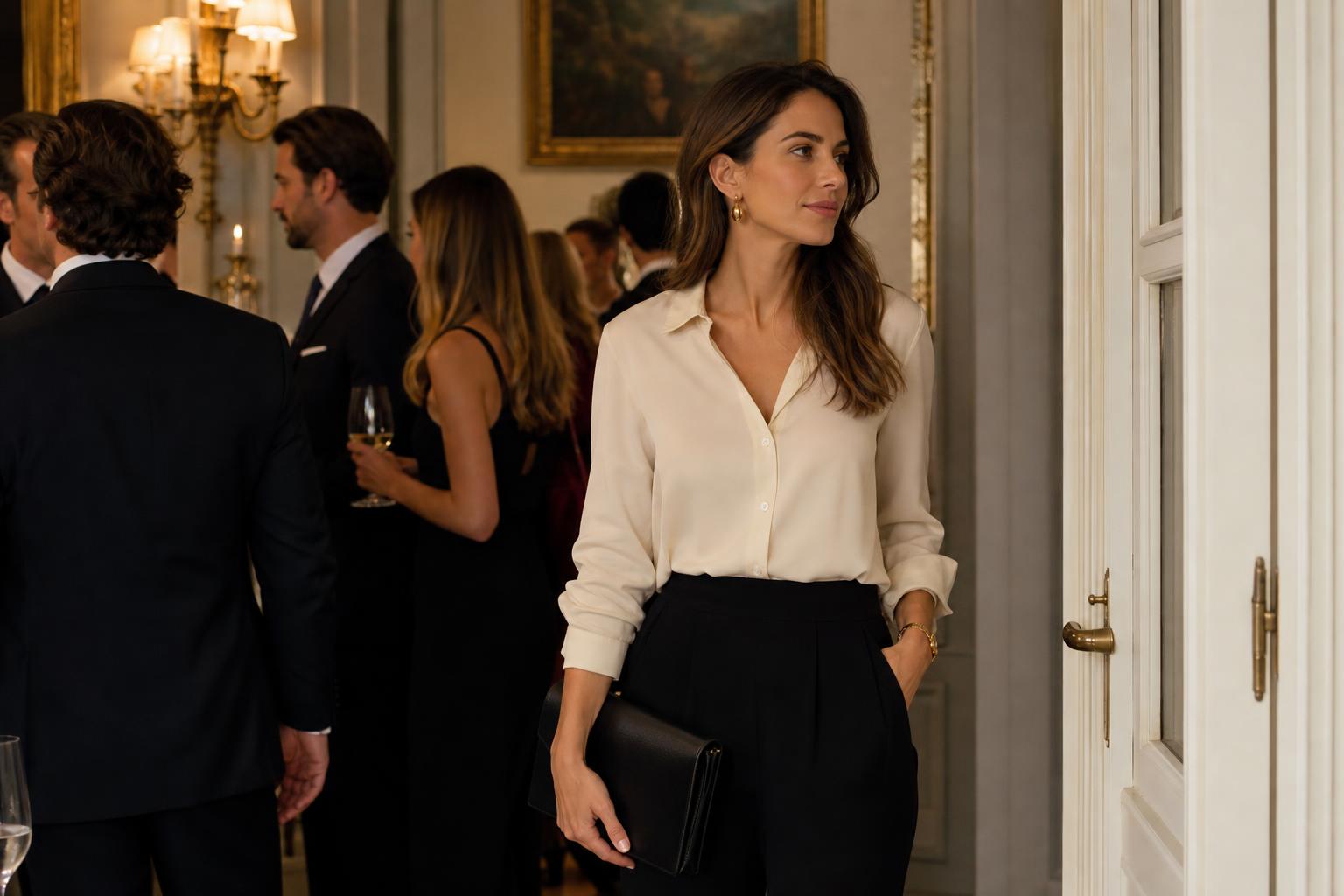
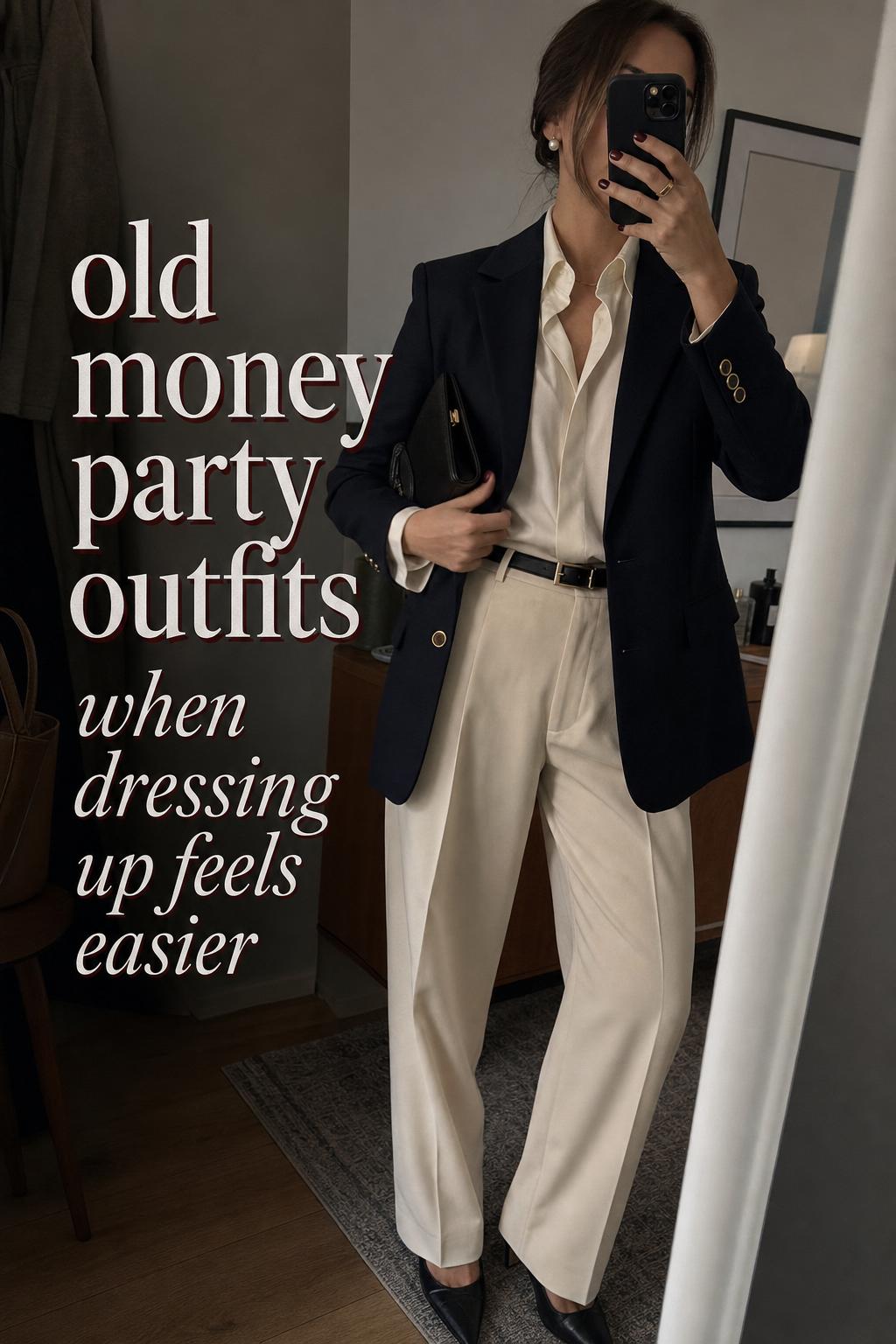
This is where a silk blouse and tailored trousers really shine. Picture an ivory silk blouse tucked into black or navy trousers, finished with a slim belt, pumps, and a structured leather bag. Add pearls or small gold accents and the whole look feels intimate, polished, and appropriate for an evening that is elegant but not theatrical.
Why this outfit works: the silk adds softness and light, while the trousers keep the silhouette grounded. It has enough formality for a refined dinner, but it also looks believable if the evening includes sitting for hours, moving between rooms, or adding a cashmere layer later.
Gallery opening or city cocktail event
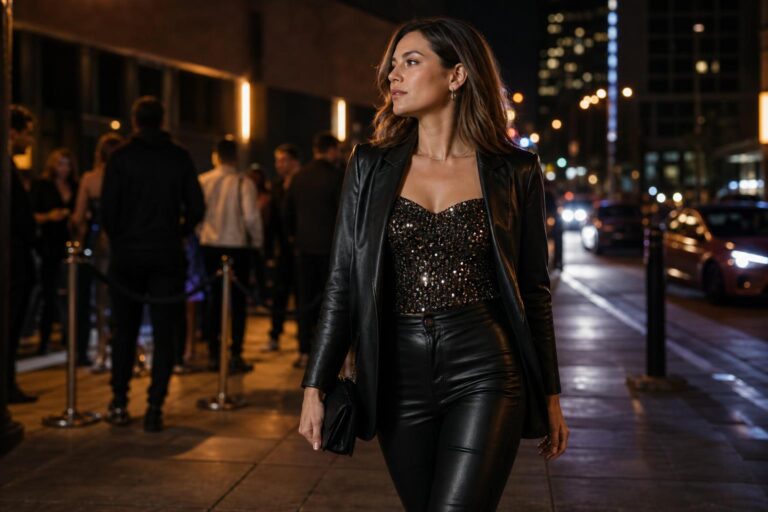
A column dress in black, navy, or cream works beautifully here, especially with a blazer draped over the shoulders or worn properly for a sharper edge. This setting can handle a little more contrast in texture, so matte wool or wool crepe with satin or silk works particularly well. A leather clutch keeps the look clean.
Why this outfit works: gallery and cocktail settings reward restraint with personality. The sleek dress offers quiet confidence, and the tailored layer gives the outfit architectural structure. It looks sophisticated under evening lighting without relying on obvious shine or heavy embellishment.
Garden party or club terrace
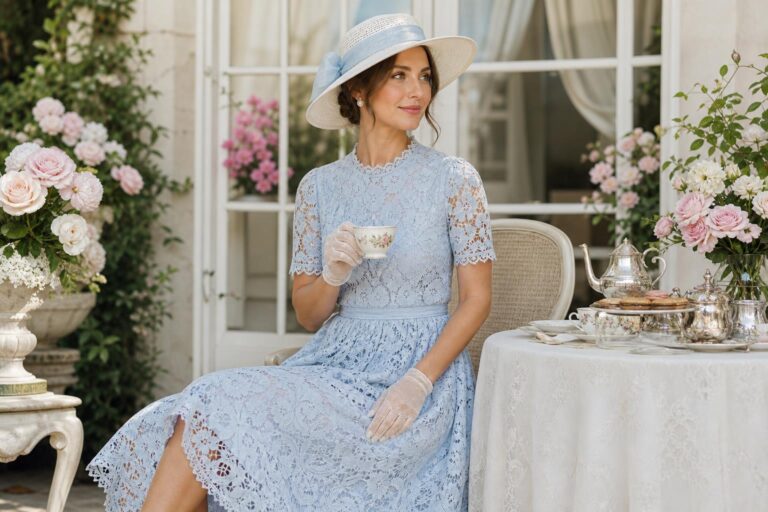
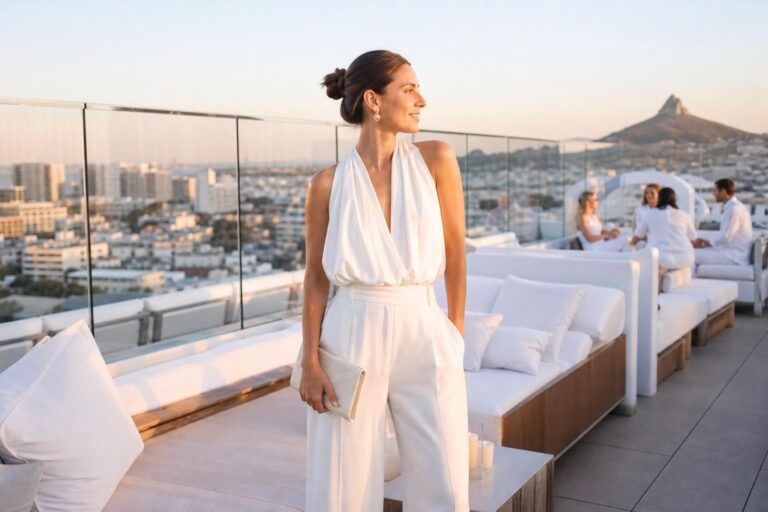
For a softer version of the aesthetic, a pleated midi skirt with a silk blouse is a classic combination. Cream, beige, navy, and pale neutrals feel especially right here. Ballet flats can work for a more relaxed venue, while pumps sharpen the look if the event leans dressier. A straw hat appears in some old money styling conversations for daytime, but for party settings it works best only when the atmosphere is truly outdoors and light.
Why this outfit works: movement matters in garden and terrace settings. A pleated or softly flowing skirt feels natural outdoors, while the silk blouse keeps the entire look refined. The softness of the skirt also pairs well with a more polished shoe, which prevents the outfit from drifting too casual.
Gala or black-tie leaning event
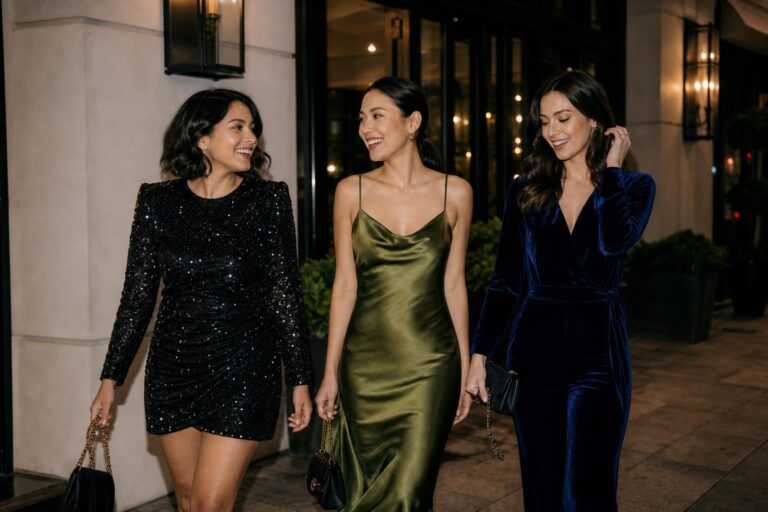
For a more formal evening, a sheath or column dress in satin, silk, or velvet is the clearest route. Keep the accessories minimal: pearl earrings, a small clutch, and classic pumps. This is not the place for too many statement elements at once. The fabric should do the work, while the silhouette remains calm.
Why this outfit works: formal events already bring visual intensity through the setting, lighting, and crowd. An outfit with one strong luxury cue, such as velvet or silk charmeuse, feels more refined than one overloaded with sparkle, logos, or trend details.
Save-worthy outfit formulas you can actually rewear
The most useful old money party outfits are the ones you can repeat in different ways. Instead of chasing one perfect look, it helps to build around a few formulas and adjust the fabric, shoe, or accessories depending on the event.
Navy blazer, silk camisole, and tailored trousers
This is one of the most reliable party outfits in the entire aesthetic. A navy blazer sharpens the frame, a silk camisole keeps the center of the outfit light and elegant, and tailored trousers create an elongated shape. Finish with loafers for a more club-inspired or preppy setting, or swap to pumps for a cleaner evening line.
Why this outfit works: it uses contrast in a controlled way. The matte structure of the blazer and trousers grounds the glossy silk, and the result feels polished rather than delicate. It also flatters many body types because the blazer defines the shoulders while the trouser leg balances the lower half.
Column skirt, cashmere knit, and pearls
For a cooler evening, this combination feels cozy but polished in the best possible way. A fitted or straight column skirt keeps the silhouette long, while a fine cashmere knit softens the look without making it casual. Pearls and a structured bag give it that effortless old-world finish.
Why this outfit works: texture carries the outfit. Cashmere adds depth, the skirt brings discipline, and the pearls create a subtle focal point near the face. If you want an easy everyday styling trick that translates into party dressing, this is it.
Silk dress with a structured jacket
A simple silk or satin midi dress can feel too fluid on its own for some venues. Adding a structured jacket, especially in black, cream, or navy, gives the look shape and prevents it from reading overly romantic. This works especially well for cocktail events where you want elegance with a little authority.
Why this outfit works: the jacket changes the energy of the dress. Instead of looking soft all over, the outfit gains contrast and polish. It is also practical for changing temperatures, which matters if the event moves from indoors to outdoors.
White shirt, beige trousers, and pearl jewelry
This formula is minimalist but sophisticated, especially for daytime parties or early evening events. A crisp white shirt tucked into beige trousers looks clean, fresh, and expensive in a quiet way. Pearl jewelry and a leather bag complete the look without taking away from its simplicity.
Why this outfit works: crisp shirting gives structure, while beige softens the contrast. It is also a flattering combination for readers who prefer definition without body-hugging pieces. A pointed pump can visually lengthen the legs here by extending the line from trouser hem to toe.
Fabrics, color pairings, and texture that make the outfit feel expensive
In this aesthetic, fabric often matters more than decoration. Silk, satin, wool, wool crepe, velvet, linen, and cashmere all show up because they bring natural texture and movement. Even when the color palette is simple, texture keeps the outfit from feeling flat.
- Silk or satin with wool tailoring creates a refined matte-versus-gloss contrast.
- Cashmere with a pencil or column skirt gives softness without losing shape.
- Velvet works best in a clean silhouette so the fabric remains the focal point.
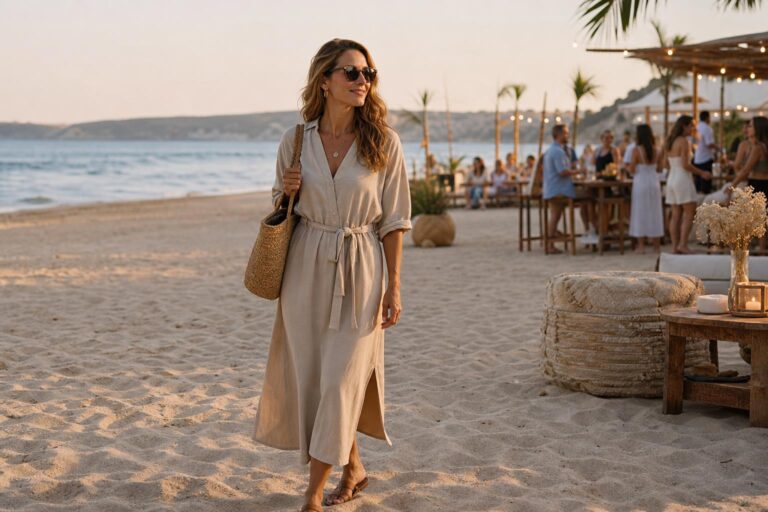
- Linen can suit a garden party or coastal setting, especially in shirt dresses or soft separates, but it is less effective for a sharper evening cocktail dress code.
Color combinations should stay calm and cohesive. Navy and ivory is one of the easiest pairings to get right because it feels classic and slightly preppy without looking severe. Black and cream reads dressier. Camel and beige can be beautiful for daytime or early evening, especially in summer settings, but they need good structure to avoid looking too relaxed.
A useful micro-insight: neutral outfits become much more interesting when you vary the finish. A cream cashmere knit, an ivory satin skirt, and a smooth leather bag all live in the same color family, but because the textures differ, the outfit still has depth. This is one of the clearest quiet luxury moves you can make without adding more accessories.
Accessories that support the outfit instead of stealing attention
The accessory story in old money party outfits is disciplined. Pearls appear often for good reason: they soften tailored lines, frame the face beautifully under evening lighting, and work across generations of dressing. Small gold accents can do the same thing when you want a slightly warmer finish.
Structured bags and leather clutches are more convincing than anything heavily embellished. They reinforce the idea of polish and permanence. Footwear follows the same rule. Loafers give a heritage-inspired, club-adjacent feel for more relaxed or earlier events. Pumps are the safer choice for cocktail attire, especially with dresses or straighter skirts. Ballet flats can work for a softer terrace or garden setting, but they should still feel polished rather than overly casual.
Tips for getting accessories right
- If the fabric is glossy, keep jewelry especially minimal.
- If the outfit is matte and tonal, pearls can add light without looking flashy.
- A structured bag makes simple separates look more intentional immediately.
- Choose one clear focal point: the neckline, the bag, or the shoe, not all three.
How heritage-style brands fit into the mood
Many readers connect this look with heritage houses and quiet luxury names such as Ralph Lauren, Burberry, Chanel, Prada, and Loro Piana. The reason is not just price or status. It is the design language associated with them: tailoring, cashmere, refined outerwear, timeless handbags, polished loafers, and a preference for classic silhouettes over obvious branding.
That does not mean an old money party outfit needs to be brand-heavy. In fact, the opposite is often more convincing. The useful takeaway from these labels is the visual direction they suggest: navy blazers, trench coats, silk blouses, structured dresses, leather accessories, and carefully edited color palettes. Think of them as anchors for the mood rather than a requirement.
For readers drawn to a Hamptons-style or Ivy League prep cue, Ralph Lauren and Burberry align naturally with blazers, trenches, and heritage-inspired separates. For a more minimalist evening interpretation, Loro Piana and Prada connect more easily to fine fabric and sleek shapes. Chanel appears most strongly in the idea of timeless polish and controlled elegance, especially when pearls and structured accessories enter the mix.
Real-life styling decisions: fit, comfort, weather, and movement
An outfit can look perfect on paper and still fail in real life if it does not match the event conditions. Old money style works best when it feels composed, and discomfort shows quickly. If you are attending a long cocktail hour, standing through a gallery opening, or moving between indoor and outdoor spaces, your fabric choice and shoe choice matter just as much as the visual concept.
Tailored trousers can be more forgiving than a fitted dress during longer evenings, especially if you want to sit, walk, and layer without adjusting your outfit constantly. A silk blouse under a blazer also adapts well to changing temperatures. For cooler weather, add cashmere or a structured jacket. For warmer conditions, lean on silk, satin, or lightweight wool with a cleaner neckline and fewer layers.
There is also a body-type advantage to these pieces when chosen carefully. A blazer can define the shoulders and create balance. A higher-waisted trouser can lengthen the legs. Column skirts can create a sleek line, especially when paired with a top that has some structure. If you prefer more ease through the middle, a softly draped silk blouse with a straight skirt or tailored trouser often looks more polished than anything too tight.
Easy adaptation ideas for different seasons
In early fall, cable knits, loafers, and tailored trousers bring in that heritage mood without sacrificing elegance. In spring or for coastal evening parties, linen dresses, a trench coat, or a light blazer can feel appropriate, especially in cream, navy, or soft beige. For winter evenings, velvet and cashmere offer warmth while still fitting the aesthetic. The common thread is always the same: keep the lines clean and the styling restrained.
Common mistakes that weaken the aesthetic
The old money look can go off track quickly when every element tries to make a statement. The easiest mistake is over-accessorizing a simple outfit until it loses its calm. Another is choosing pieces that are technically elegant but poorly fitted. This style depends on proportion, so even beautiful fabrics can look less refined if the shoulders, hem, or waistline feel off.
- Too many trend details at once
- Visible logo-heavy styling that overpowers the outfit
- Overly tight silhouettes that fight against the idea of ease
- Very high shine from head to toe without any matte balance
- Casual footwear that undercuts an otherwise polished outfit
- Ignoring venue cues and wearing a gala look to a garden setting
A practical rule: if the outfit already has silk, satin, or velvet, let that be the luxury cue. You usually do not need dramatic jewelry, bold contrast, or extra embellishment on top of it. Likewise, a trench coat, Breton top, or linen shirt dress can support the old money mood, but only when the event itself is relaxed enough for those pieces to make sense.
Building old money party outfits from what you already own
You do not need a completely new wardrobe to dress this way. Many readers already own the backbone pieces but have been styling them too casually or too separately. A white shirt can become party-ready with beige tailored trousers, pearls, and pumps. A black blazer can sharpen a satin midi dress. A cashmere sweater that usually goes with denim can look elevated with a column skirt and a leather clutch.
The easiest wardrobe hack is to look for pieces with clean lines and remove anything distracting around them. Replace an overly busy bag with a structured one. Swap chunky statement jewelry for pearls or small gold accents. Choose loafers, ballet flats, or pumps with a sleeker finish. These are not dramatic changes, but they can completely shift the impression of the outfit.
If you are creating a small capsule, focus first on one blazer, one silk blouse, one tailored trouser, one refined skirt, one party-ready dress, and one polished shoe. That core can cover everything from cocktail parties to gallery nights with only minor styling changes.
Old money versus quiet luxury for parties
The two ideas overlap, but they do not always feel identical in practice. Quiet luxury tends to emphasize refined minimalism and understated luxury in a broad sense. Old money adds a heritage-inspired layer: preppy references, aristocratic restraint, country-club polish, trench coats, blazers, loafers, and the sense that the wardrobe has evolved over time instead of being assembled around a trend.
For party dressing, quiet luxury might lean toward a very sleek satin or silk column dress with almost no visible styling extras. Old money might interpret the same evening through a navy blazer, pearls, a tailored midi silhouette, or a more classic cocktail shape. Neither approach is wrong. The difference is mostly in mood. Quiet luxury often feels more minimal-modern, while old money feels more heritage-refined.
A few context-driven outfit ideas to picture clearly
Picture arriving at a Newport-style gallery night in a black column dress, cream blazer, pearl studs, and pumps. The outfit is simple, but the structure makes it memorable. Or imagine a Hamptons-style private dinner: ivory silk blouse, navy trousers, loafers swapped for pumps at the last minute, and a small leather clutch. The mood is elevated but easy.
For a garden party with a softer dress code, a silk blouse and pleated midi skirt in cream and beige feels light, graceful, and completely wearable. If the temperature drops, a trench coat or cashmere layer fits naturally without breaking the look. These are the kinds of outfits that photograph well because the lines are clear and the colors are calm, but more importantly, they also feel believable and comfortable in real life.
That balance is what makes this style so enduring. It is timeless with a modern twist, minimalist but sophisticated, and polished without ever needing to look loud.
FAQ
What are the key pieces for old money party outfits?
The most reliable pieces are a tailored blazer, silk blouse or camisole, tailored trousers, a pencil or column skirt, a refined midi or column dress, pearls or minimal gold jewelry, a structured bag, and polished loafers or pumps. These items work because they create clean lines, understated luxury, and flexibility across different party settings.
How do I dress old money for a cocktail party?
Choose one polished silhouette and keep the styling restrained. A column dress with a blazer, or tailored trousers with a silk blouse and pumps, is usually a strong choice. Stay within a neutral palette like black, navy, ivory, or cream, and let fabric and fit do more of the work than accessories.
Can old money party outfits work on a budget?
Yes, especially if you focus on garment archetypes rather than labels. A well-cut blazer, clean trousers, a simple silk-like blouse, pearls, and a structured bag can create the right effect even without a luxury brand name. The biggest difference usually comes from fit, proportion, and keeping the outfit edited.
What colors look most authentic for this aesthetic?
Navy, black, ivory, cream, camel, and beige appear most consistently because they feel timeless and refined. These colors also combine easily, which helps create calm, cohesive outfits. For evening, black and navy often feel sharpest, while cream and beige work beautifully in daytime and garden-party settings.
Are pearls necessary for an old money look?
Pearls are not mandatory, but they are one of the clearest accessory cues tied to the aesthetic. They add light and polish without looking too flashy. If pearls do not suit your style, small gold accents can create a similar sense of refinement.
What shoes work best with old money party outfits?
Pumps are the safest choice for cocktail and evening events because they keep the silhouette clean and dressy. Loafers suit more relaxed party settings with a heritage or preppy feel, while ballet flats can work for softer garden or terrace events. The main goal is to keep the shoe polished and visually balanced with the rest of the outfit.
What is the difference between quiet luxury and old money style?
Quiet luxury focuses on understated luxury, quality fabrics, and minimal design. Old money style includes those same ideas but often adds heritage-inspired and preppy details such as blazers, loafers, trench coats, pearls, and classic club or coastal references. For parties, quiet luxury can feel more sleek and modern, while old money often feels more traditional and tailored.
How can I make my outfit look more expensive without overdoing it?
Use clean tailoring, a controlled neutral palette, and texture contrast such as silk with wool or cashmere with a structured skirt. Keep accessories minimal, choose a structured bag, and avoid stacking too many statement details into one look. Often the outfit looks more elevated when one element stands out quietly and everything else supports it.
Which fabrics are best for old money evening style?
Silk, satin, cashmere, wool, wool crepe, and velvet are especially effective because they bring depth and refinement without needing heavy embellishment. For daytime parties, linen can work well in softer tailored pieces or shirt dresses. The best results usually come from pairing one richer fabric with a simpler, more structured companion fabric.
What should I avoid if I want this look to feel natural instead of costume-like?
Avoid relying on stereotypes or piling on too many signals at once. Very visible logos, too much shine, excessive jewelry, poor fit, or wearing an overly formal look to a casual venue can make the outfit feel forced. The strongest old money party outfits are the ones that look effortless, appropriate, and thoughtfully balanced.
Finish the look
The little extras that make a summer outfit feel complete
From beach days to city weekends, these easy pieces bring comfort, texture, and a polished finishing touch.

FENBEN
Straw Hobo Crossbody Bag
A handwoven straw bag with both short and crossbody straps—an effortless finishing touch for vacation looks and warm-weather outfits.
Shop the bag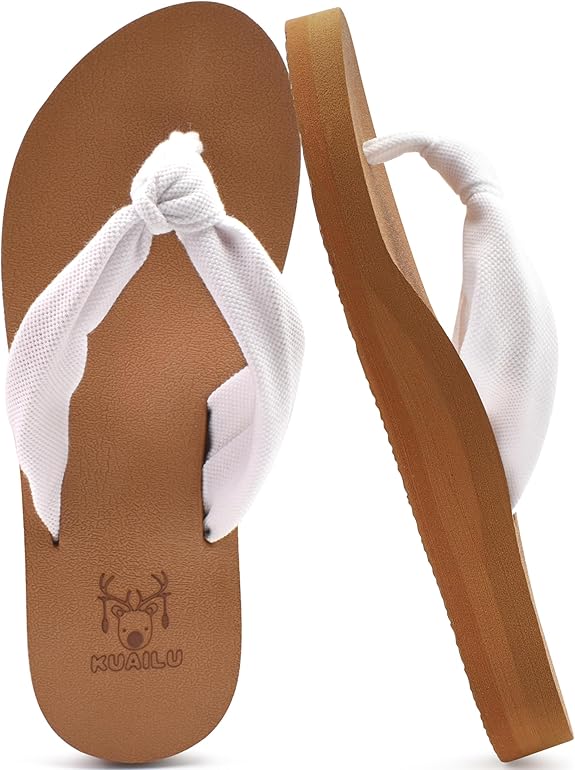
KuaiLu
Flip Flops with Arch Support
Cushioned, lightweight sandals with supportive arch design—a practical choice for beach trips, errands, and long summer walks.
Shop the sandals
baleaf
Athletic One-Piece Swimsuit
A functional one-piece with adjustable straps and moderate coverage, designed for swimming, training, surfing, and active beach days.
Shop the swimsuit
Astylish
Linen-Cotton Button-Down Shirt
A relaxed cotton-linen shirt with a collared V-neck and roll-up sleeves—easy to style over swimwear or with denim and shorts.
Shop the shirt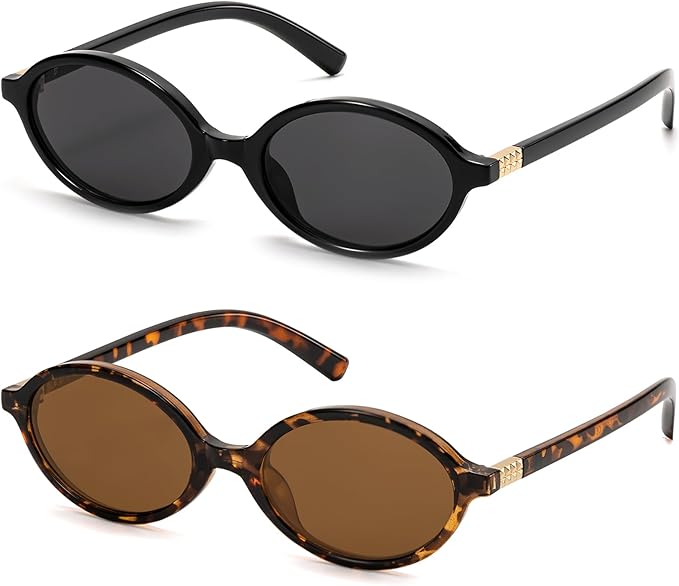
ViewJoy
Retro Oval Sunglasses
Small oval sunglasses with a 90s-inspired silhouette and UV400 lens protection—a quick way to add a vintage edge to everyday looks.
Shop the sunglasses
Affiliate disclosure: This section contains affiliate links. If you make a purchase through these links, I may earn a commission at no additional cost to you. Product selection, pricing, availability, and delivery terms may change—please review the current details on Amazon before purchasing.
As an Amazon Associate I earn from qualifying purchases.