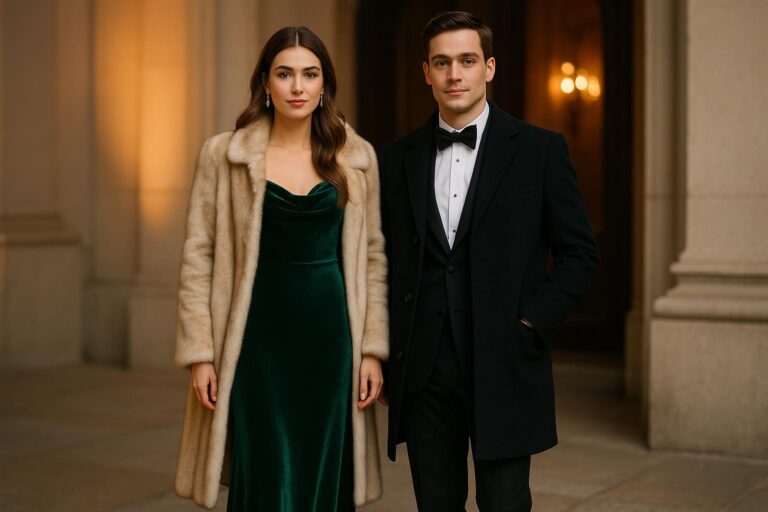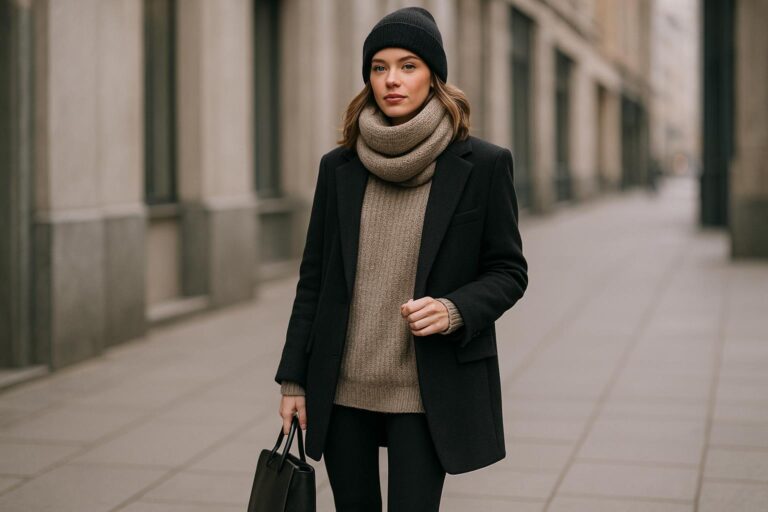
Chic Winter Office Outfit Ideas for Warm, Professional Style
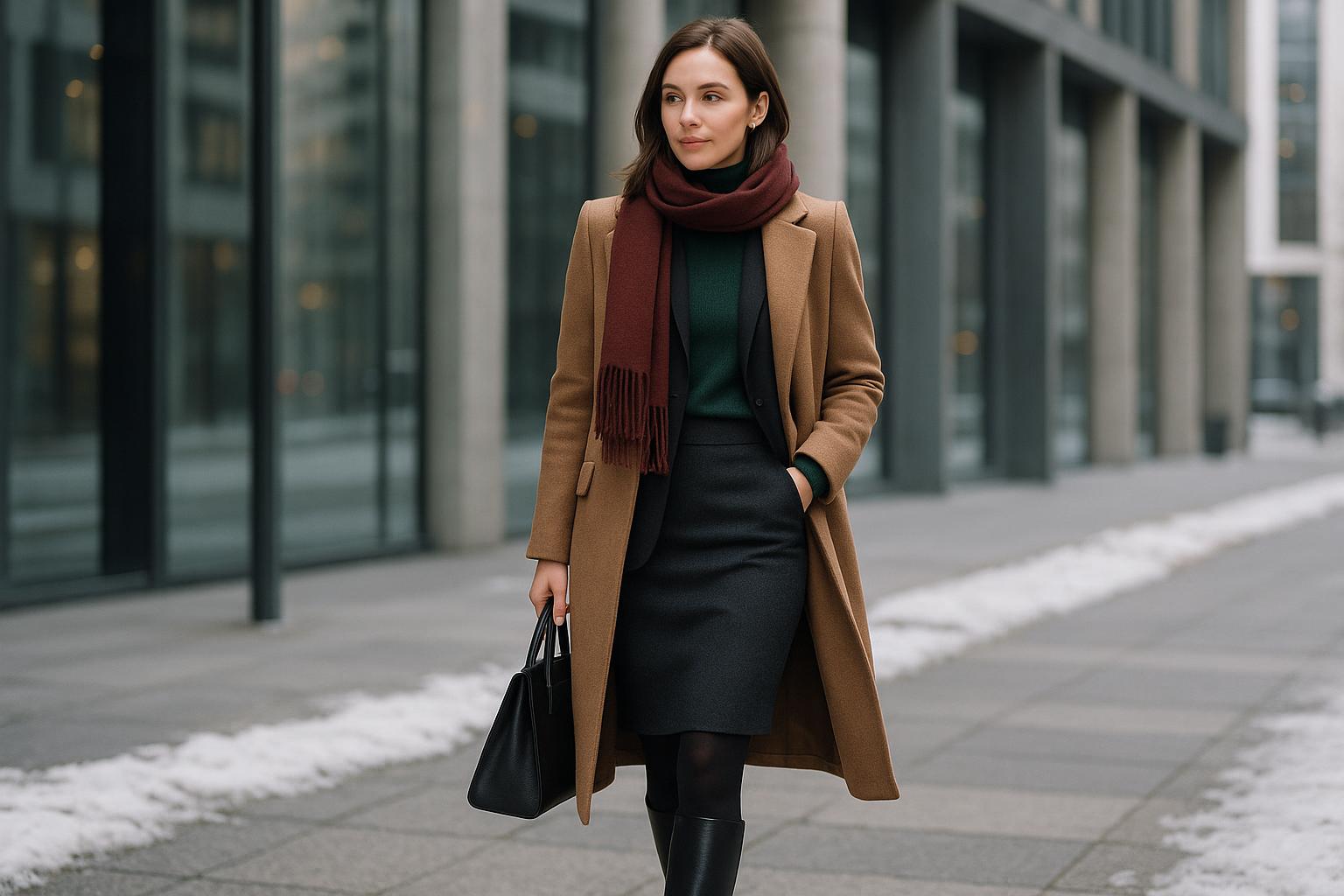
Chic and Warm: Building the Perfect Winter Office Outfit
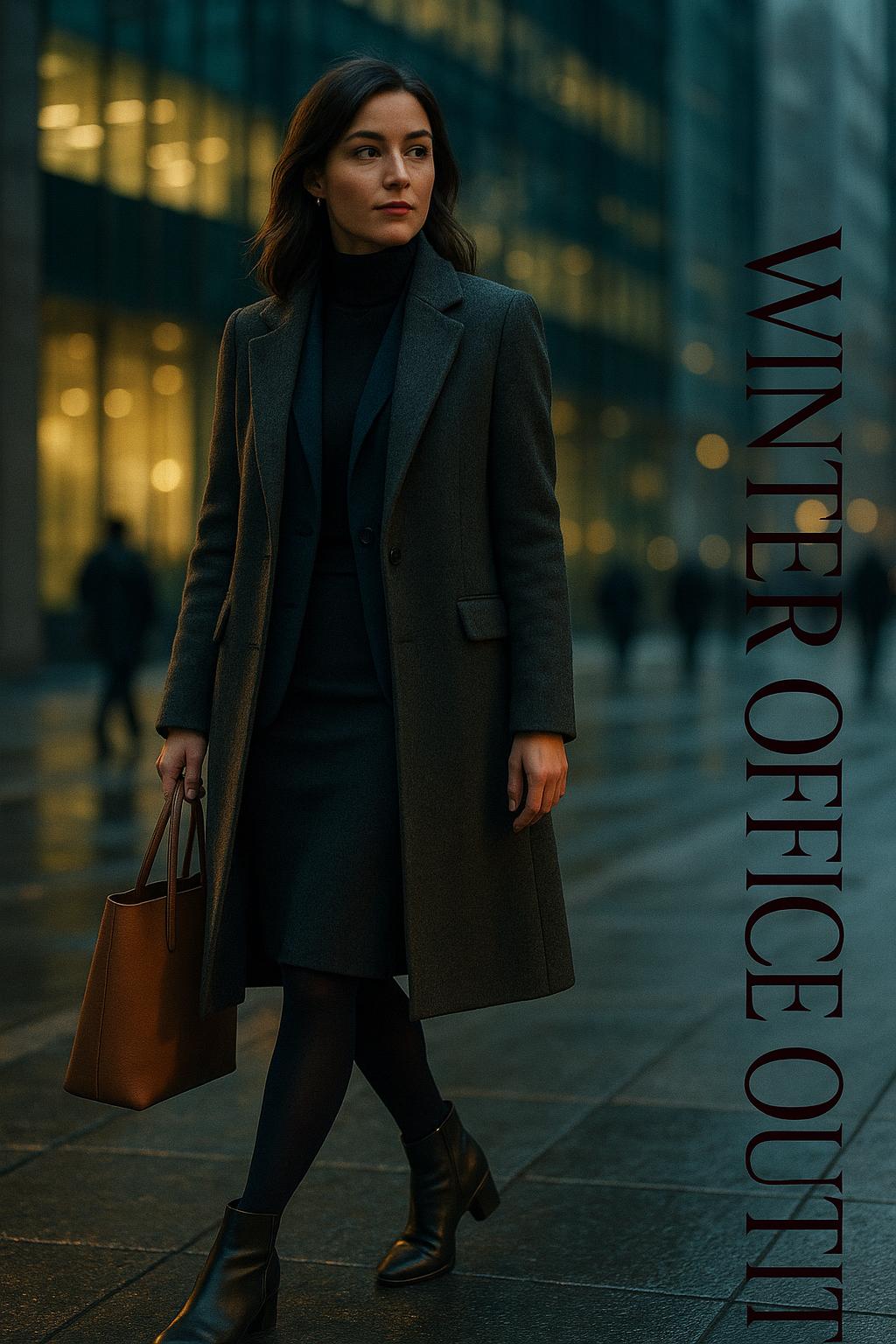
A well-planned winter office outfit strikes a balance between warmth, professionalism, and personal style. When temperatures drop, the goal is to stay cozy on your commute while still looking polished in meetings, presentations, and day-to-day office life. With the right fabrics, layering strategies, and smart pieces, you can create winter work looks that feel both comfortable and confident from 9 to 5 and beyond.
Looking for a complete guide? Read our Winter Outfit Ideas Guide.
This guide walks through practical outfit formulas, essential items, and style tips to help you dress for a variety of office environments—from conservative corporate spaces to relaxed hybrid setups—all without sacrificing warmth in the colder months.
The Fashion-Note Edit
Five effortless pieces to refresh your everyday wardrobe
A polished, practical edit for workdays, weekends, and everything in between.

The Drop
Women’s Blake Long Blazer
A longline, tailored blazer with a notched collar and a single-button closure—an easy layer for denim, dresses, or office-ready looks.
Shop the blazer
Amazon Essentials
Women’s Lightweight Crewneck
A soft, lightweight sweater with a clean crew neckline—the kind of reliable layer that works from cool mornings to air-conditioned spaces.
Shop the sweater
Amazon Essentials
Women’s Loafer Flat
A classic flat loafer that gives casual outfits a more polished finish and pairs naturally with tailored pants, skirts, and straight-leg jeans.
Shop the loafers
Levi’s
Women’s 501 90s Jeans
A relaxed, vintage-inspired take on the iconic 501 silhouette—made for an easy, lived-in look without the thrift-store search.
Shop the jeans
Colorfulkoala
High-Waisted 7/8 Leggings with Pockets
Soft, four-way-stretch leggings with side pockets and a high-rise waistband—designed for movement, errands, and off-duty comfort.
Shop the leggings
Affiliate disclosure: This section contains affiliate links. If you make a purchase through these links, I may earn a commission at no additional cost to you. Product selection, pricing, availability, and delivery terms may change—please review the current details on Amazon before purchasing.
As an Amazon Associate I earn from qualifying purchases.
Foundations of a Winter Office Wardrobe
Before creating specific winter office outfits, it helps to build a thoughtful foundation. Core pieces in reliable fabrics make it easier to get dressed on dark, cold mornings and ensure that most items in your closet work together.
Your wedding style is personal.
Your plan should feel that way, too.
Zarellea keeps your guest list, budget, vendors, and every next step beautifully organized — so you can focus on the moments that feel like you.
Choosing Professional Winter Fabrics
In winter, fabric choice is as important as silhouette. The ideal winter office outfit uses materials that insulate without adding excessive bulk and that still look refined in a professional setting. Wool and wool blends are standout choices for suits, trousers, and skirts because they hold structure, drape well, and retain warmth. Cashmere and merino knitwear add softness and insulation with a more luxurious finish suitable for client-facing roles or formal offices.
Thicker cotton, twill, and ponte knits provide structure for dresses and pants without feeling too rigid, and they work well layered under blazers or long coats. Lined pieces, particularly in skirts, trousers, and blazers, add another barrier against the cold while allowing garments to glide smoothly over tights or base layers. When selecting fabrics, look for those that resist excessive wrinkling so outfits stay crisp throughout the workday.
Color Palettes That Work for Winter Offices
Winter office outfits often lean into deeper, richer tones that feel seasonally appropriate yet professional. Neutrals like black, charcoal, navy, camel, and ivory form a versatile base that pairs easily with existing workwear. These shades are especially effective in jackets, trousers, and coats, offering flexibility for mixing and matching.
Accents of burgundy, forest green, deep plum, rust, and muted blues bring subtle personality to otherwise simple ensembles. For more creative offices, soft winter pastels—such as dusty rose, ice blue, or light grey—can provide a bright contrast to darker staples while still feeling polished. Choosing a cohesive color palette makes layering significantly easier and allows outfits to transition seamlessly from one winter month to the next.
Essential Winter Office Pieces to Own
A functional winter office wardrobe does not require dozens of pieces. Instead, a thoughtful selection of essentials lets you create multiple combinations that work across varying temperatures and dress codes. Focus on items that can be layered, dressed up or down, and repeated without appearing overly similar.
- Tailored wool coat that fits over blazers and thicker sweaters
- Classic blazer in a neutral shade (black, navy, or grey)
- Wool or wool-blend trousers in at least two colors
- Midi-length skirt or dress in a structured, winter-appropriate fabric
- Fine-knit sweaters and turtlenecks that layer neatly under jackets
- Crisp button-down shirts or blouses for a formal foundation layer
- Opaque tights or thermal leggings to wear under skirts, dresses, or wide-leg pants
- Office-appropriate boots with a stable heel or flat sole
- Soft, structured scarf that complements your coat and blazer
With this core set of items, you can rotate pieces through the week without feeling repetitive and ensure that every winter office outfit looks both intentional and weather-appropriate.
Layering Strategies for Warmth and Professionalism
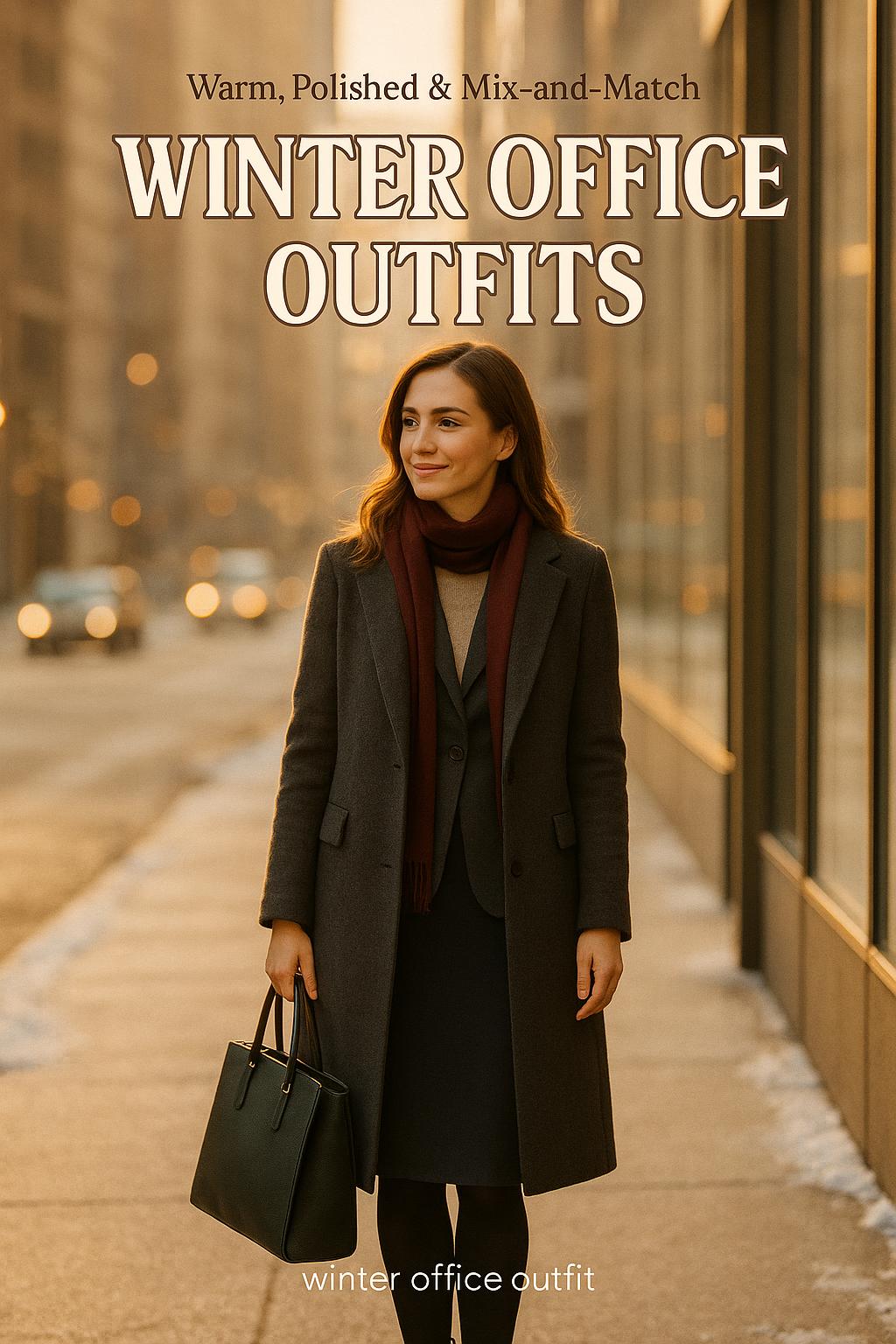
Layering is what transforms a simple outfit into a practical winter office outfit that works from freezing outdoor air to heated meeting rooms. The key is to keep layers thin, breathable, and easy to remove, so you maintain comfort without compromising your professional appearance.
Base Layers: Invisible Warmth
Base layers do the quiet work of keeping you warm without changing the visible style of your outfit. Lightweight thermal tops, long-sleeve undershirts, and thin, heat-retaining camisoles are ideal under blouses, sweaters, and dresses. Look for smooth fabrics that do not add bulk or show lines under tailored pieces, especially in fitted blazers or pencil skirts.
On the bottom, thermal tights, fleece-lined tights, or thin leggings can be worn under trousers or midi skirts. Opaque black tights are a classic choice for offices, providing more warmth than sheer versions while still looking professional. These hidden layers allow you to maintain a streamlined silhouette even in very cold weather.
Mid Layers: Blouses, Sweaters, and Blazers
The visible part of your winter office outfit usually sits in the mid-layer category. This includes button-down shirts, knit tops, fine-gauge turtlenecks, cardigans, and structured blazers. Combining these thoughtfully prevents overheating indoors while giving you options to adjust as needed.
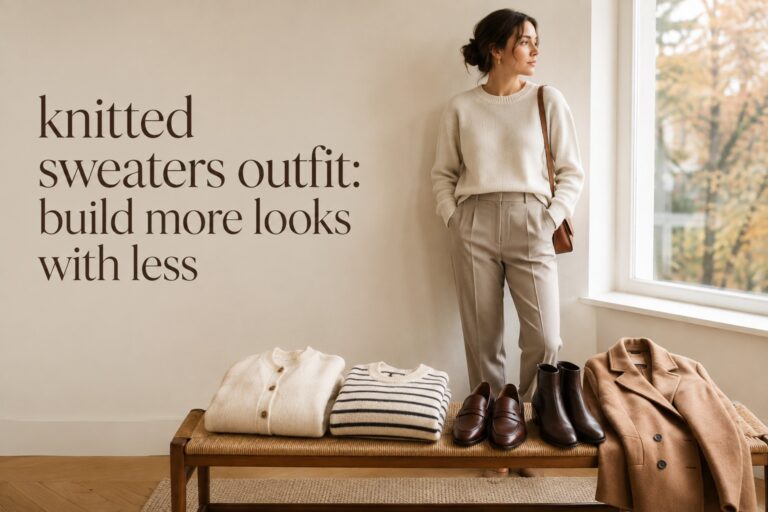
Fine-knit sweaters or merino turtlenecks pair well with tailored pants and can slip comfortably under a blazer. Cardigans work well in offices with fluctuating temperatures, allowing you to remove or add a layer quickly at your desk. When pairing blouses with sweaters, choose slightly looser knitwear to avoid bunching, and keep collars neatly tucked or deliberately styled over the sweater neckline for a polished finish.
Outer Layers: Coats, Scarves, and Office-Ready Outerwear
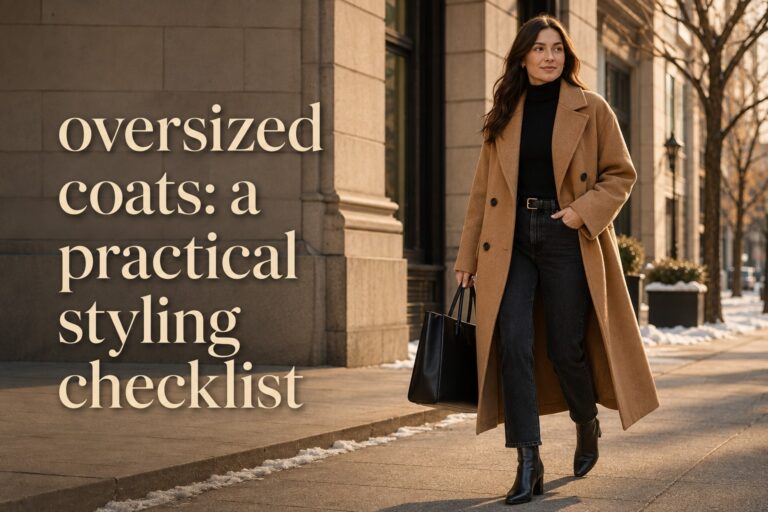
Your outerwear is the first part of your winter office outfit people see during commutes, building entry, and office lobby interactions. A tailored coat that hits at the knee or mid-calf offers warmth while keeping business attire covered and protected. Wool and wool blends remain classic for this purpose, with structured shoulders and clean lines that read as professional rather than casual.
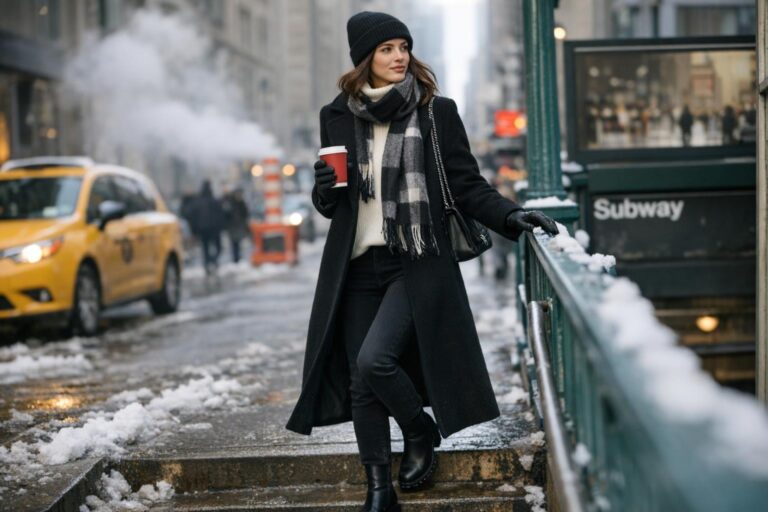
Scarves, gloves, and hats should coordinate with your coat and workwear colors. Choose scarves that are warm but not excessively bulky, so they can be folded and placed in a bag or draped across a chair without overwhelming your office look. If your workplace leans formal, opt for simple, minimal designs and avoid overly casual quilted coats or very sporty accessories during work hours.
Tips for Effective Layering
- Keep inner layers fitted and outer layers slightly looser to avoid restricting movement.
- Ensure sleeves of base layers are shorter than your visible layers to maintain a neat cuff line.
- Test your full outfit—including coat and boots—by sitting, walking, and reaching to ensure comfort.
- Choose buttons and zippers you can manage easily with gloves off in cold weather.
Winter Office Outfit Ideas by Dress Code
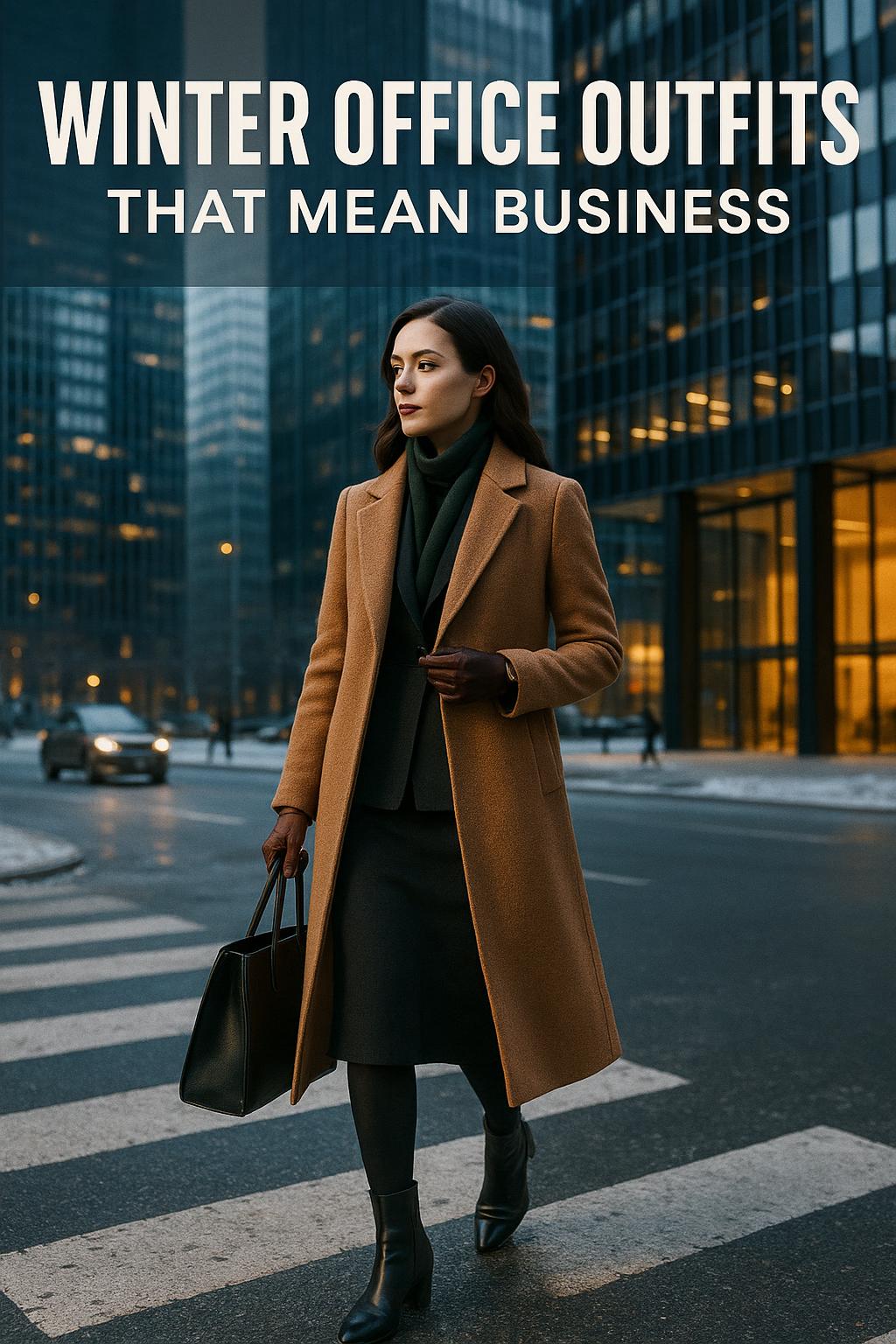
Different workplaces have different expectations. Whether your office is traditional, business casual, or relaxed and hybrid, it is possible to adapt your winter style while preserving both warmth and professionalism.
Formal and Corporate Winter Office Outfit Ideas
In conservative settings, structure and polish are central. Suits, tailored separates, and muted colors dominate, but small updates in texture and layering can make outfits winter-ready without breaking dress code expectations.
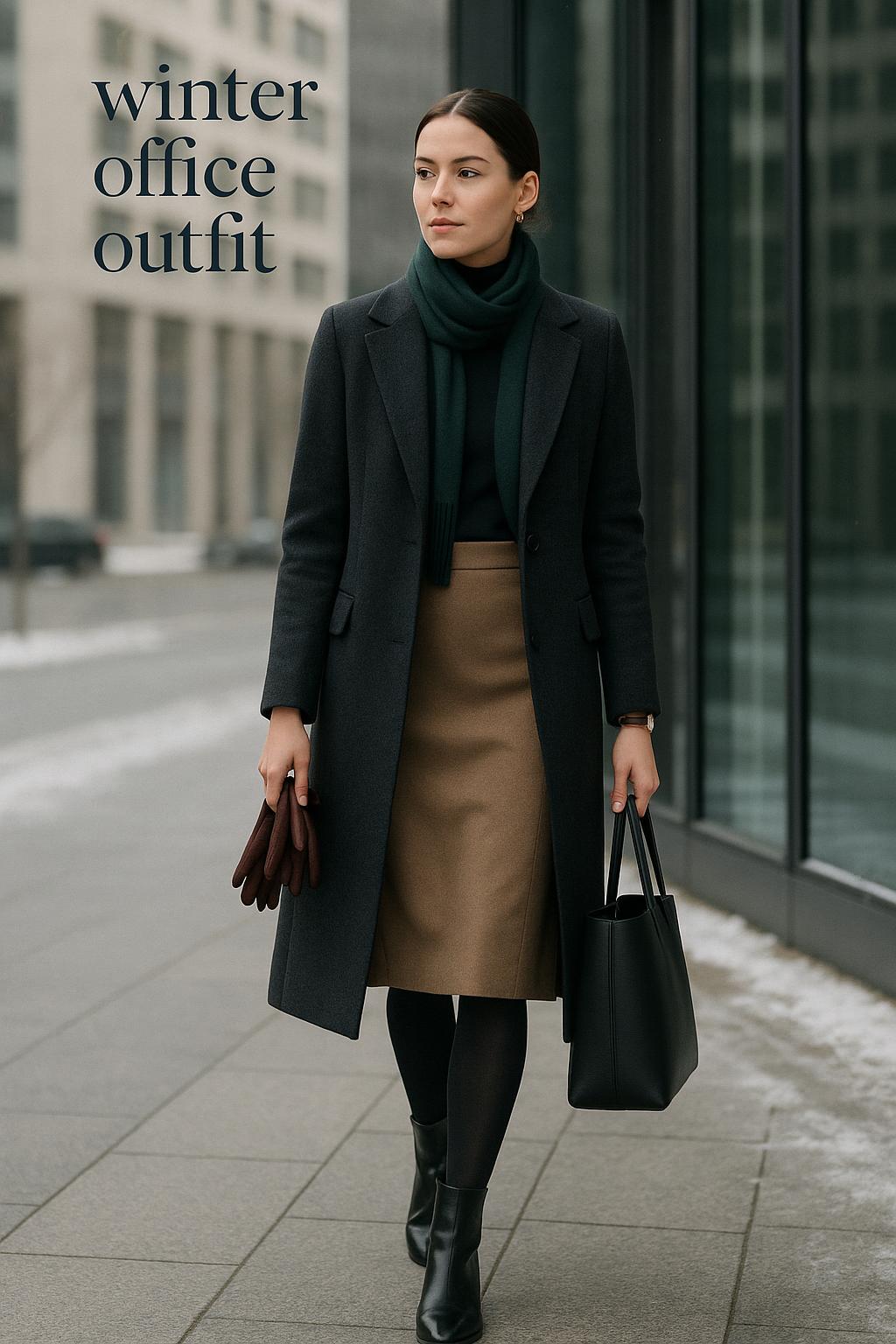
A classic winter office outfit for formal environments might include a wool-blend pantsuit in charcoal or navy paired with a fine-knit turtleneck instead of a standard blouse. This provides warmth while maintaining a clean, streamlined shape. For variety, swap trousers for a matching pencil skirt worn with opaque tights and heeled ankle boots that have a sleek, polished finish.
Another refined option is a tailored sheath or midi dress layered over a thin thermal base, topped with a structured blazer. Add a long wool coat and leather gloves for commuting. Focus on minimal accessories—simple stud earrings, a classic watch, and a structured tote—to keep the look professional and seasonally appropriate.
Business Casual Winter Office Outfit Ideas
Business casual offices offer more room for experimentation with textures, layers, and footwear. Here, the winter office outfit can be built around smart separates that feel slightly relaxed without veering into weekend wear.
Pair tailored wool trousers with a soft, slightly oversized sweater, then refine the look with loafers or ankle boots and a belt. A collared shirt layered under the sweater adds dimension, and rolling the cuffs of your sweater to reveal the blouse beneath can create a subtle, put-together detail. Midi skirts in heavier fabrics, such as knit or tweed, work well with turtlenecks and knee-high boots, balancing femininity and warmth.
If your office culture allows denim, choose dark, structured jeans without distressing and pair them with a blazer and refined leather boots. The key is ensuring each piece—especially outerwear and shoes—leans more polished than casual to remain aligned with business expectations.
Casual, Creative, and Hybrid Work Environments
For workplaces with flexible dress codes or hybrid arrangements where you split time between home and office, winter outfits can prioritize comfort while still reading as work-ready. Knitted dresses, sweater sets, and relaxed trousers become especially useful.
A knit midi dress layered with a longline cardigan and sleek boots can be comfortable enough for home office days yet polished enough for in-person meetings. Wide-leg trousers in thicker fabrics pair nicely with turtlenecks and structured sneakers or refined flats when allowed by office guidelines. Long shackets or soft blazer-style jackets bridge the gap between casual and tailored, serving as a comfortable third layer over simple tops.
Video meetings in cooler rooms may call for clean, simple tops in solid colors that frame your face well, such as fine-knit sweaters, mock-neck tops, or button-downs. Keep a neutral cardigan or blazer nearby to quickly elevate your look if an unexpected call arises.
Footwear and Accessories for Winter Office Looks
Footwear and accessories complete a winter office outfit and play a significant role in warmth, safety, and style. Ice, slush, and cold floors all influence what works best under winter conditions, but it is still possible to maintain a professional look.
Office-Appropriate Winter Shoes and Boots
In winter, many office professionals gravitate toward ankle boots, knee-high boots, and closed-toe shoes in leather or suede. Look for stable, low to mid heels or block heels that offer traction and comfort for commuting and walking between meetings. If your route to work involves snow and ice, you may prefer to wear weatherproof boots during the commute and change into more delicate shoes at your desk.
Classic ankle boots pair well with both trousers and midi skirts, especially in black, brown, or taupe. Knee-high boots provide extra warmth when wearing dresses or skirts and can elongate the leg line when matched closely to your tights color. In more relaxed offices, polished leather lace-up boots can bring a modern edge while still aligning with professional expectations if styling remains clean and minimal.
Tights, Socks, and Invisible Comfort
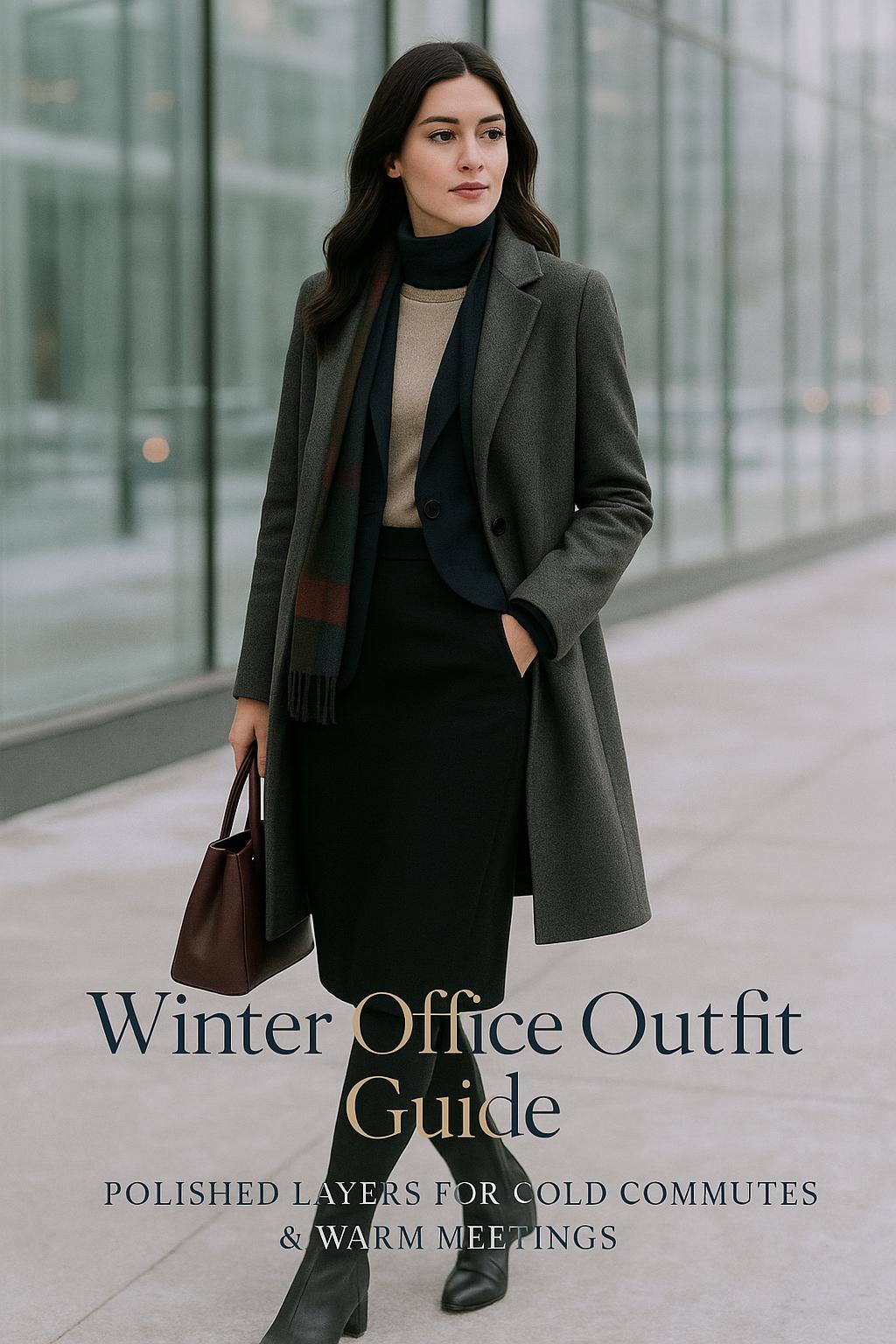
Understated legwear significantly enhances the practicality of a winter office outfit. Opaque tights in dark colors are the simplest solution for pairing with skirts and dresses, offering both coverage and warmth. Thermal or fleece-lined tights work particularly well on very cold days and can remain hidden under darker fabrics.
For trousers, choose warm, breathable socks that coordinate with your shoes and pants. If you expect to remove your shoes inside the office or at security checkpoints, ensure socks are free of visible wear and align with your outfit colors. Keeping an extra pair of tights or socks in your work bag can be a practical backup for unexpected weather or long days.
Scarves, Gloves, and Work-Ready Winter Accessories
Scarves and gloves are more than functional; they also provide an opportunity to introduce color, pattern, or texture into a winter office outfit. Wool or cashmere scarves in solid neutrals easily complement most coats and blazers, while subtle patterns like checks or herringbone add interest without feeling distracting. Choose lengths that can be wrapped securely during the commute but easily draped or folded away indoors.
Gloves should allow you to handle keys, doors, and devices without constant removal. Leather or faux-leather gloves with a sleek silhouette look particularly refined with long coats and suiting. Hats and earmuffs tend to come off upon entering the office, so opt for understated styles that do not disrupt your hairstyle significantly and can be stored easily in your bag.
Dressing for Varying Temperatures: Commute vs. Office
One of the biggest challenges in planning a winter office outfit is navigating the contrast between freezing outdoor air and heated offices or public transit. Strategic layering and fabric selection help you adapt quickly between environments without sacrificing comfort.
Managing the Commute
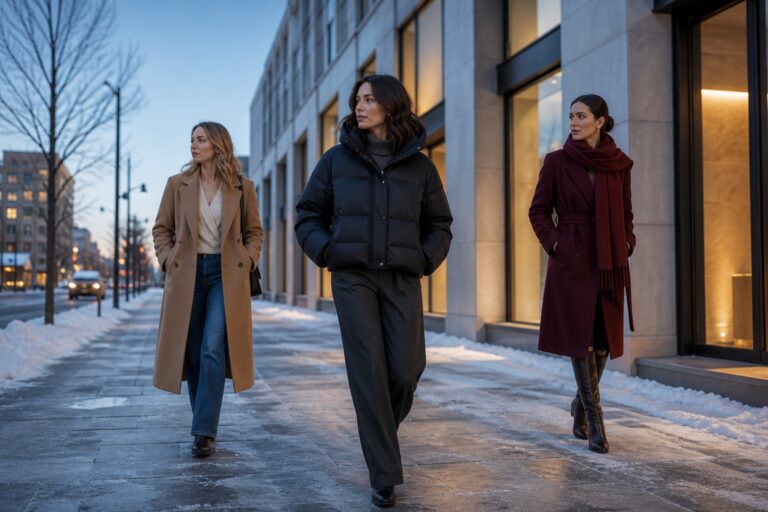
For commutes—whether by car, train, bus, or on foot—prioritize outer layers that block wind and retain warmth. A well-fitted wool coat, insulated but not overly bulky, can work over suits and separates without overwhelming your frame. If your climate is especially harsh, a slim, longer puffer coat in a neutral color may also be acceptable for the commute, as long as you remove it upon arrival to reveal a more tailored outfit underneath.
Use accessories strategically: a warm scarf that can be unwound quickly, gloves that tuck easily into pockets, and footwear with sufficient grip for slippery sidewalks. When planning your winter office outfit, always ensure that your chosen shoes can handle at least the short distances between transportation and your building entrance or have a reliable backup option stored at the office.
Staying Comfortable in a Heated Office
Indoor heating often means that what feels perfect outdoors can become too warm at your desk. This is where the layering approach truly matters. Base layers that breathe, combined with mid-layers that are easy to remove, help regulate your temperature throughout the day. Avoid overly heavy sweaters that cannot be taken off without compromising your outfit entirely; instead, rely on combinations such as a blouse plus a cardigan or a turtleneck under a blazer.
Keep a light, professional extra layer—such as a neutral cardigan or blazer—on the back of your chair for fluctuations in temperature, especially if your workplace tends to run cool in some rooms and warm in others. If your day includes a mix of desk work and moving between conference rooms, opt for outfits that do not require constant adjustment each time you change locations.
Tips for Balancing Indoor and Outdoor Needs
- Test your full outfit indoors before wearing it on a long workday to ensure you will not overheat.
- Prioritize breathable natural fibers near your skin to reduce discomfort from dry, heated air.
- Plan at least one removable layer that still leaves you looking complete and professional when taken off.
- Keep a small desk drawer or locker stocked with backup layers like a spare cardigan, scarf, or pair of tights.
Quick Outfit Formulas for Busy Winter Mornings
On dark winter mornings, decision fatigue can make getting dressed feel like a chore. Simple outfit formulas eliminate the guesswork and ensure your winter office outfit is polished even when time is limited.
Classic Trousers and Knitwear Combinations
One reliable combination pairs tailored trousers with a fine-knit sweater or turtleneck. Choose neutral trousers—black, charcoal, or navy—and rotate sweaters in complementary tones. Add a blazer or long cardigan if your office leans more formal. This formula allows quick mixing and matching of tops and bottoms while maintaining a cohesive overall look.
For variety, switch in patterned blouses under solid sweaters or choose a sweater with subtle details like ribbing, a mock neck, or small buttons at the cuffs. Finish with ankle boots and a structured coat for a streamlined silhouette that works in most office environments.
Skirt and Dress Combinations for Winter
Skirts and dresses can remain central to your winter office outfit strategy if you focus on length and layering. Midi-length options paired with opaque tights offer both coverage and movement. A knit dress in a neutral tone, worn with classic boots and a long coat, takes minimal effort yet communicates intention and style.
Pencil skirts in wool fabrics can be styled with blouses and a matching blazer for corporate settings, or with a turtleneck and cardigan for business casual environments. Changing your legwear—shifting from black tights to tonal or textured versions—allows you to subtly alter the look without changing the core pieces.
Tips for Creating Repeatable Outfit Formulas
- Identify 3–4 go-to combinations (such as trousers plus sweater, knit dress plus boots) and keep those pieces easily accessible.
- Stick to a consistent color story so most items coordinate without effort.
- Rotate accessories—scarves, jewelry, belts—to keep familiar outfits feeling fresh.
- Set out the next day’s outfit the night before during winter months to save time in the morning.
Maintaining and Caring for Winter Workwear
Winter fabrics require slightly more attention than lightweight summer materials, but proper care ensures your winter office outfits look sharp all season. This includes addressing salt stains, preserving knitwear, and storing items thoughtfully between wears.
Caring for Coats, Boots, and Outerwear
Your coat and boots encounter the harshest conditions, from snow and rain to salt and slush. Gently brushing off surface moisture and residue when you arrive at the office or home helps preserve materials. For leather boots, occasional cleaning and conditioning maintain their appearance and extend their life, especially if frequently exposed to salt or moisture.
Hang coats on sturdy hangers to support their weight and maintain their shape, rather than on hooks that can distort shoulders. Periodic professional cleaning, as recommended on the care label, keeps wool coats looking crisp and fresh, preventing buildup of dirt and urban grime.
Looking After Sweaters and Knitwear
Knitwear forms the backbone of many winter office outfits, so preserving its appearance is essential. Rotate sweaters to prevent overuse, and allow them to rest between wears so fibers can recover their shape. When washing, follow care labels carefully; many fine knits benefit from gentle washing methods and flat drying rather than machine drying.
Store folded sweaters on shelves rather than hanging, which can stretch shoulders and distort the neckline. If pilling occurs in high-friction areas, use a fabric comb or de-pilling tool with a light touch to refresh the surface without damaging the fibers.
FAQ
What should I wear to the office in winter to stay warm but still look professional?
Focus on thin, insulating layers that maintain a tailored silhouette, such as thermal base tops under blouses, fine-knit sweaters under blazers, wool trousers or lined skirts with opaque tights, and a structured wool coat for commuting; this combination keeps you warm outdoors while allowing you to remove a layer indoors and still look polished.
Are boots appropriate for a winter office outfit?
Boots are usually appropriate in winter as long as they are clean, in good condition, and styled with a professional shape—think leather or suede ankle boots or knee-high boots with a stable heel and minimal hardware—while very casual snow boots or heavy-duty hiking styles are better reserved for the commute and swapped out at your desk.
How can I wear dresses and skirts to the office in cold weather?
Choose dresses and skirts in heavier fabrics like wool, ponte, or knits, opt for midi lengths for more coverage, and pair them with opaque or thermal tights and ankle or knee-high boots, then add a blazer or long cardigan and a tailored coat for commuting to create a warm, office-ready combination.
What colors work best for winter office outfits?
Deep neutrals such as black, charcoal, navy, camel, and ivory form a versatile winter base that always looks professional, and you can add subtle seasonal accents like burgundy, forest green, deep plum, or muted blues in sweaters, scarves, or blouses to bring variety without overpowering your work look.
How do I layer without looking bulky at work?
Keep your base layers thin and fitted, choose fine-gauge sweaters instead of chunky knits for the office, and ensure each outer layer—such as blazers and coats—is cut slightly larger than the layer beneath so fabrics lie smoothly, which allows you to stack warmth while preserving a streamlined, professional silhouette.
Can I wear jeans as part of a winter office outfit?
If your workplace allows denim, select dark, structured jeans without rips or heavy fading and style them with elevated pieces like a blazer, fine-knit sweater, button-down shirt, and polished boots or loafers so the overall outfit still reads as professional and not weekend casual.
What type of coat looks most professional for winter workwear?
A tailored wool or wool-blend coat that hits around the knee or mid-calf, with clean lines and minimal embellishment, typically looks the most professional, since it fits easily over suits and blazers, coordinates with both dresses and trousers, and creates a cohesive look from your commute to the office entrance.
How can I make my winter office outfits feel less repetitive?
Rotate accessories like scarves, belts, and jewelry, vary your knitwear styles between crewnecks, turtlenecks, and cardigans, and mix different textures—such as pairing a smooth blouse with a textured skirt or a knit dress with leather boots—so that even when you repeat core pieces, the combinations feel fresh.
What are some simple winter office outfit formulas I can rely on?
Dependable formulas include tailored wool trousers with a fine-knit sweater and ankle boots, a knit midi dress with opaque tights and knee-high boots, a pencil skirt with a blouse and blazer, and dark jeans (if allowed) with a turtleneck and structured jacket, all finished with a long coat and understated accessories.
How do I transition my office outfit from a cold commute to a warm building?
Dress in layers that you can peel away as soon as you arrive, such as wearing a thermal base top, mid-weight sweater or blouse, and blazer under a warm coat, then remove the coat and scarf indoors while keeping the rest of the outfit intact, which allows you to stay comfortable without changing clothes entirely.
Finish the look
The little extras that make a summer outfit feel complete
From beach days to city weekends, these easy pieces bring comfort, texture, and a polished finishing touch.

FENBEN
Straw Hobo Crossbody Bag
A handwoven straw bag with both short and crossbody straps—an effortless finishing touch for vacation looks and warm-weather outfits.
Shop the bag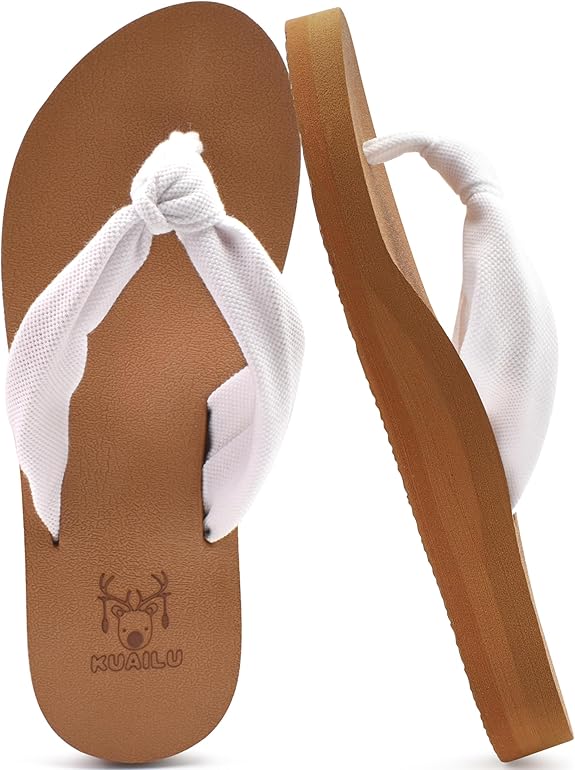
KuaiLu
Flip Flops with Arch Support
Cushioned, lightweight sandals with supportive arch design—a practical choice for beach trips, errands, and long summer walks.
Shop the sandals
baleaf
Athletic One-Piece Swimsuit
A functional one-piece with adjustable straps and moderate coverage, designed for swimming, training, surfing, and active beach days.
Shop the swimsuit
Astylish
Linen-Cotton Button-Down Shirt
A relaxed cotton-linen shirt with a collared V-neck and roll-up sleeves—easy to style over swimwear or with denim and shorts.
Shop the shirt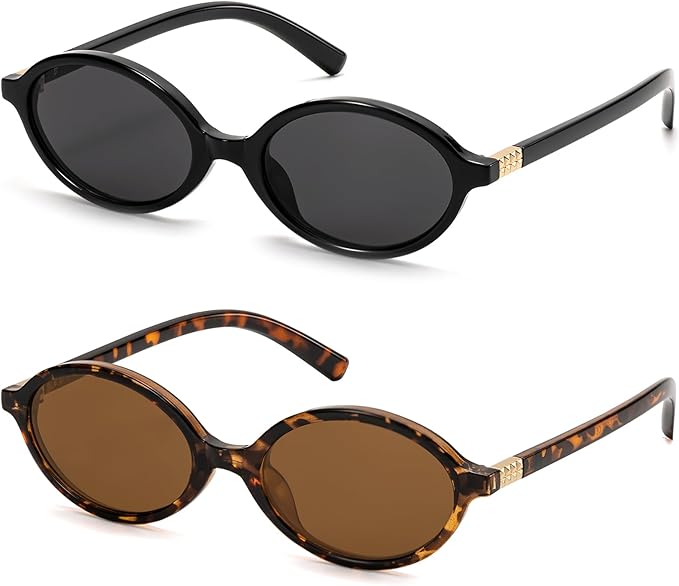
ViewJoy
Retro Oval Sunglasses
Small oval sunglasses with a 90s-inspired silhouette and UV400 lens protection—a quick way to add a vintage edge to everyday looks.
Shop the sunglasses
Affiliate disclosure: This section contains affiliate links. If you make a purchase through these links, I may earn a commission at no additional cost to you. Product selection, pricing, availability, and delivery terms may change—please review the current details on Amazon before purchasing.
As an Amazon Associate I earn from qualifying purchases.