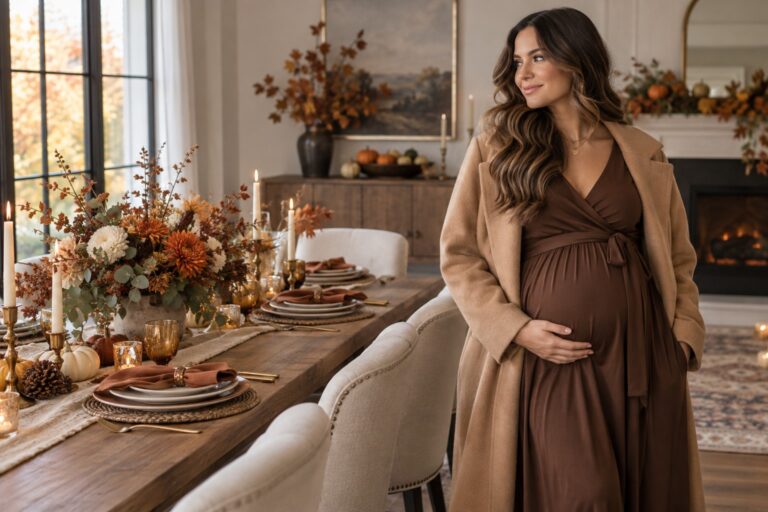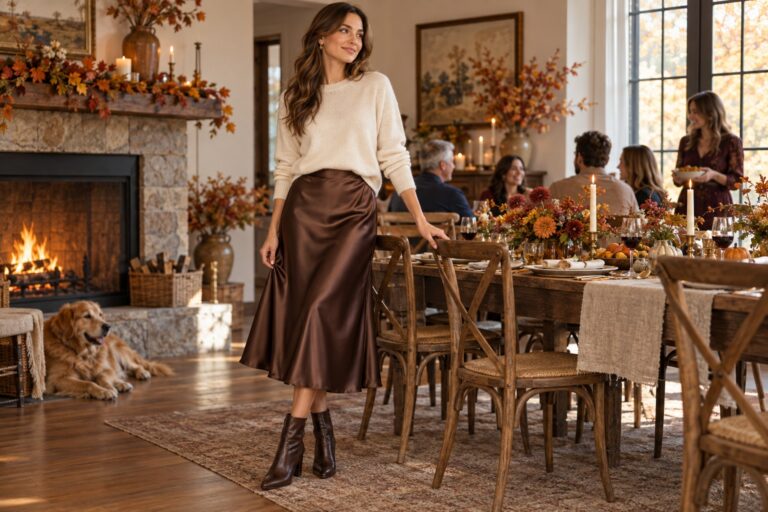
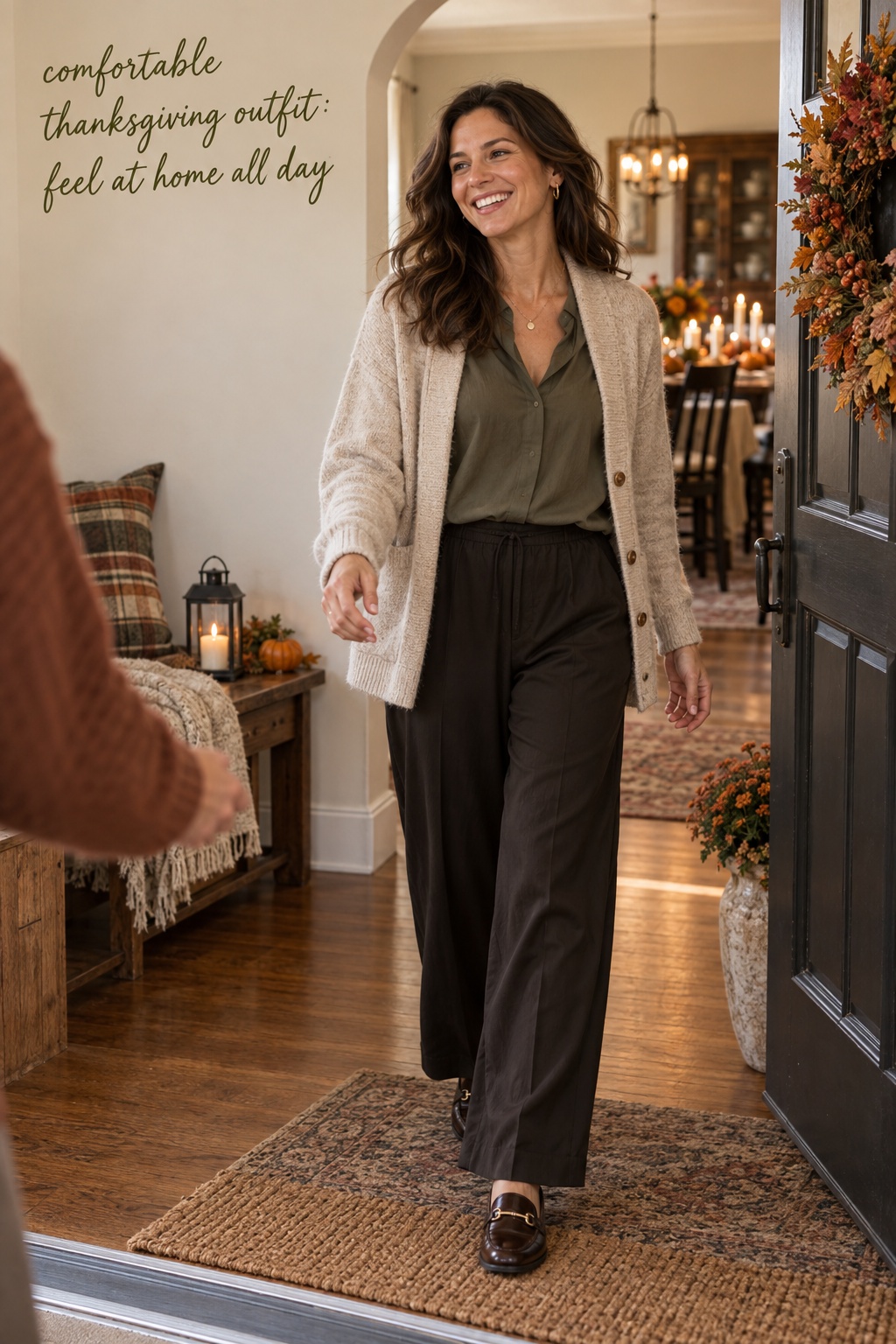
Comfortable Thanksgiving Outfit: Feel Good at the Table
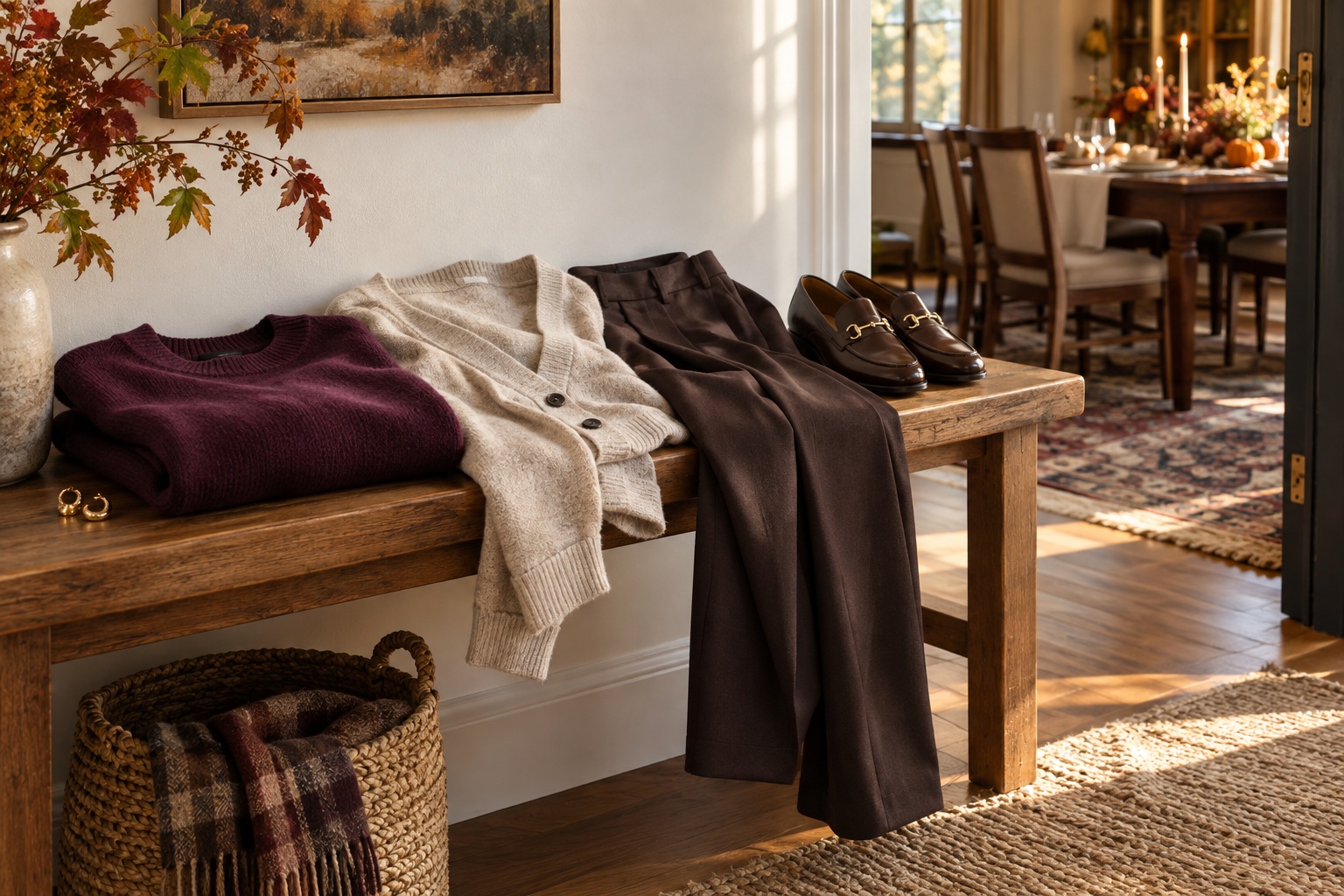
The outfit is already on, the table is almost set, and the first photo looks exactly as you hoped. Then the waistband starts pressing when you sit, one sleeve keeps sliding toward the serving dish, or the shoes feel distracting before dinner has even begun. That is the quiet test of a comfortable Thanksgiving outfit: it needs to feel good after the arrival moment, when you are eating, talking, leaning in, and staying awhile.
Comfort is personal. One person feels at ease in familiar jeans; another would rather wear a soft dress with no separate waistband. Some people dislike a high neckline, while others prefer the feeling of a collar or a layer around the shoulders. The useful question is not which garment is universally comfortable. It is which part of your chosen look lets you enjoy the gathering, and how to keep the rest of the outfit feeling like you.
The moment a comfortable outfit stops feeling comfortable
In a standing mirror, most outfits get an easy review. You notice the color, the shape, and whether the pieces feel right together. A long meal asks different questions. A waistband that seemed fine for five minutes may feel distracting after sitting. A top that looked smooth with your arms at your sides may tug when you reach forward. A necklace can sit neatly until it catches on a textured knit. None of those reactions means the outfit is wrong. They are useful information about how you want to wear it.
The Fashion-Note Edit
Five effortless pieces to refresh your everyday wardrobe
A polished, practical edit for workdays, weekends, and everything in between.

The Drop
Women’s Blake Long Blazer
A longline, tailored blazer with a notched collar and a single-button closure—an easy layer for denim, dresses, or office-ready looks.
Shop the blazer
Amazon Essentials
Women’s Lightweight Crewneck
A soft, lightweight sweater with a clean crew neckline—the kind of reliable layer that works from cool mornings to air-conditioned spaces.
Shop the sweater
Amazon Essentials
Women’s Loafer Flat
A classic flat loafer that gives casual outfits a more polished finish and pairs naturally with tailored pants, skirts, and straight-leg jeans.
Shop the loafers
Levi’s
Women’s 501 90s Jeans
A relaxed, vintage-inspired take on the iconic 501 silhouette—made for an easy, lived-in look without the thrift-store search.
Shop the jeans
Colorfulkoala
High-Waisted 7/8 Leggings with Pockets
Soft, four-way-stretch leggings with side pockets and a high-rise waistband—designed for movement, errands, and off-duty comfort.
Shop the leggings
Affiliate disclosure: This section contains affiliate links. If you make a purchase through these links, I may earn a commission at no additional cost to you. Product selection, pricing, availability, and delivery terms may change—please review the current details on Amazon before purchasing.
As an Amazon Associate I earn from qualifying purchases.
It helps to separate the outfit’s appearance from the sensation of wearing it. The appearance may be working beautifully: perhaps you like the color, the proportion, or the way a favorite jacket frames the look. The sensation may be less successful at one point. If you can name that point, you can keep what you like and adjust what is bothering you. That is a more reliable route to an outfit you will enjoy than replacing everything because one piece feels difficult.
Your wedding style is personal.
Your plan should feel that way, too.
Zarellea keeps your guest list, budget, vendors, and every next step beautifully organized — so you can focus on the moments that feel like you.
Think about the moment your attention shifts away from the conversation. Are you pulling at a hem? Loosening a closure? Moving a strap back onto your shoulder? Standing because the fabric feels restrictive while seated? Small repeated adjustments usually point to one specific issue. A sleeve may be too narrow for the movement you need. A waistband may sit at a spot you do not enjoy. A dress may need a layer underneath that changes how it feels against your skin.
The setting still matters. A relaxed dinner at home leaves room for a soft knit set, relaxed jeans, or a sweater dress. A restaurant reservation or a more dressed-up family tradition may call for a sharper line or a more deliberate finish. Comfort does not require ignoring the invitation. Instead, let the invitation set the level of polish, then choose the version of that level you can comfortably wear. A tailored trouser with a flexible waist can read differently from a lounge pant, even when both feel easy.
The most helpful starting point is one piece you already trust. It might be a pair of trousers that stay comfortable while seated, a sweater with sleeves that never need adjusting, or shoes you can keep on through the whole visit. Build the outfit around that reliable piece. Its color and texture can guide the rest, while its fit gives you a dependable foundation. Starting with a familiar favorite also makes it easier to notice whether a new combination adds comfort or takes it away.
A mirror photograph cannot tell you everything. The finished look should make sense from the front and the side, but the better decision comes when you move in it. Sit as you would at the table. Reach for something on a counter. Walk from one room to another. If the outfit stays settled and you stop thinking about it, that ease is part of its success. If one element keeps calling for attention, you have found the first place to edit.
Find the one detail that is making your outfit hard to wear
Start at the waist, because this is where many separate outfits meet the body and where sitting changes the feel of a garment. Try the trousers or skirt with the top and shoes you plan to wear. Sit down, breathe normally, and notice whether the closure presses, the waistband rolls, or the fabric pulls across the lap. You do not need to predict every sensation through a full holiday. You are looking for a clear sign that the current fit is already distracting. A different rise, a softer band, or a top worn untucked may solve the issue while preserving the same color story.
Then check the upper body. Raise your arms as if you were passing a dish across a table. Lean forward slightly as if you were listening to someone nearby. See whether the shoulder seam pulls, the neckline shifts, or the sleeves bunch where you would rather have room. A familiar button-down can feel more relaxed when worn open over a smooth top. A cardigan can create a similar frame without asking a buttoned shirt to do all the work. If you like a fitted shape, keep it in the part of the outfit that moves comfortably and add an easy layer where you want more freedom.
Texture deserves its own check. Some people enjoy a thick cable knit; others notice every raised seam or rough label. A soft base layer can make a textured sweater easier to wear, but only if that extra layer does not create heat or bunching for you. If a scarf feels fussy around your neck, a pair of earrings or a bag in a rich autumn color can supply the same visual finish. If a satin skirt feels slippery under your chair, try a knit skirt or a pair of fluid trousers with a similar level of polish.
Next, look at the hem and what it meets. A long trouser hem can gather under your shoe or drag near the floor. A skirt can twist when you stand, or the lining may not move the way the outer fabric does. Try the outfit with the exact shoes you intend to wear, then walk and sit. The shoe changes the length and the feel of the whole look. A flat loafer may make a wide-leg trouser easier to move in than a heel you rarely wear. A familiar ankle boot can give a skirt the grounded finish you want without adding a new comfort question.
Also consider what happens when you remove a layer. Thanksgiving gatherings often move between an entryway, kitchen, dining area, and living room, and people have different preferences for warmth. You do not need a complex layering system. Choose a base outfit that already feels complete, then add a cardigan, jacket, or scarf only if you want it. When the extra piece comes off, the neckline and overall shape should still look intentional. If removing a sweater reveals a top you would not choose on its own, pick a different base instead of relying on a layer you may not want to keep wearing.
Make one change at a time. If the jeans feel uncomfortable at the waist, swap the jeans before reconsidering the shoes, top, jacket, and accessories. If the blouse feels restrictive across the shoulders, keep the trousers and try a soft knit or an open layer. Changing several pieces together can make it hard to know what helped. A single thoughtful adjustment often keeps the original outfit’s character, which matters when you chose it because you liked the overall look.
Comfort should not become another demand placed on your body. You do not need to choose clothes to disguise a meal, appear smaller in a photograph, or anticipate how your shape might change over the day. Pick a fit that lets you sit, breathe, and take part without monitoring yourself. The best edit is the one that answers your own preference, whether that means a looser waist, a softer fabric, a higher neckline, or a familiar shoe.
Comfortable Thanksgiving outfit ideas with one thoughtful swap
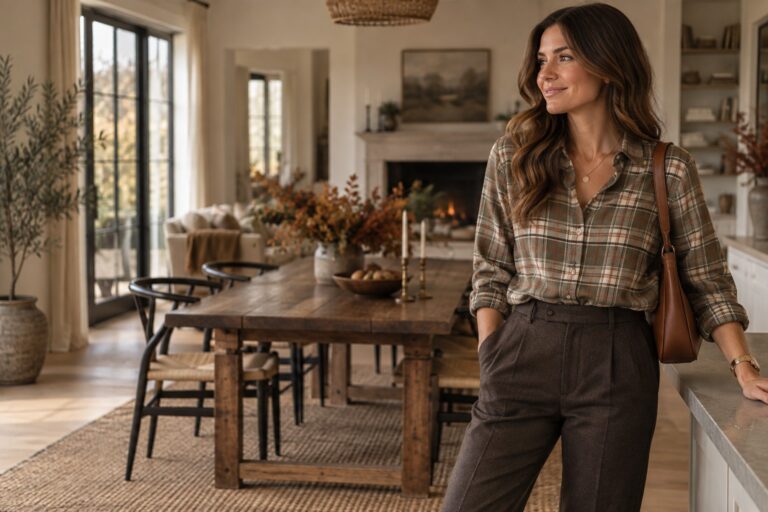
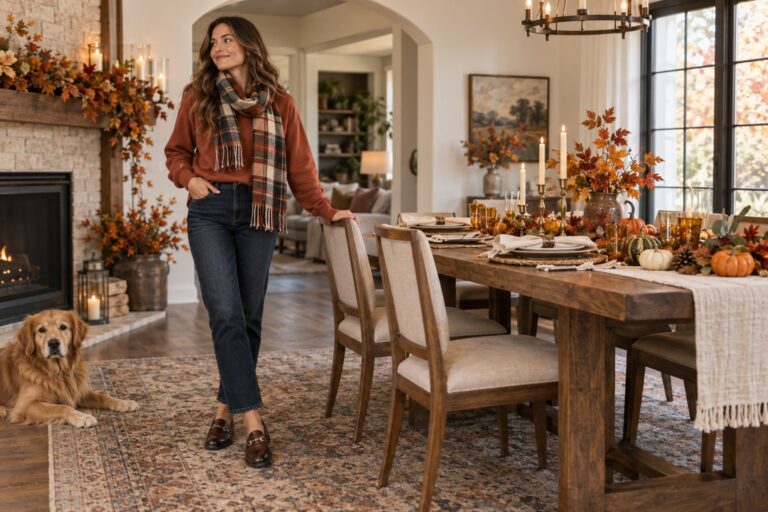
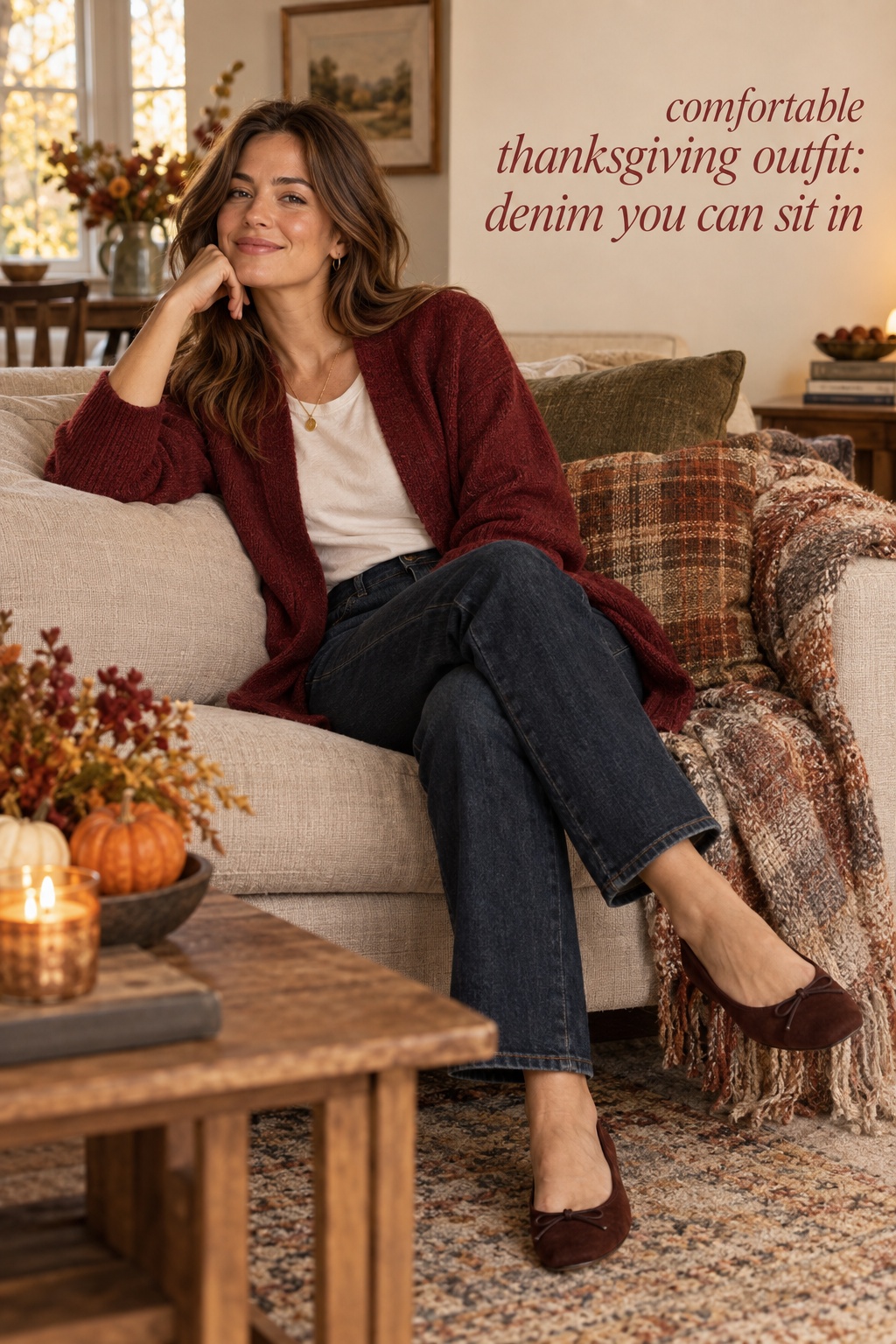
If you like jeans but avoid wearing them for a long dinner, keep the familiar denim look and change its most uncomfortable feature. Try a relaxed straight-leg pair instead of a close fit, or choose denim with a waist that feels better when seated. A fine sweater, soft button-down, or cardigan can keep the outfit looking deliberate. Loafers or clean flats finish it without asking you to balance through the evening in shoes that feel unfamiliar. The point is not that one jean shape works for everyone. It is that the top, color, and general mood can stay the same while the fit changes.
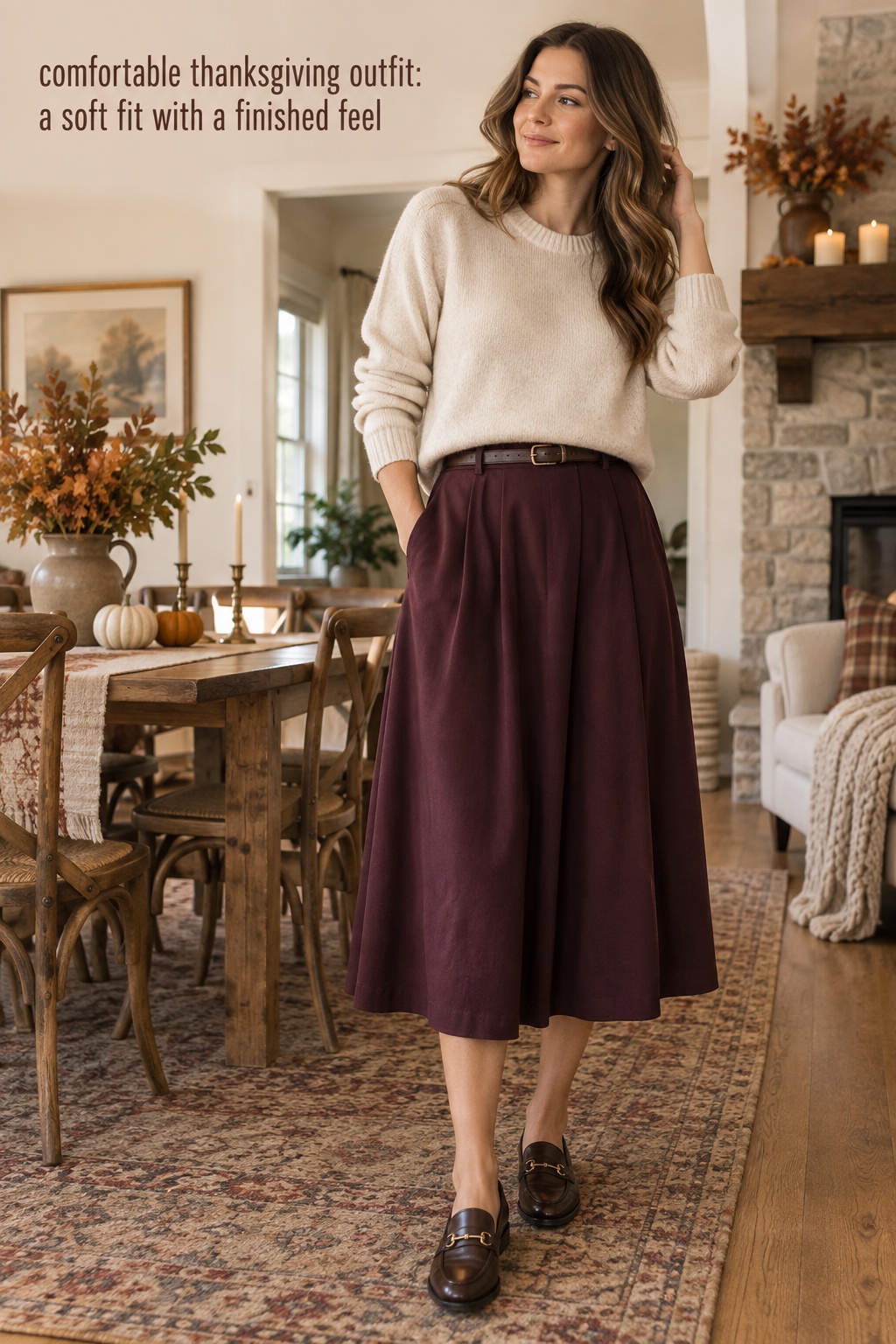
For a skirt outfit, start with the movement you want from the fabric. A flowing skirt can feel lovely, but check whether it shifts or catches when you sit. A knit midi may feel steadier for some wearers. Pair either one with a sweater that does not need constant tucking. If you like a defined waist, use a soft belt or a front tuck only if it remains comfortable after sitting. A tonal sweater and skirt can look composed without extra decoration, while one textured earring or a polished shoe gives the outfit a finishing point.
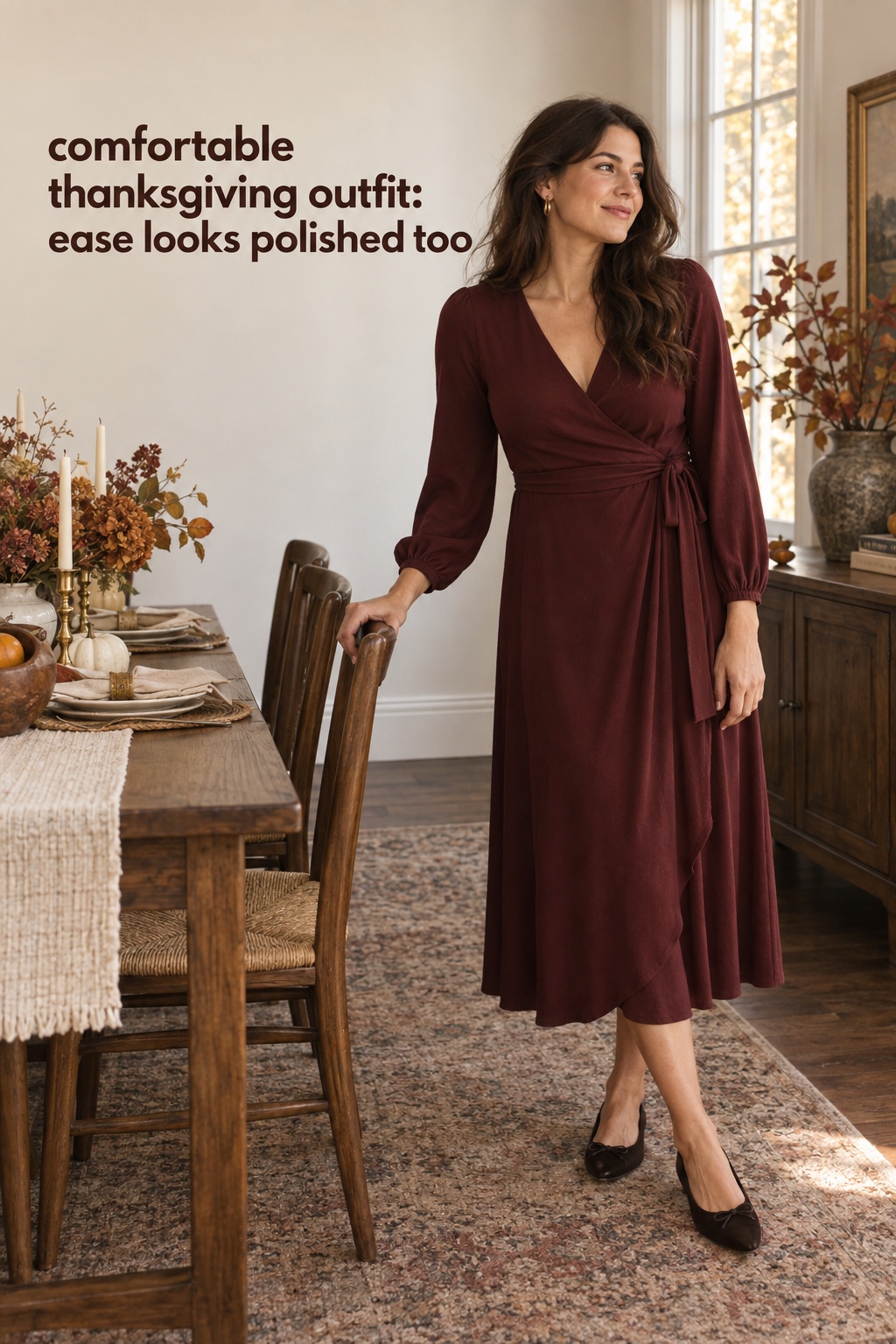
A dress can be a simple choice when separate waistbands and layers feel like too much. A relaxed knit dress with flat boots offers a clean line and fewer pieces to coordinate. If a close-fitting dress feels distracting, look for a straighter cut or add a soft cardigan that creates shape without cinching. If you prefer a little definition, a tie belt lets you decide how firmly the waist is marked. Check that the neckline stays where you want when you lean toward the table. The aim is not to flatten or conceal anything; it is to feel at ease in the silhouette you picked.
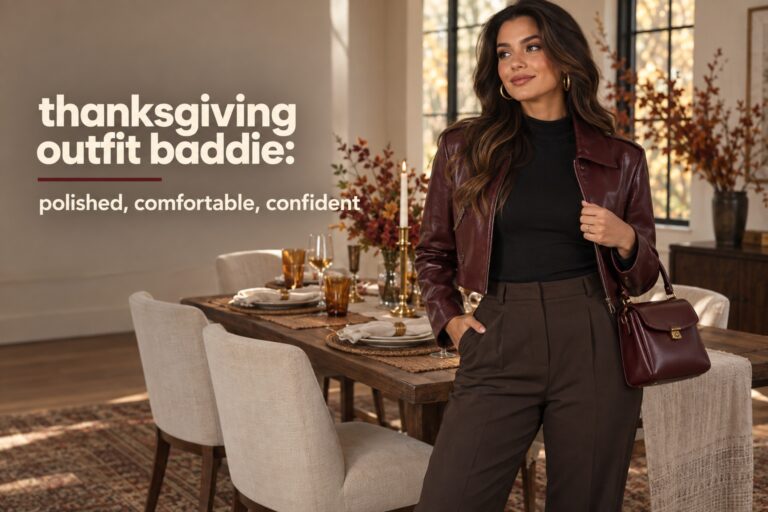
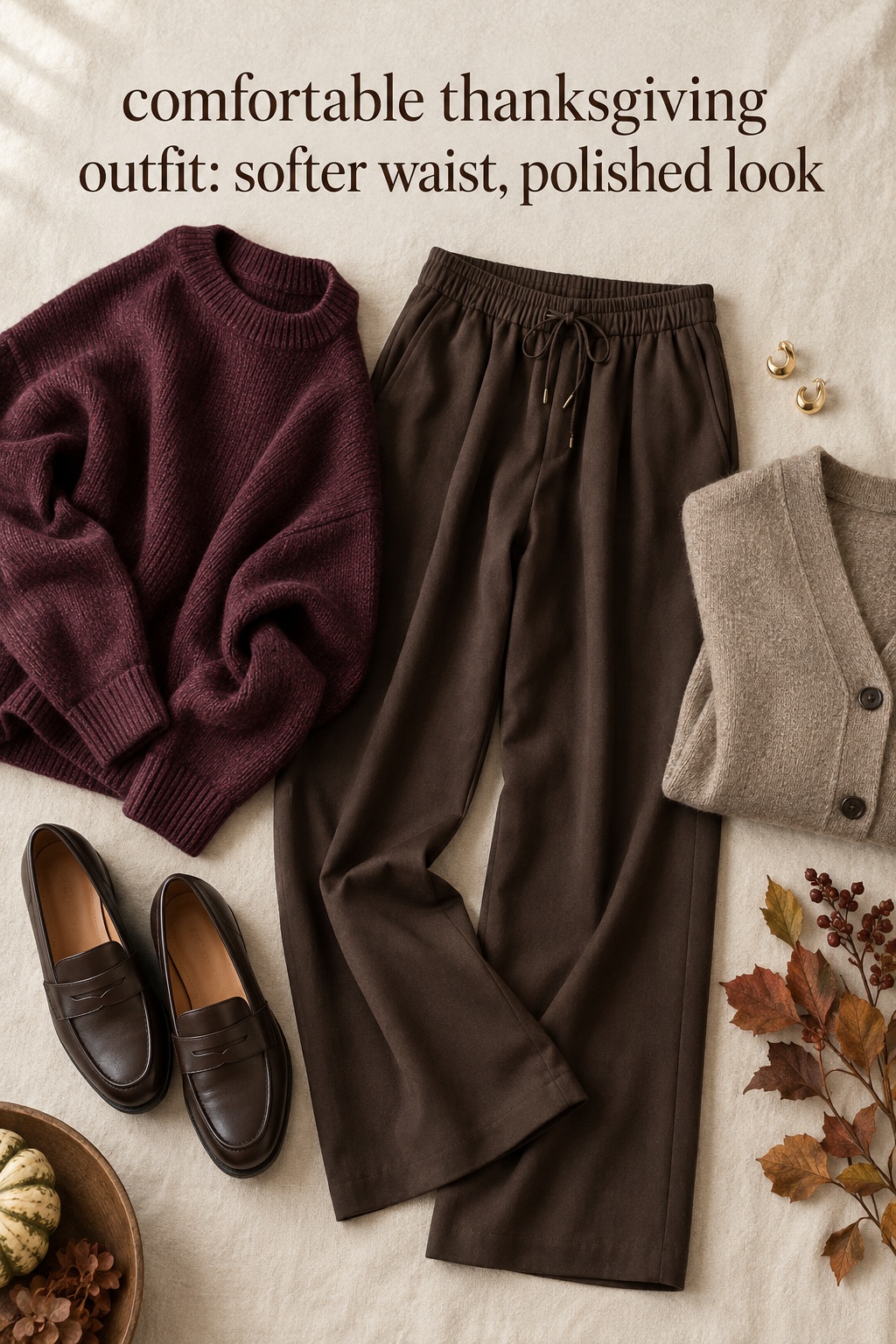
For someone who likes trousers, a fluid wide-leg pair can keep a dressed-up mood while leaving room to move. A fine-gauge sweater, blouse with relaxed sleeves, or smooth knit top can balance their volume. If the waistband is the problem, prioritize a pull-on or flexible construction that looks finished with the top you own. A half tuck is optional. An untucked top can look just as considered when its length and shape work with the trouser line. Add a slim necklace or small earrings if the outfit needs a focal point, then let the clean silhouette do the rest.
A coordinated knit set is another option for a casual gathering, especially if you enjoy soft texture and a ready-made pairing. The simplest way to make it feel like an outfit rather than sleepwear is to check the proportions: does the top end at a place you like, and do the trousers fall cleanly over your shoes? If you want a little more structure, add a short jacket, a bag with a clear shape, or a simple necklace. Keep the set if the fabric feels good to you; there is no need to add rigid pieces just to prove that you got dressed.
When a favorite piece is comfortable but reads too casual for the invitation, elevate one visible detail rather than the whole outfit. A polished belt, a cleaner shoe, a fine knit in place of a sweatshirt, or a jacket with a clear shoulder line can shift the impression. If the uncomfortable part is the belt, choose earrings or a structured bag as the polished detail instead. This keeps comfort and presentation in the same conversation. You can look ready for a special meal without dressing as though every part of the day will be spent posing.
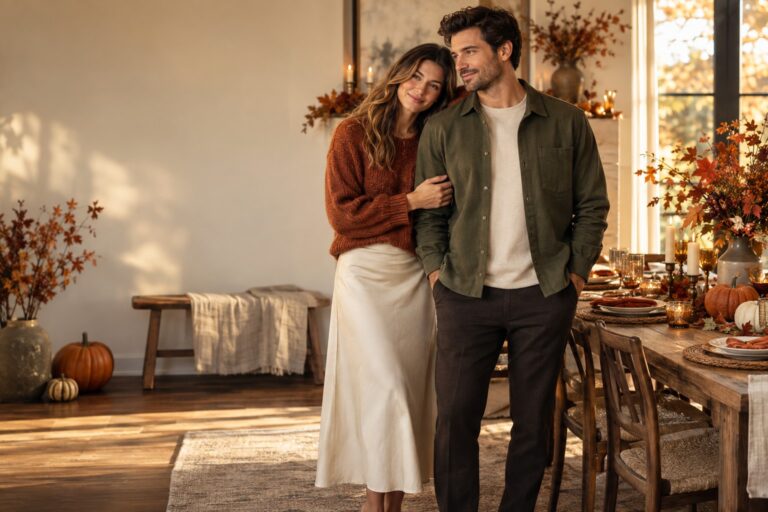
Color can also do quiet work. A cream sweater with dark trousers, a cranberry knit over denim, or a chocolate skirt with a soft blue top can feel seasonal without requiring sequins, stiff tailoring, or a complete new outfit. If you already have a favorite color, use it. Repeat one shade in a small accessory if you want the combination to feel more connected. Seasonal dressing is a styling choice, not a test you need to pass. A comfortable Thanksgiving outfit can feel festive because you chose it for yourself and wore it with intention.
Try not to treat comfort and polish as opposite ends of a scale. A relaxed silhouette can look refined when the fabric hangs cleanly and the pieces have compatible proportions. A structured piece can still feel easy if it does not pinch or pull. You might pair soft trousers with a sharper top, or keep a simple knit and add a beautiful earring. The outfit only needs one or two visible decisions to feel complete. It does not need every item to be decorative, fitted, or new.
Keep the outfit polished after you choose comfort
When you swap out an uncomfortable garment, look for what it contributed to the outfit. Perhaps it added structure, color, shine, or a defined shape. Replace that contribution, not necessarily that exact item. If a stiff blazer gives the look a clean shoulder, try a soft cardigan with a neat edge or a knit jacket. If a tight belt creates definition, use a shorter top, a light front tuck, or a color contrast to give the eye a similar cue. This way, comfort edits preserve the parts of the look you liked.
Choose one anchor and let it lead. It might be a cranberry sweater, a pair of dark trousers, a patterned skirt, or a long cardigan with a shape you enjoy. Keep the supporting pieces quieter so the anchor remains visible. This is useful when you make a last-minute swap: you can change shoes or a top without rebuilding the entire palette. Repeating a color in one small place, such as the bag or earring, can make separate pieces feel connected without requiring a matching set.
Consider the details that create extra attention. A necklace that tangles in a scarf, a bracelet that catches a sleeve, or a shoe that needs adjusting can interrupt an otherwise easy outfit. If you want accessories, choose a small number that you can forget about once they are on. Stud earrings, a pendant that lies flat, or a bag you can set down comfortably can be more useful than a collection of finishing touches. The goal is to notice the outfit as a whole, not keep managing its parts.
There are graceful alternatives for details you usually associate with being dressed up. A soft loafer can replace a heel. A satin hair ribbon or polished clip can add shine without adding something around your neck. A velvet jacket can bring depth without a scratchy embellished top. A deep color can feel festive when the silhouette stays simple. The substitute should fit your taste and the gathering; no one accessory is required for a look to count as special.
If you are hosting, choose details that do not demand attention while you work. Sleeves that stay where you put them, a neckline that remains secure, and a shoe you can move in may matter more than an elaborate finish. A washable or easy-care piece can be a practical choice if that is important to you, but comfort does not mean every host needs to dress for cooking. You might prepare food in an apron and change into your chosen outfit before guests arrive. Let the actual plan determine the edit.
If you are a guest, think about how comfortable you feel in the room as well as in the clothes. The invitation and the host’s style give you a clue about formality, but you do not need to wear an unfamiliar silhouette to show consideration. A familiar trouser can become more polished with a knit top and clean shoes. A simple dress can feel more personal with a color you love. When you are unsure, a soft layer gives you the option to adjust your look without making the outfit feel unfinished.
Photos are a part of some gatherings, but they do not have to dictate the whole outfit. If you like how a neckline or color appears in a picture, keep it. If a garment only looks good when you stand perfectly still, it may not be the best choice for an afternoon of sitting and visiting. Take one seated photo if that helps you see how the fabric falls, then trust the information from how it feels. The outfit is for your day, and your own comfort is part of the picture.
It is also fine if your most comfortable outfit is very simple. A clean sweater, trousers with room to sit, and shoes you already trust can be enough. Personal style is not measured by the number of pieces or the difficulty of wearing them. A small choice, such as rolling a sleeve once, changing the bag, or adding one color accent, can make the outfit feel intentional. Stop when it feels like you. There is no need to keep adding things after the outfit is already doing its job.
A final try-on story before the invitation
Imagine that you have chosen dark pull-on trousers and a soft plum sweater for dinner. The color feels right, and the shoes are familiar. In the mirror, the combination is almost there, but the sweater keeps riding up when you sit. Instead of changing the trousers and the shoes, you try a slightly longer top that falls cleanly over the waistband. The outfit’s mood stays the same, and the repeated adjustment disappears. That is the kind of useful edit this process is meant to uncover.
Now imagine the reverse: the top is perfect, but the trousers feel tight when seated. Keep the sweater and try a relaxed skirt or another pair of trousers in a similar color. Put on the same shoes and sit again. The repeated color gives the outfit continuity, even though one key garment changed. You might find that a soft skirt feels better, or you may decide the new trousers are the right answer. Either way, you learned something specific about your own preference instead of following a universal rule.
Do the try-on in the clothes you will actually wear, including the base layer and shoes. Move through a few ordinary gestures: sit, lean forward, reach, walk, and raise your arms. Notice whether you want to tug, unfasten, roll, or adjust something. Then ask whether it is a one-time fix or a repeated interruption. A cuff you roll once may be fine. A neckline you need to pull into place every few minutes is likely to keep occupying your attention.
Give the outfit a little time if that is possible. A fast mirror check only tells you how it feels at first. Wear the pieces around the house while you finish getting ready, or sit in them while you read a message or have a drink. You will notice whether a seam, band, shoe, or layer remains comfortable once you stop concentrating on it. If you cannot wear it in advance, at least take the seated and movement test seriously before leaving.
When you finish, write down the one edit that mattered. Perhaps relaxed jeans worked better than a rigid pair, or a flat shoe made the hem fall just right. Maybe the sweater needed a smooth layer under it, or the jacket felt unnecessary indoors. Remembering that detail makes future gathering outfits easier without building a special wardrobe for one date. You can reuse the pieces you like and choose a different combination when the invitation changes.
There is no need to chase a perfect outfit. The aim is to arrive feeling like yourself, settle into the gathering, and spend your attention on the people around you. If the look is appropriate to the invitation, reflects something you enjoy, and does not keep asking to be fixed, it has done enough. A comfortable Thanksgiving outfit can be soft, tailored, colorful, simple, dressy, or casual. Its most useful quality is that it works for the person wearing it.
FAQ
What is a comfortable Thanksgiving outfit?
It is an outfit that suits the gathering and feels comfortable to you while sitting, moving, and spending time with other people. A soft dress, relaxed trousers, familiar jeans, or a knit set may all work. The garment label matters less than the fit and feel you experience in the complete outfit.
Can I wear jeans to Thanksgiving dinner?
Yes, when jeans fit the formality of the invitation and feel good while seated. A relaxed pair with a knit top, cardigan, and loafers can look polished for a casual or smart-casual gathering. If your usual pair presses at the waist, try a different rise or a softer fit.
What should I wear if waistbands feel uncomfortable?
Try trousers or a skirt with a flexible or pull-on waist, or choose a dress that does not rely on a separate waistband. Sit in the garment before deciding. If it still feels restrictive, choose another silhouette that you enjoy wearing. You do not need to keep a belt or tuck that makes you uncomfortable.
Can a dressy Thanksgiving outfit still be comfortable?
Yes. Choose a polished shape in a fabric and fit you can comfortably wear, then finish it with a detail that feels easy, such as earrings, a refined flat, or a soft jacket. A comfortable dress, skirt, or trouser outfit can suit a dressier invitation without requiring a restrictive fit or an unfamiliar heel.
How can I make a comfortable outfit look more polished?
Keep one clear visual anchor and add one finishing detail. A smooth knit, clean shoe, coordinated color, structured bag, or simple piece of jewelry can make familiar clothes look intentional. You do not need to add every accessory, and you can choose the detail that does not interfere with your comfort.
What shoes should I wear for a long Thanksgiving gathering?
Wear shoes you already know feel comfortable and that suit the setting. Loafers, flats, low boots, or another familiar pair can work with a polished outfit. Try them with the hem you plan to wear and walk around before leaving, so the length and fit make sense together.
How do I stay comfortable if I do not know the dress code?
Choose a familiar outfit with a flexible level of polish, such as relaxed trousers and a neat knit or dark jeans with a clean cardigan. A removable layer can adjust the look if the room feels more casual or more dressed up than expected. When possible, ask the host what guests usually wear.
Finish the look
The little extras that make a summer outfit feel complete
From beach days to city weekends, these easy pieces bring comfort, texture, and a polished finishing touch.

FENBEN
Straw Hobo Crossbody Bag
A handwoven straw bag with both short and crossbody straps—an effortless finishing touch for vacation looks and warm-weather outfits.
Shop the bag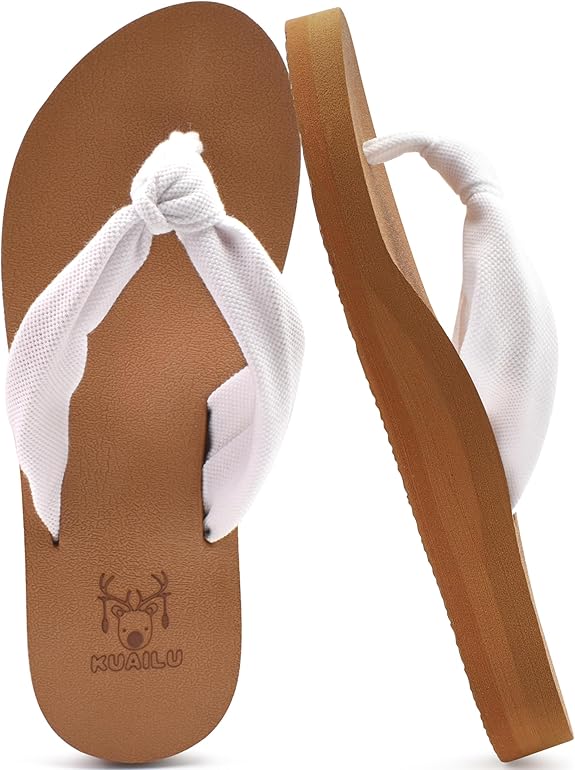
KuaiLu
Flip Flops with Arch Support
Cushioned, lightweight sandals with supportive arch design—a practical choice for beach trips, errands, and long summer walks.
Shop the sandals
baleaf
Athletic One-Piece Swimsuit
A functional one-piece with adjustable straps and moderate coverage, designed for swimming, training, surfing, and active beach days.
Shop the swimsuit
Astylish
Linen-Cotton Button-Down Shirt
A relaxed cotton-linen shirt with a collared V-neck and roll-up sleeves—easy to style over swimwear or with denim and shorts.
Shop the shirt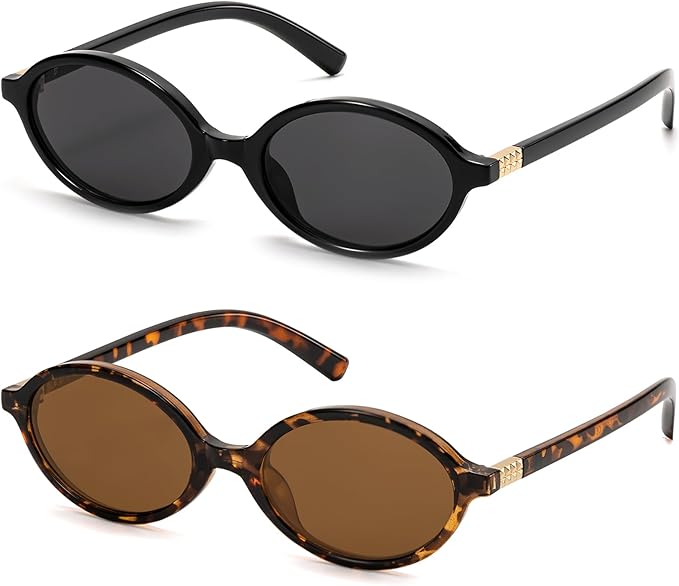
ViewJoy
Retro Oval Sunglasses
Small oval sunglasses with a 90s-inspired silhouette and UV400 lens protection—a quick way to add a vintage edge to everyday looks.
Shop the sunglasses
Affiliate disclosure: This section contains affiliate links. If you make a purchase through these links, I may earn a commission at no additional cost to you. Product selection, pricing, availability, and delivery terms may change—please review the current details on Amazon before purchasing.
As an Amazon Associate I earn from qualifying purchases.