Baggy Sweater Outfits: 7 Easy Ways to Look Polished
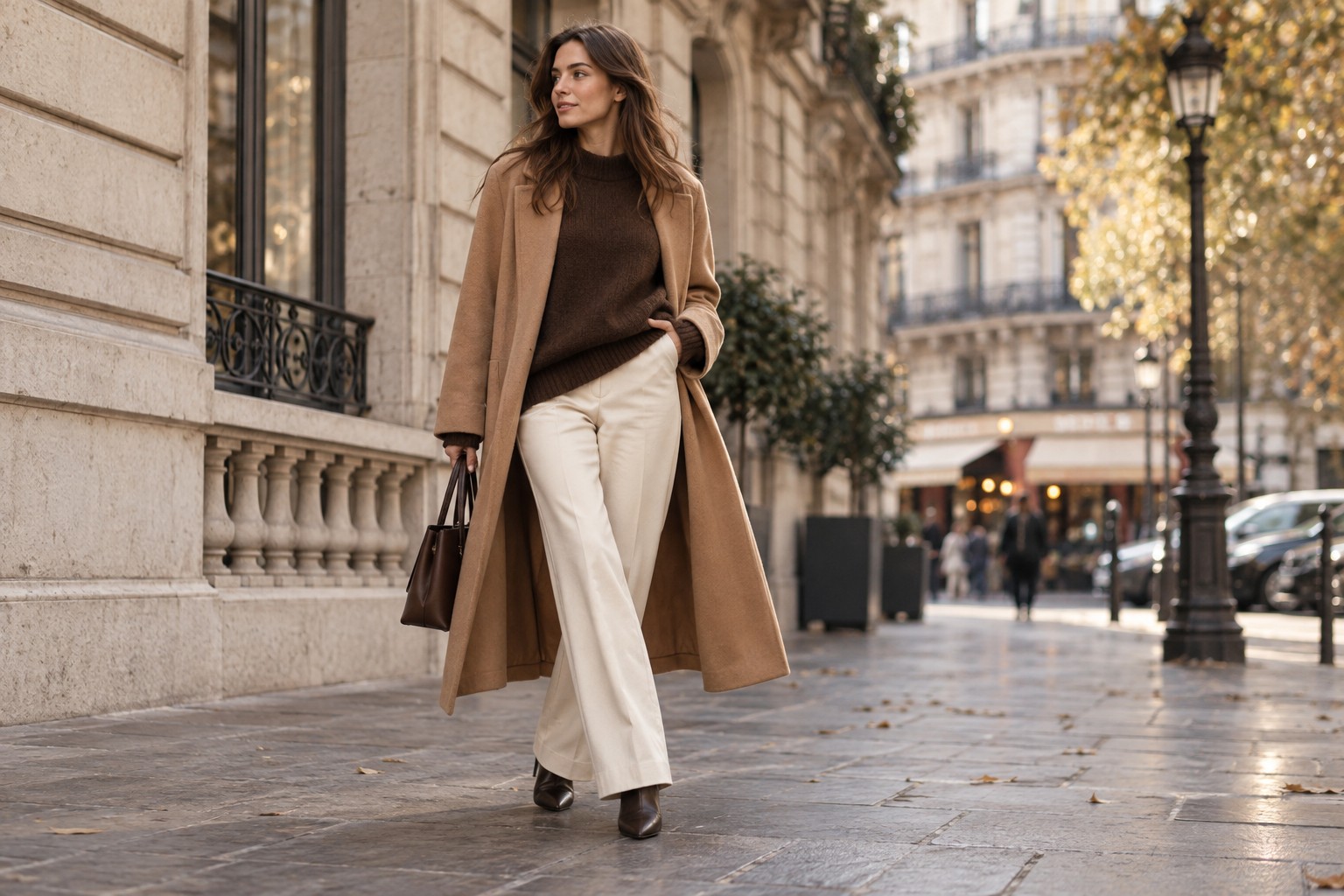
A baggy sweater is one of the easiest pieces to wear and one of the easiest to style on autopilot. It is soft, forgiving, warm, and generous enough for a rushed morning. The trouble starts when the rest of the outfit is equally vague. Loose jeans, soft shoes, an unstructured coat, and a sweater with no visible break can make a comfortable look feel accidental instead of relaxed by design.
The best baggy sweater outfits do not depend on a perfect body formula or a long list of new purchases. They use one clear balancing decision. You might show a little waistband, create a clean line through the lower half, contrast a fuzzy knit with a smooth skirt, or add a structured bag that tells the eye where to land. This guide helps you choose that decision from the sweater you already own.
The real problem: comfort can look accidental when every line is loose
When an outfit feels off in a baggy sweater, the issue is rarely that the sweater is too large. Volume is the point. The issue is that the outfit has no visual pause. If the knit covers the waistband, the pants widen immediately, the shoes are also bulky, and the coat repeats the same shape, the eye reads one large block. That can happen with expensive clothes and with very simple ones.
The Fashion-Note Edit
Five effortless pieces to refresh your everyday wardrobe
A polished, practical edit for workdays, weekends, and everything in between.

The Drop
Women’s Blake Long Blazer
A longline, tailored blazer with a notched collar and a single-button closure—an easy layer for denim, dresses, or office-ready looks.
Shop the blazer
Amazon Essentials
Women’s Lightweight Crewneck
A soft, lightweight sweater with a clean crew neckline—the kind of reliable layer that works from cool mornings to air-conditioned spaces.
Shop the sweater
Amazon Essentials
Women’s Loafer Flat
A classic flat loafer that gives casual outfits a more polished finish and pairs naturally with tailored pants, skirts, and straight-leg jeans.
Shop the loafers
Levi’s
Women’s 501 90s Jeans
A relaxed, vintage-inspired take on the iconic 501 silhouette—made for an easy, lived-in look without the thrift-store search.
Shop the jeans
Colorfulkoala
High-Waisted 7/8 Leggings with Pockets
Soft, four-way-stretch leggings with side pockets and a high-rise waistband—designed for movement, errands, and off-duty comfort.
Shop the leggings
Affiliate disclosure: This section contains affiliate links. If you make a purchase through these links, I may earn a commission at no additional cost to you. Product selection, pricing, availability, and delivery terms may change—please review the current details on Amazon before purchasing.
As an Amazon Associate I earn from qualifying purchases.
Think of proportion as a conversation between soft and clear elements. A soft sweater can work with relaxed denim when the shoes are crisp. A wide knit can work with a full skirt when the waist or hem gives the outfit a visible boundary. Even an intentionally oversized look benefits from one detail that looks chosen: a cuff, a collar, a pointed toe, a belt, a clean shoulder line, or a change in texture.
Your wedding style is personal.
Your plan should feel that way, too.
Zarellea keeps your guest list, budget, vendors, and every next step beautifully organized — so you can focus on the moments that feel like you.
This does not mean every outfit needs to show your waist or use a fitted item. A full-volume look can be stylish when the volume is consistent and the finishing details are deliberate. A relaxed sweater with relaxed jeans, for example, can look current when both pieces have clean hems, similar visual weight, and shoes that do not disappear. The goal is not to make the sweater smaller. The goal is to make the whole outfit legible.
- One narrow line: a slim ankle, a visible wrist, a neat waistband, or a fitted base layer.
- One structured element: tailored trousers, a firm shoe, a shaped bag, or a coat with a clean shoulder.
- One contrast: matte with shine, fuzzy with smooth, casual with polished, or light with dark.
- One stopping point: a cuff, half-tuck, belt, skirt hem, or boot shaft that finishes the silhouette.
If you make only one adjustment before leaving the house, ask where the eye should stop. A small answer is enough. You do not need to rebuild the outfit from scratch.
Diagnose the sweater before choosing the bottom
Start with the sweater, not with a universal rule about what loose clothing should be paired with. A fine-gauge oversized crewneck behaves differently from a thick cable knit. A cropped boxy shape can handle more width below than a long tunic. A patterned sweater already creates visual information, while a plain charcoal knit may need texture, color, or a clean accessory to keep the outfit from looking flat.
Fine and fluid knits
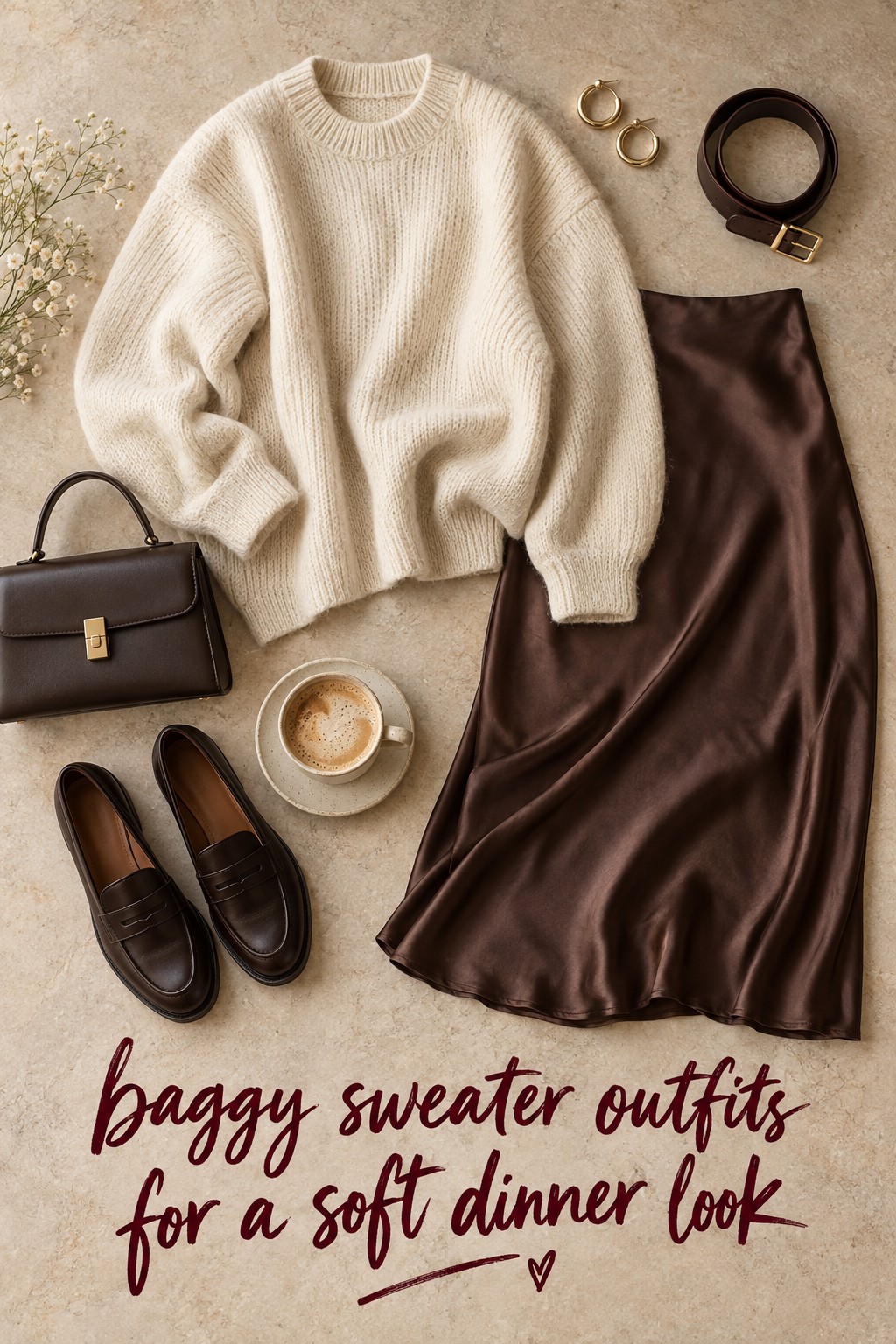
Fine knits are usually the most flexible. They can be lightly tucked, layered under a jacket, or worn over a collared shirt without adding too much bulk. Try a fine baggy sweater with straight-leg jeans, a satin midi skirt, or tailored trousers. Because the fabric drapes rather than stands away from the body, a small front tuck often creates enough definition. If the knit is long, keep the lower half simple and let the hem create a clean vertical line.
Chunky and textured knits
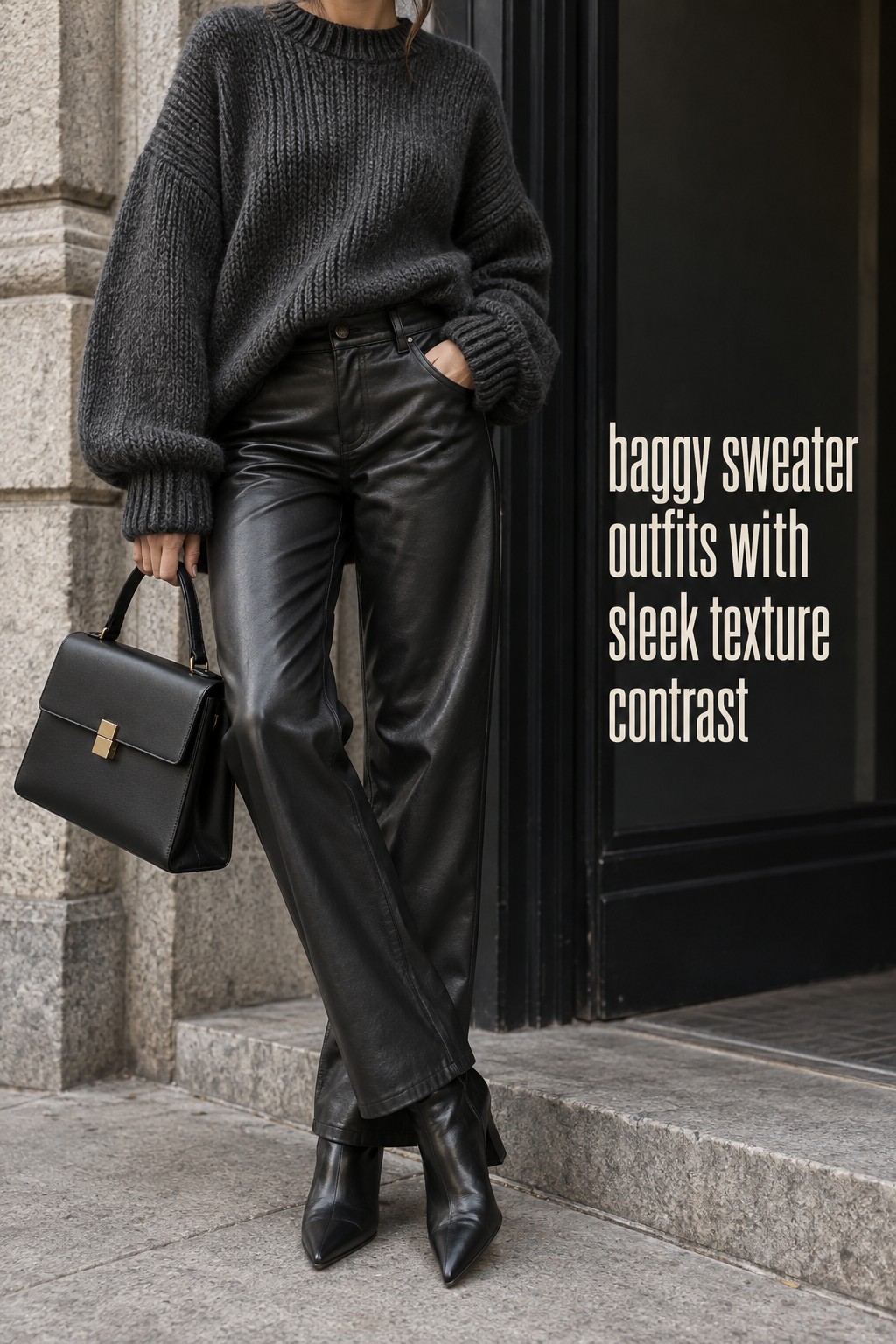
A chunky knit already has weight, so your next decision should usually be about shape or surface. Straight jeans, leather-look trousers, a narrow skirt, and smooth boots give the sweater room to be the texture hero. If you choose wide-leg pants, look for a firm fabric and a clear waistband rather than another soft, collapsing layer. A long pendant or an open neckline can also create a vertical line through a high-volume outfit.
Cropped and boxy sweaters
A cropped or waist-length baggy sweater gives you more freedom underneath because the hem already creates a stopping point. Pair it with wide-leg jeans, pleated trousers, a full midi skirt, or a longer shirt that peeks out below. The important detail is that the rise of the bottom looks intentional. High-rise or clearly defined waistbands work especially well because they connect the short sweater to the rest of the outfit.
Long sweaters and tunic shapes
Long sweaters need a lower line that can carry their length. Leggings, slim straight jeans, fitted knit pants, and tall boots are reliable choices when the hem falls around the hip or thigh. You can also wear a long sweater over a mini skirt or slip dress, provided the hem of the underlayer is intentional and the shoes finish the leg line. If the sweater is very soft, add a firm coat or a structured bag rather than another oversized item.
Four proportion fixes that make baggy sweater outfits look intentional
Once you know what kind of sweater you have, choose one fix. These are not rules that you have to stack. In fact, using all four at once can make a relaxed outfit feel overworked. Pick the repair that solves the actual problem in front of you.
Fix one: show a deliberate waistband
A front tuck, side tuck, or short sweater can show where the top ends and the bottom begins. This works especially well with high-rise jeans, tailored trousers, and skirts that have a substantial waistband. Keep the tuck loose. The goal is not a sharply outlined waist. It is simply to add a point of connection so the sweater does not float over the entire outfit.
If the sweater is thick, do not force the whole hem into the waistband. Try a small fold at the center front, a tuck under the edge of a belt, or a subtle side sweep. A collared shirt under the sweater can create a similar break without tucking the knit at all. The visible collar and shirt hem give the outfit a little architecture.
Fix two: create a clean lower line
When the sweater is the softest and widest part of the outfit, the lower half can provide clarity. Straight-leg denim, slim trousers, leggings, a pencil skirt, or a boot with a clean shaft can do the job. This does not require a tight garment. It only means the lower line should be easy to read. The simpler the shape, the more room you have to play with color or texture.
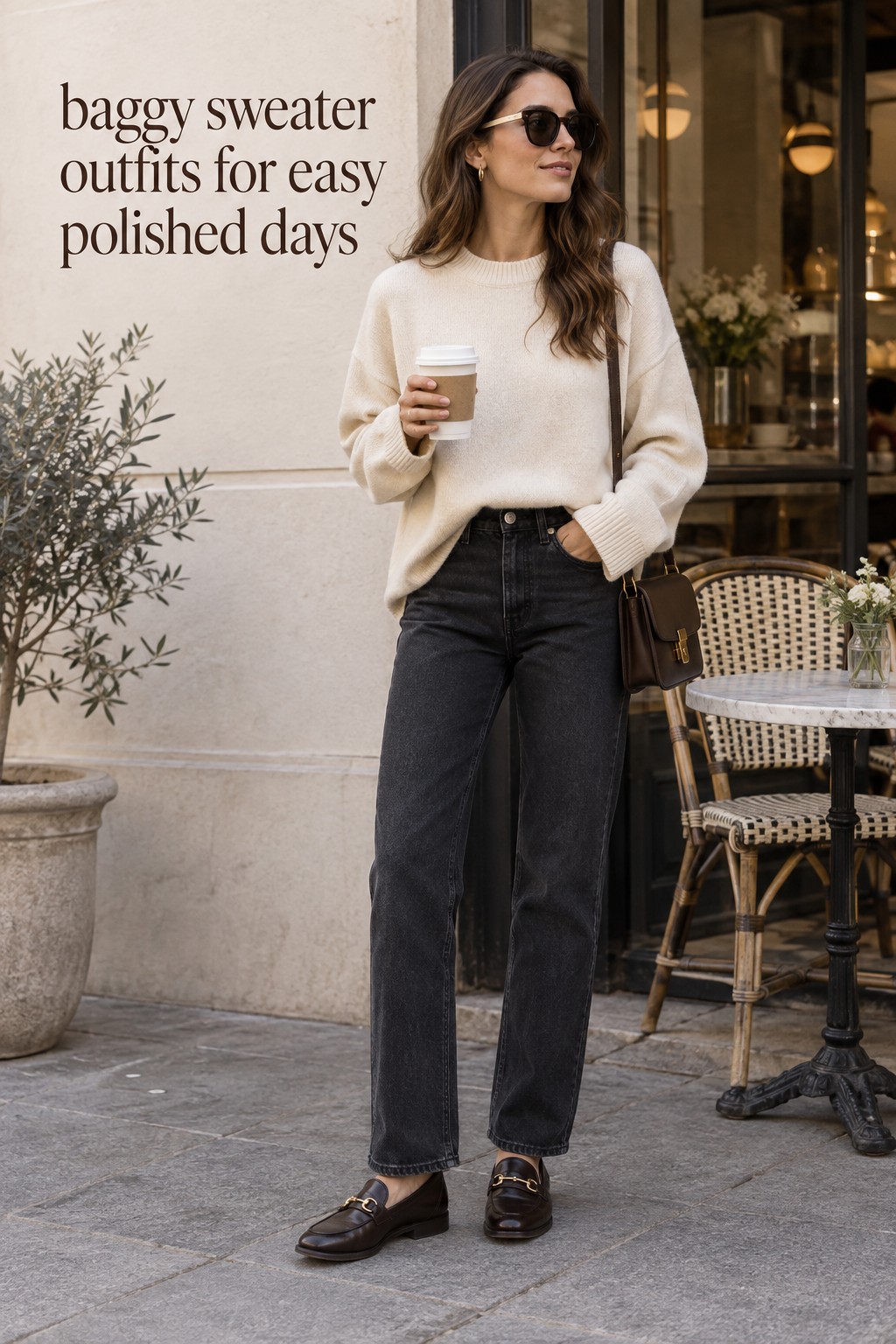
For example, a gray cable-knit sweater with straight dark denim and a polished loafer has three different surfaces but one clear outline. The same sweater with very wide fleece joggers and soft slippers may be perfect for home, yet less convincing for a day out. Changing the shoe or adding a long coat can move the same base outfit toward intentional casual dressing.
Fix three: use texture as structure
Texture can create the contrast that tailoring would normally provide. A matte knit over a satin skirt looks considered because the surfaces respond differently. A fuzzy sweater with leather-look pants gives the lower half a sharper finish. A chunky knit with crisp cotton at the collar and cuffs creates small, clean edges. These pairings work because the eye can separate the materials even when the silhouette is relaxed.
Keep the color story calm when the textures are doing the work. Cream with champagne, gray with black, navy with denim, or camel with chocolate can feel rich without requiring a statement print. If you want a brighter sweater, repeat one of its colors in the shoe, bag, or a small accessory so the contrast feels connected.
Fix four: add a long, clean line
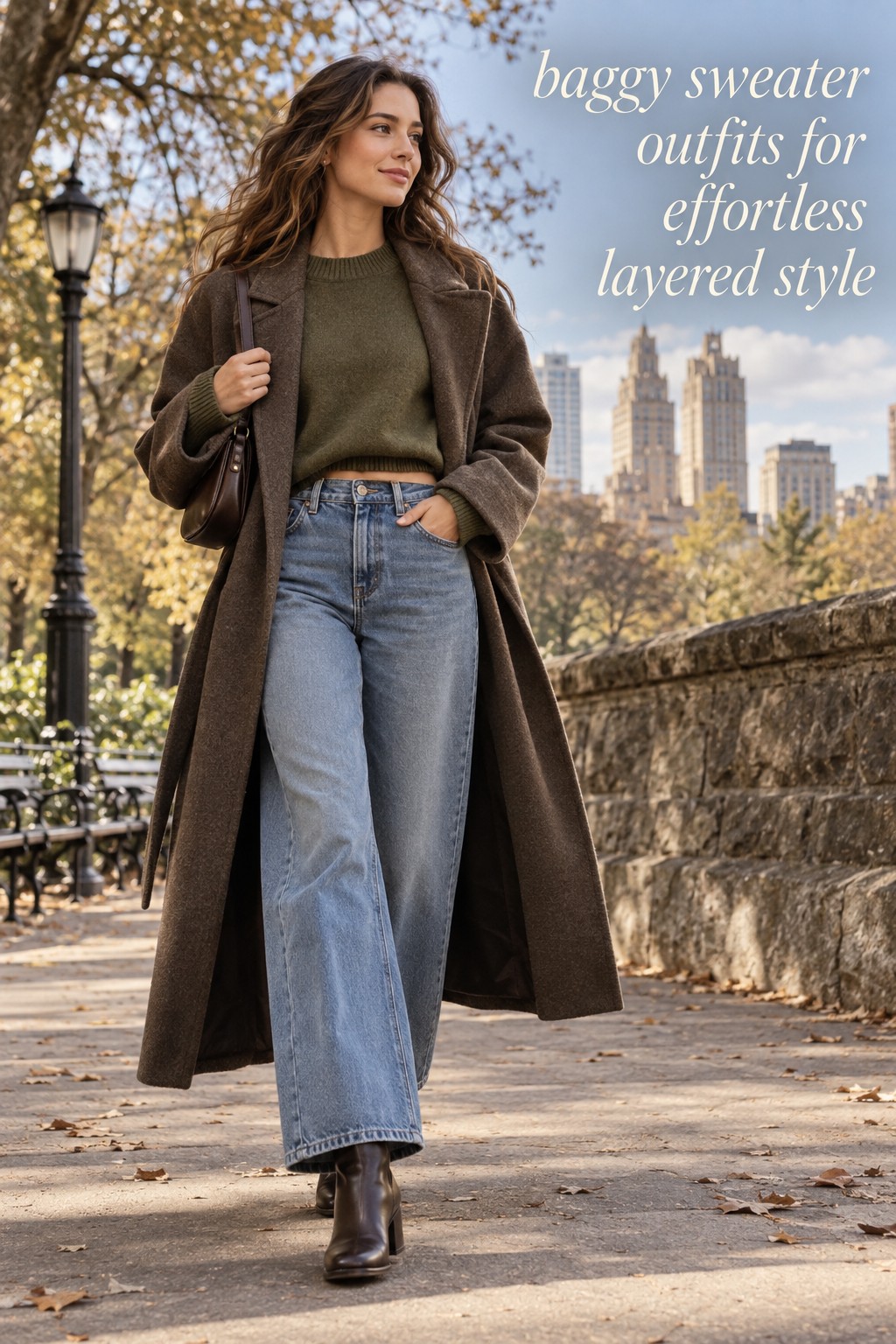
A long coat, open cardigan, scarf, pendant, or straight trouser seam can guide the eye down the outfit. This is useful when you prefer not to tuck your sweater or wear a narrow bottom. Leave a coat open when the weather allows, let a shirt collar and placket show, or choose boots that create a continuous line from hem to foot. The effect is calm rather than constricting.
The line should support your movement. A coat that catches on the sweater or a scarf that hides the neckline can add visual weight instead of clarity. Before adding another layer, move your arms, sit down, and look at the outfit from the side. Practical comfort is part of the styling result.
Situation formulas for real days
The easiest way to use these ideas is to start with the day ahead. A baggy sweater outfit for a coffee run can be softer than one for a work-casual office, while a dinner version can rely on contrast instead of extra accessories. These formulas are starting points. Change the colors, fabrics, and shoe height to suit your wardrobe and comfort.
For errands and relaxed weekends
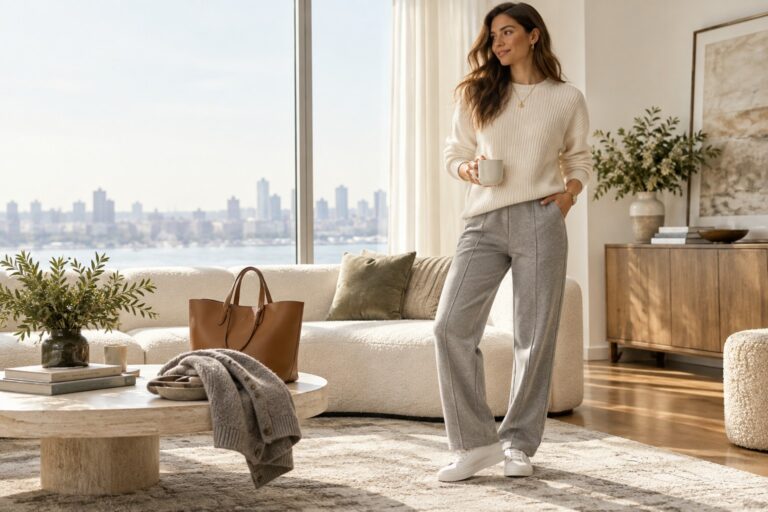
Pair a slouchy crewneck with straight-leg jeans, clean sneakers, and a crossbody bag. Add a long wool coat or a short quilted jacket depending on the weather. The straight denim keeps the look easy without allowing the sweater to swallow the whole outfit. If the sweater is long, use a small front tuck or let the bag strap and open coat create the line. Keep jewelry simple: small hoops, a watch, or one pendant is enough.
For work-casual days
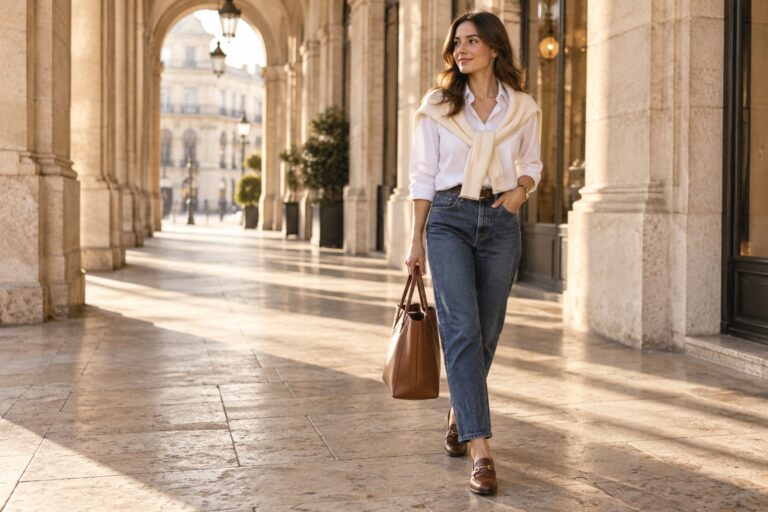
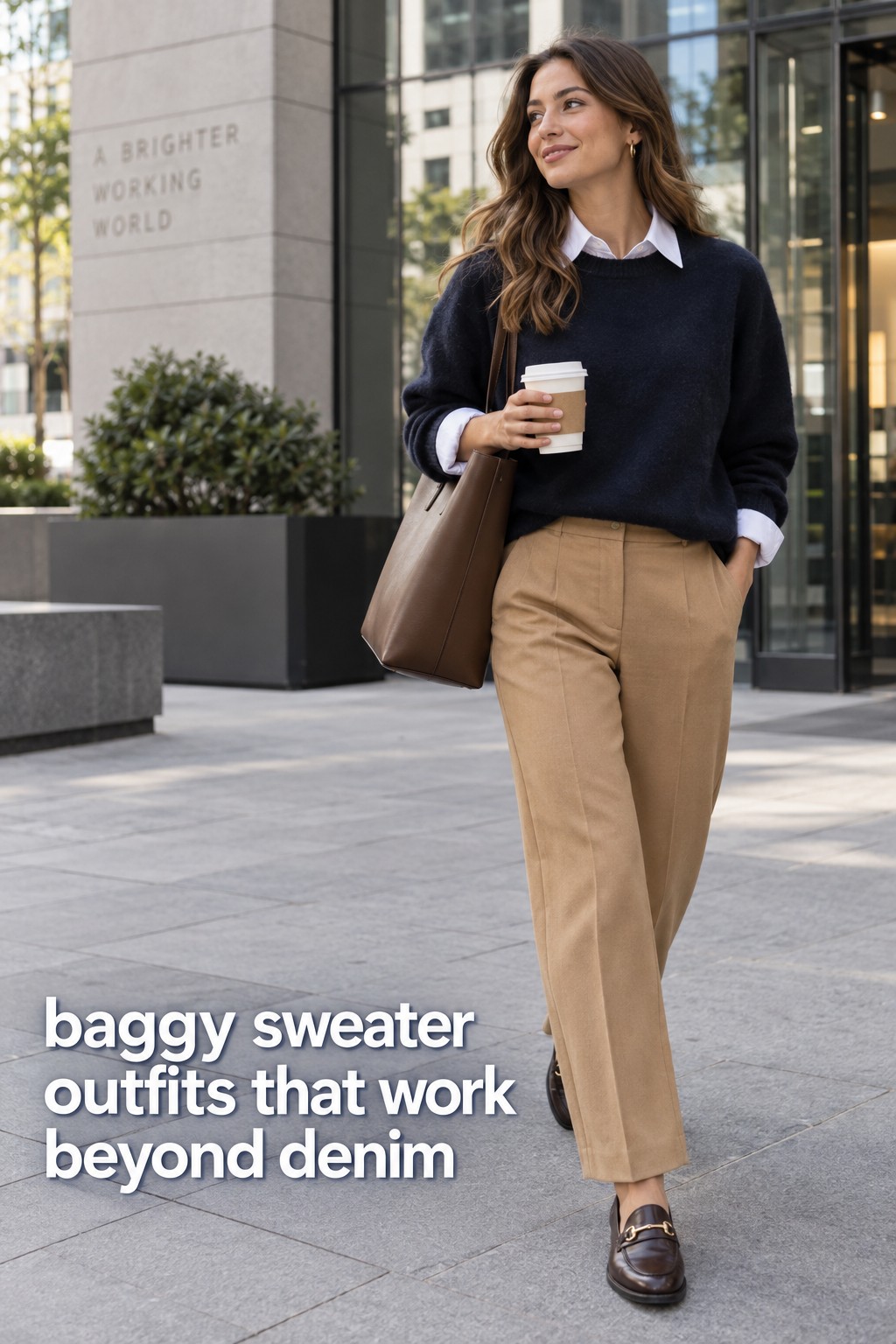
Choose a fine-gauge baggy sweater over a collared shirt, then add tailored trousers and loafers. The collar and waistband make the outfit readable even if the sweater remains loose. A monochrome or near-monochrome palette makes the combination feel calmer, while a striped shirt or a colored loafer can add interest. If your office allows denim, use dark straight jeans and a structured blazer as the polished layer.
For dinner or a low-key date
Let the sweater meet a more refined surface. A chunky cream knit with a satin midi skirt, slim ankle boots, and a small shoulder bag feels relaxed but not sleepy. A black baggy sweater with leather-look trousers and a pointed boot creates a sharper mood. In either case, choose one finishing detail that feels intentional, such as a narrow belt, a polished earring, or a coat with a clean lapel. You do not need a lot of shine to make the contrast work.
With skirts and dresses
A skirt or dress gives a baggy sweater a visible hem relationship. Wear a sweater over a slip dress when you want the dress to read like a skirt, or pair the knit with a pleated mini and opaque tights for a shorter silhouette. A half-tuck can work with a skirt, but avoid stuffing a very thick sweater completely into the waistband. Let the knit drape and use boots, tights, or a belt to finish the line.
With denim when you want an all-relaxed look
Baggy denim and a baggy sweater can work together when the outfit has a deliberate shared mood. Keep the colors connected, show a little ankle or wrist if the weather allows, and choose shoes with enough shape to stay visible. A pointed flat, a clean sneaker, a loafer, or a low-profile boot can prevent the outfit from becoming one soft mass. You can also add a belt or a small shoulder bag to create a break without changing the relaxed proportions.
Finishing details that carry the volume
Accessories do not have to decorate a baggy sweater outfit. They can explain it. A structured bag gives a soft knit a firm counterpoint. A visible collar introduces a clean edge. A belt creates a boundary. Shoes determine whether the same sweater reads as athletic, classic, romantic, or evening-ready.
Choose shoes that remain visible
If the sweater is long, the shoe should not disappear under the hem or the trouser opening. Tall boots can create a strong continuous line under a short skirt or sweater tunic. Loafers and pointed flats add definition to jeans and trousers. Sneakers keep the outfit grounded, but a clean upper and visible sole usually look more deliberate than a heavily padded shoe that repeats the sweater’s bulk.
Use outerwear to clarify the silhouette
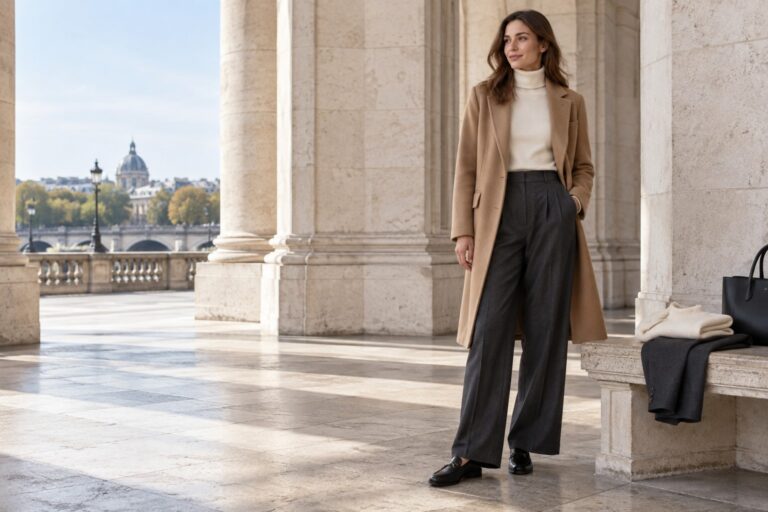
A coat should either make room for the sweater or create a clear frame around it. A relaxed wool coat, a long straight coat, or a jacket with a little shoulder space can sit over a generous knit without crushing the sleeves. If your outer layer is cropped, a shorter or tucked sweater often feels more balanced. Avoid adding a coat that ends at the widest point of the sweater unless the shared length is clearly intentional.
Let the bag provide a firm shape
A small shoulder bag, structured crossbody, or firm tote can add a useful corner to a soft outfit. Keep the scale appropriate to the sweater. A tiny evening bag with a giant knit can look intentional for dinner, while a medium crossbody is more practical for daily wear. If the sweater has a bold pattern, choose a simple bag. If the sweater is a quiet neutral, the bag can carry a little color or hardware.
Keep the neckline open when the outfit feels heavy
A visible shirt collar, necklace, scarf opening, or lower neckline can create breathing room near the face. This is especially helpful with chunky turtlenecks, high crewnecks, and thick scarves. You do not need to expose skin to create the effect. A lighter-colored collar or a narrow pendant can provide the same contrast while keeping you warm.
For more visual reference, the proportion ideas in this guide align with the styling logic discussed by Marie Claire’s oversized sweater guide and the practical outfit breakdowns at Glamour. The recommendations here are a wardrobe-planning synthesis, not product testing or a claim that one silhouette suits everyone.
Common mistakes and quick repairs
Everything is soft. Add one firm element: a loafer, a belt, a structured coat, or a bag with a clear shape.
The sweater looks too long. Try a front tuck, a shorter bottom layer, a tall boot, or an open coat that creates a longer line.
The outfit feels too tight underneath. The answer may not be a larger sweater. Remove one layer, choose a smoother base, or switch from a thick bottom fabric to a clean straight-leg shape.
The outfit is wide everywhere. Keep the width if that is your preference, but repeat it with intention. Match the relaxed mood in the denim and sweater, then use a visible shoe, cuff, bag, or coat edge to break the block.
The sweater and bottom compete. Simplify one surface. A busy sweater works with quiet pants. A plain sweater can handle a satin finish, a pleat, a texture, or a more interesting shoe.
Sources and methodology
This article was developed from ten English-language search results reviewed at the page level, including styling guidance on oversized sweaters, chunky knits, denim, skirts, tailoring, and shoes. The common thread was proportion: each source offered a different way to keep a loose sweater from becoming visually unstructured. The final advice narrows that research into a problem-solution method for choosing one balancing move at a time.
FAQ
How do you make a baggy sweater outfit look polished?
Give the outfit one clear balancing feature. Show a waistband with a loose front tuck, pair the sweater with a clean straight lower line, contrast the knit with satin or leather-look texture, or add a structured shoe, coat, or bag. You do not need to make the sweater fitted. You only need one deliberate point that separates the pieces.
What bottoms look best with a baggy sweater?
Straight-leg jeans, tailored trousers, leggings, satin midi skirts, narrow skirts, and structured wide-leg pants can all work. Choose based on the sweater’s weight and length. A long chunky sweater usually benefits from a clean lower line, while a cropped boxy sweater can handle more width underneath. The bottom should create either contrast or a clear continuation of the sweater’s relaxed mood.
Can you wear a baggy sweater with baggy jeans?
Yes. Keep the combination intentional by connecting the colors or mood, then add one visible finishing point. A belt, cuff, defined shoe, structured bag, or open coat can keep the outfit from reading as one large block. If both pieces are very oversized, keep the details clean and avoid adding several more bulky accessories.
Should you tuck a baggy sweater into a skirt?
Usually a small front or side tuck is easier than a full tuck, especially with a chunky knit. It shows the skirt’s waistband without creating a thick band of fabric. If the sweater is fine and fluid, a fuller tuck may work. If it is heavy, let it drape and use a belt, a shorter hemline underneath, or a clean boot to define the outfit instead.
What shoes work with oversized sweater outfits?
Sneakers, loafers, ankle boots, tall boots, pointed flats, and low heels can all work. The best choice depends on the bottom and the mood you want. Sneakers keep denim casual, loafers sharpen trousers, tall boots support skirts and sweater tunics, and pointed shoes make a bulky knit feel more refined. Choose a shoe that stays visible and gives the lower half a readable finish.
How can you style a baggy sweater for work?
Start with a fine-gauge sweater, tailored trousers or dark straight jeans, and a loafer or clean ankle boot. Layer a collared shirt underneath or add a relaxed blazer over the knit if there is enough room in the shoulders. Keep the palette focused and use one polished accessory, such as a structured tote, watch, or simple earring. Always adapt the formula to your workplace dress code.
What is the easiest baggy sweater outfit for a busy morning?
Try a neutral baggy sweater, straight-leg jeans, clean sneakers or ankle boots, and a structured crossbody. Add a front tuck if the knit allows it, or wear an open long coat to create a clear line. This formula is comfortable, easy to repeat, and flexible enough for errands, coffee, school drop-off, or a casual office depending on the shoe and outer layer.
Finish the look
The little extras that make a summer outfit feel complete
From beach days to city weekends, these easy pieces bring comfort, texture, and a polished finishing touch.

FENBEN
Straw Hobo Crossbody Bag
A handwoven straw bag with both short and crossbody straps—an effortless finishing touch for vacation looks and warm-weather outfits.
Shop the bag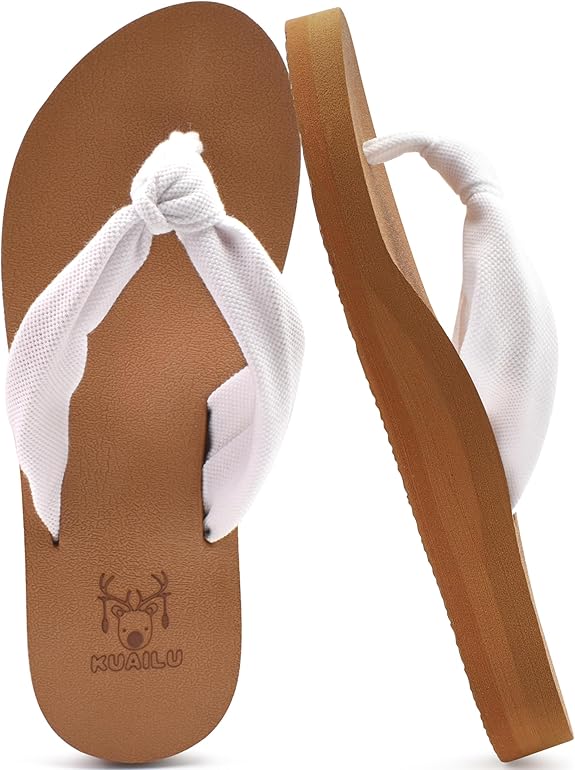
KuaiLu
Flip Flops with Arch Support
Cushioned, lightweight sandals with supportive arch design—a practical choice for beach trips, errands, and long summer walks.
Shop the sandals
baleaf
Athletic One-Piece Swimsuit
A functional one-piece with adjustable straps and moderate coverage, designed for swimming, training, surfing, and active beach days.
Shop the swimsuit
Astylish
Linen-Cotton Button-Down Shirt
A relaxed cotton-linen shirt with a collared V-neck and roll-up sleeves—easy to style over swimwear or with denim and shorts.
Shop the shirt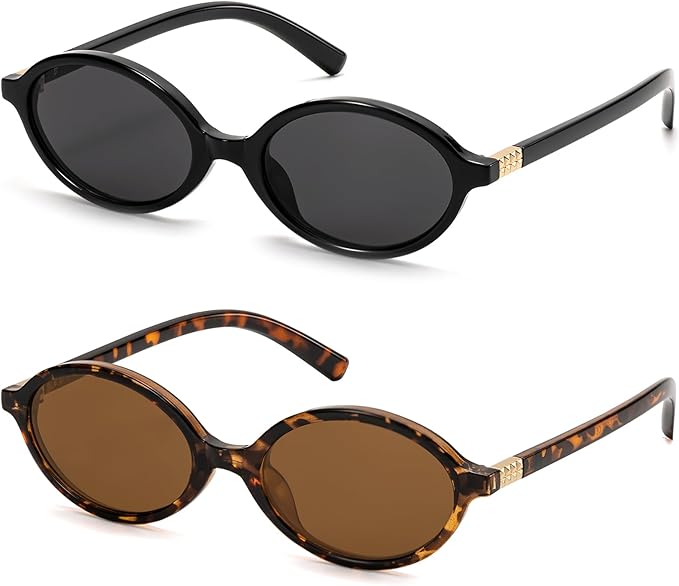
ViewJoy
Retro Oval Sunglasses
Small oval sunglasses with a 90s-inspired silhouette and UV400 lens protection—a quick way to add a vintage edge to everyday looks.
Shop the sunglasses
Affiliate disclosure: This section contains affiliate links. If you make a purchase through these links, I may earn a commission at no additional cost to you. Product selection, pricing, availability, and delivery terms may change—please review the current details on Amazon before purchasing.
As an Amazon Associate I earn from qualifying purchases.