Sporty Outfits: Fix the Most Common Styling Problems
Sporty outfits are supposed to make life easier. You want to walk, commute, run errands, meet a friend, or move through a busy day without feeling restricted. The problem starts when comfort and style seem to pull in different directions. A full performance look can feel too specific for coffee, while a loose sweatshirt, leggings, and old sneakers may feel more accidental than intentional.
The solution is not to remove the sporty pieces you love. It is to diagnose what the outfit is failing to do, then make one or two targeted changes. This guide treats sporty outfits as a problem-solving wardrobe. You will learn how to choose the right athletic signal, add contrast, dress for the activity, transition from exercise to everyday plans, and build layers that work in real weather.
Why sporty outfits sometimes look unfinished
A sporty outfit usually feels unfinished for one of three reasons. Every piece is sending the same message, the proportions do not show any shape, or the clothing does not match the day you are actually having. These problems are easy to fix once you can see them. You do not need a completely different wardrobe or a long list of new purchases.
The Fashion-Note Edit
Five effortless pieces to refresh your everyday wardrobe
A polished, practical edit for workdays, weekends, and everything in between.

The Drop
Women’s Blake Long Blazer
A longline, tailored blazer with a notched collar and a single-button closure—an easy layer for denim, dresses, or office-ready looks.
Shop the blazer
Amazon Essentials
Women’s Lightweight Crewneck
A soft, lightweight sweater with a clean crew neckline—the kind of reliable layer that works from cool mornings to air-conditioned spaces.
Shop the sweater
Amazon Essentials
Women’s Loafer Flat
A classic flat loafer that gives casual outfits a more polished finish and pairs naturally with tailored pants, skirts, and straight-leg jeans.
Shop the loafers
Levi’s
Women’s 501 90s Jeans
A relaxed, vintage-inspired take on the iconic 501 silhouette—made for an easy, lived-in look without the thrift-store search.
Shop the jeans
Colorfulkoala
High-Waisted 7/8 Leggings with Pockets
Soft, four-way-stretch leggings with side pockets and a high-rise waistband—designed for movement, errands, and off-duty comfort.
Shop the leggings
Affiliate disclosure: This section contains affiliate links. If you make a purchase through these links, I may earn a commission at no additional cost to you. Product selection, pricing, availability, and delivery terms may change—please review the current details on Amazon before purchasing.
As an Amazon Associate I earn from qualifying purchases.
Too many athletic signals compete at once
Leggings, a technical zip jacket, a running shoe, a logo cap, a sports bra, and a performance backpack may all be useful individually. Together, they can read as a complete training uniform even when you are heading to lunch. That is not wrong if you are going to exercise. It simply may not communicate the everyday mood you want.
Your wedding style is personal.
Your plan should feel that way, too.
Zarellea keeps your guest list, budget, vendors, and every next step beautifully organized — so you can focus on the moments that feel like you.
Start by identifying the one piece that needs to do the athletic work. It might be a supportive legging for a walk, a sweat-friendly tank for a hot day, a track pant for travel, or a sneaker that lets you stand comfortably. Keep that anchor, then let the other pieces come from the rest of your closet. A cotton shirt, denim jacket, fine knit, wool coat, simple tote, or polished flat can change the context immediately.
No contrast in proportion or texture
Sporty clothes often use soft, stretchy, or relaxed fabrics. If every item is equally soft and loose, the eye has no clear point of focus. The outfit may be comfortable, but it can lose definition. Contrast creates the feeling of intention. Pair a wide track pant with a closer-fitting tank, a slim legging with a longer structured shirt, or a cropped sweatshirt with a high-waisted skirt.
Texture does the same job. Try jersey with poplin, nylon with denim, fleece with leather, mesh with a smooth knit, or cotton with a crisp canvas bag. The contrast does not need to be dramatic. A matte sneaker beside a shiny nylon jacket, or a brushed sweatshirt under a clean trench, can be enough to give the outfit depth.
The outfit ignores the actual activity
Many sporty outfits fail because they are styled for an imagined photograph instead of the schedule. A short jacket may look great but become annoying when you carry a bag. A delicate sneaker may be wrong for a long walk. A very loose top may shift during a workout or make you feel exposed when you bend. Comfort is not a vague feeling. It is a set of specific requirements.
- For long walking, choose stable shoes, secure pockets, and layers you can remove.
- For a workout followed by plans, choose a base that performs and a context layer that changes the outfit.
- For casual work, keep athletic references subtle and prioritize opaque, polished fabrics.
- For hot weather, reduce layers and use breathable texture instead of extra volume.
- For cold weather, keep a close-fitting base under lighter layers so the outfit stays mobile.
Once the activity is clear, styling becomes much easier. You can keep the pieces that solve a real need and edit out the ones that only repeat the same message.
Build sporty outfits around the day’s problem
The best sporty outfits start with a practical question. Where will you go, how much will you move, what will the weather do, and how polished do you need to feel? The following formulas are designed around those questions. Use them as templates, then change the colors and silhouettes to fit your wardrobe.
Errands and coffee: add one clean counterweight
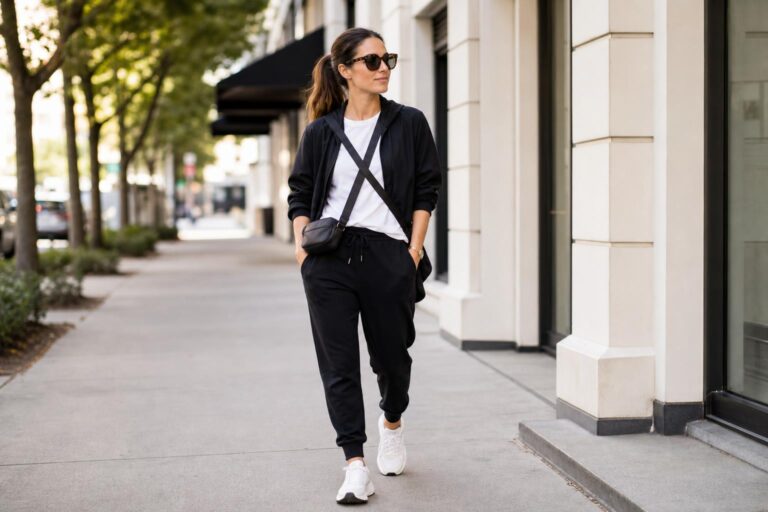
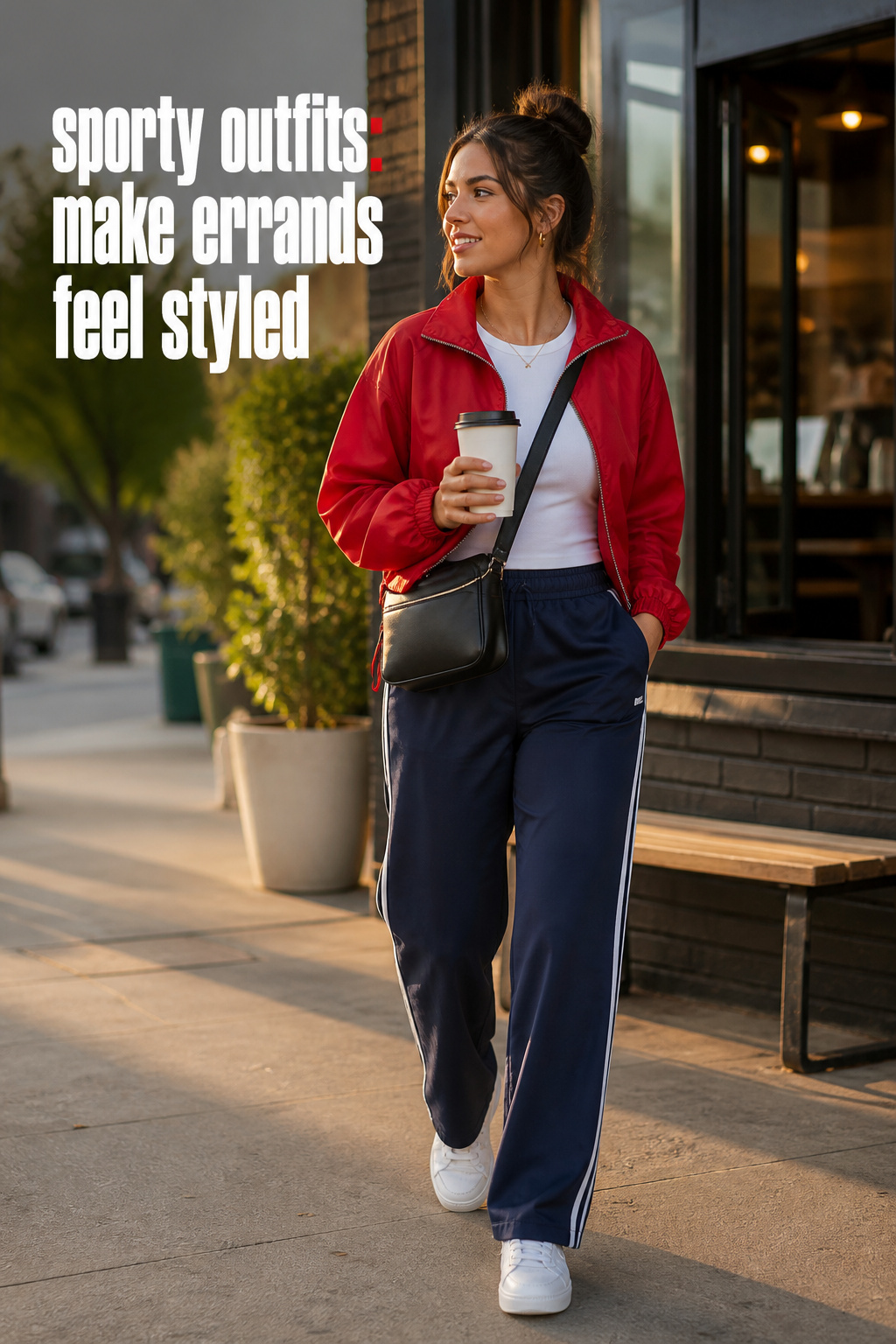
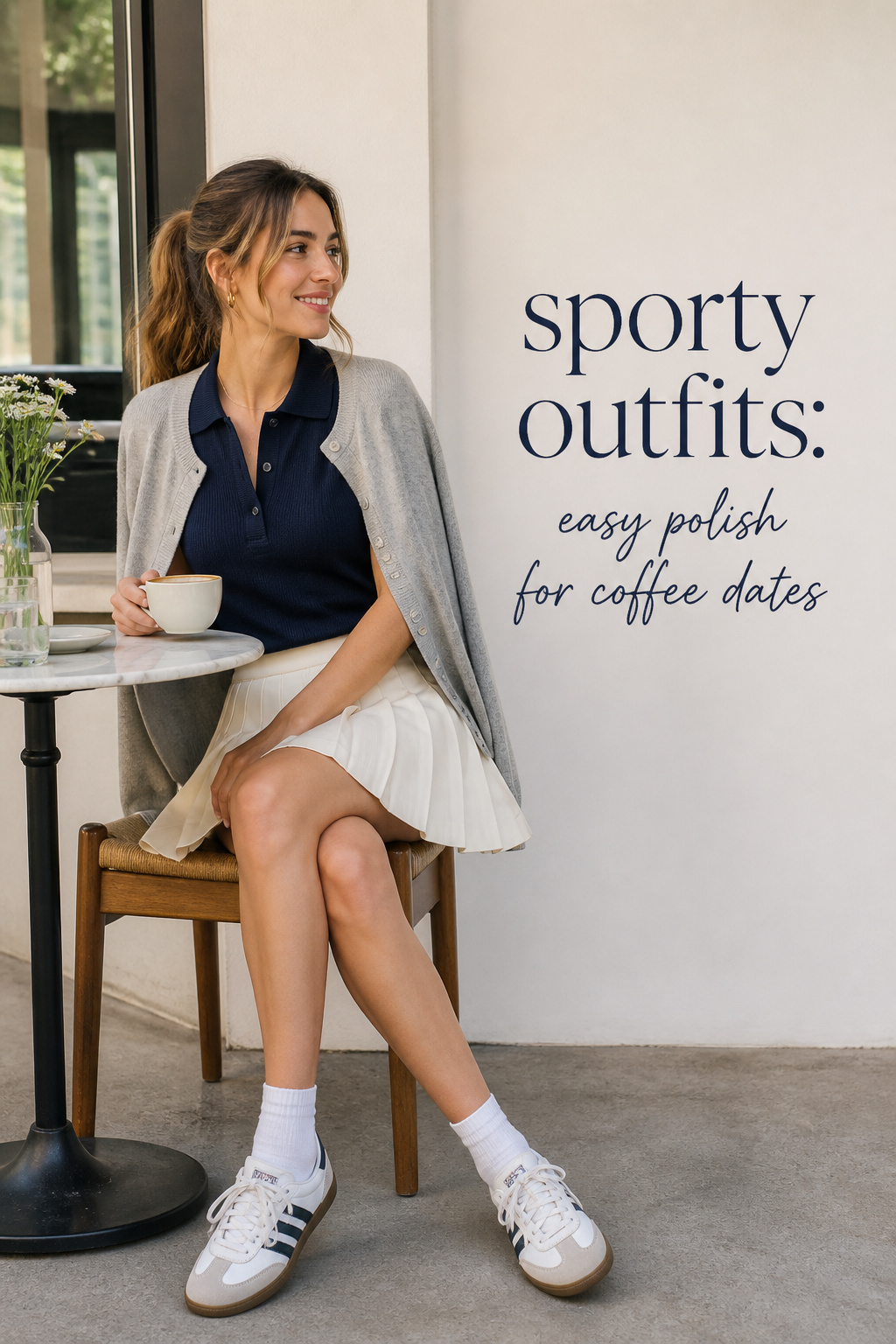
For errands, begin with a comfortable bottom that does not require constant adjustment. This might be a straight track pant, a substantial legging, a relaxed short, or a pull-on trouser with a smooth waistband. Add a fitted tank or substantial T-shirt, then choose one counterweight. A crisp button-down worn open, a cropped denim jacket, a neat cardigan, or a small structured crossbody can make the outfit look deliberate.
Keep the shoe practical, but pay attention to condition and scale. Clean low-profile sneakers look neat with slim bottoms and simple tops. A chunkier sneaker balances a wider pant or oversized jacket. If your sneaker is visually strong, keep the bag and jewelry quiet. A cap can work, but it is usually better as the one casual accessory rather than one of several logos.
Travel and long walking days: solve comfort without losing shape
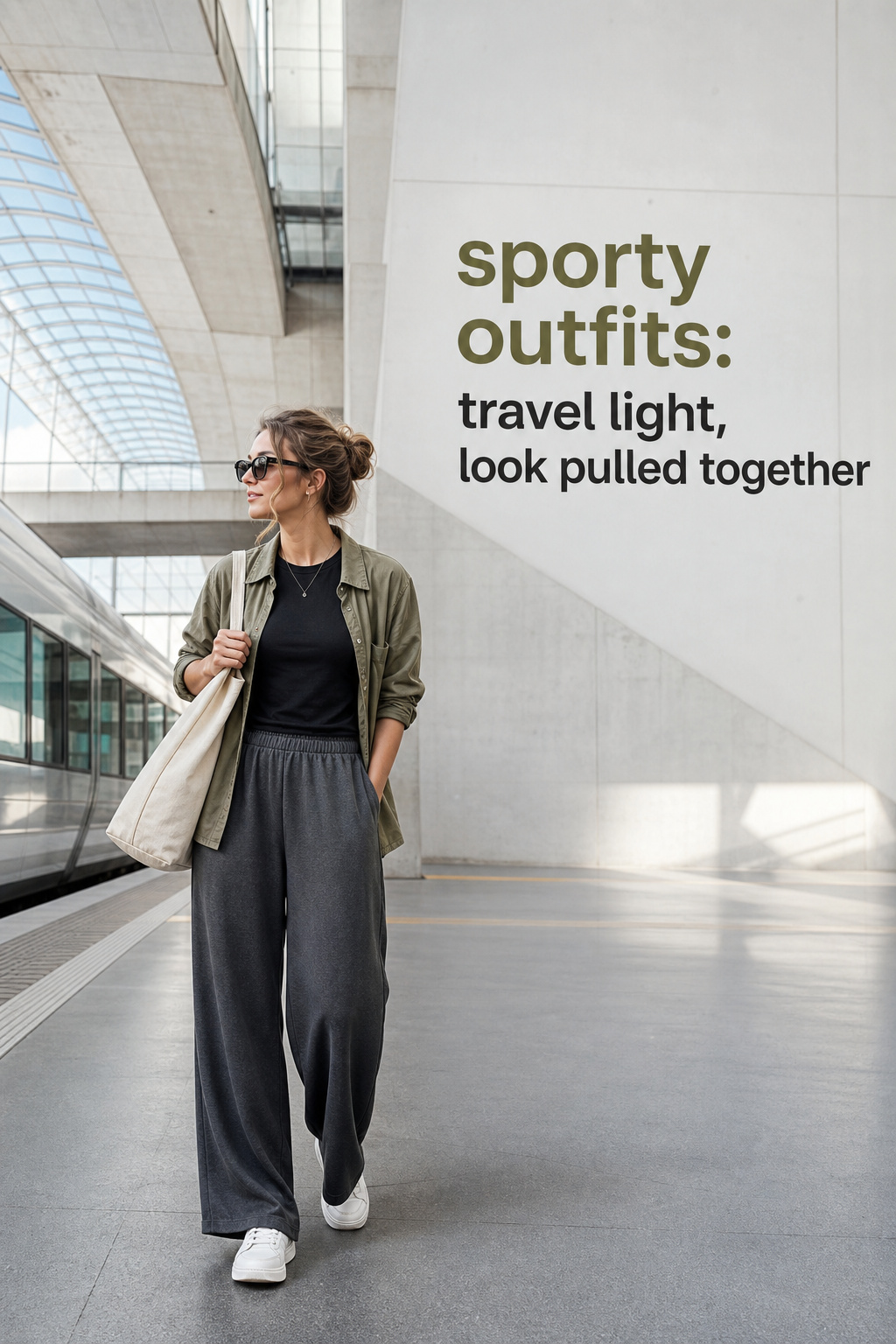
Travel days need movement, temperature control, and easy access to essentials. A coordinated base can help, but avoid relying on a thin matching set alone. Add a layer with enough structure to make the outfit look ready for a café or train platform. A lightweight overshirt, bomber, quilted vest, or relaxed blazer works well over a fitted tank and wide jersey pants.
Use a small color system so the pieces can be removed without breaking the outfit. Black, charcoal, cream, navy, olive, and denim are reliable foundations. Add interest through one colored sock, cap, scarf, or bag. Choose pockets carefully. A zip pocket for a phone and a crossbody that stays close to the body are often more useful than a decorative accessory.
Casual work or creative settings: keep the athletic reference controlled
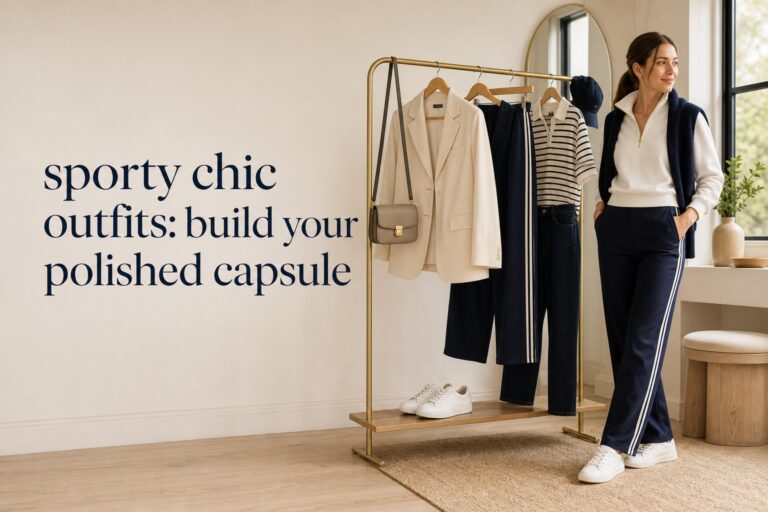
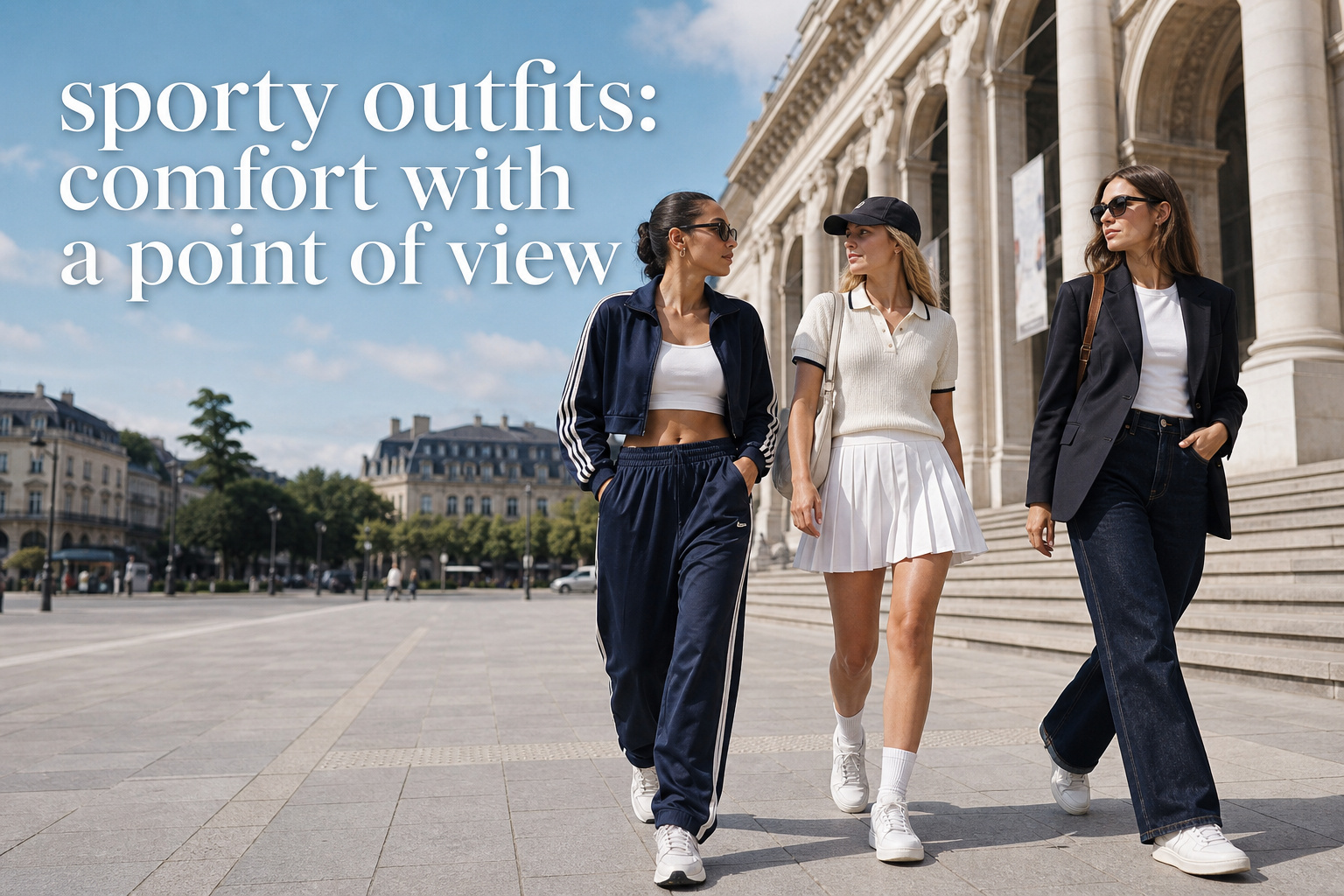
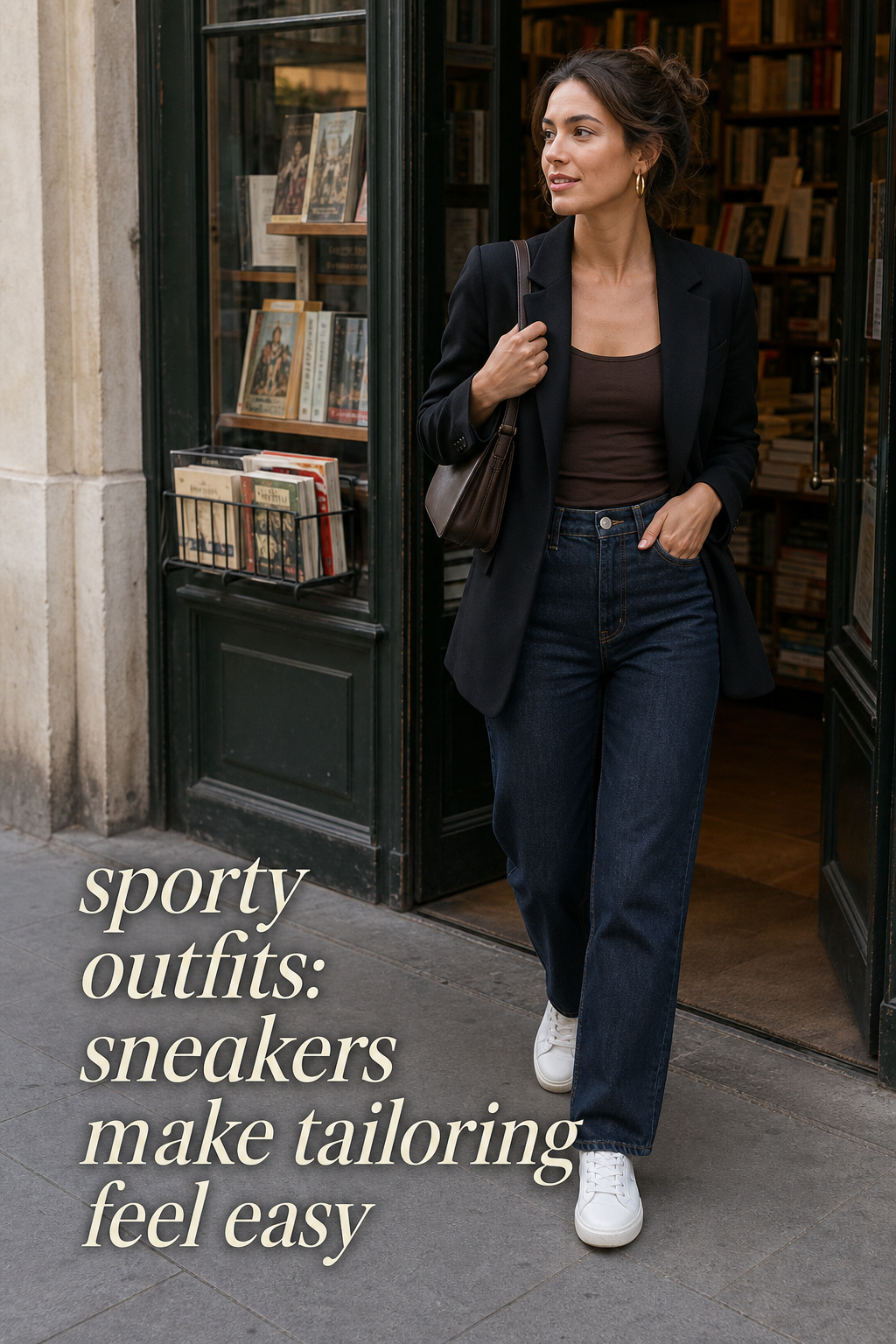
Sporty outfits can work in a casual office or creative workplace when the outfit respects the dress code. Start with one athletic reference, such as a clean sneaker, a knit polo, a track stripe, or a refined sweatshirt. Pair it with a more conventional piece: tailored trousers, dark denim, a midi skirt, a woven button-down, or a blazer. The result should look comfortable because it is well planned, not because every item comes from activewear.
A sneaker can look office-ready when it is clean, quiet in color, and balanced by a structured garment. A technical running shoe with a bright upper may be perfect for commuting but less suitable for a meeting. Keep a second shoe at work if the day requires it, or choose a low-profile pair that supports walking without dominating the outfit.
Light activity followed by plans: change the context, not everything
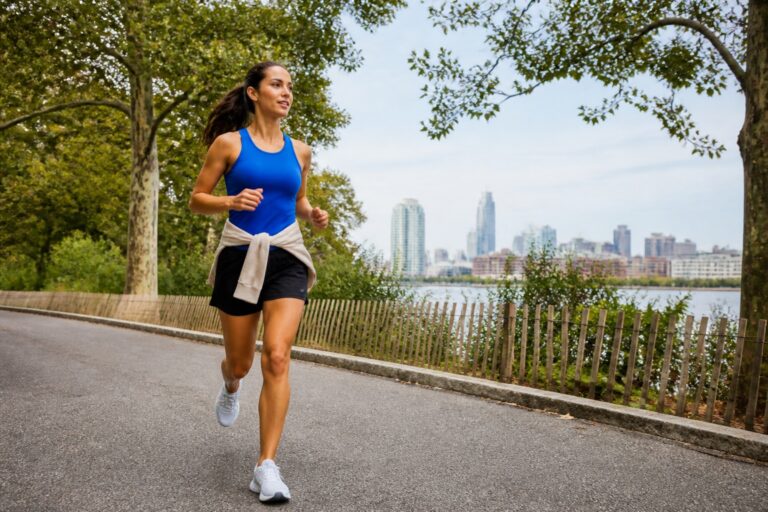
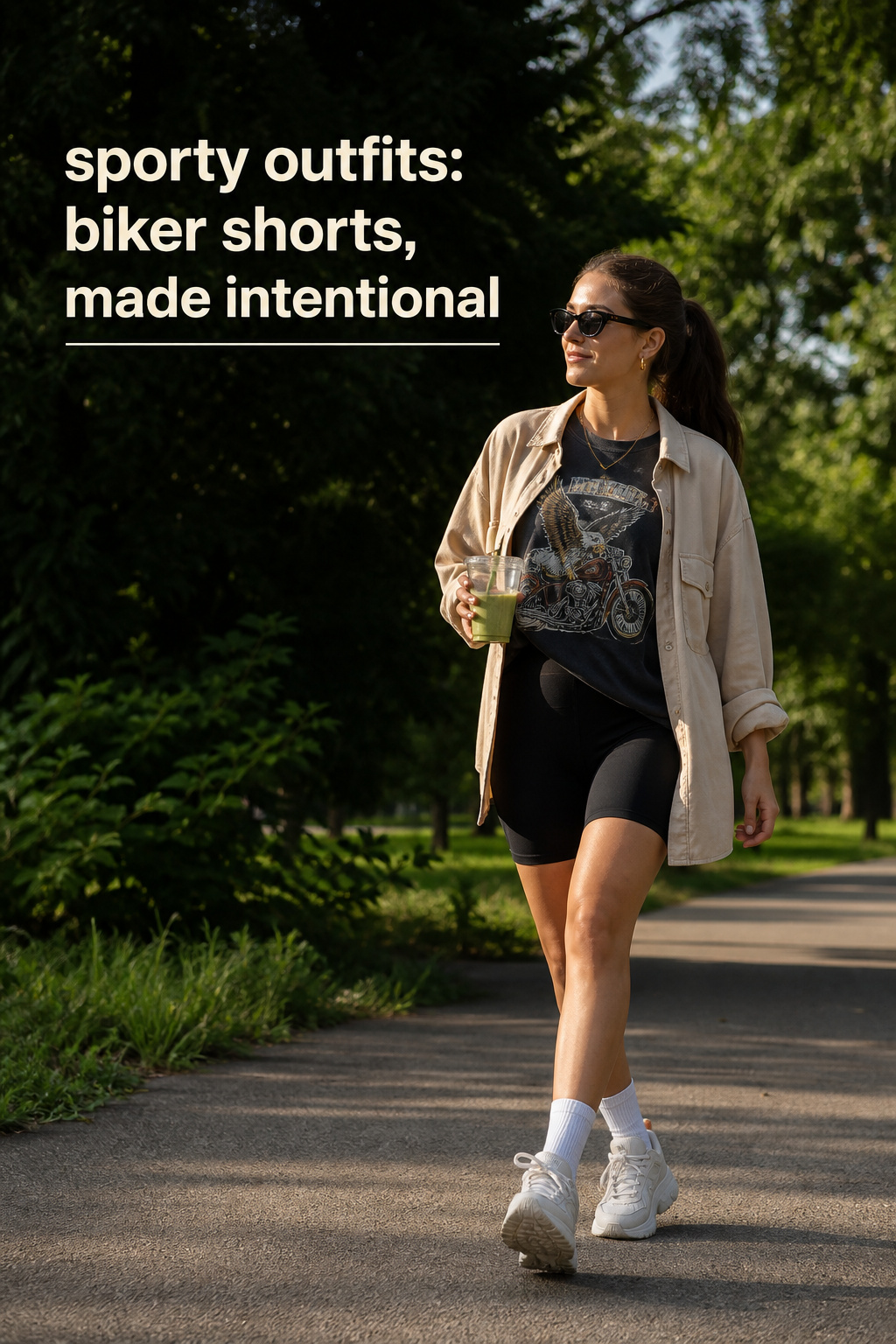
If you are walking, taking a class, or doing a quick workout before meeting someone, let the base handle the movement. A supportive tank and leggings can become an everyday outfit under an oversized shirt. A breathable tee and bike shorts can feel more composed with a long cardigan, denim jacket, or simple overshirt. When possible, switch from a highly technical shoe to a clean everyday sneaker, but the layer and bag often make the largest difference.
Pack one replacement item that changes the message. A crisp shirt takes very little space and works with leggings, track pants, or shorts. A compact belt bag can become a shoulder bag. Simple hoops, sunglasses, or a watch can add finish without turning the outfit into something uncomfortable. The goal is not to pretend the active part of the day did not happen. It is to give the outfit a second context.
Fix the most common sporty outfit friction points
Some pieces are difficult not because they are unfashionable, but because they need a specific styling partner. Treat these moments as small puzzles. You can usually keep the item by changing the line, fabric, or finishing detail around it.
When leggings feel too gym-specific
Leggings become more versatile when they are substantial, opaque, and treated as a streamlined base rather than the whole outfit. Add length or structure above them. A long button-down, tunic-length knit, denim shirt, trench, or blazer can create a different silhouette. You can also use a skirt or dress as the layer, especially a simple knit dress worn open or a shirt dress that leaves the leggings visible.
If the leggings are very sleek, try a textured top. If they are brushed or matte, a smooth woven layer adds contrast. Avoid adding multiple tight performance pieces unless you are genuinely exercising. A clean bra top can work for a walk or hot day, but it needs a layer or bottom that gives the outfit an everyday reason.
When oversized layers lose shape
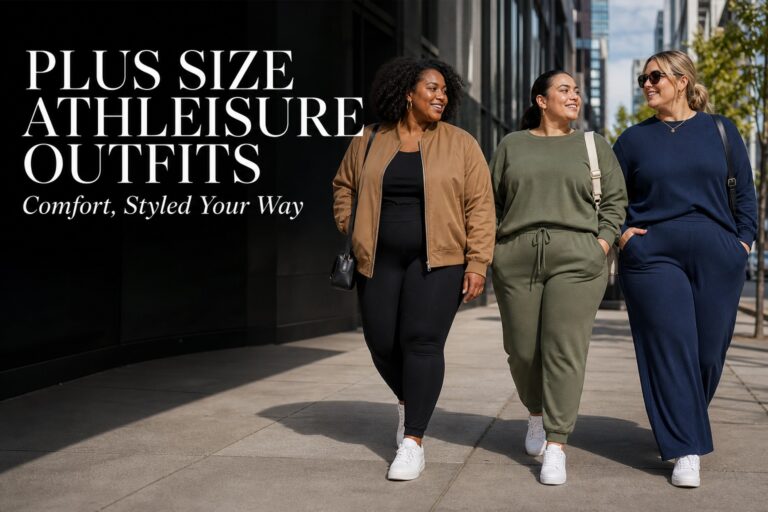
Oversized does not have to mean shapeless. Show one point of definition. Tuck only the front of a sweatshirt, roll the sleeves, choose a cropped jacket, expose the ankle, or use a bag that sits close to the body. If the top is very large, make the bottom slimmer or shorter. If the pants are wide, choose a closer-fitting top or a jacket that ends near the waist.
Pay attention to the hem. A sweatshirt that ends around the high hip often looks easier to balance than one that falls to mid-thigh. A long layer can still work when it has a clean edge and enough movement, but combine it with a visible shoe, wrist, or neckline so the body does not disappear into fabric.
When sneakers overpower the outfit
Chunky sneakers bring energy, but their visual weight needs a partner. Wear them with wide-leg pants, a longer skirt, a substantial jacket, or visible socks so they look connected to the rest of the outfit. With a tiny top and narrow ankle pant, a large sneaker can feel disconnected. A slimmer trainer, ballet sneaker, or low-profile leather pair may create a cleaner line.
Color can also integrate a bold shoe. Repeat one shade in a cap, stripe, bag, or small accessory. You do not need to match exactly. Repetition tells the eye that the sneaker was selected rather than accidentally added. For actual exercise, choose the right shoe for the activity first, then keep the clothing simple enough to let the function make sense.
When the outfit looks too plain
Sporty outfits do not need loud prints to have personality. Add one memorable detail. A contrast stripe, bright sock, colored windbreaker, graphic tee, unusual sunglasses, textured bag, or small piece of jewelry can give the outfit a point of view. Keep the rest simple so the detail has room to work.
Texture is especially useful when you prefer neutrals. Try a ribbed tank under a nylon jacket, a fleece layer with denim, a cotton polo with a satin skirt, or a soft sweatshirt with a leather belt. These combinations feel richer without being difficult. If the outfit still feels flat, change one proportion before adding another accessory.
Seasonal sporty outfits that stay wearable
Weather should shape the outfit more than a trend does. The same sporty idea can work in different seasons when you adjust fabric weight, coverage, and the number of removable layers. Keep the athletic reference visible, but let the season determine how much of it you need.
Warm weather: reduce layers and use contrast
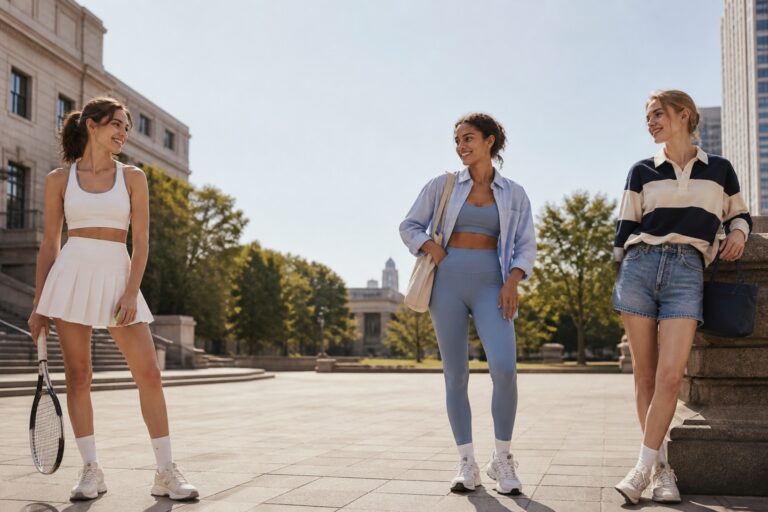
In warm weather, choose one breathable sporty item and one piece that looks less technical. A ribbed tank with tailored shorts and sneakers, a tennis skirt with a relaxed button-down, or athletic shorts with a crisp shirt can all feel fresh. A lightweight cap or canvas tote adds a practical finish without increasing heat.
Check the relationship between coverage and movement. If the bottom is short, a longer shirt can create balance. If the top is fitted, a wider short or skirt can add ease. Keep fabrics light, but avoid thin materials that become transparent or cling when damp. Breathability and opacity are style details because they affect how confidently you move.
Transitional weather: build a removable middle layer
Spring and fall are ideal for sporty outfits because layering adds shape. Try leggings or track pants with a fitted tee, then add a denim jacket, windbreaker, overshirt, quilted vest, or cropped bomber. Choose one layer that handles wind and another that adds texture only when needed. This keeps the outfit flexible during temperature changes.
Use the layer to control the mood. A nylon windbreaker makes a skirt and sneaker combination more active. A blazer over a track pant makes the same base more polished. A cardigan softens a tennis-inspired look. Because the base remains consistent, you can adapt without rebuilding the entire outfit.
Cold weather: keep the athletic line visible
Cold-weather sporty outfits work best when warmth is distributed across several manageable layers. Start with a close-fitting long-sleeve top, then add a sweatshirt, fleece, quilted vest, or light puffer under a wool coat or weather-resistant jacket. Track pants can work with a long coat and warm sneakers, while leggings benefit from tall socks, boots, or a substantial overshirt.
A heavy coat can hide the sporty idea, so repeat it in a cap, sneaker shape, visible sock, or relaxed trouser. A structured bag or clean scarf prevents the look from becoming purely utilitarian. Make sure the layers allow full arm movement and that the outer jacket fits over everything without pulling at the shoulders.
A five-minute final check before you leave
The final check is where sporty outfits become dependable. Stand, sit, walk, bend, and lift your arms. Notice whether the waistband rolls, the top rides up, the neckline shifts, or the shoe rubs. If you will carry a bag, test the strap with the jacket on. If you will be outside, put on the outer layer and check whether you can still move comfortably.
- Can you explain the outfit’s main purpose in one sentence?
- Is there one clear athletic anchor rather than several competing signals?
- Does one piece add structure, texture, or polish?
- Can you move, sit, and carry your essentials without adjusting everything?
- Does the shoe match the amount of walking or activity?
- Would one removable layer make the outfit more useful?
- Is there one personal detail that makes the look feel like yours?
If the answer to most questions is yes, stop editing. The strongest sporty outfits are not the ones with the most visible athletic clothing. They are the ones that solve a real need, show a clear shape, and include enough contrast to feel chosen. Start with the part of the day that requires comfort, then add the piece that helps you feel present for everything else.
FAQ
What makes sporty outfits look intentional?
Choose one main athletic reference, then balance it with a structured, textured, or more conventional piece. Clean shoes, a simple color palette, and one useful accessory also help. The outfit feels intentional when every item supports the activity and the overall proportions show a clear shape.
How can I wear leggings without looking like I am going to the gym?
Use substantial, opaque leggings as a slim base and add length or structure above them. Try a button-down, blazer, denim jacket, long cardigan, trench, or shirt dress. Keep the rest of the outfit from becoming fully technical, and choose a clean everyday shoe when you are not exercising.
Can sporty outfits work for a casual office?
They can, depending on the dress code. Limit the look to one athletic reference, such as a refined sneaker or knit polo, and pair it with tailored trousers, dark denim, a midi skirt, or a blazer. Avoid overly technical fabrics, loud logos, and shoes designed only for high-impact training when you need a more polished impression.
What shoes work best with sporty outfits?
Clean low-profile sneakers, retro trainers, supportive walking shoes, and chunkier sneakers can all work. Match the shoe’s visual weight to the clothing, and match its function to the amount of movement you will do. For exercise, prioritize the shoe made for that activity. For everyday wear, condition, color, and proportion matter as much as comfort.
How do I make an oversized sporty outfit look flattering?
Keep one point of definition visible. You can show the waist with a partial tuck, reveal the ankle, roll the sleeves, choose a cropped layer, or pair wide pants with a closer-fitting top. A bag that sits close to the body and a shoe with enough visual weight can also keep a relaxed outfit from looking shapeless.
What are easy sporty outfits for travel?
Try wide jersey pants with a fitted tank, lightweight overshirt, clean sneakers, and a crossbody or tote. A coordinated neutral palette lets you remove layers without disrupting the look. Choose secure pockets, breathable fabrics, and a shoe you can walk in for hours. Add a blazer, cardigan, or denim jacket if you want the outfit to feel more polished after arrival.
How can I transition a sporty outfit from exercise to everyday plans?
Keep the base pieces that genuinely need to perform, then change the context with one layer, a bag, or a cleaner shoe. A button-down over a tank and leggings, a denim jacket over bike shorts, or a blazer over a fitted jersey top can shift the message quickly. Simple jewelry or sunglasses can finish the transition without adding discomfort.
Finish the look
The little extras that make a summer outfit feel complete
From beach days to city weekends, these easy pieces bring comfort, texture, and a polished finishing touch.

FENBEN
Straw Hobo Crossbody Bag
A handwoven straw bag with both short and crossbody straps—an effortless finishing touch for vacation looks and warm-weather outfits.
Shop the bag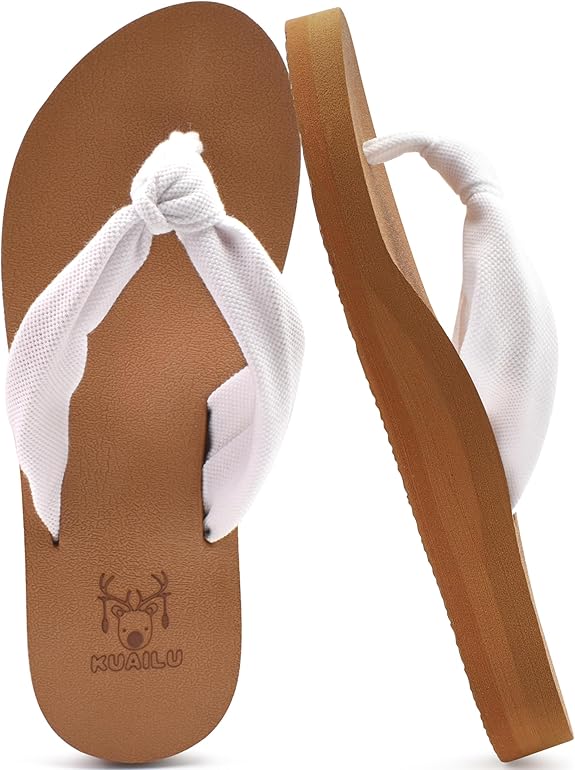
KuaiLu
Flip Flops with Arch Support
Cushioned, lightweight sandals with supportive arch design—a practical choice for beach trips, errands, and long summer walks.
Shop the sandals
baleaf
Athletic One-Piece Swimsuit
A functional one-piece with adjustable straps and moderate coverage, designed for swimming, training, surfing, and active beach days.
Shop the swimsuit
Astylish
Linen-Cotton Button-Down Shirt
A relaxed cotton-linen shirt with a collared V-neck and roll-up sleeves—easy to style over swimwear or with denim and shorts.
Shop the shirt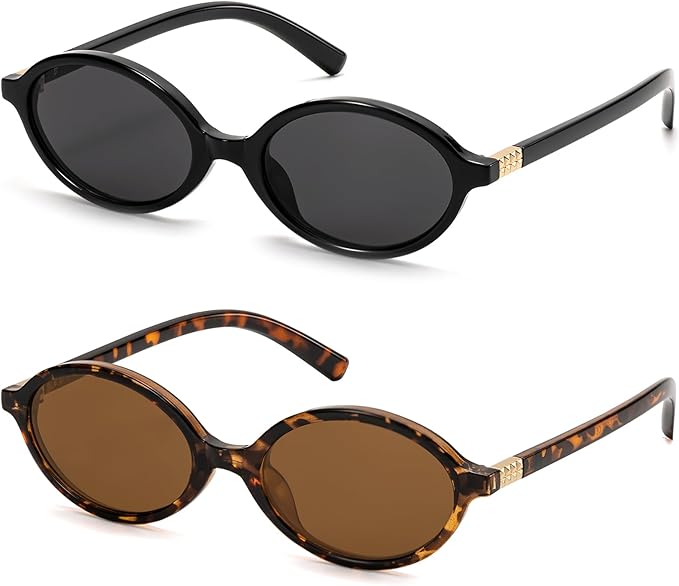
ViewJoy
Retro Oval Sunglasses
Small oval sunglasses with a 90s-inspired silhouette and UV400 lens protection—a quick way to add a vintage edge to everyday looks.
Shop the sunglasses
Affiliate disclosure: This section contains affiliate links. If you make a purchase through these links, I may earn a commission at no additional cost to you. Product selection, pricing, availability, and delivery terms may change—please review the current details on Amazon before purchasing.
As an Amazon Associate I earn from qualifying purchases.