Sporty Summer Outfits: A 12-Piece Capsule
Sporty summer outfits work best when they are built for the life you actually have: a humid walk to coffee, a quick workout, a long drive, a farmers’ market, or dinner after a sunny afternoon. The goal is not to look as if you are headed to the gym all day. It is to make comfort look intentional. A small capsule does that better than a closet full of one-off activewear because each piece has a job, a partner, and a place in your week.
This guide uses a practical 12-piece system. It gives you enough variety for hot days without turning every outfit into a styling project. You will use breathable bases, one or two sporty signals, and one everyday finishing element. That balance is what makes an athletic dress feel appropriate for lunch, bike shorts feel polished enough for errands, and a skort feel like a real outfit rather than a costume. Start with the pieces you own, then add only what solves a repeat problem.
Build the sporty summer capsule first
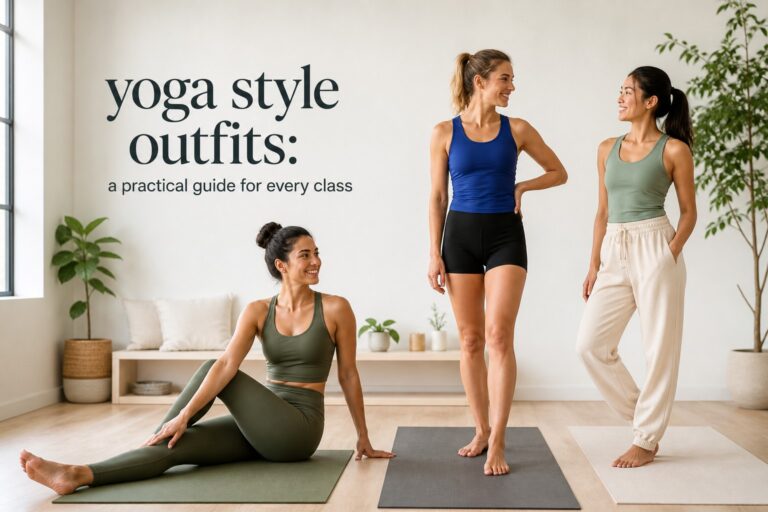
A useful sporty-summer capsule has three kinds of pieces: cool bases, movement-friendly bottoms, and finishers that take the outfit past the court or studio. For bases, choose a fitted rib tank, a relaxed performance tee, a supportive crop top or longline bra, and a lightweight button-down. For bottoms, choose running shorts, bike shorts, a skort, and relaxed track pants or drawstring trousers. Add an athletic dress, a packable windbreaker, clean sneakers, and one hands-free bag. The exact colors are flexible, but a calm core of black, white, navy, cream, or olive makes the pieces work harder.
The Fashion-Note Edit
Five effortless pieces to refresh your everyday wardrobe
A polished, practical edit for workdays, weekends, and everything in between.

The Drop
Women’s Blake Long Blazer
A longline, tailored blazer with a notched collar and a single-button closure—an easy layer for denim, dresses, or office-ready looks.
Shop the blazer
Amazon Essentials
Women’s Lightweight Crewneck
A soft, lightweight sweater with a clean crew neckline—the kind of reliable layer that works from cool mornings to air-conditioned spaces.
Shop the sweater
Amazon Essentials
Women’s Loafer Flat
A classic flat loafer that gives casual outfits a more polished finish and pairs naturally with tailored pants, skirts, and straight-leg jeans.
Shop the loafers
Levi’s
Women’s 501 90s Jeans
A relaxed, vintage-inspired take on the iconic 501 silhouette—made for an easy, lived-in look without the thrift-store search.
Shop the jeans
Colorfulkoala
High-Waisted 7/8 Leggings with Pockets
Soft, four-way-stretch leggings with side pockets and a high-rise waistband—designed for movement, errands, and off-duty comfort.
Shop the leggings
Affiliate disclosure: This section contains affiliate links. If you make a purchase through these links, I may earn a commission at no additional cost to you. Product selection, pricing, availability, and delivery terms may change—please review the current details on Amazon before purchasing.
As an Amazon Associate I earn from qualifying purchases.
Fit matters more than a logo. Your base layer should not twist, pinch, or make you adjust it every few minutes. Shorts need a length that feels right for your stride and your plans. A skort should let you sit, walk, and cycle comfortably. A button-down should be light enough to carry and roomy enough to wear open. Try each piece with the sneakers and bag you will actually use. If an item only works with a special bra, a particular shoe, or perfect weather, it is not a core capsule piece.
Your wedding style is personal.
Your plan should feel that way, too.
Zarellea keeps your guest list, budget, vendors, and every next step beautifully organized — so you can focus on the moments that feel like you.
- Two breathable tops in neutral shades
- One color or print that energizes the capsule
- Three bottoms with different levels of coverage
- One one-piece option for zero-decision days
- One lightweight layer and one practical bag
Use three silhouette rules to look intentional
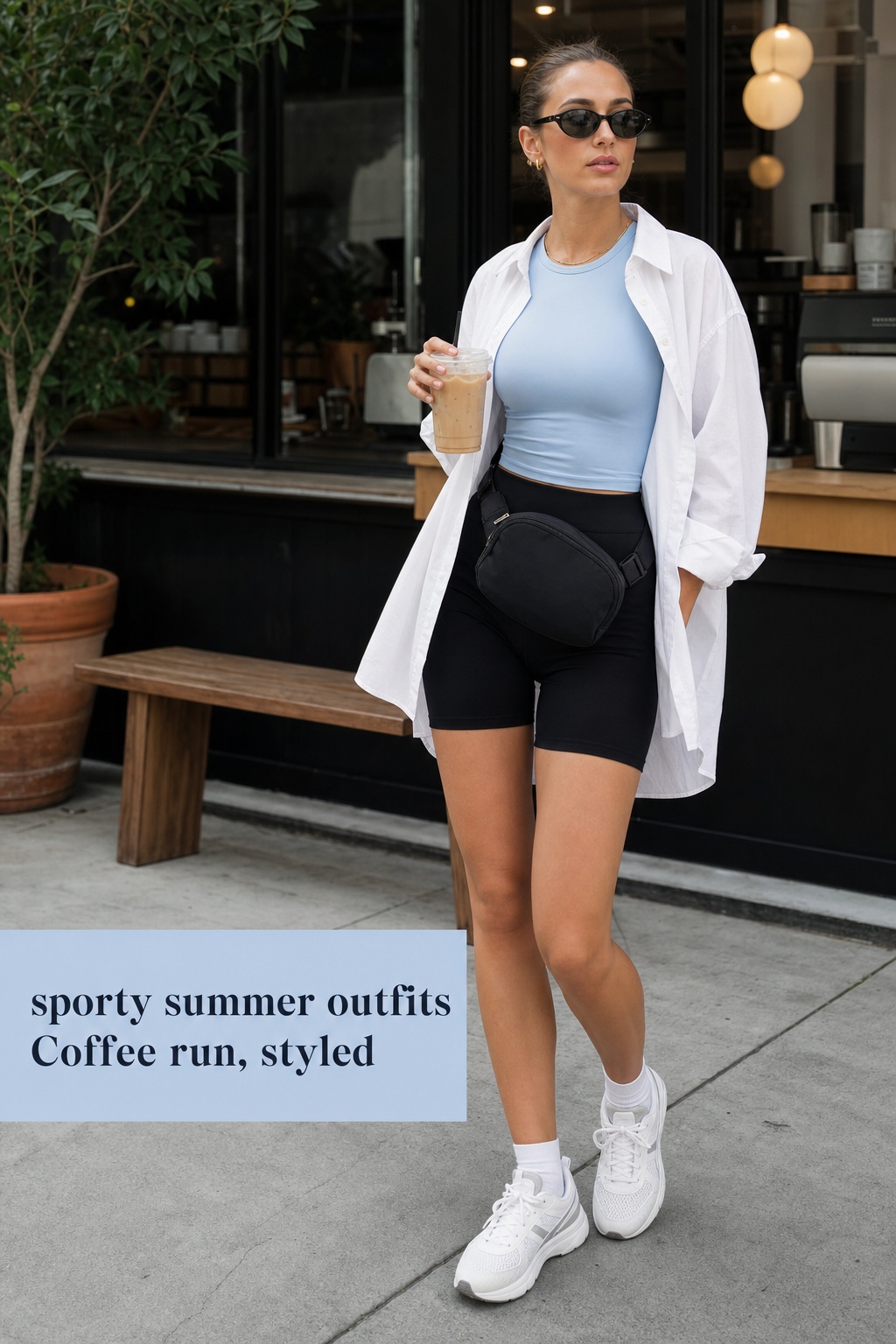
The first rule is balance. When the bottom is short or close-fitting, add an airy layer or a relaxed top. Bike shorts with an oversized poplin shirt, or running shorts with a loose tee, create a clean outline and give skin-baring pieces context. When the bottom is fuller, such as track pants, a fitted tank or compact top keeps the outfit from feeling heavy. This is not about hiding your body; it is about creating enough contrast that the clothes look chosen.
The second rule is to limit the performance signals. Sneakers plus a skort already communicate sporty. Add a simple tote, sunglasses, or a delicate hoop rather than a cap, visor, technical jacket, giant logo, and gym bag all at once. Conversely, if you want a more athletic mood, let one clean accessory do the work: a baseball cap, a belt bag, or crisp crew socks. One or two signals read modern. Five signals can read as though you never left practice.
The third rule is texture. Summer fabrics make the athletic pieces look less flat. Cotton poplin, linen blends, rib knit, lightweight nylon, and mesh all bring something different to the same neutral palette. Pair a slick running short with a soft rib tank. Add a crisp button-down over a matte matching set. Wear a nylon windbreaker with a cotton dress. The mix creates dimension while keeping the outfit breathable, which is especially helpful in high heat and humidity.
Seven outfit formulas from the same capsule
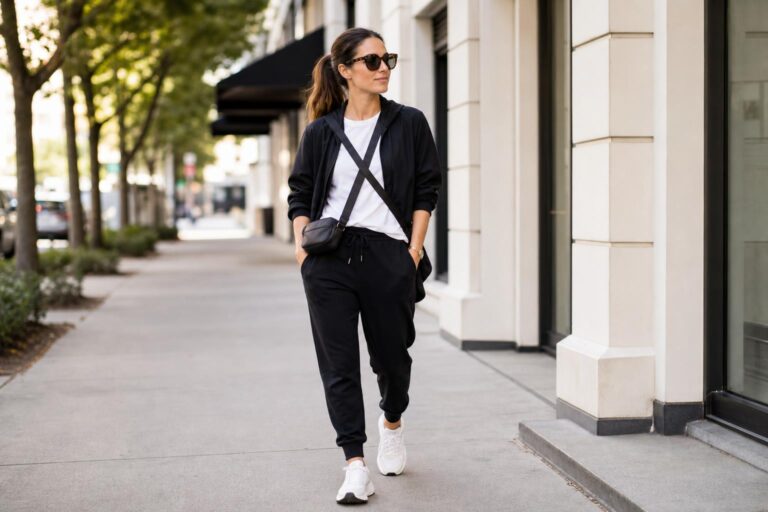
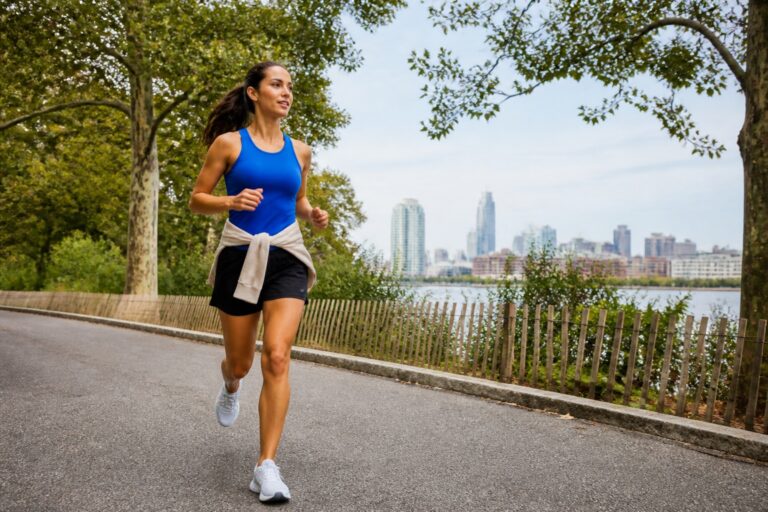
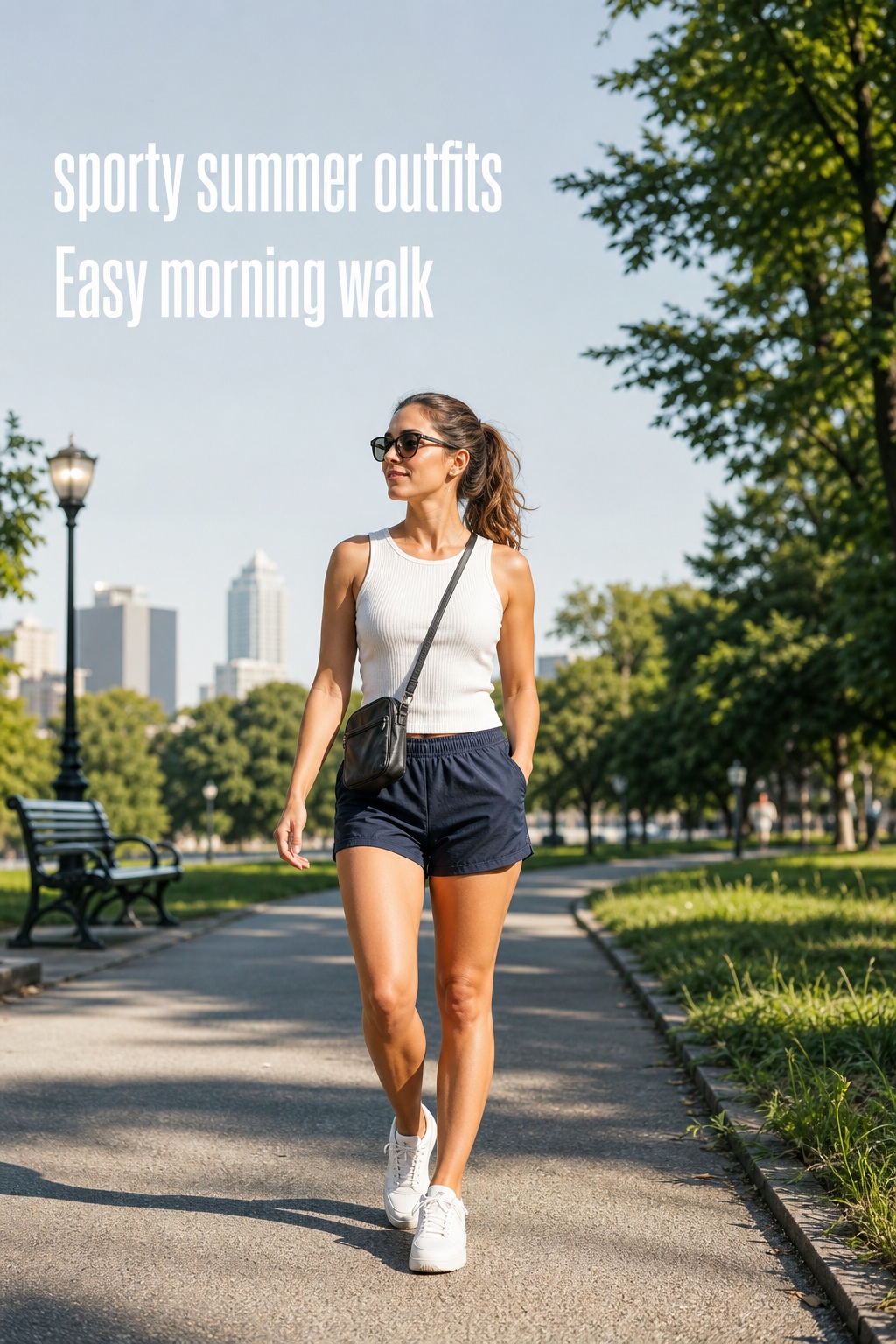
Formula one is the quick walk uniform: a rib tank, running shorts, low-profile sneakers, and a crossbody bag. Keep the colors close, then add sunglasses or a cap. Formula two is the coffee-and-errands version: bike shorts, a performance crop top, and an open button-down. The shirt supplies coverage, a vertical line, and an easy layer for air-conditioned stores. If the shorts feel too exposed, choose a longer inseam or swap them for a skort; the formula stays the same.
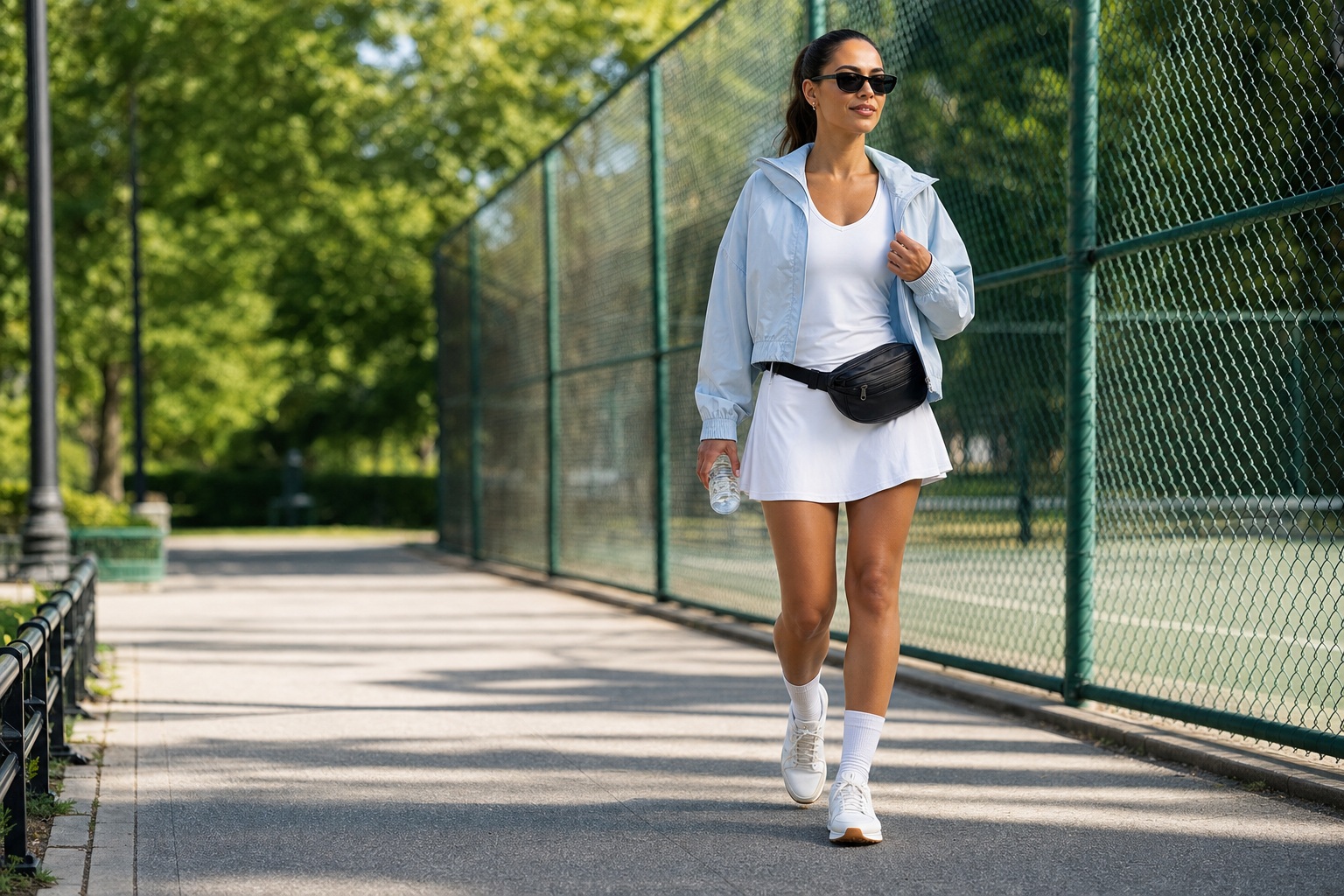
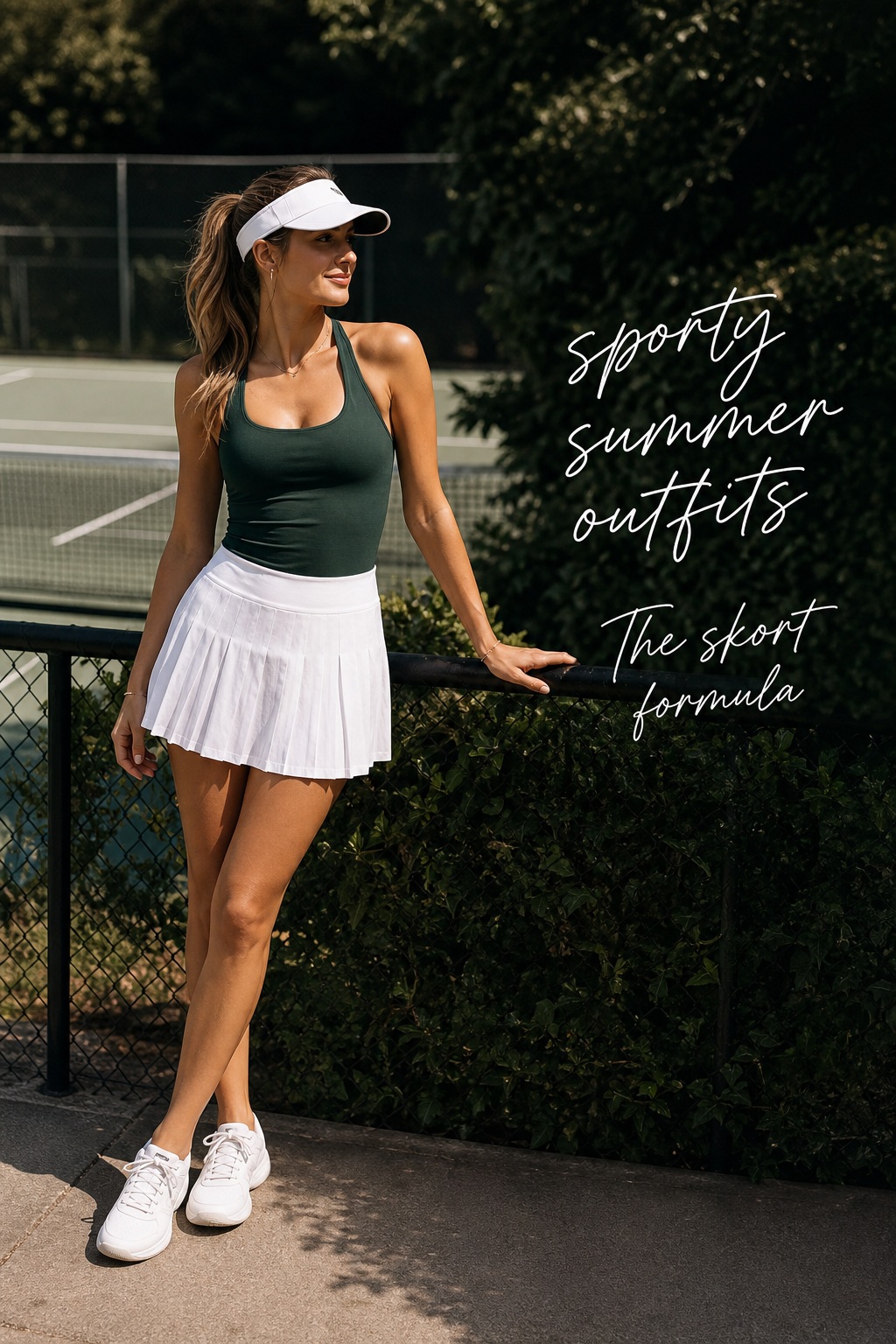
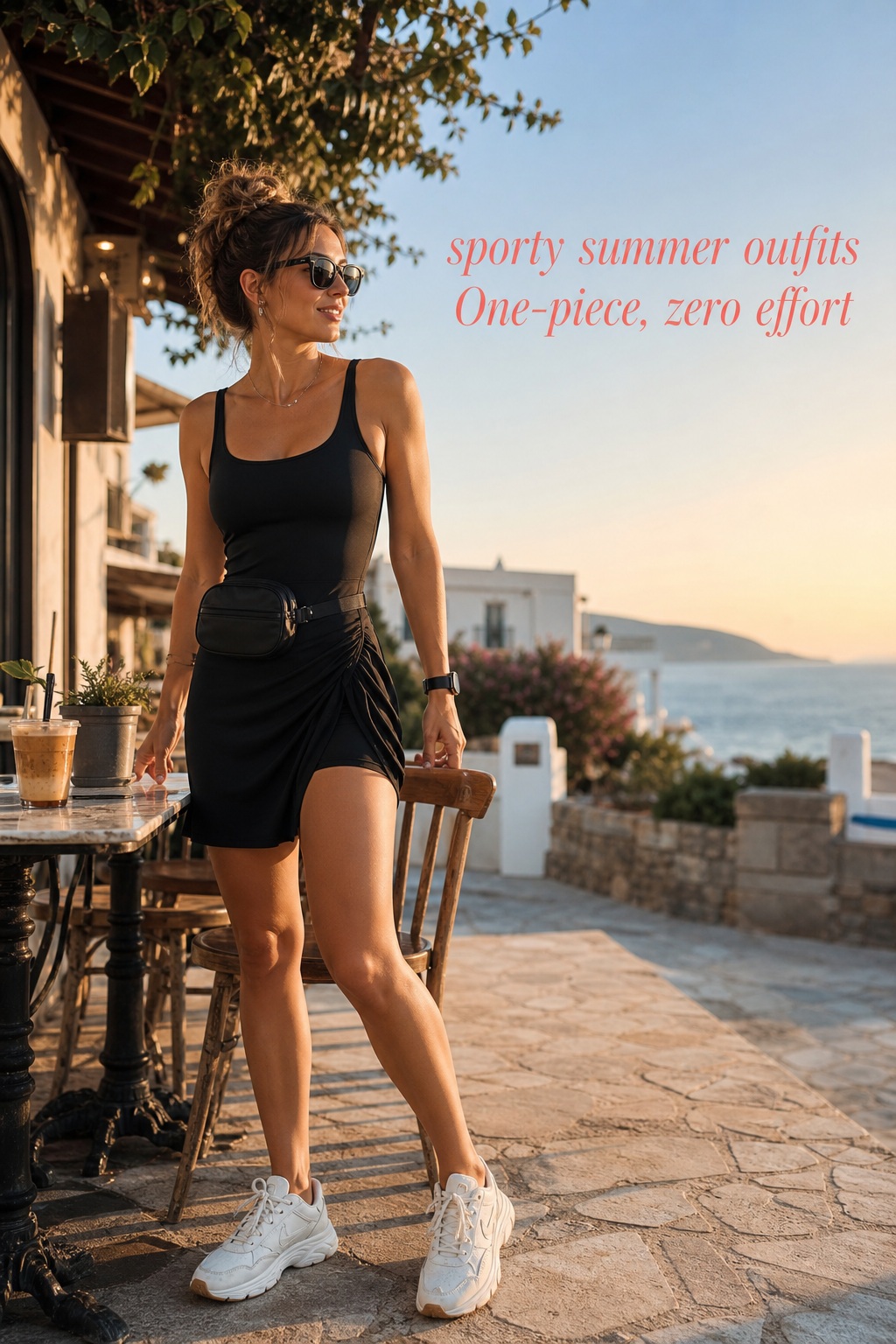
Formula three is the tennis-inspired day: skort, fitted tank, sneakers, and minimal socks. Add a relaxed sweatshirt around the shoulders only if the forecast calls for it. Formula four is the one-piece answer: an athletic dress with sneakers and a compact belt bag. A dress works when you want speed, but it still benefits from a planned finish. Choose a silhouette with built-in shorts or pair it with comfortable slip shorts, then make sure the bag sits at your waist or shoulder without catching the dress.
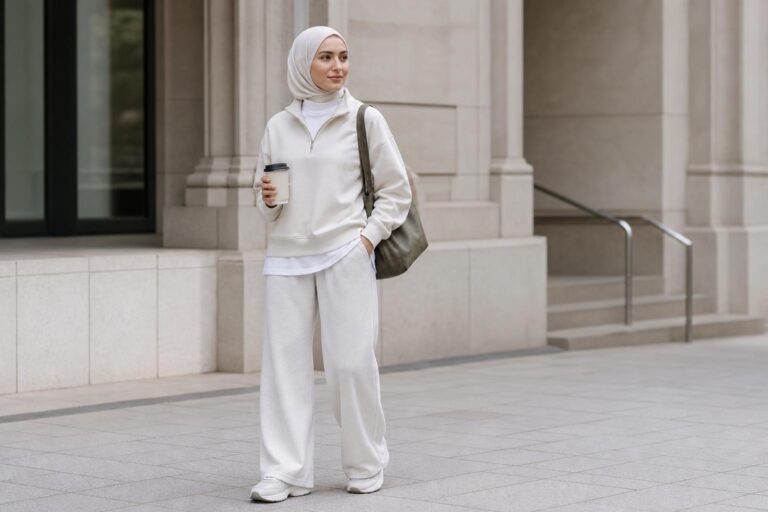
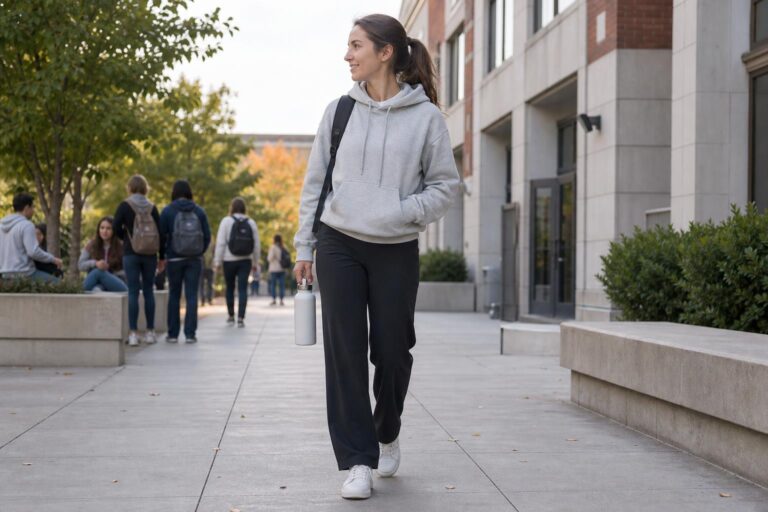
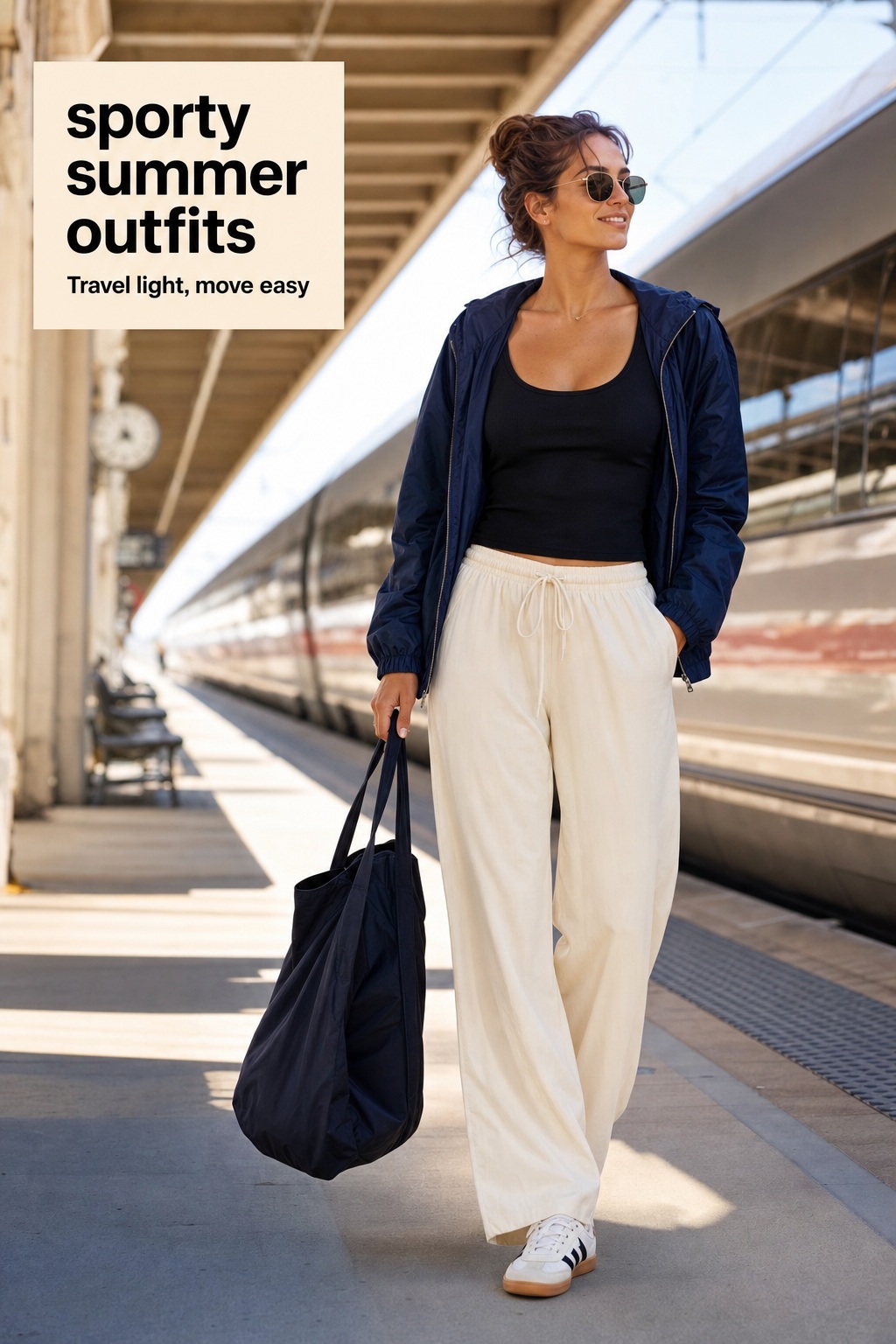
Formula five makes a matching set feel less like workout gear: wear the set with neutral sneakers, an unstructured overshirt, and a casual tote. Formula six is for travel: a fitted tank with relaxed track pants and a light windbreaker. The close top keeps the proportion neat while the pants make sitting comfortable. Formula seven uses a loose tee with a skort or bike shorts, crew socks, and retro sneakers. Half-tuck the tee or knot it only if it improves your comfort; an easy straight hem is often the cleaner choice.
- Morning walk: tank + running shorts + sneakers
- Errands: bike shorts + crop top + open shirt
- Lunch: skort + fitted tank + sunglasses
- Travel: tank + track pants + windbreaker
- Warm evening: athletic dress + sneakers + light layer
Buy strategically, then adapt for real weather
If you are buying from scratch, put money into sneakers, shorts that stay put, and a bag you can use daily. These pieces do the most practical work and are the hardest to fake with a trend purchase. A second priority is fabric: choose materials that dry quickly when you sweat, but do not assume every technical fabric feels cool. In a fitting room, move your arms, sit down, take a long step, and check the garment in daylight if possible. The best sporty summer outfits remove friction from the day.
For very hot weather, build around a loose tank, skort or running short, and a breathable sneaker. Keep the layer in your bag instead of on your body. For humid weather, favor darker or patterned bottoms if you dislike visible moisture, and choose a roomier top that does not cling. For a breezy morning or cool restaurant, use the button-down or windbreaker as a removable piece rather than wearing a heavy hoodie. A layer should solve a temperature problem without changing the outfit’s whole identity.
Think about context, too. A sporty dress may be perfect for a casual patio lunch but not for a long city commute if its fabric is too delicate. Track pants are excellent for travel but can feel warm at noon, so pair them with a tank and plan to swap to shorts later. A skort offers coverage for a day of walking, while bike shorts are ideal for movement-heavy plans. This is the advantage of a system: you are not memorizing looks; you are choosing the right base for the day and finishing it with one clear point of view.
Make the finishing details earn their place
Accessories are what shift sporty summer outfits from purely functional to personal. Start with a clean sneaker that has enough support for your plans. Then choose one bag: a small belt bag for walking, a nylon shoulder bag for errands, or a soft tote for travel. Sunglasses and a cap are useful, but use them as weather tools first. Jewelry can be minimal—small hoops, a watch, or a slim chain—because it contrasts nicely with performance fabrics without fighting for attention.
Color is another finishing tool. A mostly neutral outfit becomes memorable with one bright tank, striped sock, or colorful shoe detail. Keep the accent repeating once, not everywhere. For example, pair a cobalt tank with navy shorts and white sneakers, or a tomato-red cap with a white dress and black belt bag. This small repetition looks considered and makes it easier to get dressed again tomorrow. Your capsule should make decisions lighter, not dictate a uniform.
Finally, edit the outfit before you leave. Ask whether every piece serves movement, weather, or the visual balance. If two pieces do the same job, remove one. If the look feels too gym-specific, add an everyday texture such as cotton or poplin. If it feels too plain, add one sporty signal. That simple check protects the relaxed confidence at the center of this style. The most successful sporty summer outfits look ready for a plan, even when that plan is simply enjoying a warm day.
FAQ
What shoes work best with sporty summer outfits?
Choose clean, comfortable sneakers that suit your walking needs. Retro low-tops and streamlined running-inspired pairs are versatile; match them to the activity before prioritizing the trend.
Can I wear bike shorts outside the gym?
Yes. Balance them with a relaxed tee, open button-down, or lightweight jacket, then add an everyday bag and sneakers. A longer inseam can feel more comfortable for errands.
How do I make a matching activewear set look less sporty?
Add one non-performance piece, such as a cotton shirt, easy tote, or simple jewelry. Keep the shoes and color palette clean rather than piling on extra athletic accessories.
Are skorts still practical for summer?
They are practical for walking, casual plans, and light activity when the inner short fits comfortably. Choose a length and rise that let you move without adjusting the waistband.
What should I wear over a sporty outfit on a cool evening?
A lightweight button-down, windbreaker, or unstructured jacket is easier than a heavy hoodie in summer. It adds coverage and can be packed away when the temperature rises.
How many pieces do I need for a sporty summer capsule?
Start with roughly 10 to 12 versatile pieces plus shoes and a bag. The right number is the one that gives you repeatable combinations without unused extras.
Use the capsule as a weekly tool rather than an imaginary perfect-day uniform. Put the athletic dress aside for lunch and errands, reserve track pants for travel or a cold theater, use the skort on walking-heavy days, and choose bike shorts for a workout or a relaxed afternoon. Assigning each silhouette a likely role prevents the familiar problem of owning many clothes but having nothing that suits the day ahead.
Keep a small ready-to-go kit near the door: sunscreen, a hair tie, a water bottle, socks, and the bag you use most. That preparation means the clothing can do its job without turning a simple walk or errand into a packing exercise. It also stops you from choosing an outfit based on what happens to be cleanest rather than what makes the day easier. In summer, practical details often decide whether an outfit is worn once or becomes part of a reliable rotation.
There is no need to make every sporty look minimal. If you love color, build it into your core pieces with a bright tank, colorful shoe detail, or a printed overshirt, then keep the rest of the outfit quiet. If you prefer neutrals, explore different fabric finishes and proportions instead. Both approaches are more sustainable when the pieces can be interchanged. The capsule is a framework for your preference, not a rulebook that erases it.
Repeat is a strength. Wear the same clean sneaker several times in one week, then change the base, color, or layer. A white tank can meet navy running shorts on Monday, a black skort on Wednesday, and cream track pants on Friday. Repeated footwear creates continuity while the other changes keep each look fresh. It is also kinder to your budget and laundry routine, which is precisely what a capsule should simplify.
For personality, work within the system instead of starting over. Add a striped shirt, bright cap, or printed tote to an otherwise neutral outfit. Choose one special item that behaves like a basic: a colorful racerback tank, contrast-piped skort, or sneaker with one unexpected accent. It should pair with at least three pieces already in your closet. That makes an outfit personal without creating another rarely worn purchase.
Care is part of polish. Wash technical pieces promptly after sweat, follow garment guidance, and let sneakers air between wears. Wipe midsoles when needed, replace worn laces, and keep a windbreaker folded in a bag for air-conditioned rooms. Small habits extend the life of everyday athletic pieces and make them look intentional every time you reach for them. The useful wardrobe is the one that still looks ready after a busy week, not just when it is brand new.
Before buying another activewear item, test the outfit gap. Ask whether it works with two bottoms, one layer, and your existing shoes. Ask whether it can manage the temperature where you live, not only the lighting of a fitting room. Finally, ask whether you would wear it for a normal weekday plan. If the answer is yes, it deserves a place in the capsule. If not, leave the space open for something that makes getting dressed genuinely easier.
Finish the look
The little extras that make a summer outfit feel complete
From beach days to city weekends, these easy pieces bring comfort, texture, and a polished finishing touch.

FENBEN
Straw Hobo Crossbody Bag
A handwoven straw bag with both short and crossbody straps—an effortless finishing touch for vacation looks and warm-weather outfits.
Shop the bag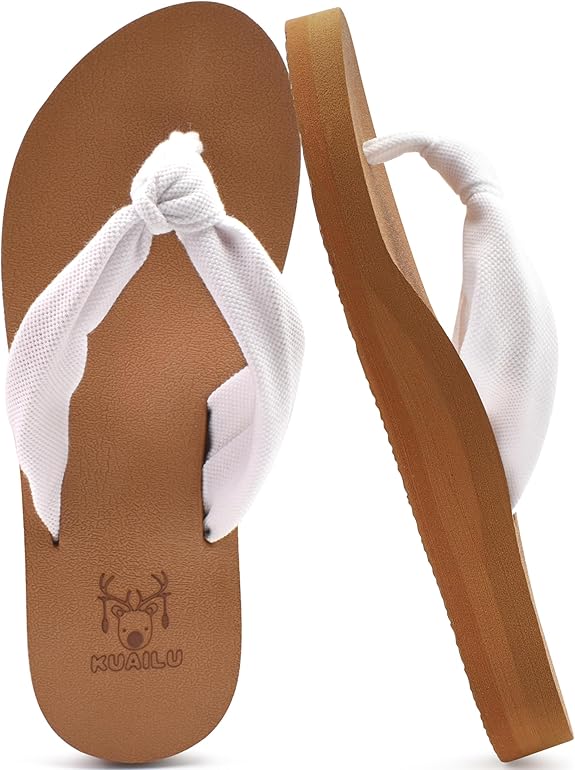
KuaiLu
Flip Flops with Arch Support
Cushioned, lightweight sandals with supportive arch design—a practical choice for beach trips, errands, and long summer walks.
Shop the sandals
baleaf
Athletic One-Piece Swimsuit
A functional one-piece with adjustable straps and moderate coverage, designed for swimming, training, surfing, and active beach days.
Shop the swimsuit
Astylish
Linen-Cotton Button-Down Shirt
A relaxed cotton-linen shirt with a collared V-neck and roll-up sleeves—easy to style over swimwear or with denim and shorts.
Shop the shirt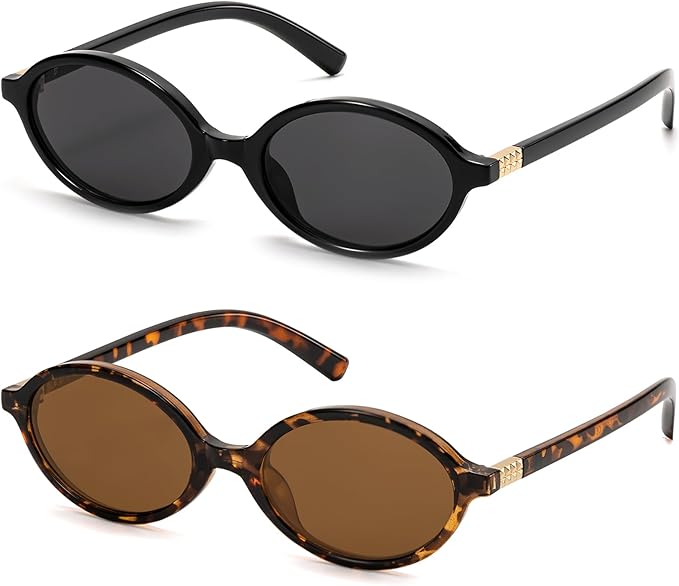
ViewJoy
Retro Oval Sunglasses
Small oval sunglasses with a 90s-inspired silhouette and UV400 lens protection—a quick way to add a vintage edge to everyday looks.
Shop the sunglasses
Affiliate disclosure: This section contains affiliate links. If you make a purchase through these links, I may earn a commission at no additional cost to you. Product selection, pricing, availability, and delivery terms may change—please review the current details on Amazon before purchasing.
As an Amazon Associate I earn from qualifying purchases.