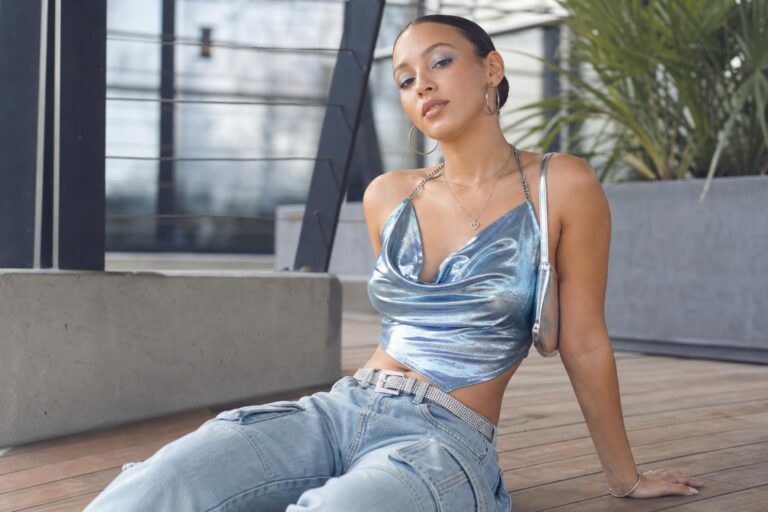
Vintage Outfits 90s With a Modern Twist
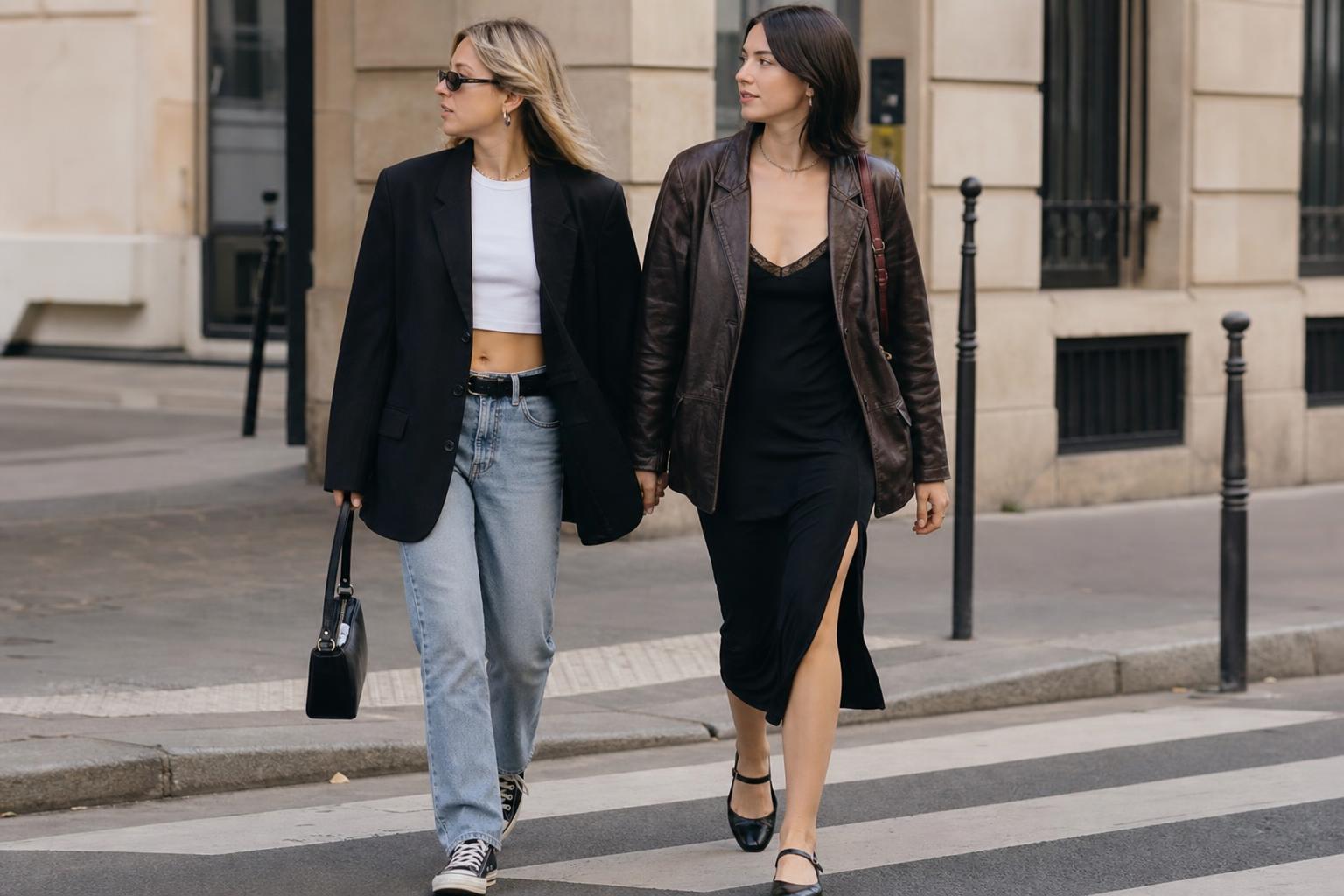
Some decades come back as a vague mood. The 1990s return in a much sharper way: a slip dress with barely-there lines, vintage-wash denim with a straighter leg, a blazer that softens rather than stiffens the body, and shoes like Mary Janes or platform sandals that instantly shift the silhouette. That is why vintage outfits 90s still feel so recognizable. Even when the pieces are updated, the visual logic stays the same.
What makes the decade especially interesting is that it never moved in just one direction. Minimalism and glam existed next to grunge, rave influences, tailoring, and easy denim. A Kate Moss-inspired look creates a very different impression from a Jennifer Lopez red-carpet reference, even though both still read unmistakably 90s. Understanding those differences matters if you want a wardrobe that feels intentional rather than costume-like.
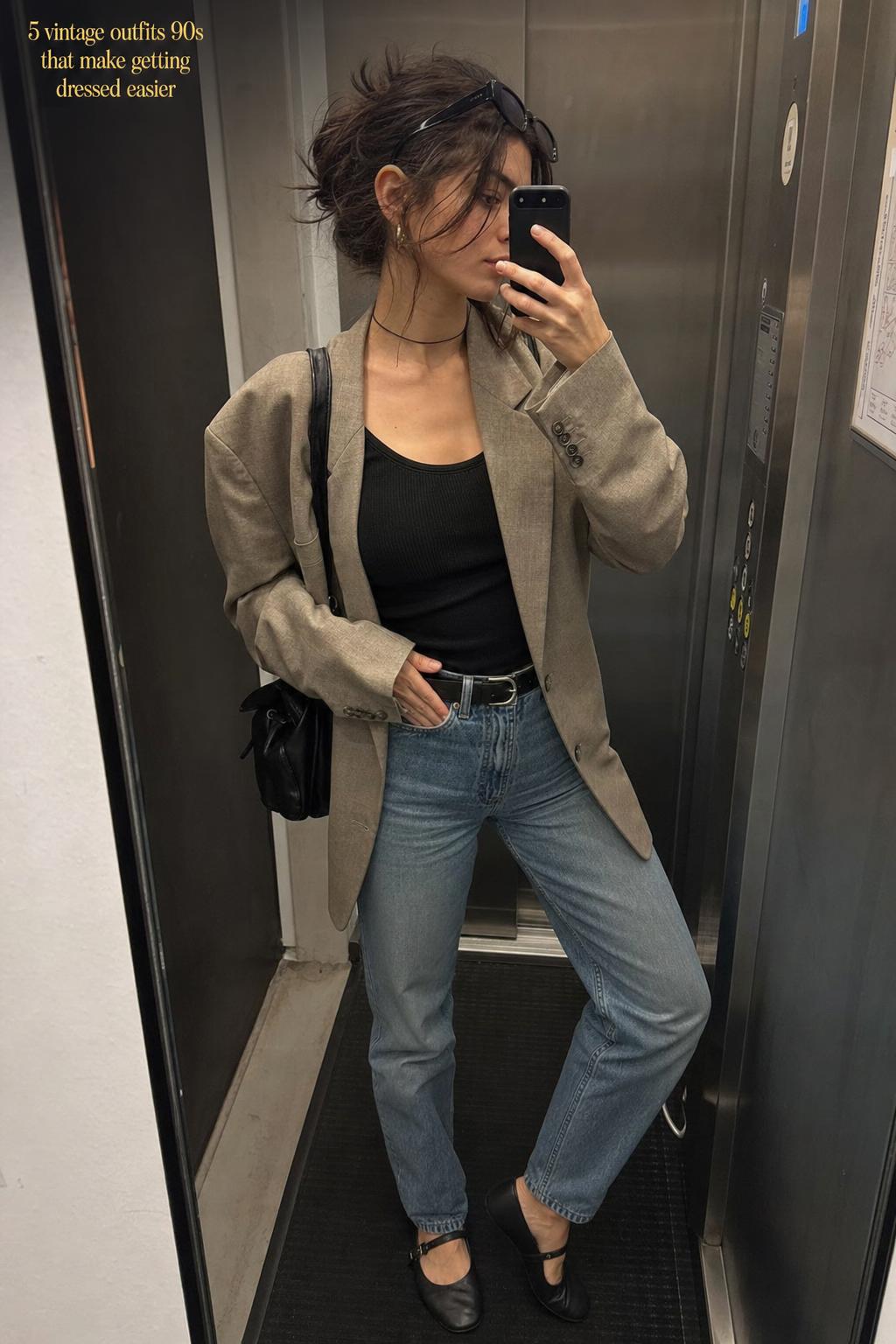
This breakdown looks at the core 1990s archetypes, how they differ visually, and how they translate into everyday outfits now. Instead of treating the decade as one single trend, it helps you see which 90s styling language fits your closet, your routine, and the kind of mood you want your outfits to project.
The Fashion-Note Edit
Five effortless pieces to refresh your everyday wardrobe
A polished, practical edit for workdays, weekends, and everything in between.

The Drop
Women’s Blake Long Blazer
A longline, tailored blazer with a notched collar and a single-button closure—an easy layer for denim, dresses, or office-ready looks.
Shop the blazer
Amazon Essentials
Women’s Lightweight Crewneck
A soft, lightweight sweater with a clean crew neckline—the kind of reliable layer that works from cool mornings to air-conditioned spaces.
Shop the sweater
Amazon Essentials
Women’s Loafer Flat
A classic flat loafer that gives casual outfits a more polished finish and pairs naturally with tailored pants, skirts, and straight-leg jeans.
Shop the loafers
Levi’s
Women’s 501 90s Jeans
A relaxed, vintage-inspired take on the iconic 501 silhouette—made for an easy, lived-in look without the thrift-store search.
Shop the jeans
Colorfulkoala
High-Waisted 7/8 Leggings with Pockets
Soft, four-way-stretch leggings with side pockets and a high-rise waistband—designed for movement, errands, and off-duty comfort.
Shop the leggings
Affiliate disclosure: This section contains affiliate links. If you make a purchase through these links, I may earn a commission at no additional cost to you. Product selection, pricing, availability, and delivery terms may change—please review the current details on Amazon before purchasing.
As an Amazon Associate I earn from qualifying purchases.
The 90s were not one look
A lot of people picture the 1990s as either grunge or sleek minimalism, but the decade was broader than that. The strongest wardrobes from that era often sat in one of a few clear lanes: slip-dress minimalism, denim-heavy casual dressing, softer power tailoring, subculture-led outfits like grunge or rave, and celebrity-driven glam. These categories are useful because they explain why two outfits can both feel very 90s while creating completely different impressions.
Your wedding style is personal.
Your plan should feel that way, too.
Zarellea keeps your guest list, budget, vendors, and every next step beautifully organized — so you can focus on the moments that feel like you.
This also explains why modern references to the decade can feel inconsistent. A Calvin Klein or Versace slip dress carries a clean, body-skimming elegance. A flannel and band tee combination leans undone and grounded. A vintage blazer with straight-leg denim feels polished but still relaxed. The decade worked through silhouette, proportion, and attitude as much as through any single item.
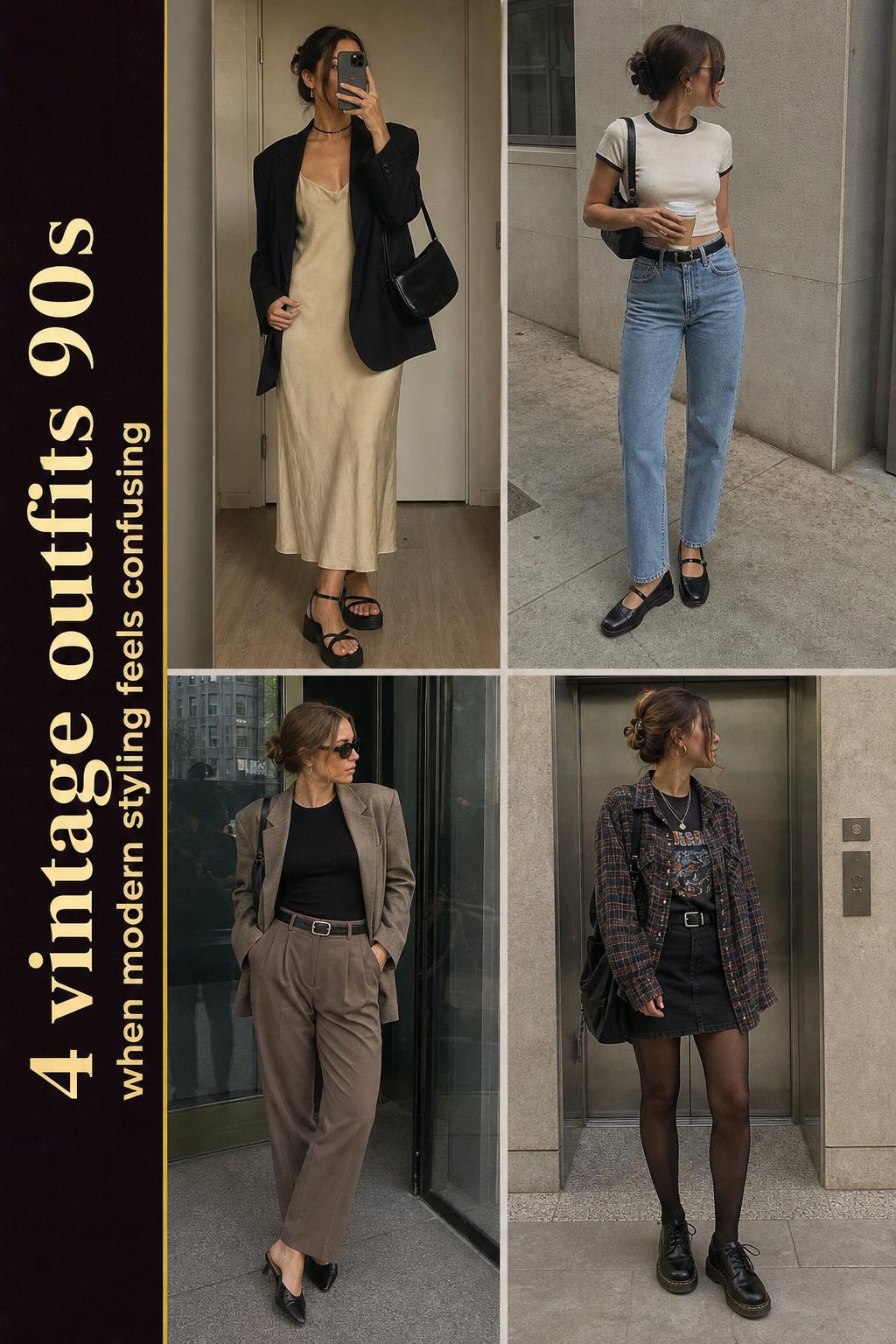
Style overview: the core 1990s archetypes
Slip dress minimalism
This is one of the clearest 90s signatures and still one of the easiest to identify at a glance. The slip dress works because it simplifies the silhouette. Satin or silk-like fabrics skim the body rather than structure it, which creates a clean vertical line. It feels light, understated, and quietly glamorous rather than heavily styled.
Visually, this archetype is associated with Kate Moss and Naomi Campbell, and with brand references like Calvin Klein and Versace. The mood can shift depending on styling. A minimalist version feels monochrome and pared back. A more glam version leans into a stronger evening presence. In both cases, the dress is doing the work through line and fabric rather than embellishment.
Denim dominance
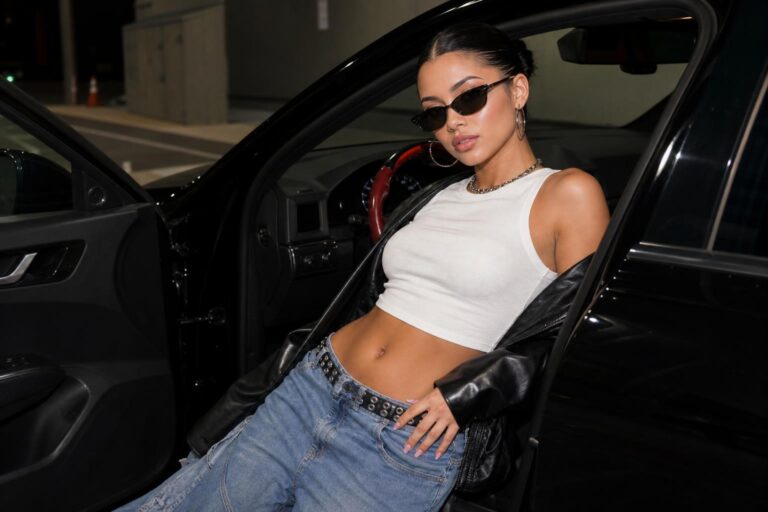
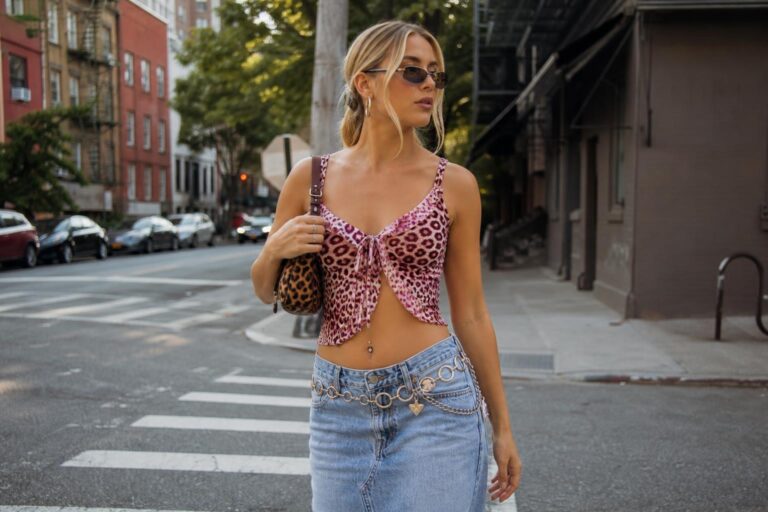
If the slip dress is the sleek side of the decade, denim is its everyday backbone. The 90s denim silhouette is less about dramatic shape and more about balance: straight-leg jeans, mom jeans, high waists, and vintage washes that feel lived-in rather than ultra-fitted. Levi’s 501 is one of the strongest reference points here because it captures that easy, authentic look.
This archetype often feels more relaxed, more wearable, and more adaptable for daily life. It can move toward a clean Calvin Klein denim mood, a casual Gap-style simplicity, or a more thrifted look built around vintage tees and overalls. The mood depends on what you pair with it, but the denim itself usually keeps the outfit grounded.
Tailoring and soft power dressing
90s tailoring is not the same as sharp corporate dressing from earlier eras. The blazer matters, but so does the way it is worn. Instead of feeling rigid, the silhouette often looks softened: a tailored blazer over denim, a suit with a simpler base layer, or structured lines paired with an easy slip skirt or tee. The effect is polished without looking overworked.
References here include Tom Ford Gucci as well as celebrity cues connected to Gwyneth Paltrow and Julia Roberts. This archetype is useful for readers who like the decade but want something more refined than grunge and more covered than a slip dress. It is one of the most practical ways to wear 90s styling in everyday city wardrobes.
Footwear-led 90s styling
Sometimes a 90s outfit is signaled less by the clothing and more by the shoes. Mary Janes, platform sandals, and even jelly-shoe references change the mood of an outfit immediately. These silhouettes add either a playful finish or a chunkier grounded base, and both effects are deeply tied to the decade.
Footwear also helps explain why two similar outfits can read differently. Straight-leg denim with simple shoes can feel timeless and neutral. The same denim with platform sandals turns more distinctly 90s. A slip dress with Mary Janes looks younger and more styled than the same dress with a barely visible sandal. Small changes in shoe shape often create the strongest decade signal.
Accessories that complete the decade
Accessories are often what make a modern outfit feel intentionally 90s rather than generally vintage. Chokers, scrunchies, mini backpacks, and touches of velvet or gold jewelry all act as quick visual shorthand. They are not always necessary, but they sharpen the reference.
This is also where styling can go wrong. Too many strong accessories at once can turn the outfit into a costume. A single choker with denim and a blazer, or a scrunchie with a slip-inspired look, usually feels more convincing than layering every recognizable item together. Even brand cues like Juicy Couture or Tiffany jewelry work best as finishing notes, not the whole idea.
Why grunge, minimalism, and glam get confused
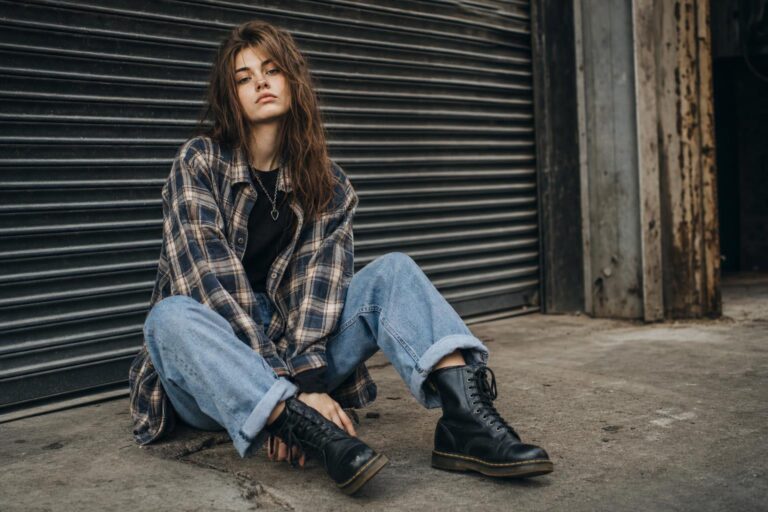
These styles are often grouped together because they share the same decade, but they are built on different styling philosophies. Grunge relies on tension and contrast: a flannel over a band tee, rougher layering, and an intentionally undone mood. Minimalism reduces visual noise. It uses cleaner silhouettes, smoother fabrics, and less interruption across the outfit. Glam takes recognizable 90s shapes and gives them more presence, often through a body-conscious fit, stronger evening references, or celebrity styling cues.
That distinction matters when building outfits for real life. Someone who likes Cindy Crawford-inspired denim and blazers may not want the slouch and texture of grunge. Someone drawn to Naomi Campbell or Versace evening references may find simple denim too casual. The mistake is assuming every 90s item works the same way. It does not. Each one pushes the outfit toward a different mood.
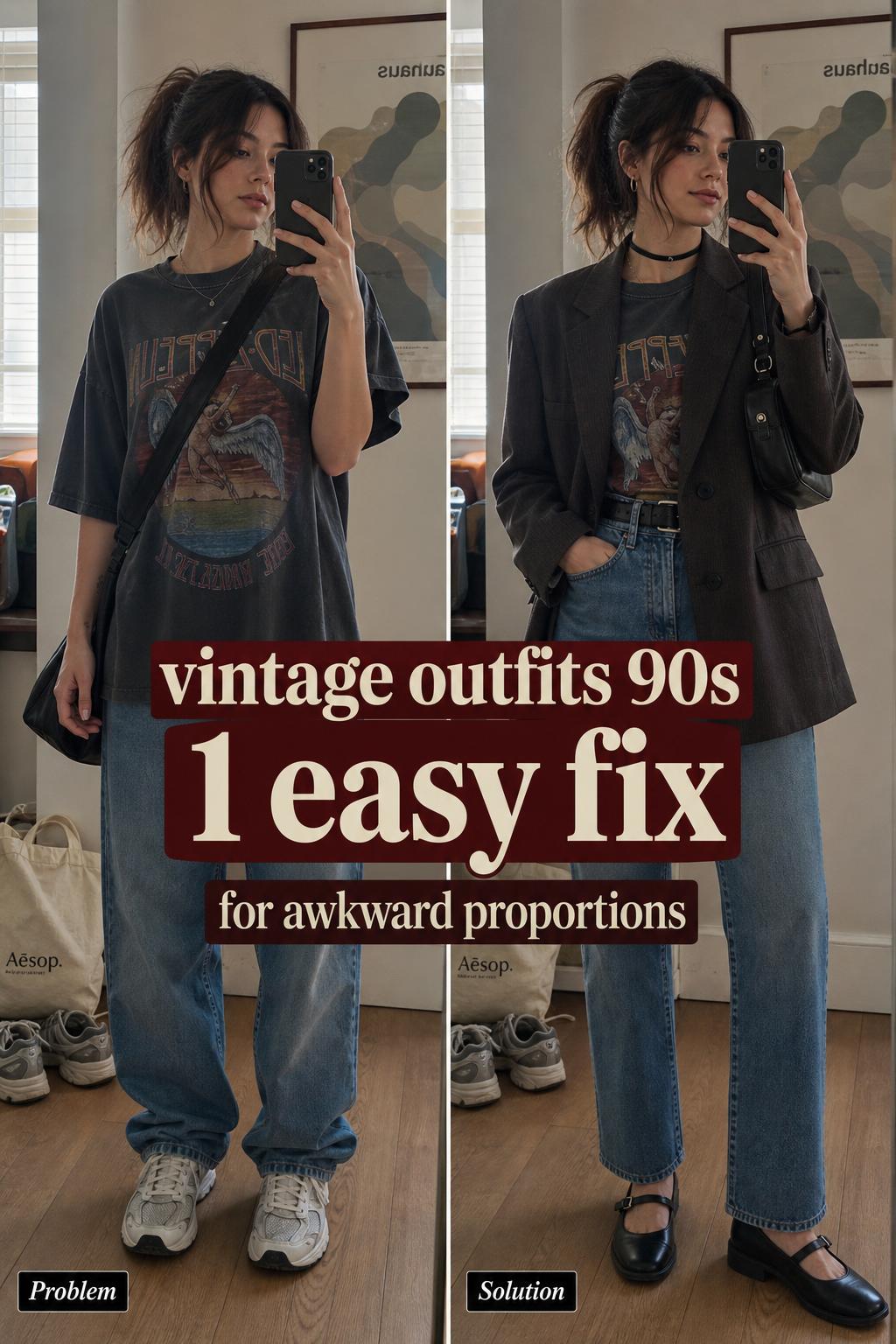
How to instantly tell the difference
- Minimalist 90s dressing looks cleaner from a distance. The silhouette reads first, details second.
- Grunge is more layered and textured. You notice contrast, looseness, and a slightly rougher finish.
- Glam 90s outfits feel more body-aware or event-ready, often with stronger celebrity references.
- Denim-led casual 90s looks are simpler and easier, usually built from vintage washes, straight lines, and relaxed pairings.
- Tailoring-led 90s outfits look polished but not stiff, often mixing structured pieces with softer basics.
A useful shortcut is to look at visual balance. If the outfit feels intentionally reduced, it leans minimal. If it feels slightly undone and layered, it leans grunge. If it feels more polished or camera-ready, it moves toward glam. If it looks practical and relaxed with strong denim, it sits in the everyday 90s lane that so many current wardrobes still borrow from.
Visual breakdown: how the pieces change the mood
Denim with a vintage tee versus denim with tailoring
Straight-leg jeans or mom jeans paired with a vintage tee create a lower-effort visual message. The outfit feels casual, slightly nostalgic, and easy to move in. This is the kind of 90s outfit that works well for errands, weekend coffee, or a casual daytime plan because the styling is not asking for much precision.
Replace the tee with a tailored blazer and the same denim shifts direction. Suddenly the outfit feels more city-ready, more deliberate, and closer to the Cindy Crawford school of off-duty dressing. The denim keeps it approachable, while the blazer gives structure around the shoulders and cleans up the line. That trade-off is one of the most wearable 90s updates for now.
Slip dresses with bare styling versus layered styling
A slip dress worn with minimal accessories carries the strongest minimalist signal. It feels direct, soft, and visually light. The shape matters more than the styling. This works especially well when you want the outfit to feel elevated without looking formal in a heavy way.
Layer the same slip dress under tailoring or style it with more obvious accessories and the mood changes. It becomes less pure minimalism and more editorial 90s. This approach can be more practical for everyday wear, especially when you want a little more coverage or structure. The key is to preserve the dress’s clean line rather than burying it under too many competing pieces.
Footwear as the final signal
Mary Janes bring a more styled, directional finish. Platform sandals create height and a clearer throwback shape. Chunkier sneakers and other heavy shoes can pull the outfit toward a sportier or rave-influenced direction. This is why footwear deserves more attention than it usually gets in 90s guides. It often determines whether an outfit feels subtle or unmistakably decade-specific.
For real wardrobes, this matters because shoes also decide comfort and practicality. Platform sandals may create a stronger 90s image, but straight-leg denim with a simpler shoe may be easier for a full day in the city. The best 90s styling usually balances visual clarity with how the outfit needs to function.
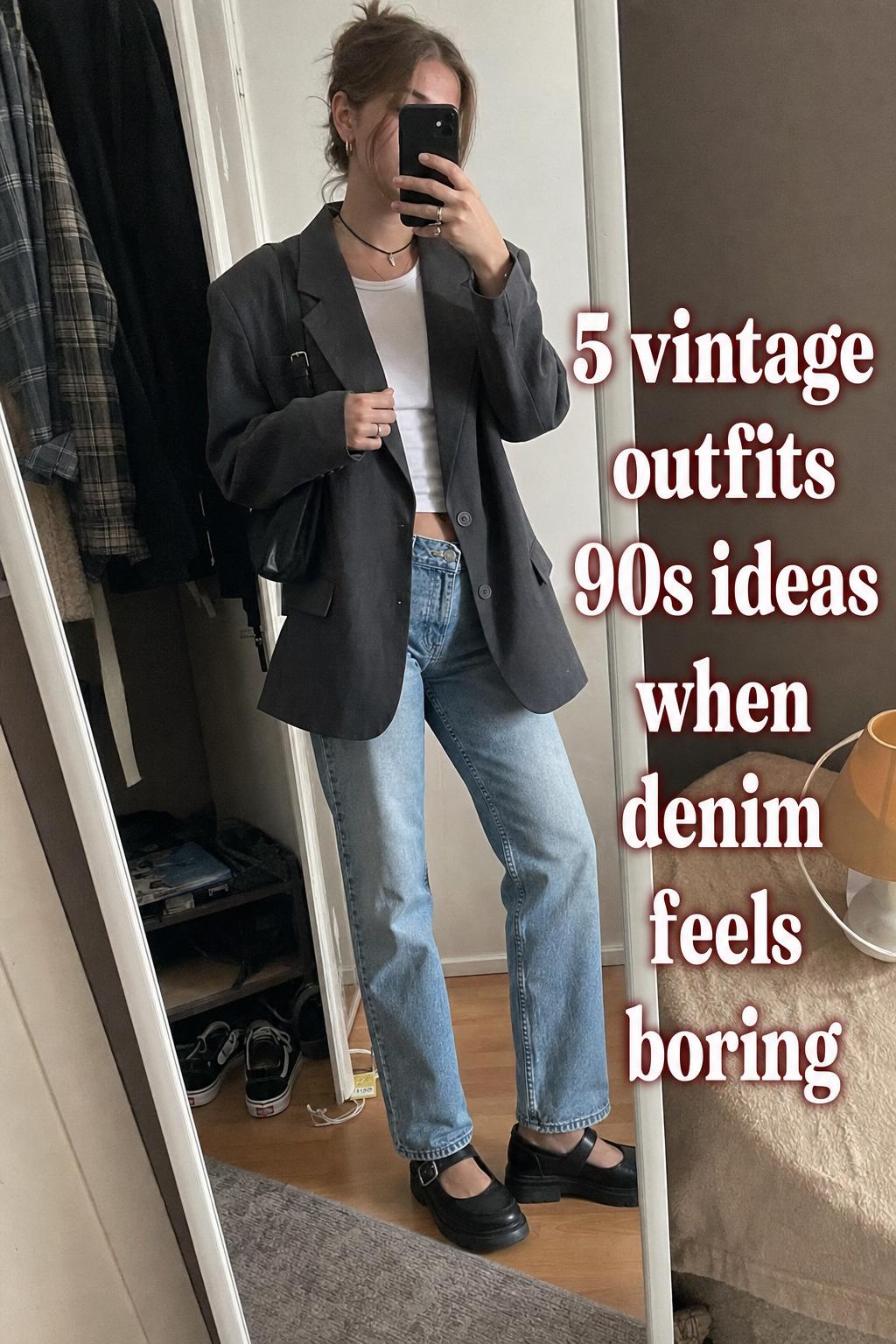
Celebrity references and what they actually translate to
Kate Moss and Naomi Campbell: minimal lines, strong impact
These references work best when the outfit stays focused. Think slip dresses, clean shapes, monochrome direction, and styling that does not over-explain itself. In real life, the translation is not about copying a runway or red-carpet image exactly. It is about choosing pieces that let silhouette and fabric lead.
This is the lane where Calvin Klein and Versace references make sense. Both names support the idea of the 90s slip dress as a defining silhouette. If your personal style already leans simple, this kind of 90s dressing often feels the most natural to adopt because it does not require many moving parts.
Cindy Crawford: polished casual with denim and tailoring
Cindy Crawford’s 90s influence is useful because it sits between glamorous and wearable. There is usually a strong base of denim, a cleaner top or blazer, and a sense of balance rather than excess. This is one of the best references for someone who wants vintage outfits 90s that fit into modern everyday dressing without looking themed.
The visual lesson here is proportion. When denim is simple and straight, the blazer can add authority without making the outfit feel formal. The result is confident, practical, and easy to imagine on a normal day rather than only in fashion imagery.
Jennifer Lopez and red-carpet 90s signals
Jennifer Lopez references bring in a stronger glam current. Here the outfit often has more presence, whether through fit, evening styling, or a more noticeable finish. This side of the decade connects closely to red-carpet moments and the MTV era, where fashion had to read quickly and memorably.
For everyday wear, the practical translation is usually to borrow one element rather than the full idea. A sleek dress silhouette, a cleaner tailored shape, or stronger accessories can bring in that energy without making the outfit feel too event-specific for daytime life.
Outfit comparisons for real-life situations
Casual coffee run: denim 90s versus minimalist 90s
A denim-led coffee run outfit might center on Levi’s 501 or another straight-leg vintage wash with a graphic or band tee. The silhouette feels grounded, relaxed, and slightly undone. It works because it does not ask for much maintenance during the day. The mood is casual and approachable.
A minimalist 90s version of the same outing would likely use a simpler line: perhaps a slip-inspired dress or cleaner separates with very little visual clutter. This creates a more polished impression, even if the outfit is just as easy to wear. The difference is that minimal styling looks intentional through restraint, while denim styling looks intentional through ease.
Everyday city outfit: blazer 90s versus grunge 90s
For a city day, a soft blazer over denim gives shape and polish without becoming stiff. It is a reliable formula for someone moving between casual plans and more put-together settings. The structure around the shoulders helps the outfit read cleaner, while the jeans keep it practical.
A grunge-based city outfit would build more through layers: flannel, band tee, denim, possibly combat-leaning or chunkier footwear. The same city setting feels different in this version. It is looser, more subculture-driven, and more expressive through texture. The choice depends on whether you want refinement or edge.
Evening plans: slip dress 90s versus glam celebrity 90s
A simple slip dress with restrained accessories creates an elegant evening outfit that still feels understated. This is the kind of look that works when you want your outfit to feel sleek rather than dramatic. The visual appeal comes from clean movement and the way the fabric catches light.
A glam celebrity version pushes the mood further. It may draw more directly from Jennifer Lopez, Naomi Campbell, or red-carpet styling cues. The outfit feels more present, more intentional, and a little less quiet. Both belong to the decade, but they serve different personalities and different social settings.
Travel day or long afternoon out: practical denim versus statement footwear
For a long day of walking, the most realistic 90s outfit usually starts with easy denim, a vintage tee, and simple layering. This captures the decade without creating friction. It is comfortable, stable, and easy to adjust through the day.
If you want a stronger 90s signal on the same kind of day, the quickest shift is in the shoes. Platform sandals or Mary Janes make the look feel more clearly decade-based, but they also change comfort and movement. This is where style decisions become practical ones. The best outfit is not just the most accurate visual reference; it is the one that still works after several hours of real wear.
The small details that change the entire outfit
- A vintage wash feels more authentic than denim that looks too dark or too sharp.
- A straighter leg usually reads more 90s than a very skinny shape.
- A blazer should soften the outfit, not make it look corporate and disconnected from the decade.
- One accessory cue, like a choker or mini backpack, usually works better than stacking every 90s reference together.
- Monochrome or near-monochrome styling makes minimalist 90s outfits feel stronger and cleaner.
These details matter because the 1990s often relied on subtle visual signals rather than loud styling. A look can miss the decade entirely if the proportions feel too modern in the wrong way or too busy in a way that hides the core silhouette. Usually, less adjustment is needed than people think.
Shopping logic: what to buy first and what to be careful with
Because search interest around 90s fashion often mixes inspiration with shopping intent, it helps to think in layers. The smartest starting pieces are usually the ones that anchor more than one outfit: straight-leg jeans, a slip dress, an oversized blazer, a vintage tee, and one pair of clearly 90s shoes such as Mary Janes or platform sandals. These pieces cover the biggest visual lanes of the decade without forcing you into one narrow style identity.
Retailers and catalog-style references like ASOS, Ragstock, ThriftTale, and Urban Outfitters appear often because they connect inspiration to immediate purchase decisions. That can be useful, but the stronger approach is to understand the silhouette before you buy. A slip dress only gives the right effect if the line feels fluid. Denim only reads 90s if the wash and leg shape support that reference. Buying by label alone is less useful than buying by shape.
Tips for building a wearable 90s capsule
- Start with one lane: minimal, denim-led, tailored, or grunge. It creates more outfit cohesion.
- Choose one statement category at a time. If the shoes are strongly 90s, keep the rest cleaner.
- Use brands like Levi’s, Calvin Klein, Versace, Topshop, ASOS, or Urban Outfitters as reference points for silhouette, not as a substitute for fit.
- If you shop authentic vintage, prioritize condition and wearability over novelty.
- Build around pieces you can repeat across settings, especially denim and tailoring.
Authenticity, care, and why condition matters more than hype
One of the biggest gaps in many 90s fashion conversations is care. Authentic vintage has appeal because it carries the original texture, wash, and construction of the period, but that only helps if the garment is still in wearable condition. Fabric longevity, label checks, and overall condition are part of the decision, especially when buying online or from curated vintage platforms.
ThriftTale’s emphasis on curation and sourcing across Europe shows why provenance and selection matter in vintage shopping. A piece can be visually right for the decade but still be a poor purchase if the fabric is too delicate, the fit is difficult to style, or the condition limits how often you can wear it. The practical question is not just “is this authentic?” but “will this work in my actual wardrobe?”
Tips for authentic vintage buys
Look closely at labels, fabric feel, and whether the item still reflects a useful silhouette. A real 90s blazer that is impossible to layer into daily outfits is less valuable than one with a slightly simpler shape that you will wear often. The same applies to dresses and denim. Preservation matters, but so does repeat use. A strong 90s wardrobe is built from pieces you can live in, not just admire.
Where each 90s style works best today
Minimalist 90s dressing works especially well for evenings, dinners, and wardrobes that already lean clean and tonal. The simplicity gives it a timeless quality, and it often looks polished with fewer pieces. That makes it practical for people who prefer a quieter closet but still want a distinct aesthetic.
Denim-led 90s outfits are the most flexible for daily life. They suit weekend dressing, travel days, casual offices, and everyday city routines because they are easy to layer and easy to repeat. Straight-leg denim, vintage tees, and simple outerwear can move through a lot of settings without feeling overstyled.
Tailoring-based 90s style is ideal for readers who want polish without losing the decade’s relaxed feel. It works well in workwear-adjacent settings, social plans after work, and urban wardrobes where a blazer naturally fits. Grunge and rave-influenced looks are more expressive and can be great for more trend-driven personal style, but they usually require a stronger point of view to feel natural rather than costume-like.
Which 90s style feels most timeless?
If timeless means easiest to wear across years, minimalist slip dressing, straight-leg denim, and soft tailoring have the strongest case. These categories appear repeatedly because they rely on shape and proportion more than novelty. A midi slip dress, a pair of Levi’s 501, and an oversized blazer still make sense in a modern wardrobe because they solve everyday dressing problems while keeping a clear visual identity.
That does not make subculture-driven looks less valuable. Grunge, rave aesthetics, and sport-luxe or streetwear-adjacent interpretations can be more distinctive and personal. They simply ask for more commitment. The more expressive the style lane, the more important it becomes to balance it with everyday practicality.
How to blend two 90s aesthetics without losing clarity
The easiest way to combine 90s styles is to let one category lead and one category support. For example, use minimalist clothing with a stronger footwear cue, or use denim and a band tee with a more polished blazer. This keeps the outfit readable. When every element points to a different 90s substyle at full volume, the look becomes crowded.
A good real-life formula is relaxed denim, a simple top, a blazer, and one clearly decade-specific accessory. Another is a slip dress with understated layers and one stronger 90s shoe. These mixes feel wearable because they preserve visual balance. They reference the decade without turning it into a costume exercise.
Common styling mistakes with vintage outfits 90s
- Using too many decade signals at once, which makes the outfit feel themed instead of lived-in.
- Choosing denim shapes that fight the 90s line rather than support it.
- Making tailoring too rigid, which removes the decade’s relaxed edge.
- Adding accessories without considering whether the outfit is minimal, grunge, or glam.
- Buying authentic vintage for nostalgia alone, without checking condition, care needs, or outfit potential.
The fix is usually simple: focus on silhouette first, then add the accessories and references that support it. The 90s look strongest when one idea is clear. That could be the dress, the denim, the blazer, or the shoe. Once that anchor is set, the rest of the outfit should reinforce it rather than compete with it.
Final style takeaways
The clearest way to understand 90s dressing is to stop treating it as one trend. Slip dresses, denim, tailoring, grunge layers, and celebrity-led glam all belong to the same decade, but they communicate different moods. A Kate Moss-inspired outfit speaks through restraint. A Cindy Crawford reference often balances ease and polish. A Jennifer Lopez-inspired look borrows more from red-carpet presence and MTV-era confidence.
Once you recognize those differences, vintage outfits 90s become much easier to wear well. You can choose the lane that fits your lifestyle, borrow details from another, and build outfits that feel current without losing the decade’s identity. That is what makes the 1990s so lasting: the pieces are iconic, but the real power is in how clearly each style mood comes across.
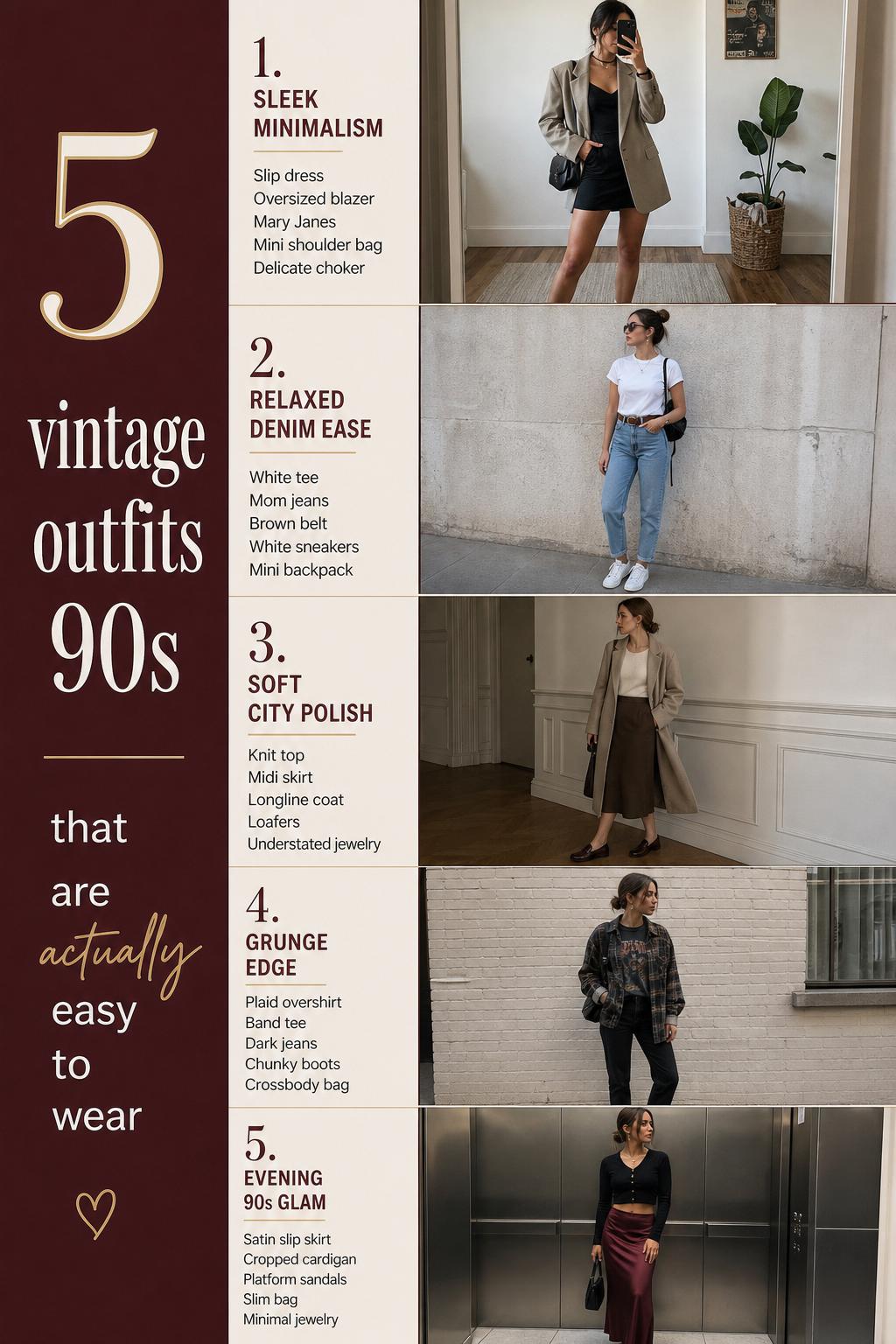
FAQ
What were the most iconic 90s outfits?
The most recognizable 90s outfits usually center on slip dresses, straight-leg or mom jeans, oversized blazers, vintage tees, Mary Janes, platform sandals, and simple accessories like chokers or scrunchies. These pieces show up repeatedly because they represent the decade’s strongest style lanes: minimalism, denim-led casual dressing, and soft power tailoring.
How can I recreate 90s looks without looking like I am wearing a costume?
The easiest approach is to choose one clear 90s anchor, such as a slip dress, Levi’s 501, or an oversized blazer, and keep the rest of the outfit relatively simple. Costumey styling usually happens when too many obvious decade references are layered together at once. A focused silhouette looks more natural than a full collection of trend signals.
What is the difference between 90s minimalism and 90s grunge?
90s minimalism relies on clean lines, smoother fabrics, monochrome or restrained color direction, and fewer styling interruptions. Grunge is more layered and textured, often using flannel, band tees, looser shapes, and a more intentionally undone finish. Both are rooted in the same decade, but they create very different moods and levels of polish.
Which brands are most closely linked to 90s fashion references?
Some of the most useful brand references include Calvin Klein, Versace, Levi’s 501, Gap, Topshop, ASOS, Urban Outfitters, Balenciaga, Gucci, and Ragstock. These names show up across different parts of the 90s conversation, from slip dresses and denim to tailoring, footwear, and shopping-oriented outfit inspiration.
Are slip dresses still the best way to wear 90s fashion today?
Slip dresses remain one of the clearest 90s references because they capture the decade’s minimalist side so well, but they are not the only good option. For many people, straight-leg denim or a relaxed blazer may be easier to wear more often. The best starting point depends on whether your wardrobe leans toward clean evening dressing, casual daily outfits, or polished city style.
How do I start a budget-friendly 90s capsule wardrobe?
Start with the pieces that create the biggest visual impact across multiple outfits: vintage-wash straight-leg jeans, a simple slip dress, a blazer, a graphic or band tee, and one pair of Mary Janes or platform sandals. These items cover the main 90s style directions without requiring a large wardrobe, and they can be mixed depending on whether you want minimal, casual, or more polished outfits.
What should I look for when buying authentic vintage 90s clothing online?
Focus on silhouette, condition, and fabric longevity before anything else. Labels and sourcing can help, especially on curated platforms, but the item still needs to fit your wardrobe and be wearable in real life. A true 90s piece only becomes a good purchase if the shape works for styling now and the condition supports regular use.
Which 90s style is the most practical for everyday wear?
Denim-led 90s style is usually the most practical because it works across casual settings, travel days, and everyday city routines. Straight-leg jeans, vintage tees, and a blazer can be repeated easily and adjusted with shoes or accessories. Minimalist slip dressing and tailoring also work well, but denim tends to offer the widest daily flexibility.
Finish the look
The little extras that make a summer outfit feel complete
From beach days to city weekends, these easy pieces bring comfort, texture, and a polished finishing touch.

FENBEN
Straw Hobo Crossbody Bag
A handwoven straw bag with both short and crossbody straps—an effortless finishing touch for vacation looks and warm-weather outfits.
Shop the bag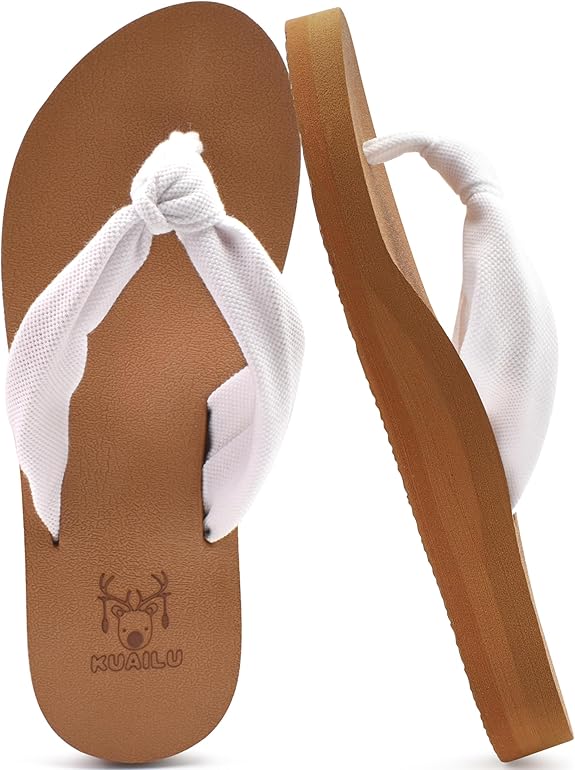
KuaiLu
Flip Flops with Arch Support
Cushioned, lightweight sandals with supportive arch design—a practical choice for beach trips, errands, and long summer walks.
Shop the sandals
baleaf
Athletic One-Piece Swimsuit
A functional one-piece with adjustable straps and moderate coverage, designed for swimming, training, surfing, and active beach days.
Shop the swimsuit
Astylish
Linen-Cotton Button-Down Shirt
A relaxed cotton-linen shirt with a collared V-neck and roll-up sleeves—easy to style over swimwear or with denim and shorts.
Shop the shirt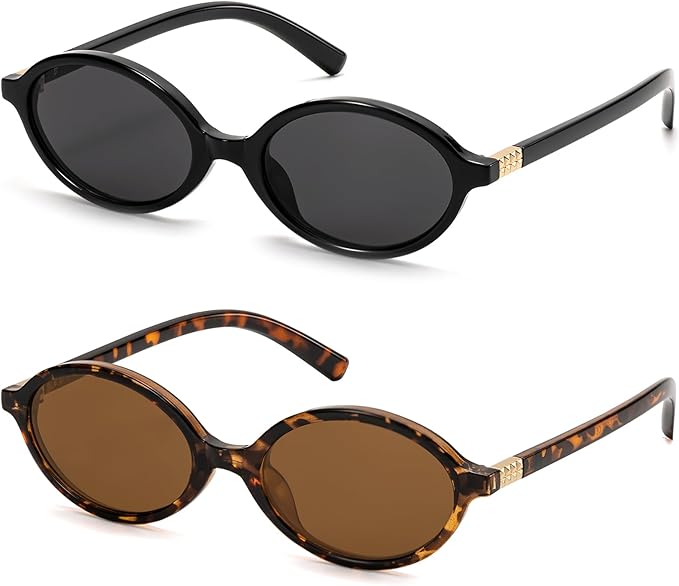
ViewJoy
Retro Oval Sunglasses
Small oval sunglasses with a 90s-inspired silhouette and UV400 lens protection—a quick way to add a vintage edge to everyday looks.
Shop the sunglasses
Affiliate disclosure: This section contains affiliate links. If you make a purchase through these links, I may earn a commission at no additional cost to you. Product selection, pricing, availability, and delivery terms may change—please review the current details on Amazon before purchasing.
As an Amazon Associate I earn from qualifying purchases.